Best Places for LGBTQ People to Retire Abroad

*This is reported by Kiplinger.

An irrefutable reality of being a member of the LGBTQ community, at any age, is that you must give more thought than non-LGBTQ people about where to live. What are the local laws that apply to LGBTQ people regarding workplace and housing discrimination, marriage equality and conversion therapy? What does available public polling reveal about acceptance of the LGBTQ community? Even if you’re not married and don’t plan to be, or even if you no longer work, such laws — or the absence of them — suggest to LGBTQ folks how safe and welcoming the locale will be for them.

The above is true whether you’re LGBTQ and 30 — or a gay retiree. You can’t just spin the globe. If you’re LGBTQ and are considering retiring abroad, it is incumbent on you to do more due diligence than your straight friends and family members would have to do in the same situation.

Best places for LGBTQ people to retire abroad

If you enlist the services of a lawyer who specializes in retirement abroad, you have to ask more questions; you have to spend more late nights googling; and you have to read more articles like this one, in which we examine the knotty issues related to gay retirement outside the U.S., include advice from both experts and expats, and make some (hopefully helpful) recommendations.

If everything falls into place, you can breathe a sigh of relief once you’re in the midst of your retirement abroad. Chris Young and Jon Kinnally, who both worked in the television industry — Young was a writer for Comedy Central, and Kinnally was a writer and producer for the sitcoms Will & Grace and Ugly Betty — lived most recently in Los Angeles before the couple moved to Spain. They chose Sitges, a vibrant, walkable beach town about 45 minutes from Barcelona. “It’s so open. You see gay and lesbian couples holding hands. And you can be old and gay here, which you can’t be in L.A.,” Young says, not entirely joking.

Below, we recommend some beautiful and culturally rich countries where LGBTQ folks can retire happily and safely. But just as the U.S. isn’t uniform in terms of acceptance, neither are most countries. The LGBTQ community scarcely needs to be told that the more populous and diverse the area — in the U.S., that means urban or coastal, or both — the more accepting the area tends to be.

But it’s worth repeating. As the founder and managing director of Mitos Relocation Solutions, Federica Grazi helps expats retire in Greece and other European countries, and she is quick to note that not all of Greece is like the gay magnets of Athens and Mykonos. “I would not recommend that gay couples move to the countryside, where there are traditional communities and not many expats — it would be harder to integrate there,” she counsels, but the same might be said of France, Spain, Italy — or the U.S.

With that in mind, here’s our hot list of retirement places.

Spain

Spain is well-known as one of the most LGBTQ-friendly countries in the world. Spain legalized same-sex marriage in 2005, a full decade before the U.S. Naturally, this factored into Young’s and Kinnally’s decision to move to Sitges, a global destination for gay tourism.

The two appreciate the fact that the resort town, while heavily gay — with a spate of gay bars, nightclubs, and hotels — is demographically diverse. “It’s not a gay ghetto,” Young says. “Sitges is a great mix,” Kinnally adds. “It’s different than a place like Provincetown. There are kids running through the streets, old Spanish ladies, and gay couples — all mixing together. It’s kind of a utopia if you want to retire.”

With health care costing the couple only 250 euros a month and three-course lunches priced from 15 to 17 euros, they can breathe easy about expenses and work on their respective book projects. (Kinnally’s I’m Prancing as Fast as I Can comes out in August.) Of the major cities, Barcelona is a gay mecca, and Madrid boasts Chueca, a festive gay neighborhood.

Greece

While same-sex marriage was only recently legalized in 2024, same-sex sexual activity was decriminalized in Greece in 1951, which compares favorably to the U.S., which granted this right far later — in 2003. Likewise, employment discrimination against gays and lesbians has been illegal in Greece since 2005 (with gender-identity protections following later), while the U.S. did not grant this protection at the federal level until 2020.

Athens boasts a large and thriving LGBTQ community, especially in the Gazi neighborhood, and the Cycladic island of Mykonos is arguably the world’s most popular summer destination for the LGBTQ community, with famous gay beaches like Elia and Super Paradise.

Former New Yorker Daniel Rentillo says that even the small, low-key island of Symi, where he retired, is a comfortable place to be LGBTQ, and he’s noticed more gay couples visiting and even making moves to relocate to the island. The fact that Greece enjoys excellent health care and a relatively low cost of living makes this country of cultural antiquities, plentiful beaches, mild weather, and fresh seafood a fine choice for retirees — LGBTQ or not.

Malta

Not only was employment discrimination against the LGBTQ community banned here, and same-sex sexual activity decriminalized years before the U.S. made these civil rights moves, but the island nation of Malta was also the first European country to ban conversion therapy. Supermajorities of Maltese support civil rights and marriage equality.

With a tiny population of half a million people living on three sunny, inhabited islands (Malta, Gozo, and Camino), the country is located south of Sicily, enjoying a similar Mediterranean climate and stunningly clear waters to swim in, especially at the natural coves at St. Peter’s Pool.

Valetta is the pedestrian-friendly capital and is the best place for gays to hole up, along with nearby Sliema. “Everyone accepts the LGBTQ community today,” says Matthew Cassar, a citizenship advocate and lawyer based in Sliema. “No one would conceive of discrimination,” noting that “there is no opposition party” set on scaling back the community’s rights. One of Cassar’s clients, worried for his transgender daughter’s rights and safety in the U.S. under the Trump administration, is in the middle of the citizenship process.

The country has two official languages: Maltese and English.

Australia

For more than a decade, public polling has shown support for gay rights and marriage quality surpassing the 70% mark. And some advances have been swift and recent: Since 2021, the country has outlawed the so-called gay panic defense, legalized marriage equality, and banned conversion therapy (in regions representing 85% of the population). In 2013, Australia implemented federal protections based on sexual orientation, gender identity, and intersex status.

Though marriage equality did not arrive in Australia until 2018, the capital of Sydney has embraced gay culture for decades: The annual Gay and Lesbian Mardi Gras, one of the world’s biggest LGBTQ celebrations, has been going strong since the 1970s. While Sydney, Adelaide and Brisbane have gay neighborhoods, the LGBTQ presence in Melbourne is more spread out.

Most retirees will find a pathway to relocate through the expensive ($500,000 to $750,000) Investor Retirement Visa. Still, it is cheaper to live in Sydney than in New York or San Francisco.

For those seeking a mild climate, beautiful cities, a friendly populace, excellent health care, and zero language barrier, “Oz” (the affectionate slang for Australia) may be the ticket.

Costa Rica

Costa Rica’s former president, Carlos Alvarado Quesada, was a notable reformer and advocate in the area of LGBTQ rights, garnering global attention when he publicly apologized for the country’s past persecution and discrimination of gays, calling it “shameful.” Same-sex marriage became legal in 2020, which was also the year that hate crimes and blackmail based on sexual orientation were criminalized. (Transgender rights already had been significantly expanded in 2018.)

A center of eco-tourism and sustainable well-being with no standing army, tropical Costa Rica has long been regarded as a kind of peaceable utopia for expats. With the Caribbean Sea on one side and the Pacific on the other, Costa Rica is known for its lush landscape and hot springs.

Costa Rica’s healthcare system frequently ranks as one of the best globally. The country’s high-quality healthcare has made it a health tourism destination.

Gay life is centered in the capital city of San Jose and the carefree beach resort town of Manuel Antonio. Retirees will find the country very affordable, even with household help.

The Netherlands

The first country in the world to legalize same-sex marriage (in 2001) also banned discrimination based on gender identity, gender expression, and sex characteristics in 2019. Not only do most Dutch people support LGBTQ rights; many Dutch, especially those under 40, can’t even comprehend the discrimination faced by the community in other countries.

It would be an understatement to say that you can be comfortably gay in Amsterdam, with Reguliersdwarsstraat the most prominent LGBTQ area. This world-class city is postcard-perfect, teeming with cyclists, and is pedestrian-friendly (just mind the bike lanes). The visa system is straightforward and leads to residency. English is widely spoken, and the cultural opportunities seem endless.

On the downside, the country’s cost of living can feel a little pricey for those living outside major U.S. cities, and the weather in the Netherlands is rainier and chillier than in southern Europe.

Thailand

In 2024, Thailand made headlines when it became the first UN member state to approve a marriage equality law, and the country, with its myriad cultural and recreation opportunities, has long been popular with LGBTQ tourists. Therefore, LGBTQ couples and individuals may want to consider Thailand, but only if they’re of a certain stripe: adventurous and very well-traveled; tolerant of tropical heat; and veterans of previous vacations or work stints in the country.

In an exotic culture so far from friends and loved ones, it’s best to have an expat community already in place if you’re thinking of moving there. In addition, though Thailand offers the LGBTQ community a range of protections and anti-discrimination laws, local attitudes are still evolving, and social interactions should be carefully navigated (cue the established expat scene).

That said, this is a very inexpensive country with kind people. And if you love Thai food, having pad see ew where it was invented will be a revelation. The capital, Bangkok, is a uniquely stimulating place, where a ride on long-tailed boat along the Chao Phraya River may get you to your destination faster than an open tuk-tuk (taxi), given the city’s notoriously heavy traffic.

If you prefer a slower pace and a coastal setting, you can always base yourself in the resort areas of Phuket or Ko Samui, the latter the island where season 3 of The White Lotus was filmed.

Air Force pulls back ban on personal pronouns in emails

*This is being reported by The Hill.

The U.S. Air Force is reversing its ban on including preferred pronouns in email signatures and in other professional communications.

In a news release published April 3, the Air Force said it has “rescinded” an earlier “directive to cease the use of ‘preferred pronouns’ (he/him, she/her, or they/them) to identify one’s gender identity in professional communications.”

Airmen and civilian employees may now include their preferred pronouns in email signature blocks, memoranda, letters, papers, social media, official websites and any Department of the Air Force official correspondence, the news release said.

The original ban was announced on Feb. 4, in guidance on President Trump’s executive order, “Defending Women from Gender Ideology Extremism and Restoring Biological Truth to the Federal Government.”

Military.com reported that the ban reversal came after the Air Force learned that a provision of the National Defense Authorization Act, signed into law in 2023, said the defense secretary “may not require or prohibit a member of the armed forces or a civilian employee of the Department of Defense to identify the gender or personal pronouns of such member or employee in any official correspondence of the Department.”

Politician calls for transgender Americans to be offered asylum in Norway: ‘We have to act’

*This is reported by Pink News

A Norwegian transgender politician, representing the Green Party (MDG), has advocated for transgender Americans to be granted asylum in Norway due to the anti-trans discrimination they are facing in the US.

Karina Ødegård, who is on track to becoming Norway’s first transgender member of parliament, has told Norwegian newspaper Afterposten that the challenges faced by trans people in the US are similar to the persecution experienced by marginalised groups in 1930s Germany.

The Green Party have supported Ødegård’s proposals.

Referring to the rise of fascism in Europe and the persecution of Jewish people and other minorities, she said: “What would we have done in the 1930s if we knew what was about to happen? That’s where we are now. Then we have to act,” she said.

Ødegård has said that in contrast to the US, the state and healthcare system in Norway helped her to be herself.

“One thing is that you see [in the US] the development of an illiberal democracy. I find that extremely problematic. Then it gets even worse because the Trump administration has singled out transgender people as scapegoats to be hanged and removed,” she explained.

This comes after President Trump signed a raft of executive orders targeting trans people, preventing them from serving in the military, banning trans women from participating in women’s sports, and requiring official documents to only list their gender registered at birth.

LGBTQ+ rights in Norway

Norway is generally considered to be a very LGBTQ+ friendly country, as it was one of the first countries to pass an anti-discrimination law that explicitly included sexual orientation in 1981.

Listen to this article

1:33 / 2:30

Also, same-sex marriage and adoption has been legal there since 2009.

Unfortunately, Norway doesn’t yet legally recognise non-binary identities, nor does it offer gender-affirming care for under-18s, stating a “lack of comprehensible research” despite the majority of Norwegian people believing that it should be accessible.

Norway has laws (The Tenancy Act, the Housing Association Act and the Residential Building Association Act) that all prohibit housing discrimination on the basis of sexual orientation. Married and committed same-sex couples are permitted to adopt under Norwegian law, and self-ID is also allowed: to change their gender, trans citizens only have to send a notification to the National Population Register.

WorldPride organizers may warn trans people from abroad not to attend event

*Reported by the Washington Blade.

One of the lead organizers of WorldPride 2025, set to take place in D.C. May 17-June 8, told members of the Metropolitan Washington Council of Governments, known as COG, on April 9 that due to the recently implemented anti-trans policies of the Trump administration, it may be dangerous for trans people traveling from abroad to attend WorldPride in D.C, according to a report by WTOP News.

The WTOP report says the message of concern was delivered by Ryan Bos, executive director of D.C.’s Capital Pride Alliance, which is the lead organizer of WorldPride 2025. The news report says Bos spoke at a meeting of COG, which consists of local government officials from D.C. and the surrounding suburban counties in Maryland and Virginia.

“It’s possible that we may actually issue a statement telling trans folks internationally not to come, or if they come, they come at their own risk,” WTOP quoted Bos as saying.

“So, these are the things that we will be discussing with the D.C. government and our partners to determine how best to communicate that to ensure that we’re getting the resources to the folks that need it,” Bos said according to the WTOP report.

WTOP reported that some members of the COG board expressed concern over the news that it may be harmful for trans people to travel to the D.C. area for WorldPride.

 “It’s really shameful that you all are having to consider making statements like that,” WTOP quoted Frederick County, Md., Executive Jessica Fitzwater as saying. “It’s really heartbreaking.”

D.C. Council member Charles Allen (D-Ward 6), who attended the COG meeting, told Bos, “I’m disheartened to hear that, but I hope you also recognize you’ve got partners in this room that want to be right there with you to make sure this is a wonderful, successful event, a safe event, that’s going to take place across the whole region,” WTOP reports.

Capital Pride Alliance, in response to a request for further comment on Bos’s remarks at the COG meeting, said in a brief statement that Bos’s presentation was limited to what “may happen.” The statement said no official decision has been made regarding a possible warning for trans people considering attending WorldPride. 

Voices: Leaving America for LGBTQ safety?

*Opinion written by Harvey Haberman on the Dallas Voice.

I recently received a message on Facebook from my friends from Florida (and I use the term “from” loosely because they no longer live there) who, like several other friends, are leaving the country. They have moved to Curaçao in the Dutch West Indies. It’s an LGBTQ-friendly country that they felt was a safe haven in a world marching toward authoritarianism.

I don’t blame them for leaving, nor do I blame my other friends who have moved to Ireland, Canada and Mexico. They believe the handwriting on the walls of social media warning that the United States is becoming 1930s Germany.

And, frankly, that scares me.

What I find frightening is that a billionaire huckster and his cronies can so easily create chaos in a country which I had seen as being on the right track. Instead, they have derailed the country for no other reason than to grab power and steal money from American’s pockets.
What I find even more frightening is that so many of my friends are willing to give up and leave.

And it’s frightening also because I know the poem that starts, “First they came for the socialists, and I did not speak out — because I was not a socialist.”

That poem was a sad commentary on Germany at the time, but the key take away for me from it is that part: “and I did not speak out because I was not a socialist.”

The poem as a whole was not so much about the oppression of certain groups, but instead about the inaction and silence of the general populace: They let it happen. In their complacency they collaborated with the Nazis as surely as if they were active supporters.

But the poem says nothing about packing up and leaving.

If all the Jews had left Germany, Hitler would have still been in power, and he would have found other scapegoats. He would have still been in power and would have continued his quest for an empire. He would have still bombed England and invaded France.

Hitler was successful, at least for a while, because not enough people spoke out.

My partner and I have discussed whether moving out of the country would be the prudent thing to do. But while it may be the prudent thing to do, I see it as capitulation. Leaving the country would leave a lot of our friends behind. I would be leaving behind my home, my family, my country. And that would be playing into the hands of a megalomaniac and a damned stupid one at that.I was heartened by Cory Booker, senior senator from New Jersey, standing up in the Senate and delivering his epic marathon speech against Trump and Musk and the whole cabal that backs them. I am heartened by the Supreme Court election in Wisconsin where — even as Elon Musk gave million-dollar checks to a few individual voters and backed a massive media campaign to install a right-wing candidate — Susan Crawford, the progressive candidate, triumphed.

Small victories as these are, they show that people are still willing to stand up and speak out against the most un-American administration in history.

A couple of weeks ago I attended a protest outside the Tesla Service Center calling for Musk to get out of the government — a government to which he was not elected. Though the turnout was small, it was visible. The turnout protesting the unlawful kidnappings by ICE drew hundreds more. And those protests are going on in every city in America. Over this past weekend, on April 5, millions turned out at events around the country in a massive national call for the administration and its unelected minions to keep their “Hands Off” things like Social Security and more.

People are speaking out. And the LGBTQ community knows a lot about speaking out. We have done it before, and we can and will do it now.

Now, I’m a stubborn old goat. My friends and I worked hard to build a community here, and, though they are a small thing, the rainbow sidewalks in Oak Lawn let me and the world know that we are here and not going away. And no matter how Trump and Musk and his cronies try to erase history and erase us, I refuse to let their fear campaign chase me away.

So, to anyone who feels they must leave, please do it safely. But as for me — I ain’t going nowhere! And I ain’t staying quiet.

Hardy Haberman is a longtime local LGBT activist and a board member of the Woodhull Freedom Alliance. His blog is at DungeonDiary.blogspot.com.

Slovakia could ban gay couples from adopting & nonbinary people from existing

*This is reported by LGBTQ Nation.

Slovakia is considering changes to its constitution to limit LGBTQ+ people’s rights.

This past Wednesday, lawmakers voted to advance the amendments that, if adopted, would limit adoption to only heterosexual married couples and define all people as only being male or female.

The Christian-majority Central European nation currently does not recognize same-sex relationships at all, and its constitution was amended in 2014 to state that marriage “is a unique union between a man and a woman.” But anyone can adopt a child under current Slovak law.

Slovakia also does not recognize nonbinary people under the law, according to Amnesty International. The proposed constitutional amendments would write that lack of recognition into the constitution, making it harder for the legislature to change it later.

Other changes that were advanced on Wednesday include allowing healthcare providers to refuse abortion care and requiring parental approval for sex education in schools. The legislature is also considering lower gestational limits for abortion and a ban on in-vitro fertilization and surrogacy.

“This swathe of amendments is an attempt to buttress an increasingly hostile environment for LGBTIQ+ people, undermine gender equality, rule of law, and broader human rights protections in Slovakia,” said Director of Amnesty International Slovakia Rado Sloboda. “Constitutionalizing the possibility to refuse abortion care on ‘conscientious objection’ grounds would put people’s health and lives at grave risk.”

“If passed, these draconian measures would further undermine gender equality and deepen the crackdown on LGBTIQ+ people’s rights, mirroring the dangerous practices of other countries in the region, such as Hungary and Poland. Members of the Slovak Parliament must vote to reject this multi-pronged assault on human rights.”

Bloomberg reports that 81 lawmakers supported the changes in the first reading yesterday, and they will require at least 90 votes to pass the next round of voting. The nation’s parliament has 150 members.

Slovakia is a European Union member state, and the rollbacks of LGBTQ+ and reproductive rights could lead to tensions with European Union laws.

Prime Minister Robert Fico of the left-nationalist Direction—Social Democracy party returned to power in 2023 with a socially conservative platform.

U.K.’s LGBTQ workers still feel pressured to ‘be less gay,’ report says

*This is reported by NBC News

LGBTQ professionals in Britain still feel pressured to downplay their identity at work, with some changing their appearance, voice or behavior to avoid discrimination or to be taken seriously, a new report said on Thursday.

Pride in Leadership, a network of LGBTQ business leaders, called for stronger rights protecting members of the community and urged companies to do more to stamp out homophobia and transphobia disguised as “banter.”

The not-for-profit, which surveyed 1,000 LGBTQ professionals between June and November of last year in its first such report, said 85% of respondents encountered career obstacles due to their identity.

It found that 34% of respondents said their identity negatively affected their earlier education, with some still feeling like they have to “be less gay” after being encouraged to suppress their sexuality when they were younger.

Over half said it influenced their career choices, prompting them to avoid certain sectors or roles due to fears of discrimination or lack of support.

“This research reflects what I’ve seen as a gay leader,” Matt Haworth, co-founder of Pride in Leadership, said. “From homophobia in meetings to being invited on trade missions to a country where I could be sentenced to death just for being me… the playing field is far from level.”

Haworth added, “Everyone deserves a fair chance to succeed — regardless of who they love or how they identify.”

Official data from the 2021 Census showed that around 1.5 million people in England and Wales identified as gay, lesbian, bisexual or another sexual orientation.

‘Colorado is for everyone’: Polis signs bill repealing same-sex marriage ban

*This is reported by KDVR.

 Colorado Gov. Jared Polis signed the “Protecting the Freedom to Marry Act” on Monday, repealing the state’s same-sex marriage ban from Colorado law.

The bill removes language that says marriage is only between a man and woman and aligns statute with the Colorado Constitution after voters in November decided to repeal that ban. The state House passed the bill in March after the Senate passed it in early February.

“Colorado is for everyone, no matter who you are or who you love,” Polis said in a press release. “Last November, the voters got rid of outdated language in our constitution that banned same-sex marriage. This is a long overdue step in the right direction and today’s law I’m signing ensures that Coloradans can marry who they love in our Colorado for all.”

First Gentleman Marlon Reis, in the press release, said this bill defends the progress made for LGBTQ+ rights.

“I am personally grateful to Senator Danielson, Representatives Garcia and Titone, and the countless community leaders and advocates whose hard work has made today possible,” Reis said. “This landmark legislation fulfills the hopes and dreams of so many across our LGBTQ+ and allied communities, and affirms that progress hard won is always worth defending, and in the end, love triumphs over all.”

Colorado’s previous same-sex marriage ban had been unenforceable since the U.S. Supreme Court’s 2015 Obergefell v. Hodges decision.

Protesters rally for the fourth week against Hungary’s law banning LGBTQ Pride events

*This is reported by NBCNews.

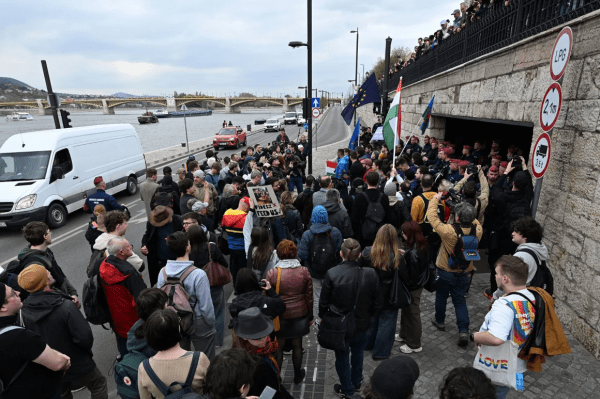
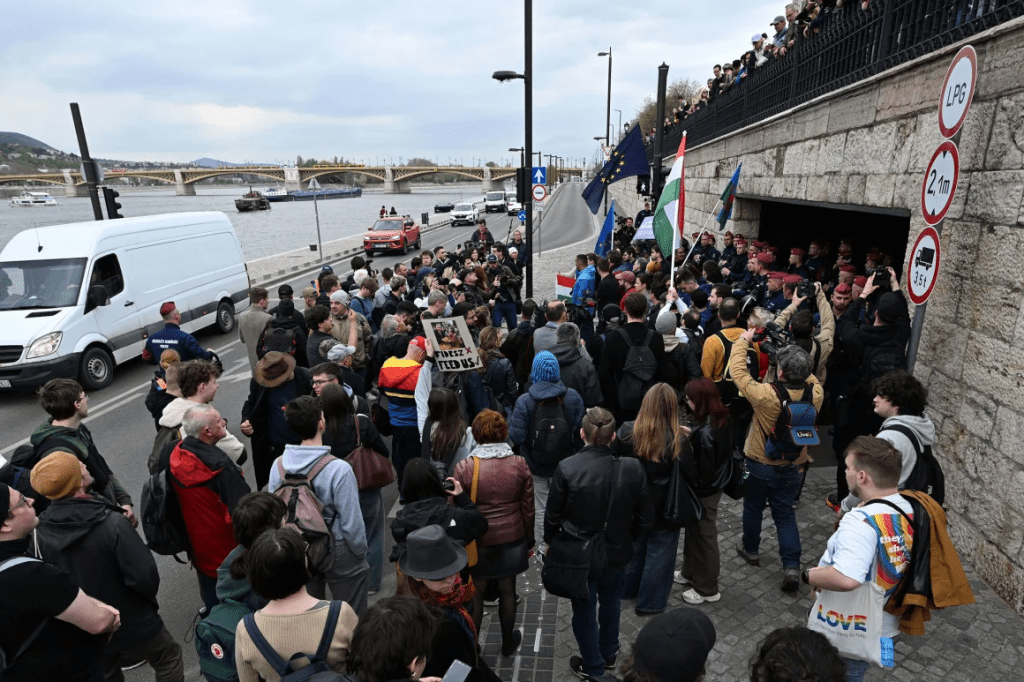
Thousands of protesters rallied for the fourth week in Hungary’s capital on Tuesday, denouncing a new law passed by populist Prime Minister Viktor Orbán’s nationalist government banning LGBTQ Pride events.

The legislation, fast-tracked through parliament in March, prohibits events depicting homosexuality to those under the age of 18 and has drawn comparisons to Russia’s anti-LGBTQ policies. It comes as Orbán’s administration is increasingly accused of democratic backsliding ahead of national elections next year.

The weekly protests in Budapest have persisted, and on Tuesday, demonstrators filled the Erzsébet Bridge over the Danube, demanding the withdrawal of the law. Some planned to remain on the bridge throughout the night and said there were plans to shut down all five central Danube bridges.

No violence was immediately reported.

The law makes it an offense to hold or attend events such as Pride, which some legal experts and human rights groups say is Orbán’s latest crackdown on Hungary’s LGBTQ community and an arbitrary restriction on the right to assembly.

Viktória Vajda, one of the protesters, said the time for trying to find common ground with Orbán’s government “has passed.”

“If we don’t stand up for the rights of minorities and for our own fundamental rights, then who will when they come for us?” she said. “We’ve reached the point where we have to stand up and say, ‘No more’.”

The protests have defied police orders to disperse from bridges and main thoroughfares in Budapest. And in a rare instance of a street protest outside the Hungarian capital, several hundred demonstrators in the eastern city of Miskolc also protested on Tuesday against the law.

Orbán, who critics say has eroded Hungary’s democracy and overseen widespread corruption, has in recent years taken aim at the country’s LGBTQ community, prohibiting same-sex adoption and — in a 2021 “child protection” law — banning any LGBTQ content including in television, films, advertisements and literature that is available to those under 18.

As part of the new law, authorities may use facial recognition tools to identify those who attend prohibited events — such as the popular Budapest Pride, which draws tens of thousands each year — and can issue fines for violators of up to 200,000 Hungarian forints ($545).

Orbán’s party is pushing for a constitutional amendment next week that will codify the ban on public LGBTQ events. The Hungarian leader has also pledged to introduce new legislation that will ban demonstrators from blocking traffic on bridges and busy roads, arguing the right of assembly and expression cannot override the rights of commuters.

János Stummer, a member of the opposition Momentum party who was at the protest, said that while the ban on Pride was harmful to members of the LGBTQ community, the law is also about “Orbán unilaterally, arbitrarily deciding which events can be held in this country and which cannot.”

Orbán’s government argues that it’s protecting children from “sexual propaganda.”

But with Orbán’s party lagging in polls, critics views the legislation as part of a broader effort to scapegoat sexual minorities and mobilize his conservative base.

Gay men discuss the best places to live if they get priced out of bigger cities

*This is reported by Queerty.

A couple of social media postings over the weekend struck a chord with many people. They both addressed good places for gay guys to live in the US — especially if hotspots such as New York City are out of their budget.

On Threads, user @justintycarey asked, “Where are you all moving to gay/queer Americans? I live in Philadelphia after nearly 7 years in New York. It’s fine for now and it’s more affordable (I live alone) but I don’t think it’s my vibe at all. I used to live in Portland, ME which was progressive and beautiful. Walkable too! But I realized it wasn’t my thing culturally.

“Now I’m stuck! I don’t know what’s good. I want a quiet life but I also want access to New York and other metro areas.” He also wanted a good arts scene.

Fans of Philadelphia told him not to give up on the city – especially if, as indicated later, he arrived during the chilly winter months.

“I moved to Philly from New York and spent the first year or two planning my escape, but it grew on me,” said one. “It’s a place that takes some time to find your people and neighborhood. I’ve been here for 10 years now and can’t picture myself anywhere else.”

Others praised parts of New Jersey.

“Have you considered the suburbs? I’m in south jersey and while I miss the city ‘vibe’, my community feels much tighter and, as a whole, more progressive. I can get to NYC in an hour or Philly in 20 mins. It’s not for everyone but walkable and quiet with access to city.”

Another pointed to the Jersey coast.

“Asbury Park, NJ! Yes, it’s a shore town, but most people are residential there. Very queer-friendly with a quiet town vibe. Access to the train is right in Long branch — it’s under 1.5 hours to NYC by NJ transit. Art scene is pretty good too with lots of potential for growth.”

Other suggestions within commuting distance of New York City came flocking in.

“Northampton, Massachusetts, springs to mind, depending on how far from NYC you want. If you want closer to NYC, then Warwick, NY or New Paltz, or if closer, then Montclair, NJ. All are walkable, gay friendly, progressive, pretty, stuff to do, not huge cities.”

Others wanted to know why the poster wasn’t keen on Portland. He said he highly rated the place but was used to cities that are more ethnically diverse, even if the Maine location was slowly increasing in diversity.

Boston

Over on X, user @fruitsnacks42 was also pondering locations to live… in a more snappy fashion. He said he was “Too poor to be an NYC gay, too dumb to be a DC gay, too ugly to be an LA gay, too fat to be a SF gay, too lib to be a Miami gay … just damaged enough to be a Boston gay.”

The tweet received over 44k likes.

In the replies, commentators urged him to consider cities such as Atlanta, Seattle, Chicago or Austin. Bostonites also defended their city.

Others pointed to San Francisco’s thriving bear scene, suggesting the “too fat for SF” was out of line. A few also suggested it was wrong to assume all the gay men in DC are smart.

Best gay-friendly cities

Obviously, on social media, people are likely to praise their home cities… but where are the best places to live if you’re queer?

In 2023, real estate data company Clever composed a ranking of the 15 top LGBTQ-friendly cities. It looked at whether cities scored well on the Human Rights Campaigns equality tally, and such factors as the size of the queer population, the number of gay bars and the numer of local Pride events. The top 15 were as follows:

15. Milwaukee, Wisconsin

14. Baltimore, Maryland

13. Pittsburgh, Pennsylvania

12. Richmond, Virginia

11. San Jose, California

10. New Orleans, Louisiana

9. Chicago, Illinois

8. Sacramento, California

7. San Diego, California

6. Los Angeles, California

5. Denver, Colorado

4. Portland, Oregon

3. Las Vegas, Nevada

2. Hartford, Connecticut

1. San Francisco, California

It should be noted that this ranking was from 2023 and some factors may have changed, particularly regarding anti-trans laws.

If you’re older and thinking about your later years, Life Care Retirement recently merged date on LGBTQ-friendly cities with retirement hotspots. It came up with the following top ten locations for seniors.

10. Dayton, Ohio

9. Tucson, Arizona

8. Tampa, Florida

7. King City, Oregon

6. Seattle, Washington

5. Minneapolis, Minnesota

4. West Palm Beach, Florida

3. Alexandria, Virginia

2. Austin, Texas

1. Fort Lauderdale, Florida

Blog at WordPress.com.

Up ↑