
This targeted Facebook ad came across the feed today. Maybe you wish to consider London Ontario in Canada as a possible place to emigrate to.


This targeted Facebook ad came across the feed today. Maybe you wish to consider London Ontario in Canada as a possible place to emigrate to.
Read more at LGBTQ Nation.
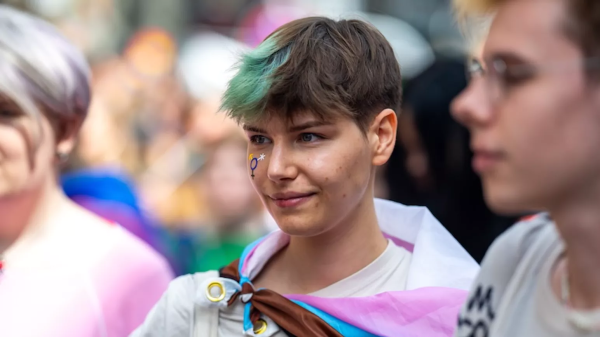
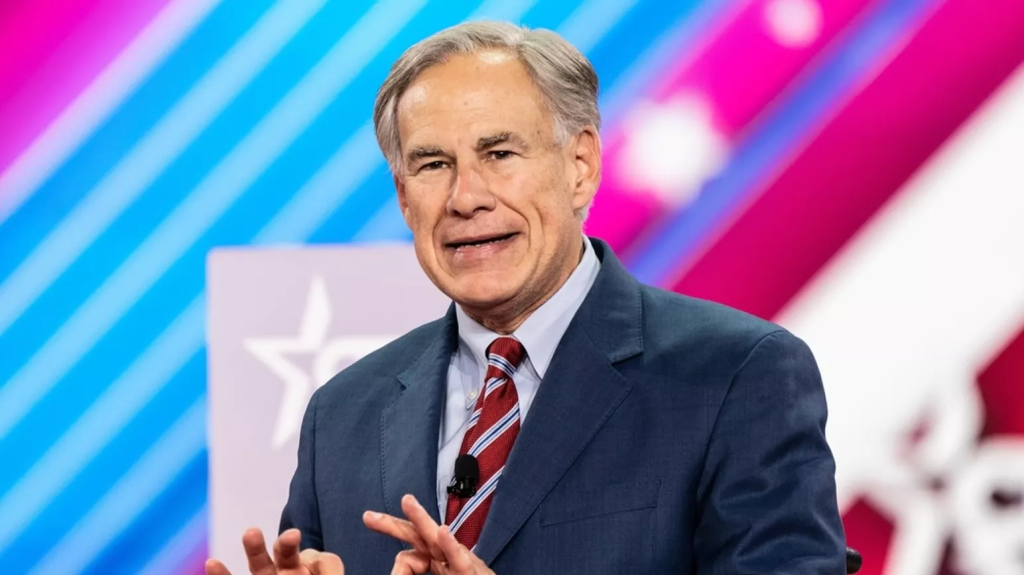
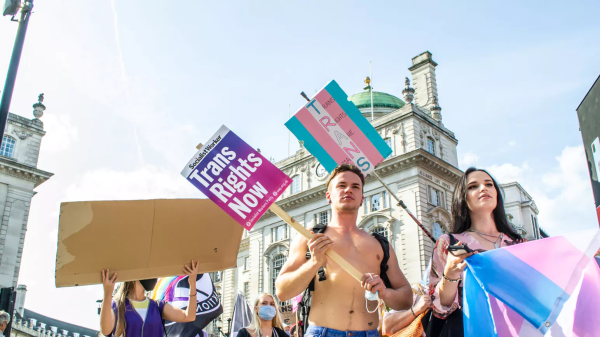
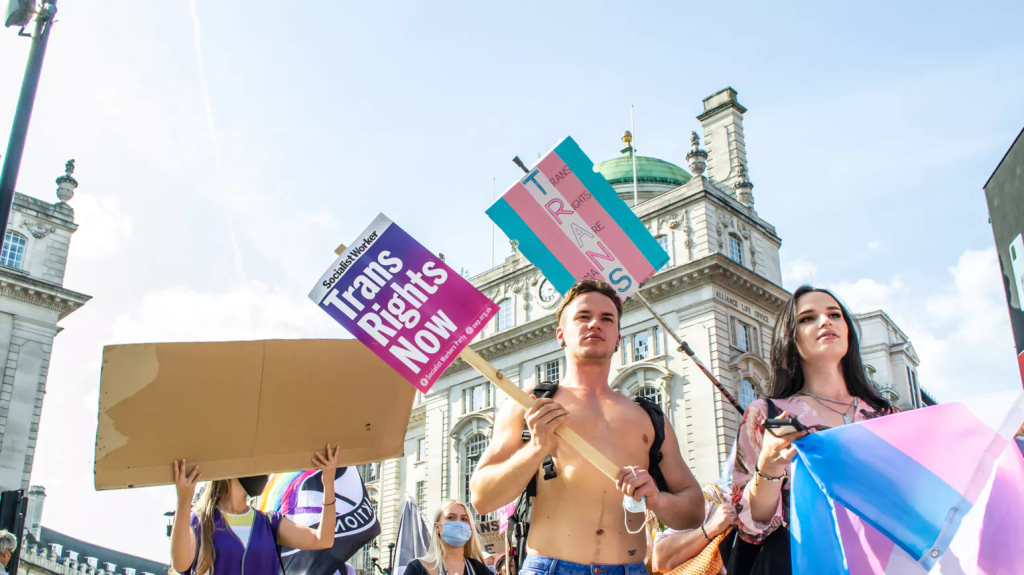
Over 100,000 people marched in London’s Trans+ Pride event on Saturday, making it the biggest trans Pride march in the world, according to The Guardian. The event’s theme, “Existence and Resistance,” was developed in response to the recent U.K. Supreme Court ruling that the legal definition of a woman in non-discrimination law is based on biological sex rather than gender identity.
“It was an emotional and powerful day,” the event’s co-founder Lewis G. Burton told the aforementioned publication. “At a time when the Supreme Court is making sweeping decisions about trans people without consulting a single trans person or organisation, and when a small, well-funded lobby of anti-trans campaigners continues to dominate headlines and waste public resources, our community came together to show what real strength, solidarity and care looks like.”
The march began at 1 p.m. local time on Saturday and proceeded for just under two miles, from near the BBC Broadcasting House to the Parliament Square Gardens. The event’s speakers included Heartstopper actress Yasmin Finney and activist Caroline Litman, whose trans daughter took her life in 2022 after waiting nearly three years for gender-affirming healthcare, the BBC reported.
London Trans+ Pride began in 2019 as an alternative to the city’s more commercial Pride march. This year’s event gained over 40,000 additional participants, compared to last year’s crowd of 60,000, the BBC noted.
“The message was clear: We will not be erased,” Burton said. “Our existence is natural, historic and enduring. You can try to take away our rights, but you will never remove us from society. We are a part of humanity – and the public will not stand by while harm is done to our community.”
The event occurred in the aftermath of a recent Supreme Court case in which For Women Scotland (FWS), an anti-trans organization, mounted a legal challenge over the definition of a woman under the country’s 2010 Equality Act. After the court ruled that the law’s definition of a woman is based on “biological sex,” the U.K.’s Equality and Human Rights Commission (EHRC) said trans women and men “should not be permitted to use” the public restroom facilities that align with their gender.
Alex Parmar-Yee, from Trans+ Solidarity Alliance — one of the groups that marched in the weekend event — said the EHRC’s guidance “has not provided any additional clarity, and actually is going to devastate the lives of trans people [who] will lose access to essential services and spaces.”
“The main concern really here is that it feels like there’s not been a consideration of trans members of the community, and that this guidance will pass behind closed doors, without the scrutiny, and without visibility, and without democracy,” Parmar-Yee added, saying that she and other trans organizations are pushing for the government to provide greater transparency around trans-related policies and guidances.
Speaking with Attitude magazine, activist Litman expressed concern over The Online Safety Act, a newly enacted U.K. law that requires websites with explicit adult material to conduct user age checks. Critics of the law worry it’ll be used to block age-appropriate LGBTQ+ resources for minors.
“It’s really scary,” Litman said. “[My late daughter] Alice got a lot of help and support online, whilst feeling very isolated in her own lived experience world that didn’t really have anything for her. Her online world really protected her – and so both these legislations are really concerning and need to be seriously looked at for reversal.”
When asked what she would tell her daughter now, Litman said, “Find your community. That’s what I’d say – find your community. Because they’ll save you, they’ll look after you, they’ll nurture you and support you and get you through this. To do this together. That’s what I’d say to her. And I love her. Love. I love, I love, love, love, I love.”
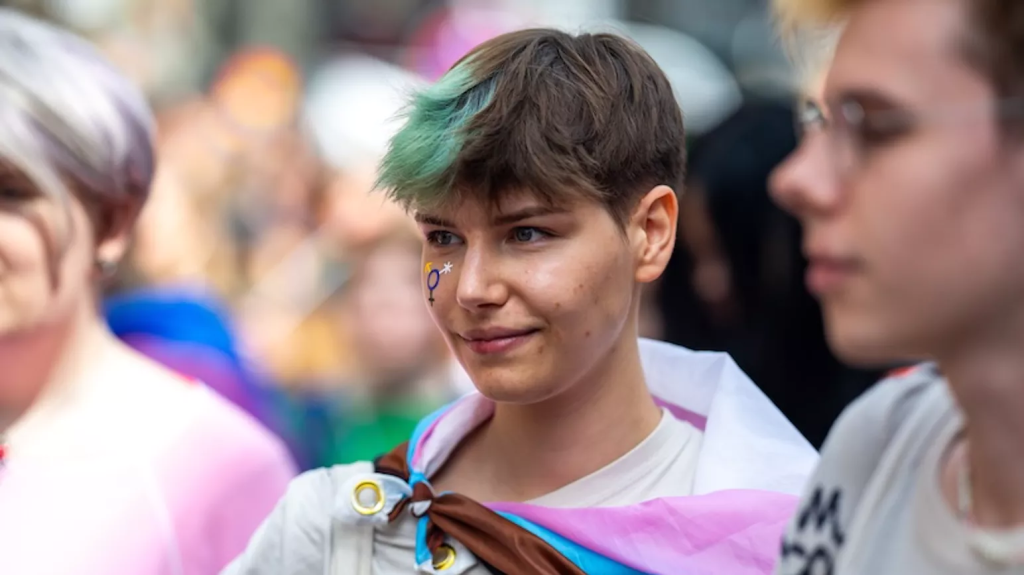
Nearly a decade after North Carolina passed its controversial “bathroom ban,” sparking nationwide backlash and corporate boycotts of the state, transgender bathroom restrictions have made a resurgence.
Nineteen states have laws that prohibit trans people from using the bathrooms that align with their gender identities in K-12 schools, and in many of those states the restrictions apply to other government-owned buildings as well. As a result, more than 1 in 4 trans people live in states with policies that restrict their bathroom use, according to the Movement Advancement Project, an LGBTQ think tank.
These measures are similar to North Carolina’s HB 2, a law enacted in 2016 that was widely referred to as the “bathroom bill.” The law sparked nationwide protests and corporate boycotts, most notably from the NCAA, which moved seven championship sporting events out of the state that year. The General Assembly repealed HB 2 with a compromise bill in 2017 that placed a statewide moratorium on municipalities passing nondiscrimination ordinances until 2020, and the state hasn’t passed a similar law since.
Though North Carolina’s law generated widespread protests, the bathroom policies passed over the last few years have received little national or corporate response, despite many of them being far broader than HB 2. That could be due, in part, to the dozens of other bills states have considered and passed targeting trans people.
Logan Casey, director of policy research at the Movement Advancement Project, said part of why there was more backlash to HB 2 was because it was among the first “bathroom bills.” In 2016, the year the bill became law, state lawmakers had introduced about 250 bills targeting LGBTQ rights, and many of those were bathroom restrictions and “religious freedom” bills, which are intended to protect people and businesses who say abiding by state and local nondiscrimination laws would violate their religious beliefs.
This year, Casey said, he’s tracking more than 700 anti-LGBTQ bills, up from nearly 600 last year, and they affect everything from trans people’s access to bathrooms, sports and health care to what LGBTQ materials students can be exposed to in schools.
“Just the sheer volume of attacks made it a lot harder for even just the general public to really track everything that’s been happening,” Casey said. “That’s been a big part of what has allowed so much to happen at once, is that they’re sort of flooding the zone with all these anti-LGBTQ attacks.”
Of the 19 states that subject trans people to bathroom restrictions, six have bans that apply to all government-owned spaces, including K-12 schools and colleges; eight states restrict bathroom use in K-12 schools and at least some government-owned buildings; and five states restrict bathroom use in K-12 schools only, according to MAP.
Most of those states also have a law or policy that legally defines “sex” in a way that could impact trans people’s access to bathrooms. Four additional states — Indiana, Nebraska, Kansas and Texas — define sex in a way that could affect trans people’s access to restrooms but don’t have official “bathroom bans” on the books.
Proponents of measures that restrict access to bathrooms and other sex-segregated facilities argue that allowing trans women to use women’s bathrooms could threaten women’s safety and privacy. However, a 2018 study from the Williams Institute at UCLA School of Law found that allowing trans people to use facilities that align with their gender identities does not increase safety risks.
Some states have expanded the scope of their bathroom restrictions in recent years. Arkansas, for example, passed a law in 2023 requiring trans people to use the bathroom of their birth sex in K-12 public schools and public charter schools. Earlier this year, the state passed another law expanding that measure to apply to shelters, correctional facilities and all public buildings, which include public colleges and universities.
A trans woman working at a university in Arkansas, who asked to be anonymous because she fears how speaking to the press could affect her current and future employment in the state, said the bathroom restriction, for her, “means segregation.” The day after the expanded law was enacted, the woman said her boss told her she would need to walk across the building to use a single-occupancy bathroom. If that bathroom is occupied, which she said it often is, she has to walk across campus to the only other single-occupancy bathroom.
“I feel singled out for something I don’t have any control over,” she said. “I’m not being treated equally to any of my cisgender colleagues. It makes me feel dehumanized.”
She added that some of her colleagues’ reactions have been upsetting, because “they’ve reacted as if I should be happy, like I have a private bathroom, and I don’t understand how they could come to that conclusion.”
As a direct result of the law, she said, she has accepted another job outside of the public university system that she’ll start next month. In the meantime, she said, more of her colleagues have started to misgender her.
“At this point, I really wish I just hadn’t come out at work,” she said.
Bathroom restrictions, Casey said, can contribute to more hostile workplaces and schools for trans people because they can be interpreted as the government “green-lighting” discrimination.
Many of the bills, like Arkansas’, also use vague language, which Casey said is intentional, because it can “provide cover” for the law to be applied more broadly.
“Because of the confusion and the fear around these bills, as well as the hostile climate that they contribute to, there can often be misperceptions that they also apply to private spaces,” Casey said. “That makes it much harder for trans people to actually know in those states what their rights are and aren’t, and can lead to far more reaching bans than the letter of the law actually calls for.”
Casey noted that there have been an increasing number of cases in which even cisgender women, who are not trans, have been questioned in restrooms. For example, in May, two women filed a discrimination complaint against a Boston hotel where they say a security guard followed them into the bathroom and accused one of them of being a man. Neither Massachusetts nor Boston has measures restricting trans people’s bathroom use.
North Carolina’s General Assembly passed HB 2 in response to a 2016 Charlotte ordinance that expanded the city’s existing nondiscrimination protections to include LGBTQ people. The expansion specifically protected trans people’s right to use the bathrooms that aligned with their gender identities.
When HB 2 passed that same year, the backlash was swift and far-reaching. As a direct result of the law, PayPal announced that it would no longer open a new operations center in Charlotte, which would have included investing $3.6 million in the state. The NCAA announced that it would not hold championship events in the state, and prominent musicians including Bruce Springsteen, Ringo Starr, Demi Lovato, Nick Jonas and Maroon 5 all canceled performances, citing the law.
Michael Walden, a retired economics professor at North Carolina State University who gave interviews about the boycotts when they happened, said North Carolina’s status as one of the first states to pass such a law triggered more protest and attention on the issue, and, as a result, businesses had to quickly figure out how to respond.
“When a lot of businesses saw there was a huge backlash, they didn’t want to be associated with that at all, which is understandable,” Walden said.
Recently, however, businesses have likely “assessed that the environment is different,” he said.
“They do observe some protests. They do observe some rallies and marches, etc., but nothing like we saw 10 years ago,” Walden said.
Trans rights have also become increasingly politicized and painted as controversial. Walden noted that in the last few years North Carolina has joined the more than two dozen states that have enacted laws prohibiting certain transition-related medical care for minors and banning trans students from playing on school sports teams that align with their gender identities. Neither of those laws generated national backlash or a response from the business community in the way HB 2 did.
“My analysis would be that the average business doesn’t want to take a position on any of this, either pro or con, unless they think they really have to, to satisfy their customer base or investor base,” Walden said.
The landscape for LGBTQ rights was also much different in 2016, the year after same-sex marriage became legal nationwide, Casey said.
“Opponents of LGBTQ equality were really sort of casting around and looking for some new way to continue to use LGBTQ issues as a wedge issue for a broader radical agenda, and bathroom bans and religious exemptions were really the two things they were focused on at that time, and both of those were relatively unsuccessful,” Casey said.
He pointed both to HB 2 and Indiana’s Religious Freedom Restoration Act, which passed in 2015 and led to criticism from tech giants like Apple and Yelp. As a result of the potential business effects Indiana’s law could have on the state, lawmakers quickly amended the measure to explicitly prohibit it from being used to justify discrimination.
More bathroom bans are likely on the horizon. Fifteen states have considered them so far this year, including three that successfully expanded their existing bans, according to the American Civil Liberties Union. A judge blocked Montana’s law in May while a lawsuit against it proceeds.
A new, broader version of North Carolina’s defunct ban could also be resurrected. Earlier this month, Gov. Josh Stein, a Democrat, vetoed a far-reaching bill that would redefine sex in the state to only recognize birth sex and would prohibit trans North Carolinians from changing the sex on their birth certificates and driver’s licenses. The law explicitly requires sleeping quarters on public school trips to be separated based on birth sex and could affect what bathrooms trans people can use in schools and public buildings. Though Stein vetoed the bill, Republicans in the state’s General Assembly could override his vetoes and plan to try to do so when they reconvene on Tuesday 29.
Read more at CNN.
The US Supreme Court’s decision to uphold Tennessee’s ban on gender identity care for transgender minors earlier this summer has fueled ongoing polarization around LGBTQ issues and controversial policies across the nation. The high court has also agreed to take on more cases dealing with trans rights in its next session that begins in October.
Twenty-seven states have passed laws limiting access to gender identity health care for transgender children and teenagers, according to KFF, a nonpartisan health policy think tank. An estimated 40% of trans youth ages 13 to 17 live in these states.
VIEW GRAPHIC IN THE ORIGINAL ARTICLE.
There have already been more anti-LGBTQ bills introduced in state legislatures so far this year than in any full year since at least 2020, a CNN analysis of American Civil Liberties Union data found. These bills span various aspects of everyday life, including bathroom access, school sports and identification documents.
CNN is tracking where these laws are being passed and where these bills are being introduced. This story will be updated.
Gender identity care includes medically necessary, evidence-based care that uses a multidisciplinary approach to help a person transition from their assigned sex— the one the person was designated at birth — to their affirmed gender, the gender by which one wants to be known.
Most of the states limiting gender identity care for trans minors adopted their bans in 2023, a record-breaking year for such laws. So far this year, one state — Kansas — has passed a ban, prohibiting the use of state funds to provide or subsidize health care for transgender youth.
Not all laws are currently being enforced, however. The ban in Arkansas has been permanently blocked by a federal court, though the state said it would appeal the ruling. Montana’s ban is also permanently blocked, according to KFF. Though Arizona has a 2022 law on the books banning surgical care for transgender minors, Democratic Gov. Katie Hobbs signed an executive order in 2023 ensuring access to gender identity health care.
VIEW GRAPHIC IN THE ORIGINAL ARTICLE.
Nearly 600 anti-LGBTQ bills have been introduced into state legislatures as of July 11, which is already more than any other year on record, according to the ACLU.
Education and health care continue to be key targets. There were more bills restricting student and educator rights — enforcing school sports bans and targeting students’ access to facilities consistent with their gender identities, for example — than any other category of bills, according to a CNN analysis of ACLU data.
VIEW GRAPHIC IN THE ORIGINAL ARTICLE.
Legislators in Texas have introduced 88 anti-LGBTQ bills so far this year, more than double the number of bills being considered in any other state. Four of those — including one that limits changes to gender markers on state medical records — have been passed into law.
In late July, Texas lawmakers are reconvening for a 30-day special session. On the agenda is a transgender bathroom bill.
Lawmakers in every state, except for Vermont, have filed at least one anti-LGBTQ bill in 2025, according to a CNN analysis. Twenty-two states have signed those bills into law.
VIEW GRAPHIC IN THE ORIGINAL ARTICLE
Read more at the AP.
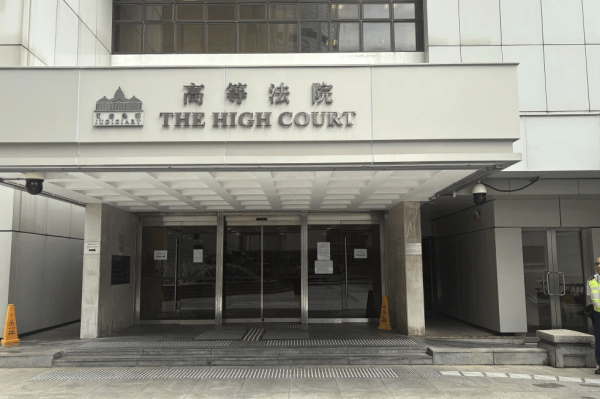
A Hong Kong judge on Wednesday ruled to strike down regulations criminalizing the use of bathrooms designated for the opposite sex, ruling in favor of transgender individuals’ rights to access public toilets matching their identity.
Judge Russell Coleman approved the judicial review of K, who was born a woman and identifies as a man, saying the regulations contravene an article of the city’s mini-constitution that stipulates all residents should be equal before the law.
But he suspended the declaration to strike down the regulations for a year to allow the government “to consider whether it wishes to implement a way to deal with the contravention.”
He said in the judgment that the regulations and “drawing the line of a person’s biological sex at birth create a disproportionate and unnecessary intrusion into the privacy and equality rights.”
The ruling marks another step forward in recognizing the rights of LGBTQ+ people in the Chinese financial hub. In recent years, the government has revised policies following activists’ wins in legal challenges.
Currently, only children under 5 years old accompanied by an opposite sex adult can enter a public washroom designated for the opposite sex. Those violating the rule face a fine of up to 2,000 Hong Kong dollars (about $255).
K launched a legal challenge in 2022, seeking to expand the exemption to pre-operative transgender people who have been diagnosed with gender dysphoria and have a medical need to undergo the process of living in their identified gender. He argued that his constitutional rights were infringed by the prohibition against him using public toilets allocated for men, the court heard.
The Environment and Ecology Bureau said in an emailed statement that the government will carefully study the judgment and consult the Department of Justice on the appropriate follow-up action.
Quarks, a group serving transgender youth in Hong Kong, welcomed the ruling, urging officials to take immediate action to rectify what it called long-standing discrimination in the system.
“The ruling is not just an affirmation of transgender rights legally but also a big step forward for Hong Kong’s overall human rights development,” it said on Instagram.
In 2023, Hong Kong’s top court ruled that full sex reassignment surgery should not be a prerequisite for transgender people to have their gender changed on their official identity cards.
The next year, the government revised its policy to allow people who have not completed full gender-affirmation surgery to change their genders on ID cards as long as they fulfill certain conditions. The conditions include the removal of breasts for transgender men, the removal of the penis and testes for transgender women, and having undergone continuous hormonal treatment for at least two years before applying.
Applicants also have to continue their hormonal treatment and submit blood test reports for random checks upon the government’s request.
In April, activist Henry Tse, who won the legal battle in 2023 and received his new ID card reflecting his gender change last year, lodged a fresh legal challenge over the new requirements.
Read more on Montana Free Press.
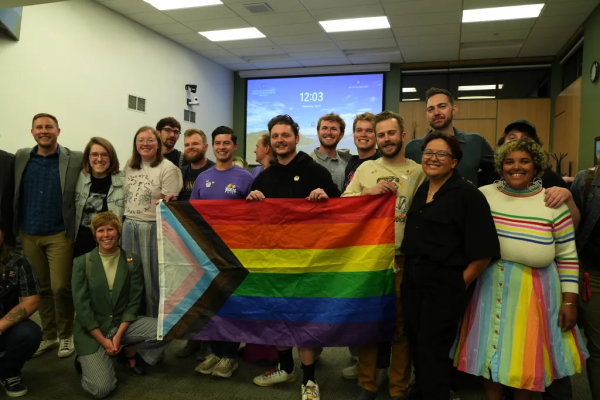
The rainbow Pride flag can once again fly over Bozeman City Hall after commissioners voted Tuesday night to make it an official city flag, sidestepping a Montana state law targeting the controversial symbol.
Four out of five of Bozeman’s commissioners supported the Pride flag, with the lone vote of dissent made by Commissioner Douglas Fischer, who argued that the flag was divisive and threatened to “drive a wedge” into the community.
Bozeman Mayor Terry Cunningham spoke to the commission after hearing more than five hours of intense public comment on the issue, both for and against the resolution. Cunningham said it was clear to him that Bozeman had a responsibility to stand for a “safe, welcoming and diverse community,” and adopting the Pride flag sends that signal.
“Everyone is welcome in Bozeman, and they are welcome under that flag,” Cunningham said.
The resolution declares “the Pride flag and its variants to be official flags of the city of Bozeman” and allows the mayor and city manager to choose when and where to fly the flags on city property. The resolution does not alter or replace the current city flag.
Public comment stretched late into the night as commissioners heard more than 70 people voice their opinions on the issue, with a relatively even split in opposition or support of the flag. City officials reported receiving more than 585 emails on the topic.
Rowan Larson addressed the commission as a new Bozeman resident, the rector of St. James Episcopal Church, and a member of the queer community. Larson said they moved to Bozeman in 2023 and “attitudes have gotten progressively worse,” to the point that the church can no longer fly Pride flags out of fear of retribution.
“We can no longer safely fly the Pride flag at our church because it is a danger to me, personally,” Larson said.
In contrast, openly gay, military veteran Andrew Jefferis said he’d called Bozeman home for 10 years and has never felt targeted for his sexual orientation while in the city.
“I feel like the implementation of this flag would only exist as evidence that the city of Bozeman needs to prove how good it is to its people, when it doesn’t have to,” Jefferis said. “The city is inherently welcoming.”
Ultimately, commissioners chose to support the Pride flag, with Commissioner Emma Bode saying state lawmakers had brought the fight to the city when they targeted the well-known symbol of gay rights, not the other way around.
“We did not start this,” Bode said. “The Legislature has pushed us.”
House Bill 819, passed by Montana’s Legislature in May and signed by Gov. Greg Gianforte, restricts “politically charged symbols on state property,” citing problems with enforcement, legal challenges, divisiveness and problems with neutrality and inclusivity in government.
However, opponents of the bill say it was specifically written to target municipalities that chose to fly the Pride flag in support of Montana’s queer community.
During Tuesday’s meeting, Bozeman City Attorney Greg Sullivan clarified that when the Pride flag was originally flown over city hall in 2021, it was protected as “government speech” under state law, but he added that the law had changed when the Legislature passed HB 819.
In a memorandum to the city commission, Bozeman’s city manager, Chuck Winn, outlined several fiscal concerns related to adopting the flag, writing: “Adopting the Pride flag may draw increased attention to the City’s diversity, equity, and inclusion initiatives and related executive orders. This could invite legal challenges or public scrutiny, leading to unplanned legal costs and additional staff time to respond. The increased attention could also lead to closer examination of other City initiatives, potentially complicating federal grant processes if concerns are raised about compliance with executive orders.”
Commissioner Jennifer Madgic asked the city manager to elaborate on the potential political fallout.
“We do not know what effects adopting the Pride flag or flying the Pride flag will have on those opportunities,” Winn answered, adding that Bozeman has applied for federal grants for housing, law enforcement and the fire department, and those grants could be affected by the adoption of the flag.
However, Winn went on to say that he wasn’t aware of any retaliatory measures taken by the state or federal governments against cities, including Missoula, Butte, Boise, and Salt Lake City, that have adopted the Pride flag.
Deputy Mayor Joey Morrison said he suspects lawmakers who have targeted the Pride flag are seeing their suppression efforts thwarted because local governments can easily bypass the legislation.
“This is no workaround; this is complying with the law,” Morrison said. “The law says cities can adopt official flags. Here is the procedure where we can adopt an official flag.”
For Jason Baide, who chairs the civic group Queer Bozeman, Tuesday’s decision to adopt the Pride flag was a big win, but also a defensive act for the community he represents.
“I am surprised by the level of opposition to our existence and some of the hateful comments that came through in this,” Baide told Montana Free Press after the meeting. “There was some harm done to folks,” during the hours of debate heard by the commission, but “we’re going to rally together and celebrate this.”
Read more at LGBTQ Nation.
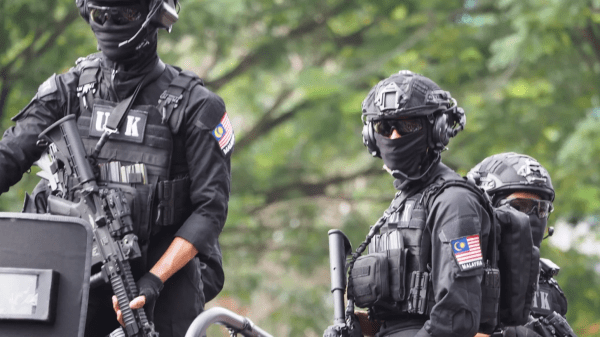
Police in the Malaysian state of Kelantan arrested 12 men during a raid on a “gay party,” the regional news site Sloboden Pecat reported. The arrests follow 20 that occurred in the state capital of Kota Bharu in June, amid a nationwide crackdown on LGBTQ+ people.
Kelantan state police chief Mohd Yusof Mamat said that officers found no evidence of sexual activity at the party, but they did discover condoms and HIV medication, suggesting that sexual activity may have been planned for later on. Police also found that three men had explicit adult images on their phones — police arrested and charged those three individuals. The officers didn’t arrest any additional people because they could find neither incriminating evidence nor specific charges to press against them.
“During interrogation, [party attendees] admitted that they belonged to a homosexual group,” Mamat said. “We are concerned about this type of behavior… We will continue to monitor the movements of homosexual groups.”
The police chief said over 100 local men attended the party, though most of them had left by the time the raid began.
Like one-fourth of the world, Malaysia’s anti-gay laws were originally imported by British colonizers. In the modern era, powerful Muslim clerics and politicians have used the laws to whip up outrage and support among conservative citizens. Recently, anti-LGBTQ+ sentiment in the country has gotten louder and deadlier.
In 2023, the Malaysian government reportedly began requiring music venues to have an emergency “kill switch” to quickly shut down concerts following an onstage same-sex kiss between members of the British rock band The 1975 at a Malaysian music festival. Government authorities also said that police will now conduct background checks on artists from other countries before scheduling performances to ensure that they will not promote illegal activities.
In 2022, 20 local Muslims were detained by religious authorities for cross-dressing or “encouraging vice” during a raid on an LGBTQ+ Halloween party. Local censors also said that between 2020 and May of this year, LGBTQ+ content accounted for half of all banned publications, the South China Morning Post reported.
In 2019, Malaysia caned four men between the ages of 26 and 37 for having a consensual same-sex encounter behind closed doors. The men’s actions violated a Sharia law forbidding “intercourse against the order of nature.” The men were reportedly discovered by authorities after the government monitored their “private” messaging. Around 50 officers raided the apartment where the men met to arrest those involved.
In March 2019, Tourism Minister Datuk Mohamaddin Ketapi claimed there are no queer or trans people in Malaysia, a statement which drew condemnation from the country’s LGBTQ+ community. Despite the country’s anti-LGBTQ+ actions, it still hosts an annual Seksualiti Merdeka (Independent Sexuality) festival, though politicians have increasingly tried to prevent it from occurring.
Since 2019, multiple trans women in Malaysia have also been beaten, hospitalized, or killed by violent mobs.
In August 2018, police in Kuala Lumpur raided the gay bar Blue Boy — afterwards, the Federal Territory ministry claimed the arrests were meant to “stop the spread of LGBTQ culture in society.” That same month, authorities sentenced two women to public caning for “attempted sexual relations.”
In June 2017, the country’s health offered its citizens cash prizes for making anti-LGBTQ videos. The following month, a hardline national Muslim group told its 50,000 members to oppose Starbucks for the coffeehouse chain’s pro-LGBTQ workplace policies. That same year, an 18-year-old boy was beaten with helmets, burned, shot in the groin, and declared brain dead by medical authorities — his classmates had attacked him for being “effeminate.”
In 2013, the Malaysian government sponsored a touring musical, entitled Asmara Songsang (Abnormal Desire), to teach young people about the dangers of being queer. In 2015, Human Rights Watch criticized Malaysia for fining and imprisoning transgender women.
In 2012, the country banned gay characters from all national TV shows and radio programs. In 2011, Malaysian school authorities sent 66 Muslim teenage boys to a correctional camp to learn “masculine behaviors” after their teachers identified them as “effeminate.”
Read more at LGBTQ Nation.
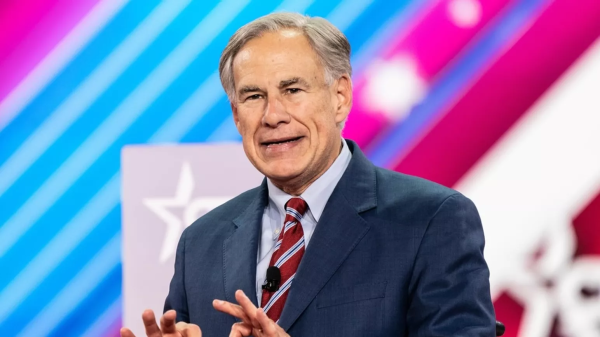
Texas Gov. Greg Abbott (R) has called a special legislative session to address the deadly floods that have left 134 people dead and 101 others missing. However, in preparation for the session, state GOP lawmakers have filed 82 measures, none of which address the flooding. Instead, they seek to ban transgender women from using women’s facilities (and Abbott personally supports the idea).
In Abbott’s proclamation for the special session, he laid out 18 priorities. The first four addressed the need for improved emergency warning, communication, and aid systems. The other priorities included further restricting abortions and election access, gerrymandering the state electoral map to favor Republicans, and “legislation protecting women’s privacy in sex-segregated spaces.”
The state constitution says legislators can only file bills related to the governor’s priorities, but Republican legislators haven’t filed any bills related to the deadly floods, KXAN reported.
Instead, Republican state Rep. Valoree Swanson filed H.B. 32, which would require people only to use facilities in public schools, state universities, government-owned buildings, jails, and family violence shelters that match the “biological sex” assigned on their original birth certificate. Texas recently changed its laws to forbid transgender people from changing the gender markers on their birth certificates and driver’s licenses.
Anyone who allows the proposed law to be violated could be subject to civil fines from $5,000 to $25,000, as well as additional penalties. Swanson filed a similar bill during the previous legislative session, but it failed to pass after missing several legislative deadlines, Chron reported.
Three other special session bills, H.B. 37, 65, and 70, would punish any person or internet service provider who aids or abets the distribution of abortion medication.
H.B. 38, introduced by Democratic state Rep. Jessica Gonzalez (who is also chair of the Texas House LGBTQ Ca ucus), would prohibit workplace, housing, and public accommodations discrimination against LGBTQ+ people, but there’s no way it’ll pass the state’s Republican-majority legislative chambers. It’s also unclear how the bill relates to Abbott’s list of priorities.
“I am proud to have filed H.B. 38 in preparation for the upcoming special session of our legislature,” González wrote in a statement on Tuesday. “H.B. 38 is a comprehensive nondiscrimination bill that would codify equal protection for the LGBTQ+ community and military veterans in employment, housing, and public accommodations.”
During the last legislative session, Texas Republicans filed 88 anti-LGBTQ+ bills, four of which became law, including a ban on diversity, equity, and inclusion (DEI) initiatives in public schools and one mandating people’s genders be legally determined by their reproductive organs. The Texas House voted to repeal the state’s anti-sodomy law, but Republicans prevented the repeal from getting a vote in the state Senate.
Read more at LGBTQ Nation.
Just days before this weekend’s Pride parade in Northumbria in Northern England, a judge ruled that the local police department’s chief constable wrongfully allowed uniformed officers to march under a Progress Pride flag at last year’s celebration.
In a controversial decision critics say is riven with bias, the judge claimed officers marching with the flag breached their duty to impartiality and endangered imagined protesters with “gender critical” views.
The judicial review was brought by a female event participant who objected to police officers “associating with messaging which was supportive of the cause of gender ideology,” The Times of London reported.
In her challenge, plaintiff Lindsey Smith highlighted a decision to allow officers to station a police van decorated in colors “indicative of support for the cause of gender ideology… namely the colors of the Progress flag.”
The “messaging which was supportive of the cause of gender ideology, including in the form of placards, chanting, imagery or flags,” was a threat to her personal safety, she said.
The judge in the case, Mr. Justice Linden, agreed, ruling it was “contrary to the uniformed officers’ duties of impartiality”, as well as the chief constable’s “own duty of impartiality, to participate in the 2024 march in the way that they did.”
“The fact that they wore their uniforms, marched as a contingent and carried the Police Pride and other flags demonstrated their support for the cause as police officers,” the judge said, and by extension indicated hostility to those with “gender critical” views.
“It is not hard to imagine circumstances in which officers in question might be called on to deal with a clash between gender critical people and supporters of gender ideology, and therefore situations where the former had cause for concern as to whether they were being dealt with impartially,” the judge wrote.
The judge implied this “perceived” bias would influence officers’ decisions to permit “gender critical” people to demonstrate at all and could result in attempts to “eject a gender critical person from the march.”
Smith’s lawyer, Paul Conrathe, said the ruling was of “national importance.”
Referring to so-called “gender ideology,” Smith said British police “must be above the fray and avoid taking sides” on what he called “contested issues.”
Northumbria police responded that their “primary aim” during last year’s march was “to keep people safe.” The event also provided the force “with an opportunity to engage with people including those who may have less confidence in policing,” they said following the ruling.
The department added that senior Northumbria officers would “work through the ruling to understand the implications.” They did not clarify whether officers would be allowed to march in the Pride parade this weekend.
Read more at The Advocate.
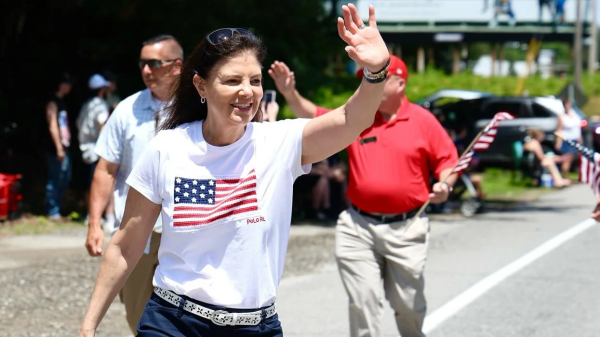
New Hampshire Republican Gov. Kelly Ayotte has gone against her party and vetoed two anti-LGBTQ+ bills and three other far-right ones.
Ayotte vetoed the bills Tuesday, while signing 101 others into law.
House Bill 324 would have barred schools from distributing books and other materials deemed “harmful to minors.” It was aimed primarily at sexual content and likely would have been used against books with LGBTQ+ characters and themes. It also would have required school districts to strengthen the process through which parents could challenge these materials.
“Current state law appears to provide a mechanism for parents through their local school district to exercise their rights to ensure their children are not exposed to inappropriate materials,” Ayotte said in her veto message. Under this law, “parents must be notified at least two weeks in advance of course materials that involve human sexuality, sexual education, sexual orientation, gender, gender identity, or gender expression,” she noted. “If a parent objects in writing, New Hampshire law further requires an alternative agreed upon between the school district and the parent.”
“Therefore, I do not believe the State of New Hampshire needs to, nor should it, engage in the role of addressing questions of literary value and appropriateness, particularly where the system created by House Bill 324 calls for monetary penalties based on subjective standards,” Ayotte added. Parents who were dissatisfied could have filed lawsuits.
House Bill 148 would have let businesses and correctional facilities to classify and segregate people by sex assigned at birth rather than gender identity, affecting restroom and locker room use. State law bans discrimination based on gender identity, but under the bill, these classifications would not have been considered a violation of the law.
“I believe there are important and legitimate privacy and safety concerns raised by biological males using places such as female locker rooms and being placed in female correctional facilities,” Ayotte wrote. “At the same time, I see that House Bill 148 is overly broad and impractical to enforce, potentially creating an exclusionary environment for some of our citizens.” It could have led to lawsuits as well, she said. Her immediate predecessor as governor, fellow Republican Chris Sununu, had vetoed a similar bill.
Additionally, Ayotte vetoed House Bill 358, “which would make it easier for parents to apply for religious exemptions to child vaccine requirements in school,” House Bill 446, “which would require schools to get explicit parental permission before giving students non-academic surveys,” and House Bill 667, “which would require sex education courses to include ‘a high quality computer generated animation or ultrasound video that shows the development of the heart, brain, and other vital organs in early fetal development,’” the New Hampshire Bulletin reports. She also vetoed two budget-related bills.
It would take a two-thirds majority in both the state House and Senate to override Ayotte’s vetoes. Republicans do not have a veto-proof majority in the House.
House Democratic Leader Alexis Simpson issued a statement Tuesday praising the vetoes without mentioning Ayotte. “We’re grateful that today New Hampshire chose to protect the rights and dignity of our transgender neighbors — and House Democrats will keep fighting until every Granite Stater can live freely, openly, and safely, no matter who they are,” Simpson said, according to the Bulletin.
Ayotte was not always an LGBTQ+ ally, having once opposed marriage equality and adoption by same-sex couples. But “Ayotte’s vetoes are a rejection of her party’s attempt to assert cultural control throughout the state, and the country,” The New Republic notes.
 fleeredstates.blog
You must be logged in to post a comment.