The federal government is set to only recognize two sexes, male and female, under an executive order that President Donald Trump is soon expected to sign.
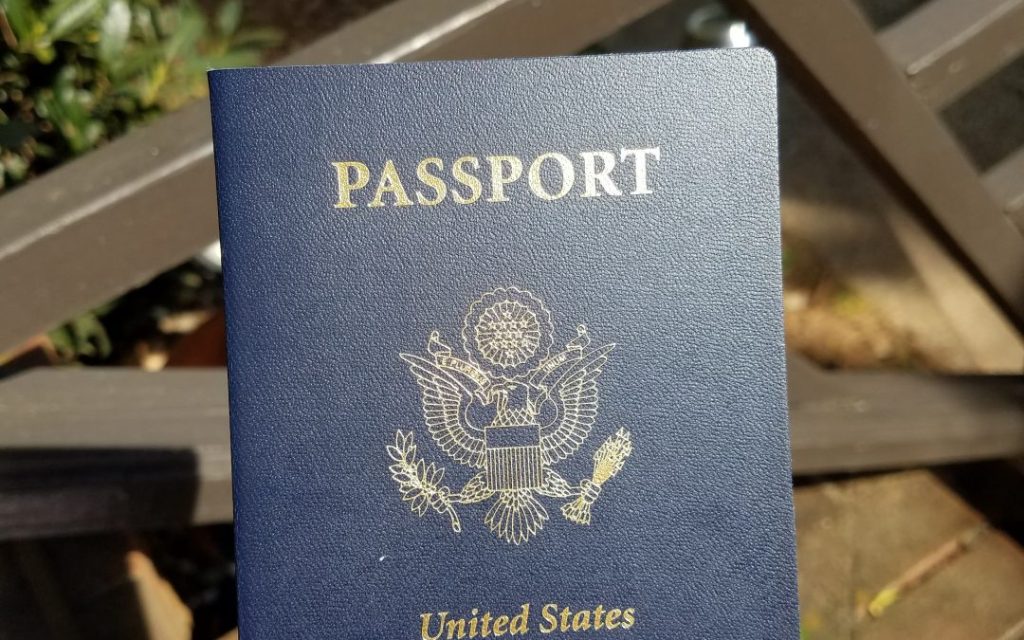
The order would reverse efforts by the Biden administration to broaden gender identity designations, including on passports.
“As of today, it will henceforth be the official policy of the United States government that there are only two genders, male and female,” Trump said during his inaugural address Monday, taking an early step to fulfill one of his culture war campaign promises.
The order, a Trump administration official told reporters Monday, is aimed at “defending women from gender ideology extremism and restoring biological truths to the federal government.” Male and female “are sexes that are not changeable, and they are grounded in fundamental and incontrovertible reality,” the official said.
The federal government would also shift from using the term “gender” to “sex,” and that sex would be “an individual’s immutable biological classification,” the official said.
All government agencies would ensure that official documents, including passports and visas, “reflect sex accurately,” the official said. Also, departments running federal prisons, migrant shelters, rape shelters and other “intimate spaces” would be directed to protect single-sex spaces for privacy. And employee records would also adhere to the executive order, as would federal departments’ messaging.
“Agencies are no longer going to promote gender ideology through communication forms and other messages,” the official said, adding that grants and contracts would be reviewed to ensure that “federal funds shall not be used to promote gender ideology.”
Reversing Biden expansion
Trump’s executive order would dismantle efforts by the Biden administration to be more inclusive of Americans’ gender identification.
As of 2022, US citizens have been able to select “X” as their gender marker on passports. One’s marker does not need to match the gender on citizenship documents or photo ID, nor is medical documentation needed to change one’s gender, according to the State Department.
“We promote the freedom, dignity, and equality of all people – including LGBTQI+ individuals,” the department’s website says. “We are demonstrating this commitment to better serve all U.S. citizens, regardless of gender identity.”
Later that year, Americans were able to start changing their sex identification with the Social Security Administration without needing to provide medical certification. However, Social Security’s record systems still require a designation of male or female, though the administration said it was exploring policy and systems updates to support an “X” designation.
“The Social Security Administration’s Equity Action Plan includes a commitment to decrease administrative burdens and ensure people who identify as gender diverse or transgender have options in the Social Security number card application process,” said Kilolo Kijakazi, the administration’s acting commissioner at the time.
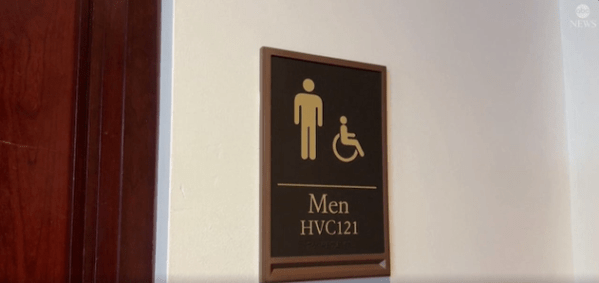
Ohio Governor Approves Ban on Transgender Students Using Preferred Bathrooms
Texas Transgender Community Fights Back After Capitol Bathroom Ban
Residents of Odessa, Texas, are speaking out after the city council amended a local ordinance to ban transgender individuals from using public restrooms that align with their gender identity. Meanwhile, in Ohio, Republican Governor Mike DeWine has signed a law banning transgender students from using bathrooms that correspond to their gender identity. The new legislation mandates that students in K-12 schools, as well as colleges and universities, must use the restroom or facility designated for their sex assigned at birth.
The law clarifies that it does not prohibit schools from constructing single-occupancy restrooms and allows individuals of the opposite gender to enter a bathroom to assist someone else, if necessary.
MORE: Congressional Bathroom Ban Adds to Growing Transgender Policy Debate
Ohio now joins at least 14 other states in restricting transgender individuals from using bathrooms that match their gender identity, according to the Human Rights Campaign.
Supporters argue that the ban addresses concerns about student privacy and safety, while critics contend that it fuels baseless fears about transgender students and could put them at greater risk of discrimination or harm.
Governor DeWine’s office did not respond to ABC News’ request for comment prior to the bill’s signing. However, in the summer, he told reporters that he was reviewing the “specific language” of the legislation.
“I’m supportive of kids being able to use bathrooms that align with their gender assigned at birth for their protection, but I’ll need to review the specific language of the bill,” DeWine told reporters.
Transgender healthcare, bathroom access, sports participation, and other related issues have become central to the Republican legislative agenda across the country in recent years. This trend has led to a surge in anti-LGBTQ bills, with hundreds introduced during the 2024 legislative session alone, according to the American Civil Liberties Union.
DeWine has occasionally bucked the state’s Republican leadership on transgender matters. In December 2023, he vetoed a bill that would have banned gender-affirming care for transgender youth, including restrictions on puberty blockers, hormone therapy, and surgeries.
With Trump potentially returning to office, I’m concerned that more transgender people will be denied the right that had such a profound impact on my life.
When I learned on August 21st that the Texas Department of Public Safety had quietly revoked the ability to change your gender on driver’s licenses and birth certificates, I was stunned. Devastated. The already daunting process of officially changing one’s name and gender marker had just been taken away. Trans Texans are now stripped of a right that once allowed me to live with less fear. And as Donald Trump nears a potential return to office, many are fearful that trans Americans nationwide could face the same loss.
On a random Tuesday in December 2020, I made the decision to start hormone replacement therapy (HRT). By then, I had been using they/them pronouns for two years and had undergone top surgery eight months earlier. For years, I had thought about beginning HRT, hoping it would help me escape a life where people assumed I was a woman based solely on my appearance. That day, I finally felt ready to silence the voices in my head telling me I’d be letting others down by embracing who I truly was. I was ready to step out of the shadows—out of the expectations others placed on me—and into my own light. I went to an LGBTQ+ clinic, got a prescription for testosterone, and, in that moment, I felt like my life was finally beginning.
And then everything changed.
By April 2021, my voice had deepened, stubble began appearing on my face, and I no longer had a period—physical changes I embraced with open arms. Strangers began noticing too, and suddenly, I was being treated differently. The looks I once got as a perceived butch lesbian shifted to confused stares, discomfort, and sometimes, outright disdain.
‘Dropping off flowers for your wife?’ a receptionist at a gynecologist’s office asked me that same April. ‘Not quite,’ I replied with a nervous laugh. ‘I’m here for an appointment.’ As is customary, I handed over my ID. She glanced at it—name: [something I no longer go by], sex: F—then looked back at me, clearly unsure how to reconcile the mismatch. She called over a coworker, whispering about what to do in this ‘situation.’ I stared at my phone, trying to stay calm as the coworker muttered, ‘Just check her in.’ And she did. I sat down, feeling that familiar discomfort of my presence unsettling others.
Throughout that entire doctor’s appointment, I was treated as though my body was something entirely unique—as if I were the only person who had ever transitioned. In moments like these, I try to chalk it up to ignorance, reminding myself that 71% of Americans say they’ve never met a trans person. But at what point does ‘ignorance’ become too generous?
This same scenario unfolded at the club when bouncers checked my ID, when people hesitated to call me ‘sir’ or ‘ma’am’ as they guided me to a table at restaurants, or when customer service reps asked me twice as many security questions as they did for others. And every time I needed to use the bathroom, I had to make the decision: men’s or women’s? At best, I was made uncomfortable for a few seconds. At worst, I was subjected to slurs or threats of violence. In all those moments, I told myself, ‘It’s no big deal’—as though it were no big deal for my mere existence to constantly puzzle or disturb people. The very fact of my body made others treat me as if I were a problem. I came to expect discomfort every time I stepped outside my door.
Every time I grabbed my keys, phone, and wallet, I weighed the emotional and physical risks of venturing out into the world. This constant calculation is why some trans people delay medical care or feel disconnected from the world around them. It’s also why, after two years on HRT, I finally decided to change the name and gender marker on my ID. But this was not a decision I made lightly.
Until August, changing your name and gender marker in Texas cost $350 (plus lawyer fees, unless you could prove you couldn’t afford it). You also needed a doctor’s note stating that you were ‘receiving clinically appropriate treatment related to your gender identity.’ (The pathologizing of transness is its own burden.) Once you had those documents and filled out a ‘Petition to Change the Name and Sex/Gender Identifier of an Adult’ form, you had to appear before a county judge. That judge could deny your petition for any reason—or no reason at all. It was a request, not a guarantee. In Texas, trans people often seek advice from other trans folks about which counties to target, because not all judges are inclusive. Many travel from across the state to Austin, the third-queerest city in the U.S., in hopes of a more supportive judge. Even then, judges can demand more ‘proof’ than the law requires. In a state where anyone can change their last name after marriage with minimal hurdles, trans people are forced to jump through countless hoops just to have their gender recognized.
It took a month for me to get a letter from a doctor. Another month passed before I could find time to go to the courthouse, which was only open during regular work hours—a schedule that most people can’t easily accommodate. When I finally arrived at the Travis County office, I sat for two hours waiting to be helped. A county clerk, who had warmly greeted other patrons, glanced at my petition and abruptly told me, ‘If you aren’t finished with your papers, we can’t help you.’ Despite the cold reception, I was determined to get this done—to untangle the mess of living as a visibly trans person. I handed in my request, and six weeks later, I received an email with a PDF confirming that my petition had been approved.
Afterward, I spent months updating my name and gender marker on my driver’s license, social security card, passport, and a slew of other official documents. One might ask, ‘Why would anyone willingly sign up for such a cumbersome and clearly prejudiced process?’ The answer is simple: I needed it. My body not matching the letters on my ID had become a life-threatening issue. Without the change, I’d still be trapped in the daily hell of being put in emotional and physical danger. Not all trans people feel the need to change their name and gender marker, but for me, it was crucial. Because this option was available, I’ve been able to build a new life.
The difference between my life from April 2021 to September 2022—when I didn’t ‘look like a girl’ but still had a feminine name and sex on my ID—and now is like night and day. I can hand over my ID and no longer feel like I’m putting myself in harm’s way. It says ‘Kaybee,’ Sex: M (though that still doesn’t feel right, since Texas hasn’t offered an X gender marker yet). Now, when I pass over a piece of plastic, I no longer feel like I’m outing myself or offering my life up for judgment.
In the same month that Texas reversed the right to change your name and gender marker, Trump announced he would sign an executive order banning gender-affirming care for trans youth on his first day back in office. As if it isn’t enough that Governor Greg Abbott, Lieutenant Governor Dan Patrick, Texas Attorney General Ken Paxton, and a whole host of other Texas politicians have pushed so much misinformation about the trans community that people now feel emboldened to mistreat us. As if it’s not enough that Texas attempts to pass transphobic laws every year.
Everything about this group of people—who could never understand what it’s like to hand over an ID that doesn’t match how the world sees you—fills me with disgust. They don’t know even a fraction of what people like me go through, just to live authentically.
Yes, I still have to explain to medical providers that my legal sex and my sex assigned at birth are not the same. Yes, I still out myself every time I take off my shirt, revealing the two beautiful top surgery scars that are part of my journey. My goal was never to ‘pass’ as cis, or to meet the ridiculous expectations that transphobes project onto us. My goal has always been to be myself. Safely.
Trump’s inauguration is on January 20th, and the next Texas legislative session—the period when most anti-trans laws will be debated—starts just a week earlier, on January 14th. In preparation, Texas lawmakers have already prefiled 34 anti-trans bills for the 2025 session. Now is the time to act, to support and defend the psychological and physical safety of trans people. I will be contributing both money and volunteer hours to the Transgender Education Network of Texas. This BIPOC-led organization fights anti-LGBTQ+ laws daily, and they offer a wealth of resources on their website, including guidance on how to file discrimination complaints with the U.S. Department of Health and Human Services.
Despite the wishes of those who seek to erase us, trans people like me will be part of the future of Texas—and beyond.
I long for a Texas where trans people don’t just survive, but thrive. We deserve safety here, in the Lone Star State, and anywhere else we choose to be. I spent too much time living under an identity that wasn’t mine, but I was able to change it. Everyone else deserves the same right to do so.
LGBTQ+ ballot initiatives have long served as a wedge issue, mobilizing conservative voters and influencing the rights and freedoms typically protected by law. The 2024 election follows this tradition, with LGBTQ+ civil rights once again being subjected to public debate.
In New York, voters will decide whether to include sexual orientation, gender identity, and gender expression in the state’s anti-discrimination amendment. Meanwhile, reproductive rights will also be up for a vote in 10 other states.
California, Colorado, and Hawaii voters will decide this November whether to repeal their states’ constitutional bans on same-sex marriage.
Since 1998, same-sex unions have consistently been the top issue on state referendums. In that time, 34 states have put the question to voters, with many passing constitutional amendments that prohibited same-sex marriage. These amendments were often used as a political tool to mobilize conservative voters, particularly in the 2004 election when 11 states approved such bans, helping to boost George W. Bush’s campaign.
Marriage equality consistently lost at the ballot box until 2012, when voters in Maine, Maryland, Minnesota, and Washington approved same-sex marriage, signaling a shift in public opinion that had been building since around 2009, when support for same-sex marriage crossed the 50% threshold in national polls.
In 2015, the Supreme Court’s landmark Obergefell v. Hodges decision struck down all state constitutional amendments banning same-sex marriage, declaring such bans unconstitutional. However, these amendments remain in place in several state constitutions. Activists are now pushing to repeal them, especially in light of concerns that the conservative-leaning Supreme Court could overturn Obergefell, as Justice Clarence Thomas hinted after the court struck down Roe v. Wade.
The Origins of Ballot Initiatives on LGBTQ+ Rights
California’s 1978 election introduced the first state ballot initiative related to LGBTQ+ rights—Proposition 6, also known as the Briggs Initiative. Sponsored by Orange County legislator John Briggs, the initiative sought to ban anyone who engaged in “public homosexual activity” from working in California public schools. The proposal was part of a broader wave of anti-gay activism spurred by Anita Bryant’s 1977 “Save Our Children” campaign in Florida, which successfully repealed Dade County’s anti-discrimination ordinance based on sexual orientation. Harvey Milk played a pivotal role in organizing the opposition to Prop 6, which was defeated by a 16-point margin.
Since then, other states have introduced ballot initiatives aimed at legalizing or banning discrimination based on sexual orientation or gender identity. Over time, voters have increasingly supported anti-discrimination measures. In 1988, Oregon voters overturned the governor’s authority to ban discrimination based on sexual orientation. In 2018, Massachusetts voters upheld a law prohibiting discrimination based on gender identity.
Maine and Oregon: Key States in the Fight for LGBTQ+ Rights
Maine and Oregon have consistently put LGBTQ+ rights to a vote. In Maine, voters initially blocked same-sex marriage in 2009, but then approved it by the same 53% margin in 2012. Maine also rejected anti-LGBTQ+ discrimination protections in 1998 and 2000, only to approve them in 2005. In Oregon, voters defeated a “don’t say gay” measure in 2000 by a narrow 5.7% margin.
Many states also used ballot measures to resist the inclusion of sexual orientation as a protected identity in anti-discrimination laws. In the 1990s, voters in Oregon, Idaho, and Maine approved such measures, protecting sexual orientation as a legally recognized identity.
The Impact of Other Ballot Measures on LGBTQ+ Rights
It’s not just LGBTQ+-specific ballot measures that impact the community. Other laws, such as voter ID requirements in Arkansas and North Carolina, disproportionately affect trans individuals and other marginalized LGBTQ+ people, limiting their ability to vote.
In addition to these referendums, the candidates voters elect at the state level will play a critical role in shaping LGBTQ+ rights. Republican-led legislatures have introduced or passed hundreds of bills targeting LGBTQ+ individuals, particularly in areas such as gender-affirming health care, bathroom access, inclusive education, and sports participation. Supporting state-level and local candidates who champion LGBTQ+ rights will have long-term implications, even if certain issues are not directly decided by referendum.
Civil Rights and Public Opinion
The fight for civil rights has a long history of being put to public referendum. Since 1868, issues related to race, sex, and disability have often been decided by voters, with initial support for discrimination gradually giving way to support for equality. While women’s rights gained public approval in the 1970s, LGBTQ+ rights did not see widespread support until the 2000s.
The question of whether civil rights should be determined by public opinion, rather than by courts or legislatures, has allowed forms of discrimination—such as racism, sexism, and homophobia—to become entrenched in law. Although public opinion on LGBTQ+ rights is often divided and fluid, most polls now show a majority in favor of anti-discrimination laws for LGBTQ+ individuals.
The Importance of Voting
With LGBTQ+ rights on the ballot this November, it’s more crucial than ever to vote. In addition to ballot measures, the elected officials who hold office at the state and local levels will have the power to pass or block pro-equality legislation, impacting LGBTQ+ rights for years to come. Whether through referendums or legislative action, LGBTQ+ rights remain at stake, and your vote matters.
Make your voice heard—not just on ballot measures, but by choosing candidates who will protect and advance equality for all.
A recent mailer from the Texas GOP is facing backlash for misrepresenting the story of a trans man and former high school wrestler, Mack Beggs.
The mailer targets Rep. Colin Allred (D-TX), who is challenging Ted Cruz (R-TX) for his Senate seat. It features a blurred image of Beggs when he was an out trans boy competing in girls’ sports, with the text: “Colin Allred failed to protect women’s sports, supporting boys competing with girls.”
At the time, the Texas University Interscholastic League (UIL), which governs public school sports, had prohibited Beggs from joining boys’ teams due to the gender marker on his birth certificate. While transitioning and taking testosterone, Beggs wrestled on the girls’ teams, becoming the center of controversy, particularly after winning state championships in 2017 and 2018.
Rep. Allred has consistently supported trans inclusion in sports, voting against bills that would have barred trans women from participating in women’s sports.
Beggs, now speaking out, expressed concern for his and his family’s safety due to the mailer’s misleading use of his image. “How they’re using my photo, it’s just very misleading. It’s not OK,” he told the Houston Chronicle. He is now seeking legal advice from the American Civil Liberties Union.
On Instagram, Beggs condemned the Texas GOP’s use of his story. “The Republican State of Texas Government has decided to USE my image for yet again one of their political campaigns,” he wrote. “I have already had a few people let me know about this campaign ad paid for and by the Republican Party in TX. NOT COOL. 🚫”
He added: “The fact they are STILL using my story and FACE for their political agendas. It’s sickening at this point.”
A House committee has advanced a controversial bill, H.R. 736, known as the “PROTECT Kids Act,” which would require schools to disclose transgender students’ identities to their parents if the students request to use different pronouns, a new name, or facilities aligned with their gender identity. The bill, introduced by Rep. Tim Walberg (R-MI) and Sen. Tim Scott (R-SC), would enforce this policy on all elementary and middle schools that receive federal funding, threatening to withhold funds from any school that does not comply.
Rep. Walberg, who has a history of supporting Uganda’s anti-LGBTQ+ laws, stated that parents should be informed of all decisions affecting their children. He argues that the bill would “safeguard parental rights by requiring parental consent and will help mitigate under-the-radar activism in our schools.” However, critics, including Rep. Mark Pocan (D-WI), chair of the Congressional Equality Caucus, have condemned the bill as an attack on transgender students, warning that it could put vulnerable kids at risk, particularly those without supportive families.
The bill passed the House Committee on Education and the Workforce with a 22-12 vote and will now proceed to the House floor for consideration. While it may pass the Republican-controlled House, it faces significant opposition in the Democratic Senate, and President Joe Biden is unlikely to sign it into law, as it contradicts his administration’s policies on LGBTQ+ rights.
Shortly after announcing that his company, X, would be moving out of California due to the state’s newly enacted law that protects trans students, Elon Musk went on a demeaning rant about his own transgender daughter on a right-wing podcast, repeatedly misgendering her and saying that she had been “killed by the woke mind virus.”
The billionaire was a guest on Monday’s episode of The Jordan B. Peterson Podcast, which found the titular conservative influencer interviewing Musk at Gigafactory Texas, where Tesla is headquartered. Toward the end of the podcast, Peterson asked Musk about “one of things that [he’s] been relatively vocal about,” namely gender-affirming care. Peterson referred to trans minors’ access to medical care “the worst medical and psychological malpractice I’ve ever seen anywhere,” adding, “At least the bloody Nazis knew it was wrong and tried to hide it.”
(Peterson was likely referring to the Institute for Sexual Research in Berlin, which performed the world’s first gender-affirming surgeries, and which was a noted target of one of the first and largest of the Nazi book burnings.)
Although trans advocates have been sounding the alarm about Musk since he bought the platform formerly known as Twitter in 2022, the CEO has tilted even further into more full-throated endorsement of transphobic talking points in recent years. In his interview with Peterson, he agreed with the psychologist, calling the term gender-affirming care “a terrible euphemism” and referring to it as “child mutilation and sterilization,” per The Daily Beast.
“You’re taking kids who are obviously often far below the age of consent — almost every child goes through some kind of identity crisis, it’s just part of growing up — so it’s very possible for adults to manipulate children who have are having a natural identity crisis into believing that they are the wrong gender and that they need to be the other gender,” Musk said. Though it is a common right-wing talking point that transness naturally desists in most young people, studies have found that trans youth are actually extremely unlikely to detransition.
But the issue is personal for Musk, as he explained to Peterson, claiming that he was “essentially tricked into signing documents for one of my older [children]… before I had really any understanding of what was going on” — a reference to his daughter Vivian Jenna Wilson, who in 2022 filed a petition to change her name in part because, as she stated, “I no longer live with or wish to be related to my biological father in any way, shape or form.”
A federal appeals court panel has ruled that Tennessee does not unconstitutionally discriminate against transgender people by not allowing them to change the sex designation on their birth certificates.
National headlines from ABC News
Catch up on the developing stories making headlines.
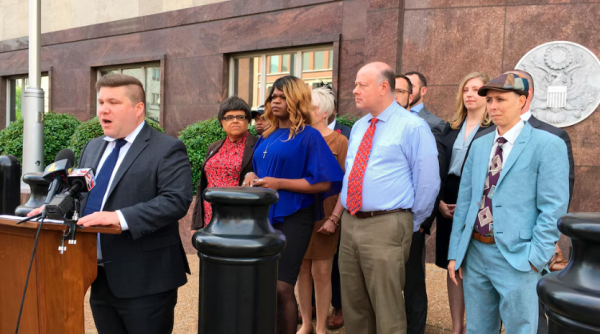
NASHVILLE, Tenn. — A federal appeals court panel ruled 2-1 on Friday that Tennessee does not unconstitutionally discriminate against transgender people by not allowing them to change the sex designation on their birth certificates.
“There is no fundamental right to a birth certificate recording gender identity instead of biological sex,” 6th U.S. Circuit Court of Appeals Judge Jeffrey Sutton wrote for the majority in the decision upholding a 2023 district court ruling. The plaintiffs could not show that Tennessee’s policy was created out of animus against transgender people as it has been in place for more than half a century and “long predates medical diagnoses of gender dysphoria,” Sutton wrote.
He noted that “States’ practices are all over the map.” Some allow changes to the birth certificate with medical evidence of surgery. Others require lesser medical evidence. Only 11 states currently allow a change to a birth certificate based solely on a person’s declaration of their gender identity, which is what the plaintiffs are seeking in Tennessee.
Tennessee birth certificates reflect the sex assigned at birth, and that information is used for statistical and epidemiological activities that inform the provision of health services throughout the country, Sutton wrote. “How, it’s worth asking, could a government keep uniform records of any sort if the disparate views of its citizens about shifting norms in society controlled the government’s choices of language and of what information to collect?”
The plaintiffs — four transgender women born in Tennessee — argued in court filings that sex is properly determined not by external genitalia but by gender identity, which they define in their brief as “a person’s core internal sense of their own gender.” The lawsuit, first filed in federal court in Nashville in 2019, claims Tennessee’s prohibition serves no legitimate government interest while it subjects transgender people to discrimination, harassment and even violence when they have to produce a birth certificate for identification that clashes with their gender identity.
In a dissenting opinion, Judge Helene White agreed with the plaintiffs, represented by Lambda Legal.
“Forcing a transgender individual to use a birth certificate indicating sex assigned at birth causes others to question whether the individual is indeed the person stated on the birth certificate,” she wrote. “This inconsistency also invites harm and discrimination.”
Lambda Legal did not immediately respond to emails requesting comment on Friday.
Tennessee Attorney General Jonathan Skrmetti said in a statement that the question of changing the sex designation on a birth certificate should be left to the states.
“While other states have taken different approaches, for decades Tennessee has consistently recognized that a birth certificate records a biological fact of a child being male or female and has never addressed gender identity,” he said.
A federal judge has determined that Ron DeSantis was disseminating falsehoods when he referred to gender-affirming care as “mutilation.”
This year has been a series of setbacks for Florida Gov. Ron DeSantis. His presidential ambitions are dwindling due to his lack of charisma and campaign missteps. His conflict with Disney is draining millions from Florida taxpayers. Additionally, a federal court has strongly suggested that DeSantis was dishonest in justifying his prohibition on medical care for transgender youth.
DeSantis consistently argued that the law was essential to prevent the “mutilation” of young individuals. For instance, he criticized a reporter who challenged him on this when he signed the bill in May.
“And when you talk to people—I know people in your industry will dress it up with a euphemism—and they’ll say it’s health care to cut off the private parts of a 14 or 15-year-old,” DeSantis stated. “That is not health care. That is mutilation.”
Inform that to U.S. District Judge Robert Hinkle.
“When assessing the governor’s motives, how should I interpret these statements? It appears to be more than mere exaggeration.”
Hinkle is overseeing a legal challenge to the law brought by three Florida families with transgender children. He has implemented a stay against the measure from being enforced during the legal proceedings and has consistently shown skepticism toward the state’s arguments. In a ruling that invalidated Florida’s ban on Medicaid coverage for gender-affirming care, Hinkle emphasized, “Gender identity is real.”
Hinkle conceded that he cannot completely discern DeSantis’ intentions. He raised the question of whether the plaintiffs could demonstrate that DeSantis endorsed the law “because he hates transgender people.” The families’ attorney argued that the law is inherently unconstitutional, making DeSantis’ motivations less pivotal to the case.
Hinkle indicated his belief that the law’s purpose isn’t truly to prevent mutilation but rather to obstruct transgender youth from accessing healthcare. This strongly suggests that DeSantis might face an unfavorable ruling from the court.
This development also signals that DeSantis might have based his campaign on an unsuccessful concept. Relying heavily on anti-trans stances to perform well in the Iowa presidential caucus, he finds himself facing challenges with Nikki Haley gaining popularity and his campaign in disarray. The outlook for him in Iowa appears uncertain, making the end of 2023 potentially regrettable for DeSantis, with the prospect of 2024 being even more challenging.
The U.S. Court of Appeals for the Eighth Circuit, located in Little Rock, has approved Arkansas Attorney General Tim Griffin’s request for a comprehensive review by the entire court (known as an en banc review). This review pertains to a prior court order that had prevented the enforcement of the Save Adolescents From Experimentation Act (SAFE Act).
A federal court will review a lower court’s block of Arkansas’ SAFE Act, which bans transgender treatments for minors in the state.
The SAFE Act, a law in Arkansas, restricts doctors from administering transgender treatments, including hormone therapy, puberty blockers, or surgery, to minors.
Arkansas stands as the first state to make such an attempt to implement such a ban.
In August 2022, a three-judge panel from the Eighth U.S. Circuit Court of Appeals upheld a judge’s decision to temporarily halt the enforcement of the 2021 law.
In June 2023, U.S. District Judge Jay Moody issued a permanent injunction against the Arkansas law, deeming it unconstitutional.
In a historic decision recognizing the importance of the defense of the SAFE Act, the Eighth Circuit has granted initial en banc review. I am very pleased with today’s order as it allows my office to continue fighting to protect our state’s children from dangerous medical experimentation,” Griffin said in a press release.
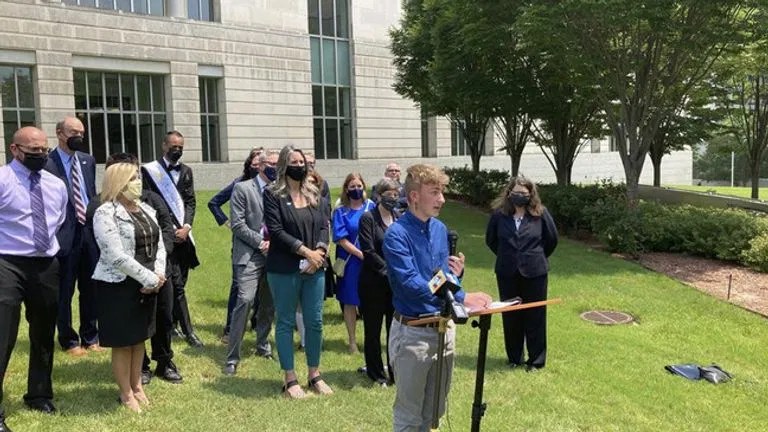
Dylan Brandt speaks at a news conference outside the federal courthouse in Little Rock, Ark., July 21, 2021. Brandt, a teenager, is among several transgender youth and families who are plaintiffs challenging a state law banning gender-confirming care for trans minors. The nation’s first trial over a state’s ban on gender-confirming care for children begins in Arkansas on Monday, Oct. 17, 2022, the latest fight over restrictions on transgender youth championed by Republican leaders and widely condemned by medical experts.
Two other federal courts of appeal have already allowed similar laws protecting children from experimental gender-transition procedures in Tennessee, Kentucky and Alabama to go into effect. I thank Solicitor General Nicholas Bronni, Deputy Solicitor General Dylan Jacobs and their team for the great work to secure this order for initial en banc review,” Griffin said.

















You must be logged in to post a comment.