The Trump administration has set a cap of just 7,500 refugee admissions for 2026, a 94% reduction from the Biden administration’s 125,000-person target, according to a Presidential Determination published Oct. 31 in the Federal Register. A new report from UCLA’s Williams Institute warns the cuts will disproportionately harm LGBTQ refugees worldwide.
At least 62 countries currently maintain laws criminalizing consensual same-sex activity. Thousands of vulnerable individuals face extended waits in dangerous transit countries, according to the report.
LGBTQ refugees encounter unique obstacles under the reduced cap. Many are single adults who fled family persecution and lack reunification pathways that prioritize other refugees. Officials sometimes fail to recognize persecution based on sexual orientation or gender identity, while refugees may fear disclosing their status. Extended waits create economic vulnerability, forcing many into exploitative work situations.
“The lack of reliable data on LGBTQI+ refugees makes the impact of this new cap even harder to measure,” Ari Shaw, director of international programs at the Williams Institute, said in a news release. “Without accurate data, policymakers and service providers cannot fully assess or respond to the needs of LGBTQI+ refugees.”
The Trump administration has not yet appointed a special envoy for LGBTQ rights, eliminating a key referral pathway established under Biden for at-risk individuals, according to the report.
In the midst of the Trump administration’s attacks on both the LGBTQ community and immigrants, the non-profit organization Immigration Equality is working to ensure that queer asylum seekers and refugees have access to legal services.
Immigration Equality, which has represented LGBTQ immigrants since it was founded in 1994, has been a haven for individuals who come from countries where they are persecuted for their identity. They offer both direct representation and a program where asylum seekers’ cases are vetted and matched with pro-bono lawyers.
But since the Trump administration’s recent attacks on immigrants, the process of filing these individuals’ cases and fighting for their safety has become significantly more difficult. Immigration Equality’s director of law and policy, Bridget Crawford, noted in an interview with Gay City News that Trump has been attacking all cases, not just a certain few.
“A lot of what the Trump administration seems to be focused on is not efficient, fair adjudication of claims,” she said. “It seems to be focused on eliminating the claims altogether and preventing people from making them, or quickly dispensing with them without due process.”
Alongside blocking initial claims from being made and removing more than one-third of immigration judges, the appellate courts are also shifting their decisions to move less favorably toward immigrants, despite many of these cases having overwhelming evidence that they meet the requirements for refugee status and protection.
All of these obstacles have resulted in an uptick in Immigration Equality’s cases being denied, and these issues are being further inflamed after Trump recently announced the pause of many immigrant cases, following the shooting of two West Virginia National Guard members.
But Crawford made sure to note that despite these hardships, Immigration Equality is still winning cases.
“We still have many people, both trans and LGB, who are successful in their claims,” she said. “The reality is that under the law, as it is written, and the precedent as it’s been established for decades, these are very strong claims — people continue to win because they meet the definition of asylum under our law.”
These policies have invoked fear in immigrants pursuing a case, as they are scared of not having their case heard and fear showing up for their case and being put into detention centers, despite following all the correct procedures. Being LGBTQ amplifies this fear.
“As an LGBTQ+ advocacy organization, we have long witnessed mistreatment of our population in the immigration detention system,” Crawford said. A 2024 report published by Immigration Equality revealed that under both Democratic and Republican administrations, there were consistent reports of “sexual harassment, verbal and sexual abuse, physical abuse, prolonged solitary confinement, and inadequate medical care.”
The few protections that were in place to prevent this abuse have gradually been gutted, according to Crawford. These included internal watchdog agencies like the Civil Rights Civil Liberties (CRCL). In the past, if someone filed a complaint of mistreatment, it would be investigated by these internal agencies. Recently, though, these complaints have not been looked into.
Against the backdrop of the Trump administration’s restrictive immigration policies, the work of Immigration Equality is their clients find hope in them, Immigration Equality finds hope in its clients.
“They are the reason we all went into this work in the first place,” said Crawford. “We have these incredible stories of bravery and perseverance that serve as a source of inspiration for all of us. So many of our clients have survived so much worse, and we look to them for a sense of perspective.”
The state of Texas has continued collecting information on transgender drivers seeking to change the sex listed on their licenses, creating a list of more than 100 people in one year.
According to internal documents The Texas Newsroom obtained through records requests, the Texas Department of Public Safety has amassed a list of 110 people who tried to update their gender between August 2024 and August 2025. Employees with driver’s license offices across the state, from El Paso to Paris to Plano, reported the names and license numbers of these people to a special agency email account. Identifying information was redacted from the records released to The Texas Newsroom.
The data was collected after Texas stopped allowing drivers to update the gender on their licenses unless it was to fix a clerical error. It is unclear what the state is doing with this information.
An agency spokesperson did not respond to questions about why the list was created and whether it was shared with any other agencies or state officials. The Texas Newsroom filed records requests in an attempt to find the answers but did not receive any additional information that sheds light on what the state may be doing with these names.
In recent years, GOP lawmakers have passed multiple laws restricting the rights of transgender Texans, including two new measures that went into effect this year.
One defines “male” and “female” on state documents as being based on a person’s reproductive system. The other, known as the “bathroom bill,” bars governments from allowing people to use a restroom at public buildings, parks or libraries that do not match their sex at birth.
While it’s unclear how the state plans to enforce the bathroom bill, transgender activist Ry Vazquez told KUT News she was asked to show her ID before using a restroom in the state Capitol earlier this month. Vazquez said she and three other people were then cited with criminal trespassing and banned from the building for a year.
Landon Richie, the policy coordinator with the Transgender Education Network of Texas, is concerned that the list the state is keeping will be used to pass more state laws targeting the rights of transgender Texans.
“The state collecting this information raises a lot of red flags, not just in terms of people’s privacy and ability to exist not under a magnifying glass,” he said. He added that he wonders “how this information will be leveraged in terms of drafting and crafting additional legislation” to chip away at the civil rights and freedoms of transgender Texans.
For years, transgender people in Texas could update their state IDs to match their gender identity by obtaining a court order and then submitting this document to the state agencies that issue driver’s licenses and birth certificates. After the state restricted updates to driver’s licenses last fall, the state’s health agency followed suit, blocking changes to birth certificates other than to correct hospital errors or omissions.
In March, The Texas Newsroom reported that the state was collecting information on people who continued to ask for these changes despite the policy shift.
The attorney general, whose office determines what records are public, allowed the agency to keep other documents about the policy shift secret. But it did release a list of the four employees with access to the special email account.
The Texas Newsroom also obtained records that show the agency investigated threats against the driver’s license division chief after news of the policy change was made public. But no case was referred to the Travis County Attorney’s Office for prosecution.
The Texas Newsroom has requested an updated version of the list.
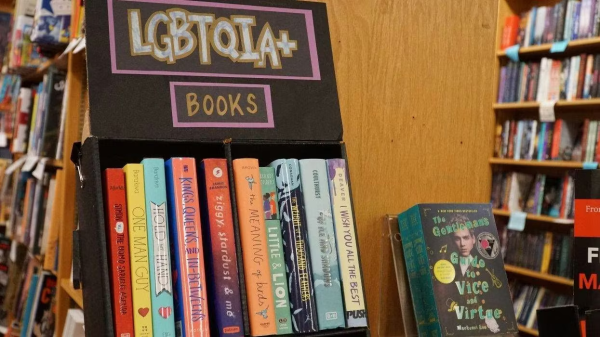
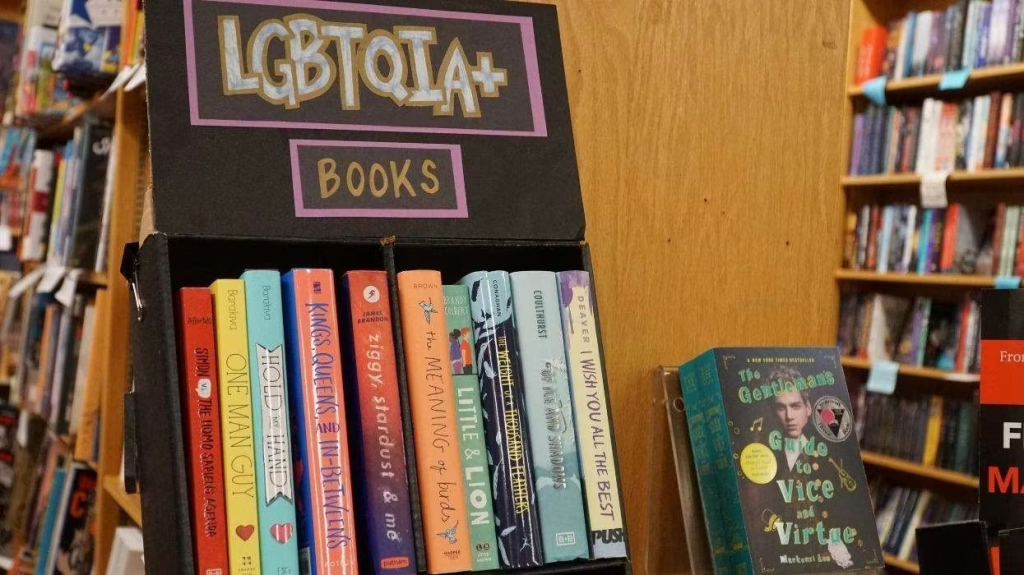
A county government in central North Carolina has dissolved its entire public library board after trustees voted to keep a children’s picture book about a transgender character on library shelves, turning a local book challenge into one of the most severe reprisals yet in the national campaign against LGBTQ-inclusive materials.
The Randolph County Board of Commissioners voted 3–2 last week to dismiss all members of the county library board, weeks after trustees declined to move or remove Call Me Max, a picture book about a transgender boy who asks his teacher to use his chosen name. The decision followed a public hearing that drew nearly 200 residents and revealed a community split almost evenly between those calling for the board’s removal and those urging commissioners to respect the library’s review process.
Library staff and trustees had reviewed the complaint earlier this fall and, in October, voted to keep the book in the children’s section, concluding it complied with the county’s collection policies, local CBS affiliate WFMY reported. Commissioners nonetheless moved to dissolve the nine-member board outright — a step allowed under North Carolina law but rarely taken.
Free-expression advocates said the action represents a dramatic escalation in the political response to book challenges. Kasey Meehan, director of the Freedom to Read program at PEN America, told The Washington Post that Randolph County’s decision is among the harshest penalties she has seen imposed over a single title.
“It’s a pretty dramatic response to wanting to have diverse and inclusive books on shelves,” Meehan said.
Opponents of the book claimed the dispute was a matter of child protection. Tami Fitzgerald, executive director of the conservative North Carolina Values Coalition, which urged supporters to attend the commission meeting, argued that Call Me Max teaches children that their parents may be “wrong” about their gender.
The book has been banned by several school districts and was prominently invoked by RepublicanFlorida Gov. Ron DeSantis in 2022 while promoting his so-called “don’t say gay” legislation restricting classroom discussions of gender identity, a law later challenged in court.
To critics, the Randolph County episode demonstrates how procedural safeguards are increasingly overridden when LGBTQ+ inclusion is at stake. Kyle Lukoff, the book’s author, who is a trans man, said the case is especially troubling because the library followed its own policies and was still punished.
“Policies can be helpful, but this is ultimately a question of power,” Lukoff told The Post. “If there are people in power who believe trans people don’t belong in their communities or the world at large, they will twist those policies to make it a reality.”
Randolph County, home to about 150,000 people, voted nearly four to one for President Donald Trump. Commissioners have not announced when or how they plan to reconstitute the library board.
Organizers of Arlington Pride announced Friday they will cancel next year’s event after the City Council rejected a plan to ban discrimination against gay and transgender residents.
The head of the HELP Center for LGBT Health and Wellness said in a statement the organization would not invite visitors to a city that does not offer “the most basic protections.”
“Pride is about safety, celebration, and community,” said DeeJay Johannessen, CEO of the HELP Center, which has offices in Arlington and Fort Worth. “Without local anti-discrimination safeguards, we cannot guarantee those values for our attendees, performers, or partners.”
Arlington Pride began in 2021 and quickly grew to one of the largest celebrations of its kind in North Texas, drawing more than 15,000 people to downtown in June this year. The all-day festival featured performances by RuPaul’s Drag Race queens, live music, an art show and local food vendors.The decision to suspend the event comes only three days after City Council members scrapped a plan to enshrine protections for LGBTQ residents into a city ordinance. The 5-4 vote followed months of debate, delayed votes and impassioned pleas from the LGBTQ community and allies to restore protections.
Initially passed unanimously in 2021, the ordinance prohibited discrimination based on sexual orientation and gender identity for housing, employment and public services. Discrimination against race, religion, national origin, sex and disability was also banned.
In September, the City Council temporarily suspended the ordinance over fears that Arlington risked losing more than $60 million in federal funding after President Donald Trump pledged to withhold money from cities with diversity, equity and inclusion, or DEI, programs. The president’s order has sown widespread confusion among cities that are unsure what qualifies as DEI.
For now, this means Arlington is no longer investigating complaints from people who say they faced discrimination by a landlord, business owner or employer. The vote makes Arlington one of the first cities in the country, if not the first, to repeal a nondiscrimination ordinance over fears of clashing with the Trump administration.
Some Arlington council members said they did not think the city could enforce its anti-discrimination ordinance. Council member Rebecca Boxall, who voted against restoring the ordinance, called it “bad policy.”
“From the very beginning, it was unenforceable at the city level,” said Boxall, who represents downtown Arlington. “The way I looked at it, and a lot of you mentioned protections, it does not offer protection. So in that respect, it’s just misleading. It’s just plain misleading.”
Federal law protects Americans from being discriminated against in public places based on disability, race, color, religion or national origin, but does not explicitly provide protections based on sexual orientation or gender identity.
More than 20 states and nearly 400 cities across the country have policies banning discrimination based on sexual orientation and gender identity, according to the Movement Advancement Project, a nonprofit research organization that tracks legislation related to LGBTQ issues. Texas has no such policy. Dallas, Fort Worth and Plano include LGBTQ residents in their anti-discrimination ordinances.
Mayor Jim Ross, who voted to restore protections, pledged to continue working on the issue and said the council will revisit the ordinance in coming weeks.
“Arlington is one of the most welcoming places,” Ross said. “We want everyone to know they can feel safe and comfortable here.”
On social media, responses to the cancellation of the 2026 Pride festival were mixed. Some said they did not want to spend time or money in a community that did not protect them, but others said this should drive an even larger event. Pride began in 1970 in a handful of U.S. cities to commemorate the one-year anniversary of the police raids on the Stonewall Inn in New York.
“Don’t you think now more than ever,” one person asked on Instagram, “we should host a louder, more exuberant pride?”
The Colorado High School Activities Association (CHSAA) has settled a lawsuit brought by right-wing school districts for the right for schools to bar trans students from joining sports teams that align with their gender. The lawsuit targeted multiple defendants and will continue with the remaining ones without CHSAA’s involvement.
“Eligibility decisions have always been left to individual schools and districts, which is why being named in this lawsuit was both frustrating and unnecessary,” a CHSAA spokesperson said in a statement. She went on to call the organization’s inclusion in the lawsuit “much more performative than substantive.”
The lawsuit was brought by several school districts but was led by District 49. That district’s board passed a controversial trans sports ban back in May by a narrow margin. The lawsuit against the state was filed the day after the policy was voted in, calling for Colorado to allow the ban to be enacted and to align policies with the demands laid out in the president’s “two sexes” executive order.
Colorado has state laws prohibiting discrimination against trans people, specifically people’s gender identity or gender expression. While the lawsuit cites the Equal Protection Clause of the Fourteenth Amendment in arguing that trans girls playing on the girls’ team affects the rights of cis girls, it does not mention the impact on the rights of trans girls.
To settle their part of the lawsuit, CHSAA agreed not to sanction the districts and schools named in the lawsuit for banning trans students from sports teams. It will also not respond to statements the schools make about “advantages of biological males over biological females in competitive sports” or potential propaganda about the hazards of “allowing biological males to play contact sports with or against biological females.” There will also be no penalties from CHSAA for forfeiting against a team because they allow trans children to play.
CSHAA has said that it will still sanction the schools and districts if any of those statements are demeaning in nature or call for violence against trans people. The organization is also recouping $60,000 in legal and operational fees.
While some Colorado school districts specifically allow trans students to play sports under their correct gender identity, others have no concrete rules about it. CSHAA has never stepped in over a trans person being allowed to play school sports, or not being able to.
The lawsuit will continue with the Colorado Attorney General Phil Weiser and other Colorado Civil Rights Division officials as the remaining defendants.
Colorado’s District 49 has around 27,000 students. In May, Board President Lori Thompson noted that, as far as she was aware, the district had only had one instance of a trans student trying to join a sports team that aligned with their gender identity. The student in question was a trans boy, and they did not pass tryouts.
The University of Oklahoma (OU) recently dismissed a professor for telling students that they wouldn’t be counted absent from her class if they attended an on-campus protest in support of a transgender teaching assistant (TA) who was placed on administrative leave after she failed a student’s essay that referred to trans people as “demonic.” The newly dismissed professor reportedly didn’t give the same option to students who wanted to protest against the trans TA’s reinstatement, OU said.
OU composition professor Kelli Alvarez was accused of viewpoint discrimination for her alleged actions, OU said in an official statement cited by KFOR. OU’s director of first-year composition emailed Alvarez’s students, calling Alvarez’s actions “inappropriate and wrong,” adding, “The university classroom exists to teach students how to think, not what to think.”
The director informed students that they could miss the Friday class to attend either the protest or the counterprotest. The director also noted that Alvarez has been replaced for the remainder of the term, which ends on December 19. OU said it agrees with the director’s actions.
“Classroom instructors have a special obligation to ensure that the classroom is never used to grant preferential treatment based on personal political beliefs, nor to pressure students to adopt particular political or ideological views,” OU wrote in its statement.
At the Friday protest, hundreds of students rallied in support of Mel Curth, a trans TA who OU placed on administrative leave after she gave a student a grade of zero on an essay about a study on gender roles in which the student called trans people “demonic.” The student, Samantha Fulnecky, filed a religious discrimination complaint with OU in November, and the university put Curth on administrative leave.
Students at the protest chanted, “OU shame on you,” “Protect our professors,” and “Justice for Mel,” KOKH-TV reported. Even students who didn’t agree with Curth’s failing grade for the student agreed that Fulnecky’s essay was poorly written and that Curth didn’t need to be put on leave.
At one point in the protest, a Turning Point USA (TPUSA) supporter got in front of the crowd and began counterprotesting.
The OU Chapter of the right-wing young conservatives group published a transphobic tweet saying, “We should not be letting mentally ill professors around students. Clearly this professor lacks the intellectual maturity to set her own bias aside and take grading seriously. Professors like this are the very reason conservatives can’t voice their beliefs in the classroom.”
In her paper, Fulnecky wrote that people aren’t “pressured to be more masculine or feminine,” that she doesn’t see it as a problem when peers use teasing to enforce gender norms, and that “eliminating gender in our society… pulls us farther from God’s original plan.” She also said trans identities are “demonic and severely [harm] American youth.”
In her response, Curth — to whom the OU Department of Psychology recently gave its Outstanding Graduate Teaching Award — wrote that her grade wasn’t because Fulnecky had “certain beliefs,” but rather because the paper “does not answer the questions for this assigment, contradicts itself, heavily uses personal ideology over empirical evidence in a scientific class, and is at times offensive.”
In a statement, OU wrote that it takes First Amendment rights and religious freedoms seriously and began a “full review” of the situation to “swiftly” address the matter, including a “formal grade appeals process” and a review of the student’s claim of “illegal discrimination based on religious beliefs.”
The university also said that Curth had been placed on administrative leave during the finalization of the discrimination review, leaving “a full-time professor” to serve as the course’s instructor for the rest of the semester.
A federal judge has blocked a gender-affirming care ban for trans inmates in Georgia that has been in effect for several months. Judge Victoria Calvert agreed with the plaintiffs that the blanket ban violated the Eighth Amendment, which bars cruel and unusual punishment.
“The Court finds that there is no genuine dispute of fact that gender dysphoria is a serious medical need,” Judge Calvert wrote in her opinion. “Plaintiffs, through their experts, have presented evidence that a blanket ban on hormone therapy constitutes grossly inadequate care for gender dysphoria and risks imminent injury.”
Georgia Senate Bill 185 was signed into law in May by Governor Brian Kemp (R). The bill prohibited state funds and resources from being used to provide gender-affirming care to inmates in Georgia prisons. That included hormone replacement therapy (HRT), as well as “sex reassignment surgeries or any other surgical procedures that are performed for the purpose of altering primary or secondary sexual characteristics,” and even “cosmetic procedures or prosthetics intended to alter the appearance of primary or secondary sexual characteristics.”
The bill took effect in July, and five plaintiffs filed a lawsuit against it in August. In addition to arguing that SB 185 constituted cruel and unusual punishment, the lawsuit also claimed that it violated the Equal Protection Clause. HRT and other gender-affirming care treatments were not banned under the bill for all inmates, only for those who were trans. The bill also prohibited trans inmates from paying for the care themselves while incarcerated.
“We would never allow a state to decide that people in prison with diabetes should be cut off of insulin just because the state didn’t want to pay for it anymore,” said Celine Zhu, a Staff Attorney for the Center for Constitutional Rights, which is representing the plaintiffs. “So why would we allow Georgia to cut off medically required care for people with a similarly serious diagnosis of gender dysphoria?”
SB 185 was a blanket ban that overruled the opinions of judges, doctors, and the Georgia Department of Corrections, all of whom have previously acknowledged that gender-affirming care is medically necessary for incarcerated trans people.
While the judge’s ruling makes it clear that not every inmate is entitled to gender-affirming care, it puts those decisions back in the hands of medical professionals and the patients rather than having the legislature make medical decisions for trans people.
“The Court requires healthcare decisions for prisoners to be made dispassionately, by physicians, based on individual determinations of medical need, and for reasons beyond the fact that the prisoners are prisoners,” the judge said in her ruling.
Current estimates suggest that there are around 300 out trans people incarcerated in Georgia state prisons.
After the ruling, the Department of Corrections filed a notice of appeal with the 11th Circuit Court of Appeals.
This sort of case has been litigated for over twenty years now. In 2005, Wisconsin introduced a ban on doctors providing trans inmates with gender-affirming care, affecting inmates who had been on hormones since the early 90s. The law was overturned by the 7th Circuit Court of Appeals, and the Supreme Court declined to hear the state’s appeal in 2011.
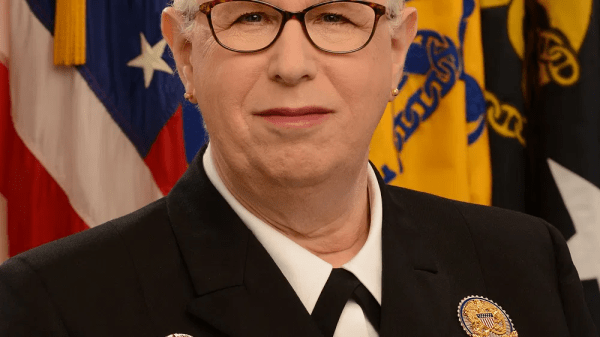
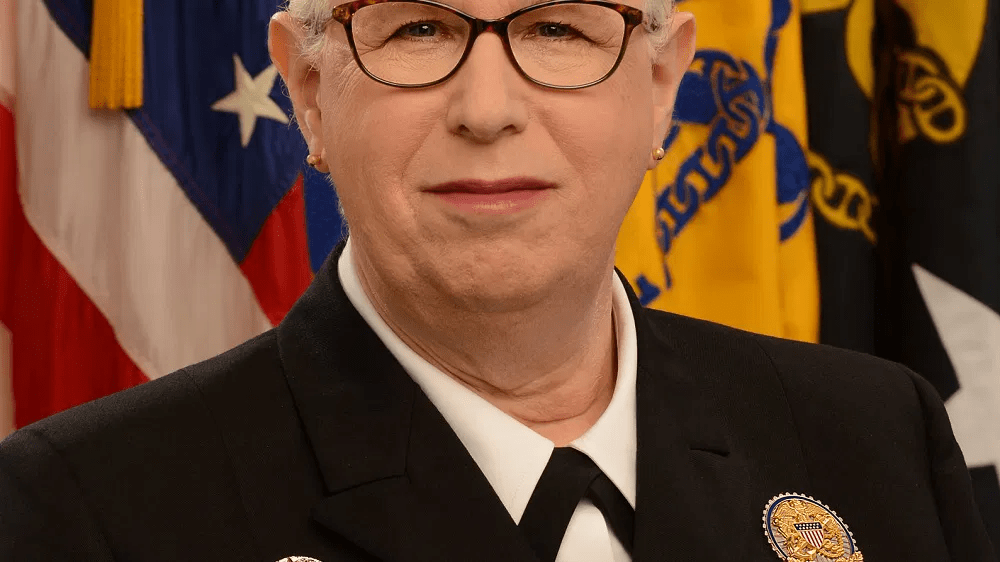
The Department of Health and Human Services (HHS) has altered the official portrait of Adm. Rachel Levine, the out transgender former assistant secretary for health under President Joe Biden, to display Levine’s deadname — a needless act of transphobia that Levine has called “petty.” Her portrait hangs in the HHS office alongside those of other federal officials who have led the U.S. Public Health Corps.
“During the federal shutdown, the current leadership of the Office of the Assistant Secretary for Health changed Admiral Levine’s photo to remove her current legal name and use a prior name,” Levine’s spokesperson Adrian Shanker, former deputy assistant secretary for health policy under Biden, told NPR. Shanker called the move an “unprecedented” act “of bigotry against her.” Though Levine said, “I’m not going to comment on this type of petty action.”
When asked about the alteration, HHS spokesperson Andrew Nixon told the aforementioned news outlet, “Our priority is ensuring that the information presented internally and externally by HHS reflects gold standard science. We remain committed to reversing harmful policies enacted by Levine and ensuring that biological reality guides our approach to public health.”
An anonymous HHS staffer told NPR that they considered the change “disrespectful,” adding that it exemplifies “the erasure of transgender individuals by this administration.” Upon taking office, the president issued numerous executive orders denying all federal recognition of trans people and kicking trans people out of the military for being selfish, dishonorable, deceitful, and undisciplined.
Levine was the first out trans person to receive Senate confirmation. On October 19, 2021, became the first out trans four-star officer in the U.S. Public Health Service Commissioned Corps, a noncombatant service of the nation’s eight uniformed services which promotes public health and safety. She resigned on the current president’s first day in office.
The current assistant secretary for health is Adm. Brian Christine, MD, who was appointed in November.
Missouri State Sen. Joe Nicola (R) introduced a bill that would ban “social transition” in schools and forcibly out any transgender and nonbinary students to their potentially unsupportive parents if the students ask a school staff member to address them by a name or gender identity different from the sex assigned to them at birth.
The bill would also allow teachers to be fired and banned from teaching, as well as schools to be sued for affirming trans and nonbinary students’ gender identities, even if a parent approves of their child socially transitioning.
S.B. 1085, one of 21 anti-LGBTQ+ bills recently introduced by Missouri State Republicans, requires school staff members to inform the principal or a designee within 24 hours if any student asks them to “participate in or support” their social transition by having them address them by a name or gender identity that differs from those they were assigned at birth. The principal or designee would then have 72 hours to inform the student’s parents.
The bill would forbid school staffers and counselors from affirming a student’s trans or nonbinary gender identity or teaching about such identities. School districts would also be forced to fire teachers who violate the law and begin proceedings to revoke those teachers’ teaching licenses. Parents and the state attorney general may also pursue a civil lawsuit against any school or school district that violates the law.
The bill has no exception for parents who approve of their child’s social transition. This essentially forces educators to continue misgendering trans students and invalidating their identities even if they personally support trans and nonbinary students. Studies have shown that social transitioning improves the overall health and well-being of trans children.
Trans journalist Erin Reed wrote that the bill “underscores a shift in how anti-trans legislation is being sold to the public.”
“For years, supporters of bathroom bans, sports bans, and ‘don’t say gay’ policies framed their efforts as battles for ‘parental rights.’ Increasingly, though, that language has fallen away as lawmakers move to strip supportive parents of any authority at all, mirroring the approach in medical transition bans that override parental consent entirely.”
Nicola’s bill is just one of numerous anti-LGBTQ+ bills introduced in the state legislature. The other proposed bills would require the state to deny all legal recognition of non-cisgender identities; roll back nondiscrimination protections for transgender people; ban trans students from accessing school facilities or sports teams matching their gender identities; ban schools from displaying Pride flags; and allow anyone working with schools to misgender other employees’ trans/nonbinary gender identities.
The other proposed bills would also forbid state agencies from allowing gender changes on government-issued identity documents; ban trans people from using public facilities matching their gender identities; ban teachers from being a member of any sports organizations that allow trans participation; ban all “obscene” content from schools (including LGBTQ+ educational materials); forbid all gender-affirming care for minors; and designate all drag performances as “adult cabaret” performances (whose viewing by children can be criminally charged).
In April, Nicola voiced support for a state bill that would ban trans and nonbinary people from using “bathrooms, locker rooms, sports facilities, various crisis centers, prisons,” and other sex-segregated spaces that match their gender identity.
When a doctor testified against the bill, noting that such bans negatively affect trans people’s well-being, Nicola replied, “I’m not going to listen to doctors that say one thing that disagrees with a God of creation. You want to kind of berate me a little bit by saying we should listen to what doctors have to say, what your schooling has to say, over what the scripture has to say — it’s not happening with me.”
Nicola may not realize that the Bible has several scriptures that theologians interpret as being supportive of trans people and their identities.







 fleeredstates.blog
You must be logged in to post a comment.