Nancy Mace to “double down” on anti-trans rhetoric following alleged assault – but did she fabricate the story?

This blog is originally appeared at LGBTQ Nation


Mace faces accusations of staging a “self-serving publicity stunt.”

A 33-year-old man has been arrested for allegedly assaulting Rep. Nancy Mace (R-SC) in retaliation for her recent opposition to trans rights.

“I was physically accosted at the Capitol tonight by a pro-tr*ns man,” Mace wrote on X. It’s unclear why she chose to censor the word “trans,” but given her outspoken anti-trans views, she may be signaling that she considers it a term to be stigmatized.

“One new brace for my wrist and some ice for my arm and it’ll heal just fine,” she continued. “The Capitol police arrested the guy. Your tr*ns violence and threats on my life will only make me double down. FAFO. #HoldTheLine.”

A statement from U.S. Capitol Police confirmed that foster youth advocate James McIntyre of Illinois was arrested for allegedly assaulting Mace after lawfully entering the building through security. According to sources who spoke to Axios, the incident occurred during an event for the Foster Youth Caucus, of which Mace is a co-chair.

However, three eyewitnesses have accused Mace of fabricating the assault, claiming that she and McIntyre simply exchanged a standard handshake, during which he asked the Congresswoman to protect trans rights.

“From what I saw, it was a normal handshake and interaction that I would expect any legislator to have with a constituent,” former foster youth and LGBTQ+ rights advocate Elliot Hinkle told Imprint.

Hinkle further noted that McIntyre’s arrest – he is also a former foster youth – sends a troubling message: “It sends a chilling effect of, you’re not actually safe to go to Capitol Hill and share an opinion that is true for you, that isn’t violent — because right now if you do, a congressperson might say that they were physically assaulted and call the police on you. So how would a young person in care feel safe?”

In a Facebook post, foster youth advocate Lisa Dickson expressed her frustration with Mace’s actions at the event: “I want to express deep disappointment in the fact that Congresswoman Nancy Mace came to a national foster youth event, told participating youth that it was a safe space — and literally had one of them arrested by Capitol police for simply shaking her hand and asking about trans rights.”

She added in a follow-up: “Today was not the day or the time for a self-serving publicity stunt – especially not a politician lashing out at a vulnerable young person who just took her at her word that, when helping foster youth, ‘all suggestions are welcome.’”

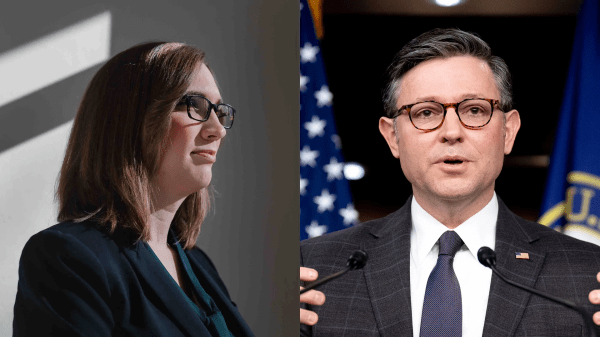
Mace, who has long espoused anti-trans views, has escalated her rhetoric since trans Rep.-elect Sarah McBride (D-DE) won her race for Congress in November.

In response to McBride becoming the first trans person ever elected to Congress, Mace introduced a resolution to ban trans women from using women’s facilities at the Capitol, as well as legislation to bar trans people from using restrooms on all federal property. This comes despite the fact that trans people have been working at and visiting the Capitol for years without incident, and McBride, as a member of Congress, would receive her own private bathroom.

Although Mace’s resolution has not yet been voted on, Speaker Mike Johnson (R-LA) has already instituted a rule prohibiting trans people from using restrooms that correspond with their gender at the Capitol complex.

Over the past several weeks, Mace has continued to escalate her anti-trans rhetoric, even casually using an anti-trans slur in reference to protestors.

After a group of trans rights protestors demonstrated against her, she filmed a social media video in which she said, “Alright, so some tr***y protestors showed up at the Capitol today to protest my bathroom bill, but they got arrested, poor things. So I have a message for the protestors who got arrested. You ready?”

She then took out a bullhorn, despite already being audible through her microphone, and proceeded to read the standard Miranda rights into the bullhorn while facing a police officer. “You have the right to remain silent. Anything you say can and will be used against you in a court of law.”

Her use of the slur sparked widespread backlash.

And now, it appears that Mace is regularly using the bigoted term in her rhetoric.

“My staff has arrived to another wonderful morning in Washington, DC. Good morning, tr*nnies. #HoldTheLine”
— Rep. Nancy Mace (@RepNancyMace), December 9, 2024.

Mace has been leveraging transphobia as a cornerstone of her political career since before she was elected to Congress. In her first campaign, she falsely claimed that a law requiring “transgender equality in the military” existed, blaming her Democratic opponent for it and suggesting that it would result in a Marine Corps base in her district being shut down. The claim was entirely fabricated—no such law existed, and the Marine base remains operational today—but it helped her secure a seat in Congress.

In her second run for office, Mace ran an ad accusing her opponent of providing “SEX CHANGE SURGERY. PUBERTY BLOCKERS. GENDER CHANGING HORMONES. FOR CHILDREN?” Despite the fact that her opponent was a doctor at a hospital that did not provide gender-affirming care, the smear campaign was effective, leading to the opponent’s forced resignation.

Mace’s record on LGBTQ+ rights is abysmal, scoring just 15 and 14 out of 100 on the Human Rights Campaign’s Congressional Scorecard. She has voted against the Equality Act, which would ban federal discrimination against LGBTQ+ people, and opposed the reauthorization of the Violence Against Women Act because it included protections for transgender inmates.

In her ongoing crusade against trans rights, Mace has referred to Rep.-elect Sarah McBride (D-DE) as “it” and as a “man,” and has made efforts to block McBride from using women’s restrooms at the Capitol. In addition, she has started selling anti-trans t-shirts and has stated that it’s “offensive” for McBride to believe she is “equal” to other congresswomen.
As a transgender Texan, updating my gender marker was a transformative experience. Now, others in my state face obstacles that prevent them from doing the same

This blog is originally appeared at Them

With Trump potentially returning to office, I’m concerned that more transgender people will be denied the right that had such a profound impact on my life.

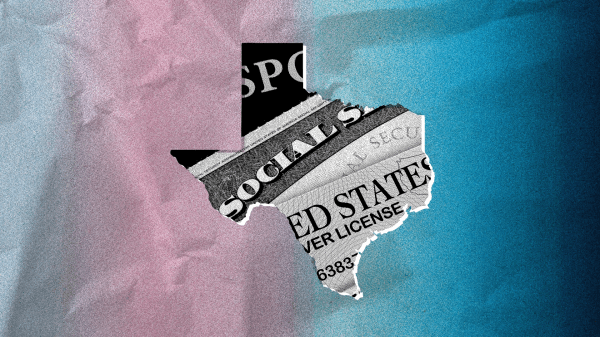
When I learned on August 21st that the Texas Department of Public Safety had quietly revoked the ability to change your gender on driver’s licenses and birth certificates, I was stunned. Devastated. The already daunting process of officially changing one’s name and gender marker had just been taken away. Trans Texans are now stripped of a right that once allowed me to live with less fear. And as Donald Trump nears a potential return to office, many are fearful that trans Americans nationwide could face the same loss.

On a random Tuesday in December 2020, I made the decision to start hormone replacement therapy (HRT). By then, I had been using they/them pronouns for two years and had undergone top surgery eight months earlier. For years, I had thought about beginning HRT, hoping it would help me escape a life where people assumed I was a woman based solely on my appearance. That day, I finally felt ready to silence the voices in my head telling me I’d be letting others down by embracing who I truly was. I was ready to step out of the shadows—out of the expectations others placed on me—and into my own light. I went to an LGBTQ+ clinic, got a prescription for testosterone, and, in that moment, I felt like my life was finally beginning.

And then everything changed.

By April 2021, my voice had deepened, stubble began appearing on my face, and I no longer had a period—physical changes I embraced with open arms. Strangers began noticing too, and suddenly, I was being treated differently. The looks I once got as a perceived butch lesbian shifted to confused stares, discomfort, and sometimes, outright disdain.

‘Dropping off flowers for your wife?’ a receptionist at a gynecologist’s office asked me that same April. ‘Not quite,’ I replied with a nervous laugh. ‘I’m here for an appointment.’ As is customary, I handed over my ID. She glanced at it—name: [something I no longer go by], sex: F—then looked back at me, clearly unsure how to reconcile the mismatch. She called over a coworker, whispering about what to do in this ‘situation.’ I stared at my phone, trying to stay calm as the coworker muttered, ‘Just check her in.’ And she did. I sat down, feeling that familiar discomfort of my presence unsettling others.

Throughout that entire doctor’s appointment, I was treated as though my body was something entirely unique—as if I were the only person who had ever transitioned. In moments like these, I try to chalk it up to ignorance, reminding myself that 71% of Americans say they’ve never met a trans person. But at what point does ‘ignorance’ become too generous?

This same scenario unfolded at the club when bouncers checked my ID, when people hesitated to call me ‘sir’ or ‘ma’am’ as they guided me to a table at restaurants, or when customer service reps asked me twice as many security questions as they did for others. And every time I needed to use the bathroom, I had to make the decision: men’s or women’s? At best, I was made uncomfortable for a few seconds. At worst, I was subjected to slurs or threats of violence. In all those moments, I told myself, ‘It’s no big deal’—as though it were no big deal for my mere existence to constantly puzzle or disturb people. The very fact of my body made others treat me as if I were a problem. I came to expect discomfort every time I stepped outside my door.

Every time I grabbed my keys, phone, and wallet, I weighed the emotional and physical risks of venturing out into the world. This constant calculation is why some trans people delay medical care or feel disconnected from the world around them. It’s also why, after two years on HRT, I finally decided to change the name and gender marker on my ID. But this was not a decision I made lightly.

Until August, changing your name and gender marker in Texas cost $350 (plus lawyer fees, unless you could prove you couldn’t afford it). You also needed a doctor’s note stating that you were ‘receiving clinically appropriate treatment related to your gender identity.’ (The pathologizing of transness is its own burden.) Once you had those documents and filled out a ‘Petition to Change the Name and Sex/Gender Identifier of an Adult’ form, you had to appear before a county judge. That judge could deny your petition for any reason—or no reason at all. It was a request, not a guarantee. In Texas, trans people often seek advice from other trans folks about which counties to target, because not all judges are inclusive. Many travel from across the state to Austin, the third-queerest city in the U.S., in hopes of a more supportive judge. Even then, judges can demand more ‘proof’ than the law requires. In a state where anyone can change their last name after marriage with minimal hurdles, trans people are forced to jump through countless hoops just to have their gender recognized.

It took a month for me to get a letter from a doctor. Another month passed before I could find time to go to the courthouse, which was only open during regular work hours—a schedule that most people can’t easily accommodate. When I finally arrived at the Travis County office, I sat for two hours waiting to be helped. A county clerk, who had warmly greeted other patrons, glanced at my petition and abruptly told me, ‘If you aren’t finished with your papers, we can’t help you.’ Despite the cold reception, I was determined to get this done—to untangle the mess of living as a visibly trans person. I handed in my request, and six weeks later, I received an email with a PDF confirming that my petition had been approved.

Afterward, I spent months updating my name and gender marker on my driver’s license, social security card, passport, and a slew of other official documents. One might ask, ‘Why would anyone willingly sign up for such a cumbersome and clearly prejudiced process?’ The answer is simple: I needed it. My body not matching the letters on my ID had become a life-threatening issue. Without the change, I’d still be trapped in the daily hell of being put in emotional and physical danger. Not all trans people feel the need to change their name and gender marker, but for me, it was crucial. Because this option was available, I’ve been able to build a new life.

The difference between my life from April 2021 to September 2022—when I didn’t ‘look like a girl’ but still had a feminine name and sex on my ID—and now is like night and day. I can hand over my ID and no longer feel like I’m putting myself in harm’s way. It says ‘Kaybee,’ Sex: M (though that still doesn’t feel right, since Texas hasn’t offered an X gender marker yet). Now, when I pass over a piece of plastic, I no longer feel like I’m outing myself or offering my life up for judgment.

In the same month that Texas reversed the right to change your name and gender marker, Trump announced he would sign an executive order banning gender-affirming care for trans youth on his first day back in office. As if it isn’t enough that Governor Greg Abbott, Lieutenant Governor Dan Patrick, Texas Attorney General Ken Paxton, and a whole host of other Texas politicians have pushed so much misinformation about the trans community that people now feel emboldened to mistreat us. As if it’s not enough that Texas attempts to pass transphobic laws every year.

Everything about this group of people—who could never understand what it’s like to hand over an ID that doesn’t match how the world sees you—fills me with disgust. They don’t know even a fraction of what people like me go through, just to live authentically.

Yes, I still have to explain to medical providers that my legal sex and my sex assigned at birth are not the same. Yes, I still out myself every time I take off my shirt, revealing the two beautiful top surgery scars that are part of my journey. My goal was never to ‘pass’ as cis, or to meet the ridiculous expectations that transphobes project onto us. My goal has always been to be myself. Safely.

Trump’s inauguration is on January 20th, and the next Texas legislative session—the period when most anti-trans laws will be debated—starts just a week earlier, on January 14th. In preparation, Texas lawmakers have already prefiled 34 anti-trans bills for the 2025 session. Now is the time to act, to support and defend the psychological and physical safety of trans people. I will be contributing both money and volunteer hours to the Transgender Education Network of Texas. This BIPOC-led organization fights anti-LGBTQ+ laws daily, and they offer a wealth of resources on their website, including guidance on how to file discrimination complaints with the U.S. Department of Health and Human Services.

Despite the wishes of those who seek to erase us, trans people like me will be part of the future of Texas—and beyond.

I long for a Texas where trans people don’t just survive, but thrive. We deserve safety here, in the Lone Star State, and anywhere else we choose to be. I spent too much time living under an identity that wasn’t mine, but I was able to change it. Everyone else deserves the same right to do so.

Politics: Republican Speaker Mike Johnson Proposes Restricting Capitol Hill Restrooms for Trans Individuals

This blog is originally appeared at Them

New Policy by Speaker Johnson Mandates Capitol Facilities Be “Reserved for Individuals of That Biological Sex”

Speaker Mike Johnson Announces Policy Banning Transgender Women from Women’s Restrooms and Changing Facilities on Capitol Hill, Likely Targeting Rep. Sarah McBride

Speaker Mike Johnson Declares Capitol and House Office Building Single-Sex Facilities Reserved for Individuals of Biological Sex in Statement Released on Trans Day of Remembrance.

Speaker Mike Johnson Defends New Bathroom Policy, Targeting Rep. McBride, as GOP Figures Push for Bathroom Ban

Speaker Mike Johnson’s new policy, which reserves single-sex facilities in Capitol Hill for individuals of their biological sex, has sparked controversy, especially as it coincides with Trans Day of Remembrance. Johnson emphasized that each member of Congress has access to a private bathroom but insisted, “women deserve women’s only spaces.” In previous remarks, Johnson reiterated his belief that “a man cannot become a woman,” further fueling criticism of his long history of anti-LGBTQ+ statements.

The policy appears to specifically target Delaware Rep. Sarah McBride, the first out transgender woman elected to Congress. McBride has become a focal point of the debate as South Carolina Rep. Nancy Mace introduced a resolution for a formal bathroom ban in the House, directly aimed at McBride. Mace referred to herself as “[a] Full TERF” and dismissed McBride’s right to access women’s private spaces.

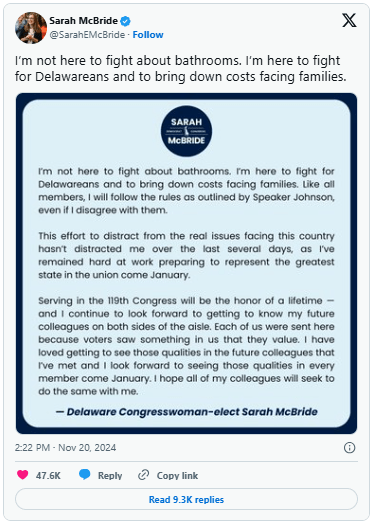
In response, McBride urged Democrats to disregard these anti-trans actions, framing them as a distraction from more pressing issues. “This is a blatant attempt from far right-wing extremists to distract from the fact that they have no real solutions to what Americans are facing. We should be focused on bringing down the cost of housing, health care, and child care, not manufacturing culture wars,” she said in a statement. McBride later posted on social media, emphasizing her focus on fighting for Delawareans rather than engaging in debates over bathrooms.

LGBTQ+ Advocates Warn Against Dismissing GOP Anti-Trans Policies as Distractions

While Rep. Sarah McBride has urged her fellow Democrats to focus on issues like healthcare and housing instead of engaging in culture wars, some LGBTQ+ advocates argue that the GOP’s anti-trans policies should not be ignored or treated solely as distractions. Jeff Main, cofounder of the trans-led nonprofit Point of Pride, emphasized that these proposals are real threats.

“In addition to being a distraction, these proposals are direct threats,” Main told CBS News Philadelphia. “It’s more than just access to a bathroom or healthcare. It’s about existing. It’s about our right to live authentically, safely, and with pride.” Main expressed concern over the broader implications of these policies for the trans community, stressing the importance of defending basic rights and safety.

How Bathroom Bans on Federal Property Could Affect Transgender Americans

This blog is originally appeared at Them

A proposed bill in Congress seeks to prohibit transgender individuals from using bathrooms in museums, national parks, and other federal properties. How would this ban be enforced, and what potential consequences could arise?

Congress faces a long list of urgent priorities, including securing funding to prevent a government shutdown, many of which are expected to be postponed until 2025. One new addition to that agenda is legislation introduced by GOP Rep. Nancy Mace, which seeks to ban transgender women from women’s restrooms and transgender men from men’s restrooms on all federal property.

The South Carolina lawmaker introduced this bill after launching a campaign to remove newly-elected Rep. Sarah McBride of Delaware from women’s restrooms on Capitol Hill. Following House Speaker Mike Johnson’s announcement of a rule that aligned with Mace’s initial proposal, she expanded the bill to restrict all transgender Americans from using restrooms, locker rooms, and changing rooms on federal property nationwide.

If the bill were to become law, how would it be enforced, and what consequences would follow? What is the current atmosphere like for transgender lobbyists and advocates on Capitol Hill? The 19th spoke with several experts to learn more.

Where would such a law apply?
This sweeping legislation would lead to widespread discrimination against transgender individuals, experts warn, even though Mace’s rhetoric has primarily targeted transgender women. It could expose trans and nonbinary people to harassment and discrimination at national parks, courthouses, IRS buildings (such as taxpayer assistance centers), Social Security Administration offices, certain post offices, and Native American lands.

If enforceable, this federal ban would prevent transgender individuals from accessing spaces that are intended to be among the most accessible to all Americans, said Kelly Dittmar, an associate professor of political science at Rutgers-Camden University and director of research at the Center for American Women and Politics (CAWP).

“I would assume this includes Smithsonians and other federal buildings, museums, landmarks—places that should be accessible to the public, partly because they are government-funded or operated,” she explained.

The language in Mace’s proposed bill would limit bathroom access in “any building, land, or other real property owned, leased, or occupied by any department, agency, or instrumentality of the United States (including the Department of Defense and the United States Postal Service), or any other instrumentality wholly owned by the United States, or by any department or agency of the District of Columbia or any territory or possession of the United States.”

How likely is it that this ban will become law?
Mace’s bill is unlikely to advance until the new Congress is sworn in this January, as the Senate is currently adjourned until December 2, and members are focused on major defense and agricultural measures. When and if the bill does come up for consideration, it will likely face a potential filibuster by Senate Democrats, despite Republicans holding a majority in both chambers. It also remains unclear how much support Mace’s bill has within the Republican Party.

How would this law be enforced?
Mace’s proposal lacks details on how nationwide restrictions on bathroom use for transgender Americans would be enforced, and her office did not respond to a request for comment. To understand how such a ban might function in practice, experts point to state-level bathroom bans, many of which have surfaced since 2015 but have largely failed to become law.

State bathroom bans often provide few, if any, specifics on enforcement, as they rely on private citizens to act as enforcers. Logan Casey, director of policy research at the Movement Advancement Project, a nonprofit that tracks LGBTQ+ legislation, explains that these laws are de facto enforced by emboldening individuals to police others’ bathroom use.

“There’s no written enforcement because the proponents of these bills know that just by talking about this, let alone enacting these laws, they are emboldening individual people themselves to enforce these bathroom bans,” Casey said.

A recent extreme example of this can be seen in Odessa, Texas, where a new ordinance allows citizens to sue transgender people using bathrooms that match their gender identity, with damages of “no less than $10,000.”

Deputizing private citizens to enforce such laws can result in high rates of harassment and violence, particularly targeting transgender individuals and cisgender women who do not conform to traditional gender norms, Casey added.

What’s going on at Capitol Hill? Are trans people banned from bathrooms there?
“All single-sex facilities in the Capitol and House Office Buildings — such as restrooms, changing rooms, and locker rooms — are reserved for individuals of that biological sex,” said House Speaker Mike Johnson in a statement. This policy appears to apply to all transgender individuals working at or visiting the Capitol complex. Johnson’s office did not respond to a request for clarification.

Johnson’s statement also does not clarify how the new policy will be enforced. Mace’s original bill proposed that the House sergeant-at-arms would be responsible for enforcing a bathroom ban, but Johnson’s announcement did not reference this. His office did not respond to a request for comment regarding the enforcement of the new rule.

Without clear guidance on enforcement, transgender lobbyists and advocates like Caius Willingham, a senior policy analyst at Advocates for Trans Equality, are left to wait and see if they will be policed for simply trying to do their jobs and what the consequences of noncompliance might be. Unlike members of Congress, these employees don’t have access to private facilities, and when working on the Hill, alternative options are often scarce.

“The Capitol grounds are massive. Some buildings don’t even have a single, single-occupancy bathroom. So practically, if I’m going to spend the day on the Hill meeting with legislators and staff, which is core to my job, I may have to be strategic about what bathrooms I use,” Willingham said. “I might have to run outside to find a restroom outside the Capitol building.”

The broader implications of a federal bathroom ban would extend this restriction to all of D.C., Willingham added, considering how many people work in federal buildings.

Is this legal?
Court opinions on this matter have been divided. Last year, the 11th U.S. Circuit Court of Appeals upheld a Florida policy banning transgender students from using bathrooms that align with their gender identity. However, in 2021, the Supreme Court sided with trans advocates by upholding a 4th U.S. Circuit decision that found a Virginia bathroom ban unconstitutional.

Two states—Utah and Florida—ban transgender individuals from using bathrooms and facilities that match their gender identity in all government-owned buildings, K-12 schools, and colleges, according to the Movement Advancement Project. Violating these laws is a criminal offense in both states. Seven other states have passed laws restricting trans Americans’ bathroom access only in K-12 schools.

Article I of the Constitution grants Congress broad jurisdiction over its own internal rules and procedures. However, Mace’s proposed federal bathroom ban could conflict with recent Supreme Court precedent, according to Barbara Comstock, a former Republican congresswoman from Virginia. The majority opinion in the Supreme Court’s 2020 decision in Bostock v. Clayton County, written by conservative Justice Neil Gorsuch, ruled that discrimination based on sexuality or gender identity constitutes unconstitutional sex discrimination.

“I don’t think they’ve looked at this in light of the law whatsoever,” Comstock said. “So I think this is just an embarrassing stunt — which does raise attention to the challenges and discrimination faced by transgender Americans.”

Who is actually endangered by trans people using the bathroom?
Research shows that it is transgender people, not cisgender individuals, who are most at risk of violence and discrimination when using the restroom. Transgender people often face harassment, verbal abuse, and even physical violence when trying to use restrooms that align with their gender identity.

The 2015 U.S. Transgender Survey found that many transgender people avoid public restrooms due to fear of mistreatment. Of over 27,000 respondents, 26 percent said that in the previous year, they had been denied access to restrooms, had their presence questioned, or were verbally harassed, physically attacked, or sexually assaulted while using a restroom.

Research from the Williams Institute at the University of California, Los Angeles School of Law, conducted in 2018, found that expanding non-discrimination laws to include transgender people does not increase the frequency of criminal incidents in restrooms, locker rooms, or changing rooms. While Mace and other Republican lawmakers have argued that banning trans women from women’s restrooms will protect cisgender women, empirical evidence does not support the claim that including transgender people in these spaces leads to safety or privacy issues.

Willingham shared his experience working in the House as a legislative assistant to Rep. Pramila Jayapal of Washington from 2021 to 2023, noting that his identity as a transgender person was never an issue. Despite witnessing transphobic rhetoric from some members of Congress during hearings and debates, he was treated with respect by colleagues. It was a jarring and frustrating experience for him.

“It’s really frustrating to see things go backwards in Congress,” Willingham said. “My experience working even across the aisle was extremely positive.”

Donald Trump is already influencing other countries to intensify their crackdowns on homosexuality

This blog is originally appeared at LGBTQ Nation.

A leading lawmaker in Uzbekistan referenced Trump’s electoral victory as a reason to push for a ban on LGBTQ+ “propaganda.

The leader of a party in Uzbekistan’s government coalition has announced that they are drafting a law to ban LGBTQ+ “propaganda” in the country, crediting Donald Trump for inspiring the move.

Alisher Qodirov, head of the Milliy Tiklanish (National Revival) party, which shares control of the lower chamber of Uzbekistan’s parliament with the Liberal Democrats, shared the news on Telegram. He revealed that his party is working on a draft law aimed at prohibiting discussions about LGBTQ+ issues.

In his post, Qodirov referenced a statement from Ivanka Trump, where she endorsed her father’s opposition to “inappropriate sexual content” and “transgender ideology” in schools. This rhetoric, which falsely claims that schools are teaching children to be transgender or exposing them to gay sexual content, has been used in some U.S. states and school districts to justify bans on any mention of LGBTQ+ issues.

Qodirov wrote, “The change in the center of the disease is very good,” adding that his party is working on a law to ban any form of LGBTQ+ “propaganda.”

Homosexuality remains illegal in Uzbekistan, a Muslim-majority nation, and can lead to up to three years in prison. The country, along with Turkmenistan, is one of the only two post-Soviet states to criminalize homosexuality. There are no legal protections against anti-LGBTQ+ discrimination or hate crimes in Uzbekistan.

A 2021 Human Rights Watch report highlighted the severe abuse faced by gay and bisexual men in the country, who are targeted by both vigilante groups and law enforcement. Many LGBTQ+ activists have been forced to abandon public efforts and operate “completely underground” due to the threat of violence and harassment.

One activist shared their experience with HRW, explaining that they had to suspend most of their projects due to the intense risks involved. Five men told the organization they were forced to pay bribes of up to $1,000 to prevent the police from exposing their sexual orientation to their families or the public.

City offers $10,000 reward for reporting trans individuals using public restrooms

This blog is originally appeared at LGBTQ Nation.

This marks the first instance of a city allowing individuals to sue trans people for using public restrooms.

The city of Odessa, Texas, has implemented a $10,000 bounty for anyone who reports a transgender person using a restroom that matches their gender identity, according to independent journalist Erin Reed.

Under this ordinance, individuals—excluding local and state government officials—are allowed to sue transgender people for using such facilities. The rewards for successful claims include “injunctive relief” to prevent further violations, nominal and compensatory damages if the plaintiff can prove harm, statutory damages of at least $10,000 per violation, as well as court costs and attorney’s fees.

While the bounty is set at a minimum of $10,000, there is no maximum limit on how much the reward can grow.

In addition to the bounty, Odessa’s ordinance includes criminal penalties for individuals who use restrooms that align with their gender identity. Those found in violation of the law can be charged with a Class C misdemeanor, punishable by a fine of up to $500. Anyone who refuses to use a bathroom corresponding with what the city considers their biological sex—after being asked to leave by a building owner—could also face misdemeanor trespassing charges.

The law defines “biological sex” based on birth certificates, either the original or a corrected version in cases of clerical errors. This means that even if a transgender person has updated their birth certificate to reflect their gender identity, they could still be in violation of the ordinance if they use a bathroom that aligns with their gender.

There are no exceptions for disabled individuals who may be accompanied by someone of a different gender, and the law could potentially lead to lawsuits targeting people who are gender non-conforming or whose gender expression doesn’t fit societal norms.

Similar bathroom bans with criminal penalties have been enacted in states like Utah and Florida, while other states, like North Dakota, have laws without clear penalties or enforcement mechanisms. Erin Reed compared Odessa’s bounty system to the anti-abortion bounty laws in Texas, where private citizens are empowered to sue anyone who aids in an abortion. This strategy shifts the responsibility of enforcement from government officials to private individuals, circumventing the usual legal processes.

Johnathan Gooch, communications director for Equality Texas, condemned the ordinance, telling the Texas Tribune, “It’s a very aggressive way to alienate trans people from public life, and I think it is counter to the spirit of friendship that most Texans embody.”

He added, “It enables vigilantes to target anyone they don’t think matches the gender expression they expect to see in the bathroom, and that is truly insane.”

The city has introduced a $10,000 bounty for reporting transgender individuals who use public restrooms

This blog is originally appeared at LGBTQ Nation.

This is the first instance of a city allowing individuals to sue transgender people for using public restrooms.

The city of Odessa, Texas, has implemented a $10,000 bounty on any transgender individual who uses a restroom that corresponds with their gender identity, according to independent journalist Erin Reed.

The ordinance allows individuals—excluding local and state government officials—to sue transgender people for using bathrooms that align with their gender. The rewards for successful lawsuits include “injunctive relief sufficient to prevent the defendant from violating the provisions of this ordinance,” along with potential “nominal and compensatory damages” if the plaintiff claims to have suffered harm. The law also stipulates statutory damages of at least $10,000 for each violation, as well as court costs and reasonable attorney’s fees.

While the bounty is set at a minimum of $10,000, there is no maximum limit on how much the reward could ultimately be.

In addition to the $10,000 bounty, the ordinance imposes criminal penalties on individuals who use restrooms that align with their gender identity. According to the provision, anyone violating the ordinance will be guilty of a Class C misdemeanor, subject to a fine of up to $500. If a person refuses to leave a restroom after being asked by a building owner, they could also face charges of misdemeanor trespassing.

The law defines “biological sex” based on the gender listed on birth certificates—either at birth or corrected in the case of clerical errors. This means that even if a transgender individual updates their birth certificate to reflect their gender identity, they would still be in violation of the law if they use a restroom that matches their gender.

The ordinance makes no exceptions for disabled individuals who may be accompanied by a person of a different gender, and it could open the door to lawsuits targeting anyone who appears gender non-conforming.

While bathroom bans with criminal penalties have been enacted in states like Utah and Florida, other states, such as North Dakota, have passed similar bans without clear penalties or enforcement mechanisms. Erin Reed has drawn comparisons between the Odessa bounty and Texas’ anti-abortion bounties, which allow private citizens to sue anyone who aids someone seeking an abortion. Both strategies rely on private individuals to enforce the law, bypassing government enforcement mechanisms.

Johnathan Gooch, communications director for Equality Texas, criticized the measure in an interview with the Texas Tribune: “It’s a very aggressive way to alienate trans people from public life, and I think it is counter to the spirit of friendship that most Texans embody.”

He continued, “It enables vigilantes to target anyone they don’t think matches the type of gender expression they expect to see in the bathroom, and that is truly insane.”

Appeals Court, with Judges Appointed by Trump, Overturns Transgender Worker’s Legal Victory

This blog originally appeared at LGBTQ NATION.

She initially won her case after her employer refused to cover her healthcare, but that decision has since been overturned.

This blog originally appeared at

An anti-trans discrimination ruling from Georgia in May has been nullified by an appeals court, with half of its judges appointed by former President Donald Trump.

The case involves a transgender deputy who was denied equal medical care after the Houston County Sheriff’s Office refused to cover her gender-affirming care through their health insurance policy. This decision follows the county’s expenditure of $1.2 million in legal fees to avoid covering the deputy’s $10,000 surgery.

Sgt. Anna Lange, represented by the Transgender Legal Defense and Education Fund (TLDEF), filed her lawsuit in 2019 after her employer refused to provide coverage for her gender-affirming care, despite her having worked for the Sheriff’s Office since 2006.

In 2022, a federal judge from the U.S. District Court for the Middle District of Georgia ruled that Sgt. Lange had been illegally discriminated against, referencing the 2020 Supreme Court case Bostock v. Clayton County, which determined that anti-LGBTQ+ discrimination falls under sex-based discrimination prohibited by Title VII.

While a three-judge panel from the 11th Circuit Court of Appeals ruled in Lange’s favor in May, the full court later ordered the case to be reheard, vacating the prior decision after Houston County appealed. A date for the new ruling has yet to be set.

In the 2022 case, Lange was awarded $60,000. This latest ruling will have significant implications for transgender individuals in Florida, Georgia, and Alabama.

Six of the 12 judges on the court were appointed by Donald Trump, making it one of the most conservative appeals courts in the country.

The panel’s decision in May stated, “Because transgender persons are the only (insurance) plan participants who qualify for gender-affirming surgery, the (county’s) plan denies health care coverage based on transgender status.”

It also concluded, “Houston County deprived Lange of a benefit or privilege of her employment by reason of her nonconforming traits, thereby unlawfully punishing her for her gender nonconformity.”

Beloved 20-Year-Old Trans Woman Dylan Gurley Tragically Killed in Texas

This blog originally appeared at THEM.

According to the Human Rights Campaign, Texas is responsible for over 10% of all trans murder victims.

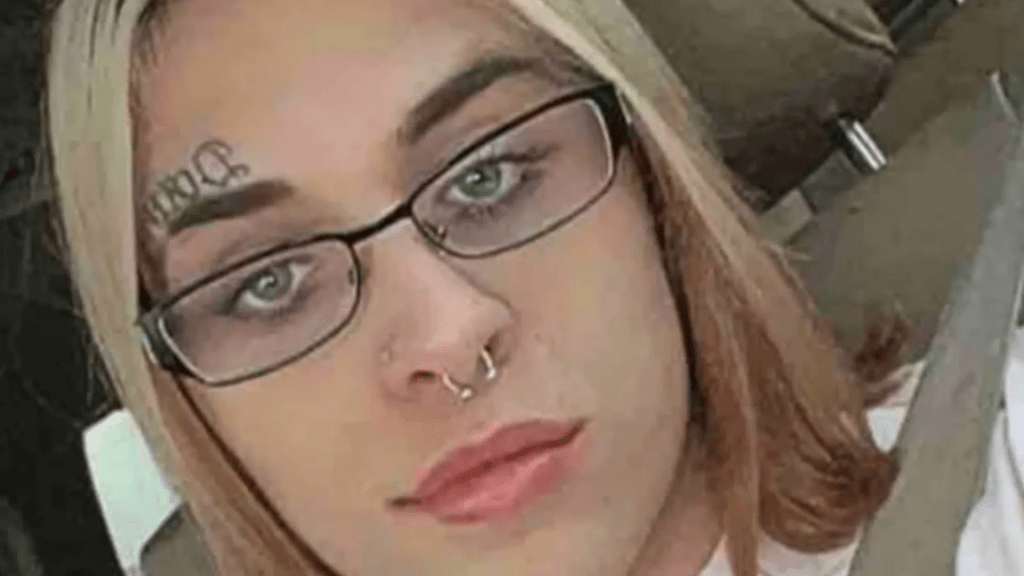
Dylan Gurley, a young transgender woman who was just shy of her 21st birthday on August 18, was tragically killed in Texas on July 23.

As reported by the Fort Worth Star-Telegram, police discovered Gurley with “traumatic injuries” at a residence in Denton, Texas around 11 p.m. that evening. She was rushed to the Medical City Denton hospital, where she succumbed to her injuries about 40 minutes later. According to the Tarrant County Medical Examiner’s Office, Gurley’s official cause of death was “blunt and sharp force injuries with strangulation,” indicating that she may have been beaten, cut, and strangled.

Few details have emerged about her death, other than that she was unhoused at the time, according to the Human Rights Campaign (HRC). A suspect has yet to be identified. An online obituary states that Gurley was born in Arlington, Texas, and is survived by her parents, step-parents, grandparents, and siblings. “Many other family members and friends loved Dylan,” the obituary reads.

Dylan’s sister, Senica Ciarallo, has launched a GoFundMe campaign to help raise funds “to give Dylan the memorial she wanted and deserved.” The money will be used for urns, bracelets, and necklaces to hold her ashes for those closest to Gurley. The family is also planning a special event to honor what would have been her 21st birthday.

Read more.

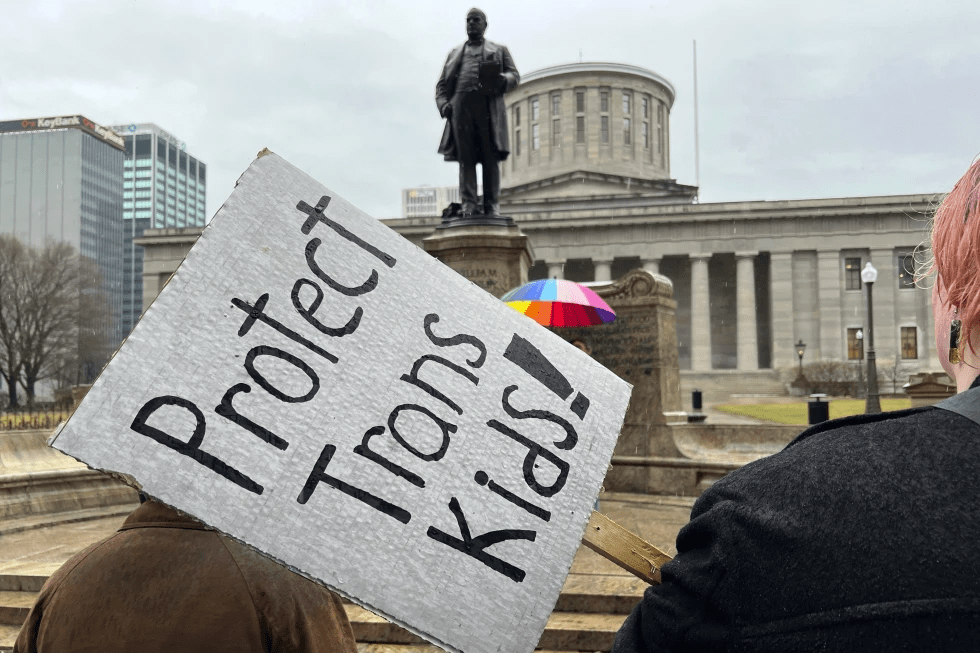
Ohio’s Gender-Affirming Care Ban Upheld by Judge; Civil Rights Group Announces Plan to Appeal Immediately

This blog originally appeared at AP News.

COLUMBUS, Ohio (AP) — On Tuesday, a county judge ruled that an Ohio law restricting gender-affirming health care for minors can go into effect.

The American Civil Liberties Union of Ohio has announced plans to file an immediate appeal.

The law prohibits transgender surgeries and hormone treatments for individuals under 18, except for those already undergoing such treatments where discontinuation could pose a risk, as determined by a doctor. It also imposes limitations on the types of mental health services available to minors.

Passed by state lawmakers in January, the law also bans transgender athletes from participating in girls’ and women’s sports, following an override of a veto by Republican Governor Mike DeWine.

In his ruling, Franklin County Judge Michael Holbrook stated that the ban “reasonably limits parents’ rights to make decisions about their children’s medical care” in line with the state’s legitimate interest in regulating medical practices and treatments.

The organizations challenging the law argue that it denies essential health care to transgender youth and specifically discriminates against their access to such care. The lawsuit also contends that combining the two bans breaches Ohio’s single-subject rule for legislation.

“This decision is not only a blow to our courageous clients but also to countless transgender youth and their families throughout the state who depend on this essential, life-saving health care,” said Freda Levenson, Legal Director at ACLU of Ohio.

In response, the office of Republican Ohio Attorney General Dave Yost stated that “this case has always centered on the legislature’s authority to enact laws aimed at protecting children from making irreversible medical and surgical decisions about their bodies.”

Ohio Governor Mike DeWine vetoed the law at the end of 2023 after visiting children’s hospitals and speaking with families affected by gender dysphoria. DeWine described his decision as thoughtful, limited, and “pro-life,” highlighting the suicide risks associated with not receiving appropriate treatment for gender dysphoria.

DeWine also announced plans to implement an administrative ban on transgender surgeries for individuals under 18 and to enhance state regulation and monitoring of gender-affirming treatments for both children and adults. He hoped these measures would address concerns from Republican colleagues in the Ohio Statehouse. However, the administration quickly abandoned this plan after transgender adults expressed significant worries about how such regulations could impact their lives and health.

Following DeWine’s veto, Ohio lawmakers remained resolute, successfully overriding it and making Ohio the 23rd state to enact a ban on gender-affirming health care for transgender youth.

Read more.

Blog at WordPress.com.

Up ↑