Same-sex marriages will soon become legal in Thailand after historic law

*This first appeared on AP News

BANGKOK (AP) — They have been in a committed relationship for more than 13 years, and even had a wedding in 2019. Since then, Danaya Phonphayung and Sunma Piamboon, both women, have considered themselves a married couple, even if same-sex marriages were not legally recognized.

The walls of their home in suburban Bangkok are decorated with faded photos from their happy union, filled with joy and love from their families and friends. Come this Thursday, their wedded status will be recognized by the nation as well, when a law that allows members of the LGBTQ+ community in Thailand to get married and have the same legal rights as heterosexual couples takes effect.

The couple said they can’t wait to formalize their union. They plan to register their marriage at a district office near their home on the very first day that the law allows.

“I think I’ll cry,” Danaya, an office worker, said with a big smile, thinking about the moment that they will sign the paper. “I’m so happy. It’s something that was more than I could’ve dreamed of, that suddenly this day is happening.”

“We live together. We bought a house. We bought a car. But we cannot share these things together like a married couple. When this is happening, we feel that it’s our rights that we need to secure as quickly as possible,” she said.

The marriage equality bill, which sailed through both the House of Representatives and the Senate, amended the Civil and Commercial Code to change the words “men and women” and “husband and wife” to “individuals” and “marriage partners.” It would open up access to full legal, financial and medical rights for LGBTQ+ couples.

Sunma, who owns a travel agency, said that she had realized how crucial being legally married was when Danaya was hospitalized with dengue fever, as they don’t live close to her parents.

“The doctors asked me who I was, and I said I was the girlfriend, and they were like, ‘so what’?’ I couldn’t make any decision until her condition became quite serious,” she said. “I was so upset, like, if I had lost her … there would be nothing that could’ve made up for it. So, I think this is very important for both of us.”

How marriage equality became law

Thailand has a reputation for acceptance and inclusivity, but struggled for decades to pass a marriage equality law. Thai society largely holds conservative values. Members of the LGBTQ+ community say they face discrimination in everyday life, although they note that things have improved greatly in recent years.

The government led by the Pheu Thai party made marriage equality one of its main goals. It made a major effort to identify itself with the annual Bangkok Pride parade in June, in which thousands of people celebrated in one of Bangkok’s busiest commercial districts.

Last week, Government House invited dozens of LGBTQ+ couples and activists for a photo op and a meeting with Prime Minister Paetongtarn Shinawatra and several high ranking officials to celebrate the law coming into effect, making Thailand the first in Southeast Asia and the third place in Asia, after Taiwan and Nepal, to legalize same-sex marriage.

“It is almost like a dream, but it’s not. So, congratulations to all,” Paetongtarn said. “I think it’s very important that the world notice us, and know that in this small country we have this kind of thought. We have this kind of support for our people. So, we all should be proud.”

The organizers of Bangkok Pride have collaborated with relevant government agencies to hold a grand celebration in central Bangkok and facilitate couples who wish to register their marriage on the very first day. They said that more than 300 couples have registered to officially tie the knot on Thursday at the event.

“(The law) is about returning our dignity, and confirming that we also have dignity as a human being,” said Ann “Waaddao” Chumaporn, a gender equality activist and the lead organizer of Bangkok Pride. “That day is going to be meaningful to all the couples that have gone through this journey together. I’d like to thank everyone, every love, that has faithfully struggled so that today would finally happen.”

How the law will be implemented

The government and state agencies in Thailand are historically traditional in outlook. To prepare them for change, the Bangkok Metropolitan Administration said that it has organized workshops for staff of all Bangkok district offices who are in charge of handling marriage registration. They included lectures raising awareness about gender diversity and guidance on how to properly communicate with those who come for the service.

“It’s like a missing piece of the jigsaw,” Bangkok Deputy Gov. Sanon Wangsrangboon said at one of the workshops earlier this month. “Society is ready. The law is getting ready. But the last piece of the jigsaw is the understanding from officials.”

He acknowledged there that would be problems in the beginning, but said that he hoped they would gradually improve over time.

After they register their marriage, Sunma said that she’s looking forward to having a “real marriage celebration” with her and Danaya’s families.

“It’s not just the two of us that are happy, but both of our families feel it is a big deal, and it is what everyone has been waiting for. Everyone said they are waiting for Jan. 23,” she said.
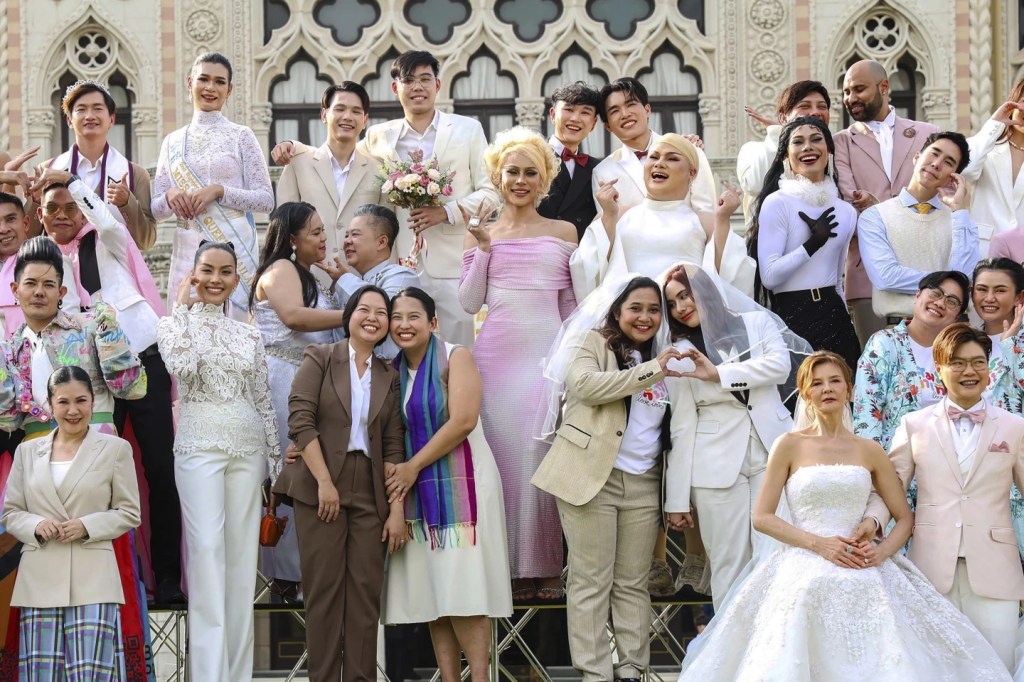
(AP Photo/Jirasak jivawavatanawanit)

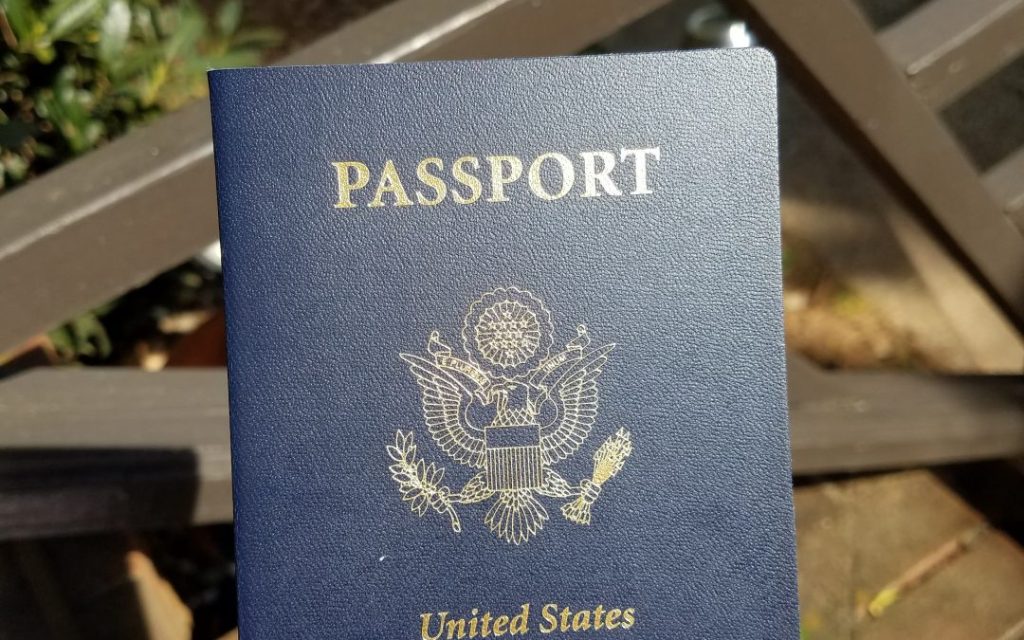
Trump two-gender edict would upend “X” identity on passports

This article first appeared on CNN.com

The federal government is set to only recognize two sexes, male and female, under an executive order that President Donald Trump is soon expected to sign.

The order would reverse efforts by the Biden administration to broaden gender identity designations, including on passports.

“As of today, it will henceforth be the official policy of the United States government that there are only two genders, male and female,” Trump said during his inaugural address Monday, taking an early step to fulfill one of his culture war campaign promises.

The order, a Trump administration official told reporters Monday, is aimed at “defending women from gender ideology extremism and restoring biological truths to the federal government.” Male and female “are sexes that are not changeable, and they are grounded in fundamental and incontrovertible reality,” the official said.

The federal government would also shift from using the term “gender” to “sex,” and that sex would be “an individual’s immutable biological classification,” the official said.

All government agencies would ensure that official documents, including passports and visas, “reflect sex accurately,” the official said. Also, departments running federal prisons, migrant shelters, rape shelters and other “intimate spaces” would be directed to protect single-sex spaces for privacy. And employee records would also adhere to the executive order, as would federal departments’ messaging.

“Agencies are no longer going to promote gender ideology through communication forms and other messages,” the official said, adding that grants and contracts would be reviewed to ensure that “federal funds shall not be used to promote gender ideology.”

Reversing Biden expansion

Trump’s executive order would dismantle efforts by the Biden administration to be more inclusive of Americans’ gender identification.

As of 2022, US citizens have been able to select “X” as their gender marker on passports. One’s marker does not need to match the gender on citizenship documents or photo ID, nor is medical documentation needed to change one’s gender, according to the State Department.

“We promote the freedom, dignity, and equality of all people – including LGBTQI+ individuals,” the department’s website says. “We are demonstrating this commitment to better serve all U.S. citizens, regardless of gender identity.”

Later that year, Americans were able to start changing their sex identification with the Social Security Administration without needing to provide medical certification. However, Social Security’s record systems still require a designation of male or female, though the administration said it was exploring policy and systems updates to support an “X” designation.

“The Social Security Administration’s Equity Action Plan includes a commitment to decrease administrative burdens and ensure people who identify as gender diverse or transgender have options in the Social Security number card application process,” said Kilolo Kijakazi, the administration’s acting commissioner at the time.

Italy’s digital nomad visa: Advice and tips from one of the first ever recipients

This blog originally appeared at Euro News.

After years of anticipation, Italy officially introduced its digital nomad visa in April this year, allowing remote workers to live and work in the country for up to a year.

Though the visa has only been available for a few months, adventurous travelers are already seizing the opportunity.

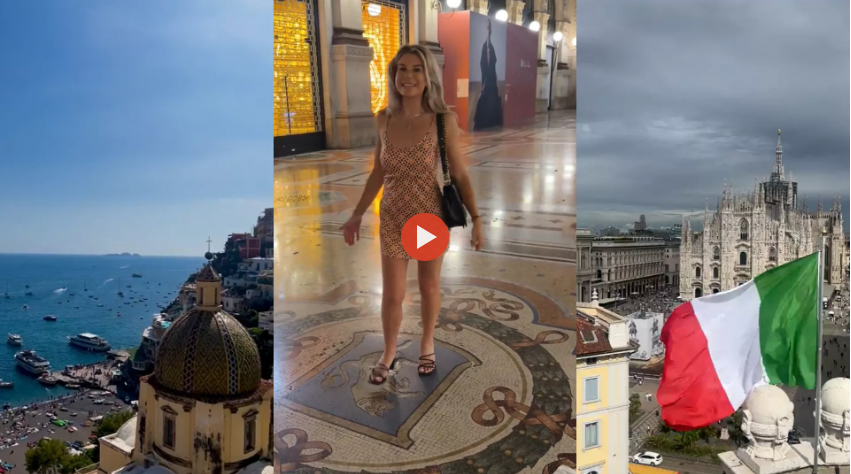
Chelsea Waite, a US native, started her own business in 2020 and has been working remotely ever since. After visiting Italy for the first time in 2017, she knew it was where she wanted to settle.

“When I found out in April that Italy launched the digital nomad visa, I was so excited and knew I had to pursue it with everything I had,” she told Euronews Travel.

I tried to do as much research as possible… But since this is such a new visa, there’s barely any information available beyond the fact that it exists,” she explains.

Fortunately, Chelsea navigated the process and is now one of the first to be granted the visa, currently living in Milan.

Here, she shares her experience and top tips for securing Italy’s digital nomad visa.

Is it difficult to get Italy’s digital nomad visa?
Navigating the process of this new visa came with several challenges. Chelsea attributes her success to perseverance and thorough preparation.

One major hurdle she encountered was securing a rental contract, a critical document for the digital nomad visa application.
“In Italy, it’s notoriously difficult to get a rental contract,” Chelsea says. Many assume you need a ‘codice fiscale’—an Italian tax code—to sign a lease. This code, issued to Italians at birth, is essential for services like opening a bank account or getting a phone number. However, obtaining a codice fiscale can be tough if you’re not already living in Italy or don’t yet have a visa.

Chelsea found that working with a real estate agent was key.
“My real estate agent informed me that there’s a way to register the contract for individuals moving to Italy who don’t yet have a codice fiscale,” she explains. “So if you get pushback from a property owner or management company, let them know this option exists and see how they can help.”

Italy’s digital nomad visa also differs from others in Europe. It targets highly skilled workers performing “highly qualified work activities” and earning at least €28,000 a year.

Part of Chelsea’s application involved having her degree certified. Initially, she thought having it notarized by the US Secretary of State’s office would suffice. However, Italy requires foreign degrees to be verified through CIMEA (the Information Centre on Academic Mobility and Equivalence), which manages recognition of degrees.
“You need to upload your degree, transcripts, and then it goes through an internal review that can take days or months,” she says. Nuanced requirements like these can slow down the process.

What are Chelsea’s top tips for getting Italy’s digital nomad visa?

Chelsea shares three key tips for anyone pursuing Italy’s digital nomad visa:

  1. Come overprepared:
    “Make sure you have all the necessary documents upfront,” she advises. “It’s better to be overprepared than underprepared so you don’t risk having to restart the whole process.”
  2. Seek help in Italy:
    She recommends getting local support for crucial steps, especially when it comes to finding accommodation.

“I would also recommend, if possible, visiting Italy between the time you schedule your appointment with the Italian consulate and the actual appointment date,” Chelsea suggests.

She explains that building relationships with locals is much easier in person than online.

“And my third piece of advice would be to stay flexible and come financially prepared,” she adds.

Chelsea emphasizes that digital nomads should factor in costs like deposits for housing, health insurance, document verification fees, and the visa fee itself.
“The whole process ended up costing a bit more than I expected.”

The non-refundable visa application fee alone is €116 per person.

With limited information available on how to apply for Italy’s digital nomad visa, Chelsea is now writing a guide to help others navigate the process.

Watch the video above to learn how Chelsea became one of the first recipients of Italy’s digital nomad visa.

“I would also recommend, if possible, visiting Italy between the time you schedule your appointment with the Italian consulate and the actual appointment date,” Chelsea suggests.

She explains that building relationships with locals is much easier in person than online.

“And my third piece of advice would be to stay flexible and come financially prepared,” she adds.

Chelsea emphasizes that digital nomads should factor in costs like deposits for housing, health insurance, document verification fees, and the visa fee itself.
“The whole process ended up costing a bit more than I expected.”

The non-refundable visa application fee alone is €116 per person.

With limited information available on how to apply for Italy’s digital nomad visa, Chelsea is now writing a guide to help others navigate the process.

Watch the video above to learn how Chelsea became one of the first recipients of Italy’s digital nomad visa.

“I would also recommend, if possible, visiting Italy between the time you schedule your appointment with the Italian consulate and the actual appointment date,” Chelsea suggests.

She explains that building relationships with locals is much easier in person than online.

“And my third piece of advice would be to stay flexible and come financially prepared,” she adds.

Chelsea emphasizes that digital nomads should factor in costs like deposits for housing, health insurance, document verification fees, and the visa fee itself.
“The whole process ended up costing a bit more than I expected.”

The non-refundable visa application fee alone is €116 per person.

With limited information available on how to apply for Italy’s digital nomad visa, Chelsea is now writing a guide to help others navigate the process.

Watch the video above to learn how Chelsea became one of the first recipients of Italy’s digital nomad visa.

Texas Education Agency will take control of Houston ISD | The Texas Tribune

This blog originally appeared at THE TEXAS TRIBUNE.

The announcement comes almost four years after the agency first moved to take over the district.

Millard House II, superintendent of the Houston Independent School District, delivers the HISD State of the Schools Address in Houston on March 3, 2023. The Texas Education Agency will replace House and the district’s school board as part of a state takeover. Credit: Joseph Bui for The Texas Tribune.

Sign up for The Brief, The Texas Tribune’s daily newsletter that keeps readers up to speed on the most essential Texas news.


After a prolonged legal battle and weeks of speculation, the Texas Education Agency on Wednesday confirmed it’s removing Houston Independent School District’s democratically elected school board and superintendent, effectively putting the state in charge of its largest school district.

Houston ISD, with 276 schools and an enrollment of nearly 200,000 students, will now be the largest district the agency has taken over since 2000, when it first intervened in a struggling school district.

Superintendent Millard House II and the current school board will finish out the school year, but the TEA will replace them after June 1 with “a board of managers.”

The Texas Tribune thanks its sponsors. Become one.

The TEA commissioner decides how long the board is in place. Usually, this sort of takeover has lasted two to six years.

The agency will host community meetings in the coming weeks to explain how the takeover will take place.

The move is in response to years of poor academic outcomes at a single campus in the district, Phillis Wheatley High School, and allegations of misconduct from school board members. TEA Commissioner Mike Morath said state law requires his agency to either close that campus or appoint a new board to oversee the district.

Texas passed a law in 2015 mandating a state takeover if a school district or one of its campuses receives failing grades from the TEA for five consecutive years. Phillis Wheatley reached that threshold in 2019.

Catch up on education news with our weekly newsletter

Education Weekly Roundup newsletter

Catch up on education news with our weekly newsletter

Browse all newsletters at texastribune.org/newsletters.

Morath and the agency moved to force out the district’s school board that same year. The district pushed back and sued, but the Texas Supreme Court ruled in January that the agency could move forward with its plan to take over the district.

“Even with a delay of three full years caused by legal proceedings, systemic problems in Houston ISD continue to impact students most in need of our collective support,” Morath wrote in a letter to district leaders Wednesday.

Read more: https://www.texastribune.org/2023/03/15/texas-education-houston-isd-takeover/

Blog at WordPress.com.

Up ↑