Not content with holding title to one of the harshest anti-LGBTQ+ laws in the world, Uganda’s parliament is considering a bill that would outlaw identifying as lesbian, gay, bisexual, transgender, or queer.
The country’s Anti-Homosexuality Act, passed in 2023, already provides a sentence of life in prison for gay men who have sexual relations, and in extenuating circumstances, even death.
The new measure would criminalize Ugandans for simply saying they’re anything but straight.
Among more than 30 African nations that ban same-sex relations, the proposed law would be the first to criminalize just identifying as LGBTQ+, according to Human Rights Watch.
The proposed law was introduced with the goal of combating “threats to the traditional, heterosexual family,” according to a copy shared with Reuters.
In an awkward mashup of identifying prohibitions, language in the bill echoes executive orders issued by the U.S. president in his crusade against the transgender community.
The measure mandates punishment of up to 10 years in prison for any person who “holds out as a lesbian, gay, transgender, a queer or any other sexual or gender identity that is contrary to the binary categories of male and female.”
The bill also criminalizes the “promotion” of homosexuality and “abetting” and “conspiring” to engage in same-sex relations.
Much of the bill’s content is revived from the original “Kill the Gays” law, passed in 2013 but overturned by Uganda’s high court on technical grounds.
That law criminalized lesbianism.
“One of the most extreme features of this new bill is that it criminalizes people simply for being who they are as well as further infringing on the rights to privacy, and freedoms of expression and association that are already compromised in Uganda,” said Oryem Nyeko, Uganda researcher at Human Rights Watch.
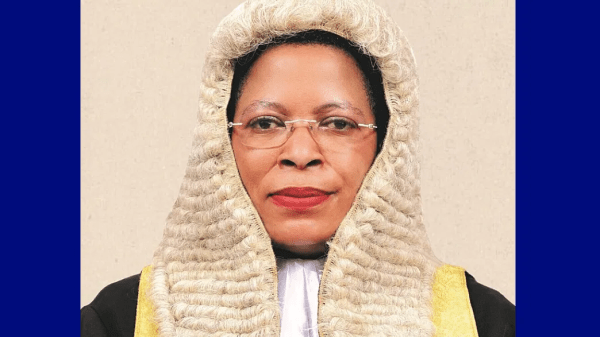
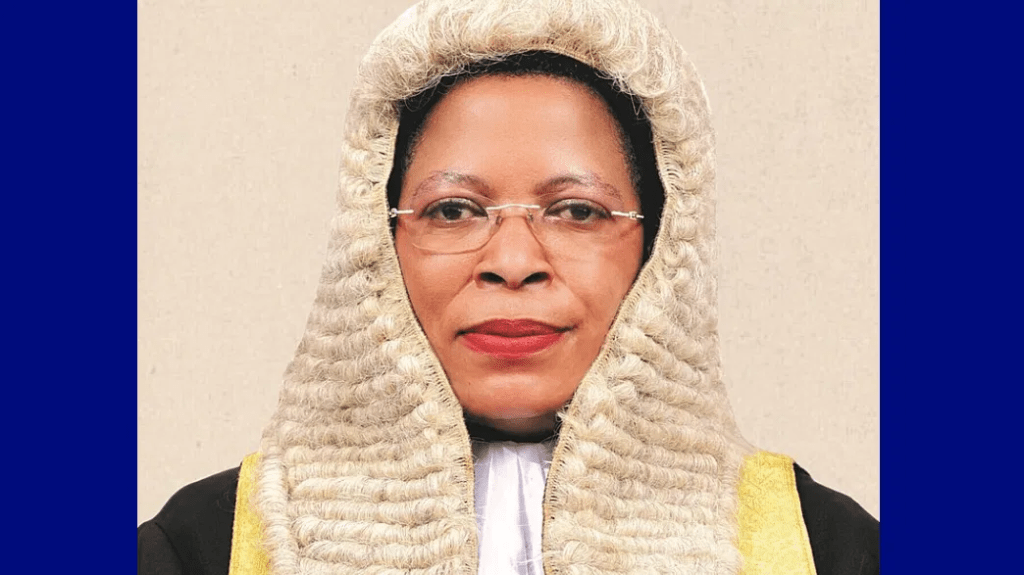
Speaker of the Parliament Anita Among, the rabidly homophobic lawmaker who helped usher the Anti-Homosexuality Act into law, sent the new bill to committee for debate and public hearings after it was read to legislators.
Among urged fellow lawmakers to reject intimidation, referencing threats by Western countries to impose travel bans on those responsible for the legislation.
“This business of intimidating that ‘you will not go to America,’ what is America?” she asked.
Ugandan lawmakers, the speaker prominent among them, have for years warned of “degenerate Western values” threatening Ugandan families and sovereignty.
Among was urged on in her anti-Western pose by Russia’s ambassador to Uganda, who encouraged her to fast-track the “Kill the Gays” law through parliament in 2023. It passed overwhelmingly and was cheered by lawmakers.
“This is the time you are going to show us whether you’re a homo or you’re not,” Among told the packed chamber.
Ugandan officials have expressed support for the incoming U.S. president.
As the results of the U.S. presidential election were revealed on November 5, showing that former President Donald Trump had secured a second term, homophobic political leaders in Uganda celebrated 7,000 miles away, in the capital city of Kampala.
“The sanctions are gone,” said Anita Among, Uganda’s parliamentary speaker, addressing members of parliament. She was referring to her previous U.S. travel ban imposed by the Biden administration on June 16, 2023, after Uganda passed the controversial “Kill The Gays” law on May 28, 2023.
The law, officially named the Anti-Homosexuality Act, was signed into effect by President Yoweri Museveni on May 28, 2023. The legislation imposes life imprisonment for same-sex acts, up to 20 years in prison for “recruitment, promotion, and funding” of same-sex “activities,” and the death penalty for those convicted of “attempted aggravated homosexuality.”
As the results of the U.S. presidential election were revealed on November 5, showing that former President Donald Trump had won a second term, homophobic political leaders celebrated 7,000 miles away in Uganda’s capital, Kampala.
“The sanctions are gone,” said Anita Among, Uganda’s parliamentary speaker, referring to the fact that she had been barred from entering the U.S. by the Biden administration on June 16, 2023, following Uganda’s passage of the “Kill The Gays” law on May 28, 2023.
The law, officially called the Anti-Homosexuality Act, was signed into law by President Yoweri Museveni on May 28, 2023. It mandates life imprisonment for same-sex acts, up to 20 years in prison for the “recruitment, promotion, and funding” of same-sex “activities,” and the death penalty for those convicted of “attempted aggravated homosexuality.”
On May 8, Among declared that the law’s enactment proved “the Western world will not come and rule Uganda.” The following day, she tweeted: “The president … has assented to the Anti-Homosexuality Act. As the parliament of Uganda, we have answered the cries of our people. We have legislated to protect the sanctity of [the] family. We have stood strong to defend our culture and [the] aspirations of our people,” thanking Museveni for his “steadfast action in the interest of Uganda.”
Among further stated that Ugandan MPs had resisted pressure from “bullies and doomsday conspiracy theorists” and urged the country’s courts to enforce the new law. The passage of this bill, along with Among’s and other African homophobes’ celebrations of Trump’s re-election, indicates the likely direction for Africa’s LGBTQ+ community over the next four years.
For years, political and religious leaders across Africa, including both Christian and Muslim zealots, have exploited homophobia to consolidate political and religious power. They claim that same-sex relations and gay rights are foreign imports from the West and use homophobia to position themselves as defenders of African values. By stoking fear and division, they galvanize popular support and votes.
However, as others have pointed out, homophobia itself is a Western import, rooted in colonial history. From sodomy laws inherited from colonial rule to the parliaments passing these laws today, the tools used by homophobes in Uganda and elsewhere in Africa are themselves colonial legacies.
And homophobia in Africa is intensifying.
In mid-March 2023, Museveni told the Monitor newspaper that “Western countries should stop wasting the time of humanity by imposing their social practices on us.” Kenyan President William Ruto echoed these sentiments in the same month, declaring that “our culture and religion does not allow same-sex marriages.”
On April 2, 2023, Museveni called on African leaders to reject “the promotion of homosexuality,” claiming that homosexuality posed a “big threat and danger to the procreation of the human race.” He further asserted that “Africa should provide the lead to save the world from this degeneration and decadence, which is really very dangerous for humanity.”
On December 29, 2023, Burundian President Evariste Ndayishimiye, speaking in Cankuzo province, made a defiant statement that powerful nations “should keep” their aid if it came with an obligation to extend rights to LGBTQ+ people. He added, “If we find these people in Burundi, they should be taken to stadiums and stoned, and doing so would not be a crime.”
In Ghana, lawmakers have been debating the Proper Human Sexual Rights and Ghanaian Family Values Bill, which was introduced in August 2021. Under current law, same-sex relations are punishable by up to three years in prison. However, the new bill criminalizes even identifying as LGBTQ+, outlaws being transgender, and introduces jail sentences of up to 10 years for advocating for LGBTQ+ rights. It also mandates that all citizens report perceived LGBTQ+ individuals or activities to the authorities.
The bill passed in the Ghanaian parliament on February 28, though President Nana Addo Dankwa Akufo-Addo has not yet announced whether he will sign it, pending the outcome of two Supreme Court cases challenging its constitutionality. On July 17, the Supreme Court postponed a ruling on the bill until all legal challenges are resolved.
Former Ghanaian President John Dramani Mahama, a leading candidate in the upcoming elections, expressed his opposition to same-sex marriage and transgender rights. He stated during a meeting with clergy in eastern Ghana, “The faith I have will not allow me to accept a man marrying a man, and a woman marrying a woman.” He also rejected the notion of someone changing their gender, stating, “I don’t believe that anyone can get up and say I feel like a man although I was born a woman and so I will change and become a man.”
In Kenya, opposition parliamentarian Peter Kaluma introduced the Family Protection Bill in February 2023. The bill, which mirrors aspects of Uganda’s law, would impose prison sentences of up to 10 years or even the death penalty for same-sex relations. The bill is currently being reviewed by a parliamentary committee, with a full vote expected soon. President William Ruto, an evangelical Christian, has endorsed this legal crackdown on LGBTQI+ rights.
In Mali, the National Transitional Council, effectively the country’s legislature after a military coup in 2020, approved a new penal code on October 31 that criminalizes same-sex relations by 132 votes to one. The exact penalties for same-sex acts remain unclear, but the Justice and Human Rights Minister, Mamadou Kasogue, confirmed that “anyone who indulges in this practice, or promotes or condones it, will be prosecuted.”
Trump’s foreign policy advisors are already preparing an explicitly anti-LGBTQ+ rights agenda for his second term. The Project 2025 report, crafted under the guidance of the Heritage Foundation, proposes that the U.S. “stop promoting policies birthed in the American culture wars” and cease pressuring African governments to respect human rights, including LGBTQ+ rights, women’s rights, and abortion rights.
The report claims that “African nations are particularly (and reasonably) non-receptive to the US social policies such as abortion and pro-LGBT initiatives,” and suggests that the U.S. should focus on “core security, economic, and human rights engagement” without promoting “divisive policies that hurt shared goals.”
The implementation of this policy shift on LGBTQ+ rights in Africa will be overseen by Trump’s nominee for Secretary of State, Marco Rubio, and his selection for Assistant Secretary of State for African Affairs. They will be tasked with promoting and funding homophobic groups across the continent, a strategy that is expected to be pursued with enthusiasm.
While African leaders claim they are defending the continent from Western influences, they are in fact advancing their own agendas, often in partnership with right-wing Christian nationalists in the West. However, LGBTQ+ communities in both Africa and the West share a common interest in resisting these attacks, and civil society groups, along with human rights advocates, are increasingly active. As LGBTQ+ activist Eric Gilari from Kenya stated, “One day we shall defeat these assaults on our human rights and triumph in equality and inclusion for LGBTQ persons within African countries. This ideal must be our guiding light in this moment of darkness and tears.”



 fleeredstates.blog
You must be logged in to post a comment.