Anti-LGBTQ+ GOP lawmaker is trying to rename Harvey Milk Blvd. for Charlie Kirk

Read more at LGBTQ Nation.

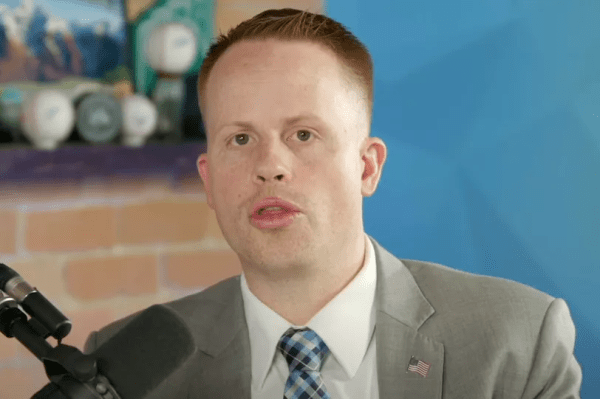
A Republican legislator in Utah is trying to change a road named for civil rights leader Harvey Milk so that it honors anti-LGBTQ+ MAGA podcaster Charlie Kirk.

Milk, a San Francisco city councilmember in the 1970s, was one of the first out LGBTQ+ people elected to public office and was integral in leading the fight against California’s Briggs Initiative, which would have banned gay people from being teachers. Kirk spoke out against LGBTQ+ rights and said that it was “God’s perfect law” that called for people to stone gay people to death. Both of them were shot to death.

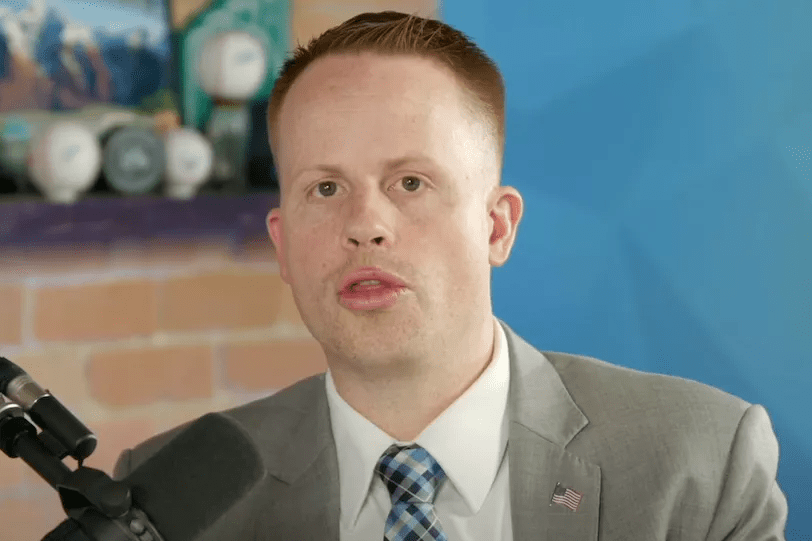
Utah Rep. Trevor Lee (R) introduced a bill to change Salt Lake City’s Harvey Milk Blvd to “Charlie Kirk Blvd” earlier this week.

In an interview with ABC4, Lee claimed that the only reason he chose Harvey Milk Blvd to be renamed – and not any other road in the state – was because Milk was from California. Kirk was from Arizona but was died in Orem, Utah.

“From the vast majority of Utahns, they would say that Harvey Milk does not have any connection to Utah whatsoever,” Lee said about his bill. “But Charlie Kirk does now, especially after being assassinated in the state of Utah.”

ABC 4 noted that Harvey Milk Blvd. isn’t a state road and that the city government is in charge of naming it, which could mean that the state legislature doesn’t have the authority to rename it.

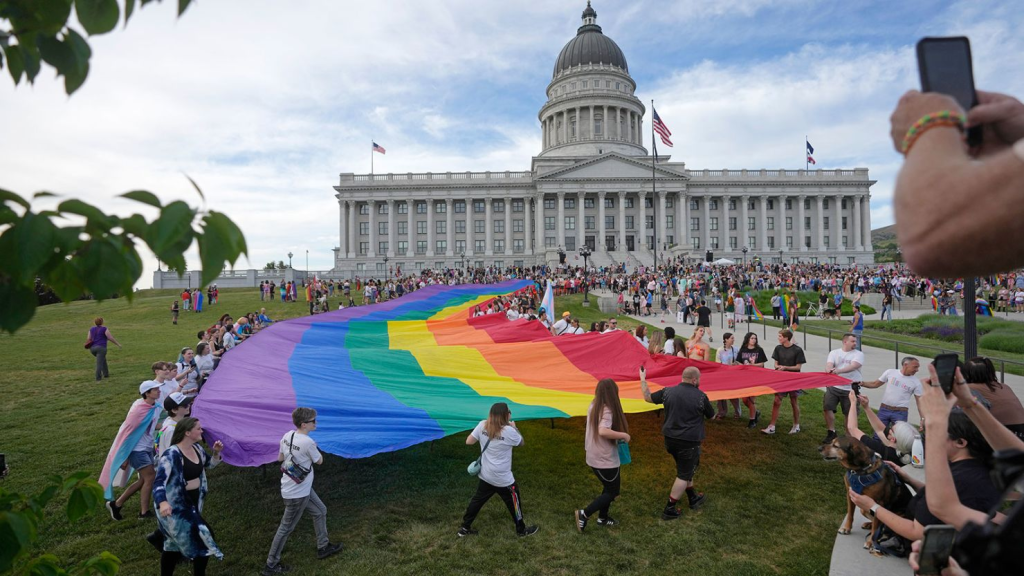
Lee has a long history of anti-LGBTQ+ legislation. He introduced a bill earlier this year to ban Pride flags in government buildings. His bill would have allowed Nazi and Confederate flags because, he argued, those are “historic,” while it would ban the rainbow flag.

Also this year, Lee threatened to withdraw state funding from the state’s NHL team, the Utah Mammoths, because the team posted a rainbow-colored version of its logo for Pride Month and wrote “Happy Pride” on social media.

“Utahns overwhelmingly don’t support pride month,” Lee said at the time. Lee has not cited any proof for his ability to speak for the “vast majority” of people in his state. He represents Utah House of Representatives District 16, a district of around 40,000 inhabitants that includes parts of Layton.

In 2022, Lee said on a podcast that Utah Gov. Spencer Cox (R) “might even be transgender because he’s all for everything they say and do.” Cox is not transgender and has signed anti-trans legislation.

“Was that before or after he vetoed a bill for tr***ies?” Lee said, using an anti-trans slur.

Lee then claimed to speak for Black people, saying that “a lot of my friends who are Black, they’d be like, yeah, man, I don’t agree with all that LGBTQ stuff.”

“I’m like, that’s embarrassing. I wouldn’t want to be associated with those people,” Lee said.

He said that it was “crazy white liberals who do not have another purpose in life” who need to stop supporting LGBTQ+ rights and “start families and make babies.”

That same year, the Salt Lake Tribune found that Lee was running a secret account on Twitter to attack LGBTQ+ people while posting imagery associated with the “DezNat” or “Deseret Nation” movement, a rightwing movement that advocates for a Mormon, white ethnostate. The movement is not supported by the Church of Jesus Christ of Latter-day Saints.

“Yes, than our spineless governor can stop acting like he needs to let transsexuals destroy our girls in sports,” he wrote on that account in one post.

In another post, he shared a meme that accused LGBTQ+ teachers of trying to turn kids transgender, a rightwing myth used to advocate banning LGBTQ+ people and allies from being teachers.

In 2021, he posted that a meme calling Pride Month “Satanic” was “amazing.”

“Doing things that are explicit, you know, people that are topless, that are running around in underwear and they have children there,” Lee said in an interview at the time about Pride. “Yeah, I think that’s satanic. I think that’s horrible.”

Lee also said that “teachers should be paid less not more” with the hashtag “#deznat.”

Salt Lake City adopts four flags to represent residents, visitors

*This press release is from the Mayor’s Office of Salt Lake City.

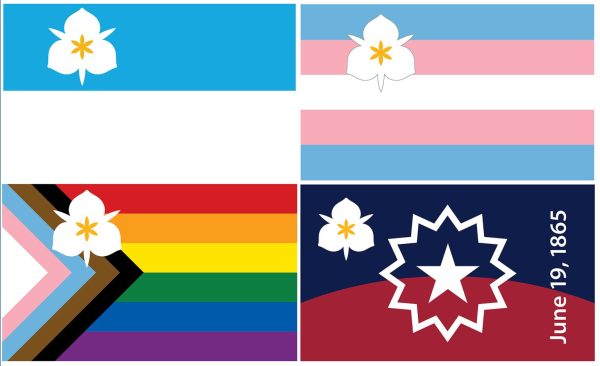
Salt Lake City Mayor Erin Mendenhall proposed adopting three new City flags, in addition to the traditional Sego Lily Flag, on Tuesday to most accurately reflect the values of the City and its residents. The Salt Lake City Council adopted the flags via ordinance in its formal meeting.

The three additional city flags celebrating human rights include: 

  • The Sego Celebration Flag, representing the history of Juneteenth and the City’s Black and African American residents;
  • The Sego Belonging Flag, representing the City’s LGBTQIA residents and broader acceptance of this community; and
  • The Sego Visibility Flag, representing the City’s transgender residents and a commitment to seeing and celebrating their lives. 

“Our City flags are powerful symbols representing Salt Lake City’s values,” said Mendenhall. “I want all Salt Lakers to look up at these flags and be reminded that we value diversity, equity and inclusion—leaving no doubt that we are united as a city and people, moving forward together.”

House Bill 77, passed during the 2025 legislative session, narrowed the types of flags a city can display publicly on government property unless a flag meets the criteria outlined in the bill as an “exempted flag.” It was important to the Mendenhall administration that the City work within the constraints of recent legislation while continuing to uphold Salt Lake City’s values.

“Like other civic symbols, these flags reflect our shared humanity and the values that help everyone feel they belong—no matter their background, orientation or beliefs,” said Salt Lake City Council Chair Chris Wharton. “While the state has restricted which flags public buildings can fly, I’m glad we can still uphold our community’s values within the law.”

The three new flags were chosen because versions of them have been consistently displayed at City Hall during Mayor Mendenhall’s time in office and are representative of our community’s diverse, loving, and accepting values.

In all three flags, the sego lily in the upper corner of these designs is the City’s most recognized emblem, clearly identifying that each flag is representative of Salt Lake City specifically. 

In 2020, Salt Lake City adopted its current flag following a community-driven redesign: a field of blue over white with a white sego lily with three petals in the upper hoist canton. Salt Lake City is the only state capital with a three-word name. Despite the harsh environmental climate it lives in, the sego lily is a symbol of resilience, exemplifying Salt Lake City and its residents. Over the past five years, the sego lily and the City’s flag have grown to be highly recognized symbols and sources of pride in the city.

The City flags will continue to fly alongside the State of Utah and American flags.

Utah schools, government buildings will soon be fined if they fly this flag

*This is being reported by WFMY 2.

Utah became the first state to prohibit flying LGBTQ+ pride flags at schools and all government buildings after the Republican governor announced he was allowing a ban on unsanctioned flag displays to become law without his signature.

Gov. Spencer Cox, who made the announcement late Thursday night, said he continues to have serious concerns with the policy but chose not to reject it because his veto would likely be overridden by the Republican-controlled Legislature.

Starting May 7, state or local government buildings will be fined $500 a day for flying any flag other than the United States flag, the Utah state flag, military flags or a short list of others approved by lawmakers. Political flags supporting a certain candidate or party, such as President Donald Trump’s signature “Make America Great Again” flags, are not allowed.

The ban also prohibits teachers from hanging any restricted flag in their classroom.

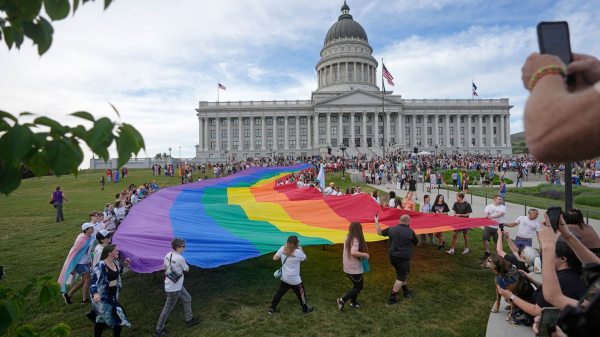
The new law could stoke conflict between the state and its largest city. City buildings in liberal Salt Lake City typically honor Pride Month each June by displaying flags that celebrate its large LGBTQ+ population. Local leaders have illuminated the Salt Lake City and County Building in rainbow lights to protest the flag ban each night since the Legislature sent it to Cox’s desk.

Andrew Wittenberg, a spokesperson for Salt Lake City Mayor Erin Mendenhall’s office, said their attorneys are evaluating the law and the capital city does not yet have information on what it will do once the law takes effect.

The bill’s Republican sponsors, Rep. Trevor Lee and Sen. Dan McCay, said it’s meant to encourage “political neutrality” from teachers and other government employees. Opponents argued it aims to erase LGBTQ+ expression and take authority away from cities and towns that don’t align politically with the Republican Legislature.

In a letter to legislative leaders explaining his decision, Cox said he agreed with the “underlying intent” of the bill to make classrooms politically neutral but thought it went too far in regulating local governments. He also noted that by focusing narrowly on flags, the law does not prevent other political displays such as posters or lighting.

“To our LGBTQ community, I know that recent legislation has been difficult,” Cox said. “Politics can be a bit of a blood sport at times and I know we’ve had our disagreements. I want you to know that I love and appreciate you and I am grateful that you are part of our state. I know these words may ring hollow to many of you, but please know that I mean them sincerely.”

Cox’s decision came hours after the Sundance Film Festival announced it was leaving its home of four decades in Park City, Utah, for Boulder, Colorado. The flag bill created eleventh-hour tensions as some residents worried it would push the nation’s premier independent film festival out of state. Festival leaders said state politics ultimately did not influence their move from conservative Utah to liberal Colorado. They did, however. make “ethos and equity values” one of their criteria in a nationwide search for a new home and referred to Boulder in their announcement as a “welcoming environment.”

Utah’s flag law goes further than one signed last week in Idaho that only applies to schools. But Idaho Republicans are also advancing a separate bill to ban government buildings from displaying certain flags.

Florida lawmakers have advanced a proposal to ban pride flags and others that represent political viewpoints in schools and public buildings after similar measures failed in the past two legislative sessions. Some federal agencies, including the Department of Veterans Affairs, also have limited which flags can fly at their facilities.

Other flags permitted under the Utah law include Olympic and Paralympic flags, official college or university flags, tribal flags and historic versions of other approved flags that might be used for educational purposes.

This week, Cox also signed laws phasing out universal mail-in ballots and banning fluoride in public drinking water. Other significant new laws require app stores to verify users’ ages and mandate firearm safety instruction in elementary school classrooms.

10 years of the Utah Compromise on religion and gay rights

*This is reported by Deseret News.

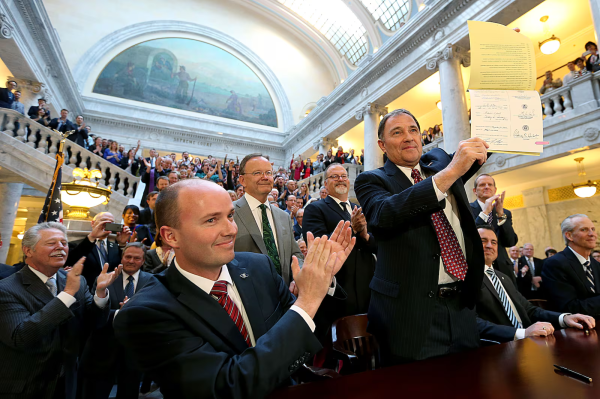
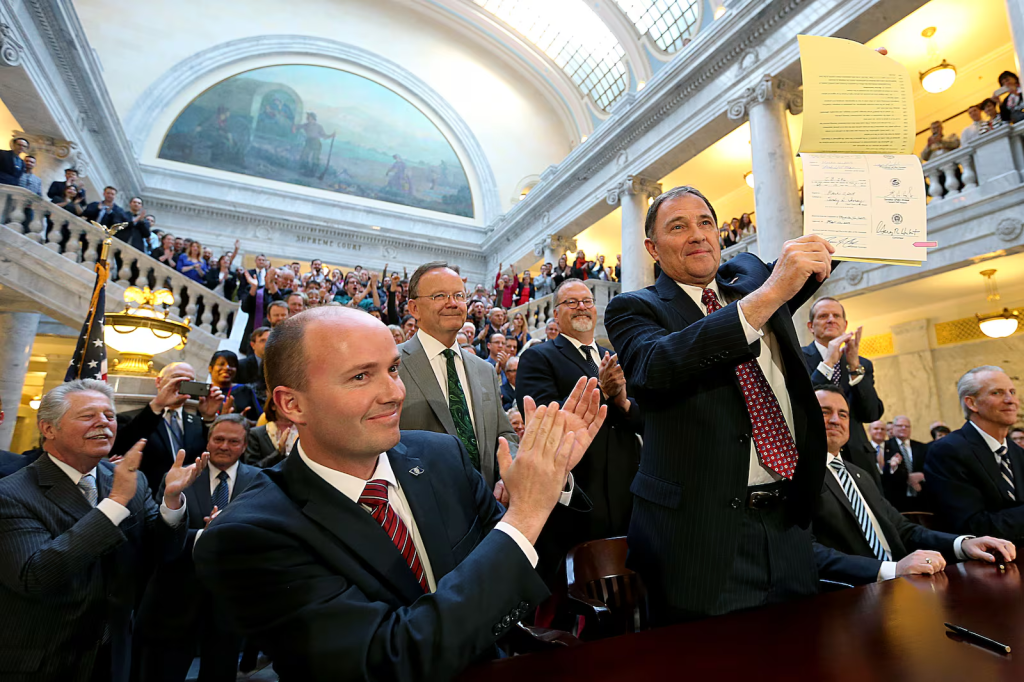
Ten years ago, Utah passed a landmark pair of bills that combined religious freedom protections with LGBTQ nondiscrimination protections.

Five years ago, many of the people behind what became known as the Utah Compromise spoke to me about why their balanced approach to religion and LGBTQ rights hadn’t yet caught on nationwide.

Last week, I checked in again with one of the key players to hear about where things stand today and whether she’s still hopeful that Utah’s “fairness for all” approach will spread to other states.

Robin Fretwell Wilson, a professor of law at the University of Illinois College of Law, told me that Utah remains united behind the Utah Compromise and has passed several more carefully constructed religion-related policies in recent years on topics like adoption and conversion therapy.

But she added that today, just like five years ago, it’s rare to find a lawmaker outside the Beehive State who is willing to plant their flag in the middle ground between opposing groups and champion balanced solutions to contentious conflicts.

“Right now, we’re mining a streak of meanness,” Wilson said. “Fairness for all doesn’t feel like it’s in the air.”

From 2015 to 2020, Wilson and other stakeholders met with policymakers from 10 to 15 other states about the fairness for all approach to lawmaking.

That list hasn’t grown over the past five years, and the federal Fairness for All Act from 2019, which drew inspiration from the Utah Compromise, hasn’t advanced in Washington.

However, the act’s supporters did score a big win in December 2022 when federal lawmakers passed the Respect for Marriage Act, which strengthened legal protections for married same-sex and interracial couples while affirming religious freedom rights.

The Respect for Marriage Act built on aspects of the Fairness for All Act and Utah Compromise, and it likely wouldn’t have passed if work hadn’t been done in the years preceding its introduction to educate lawmakers about the value of balancing religious freedom and gay rights, Wilson said.

But although it was significant, it feels like a missed opportunity to Wilson and others.

That’s because, instead of holding it up as an example of what’s possible when religious liberty advocates and LGBTQ rights advocates work together, the Biden administration chose to put the spotlight on the importance of protecting gay marriage.

“You can’t be doing something that marries up the interest of gay folks and religious folks on that scale and forget to say anything about the religious folks,” said Wilson, who was at the White House ceremony for the law.

Even before that event, Wilson placed her hope in state rather than federal policymakers because she’s long believed they’re better-positioned to find balance.

Today, as in 2020, as in 2015, she believes that states like Utah will lead the way to a world in which people of faith and LGBTQ individuals — and LGBTQ individuals who are people of faith — can live authentically in public and private without fear of retribution.

“I’ve never really placed my hopes in Congress. I’ve always placed my hope in state legislators,” Wilson said. “I’m hopeful because I’ve seen fairness for all become a script for Utah.”

Blog at WordPress.com.

Up ↑