CBP Enforces Binary Sex Codes and Enhanced US Passport Validation in APIS

Read more at Greenberg Traurig.

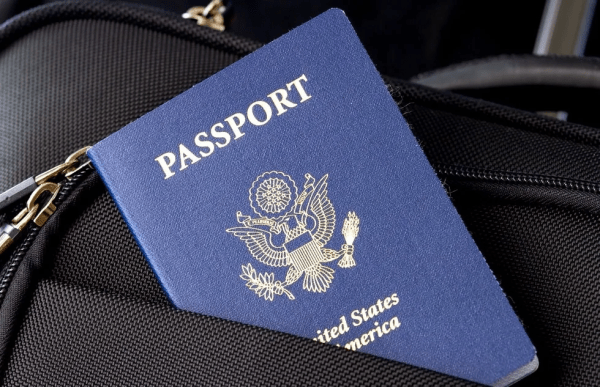
U.S. Customs and Border Protection (CBP) has issued updates to the Advance Passenger Information System (APIS) requirements that may affect business travelers and airlines. These changes, implemented in response to Executive Order 14168, “Defending Women from Gender Ideology Extremism and Restoring Biological Truth to the Federal Government” issued in January 2025, introduce enhanced validation requirements for passenger data submitted by commercial air carriers.

Key Changes Overview

Sex Field Requirements: Effective Oct. 14, 2025, CBP systems will only accept “M” (Male) or “F” (Female) in the sex field of APIS transmissions. Any other characters will result in an “X Response-Insufficient Information” error, requiring airlines to resubmit the passenger data with corrected information.

U.S. Passport Format Validation: Starting Oct. 6, 2025, CBP will implement stricter validation for U.S. passport numbers transmitted through APIS.

Implementation Timeline

  • Sept. 17, 2025: Testing environment (EDU) available for sex field validation changes.
  • Sept. 24, 2025: Testing environment available for U.S. passport format validation.
  • Oct. 6, 2025: U.S. passport format validation goes live in production.
  • Oct. 14, 2025: Sex field validation goes live in production.

U.S. Passport Number Format Requirements

Valid U.S. passport numbers must follow one of these formats:

Option 1: Numeric Format

  • Nine numeric digits
  • Must have a numerical value of 4XXXXXXXX or higher

Option 2: Alpha-Numeric Format

  • Nine characters total
  • First character must be A, X, Y, or Z
  • Followed by exactly eight numeric digits

The leading alpha characters indicate passport type:

  • A: Regular passport
  • X: Diplomatic passport
  • Y: Official passport
  • Z: Service passport

Impact on Business Travel

Employer Considerations:

  • Review travel policies and booking procedures with travel management companies;
  • Ensure corporate travel booking systems capture accurate passenger information;
  • Brief frequent business travelers on the importance of providing exact passport details; and
  • Consider potential delays if incorrect information requires resubmission.

Employees Considerations:

  • Double-check that passport information matches exactly what is on the physical document when booking travel;
  • Verify that airlines have the correct sex designation as listed on the passport;
  • Allow additional time for potential rebooking if passenger information errors occur; and
  • Ensure the U.S. passport number format is valid if traveling on a U.S. passport.

Carrier Responsibilities

Airlines remain responsible for comparing travel documents passengers present with the information transmitted to CBP. Airline carriers must ensure accuracy in all APIS data submissions, including traveler sex designation and passport number formatting.

Practical Considerations

  1. Document Verification: Provide passport information exactly as it appears on travel documents.
  2. Sex Designation Accuracy: Ensure the sex designation transmitted to CBP matches exactly what appears on passports, regardless of personal identification.
  3. Passport Updates: Consider whether passport updates may be necessary to ensure smooth travel.
  4. Early Booking: Complete travel bookings in advance to allow time for any necessary corrections.
  5. Travel Management: Work with experienced travel agencies familiar with APIS requirements.
  6. Communication: Ensure clear communication between travelers, booking agents, and airlines regarding exact document details.

Special Considerations

Document Inconsistencies: If travelers’ passports contains a sex designation that differs from their current identification, airlines must still transmit the information exactly as it appears on their passport documents. CBP systems will only accept the “M” or “F” designation that matches travel documents.

Non-Binary Passport Designations: Passports issued with “X” or other non-binary markers will be rejected by CBP systems, requiring resubmission with valid documentation showing “M” or “F” designation.

Passport Updates: Travelers experiencing documentation inconsistencies may wish to consult with the relevant passport issuing authority about available options for updating travel documents.

Takeaways

The implementation of these changes may cause initial adjustment periods. Business travelers and employers should work closely with their travel management companies to enhance compliance with these new requirements. Providing accurate and complete travel documentation remains essential for efficient international travel.

New immigration policy bans visas for trans athletes: “Not in the national interest”

Read more at LGBTQ Nation.

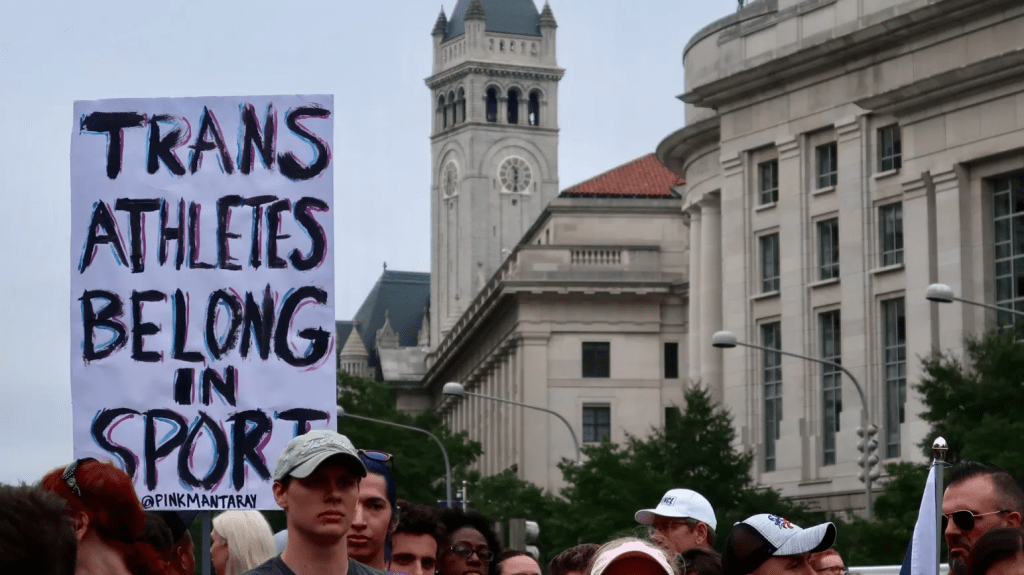
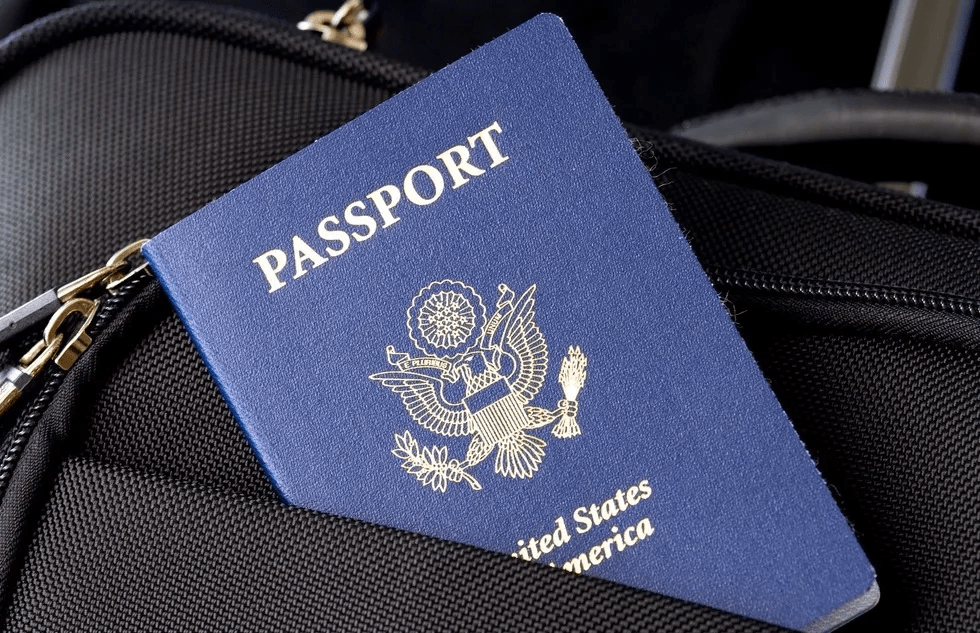
U.S. Citizenship and Immigration Services (USCIS) has issued policy updates “effective immediately” to prevent trans women athletes abroad from entering the country to compete in sports competitions.

The agency said the updates are in accordance with an executive order against trans athletes that directed the Department of Homeland Security to bar entry to trans women from other countries who want to play sports in the United States.

The policy change is especially significant since the United States is set to host the 2028 Summer Olympics in Los Angeles.

The press release, issued on August 4, consistently misidentifies trans women as men.

“USCIS will affirmatively protect all-female athletic opportunities by granting certain athlete-related petitions and applications, that had previously been abused and offered to men, only to women, ensuring that male aliens seeking immigration benefits aren’t coming to the U.S. to participate in women’s sports,” it said, explaining the new eligibility policies for “extraordinary ability” visas.

“This policy update clarifies that USCIS considers the fact that a male athlete has been competing against women as a negative factor in determining whether the alien is among the small percentage at the very top of the field,” the release continued, saying the agency “does not consider a male athlete who has gained acclaim in men’s sports and seeks to compete in women’s sports in the United States to be seeking to continue work in his area of extraordinary ability.”

“Male athletes seeking to enter the country to compete in women’s sports do not substantially benefit the United States,” the agency claimed, “and it is not in the national interest to the United States to waive the job offer and, thus, the labor certification requirement for male athletes whose proposed endeavor is to compete in women’s sports.”

A statement from USCIS spokesperson Matthew Tragesser further emphasized the administration’s hostility to trans athletes and its refusal to address them by their actual genders.

“Men do not belong in women’s sports,” Tragesser said. “USCIS is closing the loophole for foreign male athletes whose only chance at winning elite sports is to change their gender identity and leverage their biological advantages against women.”

“It’s a matter of safety, fairness, respect, and truth that only female athletes receive a visa to come to the U.S. to participate in women’s sports.” He then claimed the administration “is standing up for the silent majority who’ve long been victims of leftist policies that defy common sense.”

The administration has been targeting trans folks abroad as part of its overall crackdown on trans participation in sports.

In February, the State Department told U.S. immigration officials around the world to deny visas to transgender athletes attempting to enter the U.S. and to permanently ban any athletes who “misrepresent” their birth sex on visa applications.

The February 24 message, authored by Secretary of State Marco Rubio, directs U.S. consulates and immigration offices worldwide to ban trans visa applicants under a section of the 1952 Immigration and Nationality Act that issues a “permanent fraud bar” for people who lie on their visa applications.

In addition to targeting trans athletes abroad, the executive order directs the Department of Justice to prosecute schools that allow trans female athletes in female sports programs. It also threatens to prevent cisgender U.S. athletes from competing in international sports competitions that allow international trans athletes to compete alongside cis athletes.

“Many educational institutions and athletic associations have allowed men to compete in women’s sports,” the order states, misgendering trans female athletes. “This is demeaning, unfair, and dangerous to women and girls, and denies women and girls the equal opportunity to participate and excel in competitive sports.”

“Therefore, it is the policy of the United States to rescind all funds from educational programs that deprive women and girls of fair athletic opportunities, which results in the endangerment, humiliation, and silencing of women and girls and deprives them of privacy,” the order continues. “It shall also be the policy of the United States to oppose male competitive participation in women’s sports more broadly, as a matter of safety, fairness, dignity, and truth.”

Trans athletes have argued that anti-trans politicians who talk about “protecting women’s sports” never fight to get increased funding or discourage the sexist discrimination and sexual abuse that keep many female athletes from competing in the first place.

Italy’s digital nomad visa: Advice and tips from one of the first ever recipients

This blog originally appeared at Euro News.

After years of anticipation, Italy officially introduced its digital nomad visa in April this year, allowing remote workers to live and work in the country for up to a year.

Though the visa has only been available for a few months, adventurous travelers are already seizing the opportunity.

Chelsea Waite, a US native, started her own business in 2020 and has been working remotely ever since. After visiting Italy for the first time in 2017, she knew it was where she wanted to settle.

“When I found out in April that Italy launched the digital nomad visa, I was so excited and knew I had to pursue it with everything I had,” she told Euronews Travel.

I tried to do as much research as possible… But since this is such a new visa, there’s barely any information available beyond the fact that it exists,” she explains.

Fortunately, Chelsea navigated the process and is now one of the first to be granted the visa, currently living in Milan.

Here, she shares her experience and top tips for securing Italy’s digital nomad visa.

Is it difficult to get Italy’s digital nomad visa?
Navigating the process of this new visa came with several challenges. Chelsea attributes her success to perseverance and thorough preparation.

One major hurdle she encountered was securing a rental contract, a critical document for the digital nomad visa application.
“In Italy, it’s notoriously difficult to get a rental contract,” Chelsea says. Many assume you need a ‘codice fiscale’—an Italian tax code—to sign a lease. This code, issued to Italians at birth, is essential for services like opening a bank account or getting a phone number. However, obtaining a codice fiscale can be tough if you’re not already living in Italy or don’t yet have a visa.

Chelsea found that working with a real estate agent was key.
“My real estate agent informed me that there’s a way to register the contract for individuals moving to Italy who don’t yet have a codice fiscale,” she explains. “So if you get pushback from a property owner or management company, let them know this option exists and see how they can help.”

Italy’s digital nomad visa also differs from others in Europe. It targets highly skilled workers performing “highly qualified work activities” and earning at least €28,000 a year.

Part of Chelsea’s application involved having her degree certified. Initially, she thought having it notarized by the US Secretary of State’s office would suffice. However, Italy requires foreign degrees to be verified through CIMEA (the Information Centre on Academic Mobility and Equivalence), which manages recognition of degrees.
“You need to upload your degree, transcripts, and then it goes through an internal review that can take days or months,” she says. Nuanced requirements like these can slow down the process.

What are Chelsea’s top tips for getting Italy’s digital nomad visa?

Chelsea shares three key tips for anyone pursuing Italy’s digital nomad visa:

  1. Come overprepared:
    “Make sure you have all the necessary documents upfront,” she advises. “It’s better to be overprepared than underprepared so you don’t risk having to restart the whole process.”
  2. Seek help in Italy:
    She recommends getting local support for crucial steps, especially when it comes to finding accommodation.

“I would also recommend, if possible, visiting Italy between the time you schedule your appointment with the Italian consulate and the actual appointment date,” Chelsea suggests.

She explains that building relationships with locals is much easier in person than online.

“And my third piece of advice would be to stay flexible and come financially prepared,” she adds.

Chelsea emphasizes that digital nomads should factor in costs like deposits for housing, health insurance, document verification fees, and the visa fee itself.
“The whole process ended up costing a bit more than I expected.”

The non-refundable visa application fee alone is €116 per person.

With limited information available on how to apply for Italy’s digital nomad visa, Chelsea is now writing a guide to help others navigate the process.

Watch the video above to learn how Chelsea became one of the first recipients of Italy’s digital nomad visa.

“I would also recommend, if possible, visiting Italy between the time you schedule your appointment with the Italian consulate and the actual appointment date,” Chelsea suggests.

She explains that building relationships with locals is much easier in person than online.

“And my third piece of advice would be to stay flexible and come financially prepared,” she adds.

Chelsea emphasizes that digital nomads should factor in costs like deposits for housing, health insurance, document verification fees, and the visa fee itself.
“The whole process ended up costing a bit more than I expected.”

The non-refundable visa application fee alone is €116 per person.

With limited information available on how to apply for Italy’s digital nomad visa, Chelsea is now writing a guide to help others navigate the process.

Watch the video above to learn how Chelsea became one of the first recipients of Italy’s digital nomad visa.

“I would also recommend, if possible, visiting Italy between the time you schedule your appointment with the Italian consulate and the actual appointment date,” Chelsea suggests.

She explains that building relationships with locals is much easier in person than online.

“And my third piece of advice would be to stay flexible and come financially prepared,” she adds.

Chelsea emphasizes that digital nomads should factor in costs like deposits for housing, health insurance, document verification fees, and the visa fee itself.
“The whole process ended up costing a bit more than I expected.”

The non-refundable visa application fee alone is €116 per person.

With limited information available on how to apply for Italy’s digital nomad visa, Chelsea is now writing a guide to help others navigate the process.

Watch the video above to learn how Chelsea became one of the first recipients of Italy’s digital nomad visa.

Blog at WordPress.com.

Up ↑