‘Just trying to be kids’: Students, families speak out against federal ruling against schools’ transgender policies

Read more at the Prince William Times.

Fearful. Aggravated. Hurt. That’s how 16-year-old Ellie Bowling said she felt after the U.S. Department of Education told the Prince William County school division it must change its inclusive transgender policies or risk losing federal funding.

Ellie, who is trans, is a rising junior in Colgan High School’s Center for the Fine and Performing Arts. She’s excited to soon be driving and loves to be onstage. Last spring, she performed in the school’s production of “Guys and Dolls” and recently earned the role of “Candy” in the school’s fall production of “Zombie Prom.”

“I’m currently thriving in this environment; they created a great learning experience for me,” Ellie said of Prince William County schools.

Ellie was 11 when she started her transition. Since then, her parents, Adam and Erin Bowling, have legally changed her name and gender on government and school documents. After obtaining medical and psychological signoffs, Ellie began receiving gender-affirming hormone therapy at Children’s National Hospital in D.C.

At Colgan High, like all other Prince William County schools, transgender students use the bathrooms and locker rooms that match their gender identities in accordance with a regulation that guides how transgender and gender nonconforming students are treated in schools.

“I know that Colgan is a good place for me. I fit in well there, and that’s partially because these policies help me fit into this school and be able to find my place,” Ellie said. “Without these policies — I don’t know.”

The Bowlings are one of likely hundreds of Prince William County families facing uncertainty as the new school year approaches in less than two weeks. The schools are wrestling with the education department’s determination that its policies violate Title IX, a federal law that prohibits discrimination based on sex in educational settings that receive federal funding.

On July 25, the education department told five Virginia school divisions — Prince William, Fairfax, Loudoun, Arlington and Alexandria — they had 10 days to change their policies that allow transgender students to use the facilities that match their gender identities “or risk imminent enforcement consequences, including referral to the U.S. Department of Justice.”

School board has yet to act

The education department said its decision was based on a U.S. Supreme Court ruling in June that upheld Tennessee’s ban on gender affirming care for minors. The Northern Virginia school policies are based on an earlier case involving Virginia teen Gavin Grimm, who successfully sued Gloucester County schools in federal court to allow students to use restrooms that match their gender identities. In 2021, the U.S. Supreme court declined to review the case.

Babur Lateef, the Prince William County School Board chairman, called a special board meeting this week to receive legal advice on the decision, which will mostly be held in closed session. He declined further comment.

School board member Tracy Blake said he told parents to expect no changes when school begins on Aug. 18.  

“Trans students and families do not need to worry about coming back to school on the first day because there will be no disruptions for trans students or any students,” he said in an interview on Friday, Aug. 1.

Blake said he believes removing the regulation would be wrong.

“We can’t discriminate against one person,” he said. “Once you let one thing go, what happens then? Then it’s the next thing. We’ve already seen this in history, and all of our students have to feel safe.”

Ruling adds to challenges for transgender youth

The move by the U.S. Department of Education wasn’t unexpected because trans people have been targeted by the Trump administration, said Lisanne Boddye, a mother of seven, including a transgender teen and a gender expansive teen who both attend Potomac High School. Boddye is also a special education teacher at Potomac High and the wife of Prince William Supervisor Kenny Boddye. 

“My children, like thousands across the country, deserve to walk into their schools knowing they are respected, affirmed and protected,” Lisanne Boddye said. “When leaders target transgender students for exclusion or erasure, they send a chilling message — not just to those students, but to every family who believes in fairness, decency, and the right to learn without fear.”

About 3.3% of U.S. high school students identify as transgender, and about 2.2% of high school students are questioning their gender identity, according to a 2023 Centers for Disease Control and Prevention survey. That means about 1 in 20 high schoolers are either transgender or questioning their gender, or about 1,200 of the 24,000 students enrolled in Prince William County’s 13 high schools.

Delta Boddye, 16, a rising senior, rows on the Potomac High School crew team. She began transitioning two years ago and said her teachers have always used her correct name and “made sure they are affirming (her).”

“I’ve just been planning on just living as myself, just trying to be a kid, trying to be a student,” she said about returning to school.

But revoking the school’s policy could change that, she said. No matter the policy, Delta said she will insist that her correct name and pronouns are used at school.

The possible change in the school division’s policy comes on top of other challenges. Delta was considering joining the military but now can’t because of the recent ban on transgender troops. The Bowlings learned the Youth Pride Clinic at Children’s National Hospital, where Ellie is a patient, will no longer prescribe gender-affirming medications as of Aug. 30 due to “escalating legal and regulatory risks” to the hospital and its providers.

“This is supposed to be her happiest year, her senior year, and all of the horizons are supposed to be endless, and now most of them are not,” said Lisanne Boddye, who is an Army special operations veteran.

Both the Bowlings and Boddyes say they are speaking out not only for the safety and mental health of their own children, but for their trans classmates who may not have the same family and community support.

Equality Prince William, a nonprofit that advocates for the LGBTQIA+ community, sponsored a campaign urging the school board “to hold firm in their support for transgender and gender diverse students.” As of Aug. 5, 1,700 letters had been sent. 

“Title IX exists to prevent exactly this kind of discrimination,” said Glorya Jordan, a registered nurse who is on the board of Equality Prince William and is the mother of a transgender adult. “The attempt to rescind protections for transgender youth is not only illegal but deadly. Trans youth already face staggering rates of bullying, depression and suicide.”

“Let’s stop hurting our children because of what we are afraid of and do not understand,” said the Casa BruMar Foundation, a nonprofit based in Gainesville that provides resources for the LGBTQIA+ community. “Let’s allow our children to know that being different is not dangerous.”

Adam Bowling hopes people realize there is so much more to his daughter Ellie than just being trans and she deserves to be her authentic self at school. 

“Demonizing this group of people is just so wrong,” he said. “I just hope the majority of people hear stories like Ellie’s and realize that there are human beings that these decisions are affecting and it’s a life-or-death situation for some of them.”

Ellie wants people to know that she is a normal teenager.

“I hate how politicized trans youth is, because I am not a monster,” Ellie said. “There’s so much misinformation out there obviously for fear-mongering reasons. I’m not this predator who goes into women’s spaces just to, like, spy on them. I am a woman who is living her life.”

“Merciless”: New Hampshire bans all gender-affirming care for trans minors

Read more at LGBTQ Nation .

New Hampshire Gov. Kelly Ayotte (R) signed a gender-affirming care ban into law on Friday that bans anyone under 18 from using puberty blockers or hormone treatments for gender transition care.

H.B. 377 – the first of its kind in New England – also prohibits minors from receiving gender-affirming surgery, despite the fact that it is already almost never performed on trans kids under 18.

Starting January 1, 2026, providers are barred from providing hormone care and puberty blockers only “if the performance or administration of the procedure or medication is for the purpose of altering or attempting to alter the appearance of or affirm the minor’s perception of his or her gender or sex, if that perception is inconsistent with the minor’s biological sex.”

The ban does not hold medical providers criminally liable for violations, but rather subjects them to administrative disciplinary action by the state board of medicine. It also allows minors already receiving treatment to continue doing so. Minors and their parents can also sue medical providers for violating the law.

Ayotte also signed a second bill specially preventing minors from having top surgery except for “procedures needed to treat malignancy, injury, infection, or malformation and those needed to reconstruct the breasts after such procedures.”

“Medical decisions made at a young age can carry lifelong consequences,” Ayotte said in a statement, “and these bills represent a balanced, bipartisan effort to protect children.”

Despite Ayotte calling the legislation bipartisan, the bills passed overwhelmingly along party lines. Only two Democrats voted for H.B. 377, and only one voted for the top surgery bill.

While expressing support for the bill, State Sen. Kevin Avard (R) called trans identity a “craze” that “seems almost a cult-like following.”

“I do believe biology speaks volumes,” he said, according to NBC Boston.

Courtney Reed, policy advocate at the American Civil Liberties Union of New Hampshire, called the laws “merciless, cruel, and painful for transgender young people, their families, and their doctors.”

Chris Erchull, senior staff attorney at GLBTQ Legal Advocates & Defenders, said the legislation “epitomizes extreme government intrusion into the private lives and personal decisions of New Hampshire families.”

“The best way to protect the health and well-being of young transgender people is to ensure they have continued access to necessary, age-appropriate medical care provided by licensed physicians practicing in accordance with established standards of medical care,” he said.

Ayotte signed the bills despite the fact that earlier this Month, she vetoed several anti-LGBTQ+ bills, including an anti-trans bathroom bill, a book-banning bill, and a ban on teachers giving students “get to know you” questionnaires without parental permission. State Republicans lack the two-thirds majority needed in both the House and Senate to override the governor’s vetoes.

See where gender identity care is restricted and where it’s protected across the US

Read more at CNN.

The US Supreme Court’s decision to uphold Tennessee’s ban on gender identity care for transgender minors earlier this summer has fueled ongoing polarization around LGBTQ issues and controversial policies across the nation. The high court has also agreed to take on more cases dealing with trans rights in its next session that begins in October.

Twenty-seven states have passed laws limiting access to gender identity health care for transgender children and teenagers, according to KFF, a nonpartisan health policy think tank. An estimated 40% of trans youth ages 13 to 17 live in these states.

VIEW GRAPHIC IN THE ORIGINAL ARTICLE.

There have already been more anti-LGBTQ bills introduced in state legislatures so far this year than in any full year since at least 2020, a CNN analysis of American Civil Liberties Union data found. These bills span various aspects of everyday life, including bathroom access, school sports and identification documents.

CNN is tracking where these laws are being passed and where these bills are being introduced. This story will be updated.

Gender identity care includes medically necessary, evidence-based care that uses a multidisciplinary approach to help a person transition from their assigned sex— the one the person was designated at birth — to their affirmed gender, the gender by which one wants to be known.

Most of the states limiting gender identity care for trans minors adopted their bans in 2023, a record-breaking year for such laws. So far this year, one state — Kansas — has passed a ban, prohibiting the use of state funds to provide or subsidize health care for transgender youth.

Not all laws are currently being enforced, however. The ban in Arkansas has been permanently blocked by a federal court, though the state said it would appeal the ruling. Montana’s ban is also permanently blocked, according to KFF. Though Arizona has a 2022 law on the books banning surgical care for transgender minors, Democratic Gov. Katie Hobbs signed an executive order in 2023 ensuring access to gender identity health care.

VIEW GRAPHIC IN THE ORIGINAL ARTICLE.

Another record year for anti-LGBTQ bills

Nearly 600 anti-LGBTQ bills have been introduced into state legislatures as of July 11, which is already more than any other year on record, according to the ACLU.

Education and health care continue to be key targets. There were more bills restricting student and educator rights — enforcing school sports bans and targeting students’ access to facilities consistent with their gender identities, for example — than any other category of bills, according to a CNN analysis of ACLU data.

VIEW GRAPHIC IN THE ORIGINAL ARTICLE.

Legislators in Texas have introduced 88 anti-LGBTQ bills so far this year, more than double the number of bills being considered in any other state. Four of those — including one that limits changes to gender markers on state medical records — have been passed into law.

In late July, Texas lawmakers are reconvening for a 30-day special session. On the agenda is a transgender bathroom bill.

Lawmakers in every state, except for Vermont, have filed at least one anti-LGBTQ bill in 2025, according to a CNN analysis. Twenty-two states have signed those bills into law.

VIEW GRAPHIC IN THE ORIGINAL ARTICLE

A school district just banned rainbow flags. It may soon remove protections for LGBTQ+ students too.

Read more at LGBTQ Nation.

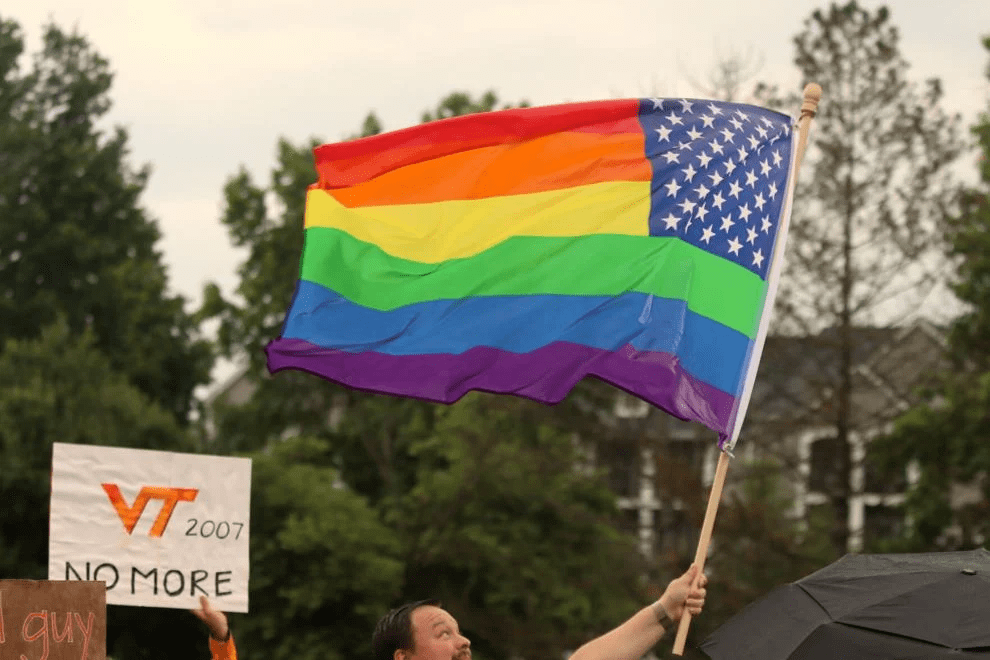
The school board of Johnston County, North Carolina, voted 4-2 to ban district schools from displaying rainbow Pride flags on Tuesday. The ban is just the latest in a long line of conservative efforts to ban the LGBTQ+ flag from schools and government property.

According to The Raleigh News & Observer, the newly approved policy states: “Principals and teachers shall limit displays in the classrooms, school buildings, ball fields, school grounds, and buses, such as signs and flags, to materials that represent the United States, the state of North Carolina, Johnston County, the school name, mascot, post-secondary institutions, school-sponsored events, sponsorships, military flags, family photos, student art and/or the approved curriculum.”

One board member who voted against the measure, Kay Carroll, said, “It’s important that they know when they see somebody wear a human rights pin or a rainbow pin, the message is that this is a safe place for people in the LGBTQ+ community…. It’s comforting to see these symbols of acceptance and tolerance. When they see these symbols — which are signals — they know they are safe to be their authentic selves. We’re just treating human beings decently.”

The school board claimed that it will continue to support “all students and school employees.” However, the board is currently considering removing sexual orientation and gender identity from its anti-bullying and anti-discrimination policies. The board will re-vote on the removal soon after failing to advance the measure in a 3-3 tie vote last Tuesday.

Numerous school districts nationwide have banned the display of Pride flags, with conservative school board members claiming that the flags are a “divisive” form of “indoctrination.”

However, recent polling by the Trevor Project suggests that LGBTQ+ students may benefit from visible displays of support, considering that 39% of LGBTQ+ young people and 46% of trans and nonbinary young people reported attempting suicide in the past year, and 49% of respondents between ages 13 to 17 said they experienced bullying in the past year. Young people who were bullied were also significantly more likely to have attempted suicide in the past year.

Earlier this year, both Utah and Idaho became the first U.S. states to pass laws restricting the flying of Pride flags in schools and on government property. The move led the capital city governments of Salt Lake City, Utah, and Boise, Idaho, to designate the Pride flags as official city flags, so they can still fly them under the bans.

GOP official just banned “Everyone is Welcome Here” signs in schools because they’re too Democratic

Read more at LGBTQ Nation.

The attorney general of Idaho issued an opinion telling schools not to allow teachers to post signs that say “Everyone is Welcome Here,” claiming that the message that public education is for everyone regardless of race, gender, sexual orientation, or other categories is Democratic in nature and therefore illegally partisan.

“These signs are part of an ideological/social movement which started in Twin Cities, Minnesota, following the 2016 election,” Idaho Attorney General Raúl Labrador (R) said in guidance issued to a school. “Since that time, the signs have been used by the Democratic party as a political statement.”

.Labrador also noted that the state Democratic Party is selling signs that say “Everyone is Welcome Here,” but state Democrats say that they only started selling those signs at cost in order to draw attention to conservatives’ early attempts to ban them.

The conflict centers on Idaho’s H.B. 41, which took effect last week and bans school employees from displaying flags or banners that show “opinions, emotions, beliefs or thoughts about politics, economics, society, faith or religion.”

Earlier this year, the state’s West Ada School District banned Sarah Inama, a teacher at Lewis and Clark Middle School, from displaying a sign that says, “Everyone is Welcome Here.” It showed a drawing of people’s hands with different skin tones, each with a heart on it.

The district also ordered her to take down another sign that read, “In this room everyone is welcome, important, accepted, respected, encouraged, valued, equal” on top of a background of rainbow colors. The rainbow colors included seven stripes, which differs from the six-striped rainbow Pride flag.

The controversy over the signs garnered national headlines in March, and the state attorney general’s office looked into how the law would apply in such cases, issuing an opinion last week.

The attorney general determined that these specific signs would violate H.B. 41 and claimed that the statements in the signs are part of a political movement and not, as defenders of the signs argued, generally agreed-upon beliefs about the nature of public education.

Labrador’s guidance hyperlinked a 2017 news story about a group of women who protested racist graffiti that appeared at a local high school the day after the president was elected to his first term, according to the Idaho Capital-Sun, which posted the attorney general’s opinion. The women carried signs that read, “All are Welcome Here.”

The guidance then claimed that Inama started posting the “Everyone is Welcome Here” sign in 2017, “during the height of the above-referenced social movement.”

In March, Inama disagreed that the message is political or partisan.

“I don’t agree. I don’t agree that this is a personal opinion,” she told KTVB at the time. “I feel like this is the basis of public education.”

Inama resigned in May.

Virginia agrees not to fully enforce state law banning conversion therapy for LGBTQ minors

*This is reported by NBC News.

 Virginia officials have agreed not to fully enforce a 2020 law banning conversion therapy for minors as part of an agreement with a faith-based conservative group that sued over the law, authorities said earlier this week.

The Virginia Department of Health Professions, represented by the state’s office of the attorney general, entered into a consent decree with the Founding Freedoms Law Center last month, saying officials will not discipline counselors who engage in talk conversion therapy.

Shaun Kenney, a spokesperson with the Virginia Attorney General’s Office, said on Tuesday his office was satisfied with the consensus.

“This court action fixes a constitutional problem with the existing law by allowing talk therapy between willing counselors and willing patients, including those struggling with gender dysphoria,” Kenney said in a statement. “Talk therapy with voluntary participants was punishable before this judgment was entered. This result—which merely permits talk therapy within the standards of care while preserving the remainder of the law—respects the religious liberty and free speech rights of both counselors and patients.”

A Henrico Circuit Court judge signed the consent decree in June. Two professional counselors represented by the law center sued the state’s health department and counseling board last September, arguing that the law violated their right to religious freedom.

The term “conversion therapy” refers to a scientifically discredited practice of using therapy in an attempt to convert LGBTQ people to heterosexuality.

The practice has been banned in 23 states and the District of Columbia, according to the Movement Advancement Project, an LGBTQ rights think tank.

The practice has been a matter of dispute in several states. A ruling is expected any day from the Wisconsin Supreme Court over whether a legislative committee’s rejection of a state agency rule that would ban the practice of “conversion therapy” for LGBTQ people was unconstitutional.

The U.S. Supreme Court decided in March to take up a case from Colorado to determine whether state and local governments can enforce laws banning conversion therapy for LGBTQ children.

According to the law center, the Virginia consent decree applies not only to the two counselors but to all counselors in Virginia.

“We are grateful to the Defendants in this case and to the Attorney General, who did the right thing by siding with the Constitution,” the law center said in a statement.

Democratic Senate Majority Leader Scott Surovell, who backed the 2020 bill, blasted the decree.

“This was a statute that was enacted to save lives,” he told reporters during a Zoom session on Tuesday. “All the research, all the professional psychiatric organizations have condemned conversion therapy. They say it doesn’t work, and they say it’s counterproductive.”

NC Gov Stein vetoes bills on gender issues and DEI, calling them ‘mean-spirited’

*This is reported by WRAL

Criticizing the state legislature for failing to pass a new state budget because lawmakers are too focused on culture war political fights, Gov. Josh Stein on Thursday vetoed four bills targeting diversity and gender issues.

Senate Bill 558, Senate Bill 227, House Bill 171 all deal with efforts to crack down on pro-diversity efforts in public schools and state government agencies. Supporters have cited Republican President Donald Trump’s efforts to attack diversity, equity and inclusion programs in federal government and say North Carolina similarly needs to eliminate DEI.

The fourth bill, House Bill 805, started as an effort to help people take down private photos or videos of themselves from the internet and passed the state House unanimously. But the state Senate then turned the bill into a grab-bag of social conservative issues about transgender people and other issues related to gender and LGBTQ rights, and the House also agreed to pass that new version of the bill which Stein has now vetoed in addition to the DEI bills.

Meanwhile, when the state’s new fiscal year began this week, state lawmakers were on vacation without having passed a new budget. They’ve made no progress on negotiations for a spending plan and, just before the legislature adjourned, House Speaker Destin Hall told reporters the GOP lawmakers had such strong disagreements on how to fund state government that it’s possible no budget deal gets passed at all until sometime next year.

Stein said that his vetoes highlight his belief that the Republican-led legislature has its priorities all wrong.

“At a time when teachers, law enforcement, and state employees need pay raises and people need shorter lines at the DMV, the legislature failed to pass a budget and, instead, wants to distract us by stoking culture wars that further divide us,” Stein wrote. “These mean-spirited bills would marginalize vulnerable people and also undermine the quality of public services and public education. Therefore, I am vetoing them. I stand ready to work with the legislature when it gets serious about protecting people and addressing North Carolinians’ pressing concerns.”

State House Majority Leader Rep. Brendan Jones, R-Columbus, has been a key proponent of the anti-DEI measures and criticized Stein’s veto Thursday.

“I find it odd that Gov. Stein is against merit based hiring in state government,” Jones said. “I look forward to overriding this veto.”

The vetoes come a day after Stein also vetoed three other bills including a Duke Energy-backed bill to let the utility giant avoid climate goals and change the way it charges North Carolinians.

Bipartisan House coalition demands RFK Jr. reverse Trump’s plan to end LGBTQ+ suicide prevention hotline

*This is reported by The Advocate.

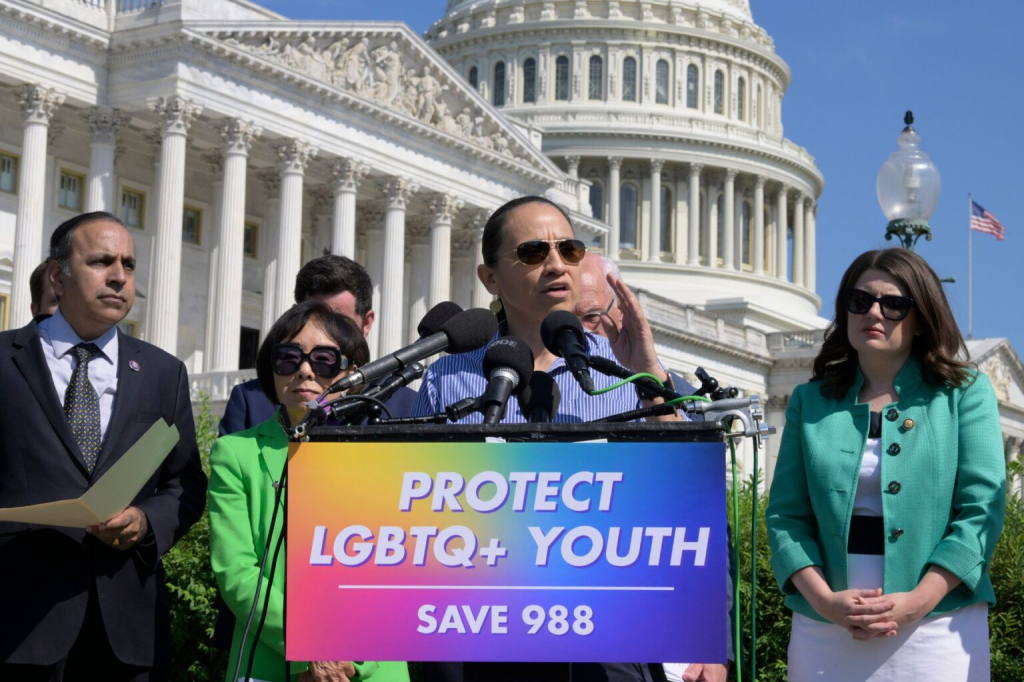
A bipartisan group of U.S. House lawmakers is urging Health and Human Services Secretary Robert F. Kennedy Jr. to block the Trump administration’s plan to eliminate the LGBTQ+ youth services within the 988 Suicide & Crisis Lifeline—an emergency support network that has served more than 1.3 million contacts since its full implementation in 2023.

The Wednesday letter, signed by Reps. Raja Krishnamoorthi, a Democrat from IllinoisNew York Republican Michael Lawler, Massachusetts Democrat Seth Moulton, and Brian Fitzpatrick, a Republican from Pennsylvania, calls on Kennedy to stop a 30-day phaseout announced by the Substance Abuse and Mental Health Services Administration on June 17. According to internal agency guidance, the LGBTQ+-specific branch of the hotline, which allows callers to “press 3” to connect with affirming counselors, is set to be dismantled by July 17, according to SAMHSA.

“This is not some kind of hotline set by a liberal Democratic administration,” Krishnamoorthi said in an interview with The Advocate Thursday morning. “It was actually signed into law by President Trump. Various Republicans in the Senate and the House supported it.”

Since the line became fully operational in 2023, he noted, “it has received an astonishing 1.3 million calls, texts, and other forms of communication” and was “averaging 2,900 contacts every day” as recently as February.

Krishnamoorthi, who serves as a ranking member of the House Oversight Subcommittee on Health Care and Financial Services, raised the issue sharply during a Wednesday hearing on diversity, equity, and inclusion policy rollbacks. “In the name of expunging DEI, the Trump administration has lurched from the farcical to the cruel,” he said, highlighting the crisis line’s termination as an especially harmful example. “These actions are wrong, but do not compete in cruelty with the ending of a suicide hotline for LGBTQ youth.”

The LGBTQ+ subnetwork of 988 was developed under a bipartisan mandate to offer tailored support to high-risk groups, much like the veteran-specific track within the program. In addition to young people, it has provided critical services to adults experiencing distress related to anti-LGBTQ+ violence, legislation, and rejection.

At the hearing, Krishnamoorthi pressed conservative legal activist Daniel Lennington on whether he disputed Centers for Disease Control and Prevention data from the Trump administration showing LGBTQ+ youth face significantly higher suicide risk. Lennington replied he was “not aware of anything to do with the suicide hotline,” prompting Krishnamoorthi to respond, “That’s the problem—a lack of awareness.”

Krishnamoorthi told The Advocate that the decision to eliminate the program was driven by the Trump administration’s broader campaign against diversity and inclusion initiatives. “Eliminating this lifeline is cruelty because you are essentially discontinuing a service that saves lives,” he said. “In the name of fighting DEI, they’re going to cause a lot of young people to DIE.”

Krishnamoorthi warned that “especially now, during a time when the LGBTQ+ community at large feels tremendous pressure,” the need for the hotline may be “much higher than it was before.”

Krishnamoorthi emphasized the rare bipartisan nature of the letter to Kennedy. “It’s hard to get bipartisan letters, let alone legislation, on topics involving the LGBTQ+ community,” he said. “But this one touches a nerve. I think that young people, whoever they are, still occupy a soft corner in people’s hearts regardless of ideology.”

The Trump administration’s move, first reported in The Advocate in April, was confirmed in the FY2026 budget released during WorldPride in Washington, D.C. Mental health advocates and LGBTQ+ organizations have condemned the proposal as reckless and dangerous.

Mark Henson of The Trevor Project previously told The Advocate the 988 LGBTQ+ subnetwork is “a vital tool” that serves more than 60,000 young people each month. Without it, advocates warn, those calls may go unanswered—or be routed to general crisis lines lacking LGBTQ+ expertise.

In response to a question about his message to young LGBTQ+ people, Krishnamoorthi said he’s met with young people and their parents and understands their pain. “We’ve got to band together at the state level, at the local level to protect whatever rights we can. We must continue to fight for change in the future,” he said.

Krishmamoorthi added, “If we can rally around a group of people, it would be our young people.”

If you or someone you know needs mental health resources and support, please call, text, or chat with the 988 Suicide & Crisis Lifeline or visit 988lifeline.org for 24/7 access to free and confidential services. Trans Lifeline, designed for transgender or gender-nonconforming people, can be reached at (877) 565-8860. The lifeline also provides resources to help with other crises, such as domestic violence situations. The Trevor Project Lifeline, services at TheTrevorProject.org/Help or text START to 678678.

SCOTUS rules parents have a right to prevent their kids from reading books with LGBTQ+ characters

*This is reported by LGBTQ Nation.

The Supreme Court has ruled in favor of the plaintiffs in Mahmoud v. Taylor, the case brought by parents who said that their First Amendment rights were violated when schools used books that included LGBTQ+ characters.

The decision was 6-3 along ideological lines, with the Republican-appointed justices siding with the religious parents who wanted to opt their children out of reading books like Prince & Knight and Uncle Bobby’s Wedding in the Montgomery County, Maryland, school system.

“The Court does not accept the Board’s characterizations of the LGBTQ+-inclusive instruction as mere ‘exposure to objectionable ideas’ or as lessons in ‘mutual respect,’” Justice Samuel Alito wrote for the majority. “The storybooks unmistakably convey a particular viewpoint about same-sex marriage and gender.”

“Regardless, the question in cases of this kind is whether the educational requirement or curriculum at issue would ‘substantially interfere with the religious development’ of the child or pose ‘a very real threat of undermining’ the religious beliefs and practices the parent wishes to instill in the child.”

“Casting aside longstanding precedent, the Court invents a constitutional right to avoid exposure to ‘subtle’ themes ‘contrary to the religious principles’ that parents wish to instill in their children,” Justice Sonia Sotomayor wrote in her dissenting opinion. “Exposing students to the ‘message’ that LGBTQ people exist, and that their loved ones may celebrate their marriages and life events, the majority says, is enough to trigger the most demanding form of judicial scrutiny.”

The case involved several sets of Christian and Muslim parents who objected to their kids reading books that mentioned LGBTQ+ people. The district had an opt-out policy that they later rescinded because, the district claimed, the opt-outs were becoming “unworkable.”

Some parents in the district protested to get the opt-out policy reinstated, while others protested in favor of learning about LGBTQ+ people.

“The books geared to younger kids are just showing a diverse range of families,” said Christina Celenza, a mother of a student in the district, during one of the 2023 protests. “We have a two-mom household, so my wife and I are really proud and out, and, of course, my kid in kindergarten or pre-K is going to probably talk about his family and his two moms.”

The district didn’t budge, so several parents sued. Two lower courts denied them a preliminary injunction, but the Supreme Court just granted them one.

The parents want the courts to ultimately order teachers to notify them of every possible discussion where LGBTQ+ people may come up so that they could opt their children out, lest their kids learn that LGBTQ+ people exist. They claimed that knowing that LGBTQ+ people exist is contrary to their religious beliefs and violates their right to direct their children’s religious upbringing.

Public education advocates warn that the ruling could lead to even more requests for opt-outs of public education on wide-ranging topics including Earth Day, critical thinking, and anti-drug programs.

Free speech and LGBTQ+ advocates denounced the ruling.

“This ruling is a deeply disappointing blow to the right to read under the First Amendment,” said U.S. Free Expression Programs staff attorney for PEN America Elly Brinkley in a statement. “It is a fundamental betrayal of public schools’ duty to prepare students to live in a diverse and pluralistic society. By allowing parents to pull their children out of classrooms when they object to particular content, the justices are laying the foundation for a new frontier in the assault on books of all kinds in schools.”

“While religious liberty is fundamentally important, it should not force public schools to exempt students from lessons that don’t align with their families’ personal religious or cultural beliefs,” said Equality California Executive Director Tony Hoang in a statement. “LGBTQ+ themed books are already among the most banned and challenged in school districts and libraries across the country. Today’s decision will make it even harder for these books to find their way into the hands of students who simply want to read — and who may find validation and acceptance in the process.”

“Today’s ruling does not change schools’ obligation to prepare students to interact with and thrive in a diverse and ever-changing world,” said GLAD Law’s Mary L. Bonauto. “LGBTQ+ people and families exist, students in our public schools have LGBTQ+ parents, and books that include LGBTQ+ people should not be treated differently than those without LGBTQ+ people.”

“The Court’s decision does not require our schools to abandon these efforts. Parents, students, educators, and neighbors can encourage opportunities for learning about diverse people and families by staying involved with school districts, school boards, and in our local communities.”

Christian extremists in Georgia get librarian fired for displaying book about transgender child

*This is reported by LGBTQ Nation

Lavonnia Moore, a 45-year-old library manager, had worked at the Pierce County Library in Blackshear, Georgia, for 15 years. She was ultimately let go when a Christian extremist group filed a complaint to the library after Moore approved the display of a children’s book about a transgender boy.

According to Moore, the display (entitled “Color Our World”) included the book When Aidan Became a Brother (by trans male author Kyle Lukoff), a story about a family accepting a trans child named Aiden while also preparing for the birth of Aiden’s sibling. Library volunteers created the display as a part of a regional-wide summer theme featuring books that celebrate diversity.

“I simply supported community involvement, just as I have for other volunteer-led displays. That’s what librarians do — we create space for everybody… I did not tell the parents and children what they could or could not add to the display, just as I do not tell them what they can or cannot read,” she wrote in a statement.

However, the book caught the attention of a group calling themselves the Alliance for Faith and Family (AFF), not to be confused with the anti-LGBTQ+ legal group Alliance Defending Freedom. The AFF had previously been in the public eye for demanding the removal of a mural in the Waycross-Ware County Public Library, which included a Pride theme declaring, “Libraries Are For Everyone.”

The AFF campaigned on Facebook, urging their followers to pray and take a few moments out of their day to email the Three Rivers Library System and Pierce County Commissioners to “put a stop to this and show them the community supports them in taking a stand against promoting transgenderism at our local library,”

In an update post, the group wrote, “The display has been removed, and LaVonnia is no longer the Pierce County Library Manager. Please thank the Pierce County Commissioners and Three Rivers Regional Library System for quickly addressing our concerns.” 

Moore and her sister Alicia confirmed that LaVonnia Moore had been fired. A statement to The Blackshear Times from the Three Rivers Library System Director Jeremy Snell explained that the library board leadership decided to move to new leadership for the Pierce County Library. He specifically cited the display of an “inappropriate” book as his reasoning.

“The library holds transparency and community trust in the highest regard,” Snell said.

“Instead of investigating, talking to me or my team, or exploring any kind of fair process, they used the ‘at-will’ clause in my contract to terminate me on the spot. No warning. No meeting. No due diligence. Just the words ‘poor decision making’ on a piece of paper after 15 years of service,” Moore claimed.

“I am just heartbroken,” she said of her dismissal.

According to Moore’s sister Alicia, “She messaged the family group and said ‘I was just fired.’”

“I don’t think she’s doing emotionally good, because imagine having to pack up 15 years in two days,” Alicia Moore told First Coast News.

“She’s heartbroken that a place she gave so much of herself to turned its back on her so quickly. And yes, she’s still in disbelief. She didn’t expect to be punished for doing her job with integrity and love for all patrons — especially children.” the sister explained.

The sisters are currently seeking legal counsel, and Alicia is urging people to reach out to the library board and county commissioners.

“I’m hoping the same method will be useful to get her justice,” Alicia said.

Blog at WordPress.com.

Up ↑