
This blog originally appeared at CBC News.
Texas to become largest state in U.S. to ban puberty blockers and other gender-affirming care for teens
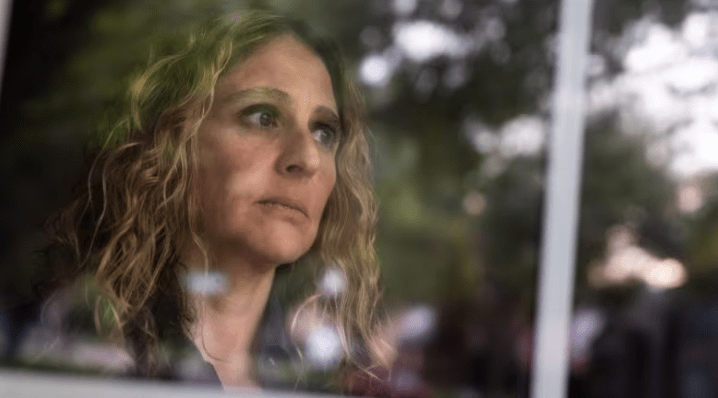
Pediatric endocrinologist Ximena Lopez worries for her young patients as she closes her clinic in Dallas that offered gender-affirming care to those under 18. With Texas banning that treatment, transgender teenagers are ‘livid’ and left without options. (Jason Burles/CBC)
From her now near-empty home in the Dallas suburb of Plano, with moving boxes stacked high in the garage, pediatric endocrinologist Ximena Lopez says she never thought she’d see this day.
Fearing violence that could target her family — a response by some to the type of medical treatment she offers — Lopez is closing her health clinic, selling her house and fleeing Texas for California.
“I don’t feel safe,” she said. “With so many people with guns [who] have gone to protest against me, or our clinic … armed.”
She adds, “I’m afraid of leaving my son home alone, and I don’t want to live like that.”
For years, Lopez has operated a clinic at a Dallas medical centre that offers what’s known as gender-affirming care for young people. It’s aimed at aiding and comforting transgender teens.
Treatment includes recurrent counselling and — controversially — medication that temporarily blocks puberty.
In America, it’s an extremely divisive program.
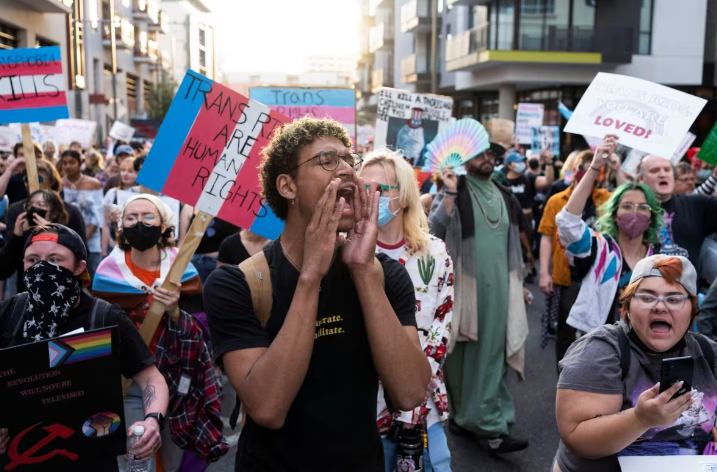
Amid rising anti-trans sentiment in the U.S., protesters rally for the International Transgender Day of Visibility in Tucson, Arizona on March 31. (Rebecca Noble/Reuters)
Nearly two dozen U.S. states, mostly Republican-led, have now taken steps to ban the treatment. (Some of those bans have been successfully challenged in court. Civil rights advocates pledge more challenges will follow.)
Separately, various state legislatures have put forward roughly 500 bills this year alone deemed by the American Civil Liberties Union as being anti-LGBTQ, including restrictions on bathroom use, pronouns, drag performances and education.
Civil libertarians describe it as a growing wave of intolerance in the U.S. targeting that community and medical providers such as Lopez.
Texas passed its bill banning gender-affirming care for teens this spring after a raucous debate, with vocal protests by the program’s supporters.
The new law takes effect in September.
Lopez and others underline that the treatment is decisively evidence-based, and she believes in it deeply. She calls it “one of the most important things I’ve done in my life.”
But opponents have called her a child abuser and a Nazi. Some have said she “should die in hell,” leaving Lopez frightened, frustrated and angry.
“The whole state has become crazy,” said Lopez. It “is right now full of hate.”
“I felt like things were evolving with society, with progress. Now we are going backwards,” she said.
“It has become unbearable.”
Patients caught in the crosshairs
Chief among those caught in the crosshairs are the patients of Lopez. When she moves to California, where her treatment remains legal, her patients in Texas will face dwindling access to medications and no easy path for direct care.
Most of those contacted directly by CBC News said they strongly support Lopez and her work but were afraid to speak out publicly, worried about stigma and violence that could target them.
But on agreement to withhold their surname to reduce the risk, parents Kristen and Wes and daughter Audrey sat down with CBC News at their home northeast of Dallas to talk about all of it. They strongly wanted others to know what Audrey has gained from her time with Lopez and what the new law in Texas now threatens.
In short, they believe Lopez and her program saved Audrey’s life.
click here to see full blog: https://www.cbc.ca/news/world/texas-lgbtq-legislation-1.6887130
 fleeredstates.blog
You must be logged in to post a comment.