The city council of Southlake, Texas — one of the wealthiest cities in the US — voted unanimously on Tuesday night to deny a permit to Pride So-Kel, a community Pride festival planned for October 3 on the 10-acre property of St. Martin-in-the-Field, an Episcopal church.
While one person at the council meeting reportedly opposed the festival, council members didn’t discuss the event or ask any questions of city staff or organizers before voting to deny the event permit, The Dallas Morning News reported. Neither Southlake Mayor Shawn McCaskill nor city council members responded to the publication’s request for an explanation; a city spokesperson said they didn’t know why the council denied the permit.
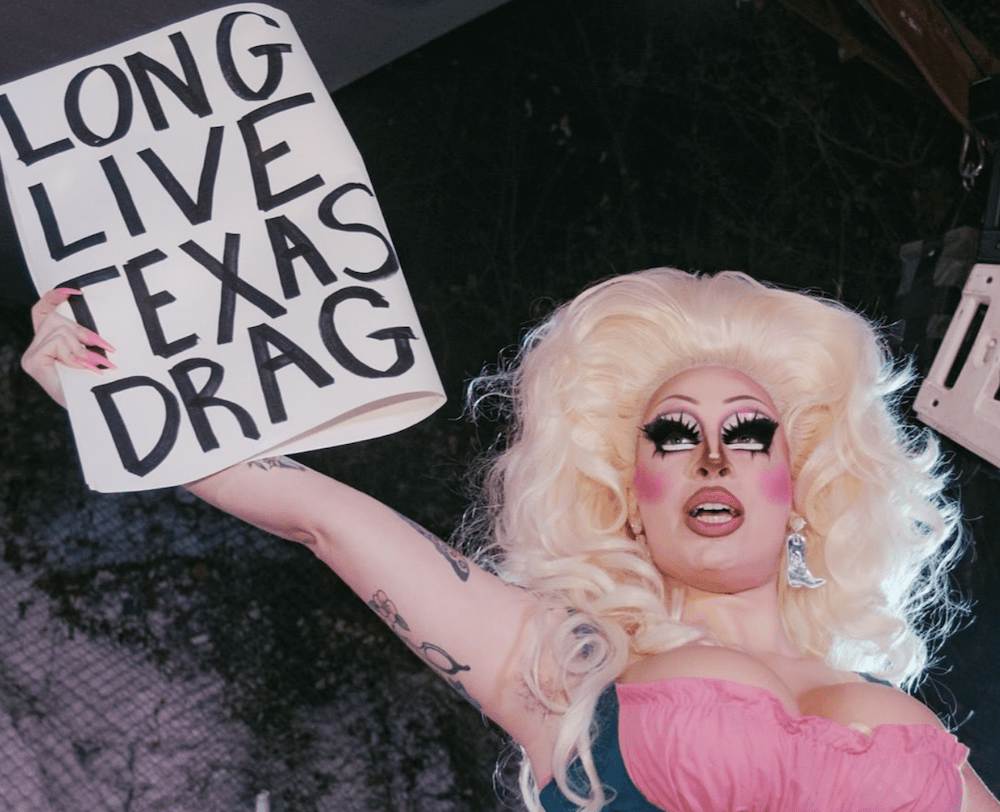
The Pride event was held on the church’s property last year. It featured food trucks, vendors, performances by Dallas’ Oak Lawn Band, a B-52s cover band called “Bikini Whales,” and a drag queen singing songs about the difficulties of growing up trans in Texas’ rural city of Odessa.
Around the time of last year’s event, the then-mayor of the neighboring city of Keller, Armin Mizani, said his municipality didn’t condone the festival. The 2025 event itself was protested by a street preacher with a bullhorn asking “graphic questions about gay sex,” the aforementioned publication noted, as well as activists with the Texas Coalition for Kids, an anti-LGBTQ+ organization that purports to defend children from “the woke left.”
Last year’s event, however, didn’t require a city permit because its attendance was estimated at fewer than 1,000 people. Public events in Southlake with more than 1,000 people legally require a permit.
April Dreyson, who founded the Pride event, said she began the event with her wife to show gay and transgender people living in suburban Tarrant County that they are not alone. “We wanted to create a space where everyone could feel safe and loved. LGBTQ people have become a point of political fodder. Our existence is not political,” she said.
Rev. Alan Bentrup, who leads the church, offered to host the event since Dreyson doubted whether she could get a local city to permit the event.
Dreyson said she’s still exploring other options in hopes of hosting the event. “It’s not going to be that easy to make us go away,” she said.
Southlake’s school board recently approved policies banning trans-inclusive policies regarding pronouns and restroom use in local schools.
The December after last year’s event, the city of Keller rescinded its invitation for Bentrup to lead an opening prayer before its city council meeting. The city’s mayor said leading the prayer “is a privilege, not a right” and added that his city wouldn’t “elevate an individual who offended a large majority of our residents.”
Students at 11 Texas A&M University System schools will see fewer classes related to LGBTQ literature, climate change and women writers meet graduation requirements under a proposal to remove more than 200 classes from general-education course lists.
System regents voted Thursday to scale back the classes that qualify after a review prompted by a new state law that requires public university boards to examine what classes undergraduates must take regardless of their majors.
Regents must ensure those courses “are foundational and fundamental” for a college education and that they prepare students for civic life and the workforce, according to Senate Bill 37. The law also requires public university governing boards to consider the potential tuition, fee and time costs of those requirements to students.
“The universities did a credible job in streamlining their various course listings of what most of us agreed could be described as somewhat bloated,” regent Sam Torn said. “There is still much work to be done in the near future … to reach our goal of fully preparing students for the modern world in which they will live.”
The agenda packet contains 360 entries marked “remove” across 11 universities’ general-education course lists. However, some courses appear more than once because they are listed under multiple departments or in more than one general-education category.
Texas A&M University in College Station has the most entries being removed with 103. Texas A&M-San Antonio has 76; Tarleton State University has 48; and West Texas A&M and Texas A&M University-Texarkana each have 21. The other six universities have between 13 and 18 removal entries on their lists.
Of the courses set to be removed at the flagship school are introduction to women’s and gender studies; LGBTQ literatures; introduction to Latinx literature studies; women writers; introduction to race and ethnicity; gender and health; Blacks in the United States; Bible as literature and climate change.
Leonard Bright, president of the American Association of University Professors chapter at Texas A&M-College Station, slammed the latest course review as an overreach of SB 37. Bright said the pattern of courses up for removal suggest the regents are bending to conservative pressure.
“This is a political decision,” Bright said. “You are basically telling us now that the globalness that it once valued and said that it was going to protect is no longer a priority. …They’re going to basically whitewash our programs.”
Bright raised concerns about whether students will be prepared without these courses that he said are foundational to their understanding of the world.
In a written statement, Texas A&M System spokesman Chris Bryan said each university conducted its own course-by-course review. He did not identify who at each campus conducted the review or explain why particular courses were recommended for removal.
Bryan said the reviews determined only which courses should count toward the core curriculum and that “it was not a determination of whether a particular subject is appropriate for study or whether a course may be offered.”
Universities may continue offering the courses outside of the core, he said.
“Each institution’s core varies because its mission and academic offerings are different, but all were reviewed against the same requirements in state law and system policy,” he said.
The system’s review, which must be done at least once every five years, comes ahead of a Jan. 1 deadline.
Courses up for removal lists at other system schools range from those that study women in the U.S. to those that study literature from authors of various ethnicities.
For example, at Prairie View A&M, a historically Black university, the removal list includes Mexican-American culture and sociology of minorities. A course titled diversity was on the removal list for East Texas A&M.
Of the system’s 12 universities, Texas A&M-Central Texas has no removal entries. That school does not offer the lower-level core courses at issue as it serves transfer students who typically complete those requirements at community colleges or other universities.
The agenda listed 27 entries marked “add” at seven universities.
Those additions include human nutrition at Texas A&M in College Station, precalculus at Prairie View A&M, Mexican American literature at Texas A&M International, professional ethics and environmental sustainability at Texas A&M-Kingsville, astronomy and anatomy courses at West Texas A&M.
The core curriculum review is separate from a policy A&M regents adopted last fall after conservative backlash over a classroom lesson on gender identity.
That policy bars any academic course from advocating “race or gender ideology, or topics related to sexual orientation or gender identity.” Only specific non-core or graduate courses can receive an exception, with prior written approval from the university’s chief executive and a demonstrated necessary educational purpose.
Gender ideology was defined by the regents as treating self-assessed gender identity as replacing, or more legitimate than, biological sex. The policy states race ideology includes concepts that shame people, assign them racial guilt or portray them as oppressors or lesser contributors because of their race or ethnicity.
The American Association of University Professors and four A&M System professors, including Bright, sued the system in an attempt to block the policy on Aug. 3, arguing it violates their First Amendment rights. A judge has not yet ruled in the case.
Texas A&M is not alone in reviewing its core offerings under SB 37, though universities are taking different approaches.
The University of Texas is also considering cutting more than 100 core courses as part of an overhaul of the general education curriculum after the provost’s office determined the classes were too “narrow.” A handful of the courses on the chopping block mirror those up for removal at A&M.
UT students would instead take a course covering each of 12 specified subject areas, including Western civilization, American politics, world politics and cultures, science, computer science and artificial intelligence, and “Great Questions of Human Life.”
A federal judge in Texas ruled this week that the state’s drag ban is an unconstitutional restriction of free speech in violation of the First Amendment.
US District Court Judge David Hittner’s Tuesday decision strikes down S.B. 12, a 2023 law signed by anti-LGBTQ+ Gov. Greg Abbott (R). While the law does not explicitly mention the word drag, it criminalized “sexually explicit” performances in the presence of minors, defining such performances as those featuring “a male performer exhibiting as a female, or a female performer exhibiting as a male, who uses clothing, makeup, or other similar physical markers and who sings, lip syncs, dances, or otherwise performs before an audience.”
Under the law, businesses that host all-ages drag shows faced up to $10,000 in fines, and performers could be charged with a Class A misdemeanor resulting in up to one year in prison.
S.B. 12 was initially scheduled to take effect on September 1, 2023. But several LGBTQ+ advocacy organizations and drag groups — including The Woodlands Pride, Abilene Pride Alliance, and 360 Queen Entertainment — challenged the law. In September 2023, Hittner issued a permanent injunction blocking enforcement of the law, ruling that it constituted “viewpoint discrimination” and that it was “substantially overbroad” and “unconstitutionally vague.”
After Texas appealed the decision, the US 5th Circuit Court of Appeals overturned Hittner’s permanent injunction last November, sending the case back to the lower court and instructing Hittner to focus only on the claims from 360 Queen Entertainment. The appeals court’s ruling also allowed the law to go into effect while the case played out.
On Tuesday, Hittner once again ruled that S.B. 12 “is an UNCONSTITUTIONAL restriction on speech” that “violates the First Amendment,” even under the conditions the 5th Circuit outlined, according to The Texan.
The law, Hittner wrote, “applies to countless protected performances that might contain elements that are ‘in some sense erotic’ and meet either the law’s definition of ‘nude’ or ‘sexual conduct’ but are not obscene or obscene for minors and are thus constitutionally protected.” Hittner cited examples including a gymnast performing in a leotard and a singer performing in a lowcut dress.
As NBC News notes, Hittner went so far as to cite the late Dolly Parton, an LGBTQ+ ally who supported drag performers and even gifted a rhinestone guitar to drag performer and advocate Brigitte Bandit, one of the plaintiffs in the case, as an example of a performer who might be targeted by the law for her reputation “as a voluptuous sex symbol because of her big hair, flamboyant clothes and breast exposure.”
Hittner further ruled that “S.B. 12 is unconstitutionally vague because it fails to give a reasonable person notice of what is prohibited.” While “multiple aspects of the law render it vague,” Hittner wrote, the “most glaring issue” relates to the inclusion of the term “prurient interest in sex.” The fact that the term “is undefined in Texas law, lacks a readily ascertainable ordinary meaning, and applies to all performances targeted by the statute,” Hittner wrote, “renders S.B. 12 irredeemably vague… in violation of the Fourteenth Amendment’s Due Process Clause.”
“Finally, for those who find such activities as described in this case offensive, the solution is relatively simple,” Hittner wrote. “Just don’t go.”
In several Instagram Stories posts Tuesday, Bandit responded to Hittner’s ruling, writing that “drag is free speech b—-” and that the decision “is a huge win for Texas and my t——.”
Meanwhile, Texas Attorney General Ken Paxton (R), who is running for US Senate, described Hittner’s ruling as “a profoundly flawed decision that endangers our children and is an affront to Texas values.”
“I will appeal this decision immediately and continue to fight to protect our kids,” Paxton wrote in an X post.
LGBTQ Americans aren’t just fleeing red states like Texas for blue enclaves. They are also building lives in cheaper, fast-growing metros where jobs, housing and politics collide.
Why it matters: The “red-state exodus” narrative misses a quieter reality.
Affordability and work are keeping some LGBTQ+ people in — and drawing others to — places that may be politically complicated but economically viable.
The big picture: LGBTQ Americans have lower homeownership rates than non-LGBTQ Americans, according to the Williams Institute.
And, LGBTQ-friendly cities with stronger LGBTQ protections — such as San Francisco and Boston — often come with significantly higher housing costs, creating a tension between safety and affordability.
By the numbers: Homebuyers needed to earn $150,364 annually to afford the median-priced home in states with LGBTQ housing protections as of 2024, per an Axios analysis of real estate company Redfin data.
That’s 46.8% more income needed than in states, like Texas, without such protections.
Zoom in: Around 4% of adults in North Texas identify as LGBTQ, according to Williams Institute data.
Same-sex married households in North Texas almost doubled from 2019-24, increasing from around 11,000 couples to roughly 21,600, per a Dallas Morning News analysis of Census Bureau data.
Between the lines: 9% of the region’s homes for sale were affordable for someone earning the local median household income, according to Redfin.
By contrast, less than 2% of homes for sale were considered affordable in San Diego and Los Angeles, which have larger percentages of adults who identify as LGBTQ.
Caveat: Researchers caution that LGBTQ migration data remains limited because federal surveys have historically failed to consistently collect sexual orientation and gender identity data.
What they’re doing: Oak Lawn United Methodist Church painted its steps in rainbow colors after Gov. Greg Abbott ordered the removal of rainbow crosswalks statewide last year.
“This is our way of speaking to our community of sharing a message of boldness and courage that who you are is beloved and worthy of dignity and belonging,” Rev. Rachel Griffin-Allison, the church’s senior pastor, told NBC5 in January.
The bottom line: The tension between affordability, opportunity and rights is quietly reshaping the map of LGBTQ America.
The State Commission on Judicial Conduct in Texas was overruled last week after it disciplined a justice of the peace in Waco for refusing to marry same-sex couples on religious grounds.
A Texas county judge ruled the commission cannot investigate, sanction, or discipline McLennan County Justice of the Peace Dianne Hensley for refusing to officiate same-sex weddings because of her Christian beliefs. Hensley was awarded $10,000 in compensatory damages and $630,000 in attorney’s fees after years of litigation.
“I think the agency overstepped itself, and what we saw was their bias on the issue and not the law,” Hensley told KERA News in North Texas.
The origin of Hensley’s suit dates back to Obergefell v Hodges, the 2015 U.S. Supreme Court decision granting nationwide marriage equality.
Judges and justices of the peace are allowed, but not required, to officiate weddings in Texas. After previously declining to marry any couples following the decision, Hensley changed her mind in 2016 and said she would marry straight couples only.
She advertised that stance in a 2017 interview with the Waco Tribune-Herald, adding that she referred same-sex couples to a different judge and other nearby officiants.
The judicial conduct commission launched an investigation soon after and, in 2019, issued a public warning to Hensley that she was in violation of commission rules.
With the support of First Liberty Institute, the right-wing Christian nationalist legal organization shepherding other anti-LGBTQ+ cases around the country, Hensley sued. First Liberty argued her decision was protected by the Texas Religious Freedom Restoration Act, signed into law by then-Gov. George W. Bush (R) in 1999. That law prohibits the government from making restrictions that “substantially burden” an individual’s freedom of religion.
“People cannot be made — cannot be forced into participating in things that they have a religious disagreement with,” First Liberty attorney Hiram Sasser said following last week’s verdict.
The suit prompted action from the Texas Supreme Court, as well. After agreeing that Hensley’s suit could continue, but not ruling on her religious freedom claims, the court said that judges who decline to perform a wedding ceremony based on a “sincerely held religious belief” won’t violate the state’s rules on judicial impartiality.
The court found a grey area where the absence of a requirement to perform wedding ceremonies grants officiants the right to marry whom they choose.
That support from the highest levels of the Texas judiciary appears to have emboldened Hensley’s claim that officiants should be allowed to marry whom they choose.
In December, Hensley asked a federal court to overturn marriage equality in the U.S. entirely, arguing that marriage for same-sex couples is unconstitutional because it was legalized in a decision that “subordinat[ed] state law to the policy preferences of unelected judges.”
Hensley is one among several Christian officiants claiming “religious freedom” in their opposition to marrying same-sex couples in Texas.
Jack County Judge Brian Umphress also sued the commission, alleging he was afraid he could face the same punishment as Hensley. The Texas Supreme Court ruled in January that he wouldn’t face discipline for his choice not to marry gay couples, KERA reported.
A class-action lawsuit in Tarrant County has been filed on behalf of justices of the peace who are unwilling to perform same-sex marriages. They’re looking to recover damages from the Judicial Conduct Commission because they say they were forced to stop performing weddings altogether in fear of disciplinary action.
Like Hensley, Kim Davis, the infamous Kentucky county clerk who refused to sign marriage licenses for same-sex couples immediately following the Supreme Court’s 2015 Obergefell v. Hodges decision, asked the Supreme Court to overturn its marriage equality ruling. The Court declined to hear her appeal in November.
Despite her lawsuit aiming to wipe out marriage equality, Hensley continues to maintain that her right to religious freedom isn’t impacting gay couples in Texas because others are available to marry them.
Now, though, she says there isn’t a big demand for her services, and she may stop officiating weddings altogether.
“I was just accommodating people who called needing a low-cost wedding, and it’s been long enough now we don’t get many calls anymore,” Hensley said. “So, unless we start getting a lot of demand, I may not.”
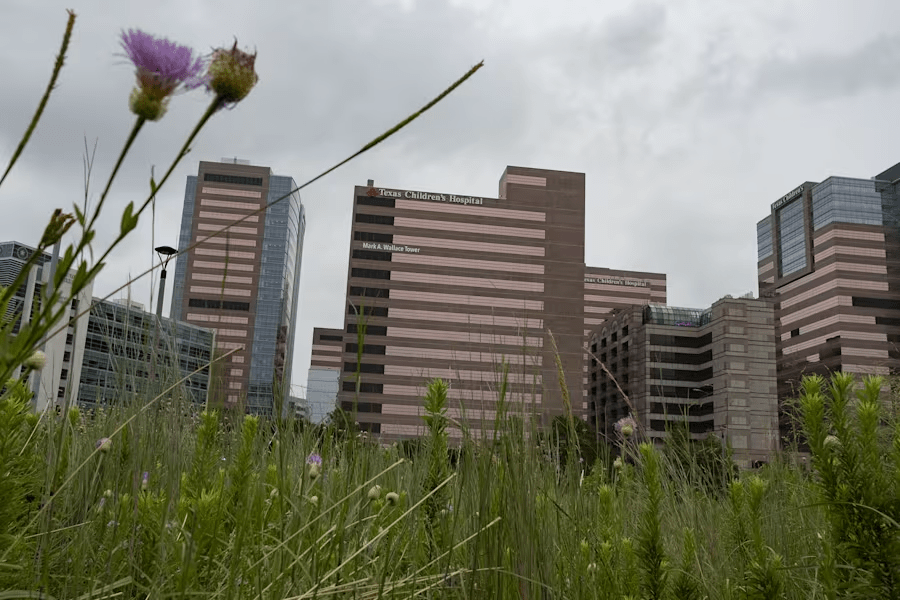
The Texas attorney general has secured an unusual settlement over child transgender care that compels Texas Children’s Hospital to create the nation’s first ever “detransition clinic” in addition to paying the state $10 million.
According to Attorney General Ken Paxton, the multidisciplinary clinic would offer medical care to patients “who were subjected to ‘gender-transition’ procedures.” The care would be free to patients for the first five years of the clinic’s operation. The move follows an investigation that began in 2023 by the attorney general’s office into Texas Children’s Hospital in Houston. That same year, Gov. Greg Abbott signed Senate Bill 14 that bars transgender children from receiving puberty blockers and hormone therapies.
Gender-affirming care is an umbrella term for the treatment of gender dysphoria, or the discomfort that comes when someone’s gender identity does not align with the sex they were assigned at birth. Gender-affirming care ranges from “socially transitioning” — using different pronouns or dressing differently — to puberty blockers, hormone therapy and surgical interventions.
“Today is a monumental day in the fight to stop the radical transgender movement,” Paxton said in a statement issued Friday. “I applaud Texas Children’s Hospital for changing course and committing to being a part of the solution by agreeing to form a first-of-its kind Detransition Clinic that will help provide free care to those who have been victimized by twisted, morally bankrupt transgender ideology.”
Texas Children’s will fund all services provided through the “detransition clinic” for the first five years.
The settlement also requires the hospital to pay $10 million for billing Texas Medicaid after the state accused the hospital of illegal ‘gender-transition’ interventions, including by using false diagnosis codes. It also required Texas Children’s to terminate and revoke the medical privileges of five physicians. Paxton and the hospital have not released the name of the physicians or a copy of the settlement.
Texas Children’s, the nation’s largest pediatric hospital, said in a statement that it made the “difficult decision” to settle with the attorney general’s office to close a legal chapter that has been, “wrought with falsehoods and distractions.”
The hospital said it spent three three years producing more than 5 million documents to both the state and the U.S. Department of Justice.
“All reviews and investigations continue to support the facts – we have been compliant with all laws,” the hospital statement said. “To be clear – we are settling to protect our resources from endless and costly litigation … We stand proud knowing we will always put our purpose over politics and that we have and will continue to follow the law.”
The Texas Medical Association and Texas Hospital Association declined to answer questions for the story.
Unclear what services clinic will provide
Texas Children’s, one of the world’s leading pediatric hospitals based in the heart of Houston’s medical center, did not say how it will roll out its clinic or what services it will provide, though the hospital said in the statement that the clinic will include “supportive, multidisciplinary services we already deliver to all patients who need our care.”
Detransitioning is the stopping or reversal of transitioning care by social, medical or legal means, and it is rare for people to regret transitioning after taking hormone therapy and surgical interventions.
On the clinical side, detransitioning could mean stopping hormone treatment or procedures to reverse previous surgeries. Similar to transitioning, detransitioning requires intensive mental health assessments to root out other factors that might be creating the desire to stop transitioning, according to research. Common reasons for destransitioning include lack of family support, financial barriers and social pressure.
When someone chooses to detransition, “it is not normally because of healthcare complications,” said Andrea Segovia, senior field and policy director for the Transgender Education Network of Texas.
Segovia is concerned that access to mental healthcare will not be woven into the clinic’s services. In March, Paxton released an opinion saying that mental health providers licensed by the state cannot provide gender-transitioning care to minors under state law. It’s not clear if Paxton believes state law bars detransitioning mental healthcare as well.
For those who do want to detransition, the resources already exist, said Kellan Baker, senior advisor for the Movement Advancement Project, a national think tank that focuses on LGBTQ policies.
Detransitioning services, although they are rarely needed, can and have been offered properly when accompanied with mental health resources. But Baker said he’s not confident that this clinic, born out of a heated conflict between a hospital and the attorney general, has the best intentions for the transgender community.
“Texas Children’s is not creating this clinic — the Texas attorney general is creating it,” Baker said. “A clinic created by a politician via legal intimidation is not in the best interests of any patient. Doctors should be the ones making decisions about how to provide medical care, not politicians.”
‘Resource that no one is asking for’
Brad Pritchett, CEO of Equality Texas, a nonprofit that advocates for the LGBTQ community, said in a statement that the attorney general is “blackmailing a hospital system into creating a resource that no one is asking for.”
Pritchett said Texas’ politically-motivated detransition clinic “ignores the actual science and years of data about the overwhelming benefits of gender-affirming care.”
Several medical associations including the American Medical Association, American Academy of Pediatrics, American Academy of Child and Adolescent Psychiatry and American Psychiatric Association, have supported evidence-based gender-transitioning care as appropriate and medically necessary for children.
Pritchett added that it is “embarrassing that a hospital once revered for its care has lost its integrity and put politics over patients.”
Dallas state Rep. Jessica González who chairs the Texas House LGBTQ Caucus said in a statement that the settlement is “shameful, and is the furthering of an agenda to eradicate transgender people from the eyes of society.”
Transgender people make up about 1% of the population, which is why, Segovia said, it is “infuriating” that the state is creating the detransition clinic as access to other healthcare services are struggling — such as rural hospitals and reproductive care.
Texas Children’s has to fully fund the clinic for five years, which will take away attention and limited resources from the hospital’s other departments such as care for children with cancer and infants with heart conditions, González said.
“Using a settlement to compel a hospital to build an ideologically framed clinic opens the door to more state interference in medical practice, more dangerous stigmatization that truly harms
young Texans, and, sadly, more lives lost in our nation’s suicide epidemic,” said González, one of the few only queer representatives in Texas.
Houston state Sen. Molly Cook, who is also openly queer, said Paxton is manufacturing a political spectacle because providers know how to help someone detransition and the state doesn’t need a clinic to train them on it.
“This is an asinine waste of money that is typical of Texas’s out-of-touch statewide leadership,” Cook said in a statement. “Texas Children’s already provides care for patients who choose to change a course of treatment.”
The need for such a clinic in Texas is made even smaller by the fact that the state’s ban on gender-transitioning care for minors has resulted in very few Texas children receiving such care statewide.
The five doctors that Paxton said Texas Children’s will need to fire adds to the four doctors he’s already sued to stop providing gender-affirming care. He’s also sued Children’s Health System of Texas, headquartered in Dallas, accusing them of violating SB 14. Some parts of Texas already suffer from a pediatric endocrinologist shortage in the wake of SB 14.
Segovia with the Transgender Education Network of Texas said she’s worried that other states will follow Texas’ lead in forcing more of these clinics to open.
“It’s terrifying what other states will take from this.”
In this episode of Flee Red States, we talk to REALTOR Reagan Breaux to get first hand knowledge of what is changing in LGBTQ rights.
🏳️⚧️ What is happening to trans rights in Texas right now?
In this powerful and urgent conversation, we break down the real-world impact of new policies, political rhetoric, and federal rollbacks affecting transgender people across Texas.
This isn’t theoretical — it’s happening now.
⚠️ In this video, we discuss:
How recent federal interpretations and directives are affecting Fair Housing protections Why some LGBTQ+ individuals feel they are being targeted or labeled as threats The growing concern that housing rights and property ownership could be restricted Why HUD is no longer accepting certain housing discrimination complaints How money flowing through PACs may be supporting policies that harm LGBTQ communities The urgent need for education among both real estate agents and consumers
💬 One of the biggest questions raised: If protections disappear… who do you even report discrimination to?
This conversation also explores a deeper concern: 👉 What happens when people are forced to move? 👉 What happens to their wealth, their homes, and their safety?
📢 This is part of the broader conversation around LGBTQ civil rights, migration, and the future of equality in the United States.
If you are an agent, a homeowner, or someone concerned about where things are heading — this video is essential.
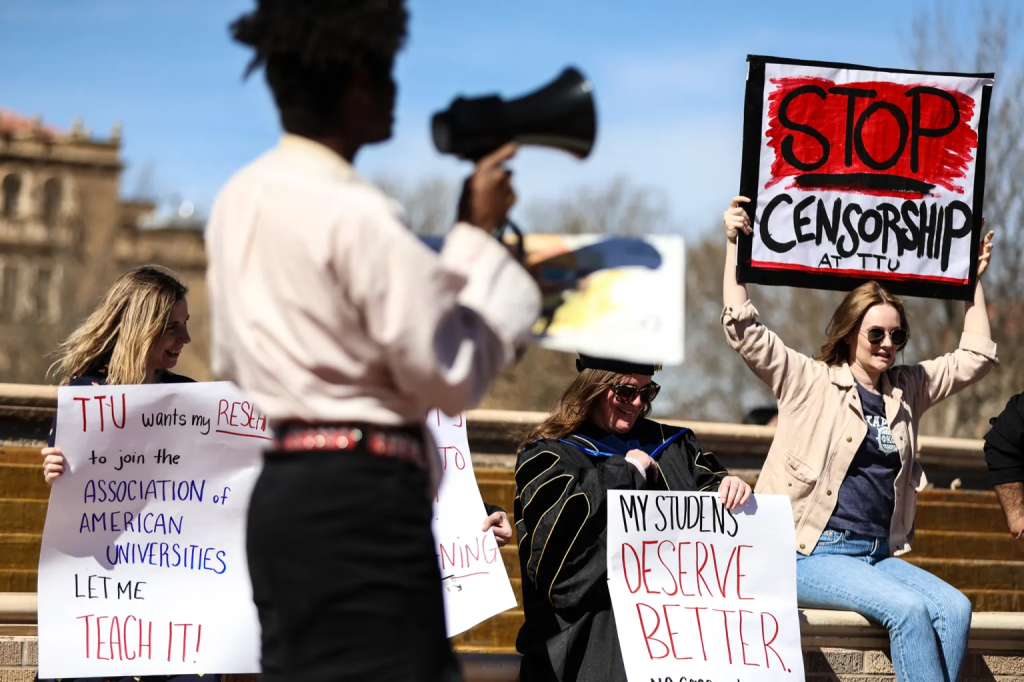
Texas Tech University System’s chancellor on Friday ordered campuses to phase out academic programs “centered on” sexual orientation and gender identity — a dramatically expanded policy that also places limits on what can be researched and which faculty can be hired.
Chancellor Brandon Creighton’s memo gives provosts until June 15 to identify targeted programs and requires the system’s five universities to freeze admissions and halt students from declaring majors in the phased out programs. Students already enrolled can finish their degrees.
Offerings that appear most likely to be affected include Texas Tech University’s women’s and gender studies undergraduate minor and graduate certificate, as well as women’s and gender studies minors at Midwestern State University and Angelo State University.
The memo also says graduate theses and dissertations may center on gender identity and sexual orientation only as a temporary exception for currently enrolled students and that future faculty hiring will “prioritize recruitment in alignment with this memorandum.”
Faculty, it says, must recognize only “two human sexes” and not teach gender identity as a spectrum or more than two genders as fact — policies Creighton introduced last year.
In core and lower-level undergraduate courses, the memo says instructors generally cannot assign materials that are “centered on” or “include” sexual orientation or gender identity and defined the concepts:
“Centered on” is when course content, readings, assignments or lectures that have sexual orientation or gender identity “as the primary subject, main theoretical framework, central narrative or driving pedagogical purpose.”
“Includes” means “these themes are present, but serve only as secondary background context, demographic data points, or minor components of a broader academic subject.”
If an industry-standard textbook contains such content, the memo says faculty do not have to redact it, but they cannot highlight it, test students on it or spend class time on it.
The memo makes some exceptions for upper-level undergraduate and graduate courses, including analysis of active public policy and legal disputes, historical subjects such as the AIDS epidemic where sexual orientation or gender identity is inseparable from the topic, datasets that include those variables and some clinical, counseling or psychology instruction.
The memo also says “currently employed faculty members may continue to research and publish topics of their choosing,” but future faculty will be recruited and hired in accordance with the memo’s priorities.
Jen Shelton, an associate professor of English who has taught at Texas Tech for 25 years, said the provost’s office had repeatedly assured faculty that their research would not be affected. She said this feels like a “betrayal.”
“The good news is I think the whole university has been betrayed. I think even the provost did not expect it to look like this because it’s people from the provost’s office who have been coming to us and saying, ‘Don’t worry. This part is all going to be fine,’” Shelton said in an interview with The Texas Tribune.
Cailyn Green, a Texas Tech junior studying human development with a minor in community, family and addiction science, said the memo left her feeling that the university can no longer provide “an honest education.”
Green said one of her professors would not answer in class whether material about racial disparities in pregnancy outcomes would still be taught, instead asking to discuss it privately.
“At the rate that we’re going, I’m not going to be able to continue learning everything that I need to know in my degree, and I won’t be able to help people,” said Green, who works in Section 8 housing, helping low-income residents connect with food, health care and other assistance.
Paul Ingram, a Texas Tech associate professor of psychological sciences, said students had been calling him all day, some saying they regretted coming to Texas Tech. He said a graduate student had already dropped out because of the earlier memos and another graduate student is writing a dissertation on gender that, under the new policy, could not be proposed again.
He said faculty across the university are openly discussing looking for other jobs.
“Everyone sees that the grass isn’t always greener on the other side, but this grass is looking pretty dead,” Ingram said.
Antonio Ingram, a senior counsel at the NAACP Legal Defense Fund, said the memo appears to target perspectives involving gender identity and sexual orientation for political reasons, not academic purposes, raising serious constitutional concerns because public universities cannot discriminate based on viewpoint.
Antonio Ingram also questioned the memo’s prohibition against teaching “as absolute truth” that people are inherently racist, sexist or oppressiveand that “individuals bear responsibility or guilt for actions of others of the same race or sex.” Ingram said there is no definition of “absolute truth,” creating vagueness that may deter teaching about systemic racism, reparations and the history of enslavement.
“I think in many ways, this is a doubling down on a political project that is not meant to help students. It is really meant to uphold a political worldview that, you know, Chancellor Creighton couldn’t enact legislatively and is now doing through his role as chancellor,” Ingram said.
In a statement, Creighton said he and the system’s regents are “focused on ensuring our academic programs are rigorous, relevant, and produce degrees of value.”
“That focus is matched by our unwavering support for the First Amendment and the open exchange of ideas that define a public university. Texas Tech will continue to be a national leader on both fronts,” he said.
Some students have supported the system limiting classroom discussion of sex and gender. In an October interview with the Tribune, Preston Parsons, president of the campus Turning Point USA chapter, said he believed the policy protected students and that professors who disagree should speak up outside the classroom.
“There’s a right and a wrong way to do everything, and I don’t believe the classroom is the right place to do that,” said Parsons, who wasn’t available to comment on Friday’s memo.
Creighton served nearly two decades as a Republican state lawmaker and authored major higher education reforms before he became chancellor in November. In December, he ordered faculty to submit for review course content touching on race, sex, gender identity and sexual orientation. If campus leaders wanted to keep the information in a course and it was not required for professional licensure, certification or patient care, they had to forward it to the Board of Regents for final review. Regents were expected to take up the issue publicly at their Feb. 26 meeting but did not, leaving professors in limbo.
Speaking at the Texas Public Policy Foundation’s summit in Austin on Thursday, Creighton said Texas Tech had “built an AI algorithm” to help review courses and would release findings within days.
At the summit, Creighton said what some faculty call “academic drift” had left “quite a bit of garbage in curriculum” on university campuses across the country. He said the Texas Tech University System has “a very good plan in place” to address that.
“I believe it will produce the best curriculum in America, and I believe it will be a national model once we’re finished,” he said.
In a news release Friday, the system said that of the 1,403 courses initially identified, only 92 were reviewed by the board of regent’s Academic, Clinical and Student Affairs Committee and fewer than 60 were recommended for modification. Another 299 were “proactively modified” before reaching the committee.
Creighton has framed the push at Texas Tech as a way to steer the university toward degrees that lead to high-paying jobs in high-demand fields. He made the same arguments for bills he wrote in 2023 to ban diversity, equity and inclusion in higher education and in 2025 to expand regents’ control over curriculum.
Shelton said that view misses a central role of college, which is to teach students how to interpret the world around them, ask hard questions and think through unfamiliar problems. This memo, she said, “impoverishes” students “not just as future workers, but as human beings.”
On March 19, the University of North Texas (UNT) in Denton announced it would cut over 70 courses, including its LGBTQ Studies course, as part of broader budget reductions.
President Harrison Keller and Provost Michael A. McPherson sent a statement detailing the upcoming budget cuts for the fall 2026 semester.
The university plans to eliminate over 70 programs, including courses, minors, and certificates. The cuts are expected to save $45 million.
The university cited declining enrollment, particularly among international students, as the reason for its significant budget cuts.
The enrollment decline contributed to a $32 million budget deficit for the upcoming fiscal year.
The university will allow currently enrolled students to complete their degree programs. New students will not be able to register for these majors or courses.
The cuts include three master’s programs, one undergraduate major, 25 undergraduate minors, 21 graduate programs, and 21 undergraduate certificates.
UNT ordered a review of its courses last fall as part of the budget planning process.
Some courses, including LGBTQ Studies and Women’s and Gender Studies, were eliminated as part of the budget cuts.
Texas university systems reviewed courses in response to federal directives issued during the Trump administration.
The review was conducted in response to H.B. 229, which recognizes only two genders, male and female.
UNT has not confirmed whether the law influenced its decision to cut certain programs.
The university also plans to eliminate the Department of Linguistics, citing a “consistent decline.”
UNT said it continues to monitor its strategic budgeting model, which began in fall 2024, amid declining enrollment and sponsored research.
Monitoring the strategic budgeting model has helped identify budgeting issues for the upcoming school year.
University officials emphasized the importance of the budget plan in maintaining program quality and financial stability.
Harrison Keller said, “We will continue to make strategic investments for the health of the university. Most importantly, we remain steadfast in our commitment to the long-term success of our students.”
UNT stated it aims to support staff and faculty as part of its long-term planning.
Keller and McPherson added at the end of their letter on March 19 that, “By making these difficult but necessary decisions, we will be able to strengthen the quality and impact of our current academic programs while investing in new areas that help us build momentum for the future.”
Campus Reform has reached out to the university for further comment.
The aggrieved mother of a Texas high school student has submitted what’s being described as the first formal complaint lodged over failure to comply with the state’s draconian “bathroom bill” enacted in December, and Senate candidate Ken Paxton is making the most of it.
In a letter to the Office of Texas Attorney General, the woman, whose name was redacted by Texas Values, the right-wing anti trans organization who coached her complaint and published the letter to Paxton, claims that her daughter, a student at Austin High School, informed her that a “biological male” student “has been using the female restrooms and private spaces at Austin High School.”
The woman notified the school on January 10 of the “violation of the recent law passed by the Texas legislature that requires students to use the private facilities based on their biological sex.”
After receiving no response from the school after a second complaint, the woman contacted Texas Values, which provided her with a form letter threatening the school. Administrators ignored that correspondence, as well, the woman claims.
Texas Values describes itself as “the largest statewide nonprofit organization dedicated to standing for faith, family, and freedom in Texas.”
A week later, at Texas Values’ urging, the woman wrote her rudimentary complaint with multiple misspellings and sent it to the AG’s office.
“I hope that the parent and her daughter can find some relief and put a stop to this or else the school must face consequences for not following the Texas Women’s Privacy Act,” said Mary Elizabeth Castle, Director of Government Relations for the organization, in a blog post advertising the letter they coached her to write, headlined, “Breaking! Parent Files Formal Complaint Against Austin ISD for Breaking Texas Women’s Privacy Law.”
On Friday, Paxton notified the Austin Independent School District of a citizen complaint via a state tip line alleging the violation of Senate Bill 8, also known as the Women’s Privacy Act. The snitch line was launched shortly after the bill took effect in December “to ensure that state entities are not allowing mentally ill men to invade women’s spaces,” according to the AG’s office.
Paxton’s office did not confirm whether the complaint urged on by Texas Values was the same as that referenced in the AG’s announcement; whether the complaint was verified; or if an official investigation is under way, the Texas Tribune reports.
Paxton’s notification is a statutory prerequisite for filing a lawsuit against Austin ISD. The school district was advised it’s subject to a $5,000 penalty for every day that the violation continues. They have two weeks days to cure the “bathroom bill” breach, the letter warned.
“The law is clear that political subdivisions in Texas must not allow biological men to use girls’ bathrooms and locker rooms,” Paxton said in the statement. He said his office would explore every legal avenue available.
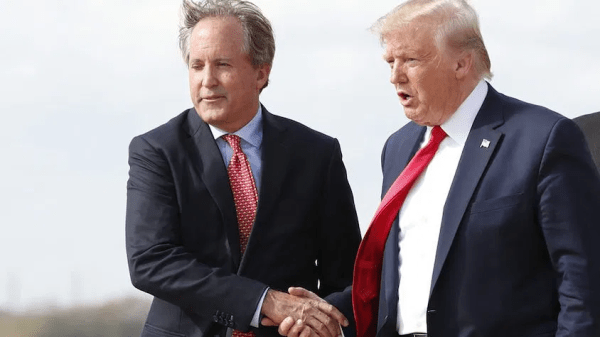
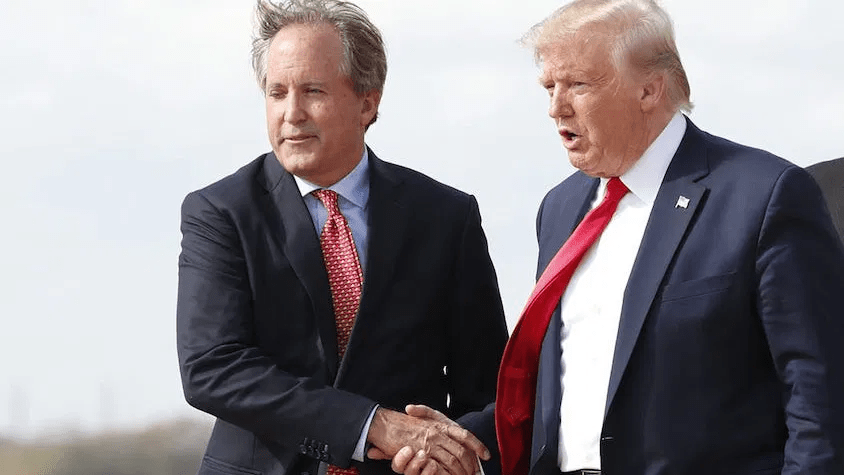
Paxton, a culture-warring MAGA favorite now in his third term as Texas AG, has overcome multiple scandals and survived an impeachment effort in 2023. Now he’s facing a heated U.S. Senate primary runoff with incumbent Sen. John Cornyn, after Paxton’s admission of infidelity last year and an impending divorce.
While in any other scenario he’d already have President Trump’s endorsement, a Paxton win could give Democratic Senate nominee James Talarico an edge in November. So far, Trump has stayed on the sidelines.
Texas Values, despite endorsing the aggrieved high school mom’s bathroom complaint, has yet to endorse either Republican in the Senate race, as well.
“Candidates must be able to demonstrate a firm commitment to protecting religious liberty, marriage and family, and innocent human life,” the group says in their “Faith & Family Voter Guide.”








You must be logged in to post a comment.