
This blog originally appeared at Pew Research Center.
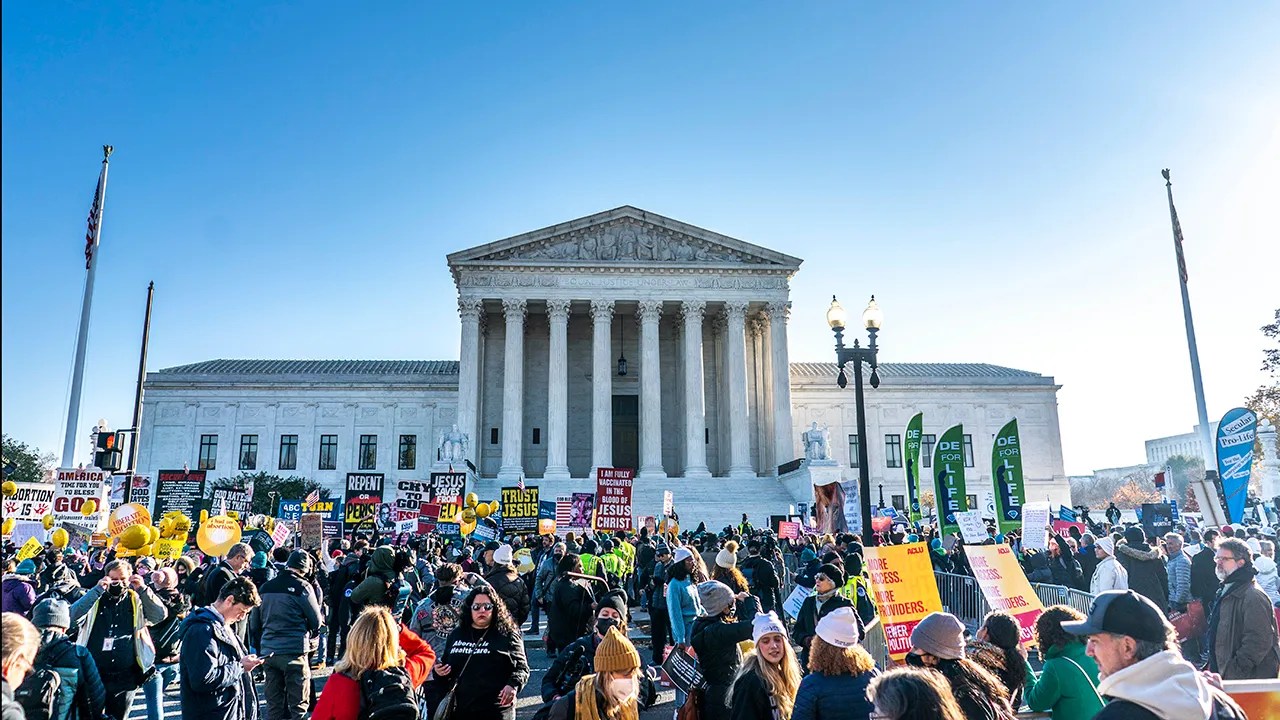
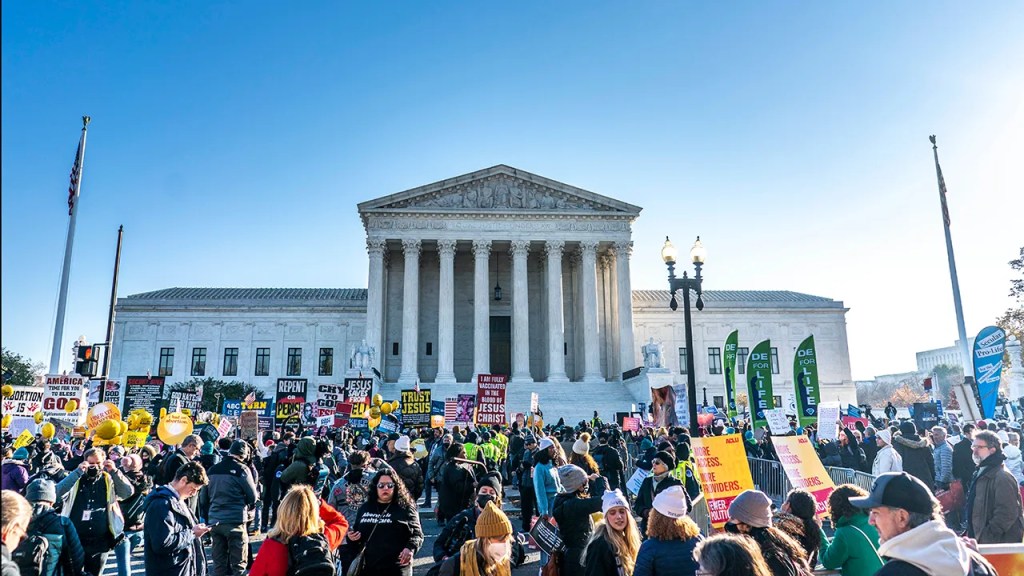
The Alliance Defending Freedom, with 15 victories in Supreme Court cases, notably overturning Roe v. Wade, is detailed in an analysis by New Yorker writer David Kirkpatrick, shedding light on the group’s impact and their upcoming objectives.
Presenting as the host, Terry Gross:
Welcome to FRESH AIR. I’m Terry Gross. In an article titled “The Next Targets For The Group That Overturned Roe” in The New Yorker, my guest David Kirkpatrick explores the Alliance Defending Freedom (ADF), deemed the most influential arm of the Christian conservative movement. A prominent activist legal group, the ADF has achieved significant success in the courts, with victories such as overturning Roe v. Wade among its 15 Supreme Court cases. Kirkpatrick also highlights the ADF’s influence in areas like allowing employer-sponsored health insurance to exclude birth control, rolling back limits on government support for religious organizations, challenging pandemic-related public health rules, and establishing the right of a baker to refuse making a cake for a same-sex wedding.
The ADF’s current objectives involve either restricting access to the abortion pill, mifepristone, or advocating for its complete ban. Additionally, they aim to limit the authority of the FDA, the agency that approved the pill. The organization is also focused on curtailing LGBTQ rights, particularly those of children and adults who identify as transgender. Later in our discussion, we’ll delve into David Kirkpatrick’s recent interview with a Hamas leader regarding the attack on Israel. Kirkpatrick, a staff writer at The New Yorker, spent 22 years as a reporter for The New York Times. His coverage ranged from the Christian conservative movement to the Arab Spring, and during the Trump administration, he investigated potential ethically questionable connections between administration members and several Gulf nations, including Saudi Arabia. The interview was recorded yesterday morning.
Welcome back to FRESH AIR, David Kirkpatrick. It appears that the Alliance Defending Freedom (ADF) isn’t widely recognized. Is this intentional? Are they actively seeking to evade public scrutiny?
DAVID KIRKPATRICK: I believe they are becoming more open to public scrutiny. In recent years, there has been a shift in their strategy, moving away from exclusively appealing to the Christian conservative community and now aiming to engage with a broader, more mainstream audience.
GROSS: The Justice Department is appealing the mifepristone ruling. Tell us what the ruling was and the argument that the ADF made.
KIRKPATRICK: The ADF presented a notable argument. Mifepristone, a key component in approximately half of the abortions conducted in the United States, has received approval for over two decades spanning administrations of both political parties. The ADF represented a group of doctors in a Texas district court who asserted that it went against their conscience to potentially treat the adverse effects of this pill. They successfully persuaded the Texas district court judge that the pill’s approval was in error. Furthermore, the judge ruled not only that the FDA had erroneously approved it but also that it should not be shipped across state lines by mail. This decision came at a time when, due to the pandemic, the FDA, under the Biden administration, had sanctioned telemedicine prescriptions and mail-order delivery of the medication.
Did they emerge victorious on all those fronts?
KIRKPATRICK: Indeed, at the district court level, they secured a comprehensive triumph, exceeding, I believe, even their own expectations. However, a stay was promptly issued, and the case has now progressed to an appellate court, with an upcoming appearance before the Supreme Court.
GROSS: The judge, Matthew Kacsmaryk, who ruled in favor of the ADF in the lower court, is a Trump appointee and former deputy general counsel of the First Liberty Institute, a conservative Christian advocacy organization that has received grants from the ADF. Does this raise concerns about a conflict of interest?
KIRKPATRICK: Typically, discussions about a judge’s past work don’t center on conflict of interest concerns. The key consideration is often seen as forum shopping. ADF might argue that their choice of Texas was due to the location of the involved doctors, and Judge Matthew Kacsmaryk happened to preside over that district. Realistically, though, it appears they strategically identified a jurisdiction where the judge’s legal background made him predisposed to sympathize with their stance. The organization he previously worked for maintains a close alliance with ADF. Through my research, I discovered that he recently had an ADF intern in his chambers and is expecting another student from an ADF law program to join as a clerk. This suggests they had.
rewrite: GROSS: So what are they pushing for now? What is the ADF pushing for now for mifepristone? Do they want a total ban?
KIRKPATRICK: Well, the ADF is certainly aiming for a total ban. During my reporting, I gained access to an internal conference call within their fundraising department shortly after the initial district court hearing in Texas. At that time, they openly acknowledged that their most ambitious goal, the complete revocation of FDA approval for mifepristone, was a considerable long shot. Undoing an FDA decision, especially one made two decades ago, by a district court judge is highly uncommon and unlikely. Nevertheless, that is precisely what they achieved, and they are currently working to defend that outcome at the Supreme Court level.
GROSS: From the tape you mentioned, you quoted the head of development saying, “this is a massive pushback on the FDA and the Biden administration from a regulatory standpoint. And so, you know, there’s just a ton of corruption in the bureaucratic state, and pushing back on these agencies is a big deal.” It appears that part of their objective is to challenge the so-called bureaucratic or administrative state, aligning with a significant conservative goal, reminiscent of the objectives advocated by Steve Bannon.
KIRKPATRICK: In the United States, there’s a tendency for groups on the left to focus on left-leaning causes, and similarly, groups on the right emphasize right-leaning issues. This alignment is a reflection of our partisan system. For instance, someone may initially be concerned about global warming on the left and eventually become passionate about the right to abortion. A similar progression occurs on the right. With the ADF, we are witnessing a 30-year-old organization that originated at a time when there was minimal Christian conservative legal advocacy. They entered a landscape where there was a constitutional right to abortion and significant separation between church and state. Their mission was to challenge and overturn both aspects. Three decades later, they have achieved remarkable success with both Supreme Court precedents overturned. Now, as they seek the next battle, they are also expanding their outreach to a broader audience, a common strategy for any group aiming to sustain growth and financial support over time.
GROSS: To what extent did the ADF contribute to the overturning of Roe v. Wade, both in the lead-up to the decision and during the Supreme Court case?
rewrite: KIRKPATRICK: It was enormous. I mean, one reason why I felt comfortable saying that they are now the most influential part of the Christian conservative movement is they’re not just, you know, taking on a client who comes to them needing help, they’re actually reaching out to legislatures in states around the country and saying, we’d like to help you draft some legislation. In this case, they helped the state of Mississippi draft the abortion ban, which was later challenged in the case that ultimately overturned Roe. Then they acted as lawyers for Mississippi, defending that all the way up to the Supreme Court. And even before that, they’d been laying the groundwork for this for decades, you know, blocking and tackling and trying to establish earlier precedents that, little by little, would winnow down the scope of Roe – to establish, for example, the right of a state to have parental notification laws or waiting periods or notifications for women seeking abortions, all of which over time gradually helped pave the road to the overturning of Roe.
GROSS: Are they actively seeking to overturn the decision that legalized gay marriage?
KIRKPATRICK: It’s an intriguing question. When I discussed this with Kristen Waggoner, who leads the organization, I pressed her on it because the cases they’ve pursued closely resemble the type of legal challenges one might bring if there were a long-term legislative strategy to overturn Obergefell. They opposed Obergefell and maintain that it was incorrectly decided. She stated that they are not currently seeking to overturn Obergefell. However, she continues to believe it was wrongly decided, and the ADF perceives it as having various negative consequences for the broader culture. While liberals may see Obergefell as a recognition of the evolving sentiments in American public opinion, the ADF holds a different perspective.
Conservatives tend to believe that Obergefell played a role in shaping public opinion, asserting that the widespread acceptance of same-sex marriage, especially compared to the state of the country two decades ago, is a consequence of the Obergefell decision. Among the current standing decisions and precedents, none is more objectionable to the ADF and its allies than Obergefell.
GROSS: What other initiatives is the ADF undertaking to curtail LGBTQ rights?
KIRKPATRICK: Currently, a significant focus for them revolves around transgender youth, particularly in the realm of sports. They have found success, particularly in cases involving the question of whether a girl born as a girl faces a disadvantage when compelled to compete against a girl born as a boy in a track meet. They were among the first, if not the first, to bring such cases to court, specifically addressing the rights of girls born as girls. This has sparked a nationwide surge in legislation in over 22 states to regulate these situations, and they continue to advocate for their stance in various legal battles. Additionally, they are actively involved in other matters, such as schools addressing students according to their chosen pronouns, potentially conflicting with parental preferences, and discussions surrounding regulations on medical care for minors undergoing transition. These are all areas where the ADF is currently highly engaged.
GROSS: Let’s take a brief pause, and we’ll continue our conversation. For those just tuning in, I’m speaking with David Kirkpatrick, a staff writer for The New Yorker. His article, “The Next Targets For The Group That Overturned Roe,” explores the Alliance Defending Freedom. Stay with us. This is FRESH AIR.
(AUDIO CLIP FROM JULIAN LANGE’S “IOWA TAKEN”)
GROSS: Welcome back to FRESH AIR. Let’s resume the conversation from my interview recorded yesterday with David Kirkpatrick, a staff writer for The New Yorker. Our discussion revolves around the Alliance Defending Freedom, an activist Christian conservative legal group. The article in focus is titled “The Next Targets For The Group That Overturned Roe.”
In your portrayal of Kristen Waggoner’s perspective within the ADF, it seems she envisions a scenario where traditional beliefs on marriage and gender are under threat. The mention of concerns about dissenters being compelled to salute rainbow flags, teachers influencing children’s beliefs on gender, and the inclusion of trans females in shelters for battered women suggests a broader perspective on societal shifts. I’m curious to explore more nuances in the ADF’s viewpoint. How does the organization articulate its stance on navigating the evolving landscape of societal values and individual rights? Additionally, are there specific instances or legal cases that you found particularly emblematic of the ADF’s concerns in this regard?
KIRKPATRICK: Yes, I believe it captures their perspective. It’s important to take a moment to empathize with their standpoint. Consider if you adhere to a sexual ethics viewpoint prevalent in the United States and much of the world until the 1970s, where marriage is seen as between a man and a woman, with the purpose of procreation. From that perspective, it might feel like there has been a significant and dramatic shift against these beliefs. Waking up in 2023 to a constitutional right not only to gay sodomy but also to same-sex marriage, along with schools increasingly promoting comfort with diverse sexual orientations and even suggesting exploration of gender identity for children, can be perceived as a challenging and unsettling time for those holding more traditional views on sexuality.
Now, how does the ADF perceive this situation? They often describe it using terms like “totalitarian.” Waggoner conveyed to me her concerns about what she characterized as a majoritarian, authoritarian shift, where the prevailing liberal view on sexual ethics, now a majority in America, is perceived as being forcefully imposed on dissenting individuals. This perspective aligns with their belief that they are currently championing the free expression of what they see as an embattled minority.
GROSS: I’d like to note that you mentioned “gay sodomy” because one of the cases related to gay rights involved overturning a sodomy law in Texas. I assume that’s the reason for using that particular expression.
KIRKPATRICK: Yes, indeed. I’m 53 years old, and during my college years, there was a Supreme Court precedent that endorsed the right of states to criminalize gay sodomy. It wasn’t until 2003 that this precedent was overturned. So, I can recall a time when the legal landscape and constitutional stance on this issue were quite different.
GROSS: The ADF employs the rhetoric of the civil rights movement but directs it towards causes that run counter to the values advocated by the civil rights movement and civil liberties groups. Would you agree with that characterization?
KIRKPATRICK: Well, the ADF wouldn’t characterize it in that manner. From their perspective, and it’s important to note this is a conservative viewpoint, the civil rights movement, as interpreted by liberals, is seen as centered around expanding individual personal freedoms. This includes the right to abortion, the freedom to express any sexual orientation, and the ability to explore gender identity freely – all considered aspects of personal freedom and part of the broader civil rights movement. However, the ADF’s stance is rooted in the belief that some of these issues involve ideological considerations related to sexual ethics. They argue that, at this point in American history, the liberal viewpoint on sexual ethics has become the majority, even dominant, perspective. In this context, they assert that they are, in a way, following the example set by the early history of the ACLU, which advocated for minority perspectives and protected free speech rights. This is certainly how they prefer to present themselves currently. Ultimately, whether listeners find this portrayal as overstated or not is a matter for individual interpretation.
GROSS: How do critics of the ADF respond to their strategy of asserting support for the rights of a minority group, specifically those who resist LGBTQ rights?
KIRKPATRICK: Essentially, critics argue that it’s a form of double talk, emphasizing the freedom to discriminate over the freedom from discrimination. They see it as an inversion of priorities, asserting that it leads to an inevitable clash. In a world where expressing racist views to discriminate is unacceptable, opponents of the ADF contend that refusing service to a same-sex couple is analogous to a restaurant owner refusing to serve a Black customer. The fundamental conflict lies in the tension between one person’s freedom of expression and another person’s right to equality.
GROSS: You obtained access to leaked recordings, including a talk by Jeffrey Ventrella, a senior counsel and senior vice president of academic affairs and training at the ADF. Ventrella designed the curriculum for various ADF training programs, including the Blackstone Legal Fellowship, aimed at instructing law students in the Christian conservative principles and strategies of the ADF. The internal lecture, titled “Lordship and Liberty,” explores the role of Christianity in America, and you have an excerpt from this talk given at the Blackstone Fellowship.
(AUDIO CLIP FROM RECORDED LECTURE)
JEFFERY VENTRELLA: Jesus Christ is Lord. This is the foundational and ultimate declaration that Christians make regarding the entirety of reality, politics included. Believers currently assert by faith what will eventually become evident to everyone. All earthly authorities are subordinate to the sovereignty of Jesus Christ, necessitating our steadfast presence in the courts, judiciary, and academia. In simpler terms, as someone else once expressed it, to request Christianity to stay out of certain domains is to request God not to be God, given that He is the sovereign Lord. We are obliged to advocate for these principles, to uphold just laws that truly contribute to the well-being of humanity as a whole. As attorneys, we possess the expertise needed for such advocacy.
GROSS: That recording featured Jeffrey Ventrella, a senior counsel and senior vice president of academic affairs and training at the Alliance Defending Freedom. The leaked tape was provided to you by a group known as Documented.
KIRKPATRICK: Indeed, that is accurate.
GROSS: Is he suggesting that the ADF aims to establish a Christian nation in the United States?
KIRKPATRICK: According to them, no. They strongly reject the notion that they are advocating for a theocracy. They would vehemently emphasize that their interpretation of biblical teachings includes principles of tolerance. Interestingly, what they express is not entirely dissimilar to messages heard in certain left-leaning or progressive churches in New York. Both sides may assert that the Bible guides their understanding of justice, social welfare, and even tax policies. The controversial aspect lies in the tone and emphasis of how these ethical beliefs influence political engagement.
You know, when he addresses a private audience of Christian conservative lawyers, the message doesn’t come across as pluralistic. The tone suggests that, while Christianity was indeed the dominant religion at the time of the founding and influenced the thoughts of many founders about the Constitution, there’s not much emphasis on pluralism as liberals or even some liberal churches would stress today. Their stance is unapologetic, asserting that Christianity serves as their blueprint for the world, defining what it means to be a believer. While they may argue that this doesn’t necessarily entail imposing their beliefs on others, in the contemporary pluralistic and secular culture, such sentiments can sound disconnected.
GROSS: Let’s pause briefly, and we’ll delve deeper into our discussion. For those just joining us, I’m Terry Gross, and my guest is David Kirkpatrick, a staff writer for The New Yorker. Our conversation centers on the Alliance Defending Freedom, an activist Christian conservative legal group, explored in Kirkpatrick’s article titled “The Next Targets For The Group That Overturned Roe.” Stay with us; we’ll also touch on Kirkpatrick’s recent interview with a leader of Hamas. This is FRESH AIR.
(SOUNDBITE OF MUSIC)
GROSS: Welcome back to FRESH AIR. I’m Terry Gross. Let’s resume the conversation from my interview recorded yesterday with David Kirkpatrick, discussing the Alliance Defending Freedom, characterized as the most influential arm of the Christian conservative movement. Kirkpatrick’s article, “The Next Targets For The Group That Overturned Roe,” delves into the ADF’s initiatives, notably its success in the courts, including the overturning of Roe v. Wade. Now, they’re focused on endeavors such as restricting access to the abortion pill mifepristone and curbing LGBTQ rights.
Some notable individuals have either taught or participated in the educational programs offered by the ADF’s educational branch. Could you share the names of some of these prominent figures?
KIRKPATRICK: Perhaps the most intriguing figure is Supreme Court Justice Amy Coney Barrett, who has taught at ADF on multiple occasions. Interestingly, during her confirmation hearings, she stated to the Judiciary Committee that she might not be fully aware of all ADF’s positions and didn’t extensively research the stances of every organization she visited for lectures. Another noteworthy lecturer from around the same time is Senator Josh Hawley, whose wife serves as a lawyer for ADF.
GROSS: There are connections between the ADF and two influential congressmen – Steve Scalise, who previously sought the position of House speaker but was unsuccessful, and Jim Jordan, currently aspiring to become the House speaker. Last fall, they jointly hosted an ADF reception for recently elected lawmakers. Could you elaborate on their ties to the ADF?
KIRKPATRICK: I don’t have explicit information on a specific connection between either of them and the ADF. However, what seems apparent is that the ADF has increasingly become a significant player within the conservative and Christian conservative spheres. Beyond legal advocacy, they engage in what could be described as strategic influence, providing guidance to legislators across various states, shaping legislation that aligns with their preferred principles.
In recent years, they’ve extended their influence to the federal level, engaging with the United States Congress. Through initiatives like their ambassadors program, non-legal civilian supporters of ADF have the opportunity to learn about the organization’s principles and contribute to their promotion in their communities. ADF also collaborates with a network of churches and ministries nationwide, offering legal guidance. They’ve evolved beyond being merely a law firm and now operate more as a movement. Given this broader scope, it’s understandable why prominent Republican leaders in Congress might find it advantageous to align themselves with the ADF in hosting a reception for new lawmakers.
GROSS: Can we observe a significant number of the lawyers or judges trained by ADF currently engaged in legal defense or active in the courts?
KIRKPATRICK: Absolutely. I believe you are referring to their fellowship program, the Blackstone Fellowship, which targets first-year law students during the summer between their first and second year. This program has grown significantly, accommodating around 125 law students annually. Graduates of this fellowship often proceed to clerk for federal or state judges, or pursue roles in government. As a result, many clerks currently working for federal judges have undergone ADF’s training, creating a notable connection when these judges preside over ADF-related cases.
GROSS: In recent months, two federal judges concluded legal disputes by instructing involved parties to undergo ADF training specifically focused on the First Amendment. One instance involved a lawsuit against Southwest Airlines initiated by a flight attendant alleging termination due to her anti-abortion stance. Southwest is contesting the case. How did the involvement of ADF training influence the resolution?
KIRKPATRICK: In that particular case, the judge endorsed a settlement stipulating that Southwest’s attorneys undergo instruction on the First Amendment from ADF. However, Southwest is currently challenging this decision on appeal, and the outcome remains uncertain. I found it noteworthy because ADF is generally viewed as a partisan organization, advocating on contentious issues where there’s significant disagreement among Americans. Here, a federal judge directed Southwest’s legal representatives to seek guidance on the First Amendment from ADF, which struck me as extraordinary.
GROSS: In the recent Supreme Court term, individuals who had undergone ADF’s training program served as law clerks for Justices Amy Coney Barrett and Sam Alito. They played a role in the case involving a web designer who refused to create a website for a same-sex wedding, if I recall correctly.
KIRKPATRICK: Yes, for a same-sex wedding.
GROSS: Additionally, they were involved in the case concerning the Justice Department’s appeal to halt the mifepristone ban. So their influence extends quite significantly.
KIRKPATRICK: Indeed, I considered it a significant indicator of the mainstream acceptance and success achieved by the Blackstone Fellowship and ADF. While Justices Samuel Alito and Amy Coney Barrett likely had well-established positions on the matter before hiring those clerks, it underscores the proximity of ADF’s ideology to the influential centers of legal authority in the nation.
GROSS: Well, we need to take another break here, so let me reintroduce you. My guest is David Kirkpatrick, a staff writer for The New Yorker. In a recent article, he writes about the Alliance Defending Freedom. The article’s called “The Next Targets For The Group That Overturned Roe.” He also has a new article in which he interviews one of the leaders of Hamas, and we’re going to talk about that after we take a short break. This is FRESH AIR.
(SOUNDBITE OF SOLANGE’S TRACK, “WEARY”)
Yes, Mousa Abu Marzouk has been a longtime member of Hamas and is currently living in exile in Qatar.
Certainly. He played a key role as one of the earliest political leaders of Hamas when the group was formed in 1987.
GROSS: I found it surprising to learn that he only became aware of the Israeli invasion after it had already occurred on Saturday morning. Why was he not informed in advance?
KIRKPATRICK: Well, you’ve got to remember that Hamas is acutely aware of Israeli surveillance. They’re probably also aware that wherever their exiled leaders are – in this case, in Doha – they also are going to be under a lot of surveillance. So if they want – if Hamas wants any hope of preserving the secrecy around a campaign like the one they launched on October 7, they’ve got to be very, very quiet about it, and they can’t be blabbing about that to their political leaders abroad. You know, it’s also true that the Hamas political leaders and military leaders are sometimes complicated to sort out. You know, you – the – they say that the political leaders set the strategy and direction and the military leaders execute it. But it’s also a little bit true that the political leaders are, in some cases, speaking and defending decisions made by the military leaders. So it’s a complicated relationship between the two sides of the group.
GROSS: Did he offer any insights into how Hamas evaded Israeli intelligence and the Israeli military?
KIRKPATRICK: No, he did not. In fact, at certain points, he sounded almost surprised by their own success. You know, Hamas, like the rest of the world, believes that Israel has one of the most formidable intelligence services, and plenty of Hamas plots have been foiled by Israeli spying. And he told us that he was honestly quite surprised to see just how successful and how far their fighters were able to get.
GROSS: He said that Hamas was ready to release women, children and the elderly who were being held captive by Hamas, in addition to releasing citizens of other countries if Israel ceased its military campaign. How do you interpret that?
KIRKPATRICK: He presented it as a gesture of magnanimity, basically. You know, we’re civilized people, we’ll release these noncombatants. I think more realistically, it was an effort to begin negotiations. You know, he was saying, look, if you stop the bombing, we’ll release these prisoners. And I have to believe that Hamas is hoping they will get something in exchange for their many hostages.
DISGUSTING: What was his rationale for the assaults?
KIRKPATRICK: We extensively questioned him, focusing less on the justification and more on the timing. From his perspective, Hamas operates as a resistance group with the goal of liberating Palestine, the Palestinian people, and ending the occupation. According to him, their attacks on Israel align with this objective, as they perceive themselves as a group dedicated to confronting and opposing Israel.
On the flip side, Israel has a longstanding presence in the region, and many of their grievances have persisted over time. We extensively questioned him about the timing of their actions. What stood out to me, and somewhat surprised me, was the sense of desperation, even though he didn’t explicitly use that term. My interpretation was that they find themselves in a situation where the Israeli government is veering further to the right than ever before. The messages coming from the Israeli government indicate a new level of disregard for the Palestinian cause, which is concerning from the Palestinian perspective. Simultaneously, various Arab states, once supporters or allies of the Palestinian cause, have started to establish relations with Israel. During the Trump administration, several Gulf states took this step, and now even Saudi Arabia, a key remaining Arab state, is evidently moving toward recognizing Israel.
And I must mention, a significant aspect of the policies adopted by this right-leaning Israeli government involves the promotion and defense of expanding settlements, particularly in instances of violence between settlers in the West Bank and Palestinians. The repercussions have been severe, with a considerable number of Palestinians losing their lives—approximately 200 in this year alone. Additionally, there have been instances where ministers from the Netanyahu government visited the Al-Aqsa Mosque, a move perceived by Palestinians as an attempt to augment the Jewish presence at this sacred Muslim site. All these developments are disheartening. Abu Marzouk conveyed to us that they are contending with numerous pressures, having made efforts for years to explore various avenues of coexistence with Israel, all of which have proven unsuccessful.
GROSS: Did he express any opinion on whether the Israel-Hamas conflict could escalate into a broader regional war?
KIRKPATRICK: We inquired about that too. There has been considerable focus on Hezbollah, the Lebanese militant group that also advocates for the Palestinian cause. Would they escalate the situation?
GROSS: And both Hezbollah and Hamas receive funding from Iran.
KIRKPATRICK: Yes, to a much greater extent. Hezbollah is more directly and completely aligned with Iran, sharing the Shiite affiliation with the Iranian government. There has been considerable speculation about whether they might escalate hostilities against Israel on an additional front, potentially expanding it into a broader war, a two-front conflict, or even involving Iran. Abu Marzouk, however, was remarkably categorical in denying any such escalation. Essentially, he stated that while they may wish for a regional war and conflict against Israel, it’s not a plausible scenario. He firmly expressed his expectation that Hezbollah would adhere to its existing cease-fire with Israel, ruling out the likelihood of a larger regional conflict. While some may view this as a strategic statement in the context of war where misinformation is common, the fact that he acknowledged their desire for such a conflict makes the denial seem credible for now.
GROSS: He conveyed that one of his concerns is that, despite the ongoing conflict between Israel and Hamas, it might postpone the normalization of relations between the Saudis and Israelis. However, he emphasized that it won’t necessarily jeopardize the future of that relationship.
KIRKPATRICK: Considering the immense impact of Israeli retaliation on the Palestinian population in Gaza, with a significantly higher number of Palestinian casualties compared to Israelis at this early stage of the conflict, and recognizing that the Israeli response is just commencing, it’s evident that Palestinians in Gaza are enduring and will continue to endure considerable suffering. Consequently, we frequently questioned Abu Marzouk about the justification for this, asking what they stand to gain. In the Western context, there’s speculation about whether they are attempting to obstruct the potential recognition of Israel by Saudi Arabia, given the growing indications of diplomatic relations between the two. I was taken aback by how candid he was, stating that he didn’t even believe they could prevent it. Essentially, he asserted that it’s inevitable, and their best hope is to possibly delay the process.
GROSS: What was the process for securing an interview with him?
KIRKPATRICK: My colleague, Adam Rasgon, played a key role in securing the interview. Having previously worked for The Jerusalem Post and The New York Times in Jerusalem, with a close focus on Palestinian affairs, he promptly reached out to Abu Marzouk after the recent attack to understand his perspective. I had interviewed Abu Marzouk years ago during my time as the Times bureau chief in Cairo, so I recognized the potential for an intriguing interview. I was keen to collaborate with Adam, who initiated the initial contact.
GROSS: What significance does his position hold within Hamas?
KIRKPATRICK: He’s been a senior figure in Hamas from the very beginning. I mean, he was in on the ground floor when the organization was founded in 1987, when it first came together, and, at different times, I think, has been their top political leader. So he’s certainly a significant voice within the organization.
GROSS: You engaged in a conversation with someone associated with a group responsible for a horrendous attack on Israelis, involving the slaughter of innocent people, including young concertgoers, the elderly, and babies. How do you manage to remain composed during the interview and determine what questions to ask without letting anger overwhelm you?
KIRKPATRICK: We gave careful consideration to the ethical implications, especially when giving a platform to someone associated with an organization that has carried out a heinous attack, resulting in the loss of civilian lives and violations of international law. Our approach aimed to avoid merely providing a platform for his statements. Instead, we conducted a reported dialogue, asking the questions that many readers would want answers to, such as the reasons behind Hamas’s actions and what they hope to achieve, considering the unlikely prospect of meaningful, long-term change and the significant impact on Palestinian civilians. Our focus remained on these critical inquiries.
And we approached him because these are the individuals who possess the information needed to address those inquiries. These questions are of paramount importance to our readers and the global community right now, and the only individuals with the potential to provide insights are the leaders of Hamas. To uncover these details, engaging in a thoughtful, unbiased conversation is crucial. It’s about striking a balance—ensuring a careful and fair dialogue that doesn’t merely hand him a microphone but allows his perspective to be heard in a measured way.
GROSS: David Kirkpatrick, a staff writer for The New Yorker, is my guest. You can find the article he co-wrote about his interview with Mousa Abu Marzouk, one of the leaders of Hamas, on The New Yorker website. More from our recorded interview yesterday coming up after a break. This is FRESH AIR.
(AUDIO CLIP FROM TODD SICKAFOOSE’S “BARNACLE”)
GROSS: Welcome back to FRESH AIR. Let’s return to my conversation recorded yesterday with David Kirkpatrick, a staff writer for The New Yorker. Recently, he and Adam Rasgon published an article on The New Yorker website discussing their interview with Mousa Abu Marzouk, a senior political leader of Hamas.
Marzouk’s statement about exploring coexistence with Israel seems contradictory to Hamas’s stated goal of the destruction of Israel. The coexistence claim may be part of their public relations or diplomatic strategy, but it contrasts with their long-standing objective.
KIRKPATRICK: The situation is more nuanced than a straightforward answer. In recent years, Hamas has exhibited signs suggesting a willingness to coexist with Israel. They’ve engaged in negotiations through intermediaries for work permits, fishing rights, and other measures to improve the conditions in Gaza. There have been political statements that appear, to some extent, to retract the antisemitic elements from their original charter. They’ve hinted at accepting Israel in the long term and participated in elections with the Palestinian Authority, which, established by the Oslo Accords, inherently supports a two-state solution. So, in their actions, there does appear to be some level of willingness to coexist with Israel. It’s not entirely inaccurate.
Simultaneously, they have consistently maintained their advocacy for genuine Palestinian independence, the right of all Palestinian refugees worldwide to return, and they have not relinquished their weapons. It’s a more intricate situation. Some Israelis now contend that Hamas’s rhetoric of coexistence was deceitful, a ploy to instill a false sense of confidence and security while secretly preparing for the recent attack. Abu Marzouk counters this by asserting that they genuinely attempted coexistence, but the lack of substantial progress toward genuine Palestinian self-determination hindered their efforts.
GROSS: Surely he must be aware that an invasion of Israel by Hamas would provoke a massive response. The ongoing bombing campaign has already led to the deaths of thousands of Gazans, and it seems likely he anticipated such consequences. With borders closed and people directed to flee their homes, those seeking safety have faced deadly attacks both in the south and along evacuation routes. Homes are being destroyed, and the aftermath will leave many without a place to return. Do you think he acknowledges any responsibility for the dire situation faced by the very people he aims to defend, considering the substantial hardships they are enduring?
KIRKPATRICK: Yes, it’s worth noting that his older brother was killed in an airstrike shortly before our interview. I first met him a decade ago, and we spoke this week. I believe he is aware of the significant toll on Gazans. He expressed the view that Gazans were willing to endure this cost, emphasizing their commitment to the struggle and their readiness to pay an even higher price to end the Israeli occupation. While the people in Gaza lack a voice in this situation, it’s challenging to fathom the position of a Hamas leader who has brought such retaliation upon the people of Gaza.
GROSS: There are reports of a 45-minute phone call between the leader of Iran and Mohammed bin Salman, the leader of Saudi Arabia, marking their first-ever conversation. What do you interpret as the meaning and significance of this development?
KIRKPATRICK: I believe it signals a mutual desire from both sides to steer clear of a regional war at the moment.
GROSS: That’s an encouraging sign.
KIRKPATRICK: It’s a hopeful sign, but let’s not get carried away. We’re still facing a situation where Iran is on the verge of nuclear weapons development, well within reach. Meanwhile, Saudi Arabia is seeking assistance from the United States to develop nuclear power, ostensibly for peaceful energy purposes. However, they openly express the need for nuclear parity with Iran for self-defense. While the two leaders spoke during this Israeli-Palestinian conflict, expressing a desire to avoid war between themselves, we must recognize the looming potential for a new arms race in the region. So, despite this positive development, caution is warranted.
GROSS: Thank you for sharing your insights with us.
KIRKPATRICK: My pleasure.
GROSS: I conducted my interview with David Kirkpatrick yesterday. You can find his article, “What Was Hamas Thinking?” co-written with Adam Rasgon, on The New Yorker website. Additionally, Kirkpatrick has an article on the Christian conservative legal group Alliance Defending Freedom, available on the website and in print in The New Yorker.
Tomorrow on FRESH AIR, we’ll have Greta Lee, the lead in the movie “Past Lives.” Our film critic Justin Chang hails it as an exquisitely thoughtful and moving film, describing it as the most affecting love story he’s witnessed in quite some time. Greta Lee’s extensive credits include roles in TV shows such as “Russian Doll,” “Girls,” “Inside Amy Schumer,” and “High Maintenance.” She is currently a prominent cast member on the series “The Morning Show.”
(AUDIO CLIP FROM AARON GOLDBERG’S “TROCANDO EM MIUDOS”)
GROSS: Executive production for FRESH AIR is led by Danny Miller. Our technical director and engineer is Audrey Bentham. Amy Salit, Phyllis Myers, Roberta Shorrock, Sam Briger, Lauren Krenzel, Heidi Saman, Ann Marie Baldonado, Therese Madden, Seth Kelley, and Susan Nyakundi are responsible for producing and editing our interviews and reviews. Molly Seavy-Nesper serves as our digital media producer, while Thea Chaloner directed today’s show. Tonya Mosley is our co-host. I’m Terry Gross.
 fleeredstates.blog
You must be logged in to post a comment.