
This blog originally appeared at LGBTQ NATION.
A legislator voiced alarm over state law deeming self-expression harmful to minors, sparking a debate on the balance between personal freedom and safeguarding youth.
The Republican-dominated legislature of Kansas has passed a bill that opponents argue might outlaw minors’ access to LGBTQ+ content online.
Modeling after legislations in Texas, Arkansas, Indiana, Louisiana, Mississippi, Montana, Utah, and Virginia in recent times, S.B. 394 aims to block minors from reaching adult-oriented websites. This bill mandates websites hosting material deemed “harmful to minors” to confirm that Kansas visitors are at least 18 years old. Concerns have been raised regarding the possibility of privacy infringement, as visitors would be required to furnish their government-issued identification.
According to the Associated Press, State Representative Ken Collins, one of the two Kansas Republicans who opposed the bill, expressed concerns that the data used for age verification could be acquired by parties with intentions to misuse it for fraudulent activities.
Accompanied by privacy apprehensions, LGBTQ+ advocates and certain Kansas Democrats are concerned that the state’s definition of material deemed “harmful to minors” could potentially lead to a broad interpretation of the proposed law, effectively prohibiting young people’s access to any LGBTQ+ content online. According to current state statutes, “harmful to minors” material encompasses “sexual conduct,” which includes aspects such as “acts of masturbation, homosexuality, [and] sexual intercourse.”
Rep. Collins pointed out that S.B. 394 leaves ambiguity regarding the scope of its restrictions, while Rep. Brandon Woodard (D) of Kansas argued that, under state law, simply being LGBTQ+ is categorized as harmful to minors.
In a Threads post discussing the bill, Alejandra Caraballo, a trans activist and clinical instructor at Harvard Law’s Cyberlaw Clinic, highlighted that Kansas residents might soon require their state IDs to access content featuring LGBTQ+ individuals.
Notably, S.B. 394 is more stringent compared to similar laws in other states, as it targets websites with 25% adult content rather than the 1/3 threshold observed elsewhere, as noted by Boing Boing. The proposed law mandates fines of up to $10,000 for sites failing to verify the ages of Kansas users and permits parents to sue for a minimum of $50,000 in damages if minors access “harmful content.”
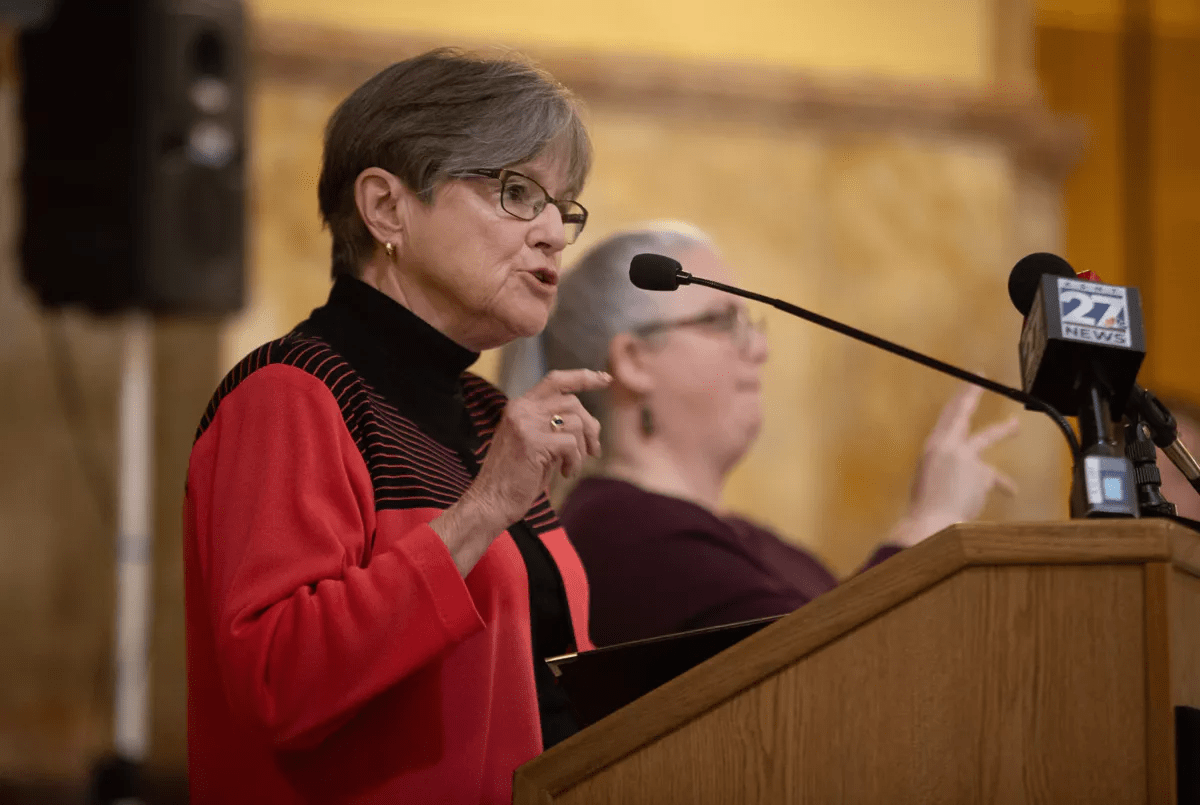
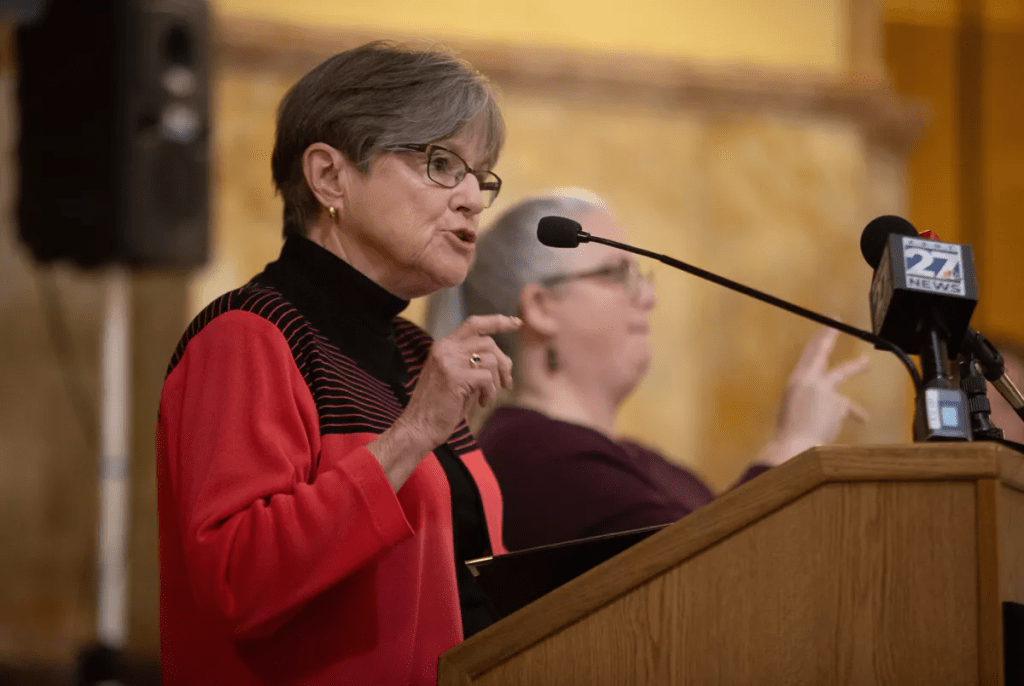
The bill was passed in the state’s House of Representatives with a vote of 92–31 on Tuesday, following unanimous approval in the Kansas Senate last month. While Governor Laura Kelly (D) has not indicated her stance on signing the bill, given the overwhelming support for S.B. 394 in the state legislature, lawmakers likely possess sufficient votes to override a potential veto.
Critics argue that the proposed law may infringe upon the First Amendment’s free speech protections. However, a similar law in Texas was upheld by the Fifth Circuit Court of Appeals last year. The court determined that Texas’s law did not violate the First Amendment, asserting that the state has a legitimate interest in preventing minors from accessing pornography.
 fleeredstates.blog
You must be logged in to post a comment.