
This blog originally appeared at ABC NEWS.
Last year, Governor Laura Kelly vetoed a comparable bill.
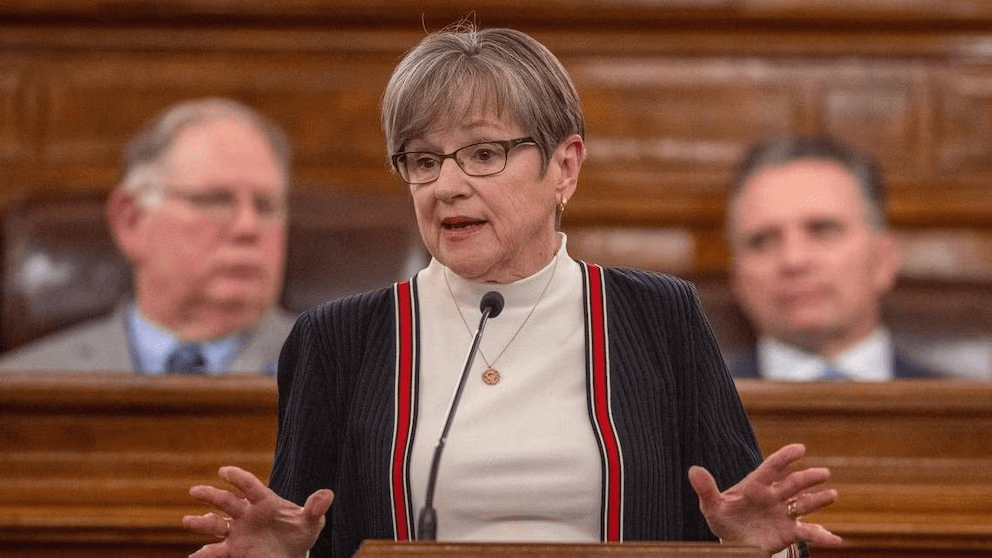
Kansas Governor Laura Kelly, a Democrat, rejected a measure aiming to prohibit gender-affirming medical care for transgender minors within the state.
In her statement on Friday, Kelly denounced the proposed legislation as divisive, asserting that it unfairly targets a small segment of Kansans and imposes governmental interference in parental decision-making regarding child-rearing and healthcare. “I do not view this as a conservative principle, nor does it align with the values of Kansas,” she affirmed.
This isn’t the first time Governor Kelly has stood against such legislation. Almost a year prior, she vetoed a similar bill, citing the adverse economic consequences of discriminatory measures. “Corporations have unequivocally expressed their reluctance to engage with states endorsing discrimination against employees and their families,” she emphasized.
Kelly further emphasized that such bills not only strip away the rights of Kansans but also expose the state to costly legal battles, ultimately undermining its economic prosperity and potential for securing new business ventures.
State GOP legislators are poised to challenge Kelly’s veto, potentially overriding it through legislative means.
To achieve this, the legislature must secure a two-thirds majority vote, equivalent to 84 votes in the House and 27 in the Senate. While the Republican-sponsored bill has garnered sufficient support in the Senate to surpass the threshold required for an override, the situation in the House is more nuanced. In addition to existing support, two House Republicans who were previously marked as absent must also cast their votes in favor of the bill to tip the balance and override the governor’s decision.
The legislation in question places limitations on the use of puberty blockers, a medical intervention utilized by transgender minors to delay the onset of gender-specific characteristics associated with puberty. It’s important to note that puberty blockers are reversible and commonly employed for children undergoing premature puberty.
The bill also places restrictions on hormone therapy, which older minors may utilize to achieve desired changes in certain gender-specific characteristics, such as their body shape, hair distribution, or voice pitch. Unlike puberty blockers, the effects of hormone therapy are less reversible. Additionally, the bill imposes limitations on surgeries, which medical professionals assert are rare for minors and typically only performed in severe cases.
Nevertheless, the legislation provides exceptions for these procedures for minors who are intersex, possess ambiguous sex characteristics, or suffer from disorders of sex development.
Healthcare providers found in violation of these provisions could face civil repercussions and potential revocation of their licenses if the bill becomes law.
Moreover, the bill prohibits state employees or facilities from facilitating a minor’s social transition, which encompasses changes in pronouns, names, attire, and other aspects.
Advocates of gender-affirming care bans argue that such treatments are detrimental to minors. Some proponents advocate for transgender youth to delay accessing gender-affirming care until they reach adulthood.
Kansas Senate President Ty Masterson, a Republican, lauded the legislation’s advancement through the legislature, stating, “The Senate took a firm stand in support of helping and not harming children by making it clear that radical transgender ideology and the mutilation of minors is not legal nor welcome in Kansas.”
Conversely, critics of the gender-affirming care ban characterized the bill as “more extreme and misinformed than similar bills in other parts of the country.” The ACLU of Kansas, in a statement urging Governor Kelly to veto the bill, argued, “In addition to depriving parents and families of medical freedom, this bill actually punishes teachers, doctors, nurses, and more for just doing their jobs by respecting and supporting Kansas kids, including transgender kids.”
Transgender youth, often subjected to gender-related discrimination and experiencing gender dysphoria, are at heightened risk of anxiety, depression, and suicidal ideation and attempts, as per the Centers for Disease Control and Prevention. Moreover, a recent study published in the New England Journal of Medicine concluded that hormone therapy can positively impact the mental health of transgender adolescents and teenagers.
Restrictions on transgender youth’s access to gender-affirming care have been enacted in a minimum of 23 states, with some facing legal contests asserting that these bans infringe upon the rights of the youth, their families, and their healthcare providers. While gender-affirming care bans have been successfully challenged in court in states like Arkansas, Idaho, Florida, and Montana, they have been upheld in others.
The ACLU reports that over 480 bills targeting the LGBTQ community have been introduced nationwide. Of these, at least 135 bills have ceased advancing through state legislatures, as per the ACLU’s findings.
 fleeredstates.blog
You must be logged in to post a comment.