
This blog originally appeared at NPR NEWS.
Last year ended with a surge in book bans
A recent report from PEN America claims that there was a “unprecedented” spike in book bans in the second half of 2023.
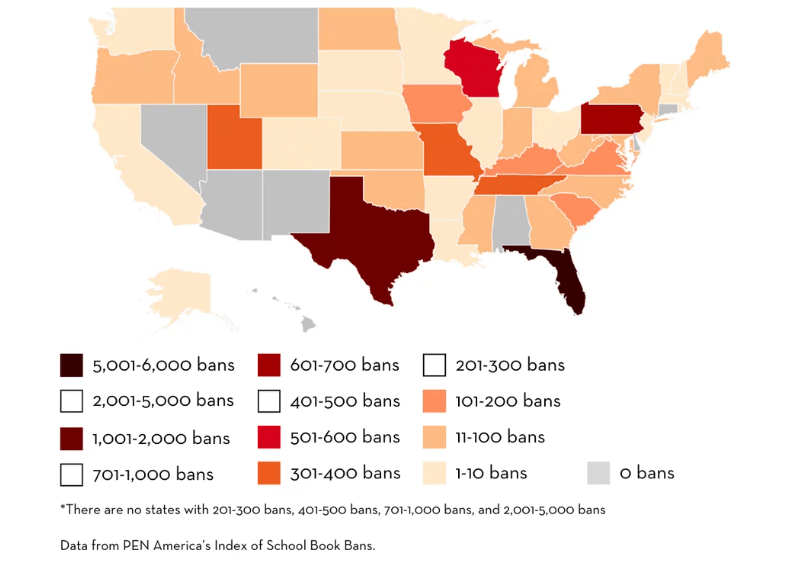
According to the free expression organization, 4,349 book bans occurred in 52 public school districts and 23 states between July and December of last year. According to the research, over those six months, more books were prohibited than during the entire 2022–2023 school year.
The source of PEN America’s ban data is allegedly “publicly available data on district or school websites, news sources, public records requests, and school board minutes.”
Key lessons learned include:
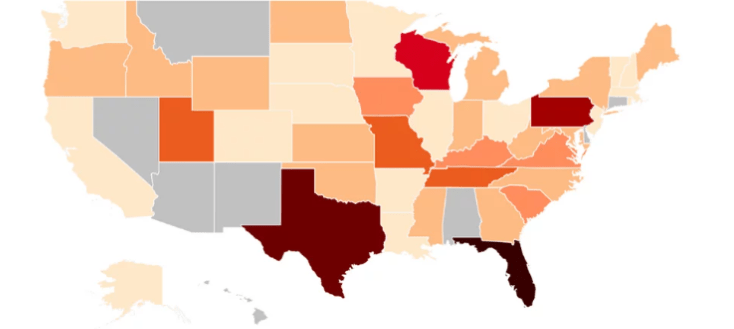
With 3,135 prohibitions spread among 11 of the state’s school districts, Florida accounted for the great bulk of school book bans. An NPR representative for the Florida Department of Education declined to comment.
Book bans are frequently started by a small group of individuals. A Wisconsin school district temporarily banned 444 books after receiving challenges from a single parent.
According to the research, those who advocate for book bans frequently use to “obscenity laws and hyperbolic rhetoric about ‘porn in schools’ to justify banning books about sexual violence and LGBTQ+ topics (and in particular, trans identities).”
The research claims that there has been a comparable upsurge in opposition to the bans. Students, writers, and others are “fighting back in powerful and creative ways.”
Who is enforcing the ban?
According to a survey published in The Washington Post, “Just 11 people were responsible for filing 60 percent” of book challenges in 2021–2022.
Advocates for free speech from across the nation who joined PEN America today to address prohibitions spoke at a news conference about the ostensibly enormous influence of a small but vociferous minority.
Quinlen Schachle, a senior in high school and the president of the Alaska Association of Student Governments, expressed his dismay at attending school board meetings, saying, “It’s, like, [the same] one adult that comes up every day and challenges a new book. It’s not a concerned group of parents coming in droves to these meetings.”
According to Texas Freedom to Read Project Co-Director Laney Hawes, books are frequently prohibited due to “a handful of lists that are being circulated to different school districts” rather than “a parent whose child finds the book and they have a problem with it.”
PEN America describes a book ban as “any action taken against a book based on its content…that leads to a previously accessible book being either completely removed from availability to students, or where access to a book is restricted or diminished.”
The American Enterprise Institute, a conservative think tank, expressed disapproval of PEN America’s April 2022 report on banned literature. “Almost three-quarters of the books that PEN listed as banned were still available in school libraries in the same districts from which PEN claimed they had been banned,” the Education Freedom Institute (AEI) reported in a report.
 fleeredstates.blog
You must be logged in to post a comment.