
Louisiana, Mississippi, and Alabama are all progressing bills that seek to “define sex” in a way that excludes transgender individuals from obtaining any legal recognition of their gender.
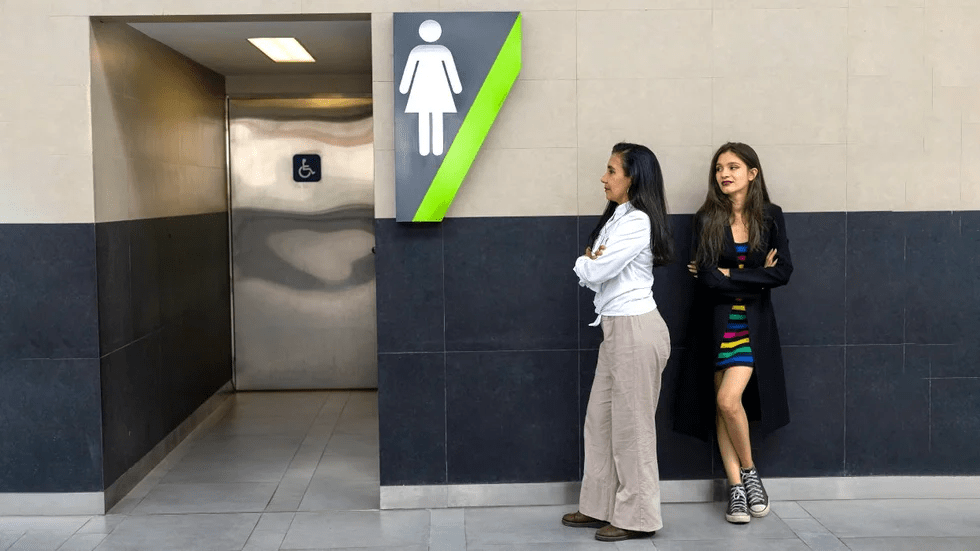
In recent weeks, the momentum behind anti-transgender legislation has subsided in states known for targeting transgender individuals. However, a distinct trend is emerging in the Gulf South, where Louisiana, Mississippi, and Alabama are all moving forward with bills aimed at ending the legal recognition of transgender individuals. These bills seek to redefine sex in a way that excludes transgender individuals, which could have far-reaching consequences for their rights, affecting areas such as birth certificates, driver’s licenses, and access to bathrooms.
The bills, labeled as the “Women’s Bills of Rights” by proponents, lack comprehensive measures to safeguard women’s rights. They do not guarantee access to birth control or abortion, fail to address pay equity, do not support women’s sports programs financially or structurally, and do not include provisions to combat violence against women. Instead, they focus on defining sex based on reproductive capacities and aim to eliminate legal recognition of transgender individuals’ gender identities.
In Louisiana, House Bill 608, backed by an impressive 63 Republican co-sponsors, reflects a staunch opposition to any opposition against it. While its main focus appears to be on restricting bathroom access in various institutions like schools, prisons, and shelters, a specific clause in the bill suggests that “any provision of law enacted by the legislature or any rule adopted by a state agency or other entity subject to the Administrative Procedures Act when applicable to an individual’s sex shall apply those definitions provided in R.S. 9:58.” This provision could potentially lead to the prohibition of changes to birth certificates and driver’s licenses, effectively erasing all legal recognition for transgender individuals. Although the bill hasn’t been slated for a hearing yet, given its considerable support, it’s expected to progress swiftly through the legislative process once initiated.
In Mississippi, Senate Bill 2753 and House Bill 1607 have both cleared their respective chambers. House Bill 1607 outlines sex based on reproductive capacity and curiously states that for transgender individuals, “equal” does not signify “same” or “identical.” Interestingly, the bill doesn’t define “equal,” a term also left vague in similar legislation in other states. This lack of clarity has sparked debates similar to those seen with a comparable bill in Iowa, currently at a standstill in the legislature there partly due to disagreements over that particular line. Regarding Senate Bill 2753, it proposes to restrict bathroom access for transgender individuals in publicly owned facilities like rest stops and the Jackson airport.
In Alabama, House Bills 111 and 130 are likewise aimed at transgender individuals. House Bill 111 dictates sex based on reproductive capacity for all vital statistics purposes. Meanwhile, HB 130, while not explicitly defining sex, is expected to be amended to incorporate language extending “Don’t Say Gay” legislation to Space Camp. This addition follows conservative media uproar over a transgender individual’s employment at the state’s esteemed Space Camp and could potentially be utilized to discriminate against transgender employees in state facilities.
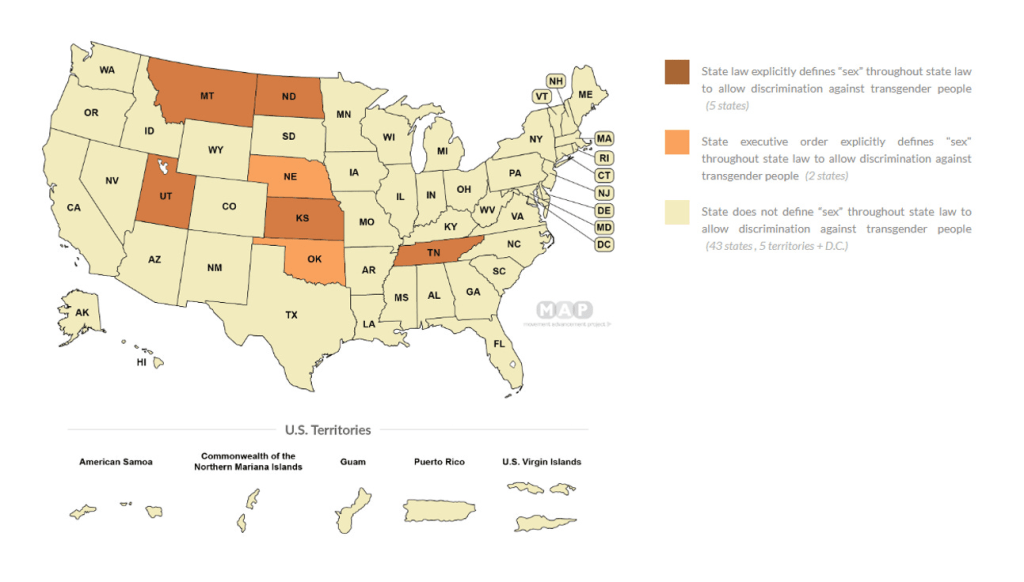
To date, only five states have enacted comparable laws: Kansas, Montana, North Dakota, Tennessee, and Utah. In Kansas, a judge recently sided with Attorney General Kris Kobach, ruling that driver’s licenses and birth certificates must display transgender individuals’ assigned sex at birth, citing state law. Meanwhile, even though Florida lacks such legislation, alterations to regulations have hindered transgender individuals’ ability to update their driver’s licenses; allegedly, Florida residents face similar challenges in changing their birth certificates. Moreover, Oklahoma and Nebraska have issued executive orders delineating sex in a similar manner.
You can view a map of states with such legislation from the Movement Advancement Project here:
If enacted, these bills would lead to a growing list of states refusing legal recognition of transgender individuals. This carries significant implications: individuals who have already updated their identity documents may see them reverted to their assigned sex at birth. These state-issued IDs could be used to enforce further anti-transgender measures like bathroom bans. Additionally, this discrepancy between state and federal documents would pose challenges for transgender individuals who have aligned their federal IDs with their gender identity.
There have been appeals for a federal legal intervention in response to bills eliminating gender markers and denying legal recognition to transgender individuals. For instance, in Florida, the entire Democratic congressional delegation urged the Biden Administration to utilize the Real ID Act, which requires “gender” to be indicated on driver’s licenses. As of Monday, there has been no response to this request.
Several lawsuits are currently in progress, seeking to overturn the laws in court where they have been enacted. However, the legal outcomes of these cases are currently pending.
 fleeredstates.blog
Leave a comment