
This blog originally appeared at CNA.
Thailand has launched a series of new visa programs designed to simplify long-term stays and remote work. This move aligns with a global trend where governments are focusing on attracting higher-spending visitors with a smaller environmental impact.

Steve Lim, a content creator, has made Thailand his home over the past two years. (Photo: Supplied)
BANGKOK: Content creator Steve Lim never intended to settle in Thailand—his original destination was New York. However, during a brief stopover in Bangkok in 2022, his U.S. visa plans collapsed, leaving the New Zealand native faced with unexpected life-changing decisions.
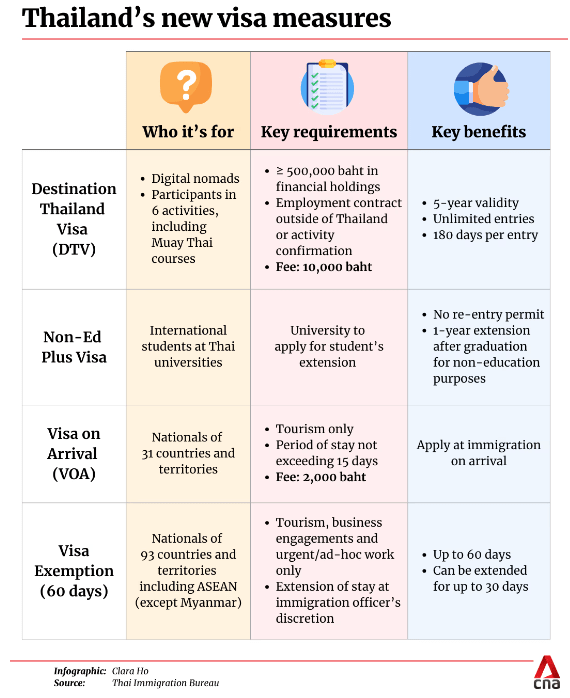
For Steve Lim, who has spent most of his time in Bangkok dealing with the unpredictability of short-term visas, the introduction of a visa tailored to his work needs is a relief.
“I started out on a holiday visa, constantly doing visa runs in and out of the country. It eventually became exhausting,” he said, describing a situation familiar to many expatriates and digital nomads living in Thailand.
After about six or seven months in Thailand, Lim switched to an education visa, allowing him to stay in the country while learning Thai remotely through a local institution. However, he knew it was only a temporary solution.
Within his personal network, particularly among those in the creative industry both in Thailand and abroad, Lim noticed an “influx of people” eager to secure their future in the country or come for the first time using the DTV.
“Southeast Asia has long attracted online remote workers, and for the past few years, there hasn’t been much recognition of these workers,” he explained. “Now, it’s great that we’re finally being acknowledged.”
Lim also appreciated the flexibility offered by the new visa. “During COVID, many companies and individuals realized that you don’t need to spend eight or nine hours in an office. You can work from home, travel, and still get the job done,” he added.
VISAS ARE ‘TRIED AND TESTED’
The travel industry has clearly shifted toward longer stays and higher spending over the past few years. Although Thailand’s overall visitor numbers have not yet returned to pre-COVID 2019 levels, data indicates a rise in people opting for extended stays.
Olivier Ponti, director of intelligence and marketing at travel data firm ForwardKeys, noted that a quarter of all current visitors to Thailand are staying for more than two weeks. He added that stays of 22 or more nights have fully recovered to 2019 levels, while short-term visits remain 19 percent lower.
“Visas are undoubtedly a tried and tested method for boosting tourism to a destination. Since the pandemic, many locations have introduced new visas to cater to the surge in remote workers,” Ponti said.
“The rise of digital nomads and the shift towards remote working will certainly have a global impact, including in Thailand,” Ponti said.
He also pointed out that similar visa schemes launched in other countries, like Indonesia’s B211a visa and the UAE’s Virtual Working Program, have led to positive growth in long-term visitors, even as short-term tourism remains sluggish.
In Southeast Asia, Malaysia now offers a 12-month stay for qualified digital nomads through the DE Rantau Nomad Pass, and the Philippines has plans to introduce a similar scheme.
Peter Guis, owner of TMT Visa Service Phuket, noted that interest in Thailand’s new Destination Thailand Visa (DTV) has been immediate, offering a flexible and affordable option for those who may have previously hesitated to stay longer due to unclear visa regulations. However, he acknowledged that since the DTV is still new, there are uncertainties about how it will function in the long run.
“The DTV is a game changer in many ways, but it’s still unclear just how much of one it will be. There will definitely be positive effects,” said Peter Guis.
However, he cautioned that the government needs to closely monitor the visa’s impact. “It’s also likely to attract individuals who may not have the best intentions for a long-term stay.”
Stephen Noton, international marketing advisor for Tourism.co.th, noted that broader economic factors will play a significant role in determining whether Thailand can attract as many international visitors as it hopes. For instance, Chinese travelers have been slower to return post-pandemic, despite visa schemes designed to ease their entry.
“It’s not just about visas. Global economic conditions, inflation, airline prices, and political stability also have a major influence,” Noton said. “If people feel uncertain about spending or face other barriers, the expected growth might not be as large as anticipated.”
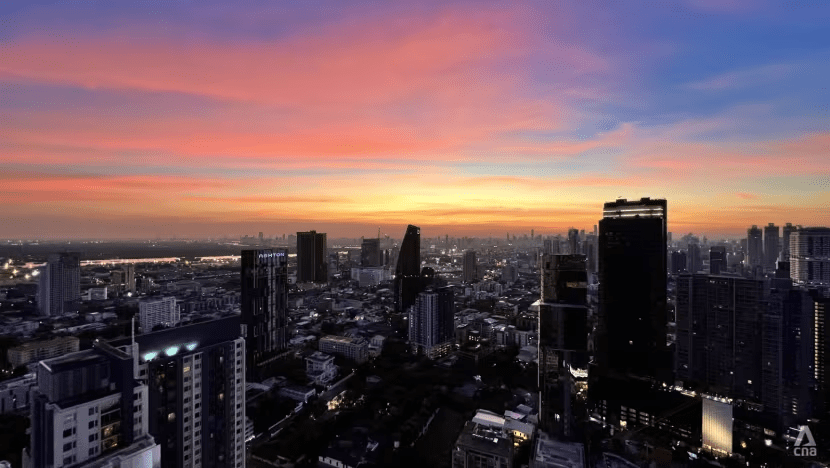
Thailand is increasingly focused on attracting long-stay travelers, as part of its broader strategy to boost tourism. By offering more flexible visa options and targeting remote workers, digital nomads, and high-spending visitors, the country hopes to reshape its tourism landscape and recover from the pandemic’s impact on short-term tourism.
QUALITY OVER QUANTITY
Attracting travelers who prioritize “quality over quantity” brings both revenue and social benefits, according to Paul Pruangkarn, chief of staff at the Pacific Asia Travel Association (PATA).
“If I’m focused on revenue generation, I’ll definitely target long-haul markets and digital nomads. They tend to stay longer and spend more,” he explained.
He also highlighted the recent backlash from local communities against tourists, citing incidents in Barcelona where residents protested against international visitors due to rising rents driven by Airbnb listings, the closure of local businesses in favor of tourist-centric enterprises, and poor conditions for service workers.
The Thai government has set an ambitious target of 40 million visitors for 2024. Paul Pruangkarn emphasized the need to “walk a tightrope” between allowing the private sector—such as hotels and airlines—to benefit from high visitor numbers while ensuring a sustainable industry and social cohesion.
“It’s crucial to balance people, profit, and the planet, especially now that everyone is rushing to attract visitors and generate revenue post-COVID,” he noted.
This relentless pursuit of growth can strain infrastructure and negatively impact the tourist experience, a concern that longer stays could help mitigate. To address these issues, Thailand’s main airports are set to undergo capacity expansions in the coming years, including a major upgrade to U-Tapao International Airport near Pattaya, expected to start this year, and a high-speed rail network connecting it with Bangkok’s Suvarnabhumi and Don Mueang airports, scheduled for 2025.
“There is pressure on our entry and exit infrastructure, particularly at popular airports and border crossings during peak seasons. A shift towards quality tourism over quantity could alleviate some of these pressures,” said Nithee Seeprae from the Tourism Authority of Thailand (TAT).
The TAT plans to collaborate with tourism partners to offer special packages for longer stays and encourage year-round travel. “Longer stays provide more stable tourism income, helping to smooth out seasonal fluctuations,” he added.
“When we refer to ‘quality tourists,’ we mean travelers who contribute more than just economic value. They stay longer, immerse themselves in local culture, and prioritize sustainable and responsible travel practices. They seek meaningful experiences that allow for deeper connections with the places they visit,” he explained.
In a highly competitive tourism sector, Pruangkarn expects governments to continue adapting their immigration policies. While Thailand may have been slower than others to welcome this new wave of workers, he believes the country recognizes the value they bring.
“Am I surprised it took so long? Yes. Do I understand why it took so long? Of course; there are challenges,” he said. “But you have to stay competitive. You need to ask yourself, ‘What can I do to ensure I’m one step ahead of my neighbor?’”
 fleeredstates.blog
Leave a comment