
This blog originally appeared at Support the Guardian
Activists claim investigation by Ron DeSantis’ agency into potential fraud is an act of voter intimidation.
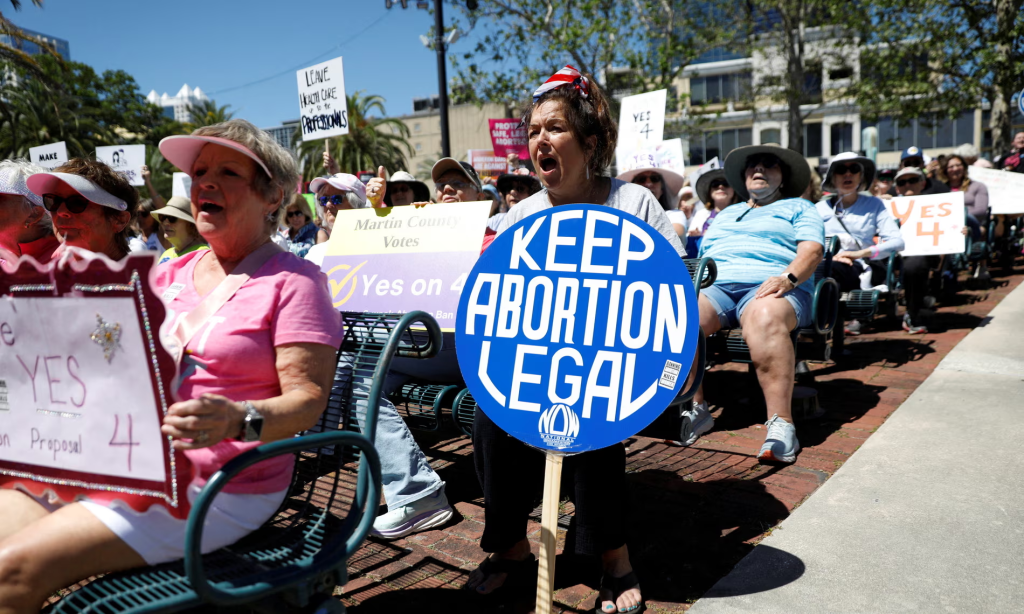
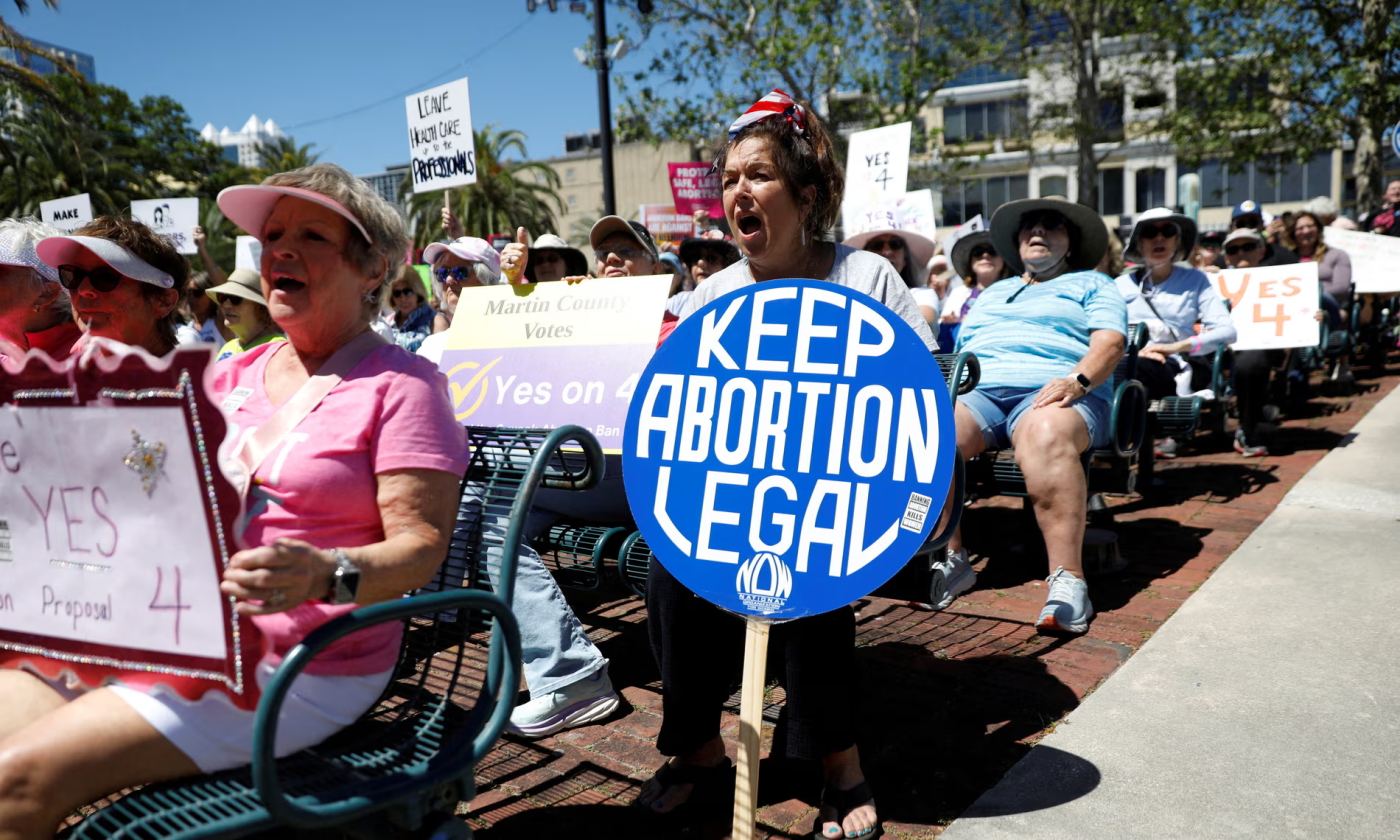
Florida law enforcement officials are investigating voters who signed a petition to place a high-profile abortion rights measure on this fall’s ballot, with officers reportedly showing up unannounced at residents’ homes. Activists argue this approach is intended to intimidate voters.
Organizers submitted over 900,000 signatures in January to secure a measure that would enshrine abortion rights in Florida’s constitution. While the deadline to challenge these signatures has passed, a state agency established by Governor Ron DeSantis to investigate voter fraud has initiated a probe into possible fraud during the signature-gathering process.
Isaac Menasche, a Fort Myers resident, signed the petition months ago at a local farmer’s market. He recalled writing down his name, birthday, and address, and quickly scribbling his signature. Last week, a law enforcement officer appeared at his door with a copy of his signature, asking him to confirm its authenticity, which Menasche did.
Menasche described the experience as unsettling. “The experience left me shaken. What troubled me was that the officer had a folder on me with about 10 pages of my personal information. I saw a copy of my driver’s license and the petition I signed,” he shared in a Facebook post. “It was clear that significant resources were used to confirm whether I had indeed signed the petition. I wonder if the same effort would be made if the petition were for a less controversial issue.”
Governor Ron DeSantis has defended the investigation, stating at a press conference, “They’re doing what they’re supposed to do.” He explained that discrepancies in signatures could arise, and if voters confirm they signed, the investigation would likely conclude. “That is absolutely possible. And if that’s what you say, I think that’s probably the end of it,” DeSantis added.
The investigation, however, coincides with broader efforts by DeSantis and Florida Republicans to block the amendment, which requires 60% voter support to pass this fall. Last week, the Florida Agency for Health Care Administration posted a webpage criticizing the amendment, a move DeSantis denied amounted to electioneering. In response, civil rights groups filed a lawsuit on Thursday, accusing the state of using the agency’s messaging to influence voters.
The Florida supreme court has also permitted a controversial financial impact statement, criticized for being misleading, to be printed alongside the amendment on the ballot.
In Florida, local election officials are responsible for verifying signatures submitted with petitions. According to Lori Edwards, the supervisor of elections in Polk County, groups sponsoring petitions must cover the costs of the verification process. This involves matching the voter’s signature, name, address, and date of birth with their registration details. Edwards noted that her office had not been asked for any information regarding the abortion amendment.
The Office of Election Crimes and Security, a multimillion-dollar agency established by DeSantis to investigate voter fraud, reported earlier this year that it had been “inundated with an alarming amount of fraud related to constitutional initiative petitions.”
However, Mary Jane Arrington, supervisor of elections in Osceola County, told the Associated Press that her office had never been asked to review already validated signatures in her 16 years in the role, raising further questions about the state’s approach to this investigation.
Florida Democrats and voting rights groups have sharply criticized DeSantis for the investigation, accusing him of using it as a blatant attempt to intimidate voters. They argue that the state’s focus on verifying signatures long after they’ve been validated is part of a broader effort to suppress participation in the ballot initiative, particularly on such a contentious issue as abortion rights.
Critics point out that this investigation, combined with other actions by DeSantis’ administration, such as the misleading financial impact statement and the Florida Agency for Health Care Administration’s public opposition to the amendment, shows a coordinated attempt to influence the outcome of the vote. Many view these tactics as part of a wider strategy by the governor and state Republicans to undermine the ballot measure and discourage voter engagement.
“This is all about theater, this is all about intimidation of the voters as people are about to go to the ballot box,” said Nikki Fried, chair of the Florida Democratic Party, during a press conference on Monday, denouncing the ongoing investigation.
Earlier this summer, the Florida Department of State informed the Florida Department of Law Enforcement (FDLE) that it had opened an investigation into over 40 individuals paid to circulate abortion-related petitions. The department claimed to have obtained “credible information” that several petition circulators in Palm Beach County had submitted fraudulent signatures. According to a letter from the department, the local supervisor of elections received complaints from voters who said they did not sign the petitions. The letter further alleged that some circulators forged signatures of deceased individuals and inserted personal information without consent.
The Department of State provided petition forms allegedly containing fraudulent signatures, with the voter details redacted, and also released three complaints from voters claiming they had not signed the petitions. Mark Ard, spokesperson for the Florida Department of State, said the agency has a duty to protect Florida citizens from fraud and will continue the investigation, referring cases to FDLE as needed.
Floridians Protecting Freedom, the group behind the amendment, hired PCI Consultants to manage most of the signature collection. Angelo Paparella, president of PCI Consultants, explained that his company reviewed all signatures before submitting them to election officials and flagged any suspicious ones. He acknowledged that a tiny fraction of the more than 1 million signatures collected appeared fraudulent but emphasized that this did not undermine the legitimacy of the vast majority of signatures.
“If they find someone who committed any kind of forgeries, then prosecute them,” Paparella said. “It takes nothing away from the nearly million valid signatures that the counties found.”
It remains unclear how many voters have been affected by the investigation, but reports indicate that at least six counties have been asked to provide information on signatures that had already been verified.
One of the counties involved is Alachua County, where state officials requested to review 6,141 petitions, all submitted by six circulators suspected of submitting fraudulent signatures. In Osceola County, the state sought to review around 1,850 petitions from specific circulators, according to Supervisor Mary Jane Arrington’s office. Similarly, in Hillsborough County, election officials were asked to review nearly 7,000 petitions.
Palm Beach County saw one of the largest requests, with state officials wanting to review 17,000 signatures, as reported by the Tampa Bay Times. In Orange County, home to Orlando, officials requested the review of 11,500 petitions. This widespread scrutiny of signatures across multiple counties is part of the state’s larger investigation into potential fraud surrounding the abortion ballot initiative.
The investigation is the latest action by the Office of Election Crimes and Security, an agency that has faced criticism since its inception, as instances of voter fraud are extremely rare. In 2022, the agency came under fire for arresting individuals with felony convictions who had voted, many of whom appeared confused about their eligibility. The agency has also targeted voter registration groups, issuing fines for relatively minor errors, which has led many of these groups to stop their activities in Florida altogether.
Brad Ashwell, director of the Florida chapter of All Voting is Local, a voting rights organization, condemned the investigation, saying, “It’s been clear from day one that the purpose of the election police was to harass voters who don’t share the same viewpoints as the governor.”
Ashwell added, “By going after a petition for Amendment 4, which is already on the ballot, Governor DeSantis is undermining the will of voters and trampling over their democratic freedoms for his own political gain.”
 fleeredstates.blog
Leave a comment