
*This is reported by Deseret News.
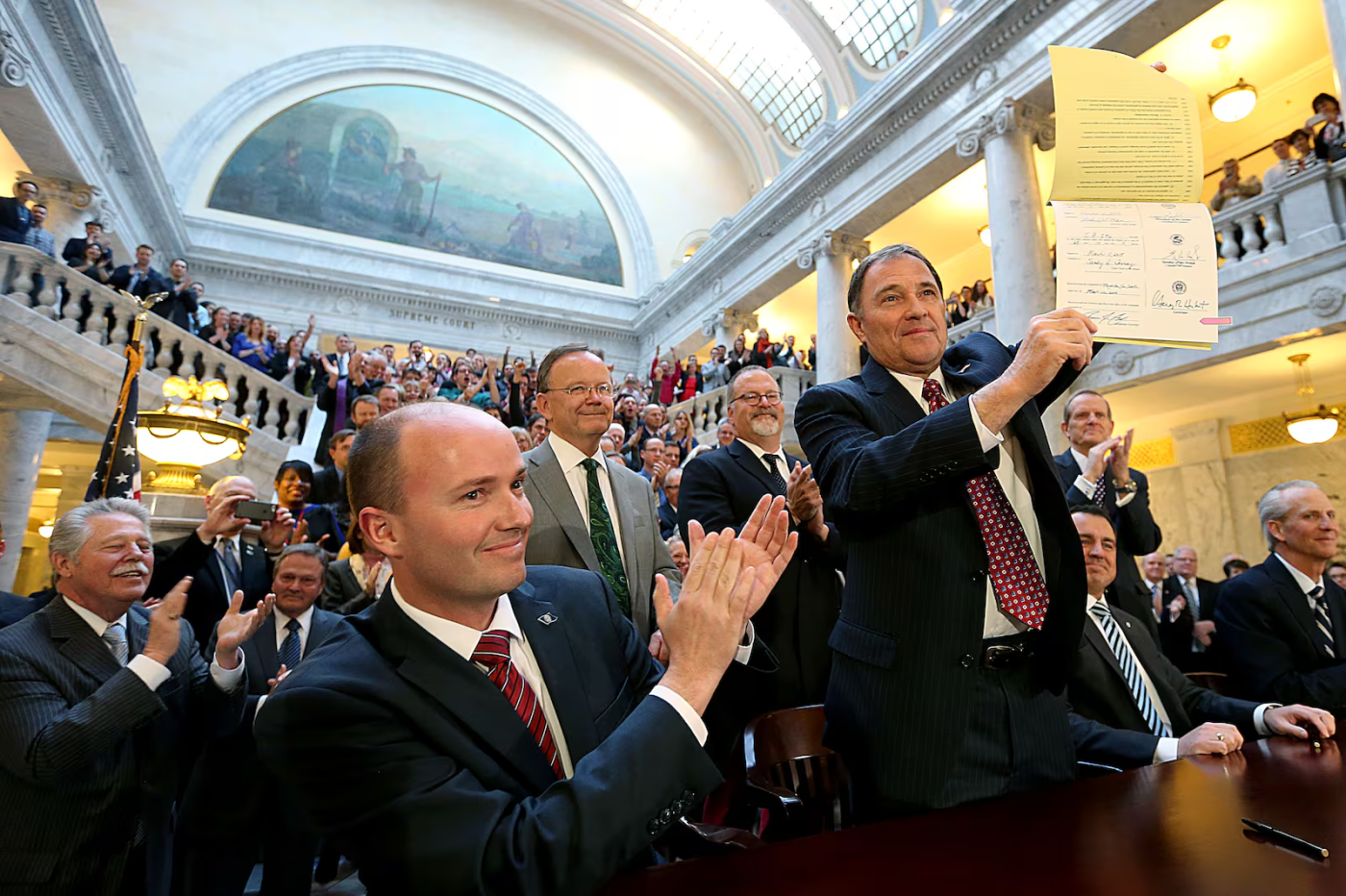
Ten years ago, Utah passed a landmark pair of bills that combined religious freedom protections with LGBTQ nondiscrimination protections.
Five years ago, many of the people behind what became known as the Utah Compromise spoke to me about why their balanced approach to religion and LGBTQ rights hadn’t yet caught on nationwide.
Last week, I checked in again with one of the key players to hear about where things stand today and whether she’s still hopeful that Utah’s “fairness for all” approach will spread to other states.
Robin Fretwell Wilson, a professor of law at the University of Illinois College of Law, told me that Utah remains united behind the Utah Compromise and has passed several more carefully constructed religion-related policies in recent years on topics like adoption and conversion therapy.
But she added that today, just like five years ago, it’s rare to find a lawmaker outside the Beehive State who is willing to plant their flag in the middle ground between opposing groups and champion balanced solutions to contentious conflicts.
“Right now, we’re mining a streak of meanness,” Wilson said. “Fairness for all doesn’t feel like it’s in the air.”
From 2015 to 2020, Wilson and other stakeholders met with policymakers from 10 to 15 other states about the fairness for all approach to lawmaking.
That list hasn’t grown over the past five years, and the federal Fairness for All Act from 2019, which drew inspiration from the Utah Compromise, hasn’t advanced in Washington.
However, the act’s supporters did score a big win in December 2022 when federal lawmakers passed the Respect for Marriage Act, which strengthened legal protections for married same-sex and interracial couples while affirming religious freedom rights.
The Respect for Marriage Act built on aspects of the Fairness for All Act and Utah Compromise, and it likely wouldn’t have passed if work hadn’t been done in the years preceding its introduction to educate lawmakers about the value of balancing religious freedom and gay rights, Wilson said.
But although it was significant, it feels like a missed opportunity to Wilson and others.
That’s because, instead of holding it up as an example of what’s possible when religious liberty advocates and LGBTQ rights advocates work together, the Biden administration chose to put the spotlight on the importance of protecting gay marriage.
“You can’t be doing something that marries up the interest of gay folks and religious folks on that scale and forget to say anything about the religious folks,” said Wilson, who was at the White House ceremony for the law.
Even before that event, Wilson placed her hope in state rather than federal policymakers because she’s long believed they’re better-positioned to find balance.
Today, as in 2020, as in 2015, she believes that states like Utah will lead the way to a world in which people of faith and LGBTQ individuals — and LGBTQ individuals who are people of faith — can live authentically in public and private without fear of retribution.
“I’ve never really placed my hopes in Congress. I’ve always placed my hope in state legislators,” Wilson said. “I’m hopeful because I’ve seen fairness for all become a script for Utah.”
 fleeredstates.blog
Leave a comment