A blog for LGBTQIA+ migrating to more welcoming states or counties
Author: Bob McCranie
I am so proud to run Texas Pride Realty Group. We set out on a mission in 2009 to serve the diverse communities of Texas and to hire kick-ass agents who practice the highest ethics and professionalism. I believe that the agent's role is to help the consumer make well-educated decisions, even if those decisions lead away from a purchase or sale.
I believe that education is vital in this industry. I currently have over 1300 hours of real estate courses on my transcript with the State of Texas. Additionally, I am a Real Estate Business Coach at Tom Ferry International, the largest-real-estate specific coaching company in the world. I coach agents in the US and Canada, and have coached clients in Australia, New Zealand, Brazil, and Switzerland. I also have knowledge of the UK and Irish markets.
Opening Texas Pride Realty was always a goal of mine and I am working night and day to be sure it is successful. The best way to do that is to be sure clients are satisfied and agents are busy. What better legacy could someone leave in this industry than a group of well-trained, high-quality brokers who do your job better than you?
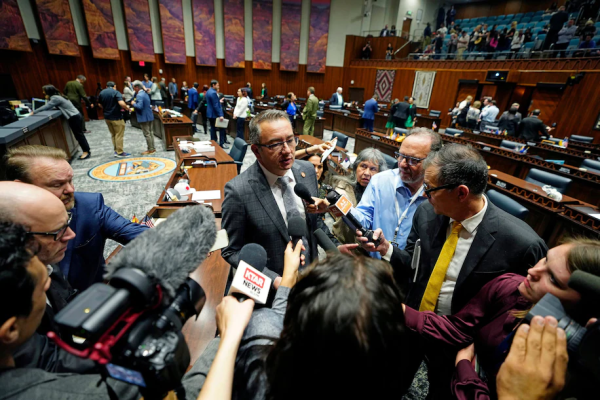
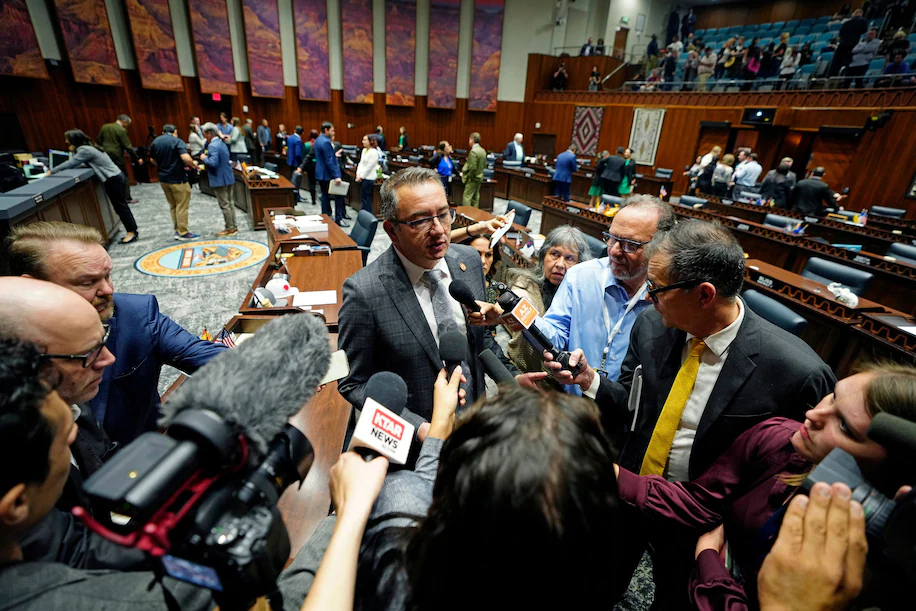
Arizona House votes to repeal Civil War-era abortion ban. Three GOP members defected to side with Democrats in the vote. Arizona’s governor pledges to sign if approved by the Senate.
On Wednesday, the Arizona House made a significant move by voting to repeal a long-standing ban on almost all abortions, dating back to the Civil War era, with a potential effective date as early as June 8. The legislation is now on its way to the state Senate, where it could receive final approval as soon as next week.
Originally enacted in 1864, the abortion law briefly regained relevance after the overturning of Roe v. Wade in 2022 but was swiftly halted by judicial intervention. However, on April 9, the state’s highest court revived the law, sparking nationwide controversy and causing considerable political concern among Republicans. Many fear that the reinstated ban may negatively impact their electoral prospects this year, including in the upcoming presidential race.
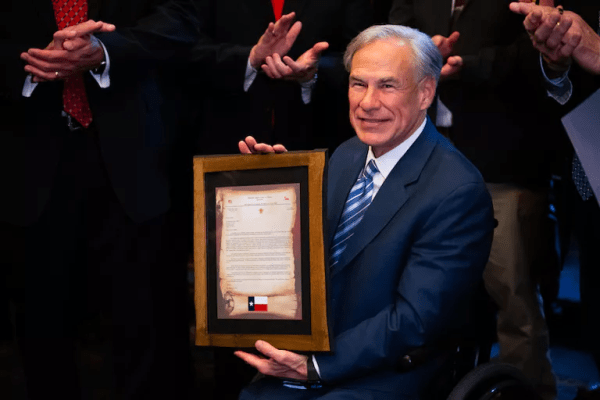
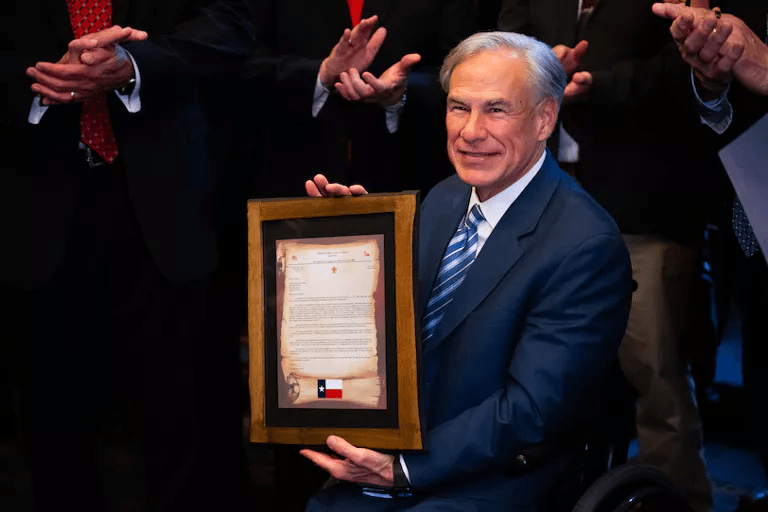
Greg Abbott criticized a teacher for wearing dresses to school events, suggesting that the act was an attempt to promote the normalization of gender nonconformity.
Texas Governor Greg Abbott (R) has expressed his intention to “eliminate” transgender and gender non-conforming educators from the educational system in his state. This declaration potentially conflicts with a 2020 Supreme Court ruling that prohibits discrimination against LGBTQ+ individuals in the workplace, including on the basis of gender identity.
During a speech at the Young Conservatives of Texas convention in Dallas last Friday, Abbott cited the case of Rachmad Tjachyadi, a former teacher in Lewisville, Texas. Tjachyadi resigned in March after facing harassment from Chaya Raichik, an influencer known for spreading anti-LGBTQ+ sentiments on social media under the username “Libs of TikTok.”
Abbott recounted the situation, stating, “They had a high school teacher who was a man who would go to school dressed as a woman in a dress, high heels, and makeup.” He then questioned the impact on students’ focus in the classroom, implying that such attire might distract from the subject being taught.
Abbott persisted, emphasizing, “This individual, identifying as a man, adopting the attire of a woman within a Texas public high school, seeks to promote the acceptance of such behavior as normal.” He firmly stated, “This behavior is not acceptable, and it’s precisely what we aim to eradicate in Texas.”
In March, Raichik shared photos of Tjachyadi dressed in feminine attire during school functions, baselessly alleging a “fetish for wearing women’s clothing.”
These posts circulated among anti-LGBTQ+ circles, including Abbott, who seized on the “controversy” to advocate for school voucher programs. In an X post, he declared, “No parent should be compelled by the state to enroll their child in this school.” (Critics argue that such vouchers divert public funds away from public schools to private institutions, which may reject certain students.)
Despite over 20,000 signatures on a petition supporting Tjachyadi and an internal investigation by the Lewisville Independent School District finding no policy violations, he chose to resign. Parents lamented that targeting him ultimately disadvantaged students by depriving them of a dedicated educator.
Abbott’s vow to eradicate the presence of transgender and gender non-conforming educators contradicts the 2020 Supreme Court ruling in Bostock v. Clayton County, which deemed anti-LGBTQ+ workplace discrimination unlawful under federal sex-based discrimination laws.
Nevertheless, Matt Rinaldi, the chairman of the Republican Party of Texas, echoed Abbott’s stance, affirming via X, “@GregAbbott_TX is absolutely correct.”
Reflecting on Abbott’s comments, trans investigative journalist Erin Reed remarked, “Many are observing whether the Republican Party will heavily rely on anti-trans politics leading up to the 2024 elections. This indicates that at least some factions in Texas might do so. However, history shows that such campaigning failed resoundingly in the 2022 and 2023 elections.”
Abbott has a long history of anti-LGBTQ+ actions
During his governorship, Abbott has made several attempts to classify gender-affirming care as a form of child abuse, aiming to empower the state to remove transgender children from supportive families. However, the state supreme court has intervened, halting the implementation of this order for numerous families that were under investigation and supportive of their transgender children.
Under Abbott’s leadership, the state has prohibited doctors from offering gender-affirming care to transgender minors, despite widespread support for such care from major medical associations in the U.S. Additionally, transgender students are barred from participating in school sports according to their gender identity, and the state government has even sought access to private medical records of transgender teenagers.
Abbott also signed a ban on drag performances last June, but by September, a judge deemed the law unconstitutional. Furthermore, he endorsed legislation banning “sexually explicit” materials in school libraries, which has been used to target LGBTQ+ literature. Additionally, he supported a law prohibiting local governments from implementing anti-discrimination measures for LGBTQ+ individuals, and he signed off on a ban on diversity programs at public universities, resulting in the elimination of LGBTQ+ spaces and HIV testing programs at these institutions.
These discriminatory policies led LGBTQ+ advocacy groups to petition for a U.N. investigation into Texas for potential human rights violations against the LGBTQ+ community.
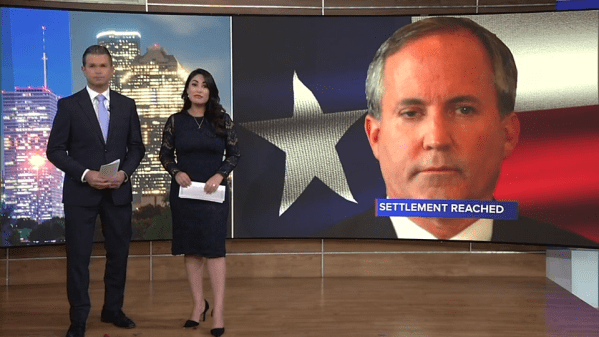
In Houston, Texas, Attorney General Ken Paxton has resolved a dispute with a children’s hospital in Washington State. Paxton had been seeking data regarding Texas patients possibly accessing gender-affirming treatment, a practice prohibited in Texas. The attorney general’s office, along with Seattle Children’s Hospital, declared a resolution on Monday. Paxton will abandon his pursuit of information on transgender patients from Texas, while the hospital will relinquish its operating license in the state. Additionally, hospital officials testified that they neither treat transgender youth from Texas on-site nor remotely.
A state law passed in September prohibits gender-affirming medical care for transgender youth, such as puberty blockers, hormone therapy, and surgery. Following a settlement with Seattle Children’s Hospital, Paxton issued the following statement:
“Seattle Children’s Hospital appeared to violate Texas law and initially attempted to avoid responsibility during the investigation. Upon our inquiries, they chose to exit Texas and forego conducting business here. Let this reaffirm our stance: medical practitioners in Texas must adhere to our regulations. We staunchly defend children in Texas from potentially harmful, experimental ‘gender transition’ interventions that could lead to significant adverse effects.”
The American Academy of Pediatrics and other leading medical associations advocate for providing transgender adolescents with access to gender-affirming medical care. Meanwhile, Paxton’s office is embroiled in a legal dispute regarding whether the state can initiate child abuse inquiries against parents who have facilitated such care for their children.
The sentiment echoed by the student resonates with the experiences of many: officials at Owasso High School turn a blind eye to bullying.
Just over two months following the tragic passing of Nex Benedict, a transgender teenager, the Human Rights Campaign (HRC) has unveiled a new advertisement. In it, an alum of Owasso High School recounts firsthand the culture of anti-LGBTQ+ bullying she encountered at the same school Benedict attended.
Benedict’s passing on February 8 occurred shortly after a violent altercation with three fellow students in an Owasso High School bathroom. While ruled a likely suicide by the Oklahoma state medical examiner, the incident has sparked national attention to the challenges faced by LGBTQ+ students within the Owasso school district and across Oklahoma. Benedict, described by friends as identifying as transgender and predominantly using he/him pronouns, had reported being targeted by the three students, who allegedly assaulted him because of his gender identity until he lost consciousness.
LGBTQ+ advocacy groups have condemned both the school and the Owasso Police Department for their handling of the altercation preceding Nex Benedict’s tragic passing, as well as the pervasive culture of anti-LGBTQ+ bullying reported by current and former students. In February, Human Rights Campaign (HRC) President Kelley Robinson urged Attorney General Merrick Garland to initiate a Department of Justice investigation into Benedict’s death. Robinson also reached out to U.S. Secretary of Education Miguel Cardona, urging the department to utilize its enforcement tools to prevent similar tragedies in the future. In March, the U.S. Department of Education announced an investigation into the Owasso Public School District.
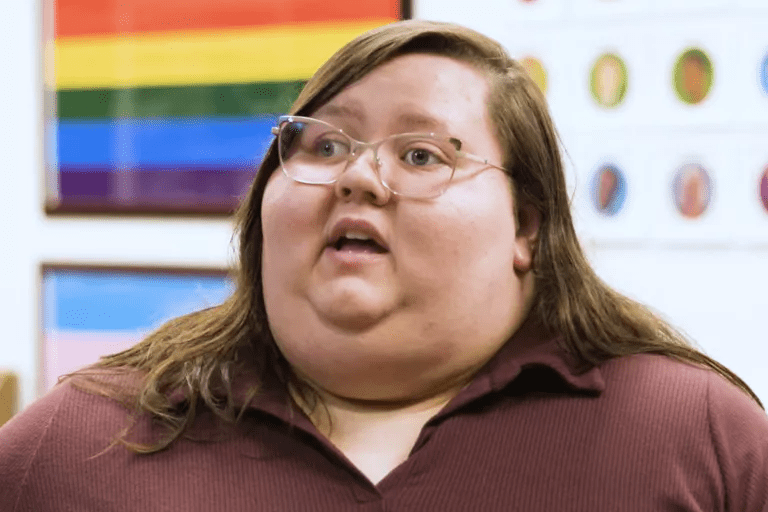
The HRC advertisement, unveiled on Monday, features Marley H., a 2022 Owasso graduate, who sheds light on school officials’ neglect in addressing anti-LGBTQ+ bullying. Recounting an incident on a school trip, Marley describes a teacher’s refusal to intervene when another student repeatedly used derogatory language targeting her and her peers.
“It’s painful to realize that not only do your teachers fail to support you personally, but if a student bullies, harasses, or belittles you, they won’t take action,” she shares. “It fosters an environment where reporting issues feels futile.”
Addressing teachers who turn a blind eye to bullying and harassment, Marley emphasizes, “Consider the consequences faced by students like Nex Benedict. That’s the severity of the situation. That’s the result when you witness something and remain silent.”
Marley’s testimony echoes the sentiments of other current and former Owasso students who participated in a walkout in late February. Despite Owasso Public Schools’ official prohibition of bullying in its student conduct code, students told NBC News they were unaware of the district’s bullying policies and doubted the school’s willingness to address complaints.
“Even if an incident occurs, there’s no incentive to approach administrators or teachers because nothing will change,” remarked Ally, a senior at Owasso and a friend of Benedict’s. “I’ve witnessed this repeatedly with my friends.”
Marley points out a “trickle-down effect,” wherein students are exposed to anti-LGBTQ+ rhetoric from their parents, who, in turn, hear similar rhetoric from Oklahoma Republicans advocating anti-LGBTQ+ legislation. “These children hear their parents’ words. And these children go to school. The rhetoric passed down from elected officials to parents to children then impacts entire school districts.”
At the forefront of these elected officials is Oklahoma’s Superintendent of Public Instruction, Ryan Walters (R), known for his anti-LGBTQ+ stance. Even prior to Benedict’s tragic passing gaining national attention, Walters faced criticism from both Republican and Democratic state lawmakers for appointing Chaya Raichik, the figure behind the anti-LGBTQ+ platform “Libs of TikTok,” to Oklahoma’s library advisory committee in January.
Following Benedict’s death, a letter dated February 28 addressed to the Oklahoma state legislature, signed by over 350 public figures and LGBTQ+ rights groups, called for Walters’ removal. Additionally, in March, the Human Rights Campaign (HRC) initiated “Walters Watch,” a campaign aimed at holding Walters accountable for what the organization perceives as his “extremist rhetoric and mismanagement of Oklahoma schools,” contributing to a climate of anti-LGBTQ+ bullying and harassment.
Kelley Robinson, in a statement, acknowledged the courage of students from Owasso and elsewhere in Oklahoma who have spoken out against bullying and harassment perpetuated by figures like Ryan Walters. Robinson emphasized Marley’s story as both heartbreaking and enraging, asserting that there is a path forward. She emphasized the importance of speaking out against injustices, making it harder for the truth to be ignored. Robinson concluded that the first step towards healing is for Ryan Walters to step down.
For those in crisis or in need of support, assistance is available. You can call or text 988, or chat at 988lifeline.org. The Trans Lifeline (1-877-565-8860) offers support staffed by transgender individuals without involving law enforcement. The Trevor Project provides a safe and judgment-free platform for youth to chat, text (678-678), or call (1-866-488-7386). Support is offered in both English and Spanish at all three resources.
One expert warned that if the bill were to pass, it would have a “catastrophic” impact on Iraq’s relations with the West.
Last week, Iraq’s Parliament deferred a scheduled vote on a harsh anti-LGBTQ+ legislation that could have led to the death penalty for same-sex acts. The proposed bill, intended as an amendment to an existing anti-prostitution law, was slated as the second item on the agenda during last Monday’s parliamentary session, as reported by Reuters. However, due to time constraints and disagreements over amendments, the vote was postponed, as indicated by two sources.
Beyond prescribing the death penalty or life imprisonment for same-sex relations, the bill also stipulates a minimum seven-year prison term for “promoting homosexuality,” a term left undefined in the legislation. Furthermore, it specifically targets transgender women, proposing up to three years in prison and fines for “imitating women,” according to Human Rights Watch (HRW).
While consensual gay sex is not explicitly prohibited by current law in Iraq, vague “morality” clauses in the country’s penal code are often used to target LGBTQ+ individuals. A joint report by HRW and the Iraqi LGBTQ+ rights group IraQueer in March 2022 highlighted widespread violence against LGBTQ+ individuals by police and other armed groups in the predominantly Muslim nation, with perpetrators often going unpunished. Iraq was among five Middle Eastern and North African countries examined in a 2023 report, which explored how state actors and private individuals exploit social media and dating apps to entrap and extort LGBTQ+ individuals.
Last August, Iraq’s media regulator banned the term “homosexuality,” mandating that traditional and social media platforms replace it with “sexual deviance.”
The bill to amend Iraq’s “Law on Combatting Prostitution” was introduced in the same month by independent Member of Parliament Raad Al-Maliki. Al-Maliki argued that the legislation was necessary to “preserve the integrity of Iraqi society from deviance and the propagation of ‘paraphilia’ [abnormal sexual impulses] that have spread worldwide.”
Rasha Younes, senior LGBT rights researcher at HRW, expressed concern about the proposed anti-LGBT law, stating, “Iraq’s proposed anti-LGBT law would endanger the lives of Iraqis who already face a hostile environment for being LGBT. Iraqi lawmakers are sending a disturbing message to LGBT individuals that their speech is criminal and their lives are expendable.”
According to HRW, the proposed bill not only contradicts nondiscrimination and privacy protections enshrined in the Iraqi constitution but also violates international human rights law.
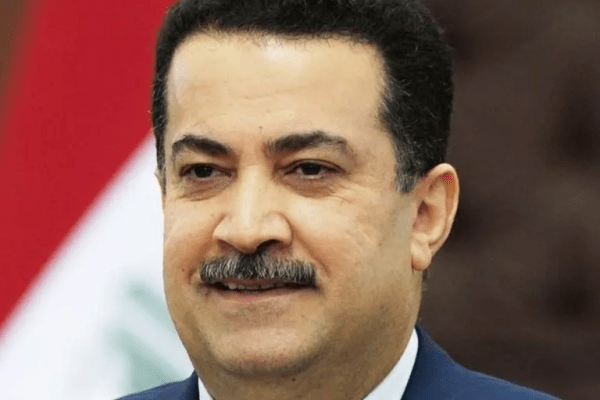
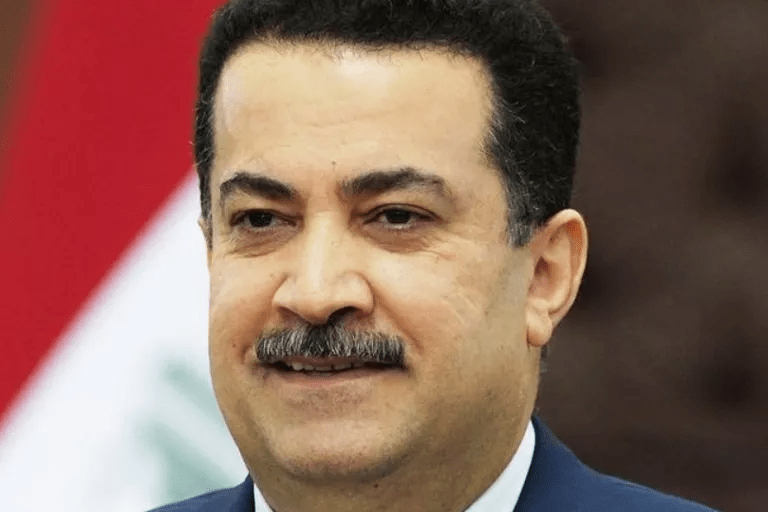
Reuters noted that the postponement of last Monday’s vote coincided with Prime Minister Mohammed Shia al-Sudani’s scheduled meeting with President Joe Biden in Washington. The meeting was reportedly aimed at discussing increased U.S. investment in Iraq.
Simultaneously, diplomats from three Western countries informed Reuters that they had urged Iraqi lawmakers not to pass the anti-LGBTQ+ bill. One senior diplomat remarked, “It would be very difficult to justify working closely with such a state at home. We were very, very direct: if this law is passed in its current form, it would have catastrophic consequences for our bilateral business, trade relations.”
Renowned author Maulik Pancholy had plans to address middle school students, however,…
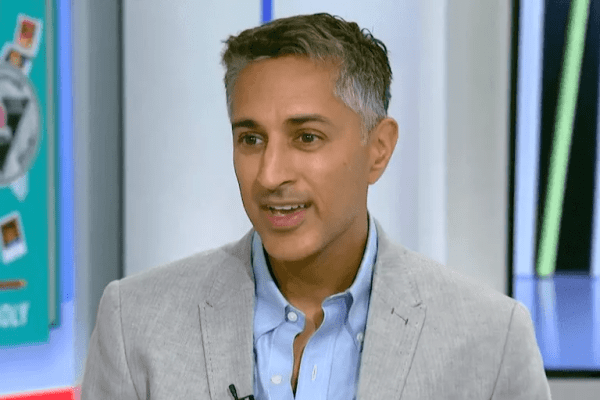
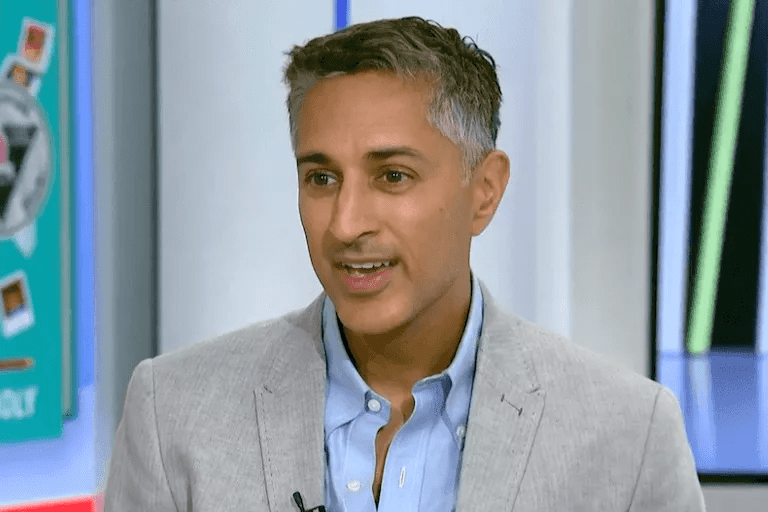
The Mountain View Middle School in Mechanicsburg, Pennsylvania, recently made headlines as the school board unanimously decided to cancel actor Maulik Pancholy’s planned anti-bullying presentation for middle school students. The reason cited was Pancholy’s gay identity and lifestyle. In response, some members of the community are advocating for the board to reverse its decision.
Pancholy, a renowned gay Indian-American comedic actor and author, gained acclaim for his 2022 book “Nikhil Out Loud,” which addresses combating homophobic bullying. His book received the 2023 Lambda Literary Award for Middle Grade Literature. Scheduled to speak at Mountain View Middle School, Pancholy, also known for his advocacy work, including serving on President Barack Obama’s Advisory Commission on Asian Americans and Pacific Islanders, is recognized for his public engagements on topics like diversity and inclusion.
However, during an April 15 public meeting of the Cumberland Valley School District’s school board, board member Bud Shaffner expressed opposition to Pancholy’s talk, arguing, “If you research this individual, he labels himself as an activist, he is proud of his lifestyle and I don’t think that should be imposed upon our students at any age.”
Another member of the board, Kelly Potteiger, who is affiliated with the local chapter of the right-wing activist group Moms for Liberty, echoed Shaffner’s concerns. She expressed apprehension that Pancholy might discuss his 2019 children’s book, “The Best at It,” which features a gay, Indian-American child. “It’s not discriminating against his lifestyle — that’s his choice,” Potteiger remarked while elucidating her stance against Pancholy. “It’s him speaking about it [that’s the problem].”
Shaffner shared with NBC News his concern that the actor might veer off-topic and delve into politics. “Politically motivated discussions belong at home and not in the classroom,” Shaffner emphasized. “A number of board members went to his website and what stuck out to all of us is that he’s a political activist.”
Following these objections, the school board voted 8-0 to cancel Pancholy’s talk. Notably, discussion of the talk wasn’t an official part of the board’s stated meeting agenda, depriving community members of the opportunity to comment on the matter beforehand.
In an open letter directed to Shaffner, 40-year-old community member Tony Conte disclosed feeling “desperately lonely” as a closeted, bullied student in middle and high school. He recounted the tragic suicide of one of his similarly bullied classmates. “I think that if I had heard from diverse voices like [Pancholy’s] in an auditorium setting telling me that it was okay to be different maybe my middle and high school experience could have been different,” Conte wrote. “A presentation of this sort could have saved a life, like the life of my friend.”
Conte questioned Shaffner and the board’s decision by drawing a parallel with hypothetical presentations by CEOs of major companies who happen to be gay. “If the CEO of Apple, the CEO of Dow, the CEO of Macy’s, or the CEO of Land O’Lakes wanted to host a presentation for middle school students in the [Cumberland Valley] district about treating each other with kindness and respect, would you also cancel their presentations because all of those high performing professionals are gay and proud of the lifestyle they lead?” Conte asked, urging Shaffner and the board to reconsider their stance.
Community member Trisha Comstock, a parent with two children in the school district, initiated a Change.org petition urging the board to reverse its decision. “Being LGBTQ+ isn’t a dirty little secret to protect our students from. To have someone with Maulik’s life experiences would have been inspirational for our students,” Comstock stated. “The cancellation of this assembly sends a harmful message to our students – that being different is something to be ashamed of or hidden away. We must challenge this narrative.”
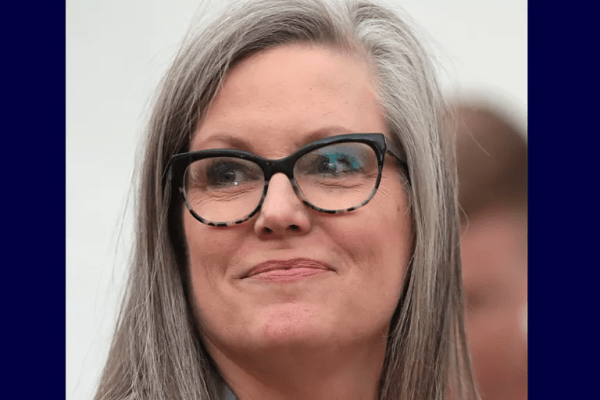
Gov. Katie Hobbs reiterated her stance, stating firmly, “I will consistently refuse to endorse any legislation that undermines the interests of Arizonans.”
On Tuesday, Arizona Governor Katie Hobbs (D) vetoed 13 Republican bills, among them Senate Bill 1628, dubbed the “Arizona Women’s Bill of Rights,” which LGBTQ+ advocates argue would have marginalized transgender individuals by altering legal recognition in the state.
Introduced by state Senator Sine Kerr (R) in February, SB 1628 mirrored legislation proposed in other states such as Indiana and Iowa. It aimed to substitute the term “gender” with “sex” in state law, defining the latter strictly in biological terms. The proposed bill sought to interpret gender-specific terms such as “boy,” “girl,” “man,” “woman,” “mother,” and “father” based solely on biological sex. Additionally, it would have prohibited transgender individuals from accessing single-sex facilities like bathrooms, locker rooms, sports teams, and domestic violence shelters that do not correspond to their assigned sex at birth.
Critics contended that the bill’s passage would have effectively erased the presence of transgender and nonbinary individuals from public life in Arizona.
In February, State Senator Eva Burch (D) voiced her strong opposition to the attempt to marginalize transgender individuals, stating, “This effort to erase trans people and try to force them to fit into boxes that they don’t fit into is totally unacceptable to me.” She emphasized her concern not for transgender individuals themselves but for the consequences of continued mistreatment toward them.
Hugo Polanco from the American Civil Liberties Union of Arizona highlighted the potential harm of SB 1628, warning that it would have hindered transgender individuals from obtaining accurate legal documents reflecting their gender identity. He stressed the importance of such documents for everyone, including transgender individuals, emphasizing that IDs should accurately represent individuals’ identities.
Earlier this month, the Arizona Republican-controlled House of Representatives narrowly passed SB 1628 in a 31–28 vote along party lines. Despite this, Governor Hobbs, who had previously expressed her opposition to the bill, vetoed it, reaffirming her commitment to protecting the interests of Arizonans.
This isn’t the first instance of Governor Hobbs vetoing anti-LGBTQ+ legislation. In April 2023, she vetoed S.B. 1005, aimed at permitting parents to sue school districts over LGBTQ+ supportive policies. Similarly, in May 2023, she vetoed S.B. 1001, which proposed requiring transgender and nonbinary students to obtain parental consent to use pronouns and names matching their gender identity. Moreover, in June 2023, she vetoed two bills targeting LGBTQ+ rights, one concerning restroom use by transgender students and another described as a veiled attempt to censor literature.
Governor Hobbs also took proactive steps in support of LGBTQ+ rights. In June 2023, she signed two executive orders, one allowing state employee health insurance plans to cover gender-affirming surgery and another banning state agencies from endorsing or funding “conversion therapy.”
LGBTQ+ advocates persist in urging for an autonomous inquiry into Benedict’s passing.
Tulsa County District Attorney Stephen Kunzweiler announced this week that no criminal charges would be pursued in the case of Nex Benedict’s death, referring to the altercation leading to Benedict’s demise as “mutual combat.” Benedict, a 16-year-old high school sophomore, passed away on February 8 following a confrontation with three alleged bullies the previous day, during which Benedict reported experiencing a momentary loss of consciousness. Kunzweiler, in a press release Thursday using Benedict’s former name, stated that after reviewing police reports, both Benedict and the assailants had been engaging in mutual antagonism for several days prior to the altercation, making juvenile charges untenable.
The District Attorney further referenced the pending report from the state Office of the Chief Medical Examiner, indicating that the autopsy did not reveal any internal injuries consistent with causing Benedict’s death. Instead, Kunzweiler reiterated the preliminary determination that Benedict died from a combined overdose of diphenhydramine and fluoxetine, commonly known as Benadryl and Prozac respectively. While medical experts acknowledge such overdoses are rare, they are not without precedent.
Despite Kunzweiler’s stance, LGBTQ+ advocates and Benedict’s family remain skeptical as more details emerge. The Benedict family’s legal representation, Biby Law Firm, released a statement last week containing additional autopsy findings, including injuries contradicting claims that the assault on Nex was insignificant. These injuries reportedly include lacerations, hemorrhages, and bruising across Benedict’s body.
Amid mounting concerns, suspicions over the credibility of the official autopsy escalated following revelations about the unaccredited status of Oklahoma’s Chief Medical Examiner’s Office since 2009. Advocates have also criticized state Superintendent for Public Instruction Ryan Walters, alleging his anti-trans stance and support for controversial figures created an unsafe environment for LGBTQ+ students in Oklahoma.
GLAAD president and CEO Sarah Kate Ellis condemned various authorities involved in the case, calling for an independent investigation into Benedict’s death and holding leaders accountable for serving their communities with fairness and compassion.
Experts elucidate the potential benefits for right-wing actors in emphasizing the perceived threat posed by transgender individuals.
On February 11, an incident unfolded at a Houston megachurch where a 36-year-old woman named Gennesse Moreno opened fire, causing injuries to two individuals. As news outlets rushed to cover the event, another investigation brewed on social media: far-right influencers honing in on any information to support the assertion that Moreno was transgender.
Among them was Chaya Raichik, a far-right activist known for her sizable following of almost four million across various social media platforms under the moniker “Libs of TikTok.” Within less than 24 hours of the incident, Raichik began disseminating false claims that the shooter was transgender, insinuating that transgender individuals were becoming violent extremists.
“Another act of trans terrorism,” Raichik posted on X, formerly known as Twitter. “We need to have a national conversation about the LGBTQ movement turning youth into violent extremists.”
Public figures such as Rep. Marjorie Taylor-Greene, Sen. Ted Cruz, and Elon Musk also weighed in, with Musk suggesting a correlation between “hormone injections” and violence. Fox News initially ran a story asserting that Moreno had “lived as a man,” although it later revised the article. Despite police clarifications at a press briefing stating no evidence suggesting Moreno was transgender, anti-trans pundits persisted in their claims.
This incident isn’t an isolated one. Far-right influencers frequently seize upon unconfirmed details about perpetrators of mass shootings to fabricate narratives demonizing transgender individuals. Following a shooting by Dylan Butler in an Iowa school in January, Raichik, Musk, and Donald Trump Jr. propagated unverified theories suggesting Butler was transgender. Reports indicate that far-right figures fixated on Butler’s social media content containing Pride flags, multiple pronouns, and pro-LGBTQ+ messaging, using these as supposed evidence that transgender individuals are prone to senseless violence.
Donald Trump Jr. questioned whether any group worldwide could rival radicalized trans activists in terms of violence per capita. In a separate post, Raichik suggested that the media would suppress a story involving a genderfluid individual who perpetrated a school shooting.
These extremist narratives, fueled by far-right ideologies, emerge amidst a surge of anti-LGBTQ+ disinformation. Politicians and influencers propagate debunked falsehoods about LGBTQ+ individuals grooming children, endangering women in restrooms, and introducing explicit content into school libraries. Experts observe that such rhetoric is a deliberate component of coordinated efforts to portray trans individuals as a menace to public safety. Despite attempts to debunk these conspiracies, they persist and influence public opinion.
Ari Drennen, LGBTQ program director at Media Matters, condemns this fearmongering tactic employed by right-wing media outlets. She asserts that there is no empirical basis to suggest that trans individuals are more prone to committing mass shootings. Instead, it serves as clickbait to manipulate audiences.
Statistics reveal that the overwhelming majority of mass shootings are perpetrated by cisgender men. Even conservative estimates, like those provided by The Violence Project, underscore this fact, with only a negligible percentage attributed to trans individuals. Mark Bryant, Executive Director of the Gun Violence Archive, corroborates this, stating that the involvement of trans or LGBTQ+ individuals in mass shootings is minimal.
Yotam Ophir, an assistant professor specializing in gun violence, dismisses claims of a surge in LGBTQ or trans-related violence as baseless. He argues that such assertions are propagated by the far right to divert attention from their own culpability, emphasizing the systemic dissemination of misinformation by these groups.
Ari Drennen notes that such misinformation has historically circulated within fringe online communities like 4chan, notorious for its offensive content. However, it’s only recently that these unfounded “theories” have gained traction in mainstream discourse, notably following the tragic shooting at The Covenant School in Nashville last year. During this incident, a 28-year-old individual took the lives of three adults and three children.
In the aftermath of the shooting, both far-right personalities and mainstream media outlets eagerly seized upon unverified speculation that the shooter might identify as transgender. Conservative pundits used the incident to cast doubt on the mental stability of transgender individuals, while many news organizations grappled with how, or even whether, to address the shooter’s potential transgender identity in their coverage.
Journalists, in particular, faced challenges in accurately identifying the shooter without verified information. This case underscored the difficulty in confirming personal details about transgender individuals, especially in the absence of official sources and considering the common misgendering and deadnaming by law enforcement. In the Nashville shooting, reports regarding the shooter’s gender identity relied on accounts from former teachers and, eventually, the police, who asserted the shooter was transgender but declined to disclose the basis for their conclusion.
Following the media frenzy surrounding the shooting, the Trans Journalists Association (TJA), of which the writer is the board secretary, issued guidance advising caution in sharing unverified information, especially from law enforcement, particularly in rapidly unfolding news events.
“We urge newsrooms to refrain from speculation without corroborating facts,” stated TJA in a released statement. “It’s crucial to recognize that disseminating incomplete, unverified, or contextually lacking information and public records during breaking news events can disproportionately harm marginalized communities.”
This guidance was put to the test a few months later when outlets such as Vice and Teen Vogue denounced efforts to spread anti-trans misinformation following a July 2023 shooting in Philadelphia. Police arrested Kimbrady Carriker after he carried out seemingly random shootings, resulting in the deaths of four individuals and injuries to two others. Far-right figures exploited photos of Carriker wearing long hair and stereotypically feminine attire to advance similarly unfounded claims about his gender identity.
Media outlets such as the Associated Press and Reuters have begun to confront and refute such misinformation. However, experts like Jon Lewis, a research fellow at the Program on Extremism at George Washington University, caution that debunking alone may not fully mitigate the harm initially caused. Lewis explains that while debunking can establish a factual record and dispel falsehoods within the general populace, it often fails to halt the dissemination of misinformation within online communities sympathetic to its narrative. This challenge is particularly pronounced within far-right circles, where there is a deep-seated distrust of mainstream media.
Lewis emphasizes the ineffectiveness of fact-checking in countering conspiracy theories, noting that by the time debunking articles are published, the damage may already be done. He illustrates this point by highlighting instances where violent threats have been made against institutions before corrective information can be disseminated.
This persistent dissemination of anti-trans narratives by the far right has prompted some extremism experts to employ terms like “stochastic terrorism” to describe this particular form of campaign.
Ophir, Lewis, and other experts assert that the spread of anti-trans misinformation about mass shooters serves two primary purposes that align with conservative agendas, especially during contentious election cycles where trans rights are a focal point. Firstly, scapegoating trans individuals provides ammunition for far-right figures in their campaign against the legitimacy of trans identities. Secondly, it enables them to divert attention from issues such as gun control while sidestepping accountability for their own role in fostering extremist ideologies.
Numerous mass shootings, including those in El Paso, Texas; Buffalo, New York; Charleston, South Carolina; and Pittsburgh, Pennsylvania, have involved perpetrators who espoused racist, anti-Semitic, and homophobic ideologies often associated with the far right. In the case of the Philadelphia shooting, Carriker expressed support for Donald Trump online. However, right-wing activists seldom acknowledge the ideological commonalities between these shooters and their own rhetoric.
Ophir underscores the dangerous implications of portraying LGBTQ+ individuals as inherently violent or threatening to society, arguing that such narratives serve to justify discriminatory legislation and even acts of violence against them.
Although this strain of rhetoric may appear distinct from other anti-trans arguments, such as those opposing gender-affirming care or trans participation in sports, Ari Drennen asserts that it is all interconnected within a broader conservative agenda to eradicate queer and trans individuals from public life, whether through legislative means or through tactics like stochastic terrorism. Drennen underscores a historical continuum, tracing back to the conservative activism epitomized by Anita Bryant’s “Save Our Children” campaign in the 1970s, which finds echoes in contemporary right-wing discourse.
“Throughout this ongoing anti-trans hysteria, we witness a gradual escalation of stakes,” Drennen explains. “Initially, it’s framed as trans individuals posing a threat to your daughter’s chances of securing a college scholarship. Subsequently, it morphs into the notion that trans individuals are actively attempting to ‘turn’ your child trans. And now, having failed to achieve their desired impact, the narrative has shifted to portraying trans individuals as a threat to personal safety in any setting.”
This progression underscores a deliberate strategy aimed at heightening fear and animosity toward trans individuals, perpetuated by conservative forces seeking to stoke societal anxieties and marginalize LGBTQ+ communities.
Over the past year, there has been a notable shift in the number of anti-LGBTQ+ bills being enacted into law, prompting advocates to feel “cautiously optimistic” about a potential change in the legislative landscape.
Transitioning to a new physician, holding hands in public, simply entering a bar, or using a public restroom—these mundane activities have morphed into sources of fear for over 60 percent of transgender Americans, as revealed by recent polling conducted by the left-leaning firm Data for Progress.
Amidst a surge in efforts by far-right politicians and conservative policy groups to limit LGBTQ+ rights—a movement that has honed in on transgender individuals through hostile legislation and rhetoric—the resultant hostility is exacting a toll on the safety perceptions of trans Americans.
Yet, signs suggest a potential political shift concerning anti-LGBTQ+ legislation. The Human Rights Campaign, along with various state advocacy groups, perceive a shift in momentum against such bills. Notably, Florida and West Virginia concluded their legislative sessions with only one bill each, while Georgia Republicans failed to push through any anti-LGBTQ+ bills this session. Kentucky seems poised to follow suit, with its general assembly failing to advance any such legislation in time to meet the deadline for veto-proof bills.
For advocates in these states, there is a palpable sense of relief, hinting at a possible resurgence in legislative attention toward other initiatives. However, despite the evident decline in the number of anti-LGBTQ+ bills enacted this year compared to last, some advocates remain cautiously vigilant.
“I’m cautiously optimistic,” remarked Chris Hartman, executive director of the Fairness Campaign, a Kentucky LGBTQ+ advocacy group. “This could signal a return to the status quo before anti-trans rhetoric reached a fever pitch nationwide.”
According to Hartman, prior to 2022, Kentucky had abstained from passing such legislation for almost a decade. Yet, as Florida and Texas dominated headlines with anti-trans political assaults, this rhetoric disseminated to other Southern states, including Kentucky.
Last year, Kentucky enacted arguably the most extreme anti-trans law in the nation. In one sweeping motion, the state prohibited students of all ages from receiving education on gender identity or sexual orientation, barred students from utilizing restrooms corresponding to their gender identity, forbade gender-affirming care for trans youth, and barred students up to the fifth grade from learning about human sexuality and development.
As the final gavel fell in late March, signaling the end of Kentucky’s General Assembly session before the veto recess, Chris Hartman found himself in a state of disbelief. This legislative term had posed significant challenges, with anti-LGBTQ+ measures seemingly gaining momentum. Republicans had been pushing to expand the state’s religious freedom law, prohibit public drag performances, and grant doctors the right to refuse treatment on religious or moral grounds.
“It’s a surprise to all of us, myself included, that we’ve reached the veto period without any of these anti-LGBTQ+ bills advancing,” Hartman expressed. He recounted staying in the Kentucky House gallery until midnight on March 28, anxiously awaiting the fate of the bills. “It was a nail-biter up to the very last minute… It wasn’t until 11:30 p.m. that I realized, oh my gosh, we might actually make it.”
Similarly, in Georgia, advocates fought against anti-LGBTQ+ legislation until the eleventh hour of the legislative session in late March. Despite Republican majorities in both chambers, none of the bills managed to pass or even come up for a vote in the Georgia House.
Jeff Graham, executive director of Georgia Equality, recalled being at the statehouse until 1 a.m. on March 29, accompanied by around 25 to 30 individuals, the majority of whom were transgender Georgians and parents of transgender children. Many had spent the entire day there, tirelessly lobbying lawmakers. After it was all over, the collective feeling among the group was one of relief mixed with exhaustion. They had just combated the largest number of anti-LGBTQ+ bills ever introduced in a single legislative session in Georgia.
In the final three weeks of Georgia’s session, Republicans resorted to amending unrelated bills—such as one concerning overdose remedies and another about student athletes’ mental health—in an effort to sneak in bathroom bans and bans on gender-affirming care for trans youth.
While the practice of adding amendments to unrelated legislation is not uncommon in the state, Jeff Graham interpreted these maneuvers as a sign that Republicans were aware of the lack of broad public support for anti-LGBTQ+ measures. Particularly concerning was the fact that such changes were not always reflected in a bill’s title or summary, and they were made without providing opportunities for public input.
“It really speaks volumes to me that they understand these measures aren’t popular, and they’re trying to slip them through without attracting too much attention,” Jeff Graham remarked.
Graham believes that certain Republicans in swing seats within the state House were apprehensive about voting on anti-LGBTQ+ bills and being held accountable for their decisions come November. He also credits emotional testimonies from parents of transgender youth for swaying lawmakers and stalling the progress of these bills.
Meanwhile, in Florida, 21 out of 22 anti-LGBTQ+ bills were thwarted during the legislative session. Nadine Smith, executive director of Equality Florida, attributes this success partly to LGBTQ+ constituents who consistently visited the statehouse to elucidate the harm these bills would inflict. Smith emphasized that these conversations played a pivotal role in dissuading lawmakers from prioritizing the bills.
Last year, Florida saw the enactment of six anti-LGBTQ+ bills into law—more than the cumulative total of the preceding seven years, as reported by the Human Rights Campaign. Additionally, Florida has implemented anti-LGBTQ+ policies through state agencies rather than the legislature, indicating a willingness to advance such policies outside the legislative process. Notable examples include a rule by the Florida Department of Highway Safety and Motor Vehicles barring transgender individuals from updating their driver’s licenses.
In Kentucky, Hartman witnessed a surge of support from Republican lawmakers in February during a House judiciary committee meeting regarding a proposed bill to broaden the state’s religious freedom law. According to Hartman, six Republicans voiced their support for LGBTQ+ discrimination protections during the debate—either explicitly endorsing such safeguards or expressing a reluctance to interfere with local policies.
“It was unprecedented to see that many sitting Republican legislators go on record, especially within such a short timeframe, in favor of local LGBTQ+ discrimination protections,” Hartman remarked. While some of these Republicans had previously demonstrated supportive stances, others were unexpected allies.
Nationwide, 59 percent of Republicans currently endorse nondiscrimination protections for LGBTQ+ individuals, according to the Public Religion Research Institute. This support among GOP voters dipped by seven percentage points from 2022 to 2023, coinciding with increased anti-LGBTQ+ rhetoric among Republican candidates and the passage of more anti-LGBTQ+ bills.
Nonetheless, the majority of Americans, including many religious individuals, advocate for protecting LGBTQ+ people from discrimination, according to the survey. Republican lawmakers may finally be realizing that anti-LGBTQ+ policies are not as widely supported among their constituents as they assumed. However, the pervasive anti-trans rhetoric underpinning these laws has left transgender Americans fearful of harassment within their own communities.
Kirby Phares, a senior analyst at Data for Progress, was struck by the significant number of transgender individuals who reported being unable to access or afraid to seek healthcare in the current political climate.
According to the Data for Progress poll, nearly a quarter of transgender respondents—24 percent—indicated that their access to gender-affirming medical care had been disrupted or ceased in the past year due to anti-trans policies. Additionally, 54 percent stated that accessing gender-affirming medical care in general was currently challenging. Alarmingly, 20 percent of transgender individuals expressed feeling unsafe visiting doctors or hospitals when sick or injured due to the fear of mistreatment.
The poll also highlighted the detrimental impact of recent anti-LGBTQ+ policies and rhetoric on LGBTQ+ Americans’ mental health, particularly among transgender individuals. More than half of LGBTQ+ adults, including a staggering 79 percent of transgender adults, reported that recent anti-LGBTQ+ developments had adversely affected their mental well-being.
Despite the slowdown observed in states like Florida and Georgia, a significant number of anti-LGBTQ+ bills have been passed by state houses this year. The ACLU counts 16 such bills, while the Trans Legislation Tracker lists 21. Discrepancies in bill tallies among advocacy groups can arise due to differences in updating schedules and categorization methods. Of the anti-LGBTQ+ bills passed, thirteen have been signed into law thus far, according to the Trans Legislation Tracker.
Many of these bills impose restrictions on funding for gender-affirming care for transgender adults, prohibit gender-affirming care for transgender youth, and establish religious exemptions for LGBTQ+ nondiscrimination laws affecting employers and businesses. Other measures target transgender students, preventing them from using school restrooms and banning discussions of LGBTQ+ issues in classrooms.
Approximately 180 anti-LGBTQ+ bills are still progressing through state legislatures, as reported by the ACLU.
“We’re not out of the woods yet,” cautioned Graham. “I anticipate many of these bills will resurface in 2025.”






 fleeredstates.blog
You must be logged in to post a comment.