A blog for LGBTQIA+ migrating to more welcoming states or counties
Author: Bob McCranie
I am so proud to run Texas Pride Realty Group. We set out on a mission in 2009 to serve the diverse communities of Texas and to hire kick-ass agents who practice the highest ethics and professionalism. I believe that the agent's role is to help the consumer make well-educated decisions, even if those decisions lead away from a purchase or sale.
I believe that education is vital in this industry. I currently have over 1300 hours of real estate courses on my transcript with the State of Texas. Additionally, I am a Real Estate Business Coach at Tom Ferry International, the largest-real-estate specific coaching company in the world. I coach agents in the US and Canada, and have coached clients in Australia, New Zealand, Brazil, and Switzerland. I also have knowledge of the UK and Irish markets.
Opening Texas Pride Realty was always a goal of mine and I am working night and day to be sure it is successful. The best way to do that is to be sure clients are satisfied and agents are busy. What better legacy could someone leave in this industry than a group of well-trained, high-quality brokers who do your job better than you?
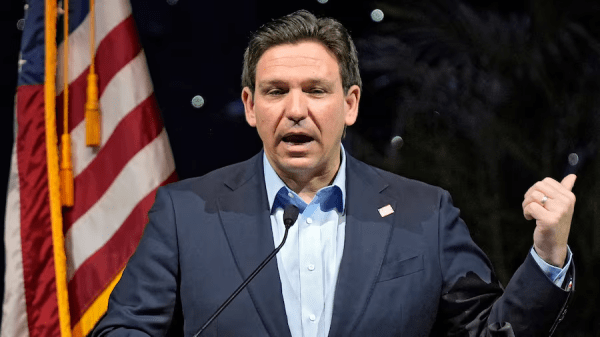
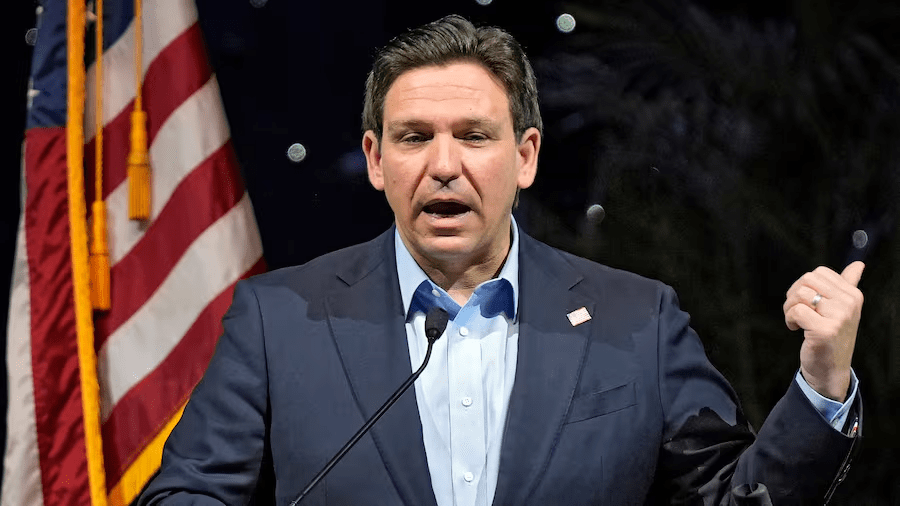
Florida Governor Ron DeSantis (R) enacted a fresh bill into law on Tuesday, aiming to restrict individuals without children attending schools within a particular district from raising concerns about books in those districts.
Florida Governor Ron DeSantis (R) has recently signed a comprehensive education bill, HB 1285, into law, marking a significant change in the state’s approach to book objections within school districts. Under this new law, individuals without children enrolled in the district can only raise one objection per month, while parents with children, including those who are homeschooled, retain the ability to file unlimited objections.
In his statement regarding the bill, Governor DeSantis emphasized Florida’s commitment to educational excellence, citing a focus on core academic subjects and the rejection of classroom indoctrination as key principles. He sees the legislation as building upon the state’s past achievements in education.
This legislation addresses the fallout from a controversial 2022 law, which granted individuals increased authority to challenge books available in K-12 school libraries. It mandated that materials be age-appropriate and sparked debates over banned books, particularly those featuring race-related content or LGBTQ characters. Notable titles like “Maus” and “I Know Why the Caged Bird Sings” found themselves among the banned works.
While the 2022 law stirred criticism, it also presented logistical hurdles as objections inundated school districts. The governor’s office acknowledges these challenges, framing the new legislation as a means to shield schools from undue politicization and disruption during the book review process.
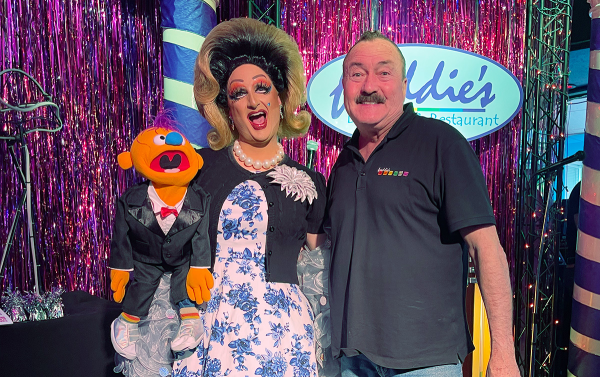
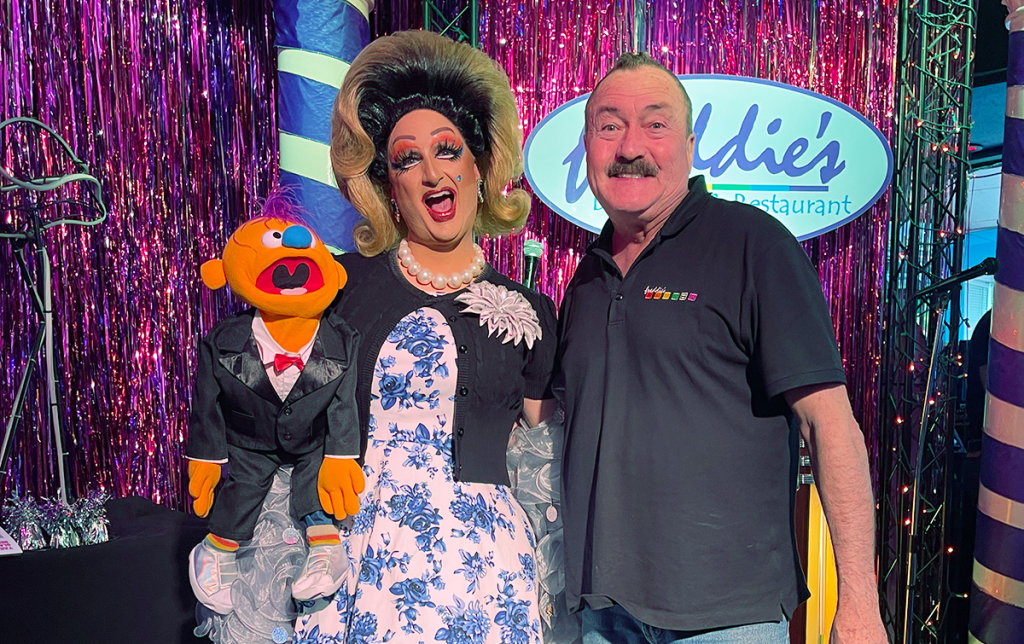
The event at Freddie’s Beach Bar resumed following a thorough search by police and a bomb-sniffing dog. After ensuring the safety of the premises, the event continued without further interruption.
During a Drag Story Hour event at Freddie’s Beach Bar, a popular gay bar and restaurant in Arlington, Virginia, attendees were unexpectedly evacuated due to a bomb threat received via email on April 6. Parents and children participating in the event were ushered into the rear outdoor seating area and parking lot while law enforcement, including a bomb-sniffing dog, conducted a thorough search of the premises. Fortunately, no explosives were found.
Freddie Lutz, the owner of Freddie’s Beach Bar situated in Crystal City, South Arlington, disclosed that the threatening email arrived during the inaugural Drag Story Hour event. This event, where drag performers read children’s stories to accompanied families, had drawn a sizable crowd of neighborhood residents, including kids, babies, and even a grandmother. Despite the disruption, attendees patiently waited until authorities gave the all-clear signal before returning inside.
During the Drag Story Hour event at Freddie’s Beach Bar, two protesters made their presence known outside the venue. Freddie Lutz revealed that prior to the event, drag performer Tara Hoot had warned him about potential disruptions, as some of her previous Drag Story Hour events had faced bomb threats and protests.
“We were somewhat prepared, mentally at least,” Lutz commented. “As anticipated, we received an unsettling email threatening both the bar and me personally at my residence, although thankfully nothing was found there,” he added, referring to his nearby South Arlington home.
Arlington police responded to the bomb threat report, conducting a thorough search of the premises and finding no evidence of criminal activity. The investigation remains ongoing.
Tara Hoot, who has been organizing Drag Story Hour events in the D.C. area for over a year, revealed that several of her past events have encountered hostile protests or bomb threats, with no actual explosives ever discovered. At the Freddie’s event, two protesters, a man and a woman, invoked religious reasons for opposing the Drag Story Hour, spreading messages of intolerance and attempting to shame parents for attending with their children.
Despite such opposition, Hoot’s performances cater to children’s interests with songs, readings from books like “The Very Hungry Caterpillar,” which promotes positive themes like bravery, and engaging activities like blowing bubbles and using rainbow ribbons. She describes the atmosphere as one of fun, love, and joy.
Originating in San Francisco in 2015 under the auspices of an organization named Drag Story Hour, these events have spread nationwide, occurring in various settings including libraries, bookstores, restaurants, and bars. The organization aims to create spaces where children can witness individuals defying conventional gender norms, fostering a vision of a world where everyone can express their true selves freely.
Last year, Governor Laura Kelly vetoed a comparable bill.
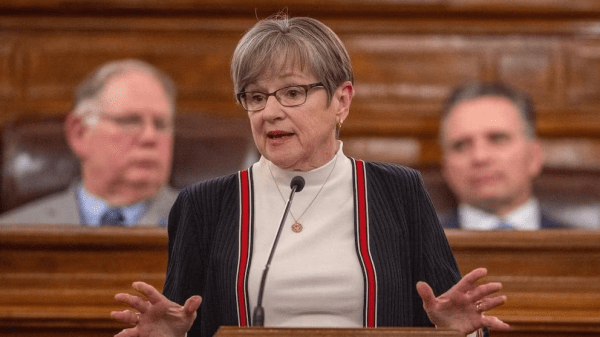
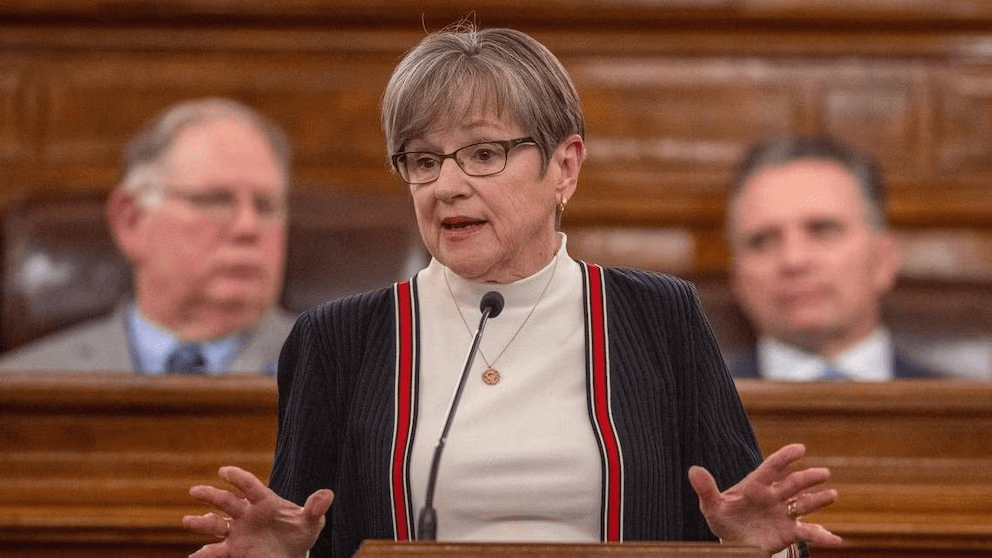
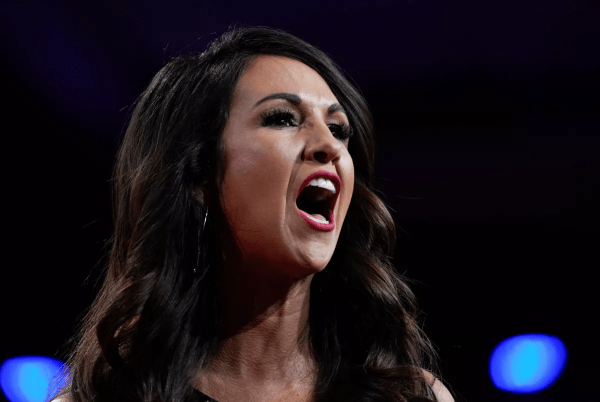
Kansas Governor Laura Kelly, a Democrat, rejected a measure aiming to prohibit gender-affirming medical care for transgender minors within the state.
In her statement on Friday, Kelly denounced the proposed legislation as divisive, asserting that it unfairly targets a small segment of Kansans and imposes governmental interference in parental decision-making regarding child-rearing and healthcare. “I do not view this as a conservative principle, nor does it align with the values of Kansas,” she affirmed.
This isn’t the first time Governor Kelly has stood against such legislation. Almost a year prior, she vetoed a similar bill, citing the adverse economic consequences of discriminatory measures. “Corporations have unequivocally expressed their reluctance to engage with states endorsing discrimination against employees and their families,” she emphasized.
Kelly further emphasized that such bills not only strip away the rights of Kansans but also expose the state to costly legal battles, ultimately undermining its economic prosperity and potential for securing new business ventures.
State GOP legislators are poised to challenge Kelly’s veto, potentially overriding it through legislative means.
To achieve this, the legislature must secure a two-thirds majority vote, equivalent to 84 votes in the House and 27 in the Senate. While the Republican-sponsored bill has garnered sufficient support in the Senate to surpass the threshold required for an override, the situation in the House is more nuanced. In addition to existing support, two House Republicans who were previously marked as absent must also cast their votes in favor of the bill to tip the balance and override the governor’s decision.
The legislation in question places limitations on the use of puberty blockers, a medical intervention utilized by transgender minors to delay the onset of gender-specific characteristics associated with puberty. It’s important to note that puberty blockers are reversible and commonly employed for children undergoing premature puberty.
The bill also places restrictions on hormone therapy, which older minors may utilize to achieve desired changes in certain gender-specific characteristics, such as their body shape, hair distribution, or voice pitch. Unlike puberty blockers, the effects of hormone therapy are less reversible. Additionally, the bill imposes limitations on surgeries, which medical professionals assert are rare for minors and typically only performed in severe cases.
Nevertheless, the legislation provides exceptions for these procedures for minors who are intersex, possess ambiguous sex characteristics, or suffer from disorders of sex development.
Healthcare providers found in violation of these provisions could face civil repercussions and potential revocation of their licenses if the bill becomes law.
Moreover, the bill prohibits state employees or facilities from facilitating a minor’s social transition, which encompasses changes in pronouns, names, attire, and other aspects.
Advocates of gender-affirming care bans argue that such treatments are detrimental to minors. Some proponents advocate for transgender youth to delay accessing gender-affirming care until they reach adulthood.
Kansas Senate President Ty Masterson, a Republican, lauded the legislation’s advancement through the legislature, stating, “The Senate took a firm stand in support of helping and not harming children by making it clear that radical transgender ideology and the mutilation of minors is not legal nor welcome in Kansas.”
Conversely, critics of the gender-affirming care ban characterized the bill as “more extreme and misinformed than similar bills in other parts of the country.” The ACLU of Kansas, in a statement urging Governor Kelly to veto the bill, argued, “In addition to depriving parents and families of medical freedom, this bill actually punishes teachers, doctors, nurses, and more for just doing their jobs by respecting and supporting Kansas kids, including transgender kids.”
Transgender youth, often subjected to gender-related discrimination and experiencing gender dysphoria, are at heightened risk of anxiety, depression, and suicidal ideation and attempts, as per the Centers for Disease Control and Prevention. Moreover, a recent study published in the New England Journal of Medicine concluded that hormone therapy can positively impact the mental health of transgender adolescents and teenagers.
Restrictions on transgender youth’s access to gender-affirming care have been enacted in a minimum of 23 states, with some facing legal contests asserting that these bans infringe upon the rights of the youth, their families, and their healthcare providers. While gender-affirming care bans have been successfully challenged in court in states like Arkansas, Idaho, Florida, and Montana, they have been upheld in others.
The ACLU reports that over 480 bills targeting the LGBTQ community have been introduced nationwide. Of these, at least 135 bills have ceased advancing through state legislatures, as per the ACLU’s findings.
Hernandez, proprietor of Reyna Hair Salon in Renton, WA, has a suspect in custody, according to the police.
Reyna Hernandez, a Latina transgender woman and salon owner from Washington, was discovered deceased in a cemetery in northern Mexico, officials have verified. She was 54 years old.
Initial reports indicate that Hernandez, who owned Reyna Hair Salon in Renton, WA, vanished on February 26. Subsequently, on March 8, authorities in Mexicali, the capital city of Baja California, Mexico, uncovered a body in a cemetery adjacent to the Tijuana Highway. Renton police later confirmed the deceased individual to be Hernandez via a press release on the department’s Facebook page. Additionally, officials disclosed to local news outlet KCPQ that Hernandez had endured apparent torture prior to her demise: alongside a fatal gunshot wound, her extremities were bound, and she was wrapped in a blanket.
Mexican law enforcement has apprehended a suspect, a 61-year-old resident of Renton, on unrelated charges, as stated in the release. Though the individual’s identity remains undisclosed officially, Hernandez’s family informed KCPQ that he was her partner. Several of Hernandez’s salon patrons also informed KCPQ that she had recently displayed signs of physical abuse. Renton police have categorized Hernandez’s death as a domestic violence case, pledging to collaborate with Mexican authorities for potential extradition of the suspected perpetrator if the crime occurred within U.S. jurisdiction. Furthermore, they intend to pursue kidnapping charges irrespective of the location of the offense.
Sara Carillo, Hernandez’s sister, conveyed to KCPQ that Hernandez had been involved with the suspect for three decades and asserted that she was a victim of domestic abuse. Carillo fondly remembered her sister as a hardworking, kind-hearted “dreamer.”
“In stepping into the salon, I am enveloped by her essence, her joy, and the shared narratives of those who visit,” Carillo recounted to the station in Spanish.
Hernandez’s tragic death follows closely after the murders of three other transgender women in Mexico in January alone, all victims of gunshot wounds. Additionally, in November of the previous year, Jesús Ociel Baena Saucedo, Mexico’s first openly nonbinary judge, was fatally stabbed in their Aguascalientes residence.
“Reyna’s horrific murder brings to the forefront the pervasive threat faced by transgender individuals, particularly trans women of color,” expressed representatives of the TransLatin@ Coalition in a statement mourning the recent losses of Hernandez and 16-year-old Nex Benedict. “These incidents underscore the pressing necessity to address how systemic violence manifests as interpersonal violence against our community.”
Last year, Brock found himself subdued by a sheriff’s deputy, subjected to a beating, and subsequently arrested in a 7-Eleven parking lot.
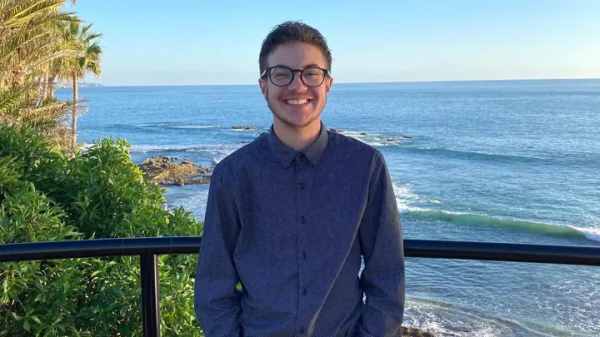
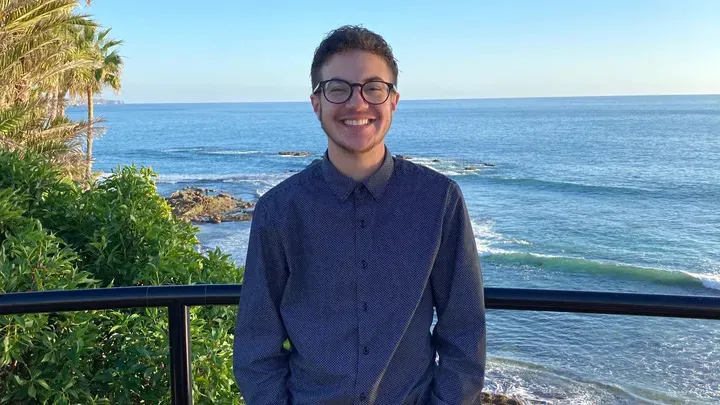
Emmett Brock, a transgender man, has been declared “factually innocent” of all charges brought against him more than a year after being assaulted and detained by a Los Angeles police officer. The declaration came from a Los Angeles County Superior Court judge on March 8, absolving Brock, 24, of three felonies — mayhem, resisting arrest, and obstruction — along with a misdemeanor charge of failure to obey a police officer. Despite prosecutors dropping the case in August, the recent declaration of “factual innocence” by the court underscores that the evidence alone vindicates Brock.
This development bolsters Brock’s ongoing legal battle against Los Angeles County and its Sheriff’s Department, as he seeks more than $10,000 in damages. “I can finally exhale,” remarked Brock in response to Judge Evan Kitahara’s decision. “It felt like I’d been holding my breath for over a year.”
Despite never being convicted, Brock suffered professional repercussions, losing his high school teaching job shortly after his arrest in February 2023. The incident unfolded when Brock, en route to an appointment, witnessed an officer he believed was mistreating a woman during a traffic stop. Expressing his discontent by gesturing at the officer, Brock was pursued by LA County Sheriff’s Deputy Joseph Benza to a 7-Eleven parking lot, where Benza proceeded to physically assault him. Brock sustained injuries, including a concussion, from the altercation.
Although Benza alleged that Brock attempted to bite him, a medical report refuted this claim. Additionally, Brock was subjected to further indignities, including being held in a women’s jail cell after being forced to expose himself. Investigations into Benza’s conduct by both Los Angeles District Attorney George Gascón and the FBI are underway, with Brock’s lawyer Thomas Beck suggesting potential prosecution for excessive use of force.
In his recent complaint against the Sheriff’s Department, Beck accused five high-ranking department officials of participating in a “cover-up conspiracy.” Allegedly, each member deliberately discriminated against Brock based on his transgender identity while he was in custody. They purportedly ignored Brock’s claims of assault, disregarded evidence of Deputy Benza’s misconduct, and failed to investigate, all forming what Beck termed a “mutually supportive conspiracy.” This conspiracy aimed to fabricate false charges against Brock and shield the department from accountability.
The issue of police brutality is pervasive throughout law enforcement, with Los Angeles having a notorious reputation for excessive force dating back to the 1960s. During that period, then-Chief William Parker oversaw the militarization of the city against its Black population during the civil rights movement. LAPD officers are notorious for underreporting instances of excessive force by fellow officers, often avoiding repercussions for inappropriate conduct.
Brock’s impending lawsuit coincides with heightened scrutiny on the Sheriff’s Department due to several recent allegations of brutality. One such incident occurred in July 2023, where an officer purportedly punched a woman holding a baby in the face. The FBI has launched an official investigation into this case and two other separate incidents. In a noteworthy development from October of the previous year, a jury awarded $13.5 million to the family of Jacobo Cedillo after determining that two officers had used excessive force, resulting in his death by placing their full body weight on his back. The problem of police profiling exacerbates these issues; a 2022 study by the California Racial and Identity Profiling Advisory Board revealed that law enforcement officers in California detained transgender individuals at a rate two and a half times higher than cisgender individuals based on perceived gender identity.
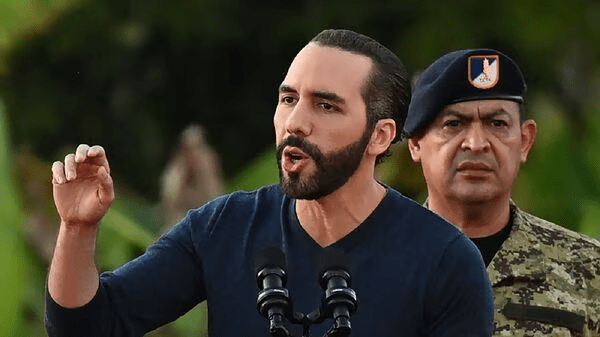
El Salvador’s President Nayib Bukele holds the belief that despite their relatively small numbers as a percentage of the population, immigrants will wield a significant influence on the nation’s society and future through their contributions.
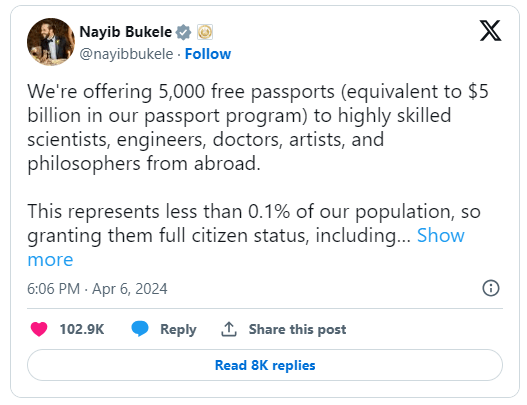
Nayib Bukele, the President of El Salvador, has unveiled a plan to provide 5,000 complimentary passports to highly skilled individuals in various fields. He emphasized that this initiative, valued at $5 billion within the country’s passport program, aims to attract scientists, engineers, doctors, artists, and philosophers from abroad.
“We’re extending an offer of 5,000 free passports (equivalent to $5 billion in our passport program) to highly skilled professionals from around the world. This allocation, representing less than 0.1 percent of our population, ensures full citizenship status, including voting rights, without any complications,” Bukele stated.
“Despite the modest number, their contributions are poised to make a significant impact on our society and the future trajectory of our nation,” he emphasized.
“Moreover, we will streamline their relocation process by implementing a 0 percent tax and tariff policy on the transfer of families and assets. This encompasses valuable assets such as equipment, software, and intellectual property. Further details on this initiative will be forthcoming,” Bukele added.
Human Rights Concerns Grow Amid El Salvador’s Prison Set-Up
Since Bukele initiated a crackdown two years ago, nearly three-quarters of El Salvador’s gang members have been apprehended, as reported by AFP on April 3, according to Gustavo Villatoro, the security minister.
Villatoro disclosed that the number of detainees has now reached 79,184, with ongoing efforts to locate the remaining estimated 25,000. He also acknowledged that many of them have fled the country and are not within El Salvador’s borders.
Speaking to the TCS television network, Villatoro stated, “With the record of arrests that we have, in general terms, we can say that we’re at around 75 percent… and that we have 25 percent left.”
In March 2022, Bukele launched a campaign against gangs, utilizing a state of emergency that suspended the need for arrest warrants and other civil liberties.
However, Bukele’s tactics have drawn criticism from human rights groups, with Amnesty International recently describing them as “disproportionate.”
Despite this criticism, Bukele, who secured reelection in February for another five-year term, has pledged to persist with the crackdown “until we eradicate the little that still remains of the gangs.
In recent years, there has been a significant surge in Republican-sponsored bills across the United States aimed at opposing DEI (Diversity, Equity, and Inclusion) programs.
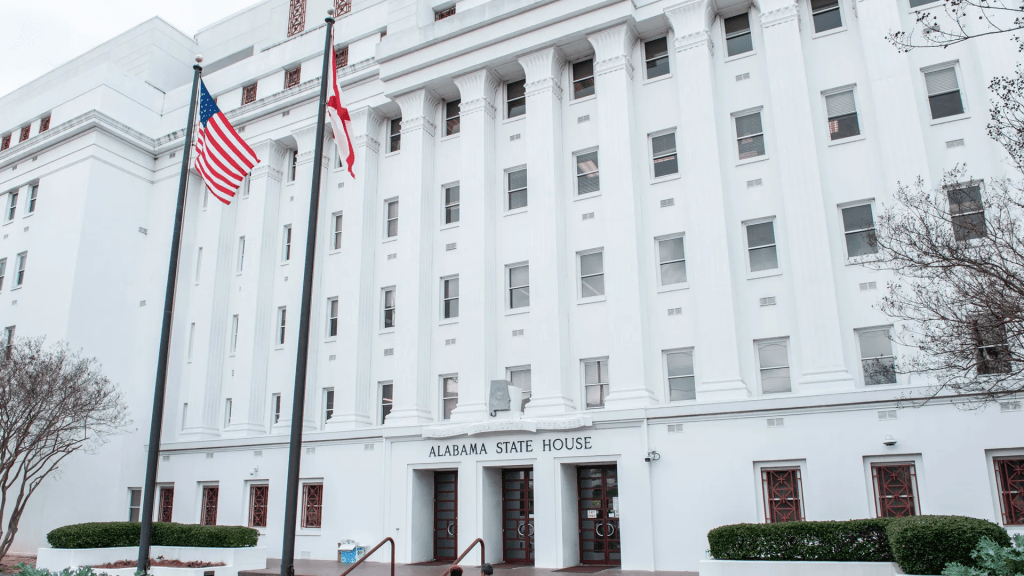
On Wednesday, Alabama Governor Kay Ivey signed into law a comprehensive anti-diversity bill, backed by Republicans, which also includes a ban on transgender individuals using certain college campus bathrooms.
Senate Bill 129, now law, prohibits any state agency or educational institution from promoting or enforcing diversity, equity, and inclusion (DEI) programs. The bill broadly defines DEI events or programs as those that factor in an individual’s race, sex, gender identity, ethnicity, national origin, or sexual orientation, categorizing such initiatives as “divisive concepts” unfit for educational curricula. The exception to this rule is if no state funds are involved in sponsoring these programs, allowing schools or government offices to continue DEI efforts.
Effective from October 1, the law mandates that multiple occupancy restrooms in public higher education institutions be designated based on biological sex, effectively marginalizing transgender students and staff who are then left with the choice of outing themselves or using single-occupant facilities.
Opposition to SB 129 was vocalized by various groups, including the free speech advocacy organization PEN America, which labeled the bill as the most restrictive educational censorship since Florida’s “Stop WOKE” Act. It noted that the bill’s definition of “divisive concepts” mirrors a 2020 executive order by then-President Donald Trump.
Prior to its passage by the state House of Representatives, students from 10 Alabama universities staged a protest at the Montgomery State House on March 6, criticizing Republican lawmakers for their lack of engagement. Neph Irvin, a sophomore at the University of Alabama in Huntsville, expressed frustration, stating, “They say that we’re their futures, and yet they are technically trying to take our futures away from us, which doesn’t make any sense. We shouldn’t have to go back in history.”
In February, Birmingham Mayor Randall Woodfin, a Democrat, sharply criticized the bill during a committee hearing, drawing parallels between its provisions and the segregationist policies of George Wallace, a notorious figure in Alabama’s history.
SB 129, authored by Sen. William Barfoot, a Republican, marks another step in his legislative efforts against DEI initiatives. Barfoot, who secured his Senate seat in 2018 following previous roles as a delegate and legal counsel for then-presidential candidate Mike Huckabee, had introduced a similar bill during the 2022 legislative session. However, this prior attempt to classify DEI as a “divisive concept” and prohibit state collaboration with DEI contractors did not advance to a vote, as per the legislature’s website.
Governor Ivey’s signing of SB 129 adds to a series of anti-LGBTQ+ measures she has endorsed in recent years. In 2022, alongside a ban on gender-affirming medical care for trans youth, Ivey signed House Bill 322, mandating K-12 schools to segregate facilities solely based on “biological sex.” Her support for restricting participation in high school sports teams to “biological sex” was extended to colleges the previous year.
The escalation of Republican-backed bills opposing DEI programs, under the guise of their interpretation of such initiatives, has surged nationwide. Conservative organizations like the Heritage Foundation have spearheaded anti-DEI campaigns, aided by figures such as Chris Rufo, known for his role in promoting misinformation about “critical race theory” and the LGBTQ+ community.
This conservative backlash is particularly evident in Florida, where Governor Ron DeSantis has overseen the dismantling of DEI efforts in state colleges, resulting in the elimination of entire degree programs. Not even traditionally conservative entities are exempt; last year, even Chick-fil-A, known for its conservative stance on issues like same-sex marriage, faced accusations of being “woke” due to the employment of a vice president for DEI.
Arizona’s Supreme Court mandates state compliance with a century-old statute prohibiting almost all abortions.
On Tuesday, the Arizona Supreme Court upheld a 160-year-old law that prohibits most abortions, except in cases deemed necessary to save the pregnant person’s life. This ruling revives a Civil War-era statute, dating back to 1864, which was officially codified in 1901. The law imposes prison sentences of two to five years for abortion providers, positioning Arizona among the states with the strictest abortion regulations, alongside Texas, Alabama, and Mississippi, which have similarly stringent bans with few exceptions.
The enforcement of the law has been temporarily postponed by the state Supreme Court for 14 days. This delay allows plaintiffs the opportunity to pursue further legal challenges, particularly regarding the law’s constitutionality, in lower courts if they choose to do so.
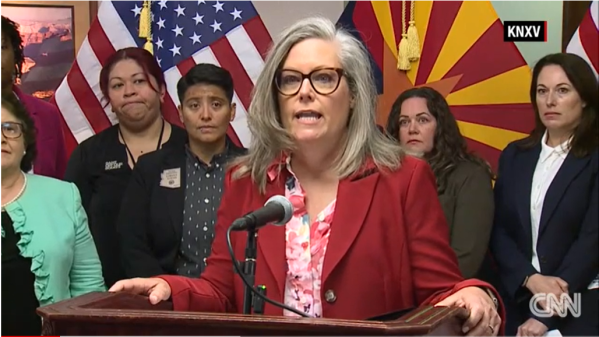
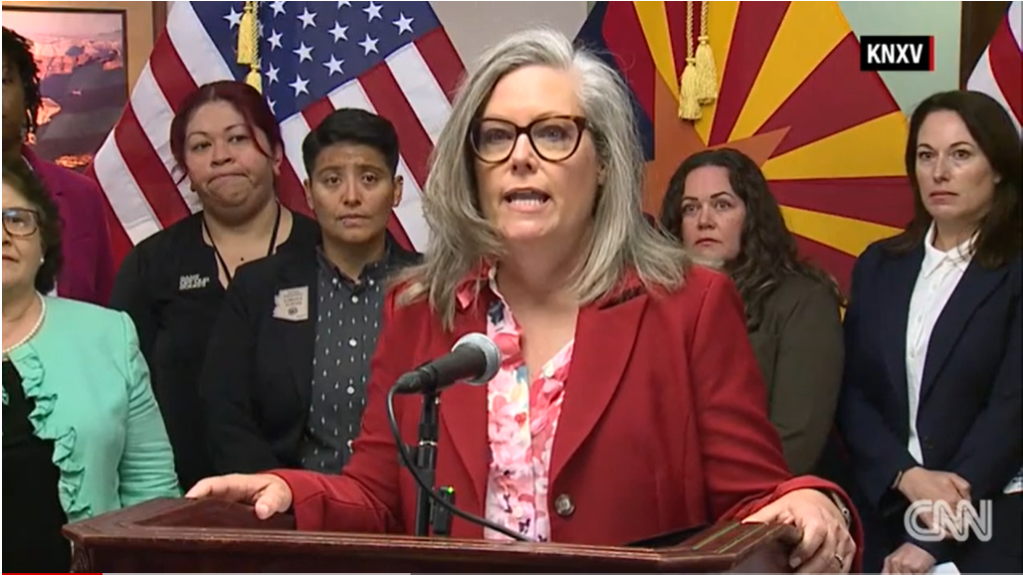
Arizona Attorney General Kris Mayes, speaking at a news conference following the court’s decision, assured that neither women nor doctors would face prosecution under this law during her tenure. She pledged to prevent its implementation, exploring all available options through her office.
Mayes expressed strong opposition to the court’s decision, labeling it as a regressive step backward in Arizona’s history. She emphasized the law’s antiquity, dating back to a time when Arizona was not yet a state, the Civil War was ongoing, and women lacked the right to vote. Mayes characterized the court’s ruling as a blemish on the state’s record, signaling her commitment to resisting its enforcement.
The 4-2 decision arose from a case resurrected following the US Supreme Court’s invalidation of Roe v. Wade in June 2022, which eliminated the federal constitutional right to abortion. Arizona’s former attorney general pushed to reinstate the state’s near-complete abortion ban, facing opposition from Planned Parenthood Arizona, initiating protracted legal battles culminating in Tuesday’s verdict.
The court’s majority declared, “Physicians must now adhere to the prohibition on all abortions except those crucial to preserving a woman’s life,” stipulating potential criminal penalties for abortions conducted beyond 15 weeks of pregnancy.
Vice Chief Justice Ann A. Scott Timmer dissented, joined by Chief Justice Robert M. Brutinel.
This case marks the latest prominent confrontation regarding abortion access since Roe v. Wade’s reversal. In the wake of that decision, nearly twenty states have restricted or outright banned abortion access. Medical professionals caution that such restrictive measures endanger patients’ health and expose doctors to legal jeopardy.
“A couple of weeks ago, I had an abortion – a safe, legal abortion here in Arizona for a pregnancy I very much wanted, a pregnancy that failed,” Arizona Sen. Eva Burch said Tuesday at a news conference. “Somebody took care of me. Somebody gave me a procedure so that I wouldn’t have to experience another miscarriage – the pain, the mess, the discomfort. And now we’re talking about whether or not we should put that doctor in jail.”
Dr. Jill Gibson, chief medical director of Planned Parenthood Arizona, emphasized the devastating impact of the state Supreme Court’s decision on patients in their community. In an interview with CNN, she expressed grave concern over the forthcoming consequences for individuals seeking abortion services in Arizona, stating, “The state Supreme Court decision is going to have ‘absolutely unbelievable consequences for the patients in our community and we just … cannot state enough how dire the situation is going to be for the patients who need to access abortion here in Arizona.'”
Gibson stressed the importance of allowing healthcare providers to offer essential care without the looming threat of legal repercussions and criminalization. She remarked, “Providers need to be able to take care of their patients without fear for legal repercussions and criminalization.”
Echoing these sentiments, Arizona’s Democratic Governor, Katie Hobbs, condemned the ruling, asserting that the fight for reproductive freedoms is far from over. In an online video statement, Hobbs empathized with individuals facing pregnancy-related challenges, highlighting her personal experience with pregnancy loss. She declared, “I’ve personally experienced the anguish of losing a pregnancy and I know it’s outrageous to have the government tell you that the best decision for your health or future could now be considered a crime. I will not stop fighting until we have fully secured the right to reproductive healthcare in our state.”
President Joe Biden also criticized the decision, warning of the severe consequences it would impose on millions of Arizonans. In a statement, he remarked, “Millions of Arizonans will soon live under an even more extreme and dangerous abortion ban, which fails to protect women even when their health is at risk or in tragic cases of rape or incest.”
Another law was already in place
In December of last year, Supreme Court justices commenced hearings in the case, wherein abortion opponents argued for a return to the near-total ban, while advocates for reproductive rights urged the court to uphold a 2022 state law permitting abortions up to 15 weeks.
Then-Governor Doug Ducey, a Republican, endorsed the law just under three months prior to the Supreme Court’s overturning of Roe v. Wade. This law, enacted in 2022, included an exemption for medical emergencies and mandated physicians to report post-15-week abortions to the Arizona Department of Health Services. However, it lacked provisions for cases of rape and incest.
Upon signing the law in March 2022, Ducey clarified that it would not supersede the older legislation.
Subsequent to the US Supreme Court’s decision, the Arizona Court of Appeals ruled that both abortion laws in the state needed reconciliation or “harmonization.” According to prior CNN reports, abortion was deemed legal up to 15 weeks when performed by licensed physicians in accordance with Arizona’s existing laws and regulations.
Amidst months of legal ambiguity and contention over the applicable law within the state, the state Supreme Court was petitioned for clarification.
Voters will have a say in this
Arizona voters will soon have a pivotal role in shaping the state’s stance on abortion. Arizona for Abortion Access, a coalition of reproductive rights organizations, has announced that they have successfully collected enough signatures to place a ballot measure on November’s 2024 ballot. This measure aims to embed abortion rights into the state’s constitution.
This initiative is part of a broader nationwide campaign to bring the issue of abortion to the forefront of the 2024 ballots in multiple states. Advocates for abortion rights are optimistic that this approach will empower voters to have a direct say, rather than relying solely on decisions made by state courts.
State Attorney General Mayes expressed confidence in the voters’ ability to make a definitive judgment on the matter. Speaking with CNN’s Wolf Blitzer, Mayes stated, “The people of Arizona are going to have the final say over this. I think the people of Arizona are going to overwhelmingly approve that ballot measure.”
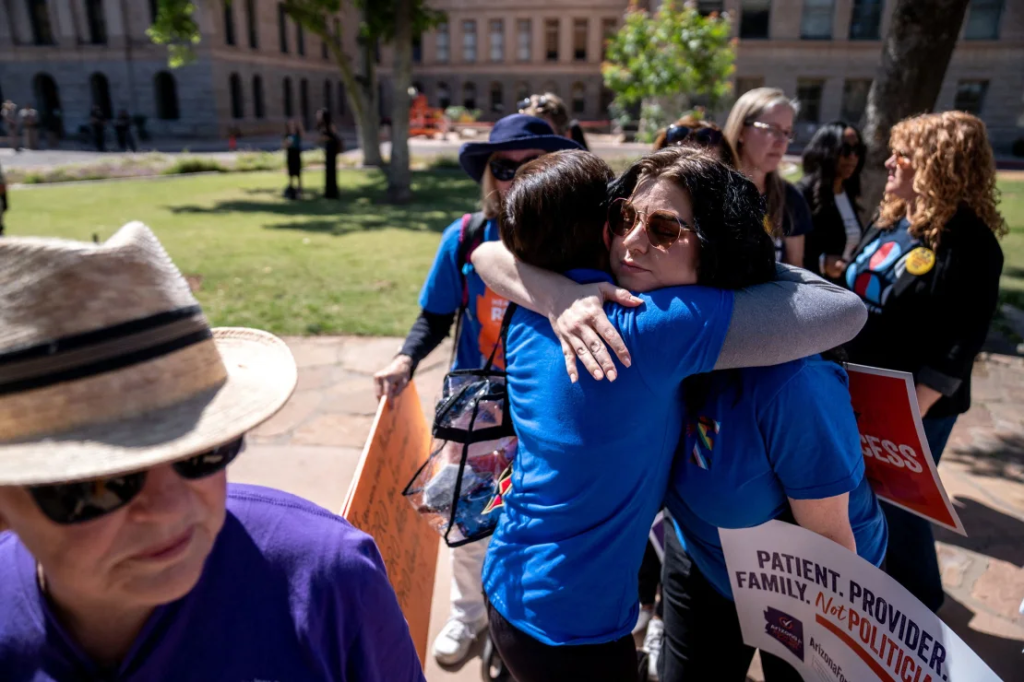
Following the recent court ruling, an emergency physician and abortion provider, Dr. Atsuko Koyama, emphasized the ongoing importance of activism. In a joint news conference with local and state officials, Dr. Koyama urged residents to persist in their efforts to ensure the success of the ballot measure. She stressed that Tuesday’s decision does not mark the end of the fight.
Dr. Koyama highlighted the vital role abortion plays in addressing various medical situations, including miscarriages, ectopic pregnancies, and instances of domestic violence. She lamented that the ruling forces physicians to navigate legal and administrative hurdles instead of focusing on patient care. Dr. Koyama emphasized the detrimental impact of criminalizing essential healthcare services and urged for the preservation of the doctor-patient relationship in such critical matters.
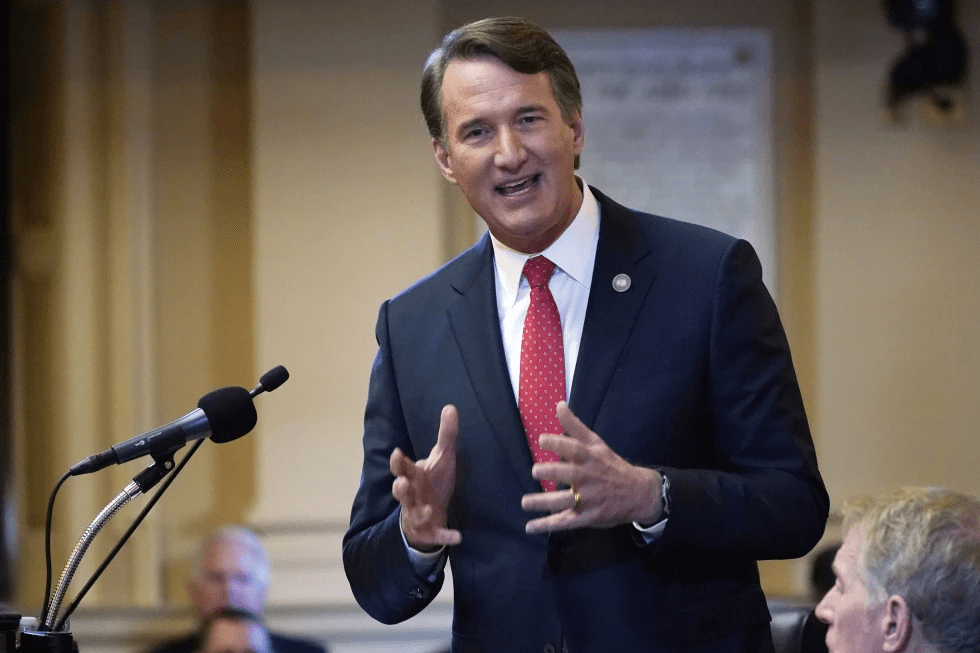
Governor Youngkin backs one measure supported by abortion-rights groups but vetoes others, showcasing his nuanced stance on the issue.
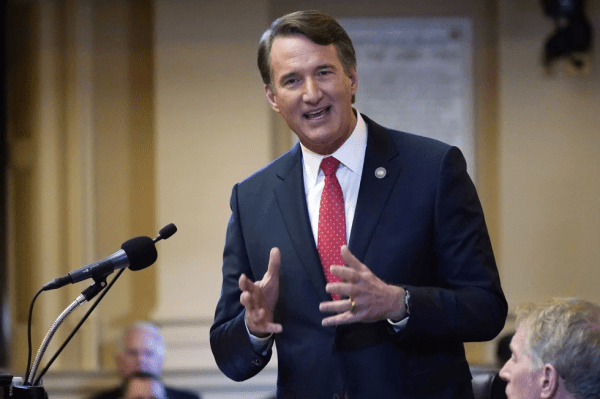
In Richmond, Virginia, Governor Glenn Youngkin, a Republican, took action on Friday by signing 88 bills into law while vetoing 11 others. Among the bills rejected was one intended to safeguard women and medical practitioners involved in legal abortion services from potential legal ramifications. Advocates had supported this legislation as a means of protecting individuals in the abortion process.
Governor Youngkin stated that these measures would disrupt the established legal framework governing extradition processes. However, in a surprising turn, he approved separate legislation supported by abortion rights groups. This new law prohibits the issuance of search warrants, subpoenas, or court orders for electronic or digital menstrual health data.
The decision received mixed reactions, with Tarina Keene, executive director of REPRO Rising Virginia, commenting on social media about the inconsistency in Youngkin’s approach.
Supporters of the approved legislation argued that it is crucial for safeguarding women’s privacy, particularly in preventing the potential misuse of information stored in period-tracking apps for legal purposes.
Senator Barbara Favola, a Democrat and the sponsor of the bill, emphasized its importance in light of the current political climate, marked by efforts to impose new restrictions on abortion following the Roe v. Wade decision. While Favola acknowledged that there hadn’t been instances of such data being sought for legal proceedings, she stressed the need for proactive measures to protect individuals’ rights in the face of potential threats.
Critics of the legislation argued that it appeared to be a solution in search of a problem.
Christian Martinez, press secretary for Governor Youngkin, stated in a release that the governor believes the legislation, opposed by nearly all legislative Republicans, “safeguards a woman’s personal health data while still allowing for its voluntary use in law enforcement investigations.” Martinez also expressed Youngkin’s gratitude for Senator Favola’s efforts on the bill.
Similar legislation failed to advance last year in the GOP-controlled House of Delegates, but Youngkin had previously voiced opposition to it.
Advocates for the vetoed measure against extradition pointed to the increasing necessity for women in states with abortion bans to seek termination of pregnancies elsewhere.
In a statement attached to the veto, Youngkin expressed concern that the cooperative extradition system of the United States could be compromised if individual states chose not to recognize codified laws based on differing political stances.
Additionally, the governor vetoed a bill that aimed to prevent state regulators from penalizing doctors for providing abortion care legal in Virginia, regardless of where it was administered or received.
Youngkin argued that such a bill could lead to a resurgence of unsafe abortions outside clinical settings and would hinder the Board’s ability to take disciplinary action against unprofessional conduct during abortions.
Democrats criticized Youngkin’s decisions, with party chairwoman Susan Swecker condemning the veto of a bill meant to protect women traveling to Virginia for abortions from potential extradition, portraying it as another example of Republicans limiting women’s options.
Virginia stands out as the lone Southern state yet to enforce new restrictions on abortion since the overturn of Roe v. Wade in 2022, emphasizing its comparatively liberal stance on abortion access within the region. Governor Youngkin’s efforts to implement a 15-week ban were thwarted by Democrats, who wield control over the state Legislature.
In addition to the abortion-related bill, Youngkin signed several others on Friday, including measures aimed at reinstating the Virginia Minority Business Commission and expanding tax credits for secure firearm storage devices. Conversely, he vetoed a bill proposing a paid family and medical leave program, citing existing employer offerings and deeming the proposal unfair for exempting state government.
The governor also made amendments to 11 bills, one of which permits the city of Petersburg to pursue a referendum concerning the establishment of Virginia’s fifth casino. This move follows unsuccessful attempts in Richmond, where voters twice rejected similar proposals. Youngkin’s amendment removes a provision requiring legislative reconsideration next year.
With a Monday deadline looming for the completion of his legislative review, lawmakers will reconvene in Richmond on April 17 to deliberate on Youngkin’s proposed amendments and potentially seek to override his vetoes. However, Democrats’ slim majorities in both chambers fall short of the necessary two-thirds threshold for override success.




 fleeredstates.blog
You must be logged in to post a comment.