A blog for LGBTQIA+ migrating to more welcoming states or counties
Author: Bob McCranie
I am so proud to run Texas Pride Realty Group. We set out on a mission in 2009 to serve the diverse communities of Texas and to hire kick-ass agents who practice the highest ethics and professionalism. I believe that the agent's role is to help the consumer make well-educated decisions, even if those decisions lead away from a purchase or sale.
I believe that education is vital in this industry. I currently have over 1300 hours of real estate courses on my transcript with the State of Texas. Additionally, I am a Real Estate Business Coach at Tom Ferry International, the largest-real-estate specific coaching company in the world. I coach agents in the US and Canada, and have coached clients in Australia, New Zealand, Brazil, and Switzerland. I also have knowledge of the UK and Irish markets.
Opening Texas Pride Realty was always a goal of mine and I am working night and day to be sure it is successful. The best way to do that is to be sure clients are satisfied and agents are busy. What better legacy could someone leave in this industry than a group of well-trained, high-quality brokers who do your job better than you?
Froot Loops, once featured in a balanced breakfast, are now entangled in an entirely unbalanced backlash.
Conservatives are targeting Froot Loops and Kellogg’s for a potential boycott due to the company providing children with both a love for sugary cereal and access to a free digital library. In Canada, Froot Loops boxes grant access to an online collection of “free diversity and inclusion content” through a partnership with BGC Canada, a national nonprofit dedicated to enhancing children’s social welfare.
The Twitter account “End Wokeness,” boasting 1.9 million followers, shared an image of the Froot Loops box, claiming, “Fruit Loops is now encouraging kids to go online and read their free library of woke propaganda.” The critique, however, comes from someone who misspells the iconic cereal with two “o’s.”
The library comprises a variety of children’s books, including titles like “Maggie’s Chopsticks,” narrating a young girl’s creative use of eating utensils, and “My City Speaks,” depicting a young blind girl navigating her surroundings. Additionally, there are books focused on themes of acceptance and gender empowerment.
“Kids starting the day off right with 6 servings of sugar and a side of woke indoctrination!” wrote one account in response, while another account in the replies posted an image of Kellogg’s All Together cereal box, a promotional product for Pride Month that began in 2019 and features six types of cereals combined into one package. The package also contains — you guessed it! — pronouns on its outside.
After End Wokeness shared the images of the box, the right-wing anti-LGBTQ+ account Libs of TikTok shared the images, adding that Kellogg’s “wants to indoctrinate your children. Stop giving them your money!” Marching orders in tow, conservative media picked up the story, with Blaze Media publishing an article titled, “Attention, parents! STOP buying your kids Froot Loops.”
This recent push to eliminate Froot Loops from breakfast choices in both the U.S. and Canada follows a year filled with notable conservative boycotts. These include a collective rejection of Bud Light for creating a custom beer can for trans social media star Dylan Mulvaney, as well as protests against Target for its LGBTQ+ Pride Month collection and for selling a nutcracker adorned with the colors of the trans flag.
A unique trend is emerging in a Bulgarian small town—digital nomads are becoming a prominent visitor demographic.
This alternative lifestyle, whereby people travel and work simultaneously, existed before the pandemic.
But since then, digital nomadism went from niche to normal — rejecting and redefining the traditional idea of work life.
For The New Reality, Krista Hessey takes us inside Bansko to discover what’s bringing hundreds of remote workers, including Canadians, to this quaint mountainside town.
As the year approaches its end, you might be contemplating putting your house on the market. However, the decision to sell now or wait until January may cross your mind. Although delaying until after the holidays might seem appealing, here are three compelling reasons to consider making your move before the new year.
Get One Step Ahead of Other Sellers
In the residential real estate market, homeowners typically show a tendency to avoid listing their houses toward the end of the year. The holiday season tends to keep people busy, and selling their house might become a lower priority until the beginning of the new year when schedules and social calendars ease. However, this situation presents an opportunity for you to gain an advantage.
Opting to sell now, when others might postpone until after the holidays, can give you a head start on the competition. Initiate the process with a real estate agent today to ensure your house hits the market before your neighbors.
Get Your House in Front of Eager Buyers
Although the supply of homes for sale has increased compared to the previous year, it remains relatively low. This scarcity implies a current shortage of homes on the market. While certain buyers might postpone their moving plans until January, others will still have to relocate due to personal circumstances or life changes.
These buyers will remain active later in the year and will be highly motivated to facilitate their move. However, the hurdle they will encounter is the limited inventory available to meet their requirements. As highlighted in a recent Investopedia article:
“. . . if your house is up for sale in the winter and someone is looking at it, chances are that person is serious and ready to buy. Anyone shopping for a new home between Thanksgiving and New Year’s is likely going to be a serious buyer. Putting your home on the market at this time of year and attracting a serious buyer can often result in a quicker sale.”
Use Your Equity To Fuel Your Move
Consider that homeowners currently enjoy historically high levels of equity. According to CoreLogic, the average equity per mortgage holder has surged to nearly $290,000. This means that the equity you currently hold in your home might be sufficient to cover a significant portion, if not all, of a down payment on your dream home.
When contemplating the decision to sell before the end of the year, it’s crucial to recall the factors that initially fueled your desire to move. Whether it’s the quest for a new home in a more fitting location, one that provides the ideal space for you and your family, or a response to evolving needs, a local real estate agent can assist you in assessing your home equity and devising a strategy to achieve your goal of making a move.
Bottom Line
Listing your home before the new year can offer unique benefits. Less competition, motivated buyers, and your equity gains can all play to your advantage. Reach out, and let’s achieve your goals before winter sets in.
The departure of Democratic Senator Joe Manchin marks a low point for the party in the state, as Republicans strengthen their hold.
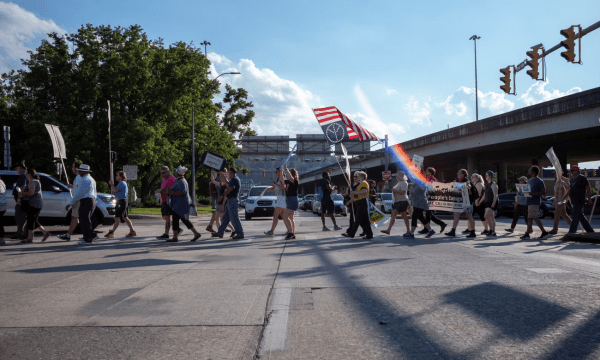
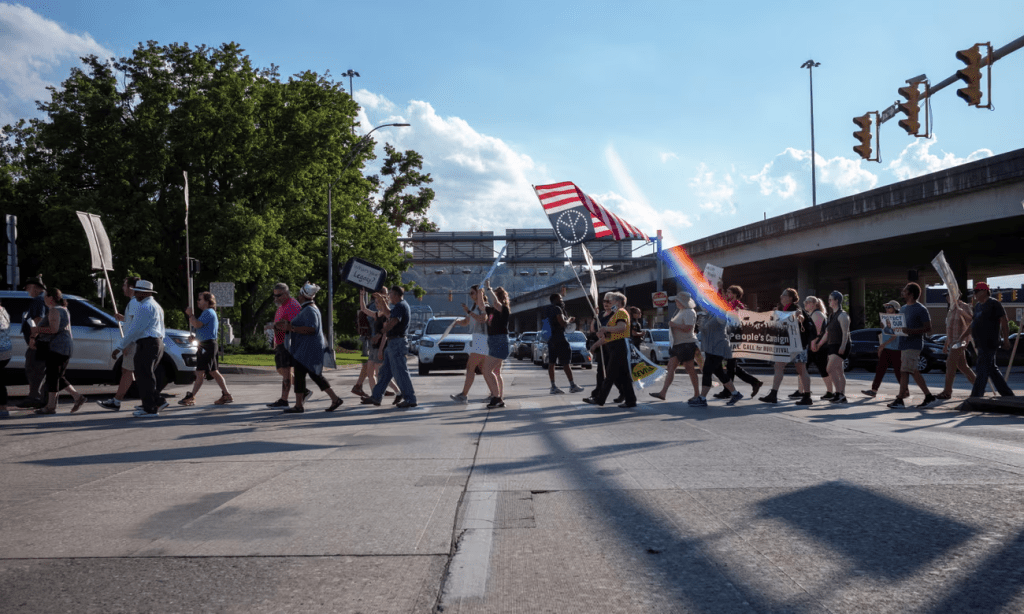
In 2021 protesters marched to Senator Joe Manchin’s office in Charleston, West Virginia, urging him to expand voting rights and better serve his constituents. The Democratic party’s power in the state is now on the wane.
Snacking on appetizers from American-flag printed paper plates in the basement of city hall, a gathering of Democratic voters were engaged in discussions about getting involved in politics. It was during this moment that Terri Rodebaugh stood up to voice a concern.
“One thing I want to say is I’m tired of being called a baby killer, which I am not,” expressed Rodebaugh, clad in a pink shirt with gray hair, echoing the sentiments shared by other party loyalists and pro-choice West Virginians in Nicholas County.
For a considerable part of the 20th century, voters in Nicholas County and many other parts of West Virginia consistently supported the Democratic Party, even during challenging times. This trend shifted in 2000 when George W. Bush secured the state’s electoral votes. By 2020, almost 78% of Nicholas County voters had chosen Donald Trump. In the overall context of West Virginia, the state gave Trump the second-highest level of support compared to any other state in the nation.
Donald Trump holds a miner’s helmet up after speaking during a rally in Charleston, West Virginia, in May 2016.
A few weeks before that year’s election, the then president’s adherents paraded through the county seat Summersville, and the Democrats held a counterprotest. Trump supporters then turned up outside the party’s offices in their pickup trucks, burning out their tires and kicking up gravel. The landlords called not long after and told the Democrats to leave, and ever since, the party has been itinerant, meeting in churches, restaurants and, most recently, Summersville’s city hall.
“I never dreamed Nicholas county would ever go Republican,” said 81-year-old John Jarrell, who has served on the local party committee for decades. “And I never dreamed West Virginia would ever go Republican.”
The Democratic party’s power in the state now seems on the brink of reaching its nadir.
Even as the GOP was consolidating its hold on the state’s politics, voters kept electing one Democrat: Joe Manchin, a two-term governor who won a Senate seat in 2010 and just over a decade later became one of the most controversial politicians in the country for refusing to support proposals by Joe Biden to fight the climate crisis, poverty and a host of other social ills.
Manchin was scheduled to face voters again in 2024, and whether he could win a third full term representing his ruby red state was a subject of fierce debate. Now, West Virginians will never learn the answer – earlier this month, Manchin announced he would not run again for the Senate, and is openly mulling a third-party run for the presidency.
Few politics watchers believe any other Democrat can win Manchin’s seat, and by the start of 2025, the party may hold none of West Virginia’s statewide elected offices for the first time since 1931.
“We’re going to be underrepresented,” Pam Tucker-Cline, the chair of the Nicholas county Democratic party, said of Manchin’s exit as the 27 supporters who turned up for the meeting filtered out into the Summersville evening. “I don’t think people realize what he’s done for the state.”
Party leaders refuse to give up, but acknowledge they’re not quite sure what the path back to power is in a state that lacks so much of what makes Democrats successful elsewhere.
“We don’t plan to give up on any seat, and we know that the odds are against us, but we feel that West Virginians are worth fighting for,” said Mike Pushkin, the state Democratic party chair and a lawmaker in the state house of delegates.
“It’s been extremely hard for anybody with a D after their name in rural America, as of late, but we feel that things are definitely never static in politics, things are always changing.”
Lubbock County, situated near the New Mexico border and home to over 300,000 residents, has now joined three other Texas counties in prohibiting travel assistance for abortions, marking the largest county in the state to implement such restrictions.
In the past few months, anti-abortion activists in Texas have achieved success in establishing numerous local regulations aimed at preventing individuals from assisting women in traveling to neighboring states where abortion is still permitted.
On Monday, Lubbock County, a conservative stronghold with over 300,000 residents near the New Mexico border, became the most populous county to implement such a ban. In a public meeting marked by occasionally impassioned testimony, the county commissioners court voted to criminalize the transportation of a pregnant woman through the county, or funding her travel, with the intent of obtaining an abortion.
The county, encompassing Lubbock city and Texas Tech University, has now aligned with three smaller counties — one along the New Mexico border and two centrally located — in enacting ordinances influenced, in part, by the architect of Texas’s six-week abortion ban implemented in 2021, preceding the U.S. Supreme Court’s overturning of Roe v. Wade last year.
Amarillo, situated in the Texas Panhandle, conducted an extensive public hearing on Tuesday to deliberate a similar ordinance. This proposal would impact a network of roads and highways traversing the city of 200,000, leading toward New Mexico and Colorado, popular destinations for Texas women seeking reproductive procedures.
“These ordinances against abortion trafficking are the next step towards achieving an abortion-free America,” stated Mark Lee Dickson, an anti-abortion activist supporting these measures across the state. He anticipates several more counties adopting similar ordinances in the coming months.
Crafted by Mr. Dickson and Jonathan F. Mitchell, the former solicitor general of Texas responsible for the state’s 2021 abortion ban, these ordinances employ the same enforcement mechanism: lawsuits initiated by private citizens. Notably, they explicitly prohibit law enforcement or county officials from enforcing the ban, strategically avoiding immediate legal challenges and potential injunctions.
In practical terms, someone must become aware of an individual aiding a pregnant woman in traveling out of state for a procedure to initiate legal action. Similar to the six-week abortion ban, these ordinances are expected to have a chilling effect, although they might attract few cases.
Some legal scholars argue that these ordinances could potentially violate constitutional protections. Jeffrey B. Abramson, emeritus professor of government and law at the University of Texas at Austin, pointed out that even Justice Kavanaugh, in his concurring opinion in the Dobbs decision overturning Roe v. Wade, acknowledged that a state would infringe upon the constitutional right to interstate travel by attempting to prohibit women from traveling out of state for a lawful abortion.
Mr. Dickson argued that the ordinances are enforceable because they pertain to individuals providing assistance to a pregnant woman with travel, encompassing financial support, while not prohibiting a woman from driving herself or using alternative means of travel.
“We don’t see this as a travel ban,” he emphasized. “We see this as a prohibition on abortion trafficking.”
Planned Parenthood of Greater Texas expressed dissatisfaction with the ordinances, with spokeswoman Autumn Keiser deeming them “unnecessary, confusing, and fear-inducing barriers to essential health care” in a statement.
The Texas branches of Planned Parenthood, having ceased abortion services in the state, are contending with a lawsuit filed by Texas Attorney General Ken Paxton. The lawsuit alleges Medicaid program fraud and is slated for trial, as ruled by Matthew J. Kacsmaryk, a federal judge appointed by Donald Trump, on Monday. Texas is seeking nearly $2 billion in damages.
The adoption of the travel ordinance by Lubbock County commissioners in a 3 to 0 vote was expected. In 2021, voters in the city of Lubbock endorsed an abortion ban shortly before the statewide six-week prohibition took effect. On Monday, numerous residents expressed support for the measure, often citing religious reasons.
“I come to this from God’s side,” said Tonya Gilliam, recounting an abortion she had nearly 50 years ago. “This is very dear to God. Life is everything.”
Other women expressed opposition to the ordinance, supporting abortion rights. Charlotte Dunham, who couldn’t attend due to work, stated, “There are thousands of people out there who believe that a woman’s body is her decision.”
County Judge Curtis Parrish, while not opposing the intent, abstained, citing legal concerns with the ordinance as written.
Mr. Parrish questioned the ordinance’s impact, noting its limitation to unincorporated areas, excluding the city of Lubbock. He highlighted the possibility of driving a pregnant woman to the airport in Lubbock for an abortion, not violating the law.
Commissioner Gilbert Flores, 77, abstained, grappling with the authority to dictate women’s choices. “I have a difficult time with that,” he expressed, reflecting on past experiences of having his own rights violated.
Commissioner Terence Kovar, aligning with his anti-abortion stance and constituent sentiments, justified the ordinance vote. Drawing from his experience at a crisis pregnancy center, he suggested that local assistance might influence mothers facing difficult decisions, potentially leading them to choose alternatives closer to home rather than traveling to New Mexico.
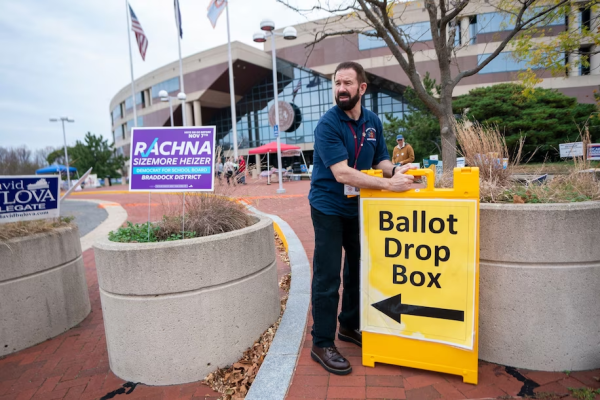
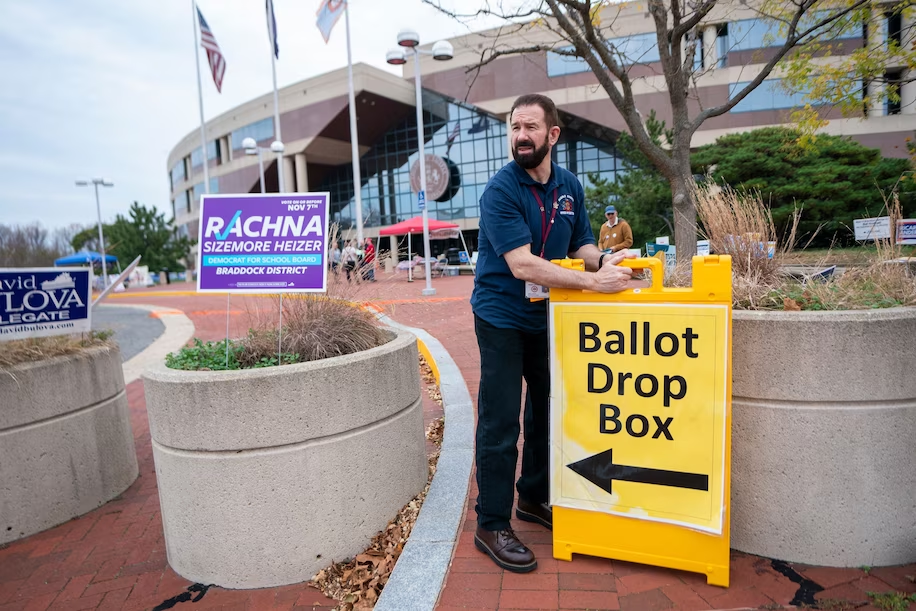
Candidates endorsed by the Democratic Party retained all 12 seats on the Fairfax County School Board in the election held on Tuesday, as per unofficial state results.
There were nine district and three vacant at-large slots contested in the election. Incumbents sought reelection in the Hunter Mill, Mason, and Providence districts. Additionally, one at-large member vacated the seat to run in the Braddock District, resulting in a board with over half of its members being newcomers.
Despite school board races being nonpartisan, the vast majority of candidates in Tuesday’s election received endorsements from local political parties, highlighting the growing politicization of school boards. This year, the Fairfax County Democratic Committee conducted an open election for its endorsements, and the unofficial results suggest voter approval of the Democratic-backed school board’s actions during the past four years. This period was characterized by some challenges as the district resisted certain policies advocated by Governor Glenn Youngkin (R).
The election results indicate public dissatisfaction with political attacks on the state’s renowned public schools and teachers, according to Karl Frisch, who is leading in the reelection race for the Providence District. Fairfax County residents have expressed a desire for safe, inclusive schools, exceptional educators, and equal access to opportunities for every student, Frisch added. The Fairfax board oversees Virginia’s largest school district, responsible for nearly 200 schools and over 180,000 students. Their responsibilities include setting priorities for the district’s $3.5 billion budget, implementing a new seven-year strategic plan, and addressing pandemic-induced learning loss.
The school board has often found itself at odds with Youngkin, who, during his 2021 campaign, capitalized on the parental discontent stemming from school closures during the pandemic. This approach has since become a model for Republicans nationwide running on education-related issues.
Virginia Gov. Glenn Youngkin (R) visits a polling station on Tuesday. (Julia Nikhinson for The Washington Post)
Since assuming office, Youngkin has implemented executive orders to prohibit “inherently divisive” subjects in school curricula and to permit parents to opt their children out of mask mandates. Additionally, his education department has revamped the state’s history standards and eliminated protections for transgender students in schools, which were established by Youngkin’s predecessor.
At virtually every juncture, Fairfax schools resisted the governor’s directives. The school board spearheaded a coalition of seven school districts in a legal challenge to halt the governor’s mask-optional mandate, which the state legislature subsequently enshrined into law. Despite Youngkin’s initial executive order on his first day in office, which prohibited “inherently divisive concepts” and dismantled numerous equity initiatives at the state level, the district proceeded to adopt an educational equity plan in June.
Tensions resurfaced in the summer when the state approved Youngkin’s contentious model policies for the treatment of transgender students in K-12 public schools. Fairfax County Public Schools openly rebuffed the governor’s new policies.
The election results manifest the endorsement for opposition to the Youngkin administration. In almost every race, candidates backed by the Democratic Party outperformed their Republican-endorsed counterparts.
In the competition for the three at-large seats, Democratic-endorsed candidates Kyle McDaniel, Ryan L. McElveen, and Ilryong Moon were in the lead against three Republican-endorsed and three independent candidates. If the results remain unchanged, McElveen and Moon would both make a return to the board after serving in previous terms, while McDaniel, a pilot, would be a newcomer to the governing body.
In the Braddock District, Rachna Sizemore Heizer, currently serving as an at-large member on the board, was in the lead against Priscilla DeStefano. Robyn Lady, a former counselor and director of student services in FCPS, was leading the race against Paul Bartkowski for the Dranesville seat.
In the Franconia District, Marcia St. John-Cunning was leading in the race against Kevin Pinkney. St. John-Cunning had faced a temporary disqualification due to an error in her petition forms, revealed in a complaint by the Eighth Congressional District Republican Party. However, a judge later overturned that decision, reinstating St. John-Cunning, who had worked for Fairfax County Public Schools as a family liaison and family engagement regional representative.
In the Hunter Mill District, incumbent Melanie Meren was set to retain her seat, surpassing Harry Jackson, a candidate who stirred controversy within the local GOP and faced several issues during his school board campaign. Meren, initially elected in 2019, expressed her commitment to strengthening existing board relationships and concentrating on strategies to retain staff in a questionnaire with The Washington Post.
In the Mason District, incumbent Ricardy Anderson took the lead over Kristin Ball. Anderson, elected to the board in 2019, emphasized the need to secure additional funding to tackle teacher shortages. In the Mount Vernon district, Mateo Dunne was in the lead against Stori Zimmerman. Karl Frisch, elected to the Providence District in 2019, was leading in his reelection bid against Tony Sabio.
In the Springfield District, Sandy Anderson was leading against independent candidate Peter Bixby-Eberhardt and Republican-backed Debra Tisler. The final seat, in the Sully District, seemed to be going to Seema Dixit, who competed against Cynthia Walsh. Dixit, co-founder of the Women Empowerment Foundation, expressed a commitment to closing opportunity gaps and addressing learning loss in a questionnaire for The Washington Post.
On Tuesday, Steven Larsen, a 62-year-old retiree, proudly sported the Republican Party pin on his jacket outside Belle View Elementary School. Having just voted for Stori Zimmerman, the GOP-endorsed candidate in the Mount Vernon school district, Larsen, whose wife recently retired as a schoolteacher, expressed concerns about the direction of Fairfax County schools. He wasn’t taken aback by the local school board’s resistance to many of Youngkin’s initiatives.
Many voters at the polls on Tuesday expressed a desire for less political influence on the school board.
Pilar Sanders, 38, a lifelong resident of the Fairfax area who cast her vote at Belle View Elementary School, acknowledged the political nature of the region. She emphasized her preference for a focus on education rather than excessive political involvement, considering the significant number of her friends who are schoolteachers.
Fairfax County Board of Supervisors Chairman Jeffrey C. McKay (D) engaged with voters at a precinct in West Springfield High School. Some voters expressed concerns about schools resisting inclusive environments and advocating for what is often termed as parents’ rights.
McKay shared his apprehension about the ongoing discourse surrounding public education. However, he expressed optimism about the response from Fairfax County voters, emphasizing their intelligence. Recognizing the school system’s crucial role as an economic magnet for the county, he underscored the need to safeguard its reputation, as people are drawn to Fairfax County for its quality schools.
Despite the focus on contentious topics, a significant number of candidates in the election centered their campaigns on common themes. These included addressing the learning setbacks caused by the pandemic, retaining high-quality teachers, and maintaining a non-political stance on the board.
Doug Ying, who has young children about to enter the school system, emphasized his search for candidates advocating for increased teacher salaries and the development of robust schools. He was present outside the Fox Mill Elementary School precinct with his 2-year-old daughter.
“We are fortunate to have outstanding public school districts in this area. Ensuring we can attract and retain top talent is crucial,” emphasized Ying, a Democrat. “As we plan to stay in this area while our kids grow up, maintaining or even enhancing the current standard of education is a priority for us.”
Contributions to this report were made by Omari Daniels.
The Supreme Court is set to review a request from the Justice Ministry to declare the ‘international LGBT public movement’ as an extremist organization.
The Russian Justice Ministry has initiated legal proceedings in the Supreme Court to label an “international LGBT public movement” as extremist, marking another assault on the already marginalized LGBTQ+ community in the country.
In an online statement, the ministry declared that the Russian authorities have identified “signs and manifestations of extremist nature” in the activities of the LGBT movement in Russia, citing concerns about the “incitement of social and religious discord.”
The ministry did not elaborate on the definition of the “international LGBT public movement” or how this designation would be implemented. The lawsuit is anticipated to be reviewed by Russia’s supreme court later this month.
Historically, the Kremlin has utilized the extremist classification to prosecute various entities, including human rights groups, independent media, and political opposition, including associates of Kremlin critic Alexei Navalny, resulting in lengthy jail sentences for some.
Since the commencement of the conflict in Ukraine, Vladimir Putin has initiated a renewed campaign to endorse “traditional values,” with anti-gay rhetoric becoming a focal point of his political agenda. In earlier addresses, Putin accused the West of “progressing toward open satanism,” citing the advocacy for gay and transgender rights in Europe as an illustration.
During a recent speech on Friday, the Russian president reiterated his contempt for the LGBTQ+ community, specifically referring to transgender individuals as “transformers.”
The lawsuit filed on Friday follows a series of recent laws aimed at suppressing LGBTQ+ rights in Russia. Earlier this year, Putin endorsed a law prohibiting “LGBT propaganda” among adults. The legislation criminalized any activity perceived as an effort to promote what Russia terms “non-traditional sexual relations” – be it in film, online, advertising, or public spaces.
In the aftermath of this law, Moscow’s Bolshoi theatre removed a contemporary ballet about the Russian dancer Rudolf Nureyev from its repertoire. Additionally, bookstores and cinemas withdrew all content featuring LGBTQ+ themes.
Certain measures taken by the Kremlin to suppress the LGBTQ+ movement have faced ridicule from critics due to their perceived absurdity. Recently, a well-known Russian television channel edited out a rainbow from K-pop music videos, prompting a request from the Russian Duma to officially declare that there is no association between rainbows and the LGBTQ+ community.
In a parallel move over the summer, Russian lawmakers prohibited medical interventions and administrative procedures that would enable individuals to undergo gender changes.
The proposed bill faced condemnation from human rights activists on Friday, with critics arguing that the measures were a move to establish an internal enemy amid Russia’s ongoing conflict in Ukraine.
Igor Kochetkov, the leader of the human rights organization Russian LGBT Network, asserted that the bill was a component of Moscow’s strategy to “fabricate imaginary enemies” within the context of its ideology promoting ‘traditional values’. He further characterized this ideology as increasingly totalitarian.
Kochetkov highlighted the vagueness in the bill’s language, emphasizing that there is no concrete entity called an “international LGBT movement.” However, he expressed a clear concern that, in his interpretation, the legislation would render all legal activities of LGBT organizations impossible in Russia.
In recent days, the area has experienced several neo-Nazi incidents, ranging from the distribution of antisemitic flyers and demonstrations to a visit by white supremacist Nick Fuentes.
A Torchy’s customer filmed a group of men who dined at the restaurant in Nazi uniforms and used hate speech.
In an unexpected turn, a group of actual neo-Nazis casually entered a local taco establishment for a meal, adding to the recent surge of white supremacist activities in the region. Over the past week, headlines have been dominated by instances of white supremacists stepping out of their shadowy confines to disturb unsuspecting North Texans in public spaces.
Texas has been a focal point for right-wing extremism and anti-government sentiments, exemplified by the prevalence of MAGA supporters who participated in the storming of the U.S. Capitol on January 6, 2021. Despite the existing backdrop of such incidents, the recent events in the headlines have managed to stand out, marking a disturbing trend.
Heidi Beirich, co-founder of the Global Project Against Hate and Extremism, noted, “It sure seems like North Texas and the Dallas area is facing a surge of these kinds of events, protests and just general activities.”
In the previous year, Texas claimed the top spot in the nation for the distribution of white supremacist propaganda, as reported by the Anti-Defamation League. Antisemitic incidents in the state saw a staggering increase of nearly 90% from 2021 to 2022.
Heidi Beirich, expressing concern about the trajectory of such hate groups, presented a rather ominous outlook. She remarked, “This may simply be a harbinger of the future for the rest of the country, frankly, because … these very hardcore groups — the Active Clubs, the Patriot Front, the Proud Boys, other types of neo-Nazis — have sure been showing up in public in ways that they haven’t been in the past. And I think that it’s just going to get worse in 2024.”
As we navigate the unfolding situation, here are four noteworthy headlines from this week in North Texas neo-Nazi developments.
Neo-Nazis Dine at Torchy’s Tacos
This week, The Observer highlighted an unsettling incident where a group dressed in Nazi attire, including an individual wearing a red swastika armband, dined at a Fort Worth Torchy’s Tacos on October 8. The incident gained widespread attention after customer Jessica Gregorio shared a video on TikTok capturing the episode.
According to Gregorio, one of the men uttered “white power” while passing by her. In response, she proudly identified herself as a Jew, to which he callously remarked, “that’s why we’re getting blasted in Israel.” Torchy’s Tacos has since issued a statement denouncing the incident.
Antisemitic Flyers Strewn Across DFW
In recent weeks, North Texas has been marred by the presence of racist and antisemitic literature, including flyers discovered in Prosper and Allen in late September. The disturbing trend has persisted, with approximately 250 antisemitic flyers found on windshields at the Botanic Garden in Fort Worth on Sunday, as reported by WFAA. The garden’s staff promptly removed the propaganda, and the CEO released a statement condemning hate speech. A Reddit user connected the incident to the group that dined at Torchy’s Tacos, lamenting the continued existence of Nazis in the present day.
Neo-Nazis Protest Outside Pro-LGBTQ+ Church
Over the weekend, Dallas faced its share of neo-Nazi activity when an antisemitic group, potentially linked to the Torchy’s Tacos incident, gathered outside the LGBTQ+-friendly Cathedral of Hope in Oak Lawn on Sunday. Members of the group brandished Nazi flags and displayed hateful signs, as reported by WFAA. A clergy member from the church revealed that the group conveyed messages of hatred against Jews and the LGBTQ+ community. Despite the intimidation, the church remains resolute in promoting hope and worship, refusing to be cowed by the presence of these right-wing fascists.
White Supremacist Welcomed by GOP Activist
The former state representative Jonathan Stickland, a known far-right activist, reportedly hosted white supremacist Nick Fuentes at his office near Fort Worth, according to The Texas Tribune. Stickland operates the Pale Horse Strategies PAC, affiliated with top Republican officeholders in Texas, including Lt. Gov. Dan Patrick. The office also saw the presence of Kyle Rittenhouse, who shot two Black Lives Matter protesters in 2020, and Republican Party of Texas Chair Matt Rinaldi. Fuentes, a Holocaust denier and self-proclaimed “proud incel,” has dined with former President Donald Trump and has connections to staffers of Arizona Republican U.S. Rep. Paul Gosar. This shift in political associations is deemed “completely unacceptable” by observers.
“It certainly doesn’t help when political figures play footsie with these people,” she said. “It just sanctions them and makes them feel that their activities are mainstream.”
A real estate service in North Texas is aiding families who no longer feel secure in Texas in finding homes in other states where they perceive greater safety.
Brianna Hurley woke up the morning after the vote with a sense of urgent clarity: Her transgender child would never be safe in Texas.
“I told my partner, ‘We need to leave now,’” she recalled.
The night before, in August 2022, Grapevine-Colleyville ISD had approved the district’s version of “Don’t Say Gay” rules. Trans kids were effectively banned from playing school sports and would be made to use bathrooms matching the sex on their birth certificates.
To Hurley, whose family was living at the time in a city south of Fort Worth, that vote was the last straw. Her trans son had already endured a lot at a relatively young age. Earlier that summer, while at a youth Pride picnic, protesters screamed at the LGBTQ+ kids in attendance that they were “pedophiles” and would “burn in hell.”
Hurley had to warn her children about speaking to strangers after Texas GOP leadership directed authorities to investigate as “abusers” families of trans kids receiving gender-affirming care. A knock at the door could be Child Protective Services ready to take both of her boys away.
It was all too much, and exhausting. Hurley knew the time had come for her family to leave Texas.
“We should never have been forced to move because of who my child is,” Hurley said during a news conference announcing the “Stop Hate in Real Estate” initiative. “We tried to stay and fight but couldn’t risk sacrificing him to the cause.”
So, soon after GCISD’s vote, Hurley put her home up for sale, she told the Observer. A mortgage broker herself, she’d enlisted a service called “Flee Red States” via the Plano-based Texas Pride Realty Group, as her family prepared to migrate to Colorado.
Flee Red States assists LGBTQ+ community members in relocating to bluer pastures. It grew out of a more localized version, initially dubbed “Flee Texas,” after founder Bob McCranie started fielding calls from other deep-red U.S. pockets. The service connects clients with LGBTQ+ and allied real estate professionals, who help them secure a soft place to land.
The stakes are high: The Human Rights Campaign (HRC) recently declared a state of emergency for LGBTQ+ Americans for the first time in the organization’s decades-long history.
“I told my partner, ‘We need to leave now.’” – Brianna Hurley, former Texas resident tweet this
In June, HRC reported that Texas had produced 20% of all anti-LGBTQ+ legislation nationwide at that point in the year. Skirmishes over laws targeting drag queen story time and gender-affirming healthcare unfold elsewhere in the U.S. each day.
Hurley described living in constant fear while still in Texas. She likened it to sitting in a pot of water that’s slowly being turned up to a boil. The incremental temperature changes may not have fully registered at the time, but looking back, it’s clear to see the “water is quite warm.”
The current anti-LGBTQ+ trend among conservative lawmakers has prompted more progressive states — including Oregon, California and Vermont — to serve as refuges for those on the queer migration trail. Some companies are now joining in the resistance. The job-search website Indeed, for instance, is reportedly offering $10,000 for trans employees needing to leave for inclusive states.
Texas Republicans, meanwhile, continue to test the limits in legislation, ever expanding an already virulently anti-LGBTQ+ agenda.
The advocacy organization Equality Texas tallied 76 anti-LGBTQ+ bills filed in the state in 2021. This year the count has nearly doubled to 141.
Hurley and her family now live in Colorado, a move that was “absolutely 100% worth it” but that came at a significant financial cost. She keeps up with the news coming out of her former state, where some of her LGBTQ+ friends and friends with transgender kids still live.
“We had a good-sized queer community down there,” she said. “And I’m terrified for all of them.”
When Bob McCranie came out in 1992, gay people ”didn’t have rights,” he said. He could be denied employment and he could be denied housing, just because of his sexuality. But the LGBTQ+ community fought hard over the years to make strides in the eyes of the law.
To McCranie, the latest anti-LGBTQ+ push is both “intentionally destructive” and cruel.
“It feels worse to have them stripping those rights away, rather than to have not had those rights to begin with,” he said.
Speaking with the Observer in early September, McCranie sounded equally troubled and determined. He’d helped some 28 groups of people flee red states and planned to follow suit himself in the coming months.
In 2022, discussions with friends had started to reveal a throughline, he said: Where would you go if you moved away? What’s your plan B? Before long, McCranie launched Flee Texas, which would later become Flee Red States. It clearly resonated. People from other conservative corners of the U.S. soon began to get in touch.
Bob McCranie believes LGBTQ+ Texans should consider moving for their safety.
“I realized this is a universal conversation going on in the gay community,” McCranie said. “I’m not stirring this up and making it happen. People are already migrating.”
McCranie is quoted in a Realtor.com article in June titled, “The LGBTQ+ Migration: Why Many Are Leaving Everything Behind to Move Across the Country.” Houston-based Realtor Anita R. Blue told that outlet the official number of LGBTQ+ migrants is unknown but undoubtedly on the rise.
The trend has begun bleeding over into the housing market, Blue continued: “Housing’s going to suffer. People don’t want to live or buy a home in a state where they don’t feel safe.”
After the June 2022 overturning of Roe v. Wade, which had for decades enshrined the constitutional right to an abortion, some political observers wondered what would happen if the issue of gay marriage were to again reach the U.S. Supreme Court. Seven years prior to Roe’s reversal, the landmark high-court ruling in Obergefell v. Hodges legalized same-sex marriage nationwide.
Considering the force and direction of today’s political winds, McCranie worries that gay marriage could be next right to be swept away. And he fears what could come of queer couples’ property rights should the issue get kicked back to the states.
When Texas Pride Realty Group started in 2009, McCranie explained, there was an idea that LGBTQ+ Texans would be safe as long as they lived in blue hubs like Dallas, Houston and Austin. He can’t say that today.
McCranie’s realty group helps sell homes without disclosing sensitive information, such as reasons for leaving the state. It also assists in connecting clients with experts in other parts of the U.S. or countries who will treat them with dignity.
He advises some to cut and run as soon as they can.
“If you have a trans child, you need to get out of the jurisdiction now. And you don’t want to call Sally the Realtor to help you, because Sally the Realtor may not like trans kids either and turn your ass in,” he said. “You want to hire somebody who gets your family, understands, gets you out quietly and then gets you to a location where you can be safer.”
Texas lawmakers approved a slew of anti-LGBTQ+ bills in 2023, including those targeting gender-affirming care and drag shows. Laws like these prompted the Canadian government this year to caution U.S.-bound queer travelers about what they could encounter in states that restrict gay and trans folks’ rights.
McCranie believes it’s gotten to the point where LGBTQ+ people need to move assets and money out of conservative states before lawmakers clamp down even more.
“It sounds hyperbolic. It sounds like, ‘Oh gee, Bob, you’re just stirring up the pot and you’re fearmongering,’” McCranie said. “If you study history, look at the headlines.
“I am not going to be on the last train out of Paris.”
“I realized this is a universal conversation going on in the gay community. I’m not stirring this up and making it happen. People are already migrating.” – Bob McCranie, Flee Red States tweet this
At the same time that Texas has begun to bleed LGBTQ+ residents, newcomers from other parts of the country continue to pour in. The Los Angeles Times wrote earlier this month that “droves of Californians” are moving to the Lone Star State.
Gov. Greg Abbott touted Texas’ draw this summer during a bill-signing ceremony for a law that effectively bans trans athletes from playing in college sports. Texas “is a very welcoming state,” he insisted when asked about LGBTQ+ constituents who feel shunned, adding that lawmakers would continue to “protect all Texans and their freedoms.”
Johnathan Gooch, communications director for Equality Texas, noted that the Lone Star State holds on to its natives more than anywhere else in the country. To him, it says a lot that so many choose to remain: They’re attracted to Texas’ culture, grounded in homegrown friendships.
But Gooch is also well aware that the state’s political pressures have driven some away — at least, those who can afford to leave. He says Equality Texas has heard stories from parents with trans kids who’ve been put in a terrible bind as they mull uprooting their families. In some cases, one parent will move away with the children while the other stays behind for their job.
And transgender men and women are now leaving as their own healthcare access becomes jeopardized, Gooch said. The ban on gender-affirming care for LGBTQ+ youth has implications for trans adults, too, in that some specialists are now relocating their practices or being forced to shut down.
Activist Johnathan Gooch is staying in Texas and fighting for his rights in the capital.
“Seeing people leave is a really powerful reminder that if we want to stay, we have to fight,” he said. “We have to be intentional about making this place — our state — welcoming for everyone.”
McCranie knows that Flee Red States will have its detractors. Some critics insist that there’s a blue wave on the horizon, that LGBTQ+ Texans should remain and work to turn the tide.
He views it differently.
“The idea that we’re going to win against [Florida Gov. Ron] DeSantis or win against Greg Abbott is absurd,” McCranie said. “We’ve lost this ground. Get to someplace safe.”
The FBI logged a nearly 20% rise in anti-LGBTQ+ bias crimes in 2022 over the previous year. This comes as former President Donald Trump, the current GOP primary frontrunner, has turned increasingly combative toward the LGBTQ+ community.
Speaking with the Observer in early November, McCranie relayed that he expects to see a spike in people leaving red states closer to the 2024 election.
No Texas Democrat has won a statewide race in some 30 years, he pointed out. Even the most promising candidates, such as former gubernatorial hopeful Beto O’Rourke, often fail by double-digit margins.
The way McCranie sees it, LGBTQ+ Texans can stay in the battle if they want, but they also shouldn’t be faulted for opting to get out of harm’s way. Perhaps they’ll see the merit in moving to a purple state and “defending the line” there.
Nearly every year, in nearly every election, LGBTQ+ people have fought to gain or simply maintain their civil rights, he said.
“And it’s just exhausting,” he continued. “It’s exhausting to always have your identity used as a political football to get votes.”
McCranie recently took his own advice. He packed his belongings and headed to a purple state on the East Coast.
For the last year of Ryan Lewis’ time living in Texas, he was scared. He carried a gun wherever he went, checking to make sure it was there before holding his boyfriend’s hand in public.
“I realized I was doing that, and I really hated it,” he told the Observer in September. “I don’t do that here.”
These days, Lewis calls Michigan home. As he described his decision to say goodbye to Texas, where temperatures soared as high as 110 that month, rain fell outside the open windows of his new place, the air a cool 70 degrees.
Lewis sought the help of McCranie, whose team he credits with preparing his house for sale quickly after watching Texas’ landscape turn more hostile toward the LGBTQ+ community. Lewis, who is bisexual, said his 8-year-old “was pretty adamant that they were not a girl” from the time they were around 3.
Raising a non-binary kid in a deep-red state was a little scary, Lewis said. A teacher once informed his child they weren’t allowed to use the bathroom if they were neither a boy nor a girl, sending them home crying.
Lewis soon realized that a teacher or parent who didn’t approve of his decision to let his kid explore gender could potentially alert Family Services and spark an investigation: “That was when I started calling everybody, and we all coordinated and said, ‘We need to get out of Texas.’”
He’d noticed a shift in tone over the past couple of years “in how people were interacting with us” in Texas. White supremacists and other extremists were becoming increasingly emboldened, turning up outside events. Lewis understood that these types of hateful displays sometimes happen in big cities but became alarmed when they started occurring more frequently.
And Republicans had ramped up legislative attacks against LGBTQ+ Texans, so much so that the state’s GOP branded homosexuality as an “abnormal lifestyle choice” in its 2022 platform.
“They have normalized hateful rhetoric against the queer population as a whole, to the point that it has mobilized the base of extremely violent people who have no problem showing up at a drag show armed and ready to kill,” Lewis said. “I’m not willing to risk my kid with armed Nazis. I’m just not. So, that’s really the crux of it.”
Paul Lewis, partner of Ryan Lewis, also trekked up north. (The two coincidentally have the same last name.) Until moving to Michigan in July, Paul had lived in Texas his entire life.
Tension hung in the air everywhere Paul went in his former state, he said; by contrast, Pride flags brighten many windows in his new hometown. Michigan leadership recently expanded the state’s anti-discrimination law to cover gender identity and sexual orientation. Officials have also worked to attract more LGBTQ+ community members to the Great Lakes state.
Critics may question their decision to leave, but Paul believes there’s “more than one way” to fight, adding, “I know at the end of the day, when I go to sleep, my family’s happy, they’re fed and they’re safe. That’s all that matters to me.”
Ryan echoed that sentiment: The move to Michigan was challenging.
It was also worth it.
“It was not easy. It was very stressful. It was very expensive. But we are all so much happier,” he said. “You know, my kid is thriving in school and I’m not afraid of their teacher — I’m not afraid of other parents there.
What exactly is a Golden Visa? A Golden Visa is a program that facilitates swift entry into a country and offers additional benefits, including extended visa-free stays and the potential for citizenship. While Golden Visas are often associated with the affluent elite, it’s noteworthy that various countries present affordable residency and citizenship opportunities through investment.
HONG KONG
You can obtain residency for your spouse and unmarried children under 18, along with employment and study rights under the selected residence scheme, without any required investment.
SAINT LUCIA
You have the opportunity to secure residency for your spouse and unmarried children under 18, granting them employment and study rights under the chosen residence scheme, all without the need for any investment.
LATVIA
Acquire visa-free entry to the Schengen area, renewable resident permits without a mandatory minimum stay, and the possibility of citizenship after 10 years of residency, all for approximately INR 69,69,733.
MONTENEGRO
By making prudent investments, you can secure the opportunity to live and work in Montenegro. The golden visa program not only offers residency privileges but also opens up the potential pathway to citizenship.
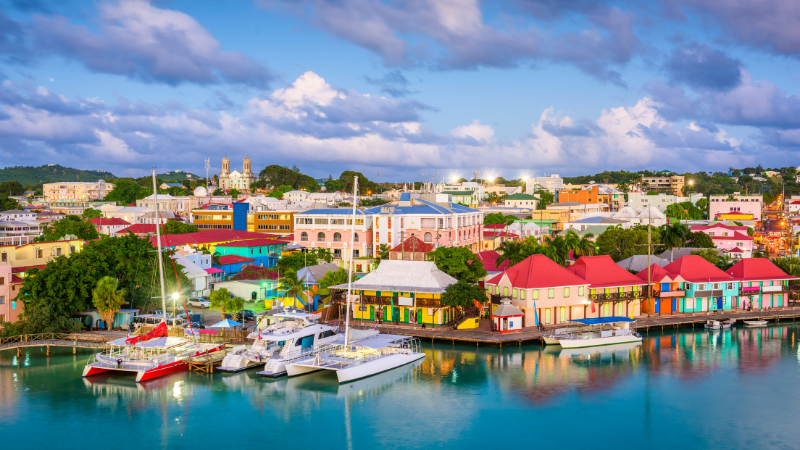
ANTIGUA NAD BARBUDA
To be eligible for an Antigua and Barbuda Golden Visa, individuals must be over the age of 18 and make a substantial payment of approximately 83,18,960 or choose from alternative investment options.
AUSTRIA
Invest around INR 35 lakh to gain the benefits of visa-free travel within Austria, the EU, and the Schengen Area, with the potential for citizenship after a 10-year residency.
THAILAND
The Thailand Elite Visa comes in various tiers, each offering exclusive VIP privileges. For an approximate amount of 13 lakh, you can obtain a five-year multiple-entry visa, extendable for up to one year per entry.
GRENADA
Grenada’s citizenship by investment program offers two qualifying options. You can acquire a Grenada passport in three to four months with an investment of approximately INR 1,24,78,792.
























 fleeredstates.blog
You must be logged in to post a comment.