A blog for LGBTQIA+ migrating to more welcoming states or counties
Author: Bob McCranie
I am so proud to run Texas Pride Realty Group. We set out on a mission in 2009 to serve the diverse communities of Texas and to hire kick-ass agents who practice the highest ethics and professionalism. I believe that the agent's role is to help the consumer make well-educated decisions, even if those decisions lead away from a purchase or sale.
I believe that education is vital in this industry. I currently have over 1300 hours of real estate courses on my transcript with the State of Texas. Additionally, I am a Real Estate Business Coach at Tom Ferry International, the largest-real-estate specific coaching company in the world. I coach agents in the US and Canada, and have coached clients in Australia, New Zealand, Brazil, and Switzerland. I also have knowledge of the UK and Irish markets.
Opening Texas Pride Realty was always a goal of mine and I am working night and day to be sure it is successful. The best way to do that is to be sure clients are satisfied and agents are busy. What better legacy could someone leave in this industry than a group of well-trained, high-quality brokers who do your job better than you?
Selling your house is a big decision. And that can make it feel both exciting and a little bit nerve-wracking. But the key to a successful sale is finding the perfect listing agent to work with you throughout the process. A listing agent, also known as a seller’s agent, helps market and sell your house while advocating for you every step of the way.
But, how do you know you’ve found the perfect match in an agent? Here are three key skills you’ll want your listing agent to have.
They Price Your House Based on the Latest Data
While it may be tempting to pick the agent who suggests the highest asking price for your house, that strategy may cost you. It’s easy to get caught up in the excitement when you see a bigger number, but overpricing your house can have consequences. It could mean it’ll sit on the market longer because the higher price is actually deterring buyers.
Instead, you want to pick an agent who’s going to have an open conversation about how they think you should price your house and why. A great agent will base their pricing strategy on solid data. They won’t throw out a number just to win your listing. Instead, they’ll show you the facts, explain their pricing strategy, and make sure you’re on the same page. As NerdWalletexplains:
“An agent who recommends the highest price isn’t always the best choice. Choose an agent who backs up the recommendation with market knowledge.”
They’re a Great Negotiator
The home-selling process can be emotional, especially if you’ve been in your house for a long time. You’re connected to it and have a lot of memories there. This can make the negotiation process harder. That’s where a trusted professional comes in.
A skilled listing agent will be calm under pressure and will be your point-person in all of those conversations. Their experience in handling the back-and-forth gives you with the peace of mind that you’ve got someone on your side who’s got your best interests in mind throughout this journey.
They’re a Skilled Problem Solver
At the heart of it all, a listing agent’s main priority is to get your house sold. A great agent never loses sight of that goal and will help you prioritize your needs above all else. If they identify any necessary steps you need to take, they’ll be open with you about it. Their commitment to your success means they’ll work with you to address any potential roadblocks and find creative solutions to anything that pops up along the way.
“Just as important as the knowledge and experience agents bring is their ability to guide you smoothly through the process. Above all, go with an agent you trust and will feel comfortable with. . .”
Bottom Line
Whether you’re a first-time seller or you’ve been through selling a house before, a great listing agent is the key to success. Let’s connect so you have a skilled local expert by your side to guide you through every step of the process.
Soon, affluent ex-pats may be shut out of this popular European bourse – and easy access to Europe as a home.
A long-standing visa program in Portugal, known as the Golden Visa, may be facing termination, prompting a warning from the country’s president for prospective citizenship applicants to act promptly.
The Golden Visa program, also utilized by other European countries such as Greece and Ireland, has been used to attract business and investment to the EU. Portugal, in particular, has been successful in drawing high-net-worth individuals to its picturesque landscapes, historic architecture, and charming towns. In 2022, Portugal saw an influx of 1,300 millionaires, as reported by Henley & Partners and New World Wealth.
However, critics of the Golden Visa program have raised concerns about the rising property prices resulting from the influx of wealth, which has made it increasingly difficult for Portuguese nationals to afford homes. Additionally, critics point out that the program not only grants citizenship in Portugal but also allows foreign nationals to establish legal residency in other EU countries, such as France and Italy.
The Portuguese parliament has voted to terminate the Golden Visa program, with only a potential veto from Portuguese President Marcelo Rebelo de Sousa keeping the program alive. The clock is now ticking, and there is a limited window for expatriates to qualify for the program before it is potentially discontinued.
The legislature intends to reintroduce the legislation with a potentially veto-proof majority in September or October at the latest. Since the Golden Visa application process takes approximately a week to complete, individuals who submit their paperwork in the coming weeks have a good chance of being approved for the program just before its anticipated termination.
For affluent foreigners seeking an attractive destination, Portugal’s Golden Visa program has long been an appealing option. Eligible expatriates need to spend only 14 days in the country to meet residency requirements and invest around $300,000 in the country to fulfill the program’s investment criteria.
Equalling, or perhaps even eclipsing the appeal of Europe and Asia, South America has emerged as one of the most fashionable destinations for digital nomads worldwide.
In high demand due to its warm hospitality, tropical weather, and welcoming attitude toward outsiders, the region is experiencing a substantial rise in the adoption of remote work practices as an increasing number of digital nomads relocate to the South American countries, whether it’s for a temporary period or on a more permanent basis.
While there are plenty of fantastic destinations to choose from, ranging from Colombia’s tropical Caribbean coastline to the lesser-known Northeast of Brazil, there’s one that’s been grabbing headlines recently due to its accessibility and affordable cost of living.
The Nomad Capital Of South America
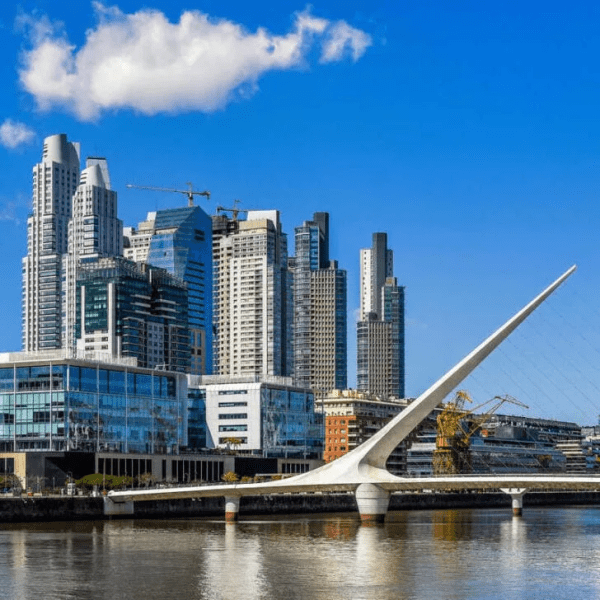
Argentina holds the unofficial title of the digital nomad capital of South America, with Buenos Aires currently ranked as the top destination in the region for this category, as confirmed by the resume-builder website Resume.io.
As the company points out, no other South American destination, excluding bots, has generated as much engagement under the ‘digital nomad’ hashtag as Buenos Aires, Argentina specifically has.
Digital nomads, who are expats working remotely from foreign countries, tend to form a closely-knit community. They often share their experiences of working as foreigners abroad on their social media profiles, which helps researchers gauge the concentration of digital nomads in particular areas.
While they are becoming increasingly receptive to digital nomadism, several national governments still do not comprehensively monitor digital nomad trends. Consequently, we often rely on rough estimates derived from geotags on social networks like Instagram and TikTok.
Nonetheless, Buenos Aires, along with Argentina as a whole, has climbed to the top spot in this year’s rankings, surpassing last year’s position.
Buenos Aires For The Win
Buenos Aires has become a magnet for a multitude of extended visitors, thanks to its flourishing co-working culture. The city boasts a wealth of work-conducive cafes, eateries, and co-working spaces, all equipped with fast and dependable WiFi.
The growth in the city’s expatriate community, driven by their increasing needs, has played a significant role. To meet the demands and transform into a nomad-friendly hub, Argentina has undergone modernization and expanded pathways for those interested in residing temporarily. Additionally, the country’s thriving startup environment has contributed to this phenomenon.
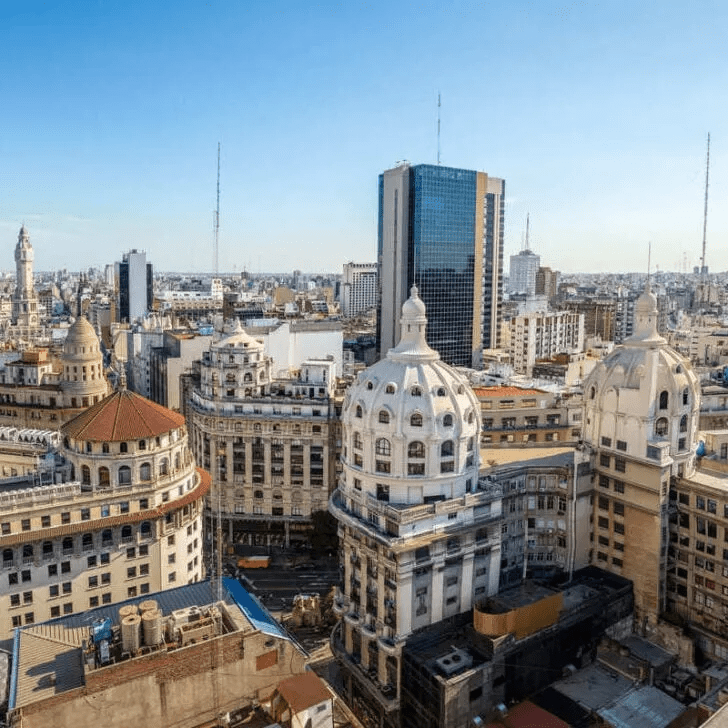
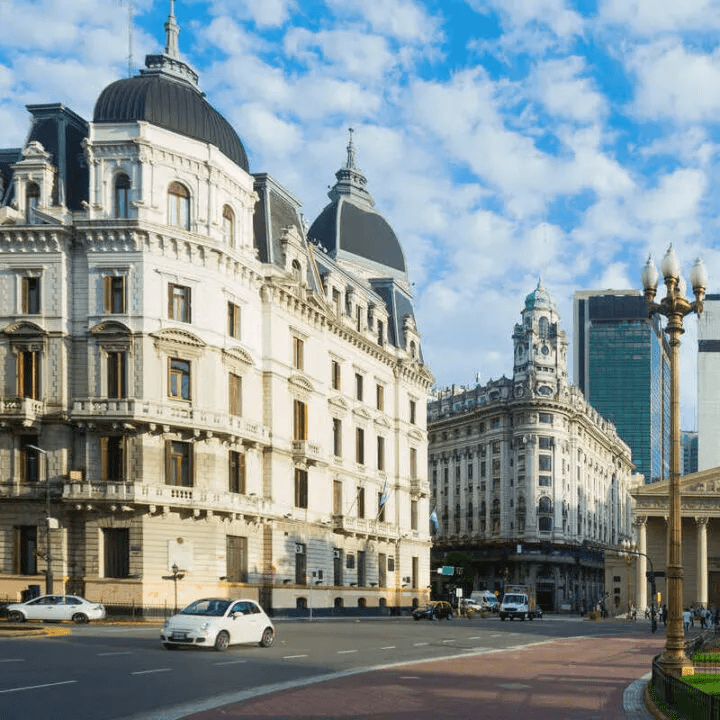
Dubbed the ‘Paris of the South’ for its exquisite European-inspired architecture, Buenos Aires stands as one of South America’s economic powerhouses. It is a hub for a multitude of startup initiatives and offers a vibrant and dynamic setting that greatly appeals to young nomads and entrepreneurs.
Argentina Is Incredibly Safe
When Americans decide to relocate abroad, their choice of destination is often influenced by factors such as the local infrastructure, the size of the expat community, which aids integration and fosters a sense of belonging, and above all, safety.
In this regard, Argentina has recently achieved a Level 1 certification from U.S. authorities. This places the country in the same category as renowned, traditionally secure European destinations like Iceland, Finland, Croatia, and others in terms of security levels.
For instance, Buenos Aires is a vast city with a population of over 15 million. However, its crime rates are notably lower than many of its counterparts in the broader Mercosur and Mercosur-associated region. This includes cities like Rio in Brazil and Medellin in Colombia, both of which are grappling with surging violence.
Traveling to or settling in Argentina, Americans are not even encouraged to exercise ‘increased caution’ when visiting. This isn’t to suggest that crime is entirely absent: Argentina is a developing country with the typical challenges of the developing world. You should still steer clear of rundown areas in the suburbs and be cautious of pickpockets. However, you don’t need to maintain an exceptionally high level of situational awareness while strolling in central Buenos Aires, as you might in, for instance, central Medellin.
The Second Cheapest Digital Nomad Destination
Furthermore, digital nomads are increasingly drawn to Argentina due to its remarkably affordable cost of living. This allows them to make the most of their earnings and enjoy a comfortable lifestyle while spending less.
The current state of the peso is quite challenging, with exchange rates at historic lows against the dollar. With just a couple of thousand dollars, you can likely manage well or even live comfortably in various Argentine cities, such as Cordoba, La Plata, and Mendoza.
While Buenos Aires is relatively pricier, the cost of living is still significantly lower than the U.S. average. According to NomadList, an average of US$1776 per month is sufficient to support remote living and work in the capital.
When it comes to affordability for digital nomads, Argentina is the second least expensive destination globally, with only Sri Lanka surpassing it in terms of cost-effectiveness.
Digital Nomad Visa That’s Easy To Apply For
Additionally, Argentina has introduced its own Digital Nomad Visa, simplifying the process for nomads to establish a residency in the country without the need for complex visa runs or breaching immigration regulations.
To be eligible for this visa, nomads must demonstrate a monthly income of at least $2,500 and confirm that their income comes from a foreign company not located in Argentina or similar entrepreneurial ventures meeting the same requirements.
Given that the typical nomad’s earnings often fall within the $2,000 to $3,000 range per month, Argentina emerges as one of the most straightforward and accessible options for remote work.
Experts offer locations where investors can take advantage of lifestyle pursuits and see potential home price appreciation
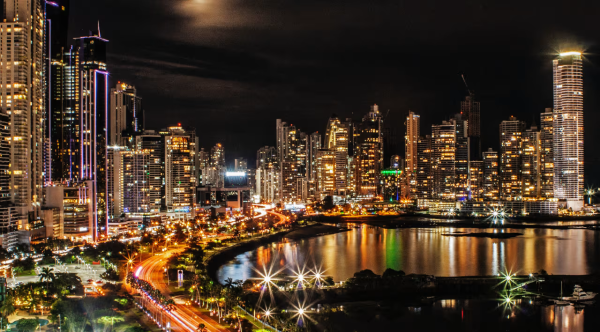
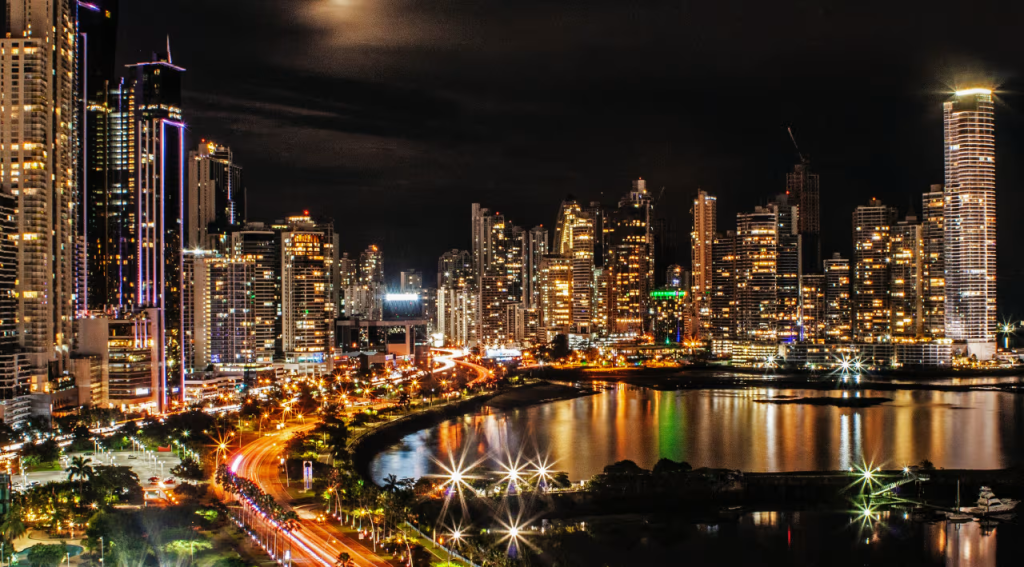
Luxury homebuyers who aim to optimize their investments while enjoying greater financial freedom are turning their attention to Panama. They are taking advantage of Panama’s appealing golden visa program, which permits affluent individuals to attain Panamanian residency by purchasing property valued at a minimum of $300,000. This residency in Panama brings significant tax benefits, as highlighted by Chris Lim, President of Christie’s International Real Estate. However, the most attractive benefit may be the exemption from taxing income earned abroad.
“The golden visa program has established Panama as a preferred destination for buyers seeking stability and attractive real estate opportunities,” he said. “Panama’s strategic location, serving as a bridge between North and South America, coupled with its robust economy, positions it as an enticing prospect for investors in pursuit of tax advantages and regions experiencing continuous infrastructure development.”
Launched in 2020, the program presents three options, each necessitating a five-year commitment. International investors can either commit a minimum of $300,000 to unencumbered real estate, make a substantial $500,000 investment in securities via the Stock Exchange of Panama, or deposit $750,000 with a certified Panamanian bank. Additionally, residing in Panama often leads to a considerably lower cost of living, making it an attractive choice for those in search of a more budget-friendly yet fulfilling lifestyle, according to Lim.
“Your money will stretch further here than it does in many other destinations,” he said. “Plus, the real estate appeal is rooted in Panama’s diverse climate, pristine beaches, safety and abundant activities.”
Here are three regions of the country that provide real estate prospects.
Boca Chica
For potential buyers who are enticed by the idea of residing in a picturesque beachfront destination, where they can spend their days basking in the sun and enjoying the beach, Boca Chica is an enticing option, according to Mike Vuytowecz, the founder of Inside Panama Real Estate, a Panama-based real estate firm.
Located on the central Pacific Coast of the country, Boca Chica is an idyllic town offering sweeping views of the Pacific Ocean, lush tropical forests, and the charm of its surrounding small islands. Vuytowecz describes Boca Chica as the ideal place for those in search of a peaceful coastal lifestyle.
Prospective buyers in Boca Chica can choose from a range of options, including beachfront villas, hillside homes, and undeveloped land. Prices vary based on the property’s size and amenities, with beachfront properties commanding top dollar, often exceeding US$1 million. However, residential properties that are not situated on the beach can be found starting at US$200,000. (Note that the U.S. dollar, along with the Panamanian balboa, is one of the official currencies of Panama.)
Boca Chica provides a high quality of life with an array of amenities, including marinas, hotels, seafood-focused restaurants, and beach clubs. Additionally, the nearby Golfo de Chiriqui National Marine Park is renowned for its exceptional diving and snorkeling opportunities.
“Boca Chica presents significant investment potential due to its natural beauty, accessibility and growing popularity among international tourists,” Vuytowecz said. “Additionally, the Panamanian government has been investing in infrastructure improvements, including road networks and airports, further enhancing the area’s accessibility and potential for growth.”
Buenaventura
Situated approximately two hours west of Panama City, Buenaventura is a sprawling, luxurious gated beach community that covers around 1,000 acres, as described by Kent Davis, the director of Panama Equity Real Estate, based in Panama City. He emphasized its massive size, more akin to a small city.
Buenaventura has drawn the interest of American and Canadian families, particularly since the pandemic’s onset, due to the presence of a high-quality school. Its abundant amenities include two beach clubs, an 18-hole golf course designed by Jack Nicklaus, a marina, an equestrian club, a swimming pool, and tennis and pickleball courts. Davis added, “Your living experience here will be exceedingly comfortable, as nothing essential is lacking.”
The available properties in Buenaventura encompass condominiums, a selection of townhouses, and villas, some of which are beachfront. For instance, prices start at US$300,000 for a one-bedroom condominium spanning 1,200 square feet, offering a balcony and picturesque ocean and marina views. Townhouses are available starting at US$400,000, while a four-bedroom villa with a swimming pool and extensive outdoor space can be purchased for US$700,000. Villas with golf course views typically begin at US$800,000, whereas beachfront villas range from US$1.5 million to US$3 million.
As an illustration, Panama Equity Real Estate presently has a listing for a four-bedroom villa in Buenaventura, strategically situated on the golf course and boasting over 3,700 square feet. The asking price for this property is US$980,000.
“Prices have appreciated faster than any other beach community along Panama’s Pacific coast, and the upward trajectory is expected to continue over the next few years as people take advantage of the golden visa,” Davis said.
Volcan
Volcan, situated in the scenic Chiriqui Highlands, is a delightful mountain town celebrated for its consistent cool climate, picturesque surroundings, and a vibrant community of expatriates, as highlighted by Vuytowecz.
“Volcan presents investment potential for those seeking a more relaxed lifestyle away from the bustling coastal areas,” he said. “The growing expatriate community has contributed to an increasing demand for properties, potentially leading to property value appreciation over time.”
Vuytowecz also noted that Volcan’s closeness to sought-after tourist spots like the Baru Volcano and the highlands of Boquete augments its potential for future property value appreciation.
Volcan provides a variety of property types, from simple single-family homes to upscale estates and rural properties with extensive land. “Many properties offer sweeping mountain views, lush gardens, and convenient access to hiking trails and natural reserves,” according to Vuytowecz.
In terms of affordability, property prices in Volcan are quite reasonable when compared to Panama’s beachfront locations, ranging from US$100,000 to US$400,000. Vuytowecz also noted that Volcan is well-equipped with amenities, including supermarkets, farmers’ markets, pharmacies, medical facilities, and educational institutions.
“The area also boasts a vibrant community with social events, clubs and organizations that contribute to a lively and inclusive atmosphere,” he said.
In a noteworthy move reflecting evolving global attitudes towards LGBTQ+ rights, Canada has issued a travel advisory that has sent ripples across the border. This advisory comes in response to a series of new laws enacted in several U.S. states, which have raised concerns over LGBTQ+ rights and freedoms. In this blog, we delve into the intricacies of this significant development, exploring both the legislative changes in the United States and Canada’s decision to caution its citizens traveling southward. Join us as we examine the intersection of travel, human rights, and international diplomacy in an ever-changing world.
The Canadian and U.S. flags are displayed on lamp posts in the downtown area, March 22, 2023, near Parliament Hill in Ottawa, Ontario.
TORONTO — Canada has recently revised its travel advisory for the United States, cautioning members of the LGBTQ+ community about the existence of laws in some American states that could impact them.
The Global Affairs department of Canada did not explicitly mention which states these laws pertain to, but they are strongly advising travelers to research the local regulations of their destination before embarking on their journey.
Jérémie Bérubé, a spokesperson for Global Affairs, conveyed in an email statement on Thursday, “Since the beginning of 2023, certain states in the U.S. have passed laws banning drag shows and restricting the transgender community from access to gender-affirming care and from participation in sporting events.”
“Outside Canada, laws and customs related to sexual orientation, gender identity, gender expression and sex characteristics can be very different from those in Canada,” the statement added. “As a result, Canadians could face certain barriers and risks when they travel outside Canada.”
Bérubé said no Canadians in the U.S. have complained to Global Affairs of how they were treated or kept from expressing their opinions about LGBTQ+ issues.
The Human Rights Campaign — the largest U.S.-based organization devoted to the rights of lesbian, gay, bisexual, transgender and queer Americans — in June declared a state of emergency for LGBTQ+ people in the U.S.
The NAACP in May issued a travel advisory for Florida warning potential tourists about recent laws and policies championed by Gov. Ron DeSantis, including bills that ban gender-affirming care for minors, target drag shows, restrict discussion of personal pronouns in schools and force people to use certain bathrooms.
In Arkansas Gov. Sarah Huckabee Sanders this year signed a law prohibiting transgender people at public schools from using the restroom that matches their gender identity. Similar laws have been enacted in states such as Alabama, Oklahoma and Tennessee.
Asked about the travel advisory change this week, Canadian Deputy Prime Minister Chrystia Freeland said travel advisories issued by Global Affairs Canada are based on advice from professionals in the department whose job it is to monitor for particular dangers.
“Every Canadian government needs to put at the center of everything we do the interests — and the safety — of every single Canadian and every single group of Canadians,” Freeland said.
She did not say whether her government had discussed the matter with its U.S. counterpart.
“It sounds like virtue-signaling by Global Affairs,” said Nelson Wiseman, a political science professor emeritus at the University of Toronto.
“In no U.S. state, to my knowledge, has any government charged or discriminated against an LGBTQ+ traveler because of their sexual identity or orientation. This all strains the credibility of the department,” he added.
The hospitality startup, Anyplace, initially launched as a platform offering individuals the flexibility to book hotels or rentals for a minimum duration of 30 days at a wide range of locations.
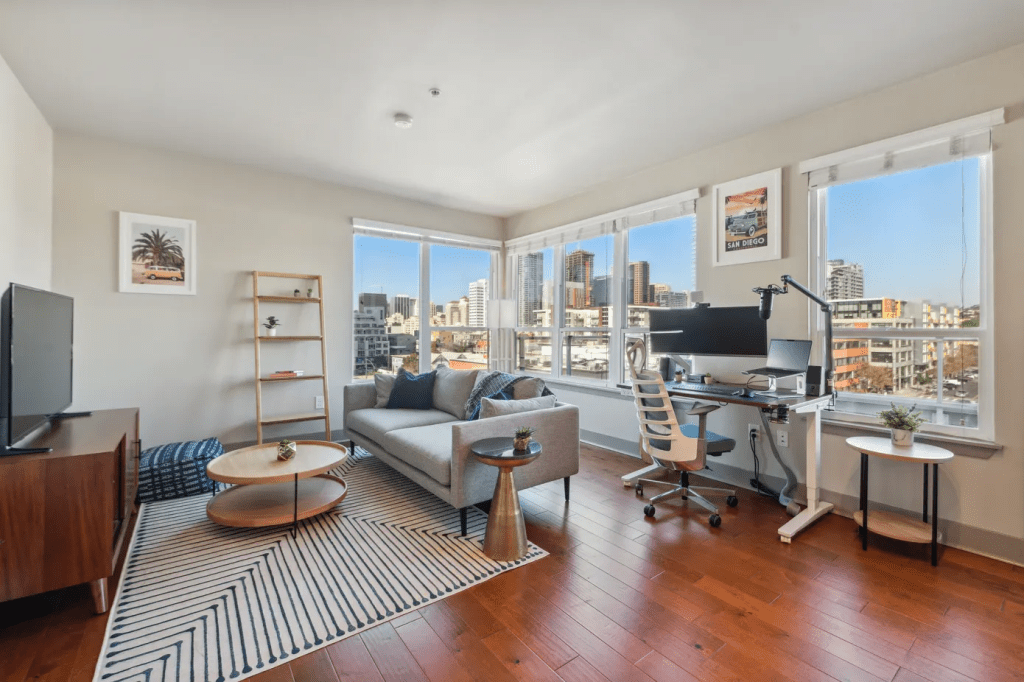
Early in 2022, the company made a significant shift towards an operator model with the introduction of Anyplace Select. This specialized product is tailored to meet the needs of remote workers and corporate travelers, providing them the capability to work from any location. These locations are fully furnished apartments complete with a “fully equipped” home office. Consequently, the company ceased its marketplace operations in December 2022, redirecting its focus towards this innovative line of business.
The transition has demonstrated its strategic wisdom for the company. CEO and co-founder Satoru Steve Naito noted that the company’s revenue has increased sixfold since our last conversation with Naito in January 2022.
To accelerate its growth, Anyplace exclusively disclosed to TechCrunch today that it has secured $8.27 million in Series B funding. This follows its prior funding round in January 2022, where it raised $5.3 million in a Series A round led by GA Technologies.
The LAUNCH Fund, led by Jason Calacanis, significantly increased its investment by spearheading Anyplace’s most recent funding round. In tandem with this funding, Michael Savino, President of the LAUNCH Fund, has also joined the startup’s board. The round also witnessed participation from other investors, including CapitalX, Gaingels, Riverside Ventures, Potluck Ventures, MSIVC, FreakOut Shinsei Fund, Delight Ventures, and a cohort of prominent individual backers.
Anyplace also acquired $2 million in debt financing from Silicon Valley Bank.
Naito chose not to disclose the valuation of the 30-person company but mentioned that it had almost doubled since its Series A round.
At present, Anyplace oversees over 100 units across four cities: New York City, San Francisco, Los Angeles, and San Diego. The annual occupancy rates consistently range from 80% to 85%.
Naito explained to TechCrunch, “We’re pioneering a novel category of work-friendly accommodations.”
Anyplace generates revenue by leasing sizeable quantities of unfurnished spaces (typically five to ten units) from prominent real estate firms like Greystar, Avalon Bay, and UDR. Prior to subleasing, Anyplace outfits these spaces to be “work-ready” by providing furnishings and equipping them with home office amenities and high-speed internet, catering to the needs of remote workers.
Its markup varies based on market conditions and listing prices but generally hovers around 50%, as indicated by Naito.
Curiously, Anyplace doesn’t perceive itself as a direct rival to Airbnb, a platform typically associated with shorter-term rentals. In fact, approximately 50% of its client base originates from Airbnb or similar platforms. Additionally, the startup recently initiated the listing of its properties on Blueground, a furniture apartment management company that also runs a marketplace.
Although more individuals are resuming office work, Naito firmly believes that there is still a substantial population of “digital nomads” to sustain Anyplace’s business.
“Major tech companies tend to encourage a return to the office or adopt hybrid work arrangements. However, office vacancy rates in San Francisco, New York, and LA remain unusually high,” he stated. “I firmly believe that remote work is a permanent fixture for most companies. Furthermore, the pandemic has altered the way people conduct business trips – even post-pandemic. Travelers are embarking on longer journeys and maintaining a nomadic lifestyle, which generates a substantial market for us.”
“In the fourth quarter, the company is gearing up to enter fresh markets including Miami, Boston, Austin, and Seattle. Simultaneously, it is striving to enhance the customer experience by offering amenities such as locally sourced coffee beans and personalized, localized concierge services. These services encompass recommendations for nearby grocery stores and yoga studios, among other conveniences.”
Naito emphasized, “Anyplace stands apart from typical commodity-furnished apartment firms like Blueground, Zeus, or Landing. While those companies excel in expanding their operations, their customer experiences are becoming increasingly standardized.”
Going forward, Anyplace intends to provide clients with the choice to buy furniture or office setups in its units through partnerships with various brands.
Sunny Mexico has long been the preferred destination for American remote workers seeking a change of scenery. It’s close enough to the U.S. to retain that at-home feeling, boasts a culture and climate that’s undeniably warm, and features excellent infrastructure.
However, not all Mexican destinations are budget-friendly for digital nomads. Nightly stays in cities like Los Cabos average around U.S. $600, and the cost of living in the Mexican Caribbean has seen a significant increase. This leaves prospective border-crossing digital nomads pondering:
Where can they go without emptying their wallets?
Fortunately, GOBankingRates, a banking firm, has evaluated numerous Mexican destinations for budget-conscious expats, considering the cost of living. From their list, we’ve identified the five most economical destinations where you can comfortably live on less than US$1,200 a month:
Ensenada
Population: 443,000+
State: Baja California
Single Person Average Monthly Expenses With Rent: $1,195.85
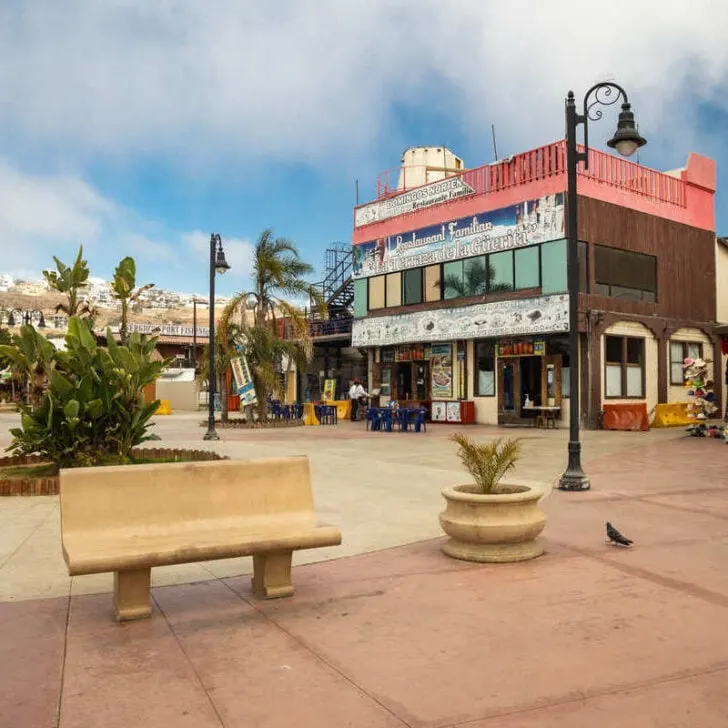
A hidden treasure in the state of Baja California, Ensenada is a rising tourist destination thanks to its idyllic beaches, charming downtown area, and, perhaps most significantly, its unhurried way of life. This is particularly appealing to remote workers seeking respite from the fast-paced environments of larger cities.
Ensenada boasts a vibrant surfing scene, with destinations like Playa San Miguel and Playa Hermosa offering incredible waves for water sports enthusiasts. If you’re in the mood for relaxation, the serene El Faro, situated close to Downtown Ensenada, and Playa Estero are ideal for sunbathing and swimming
Situated along the Bahia de Todos Santos, a sheltered bay and a significant migration point for various marine species, Ensenada serves as an excellent hub for exploring the broader Northern Atlantic coast of Mexico. Surprisingly, the local culture carries the influence of Russian settlers.
And let’s not forget the outstanding culinary scene. Ensenada is renowned nationwide for its fish tacos, a beloved local delicacy, as well as its mouthwatering shrimp wraps, delectable ceviches, and exquisite wines. These, among other factors, make it a compelling destination for an extended stay, especially when considering its astonishing affordability, with average monthly expenses totaling just $1,195.85.
Puebla de Zaragoza
Population: 6,583,000+
State: Puebla
Single Person Average Monthly Expenses With Rent: $1,067.49
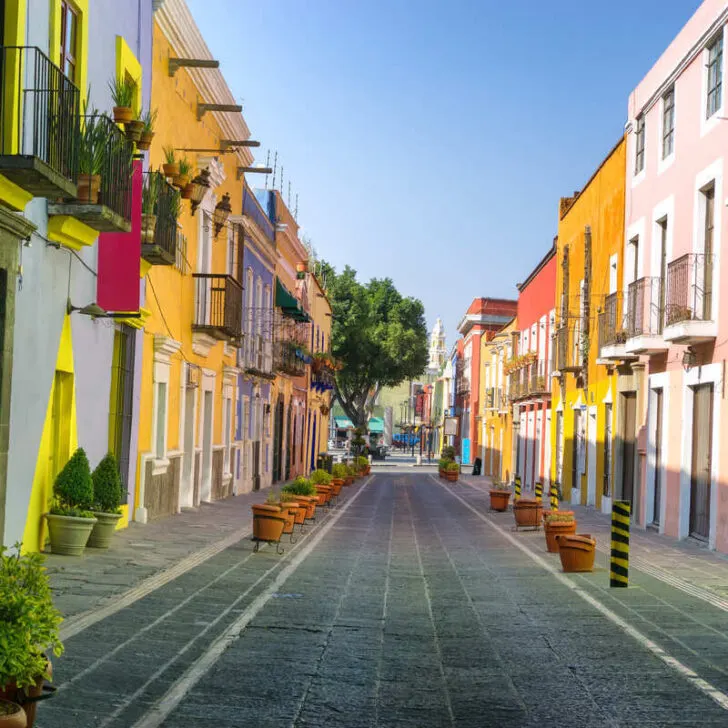
Ranking among the likes of Guanajuato and Guadalajara, even though they don’t make the top five list, Puebla stands out as one of Mexico’s most charming colonial-era cities. Newcomers need only take a brief stroll through the immaculately preserved cobblestone streets of Centro Historico to be inevitably captivated by its charm.
Puebla’s skyline is notably distinctive, featuring a UNESCO-protected Old Town adorned with countless historic monuments, set against a backdrop of towering skyscrapers. Those choosing to establish themselves in Angelopolis, the city’s modern “business” district, will discover an array of cafes and co-working spaces to suit their needs.
While immersing themselves in the historic district, and particularly neighboring Cholula, a charming and colorful town within Puebla’s Metropolitan Area, renowned for its striking yellow church situated atop an ancient Mayan pyramid, visitors may experience a sensation of time standing still for centuries.
Puebla’s unique blend of historical and contemporary elements creates an ambiance distinct from any other Mexican city. What’s more, it’s relatively cost-effective to reside here, with monthly expenses totaling a modest $1,067.49 – an amount equivalent to the rent for a central apartment in a major U.S. city.
Veracruz
Population: 405,000+
State: Veracruz
Single Person Average Monthly Expenses With Rent: $1,000.31
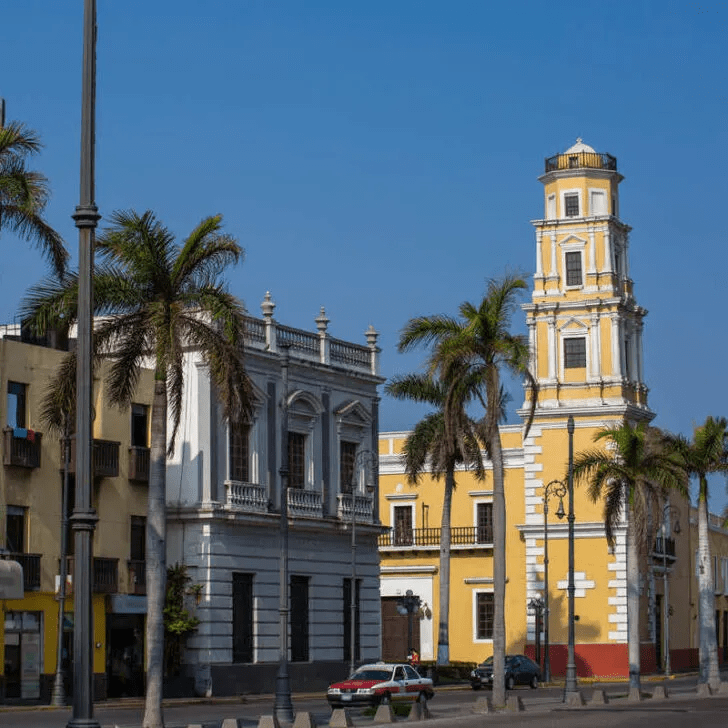
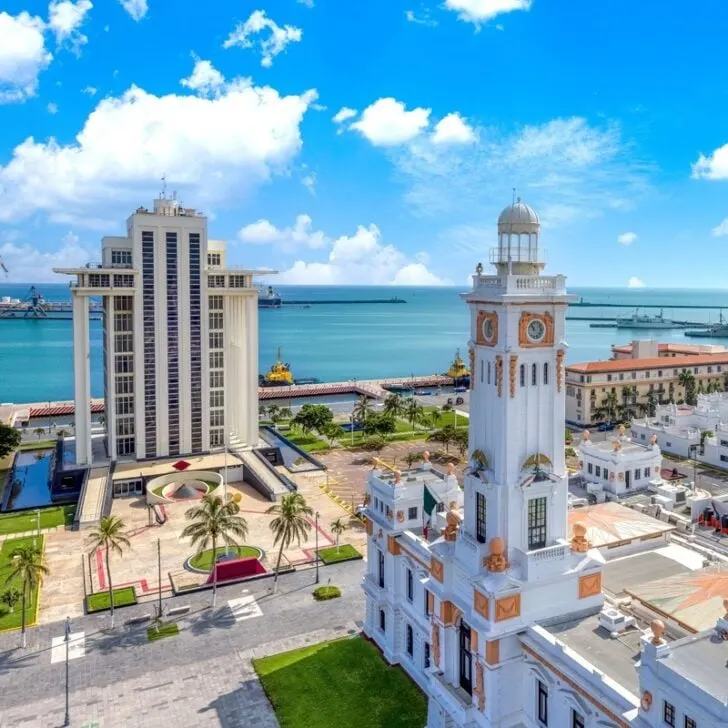
Veracruz, the second coastal destination on this list, graces the Gulf of Mexico and stands as one of Mexico’s smaller cities, with a population of under half a million. Its distinction arises from its historical role as the largest Atlantic trading center in Mexico, coupled with an immaculately preserved colonial center.
As the cultural heart of its state, it was settled as early as 1519 and, due to its significance in the Transatlantic Spanish Empire, it thrived as a prominent mercantile port, occasionally rivaling the economic importance of Mexico City. Suffice to say, the cultural richness of Veracruz is immeasurable.
Besides the myriad Instagram-worthy houses that grace the waterfront, visitors will discover a Baroque-style Municipal Palace, the oldest of its kind in Mexico, an 18th-century cathedral adorned with Neoclassical features, and the Castle of San Juan de Ulúa, a monumental fortress constructed to shield residents from pirate raids.
Sitting on the Gulf of Mexico, Veracruz provides convenient access to untouched Gulf beaches, especially along the fittingly named Emerald Coast. Digital nomads can savor all of this while keeping their monthly expenses slightly over a thousand dollars, which includes rent.
Saltillo
Population: 807,000+
State: Coahuila
Single Person Average Monthly Expenses With Rent: $884.74
Situated in the heart of the Chihuahuan Desert, Saltillo is a city with a history spanning 445 years, tracing its origins to the early days of the Spanish Conquest of Mexico. As one of the initial European settlements in this region, it hosts a wealth of historical sites.
This encompasses an 18th-century cathedral, the Santiago Apóstol, known for its Neo-Romanesque bell tower and intricate facade. There’s also the Neoclassical Fernando Soler City Theater, and at the heart of the city lies the Plaza de la Nueva Tlaxcala, surrounded by grand civic structures.
The city, along with its metropolitan area, serves as both a vastly underappreciated cultural center and an industrial powerhouse. It hosts major players like General Motors, Magna, Nemak, and even a Tesla plant. This dynamic blend of culture and industry makes it a highly appealing spot for culture enthusiasts and young entrepreneurs.
Surprisingly, it’s one of the most budget-friendly destinations for nomads in Mexico. The average monthly rent for a one-bedroom apartment in the city center is a modest $264.94, with total expenses amounting to $884.74.
Aguascalientes
Population: 934,000+
State: Aguascalientes
Single Person Average Monthly Expenses With Rent: $861.59
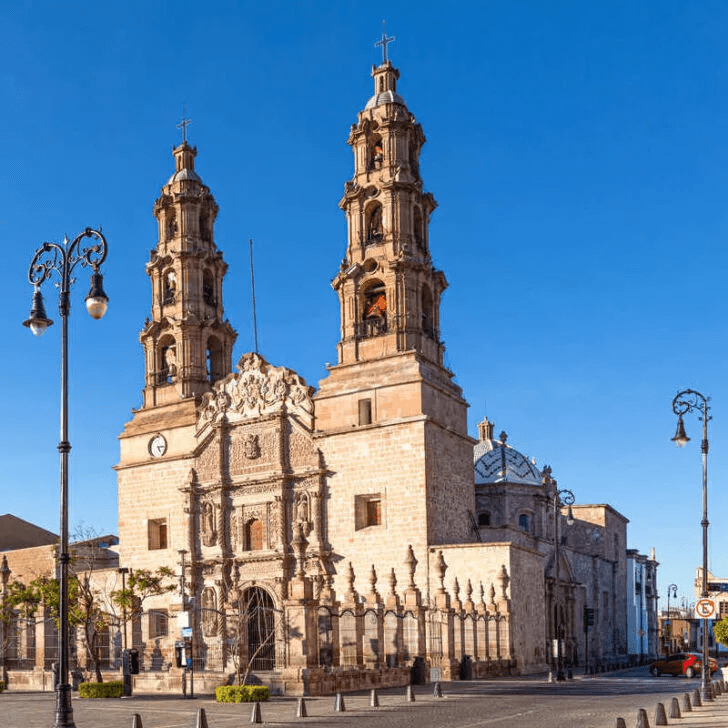
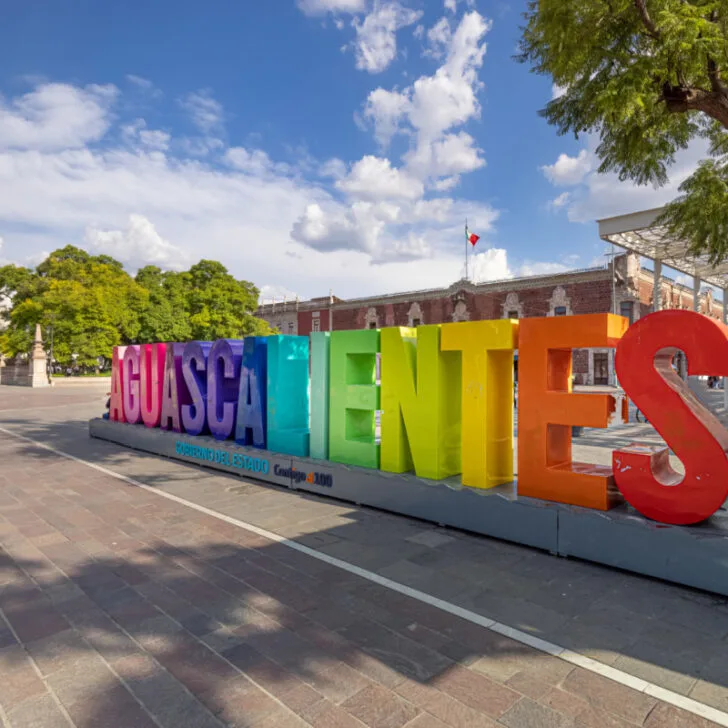
Aguascalientes, located near the heart of Mexico, is the most affordable but by no means the least appealing Mexican city for digital nomads. It’s renowned for its rich architectural heritage, delightful climate, rejuvenating hot springs, and diverse population.
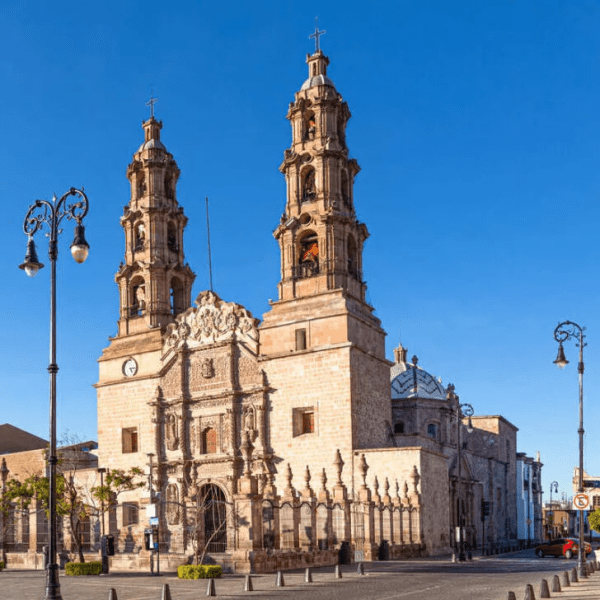
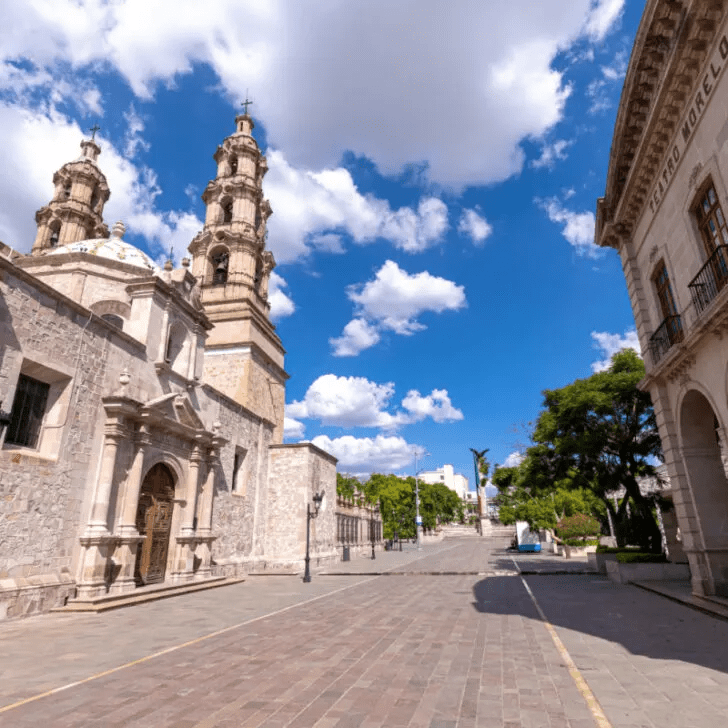
Aguascalientes boasts magnificent landmarks such as the San Antonio de Padua Church, the European-inspired main square known as La Exedra, the grand Government Palace, and even a striking Brutalist Opera House, making it one of Mexico’s most beautiful cities.
Each year, it hosts the San Marcos Fair, Mexico’s largest festival, drawing over 7 million attendees and celebrating the city’s Spanish-influenced bullfighting and cockfighting traditions.
According to GOBankingRates, Aguascalientes has the lowest cost of living in all of Mexico, with an average monthly rent of just $384.31 for a three-bedroom apartment in the city center. Total monthly expenses average around $861.59.
Now you’re aware that you don’t require a million-dollar business or substantial savings to temporarily move to and work remotely from Mexico. Americans can stay visa-free for up to 6 months.
Although many remote workers may envision globe-trotting with their laptops in hand, perhaps their work situation doesn’t align with that dream.
The rise of remote work has brought its own share of challenges, from bosses feeling frustrated to vacant commercial spaces. Digital nomads, on the other hand, often respond with a nonchalant “sounds like a personal problem” as they continue to journey from one place to another, all while earning their living.
In a recent study by MBO Partners, a new trend known as “tethered nomading” has emerged. This trend essentially reflects the fact that an increasing number of remote workers are choosing to stay within the United States rather than roaming the globe.
To be specific, the study’s findings indicate that a significant 53% of digital nomads in the United States are opting to remain within the country throughout the year. In contrast, only a mere 10% have intentions of traveling internationally.
Practically every city in the United States worth considering for long-term residence tends to be more expensive than international travel. However, this hasn’t deterred remote workers from exploring this option. Here are five U.S. cities that are ideally suited for digital nomads as an increasing number of remote workers choose to stay closer to home:
Chicago, Illinois
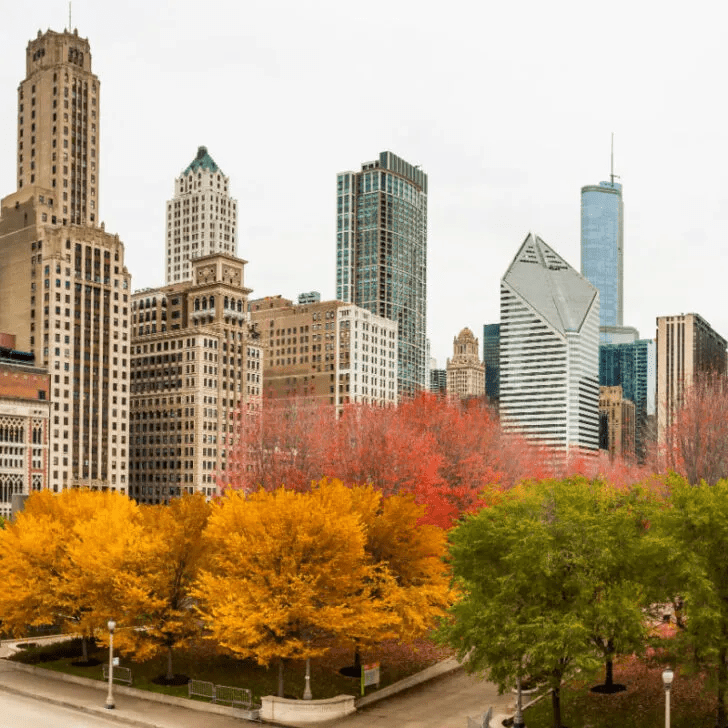
Chicago, the sole metropolis in the Midwest, is a bustling megacity filled with a myriad of experiences that cater to all kinds of travelers. This vibrant city is a haven for digital nomads, offering numerous compelling reasons to make it their home.
First and foremost, remote workers will find no shortage of engaging activities to keep them occupied once they’ve closed their laptops for the day. Chicago offers a diverse array of cultural, entertainment, and recreational opportunities to explore.
The city extends far beyond its famous attractions like “The Bean” sculpture and mouthwatering deep-dish pizza. Within its boundaries, you’ll discover a wealth of distinct neighborhoods, each with its own unique character, making it highly likely that you’ll find a community that resonates with your personal preferences.
Chicago boasts a thriving community of digital nomads eager to welcome newcomers, complete with regular Meetup gatherings and events.
Chicago should be at the top of your list of digital nomad destinations, thanks to its abundance of trendy cafes, co-working spaces, and its status as the most affordable major city in the United States.
Denver, Colorado
Denver, Colorado, a city surrounded by majestic mountains, offers a happening scene with constant fun events. It’s a paradise for beer enthusiasts, featuring numerous breweries with Wi-Fi. Just remember to keep the beer out of sight during your Zoom calls, you know, for the sake of professionalism.
If sipping beer during work hours seems too risky, Denver offers a multitude of charming cafes and co-working spaces that may be better suited for your remote work.
Denver holds the top spot as the #1 city to live in the U.S., and it’s well-deserved. You’ll find plenty of family-friendly activities, lightning-fast internet, and an outstanding quality of life among the city’s many highlights.
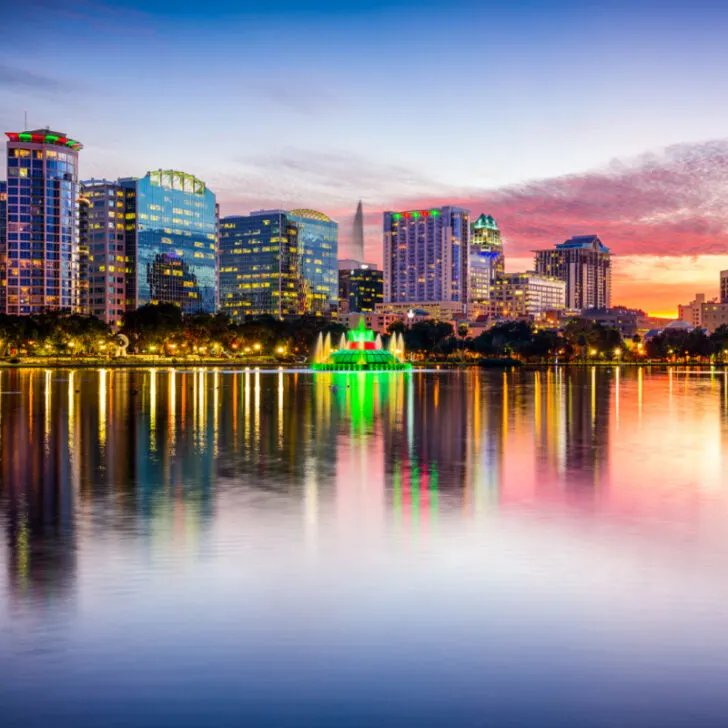
Orlando, Florida
Florida consistently ranks among the most visited states in the country, with Orlando being a significant attraction. From the perspective of digital nomads, this city truly offers the best of both worlds.
Orlando seamlessly combines vibrant city life with nearby beaches, and let’s not forget the world’s greatest theme parks for your downtime.
The most appealing aspect might just be that you can comfortably live here for under $2000 per month, a rarity in the U.S. To sweeten the deal, there’s a wealth of comfortable co-working spaces and a diverse range of charming cafes, giving you the flexibility to work wherever you desire. And let’s not overlook the consistently fantastic weather!
San Antonio, Texas
An hour’s drive south of the trendy city of Austin lies the charming San Antonio, a cultural gem. This vibrant city invites you to dive into a thriving cultural community steeped in history and renowned for its delectable cuisine.
San Antonio extends a warm welcome to travelers of all kinds and is one of those rare places where digital nomads can comfortably live on a budget of $2000 per month or less.
San Antone, a local nickname for San Antonio, is expanding its horizons with vibrant cultural neighborhoods that eagerly await more visitors.
Throughout the city, you’ll find numerous co-working spaces and trendy cafes that offer local favorites with a delightful Mexican flair.
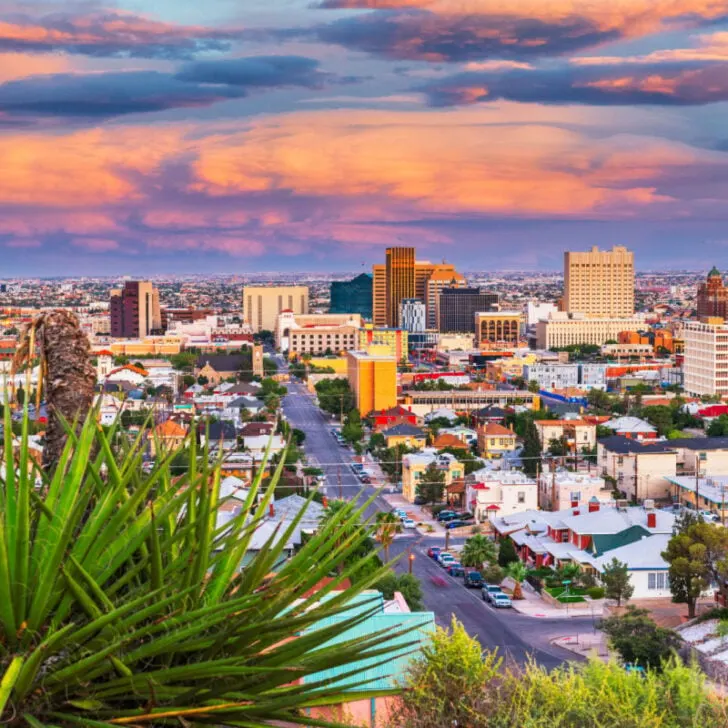
El Paso, Texas
Another hidden gem in Texas is the frequently underestimated city of El Paso. Nestled in the Texas borderlands, sandwiched between Mexico and New Mexico, it’s a city that will pleasantly surprise you with its captivating culture and breathtaking natural beauty.
Digital nomads may find El Paso particularly appealing, as this mix of cultures is ideal for both short and long-term stays at a very budget-friendly cost.
A monthly budget of $1500 or even less is entirely feasible! Airbnb accommodations are remarkably affordable, and there’s even a new capsule hotel in the downtown area if you’re traveling solo.
Fall and winter might be the most suitable seasons to visit the safest city in Texas as the intense desert heat subsides.
Working from one of the numerous modern, inviting cafes or conveniently located co-working spaces is much more enjoyable on the patio during this time of the year.
TALLAHASSEE – On Wednesday, a federal appeals court declined to delay a ruling that halted a Florida law designed to prevent children from attending drag shows.
In a 2-1 decision, a panel from the 11th U.S. Circuit Court of Appeals turned down a request made by Governor Ron DeSantis’ administration to implement a partial stay on the preliminary injunction issued by U.S. District Judge Gregory Presnell.
If granted, this request would have permitted the enforcement of the law in nearly all venues across the state while an ongoing appeal of Judge Presnell’s decision unfolded. The preliminary injunction was originally issued in response to a lawsuit filed by the Orlando restaurant Hamburger Mary’s, but it was broadly applied to venues statewide.
When seeking the partial stay, legal representatives for the DeSantis administration contended that the injunction should exclusively pertain to Hamburger Mary’s.
“An injunction preventing enforcement of the statute against HM (Hamburger Mary’s) fully protects HM from any … harm,” the state’s lawyers argued in a July motion. “In granting broader relief, the district court irreparably harmed the state by ordering it to refrain from enforcing a duly enacted law designed to protect children from exposure to age-inappropriate, sexually explicit live performances.”
In the majority opinion issued on Wednesday, Judges Adalberto Jordan and Robin Rosenbaum noted that Judge Presnell had ruled the law was probably overly broad and unconstitutional under the First Amendment. They cited legal precedents and pointed out that, in previous cases where a law was deemed overly broad and in violation of the First Amendment, injunctions were upheld to prevent the enforcement of such laws against both nonparties and parties.
However, Judge Andrew Brasher dissented from this stance, expressing his support for staying Presnell’s ruling, except in its application to Hamburger Mary’s.
“HM runs a restaurant and nightclub in Orlando. HM’s injury is the fear of being prosecuted for violating (the law),” Brasher wrote. “A preliminary injunction prohibiting state officials from enforcing that law against HM and anyone acting in concert with HM would completely remedy HM’s injury. Nothing more is necessary or appropriate. Under our precedents, that’s the end of the matter, and the motion for a partial stay should be granted.”
Opponents of gender-affirming care say children are too young to make transition decisions and claim medical interventions are not safe.
Shigeru Nightengale, 15, recently moved from Iowa to Illinois for protections as a transgender teen and student. Shigeru loves collecting rocks and picked up a stone before sitting down at a swing set in the Nightengales’ new backyard.
By Max Lubbers | CHICAGO, Ill. – In the spring, Kimberly Reynolds found herself gazing at a map of the United States, each state shaded with a gradient of colors. Red represented states with the strictest active anti-transgender laws, while bright blue indicated those with the most comprehensive protections for transgender individuals.
The sight of Florida, her home state, bathed in a sea of red was disheartening. The nearest state painted in blue? Illinois.
Reynolds took a deep breath, then allowed herself some time to grapple with the growing panic in her chest.
She had embarked on this daunting journey of researching a new place to call home when lawmakers in Florida introduced a wave of anti-transgender bills, many of which directly targeted transgender youth — including her 11-year-old son.
“Something inside me just broke,” she shared. “I’ve dealt with a lot of policies in Florida that are not okay. But now they’re coming after my child. So that’s why we’re done. We’re getting out, one way or another.”
She approached her son with the weighty question: “How do you feel about moving?”
Joseph Reynolds, her 11-year-old, didn’t hesitate. “I was like, ‘Yeah, let’s move. Let’s get out of this place. Let’s get out of this climate,'” he recalled thinking. “‘Let’s get out of this house. Get away from these people.'”
In May, Florida’s Republican Governor, Ron DeSantis, signed several of the anti-trans bills into law. Reynolds revisited that map she’d stared at before, and this time, her state had a new, ominous designation — marked with black stripes: “Do Not Travel.”
Three months later, as the new school year began, the Reynolds family still found themselves in Florida, but they were determined not to stay. The impact of the laws on her child was already profound, and she was eager to relocate her family to Illinois as swiftly as possible.
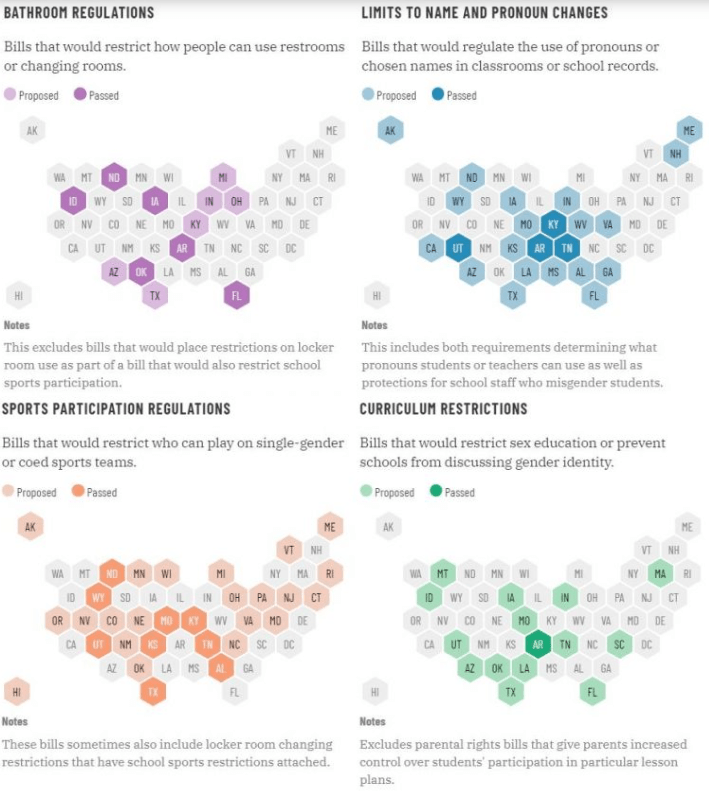
Florida is far from the only state grappling with or enacting anti-transgender legislation. This year, according to an analysis by Chalkbeat using data from the American Civil Liberties Union (ACLU), at least 14 states passed laws that specifically regulated issues like bathroom access, sports participation, and pronoun and name changes in K-12 schools. Additionally, at least 18 states approved laws that restricted gender-affirming health care, primarily for minors but not exclusively.
For many families striving to shield their transgender children in the school environment and retain control over their medical choices, moving appears to be the only recourse — and Illinois stands out as a safe haven.
Restrictions Impacting K-12 Schools During This Year’s Legislative Sessions: Chalkbeat meticulously reviewed and categorized 494 bills from the ACLU’s tracker of LGBT-related state legislation. The focus was on identifying those that aimed to regulate K-12 schools and students, offering a comprehensive assessment of the landscape confronting trans and nonbinary students.
Approximately 45% of the proposed bills sought to change policies or procedures within K-12 schools.
Notes: The analysis excludes bills that utilize variations of “parental rights” language, which sometimes encompass broad restrictions across multiple categories. The ACLU’s 2023 legislative tracker also encompasses bills proposed in 2022 that extend into 2023.
Source: This information is derived from a Chalkbeat analysis of ACLU data obtained from the tracker as of August 18, 2023.
Credit: Kae Petrin & Thomas Wilburn / Chalkbeat
Bills Impact School Policies and the Sense of Safety for Trans Students Illinois stands as a stark contrast to many states across the nation where anti-transgender policies are unfolding within the educational system. In Illinois, state laws safeguard students against discrimination based on their gender identities. State guidance mandates that students must be granted access to bathrooms, locker rooms, and sports teams that align with their gender identities.
The Reynolds family’s desire to relocate is significantly influenced by changes in educational policy.
For instance, Florida’s board of education has enacted policies that forbid public schools from educating students about sexual orientation or gender identity. State law also prohibits school staff from inquiring about students’ pronouns or requiring their usage. Furthermore, a law compels K-12 schools and postsecondary institutions to take disciplinary actions against students who use restrooms that do not correspond to their assigned sex at birth.
In 2023, Anti-LGBTQ Legislation Frequently Targeted School Policy More than 4 in 10 bills categorized as anti-LGBTQ by the American Civil Liberties Union (ACLU) would directly impact policies and procedures in K-12 schools if they were to become law.
























 fleeredstates.blog
You must be logged in to post a comment.