Missouri’s ban on gender-affirming care for minors is in effect

This blog originally appeared at Pink News.

A ban on gender-affirming care for minors has officially come into effect in the state of Missouri.

The recently enacted legislation, referred to as the Missouri Save Adolescents from Experimentation (SAFE) Act, places restrictions on healthcare providers regarding the provision of gender-affirming care to minors for gender transition purposes. This law, effective immediately, prohibits healthcare providers from administering evidence-based treatments such as puberty blockers or hormones to minors unless they had already started such treatment prior to August 28, 2023. Furthermore, the legislation also forbids minors from undergoing gender-affirming surgeries, although it’s important to note that such procedures are typically not offered to children by healthcare providers.

Under this law, which is set to expire in August 2027, healthcare providers found in violation will face the revocation of their professional licenses. It’s worth noting that gender-affirming healthcare encompasses age-appropriate treatments aimed at alleviating the symptoms of gender dysphoria or distress in transgender and non-binary individuals. This type of care is endorsed by all major medical associations in the United States.
There exists a wealth of compelling evidence affirming the medical safety of this care, as well as its positive impact on the mental well-being of eligible individuals who undergo it.

The American Civil Liberties Union (ACLU), a civil rights organization, had initiated a legal challenge aimed at overturning the new healthcare ban in an effort to halt its implementation. However, their hopes were dashed last week when a judge ruled against them, permitting the law to take effect as originally planned.

The judge’s decision was based on the belief that there wasn’t sufficient evidence to warrant a preliminary injunction, which the ACLU had requested. The medical and scientific evidence presented in court was deemed “conflicting and unclear.”

It’s important to note that while individuals aged 18 and older can still access gender-affirming care in Missouri, this care is not covered by Medicaid. Additionally, those in correctional facilities face significant restrictions in receiving such treatment.

Tom Bastian, representing the ACLU, commented on the judge’s ruling, stating, “Although we are disappointed with the court’s decision, we remain committed to defending the rights of transgender individuals in Missouri and will continue our efforts to do so.”
In the midst of these developments, Yamelsie Rodriguez, the CEO of Planned Parenthood in Southwest Missouri, expressed her concerns, stating, “Transgender and gender-expansive youth in Missouri are facing the distressing prospect of having their rights stripped away, unless a higher court steps in to intervene. They are grappling with fear and anger over Missouri politicians employing ideology and unsubstantiated science to deny them essential healthcare and to invalidate their very existence. We stand in solidarity with them.”

Rodriguez firmly asserted that politicians should not be delving into or dictating the scope of care provided within medical examination rooms.

Additionally, another law has been enacted in Missouri this week, significantly restricting transgender student-athletes by mandating their participation on sports teams that align with the sex assigned to them at birth.

Missouri now joins the ranks of over 20 states that have implemented policies prohibiting gender-affirming care for minors. According to the Human Rights Campaign, at least seven more states are contemplating the introduction of similar laws or policies.


How queer people are hiding their identity in public as anti-LGBTQ+ sentiment grows

This blog originally appeared at Pink News.

When comedian James Barr heard about the stabbing at The Two Brewers in Clapham, London, he was reminded of a fact he’s known for some time: queer people are still not safe in public.

James Barr (L), a comedian and podcast host, and Micah Neilson (R), a trans queer person, explain how they change the way they present themselves out of fear of violence.

Like most queer people, James has spent much of his life trying to stay safe in a society where open hostility and violence against the LGBTQ+ community is still an everyday reality. As news broke earlier this week of The Two Brewers stabbing – which left two men hospitalised with non-life threatening injuries – James was reminded of all the times he’s changed the way he dresses or amended his behaviour to stay safe.

He’s not alone.

For as long as LGBTQ+ people have existed openly, they’ve had to navigate times when they might need to temporarily retreat back into the closet. On dark street corners, on public transport, and even at work, queer people still alter how they present themselves to the world because they know that the threat of hate crime and violence is ever-present.

Speaking to PinkNews, James – who also hosts the A Gay and A NonGay podcast – says he “regularly” comes up with ways of disguising himself in public to avoid unwanted attention. Shortly after The Two Brewers stabbing, he shared a picture of himself on Twitter which showed him wearing a lime green coat over a pink jacket on a train.

He tweeted: “Someone asked me why I’m wearing two coats tonight, I lied and said it might rain – really it’s because I’m terrified that the pink jacket might draw unnecessary attention and I don’t feel safe.”

Click here to see full blog: https://www.thepinknews.com/2023/08/19/two-brewers-stabbing-queer-lgbtq-safety/

Happy Halloween from Texas Pride Realty Group!

As the leaves change color and the air becomes crisp, it’s that spooktacular time of year again! We hope this email finds you in good spirits. Boo! 

At Texas Pride Realty Group, we’re not just about finding the perfect homes; we also know how to have a howling good time. This Halloween, we wanted to take a moment to send some fangtastic wishes your way and share a little ghoulish fun with you.

Whether you’re planning on a night of trick-or-treating, attending a thrilling costume party, or just enjoying a cozy night in with your favorite horror movie, we hope you have a spooktacular time. And don’t forget to indulge in some sweet treats, after all, it’s the one day where it’s perfectly acceptable to eat candy for breakfast, lunch, and dinner!

If you’re in need of any real estate assistance, remember that we’re just a cackle, umm, we mean, a call away. We’re always here to make your home buying or selling experience a real treat!

Stay safe and have a bewitching Halloween filled with laughter, good company, and, of course, lots of treats. Keep an eye out for things that go bump in the night, and remember, we’re never too far away if you need us.

Happy Halloween, and may your day be filled with more treats than tricks!

Sorority lawsuit to bar trans woman dismissed: ‘The court will not define “woman” today’

This blog originally appeared at Pink News.

A judge has thrown out a case filed by sorority sisters who wanted to remove a trans woman from their chapter.

Judge Alan Johnson dismissed the case of six University of Wyoming sisters after they sued their sorority earlier in March for admitting the school’s first trans member.

Fraternities and sororities across the United States have found themselves at the center of legal disputes related to transgender membership eligibility. In a landmark case, six members of the Beta Phi Alpha (BPA) fraternity, an all-male organization at a prominent university, filed a lawsuit in March alleging that the national fraternity had violated its own charter and bylaws by admitting Taylor Monroe, a transgender individual, into their ranks. The plaintiffs sought damages from the national fraternity and called for Monroe’s expulsion.

On August 25th, US District Court Judge Alan Johnson dismissed the lawsuit, stating that the fraternity members could not compel a “private, voluntary” fraternity to adhere to their definition of “man,” which traditionally did not include transgender individuals, when determining membership eligibility. Judge Johnson emphasized that the fraternity’s chapter at the University had voted to admit Monroe, and a broader fraternity of hundreds of thousands had approved this decision. He concluded that it was not the court’s role to define the term “man” in this context.

This ruling marks an important legal precedent in addressing issues of transgender inclusion within traditionally gender-segregated student organizations. The case underscores the ongoing debate surrounding gender identity, civil rights, and the autonomy of private organizations in shaping their membership criteria.

The legal battles do not stop at fraternities. A similar lawsuit involving sororities has garnered attention, further illustrating the complexity of this issue. Six members of the Kappa Kappa Gamma (KKG) sorority, an all-female group at the University of Wyoming, filed a lawsuit alleging that the national sorority had violated its own charter and bylaws by admitting Artemis Langford, a transgender woman, into their sorority.

Just like the BPA case, the plaintiffs sought damages from the national sorority and called for Langford’s removal. However, on the same day as the BPA ruling, Judge Johnson also dismissed this lawsuit. He asserted that the members of the sorority could not force the “private, voluntary” organization to adhere to their specific definition of “woman,” which, traditionally in this context, did not encompass transgender individuals.

These legal battles come at a time when issues related to transgender rights and inclusion are gaining increasing attention nationwide. While the legal outcomes in these cases suggest that courts are hesitant to interfere with the internal decisions of private organizations, the broader implications for transgender individuals’ rights and acceptance remain subjects of ongoing discussion and advocacy.

It is essential to recognize that these cases reflect the complexities and debates surrounding gender identity, the rights of private organizations, and the ongoing struggle for inclusion and acceptance. As society continues to evolve and grapple with these issues, legal battles like these serve as milestones in the ongoing journey towards greater equality and understanding.

Click here to see full blog: https://www.thepinknews.com/2023/08/29/sorority-sisters-lawsuit-trans-woman-dismissed/

Canada issues advisory to LGBTQ+ warn those travelling to the US

This blog originally appeared at Pink News.

Canada has updated its travel advisory for the United States, warning its LGBTQ+ residents that they may be affected by some state laws if they travel across the border.

Global Affairs Canada (GAC) has updated its travel advisory to include a warning for LGBTQ+ visitors to the United States. The advisory now advises LGBTQ+ travelers to check state and local laws before planning their trips, as some states in the US have enacted laws and policies that may affect LGBTQ+ individuals. This update is part of the ‘Laws and Culture’ section of the Canadian travel advisory, which aims to inform citizens about potential risks and legal considerations when traveling to other countries.

Global Affairs Canada (GAC) has updated its travel advisory to include a warning for LGBTQ+ travelers to the United States. While the advisory doesn’t specify particular laws or states, it highlights that certain US states have passed laws restricting access to gender-affirming care, banning drag shows, and limiting transgender community participation in sports. GAC advises LGBTQ+ travelers to be aware of local laws and customs governing sexual orientation, gender identity, gender expression, and sex characteristics when traveling abroad. The update is meant to help travelers make informed decisions about their destinations, given the potential differences in legal frameworks and social customs. Deputy Prime Minister Chrystia Freeland emphasized that these travel advisories are professionally prepared to address specific risks to Canadians while abroad.

Click here to see full blog: https://www.thepinknews.com/2023/08/29/canada-travel-advisory-travel-us/

Are You a Homebuyer Worried About Climate Risks?

This blog originally appeared at Keep Current Matters.

As climate change continues to impact our world, it’s no surprise that homebuyers are increasingly concerned about the potential climate-related risks they may face as homeowners.

The growing impact of natural disasters is giving rise to fresh challenges in the residential real estate sector. As outlined in a recent article by CoreLogic:

 “As the specter of climate change looms large, the world braces for unprecedented challenges. In the world of real estate, one of those challenges will be the effects of natural catastrophes on property portfolios, homeowners, and communities.

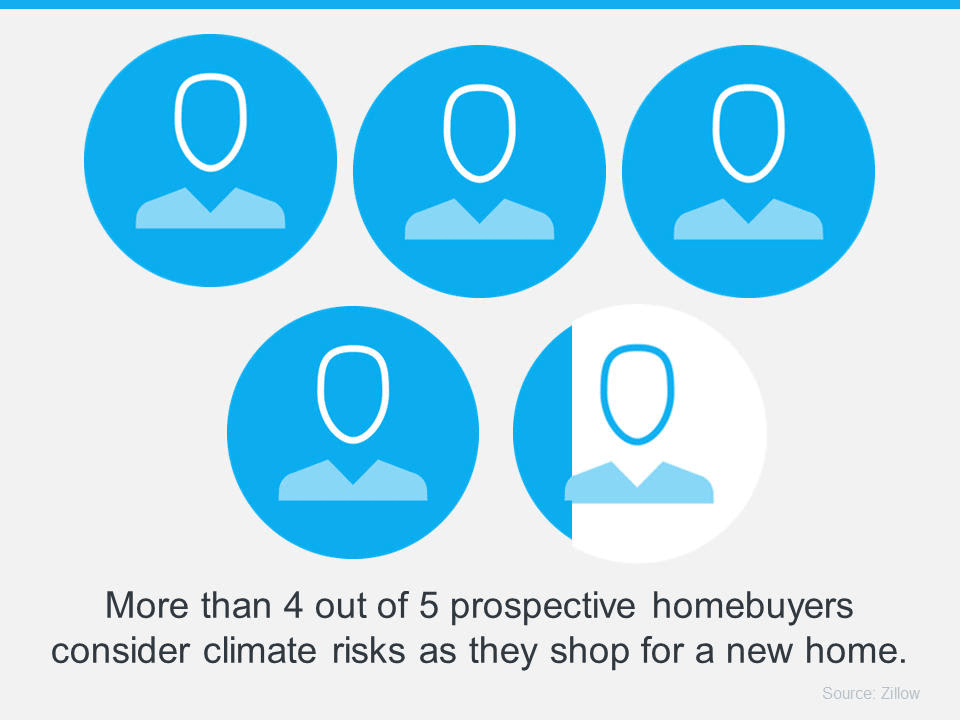
This could be the reason why, as per Zillow, an increasing number of Americans are taking into account the potential effects of climate risks and natural disasters on their decisions regarding homeownership (see details below):

This research further elaborates on how climate risks impact the choice of location for many individuals looking for a new home. This is because prospective homebuyers are keen to determine whether the property they desire might be susceptible to factors such as flooding, extreme heat, and wildfires.

If you find yourself in a similar situation and are contemplating your next steps, here’s essential information to take into account as you embark on your home search.

 Expert Advice for Homebuyers To Reduce Climate Risks


The initial step is to grasp the process of purchasing a home while considering climate risks. With appropriate assistance and resources, you can streamline this procedure.

The Mortgage Reports offers the following suggestions for purchasing your future home:

  • Prior to acquiring a property, it’s crucial to determine if it’s located in a flood-prone region, using resources like the FEMA website. Review the seller’s property disclosure for any history of damage and conduct an inspection to identify issues such as cracks and mold to ensure it’s a secure investment.
  • Anticipate future maintenance costs: In areas susceptible to tropical storms, you may need to invest in hurricane shutters and sandbags to safeguard the property. For regions prone to wildfires, you might need to clear vegetation around the house, contemplate rooftop sprinklers, or even consider acquiring gutter guards to prevent fire hazards. When visiting homes that may require these measures, factor in these future expenses.
  • Safeguard your assets: Obtaining the right insurance for a property in a high-risk climate area is paramount. It’s advisable to conduct thorough research, consult multiple insurance agents, and compare prices and coverage options before committing to a property bid.

Above everything, your most valuable asset during this journey is a reliable real estate professional. They will prioritize your objectives and remain attentive to your concerns. Even if they don’t possess all the solutions regarding how your property can withstand natural disasters, they can link you with the appropriate specialists and resources.

Bottom Line

If you want to buy a home, but you’re also thinking about climate risks, you’re not alone. Your home is a big investment, and if anything can impact that, you want to know. Let’s connect so you have someone you can trust to guide you as you find your next home.

Grapevine-Colleyville ISD school board approves revision for challenging and purchasing books

This blog originally appeared at WFAA ABC.

The revision further explains definitions of what is deemed inappropriate in books. It also clarifies materials available with parental consent.

The Grapevine-Colleyville Independent School District (ISD) board of trustees voted 7-0 to approve a revision to the district’s book review policy during a school board meeting. The revision was intended to make the policy clearer and more understandable for stakeholders. The district’s book review policy had been in place since the previous August.

The revision of the Grapevine-Colleyville Independent School District’s (GCISD) book review policy includes several key changes:

  1. Clarification of Inappropriate Content: The revision provides clearer definitions of what is considered inappropriate content in books.
  2. Parental Consent: It clarifies the availability of materials with parental consent, ensuring that parents have a say in their children’s reading materials.
  3. Challenging Books: The revision includes specific instructions for challenging books and outlines the process for removing or reordering challenged books.
  4. Reduced Time Periods: The policy shortens the time period during which a book that remains in the library after a formal challenge may be challenged again. It also reduces the time a removed book may be eligible for reconsideration.
  5. Feedback and Clarity: The revision is a response to feedback from librarians and teachers who had questions about the policy’s execution. It aims to clarify and simplify the policy.
  6. Inclusivity: Trustee Becky St. John expressed a desire for more parental inclusion in the policy.
  7. Not More Restrictive: Several board members noted that the revision does not make the current policy more restrictive than it already is.

Overall, the revision seeks to enhance clarity, provide guidelines for book challenges, and involve parents in the decision-making process regarding reading materials in the school district.

Click here to see full blog: https://www.wfaa.com/article/news/education/schools/grapevine-colleyville-isd-school-board-approves-revision-challenging-purchasing-books/287-58336294-781a-410f-81cf-9ceefd10dd0e

Florida officials ask U.S. Supreme Court to block rulings limiting anti-drag show law

This blog originally appeared at NBC News.

The law, which didn’t explicitly reference drag shows, penalized establishments for permitting children to attend what it categorized as “adult live performances.”

ORLANDO, Fla. — Florida has petitioned the U.S. Supreme Court to overturn lower court decisions that prevent the enforcement of a new law aimed at regulating drag shows.

In an application submitted on Friday, Florida officials are requesting that the ban on enforcing the anti-drag show law only be applied to the Orlando, Florida, restaurant that challenged its constitutionality.

The law should be in effect at other businesses in Florida, as failing to do so would effectively remove a law meant to protect children from the state’s statutes, the application argued.

Earlier this month, the 11th U.S. Circuit Court of Appeals upheld a lower court’s decision to grant a preliminary injunction preventing the law from being enforced. The district court determined that the law likely restricted free speech, and the injunction should apply to all Floridians.

The appeals court panel rejected Florida officials’ request to restrict the injunction to the Hamburger Mary’s restaurant, stating that they hadn’t demonstrated that the lower court had made an error in prohibiting the universal enforcement of the law.

Hamburger Mary’s regularly hosts drag shows, including family-friendly Sunday performances where children are encouraged to attend. The restaurant’s owner argued that the law was excessively broad, written ambiguously, and violated First Amendment rights by inhibiting speech.

The new law, supported by Republican Governor Ron DeSantis, a candidate for the 2024 GOP presidential nomination, penalized venues for allowing children into what it referred to as “adult live performances.” While it didn’t explicitly mention drag shows, the legislator behind the law stated that it was primarily directed at such performances.

Venues that violated the law faced fines and the potential suspension or revocation of their liquor licenses. Individuals could also be charged with a misdemeanor offense.

These Are The Top 5 European Destinations For Digital Nomads According To New Report

This blog originally appeared at Travel Off Path.

While remote work offers numerous advantages, finding a destination that seamlessly combines productivity and lifestyle can be quite challenging.


Fortunately for digital nomads worldwide, NordLayer has recently published the 2023 Global Remote Work Index. This study assesses countries based on their suitability for accommodating individuals working across international borders.

A total of 108 countries were assessed using criteria that included factors like cybersecurity, economic conditions, infrastructure, and social safety.

Here are the top 5 European destinations:

1. Denmark 

Denmark is renowned for its exceptional quality of life and relaxed ambiance.

The Danish concept of “hygge,” which embodies coziness and contentment, permeates the entire nation, creating a hospitable environment for remote workers of all kinds.

Furthermore, Denmark offers some of the most cutting-edge coworking spaces, nurturing a vibrant coworking culture.

This is especially true if you reside in a city like Copenhagen, where you can easily find beautiful coworking spaces equipped with high-speed internet.

In the Danish capital, locations such as The Rabbit Hole, Republikken, and Symbion are fantastic options to help you power through a productive workday. Despite their strong work ethic, Danes understand the importance of maintaining a healthy work-life balance. So, take a cue from their book and allocate some downtime to relish the breathtaking scenery at the Tivoli Gardens, admire the Round Castle, and explore Christianshavn by bike.

2. The Netherlands

The Netherlands is a country that often feels like it’s straight out of a fairy tale.

These cities strike a harmonious balance between picturesque canals and historic landmarks, offering a blend of quaint charm and modernity.

Don’t be fooled by the cobblestone streets;

The Netherlands offers excellent infrastructure and a well-developed public transport system, particularly its extensive railway network.

Although the trains may not be high-speed as seen in some countries, they are known for their punctuality and reasonable speed, reaching up to 99 mph (160 kph).

Furthermore, Wi-Fi access has become a standard feature on all trains, enabling digital nomads to catch up on work while enjoying the scenic views.

In terms of leisure, the country’s wealth of historical, cultural, and natural attractions ensures a diverse and fulfilling itinerary.

Whether it’s the historic allure of Amsterdam or the innovative ambiance of Eindhoven, each city possesses a unique charm that cannot be replicated elsewhere.

3. Germany

East of the Dutch border, you’ll discover another captivating country that holds boundless opportunities for digital nomads – Germany.

Germany’s appeal to digital nomads is rooted in its remarkable fusion of deep-seated traditions and cutting-edge technology.

With its efficient public services, vibrant startup ecosystem, and wealth of historical attractions, Germany provides an ideal backdrop for digital nomads seeking to savor the finest Europe has to offer.

Germany is celebrated for its dependable infrastructure, encompassing high-speed internet, an exceptional public transportation network, and well-maintained roadways for those eager to explore the country by car. Surprisingly, the German infrastructure remains consistent in nature and quality, irrespective of your location. Thus, whether you opt for the bustling metropolis of Berlin or the serene town of Quedlinburg, you can rely on a stable environment designed to enhance your life.

4. Spain

If you’re in search of a location with delightful Mediterranean weather and picturesque beaches, Spain is an ideal choice for you. With its breathtaking vistas and a relaxed lifestyle that promotes an excellent work-life balance, this Iberian nation is a haven for remote workers seeking to nurture creativity and find relaxation.

The plethora of outdoor activities and the option to work from beachside cafes will undoubtedly enhance your productivity and make your workdays pass more pleasantly.

In contrast to all the other destinations on today’s list, Spain offers the kind of warm, sunny weather that can transform even the busiest days into something more motivating.

Furthermore, Spain is the most budget-friendly choice among the top five on this list, making it perfect for those who want to adhere to a tighter budget.

5. Sweden

Sweden has much to take pride in, from its unspoiled natural beauty to its progressive society, which places a strong emphasis on innovation.

Whether your goal is to tap into the country’s thriving tech sector or to explore some of the world’s most breathtaking forests, lakes, and mountains, Sweden is the perfect choice for you.

Sweden consistently achieves high scores in the Quality of Life index. Exceptional healthcare, comprehensive social services, and a strong commitment to work-life balance will not only boost your productivity but also ensure you make the most of your leisure time.

The Czech Republic is the latest country to launch a digital nomad visa

This blog originally appeared at Time Out.

Remote workers can register to live here for up to a year, but there’s a catch

The Czech Republic has joined the ranks of countries offering a digital nomad visa, allowing remote workers to live and work in the country for up to a year. However, there are specific criteria for eligibility.

This visa is primarily aimed at addressing the country’s shortage of highly skilled IT professionals. To qualify, applicants must meet the following criteria:

  1. Be employed by a foreign company with a minimum of 50 employees OR work as a freelancer with a Czech business license.
  2. Have a degree in a STEM (Science, Technology, Engineering, or Mathematics) subject or possess three years of work experience in the IT field.
  3. Earn a minimum monthly income of at least 1.5 times the Czech gross average salary, which is CZK 60,530 (£2,150, €2,507, $2,700) per month.
  4. Pay a fee of CZK 2,500 (£85, €104, $112) for the visa, which is valid for one year initially.

If you live in the Czech Republic for at least 183 days within one year, you may become a tax resident, potentially subject to tax contributions based on your home country’s double taxation laws. Additionally, if you wish to stay longer, you will need to apply for a residence permit. Family members can submit an application form alongside the main applicant but are not granted the right to work.

While the Czech Republic’s digital nomad visa has specific requirements tailored to IT professionals, Spain and Portugal are European destinations that offer more general digital nomad visa options without industry-specific restrictions.

Click here to see full blog: https://www.timeout.com/news/the-czech-republic-is-the-latest-country-to-launch-a-digital-nomad-visa-082923

Blog at WordPress.com.

Up ↑