DeSantis’ ‘war on woke’ looks a lot like attempts by other countries to deny and rewrite history

This blog originally appeared at The Conversation.

Let’s delve into the complexities of this contentious issue and reflect on the significance of preserving an accurate and inclusive representation of history in our collective narrative.
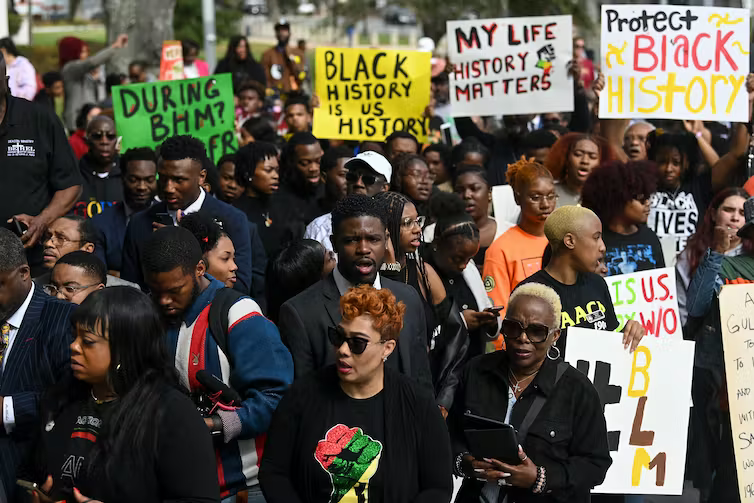
Florida law that took effect on July 1, 2023, restricts how educators in the state’s public colleges and universities can teach about the racial oppression that African Americans have faced in the United States.

Specifically, SB 266 forbids professors to teach that systemic racism is “inherent in the institutions of the United States.” Similarly, they cannot teach that it was designed “to maintain social, political and economic inequities.”

We are professors who teach the modern history of the Middle East and Eastern Europe, and we know that even democratically elected governments suppress histories of their own nations that don’t fit their ideology. The goal is often to smother a shameful past by casting those who speak of it as unpatriotic. Another goal is to stoke so much fear and anger that citizens welcome state censorship.

We see this playing out in Florida, with SB 266 being the most extreme example in a series of recent U.S. state bills that critics call “educational gag orders.” The tactics that Gov. Ron DeSantis is using to censor the teaching of American history in Florida look a lot like those seen in the illiberal democracies of Israel, Turkey, Russia and Poland.

Here are four ways SB 266 relates to attempts used by modern governments to censor history.

1. Invent a threat

One strategy that DeSantis shares with other world leaders is to invent a threat that taps into anxieties and then declare war against it.

In Russia, President Vladimir Putin has been waging a brutal war against Ukraine in the name of “denazifying” the country. This claim that Ukraine is a Nazi bastion is a fabrication. Nevertheless, it stokes real fear and hatred of Nazis, whose 1941 invasion of the USSR led to 27 million Soviet deaths.

In Turkey, President Recep Tayyip Erdoğan labels critics of state violence “terrorists.” More than 146 Turkish academics who signed a 2016 peace petition condemning Turkey’s violence against its Kurdish citizens faced trials for “spreading terrorist propaganda.” Ten were convicted and served jail terms before Turkey’s Constitutional Court, in a 9-8 decision in 2019, overturned their convictions because of the violation of their freedom of expression.

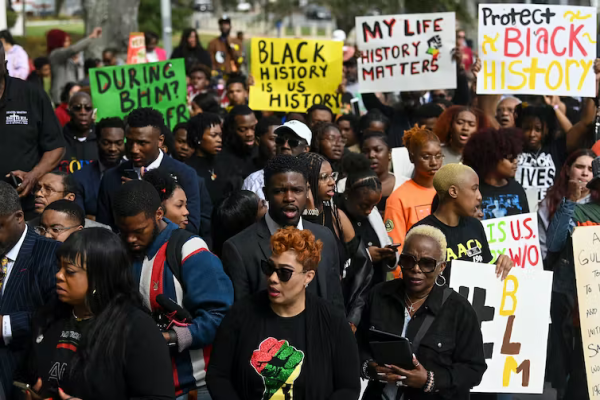
In Florida, the phantom threat is “wokeness,” a reference to a term that the Black Lives Matter movement made mainstream. To “stay woke” means to be self-aware and committed to racial justice. Republicans have co-opted the term and use it sarcastically to denigrate progressive ideas and drown out discussions about the reasons for America’s stark racial inequities.

2. Criminalize historical discussions

Once a fake threat has been ginned up, world leaders can use it to create new laws to criminalize speech and critical discussions of history.

In Russia, Putin uses so-called “memory laws” to, among other things, prevent knowledge about the scale of crimes committed by former Soviet leader Joseph Stalin against the Soviet people from the 1930s to the 1950s. And in 2018, Poland’s right-wing leadership added an amendment to one of its own memory laws to defend the “good name” of Poland and the Polish people against accusations of complicity in the Holocaust. Historians who defy this gag order have faced harassment and death threats.

Similarly, the Turkish government has a law against “denigrating the Turkish nation” that makes it a crime to acknowledge the early-20th-century Armenian genocide.

Turkey’s purge of its intellectuals resulted in the firing of more than 6,000 university instructors in an effort to silence critical teaching about the nation’s past and present.

SB 266, meanwhile, requires general education courses to “provide instruction on the historical background and philosophical foundation of Western civilization and this nation’s historical documents.” It also prohibits general education core courses from “teaching certain topics or presenting information in specified ways.”

The vagueness is deliberate. Teaching virtually anything related to America’s history of racism, particularly as it relates to racial inequalities in the present, could be seen as violating SB 266. Florida professors may refrain, for example, from teaching that Jim Crow laws were designed to deny African Americans equal rights. These are the same laws that Hitler used as a model for the Nuremberg Laws that stripped Jewish citizens of Germany of civil rights.

3. Punish transgressors

With laws in place that criminalize dissenting interpretations of history, governments can then punish those who violate them. Punishment can involve threatening arrest and imprisoning individuals, and stripping funding from institutions.

For example, in 2011 Israel enacted the Nakba Law, which authorizes the minister of finance to cut funding to institutions that commemorate or acknowledge what Palestinians refer to as the Nakba – or “catastrophe” in Arabic. The Nakba is the displacement of more than half of the Indigenous Palestinian population and destruction of their communities that resulted from the creation of the state of Israel in 1948.

Likewise, SB 266 defunds diversity, equity and inclusion efforts in public colleges and universities and empowers school administrators and boards to take action against those who defy the rules. It comes in the wake of Florida’s 2022 “Stop WOKE” law – which restricted discussions about race in K-12 schools and led teachers to purge their classrooms of books they worried could get them a five-year jail sentence.

4. Write new history

With actual historical events denied or suppressed, governments can then rewrite history to further monopolize truth and impose ideology. Russia offers the most egregious example of this.

In 2021, Putin published a 20-page article, “On the Historical Unity of the Russians and Ukrainians,” in which he argued that the Ukrainian and Russian people are one and the same. Alarmed critics rightly saw this as a preemptive justification for escalating his war against Ukraine, which he did with a full-scale invasion of the country in February 2022.

Like right-wing ideologues in other parts of the world, DeSantis claims to be defending U.S. history from falsehoods pushed by ideologues. In his attempts to rewrite history, calls for a reckoning with America’s history of anti-Blackness are ridiculed as indoctrination, and bigotry gets repackaged as patriotism.

If the way governments are rewriting history in other parts of the world is a guide, DeSantis’ and other states’ legislation could be the prelude to an even greater assault on accurate history and freedom of thought.

click here to see full blog: https://theconversation.com/desantis-war-on-woke-looks-a-lot-like-attempts-by-other-countries-to-deny-and-rewrite-history-204884
A Patchwork of Transgender Healthcare Laws Push Families Across State Lines

This blog originally appeared at NPR.

Exploring a patchwork of transgender healthcare laws that push families across state lines, creating challenges in accessing medical treatment, support, and resources.

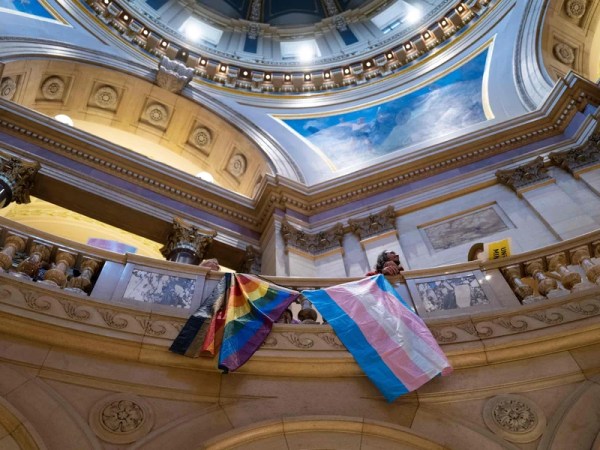
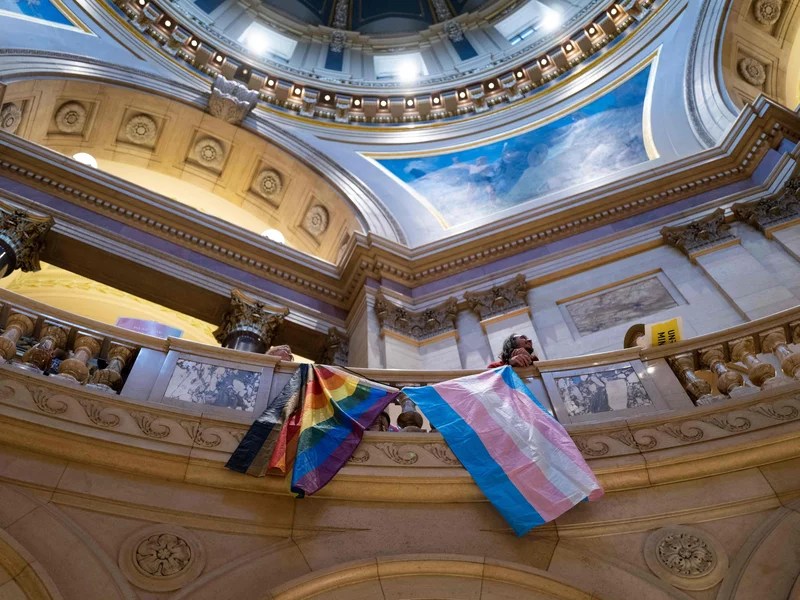
LGBTQ activists rally at the State Capitol Building in Saint Paul, Minnesota. Earlier this year state legislators put into place legal protections for trans people traveling to the state to receive healthcare.

When Utah passed a ban on gender-affirming care for people younger than 18, Kat and their family had to make a tough choice. Should they uproot their lives and leave the state?

Kat is 14 and transgender. The Utah law banned the medical care that Kat was considering.

Around 20 states have passed similar laws — meaning many families could face the same tough decision: whether to leave their homes and where to go. Often it’s to a state like Minnesota, where elected officials have protected trans health care for patients and providers.

We speak with reporters Saige Miller from KUER in Salt Lake City and Dana Ferguson, a political reporter with Minnesota Public Radio to hear how this patchwork of laws in both states affects trans patients and their doctors.

In participating regions, you’ll also hear a local news segment to help you make sense of what’s going on in your community.

click here to see full blog: https://www.npr.org/2023/07/26/1190271298/a-patchwork-of-transgender-healthcare-laws-push-families-across-state-lines

National State of Emergency for LGBTQ+ Americans

This blog originally appeared at Human Rights Campaign.

We have officially declared a state of emergency for LGBTQ+ people in the United States for the first time following an unprecedented and dangerous spike in anti-LGBTQ+ legislative assaults sweeping state houses this year.

More than 75 anti-LGBTQ+ bills have been signed into law this year alone, more than doubling last year’s number, which was previously the worst year on record. Our community is in danger, but we won’t stop fighting back — not now, not ever.


As of my last knowledge update in September 2021, there was no national state of emergency specifically declared for LGBTQ+ Americans in the United States. However, it’s worth noting that the LGBTQ+ community has faced various challenges and disparities in areas such as healthcare, employment, and civil rights. Advocacy groups and activists continue to work towards achieving equal rights and protections for LGBTQ+ individuals, but there hasn’t been a national state of emergency declared specifically for this community. Please keep in mind that the situation may have evolved since my last update, and I recommend checking the latest news and official government sources for any recent developments.

State of LGBTQ+ Rights

click here to see full blog: https://www.hrc.org/campaigns/national-state-of-emergency-for-lgbtq-americans

Base Air Show Featuring Scantily Clad Models Raises Questions About Justification for Drag Show Ban

This blog originally appeared at Yahoo News.


The recent ban on drag shows has raised significant questions about its justification and implications. In this blog post, we delve into the controversial decision, exploring the arguments put forth by both supporters and opponents of the ban. Join us as we examine the legal, cultural, and social dimensions surrounding the ban and consider its potential impact on freedom of expression and LGBTQ+ rights. Get ready to challenge assumptions and engage in a thoughtful discussion as we navigate the complex terrain of this contentious issue.

Four of the U.S. Air Force Air Demonstration Squadron “Thunderbirds” fly F-16 Fighting Falcon aircraft above the McChord Field flightline in preparation for the Joint Base Lewis-McChord Airshow and Warrior Expo before landing at JBLM, Washington, July 13, 2023.

At Joint Base Lewis-McChord‘s air show just outside of Tacoma, Washington, this past weekend, onlookers and families saw tactical military jets, high-performance sports cars and risqué models dancing on stage in skintight red,white and blue bikinis, part of what organizers described as a “way to thank the Puget Sound community.”

Instagram was flooded with pictures and videos of the models alongside sports cars, on the runway posing in front of cargo planes and in front of hot rods parked inside a hangarTwo dancers were also featured wearing revealing flight suits while dancing on stage. It was all featured in the Air Force‘s air show event at the base, which was open to the public, with the dancers representing an entertainment company called Hot Import Nights.

In the midst of ongoing controversy over a Pentagon decision to limit drag shows on bases after some critics complained of alleged adult content, the models and the racy musical performances over the weekend raised questions from LGBTQ+ advocates about what criteria Defense Secretary Lloyd Austin is using to stop some performances associated with the gay community while allowing other provocative acts.

Read Next: Army Shift from Brigades Back to Divisions Raises Concerns Among Retired Generals

Austin ordered two drag shows canceled in June during Pride Month, which is typically a time that the military celebrates LGBTQ+ diversity. The decisions were made after Austin was criticized during a congressional hearing in March over the military in rare instances allowing drag shows, which have become the political target of Republicans.

Following the canceled events, the Department of Defense has not yet clarified what entertainment is acceptable, and critics say it adds to the confusion of what shows should be prohibited for service members and their families.

Jennifer Dane, an LGBTQ+ advocate and an Air Force veteran who was one of the last to be investigated under the Pentagon’s old “Don’t Ask, Don’t Tell” policy, told Military.com that allowing the models at Joint Base Lewis-McChord appears to point to a double standard.

“It just sends a message that that’s OK, assuming that’s heteronormative,” Dane said. “But if it’s homosexual-based or anything else, that’s not OK.”

Some GOP representatives have said that drag isn’t acceptable or appropriate for children or military families. One lawmaker, Rep. Mark Alford, R-Mo., said during the House Armed Services Committee’s June 21 markup of the National Defense Authorization Act that he didn’t endorse any type of “oversexualized performance” on military bases.

“This is not anti-trans; this is not homophobic,” Alford said. “If this were females in an oversexualized arena performing like this, I would be against it as well. Let’s get the woke, let’s get the sexual nature out, wherever it is. Whether it’s performers in drag shows or women doing burlesque shows, it doesn’t matter. That’s not America.”

Austin Higginbotham, a spokesman for Alford, did not return a request for comment asking whether the Missouri Republican condemned the risqué models present at the Joint Base Lewis-McChord air show.

Footage from the event over the weekend was shared on the popular Air Force amn/nco/snco Facebook page where service members often post insider news.

Texas tops list of worst places to live and work in America, study says

This blog originally appeared at Austin American Statesman.

According to a recent study, Texas has been ranked as the worst state to live and work in America. The study analyzed various factors such as job opportunities, work-life balance, cost of living, healthcare quality, education, and safety. While Texas may have a strong economy and job market, it received low scores in categories like work-life balance, healthcare, and education. The study highlights the challenges that residents face in terms of affordability, access to quality healthcare, and the overall quality of life. It’s important to note that rankings like these are subjective and can vary based on individual preferences and priorities.

Texas has received the number one spot on a not-so-pleasant list: The top ten worst places in America to live and work in 2023.

While Texas landed at number six on CNBC’s yearly America’s Top States for Business study, the state scored significantly low in one category: Life, Health & Inclusion. Factors in this category include:

  • crime rates
  • environmental quality
  • health care
  • quality and availability of childcare
  • inclusiveness in state laws such as reproductive rights, protections against discrimination and voting rights

Texas received 53 out of 350 points for its 2023 Life, Health & Inclusion score, giving it an F in its Top States grade and the lowest nationwide, securing its number one spot on the list.

The Study’s Key Findings:

Job Opportunities: Texas is renowned for its robust economy and job market, but the study reveals that job opportunities alone don’t necessarily equate to a high quality of life. Other factors play a significant role in residents’ overall satisfaction.

Work-Life Balance:

Texas received low scores in the work-life balance category. While it may offer ample employment opportunities, the demands of the workforce can sometimes tip the scales unfavorably in terms of personal time and well-being.

Cost of Living:

Texas often boasts a lower cost of living compared to some other states, but this advantage can be offset by challenges in other areas, such as healthcare and education.

Healthcare Quality:

One of the areas where Texas faced significant challenges was in healthcare quality. Access to quality healthcare services is a critical aspect of overall well-being, and this factor appears to be a concern for many residents.

Education:

Education is a cornerstone of personal and societal growth, and Texas’s educational system received criticism in the study. Improvements in education are crucial for the state’s long-term success and the future prospects of its residents.

Safety:

Safety is a fundamental concern for all communities. While Texas is home to many safe and vibrant areas, there are regions where concerns about safety persist.

Subjectivity and Individual Priorities:

It’s essential to recognize that rankings like these are subjective and depend on the priorities and preferences of individuals. What one person values most in a state may differ significantly from another’s perspective. Texas has a diverse population with varying needs and expectations, making it challenging to generalize its appeal or drawbacks.

Conclusion:

While the recent ranking labeling Texas as the worst state to live and work in America has generated attention, it’s crucial to approach such studies with a critical and open mind. Texas is a state of contrasts, offering economic opportunities alongside challenges in healthcare, education, and work-life balance.

For those considering a move to Texas or evaluating their current situation, it’s advisable to assess personal priorities and weigh the pros and cons carefully. Every state has its strengths and weaknesses, and what matters most is finding the place that aligns best with your individual goals and values.

In the end, the ranking serves as a reminder that no state is without its unique set of challenges, and the pursuit of a fulfilling life involves finding the right balance between various factors that contribute to one’s well-being.

More: Austin drops in ‘best places to live’ report — again. Here’s why.

Texas’ low ranking in its Life, Health & Inclusion score is attributed to a lack of inclusiveness, according to CNBC, considering factors such as laws targeting the LGBTQ+ population, voting rights, and the strict abortion ban implemented statewide. Another weakness identified in the study was worker protections.

click here to see full blog: https://www.statesman.com/story/news/local/2023/07/18/texas-worst-places-states-to-live-work-in-america-cnbc-business/70421581007/

Thousands march at Budapest Pride as LGBTQ+ community voices anxiety over Hungary’s restrictive laws

This blog originally appeared at Kxan.

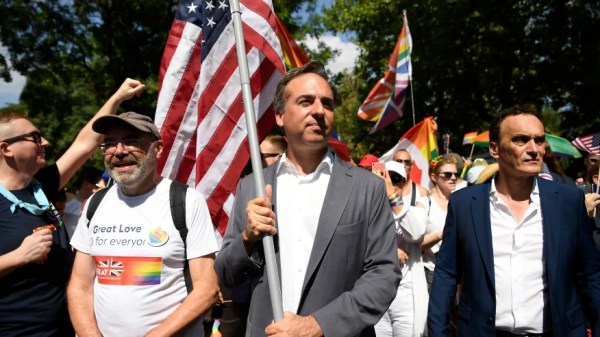
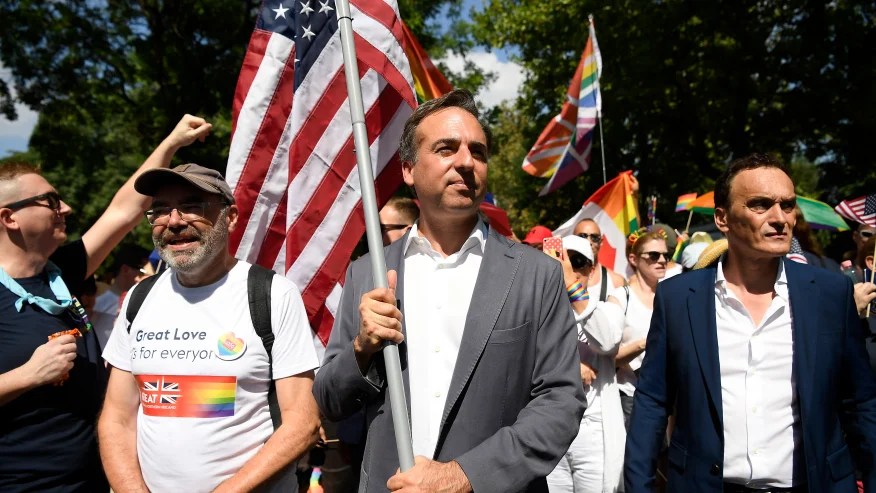
US Ambassador to Hungary David Pressman holds his country’s flag as he participates in the 28th Budapest Pride parade in Budapest, Hungary, Saturday, July 15, 2023.

BUDAPEST, Hungary (AP) — Thousands of participants of the Budapest Pride march wound through the streets of the Hungarian capital on Saturday with marchers voicing their anxiety over the increasing pressure on the LGBTQ+ community from the country’s right-wing government.

The 28th annual event comes as the country’s laws, which ban the depiction of homosexuality or gender transition, to minors under 18 have begun to be applied with increasing regularity, resulting in fines and other penalties for those who disseminate LGBTQ+ content.

Before the march, which began in Budapest’s city park, Pride organizer Jojo Majercsik said that while the laws, passed in 2021, didn’t have immediate practical effects, they are now increasingly being used to crack down on LGBTQ+ visibility.

“You can now see how the propaganda law passed two years ago is being applied in practice and how the public discourse has become more angry,” Majercsik said, referring to the 2021 law. “It is now apparent how they are trying to limit the rights of LGBTQ people in the media world, in the world of movies, films and books.”

Majercsik pointed to a number of recent instances of media content that depicted LGBTQ+ people being restricted. This week, a national bookseller was fined around $36,000 for placing a popular LGBTQ+ graphic novel in its youth literature section, and for failing to place it in closed packaging as required by law.MOST READ: 2 dead after crash on SH 71

Additionally, a 30-second animated campaign video produced by Budapest Pride — in which two female characters meet and touch foreheads — was ruled unsuitable for audiences under 18 by Hungary’s media authority, and may therefore only be broadcast between 10 p.m. and 5 a.m.

click here to see full blog: https://www.kxan.com/news/international/ap-thousands-march-at-budapest-pride-as-lgbtq-community-voices-anxiety-over-hungarys-restrictive-laws/?fbclid=IwAR3LcMK1tRrt5Ks-40dEQsnKJJ49HNYTpNW3GTE9kB9uf7nc1DQL7OewqxM

LGBTQ conservatives say they feel misled by DeSantis

This blog originally appeared at The Hill.

LGBTQ conservatives are speaking out, expressing their sense of being misled by Governor DeSantis. In this blog post, we shed light on the perspectives and experiences of LGBTQ conservatives who feel their trust has been misplaced. Join us as we delve into the complexities of this issue, examining the implications it holds for both the LGBTQ community and conservative politics. Get ready to explore the intersection of identity, politics, and public perception as we navigate the concerns raised by LGBTQ conservatives in relation to Governor DeSantis.

LGBTQ Republicans say they feel misled by Florida Gov. Ron DeSantis (R) after the GOP presidential hopeful’s “war room” shared a bizarre video widely seen as inflammatory.

The video bashed former President Donald Trump’s (R) support for the LGBTQ community and leaned into conservative state policies passed under DeSantis this year that were criticized as anti-LGBTQ.

LGBTQ conservatives, reacting to the video, said DeSantis had shown his true colors as an “anti-LGBT champion,” undermining his arguments that his support for the policies were about protecting children and parents’ rights.

“It’s like he’s going mask off,” said Brad Polumbo, a Michigan-based libertarian journalist. “The cat’s out of the bag.”

Polumbo said he’d have considered voting for DeSantis at one time.

“I’m somebody who has my fair share of policy disagreements with DeSantis, but I was considering voting for him in the primary before he entered the race officially,” he said. “Since then, he’s done thing after thing that really makes me increasingly write off that possibility.”

Rep. George Santos (R-N.Y.), who has endorsed Trump for president but vocally supported Florida’s “Don’t Say Gay” bill on the campaign trail last year, said that in light of Friday’s video, he now feels that he was “used” and misled by DeSantis.

“I used to think he was a great governor,” Santos, the first non-incumbent gay Republican elected to Congress, said of DeSantis. “Now, I’m starting to think differently.”

Meta-provided Facebook chats led a woman to plead guilty to abortion-related charges

This blog originally appeared at The Verge.

Facebook chats played a pivotal role in leading a woman to plead guilty to abortion-related charges, emphasizing the increasing influence of social media in legal proceedings and prompting discussions on privacy, digital evidence, and the intersection of technology and law.

An investigating officer served a warrant to Meta, which provided unencrypted chat sessions showing the woman and her daughter discussing abortion pills.

By Wes Davis, a weekend editor who covers the latest in tech and entertainment. He has written news, reviews, and more as a tech journalist since 2020.

A Norfolk, Nebraska, woman pleaded guilty to helping her daughter have a medication abortion last year. The charges came after Facebook, by court order, provided police with evidence that bolstered a Madison County prosecutor’s case against her.

Last year, it emerged that the two were charged after police acquired Facebook messages that proved the two had acquired abortion medication intended for first-trimester abortions. In a June 2022 affidavit, the officer investigating Celeste Burgess, the daughter who was charged along with her mother, Jessica Burgess, said he’d served Meta a warrant seeking their messages, and the company quickly complied.

The charges include having an abortion after 20 weeks, false reporting, and tampering with human skeletal remains. According to last year’s affidavit, Burgess was about 23 weeks along in her pregnancy, which is also later than the Nebraska 20-week post-fertilization abortion ban in place at the time. Nebraska has since implemented a 12-week abortion ban.

The case underscores a crucial privacy drawback of Facebook Messenger, which to this day doesn’t default to end-to-end encryption (E2EE) like other messengers, such as Signal, Meta’s own WhatsApp, or Apple’s iMessage do. Because it’s not the default, average people not being intentional about their messaging may not realize they can even turn it on.

E2EE is important because, when it’s properly implemented, the company offering it has no key to unlock the messages — the only person who can access the messages is the sender and the receiver, and in some cases, you can even set the messages to be deleted.

In June, when the investigating officer’s affidavit was filed, the Supreme Court was on the precipice of striking down Roe v. Wade — which it did only nine days afterward on June 24th, 2022. Afterward, existing, unenforceable abortion bans around the country immediately took effect, while many states got to work passing new restrictions, and women’s rights advocacy groups warned of digital privacy risks illuminated in cases just like the Burgess’.

click here to see full blog: https://www.theverge.com/2023/7/11/23790923/facebook-meta-woman-daughter-guilty-abortion-nebraska-messenger-encryption-privacy

A monumental LGBTQ rights case is barreling toward the Supreme Court

This blog originally appeared at Vox.

A new federal appeals court decision is a terrible blow to trans rights, and a potential earthquake in the fight for LGBTQ equality.

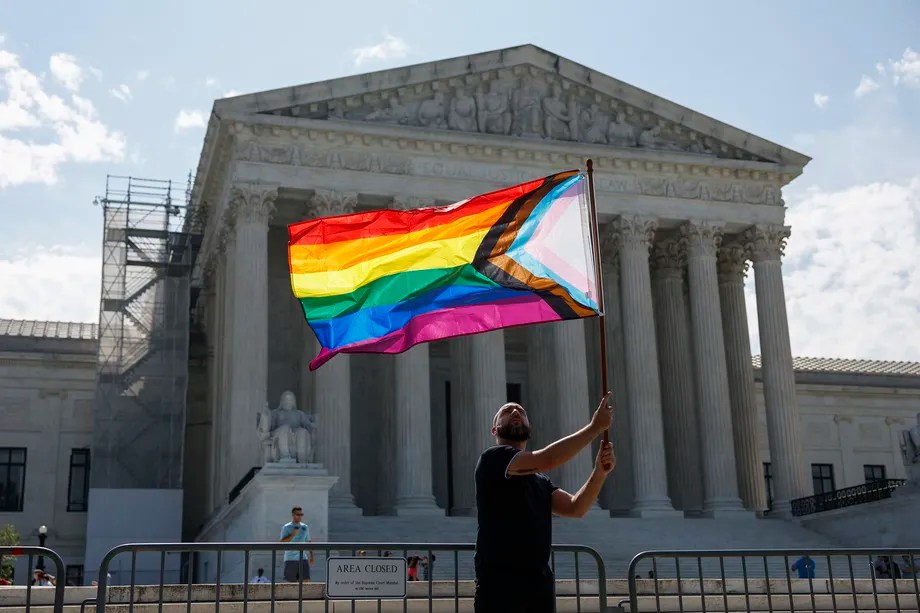
A same-sex marriage supporter waves an LGBTQIA Pride flag in front of the US Supreme Court building.

Ian Millhiser is a senior correspondent at Vox, where he focuses on the Supreme Court, the Constitution, and the decline of liberal democracy in the United States. He received a JD from Duke University and is the author of two books on the Supreme Court.

In recent months, Republican lawmakers in many states enacted laws targeting LGBTQ Americans, attempting to shut down their right to free expression and even deny them medical care, among other things. Until Saturday, however, civil rights lawyers challenging these laws fared surprisingly well in federal court, convincing even many Republican judges.

The United States Court of Appeals for the Sixth Circuit’s decision in L.W. v. Skrmetti, threatens to upend all of that. Before L.W. was handed down this past weekend, there was a consensus among federal courts that the Constitution prohibits states from banning gender-affirming medical care.

L.W. destroys that consensus. It reinstated a Tennessee law, previously blocked by a federal trial court, that prohibits gender-affirming care for transgender patients under the age of 18. And the Sixth Circuit’s opinion was written by Chief Judge Jeffrey Sutton, a widely respected judge, especially among the Supreme Court’s GOP-appointed majority.

Sutton, a George W. Bush appointee, is one of the federal judiciary’s leading “feeder” judges, meaning that his law clerks are frequently hired to clerk for the Supreme Court justices — a sign that the justices are likely to pay careful attention to Sutton’s views when deciding how to resolve a case like L.W.

Sutton’s decision to reinstate Tennessee’s anti-trans law is temporary, and he ends his opinion by saying his court will reconsider this question “with the goal of resolving it no later than September 30, 2023.” So it is possible that the Sixth Circuit will reconsider and join the other courts that have blocked bans on transgender health care.

In the fairly likely event that the Sixth Circuit hews to Sutton’s position, however, that will make it very likely that the Supreme Court will take up this issue, and soon. The justices pay special attention to legal questions that have divided lower federal appeals courts when deciding which cases to hear.

click here to see full blog: https://www.vox.com/scotus/2023/7/10/23789633/supreme-court-lgbtq-lw-skrmetti-transgender-health-care-jeffrey-sutton-sixth-circuit

This Michigan Hair Salon Owner Will Apparently Refuse Trans And Queer Clients

This blog originally appeared at Huff Post.

Transgender people needing a haircut should go to “a local pet groomer,” Christine Geiger wrote, according to a local news outlet.

A Michigan hair salon owner announced on Facebook that she would not be providing services to transgender or queer people, reportedly writing that they should seek a grooming service for animals.

Christine Geiger, the owner of Studio 8 Hair Lab in Traverse City, told local outlet 9&10 News that she is OK with lesbian, gay and bisexual people but refuses to use preferred pronouns and has a right to deny service.

This comes just weeks after the U.S. Supreme Court made it easier for some business owners to discriminate against members of the LGBTQ+ community.

“If a human identifies as anything other than a man/woman, please seek services at a local pet groomer,” Geiger wrote on Studio 8 Hair Lab’s Facebook page, according to screenshots published by 9&10 News.

“You are not welcome at this salon. Period,” she added.

“This is America; free speech. This small business has the right to refuse services. We are not bound to any oaths as realtors are regarding discrimination. My recent airport experience validates this,” Geiger wrote without further explanation.

HuffPost was not able to independently verify the Facebook post since Geiger made her business’ social media accounts private in the wake of reporting on her new discrimination policy. Phone calls to the business went straight to a voicemail box that was not accepting new messages.

click here to see full blog: https://www.huffpost.com/entry/michigan-hair-salon-lgbtq-discrimination_n_64adb6a6e4b03d308d97e287

Blog at WordPress.com.

Up ↑