‘Unfriendly political environment’: Broward convention cancellations blame Florida as reason for exodus

This blog originally appeared at South Florida Sun Sentinel.

We delve into Broward County’s recent convention cancellations, attributing the exodus to a perceived unfriendly political environment. Join us as we uncover the factors behind this shift and explore the implications for local and national politics. Let’s unveil the truth behind Broward’s convention scene.
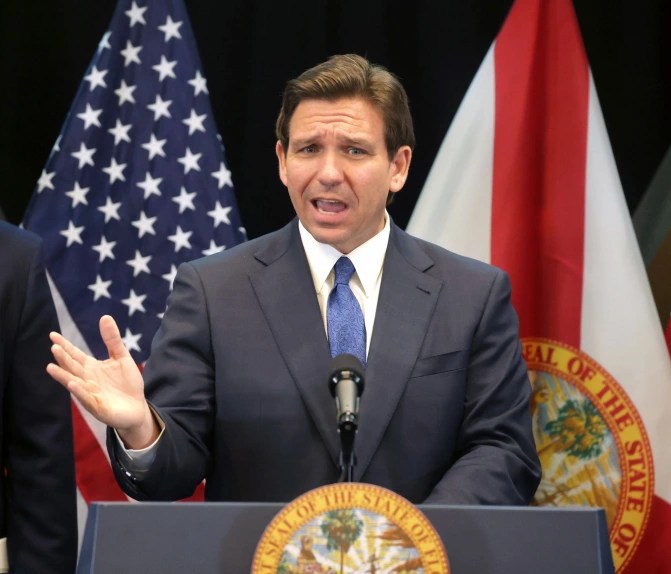
Broward County has lost more than a half-dozen conventions as their organizers cite the divisive political climate as their reason to stay out of Florida.

The list was compiled by Visit Lauderdale, formerly known as the Greater Fort Lauderdale Convention & Visitors Bureau.

Broward’s tourism arm said the lost conventions could have brought hotel stays to Fort Lauderdale and its surrounding cities, which also meant money spent on restaurants and attractions.

“We lost this program due to political climate,” according to a Visit Lauderdale spreadsheet listing the decision of the Supreme Council of America Inc., Ancient & Accepted Scottish Rite Masons to cancel their convention — and 855 rooms — in August 2024.

“We were so close on this one,” reads the notes on the entry for the 2024 National Family and Community Engagement and Community Schools Conference, which needed more than 2,000 rooms and has bailed. “But, group decided to pull out of Florida due to concerns about what the Governor is doing in the education/schools and that he will likely run in 2024. They do not want to lose attendees due to this.”

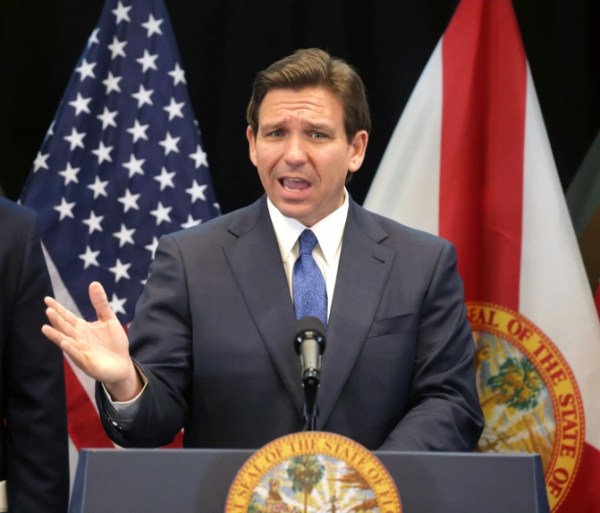
Under the explanation for a nationally funded Mississippi-based organization that deals with health care workers, the reason simply reads: “Governor DeSantis.”

An organizer for the event, who did not have authority to speak, said Thursday the group was planning to come to Fort Lauderdale for a staff retreat this summer and have opted for Denver instead.

The reason: The polarization of gay rights and “assault on diversity and equity and inclusion.”

Stacy Ritter, president and CEO of Visit Lauderdale, Broward County’s tourism promotion arm, said she’s “saddened” by the loss of tourism, but said, “It’s not directed at South Florida. We’re not doing anything different than we’ve been doing for the last 30 years.”

She also said the effects won’t be felt for years because the conventions generally book far in advance.

“From an economic standpoint, this is very harmful. We saw in 2020 what happens when visitors stay away — people lose their jobs.  By not coming here, the residents of our county, whose values align with these organizations, get hurt. Minority, women and LGBTQ+ businesses rely on visitors for their existence. Staying away hurts those very people.”

The Chicago-based American Specialty Toy Retailing Association had planned a 3,000-person conference in Fort Lauderdale in 2026. A spokeswoman said Thursday they are “probably” headed to Milwaukee instead.

The organization has “a lot of people that don’t like those politics at all,” said spokeswoman Beth Miller.

In a note to the tourism office, she cited the “unfriendly political environment in Florida.”

“This would otherwise be such a fabulous destination for the group. I sure hope things become less polarizing soon,” she wrote the county.

Said Ritter: “I’m saddened because my hometown is welcoming and inclusive and everybody knows that. This isn’t directed at us, which is heartening because they know our values are of supporting diversity and inclusion. It’s a bigger message and there’s little we can do about that.”

RELATED ARTICLES

A get-away weekend run by the Atlanta-based aParent Miracles Foundation for this November is headed to Texas instead.

The group changed its mind after the NAACP issued a travel advisory for Florida “in direct response to Governor Ron DeSantis’ attempts to erase Black history, and to restrict diversity, equity, and inclusion programs in Florida schools,” the organizer wrote Ritter’s office.

And the Washington, D.C.-based Association of Farmworker Opportunity Programs, which was scheduled to come to Fort Lauderdale in January, diverted to New Orleans instead.

Because of what’s perceived as anti-migrant policies, “we heard some rumblings some people might not be willing to attend,” said Daniel Sheehan, executive director. “We canceled out of an abundance of caution. Maybe some day in the future” the group will return, he said.

The loss of conventions has been particularly felt in Orlando, where groups canceling their events have cited laws that banned most abortions after six weeks, allowed Floridians to carry concealed weapons without a permit, cracked down on illegal immigration, and targeted transgender and LGBTQ+ issues.

The National Society of Black Engineers’ 50th conference, which would have brought up to 15,000 visitors to the Orange County Convention Center in 2024, will now be held in a different city. Organizers with the National Society of Black Engineers told the Orlando Sentinel they were troubled by DeSantis’ efforts to target diversity, equity and inclusion programs in schools and how that would affect student members of the group.

And the Con of Thrones, which typically draws 3,000 to 4,000 fans of the “Game of Thrones” books and television shows, also announced it was pulling the plug on a gathering planned for Aug. 25-27 at the Hyatt Regency Orlando.

A spokesperson for DeSantis on Thursday called the announcements by the groups “nothing more than a media-driven stunt.”

“As Governor DeSantis announced in May, Florida is experiencing record tourism, with the Q1 2023 having the largest volume of visitors during a single quarter in recorded history,” Press Secretary Jeremy T. Redfern said in an email to the South Florida Sun Sentinel. “Under the leadership of Governor DeSantis, Florida’s economy is booming, with Florida being the fastest growing state and having the largest net domestic in-migration.”

click here to see full blog: https://www.sun-sentinel.com/2023/07/07/unfriendly-political-environment-broward-convention-center-cancellations-blame-florida-as-reason-for-exodus/
LGBTQIA+ Community Taking Businesses, Economic Impact To Places That Will ‘Love You Back’

This blog originally appeared at BisNow.

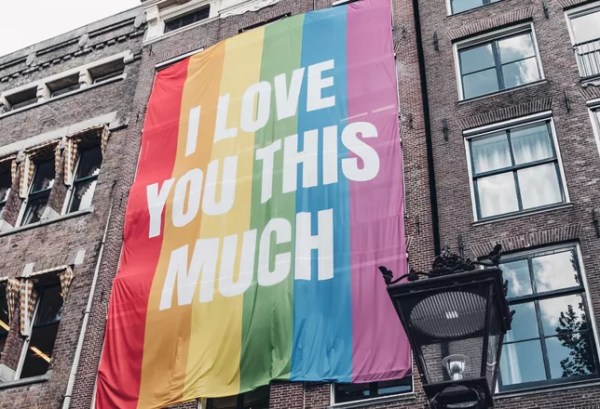
Amid one of the toughest civil rights climates in a generation for LGBTQIA+ rights, some members of the community are ditching red states and taking their incomes, businesses and economic impact with them. 

Amid one of the toughest civil rights climates in a generation for LGBTQIA+ rights, some members of the community are ditching red states and taking their incomes, businesses and economic impact with them. 

click here to see full blog: https://www.bisnow.com/national/news/commercial-real-estate/some-lgbtq-people-taking-their-economic-impact-to-places-that-will-love-you-back-119599

BBC News: Issue 1: Ohio vote delivers win for abortion-rights supporters

This blog originally appeared at BBC News.

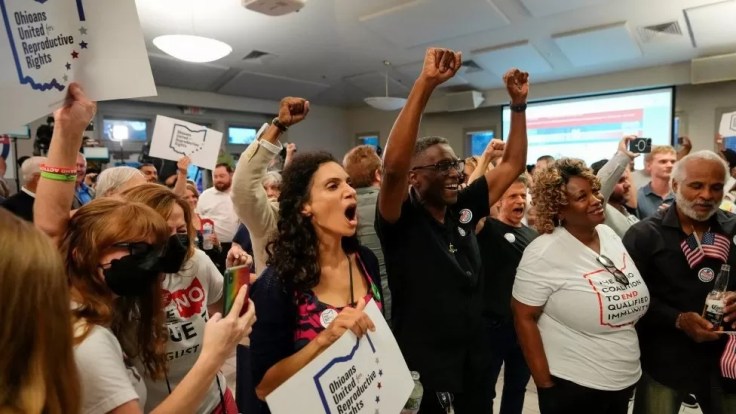
Ohio has rejected a Republican motion to make it harder to change the state’s constitution – a move seen as a defeat for anti-abortion groups.

The Republican-controlled state legislature had hoped to raise the bar for constitutional amendments to 60% instead of a simple majority.

It was largely seen as a move to derail a planned referendum to place abortion rights into the constitution.

President Joe Biden called it a victory for democracy and for women.

The Republican-backed move was a “blatant attempt to weaken voters’ voices and further erode the freedom of women to make their own health care decisions”, Mr Biden said.

When the US Supreme Court ended the nationwide right of women to have an abortion a year ago, a ban on the procedure after six weeks of pregnancy came into effect in Ohio – although it is currently on hold following a legal challenge.

Pro-choice groups in Ohio are planning on using November’s elections to reverse this, by getting the right to have an abortion enshrined into the midwestern state’s constitution.

The measure being voted on, called Issue 1, was rejected by a margin of 57% to 43% with nearly all voting precincts tallied by Wednesday morning.

A campaign group One Person, One Vote told Politico in a statement that Issue 1 was a “deceptive power grab designed to silence” the voice of voters.

Ohio Democratic Party Chair Liz Walters told the Columbus Dispatch that the result is “a victory for the kind of state we want to see”.

More than 600,000 submitted early ballots on the issue – a historically high turnout for August elections in the state.

So was the vote on Issue 1 about protecting the constitution, as its supporters claim, or was it really about abortion?

What is Issue 1?

Issue 1 was the only question on the ballot in Ohio’s 8 August special election.

If passed, it would have changed the threshold for approving amendments from 50% to 60%. And Issue 1 would have also made it harder to put amendments before voters in the first place, asking petitioners to gather signatures from 5% of eligible voters in each of Ohio’s 88 counties, instead of the current 44.

In the 111 years since Ohio first granted voters the power to introduce citizen-led amendments, just 19 of 71 proposed measures have passed the 50% benchmark.

click here to see full blog: https://www.bbc.com/news/world-us-canada-66442370

Florida announces restrictions on Vermont licenses

This blog originally appeared at My Champlain Valley.

Florida has announced new restrictions on Vermont licenses, imposing additional requirements or limitations on their validity or recognition within the state. The move highlights the complex landscape of interstate licensing agreements and regulations, which can vary from state to state.

Montpelier, VT – Florida Governor Ron DeSantis announced the passing of a law that could render driver’s licenses and other forms of identification from several states invalid, including Vermont.

Florida Senate Bill 1718 is considered to be a policy to crack down on illegal immigration, attempting to prevent the use of publicly funded services by those who may not pay taxes.

As of July 1, in addition to Vermont, four other states’ IDs will face extra scrutiny from police, as they may provide forms of identification to applicants who do not give proof of citizenship or legal status:

  • Delaware
  • Connecticut
  • Hawaii
  • Rhode Island

The law directs Florida police officers to write a ticket to anyone they pull over who has what is now recognized as an invalid license.

clilck here to see full blog: https://www.mychamplainvalley.com/news/local-news/florida-announces-restrictions-on-vermont-licenses/

Iowa Meteorologist Started Talking About Climate Change On Newscasts. Then Came The Harassment

This blog originally appeared at Huff Post.

Iowa Meteorologist Started Talking About Climate Change On Newscasts. Then Came The Harassment

“I started just connecting the dots between extreme weather and climate change, and then the volume of pushback started to increase quite dramatically.”

DES MOINES, Iowa (AP) — The harassment started to intensify as TV meteorologist Chris Gloninger did more reporting on climate change during local newscasts — outraged emails and even a threat to show up at his house.

Gloninger said he had been recruited, in part, to “shake things up” at the Iowa station where he worked, but backlash was building. The man who sent him a series of threatening emails was charged with third-degree harassment. The Des Moines station asked him to dial back his coverage, facing what he called an understandable pressure to maintain ratings.

“I started just connecting the dots between extreme weather and climate change, and then the volume of pushback started to increase quite dramatically,” he said in an interview with The Associated Press.

So, on June 21, the 38-year-old announced that he was leaving KCCI-TV — and his 18-year career in broadcast journalism altogether.

Gloninger’s experience is all too common among meteorologists across the country who are encountering reactions from viewers as they tie climate change to extreme temperatures, blizzards, tornadoes and floods in their local weather reports. For on-air meteorologists, the anti-science trend that has emerged in recent years compounds a deepening skepticism of the news media.

click here to see full blog: https://www.huffpost.com/entry/bc-us-threatened-meteorologists_n_64a9a52ee4b0b64176379620

Judge blocks Arkansas law allowing librarians to be criminally charged over ‘harmful’ materials

This blog originally appeared at AP News.


In a recent court decision, a judge has blocked an Arkansas law that would have allowed librarians to be criminally charged if they provide access to “harmful” materials to minors. The law, which was set to take effect, has been met with widespread criticism from free speech advocates and library associations, who argue that it infringes on First Amendment rights and imposes undue censorship on public libraries.

FILE – Nate Coulter, executive director of the Central Arkansas Library System (CALS), looks at a book in the main branch of the public library in downtown Little Rock, Ark., on May 23, 2023. Arkansas is temporarily blocked from enforcing a law that would have allowed criminal charges against librarians and booksellers for providing “harmful” materials to minors, a federal judge ruled Saturday, July 29. 

LITTLE ROCK, Ark. (AP) — Arkansas is temporarily blocked from enforcing a law that would have allowed criminal charges against librarians and booksellers for providing “harmful” materials to minors, a federal judge ruled Saturday.

U.S. District Judge Timothy L. Brooks issued a preliminary injunction against the law, which also would have created a new process to challenge library materials and request that they be relocated to areas not accessible by kids. The measure, signed by Republican Gov. Sarah Huckabee Sanders earlier this year, was set to take effect Aug. 1.

A coalition that included the Central Arkansas Library System in Little Rock had challenged the law, saying fear of prosecution under the measure could prompt libraries and booksellers to no longer carry titles that could be challenged.

The judge also rejected a motion by the defendants, which include prosecuting attorneys for the state, seeking to dismiss the case.

The ACLU of Arkansas, which represents some of the plaintiffs, applauded the court’s ruling, saying that the absence of a preliminary injunction would have jeopardized First Amendment rights.

“The question we had to ask was — do Arkansans still legally have access to reading materials? Luckily, the judicial system has once again defended our highly valued liberties,” Holly Dickson, the executive director of the ACLU in Arkansas, said in a statement.

The lawsuit comes as lawmakers in an increasing number of conservative states are pushing for measures making it easier to ban or restrict access to books. The number of attempts to ban or restrict books across the U.S. last year was the highest in the 20 years the American Library Association has been tracking such efforts.

Laws restricting access to certain materials or making it easier to challenge them have been enacted in several other states, including Iowa, Indiana and Texas.

Arkansas Attorney General Tim Griffin said in an email Saturday that his office would be “reviewing the judge’s opinion and will continue to vigorously defend the law.”

The executive director of Central Arkansas Library System, Nate Coulter, said the judge’s 49-page decision recognized the law as censorship, a violation of the Constitution and wrongly maligning librarians.

“As folks in southwest Arkansas say, this order is stout as horseradish!” he said in an email.

“I’m relieved that for now the dark cloud that was hanging over CALS’ librarians has lifted,” he added.

Cheryl Davis, general counsel for the Authors Guild, said the organization is “thrilled” about the decision. She said enforcing this law “is likely to limit the free speech rights of older minors, who are capable of reading and processing more complex reading materials than young children can.”

The Arkansas lawsuit names the state’s 28 local prosecutors as defendants, along with Crawford County in west Arkansas. A separate lawsuit is challenging the Crawford County library’s decision to move children’s books that included LGBTQ+ themes to a separate portion of the library.

The plaintiffs challenging Arkansas’ restrictions also include the Fayetteville and Eureka Springs Carnegie public libraries, the American Booksellers Association and the Association of American Publishers.

click here to see full blog: https://apnews.com/article/libraries-books-bans-arkansas-758f28c04c573d03b869ad2738e2b06d

The Florida Medical Conscience Law: Balancing Beliefs and Healthcare Access

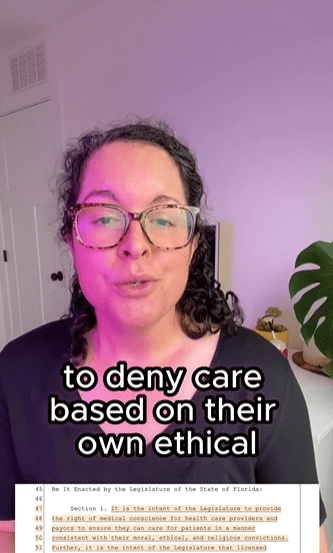
Florida is on the cusp of implementing the New Protections of Medical Conscience Law, effective July 1st. This legislation empowers healthcare providers to deny care to patients based on their moral, religious, or ethical beliefs, aiming to safeguard providers’ conscience rights. However, this law carries profound implications, including protections for those claiming conscience exemptions and potential conflicts between personal beliefs and evidence-based healthcare. This article explores the ramifications of this law on patient care and the healthcare system at large.

The New Florida Protections of Medical Conscience Law will take effect July 1st, and will allow providers to deny care to patients based on their own moral, religious, and ethical beliefs. This has far reaching effects, and people claiming conscience exemptions are largely protected from retaliation from their employers and organizations they are involved in. A nurse doesn’t like the med they’re giving? They don’t have to. Pharmacist doesn’t believe in a treatment? They don’t have to dispense it. Your primary care provider doesn’t think mental health conditions are real? No referral to psych for you. The implications of this are far reaching and promote a healthcare system that is based on feelings versus science.

Starting July 1st, Florida is set to enact the new Protections of Medical Conscience Law, a legislation that grants healthcare providers the authority to refuse care to patients when their decisions are driven by moral, religious, or ethical beliefs. This law, while intending to safeguard providers’ conscience rights, is poised to have substantial repercussions across the healthcare landscape. One significant aspect of this law is its provision to protect those claiming conscience exemptions from potential retaliation by their employers or affiliated organizations, ensuring they can act in accordance with their beliefs without fear of adverse consequences.

Under the forthcoming legislation, scenarios could emerge where healthcare professionals, such as nurses and pharmacists, exercise their rights to withhold treatment or medications that conflict with their personal convictions. For instance, if a nurse objects to administering a particular medication due to moral concerns, they will have the legal grounds to abstain from doing so. Likewise, a pharmacist who has reservations about a specific treatment can refuse to dispense it. Furthermore, this law also extends to primary care providers who might, based on their beliefs, decline to refer patients with mental health conditions to psychiatric specialists, raising questions about the balance between individual conscience and evidence-based healthcare.

The implications of the Florida Protections of Medical Conscience Law are extensive, as it introduces a dynamic that prioritizes personal convictions over established scientific practices in the healthcare system. While it offers a safeguard for healthcare providers’ ethical beliefs, it simultaneously raises concerns about the potential impact on patient care, access, and the overall quality of the healthcare system. Balancing the protection of individual conscience with the overarching goal of providing evidence-based and comprehensive healthcare will likely remain a topic of considerable debate and scrutiny in the state of Florida and beyond.

A mob storms Tbilisi Pride Fest site, forcing the event’s cancellation

This blog originally appeared at AP News.

A mob attacked and forced the cancellation of the Tbilisi Pride Festival in Georgia, underscoring the challenges faced by the LGBTQ+ community. The incident highlights the ongoing struggle for acceptance and the need for greater protection of LGBTQ+ rights.

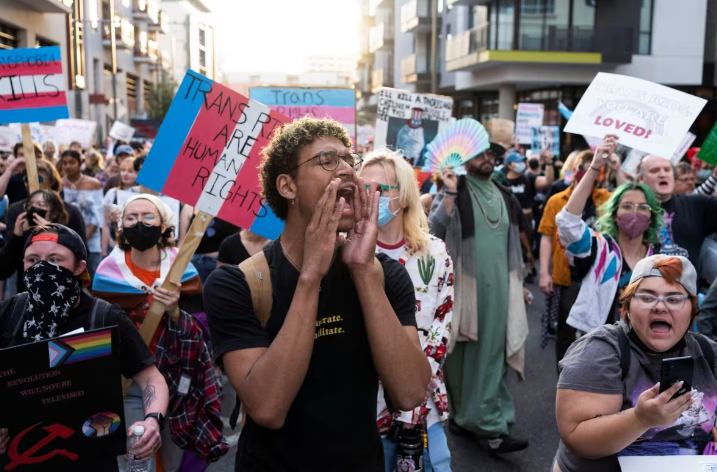
TBILISI, Georgia (AP) — Hundreds of opponents of gay rights on Saturday swarmed the site of an LGBT festival in the capital of the country of Georgia, vandalizing the stage, setting fires and looting the event’s bar.

Deputy Georgian Interior Minister Aleksandre Darakhvelidze said participants in the Tbilisi Pride Fest were safely evacuated from the scene. Festival organizers called on people not to come to the lakeside park where the event was to be held.

Georgian news media estimated about 5,000 people marched toward the site. Many of them waved Georgian flags and carried religious icons.

Animosity toward sexual minorities is strong in Georgia, which is predominantly Orthodox Christian, and some previous LGBT events have met violent disruptions.

Darakhvelidze said police tried to obstruct the protesters but could not hold all of them back.

But the event organizers criticized police as ineffectual, saying in a statement: “The police did not block the access road to the festival site in order to prevent an aggressive group. The police did not use proportional force against the attackers.”

click here to see full blog: https://apnews.com/article/georgia-lgbt-festival-pride-cancellation-ce5a1f6a162008e9a7de0d139d067358

Texas ban on gender-affirming care leaves trans teens without options

This blog originally appeared at CBC News.

Texas to become largest state in U.S. to ban puberty blockers and other gender-affirming care for teens

Pediatric endocrinologist Ximena Lopez worries for her young patients as she closes her clinic in Dallas that offered gender-affirming care to those under 18. With Texas banning that treatment, transgender teenagers are ‘livid’ and left without options. (Jason Burles/CBC)

From her now near-empty home in the Dallas suburb of Plano, with moving boxes stacked high in the garage, pediatric endocrinologist Ximena Lopez says she never thought she’d see this day.

Fearing violence that could target her family — a response by some to the type of medical treatment she offers — Lopez is closing her health clinic, selling her house and fleeing Texas for California.

“I don’t feel safe,” she said. “With so many people with guns [who] have gone to protest against me, or our clinic … armed.”

She adds, “I’m afraid of leaving my son home alone, and I don’t want to live like that.”

For years, Lopez has operated a clinic at a Dallas medical centre that offers what’s known as gender-affirming care for young people. It’s aimed at aiding and comforting transgender teens.

Treatment includes recurrent counselling and — controversially — medication that temporarily blocks puberty.

In America, it’s an extremely divisive program. 

Amid rising anti-trans sentiment in the U.S., protesters rally for the International Transgender Day of Visibility in Tucson, Arizona on March 31. (Rebecca Noble/Reuters)

Nearly two dozen U.S. states, mostly Republican-led, have now taken steps to ban the treatment. (Some of those bans have been successfully challenged in court. Civil rights advocates pledge more challenges will follow.) 

Separately, various state legislatures have put forward roughly 500 bills this year alone deemed by the American Civil Liberties Union as being anti-LGBTQ, including restrictions on bathroom use, pronouns, drag performances and education. 

Civil libertarians describe it as a growing wave of intolerance in the U.S. targeting that community and medical providers such as Lopez.

Texas passed its bill banning gender-affirming care for teens this spring after a raucous debate, with vocal protests by the program’s supporters.

The new law takes effect in September.

Lopez and others underline that the treatment is decisively evidence-based, and she believes in it deeply. She calls it “one of the most important things I’ve done in my life.”

But opponents have called her a child abuser and a Nazi. Some have said she “should die in hell,” leaving Lopez frightened, frustrated and angry.

“The whole state has become crazy,” said Lopez. It “is right now full of hate.”

“I felt like things were evolving with society, with progress. Now we are going backwards,” she said.

“It has become unbearable.”

Patients caught in the crosshairs

Chief among those caught in the crosshairs are the patients of Lopez. When she moves to California, where her treatment remains legal, her patients in Texas will face dwindling access to medications and no easy path for direct care.

Most of those contacted directly by CBC News said they strongly support Lopez and her work but were afraid to speak out publicly, worried about stigma and violence that could target them.

But on agreement to withhold their surname to reduce the risk, parents Kristen and Wes and daughter Audrey sat down with CBC News at their home northeast of Dallas to talk about all of it. They strongly wanted others to know what Audrey has gained from her time with Lopez and what the new law in Texas now threatens. 

In short, they believe Lopez and her program saved Audrey’s life.

click here to see full blog: https://www.cbc.ca/news/world/texas-lgbtq-legislation-1.6887130

Illinois city becomes haven for LGBTQ community looking for affordable housing

This blog originally appeared at CBS News.

In recent years, an Illinois city has emerged as a haven for the LGBTQ community seeking affordable housing options. With its inclusive and supportive environment, the city has attracted individuals and families looking for a place where they can feel accepted and celebrated for who they are. The local community has worked to create safe spaces, organize events, and establish support networks, making it a welcoming destination for LGBTQ individuals seeking both a sense of community and affordable living. As this trend continues, the city’s reputation as an LGBTQ-friendly haven with affordable housing options is likely to grow, benefiting both its residents and the broader community.

The dream of owning a home seems out of reach for millions of Americans, especially those in the LGBTQ+ community. But in Peoria, Illinois, Alex Martin owns a home at age 30 — something she never thought would be possible.

“I’m black. I’m trans, and I’m visibly so, and so having a space that, like, I made that I can just come in and recharge, I’m ready to face the world again,” she said.

And she’s not alone. In recent years, many LGBTQ+ people and people of color, who are statistically less likely to own homes because of discrimination and wealth gaps, are moving to the same city.

At first, they came from places like New York and Seattle, where home prices are sky-high. Now, many are coming from some of the 21 states that have passed anti-LGBTQ+ legislation.

Last year, realtor Mike Van Cleve sold almost 80 homes, and nearly one-third were sold to people moving from out of state.

Angie Ostaszewski says she has almost single-handedly grown Peoria’s population by about 360 in three years thanks to TikTok.

“When I first started making TikToks about Peoria, it was about ‘improve your quality of life,'” she said. “But in the last six months especially, people are relocating here more for survival, and that’s such a different conversation.”

Ostaszewski also said she would like for her posts to help spread the word even further.

“I love the idea of shaking up that big cities are the only places that LGBTQ+ people can thrive,” she said.

click here to see full blog: https://www.cbsnews.com/news/peoria-illinois-lgbtq-housing/?fbclid=IwAR0Mu_1kD48cZAn8ciEFvDHWVHJ6-SpkNjbRmN04qpjtQ7axoD603FKn52Q

Blog at WordPress.com.

Up ↑