The LGBTQ+ Migration: Why Many Are Leaving Everything Behind To Move Across the Country

This blog originally appeared at Realtor.com

Kristen Chapman, 52, doesn’t know anyone in Virginia. She doesn’t have a job lined up or a home there. But this summer, the Tennessee mother of three will uproot her family from Nashville and move 600 miles away to Richmond, VA, so that her transgender daughter can continue receiving the gender-affirming care that Chapman believes has saved her child’s life.

In March, Tennessee banned gender-affirming care for transgender minors.

“My youngest child cannot get care here legally. I no longer feel welcome here. I no longer feel safe here,” says Chapman, a social worker and artist, who identifies as queer. “I literally feel targeted, like someone painted a big X on our door and we have to get out.”

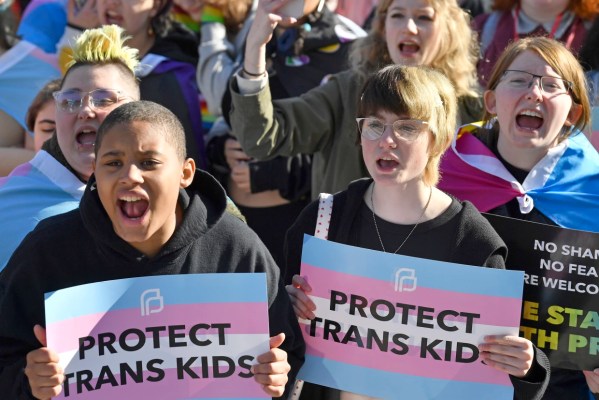
Chapman is part of a growing number of lesbian, gay, bisexual, transgender, and queer people and their families fleeing neighborhoods, cities, and states where they are worried about their safety. Some have faced harassment as anti-LGBTQ+ rhetoric has spread throughout the country. Others are desperate parents of children whose gender-affirming health care has been outlawed by their state governments. Most are relocating to blue and purple cities and states, where housing costs are often much higher but they feel welcomed.

Since June 5 of this year, more than 525 anti-LGBTQ+ bills have been introduced in 41 states, creating a new record, according to the Human Rights Campaign. More than 220 of those bills targeted transgender individuals with at least 20 states now banning gender-affirming care. More than 76 bills have become law, more than double last year, according to the HRC.

While there are no official estimates of how many LGBTQ+ people and families are relocating, it’s a growing number, says Anita R. Blue, a Realtor® in Houston and president-elect of the LGBTQ+ Real Estate Alliance. It’s an issue that’s increasingly spilling over into the housing market.

“Housing’s going to suffer,” says Blue. “People don’t want to live or buy a home in a state where they don’t feel safe.”

In 2020, several months into the COVID-19 pandemic, Chapman received a three-word email from her daughter. It said, “I am trans.”

What followed was about a year of doctor’s visits, tests, and mental health evaluations before her child, now 15, began receiving puberty blockers.

Chapman explains that her child was suicidal before receiving treatment. Now, if her daughter misses a treatment, she will go through puberty—as a boy.

“If I don’t get her to a state in August where she can receive a shot, then she literally could resume puberty immediately. Her voice could drop, and there’s no fixing that,” says Chapman. “The more she passes as a [cisgender woman], the safer she is. That was our big motivation to move quickly.”

She chose Richmond because she hopes that her husband, whom she is separated from, will be able to transfer his job to one of his company’s offices there to be close to their 15-year-old and 17-year-old autistic daughter. Their oldest is away at college. Chapman started a GoFundMe campaign to help pay for moving costs.

“I’m really angry. But the overwhelming feeling is I’m just heartbroken,” Chapman says through tears. “I’m exhausted, and I’m scared for my family. At this point, my children deserve to feel some peace and stability.”
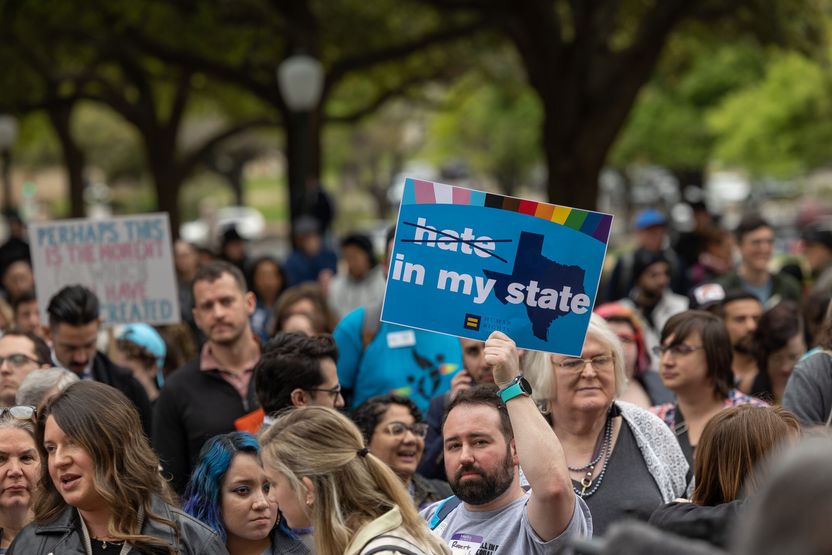
LGBTQ+ people and their families are fleeing neighborhoods, cities, and states where they are worried about their safety.

Dallas-area real estate broker Bob McCranie has helped 27 clients worried about anti-LGBTQ+ harassment and legislation move out of Texas. Most are going to blue states, such as Illinois, Connecticut, Massachusetts, and Colorado, or even abroad.

Last year, he started FleeTexas.com, which was followed by FleeRedStates.com. The sites help connect homebuyers and sellers to LGBTQ+ real estate agents.

“There’s a migration going on right now,” says McCranie. “We’re trying to get people out of harm’s way and to a place that’s a little bit safer.”

But moving, especially cross-country, takes money.

Those leaving red states might find that home and rental prices, as well as everything else, are much higher in blue states. Transplants are often leaving behind their support networks and essentially starting over.

Callen Jones, a Realtor® with the Dalton Wade Real Estate Group and who is based in Tampa, FL, has seen many people leave Florida due to the state’s anti-LGBTQ+ laws. This spring Jones, who identifies as transgender, helped four people sell their homes. Jones’ clients, who were self-employed or worked remotely, relocated to the Midwest and Northeast.

Last year, Florida made headlines for banning classroom instruction on sexual orientation and gender identity in public schools for kindergarten through third grade. The law, which has since been expanded to higher grades, resulted in a teacher being investigated for showing her fifth-grade class the Disney movie “Strange World,” which has a gay character.

In May, Florida Gov. and Republican presidential candidate Ron DeSantis signed into law legislation to restrict gender-affirming health care for transgender minors. The law also allows children who undergo treatment to be placed in the state’s temporary custody.

“A lot of our folks who are openly LGBTQ and their parents are fearful,” says Jones. “Home is so vastly important to everyone, the ability to have a home and feel safe and feel settled. If you don’t feel safe, secure, and affirmed, you’re not going to be your best self.”

Nicole, who did not want to be fully identified, moved from the Fort Worth, TX, area to Denver with her husband and 14-year-old twin boys in mid-November.

One of their twins came out as bisexual in 2019 and then as transgender a year later. He began gender-affirming health care six months later.

In February of last year, Texas Gov. Greg Abbott directed the state’s Department of Family and Protective Services to investigate parents of transgender children receiving gender-affirming care. The order was successfully challenged in the courts but is now being appealed. On Sept. 1, it will become illegal for doctors in the state to provide gender-affirming care to those under 18.

“It was urgent that we needed to leave,” says Nicole. “The thought of both of [our kids] being taken from us because we support gender-affirming care was terrifying.”

She was advised to create a “safe” folder for affidavits from people who knew the family and could testify they were good parents. Their children were advised not to answer questions from adults they didn’t know unless Nicole and her husband were present.

“I couldn’t in good conscience stay any longer,” says Nicole.

The family chose Denver, despite not having family or friends there. They had searched online for LGBTQ+-friendly places, and Colorado kept coming up.

Their three-bedroom, two-bathroom house, which they purchased in 2019, took five months to sell. They barely broke even. In November, they moved into a rental house in Denver, which was considerably more expensive.

Nicole, who is a mortgage lender, was able to continue working remotely. Her husband is retired from the Air Force. Most importantly, their son is able to continue with his treatment.

“We didn’t realize how we were living down in Texas until we got up here. This massive weight was lifted, and the fear was gone,” she says. “We feel like we can take a deep breath.”

click here to see full blog: https://www.realtor.com/news/trends/the-lgbtq-migration-why-many-are-moving-across-the-country/?fbclid=IwAR36ua_pJmv0ptgQ3p5c31ZoRWbYGdhB9FJNhhb7NCqNvGM7j15HFr-pFBc

Waco JP’s suit on refusal of same-sex marriages to get Texas Supreme Court look

This blog originally appeared at Waco Tribune – Herald.

The Texas Supreme Court will review a case involving a Waco justice of the peace’s refusal to perform same-sex weddings.

McLennan County Justice of the Peace Dianne Hensley sued the Texas State Commission on Judicial Conduct after it issued a public warning against her in 2019 for refusing to perform weddings for same-sex couples, citing her religious views, while continuing to perform weddings for opposite-sex couples. Hensley requested April 10 that the Texas Supreme Court consider the matter after a district court in Travis County dismissed her lawsuit and an appeals court upheld the dismissal.

The Texas Supreme Court agreed Friday to grant the request for judicial review from Hensley. She has been the Precinct 1, Place 1 JP since 2014, and was unopposed last year in her most recent reelection bid.

In addition to Hensley’s attorney in Travis County, Jonathan Mitchell, three attorneys from the Plano-based First Liberty Institute joined the lawsuit, including deputy general counsel Justin Butterfield.

“Judge Hensley always followed the law,” Butterfield said in a statement Monday. “She sought to follow her religious beliefs and accommodate everyone, yet the government chose to punish her. We look forward to the Texas Supreme Court correcting this injustice.”

click here to see full blog: https://wacotrib.com/news/local/crime-courts/waco-jps-suit-on-refusal-of-same-sex-marriages-to-get-texas-supreme-court-look/article_9b357a8a-1453-11ee-9558-93b1c0513639.html

A judge has ruled Texas’ abortion ban is too restrictive for women with pregnancy complications

This blog originally appeared at AP News.

AUSTIN, Texas (AP) — A Texas judge ruled Friday the state’s abortion ban has proven too restrictive for women with serious pregnancy complications and must allow exceptions without doctors fearing the threat of criminal charges.

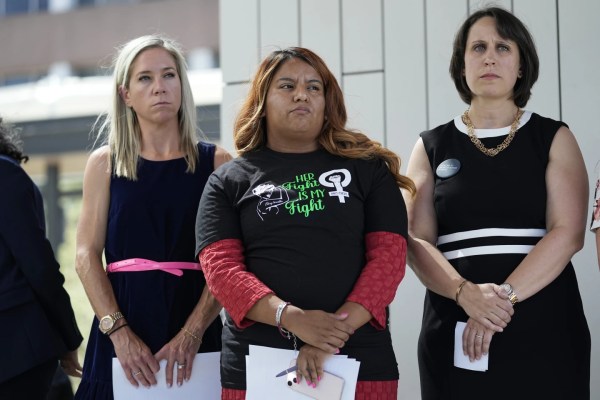
Amanda Zurawski, who developed sepsis and nearly died after being refused an abortion where her water broke at 18 weeks, left, and Samantha Casiano, who was forced to carry a nonviable pregnancy to term and give birth to a baby who died four hours after birth, center, stand with their attorney Molly Duane outside Travis Country Courthouse, Wednesday, July 19, 2023, in Austin, Texas. A Texas judge ruled Friday, Aug. 4, 2023, the state’s abortion ban has proven too restrictive for women with serious pregnancy complications and must allow exceptions without doctors fearing the threat of criminal charges. The challenge is believed to be the first in the U.S. brought by women who have been denied abortions since the Supreme Court last year overturned Roe v. Wade, which for nearly 50 years had affirmed the constitutional right to an abortion.

The ruling was the first to undercut Texas’ law since it took effect in 2022 and delivers a major victory to abortion rights supporters, who see the case as a potential blueprint to weaken restrictions elsewhere that Republican-led states have rushed to implement.

However, the injunction was immediately blocked by an appeal to the Texas Supreme Court, the state attorney general’s office said.

”The trial court’s injunction is ineffective, and the status quo remains in effect,” spokesperson Paige Willey said in an email.

State District Judge Jessica Mangrum’s ruling granted a temporary injunction that prevents Texas from enforcing the ban against physicians who in their “good faith judgment” end a pregnancy that, because of complications, creates a risk of infection or is otherwise unsafe for the woman to continue.

The injunction also applies to women who have a condition “exacerbated by pregnancy” who can’t be effectively treated during their term. It also covers cases where the fetus has a condition that makes it unlikely to survive after birth.

“For the first time in a long time, I cried for joy when I heard the news,” lead plaintiff Amanda Zurawski said in a statement. “This is exactly why we did this. This is why we put ourselves through the pain and the trauma over and over again to share our experiences and the harms caused by these awful laws.”

Mangrum’s decision said the injunction would run until the completion of the case, which is scheduled for a trial to begin next March 25.

However, the state’s immediate appeal “stays an activist Austin judge’s attempt to override Texas abortion laws pending a ruling by the Texas Supreme Court,” said a statement from First Assistant Attorney General Brent Webster.

The immediate impact of Mangrum’s decision also was unclear in a state where all abortion clinics have shuttered in the past year.

The challenge to the state law is believed to be the first in the U.S. brought by women who have been denied abortions since the Supreme Court last year overturned Roe v. Wade, which for nearly 50 years had affirmed the constitutional right to an abortion.

In a six-page ruling, the judge found that portions of the abortion law violated the rights afforded to pregnant people under the Texas Constitution.

The court found that the patients challenging the law each experienced “emergent medical conditions” during pregnancy that risked their health or lives “and required abortion care.”

click here to see full blog: https://apnews.com/article/abortion-texas-lawsuit-ban-exceptions-women-denied-pregnancy-d90f3bce68d86e5eafe3ba4ba5939188?fbclid=IwAR2v6UNMtThWNPWyrJ748SCn7lyuBoNVw3L_qew3V041hY5WpM46_6PY04w

Families Of Club Q Victims Share Pain, Anger As Shooter Pleads Guilty To Murder

This blog originally appeared at Huff Post.

Five people, Daniel Aston, Raymond Green Vance, Kelly Loving, Ashley Paugh and Derrick Rump, were killed at the gay bar in November 2022.

click here to watch the video: https://www.huffpost.com/entry/colorado-springs-gay-bar-shooter-guilty_n_6495b8f0e4b007604cf8b4dc

Anderson Lee Aldrich, the shooter responsible for the tragic incident at a Colorado Springs LGBTQ nightclub, has pleaded guilty to multiple charges. On Monday, Aldrich admitted to five counts of murder, 46 counts of attempted murder, and two counts of bias-motivated crime. As part of a deal with prosecutors, the 23-year-old will serve life in prison for the Club Q shooting. The attack occurred during a drag show on the eve of Transgender Day of Remembrance in November 2022. Aldrich originally faced over 300 charges, including murder and hate crimes, related to this horrific mass shooting.

According to the criminal complaint, Aldrich entered Club Q wearing a bulletproof vest and armed with an AR-style rifle and handgun before firing into the crowd, killing Daniel Aston, Raymond Green Vance, Kelly Loving, Ashley Paugh and Derrick Rump.

The court moved to sentencing procedures immediately following Aldrich’s guilty plea, and survivors and loved ones of the victims shared how their lives were forever changed that night.

Vance’s mother, Adriana Vance, begged the judge to hand down a brutal sentence as she grieved the death of her son. She called Vance a kind, loving and gentle man who touched the lives of those who surrounded him.

“This man doesn’t deserve to go on,” she said of Aldrich. “What matters now is that he never sees the sunrise or a sunset.”

Wyatt Kent, a drag performer who was celebrating his 23rd birthday on the night of the shooting, survived but lost his partner, Daniel Aston. Kent stood in front of Aldrich and the judge to express his forgiveness. He added that he lost his sense of safety with the shooting.

“I forgive this individual as they are a symbol of a broken system of hate and vitriol pushed against us as a community,” Kent said. “It is inexcusable the action and the pain and trauma and holes that have been created from this tragic evening.”

Anderson Lee Aldrich takes a seat after pleading guilty to murder and other crimes in a still image from courtroom Webex video on June 26, 2023.

EL PASO COUNTY COURT VIA REUTERS

click here to see full blog: https://www.huffpost.com/entry/colorado-springs-gay-bar-shooter-guilty_n_6495b8f0e4b007604cf8b4dc

See the states Texans are moving to since everyone’s moving to Texas

This blog originally appeared at KTSM.com

DALLAS (KDAF) — Texas is getting too crowded with all our new neighbors that have moved on in and decided to make the Lone Star State their home.

click here to see full blog: https://www.ktsm.com/news/see-the-states-texans-are-moving-to-since-everyones-moving-to-texas/

Some Texans are realizing, “this town ain’t big enough ” and are making their exit from the state to newfound homes in some unexpected places.

“The U.S. is among the most mobile countries in the world, but our rates of moving have slumped in recent decades. In 2019, for example, a lower percentage of Americans changed residence than any year prior since 1947 when migration statistics were first gathered by the Census Bureau,” Stacker said.

Check out the top ten places Texans are moving to, according to Stacker. The number one spot… will definitely surprise you!

10. Tennesse

Moved from Texas to Tennessee in 2019: 15,068

https://bba250835f6475e4c8dd48eafb98d6c6.safeframe.googlesyndication.com/safeframe/1-0-40/html/container.html

9. New Mexico

Moved from Texas to New Mexico in 2019: 15,762

8. Arizona

Moved from Texas to Arizona in 2019: 17,482

https://bba250835f6475e4c8dd48eafb98d6c6.safeframe.googlesyndication.com/safeframe/1-0-40/html/container.html

7. Washington

Moved from Texas to Washington in 2019: 18,528

6. Lousiana

Moved from Texas to Louisiana in 2019: 19,675

https://bba250835f6475e4c8dd48eafb98d6c6.safeframe.googlesyndication.com/safeframe/1-0-40/html/container.html

5. Georgia

Moved from Texas to Georgia in 2019: 22,452

4. Florida

Moved from Texas to Florida in 2019: 26,174

https://bba250835f6475e4c8dd48eafb98d6c6.safeframe.googlesyndication.com/safeframe/1-0-40/html/container.html

3. Oklahoma

Moved from Texas to Oklahoma in 2019: 26,383

2. Colorado

Moved from Texas to Colorado in 2019: 32,295

https://bba250835f6475e4c8dd48eafb98d6c6.safeframe.googlesyndication.com/safeframe/1-0-40/html/container.html

#Ranked 1: California

Moved from Texas to California in 2019: 37,063

Republican attorneys general issue warning letter to Target about Pride merchandise

This blog originally appeared at CBS News.

A group of Republican attorneys general has issued a warning letter to Target regarding its Pride merchandise. The letter raises concerns about the messaging and content of the products, suggesting that they promote a “radical agenda” and may violate consumer protection laws. Target has not yet responded to the letter, but it has faced criticism from conservative groups in the past for its inclusive marketing campaigns.

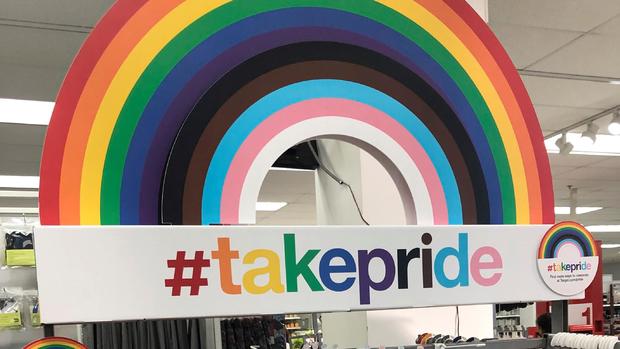
Seven U.S. state attorneys general sent a letter to Target on Wednesday warning that clothes and merchandise sold as part of the company’s Pride month campaigns might violate their state’s child protection laws.

Republican attorneys general from Indiana, Arkansas, Idaho, Kentucky, Mississippi, Missouri and South Carolina signed the letter, writing that they were “concerned by recent events involving the company’s ‘Pride’ campaign.” 

The attorneys said that they believed the campaign was a “comprehensive effort to promote gender and sexual identity among children,” criticizing items like T-shirts that advertised popular drag queens and a T-shirt that said ‘Girls Gays Theys.’ They also highlighted merchandise with “anti Christian designs such as pentagrams, horned skulls and other Satanic products.” 

The letter also criticized Target for donating to GLSEN, an LGBTQ+ organization that works to end bullying in schools based on sexual and gender identity. The company stated in a 2020 guide that school staff should not tell parents about a child’s gender or sexual orientation without consulting the child first, something the attorneys general said undermines “parents’ constitutional and statutory rights.” 

The letter did not include any specific demands nor did it outline how they believe the campaign could violate child protection laws, but the attorneys general did suggest that Target might find it “more profitable to sell the type of Pride that enshrines the love of the United States.”

The attorneys general also said they believed Target’s Pride campaign threatened their financial interests, writing that Target leadership has a “fiduciary duty to our States as shareholders in the company” and suggesting that company officials “may be negligent” in promoting the campaign since it has negatively affected Target’s stock prices and led to some backlash among customers. 

Target shares have declined 12% this year, but the company is facing issues far beyond the backlash to its Pride collection, which included onesies, bibs, and T-shirts for babies and children. Like many retailers, the company is struggling with a pullback in consumer spending because of high inflation, which has weighed on its profits.

But Target is also facing scrutiny for its merchandise selection, including its Pride line, with its stores removing some of the items in May after facing threats. At the time, the company didn’t specify which products were being removed, although Target has faced criticism online over swimsuits advertised as “tuck-friendly” with “extra crotch coverage” in its Pride collection.

“Target’s management has no duty to fill stores with objectionable goods, let alone endorse or feature them in attention-grabbing displays at the behest of radical activists,” the attorneys general wrote. “However, Target management does have fiduciary duties to its shareholders to prudently manage the company and act loyally in the company’s best interests.” 

Backlash to the Pride campaign did involve threats of violence to Target stores and workers. Some merchandise was relocated to less popular areas of the store, and other pieces, including the swimsuits criticized by the attorneys general, were removed. 

“Since introducing this year’s collection, we’ve experienced threats impacting our team members’ sense of safety and well-being while at work,” Target said in a statement earlier in June. “Given these volatile circumstances, we are making adjustments to our plans, including removing items that have been at the center of the most significant confrontational behavior.”

Why some people are choosing to move to states that protect gender-affirming health care

This blog originally appeared at CNN Health.

(KFF Health News)- Hal Dempsey wanted to “escape Missouri.” Arlo Dennis is “fleeing Florida.” The Tillison family “can’t stay in Texas.”

They are part of a new migration of Americans who are uprooting their lives in response to a raft of legislation across the country restricting health care for transgender people.

Missouri, Florida, and Texas are among at least 20 states that have limited components of gender-affirming health care for trans youth. Those three states are also among the states that prevent Medicaid — the public health insurance for people with low incomes — from paying for key aspects of such care for patients of all ages.

trans hormone replacement therapy STOCK RESTRICTED

Immediate access to gender-affirming hormone therapy eases distress, depression, suicidal thoughts for transgender adults, research finds

More than a quarter of trans adults surveyed by KFF and The Washington Post late last year said they had moved to a different neighborhood, city, or state to find more acceptance. Now, new restrictions on health care and the possibility of more in the future provide additional motivation.

Many are heading to places that are passing laws to support care for trans people, making those states appealing sanctuaries. California, for example, passed a law last fall to protect those receiving or providing gender-affirming care from prosecution. And now, California providers are getting more calls from people seeking to relocate there to prevent disruptions to their care, said Scott Nass, a family physician and expert on transgender care based in the state.

But the influx of patients presents a challenge, Nass said, “because the system that exists, it can’t handle all the refugees that potentially are out there.”

In Florida, the legislative targeting of trans people and their health care has persuaded Arlo Dennis, 35, that it is time to uproot their family of five from the Orlando area, where they’ve lived for more than a decade. They plan to move to Maryland.

Dennis, who uses they/them pronouns, no longer has access to hormone replacement therapy after Florida’s Medicaid program stopped covering transition-related care in late August under the claim that the treatments are experimental and lack evidence of being effective. Dennis said they ran out of their medication in January.

“It’s definitely led to my mental health having struggles and my physical health having struggles,” Dennis said.

click here to see full blog: https://edition.cnn.com/2023/06/23/health/families-moving-for-transgender-health-care/index.html

Appeals court lets Kentucky enforce ban on transgender care for minors

This blog originally appeared at NBC News.

The law, enacted this year over the veto of Democratic Gov. Andy Beshear, prevents transgender minors from accessing puberty blockers and hormone therapy.

Protesters of Kentucky Senate Bill SB150 rally at the Kentucky Capitol in Frankfort, Ky., on March 29.

By The Associated Press

A federal appeals court is allowing Kentucky to enforce a recently enacted ban on gender-affirming care for young transgender people while the issue is being litigated.

The 2-1 decision Monday from the Sixth U.S. Circuit Court of Appeals in Cincinnati is not unexpected. The same three-judge panel ruled the same way earlier this month on a similar case in Tennessee.

The Kentucky law, enacted this year over the veto of Democratic Gov. Andy Beshear, prevents transgender minors from accessing puberty blockers and hormone therapy.

At least 20 states have now enacted laws restricting or banning gender-affirming medical care for transgender minors. Most of those states face lawsuits. A federal judge struck down Arkansas’ ban as unconstitutional. In other states, judges have issued disparate rulings on whether the laws can be enforced while the cases are being litigated.

In Kentucky, U.S. District Judge David Hale had initially blocked Kentucky from enforcing the ban. But he lifted that injunction July 14, after the Sixth Circuit issued its ruling in the Tennessee case.

Seven transgender children and their parents have sued to block the Kentucky law. They argue that it violates their constitutional rights and interferes with parental rights to seek established medical treatment for their children.

In Monday’s ruling, judges Jeffrey Sutton, an appointee of former President George W. Bush, and Amul Thapar, an appointee of former President Donald Trump, said that the issues in the Kentucky case are essentially identical to those in Tennessee.

In the Tennessee case, the judges wrote that decisions on emerging policy issues like transgender care are generally better left to legislatures rather than judges. They offered a similar rationale Monday in the Kentucky case.

“The people of Kentucky enacted the ban through their legislature,” the judges wrote. “That body — not the officials who disagree with the ban — sets the Commonwealth’s policies.”

The dissenting judge, Helene White, noted that Kentucky’s ban does not include a grace period for patients who are already receiving care to continue treatment, as Tennessee’s law did.

As a result, White said the need for an injunction blocking the ban in Kentucky is even greater than it was in Tennessee.

“It seems obvious that there is a tremendous difference between a statute like Tennessee’s that allows flexibility regarding treatment decisions and time to explore alternatives and one like Kentucky’s that forces doctors to either discontinue treatment immediately or risk losing their license,” wrote White, who was first nominated by former President Bill Clinton and later nominated by Bush.

click here to see full blog: https://www.nbcnews.com/nbc-out/out-politics-and-policy/appeals-court-lets-kentucky-enforce-ban-transgender-care-minors-rcna97434

Florida medical board approves emergency rule on trans care for children, adults – CBS Miami

This blog originally appeared at CBS News.

The Florida medical board has approved an emergency rule regarding transgender care for both children and adults. The rule is seen as a positive step towards ensuring access to necessary healthcare for transgender individuals in the state. It is aimed at preventing discrimination and ensuring that medical professionals provide appropriate and affirming care to transgender patients. This decision by the medical board reflects a growing recognition of the importance of transgender healthcare and the rights of transgender individuals to receive gender-affirming treatment. The rule marks a significant development in the ongoing efforts to improve healthcare access and inclusivity for the transgender community in Florida.

TALLAHASSEE – The Florida Board of Osteopathic Medicine on Tuesday approved an emergency rule that will allow transgender children and adults to continue obtaining gender-affirming treatments under certain conditions.

Physicians will be able to renew orders for puberty blockers and hormone therapy so long as no changes are made to the prescriptions.

The state Board of Medicine on June 8 also approved the rule, which will allow continuation of treatment while the medical boards draft other regulations to carry out a new law that makes it harder for trans adults and children to obtain gender-affirming care.

The law, championed by Gov. Ron DeSantis, prohibits doctors from ordering treatments such as puberty blockers and hormone therapy for children but includes an exception for children already using the treatments.

The law also imposes new restrictions on adults seeking gender-affirming care by requiring that such treatment be ordered by physicians, not nurse practitioners.

Medical experts providing gender-affirming care to trans adults estimate that at least 80 percent of prescriptions for treatment such as estrogen and testosterone are ordered by advanced practice registered nurses, not doctors.

The new law also mandates that the medical boards create “informed consent” forms that patients must sign to receive the care.

Under the rule approved by the medical boards, doctors can renew prescriptions for transgender patients if the prescriptions do not change doses or types of treatment.

The rule will allow some patients to continue receiving care while the new informed consent requirements are being developed. Board of Osteopathic Medicine Chairwoman Tiffany Di Pietro said during Tuesday’s meeting that a joint committee of the two medical boards is scheduled to consider the informed-consent forms on Friday.

The full boards are slated to vote on the proposed forms on June 30. The law, which went into effect when DeSantis signed it on May 17, sparked uncertainty about the rules.

Samantha Cahen, program director for trans and nonbinary care for Planned Parenthood of South, East and North Florida, said in an interview last week with The News Service of Florida that the boards’ decision to allow doctors to renew prescriptions while the informed-consent regulation is under development provides “more clarity” to health-care providers.

“Since we didn’t want to provide care without consent, because that would be against the law, at least it’s allowing us to continue the care for our patients. Although we may not be able to alter the prescriptions, it gives us some type of leeway. At least it puts our patients back on track to providing care for them,” Cahen said.

click here to watch live: https://www.cbsnews.com/miami/news/florida-medical-board-approves-rule-on-trans-care-for-children-adults/

Families flee states with anti-trans, anti-LGBTQ+ laws for Illinois where their rights are protected

This blog originally appeared at ABC Eyewitness News.

People are fleeing states that have passed anti-trans and anti-LGBTQ+ laws for states like Illinois where their rights and medical care are protected.

Illinois (WLS) — Some people are leaving states with anti-trans or anti-LGBTQ+ laws and relocating to LGBTQ+ friendly states like Illinois. They said it’s an issue of safety.

A realtor and some local organizations said they’ve seen an uptick in people looking to move to the Land of Lincoln to escape anti-LGBTQ+ legislation in other states. That includes one father who told the I-Team his family is moving to Illinois because he believes it will help ensure his son’s well-being and safety.

“As a parent, you have one job, love your kid. That’s your only job and your kids telling you something over and over and over again. If you love them. You believe them,” said Mark, who asked that his last name not be used.

His family is moving to Illinois for the sake of his 7-year-old son, who is transgender. To protect his son’s identity, Mark is using another name, Connor.

“Connor just wants to be a boy. And so, you know, we weren’t dismissive, but we were sort of quiet about it the first couple times Connor said this. And we would listen to him and say, you know, ‘We can deal with that later. You’re a little young.’ But it became sort of a common thing. Maybe once a month, that maybe once a week,” Mark said.

click here to see full blog: https://abc7chicago.com/illinois-lgtbq-rights-gender-affirming-care-drag-trans/13402900/

Blog at WordPress.com.

Up ↑