The Aguda – The Association for LGBTQ+ Equality in Israel published its 2025 Pride Index for local authorities on Thursday, with Ramat Gan, Rishon Lezion and Tel Aviv-Yafo taking first place with a perfect score of 110 points. Jerusalem, Ashkelon and Nahariya joined the index for the first time this year. The findings point to wide gaps between authorities: while some have implemented broad policies and permanent services for the LGBTQ+ community, others have taken little action in the field.
The Pride Index, published for the seventh year, was presented at the President’s Residence to President Isaac Herzog, with representatives of local authorities and the association in attendance. The index evaluates municipal policy toward the LGBTQ+ community in areas including education, welfare, public visibility, culture and organizational infrastructure. This year, 46 local authorities were assessed, with a maximum possible score of 110 points, including bonus questions.
According to the index, culture — including Pride events and year-round community activities — is the area receiving the greatest municipal investment, while education saw the lowest level of investment.
In the large-authority category (more than 100,000 residents), Ramat Gan, Rishon Lezion and Tel Aviv-Yafo ranked first with full scores of 110 points. They were followed by Haifa with 106 points and Herzliya with 104.
Netanya, which scored 99 points, received a special distinction for a “significant leap,” partly due to expanded activity in education, welfare and community services. In the medium-sized authority category, Givatayim and Ra’anana shared first place with 108 points, followed by Kiryat Bialik with 105 points and Ramat Hasharon with 104.
Among smaller authorities, Hof HaCarmel ranked first with 101 points, followed by Drom HaSharon with 98 points and Binyamina-Giv’at Ada with 86. Eight authorities joined the index for the first time this year: Azor, Ashkelon, Bnei Shimon, Tirat Carmel, Jerusalem, Nahariya, Katzrin and Kiryat Ono. The Aguda said participation itself marks “an important step in building a path and laying the foundations for community action.”
The data show the average municipal score this year stood at about 72.5 points. Alongside authorities that achieved especially high scores, others received very low marks, underscoring significant disparities in policy and services for the LGBTQ+ community across Israel.
Notably, despite the 46 authorities assessed this year, many municipalities in Israel still do not participate in the index at all — a fact the Aguda views as evidence that major gaps in attitudes toward the LGBTQ+ community remain between different local authorities nationwide.
Speaking at the ceremony, President Isaac Herzog said, “The Pride Index reflects the growing commitment of local authorities in Israel to the values of equality and human dignity.” Referring to Jerusalem’s inclusion in the index, he said it carried “special importance,” because “even amid complexity, it is possible and necessary to strengthen every person’s sense of belonging, security and dignity.”
Aguda chairperson attorney Nimrod Gorenstein said, “Local authorities are the community’s first line of defense.” He added: “Every authority has its own character, but all share a common responsibility to lead, set an example and show that it is possible to build a diverse, vibrant and safe society here.”
Transgender Europe (TGEU) has released its annual Trans Rights Index and Map, which ranks countries by the protections and opportunities that they offer for trans and nonbinary people. While there have been net positives across Europe, TGEU notes that the gains have not been caused by larger political and climate shifts.
The report “reveals a year of change on paper across Europe and Central Asia but not sustained political progress,” TGEU writes. “While more developments have been recorded than in recent years, many of these hard-won shifts are driven by activists and courts rather than proactive government action.”
The map is co-funded by the European Union and is done in partnership with ILGA Europe’s Rainbow Map. For the Trans Rights Index, they measure each country against 32 indicators across six categories: Legal Gender Recognition, Asylum, Hate Crime/Speech, Non-Discrimination, Health, and Family.
Coming in at the top of the rankings as a clear winner this year was Iceland, which met 30 out of the 32 indicators. It missed one point under Asylum. While gender identity is supported by its laws and it has legal gender recognition for refugees, it does not expressly include gender identity in other asylum policies. Similarly, under Hate Crime/Speech, it got points for having legislation against hate crimes and hate speech targeted at trans people, but it doesn’t have a policy tackling hatred, which can be important to understanding potential threats to trans people in a country.
After Iceland, several runners-up are in close proximity, with Malta fulfilling 28 of the 32 indicators, Spain at 27.18, Belgium and Norway both at 25.5, and Germany at 24.57.
Across the 54 countries studied for the Trans Rights Index, there’s a wide margin in how they treat trans people. Austria, Germany, Iceland, and Malta are the only four countries that have fully met the criteria for nonbinary gender recognition. Meanwhile, Bulgaria, Georgia, Hungary, Russia, and Slovakia still have frameworks in place that make legal gender recognition impossible for trans people. Russia is at the bottom of the ranking, meeting zero of the 32 criteria.
TGEU also provides commentary on how the political climate has shaped the rankings compared to previous years. Notably, they point to “targeted and deliberate regressions” in what they call “rollback as a political strategy.” Belarus introduced an “anti-propaganda law” in April, which criminalized the promotion of trans rights and representation. The country also reinstated compulsory medical requirements for legal gender recognition. Slovakia also introduced a block on legal gender recognition. And the United Kingdom gets a special mention for the “ambiguity” around the nation’s Gender Recognition Certificates after last year’s Supreme Court ruling.
The organization also highlights that progress across Europe and Central Asia over the last year is due to the tireless work of activist groups and court responses. For example, Czechia brought in new legal gender recognition guidelines that no longer include forced sterilization and surgical requirements after a Constitutional Court ruling. TGEU explained, “These guidelines followed years of advocacy and litigation by trans activists and represent one of the most significant shifts in the region this year. However, as these changes are not fully enshrined in legislation, they remain vulnerable to rollback.”
Of course, TGEU also makes the point that while these positive legal moves are a great sign, they’re not the full story. Laws on paper don’t always translate to “safety, dignity, or the ability to access human rights for trans people.” With that in mind, TGEU calls on governments to do their part to secure trans rights in these countries and to support efforts to establish stronger protections.
“Regional and national leaders must now step up,” the report states, “put court rulings and laws into practice, and hold those accountable who treat human rights like an a la carte menu.”
One of the Venezuelan men sent from the US to El Salvador’s most notorious prison by Donald Trump has moved to Spain to request asylum after concluding that he did not feel safe back home and did not trust US authorities sufficiently to return to fight his legal case.
Andry José Hernández Romero left Venezuela for Spain in early February and is due for his first asylum hearing in court there in a few days, hoping that the country’s liberal approach to immigration will afford him kinder treatment than the US or his own country had provided him, he revealed to the Guardian in his first interview since leaving for Europe.
The 33-year-old hairstylist and makeup artist originally came to the US from his home in western Venezuela to escape persecution as a gay man and the risks of opposing the government of its then president Nicolás Maduro.
Speaking in a video call fromsouthern Spain, Hernández is still recovering from the trauma of his experiences in Venezuela, the US and El Salvador, but expressed optimism about his new surroundings.
“I can say I feel safe here, this is a place where I can be reborn, heal my mental health, let people know about my abilities as a makeup artist and find the happiness they took away from me more than a year ago,” he said in the interview conducted in Spanish.
Hernández gained global attention last year when he and 252 other Venezuelan migrants were abruptly deported from the US without due process or any word to their families, and in defiance of a judge, and flown by the Trump administration to the brutal mega-prison for alleged terrorists in El Salvador known as Cecot.
Images of the bewildered and terrified group being roughed up and having their heads shaved, and then lined up on the ground with bowed heads, flashed around the world, a new symbol of the returning US president’s harsh anti-immigration agenda. They were held incommunicado for months in cages and initially given no prospect of release under allegations of having ties to a Venezuelan gang, which Hernández and the others vehemently denied.
International human rights groups found Hernández and the other detainees faced psychological and physical abuse, including cases of sexual violence, before they were suddenly released in a prisoner swap last summer and returned home.
Hernández received a jubilant reception. He began trying to rebuild his life, and he told the Guardian he initially promised his family he would never leave Venezuela again.
However, after a few weeks he began fearing for his life once more after a knock on his family’s door in Táchira.
“I had received a call from the vice-president’s office and I was offered a job, which I declined, and then they came to my house and my family had to tell them I wasn’t there,” Hernández said. He had actually hidden during the visit.
He explained that before the vice-president’s office could even specify the kind of job it wanted him to do, he refused it. It was August 2025 and Delcy Rodríguez ran the office. He didn’t want to have ties to a government that had persecuted him as a gay man, he said, and having officials coming to the house just made him convinced he was going to be surveilled by the authorities.
He was back home, surrounded by his family, feeling protected during a time that he had expected to be a rough transition into society, back at work and even making new friends.
Months later, Rodríguez was sworn in as the acting president of Venezuela following the capture of Maduro by the US military. Around the same time, Hernández made up his mind.
“That’s when I made the decision to come to Spain,” he said.
He has some relatives there and Venezuelans do not require a visa to enter Spain, while those fleeing persecution are allowed to request asylum.
“I have heard that Spain is a country with open policies towards immigrants and the LGBTQ+ communities and that they don’t experience discrimination,” said Hernández. He feels secure and optimistic about making another fresh start.
In March 2025, the Trump administration controversially invoked the Alien Enemies Act of 1798 to order the expulsion of Hernández and 136 other men who ended up in Cecot. Hernández was accused of being a member of the Venezuelan gang Tren de Aragua, which Trump designated a terrorist group and bizarrely accused of staging an invasion of the US.
It didn’t matter that Hernández had explained to immigration officials that he had fled Venezuela due to persecution stemming from his sexual orientation. His crown tattoos above the names of his parents were deemed proof of gang affiliation. He has denied the charge throughout his ordeal and his attorneys noted he has no criminal record.
Lindsay Toczylowski, co-founder of the Immigrant Defenders Law Center (ImmDef), who is acting as Hernández’s lawyer, said that in nearly two decades of helping asylum seekers from around the world fleeing violence, she had “never been in a situation where it was not safe for a client to seek protection in the US”.
The US federal judge James Boasberg ordered the Trump administration to facilitate the return of the men deported under the Alien Enemies Act to El Salvador and allow them to receive the due process that he ruled they had been denied. But most recently, a court of appeals blocked Boasberg from investigating whether the Trump administration knowingly defied his order from March 2025 to return the planes carrying Hernández and the other Venezuelan deportees.
“From a legal perspective, we believe that it’s important for him to clear his name if he wants to travel to the US in the future. But from a moral perspective, he was accused with absolutely no evidence of being part of something that he has never had anything to do with. No one should be accused of something like that without any option to refute the allegations,” said Toczylowski.
“There are no immediate options available for him [and the others] to finally have their day in court and be able to clear” their names, she added.
In Spain, where Hernández now waits for his first asylum interview, scheduled for the end of this month, officials have defied the increasingly harsh immigration policies being embraced in Europe and the US. Earlier this year, the Spanish prime minister, Pedro Sánchez, announced that Spain would grant legal status to roughly 500,000 migrant workers, most from Latin America.
Spain has a strong record of taking in immigrants, especially Venezuelans seeking international protection, like Hernández.
According to numbers shared by the Spanish government with the Guardian, Venezuelans made up the highest number of requests for international protection there in 2025. And up to 30 April this year, more than 25,000 Venezuelans have sought asylum in Spain.
Hernández said he is still marked by the trauma he endured during his time at Cecot. For example, when someone approaches him and simply taps him on the shoulder, his mind jumps back to the prison. He still wants to clear his name, though, but doesn’t know how to do so at the moment.
Remarkably, he said: “I don’t hold a grudge against the US. I can’t judge an entire country based on the actions of a group of people like Donald Trump [or] Kristi Noem, but entering the US at this time doesn’t guarantee I will keep my freedom and that is why I will continue to fight my case from Spain.
“Recovering my happiness will only be possible at the right place with the right people.”
Since Trump took office last year, traveling as a trans person has felt terrifying.
I used to travel by plane frequently. As a consultant, I was in a new state at least quarterly for client visits and onsite training. But last year, things changed for me, as they did for many others.
When I changed my name (over 10 years ago), I did not change my gender marker. The name on my ID is “Rex” while my gender marker shows “F”. The reasoning on my name change petition marks “the petitioner seeks to conform their name to their gender identity.”
I’ve heard stories from friends and community members whose passports were reissued with their name or gender marker unconsensually reverted to their assigned sex at birth.
These actions don’t just invalidate and dehumanize transgender, nonbinary, and gender-expansive (TGX+) people. They also increase the risk of harassment and violence by forcibly outing us.
Last year, I traveled out of state for work only one time. I took the one hour flight from Los Angeles to Las Vegas for a conference. As I went through security, I wondered, “When they check my ID, will they look at my gender marker this time?” “Will it flag an additional security check?” “What will happen if they find out that I’m trans?”
It also encouraged deeper consideration of traveling while TGX+.
As I consider travel this year and beyond, I’ve developed some personal travel guidelines to help keep me safe. Organizations can adopt these to support the safety of their TGX+ employees, too.
Here are some considerations for TGX+ individuals while traveling…
1. Always travel together.
There is safety in numbers. Travel with a trusted friend or colleague and use the buddy system at crucial checkpoints (security, restrooms, etc.).
2. Consider all options.
What is the best mode of transportation for you? Car? Train? Plane? For me, traveling by plane feels the most precarious, and I am not willing to do it without support from a trusted source. Take time to consider which travel options are the safest and most suitable for your needs.
3. Make a safety plan.
Ensure you create a safety plan that includes considerations for where you are traveling, a point person who knows all your travel details, and an emergency contact who is available if necessary (this can be a person or a reputable organization such as Lambda Legal). For planning support, check out the Travel While Trans database.
4. Always bring documents.
When traveling, carry your identification (e.g., passport) and court-ordered official documents stating any name and gender marker changes. Before traveling, make copies of all documents and forms of identification. Keep one copy at home, and give another to a trusted confidant in case your documents get lost or confiscated. Contact Lambda Legal if any issues arise during travel.
While I’ve heard plenty of stories from other trans, nonbinary, and gender expansive folks who have traveled nationally and internationally without issues over the past year, I feel the need to be prepared to support my safety in the worst-case scenario.
We shouldn’t have to make these considerations, but they are important steps to take for the safety and well-being of TGX folks. Trans people deserve to exist without fear. The more equipped we are, and the more support we have to navigate the current climate, the more we can create a future that centers our joy, which is what traveling should truly be about.
For an American couple living abroad, you might think 4,000 miles between their adopted home country and the U.S. would help keep the political chaos across the Atlantic on mute.
You’d be wrong, says Bryan McColgan, who’s made a life with his husband in Sweden for the last seven years.
“While it can be easier to ‘turn off’ the political tumult in America, the truth is that America affects the entire world. Even in Sweden, we can’t escape the political and economic repercussions of America.”
McColgan’s husband, Victor, knew Sweden from a study-abroad program in college and loved it. Both men have Swedish ancestry. So the pair decided to pack up and move their lives and dog to Stockholm in 2019.
“Living in a different country means every day is a learning experience,” McColgan says. “After seven years, I am still learning every day, whether it’s the language, how things work, or some aspect of Swedish culture or history. It can be challenging not to feel 100% comfortable all the time, but this is also the best part of living abroad.”
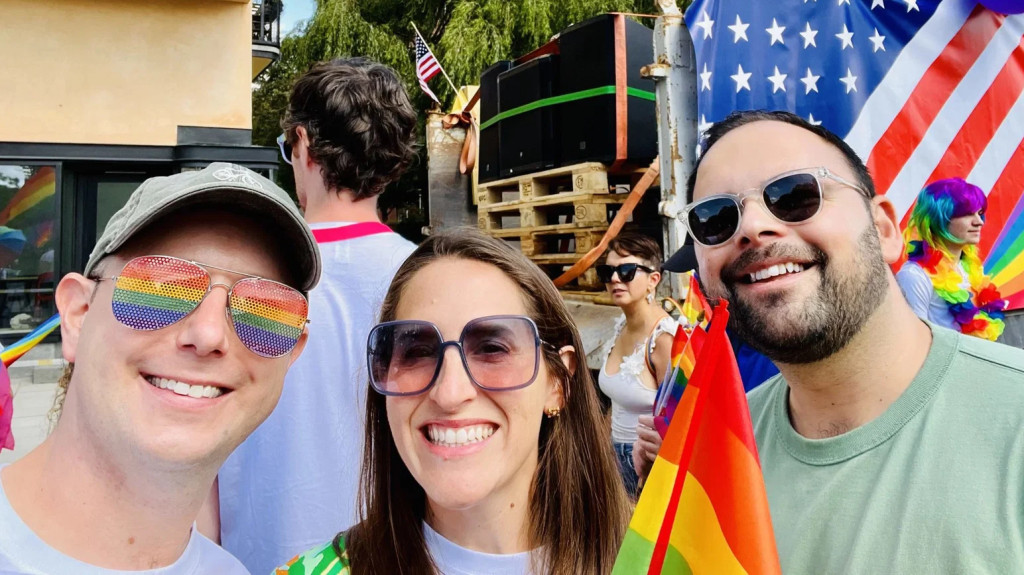
The couple stays connected with their compatriots through a group called Americans in Sweden. That’s how they ended up joining the U.S. Embassy for the Stockholm Pride parade in 2023, along with McColgan’s best friend on a visit to Sweden’s “endless summer.”
“While Stockholm is very dark and cold most of the year, the endless summer sun is a thing of beauty,” McColgan says.
Stockholm enjoys about 20 hours of daylight in peak summer. The parade stepped off that year on one of those “joyful days.”
“People lined up all along the parade route for miles. The American float was extremely popular at this time,” McColgan says. A DJ was spinning American hits while Bryan, Victor, Oriana, and a scrum of Americans in Sweden danced down the parade route.
“Swedes love music, and American music is some of the most popular in Sweden,” he says.
Two years later: record scratch.
The current administration ended the U.S. Embassy’s participation in Stockholm Pride and every other Pride celebration around the world in 2025.
“We have not engaged in any Embassy activities since then,” McColgan says.
Swedes don’t hold Americans responsible for the bad behavior of their government, he explains.
“I haven’t experienced any anti-American attitudes towards Americans in Sweden during my time here. Once I explain my political position and voting record, Swedes understand where I’m coming from and don’t ask me to defend myself.”
While Americans endure their own endless summers with a sundowning president, Bryan and Victor are enjoying Sweden’s “very open and accepting” embrace of them and the LGBTQ+ community.
“There is a respect for privacy and a lack of making LGBTQ+ issues political talking points,” he says. “People live their lives and focus on fixing the big problems that we all face.”
The same “values of equality, family-centricity, and open-mindedness” that Swedish immigrants brought to the U.S. are alive and well where they came from, McColgan says.
I arrived at Chengdu East Station on a balmy spring night after taking the high-speed train from Hong Kong. The ride was roughly eight hours of idyllic countryside landscapes with brief station stops along the way. Pulling into the busy train station was my only reminder that Chengdu is a city of 21 million. Some 1,100 miles southwest of Beijing, the Sichuan provincial capital has long been considered one of China’s most livable metropolises, and after a chaotic itinerary, I was looking forward to the promise of a relaxed pace.
I found it everywhere: in teahouses where grandparents chatted as morning warmed to afternoon, in parks where friends took long strolls along the paths, and at streetside shops where people crouched over bowls of spicy noodles. Dubbed the queer capital of China, Chengdu is known as China’s most LGBTQ-friendly city, an extension of its broader temperament.
YuWei Tian, a Sichuan native and travel designer with WildChina, explains that “when we see a riverside, we don’t first think about how to develop it commercially—we imagine a teahouse, somewhere to sit, drink tea, and spend time with friends.”
That relaxed atmosphere and enjoyment of life is part of Chengdu’s culture, and in many ways a response to its past (Chengdu’s history includes generations of labor migration and the trauma of the 2008 earthquake—7.9 on the Richter scale—that devastated the entire region). The more I spoke to locals, the more I learned about this intentional way of living and saw it in action.
Read on for where to eat, stay, and spend your time in one of Asia’s most creative cities.
Where to stay in Chengdu
Chengdu’s best hotels are spread out across the city, in neighborhoods with distinct vibes. The Waldorf Astoria Chengdu rises 52 stories above the Financial City district in the High-Tech Zone, connecting to one of the city’s luxury shopping malls, in99. It’s also right by Jiaozi Park, the floating lotus park. Jinli Ancient Street, a tourist attraction, is a short drive away—more commercial than it once was, but still worth a visit for the architecture and street snacks. The hotel has all the luxuries associated with the Waldorf brand, including marble bathrooms, Aesop toiletries, and personal concierge staff. While there, visit the hotel’s 51st-floor bar, Limited Edition Sip, for craft beer and cocktails and an unbeatable view of the city. W Chengdu is also in the area.
Right by Taikoo Li, Upper House offers a different take on luxury. The property is built around a beautifully preserved Qing-era courtyard, with a century-old main building framed by contemporary glass towers and landscaping inspired by Sichuan’s rice terraces. Rooms overlook Taikoo Li, putting guests steps from Daci Temple and some of the city’s best shopping without compromising on tranquility. The standout experience is the signature bamboo massage at Mi Xun Spa, where warm bamboo canes are rolled and pressed across the body. Other great hotels in the Taikoo Li area include BuYuan Hotel, a visually appealing hotel with complimentary laundry and minimalistic design.
For a quieter part of the city, there’s Bliss Qintai Tibetan Boutique Hotel in Qingyang District. The family-run property is set in a preserved historic building, with traditional architecture, modern amenities, and complimentary butter tea in the mornings. Qingyang is one of Chengdu’s most historically rich neighborhoods, home to Wenshu Monastery and the kind of teahouse culture that Tian described.
What to do in Chengdu
No mention of Chengdu is complete without pandas and the Chengdu Research Base of Giant Panda Breeding. Upon the recommendation of friends, I arrived early—the later it got, the more crowded the park became. The full circuit is about 7.5 miles of walking, and savvy visitors know the hop-on hop-off shuttle bus covers the highlights for about $5. Beyond the giant pandas, the base is home to red pandas, peacocks, and monkeys. For a more intimate encounter with fewer crowds, Tian recommends Dujiangyan Panda Base, about an hour outside the city, where smaller crowds mean closer access to the animals. The Jinsha Site Museum offers a deeper cultural window into the ancient Shu civilization and an archaeological dig dating back thousands of years. Currently undergoing renovation, the museum will reopen in 2027.
Part theater, part acrobatics, the Shufeng Yayun Theatre on Qintai Road stages nightly performances of Sichuan opera’s most celebrated tradition: face changing, or biànliǎn, in which performers swap elaborately painted masks in fractions of a second. The show also includes acrobatics and a captivating hand shadow puppet performance, and you can add on experiences like traditional face painting and ear cleaning.
For a sense of Chengdu’s creative presence, two districts are a must-visit. East District Memory (东郊记忆) is a converted industrial complex that has become a hub for the city’s younger generations. It’s a sprawling mix of live music venues, digital art museums, boutique fashion brands, and coffee shops that reflects Chengdu’s thriving music and arts scene. CPI, also known as Luxelakes Community (麓湖社区), expresses Chengdu’s creativity with stone steps across grassy plains—part open-air park, part retail village. It also skews younger and is family- and pet-friendly. With perfumeries, independent bookstores, bakeries, and restaurants woven through the grounds, you can linger all day, sprawled out on the grass.
The 600-year-old Shuijingfang Baijiu Distillery, whose distillation techniques are designated as National Intangible Cultural Heritage, offers guided tours and tastings of China’s most popular spirit, baijiu. Go in the morning to see production in full swing. A tasting of three different baijiu styles follows, and for those who want to go further, a blending experience can be booked separately.
To experience more of that unhurried Chengdu culture, Wangjiang Park offers mahjong tables, paths for long walks, and the unhurried rituals of a city that genuinely values its downtime. Walking down a Chengdu street, you might hear a metallic clinking sound. That’s the sound of Sichuan’s traditional ear-cleaning tongs, a tradition I didn’t have the courage to partake in, although the storefronts running highlight reels made a compelling case.
The bar scenes in the Yulin neighborhood and along Jiuyanqiao are equally worth your time. Bar Woody’s cocktails are built around unexpected wood flavor combinations, like a martini riff with sandalwood, grapefruit, and rhubarb. Papuwa leans into a funkier energy, my favorite being the Shy Pepper, a savory cocktail of vodka, chili, pomelo, and soy sauce. The Yulin area is also home to some of the city’s most inclusive spaces, among them Muchroom, a cocktail bar, and Junez, a feminist craft beer spot.
Where to eat in Chengdu
As the capital of Sichuan province and the first UNESCO City of Gastronomy in China, Chengdu has one of China’s strongest food cultures and its own Michelin Guide. Some of the most interesting meals here push well beyond the city’s reputation for heat and spice. Michelin Guide–recognized Infinite Luck, inside the Waldorf Astoria on the 50th floor, is worth a visit even if you’re not staying at the hotel. Executive chef Tony Yang, a Chengdu native with three decades of expertise in Sichuan cuisine, serves the full range of the region with beef Jell-O cubes, smoked pigeon, and Sichuan peppercorn–flavored rice crisps as highlights.
At Upper House, Mi Xun Teahouse has earned its Michelin star and Green star through a sustainability-forward vegetarian tasting menu drawing from culinary traditions across China’s regions, with tea pairings that include the kitchen’s own house-made kombucha. Because of its vegetarian menu, monks from a nearby monastery are said to dine here regularly.
You don’t have to dine at Michelin restaurants to experience Chengdu’s food culture, though. The city’s noodles alone are worth the trip, and dan dan noodles, the sesame-and-chili classic, appear on almost every corner, alongside chao shou, Sichuan’s version of wontons, and tian shui mian, sweet water noodles in a rich, subtly spiced sauce. Braised pig trotters and rabbit heads are also local staples to try. For neighborhood spots beyond the tourist trail, Dianping—China’s equivalent of Yelp—is the best tool for finding where locals are eating. And no trip to Sichuan is complete without trying hot pot in its birthplace; stop by Wuliguan Hotpot for a mouthwatering experience.
Belgium often prides itself on being an LGBTQ-friendly country, yet anti-trans activists hide their transphobia behind superficial pro-trans statements. Rylan Verlooy explores how this paradox affects trans people’s activism. Here, they show how resistance takes the form of everyday acts of educating others, strengthening community spaces, and caring for trans lives
The myth of LGBTQ-friendliness
Belgium is often hailed as an ‘LGBTQ+ paradise‘ because of its comprehensive and inclusive legislation. In 2003, it was the second country worldwide to introduce marriage for registered same-sex couples and, since 2006, adoption rights. Since 2018, trans people have been able to legally change their binary sex marker based on self-determination. Still, Belgium’s LGBTQ-friendly image has been damaged by recent reports on transphobic violence, the persistent exclusion of non-binary people from state recognition, and the rising presence of anti-gender politics targeting trans people.
This poses a contradictory reality for trans people. On the one hand, the state provides some legal protection for some trans people. Trans people are part of Belgian narratives about the country’s LGBTQ-friendliness. On the other hand, transphobia is still widespread and invigorated by anti-gender politics. How can a country celebrate LGBTQ+ inclusion while simultaneously allowing for anti-trans politics?
Anti-trans politics in an ‘LGBTQ-friendly’ country
While the UK and the US are reversing trans rights and introducing anti-trans bills, Belgian anti-trans actors mostly employ a different strategy. Adapting to Belgium’s LGBTIQ-friendly image, they often claim to support trans rights and to empathise with trans people. But at the same time, they push pathologising anti-trans narratives and promote conversion therapy. They commonly describe trans women as ‘biological men’, and trans men as ‘girls with gender dysphoria’, or ‘victims of the woke craze’.
Some Belgian anti-trans actors often claim to support trans rights, but at the same time push anti-trans narratives and promote conversion therapy
Furthermore, they normalise misgendering in the media and in everyday interactions. Being misgendered is often a daily reality for trans people. However, in anti-trans politics, it is a consistent and intentional strategy to deny trans identities. This normalisation of misgendering also affects how friends and family speak about trans people in an increasingly negative way. Non-binary people in particular are the target of ridicule, making it harder for them to open up to families and friends.
The illusion of trans-inclusivity
Anti-trans actors sometimes preface statements with pretend support for some trans rights. Claims such as ‘we respect everyone, also people who transitioned’ allow anti-trans actors to gain legitimacy with a broader public. Indeed, it gives them an aura of trans-inclusivity. Furthermore, their affiliations with self-claimed ‘trans experts’ at universities, research institutes, and hospitals lead the media to present these actors as competent even when they have no professional experience working with trans people. Like other anti-gender actors, Belgian anti-trans actors create scientific-sounding discourse that serves their ideological agenda. Such discourse undermines trans rights – and disregards scientific rigour.
Together with parent organisations, self-declared ‘anti-woke’ academics, and Catholic groups, they form a well-connected network. This network promotes conversion therapy, the restriction or abolition of gender-affirming healthcare, and the exclusion of trans people in sports. However, the ostensible support for trans rights by these actors makes it harder to resist.
Care as radical resistance
Against the backdrop of anti-trans politics, everyday practices of resistance are increasingly important to trans communities. This includes educating others, but also practices of care to support each other and themselves.
Misinformation is a key strategy in anti-trans politics. Educating others on trans issues is therefore increasingly important for trans activists. There is a growing need for a ‘trans 101’; a simple introduction into trans issues and needs. However, many would rather educate people on intersecting injustices instead of constantly focusing on basic information about their trans lives.
Belgium may portray itself as LGBTQ-friendly, but this doesn’t necessarily mean that the country’s trans people are safe in public. Building and maintaining community spaces for trans people is therefore crucial
To care for one another, building and maintaining community spaces is crucial in a society that marginalises trans experiences. During interviews, more and more people reported the need for a welcoming space where trans people can simply exist. Activists want to unite trans people on the dancefloor, in talking groups, or in community kitchens. They emphasised that even though Belgium is seen as LGBTQ-friendly, that doesn’t necessarily mean trans people are safe in public, hence the importance of these trans-inclusive spaces.
Creating a liveable life
Other everyday activist practices include providing haircuts for trans people, cooking together, having movie nights, or acting as ‘queer mother’ offering emotional support to help trans youth navigate society. These everyday examples of care, along with the creation of community spaces, are crucial in sustaining trans people’s survival, and keeping alive the hope of a liveable life amid the lived consequences of anti-trans politics.
Everyday acts of care, such as providing haircuts for trans people or offering emotional support to trans youth, are crucial to keep alive the hope of a liveable life
These everyday practices of care are what Hil Malatino alludes to when he developed the concept of an ‘infrapolitics of care’ that ‘enables both political resistance and intracommunal survival and resistance’. These daily acts of care are a radical political act aimed at trans survival. Indeed, these instances of resistance are often unexpected and messy, but constitute a palpable way to practice solidarity when facing intricate strategies of marginalisation in a country that claims to be LGBTQ-friendly.
Caring for trans voices in research
While my research concentrates on the specific context of Belgium, its results echo the transnational dynamics of anti-trans politics, even in countries not considered LGBTQ-friendly. Trans voices disrupt this image of LGBTQ-friendliness and reveal how anti-trans rhetoric unfolds against the backdrop of a structural exclusion.
To further make sense of anti-trans politics across contexts, it is essential to attend to the voices of trans activists. Listening to their insights can lead to a more robust understanding of the issues at stake in anti-trans politics and the continuous structural transphobia. Their voices reveal the importance of everyday instances of resistance to anti-trans politics and transphobia, because these exclusionary currents affect trans people’s everyday lives.
Legislative attacks on the LGBTQ+ community have been pushed everywhere from city councils to the White House — but there are still some areas that are safe.
Over 1,000 anti-LGBTQ+ laws have been proposed across every state legislature in the U.S. over the past two years, according to the American Civil Liberties Union, and 126 have passed into law. Less than two months into the 2025 legislative session, 390 laws targeting LGBTQ+ people have been proposed.
Still, marriage equality and anti-discrimination protections based on sexual orientation and gender identity are still guaranteed federally by U.S. Supreme Court rulings (for now). On top of that, at least 15 states have “shield laws” protecting access to gender-affirming care and abortion.
Based on laws surrounding marriage, family rights, health care, education, and youth collected by the Movement Advancement Project, here are the 15 best states for LGBTQ+ people.
The states include California, Colorado, Connecticut, Illinois, Maine, Maryland, Massachusetts, Minnesota, Nevada, New Jersey, New York, Oregon, Rhode Island, Vermont, and Washington. Honorable mentions go to Washington DC, Delaware, Hawaii, Michigan, New Mexico, and Virginia.
You can read about each state in more detail in the Advocate’s article.
The European Union rejected a call to ban conversion therapy on Wednesday, even after over a million people petitioned for the ban in its 27 member states.
Last month, the European Parliament voted in favor of a ban on conversion therapy. The vote came after the European Citizens’ Initiative petitioned the European Parliament to take up the matter after 1.2 million people signed a petition.
The matter was then sent to the European Commission, the only body that can introduce binding legislation in the EU. But the European Commission has rejected the call, saying that the EU does not have the authority to force member states to ban the harmful practice.
European Commission President Ursula von der Leyen said that conversion therapy has “no place in our union” and that the EU will push each individual member state to ban the practice in a recommendation to be published next year. That recommendation will be non-binding.
The European Commission flew the rainbow flag outside its headquarters in Brussels, Belgium, yesterday, Le Monde reports.
The EU’s Agency for Fundamental Rights said in 2024 that one in four LGBTQ+ European citizens is the victim of conversion therapy practices, which have been linked to depression, low self-esteem, substance abuse issues, anxiety, suicidality, and other mental health issues. Ten of the 27 EU member states already ban the practice.
The group Against Conversion Therapy, which launched the original petition, called the decision a “missed opportunity” in a statement.
“In an international political context where the rise of reactionary ideas is affecting the entire world, it is urgent the European Union acts,” the group said.
European Commissioner for Equality Hadja Lahbib hailed the decision to encourage member states to ban the practice as “historic,” the LA Times reports.
“Conversion practices are built on a lie, the lie that LGBTQ+ people need to be fixed, that there is something wrong with who they are,” Lahbib said after listening to victim testimony. “And there is, of course, nothing to fix, there is nothing to cure, and there is no one to change.”
“You cannot torture away a person’s identity, and you cannot legislate it away. And yet these practices continue, unfortunately.”
Last month, the European Economic and Social Committee (EESC) held a debate on conversion therapy before it voted to recommend that Europe ban the practice.
“These so-called conversion practices or therapies are not only harmful, they are a profound violation of human dignity and fundamental rights,” said EESC President Séamus Boland during the debate, according to an EESC release. “Let us be absolutely clear: there is nothing to fix or cure. What needs to change is not people, but the systems, attitudes, and structures that deny them their dignity.”
Graeme Reid, the United Nations independent expert on sexual orientation and gender identity, also spoke during the debate, saying that banning conversion therapy is key to the EU meeting its human rights obligations and that “every person has the right to live free from coercion, fear and shame.”
The United Nations has called for conversion therapy to be banned worldwide. Last month, the U.S. Supreme Court ruled that conversion therapy practices are protected by the First Amendment and can only be banned if states can meet the high legal requirements involved in curtailing religious free exercise.
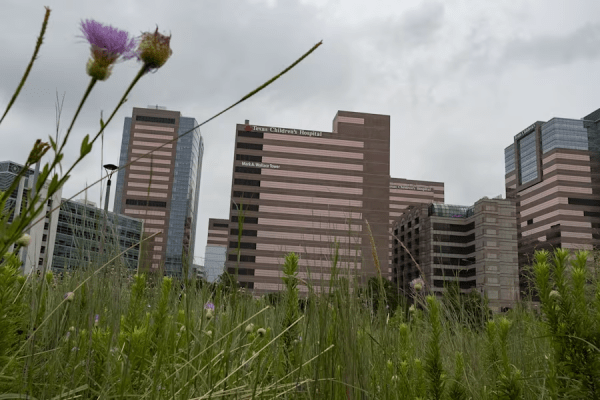
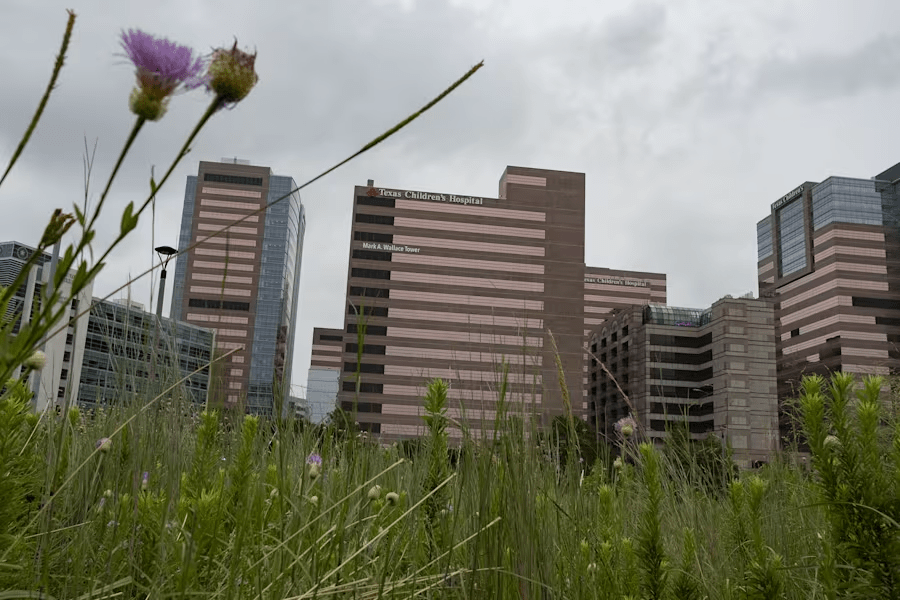
The Texas attorney general has secured an unusual settlement over child transgender care that compels Texas Children’s Hospital to create the nation’s first ever “detransition clinic” in addition to paying the state $10 million.
According to Attorney General Ken Paxton, the multidisciplinary clinic would offer medical care to patients “who were subjected to ‘gender-transition’ procedures.” The care would be free to patients for the first five years of the clinic’s operation. The move follows an investigation that began in 2023 by the attorney general’s office into Texas Children’s Hospital in Houston. That same year, Gov. Greg Abbott signed Senate Bill 14 that bars transgender children from receiving puberty blockers and hormone therapies.
Gender-affirming care is an umbrella term for the treatment of gender dysphoria, or the discomfort that comes when someone’s gender identity does not align with the sex they were assigned at birth. Gender-affirming care ranges from “socially transitioning” — using different pronouns or dressing differently — to puberty blockers, hormone therapy and surgical interventions.
“Today is a monumental day in the fight to stop the radical transgender movement,” Paxton said in a statement issued Friday. “I applaud Texas Children’s Hospital for changing course and committing to being a part of the solution by agreeing to form a first-of-its kind Detransition Clinic that will help provide free care to those who have been victimized by twisted, morally bankrupt transgender ideology.”
Texas Children’s will fund all services provided through the “detransition clinic” for the first five years.
The settlement also requires the hospital to pay $10 million for billing Texas Medicaid after the state accused the hospital of illegal ‘gender-transition’ interventions, including by using false diagnosis codes. It also required Texas Children’s to terminate and revoke the medical privileges of five physicians. Paxton and the hospital have not released the name of the physicians or a copy of the settlement.
Texas Children’s, the nation’s largest pediatric hospital, said in a statement that it made the “difficult decision” to settle with the attorney general’s office to close a legal chapter that has been, “wrought with falsehoods and distractions.”
The hospital said it spent three three years producing more than 5 million documents to both the state and the U.S. Department of Justice.
“All reviews and investigations continue to support the facts – we have been compliant with all laws,” the hospital statement said. “To be clear – we are settling to protect our resources from endless and costly litigation … We stand proud knowing we will always put our purpose over politics and that we have and will continue to follow the law.”
The Texas Medical Association and Texas Hospital Association declined to answer questions for the story.
Unclear what services clinic will provide
Texas Children’s, one of the world’s leading pediatric hospitals based in the heart of Houston’s medical center, did not say how it will roll out its clinic or what services it will provide, though the hospital said in the statement that the clinic will include “supportive, multidisciplinary services we already deliver to all patients who need our care.”
Detransitioning is the stopping or reversal of transitioning care by social, medical or legal means, and it is rare for people to regret transitioning after taking hormone therapy and surgical interventions.
On the clinical side, detransitioning could mean stopping hormone treatment or procedures to reverse previous surgeries. Similar to transitioning, detransitioning requires intensive mental health assessments to root out other factors that might be creating the desire to stop transitioning, according to research. Common reasons for destransitioning include lack of family support, financial barriers and social pressure.
When someone chooses to detransition, “it is not normally because of healthcare complications,” said Andrea Segovia, senior field and policy director for the Transgender Education Network of Texas.
Segovia is concerned that access to mental healthcare will not be woven into the clinic’s services. In March, Paxton released an opinion saying that mental health providers licensed by the state cannot provide gender-transitioning care to minors under state law. It’s not clear if Paxton believes state law bars detransitioning mental healthcare as well.
For those who do want to detransition, the resources already exist, said Kellan Baker, senior advisor for the Movement Advancement Project, a national think tank that focuses on LGBTQ policies.
Detransitioning services, although they are rarely needed, can and have been offered properly when accompanied with mental health resources. But Baker said he’s not confident that this clinic, born out of a heated conflict between a hospital and the attorney general, has the best intentions for the transgender community.
“Texas Children’s is not creating this clinic — the Texas attorney general is creating it,” Baker said. “A clinic created by a politician via legal intimidation is not in the best interests of any patient. Doctors should be the ones making decisions about how to provide medical care, not politicians.”
‘Resource that no one is asking for’
Brad Pritchett, CEO of Equality Texas, a nonprofit that advocates for the LGBTQ community, said in a statement that the attorney general is “blackmailing a hospital system into creating a resource that no one is asking for.”
Pritchett said Texas’ politically-motivated detransition clinic “ignores the actual science and years of data about the overwhelming benefits of gender-affirming care.”
Several medical associations including the American Medical Association, American Academy of Pediatrics, American Academy of Child and Adolescent Psychiatry and American Psychiatric Association, have supported evidence-based gender-transitioning care as appropriate and medically necessary for children.
Pritchett added that it is “embarrassing that a hospital once revered for its care has lost its integrity and put politics over patients.”
Dallas state Rep. Jessica González who chairs the Texas House LGBTQ Caucus said in a statement that the settlement is “shameful, and is the furthering of an agenda to eradicate transgender people from the eyes of society.”
Transgender people make up about 1% of the population, which is why, Segovia said, it is “infuriating” that the state is creating the detransition clinic as access to other healthcare services are struggling — such as rural hospitals and reproductive care.
Texas Children’s has to fully fund the clinic for five years, which will take away attention and limited resources from the hospital’s other departments such as care for children with cancer and infants with heart conditions, González said.
“Using a settlement to compel a hospital to build an ideologically framed clinic opens the door to more state interference in medical practice, more dangerous stigmatization that truly harms
young Texans, and, sadly, more lives lost in our nation’s suicide epidemic,” said González, one of the few only queer representatives in Texas.
Houston state Sen. Molly Cook, who is also openly queer, said Paxton is manufacturing a political spectacle because providers know how to help someone detransition and the state doesn’t need a clinic to train them on it.
“This is an asinine waste of money that is typical of Texas’s out-of-touch statewide leadership,” Cook said in a statement. “Texas Children’s already provides care for patients who choose to change a course of treatment.”
The need for such a clinic in Texas is made even smaller by the fact that the state’s ban on gender-transitioning care for minors has resulted in very few Texas children receiving such care statewide.
The five doctors that Paxton said Texas Children’s will need to fire adds to the four doctors he’s already sued to stop providing gender-affirming care. He’s also sued Children’s Health System of Texas, headquartered in Dallas, accusing them of violating SB 14. Some parts of Texas already suffer from a pediatric endocrinologist shortage in the wake of SB 14.
Segovia with the Transgender Education Network of Texas said she’s worried that other states will follow Texas’ lead in forcing more of these clinics to open.
“It’s terrifying what other states will take from this.”







 fleeredstates.blog
You must be logged in to post a comment.