Rehoboth Beach elects first openly gay mayor, the resort town’s first female leader in decades

Read more at WHYY.

Residents of Rehoboth Beach chose a new mayor last weekend. Susan Stewart was elected by a wide margin, winning more than 60% of the vote out of four mayoral candidates.

Stewart’s win is significant; she will be the first openly gay mayor of Rehoboth Beach, and the first woman elected mayor in decades.

The win comes only a year after Stewart was elected to the city’s Board of Commissioners.

“I went knocking on all these doors for the second summer in a row, because I ran last year for commissioner,” Stewart told WHYY News. “Every commissioner should have to do it because it’s such an enlightening experience to sit down and hear people.”

She said she didn’t have plans to run for mayor after that election, but was encouraged to campaign by local residents, leaders and organizations. Stewart said it took her a long time to think about running again, but decided to start campaigning as she felt she was the only person right for the position.

Preserving Rehoboth Beach’s charm

Stewart started her professional career as an attorney, but spent most of it in financial services. She is originally from Bucks County, Pennsylvania, and lived in Washington, D.C., prior to Rehoboth Beach. She had a vacation home in the city since 2013, but moved to the beach full time during the COVID-19 pandemic.

During her campaign, Stewart emphasized her desire to preserve the character of Rehoboth Beach. She told WHYY News there is a physical charm to the city, showcased through old buildings, outdoor spaces and the beach itself.

Stewart also said there is a fun atmosphere to the area, pointing to specific traditions like the Mrs. Roper Romp, where crowds of people dress up like the character Mrs. Roper from the 1970s sitcom  “Three’s Company,” and walk through the city.

“I don’t have the skill set to articulate what I like about it, but I know I like it,” Stewart said.

Before her term as an elected official, she served on the city’s Planning Commission, as well as the Mixed-Use Zoning Ordinance Task Force and Stormwater Utility Task Force.

While serving in these groups, Stewart said she learned about zoning codes, challenges in the commercial district and the city’s comprehensive development plan. It outlines goals and policies for how the city’s land is used. That includes increasing mixed-use developments, workforce housing, walkability and how bicycle-friendly the city is. When Stewart decided to run, she said the city was at a tipping point with expanding growth, business and tourism.

“We really needed to be very thoughtful and purposeful about what we see as the future of Rehoboth Beach, and that it needed a leader that would help us articulate that in a way that preserves our quality of life and our charm that was getting away from us,” Stewart said.

Stewart said that more than 60% of the city’s revenue is tourism related, including parking, the hotel accommodations tax and the short-term rental tax, while about 10% comes from property taxes. According to Stewart, the majority of the voting population in town are property owners, while “revenue generators are a different cohort.”

“What we need to do as a community of engaged residents is to figure out how we preserve that revenue stream, but perhaps more importantly, how we find a way to preserve our quality of life, because some of the tourism is what causes tension,” she said.

Stewart said that she plans to continue having the city consult with experts ranging in topics from urban planning to business development to traffic, as well as gather community input on what the city should look like over the next decade. Their input will help form a city master plan.

“I believe all our interests are aligned, residents and business owners and commercial property owners and developers. It’s just never been considered holistically before,” she said. Rehoboth Beach adopted its first five-year strategic plan in May 2025, and is currently in the process of rewriting its zoning code. Stewart said this is foundational to creating a master plan.

“Harmonizing our code will be important, because there are gaps in our existing code that lead to tensions,” she said. “If a zoning code or building code doesn’t address something clearly, then that leaves it subject to interpretation.”

Last month, the city hosted a week’s worth of events and public meetings with the urban planning group Dover Kohl & Partners to gather community feedback on zoning changes.

The city reported that some of the top concerns from residents involved downtown revitalization, increasing mixed-use development and workforce housing, reducing parking requirements and traffic, and supporting local business and cultural and art programs.

Stewart said the events during the week, like a walking tour of the city, helped visualize some of these ideas.

“When you turn onto Rehoboth Avenue, it’s our boulevard, and it’s the boulevard to our beautiful nature and our boardwalk, but it’s filled with cars,” she said. “Our forebears did a great job of laying out the city, but it was done decades and decades ago.”

To Stewart, the event was valuable to the city and she believes it’s important to keep engaging in consistent dialogue with residents.

Mike Venanzi is a business owner and board member for Rehoboth Beach Main Street, a nonprofit designed to promote the downtown area of the city. He said he supports Stewart as mayor, and believes her election will benefit the city as a whole. “I think having a commissioner and a mayor that welcome the business owners, speak with them, invite them to have conversations, are good for business, good for the residents of Rehoboth and good for the tourists,” Venanzi said. “That’s really [what] Susan and the entire crew there are focused on that.”

He said he hopes that during her term, Stewart is able to encourage growth as well through policy.

“Some of the growth that should have happened here in town — that was really stalled — because of rules, regulations that don’t make sense anymore,” Venanzi said.

Stewart said she also wants to make the city government more efficient. She said that after she was elected commissioner, she realized that the governing body can keep city staff from getting work done by being too involved in daily operations.

“I’ve been trying to work on a set of rules for us as a governing body that will help us get back to the point where we can concentrate on strategy and vision and let the professionals execute that vision,” she said. A historic election

Robin Brennan is the executive director for CAMP Rehoboth, a nonprofit focused on cultivating an inclusive environment for LGBTQ+ individuals. She described the election as “incredible.”

“My first thought was really about representation and how much it matters,” Brennan said. “When people see themselves reflected in leadership positions, it sends a powerful message about who belongs and that our voices matter, that we’re heard.”

Rehoboth Beach has had a strong LGBTQ+ presence for decades, and Brennan said having an openly gay mayor reflects an important population that has shaped the city’s history.

The Human Rights Campaign’s Municipal Equality Index, which rates cities based on how their policies serve LGBTQ+ residents, issued Rehoboth Beach  a perfect score last year. It was an increase from the 61 out of 100 the city received in 2024. City officials cited a stronger partnership with CAMP Rehoboth as the reason the score improved.

Stewart said she believes community members and organizations like CAMP Rehoboth have helped the city become more welcoming. Though she acknowledges that there are still struggles for LGBTQ+ people, she said she feels there is less division in Rehoboth Beach.

“This is just a place where everyone are people, and that’s the aspiration for everything,” Stewart said.

Brennan said she hopes that partnership can continue to grow under Stewart’s leadership.

Stewart will be sworn into office on Sept. 18.

Seattle considers $300K boost for groups serving LGBTQ+ people displaced by red-state bigotry

Read more at the Advocate.

Seattle leaders could soon distribute $300,000 to LGBTQ+ organizations to welcome displaced transgender people to the city. The boost for local nonprofits comes as social services feel the strain of a massive influx of people fleeing persecution in Republican-led states.

The Seattle City Council’s Finance, Native Communities & Tribal Governments Committee voted last week to allot money from the city’s JumpStart Fund to the Seattle Human Services Department, according to Source One News. The increase in LGBTQ+ people moving to Washington comes as many Republican-controlled states enact policies hostile to LGBTQ+ rights, from outlawing gender identity-related health care for minors to criminalizing the use of restrooms that do not correspond with a person’s sex assigned at birth.

The JumpStart Fund comes from revenue generated by a tax on the city’s biggest employers and helps pay for housing services and economic recovery efforts launched after the COVID-19 pandemic.

Councilmember Alexis Mercedes Rinck proposed a budget amendment allotting $300,000 for grants to organizations that serve the LGBTQ+ community. The money won’t be restricted to serving trans and queer refugees from other states, but the proposal comes as organizations helping those populations plead for support.

Seattle’s LGBTQ Commission in May formally requested that Seattle Mayor Katie Wilson declare a state of civil emergency because of the mass migration to the Emerald City. To date, the city has not officially declared such an emergency.

“Community-based organizations are already responding to this crisis: Gender Justice League, TRACTION, KOI, MANTIS, UTOPIA, Seattle’s LGBTQ+ Center, and other citywide and countywide organizations and mutual aid networks have provided support for 2SLGBTQIA+ individuals and families. Many IDPs have relocated from states such as TexasFloridaTennesseeKansas, and Idaho due to anti-trans legislation, threats to personal safety, and barriers to healthcare and legal recognition,” reads a recommendation from the commission.

The increase in displaced LGBTQ+ people has caused significant new demand for services, the commission said, including emergency financial aid, transportation, housing assistance, legal help, safety planning, community support, and access to gender-affirming care.

Funding for the grants must now be approved by the full Seattle City Council. The funding was not included in a budget recommendation from Wilson’s office.

Canada ends sperm donor restrictions for gay & bisexual men in “precedent-setting” move

Read more at LGBTQ Nation.

The government agency Health Canada announced last week it has ended its restrictions on gay and bisexual sperm donors.

Aziz M. told CBC he has “had a wonderful experience” as a sperm donor, with one child conceived with his sperm remaining an active part of his life. But when he encouraged other queer friends to donate, he realized it wasn’t an option for many.

Health Canada’s policy until 2024 banned men from donating sperm if they had sex with other men within three months due to an alleged higher risk of HIV and other STIs. Aziz challenged the policy in 2023.

“It kind of reminded me of all the prejudice that we gay and bisexual men get in life and all the negative opinions that society often holds against us,” he explained. “It felt like it was a group judgment. Like, anybody from that group is having, you know, risky sexual behavior and they’re diseased.”

He decided to continue the suit even after Health Canada changed the language from banning men who have sex with men to anyone engaging in anal sex. Aziz felt that was merely transferring “an explicit discrimination to an implicit one” since “the same group of people are more likely to be disqualified.”

Affidavits submitted by three medical experts explained that the process in place to screen sperm for infectious disease was sufficient without needing to ban anyone for sexual behavior, CBC reported.

Dr. Mona Loutfy, who specializes in infectious diseases, reportedly wrote that HIV testing methods today “are highly sensitive and accurate, such that there is effectively no residual risk associated with current testing methods.”

And now, before Aziz presented the case in court, Health Canada announced it will completely eliminate the sexual behavior questions targeting gay and bisexual men from the donor screening process. In a statement, it said, “The Government of Canada is committed to making sure that sperm and ova donation policies are safe, non-discriminatory and based on scientific evidence.”

Bennett Jensen, legal director for the LGBTQ+ advocacy group Egale Canada, called the case “an important opportunity to examine long-standing assumptions about sexual orientation in relation to HIV.”

Jensen also told CTV News he is “filled with so much gratitude towards Aziz for tirelessly fighting this issue and not being willing to give up. It’s incredibly burdensome to be handling litigation, especially with respect to something that’s so personal. And I think that he’s done just an incredible public service for Canadians.”

Gregory Ko, a lawyer on the case, called the move “an important and precedent-setting step in ending decades-long discrimination against gay and bisexual men.”

Another lawyer, Frank Nasca, said the change “really took a massive push from Aziz and from others to get the government to really look closely.”

Canada does not allow payment for sperm donation and so suffers from a lack of supply. Emily McIntosh, executive director of the Canadian Fertility and Andrology Society, told CBC eliminating the unnecessary rules could help.

Aziz is excited about the update and hopes more queer men will donate as a result. “For a lot of queer people, it’s very hard to have to build our own family and to have our own kids,” he told CBC. “It takes a lot of money and a lot of effort. This is a way to contribute and enrich our lives at the same time.”

Slovakia defies EU & refuses to register gay couple’s marriage

Read more at LGBTQ Nation.

The Central European nation of Slovakia rejected a gay couple’s attempt to have their marriage registered, possibly setting up a clash with the European Union (EU).

Ivan Novotný and Metod Špaček, who are both Slovak, got married in Austria in 2020. Both nations are EU member states.

This past December, they applied to have their marriage registered in their country, and they finally got a response this past Monday in the form of a rejection letter. IBTimes notes that the letter didn’t come from the registrar’s office like it normally would have, but directly from Slovak Minister of Interior Matúš Šutaj Eštok.

“We submitted our application to the registry office, and it was the registry office that should have made the decision,” Novotný said. “Instead, we learned of the rejection—which was based on weak legal arguments—only through a letter from the incompetent Šutaj Eštok.”

Novotný claims that Slovak Prime Minister Robert Fico went to the registry office on June 12 to order them to refuse to register the marriage certificate, citing the country’s recently adopted constitutional ban on same-sex marriage rights.

The couple plans to sue to challenge the decision. “I reiterate that I have no doubt we will ultimately achieve equality for all in Slovakia as well,” Novotný said.

The Court of Justice of the European Union (CJEU) ruled last November that EU member states had to recognize same-sex marriages performed in other EU member states in a lawsuit involving a Polish couple that married in Germany. While a Polish court originally abided by the CJEU ruling, the country’s Constitutional Tribunal ultimately overturned that decision in July.

The European Commission denounced Slovakia’s rejection of the marriage as well as its defiance of the CJEU decision.

“One of the foundations of our Union is that EU law, as interpreted by the Court of Justice of the EU, takes precedence over national law,” the European Commission said in a statement. “All Member States have the obligation to fully implement all judgments of the CJEU. We will continue to monitor the situation very closely and, if necessary, will not hesitate to use all the instruments at our disposal.”

Slovakia is a Christian-majority nation where same-sex relationships have been legal since 1962, when it was part of Czechoslovakia. Sexual orientation and gender identity are protected categories under the nation’s anti-discrimination laws, and LGBTQ+ people can serve in the military.

Medicaid to stop covering gender-affirming care for transgender kids

Read more at USA Today.

The federal agency that runs Medicaid and the Children’s Health Insurance Program will no longer pay for gender-affirming care for minors who don’t identify with the sex they were assigned at birth.

The Department of Health and Human Services announced Aug. 12 that it finalized a rule after more than a year of taking steps to use the federal government’s power to limit this type of medical care.

“We are not going to pay for our innocent children to undergo these barbaric surgeries and practices, which result in unthinkable and irreversible harm to their young bodies,” President Donald Trump wrote in a social media post.

More than 30 major medical associations and health organizations worldwide support health care for transgender adults and youth, which they say can help prevent suicide in this vulnerable population.

The rule goes into effect Oct. 13 and includes a six-month grace period for children with government insurance who are currently using hormone therapy, according to HHS. It does not affect mental health coverage.

“Children deserve our protection, not experimental interventions that pose serious risks and convey no proven benefits,” Dr. Mehmet Oz, who runs the Centers for Medicare and Medicaid Services, said in a news release. He said the move is “protecting children from potentially irreversible harm.”

HHS did not say how much federal money it currently spends on surgeries, puberty blockers or hormone therapy, or how many children enrolled in government health insurance are receiving gender-affirming care.

Most gender-affirming care is sought by young adults, not children, but as many as one in four people getting this type of care are covered by Medicaid.

Rep. Mark Takano, a Democrat who chairs the Congressional Equality Caucus, called the move “another cruel, overreaching attack” on transgender youth.

“Decisions about a young person’s care should be between the patient, their parents, and their provider – not politicians,” Takano wrote.

Trump first took action against gender-affirming care for minors with an executive order in January 2025. In April 2025, Oz told states not to use Medicaid funding for surgeries or hormone treatment.

In December, HHS Secretary Robert F. Kennedy Jr. announced his department was beginning an administrative process to end funding for hospitals who provide gender-affirming surgeries.

The Food and Drug Administration, which regulates medical devices, also sent warning letters to manufacturers of breast binders telling them not to market their devices to children with gender dysphoria.

Bolivia recognizes first same-sex marriage in historic step towards equality

Read more at LGBTQ Nation.

After a nearly four-year legal battle, Fabiana Banzer and Scarlett Rocha became the first same-sex couple to be civilly married in the South American country of Bolivia. Despite these women’s recent wedding, the country’s constitution still forbids same-sex marriages. Nevertheless, their legal victory could open the door to other same-sex couples eventually marrying.

The couple applied for a civil marriage certificate on October 12, 2022, with the legal support of the non-governmental LGBTQ+ rights organization IGUAL Bolivia. The organization noted that, on January 9, 2018, the Inter-American Court of Human Rights (IACHR), which oversees 21 Caribbean, Central, and South American countries issued an advisory opinion stating that countries that had signed onto the 1969 American Convention on Human Rights should grant same-sex couples “accession to all existing domestic legal systems of family registration, including marriage, along with all rights that derive from marriage.”

However, Article 63 of Bolivia’s constitution limits marriage to heterosexual couples. The lengthy subsequent legal battle for Banzer and Rocha resulted in courts issuing two constitutional injunctions, an extraordinary judicial remedy used to protect citizens against actions that violate basic constitutional rights, Merco Press reported.

The couple eventually won their battle, but their court victory applies only to them, and no legislative or constitutional changes have occurred to allow same-sex marriages nationwide. Nevertheless, the victory could open the door to similar challenges that could accelerate the path towards marriage equality.

“Scar and I have been together for more than 4 years,” Banzer wrote in a public August 8 Facebook post. “It makes me very happy to announce to our family and friends that after a legal fight of 3 years and 10 months we have finally been able to access civil marriage as two women.”

Interestingly, Banzer and Rocha are the second same-sex couple to win legal recognition from their home country. In December 2020, David Aruquipa and Guido Montaño won their court battle to become the first same-sex couple to register their partnership as a civil union (a form of legal recognition that bestows many of the same legal privileges as marriage).

In Aruquipa and Montaño’s case, the Second Constitutional Chamber of the La Paz departmental court issued a ruling in the couple’s favor that was upheld by the Plurinational Constitutional Court. But similar to Banzer and Rocha’s case, the men’s legal victory didn’t immediately open the door to legalized same-sex unions across the country until further legal challenges resulted in spring 2023 court rulings requiring Bolivia’s Civil Registry Service to allow same-sex unions.

Aruquipa said on Sunday that he considers the women’s recent marriage to be a significant development in the country’s longer journey towards marriage equality. “Rather than speaking of a beginning, we should speak of a historical continuity: from the first recognized union to the first civil marriage,” he said.

While Bolivia doesn’t criminalize same-sex sexual encounters and has LGBTQ+ anti-discrimination protections, same-sex couples and partners aren’t legally allowed to adopt children, lesbian couples aren’t guaranteed access to in vitro fertilization (IVF), and conversion therapy remains legal.

Connecticut Children’s to halt gender-affirming care for minors

Read more at NewsNation.

Connecticut Children’s Medical Center in Hartford has agreed to stop providing gender-affirming medical treatments to minors, including puberty blockers and cross-sex hormones, as part of a settlement with the U.S. Department of Justice.

The DOJ announced the agreement Wednesday as part of its ongoing national investigation into gender-affirming care for children and adolescents.

According to the DOJ, Connecticut Children’s agreed not to perform gender-affirming procedures or surgeries on minors. The hospital also agreed to pay a monetary penalty and provide an additional $500,000 in medical care for people who previously received gender-affirming treatment at the facility.

The DOJ alleged that the hospital violated federal law in connection with its pediatric gender-affirming services.

“The Department of Justice will stop at nothing to protect America’s children,” Associate Attorney General Stanley Woodward said. “This resolution is a reminder to hospitals, medical providers, and pharmaceutical companies that the Justice Department will vigorously enforce federal law, especially where the lives of children are endangered.”

Connecticut Children’s confirmed the settlement in a statement and said the agreement allows the hospital to remain focused on its mission of improving children’s health.

The hospital said protecting patient privacy was its “foremost concern” throughout the process and that the matter was resolved without providing protected patient information to the federal government.

“We have complied and will continue to comply with all federal and state laws,” the hospital said.

The settlement is the latest agreement reached by the DOJ involving gender-affirming care for minors.

In May, Texas Children’s Hospital agreed to establish a “detransition clinic,” according to the DOJ. In June, the Cleveland Clinic Foundation agreed to provide detransition care.

The agreements come amid a broader federal effort to investigate and restrict gender-affirming care provided to children and adolescents.

An 11th state is set to ban updating gender markers on licenses

Read more at LGBTQ Nation.

South Dakota is reportedly set to enforce a policy that will make it impossible for trans people in the state to update the gender marker on their driver’s license. However, the policy has not yet been enacted, meaning trans people may still have a small window to update their gender markers.

There are currently ten states that bar trans people from obtaining an accurate driver’s license. Some have passed laws that strictly forbid gender correction for licenses under any circumstances; others have created policies that rely on other restrictions to do the job, such as requiring an amended birth certificate in a state where one cannot be legally obtained.

The South Dakota drivers’ license policy is set to mimic the second option. In March, South Dakota Governor Larry Rhoden (R) signed HB 1184, which banned legal recognition of trans identities by defining “sex” as “an individual’s biological sex, either male or female.” The law restricted trans people from updating their birth certificates. It was also signed less than a month after the South Dakota Supreme Court ruled that a trans woman could not update her birth certificate and neither could other trans people born in the state.

However, it wasn’t clear exactly how that law and ruling would impact drivers’ licenses. While an amended birth certificate could be used to update the gender marker on a license, it was not the only method.

The previous rules allowed gender markers to be updated based on an amended birth certificate, passport, or a court order, combined with either a court order certifying someone’s gender change or “a letter from a physician stating that the applicant is undergoing gender reassignment care (such as hormone replacement therapy),” as Equaldex explained. While the requirement for a doctor to sign off on gender-affirming care is a large hurdle, the restrictions are still looser than in some states, which require surgery before updating gender markers.

After a public records request was denied, Aleksandra Vaca of Transitics contacted employees at the South Dakota Department of Public Safety (DPS), who issue drivers’ licenses for the state. She was told that a policy was updated on July 1st to require applicants for a gender change to provide an amended birth certificate. That is no longer possible to obtain, and so the policy will prevent trans people born in South Dakota or other states that refuse to issue corrected birth certificates from updating their drivers’ licenses unless they already have an updated birth certificate.

But the policy isn’t being implemented yet. The DPS employees told Vaca they are waiting to “get word” from their superiors before starting enforcement.

There’s no telling how soon that might happen, but in the meantime, there remains a potential window for trans people in South Dakota. While some states, such as Kansas, retroactively revoked the licenses of trans drivers with practically no notice period, there’s no indication that the South Dakota policy would do the same.

South Dakota has moved forward with these policies despite evidence of flaws in the system and the harm they cause trans people (having an ID that does not match the way someone presents could out them in situations where it’s dangerous). Last month, a trans woman was charged for not having a valid license because the officer didn’t believe the male gender marker on her ID. The charges were eventually dropped.

As with Wyoming’s ban on updating gender markers on drivers’ licenses, this policy has been crafted without any fanfare, suggesting the point is to harm trans people rather than to score political points.

Polish court rejects European court’s ruling in favor of marriage equality

Read more at LGBTQ Nation.

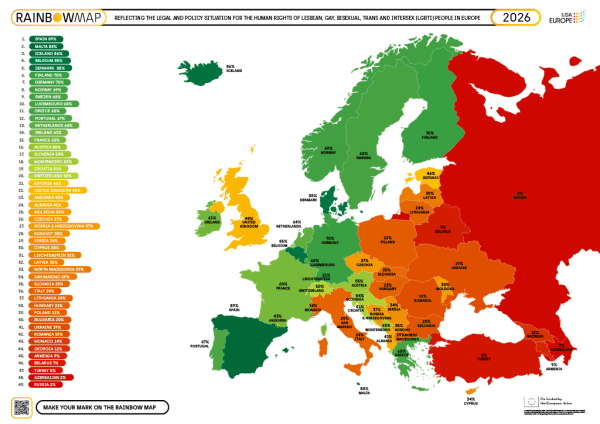
Poland’s highest court rejected a ruling from a European court requiring the Catholic-majority nation to recognize same-sex marriages performed abroad.

The ruling from the Constitutional Tribunal comes after the Court of Justice of the European Union (CJEU) ruled last November that Poland, which is a European Union member state, has to recognize same-sex marriages performed in other countries, even if it doesn’t perform same-sex marriages itself.

But the Constitutional Tribunal on Tuesday rejected that, DW reports. While a full opinion is not yet available, the court said that the CJEU decision was “inconsistent with Article 92, Paragraph 1, in conjunction with Article 18 of the Constitution of the Republic of Poland.”

Article 18 says: “Marriage, being a union of a man and a woman, as well as the family, motherhood and parenthood, shall be placed under the protection and care of the Republic of Poland,” and Article 92, Paragraph 1 says that regulations are determined by “the organs specified in the Constitution.”

That is, the court found that Poland’s constitution claims sovereign authority to determine who has access to marriage, which creates a potential conflict with the European court.

The original case was filed by a German-Polish gay couple who got married in Berlin in 2018. When they returned to Poland, the government refused to recognize their marriage, so they sued.

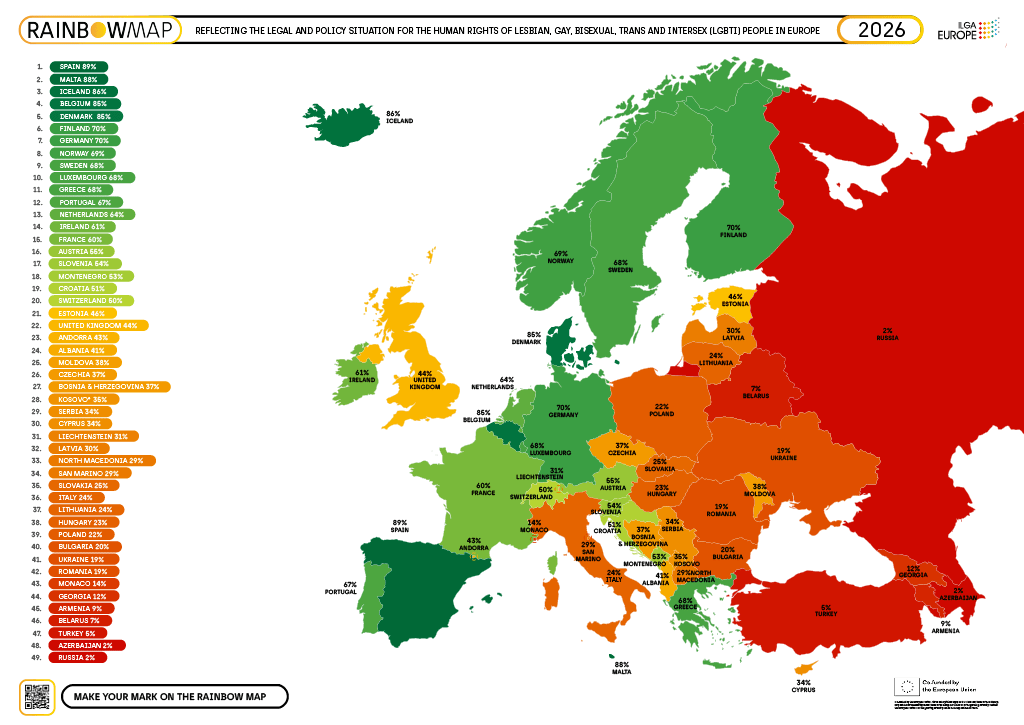
They ultimately won their case in a ruling that said that EU member states are required to recognize marriages performed in other EU countries, citing the EU’s protection of “respect for private and family life.” Of the 27 EU member states, only 18 recognize marriage equality.

In March, Poland’s Supreme Administrative Court (NSA) ruled in favor of the couple as well, ordering that the men’s German same-sex marriage certificate be transcribed into the Polish system. The NSA said that the couple had a “right to lead a normal family life” while exercising their “freedom to move and reside within the territory of the member states” as EU citizens.

Earlier this year, Poland’s Prime Minister, Donald Tusk, promised to pass a law to recognize same-sex marriages performed in other EU countries in response to the CJEU and NSA rulings. Parliament passed a bill to create “cohabitation contracts” for same-sex couples, but President Karol Nawrocki, whose party is more conservative than Tusk’s, vetoed it last week, saying that the cohabitation contracts were too similar to marriage.

Trump admin. halts federal money to local HIV/AIDS community groups

Read more at LGBTQ Nation.

Funding for HIV services is the likely victim of a longtime Republican goal of devolving power to the states.

The Trump administration notified the Centers for Disease Control (CDC) last month that it would cease a years-long community grant program funding local organizations that provide HIV testing, referrals for care, PrEP and Doxy PEP, and outbreak response measures. About 96 organizations are currently recipients of the direct federal grants worth $46 million, Roll Call reported.

The Office of Management and Budget (OMB), under the direction of longtime Heritage Foundation official Russel Vought, has stripped that money from the CDC and is redirecting it as supplemental funding to state health agencies, which will then decide whether or not the money goes to the same HIV-focused local organizations.

“For decades, direct federal investment in community-based HIV prevention has helped trusted local organizations reach people and communities that traditional health systems too often fail to serve,” AIDS United, a DC nonprofit focused on ending the HIV/AIDS epidemic, said in a statement condemning the decision.

“We cannot end the HIV epidemic by dismantling the trusted community systems that make prevention possible,” Carl Baloney, the group’s CEO, said. “This decision threatens access to testing, PrEP, PEP and care — and will ultimately lead to preventable HIV transmissions, program closures and higher health care costs.”

AIDS United and other HIV/AIDS-focused providers watched with dismay as the Trump administration dismantled similar HIV-prevention efforts overseas, through the dismemberment of USAID and scaling back PEPFAR, the President’s Emergency Plan for AIDS Relief. President Donald Trump’s own stated desire to end the HIV/AIDS epidemic in his first term is another casualty of that slashed funding, and the OMB’s latest action is contrary to that goal, AIDS United said.

“Federal, state and local government partners all have vital roles to play in HIV prevention,” the group continued. “But the United States cannot end the HIV epidemic without significant financial support for community-based organizations that are connected to, trusted by and staffed by people from the communities most affected by HIV.”

Ending the direct grants puts “trusted community services at risk—particularly those serving Black and Latino communities, LGBTQ+ people, people in the South, and others disproportionately affected by HIV.”

Carl Schmid, executive director of the DC-based HIV+ Hepatitis Policy Institute, agreed that handing funding decisions to the states could break a successful chain of prevention efforts. While DC and other blue state governments may already have open lines to local groups, “other states and jurisdictions don’t have that relationship with the community-based organizations,” he told the Washington Blade.

“It depends on the state,” Schmid said, adding, “Not all states send their money to the communities that really need it most. And not all states are fast in getting money to the community-based organizations.” 

Another factor that could slow down community groups’ efforts: the loss of steep drug discounts available to recipients of the federal grants.

“They could still qualify as a sub-grantee from a state,”  Schmid said. “But what if they don’t get that grant again? They would not be able to qualify to obtain the drugs” at the discounted price, he said.

Even while condemning the administration for the change, AIDS United seemed resigned to the new arrangement, asking “State and local health departments receiving supplemental funds to prioritize continued support for the community-based organizations currently delivering these services and prevent disruptions in care and prevention.”

Blog at WordPress.com.

Up ↑