A federal judge on Wednesday struck down a former President Biden-era rule that extended federal health antidiscrimination protections to transgender health care.
Judge Louis Guirola Jr. of the U.S. District Court for the Southern District of Mississippi ruled in favor of a coalition of 15 GOP-led states that sued over the rule, which broadened sex discrimination by adding sexual orientation and gender identity to the list of protected characteristics in certain health programs and activities.
The Department of Health and Human Services “exceeded its authority by implementing regulations redefining sex discrimination and prohibiting gender identity discrimination,” Guirola ruled.
The decision is a significant loss for the transgender community, which is has faced a wave of state and federal policies and court decisions rolling back previously established rights.
The complaint centered on provisions in Section 1557 of the Affordable Care Act, which the Biden administration interpreted to bolster health care protections against discrimination for LGBTQ people.
The rule prevented covered entities from discriminating against certain protected groups in providing health care services, insurance coverage and program participation.
The challenged provision added gender identity to Title IX’s definition of discrimination “on the basis of sex,” which previously included discrimination based on sex characteristics, pregnancy and sex stereotypes.
The Biden administration’s final rule, which was released in 2024, said organizations receiving federal health funding and health insurers that do business through government plans cannot refuse to provide health care services, particularly for gender-affirming care, that would be provided to a person for other purposes.
The rule was first created under former President Obama in 2016. President Trump then reversed it during his first term before the Biden administration turned it back again.
The first Trump policy kept protections against discrimination based on race, color, national origin, sex, age or disability. But the administration narrowed the definition of sex to only mean “biological sex,” cutting out transgender people from the protections.
Guiroloa ruled that a statute “cannot be divorced from the circumstances existing at the time it was passed.”
The word “sex” is not defined in the statute, so the court said it must interpret the term according to its meaning in or around 1972, when the statute was enacted. At that time, the definition focused on the reproductive distinctions between males and females.
Guirola vacated the rule universally, meaning it’s not limited to the 15 red state plaintiffs. But the impact is likely limited because the rule had not taken effect.
In a statement, Tennessee Attorney General Jonathan Skrmetti celebrated the decision.
“Our fifteen-State coalition worked together to protect the right of health care providers across America to make decisions based on evidence, reason, and conscience. This decision restores not just common sense but also constitutional limits on federal overreach, and I am proud of the team of excellent attorneys who fought this through to the finish,” he said in a statement.
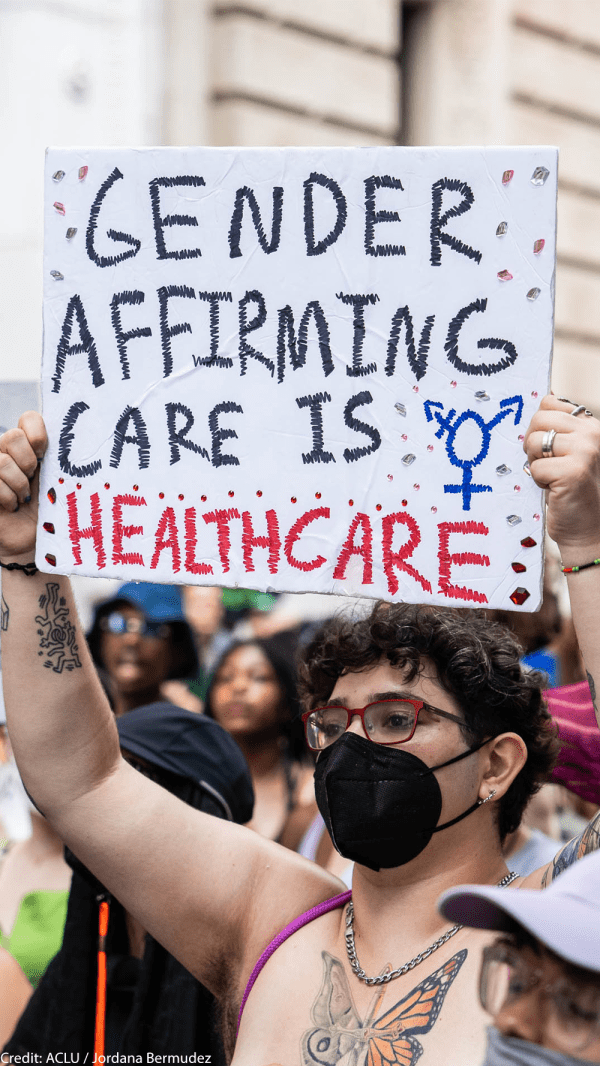
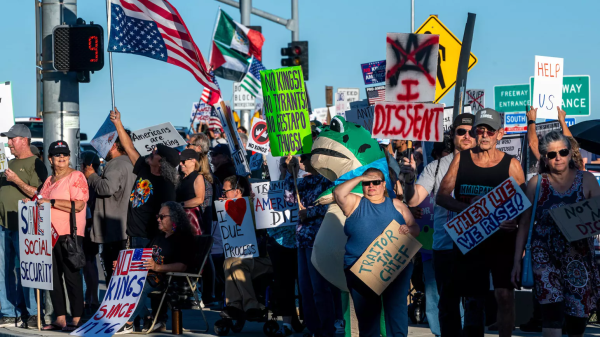
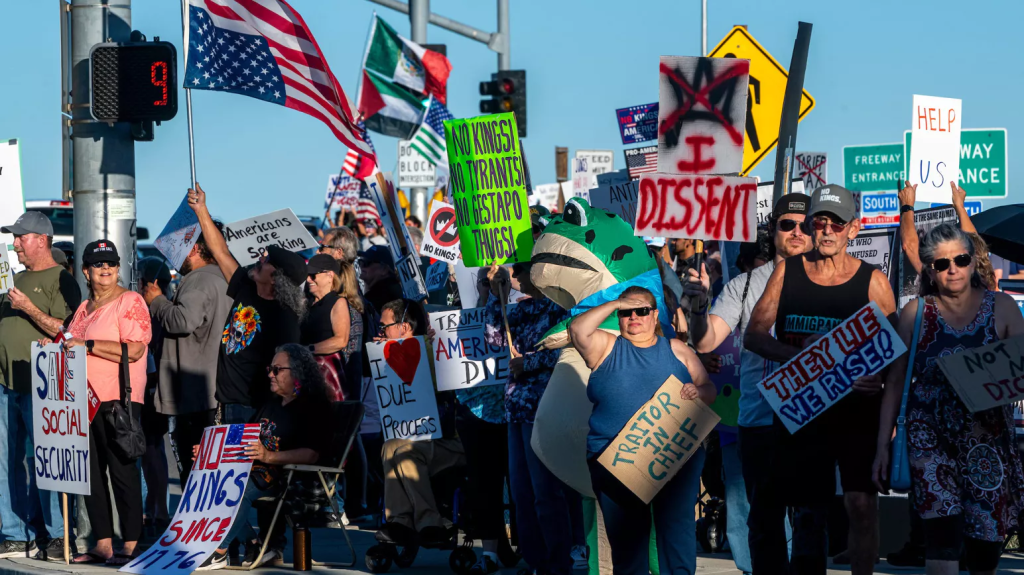
“Hey hey, ho ho, Donald Trump has got to go,” protestors chanted in the middle of Times Square, among a sea of signs that read “love reigns not kings,” “gays against faux-king Trump,” “we stand with … our trans family,” and “the future is coming.”
On Saturday, independent analysts estimated that the No Kings March drew between 5 and 8 million people, and organizers say over 7 million people attended 2,700 events across all 50 states. The event, which was organized to push against the rise of authoritarianism in the U.S., was the largest single-day protest in America since 1970.
Among the crowd were countless LGBTQ people, fighting back against an administration that has introduced a litany of anti-LGBTQ executive orders and used vile rhetoric to denigrate queer people. This backsliding of LGBTQ rights, according to experts, has a deep connection to authoritarianism, with research showing that when governments weaken protections for queer and trans people, they often turn to broader democratic institutions next.
“Threats to democratic institutions and threats to LGBTQ rights are mutually reinforcing, generating a vicious cycle that strengthens authoritarian control,” Ari Shaw, director of International Programs at the Williams Institute, told Uncloseted Media. “Increased persecution of minority groups, including LGBTI people, is itself evidence of democratic backsliding by indicating the erosion of liberal democratic norms [meant to protect] minority rights.”
Legal Abuse of Power
One of the ways the Trump administration’s abuse of power has been most evident is through its legal actions.
He’s also slashed HIV funding at a staggering rate. Uncloseted Media estimates that the National Institutes of Health has terminated more than $1 billion worth of grants to HIV-related research, including 71% of all global HIV grants.
It was these cuts that prompted Brooklynite Jeffrey Cipriano to turn out to protest. “The specific reason that I’m protesting is actually on the shirt I’m wearing,” says Cipriano, referring to his red “This is what an HIV advocate looks like” t-shirt.
“My best friend works for an organization called AIDS United. … His job is to travel the country and help people get AIDS medication, specifically trans and unhoused community members. But his job is at risk,” he says. “The end outcome of his work is that people who have issues in their lives have the issues resolved, and that’s going away under the current administration.”
Executive orders are based on powers granted to the president by the U.S. Constitution or by Congressional statutes. The president cannot use an executive order to create new laws or spend money unless Congress has authorized it. They are meant to direct how existing laws are implemented. But Trump has ignored democratic norms, often filling agencies with loyal supporters, using orders to go after political opponents, and pushing the limits of what the law allows.
In some cases, he has moved illegally. “The President is directing various executive branch officials to adopt policy that has either not yet been adopted by Congress or is in violation of existing statutory law,” says Jodi Short, professor of law at UC Law San Francisco. “The analogy to a king and what has troubled many about this presidency is the sheer consolidation of executive branch power in one individual.”
Short’s colleague, Dave Owen, agrees. “Illegality has been rampant,” he told Uncloseted Media in an email. “People are often cynical about the government, and they might think what Trump’s doing is nothing new. But most of the time, the executive branch takes the law seriously, and both legal constraints and norms of good governance matter,” he wrote. He says that through history, there’s been “a lot more integrity and a lot less lawlessness than most people realize.”
“This administration has broken with those traditions,” he adds.
Revolt Against Executive Orders
Many Americans have recognized this. A survey from April found that 85% of Americans agreed or strongly agreed that the president should obey federal court rulings even if he doesn’t like them.
In response to Trump’s overreach, more than 460 legal challenges have been filed across the country challenging his executive actions. One of these is a federal lawsuit by Lambda Legal and the Human Rights Campaign Foundation that challenges the constitutionality of the Trump administration’s ban on military service by transgender people. Another lawsuit challenges Trump’s order directing federal agencies to withhold funds from medical providers and institutions that provide gender-affirming medical treatments for people under 19.
Both of those lawsuits are one reason 17-year-old Zoe Boik came out to protest with her friends and her dad. “Obviously, I’m disappointed and kind of helpless because there’s nothing I can directly do to change or impact anything that’s going on,” says Boik, who identifies as pansexual and gender fluid and is not legally allowed to vote.
Boik—who was seven years old when Trump announced his run for presidency in 2015—says she’s doing a research paper on Trump’s trans military ban and is frustrated because she sees it as inexplicable discrimination. “They’re not letting trans people serve… which doesn’t make any sense.”
LGBTQ Rights and Democratic Backsliding
This type of blatant discrimination is often a key sign of a country moving closer to authoritarianism and away from democracy. According to a 2023 research paper by Shaw and his colleagues, anti-LGBTQ stigma may contribute “to the erosion of democratic norms and institutions.”
The paper found that when a country with relatively high acceptance of LGBTQ rights introduces anti-LGBTQ legislation, it clashes with what most people believe and can weaken public trust in democracy, deepen political divides, and make it easier for populist or extremist movements to gain power.
“The level of acceptance of LGBTQ people is closely associated with the strength of democracy in a country,” Shaw says. “In some cases, we even saw that rising anti-LGBTQ rhetoric or policies preceded a broader decline in democracy.”
In Brazil, for example, early democratic gains coincided with rising LGBTQ acceptance, including legal recognition of same-sex unions and workplace protections. But as populist President Jair Bolsonaro came into power in 2019, he began questioning—without evidence—the security of Brazil’s voting systems, saying he would only lose his re-election campaign if there were fraud. He was also accused of trying to intervene in operations held by the Federal Police about the alleged criminal conduct of his sons, and he told his ministers that he had the power and he would interfere—without exception—in all cabinet ministries. At the same time, LGBTQ protections were rolled back, and schools and civil society faced censorship, suggesting that falling LGBTQ acceptance may have “preceded Brazil’s democratic erosion,” according to Shaw’s paper. In September of this year, Bolsonaro was sentenced to 27 years in prison for plotting a military coup.
Another example is Poland’s democracy weakening since 2015 under the Law and Justice Party, which consolidated power by undermining the Constitutional Tribunal, installing loyal judges, and restricting independent media. Anti-LGBTQ rhetoric became central to the party’s nationalist platform, fueling the creation of nearly 100 “LGBT ideology-free zones,” inciting violence against LGBTQ individuals, and stymying legal recourse through politicized courts.
When it comes to LGBTQ rights, Trump has mimicked the moves of these leaders even though most of his constituents don’t want it: A 2022 survey from the Public Religion Research Institute found that 80% of Americans favor laws that would protect LGBTQ people against discrimination.
“The definition of an authoritarian system is a system where power is consolidated in one individual whose power is unchecked by any other institution. And I fear that in certain domains, that’s the direction in which this administration is trying to move us,” says Short. “I think it’s incredibly dangerous.”
Attacks on Higher Education
Another common tool in the authoritarian playbook is attacking higher education.
While many universities are rejecting Trump’s demands, others are experiencing a chilling effect, changing their policies before the administration tries to hold up funds.
“I’m here because I’m angry and I feel that we aren’t angry enough,” Maddy Everlith, a sophomore gender studies major at Pace University, told Uncloseted Media as she marched with her friends. “Being a woman of color in America and having so many intersectional identities is also what affects me.… I want to stand up and advocate for other people.”
Everlith’s university responded to Trump’s threats in September by renaming its DEI office to the “Division of Opportunity and Institutional Excellence.”
“I am beyond horrified how quickly our university was willing to bend the knee on this decision,” Austin Chappelle, a senior at Pace, told the student newspaper. This change comes in the midst of uncertainty under the Trump administration, which has already caused many LGBTQ students to feel uneasy on campus.
“It’s part of an electoral strategy to try to mobilize right-wing voters to distract from other sorts of political or economic scandals,” Shaw says, adding that this tactic is another way to gain power.
The pain of this rhetoric has affected millions of trans Americans and allies alike, including Lars Kindem, a 64-year-old retired pilot from Minnesota who was marching to support his transgender sister.
“What Trump has done is he’s taken people that haven’t done anything wrong and has turned them into scapegoats,” he says, adding that Trump’s language is “hateful, petty, mean, and hurtful.”
He says his sister and her partner are having issues getting the correct gender markers issued on their passports. Because of the Trump administration’s treatment of the community, they are making plans to move to Denmark, where “there’s a lot more acceptance.”
Christian Nationalism
This scapegoating has played into the hands of Trump’s voter base of white evangelical Protestants, the only major Christian denomination in the U.S. in which a majority believes society has gone too far in accepting transgender people.
Since 2020, Trump has increasingly embraced Christian nationalism in his rhetoric and imagery. He’s sold Bibles, created a federal task force on anti-Christian bias, and been intrinsically linked to Project 2025, the 920-page plan calling for the establishment of a government imbued with “biblical principles” and run by a president who holds sweeping executive powers.
Experts say that “a strong authoritarian streak” runs through conservative Christianity. A 2023 study found that supporters of Christian nationalism tend to support obedience to authority and the idea of authoritarian leaders who are willing to break the rules. Nearly half of Christian nationalists support the notion of an authoritarian leader.
“They are trying to use the language of Christianity, but they are abusing it and misusing it constantly,” Rev. Chris Shelton, a gay pastor at the protest, told Uncloseted Media. “Our faith is all about reaching out to the marginalized, reaching out to the people who are ostracized by society and embracing them and offering love and welcome and a sense of dignity and worth. And to see any human being’s worth being denied is just a mockery of our faith.”
Heidi Beirich, the vice president and co-founder of the Global Project Against Hate and Extremism, says that “the LGBTQ community is the prime target of modern authoritarian regimes.”
“For Christian nationalists, attacking LGBTQ rights is the first pillar in destroying civil rights for all. This has happened in countries like Hungary and Poland as authoritarianism consolidated, and now it’s happening here,” Beirich told Uncloseted Media.
Moving Forward
As the country bleeds toward authoritarianism, LGBTQ protestors are encouraging people to use their voice, something the queer community is familiar with doing: One 2012 survey found that queer folks are 20 times more likely to be active in liberal social movements than their straight, cis counterparts.
“It is imperative that people continue to pay attention,” Short says. “There is so much going on, a lot of it is disturbing and intense, and there’s such a strong impulse to look away. But we have to engage in political action and resist inappropriate assertions of authority and continue to show up and vote for our democracy.”
17-year-old Zoe Boik is ready. She remembers being in second grade and crying the day after Trump won his first election in 2016. She couldn’t believe how he could lead the country despite “all the bad things he said.”
Boik can’t wait until the midterm elections, when she will be 18 and finally able to vote. “If we don’t vote, then our voices won’t be heard,” she says.
Despite this, she’s also concerned about her freedom to exercise that right being jeopardized.
“My fears about Trump don’t stem specifically from me being queer, but from his authoritarianism as a whole,” she says. “I am scared about how far he will move into dictatorship, [and] my biggest fear is that our right to vote will be compromised, leaving us no recourse.”
Throughout Ali’s childhood in Iraq, he was repeatedly bullied by students and teachers for what he described as his feminine behavior. During his pre-teen and teenage years, men sexually assaulted him, but he couldn’t report it to the police for fear that he’d be thrown into jail for years since Iraq has criminalized homosexuality.
Ali was afraid to come out or talk about these assaults to his family. Although he wasn’t sure if his father knew he was gay, his dad knew other LGBTQ+ people from his travels abroad for work. His father used to tell him, “One day, we’re gonna go to travel to Europe or America and have a good life,” adding, “You’re gonna be safe and you’re gonna be happy.” But then his father died of a heart attack in 2014, and Ali’s abusive older brother (10 years his senior) assumed control of the family, making Ali terrified for his future.
In November 2023, Ali went out with another man for ice cream. While they were out in the rain, five Iraqi police officers suddenly surrounded and arrested them, believing they were romantically involved. Though Ali lied and told the officers they were just cousins, the officers accused them of being prostitutes and slapped, kicked, and hit them in the streets, eventually taking them to the police station.
At the police station, they took Ali’s phone and found images of male models and some men kissing. Police said that the images confirmed Ali’s intent to conduct sex work. They forced him to sign a confession that he had had sex with another man; one officer tried to coerce Ali into performing oral sex; and the police eventually threw him in jail, leaving his family with no clue as to his whereabouts.
In the remote jail, far from the city where Ali lived, he shared a cold, small, crowded cell with about 15 other people, ranging in age from 15 to 60. The police took Ali’s clothes and gave him dirty ones to wear, along with a small blanket.
“Everyone’s sleeping next to each other [on the floor] so close, and it was just so scary,” he told LGBTQ Nation. “Like, I was thinking an animal can’t even live there.” One guard suggested that he tell other inmates that he was arrested for using counterfeit money, because if he admitted he was gay, they might mistreat him.
“I was ultimately released, but I was terrified for my safety because the police had my home address and personal information and had accused me of being gay. I believed I could be imprisoned at any time,” Ali said in a court document explaining his situation. “After my arrest, I knew I had to leave the country to survive. I did not feel that I could trust anyone.”
Ali’s experiences mirror that of other LGBTQ+ Middle Easterners who are entrapped, harassed, detained, and tortured under suspicion of being queer. Ali considered taking his own life to escape the persecution, but he couldn’t go through with it.
A second chance, but with the U.S. government working against him
Ali eventually applied for aid under the U.S. Refugee Admissions Program (USRAP), a 1980 federal program that has helped millions of refugees fleeing persecution in their home countries to relocate safely in the United States and build lives, families, and businesses.
Refugee processing and resettlement are lengthy processes requiring participation from numerous governmental and nongovernmental entities. Ali, like thousands of refugees, first underwent extensive security checks and referrals before being approved under USRAP and resettling into a single apartment in the United States.
“When I learned I would be resettled in Dallas, I was so excited that I began screaming with happiness and jumping and dancing,” Ali said.
It’s hard to know exactly how many LGBTQ+ people seek asylum in the U.S., but a 2021 study by the Williams Institute estimated that 11,400 LGBTQ+ individuals did so between 2012 and 2017. Approximately 4,385 of them made asylum claims specifically related to their LGBTQ+ status.
I am very concerned that if people back in Iraq learned about my sexual orientation and my interactions with the police, my family would be in danger.Ali, a gay Iraqi refugee currently living in Dallas, Texas
He came to the U.S. with only $120 to his name. Upon arrival, Catholic Charities provided him with a case manager and financial assistance for his first three months, as well as help in finding other programs to assist him in getting a job and obtaining basic necessities. Ali soon applied for a matching grant program that would cover one year of rent and utilities and provide him a monthly allowance, as well as a Refugee Cash Assistance program to provide a monthly stipend for six months and potentially longer.
However, by early February, he was notified that both programs had shut down due to an executive order signed by Donald Trump on January 20, entitled “Realigning the U.S. Refugee Admissions Program.” The order claimed that federally funded programs for admitting refugees aren’t in the country’s best interests because they “compromise the availability” of “taxpayer resources” for American citizens.
Trump’s order effectively halted refugee admissions indefinitely, ending USRAP and freezing millions in congressionally appropriated USRAP funding. Trump’s order threw Ali’s life into disarray, stranded thousands of other refugees and separated families who had already been approved under USRAP, and ended the funding of various groups and charities that used federal funding to provide vital survival benefits to refugees.
Ali learned that the case manager helping him secure benefits had been laid off after Trump’s order, and his apartment managers told him he might be evicted if he couldn’t pay the rent. Running out of food, he subsisted on peanut butter.
In response to the chaos, the International Refugee Assistance Project (IRAP) filed Pacito v. Trump on February 10 in the Western District of Washington. The case is a class action lawsuit filed on behalf of the individuals and major resettlement agencies harmed by Trump’s order. It asserts that, by indefinitely ending USRAP, Trump and federal agencies exceeded their lawful authority and violated both federal law – and rulemaking procedures required under the Administrative Procedure Act – as well as the Constitution. The lawsuit seeks to block the order, restore funding, and enforce long-established protections for refugees.
In March, a district court agreed with IRAP’s lawsuit and granted a preliminary injunction against Trump’s order, writing, “The results have been harrowing.” The court noted that refugees have few (if any) rights – they have no right to work; limited access to healthcare, housing, or education; and often face discrimination.
Luckily, a charity helped Ali find a job at a local coffee shop, and he also secured a second job at a local mall. He had learned English, he said, by watching old episodes of Keeping Up with the Kardashians, a reality TV show about an ethnically Armenian celebrity family living in the United States. Now, he has made several good friends and has started building a community by attending a local church.
But other individual refugees who had been approved to come to the U.S. under USRAP after years of processing have either been stranded in the U.S. without homes or work or else trapped in their home or host countries as their scheduled flights to the U.S. were abruptly canceled, the district court wrote in its May decision. This has left the refugees vulnerable to physical danger and financial hardship without stable housing, income, basic necessities, alternative paths to refuge, or access to integration services that would help them become self-sufficient.
Furthermore, Trump’s order effectively defunded congressionally mandated resettlement-support services, making them unable to pay their employees and keep their offices open and undermining decades of work building up infrastructures, relationships, and the associated goodwill to facilitate refugee integration in local communities. The order required these services to furlough or lay off hundreds of staff all over the United States, threatening their continued existence.
The courts are trying to restrain Trump, but he has other plans
In April, the Ninth Circuit Court of Appeals granted the federal government a partial emergency stay of the district court’s injunction. While the appeals court has required the government to reinstate resettlement and placement services to refugees for 90 days after their admission into the United States, the court also appointed a magistrate judge to help review individual cases of refugees harmed by Trump’s order, while IRAP’s class action suit continues to be heard by the courts.
“Iraq is a very unsafe place for LGBTQ+ people,” Ali said in his court filing. “When I speak to people back in Iraq, I hide the fact that I’m gay and that the police arrested and abused me for being gay… I am very concerned that if people back in Iraq learned about my sexual orientation and my interactions with the police, my family would be in danger.”
I want to help everyone in my situation because it is difficult for me now, and I know there are other refugees who recently arrived and are struggling even more than me.Ali, a gay Iraqi refugee currently living in Dallas, Texas
Ali also worries that, if he criticizes the Trump Administration for ending USRAP, conservative organizations could somehow locate his name and personal information for harassment or violent retaliation. If his name is made public, it could make it even more difficult for him to find employment or could lead to other kinds of anti-immigrant and anti-gay discrimination.
Ali understands that, in this case, he’s not only representing himself, but thousands of other refugees nationwide and across the world. “I want to help everyone in my situation because it is difficult for me now, and I know there are other refugees who recently arrived and are struggling even more than me.”
The Trump Administration is considering a radical overhaul of USRAP that would continue to largely defund the program and reduce the number of refugees allowed annually into the U.S. from 125,000 (the number established by former President Joe Biden) to 7,500. Trump’s plan would give preferred relocation assistance to English speakers, white South Africans, and Europeans who have left their countries after making anti-immigrant statements or supporting anti-immigrant political parties, The New York Times reported on October 15.
“[Trump’s plan reflects] a preexisting notion… as to who are the true Americans,” said Barbara L. Strack, a former chief of the refugee affairs division at Citizenship and Immigration Services during the Bush, Obama and Trump administrations. “And they think it’s white people and they think it’s Christians.”
In a statement, IRAP wrote, “These actions reflect a broader pattern of President Trump attempting to strong-arm other branches of government into rubber-stamping his political agenda, sidestepping the checks and balances Congress established to ensure refugee policy serves humanitarian – not partisan- ends. Such departures from established process and principle undermine the United States’ legal obligations and moral leadership, sending a dangerous message that access to refuge may depend on identity rather than need.”
Hate crimes against LGBTQ+ people are rising around the world as politicians target them through legislation and rhetoric.
Anti-LGBTQ+ hate crimes have increased in the past five years across the United States, the United Kingdom, and Europe, according to a new report by the Institute for Strategic Dialogue, with transgender and gender nonconforming people particularly affected. The spike may in part be attributed to world governments passing anti-LGBTQ+ policies, which has “escalated internationally in tandem with political rhetoric.”
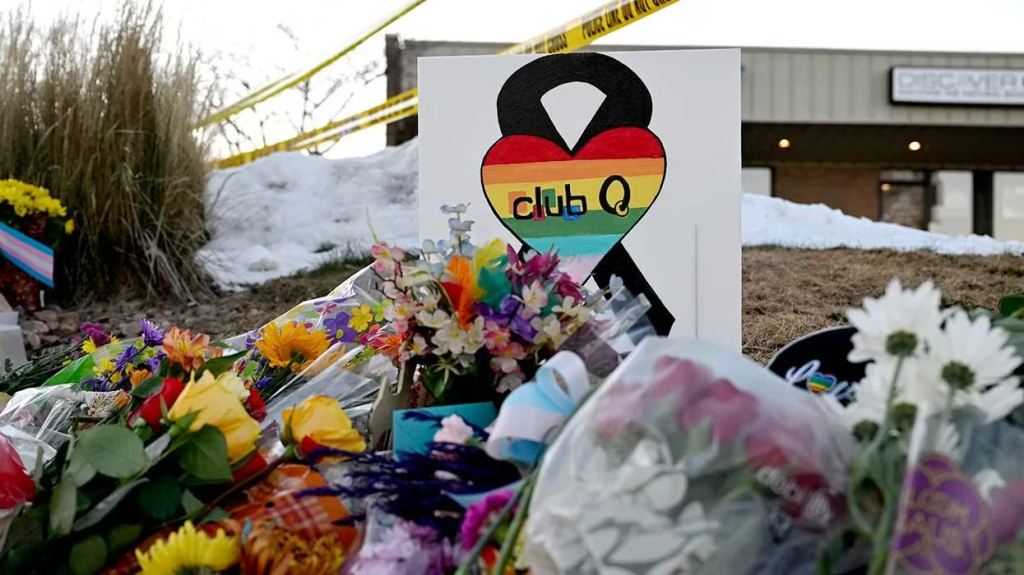
Some of the high profile incidents cited in the report include the mass shooting at the LGBTQ+ bar Club Q in Colorado that left five dead, the 2023 murder of a woman in California who was not LGBTQ+ because she flew a rainbow flag in her store, and the arrests of 20 members of the white supremacist group Patriot Front in 2023 who intended to riot at a Pride event in Idaho.
“These threats come from across the spectrum of ideological extremism, but frequently from groups that also pose a threat to the state and are openly opposed to democratic norms,” the report notes.
In the U.S., hate crimes against LGBTQ+ people remained high despite an overall decrease in violent crime. Out of 11,323 single-bias incidents the FBI reported in 2024, 2,278 (17.2 percent) were based on sexual orientation and 527 (4.1 percent) were based on gender identity. Hate crimes based on sexual orientation were the third-largest category, with crimes based on race, ethnicity, or ancestry being first and religiously motivated crimes second. Gender identity bias was the fourth-largest category.
Threats and harassment against school board officials in the U.S. also increased by 170 percent from the previous year in November, 2024 to April, 2025, the ISD report notes. Many of these threats were explicitly motivated by an anti-LGBTQ+ bias, with the perpetrators objecting to age appropriate queer books or content in public schools.
“LGBTQ+ individuals, who gained unprecedented civil rights in previous decades, are now increasingly targeted by online and offline hate, political rhetoric, censorship and legislation,” the report states. “A series of actions have sought to exclude LGBTQ+ people and culture from public life, ranging from book bans to a spread of legislation restricting trans people. In tandem, terror attacks (or the threat of terror attacks), violent extremist activity, and hate crimes targeting LGBTQ+ individuals have increased or remained consistently high since 2020.”
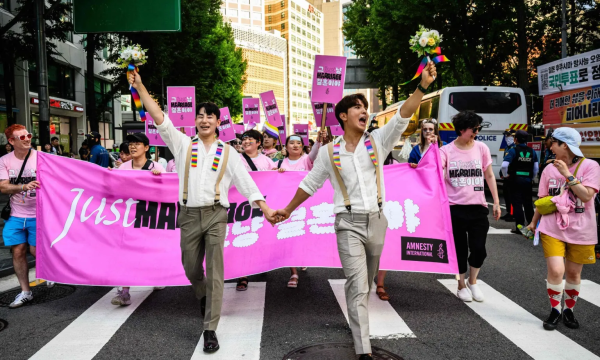
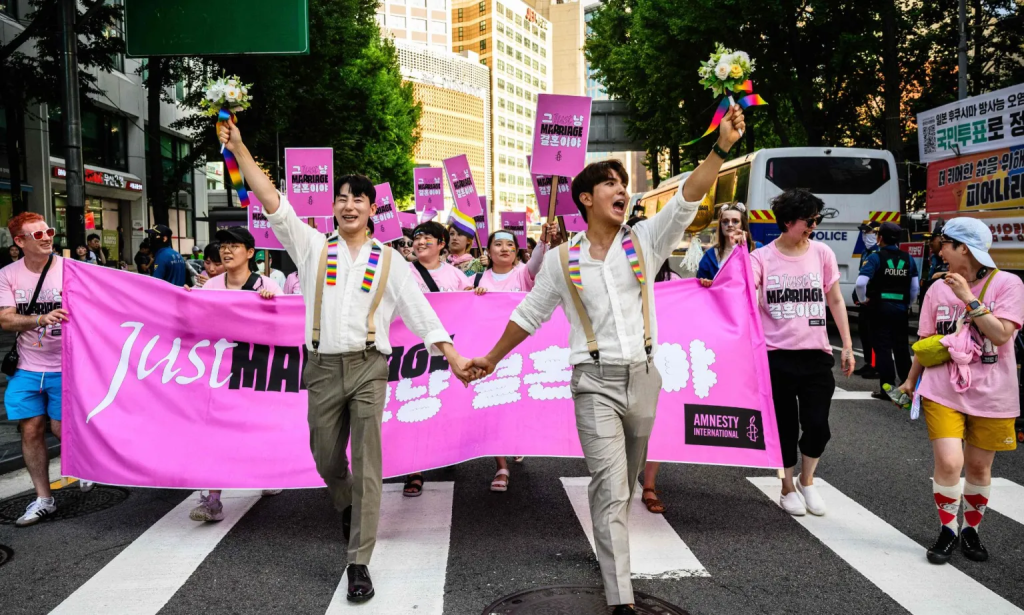
Under newly announced policy changes, the Ministry of Data and Statistics will recognise same-sex couples living in the same household in the Population and Housing Census.
The government confirmed on Tuesday (21 October) it would allow same-gender housholds to pick “spouse” and “cohabiting partner” options on the census, which circulates every five years.
Previous iterations flagged the options as errors and rejected, according to Rainbow Action Korea – a coalition of 49 LGBTQ+ organisations.
“In past surveys, couples of the same gender could not select ‘spouse’ even if they lived together as such. The system would return an error,” They said in a statement reported by Straits Times.
“This is the first step towards having LGBTQ+ citizens fully reflected in national data.”
Same-sex marriage is not currently legal in South Korea. As of 2023, cohabiting couples can receive spousal coverage under the National Health Insurance Service (NHIS).
A 2024 ruling upholding same-sex couple’s rights to access health insurance benefits was heralded as a “significant step” towards LGBTQ+ equality, with many arguing it paves the way towards legalising same-sex marriage.
The centre-left Justice Party similarly commended the government’s decision to update the census, arguing it could lead to “further change.”
“The day will come when even transgender citizens are visible in national statistics,” a spokesperson continued.
LGBTQ+ rights progress remains slow in the East Asian country. LGBTQ+ people are banned from adoption and military service, while hate crime protections are non-existent.
While legally changing gender has been permitted without sterilisation since 2020, gender-affirming care remains heavily restricted.
An Ipsos survery found that, as of May 2025, 31 per cent of South Koreans are anti-LGBTQ+, while 51 per cent oppose same-sex public displays of affection.
Despite this, nearly a quarter believe the country is a “good place” for LGBTQ+ people.
Rainbow Action argued that, while the move was a positive step, the government hadn’t done enough to inform the public about the change which could limit participation.
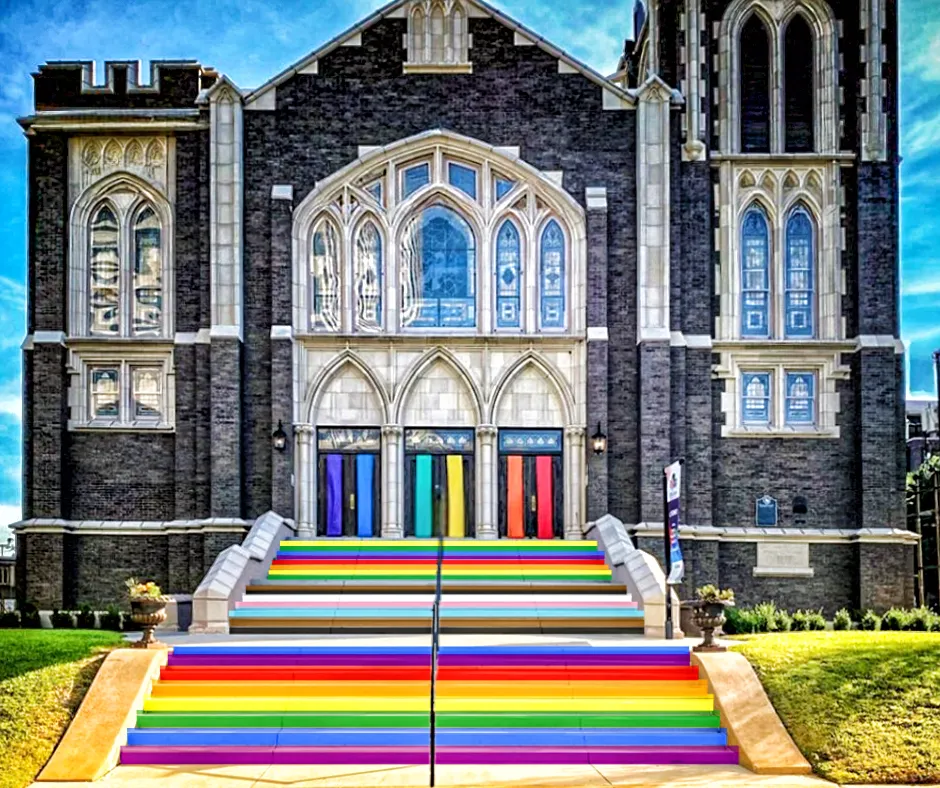
In response to Gov. Greg Abbott’s order that cities remove rainbow crosswalks, Oak Lawn United Methodist Church is painting its front steps in rainbow colors.
Oak Lawn United Methodist Church is a long-standing inclusive faith community in Dallas and a reconciling congregation.
The governor’s order claims that crosswalks are a distraction to drivers. However, studies have shown fewer accidents involving pedestrians happen in rainbow crosswalks.
For OLUMC, located at the corner of Oak Lawn Avenue and Cedar Springs Road which is the site of one of the crosswalks, church leaders say this act is not one of defiance, but of faith.
“It’s important because silence is not neutral — silence in the face of harm always sides with the oppressor,” said OLUMC Senior Pastor Rachel Griffin-Allison. “Painting our steps in the colors of the rainbow is a visible witness to the gospel we preach: that every person is created in the image of God and worthy of safety, dignity and belonging.”
In a written statement, the church’s leadership said it hopes the rainbow steps will serve as both a statement of solidarity and a sanctuary of hope for the LGBTQ+ community and allies across Dallas.
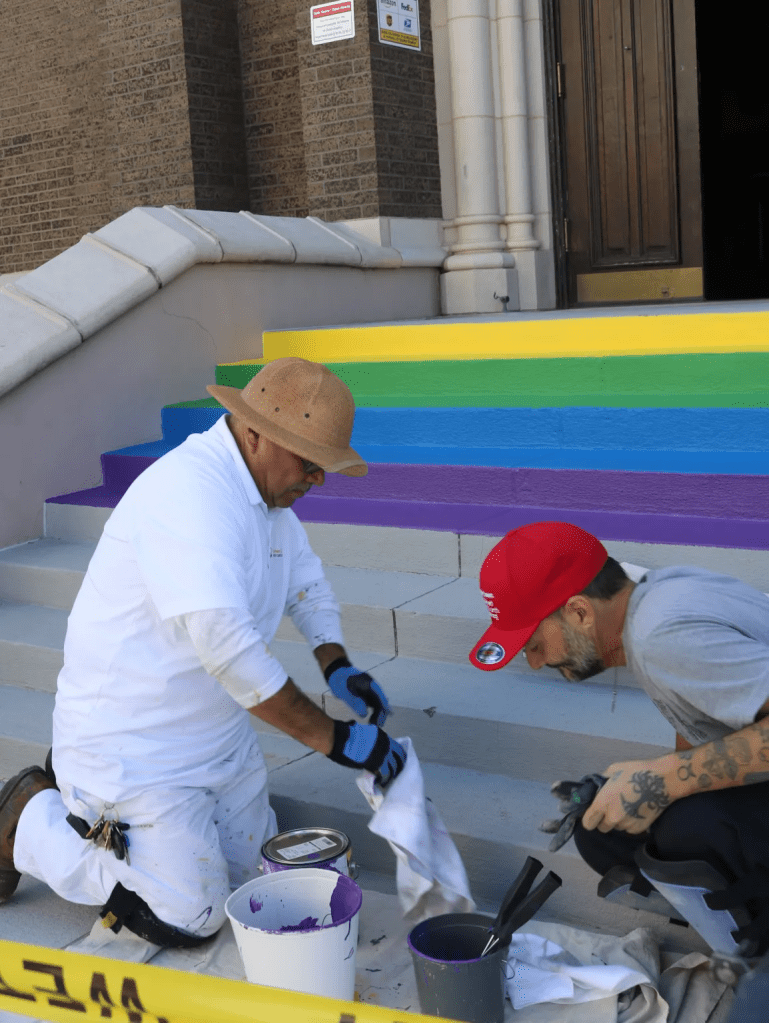
Members of the church, led by Robert Garcia Sr., began painting the steps on Tuesday morning, Oct. 21. Garcia said it would take four or five coats of paint before a non-slip sealer is added to preserve the rainbow.
Garcia said work on the steps should take about two weeks.
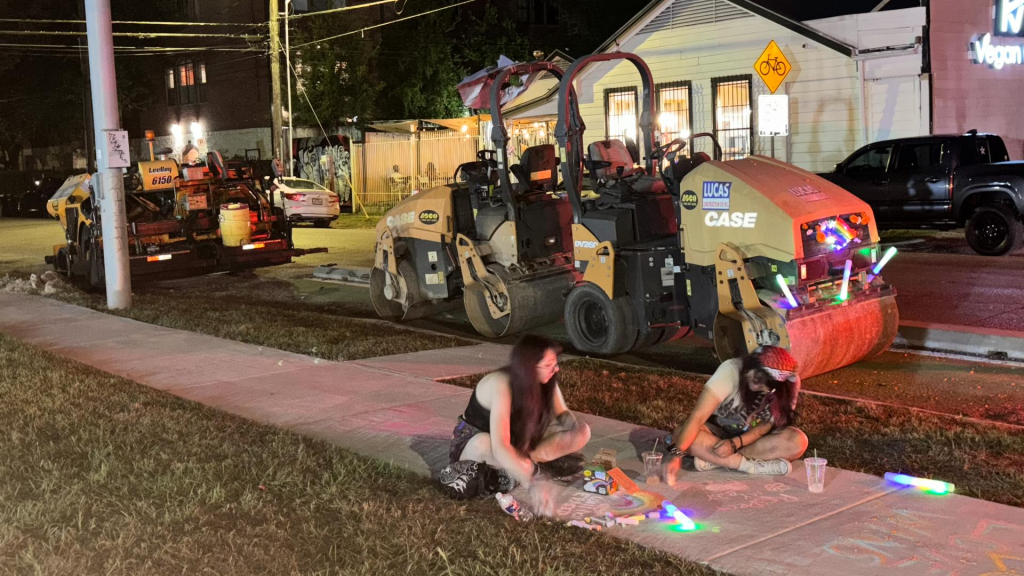
Major changes are underway in Houston’s Montrose neighborhood, where crews have removed the city’s rainbow crosswalks — long considered a symbol of Pride, remembrance, and unity.
By sunrise Monday, the bright colors at Westheimer and Taft were gone, replaced with fresh asphalt. Crews began work around 2:30 a.m., and by late morning, the intersection had reopened.
The removal follows a directive from Governor Greg Abbott calling on transportation departments statewide to eliminate what he described as “political ideologies” from roadways. That guidance traces back to a federal directive from the Trump administration earlier this year.
Tense overnight protests
As work began, dozens of protesters gathered near the intersection. Several were arrested just after 4 a.m. after standing in the street to block crews from starting the removal process.
“This is a memorial for someone who was killed in a hit-and-run,” said protester Ethan Hale. “This is more than just the LGBT community.”
Community members have long said the rainbow crosswalks were originally painted in honor of a person killed in that intersection years ago, giving them special meaning beyond Pride symbolism.
Another protester, Andy Escobar, said the directive was a distraction from real issues.
“We know we have some of the worst air quality, we have people disappearing in the bayous, we have urgent matters that need to be attended to, and we are wasting time on a distraction and a vilification of lesbian, gay, bisexual, trans people,” Escobar said.
Brenda Franco, another community advocate, echoed that frustration.
“This is just a distraction. We are wasting time and money,” Franco said. “We should be elevating our communities and amplifying the work that we’re doing here.”
City, METRO, and state responses
City officials confirmed the equipment used in the removal was provided by METRO, but as of Monday, the transit agency had not yet responded to KHOU 11’s request for comment.
Houston Mayor John Whitmire said the city was informed that the Texas Department of Transportation threatened to withhold federal funding if the crosswalks weren’t removed — a factor that likely accelerated the timeline.
The city councilmember representing the district, Abbie Kamin, said she was supposed to be notified before the work began but instead learned about it from residents who spotted the heavy equipment Sunday night.
Community reaction and history
This marks the second time in less than two months that the Montrose crosswalks have been removed. METRO previously stripped the paint for road repairs before it was repainted weeks later.
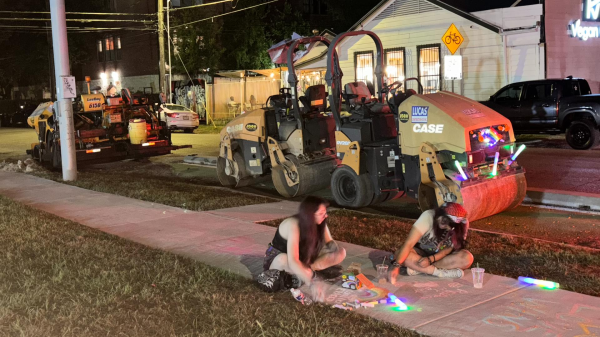
Many residents spent the night leaving Pride flags, flowers, and chalk art along the sidewalks — acts of defiance and remembrance for what they describe as a safe-space symbol that connected the Montrose community.
“Even losing the crosswalk doesn’t mean that the work we do ends,” said Kevin Strickland with Walk and Roll Houston. “It’s a beginning for us, not an end.”
What’s next
As of Monday afternoon, no official timeline has been shared for whether the intersection will remain asphalt or be repainted with a different design.
KHOU 11 has reached out to METRO and the Texas Department of Transportation for further comment.
U.S. Virgin Islands (USVI) Gov. Albert Bryan Jr. (D) submitted a bill to the legislature last year that would have allowed trans and intersex people in the territory to change the gender marker on their official documents. The measure didn’t advance past a committee hearing.
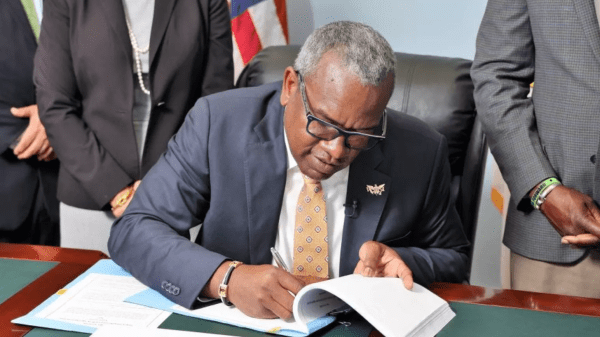
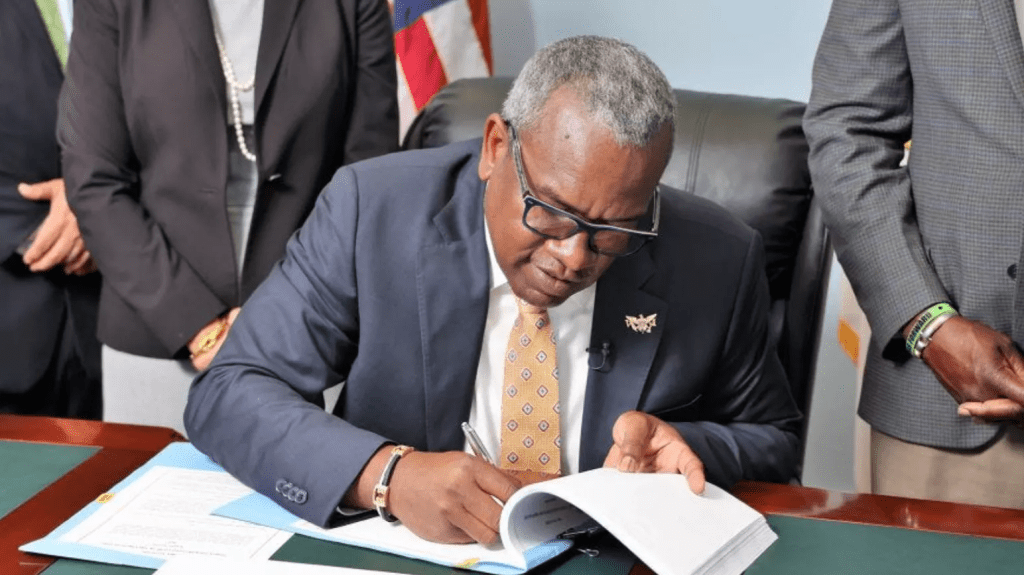
So, last Wednesday, the governor enacted the policy anyway by signing an executive order, making the change to USVI policy. His order marked the first instance ever of official recognition of trans people in the territory, according to Transitics.
“Virgin Islanders have reached out to our administration seeking a way to have their documents reflect who they truly are,” Gov. Bryan said in a statement following the signing ceremony. “This Executive Order provides a fair and compassionate process where none existed before. It ensures that our government recognizes and respects the lived realities of all our residents.”
Intersex Virgin Islanders and trans individuals with a court order stating they’ve had “surgical, hormonal, or other treatment for the purpose of gender transition,” can now easily revise the gender markers on both their birth certificates and government-issued ID cards.
The Virgin Islands counts itself as one of the friendlier territories for the trans community. It’s the only U.S. territory that prohibits discrimination based on sexual orientation and gender identity, and there have been no known attempts to restrict gender-affirming care in the USVI. There are no restrictions on trans student-athletes in girls’ sports in the territory’s schools, and no bathroom bans relating to gender identity.
Six states and no U.S. territories deny citizens the ability to change a gender marker on birth certificates, including Texas, Florida, Tennessee, Iowa, Kansas, and Oklahoma. That number drops to four for state IDs.
Revised documents on island will now use the term “gender” rather than “sex” for the new designations.
Under the new process, an individual aged 18 or older, or a parent or guardian on behalf of a minor, may request a gender marker change from the issuing agency in writing.
One of two alternative documents must accompany the request: a statement, “signed under penalty of perjury,” from a licensed healthcare provider who has treated or evaluated the individual, confirming they have an “intersex condition” and that a gender designation change is appropriate; or, a judicial order from the Virgin Islands or another jurisdiction granting a gender change designation may be submitted in lieu of a healthcare provider’s statement.
A requirement for a healthcare provider’s attestation that an applicant has had surgery or gender-affirming care was deemed unfair by critics of Bryan’s 2024 legislative proposal, who called it a burden on individuals lacking health insurance.
The governor noted his action aligns the Virgin Islands with at least 25 states, Puerto Rico, and the District of Columbia, which have adopted administrative procedures for amending gender designations on birth certificates, and more than 30 states, Puerto Rico, and D.C., which have similar processes for driver’s licenses.
“Our administration remains committed to fairness, dignity, and respect for every Virgin Islander,” Gov. Bryan added. “This Executive Order brings the Virgin Islands in line with modern standards of inclusion and ensures that all residents have access to accurate and affirming government identification.”
The Church of Norway apologized on Thursday to the country’s LGBTQ+ community for decades of discrimination, Reuters reports.
Presiding Bishop Olav Fykse Tveit acknowledged the church’s regret at the London Pub in Oslo, site of a shooting during Pride celebrations in June 2022. Two people died in the homophobic attack.
Tveit said the Evangelical Lutheran church, the largest denomination in Norway, had caused harm to gay people and thanked those who campaigned for change.
“The church in Norway has imposed shame, great harm, and pain,” the bishop said. “This should not have happened, and that is why I apologize today.”
A similar acknowledgment by the church’s bishops in 2022 addressed past discrimination, including a description of gay people by the Norwegian Bishops’ Conference in the 1950s as a “social danger of global dimensions.”
Seventy years later, same-sex couples can marry in the Church of Norway.
A service was scheduled to follow the bishop’s remarks at the Oslo Cathedral on Thursday evening.
The church’s acknowledgement of institutional discrimination follows several over recent years by other Christian denominations.
In 2023, the Church of England apologized for “shameful” treatment of the LGBTQ+ community. The Protestant church represents 85 million Anglicans worldwide.
“We want to apologize for the ways in which the Church of England has treated LGBTQI+ people — both those who worship in our churches and those who do not,” the bishops said in a statement.
“For the times we have rejected or excluded you, and those you love, we are deeply sorry. The occasions on which you have received a hostile and homophobic response in our churches are shameful, and for this we repent.”
At the same time, bishops have refused to allow same-sex marriages in Anglican churches. Just this week, bishops turned back plans to officiate discrete blessings for same-sex couples, although these can take place within routine church services.
In August, the United Church of Canada, the largest Protestant denomination in the country, acknowledged harms to the two spirit and LGBTQ+ communities in Canada.
“We have failed to celebrate and delight in all of your beautiful Creation. We have wounded people instead of seeking wholeness. We are sorry,” said the Rev. Michael Blair, the church’s General Secretary, in a message accompanying the official apology.
“We, The United Church of Canada, express our deepest apologies to all those who have experienced homophobia, transphobia, and biphobia within The United Church of Canada,” it read in part.
Those institutional expressions of regret have been accompanied by recent individual apologies by church leaders, many in the Catholic Church.
In January, Catholic Cardinal Wilton Gregory of Washington, D.C., issued a personal apology from the pulpit.
“I apologize for my own failure to emulate Christ’s compassion,” he said. “The way that we have treated our LGBTQ brothers and sisters has brought them tears, and to many of us, disgrace.”
“I apologize from the heart for the hurt that has resulted in the loss of so many of our family members who belong to God no less than I do,” he said.
Last year, a Catholic bishop in Germany apologized for the church’s mistreatment of LGBTQ+ people, encouraging congregants to be more supportive of equality and inclusion.
“We want to be a diocese that values diversity,” Bishop Stephan Ackermann said during what he called a “public confession.” The next month, Archbishop Heiner Koch of Berlin also apologized, labelling homophobia an “unholy line of tradition.”
In 2016, Pope Francis said in a gaggle with reporters aboard the papal plane that Christians owe apologies to gay people and others who have been offended or exploited by the church.
“I repeat what the Catechism of the Catholic Church says: that they must not be discriminated against, that they must be respected and accompanied pastorally,” Francis said.
“The Church must ask forgiveness for not behaving many times – when I say the Church, I mean Christians! The Church is holy, we are sinners!”
A formal apology from the Catholic Church has not been forthcoming.
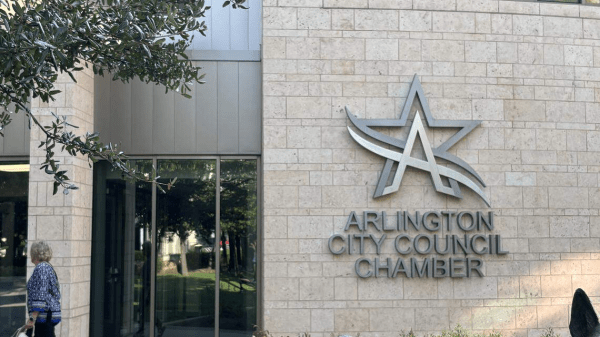
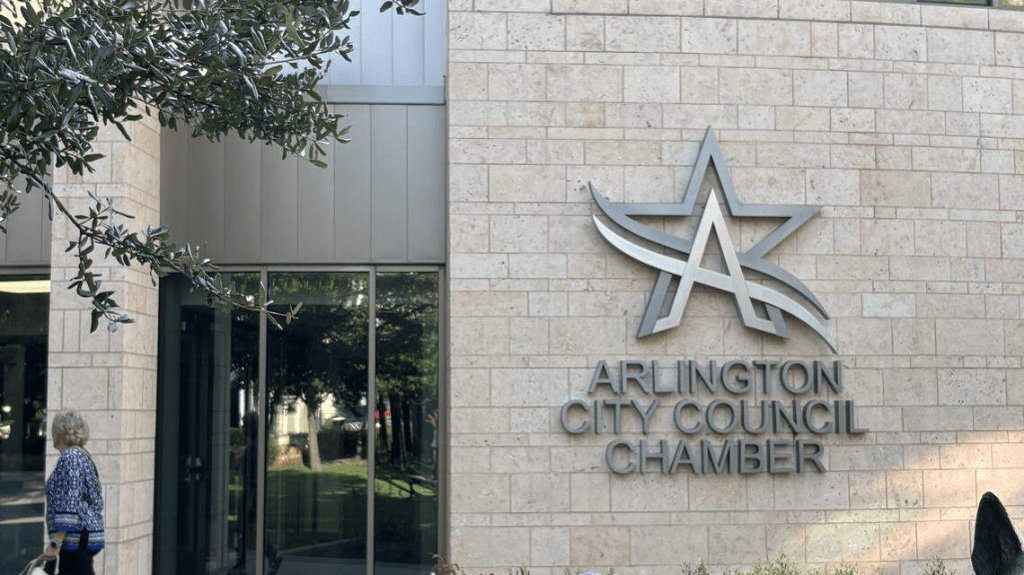
The Arlington City Council will consider removing protections for LGBTQ+ residents Tuesday as part of the changes to its anti-discrimination ordinance. In early September, the City Council voted to temporarily suspend the anti-discrimination ordinance until city staff could propose amendments to it removing specific diversity, equity and inclusion language. Had this not taken place, the city would be at risk of losing $65 million in federal grant money.
Tuesday night, the council will be presented with an edited anti-discrimination clause. The changes include deleting “Gender Identity and Expression” and “Sexual Orientation” from the definition of discrimination. But a leader in the LGBTQ+ community said the proposed change leaves a class of residents without local protections. Previously, the ordinance said discrimination is “any direct or indirect exclusion, distinction, segregation, limitation, refusal, denial, or other differentiation in the treatment of a person or persons because of a race, color, national origin, age, religion, sex, disability, sexual orientation or gender identity.”
If the council approves the amendments Tuesday, anyone experiencing discrimination due to their sexual orientation or gender identity will not be able to look to the city for help. DeeJay Johannessen, CEO of the HELP Center for LGBT Health and Wellness, said this is not necessary to keep grant funding. “Out of the 395 cities with sexual orientation, gender identity in their list of protected classes, not one other city is doing it,” Johannessen said. “In fact, historically, no city has ever removed sexual orientation from their list of protected classes. So Arlington would be the first.” When a municipality receives grants from the U.S. government, it enters into a contract with various stipulations on the allocation of those funds. Those contracts have been updated since President Donald Trump took office to prohibit “advancing or promoting DEI” in decision-making, City Manager Trey Yelverton said at the Sept. 2 meeting. In Fort Worth, the City Council voted to end diversity, equity and inclusion programs to protect federal funding in August. The city code still includes sexual orientation, transgender, gender identity or gender expression as protected classes from discrimination. Sana Syed, a spokesperson for the city of Fort Worth, said due to how the ordinance was written, “no changes were needed to adhere to new federal requirements and none are planned at this time.”
An attorney who Johannessen consulted with regarding Arlington’s proposed anti-discrimination code changes said removing sexual orientation, gender identity and gender expression as protected characteristics from the current ordinance “reflects a fundamental and profound misunderstanding of the law. “The inclusion of ‘gender expression’ in this list is somewhat telling, since the term does not appear in the Current Ordinance,” Daniel Barrett, the Fort Worth lawyer Johannessen consulted, wrote in a statement. “Its inclusion exposes the staff’s analysis of the situation as sloppy or, perhaps, based upon something other than legal considerations.” Under the original ordinance, if someone is made to leave an establishment because of their gender identity or sexual orientation, they could go to the city and file a complaint. With the exclusion of those kinds of discrimination in the amended ordinance, the only way to rectify the issue would be through the federal government, Johannessen said. Johannessen was part of the focus group who helped make gender identity and sexual orientation protected classes in Arlington’s anti-discrimination chapter in 2021. “It passed unanimously, and there was not even any public comment voting against it,” Johannessen said. “It sailed through. So that’s why it’s so surprising now that there’s so little push back about having to make this change, even if it was required for them to make this change, there’s no angst about it.”
The City Council will vote on the amendments at the 6:30 p.m. meeting on Tuesday.





 fleeredstates.blog
You must be logged in to post a comment.