House passes bill criminalizing gender-affirming care for minors

Read more at CNN.

The House on Wednesday voted to pass a bill that could imprison health care providers for providing gender-affirming care for minors.

The bill — titled the “Protect Children’s Innocence Act” and sponsored by Rep. Marjorie Taylor Greene of Georgia — would make it a class C felony to treat minors with gender-affirming care like surgeries and puberty blockers. If enacted, the bill could imprison doctors who provide such care for up to ten years.

It’s unclear whether the GOP-led Senate will take up the measure, though it is unlikely it would get enough Democratic support to pass out of that chamber.

The House vote was 216-211. Three Democrats supported the measure, while four Republicans were opposed.

Greene said last week she secured floor consideration of her bill as part of a deal with leaders who wanted her to drop her opposition to advancing a critical defense policy bill.

Civil rights groups including the American Civil Liberties Union described Greene’s bill as “the most extreme anti-trans legislation ever considered by Congress.”

Ahead of the vote, Democratic Rep. Sarah McBride criticized congressional Republicans as being “obsessed with trans people.”

“I actually think they think more about trans people than trans people think about trans people,” said McBride, who is the first out transgender member of Congress.

“They are consumed with this, and they are extreme on it,” the Delaware Democrat added.

A second bill, sponsored by GOP Rep. Dan Crenshaw of Texas, prohibits federal Medicaid funding for “gender transition procedures for minors.” The House is expected to vote on that bill on Thursday.

McBride said Wednesday that Republicans were “trying to politicize a misunderstood community and misunderstood care.”

“No one’s healthcare should be politicized,” she said.

Pam Bondi Directs FBI to Offer Cash Bounty for Promoters of “Radical Gender Ideology”

Read more at Them.

The Justice Department has instructed the Federal Bureau of Investigation to crack down on supposed “domestic terrorist” organizations, the definition of which includes those who promote “radical gender ideology.” Part of that crackdown involves the establishment of a cash reward system for providing information on leaders of so-called “domestic terrorist organizations.”

U.S. Attorney General Pam Bondi issued a memorandum to federal prosecutors and law enforcement agencies on December 4, in accordance with NSPM-7, President Donald Trump’s September directive ordering the investigation of “domestic terrorist” organizations. At the time, NSPM-7 did not come with any enforcement mechanisms; Bondi’s memo provides specific instructions to prosecutors and law enforcement agencies.

The Bondi memo was leaked on December 8, and on Tuesday, LGBTQ Nation first reported on the fact that the memo includes “radical gender ideology” as part of its definition of “domestic terrorism.” In additional to “radical gender ideology,” the memo also defines potential domestic terrorist ideologies as “extreme views in favor of mass migration and open borders… anti-Americanism, anti-capitalism, or anti-Christianity… hostility towards traditional views on family, religion, and morality,” and more. Under the Trump administration, “radical gender ideology” has been used as a catchall phrase to encompass issues related to trans and nonbinary communities.

The memo encourages prosecutors to “be particularly mindful of the potential applicability” of charges such as “picketing or parading with intent to obstruct the administration of justice,” “obstruction during civil disorders,” and “providing material support for terrorist activity.” In other words, the memo encourages prosecutors to press charges against certain forms of protest, or for providing supposed aid to organizations that promote what the government is now defining as “terrorist activity.”

The material support statute, in particular, has been used to significantly hinder the work of humanitarian groups, and has been widely criticized for prohibiting free speech. According to the ACLU, material support is defined as any “service,” “training,” “expert advice or assistance,” or “personnel” — an incredibly vague definition that has been used to surveil people and groups without basis since the implementation of the Patriot Act in 2001. Contemporarily, Hina Shamsi, the director of the ACLU’s national security project, wrote about the worrying implications of NSPM-7 on the ACLU’s website in October, stating, “If anyone needed proof that ‘terrorism’ and ‘political violence’ are slippery and fraught categories subject to political, ideological, and racial manipulation and bias — well, this is it.”

The Bondi memo also specifically instructs federal law enforcement agencies to “review their files and holdings for Antifa and Antifa-related intelligence,” and deliver those materials to the FBI within 14 days of its issuance. The FBI is also set to “compile a list of groups of entities engaged in acts that may constitute domestic terrorism” within 30 days of issuance. The FBI will also “disseminate an intelligence bulletin on Antifa and Antifa-aligned anarchist violent extremist groups,” including information on “structures, funding sources, and tactics.” Lastly, the memo directs the FBI to better publicize its domestic terrorism tip line, and will “establish a cash reward system for information that leads to the successful identification and arrest of individuals in the leadership of domestic terrorist organizations.”

The language contained in the Bondi memo is reminiscent of that found in a September report from independent journalist Ken Klippenstein. In the report, two anonymous national security experts claimed that the FBI intended to categorize trans people as “Nihilistic Violent Extremists,” a threat category that was created earlier this year. The FBI defines “Nihilistic Violent Extremism” as “criminal conduct… in furtherance of political, social, or religious goals that derive primarily from a hatred of society at large and a desire to bring about its collapse by sowing indiscriminate chaos.” This also ties neatly into the ongoing right-wing attempts to scapegoat trans people for mass shootings and other forms of gun violence, including the assassination of Charlie Kirk.

Notably, all of the federal government’s messaging about “domestic terrorism” ignores the fact that the vast majority of research points to the fact that the bulk of domestic terrorists in the U.S. are aligned with the right-wing.

Trump administration attacks LGBTQ asylum seekers

Read more at Out in New Jersey.

The Trump administration has set a cap of just 7,500 refugee admissions for 2026, a 94% reduction from the Biden administration’s 125,000-person target, according to a Presidential Determination published Oct. 31 in the Federal Register. A new report from UCLA’s Williams Institute warns the cuts will disproportionately harm LGBTQ refugees worldwide.

At least 62 countries currently maintain laws criminalizing consensual same-sex activity. Thousands of vulnerable individuals face extended waits in dangerous transit countries, according to the report.

LGBTQ refugees encounter unique obstacles under the reduced cap. Many are single adults who fled family persecution and lack reunification pathways that prioritize other refugees. Officials sometimes fail to recognize persecution based on sexual orientation or gender identity, while refugees may fear disclosing their status. Extended waits create economic vulnerability, forcing many into exploitative work situations.

“The lack of reliable data on LGBTQI+ refugees makes the impact of this new cap even harder to measure,” Ari Shaw, director of international programs at the Williams Institute, said in a news release. “Without accurate data, policymakers and service providers cannot fully assess or respond to the needs of LGBTQI+ refugees.”

The Trump administration has not yet appointed a special envoy for LGBTQ rights, eliminating a key referral pathway established under Biden for at-risk individuals, according to the report.

LGBTQ immigrants face more asylum rejections, though some still win cases

Read more at Gay City News.

In the midst of the Trump administration’s attacks on both the LGBTQ community and immigrants, the non-profit organization Immigration Equality is working to ensure that queer asylum seekers and refugees have access to legal services.

Immigration Equality, which has represented LGBTQ immigrants since it was founded in 1994, has been a haven for individuals who come from countries where they are persecuted for their identity. They offer both direct representation and a program where asylum seekers’ cases are vetted and matched with pro-bono lawyers. 

But since the Trump administration’s recent attacks on immigrants, the process of filing these individuals’ cases and fighting for their safety has become significantly more difficult. Immigration Equality’s director of law and policy, Bridget Crawford, noted in an interview with Gay City News that Trump has been attacking all cases, not just a certain few. 

“A lot of what the Trump administration seems to be focused on is not efficient, fair adjudication of claims,” she said. “It seems to be focused on eliminating the claims altogether and preventing people from making them, or quickly dispensing with them without due process.”

Alongside blocking initial claims from being made and removing more than one-third of immigration judges, the appellate courts are also shifting their decisions to move less favorably toward immigrants, despite many of these cases having overwhelming evidence that they meet the requirements for refugee status and protection. 

All of these obstacles have resulted in an uptick in Immigration Equality’s cases being denied, and these issues are being further inflamed after Trump recently announced the pause of many immigrant cases, following the shooting of two West Virginia National Guard members. 

But Crawford made sure to note that despite these hardships, Immigration Equality is still winning cases.

“We still have many people, both trans and LGB, who are successful in their claims,” she said. “The reality is that under the law, as it is written, and the precedent as it’s been established for decades, these are very strong claims — people continue to win because they meet the definition of asylum under our law.”

These policies have invoked fear in immigrants pursuing a case, as they are scared of not having their case heard and fear showing up for their case and being put into detention centers, despite following all the correct procedures. Being LGBTQ amplifies this fear.

“As an LGBTQ+ advocacy organization, we have long witnessed mistreatment of our population in the immigration detention system,” Crawford said. A 2024 report published by Immigration Equality revealed that under both Democratic and Republican administrations, there were consistent reports of “sexual harassment, verbal and sexual abuse, physical abuse, prolonged solitary confinement, and inadequate medical care.”

The few protections that were in place to prevent this abuse have gradually been gutted, according to Crawford. These included internal watchdog agencies like the Civil Rights Civil Liberties (CRCL). In the past, if someone filed a complaint of mistreatment, it would be investigated by these internal agencies. Recently, though, these complaints have not been looked into. 

Against the backdrop of the Trump administration’s restrictive immigration policies, the work of Immigration Equality is  their clients find hope in them, Immigration Equality finds hope in its clients.

“They are the reason we all went into this work in the first place,” said Crawford. “We have these incredible stories of bravery and perseverance that serve as a source of inspiration for all of us. So many of our clients have survived so much worse, and we look to them for a sense of perspective.”

Texas is making a list of transgender Texans. It’s using driver’s licenses to help

Read more at Houston Public Media.

The state of Texas has continued collecting information on transgender drivers seeking to change the sex listed on their licenses, creating a list of more than 100 people in one year.

According to internal documents The Texas Newsroom obtained through records requests, the Texas Department of Public Safety has amassed a list of 110 people who tried to update their gender between August 2024 and August 2025. Employees with driver’s license offices across the state, from El Paso to Paris to Plano, reported the names and license numbers of these people to a special agency email account. Identifying information was redacted from the records released to The Texas Newsroom.

The data was collected after Texas stopped allowing drivers to update the gender on their licenses unless it was to fix a clerical error. It is unclear what the state is doing with this information.

An agency spokesperson did not respond to questions about why the list was created and whether it was shared with any other agencies or state officials. The Texas Newsroom filed records requests in an attempt to find the answers but did not receive any additional information that sheds light on what the state may be doing with these names.

In recent years, GOP lawmakers have passed multiple laws restricting the rights of transgender Texans, including two new measures that went into effect this year.

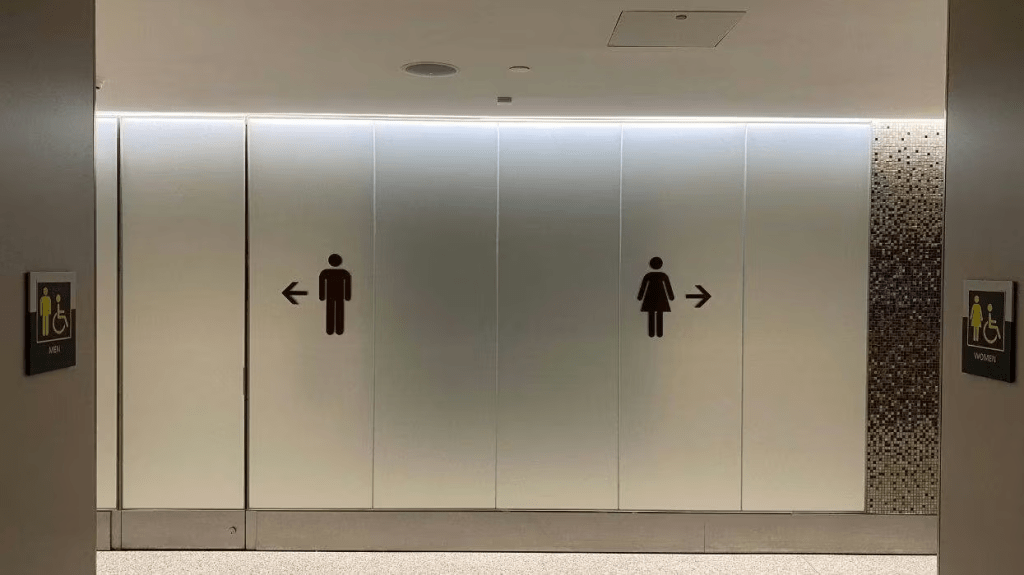
One defines “male” and “female” on state documents as being based on a person’s reproductive system. The other, known as the “bathroom bill,” bars governments from allowing people to use a restroom at public buildings, parks or libraries that do not match their sex at birth.

While it’s unclear how the state plans to enforce the bathroom bill, transgender activist Ry Vazquez told KUT News she was asked to show her ID before using a restroom in the state Capitol earlier this month. Vazquez said she and three other people were then cited with criminal trespassing and banned from the building for a year.

Landon Richie, the policy coordinator with the Transgender Education Network of Texas, is concerned that the list the state is keeping will be used to pass more state laws targeting the rights of transgender Texans.

“The state collecting this information raises a lot of red flags, not just in terms of people’s privacy and ability to exist not under a magnifying glass,” he said. He added that he wonders “how this information will be leveraged in terms of drafting and crafting additional legislation” to chip away at the civil rights and freedoms of transgender Texans.

There are roughly 161,000 transgender adults living in Texas, or less than 1% of the population, according to the Williams Institute at the UCLA School of Law.

For years, transgender people in Texas could update their state IDs to match their gender identity by obtaining a court order and then submitting this document to the state agencies that issue driver’s licenses and birth certificates. After the state restricted updates to driver’s licenses last fall, the state’s health agency followed suit, blocking changes to birth certificates other than to correct hospital errors or omissions.

In March, The Texas Newsroom reported that the state was collecting information on people who continued to ask for these changes despite the policy shift.

The attorney general, whose office determines what records are public, allowed the agency to keep other documents about the policy shift secret. But it did release a list of the four employees with access to the special email account.

The Texas Newsroom also obtained records that show the agency investigated threats against the driver’s license division chief after news of the policy change was made public. But no case was referred to the Travis County Attorney’s Office for prosecution.

The Texas Newsroom has requested an updated version of the list.

Ron DeSantis forced this city to remove Pride crosswalks. So it put up Pride bike racks instead.

Read more at LGBTQ Nation.

The City of St. Petersburg, Florida, has unveiled 11 Pride-themed bike racks to replace the rainbow crosswalks Gov. Ron DeSantis (R) forced officials to remove.

“Pride on the streets!” declared a social media post from the city and its mayor, Ken Welch (D), who called the bike racks “a vibrant way to honor the Pride street murals that were removed earlier this year due to state requirements.” 

The post includes a video of construction workers installing the colorful racks, some of which are rainbow for the Pride flag and others that are the colors of the Trans Pride flag.

Folks celebrated the move in the comments, calling the new displays “amazing,” “clever,” “awesome,” “beautiful,” and “a smarter path forward.”

“Love our little inclusive, Sunshine City,” one person wrote.

“Now that’s what I’m talking about!” said another.

The state of Florida has become the epicenter of Republicans’ rainbow crosswalk crackdown. The DeSantis administration has heeded warnings from federal Transportation Secretary Sean Duffy, who has falsely claimed Pride art is distracting to drivers.

Duffy wrote in a July 1 letter to the nation’s governors that all non-freeway intersections and crosswalks must be kept “free from distractions.” In a subsequent X post, he said, “Taxpayers expect their dollars to fund safe streets, not rainbow crosswalks.”

In response, DeSantis signed a law directing the Florida Department of Transportation (FDOT) “to ensure compliance with FDOT’s uniform system for traffic control devices,” according to a July statement from a department spokesperson. The law effectively bans all pavement art and murals like rainbow crosswalks, regardless of their political message.

The DeSantis administration has been aggressive about ensuring the crosswalks are erased, despite protests and resistance from local leaders.

St. Petersburg officials ultimately complied with the order to remove its crosswalks upon the threat of losing state funding, but Mayor Welch made it clear in August that he would not stand down from defending progressive values.

In a press conference, Welch called the order to remove the crosswalks an attempt by the state “to usurp local values and priorities and instead mandate what our values should be.”

“We’ve seen the attempts to stifle our ability to express and celebrate our community values,” he added. “Yet time and time again, our community has risen to the occasion. And this latest challenge will be no exception.”

A post from the city’s official social media account said the murals that had to be removed – which included one declaring, Black History Matters – “reflect the soul of our community.”

“That message can’t be erased. This is our city, our voice, and our story… Together, we’ll continue building a community that is resilient, inclusive, and united.”

While state and federal officials have said that street art distracts drivers, data from the Bloomberg Philanthropies 2022 Asphalt Art Safety Study contradicts that claim.

The study found that crashes involving pedestrians or cyclists drop 50% at painted intersections. It also reported a 25% decrease in conflicts between drivers and pedestrians, a 27% increase in drivers immediately yielding to pedestrians, and a 38% decrease in pedestrians crossing when the walk signal was not lit at intersections involving public art. The data also revealed that injuries resulting from crashes drop 37% in painted intersections.

North Carolina county dissolves library board for refusing to toss book about a trans kid

Read more at The Advocate.

A county government in central North Carolina has dissolved its entire public library board after trustees voted to keep a children’s picture book about a transgender character on library shelves, turning a local book challenge into one of the most severe reprisals yet in the national campaign against LGBTQ-inclusive materials.

The Randolph County Board of Commissioners voted 3–2 last week to dismiss all members of the county library board, weeks after trustees declined to move or remove Call Me Max, a picture book about a transgender boy who asks his teacher to use his chosen name. The decision followed a public hearing that drew nearly 200 residents and revealed a community split almost evenly between those calling for the board’s removal and those urging commissioners to respect the library’s review process.

Library staff and trustees had reviewed the complaint earlier this fall and, in October, voted to keep the book in the children’s section, concluding it complied with the county’s collection policies, local CBS affiliate WFMY reported. Commissioners nonetheless moved to dissolve the nine-member board outright — a step allowed under North Carolina law but rarely taken.

Free-expression advocates said the action represents a dramatic escalation in the political response to book challenges. Kasey Meehan, director of the Freedom to Read program at PEN America, told The Washington Post that Randolph County’s decision is among the harshest penalties she has seen imposed over a single title.

“It’s a pretty dramatic response to wanting to have diverse and inclusive books on shelves,” Meehan said.

Opponents of the book claimed the dispute was a matter of child protection. Tami Fitzgerald, executive director of the conservative North Carolina Values Coalition, which urged supporters to attend the commission meeting, argued that Call Me Max teaches children that their parents may be “wrong” about their gender.

The book has been banned by several school districts and was prominently invoked by Republican Florida Gov. Ron DeSantis in 2022 while promoting his so-called “don’t say gay” legislation restricting classroom discussions of gender identity, a law later challenged in court.

To critics, the Randolph County episode demonstrates how procedural safeguards are increasingly overridden when LGBTQ+ inclusion is at stake. Kyle Lukoff, the book’s author, who is a trans man, said the case is especially troubling because the library followed its own policies and was still punished.

“Policies can be helpful, but this is ultimately a question of power,” Lukoff told The Post. “If there are people in power who believe trans people don’t belong in their communities or the world at large, they will twist those policies to make it a reality.”

Randolph County, home to about 150,000 people, voted nearly four to one for President Donald Trump. Commissioners have not announced when or how they plan to reconstitute the library board.

Arlington TX Pride 2026 Canceled Following City Council Vote To Scrap LGBTQ Protections

Read more at the Dallas Morning News.

Organizers of Arlington Pride announced Friday they will cancel next year’s event after the City Council rejected a plan to ban discrimination against gay and transgender residents.

The head of the HELP Center for LGBT Health and Wellness said in a statement the organization would not invite visitors to a city that does not offer “the most basic protections.”

“Pride is about safety, celebration, and community,” said DeeJay Johannessen, CEO of the HELP Center, which has offices in Arlington and Fort Worth. “Without local anti-discrimination safeguards, we cannot guarantee those values for our attendees, performers, or partners.”

Arlington Pride began in 2021 and quickly grew to one of the largest celebrations of its kind in North Texas, drawing more than 15,000 people to downtown in June this year. The all-day festival featured performances by RuPaul’s Drag Race queens, live music, an art show and local food vendors.The decision to suspend the event comes only three days after City Council members scrapped a plan to enshrine protections for LGBTQ residents into a city ordinance. The 5-4 vote followed months of debate, delayed votes and impassioned pleas from the LGBTQ community and allies to restore protections.

Initially passed unanimously in 2021, the ordinance prohibited discrimination based on sexual orientation and gender identity for housing, employment and public services. Discrimination against race, religion, national origin, sex and disability was also banned.

In September, the City Council temporarily suspended the ordinance over fears that Arlington risked losing more than $60 million in federal funding after President Donald Trump pledged to withhold money from cities with diversity, equity and inclusion, or DEI, programs. The president’s order has sown widespread confusion among cities that are unsure what qualifies as DEI.

For now, this means Arlington is no longer investigating complaints from people who say they faced discrimination by a landlord, business owner or employer. The vote makes Arlington one of the first cities in the country, if not the first, to repeal a nondiscrimination ordinance over fears of clashing with the Trump administration.

Some Arlington council members said they did not think the city could enforce its anti-discrimination ordinance. Council member Rebecca Boxall, who voted against restoring the ordinance, called it “bad policy.”

“From the very beginning, it was unenforceable at the city level,” said Boxall, who represents downtown Arlington. “The way I looked at it, and a lot of you mentioned protections, it does not offer protection. So in that respect, it’s just misleading. It’s just plain misleading.”

Federal law protects Americans from being discriminated against in public places based on disability, race, color, religion or national origin, but does not explicitly provide protections based on sexual orientation or gender identity.

More than 20 states and nearly 400 cities across the country have policies banning discrimination based on sexual orientation and gender identity, according to the Movement Advancement Project, a nonprofit research organization that tracks legislation related to LGBTQ issues. Texas has no such policy. Dallas, Fort Worth and Plano include LGBTQ residents in their anti-discrimination ordinances.

Mayor Jim Ross, who voted to restore protections, pledged to continue working on the issue and said the council will revisit the ordinance in coming weeks.

“Arlington is one of the most welcoming places,” Ross said. “We want everyone to know they can feel safe and comfortable here.”

On social media, responses to the cancellation of the 2026 Pride festival were mixed. Some said they did not want to spend time or money in a community that did not protect them, but others said this should drive an even larger event. Pride began in 1970 in a handful of U.S. cities to commemorate the one-year anniversary of the police raids on the Stonewall Inn in New York.

“Don’t you think now more than ever,” one person asked on Instagram, “we should host a louder, more exuberant pride?”

Colorado state sports association settles lawsuit by allowing schools to ban trans athletes

Read more at LGBTQ Nation.

The Colorado High School Activities Association (CHSAA) has settled a lawsuit brought by right-wing school districts for the right for schools to bar trans students from joining sports teams that align with their gender. The lawsuit targeted multiple defendants and will continue with the remaining ones without CHSAA’s involvement.

“Eligibility decisions have always been left to individual schools and districts, which is why being named in this lawsuit was both frustrating and unnecessary,” a CHSAA spokesperson said in a statement. She went on to call the organization’s inclusion in the lawsuit “much more performative than substantive.” 

The lawsuit was brought by several school districts but was led by District 49. That district’s board passed a controversial trans sports ban back in May by a narrow margin. The lawsuit against the state was filed the day after the policy was voted in, calling for Colorado to allow the ban to be enacted and to align policies with the demands laid out in the president’s “two sexes” executive order.

Colorado has state laws prohibiting discrimination against trans people, specifically people’s gender identity or gender expression. While the lawsuit cites the Equal Protection Clause of the Fourteenth Amendment in arguing that trans girls playing on the girls’ team affects the rights of cis girls, it does not mention the impact on the rights of trans girls.

To settle their part of the lawsuit, CHSAA agreed not to sanction the districts and schools named in the lawsuit for banning trans students from sports teams. It will also not respond to statements the schools make about “advantages of biological males over biological females in competitive sports” or potential propaganda about the hazards of “allowing biological males to play contact sports with or against biological females.” There will also be no penalties from CHSAA for forfeiting against a team because they allow trans children to play.

CSHAA has said that it will still sanction the schools and districts if any of those statements are demeaning in nature or call for violence against trans people. The organization is also recouping $60,000 in legal and operational fees.

While some Colorado school districts specifically allow trans students to play sports under their correct gender identity, others have no concrete rules about it. CSHAA has never stepped in over a trans person being allowed to play school sports, or not being able to.

The lawsuit will continue with the Colorado Attorney General Phil Weiser and other Colorado Civil Rights Division officials as the remaining defendants.

Colorado’s District 49 has around 27,000 students. In May, Board President Lori Thompson noted that, as far as she was aware, the district had only had one instance of a trans student trying to join a sports team that aligned with their gender identity. The student in question was a trans boy, and they did not pass tryouts.

Arlington TX City Council votes not to reinstate LGBTQ+ protections from non-discrimination ordinance

Read more at WFAA.

The Arlington City Council voted Tuesday night not to reinstate local anti-discrimination protections for LGBTQ residents and others.

As a result, the city’s entire anti-discrimination ordinance will remain suspended for the time being, including provisions that previously protected people based on sexual orientation, gender identity, race, religion and other characteristics.

The measure failed 5-4. Mayor Jim Ross joined Councilmembers Nikkie Hunter, Andrew Piel and Barbara Odom-Wesley in voting to bring back the ordinance. Councilmembers Mauricio Galante, Raul Gonzalez, Rebecca Boxall, Long Pham and Bowie Hogg voted against reinstatement.

“I’ve had heated discussions with community leaders on both sides of the fence and it hasn’t been easy,” Ross said. “Ultimately, tweaking this in some way, shape or form is necessary. I also believe reinstating this ordinance in its entirety is necessary. We have to let our community in Arlington know – you matter to us.”

Ross asked what kind of message they are sending to their children by removing these protections.

“I would not be able to live with myself if I didn’t vote yes on this ordinance,” he said.

There was no other vote on the ordinance Tuesday night, meaning the rest of its protections remain suspended for now.

Those who voted against reinstatement argued that state and federal laws already prohibit much discrimination, making the local ordinance unnecessary. 

Councilmember Rebecca Boxall described the 2021 ordinance as “bad policy,” saying it was a symbolic gesture at best and unenforceable at the city level. She argued existing laws give everyone the same protections. 

“We already have the protections under our federal and state laws,” she said. 

Councilmember Bowie Hogg added that allegations of discrimination should be addressed at the state or federal level rather than by city government.

Supporters of reinstatement rejected that position, saying federal and state laws are not enough.

“We have zero tolerance for discrimination,” Councilmember Barbara Odom-Wesley said. 

She argued local safeguards remain necessary because laws alone cannot regulate people’s hearts or guarantee people are treated with respect.

During the public hearing portion of the meeting, 34 speakers urged the council to restore the protections, while 11 spoke in opposition. Many supporters described the ordinance as a critical safeguard for their dignity and safety. 

“This is my life on the line, and I don’t want to have to leave,” one resident said.

Nathan Smith, director of public affairs & community engagement at the HELP Center for LGBT Health & Wellness, was one of many speakers against the proposal at the meeting.

“I have no idea why you started us down this path,” Smith told council members. “You’ve been handed legal opinions stating funding is not at threat.”

Arlington resident Katie Duran told council members that if they oppose the non-discrimination ordinance, they’re saying to other families that they can be born in Arlington, but based on who they are, they can’t stay here.

“We are the dream city, we are not the discrimination city,” Duran said. “Why is this even up for discussion? We’re talking about human rights. Show that you actually do care about the citizens of Arlington and reinstate the protections.”

Some speakers argued that there were already state and federal laws covering protections against discrimination, and that there was no need to duplicate those protections in a city ordinance.

The city began debating the change months ago after the Trump administration said it would revoke federal grants from cities that they say violate federal anti-discrimination laws by providing access to “opportunities, benefits, or advantages” based on protected characteristics such as race, gender, or sexual orientation. 

In October, the city delayed a vote on a proposal to remove the protections from the city’s anti-discrimination ordinance, saying it needed additional legal counsel. The vote was delayed again in November after a council member experienced a death in the family.

If the protections are removed, it would make Arlington one of the first, if not the first, U.S. cities to take that step, WFAA previously reported.

Ross previously told WFAA that he will vote to keep the city’s current anti-discrimination ordinance intact. He said the city is working to balance residents’ concerns with financial considerations. 

“It’s a difficult process. I think we’ve come up with a solution. We’re fine-tuning that as we speak,” Ross said. “I want everybody in Arlington to feel like we’re taking care of them, but when you’re talking hundreds of millions of dollars, it’s tough.”

LGBTQ+ advocates have previously packed city council meetings to oppose the proposal, WFAA previously reported. 

“We’re never gonna sit back while civil rights are being stripped away,” DeeJay Johannessen, CEO of the Help Center for LGBTQ+ Health, who is leading a citywide campaign urging residents to oppose the change, previously told WFAA. 

Conservative advocacy groups, such as Texas Values, support the change. 

“Texas Values recommended that the Arlington City Council remove the terms ‘sexual orientation’ and ‘gender identity’ from the ordinance in order to comply with federal directives, as well as newly enacted state law such as the Texas Women’s Privacy Act (S.B. 8), which went into effect last week,” the organization said in a statement. 

Blog at WordPress.com.

Up ↑