In a blow to LGBTQ rights, the Supreme Court on Tuesday ruled that Colorado’s ban on conversion therapy aimed at youths struggling with their sexual orientation or gender identity violates the free speech rights of a conservative Christian therapist.
The 8-1 decision in favor of therapist Kaley Chiles on her claim brought under the Constitution’s First Amendment is likely to have national implications — more than 20 states have similar laws. It could also have an impact on other forms of medical treatment that involve speech.
Writing for the majority, Justice Neil Gorsuch said that “the First Amendment stands as a shield against any effort to enforce orthodoxy in thought or speech in this country.”
Colorado’s law “does not just ban physical interventions,” Gorsuch wrote. It also “censors speech based on viewpoint.”
In deciding the case, the court embraced Chiles’ argument that the Colorado law banning conversion therapy regulates speech, not conduct, as Colorado had argued. As such, the measure is not like other health care regulations that focus on conduct, the court concluded. The case, decided on the global Transgender Day of Visibility, will now return to the lower courts.
“The Supreme Court’s ruling is a victory for counselors and, more importantly, kids and families everywhere,” Chiles said in a statement. With the ban not in effect, she will be able to speak freely to clients “when they choose the goal of growing comfortable with their bodies,” she added.
Liberal Justice Ketanji Brown Jackson was the sole dissenter, taking the unusual step of reading a summary of her opinion in the courtroom. She focused on the distinction between speech and conduct.
“Under our precedents, bedrock First Amendment principles have far less salience when the speakers are medical professionals,” Jackson wrote.
Conversion therapy, favored by some religious conservatives, seeks to encourage gay or lesbian minors to identify as heterosexual and for transgender children to identify as the gender assigned to them at birth. Colorado bans the practice for licensed therapists, not for religious entities or family members.
The ruling could have an impact on other forms of medical regulation, with Jackson saying the court could be “ushering in an era of unprofessional and unsafe medical care” where some forms of treatment are effectively free from regulation. She mentioned as an example what are known as “informed consent” regulations that require medical practitioners to ensure patients are aware of any potential risks before they undergo a treatment.
“The fallout could be catastrophic,” Jackson added.
Fellow liberal Justice Elena Kagan wrote a concurring opinion making it clear the Colorado law did implicate free speech rights, but so would what she called “mirror image” laws that could seek to ban therapy aimed at affirming a teen’s gender identity.
“Once again, because the state has suppressed one side of a debate, while aiding the other, the constitutional issue is straightforward,” she said, describing how courts would address such a measure.
The Supreme Court has a 6-3 conservative majority that has frequently ruled in favor of Christian conservatives who bring free speech cases that touch upon their religious beliefs.
The ruling follows a similar 2018 decision in which the conservative majority backed a free speech challenge to a California law that requires anti-abortion pregnancy centers to notify clients about where abortion services can be obtained.
The Supreme Court has backed LGBTQ rights in the past, legalizing same-sex marriage in 2015 and ruling five years later that a federal law barring employment discrimination applies to both gay and transgender people.
But, in a separate string of cases, the court has embraced free speech and religious expression rights when they conflict with anti-discrimination laws aimed at protecting LGBTQ people.
Last year, for example, the court backed a religious rights challenge to a Maryland school district’s policy of featuring LGBTQ-themed books in elementary schools without providing an opt-out option for families.
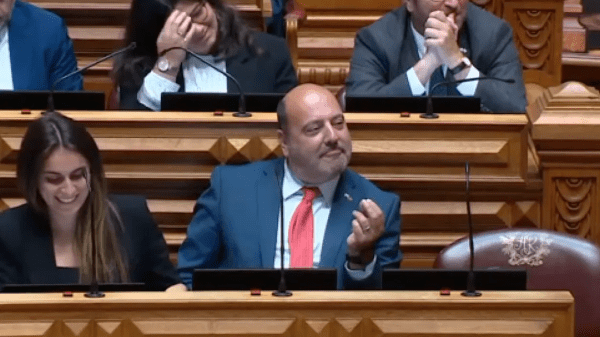
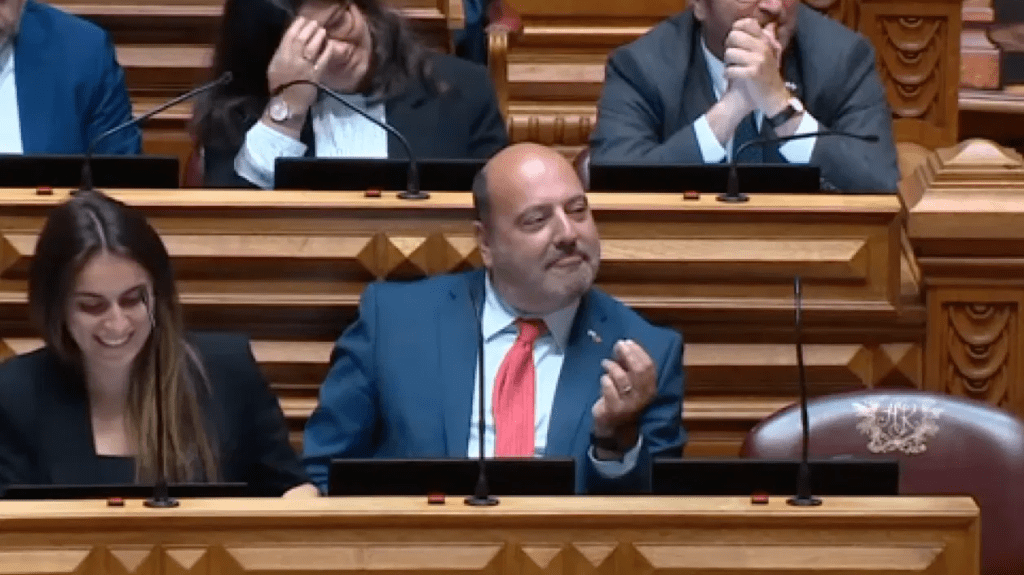
Under a recently elected conservative government, opposition lawmakers are saying Portugal is backsliding on LGBTQ+ rights with a set of three new measures that erase several advances under the country’s previous Socialist governments.
On Friday, Parliament took a step toward approving the repeal of a 2018 law that enshrines a right to gender self-determination and the protection of individual sex characteristics. It was one of the most far-reaching laws of its kind when it was introduced in its original form in 2011.
Three bills to amend the law were advanced by a far-right conservative coalition that now holds a controlling majority in Portugal’s Parliament.
Among other provisions, the repeal of the original law would reinstate a requirement for “medical validation” for anyone changing their name and gender in the country’s civil registry, Euronews reports.
Those changes are currently possible for any citizen without a medical certificate. 16- to 18-year-olds only need parental authorization and a report from a health professional attesting to their “capacity for decision-making and informed will.” The amended law would again require the approval of a “certified” medical board.
According to language in the new proposal, a report that “proves the diagnosis of gender incongruence” must be prepared by a specialized multidisciplinary clinical team in a public or private health establishment and must be signed by at least one specialist physician and one specialist psychologist.
Portugal’s government has seen a tilt toward the right over the last several years. In 2024, a center-right coalition called the Democratic Alliance won a plurality of seats in legislative elections, ending eight years of Socialist rule. Prime Minister Luís Montenegro won a renewed mandate in a snap election on May 18, 2025, again forming a minority government. In the meantime, the far-right nationalist, anti-immigrant Chega party has become the main opposition party in the 230-seat Parliament.
A proposal from that party also revokes the current legislation but introduces new articles for the “protection of children and young people,” including a ban on the inclusion of “gender ideology” in education curricula for minors. “Education in this field is reserved exclusively for parents or legal guardians,” the proposal reads.
Another far-right party coalition introduced a measure that “protects the integrity of children” by banning puberty blockers and/or hormone therapy in the treatment of gender dysphoria for trans youth.
“A man is a man, and a woman is a woman,” declared Madalena Cordeiro, a Chega member of Parliament. “The differences between them are clear and evident. It’s 9th-grade science. Now, all it takes is one consultation for a child to be diagnosed with gender dysphoria in five minutes.”
“It’s not care, it’s not medicine, it’s not science,” he claimed.
On the left, Livre party member Filipa Pinto questioned right-wing members over their previous opposition to marriage equality. Would they feel “comfortable about once again being on the wrong side of history, as they were when same-sex marriage was approved?” she asked.
“What wrong have trans and intersex people done to deserve being denied their existence?”
“There is no single reason for these changes, other than ideological obsession,” said another Livre member, Paulo Muacho, who asserted that trans people don’t need to be diagnosed by anyone, because being trans isn’t an illness.
“They don’t need doctors to tell them,” he said.
Socialist Party deputy Isabel Moreira lamented the turn in the tide away from democratic freedoms with the ascension of Chega and their allies.
“Fifteen years after the 2011 law” was passed, she said, “three parties in this house claim that transgender people should not have the autonomy to express their identity.”
“Democracy is being destroyed,” she said. “The playbook is well-known, and it comes from the far-right.”
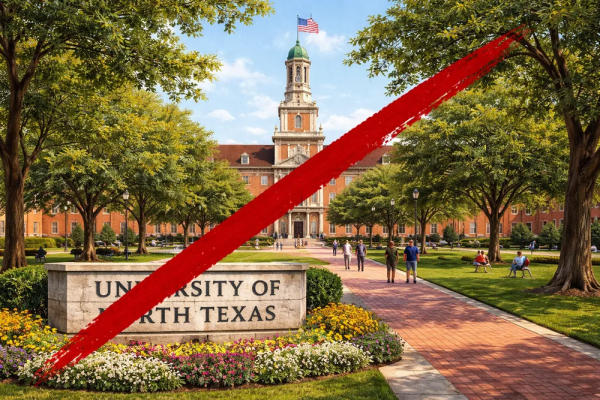
On March 19, the University of North Texas (UNT) in Denton announced it would cut over 70 courses, including its LGBTQ Studies course, as part of broader budget reductions.
President Harrison Keller and Provost Michael A. McPherson sent a statement detailing the upcoming budget cuts for the fall 2026 semester.
The university plans to eliminate over 70 programs, including courses, minors, and certificates. The cuts are expected to save $45 million.
The university cited declining enrollment, particularly among international students, as the reason for its significant budget cuts.
The enrollment decline contributed to a $32 million budget deficit for the upcoming fiscal year.
The university will allow currently enrolled students to complete their degree programs. New students will not be able to register for these majors or courses.
The cuts include three master’s programs, one undergraduate major, 25 undergraduate minors, 21 graduate programs, and 21 undergraduate certificates.
UNT ordered a review of its courses last fall as part of the budget planning process.
Some courses, including LGBTQ Studies and Women’s and Gender Studies, were eliminated as part of the budget cuts.
Texas university systems reviewed courses in response to federal directives issued during the Trump administration.
The review was conducted in response to H.B. 229, which recognizes only two genders, male and female.
UNT has not confirmed whether the law influenced its decision to cut certain programs.
The university also plans to eliminate the Department of Linguistics, citing a “consistent decline.”
UNT said it continues to monitor its strategic budgeting model, which began in fall 2024, amid declining enrollment and sponsored research.
Monitoring the strategic budgeting model has helped identify budgeting issues for the upcoming school year.
University officials emphasized the importance of the budget plan in maintaining program quality and financial stability.
Harrison Keller said, “We will continue to make strategic investments for the health of the university. Most importantly, we remain steadfast in our commitment to the long-term success of our students.”
UNT stated it aims to support staff and faculty as part of its long-term planning.
Keller and McPherson added at the end of their letter on March 19 that, “By making these difficult but necessary decisions, we will be able to strengthen the quality and impact of our current academic programs while investing in new areas that help us build momentum for the future.”
Campus Reform has reached out to the university for further comment.
Only one U.S. state has a majority that opposes marriage equality, another has the highest concentration of LGBTQ+-identified people, and a majority of Republicans agree that transgender people deserve the same rights and protections as other Americans, according to a newly released 50-state survey conducted by the Public Religion Research Institute (PRRI).
PRRI interviewed more than 22,000 adults nationwide throughout the last year as part of its American Values Atlas. The findings provide a snapshot of how individual states and demographic groups view same-sex marriage, anti-discrimination protections, and trans rights at a time when all of those are under attack from Christian nationalist forces.
The survey revealed the two U.S. states with the lowest levels of support for same-sex marriage: Only 47% of respondents from Mississippi support same-sex marriage with Arkansas close behind at 50%. Conversely, the highest levels of support for same-sex marriage were expressed by 85% of respondents from Massachusetts and the same amount Rhode Island, with the 81% of respondents from Vermont close behind.
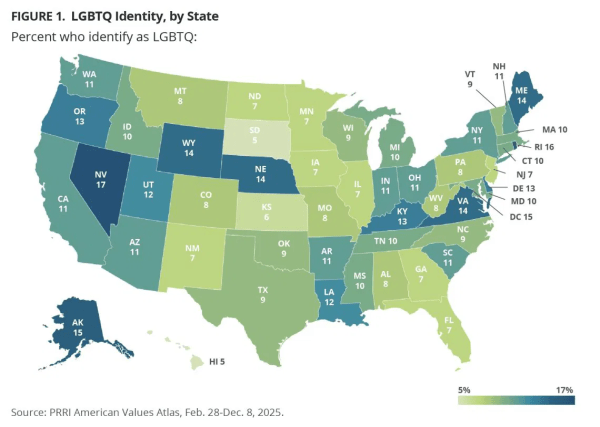
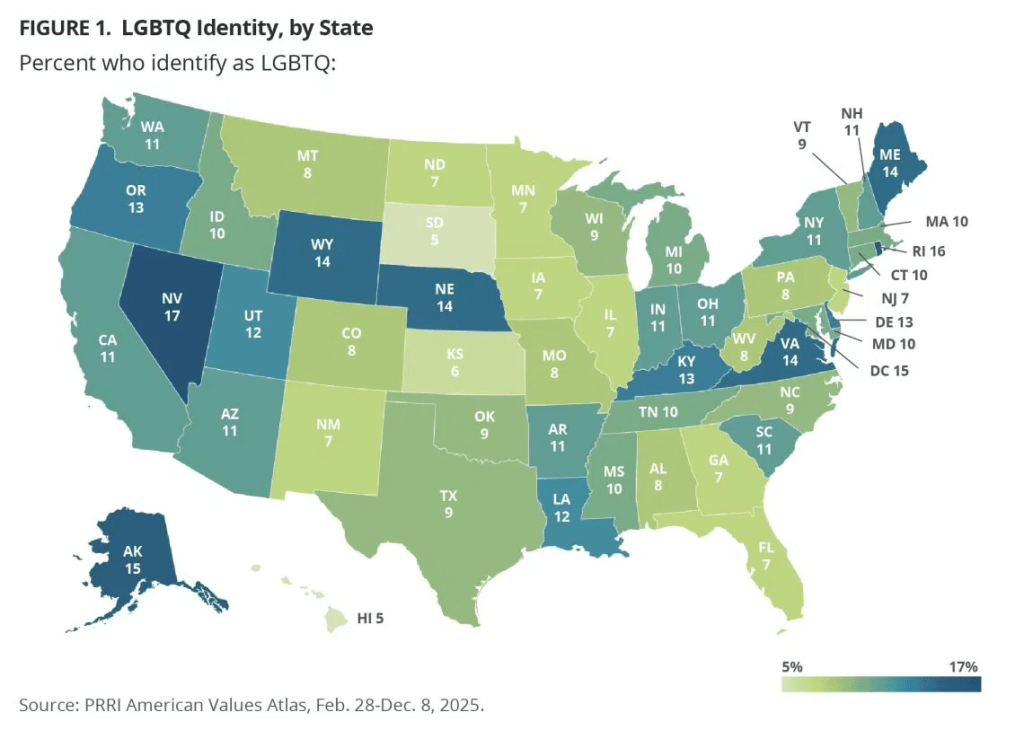
The survey asked respondents whether they self-identified as LGBTQ. It found that 17% of respondents in Nevada self-identified as LGBTQ — the highest percentage of all U.S. states, followed by 14% of respondents in Maine, Nebraska, and Wyoming.
The states with the lowest percentage of self-identified LGBTQ respondents were Hawaii and South Dakota, with just 5% each. Kansas was the state with the second-lowest number of self-identified LGBT respondents, with just 6%.
Among states whose respondents voiced the highest level of support for nondiscrimination protections for LGBTQ+ people were Massachusetts (85%), Maryland (82%), and Alaska (81%). However, Mississippi (60%), Wyoming (57%), and Arkansas (53%) showed the lowest support for such protections.
States with the most respondents opposed to religiously based ant-LGBTQ+ service refusals were Massachusetts (72%), Hawaii (71%), Vermont (71%), and Connecticut (70%). Conversely, only 44% of West Virginia respondents voiced opposition to such refusals — the lowest percentage among all U.S. states.
Interestingly, the poll found that seven in 10 Americans (71%) agreed that “transgender people deserve the same rights and protections as other Americans,” including most Democrats (88%), independents (77%), and Republicans (57%). This is especially surprising, seeing as the Republican Party and its president have spent the last decade vilifying trans people as mentally ill and a danger to the privacy and safety of women, girls, and children.
PRRI’s survey also looked at LGBTQ+ attitudes in relation to Christian nationalism. It found that Christian nationalism rejecters (91%) were the most likely to support LGBTQ+ nondiscrimination protections, followed by 77% of skeptics, 61% of sympathizers, and 42% of adherents of Christian nationalism.
Unsurprisingly, adherents and sympathizers of Christian nationalism were less likely to support same-sex marriage and less likely to oppose religiously based refusals for LGBTQ+ people, compared to respondents who either reject or are skeptical of Christian nationalism.
Iceland, birthplace of the literary tradition of the saga, is a nation of just 390,000 people. It is renowned for its progressive values: peace, wellbeing and human rights. At present, however, this small island is home to a monumental division.
After a chequered history with lesbian and gay rights, things looked positive when the country legalised same-sex marriage in 2010. But having achieved its aims, the gay rights movement turned to genderism. And this is now having serious consequences for anyone who refuses to believe that it is safe (or indeed possible) to change sex.
I arrive in the capital city of Reykjavik on a freezing February morning, and meet with Eldur Smári Kristinsson at the end of an hour’s drive through lava fields. As the international liaison for LGB Alliance Iceland – a group of about 10 women and men keen to prioritise same-sex rights over gender identity – he is keen to discuss the ideological capture of the nation he refers to as “Gender Gilead” [a reference to the dystopian regime in Margaret Atwood’s novel The Handmaid’s Tale].
Kristinsson is tall, smartly turned out, and would not look out of place in a university lecture theatre. Proudly gay, he travels far and wide, speaking at conferences on the harms of transitioning gender-nonconforming children. “Who knows if these kids would end up being lesbian or gay? But even if they don’t, we should allow children to play with the toys they wish to, and not tie them to sex stereotypes,” he says.
He is currently under police investigation for alleged hate speech in three posts on X, one of which criticises men taking the medication domperidone to induce lactation and “breastfeed” infants. “I am facing two years in prison,” he tells me, “for speaking out about child safeguarding.” It was the LGBT organisation Samtökin ’78 (originally the Lesbian and Gay Association of Iceland) that reported him to police.
My mission is to establish whether Iceland has, as Kristinsson claims, signed up to the most extreme version of transgender ideology on the planet, and whether or not it could come to pass in Britain, bearing in mind the level of pushback from feminists here, which resulted in the Supreme Court ruling in April 2025 that references to “sex”, “man” and “woman” refer to biological sex only.
At my hotel in central Reykjavik, I meet a number of Kristinsson’s allies – all of whom have encountered hostility and social exclusion for speaking out. Anna*, a 40-year-old lesbian who teaches at a primary school in northern Iceland, tells me: “Iceland is, without a doubt, the most captured country in terms of trans madness.”
Like Kristinsson, Anna is a member of LGB Alliance Iceland. As things stand, she says, schools tell young children they can change sex, which confuses and distresses them.
The 2010 marriage equality law plunged the Lesbian and Gay Association of Iceland into an existential crisis which culminated with its rebranding – as the National Queer Organisation of Iceland (Samtökin ’78) – and expanded its agenda to include the “trans child”.
A further controversial decision came in 2015, when Samtökin ’78 classified BDSM (bondage, discipline and sadomasochism) as a sexual orientation. It also partnered with Reykjavik city council to produce sex education posters for schools which promoted both BDSM and multiple-partner relationships to children as young as five.
Four years later, following lobbying by Samtökin ’78 and others, the Gender Autonomy Act was introduced, making it possible for anyone over the age of 15 to self-identify as the opposite sex, without requiring medical, psychiatric or judicial approval. This extends to name changes on all legal documents, including birth certificates.
Freyja* is a legal scholar, based in neighbouring Norway, who attempted to meet with Icelandic lawyers to advise on how the law might be halted on the grounds that it flouted international human rights treaties. She says the laws were introduced “almost secretly – there was barely any consultation with the general public, and it appeared to be a stitch-up between Samtökin ’78 and the government”.
Kristinsson tells me that this change in the law led to an exponential surge in numbers of “trans children”, most of whom were young girls from upper-class backgrounds, many of them under the “neurodivergence” umbrella. The statistics bear him out; by 2025, 0.5 per cent of Icelandic children had changed their sex markers with the National Registry – approximately 13 times the per-capita rate of neighbouring Denmark.
As the only country in the World Economic Forum to have eliminated more than 90 per cent of wage and opportunity inequality, Iceland is proud of its record on gender equality. Women now hold 48 per cent of seats in Iceland’s parliament, and comprise 60 per cent of its law students.
Iceland is often classed as the best country in the world in which to be a woman, yet those hard-won rights are being given away in the name of trans inclusion; Icelandic feminists have caved in to bullying and gaslighting.
This former beacon of gender equality has become a totalitarian regime, and the top-down ideological capture is affecting children, institutions and society at large – with chilling implications.
The children’s ombudsman, Salvör Nordal, grants me an interview. When I ask whether she has come across the issue of children wishing to identify as the opposite sex, she tells me that, post-Covid, her office has seen a significant decrease in interest and lobbying relating to gender identity and the trans issue.
Citing a national Icelandic medical survey, she says: “There was a group of children that were one third maybe with autism, one third truly trans, and one third with some other complication or other.
“It has been two or three years since this issue was on my desk,” she adds. Back then, she says, there were parents of three- and four-year-olds who were claiming to have a trans child. “And they had changed their names. So, we were concerned about that.”
Nordal’s comment about survey data showing that some children are “truly trans” leads me to ask whether, in her opinion, trans children exist, in that they are trapped in the wrong body? “It’s not my role to decide,” she says, explaining that her job is to think about children’s rights, rather than to have opinions about medical or psychological issues. “We have other professionals to do that. I focus on what is important for my job. We need to listen to children. This is a very difficult track to take.”
Icelandic law also recognises the sex changes of foreign visitors. In 2025, a trans “refugee” from the United States turned up in Iceland, attempting to claim asylum. “Alexandra” (a “stay-at-home mother”) claimed to be fleeing anti-trans persecution in Minnesota. His claim was not upheld. After Alexandra was told by police to go to the US Embassy in Iceland for help, his appointed spokesman said it was like “deporting Afghan women to the Taliban”.
My earlier trips to Iceland were to speak at conferences on male violence, organised by Stígamót, a well-known women’s organisation. But when I attempted to make contact with old friends in the feminist world, I was either ghosted or subjected to lecturing about “inclusivity” and “trans rights”. Even the hard-line feminists have capitulated – including those previously brave enough to take on pimps and pornographers.
In 2020, lesbian singer-songwriter Iva Marín Adrichem sang in the national final of the Eurovision Song Contest. Born blind, she had been included – as a high-profile Icelander – in an Icelandic tourist board film to encourage more disabled visitors to the country.
“I was cut out of the film because someone made a fuss about my views on gender,” she tells me when we have lunch together in Reykjavik, “ironically, in the name of diversity and inclusion.”
The trans trend spreads from the elite: both the bishop of Iceland and the rector of the Iceland Academy of the Arts have spoken proudly of being mothers to “trans children”.
The head of transgender medicine at Iceland’s state hospital is Asa Radix, a Canadian living in Iceland, who was appointed in 2025. Radix is also the president of WPATH, the World Professional Association for Transgender Health. WPATH was exposed by investigative journalists as a group of trans rights activists whose practice raises significant questions about the nature of gender-affirming care and the evidence base for WPATH’s widely followed guidelines.
Iceland’s reputation in transgender healthcare is seen by other countries with self-ID laws, and those looking to establish them, as a gold standard model. In 2025, Mary Butler, junior health minister for mental health in Ireland, travelled to Iceland to take part in a “knowledge exchange” project organised by the Icelandic ministry for health. The Irish delegation met with gender clinicians and people with “lived experience” of gender medicine. The official purpose of that visit was to inform the development of the new model for gender healthcare in Ireland.
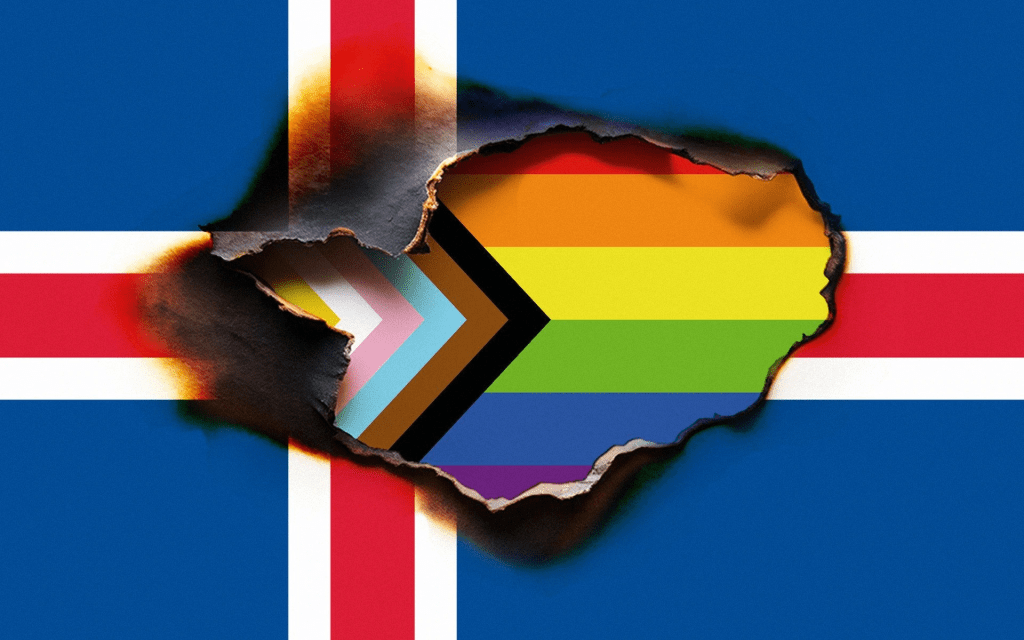
Iceland’s national flag is fast being replaced by the “Progress flag” – on churches, schools, government buildings and police stations. And the fact that rainbows painted on road surfaces are commonplace, even in tiny villages with fewer than 200 residents, signals a quasi-religious reformation: the teachings of postmodernist theorists Michel Foucault and Judith Butler have supplanted those of Jesus Christ.
The headquarters of the bishop of Iceland is in a purpose-built building in Reykjavik’s centre. I cold-call, hoping to catch Gudrún Karls Helgudóttir, who has been outspoken in support of her own trans-identified child and her commitment to the LGBT community. The church once ran an advertisement campaign featuring a trans Jesus Christ, complete with breasts, on Reykjavik’s buses.
Helgudóttir is unavailable, but her secretary, Eva Björk Valdimarsdóttir, invites me into a space generously adorned with pride, progress and trans flags, as well as an ornament of the drag act RuPaul. Valdimarsdóttir is a “big fan” of Drag Race.
When I ask how the Icelandic church became so focused on the inclusion of LGBT people, she explains that both the former bishop and the church had poor reputations as a result of having denied equal marriage rights to lesbians and gay men, and wanted to compensate for this stain on the church’s history. She says that the Bible, if read properly, does not pour scorn on same-sex couples, and that it is not God’s will to deny same-sex people who love each other to marry. “God does not discriminate,” she says.
Next, I ask about child safeguarding – for example, if a trans-identified man were to accompany children on a church trip. As a “trans woman”, would he be assigned to the girls’ sleeping quarters? “Those people are valid and their identities are valid,” she tells me. We go back to the Bible and what Jesus said. “He especially stood with marginalised people.”
I ask her whether God ever makes mistakes, and whether a child can be born in the wrong body. Before answering, she wants to make sure it will be specified that this is only her opinion. “There are not just two sexes, male and female. It is not that simple.”
How does that work, though, for children who want to be medicalised? “They have a long waiting list, then they have their specialists. I don’t think the church needs to decide anything for them.”
At this stage, Valdimarsdóttir asks if she can speak personally, rather than in her role as secretary to the bishop. She says trans women are as trustworthy as “cis” (biological) women, and that some people are “in between” male and female.
I ask, can a baby be born in the “wrong body”? “Should that child not live?” she replies. “And is this child not perfect as they are also in their minds and in their spirit, in what they say they are?”
Reykjavik-based father Alexandre Da Rocha meets me for coffee to talk about the conflict between him and his former partner over their son. When the child came home from school saying he wanted to be a girl, and was affirmed by his mother, Da Rocha made it clear that he disagreed, resulting in the case being referred to the family court by the mother. In November last year, the court decided that the boy’s mother would have sole custody, having previously shared it with the father.
“In the judgment, it was made clear that I am a good father, a good parent, and that there was no question over that. It is, I am certain of it, because I have refused to affirm my son as a girl,” Da Rocha says.
His lawyer, Hilmar Gardars Thorsteinsson, tells me that the problem in such cases, where one parent is in dispute with the other over children who wish to change sex, is halting the process before the prescribing of puberty blockers.
“It is almost always affirmed by teachers, for example, and then they are recommended to get puberty blockers at around 11 or 12,” he says. “I don’t know exactly the number, but I think it’s around 100 kids under 18 undergoing something like this.”
The following morning, I head to Laugardalslaug swimming baths, one of many across the city. Swimming is sacred to Icelandic people and a big part of their culture. The rules are strict: you are not allowed into the water until you have thoroughly showered. There are posters of stick figures on the walls with arrows pointing towards the armpits and genitalia. How will this work with “trans women” using the female showers, I wonder?
After explaining my purpose in visiting Iceland, I have a conversation with a young, muscle-bound man who works there. “Do you have single-sex communal showers?” I ask. “Yes,” he replies, “there are female showers and male showers.”
“But if I said I was a trans man, would I be allowed to go and shower in the men’s shower room?” His female colleague answers: “The communal showers are not single-sex but you can ask for a private cubicle if you wish.”
I seek clarification: “So are there no single-sex facilities at all?” This question is met with bafflement, so I try again. “Do any women ever ask for the mixed facilities?”
“No,” comes the response.
Ina Steinke has travelled a considerable distance across Iceland to meet with me. She got to know Kristinsson and the others speaking out because she hates the idea that the right to free speech is under threat. After our visit to the swimming pool, she appears angry at what she heard.
“There’s not even a warning,” says Steinke.“Being at risk of seeing a naked man in the women’s showers is this new reality. In our culture, it’s not an issue to be naked in front of other women, it’s part of our heritage. Also, sex offences – it’s nothing new to Icelandic people, but now, we can’t complain about the naked man; we can’t point out the sex of the person that rapes you.”
My final stop before leaving Reykjavik is to the mayoral hustings, where Ari Edwald, the candidate for the socially conservative Midflokkurinn (“Centre”) party, is due to give a speech. During the Q&A, I ask what he would do, if elected, to end the inclusion of gender ideology in schools. His is the only party to have spoken out against gender ideology and its effects on children.
School should not be a place of indoctrination, he responds, adding that contested ideas from sociologists and queer theorists in universities should not be taught as fact. If elected, he will do his part to wind this nonsense up.
With the help of lawyers, LGB Alliance Iceland is preparing various legal routes to challenging transgender practices against Icelandic youth. It is also looking at how to reverse so-called “conversion therapy” legislation, which would effectively criminalise any therapist or counsellor that doesn’t affirm a child presenting as transgender.
Da Rocha, the father desperately trying to stop his child from starting on a path towards changing his sex, is appealing the decision of the family court to deny him joint custody of his son. “If he decided to be gay when he grows up, then fine,” he tells me, but to do something he can never reverse would be terrible for him.”
Meanwhile, Kristinsson is keen to find out what is happening with his criminal case, as it has been several months since he was charged with hate crime offences. I accompany him to the main police station in Reykjavik.
Article 233A of the penal code forbids ridicule, slander and hatred towards those with protected characteristics: in this case, trans-identified people. As he awaits his turn at the security screen, he tells me: “I have the legal label of ‘criminal suspect.’”
“We’ve been looking for you,” says a uniformed officer when she finally appears. “You need to come back and be interrogated for another crime, on Friday.”
The American Medical Association (AMA) reaffirmed its support for gender-affirming care and said media outlets that reported a change in its policy (including LGBTQ Nation) misinterpreted a recent statement from the organization.
AMA’s March 2026 newsletter devoted a section to the debacle and explained that it all started in February when Dr. Mehmet Oz, the head of the Centers for Medicare and Medicaid Services, held a meeting for the leaders of the nation’s major medical organizations to discuss why they all endorsed medical interventions for trans teenagers.
Sources told the Times that Dr. Oz’s tone was measured, rather than hostile, but that it was clear he hoped to sway the organizations away from supporting gender-affirming care for young trans people. At the meeting, the American Society of Plastic Surgeons (ASPS) reportedly shocked everyone by announcing it was indeed changing its stance on gender-affirming care.
The ASPS announced the change in its stance publicly on February 3, releasing a statement advising against conducting “gender-related breast/chest, genital, and facial surgery” on people under the age of 19. The ASPS based its statement on two recent reports from the U.K. and the U.S. that were widely criticized by transgender healthcare advocates as being biased.
Surgical interventions, however, are already almost never performed on minors. Trans minors don’t receive bottom surgery, though some teenagers who meet certain rigid requirements get top surgery or facial procedures.
The AMA newsletter explained that once ASPS released its statement, the AMA’s Executive Committee of the Board met to craft a statement to provide to probing media outlets.
“During our Board discussion, we were clear that we were not changing AMA policy,” the newsletter said, emphasizing that the statement was exclusively to be used if media outlets contacted the organization, rather than preemptively.
“While some media coverage characterized this as agreement with the ASPS statement, that phrasing did not come from the AMA,” the newsletter continued. “Unfortunately, how reporters frame their stories is beyond our control.”
The newsletter emphasized that the statement did not reflect a policy change or an endorsement of ASPS’s policy change: “AMA policy on gender-affirming care is unchanged. Our recent response to questions about ASPS’s position statement was intended to preserve—not diminish—access to gender-affirming care, and to clarify and reinforce what our policy has long reflected and standards of care. The AMA supports gender-affirming care as medically necessary per our policy.”
The language in AMA’s initial statement sowed chaos because it does state: “In the absence of clear evidence, the AMA agrees with ASPS that surgical interventions in minors should be generally deferred to adulthood.”
But because gender-affirming surgery is already rare for minors, it seems AMA is trying to say it was merely reaffirming the position it has always held, which is that it supports non-surgical interventions for minors and, in rare cases, surgical ones.
At the time the ASPS walked back support for gender-affirming care, and many at least believed AMA did, too, the American Academy of Pediatrics (AAP) released its own statement emphasizing it still fully endorses gender-affirming care. “The AAP continues to hold to the principle that patients, their families and their physicians — not politicians — should be the ones to make decisions together about what care is best for them,” the statement read, according to the New York Times.
The World Professional Association for Transgender Health (WPATH) also spoke out: “There is no definitive age or one-size-fits-all approach for every patient, which is why they are built on case-by-case assessments, involve experts on adolescent development, and are designed to support thoughtful and ethical shared decision-making in a multidisciplinary field.”
Recent studies have shown that trans youth tend to be consistent in their identities, even after a decade. The findings mirror what has overwhelmingly been found in studies on trans adults, that very few people detransition. A 2024 study found that 97% of trans youth don’t regret transitioning, and another study from the same year showed that fewer than 1% of patients who undergo gender-affirming surgical procedures end up regretting it. In fact, rates of regret are higher for people who get tattoos, elective plastic surgeries, bariatric weight loss surgeries, or have children, the study found.
South Dakota Gov. Larry Rhoden (R) signed two anti-trans bills into law on Friday, touting them as “South Dakota values bills.” In a press release announcing the signings, Rhoden proclaimed that “South Dakota has always stood for truth.”
“My Administration will continue to uphold the values that make our state strong, safe, and free,” he added. “These bills reflect our commitment to carry those values forward for future generations.”
The two anti-trans bills – HB 1184 and HB 1161 – respectively ban legal recognition of trans identities and require people in the state to use facilities like bathrooms and locker rooms based exclusively on sex assigned at birth.
Also on Friday, Rhoden signed three bills rolling back reproductive rights in the state. In a statement, he called South Dakota “the most pro-life state in America” with laws that “reflect the fact that an unborn child is a person – and that child is worthy of our protection and respect.”
Artemis T. Douglas of the pro-trans publication The Needle, called the slew of bills a “show of force for reactionary patriarchy’s anti-trans political movement.”
“Anti-trans politics protects social control,” Douglas added, “including men’s position in the gender hierarchy and the status of everyone else as either property or incubator.”
South Dakota has long been a hostile state for LGBTQ+ people. The Movement Advancement Project gave it an overall ranking of -9.5/49 on LGBTQ+ rights, with a -9/26 for trans rights, specifically.
The state bans trans students from playing on sports teams consistent with their gender identity and also bans gender-affirming care for trans youth. It bans changing gender markers on birth certificates and also has no statewide nondiscrimination laws in place for gender identity or sexual orientation.
Senate Republicans have unveiled a comprehensive amendment package to the SAVE America Act that combines new federal voting restrictions with policies targeting transgender people. It comes after President Donald Trump has insisted that the provisions be added and the bill passed.
Offered as a substitute amendment, the proposal, obtained by Punchbowl News on Tuesday evening, reorganizes the legislation into three sections: elections, sports, and what it calls protections for children.
The election provisions would require Americans to present documentary proof of U.S. citizenship in order to register to vote in federal elections, a change to current law. Voting by noncitizens is already illegal under federal law, and documented cases are rare. The proposal would also require photo identification to vote and limit mail voting, requiring most ballots to be cast in person and restricting absentee voting to specific circumstances such as illness, disability, or verified travel.
The amendment would also direct states to compare voter rolls with federal immigration databases and remove people identified as noncitizens, while requiring federal agencies to share data to support those checks.
Other sections of the package include unrelated culture war issues that focus on transgender people. One provision would bar transgender women and girls from participating in schoolsports aligned with their gender identity, stating that it would be a violation of federal law to allow “a person whose sex is male to participate in an athletic program or activity that is designated for women or girls,” and defining sex “based solely on a person’s reproductive biology and genetics at birth.”
Another section would create federal criminal penalties for gender-affirming care, or what the bill falsely describes as “genital and bodily mutilation of a minor” and “chemical castration of a minor.”
“It’s no surprise that Trump and his MAGA enablers in Congress are combining voting restrictions with attacks on the transgender community in this Frankenstein of a bill,” David Stacy, vice president of government affairs at the Human Rights Campaign, said in a statement to The Advocate. “They are part of the same autocratic mission to suppress the vote, throw folks back in the closet, and undermine the will of the people.”
Stacy added that the amendment draws from earlier Republican legislation targeting gender-affirming care.
“If that wasn’t enough, the amendment copies and pastes language from a Marjorie Taylor Greene bill that would throw doctors in jail and even risk putting parents in handcuffs, simply for providing best practice care to their children,” he said. “This bill is a sad and dangerous attempt to cover up for the fact that Trump and Congressional Republicans have no plans to tackle rising costs or any of the priorities of the American people.”
Missouri Republican Sen. Eric Schmitt said he “worked closely” with the president “to introduce a substitute amendment that will save our elections, save women’s sports, and save our children from gender mutilation surgeries. It’s time to get this done.”
The amendment comes as Senate Republicans move forward with debate on the SAVE Act despite lacking the votes needed to pass it. Senate Majority Leader John Thune has acknowledged the bill is unlikely to reach the 60 votes required to overcome a filibuster, but has continued with floor consideration.
Voting rights groups have warned that proof-of-citizenship requirements could make it harder for some eligible voters to register, particularly those whose documents do not match their current legal names, like married people, especially women, and transgender Americans. The amendment includes a process for name discrepancies but requires additional documentation or affidavits.
The legislation faces an uncertain path in the Senate. The House already passed a version of the bill that did not include the anti-trans provisions, and it would have to return to the House if the Senate passes it before Trump could sign the legislation into law. He has vowed not to sign any other bills into law until the measure receives a vote and passes.
The Idaho House passed legislation that could make it a felony for transgender people to step foot in a bathroom matching their gender identity.
The legislation takes aim directly at trans individuals using the restroom or locker rooms, threatening those who “knowingly” and “willfully” enter facilities designated for the “opposite biological sex” with prison time. A first offense would count as a misdemeanor punishable by up to a year in jail. Those caught using the bathroom in repeated offenses, however, could be convicted as felons and face up to five years in prison.
Idaho Rep. Cornel Rasor, the bill’s Republican sponsor, used transphobic rhetoric as he claimed the change in law was necessary to prevent individuals from criminal actions. “It prevents discomfort and voyeurism escalation and assaults, while preserving single-user options and narrow exceptions so no one is denied access for emergency aid,” Rasor said, according to theIdaho Capital Sun.
But Democratic Idaho Rep. Chris Mathias predicted the opposite would occur. “Forcing people who don’t look like the sex that they were born with, or transgender folks, forcing them to use other people’s bathrooms is going to put a lot of people in danger,” he said.
Ahead of the vote, a transgender Idaho resident, Nikson Matthews, urged lawmakers to consider the real-world consequences of the proposal, walking them through what enforcement could look like in practice. Matthews described a scenario in which someone sees him, a bearded man, enter a men’s restroom, recognizes or suspects he is transgender, and calls the police. Officers, he said, would arrive to find “a bearded man using the men’s bathroom,” yet investigate him solely because of his identity. Under the bill, Matthews warned, he could face up to a year in jail for “peeing, washing my hands, or even being in the bathroom to grab a tissue.”
He said the alternative, forcing him to use women’s facilities, could be even more dangerous, describing how his appearance could provoke confrontation or violence from others who perceive him as a man entering a women’s space. “Every single day when I’m out in public, I have to decide,” Matthews told lawmakers. “Do I feel like going to jail today, or do I feel like being attacked?”
Ultimately, every Democrat in the Idaho House voted against the bill, but the party represents just nine of the chamber’s 70 members. Six Republicans joined with Democrats in voting no, but the bill passed by a 54-15 margin. It now heads to the Idaho Senate, where Republicans hold 29 of 35 seats.
Idaho lawmakers last year voted to restrict transgender people’s access to state-run facilities, including universities, prisons, and domestic violence shelters. The new bill criminalizes bathroom use in both publicly owned government buildings and private businesses that provide public accommodations.
Critics of the legislation cast it as a misguided attack on broader LGBTQ+ rights.
“Idaho politicians have positioned themselves as leaders in this calculated strategy to chip away at the rights of trans people. Each year, a more restrictive anti-trans bathroom law is passed that expands on the previous one,” the state’s chapter of the American Civil Liberties Union said.
Trans Kansans are reportedly leaving the US state in droves after thousands had their driving licences forcibly revoked.
The midwestern state revoked more than 1,700 IDs this month after handing letters to thousands of citizens demanding they surrender their driving licences.
It comes after lawmakers passed SB244, a sweeping anti-trans bill banning Kansans from using public toilets and locker rooms consistent with their gender identity. The bill also allows resident to submit bounty-style lawsuits against anyone they spot in facilities who they believe are transgender or non-binary.
Trans people in Kansas could face up to six months in jail if they don’t surrender their IDs. (Getty)
In response, the Kansas Division of Vehicles informed trans residents that their licences were now “invalid immediately” and must be exchanged for new licences documenting their birth sex.
Those who continue to drive without surrendering the licences could face “additional penalties”, including a $1,000 fine or even imprisonment.
Trans Kansan Jaelynn Abegg, who received a letter demanding her licence be revoked, said she plans to move to another state later this month and refuses to surrender her ID.
“I’m pretty heartbroken,” the 41-year-old told NBC News. “It is a continuation of the message that the Legislature has been sending out for years now, and that is that transgender people are not welcome in Kansas.”
Another woman, Andrea Ellis, said that, upon travelling to the DMV to have her licence changed, staff were confused over what to do, eventually giving her a temporary license with no changes.
Matthew Neumann, a Kansas-born trans man, said he refuses to leave the state over the legislation despite being threatened for using public toilets.
“I’m just disappointed and frustrated,” he said. “I’m just hoping that maybe this is the wake up call we need.”
Lawmakers passed the widely criticised bill despite governor Laura Kelly vetoing it in February, which was overturned by the Republican majority.
The Democratic governor said the law was “poorly drafted” and that its provisions were ripe for abuse that would have consequences “far beyond the intent to limit the right for trans people to use the appropriate bathroom”.
“[The law] will undoubtedly impact many others who are targeted with animus whether or not they are transgender. Meanwhile, leaders ignore real challenges facing families,” she continued. “This was sadly politics over people, but we will keep fighting for dignity and freedom for all LGBTQ+ people.”
Multiple cases have emerged across the UK and US over the past year, as anti-trans furore over toilet usage has grown louder, with many involving cisgender and transgender individuals.
In August last year, an 18-year-old cisgender lesbian said she was forced to expose her breasts to a staff member in a Buffalo Wild Wings who began banging on the toilet stall she was occupying and yelling that the “man needs to get out of here”.
Two anonymous trans Kansans sued the state over the bill’s passage last month, arguing that it violates human rights laws on autonomy and personal freedoms.
Douglas County District Judge James McCabria declined to grant a temporary restraining order against the law’s enforcement while the case proceeds earlier this week.
Harper Seldin, an attorney for the American Civil Liberties Union (ACLU) representing the plaintiffs said that Kansas was singling out trans residents “for unique social stigma”.
“They were suddenly required, with no notice or opportunity to be heard, to present themselves to the DMV to obtain driver’s licenses that announced to everyone – the teller at the bank, the clerk at the hotel, the poll worker on election day – that they are transgender,” Seldin said.





 fleeredstates.blog
You must be logged in to post a comment.