
Read more at Erasing 76 Crimes.
By 129 votes in favor and 0 against, the National Assembly of Senegal amended the Constitution, on Monday, June 29, to define marriage exclusively as “the union between a man and a woman”.
The Senegalese Constitution previously had been rather vague on the subject, although same-sex intimacy has been criminalized in Senegal since 1965. The country is in the midst of an anti-gay crackdown that has produced 100s of arrests. In March, the penalty for same-sex intercourse was doubled, to a maximum prison sentence to 10 years, and gay rights advocacy was banned.
Passage of the constitutional amendment is related to the anti-LGBT crackdown, according to a Senegalese political observer.
Dakar-based Sadio (a pseudonym), told Erasing 76 Crimes “there is little doubt that [the ruling PASTEF party] is placing great emphasis on this aspect of constitutional change in order to reassure the Senegalese people that it will pursue an anti-LGBT agenda, following the tightening of the Criminal Code in the spring so ‘unnatural acts’ are now punishable by 5 to 10 years’ imprisonment and a fine of 10 million CFA francs (about 15,000 euros or US $17,460)”.
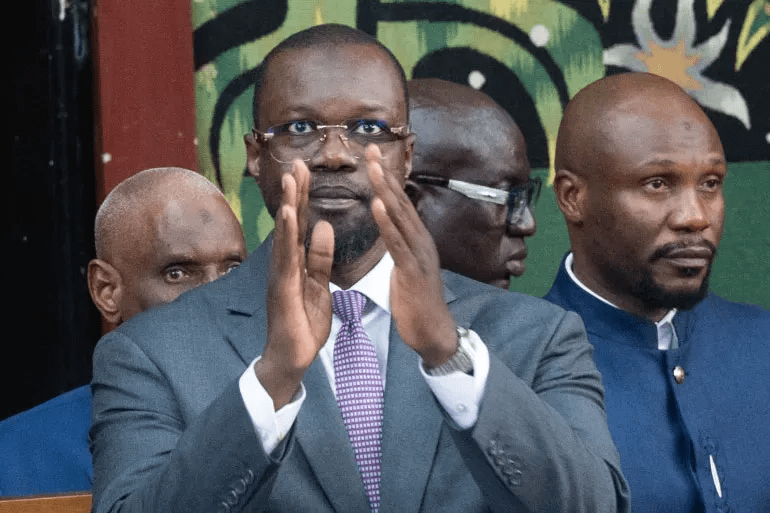
In addition, Sadio says, the amendment “helps to rally the ranks within the ruling party following the rifts that led to the dismissal of former Prime Minister Ousmane Sonko”.
The constitutional amendment was inspired by an opinion piece published on March 8 in the state-owned daily newspaper Le Soleil entitled “A scientific approach to the eradication of homosexuality in Senegal”.
Before the amendment, Article 17 of the Senegalese Constitution defined marriage as follows: “Marriage and the family constitute the natural and moral foundation of human society, and are placed under the protection of the State”.
This addendum has now been included: “Marriage is the union between a man and a woman”.
The amendment provides no definition of what constitutes a man or a woman in biological, chromosomal or anatomical terms. Nevertheless, it establishes a binary system that effectively marginalises intersex people in Senegal.
Following the recent criminalisation of homosexuality in Niger, this marks a further setback for LGBT+ rights in French-speaking Africa.


Leave a comment