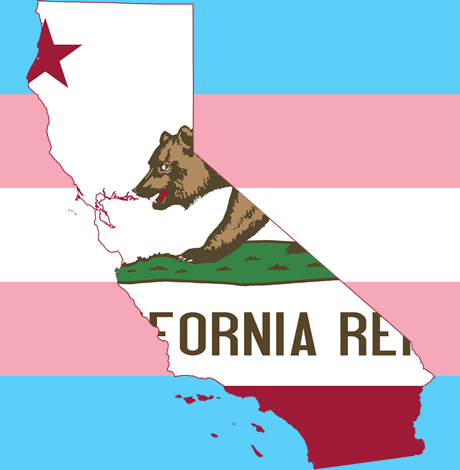
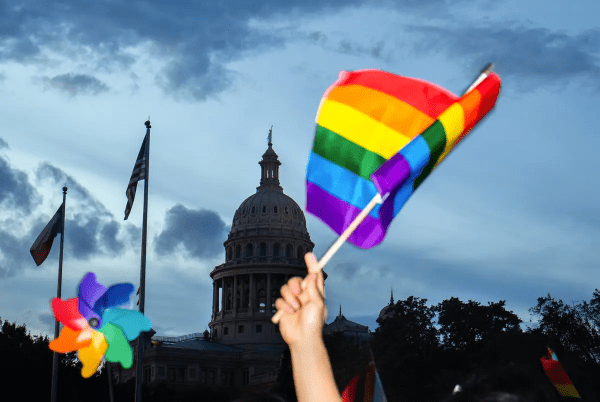
Gavin Newsom signs 6 pro-LGBTQ+ bills in California in response to Trump’s “all-out assault” on the community

Read more at LGBTQ Nation.

California Gov. Gavin Newsom (D) signed six pro-LGBTQ+ bills into law on Saturday, some of which were crafted as a direct response to the Trump administration’s relentless attacks on the community.

“The Trump administration has launched an all-out assault on the LGBTQ community, using medical records to target U.S. servicemembers and civilians alike, hurting countless people and betraying hard-won trust,” Newsom said in a statement on the bill package. “California will not stand for it.”

One bill, AB 1930, seeks to protect trans Californians’ medical records by barring state or local agencies from “cooperating with or providing information to an individual or agency from another state or a federal law enforcement agency… regarding a legally protected health care activity that is lawful in this state and performed in this state.”

The bill requires any agency that receives a subpoena, discovery request, or similar request to report it to the attorney general, who will assess whether the request meets certain requirements before deciding whether the information can be provided.

One such requirement is that “the requested information is related to an investigation or proceeding regarding activity that is unlawful under California civil or criminal law, and it identifies the California law under which the activity is unlawful.” The bill also protects the medical information of folks who have terminated a pregnancy.

The law is a response to the Trump administration’s efforts to intimidate hospitals across the country into ending gender-affirming care services for trans youth. The administration has subpoenaed the private medical records of trans youth from more than 20 hospitals in hopes of using them to prosecute health care providers, even in states that don’t ban gender-affirming care for trans youth. In some cases, judges have rejected the administration’s attempts. In others, hospitals have agreed to shutter their programs in response or have even complied with providing the records.

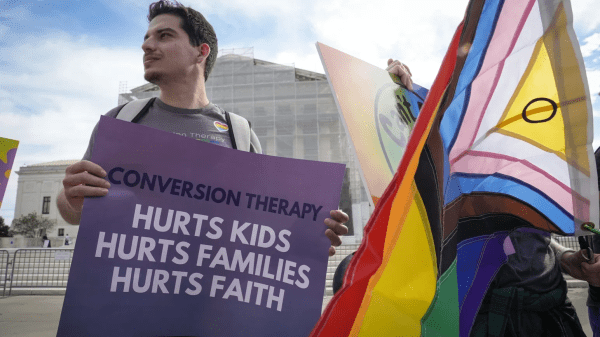
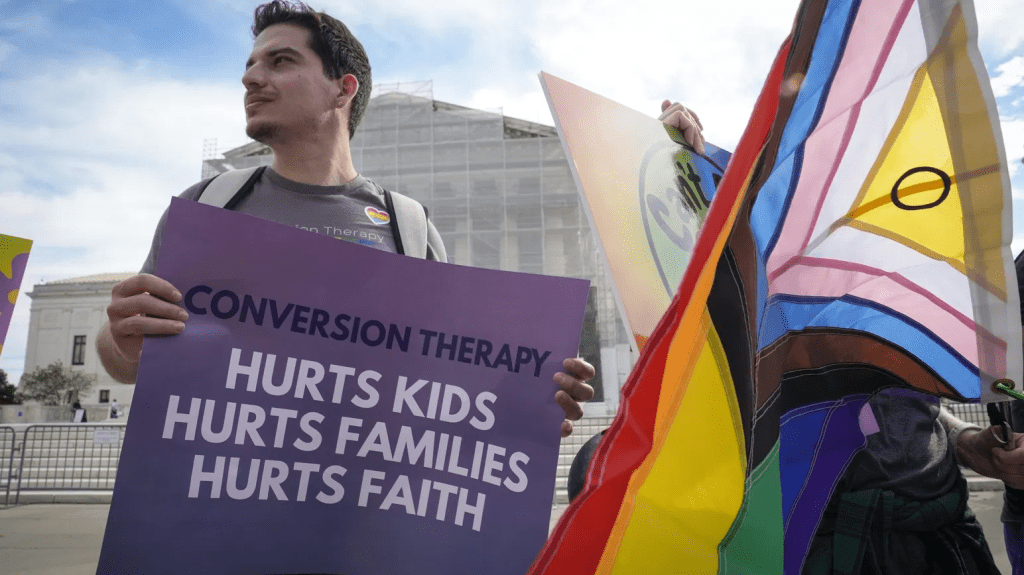
The other bills ban conversion therapy for minors; strengthen protections and resources for LGBTQ+ college students; limit out-of-state entities from accessing state data on LGBTQ+ people; reduce hurdles for insurance companies to cover HIV prevention medication; and, in response to the administration’s trans miliary ban, help military veterans who “received a discharge solely as a result of a specified executive order” to upgrade to an honorable discharge and prioritize those “who are able to demonstrate their less than honorable characterization of service was connected to a mental health condition, traumatic brain injury, sexual assault or harassment, or sexual orientation or… gender identity.”

Last week, Newsom vetoed a bill that would have prevented California from extraditing patients or providers as part of another state’s investigations into gender-affirming or reproductive care, explaining that it would “prohibit future governors from recognizing a request for extradition of a person subject to criminal liability based on allegations that the person engaged in specified healthcare activities.”

He acknowledged the importance of the bill’s goals and emphasized he does “share the author’s views on the importance of protecting these important healthcare services,” but also said that “extradition is an exclusively executive function” and he felt “troubled by the precedent that would be set if an outgoing administration agreed with the Legislature to erode the executive authority of an incoming Governor based on their shared policy preferences, regardless of how righteous and well-intended those actions may be.”

Newsom has a shaky track record when it comes to trans rights. While he has supported trans rights and signed positive bills protecting trans people, he has also agreed with slain MAGA influencer Charlie Kirk that trans inclusion in sports is unfair. Last year, he vetoed a bill that would have funded gender-affirming care.

Last year, trans journalist Erin Reed wrote that “transgender people are not feeling Gavin Newsom” because his office reportedly pressured state lawmakers not to pursue pro-trans legislation.

“This caution came precisely as red states were escalating their crackdowns, enacting increasingly hostile laws,” Reed wrote. “California could have served as a bulwark—a safe ground—but instead, Newsom hit the brakes.”

In other comments highlighted by Reed, Newsom said he’s “trying to understand as … the whole ‘pronoun’ thing,” and suggested that 25 might be too young for someone to transition.

Navigating Equality: Top U.S. States with Comprehensive LGBTQ+ and Transgender Legal Protections

In an increasingly fragmented legal landscape, civil rights, non-discrimination protections, and healthcare access for LGBTQ+ and transgender individuals vary significantly across the country. For individuals, families, and professionals seeking to understand where state law provides the most robust safeguards, several states stand out as national leaders.

By evaluating data from the Human Rights Campaign’s (HRC) State Equality Index and the Movement Advancement Project (MAP), we have highlighted key states—including Connecticut, a national pioneer—that have built comprehensive legal frameworks to protect LGBTQ+ and transgender residents.

Key States Leading LGBTQ+ Legal Protections

Connecticut: A Pioneer in Healthcare & Legal Safety

Connecticut stands out as a historic and statutory leader, consistently earning high policy scores for its proactive stance on civil rights and transgender safety.

  • The Original Shield Law: In 2022, Connecticut became the first state in the nation to enact a comprehensive “shield law” specifically designed to protect patients, medical providers, and out-of-state visitors receiving or delivering gender-affirming care. The law blocks out-of-state legal subpoenas, prevents extradition, and bars licensing boards from disciplining providers for administering legal medical care.
  • Data Privacy Protection: Connecticut enacted specialized laws restricting health apps and online entities from collecting, selling, or disclosing consumer data related to gender-affirming care.
  • Explicit Non-Discrimination: Gender identity, gender expression, and sexual orientation are fully protected under state civil rights laws spanning employment, housing, credit, and public accommodations.

California

California sets a national benchmark for comprehensive LGBTQ+ protections across every major area of civil law.

  • Healthcare & Shield Laws: Following Connecticut’s model, California passed strong safe-haven legislation protecting transgender individuals, families, and doctors from out-of-state legal liability related to gender-affirming care.
  • Non-Discrimination: The Unruh Civil Rights Act and the Fair Employment and Housing Act (FEHA) explicitly safeguard gender identity, gender expression, and sexual orientation in housing, workplace settings, and business transactions.
  • Identity Documents: The state allows streamlined updates to gender markers on driver’s licenses, birth certificates, and state IDs without requiring surgical confirmation or court orders.

Massachusetts

As the first U.S. state to legalize same-sex marriage in 2004, Massachusetts maintains a deeply entrenched system of legal protections.

  • Broad Public Protections: Anti-discrimination laws explicitly cover public accommodations—such as restaurants, retail stores, and healthcare facilities—alongside housing and employment.
  • Youth & Family Safeguards: The state enforces a complete ban on conversion therapy for minors and maintains robust anti-bullying and inclusion guidelines across public school districts.
  • Medicaid & Insurance Requirements: Private insurance and MassHealth (Medicaid) are legally required to cover medically necessary gender-affirming care.

Colorado

Over the last decade, Colorado has transformed into a major sanctuary state for transgender protections in the Mountain West.

  • The Reproductive and Gender-Affirming Care Shield Act: Enacted to shield out-of-state patients and local practitioners from external civil and criminal investigations or licensing penalties.
  • Administrative ID Updates: Jude’s Law permits non-binary “X” gender markers and allows transgender individuals to update state documents smoothly without requiring physician affidavits or court decrees.
  • Anti-Discrimination Enforcement: The Colorado Anti-Discrimination Act (CADA) covers employment, housing, and public spaces, enforced aggressively by the state civil rights division.

New York

With a deep history rooted in the modern LGBTQ+ civil rights movement, New York’s laws reflect comprehensive protections.

  • GENDA (Gender Expression Non-Discrimination Act): Passed in 2019, GENDA formally added gender identity and expression as explicit protected classes across housing, employment, public spaces, and non-sectarian education.
  • Medical Safeguards: Comprehensive shield laws ensure that healthcare institutions and practitioners face no administrative penalties or extradition requests for delivering legally protected medical services.
  • Informed Family Laws: New York maintains progressive legislation supporting gestational surrogacy, legal adoption, and parental recognition for LGBTQ+ families.

Illinois

Illinois serves as a critical legal sanctuary in the Midwest, backed by mature statutory protections.

  • The Illinois Human Rights Act: Enforces complete non-discrimination across real estate transactions, employment, public services, and banking.
  • Education & Youth Protections: State legislation requires public school curricula to include LGBTQ+ history and imposes strict safety and anti-bullying standards across districts.
  • Out-of-State Refuge: Illinois statutes shield healthcare providers treating patients traveling from surrounding jurisdictions, making it an essential hub for safe medical access.

The Bottom Line

Whether evaluating states for personal safety, corporate expansion, or legal analysis, these jurisdictions demonstrate what comprehensive protection looks like in practice. By pairing clear non-discrimination statutes with proactive health-privacy and shield laws, states like Connecticut, California, and Colorado offer the most legally secure environments for transgender and LGBTQ+ residents.

What states are the best for LGBTQ+ people? These are the top 15

Read more at the Advocate.

Legislative attacks on the LGBTQ+ community have been pushed everywhere from city councils to the White House — but there are still some areas that are safe.

Over 1,000 anti-LGBTQ+ laws have been proposed across every state legislature in the U.S. over the past two years, according to the American Civil Liberties Union, and 126 have passed into law. Less than two months into the 2025 legislative session, 390 laws targeting LGBTQ+ people have been proposed.

Still, marriage equality and anti-discrimination protections based on sexual orientation and gender identity are still guaranteed federally by U.S. Supreme Court rulings (for now). On top of that, at least 15 states have “shield laws” protecting access to gender-affirming care and abortion.

Based on laws surrounding marriage, family rights, health care, education, and youth collected by the Movement Advancement Project, here are the 15 best states for LGBTQ+ people.

The states include California, Colorado, Connecticut, Illinois, Maine, Maryland, Massachusetts, Minnesota, Nevada, New Jersey, New York, Oregon, Rhode Island, Vermont, and Washington. Honorable mentions go to Washington DC, Delaware, Hawaii, Michigan, New Mexico, and Virginia.

You can read about each state in more detail in the Advocate’s article.

Supreme Court forces California to allow teachers to out trans kids

Read more at LGBTQ Nation.

The Supreme Court yesterday blocked a law in California that bans teachers from outing trans kids to their parents from going into effect. The decision was 6-3, with the six Republican appointees opposing trans rights and the three Democratic appointees taking the side of trans kids.

The case involves teachers from Escondido Union School District who claim that their Christian faith requires them to out trans kids to their parents. They argue that their “right to exercise [their] own religious beliefs” is being violated by the district policy, which was established in response to 2016 legal guidance from the California Department of Education advising districts not to out students.

Trans and nonbinary youth can be put at risk of parental rejection and homelessness if outed to their parents.

The teachers, who were later joined by several parents in their lawsuit, won their case in a lower court in December, where Bush-appointed Judge Roger Benitez said that California should “trust parents to do the right thing for their child” and let teachers out trans kids to their parents, even in cases where the child fears abuse, neglect, or homelessness as a result. Trans and nonbinary youth are much more likely to experience homelessness compared to cisgender youth.

In early January, a panel of judges on the Ninth Circuit U.S. Court of Appeals issued a stay to Benitez’s injunction, allowing California to enforce its trans youth protections as appeals work their way through the legal system.

But the teachers appealed to the Supreme Court, which sided with them and granted their emergency request for a stay.

The Court issued an 18-page unsigned ruling that said they believe that the parents are “likely to succeed on the merits” of their religious freedom claim, which was that there is a “right of parents to guide the religious development of their children” that also implies a right to know how their children are presenting their gender at school. The Court said that not outing kids to their parents is an even “greater… intrusion on the parents’ free exercise rights” than schools letting kids read books with LGBTQ+ characters, which the Court also ruled schools couldn’t do in its Mahmoud v. Taylor ruling last year.

In her dissent, Justice Elena Kagan wrote that this case shows how the “emergency docket can malfunction” because the case involved “novel legal questions” that the Court is ruling on with “inadequate briefing.”

“The Court is impatient: It already knows what it thinks, and insists on getting everything over quickly,” she wrote, noting that the federal appeals court hasn’t even ruled on the appeals in the case yet.

On the more substantive issues, Kagan wrote that the Constitution makes no mention of parental rights and that the conservatives on the Court relied on the Due Process Clause, which they usually read narrowly. She pointed out that the idea that women have a right to control their own bodies elicits “outright hostility” from her conservative colleagues when it’s suggested to be part of the Constitution’s due process protections. But now the same conservatives found that that clause gives parents the right to know how their children are presenting their genders at school.

She added that parents’ rights have to be balanced against the “critical interests in the care and education of children” that the state has, and that they needed to follow “ordinary processes” to address that balance.

Outing trans youth to their parents puts them at increased risk of homelessness, according to the Williams Institute. Not only that, they might still be exploring their identities and need to exercise control over their coming-out process.

“Transition isn’t a flick of a switch; it’s a complex, gradual, weaving journey of identity,” Connie Walden, a trans woman, wrote to the New York Times in 2023.

“My own transition started in high school. At what stage between my experimenting with makeup now and then to asking specific friends to call me Connie would I have officially, suddenly, socially transitioned? When should I have been robbed of the right to come out to my own family, to decide when to include them in my own process?”

“I recognize the pain of well-meaning parents who feel that their child kept such a large ‘secret’ from them. Yet with transition being a gradual process of experimentation, there is no big secret. There’s only kids slowly figuring out who they are, like all other kids.”

Aetna to Cover IVF Treatments for Same-Sex Couples After $2M National Settlement

Read more at GayE.

When Mara Berton and June Higginbotham imagined their future, it always included children. What they did not imagine was a $45,000 bill standing between them and the family they dreamed of building.

The Santa Clara County couple, both lesbians, discovered that while their heterosexual colleagues’ fertility treatments were largely covered by insurance, they were excluded from the same benefits. To conceive, they were forced to pay entirely out of pocket, a financial burden that reshaped their timeline, their choices and their emotional well-being.

Last week, that inequity cracked open.

In a landmark national settlement approved by U.S. District Judge Haywood Gilliam Jr., Aetna agreed to cover fertility treatments such as artificial insemination and in vitro fertilization for same-sex couples on the same terms as heterosexual couples. The agreement applies nationwide across all Aetna plans, making it the first case to require a major insurer to implement such a policy uniformly.

An estimated 2.8 million LGBTQ members will benefit, including about 91,000 Californians. The settlement also requires Aetna to pay at least $2 million in damages to eligible California-based members, who must submit claims by June 29, 2026.

“We knew it wasn’t right,” Berton said in an interview with CalMatters. “What we’re fighting for is about family building and having kids. It was really important to both of us that other couples not have to do this.”

Before the settlement, Aetna’s policy required enrollees to engage in six to 12 months of “unprotected heterosexual sexual intercourse” before qualifying for fertility benefits, according to the class action complaint. Women without male partners could only access coverage after undergoing six to 12 unsuccessful cycles of artificial insemination, depending on age, a requirement medical experts say is excessive and clinically unnecessary.

The policy, attorneys argued, treated LGBTQ members fundamentally differently and effectively denied them a benefit that can be prohibitively expensive.

“This was an issue of inequality,” said Alison Tanner, senior litigation counsel for reproductive rights and health at the National Women’s Law Center, which supported the litigation. “Folks in same-sex relationships were being treated differently.”

In an email, Aetna spokesperson Phillip Blando said the insurer is committed to equal access to infertility and reproductive health coverage and will continue working to improve access for all members.

For Berton, the policy felt personal and dehumanizing. After consulting with a fertility clinic and deciding to move forward with donor sperm, she was told by Aetna that she did not meet the definition of infertility. Multiple appeals were denied. Insurance required her to attempt 12 rounds of artificial insemination,even though her doctors recommended no more than four.

Sean Tipton, chief advocacy and policy director for the American Society for Reproductive Medicine, said policies like that are designed to discourage people from using their benefits. While many doctors recommend three to four cycles of insemination before IVF, studies also show it can be more efficient and cost-effective to move directly to IVF.

In 2023, the society updated its medical definition of infertility to explicitly include LGBTQ people and individuals without partners, a shift aimed at preventing insurers from denying claims like Berton’s.

“It takes two kinds of gametes to have kids,” Tipton said. “Regardless of the cause of that absence, you have to have access to care.”

The settlement comes as California prepares to expand fertility coverage further. A new state law taking effect in January will require most state-regulated health plans to cover fertility care for same-sex couples and single people by broadening the definition of infertility. While that law does not apply to Aetna’s national plans, advocates say the momentum is unmistakable.

And it could not come at a more urgent time.

As LGBTQ rights are increasingly rolled back across the country, from bans on gender-affirming care to restrictions on queer families in schools and public life, access to reproductive health care has become another contested frontier. Who is allowed to build a family, and under what conditions, is no longer just a medical question but a political one. This settlement affirms that queer families are not exceptions to be managed but lives to be supported.

Berton and Higginbotham ultimately moved forward without coverage, pulling together money from family and enduring the physical and emotional toll of fertility treatments, including a miscarriage. Today, they are raising twin girls who love the swings and pulling every book off the shelf for story time.

They built their family before the lawsuit concluded. Still, Higginbotham said the victory matters deeply.

“I know people who don’t have children because this isn’t covered,” she said. “The settlement is such a huge step forward that is really righting a huge wrong.”

In a moment when so much is being taken, the ruling stands as a reminder; equality is not abstract. Sometimes, it looks like a family finally being allowed to exist.

California Policy on Disclosing Student Gender Identity Blocked by Judge

Read more at Newsweek.

A federal judge in California has struck down a state policy that prevented teachers from informing parents when their child identified as a different gender at school, calling the rule unconstitutional and a violation of parental and teachers’ rights.

U.S. District Judge Roger Benitez, sitting in San Diego, ruled Monday that California’s policy—meant to protect LGBTQ students’ privacy—improperly restricted communication between parents and educators. The decision delivers a major setback to state officials and LGBTQ advocacy groups that had defended the policy as essential to student safety.

Why It Matters

The ruling stems from a 2023 lawsuit filed by Escondido Unified School District teachers Elizabeth Mirabelli and Lori Ann West, who challenged a district policy requiring staff to keep a student’s gender identity confidential from parents. The pair, represented by the Thomas More Society, a religious liberty law firm, argued that the rule forced them to violate their faith and the trust of parents.

The ruling directly conflicts with California’s Safety Act (AB 1955), signed by Governor Gavin Newsom in 2024, which banned schools from disclosing students’ gender identity or pronouns to parents without the students’ consent.

What To Know

In a 40-page opinion, Benitez said the rules “place a communication barrier between parents and teachers” and “harm the child who needs parental guidance.” He added that such policies deprive parents of their 14th Amendment right to direct the care and upbringing of their children and infringe upon teachers’ First Amendment rights.

“Parental involvement is essential to the healthy maturation of schoolchildren,” Benitez wrote, according to Courthouse News Service. “California’s public school system parental exclusion policies place a communication barrier between parents and teachers… That, this court will not do.”

Benitez’s ruling also issued a permanent injunction, blocking school districts from reinstating similar “gender secrecy” policies. He acknowledged the state’s intent to protect LGBTQ youth from possible abuse or rejection at home but concluded that the policy was overly broad and not narrowly tailored to that goal.

“When the state drops an elephant in the middle of its classrooms,” he wrote, “it is not a defense to say that the elephants are too heavy to move.”

In his order, Benitez framed the issue as a constitutional matter rather than a cultural one.

“Historically, school teachers informed parents of physical injuries or questions about a student’s health and well-being,” he wrote. “But for something as significant as a student’s expressed change of gender, California public school parents end up left in the dark.”

The decision intensifies a legal and political struggle over how schools handle issues of gender identity. Supporters of the Safety Act cited Centers for Disease Control and Prevention data showing that about 25 percent of transgender youth attempted suicide in 2023, underscoring the risks of forced disclosure. LGBTQ groups, including the American Civil Liberties Union and Equality California, have argued that involuntary outing can lead to family rejection, homelessness or self-harm.

Conservative lawmakers and parental rights groups have opposed such secrecy policies. Tech executive Elon Musk also criticized California’s gender identity disclosure law, saying it was among the reasons he decided to move the headquarters of SpaceX and X (formerly Twitter) from California to Texas.

What People Are Saying

Elizabeth Mirabelli and Lori West, in a joint statement shared on Monday: “We are profoundly grateful for today’s ruling. This has been a long and difficult journey, and we are humbled by the support we’ve received along the way. We want to extend our deepest thanks to Thomas More Society and to everyone who stood by us, prayed for us, and encouraged us from the very beginning.”

California State Senator Scott Wiener, on X days before the ruling: “I’ve passed some of the strongest protections for trans people in the country—from safeguarding gender-affirming care to protecting youth and families fleeing hostile states. As the federal government ramps up its attacks, I will always stand between trans people and harm.”

What Happens Next

The California Attorney General’s Office has not said whether it will appeal the ruling to the Ninth Circuit. For now, the court’s decision halts enforcement of policies that restrict teachers from sharing students’ gender information with parents across California’s public schools.

Oakland gets first rainbow crosswalk: ‘It tells every trans, queer and non-binary person … they are welcome’

Read more at Oakland North.

Dozens of local queer leaders, community members and allies gathered at the Oakland LGBTQ Community Center on a rainy Thursday afternoon to celebrate the unveiling of the city’s first permanent rainbow crosswalk and the second anniversary of the Lakeshore LGBTQ Cultural District.

The crosswalk was installed on Lakeshore Avenue, outside the LGBTQ center, symbolizing Oakland’s commitment to LGBTQ inclusion and visibility, the center said in a news release. Instead of paint, it is made from thermoplastic materials to ensure durability and safety.

“It tells every trans, queer and non-binary person who visits our LGBTQ district that they are welcome, seen, safe, and celebrated right here in Oakland,” said Jeff Myers, chair of the Lakeshore LGBTQ Cultural District Committee, which plans events and does community outreach in the neighborhood.

A two-hour indoor ceremony preceded the unveiling, hosted by center co-chairs Myers and Joe Hawkins and emcee MCYB. It featured music from flutist Piedpiper KJ, singer-songwriter Cadence Myles and the Oakland Gay Men’s Chorus, as well as remarks from elected officials and neighborhood business owners. 

Speakers emphasized the importance of the Lakeshore District, which was established in 2023, and the new rainbow crosswalk as markers of queer visibility in Oakland during a time of fraught messaging from the federal government. 

“The Lakeshore LGBTQ Cultural District is more than just geography,” said Kin Folkz, a visual artist, poet and founder of the neighborhood’s Queer Arts Center. “It is the way that we refuse to disappear.”

Mayor Barbara Lee presented Lakeshore District leaders with a placard proclaiming Nov. 13 as “Lakeshore LGBTQ Cultural District Day.” 

“The rainbow crosswalk is a signal that you are part of the fabric of Oakland’s history and of Oakland’s future,” Lee said.

Hawkins thanked Lee for securing grant funding to support improvements at the center during her tenure in Congress. He also praised the Alameda County Supervisors for helping make up for the center’s recent loss of federal funding. The Supervisors approved $1.5 million for LGBTQ service providers, with the Oakland center getting some of that funding.

“Our city and county are helping,” Hawkins said. “I’m very confident this is more help than we’ve ever received.”

Bucking the trend

Councilmember Charlene Wang, who represents the Lakeshore District, applauded Oakland for installing the rainbow crosswalk, while lamenting the removal of such crosswalks in Florida and Texas cities. U.S. Transportation Secretary Sean Duffy launched a “roadway safety initiative” in July, urging governors to remove “political messaging and artwork” from intersections. Following that announcement, Orlando, Miami Beach, Gainesville, and Houston removed colorful crosswalks.

“While those cities caved, we are standing strong and we are adding crosswalks,” Wang said.

Megan Wier, an assistant director at the city’s Transportation Department, told Oakland North that the city worked with the LGBTQ center and Councilmember Rowena Brown’s office on a design that reflected diversity but also followed Americans with Disabilities Act requirements.

After the ceremony, everyone shuffled out of the building and into the rain for the crosswalk unveiling. Onlookers clustered under tents to watch Lee, Myers and Brown cut a ceremonial red ribbon, flanked by members of the Lakeshore District committee and the Transportation Department. 

Oakland resident Darron Lewis said he was overjoyed to be there. Lewis, whose boyfriend works for the LGBTQ center, recently moved from Seattle and expressed his admiration for Oakland. 

“It’s an adaptable place,” Lewis said. “There’s nothing more queer than a rainy day in Oakland.”

These cities are stepping up to provide sanctuary to trans people

Read more at The Advocate.

Attacks on transgender rights didn’t start with Donald Trump — but neither did the movements resisting them.

Since 2022, 25 states have banned most gender-affirming care for trans youth, six of which make it a felony for doctors to provide the treatment. Two have banned surgery only. While only 14 and the District of Columbia have shield laws protecting the care, a small but growing coalition of “sanctuary cities” for trans people are filling in the gaps.

Many may know the term in reference to municipalities that limit cooperation with federal authorities like Immigration and Customs Enforcement that target immigrant communities, but “sanctuary cities” is also used to describe these places that aim to help transgender people.

These cities — of which there are an estimated fewer than 10 in the U.S. — are not superficial “safe spaces.” For trans kids and their families, they are meant to ensure that local resources aren’t used to aid officials from other jurisdictions prosecuting them or their doctors. They also prohibit officials from sharing information about someone’s gender, sex, or health care.

While the resolutions can’t overturn state or federal laws, “the closest point to the community is a council,” says Eric Guerra, mayor pro tem of Sacramento. The City Council voted unanimously to make Sacramento a sanctuary city in March 2024. It was the first state capital to adopt that status.

“It goes down to the fundamental belief that people are people, and we should respect people for who they are,” says Guerra, who was a council member at the time. “And that has helped let our cities move forward.”

Sanctuary city resolutions usually come when residents approach their city council members with evidence showing why they’re needed.

There wasn’t just one person who came forward and motivated officials to declare Olympia, Washington, a sanctuary city in January. Instead, several LGBTQ+ residents commented publicly that they were “feeling very fearful and unsafe” in the wake of Trump’s election, says Assistant City Manager Stacey Ray. The City Council initiated the resolution in response.

Public testimonials from community members about how they have been negatively impacted by anti-LGBTQ+ laws is what Guerra says can be legally considered “factual points of incidents that occur that go contrary to our nation’s fundamental beliefs.”

From there, resolutions go to city attorneys, who must make sure that they don’t go against the state or U.S. Constitution. Ray describes it as a “long, arduous process,” and says officials must consult with local law enforcement about “what we can do within our legal parameters” to enforce the resolution.

“One of the things our council said is they wanted something that was actionable. Not just ‘pretty words,’ but they really wanted something that would be seen as authentically providing the safety that folks were asking for,” Ray says.

California and Washington State have shield laws for abortion and gender-affirming care, making resolutions like those in Sacramento and Olympia in line with state law. Democratic-controlled cities passing local ordinances in Republican-controlled states can lead to more complications, like in Kansas City, Missouri.

The City Council there approved a sanctuary resolution for gender-affirming care in May 2023, shortly after the state legislature passed a bill banning the treatment for trans minors. While the city could not overturn state law, Mayor Quinton Lucas, who introduced the resolution, ordered local police and city personnel to make enforcement “their lowest priority.”

“It just means you have more fights, frankly,” Lucas says. “It also means that here in the red states, we have a little more experience with fighting.”

Sanctuary city resolutions are still helpful in blue states, especially under a federal government hostile to LGBTQ+ people. Since taking office in January, Trump has signed executive orders denying the existence of transgender people and banning federal support for gender-affirming care for those under 19.

“Trump has the authority over a bunch of federal employees, like with the civil rights protections he’s rolled back in hiring specifically for the federal government,” Guerra says. “I think people forget that those roles and those stages also exist in their local community.”

Trump has threatened to withhold federal funding from immigration sanctuary cities and could potentially do the same for cities that protect transgender health care and abortion access, prompting more than a dozen local governments — including the city of Sacramento — to file a lawsuit against the administration.

For Guerra, who is an immigrant, the benefits of protecting a marginalized group far outweigh the risk the Trump administration poses. Lucas also “encourage[s] every mayor with that opportunity to” stand up for LGBTQ+ rights.

“The thing that motivated me was our shared humanity,” he says. “When your state government or your federal government is saying you don’t deserve to exist and [is] trying to remove you as a human being, I think that those of us with whatever power, we have a duty to act.”

California lawmakers approve measure protecting medical data of transgender people 

Read more at The Hill.

California lawmakers passed legislation this week to prevent health providers from releasing transgender patients’ confidential medical records in investigations of gender-affirming care in states that ban treatment for minors. 

Senate Bill 497, introduced in February by Sen. Scott Wiener, a Democrat representing San Francisco, builds upon a 2022 state law that established California as a state of refuge for transgender people. That law, also authored by Wiener, prevents states that have banned gender-affirming care for minors from taking legal action against trans youth, their families and their doctors over treatment administered in California. 

The latest bill would require law enforcement requesting health information about transgender people in California to provide a warrant, according to Wiener’s office. It would also bar medical providers from complying with out-of-state requests, including subpoenas, for information related to gender-affirming care. 

“California must do everything in our power to protect the transgender community, and I’m confident that the Governor will continue his longstanding leadership on trans issues,” Wiener said in a statement on Thursday after the bill passed. 

The California Senate voted 30-10 on Wednesday to pass Wiener’s bill, which the state Assembly passed earlier this week. A spokesperson for California Gov. Gavin Newsom (D) declined to comment, saying the governor’s office does not typically remark on pending legislation. 

Newsom must sign or veto the measure by Oct. 13. 

The vote on Wiener’s bill comes after the Justice Department announced in June that it had sent more than 20 subpoenas to doctors and clinics “involved in performing transgender medical procedures on children” in investigations of alleged health care fraud and false statements. A subpoena sent to the Children’s Hospital of Philadelphia that was made public in a court filing last month requested patients’ birth dates, Social Security numbers and home addresses, as well as “every writing or record of whatever type” from doctors related to the provision of gender-affirming care to adolescents younger than 19 years. 

The subpoena requested information dating back to January 2020, more than a year before transition-related care was banned anywhere in the U.S. 

On Tuesday, a federal judge blocked an effort by the Trump administration to subpoena medical records of transgender patients who received gender-affirming care at Boston Children’s Hospital, calling the Justice Department’s investigation improper and “motivated only by bad faith.” 

In an email on Friday, a spokesperson for Wiener said Senate Bill 497, if signed, would “strengthen the case for any medical provider who wishes to fight Trump’s vicious assault on the transgender community.” 

President Trump and administration officials have broadly sought to ban gender-affirming care for minors. A Jan. 28 executive order states that the U.S. “will rigorously enforce” laws that ban transition-related care for anyone younger than 19. 

Federal judges have blocked parts of the order threatening funding for hospitals. 

Laws adopted by more than half the nation since 2021 ban gender-affirming care for minors, which major professional medical groups say is medically necessary and often lifesaving for transgender youth and adults. In June, the Supreme Court ruled that states can ban treatment for minors, finding that Tennessee’s prohibition on puberty blockers, hormones and rare surgeries for adolescents does not constitute sex discrimination. 

What states are the best for LGBTQ+ people? These are the top 15

Read more at The Advocate.

\u200bRainbow crosswalk in Hoboken (L); Women on motorcycles at Denver Pride (M); Empire State Building in rainbow colors (R)

Kirkam / Shutterstock.com; Philipp Salveter / Shutterstock.com; anaglic / Shutterstock.com

Rainbow LGBTQ+ Pride crosswalk in Hoboken, New Jersey (L); Women on motorcycles at Pride celebration in Denver, Colorado (M); Empire State Building in NYC lit up in rainbow colors (R)

    Legislative attacks on the LGBTQ+ community have been pushed everywhere from city councils to the White House — but there are still some areas that are safe.

    Over 1,000 anti-LGBTQ+ laws have been proposed across every state legislature in the U.S. over the past two years, according to the American Civil Liberties Union, and 126 have passed into law. Less than two months into the 2025 legislative session, 390 laws targeting LGBTQ+ people have been proposed.

    Still, marriage equality and anti-discrimination protections based on sexual orientation and gender identity are still guaranteed federally by U.S. Supreme Court rulings (for now). On top of that, at least 15 states have “shield laws” protecting access to gender-affirming care and abortion.

    Based on laws surrounding marriage, family rights, health care, education, and youth collected by the Movement Advancement Project, here are the 15 best states for LGBTQ+ people.

    Related: What states are the most dangerous for LGBTQ+ people? Here are the worst 15

    California

    West Hollywood Pride balloons

    GrandAve / Shutterstock.com

    Pride celebration in West Hollywood, California – June 9, 2019

      Nondiscrimination laws: California has nondiscrimination laws in employment, housing, health care, education, public accommodations, and credit/lending.

      Marriage equality and parental rights: California has adoption and foster care nondiscrimination protections for LGBTQ+ parents, second-parent adoption for unmarried couples and confirmatory adoption, and recognition for parents using assisted reproductive technologies. It also has family leave laws, which include LGBTQ-inclusive definitions.

      Education and youth policies: California does not restrict discussion of LGBTQ+ identities in classrooms, and instead requires curriculum to be LGBTQ-inclusive, which parents are not required to be notified of. It does not prevent transgender students from participating in sports or using school facilities based on their identities, and it does not require staff to forcibly out LGBTQ+ students to their guardians.

      Healthcare access and rights: California has “shield” laws protecting access to gender-affirming care for youth, as well as abortion. The state has also banned so-called conversion therapy for youth. Health insurance companies, including Medicaid, are not allowed to deny coverage related to gender transition. However, they are not required to cover fertility treatments.

      Criminal justice: California’s hate crime laws encompass sexual orientation and gender identity, and it has banned the so-called “LGBTQ+ panic” defense. While the state does not criminalize HIV, it does have sentencing enhancements for sex-related convictions for those with HIV.

      Colorado

      Women on motorcycles at Denver Pride celebration

      Philipp Salveter / Shutterstock.com

      Women on motorcycles at Pride celebration in Denver, Colorado, USA – June 16th 2019

        Nondiscrimination laws: Colorado has nondiscrimination laws in employment, housing, education, health care, public accommodations, and credit/lending.

        Marriage equality and parental rights: Colorado has adoption and foster care nondiscrimination protections for LGBTQ+ parents, second-parent adoption for unmarried couples and confirmatory adoption, and recognition for parents using assisted reproductive technologies. It also has family leave laws, which include LGBTQ-inclusive definitions.

        Education and youth policies: Colorado does not prevent transgender students from participating in sports or using school facilities based on their identities, and it does not require staff to forcibly out LGBTQ+ students to their guardians. It does not restrict discussion of LGBTQ+ identities in classrooms, and instead requires curriculum to be LGBTQ-inclusive, which parents are not required to be notified of.

        Healthcare access and rights: Colorado has “shield” laws protecting access to gender-affirming care for youth, as well as abortion. The state has also banned so-called conversion therapy for youth. Health insurance companies, including Medicaid, are not allowed to deny coverage related to gender transition. However, state employees who are transgender do not have inclusive health benefits. Insurance companies are also not required to cover fertility treatments.

        Criminal justice: The state’s hate crime laws encompass sexual orientation and gender identity, and it has banned the so-called “LGBTQ+ panic” defense. Like California, Colorado does not criminalize HIV, but it does have sentencing enhancements for sex-related convictions for those with HIV.

        Connecticut

        Pride flags outside Vine Cottage CT

        Miro Vrlik Photography / Shutterstock.com

        LGBTQ+ Pride flags outside Vine Cottage in New Canaan, Connecticut – June 13, 2021

          Nondiscrimination laws: Connecticut has nondiscrimination laws in employment, housing, education, public accommodations, and credit/lending. It does not have nondiscrimination laws for private healthcare, and it does have a broad “Religious Exemption” law.

          Marriage equality and parental rights: Connecticut has adoption and foster care nondiscrimination protections for LGBTQ+ parents, second-parent adoption for unmarried couples and confirmatory adoption, and recognition for parents using assisted reproductive technologies. It also has family leave laws, but their LGBTQ-inclusive definitions are not as robust as those of California or Colorado.

          Education and youth policies: Connecticut does not restrict discussion of LGBTQ+ identities in classrooms, but it does not have LGBTQ-inclusive curriculum. It does not prevent transgender students from participating in sports or using school facilities based on their identities, and it does not require staff to forcibly out LGBTQ+ students to their guardians.

          Healthcare access and rights: Connecticut has “shield” laws protecting access to gender-affirming care for youth, as well as abortion. The state has also banned so-called conversion therapy for youth. Health insurance companies, including Medicaid, are not allowed to deny coverage related to gender transition. Private insurance is required to cover some fertility treatments, but Medicaid is not.Criminal justice:Connecticut’s hate crime law encompasses sexual orientation but not gender identity. It also does not have nondiscrimination laws for LGBTQ+ people in jury selection.

          Illinois

          "Persist" balloons at Chicago

          Dominique Robinson / Shutterstock.com

          LGBTQ+ Pride in Chicago, Illinois – June 30th 2019

            Nondiscrimination laws: Illinois has nondiscrimination laws in employment, housing, health care, education, public accommodations, and credit/lending. However, it does have a broad “Religious Exemption” law.

            Marriage equality and parental rights: Illinois has adoption and foster care nondiscrimination protections for LGBTQ+ parents, second-parent adoption for unmarried couples, and recognition for parents using assisted reproductive technologies. It also has family leave laws, which include LGBTQ-inclusive definitions. It does not have confirmatory adoption.

            Education and youth policies: Illinois does not restrict discussion of LGBTQ+ identities in classrooms, and instead requires curriculum to be LGBTQ-inclusive, which parents are not required to be notified of. It does not prevent transgender students from participating in sports or using school facilities based on their identities, and it does not require staff to forcibly out LGBTQ+ students to their guardians.

            Healthcare access and rights: Illinois has “shield” laws protecting access to gender-affirming care for youth, as well as abortion. The state has also banned so-called conversion therapy for youth. Health insurance companies, including Medicaid, are not allowed to deny coverage related to gender transition or fertility treatments.

            Criminal justice: Illinois’ hate crime laws encompass sexual orientation and gender identity, and it has banned the so-called “LGBTQ+ panic” defense.

            Maine
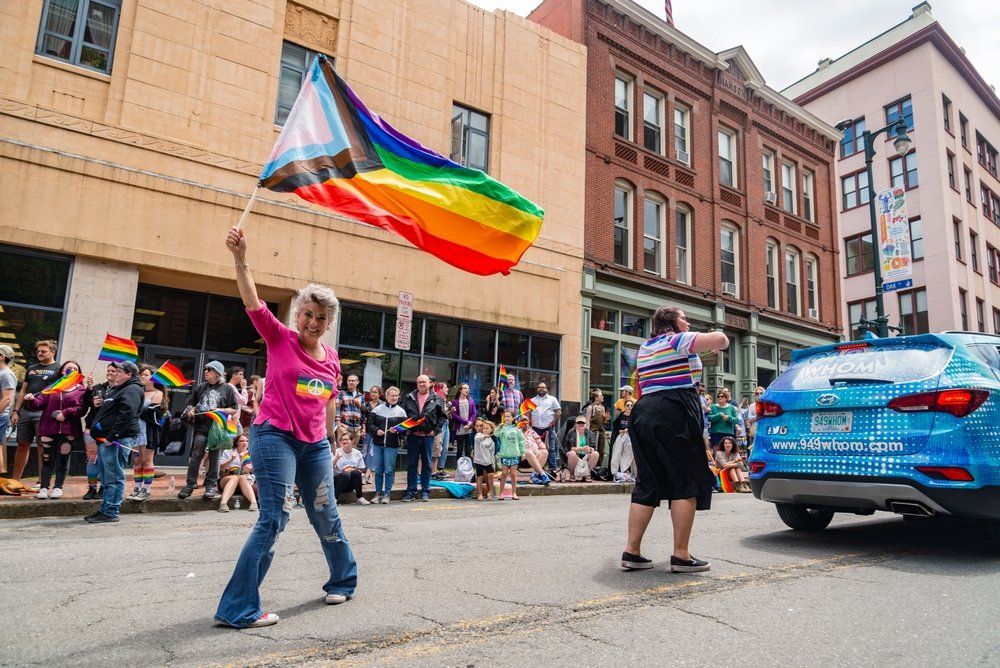
            Woman waving flag at Pride in Portland, Maine

            Enrico Della Pietra / Shutterstock.com

            LGBTQ+ Pride in Portland, Maine – June 18, 2022

              Nondiscrimination laws: Maine has nondiscrimination laws in employment, housing, health care, education, public accommodations, and credit/lending.

              Marriage equality and parental rights: Maine has adoption and foster care nondiscrimination protections for LGBTQ+ parents, second-parent adoption for unmarried couples and confirmatory adoption, and recognition for parents using assisted reproductive technologies. It also has family leave laws, which include LGBTQ-inclusive definitions.

              Education and youth policies: Maine does not restrict discussion of LGBTQ+ identities in classrooms, but it does not have LGBTQ-inclusive curriculum. It does not prevent transgender students from participating in sports or using school facilities based on their identities, and it does not require staff to forcibly out LGBTQ+ students to their guardians.

              Healthcare access and rights: Maine has “shield” laws protecting access to gender-affirming care for youth, as well as abortion. The state has also banned so-called conversion therapy for youth. Health insurance companies, including Medicaid, are not allowed to deny coverage related to gender transition. Private insurance is required to cover some fertility treatments, but Medicaid is not.Criminal justice:Maine’s hate crime laws encompass sexual orientation and gender identity, and it has banned the so-called “LGBTQ+ panic” defense.

              Maryland

              Marchers and floats in the first Annapolis Pride parade

              Keri Delaney / Shutterstock.com

              The inaugural Pride Parade in Annapolis, Maryland – June 29, 2019

                Nondiscrimination laws: Maryland has nondiscrimination laws in employment, housing, health care, education, public accommodations, and credit/lending.

                Marriage equality and parental rights: Maryland has adoption and foster care nondiscrimination protections for LGBTQ+ parents, confirmatory adoption, and recognition for parents using assisted reproductive technologies. It does not second-parent adoption for unmarried couples. It also has family leave laws, but their LGBTQ-inclusive definitions are not as robust as others.

                Education and youth policies: Maryland does not restrict discussion of LGBTQ+ identities in classrooms, but it does not have LGBTQ-inclusive curriculum. It does not prevent transgender students from participating in sports or using school facilities based on their identities, and it does not require staff to forcibly out LGBTQ+ students to their guardians.

                Healthcare access and rights: Maryland has “shield” laws protecting access to gender-affirming care for youth, as well as abortion. The state has also banned so-called conversion therapy for youth. Health insurance companies, including Medicaid, are not allowed to deny coverage related to gender transition. Private insurance is required to cover some fertility treatments, but Medicaid is not.

                Criminal justice: Maryland’s hate crime laws encompass sexual orientation and gender identity, and it has banned the so-called “LGBTQ+ panic” defense. It does have a law criminalizing the transmission of HIV.

                Massachusetts

                Pride flag over Boston Seaport

                Michael Moloney / Shutterstock.com

                LGBTQ+ Pride flag waving in the wind over the Boston Seaport – JUNE 2, 2019

                  Nondiscrimination laws: Massachusetts has nondiscrimination laws in employment, housing, education, public accommodations, and credit/lending. It has nondiscrimination laws for gender identity in private healthcare, but not for sexual orientation.

                  Marriage equality and parental rights: Massachusetts has adoption and foster care nondiscrimination protections for LGBTQ+ parents, second-parent adoption for unmarried couples, and recognition for parents using assisted reproductive technologies. It also has family leave laws, which include LGBTQ-inclusive definitions. It does not have confirmatory adoption.

                  Education and youth policies: Massachusetts does not restrict discussion of LGBTQ+ identities in classrooms, but it does not have LGBTQ-inclusive curriculum. It does not prevent transgender students from participating in sports or using school facilities based on their identities, and it does not require staff to forcibly out LGBTQ+ students to their guardians.

                  Healthcare access and rights: Massachusetts has “shield” laws protecting access to gender-affirming care for youth, as well as abortion. The state has also banned so-called conversion therapy for youth. Health insurance companies, including Medicaid, are not allowed to deny coverage related to gender transition. Private insurance is required to cover some fertility treatments, but Medicaid is not.

                  Criminal justice: Maryland’s hate crime laws encompass sexual orientation and gender identity, but it has not banned the so-called “LGBTQ+ panic” defense. It does not have nondiscrimination protections based on gender identity for jury selection.

                  Minnesota

                  Lowry Avenue Bridge in Minneapolis lit in Rainbow Colors

                  Shuttershock Creative

                  Lowry Avenue Bridge in Minneapolis lit in Rainbow Colors in Honor of Orlando Victims

                    Nondiscrimination laws: Minnesota has nondiscrimination laws in employment, housing, health care, education, public accommodations, and credit/lending.

                    Marriage equality and parental rights: Minnesota has adoption and foster care nondiscrimination protections for LGBTQ+ parents. It does have family leave laws, which include LGBTQ-inclusive definitions. It does not have second-parent adoption for unmarried couples, confirmatory adoption, nor recognition for parents using assisted reproductive technologies.

                    Education and youth policies: Minnesota does not restrict discussion of LGBTQ+ identities in classrooms, but it does not have LGBTQ-inclusive curriculum. It does not prevent transgender students from participating in sports or using school facilities based on their identities, and it does not require staff to forcibly out LGBTQ+ students to their guardians.

                    Healthcare access and rights: Minnesota has “shield” laws protecting access to gender-affirming care for youth, as well as abortion. The state has also banned so-called conversion therapy for youth. Health insurance companies, including Medicaid, are not allowed to deny coverage related to gender transition. However, they are not required to cover fertility treatments.

                    Criminal justice: Minnesota’s hate crime laws encompass sexual orientation and gender identity, and it has banned the so-called “LGBTQ+ panic” defense.

                    Nevada

                    Las Vegas Pride parade float

                    Kobby Dagan / Shutterstock

                    LGBTQ+ Pride parade in Las Vegas, Nevada – October 21 , 2016

                      Nondiscrimination laws: Nevada has nondiscrimination laws in employment, housing, health care, education, public accommodations, and credit/lending.

                      Marriage equality and parental rights: Nevada has adoption and foster care nondiscrimination protections for LGBTQ+ parents, second-parent adoption for unmarried couples, and recognition for parents using assisted reproductive technologies. It also has family leave laws, which include LGBTQ-inclusive definitions. It does not have confirmatory adoption.

                      Education and youth policies: Nevada does not restrict discussion of LGBTQ+ identities in classrooms, and instead requires curriculum to be LGBTQ-inclusive, which parents are not required to be notified of. It does not prevent transgender students from participating in sports or using school facilities based on their identities, but it does not require staff to forcibly out students who change their gender identity to their guardians

                      Healthcare access and rights: Nevada does not have shield laws for gender-affirming care and abortion. The state has also banned so-called conversion therapy for youth. Health insurance companies, including Medicaid, are not allowed to deny coverage related to gender transition. However, they are not required to cover fertility treatments.

                      Criminal justice: Nevada’s hate crime laws encompass sexual orientation and gender identity, and it has banned the so-called “LGBTQ+ panic” defense. It does not have nondiscrimination protections based on gender identity for jury selection.

                      New Jersey

                      Rainbow crosswalk in Hoboken, New Jersey

                      Kirkam / Shutterstock.com

                      Rainbow LGBTQ+ Pride crosswalk in Hoboken, New Jersey, – June 25, 2023

                        Nondiscrimination laws: New Jersey has nondiscrimination laws in employment, housing, education, public accommodations, and credit/lending. It has nondiscrimination laws for gender identity in private healthcare, but not for sexual orientation.

                        Marriage equality and parental rights: New Jersey has adoption and foster care nondiscrimination protections for LGBTQ+ parents, and second-parent adoption for unmarried couples and confirmatory adoption. It also has family leave laws, which include LGBTQ-inclusive definitions. It does not have recognition for parents using assisted reproductive technologies.

                        Education and youth policies: New Jersey does not restrict discussion of LGBTQ+ identities in classrooms, and instead requires curriculum to be LGBTQ-inclusive, which parents are not required to be notified of. It does not prevent transgender students from participating in sports or using school facilities based on their identities, and it does not require staff to forcibly out LGBTQ+ students to their guardians.

                        Healthcare access and rights: New Jersey has “shield” laws protecting access to gender-affirming care for youth, as well as abortion. The state has also banned so-called conversion therapy for youth. Health insurance companies, including Medicaid, are not allowed to deny coverage related to gender transition. Private insurance is required to cover some fertility treatments, but Medicaid is not.

                        Criminal justice: New Jersey’s hate crime laws encompass sexual orientation and gender identity, and it has banned the so-called “LGBTQ+ panic” defense. It does not have nondiscrimination laws for LGBTQ+ people in jury selection.

                        New York

                        Empire State Building in rainbow colors

                        anaglic / Shutterstock.com

                        Empire State Building in rainbow colors in honor of the Orlando shooting victims, New York City – June 26, 2016

                          Nondiscrimination laws: New York has nondiscrimination laws in employment, housing, health care, education, public accommodations, and credit/lending.

                          Marriage equality and parental rights: New York has adoption and foster care nondiscrimination protections for LGBTQ+ parents, second-parent adoption for unmarried couples, and recognition for parents using assisted reproductive technologies. It also has family leave laws, which include LGBTQ-inclusive definitions. It does not have confirmatory adoption.

                          Education and youth policies: New York does not restrict discussion of LGBTQ+ identities in classrooms, but it does not have LGBTQ-inclusive curriculum. It does not prevent transgender students from participating in sports or using school facilities based on their identities, and it does not require staff to forcibly out LGBTQ+ students to their guardians.

                          Healthcare access and rights: New York has “shield” laws protecting access to gender-affirming care for youth, as well as abortion. The state has also banned so-called conversion therapy for youth. Health insurance companies, including Medicaid, are not allowed to deny coverage related to gender transition. Private insurance and Medicaid are also required to cover some fertility treatments.

                          Criminal justice: New York’s hate crime laws encompass sexual orientation and gender identity, and it has banned the so-called “LGBTQ+ panic” defense.

                          Oregon

                          Protestors wear rainbow flag capes and carry a sign reading "Be nice, you're in Oregon"

                          Alexander Oganezov / Shutterstock.com

                          Protestors wear rainbow flag capes and carry a sign reading “Be nice, you’re in Oregon” at anti-fascism protest in Portland, Oregon – August 17, 2019

                            Nondiscrimination laws: Oregon has nondiscrimination laws in employment, housing, health care, education, and public accommodations. It does not have nondiscrimination laws in credit/lending.

                            Marriage equality and parental rights: Oregon has adoption and foster care nondiscrimination protections for LGBTQ+ parents and second-parent adoption for unmarried couples. It does have family leave laws, which include LGBTQ-inclusive definitions. It does not have confirmatory adoption, nor recognition for parents using assisted reproductive technologies.

                            Education and youth policies: Oregon does not prevent transgender students from participating in sports or using school facilities based on their identities, and it does not require staff to forcibly out LGBTQ+ students to their guardians. It does not restrict discussion of LGBTQ+ identities in classrooms, and instead requires curriculum to be LGBTQ-inclusive, which parents are not required to be notified of.

                            Healthcare access and rights: Oregon has “shield” laws protecting access to gender-affirming care for youth, as well as abortion. The state has also banned so-called conversion therapy for youth. Health insurance companies, including Medicaid, are not allowed to deny coverage related to gender transition. However, they are not required to cover fertility treatments.

                            Criminal justice: Oregon’s hate crime laws encompass sexual orientation and gender identity, and it has banned the so-called “LGBTQ+ panic” defense.

                            Rhode Island

                            Rainbow flags on bridge over water in Providence, Rhode Island

                            Anthony Ricci / Shutterstock.com

                            Pride festival in downtown Providence, Rhode Island – June 17, 2017

                              Nondiscrimination laws: Rhode Island has nondiscrimination laws in employment, housing, education, public accommodations, and credit/lending. It has nondiscrimination laws for gender identity in private healthcare, but not for sexual orientation. It also has a broad “Religious Exemption” law.

                              Marriage equality and parental rights: Rhode Island has adoption and foster care nondiscrimination protections for LGBTQ+ parents, second-parent adoption for unmarried couples and confirmatory adoption, and recognition for parents using assisted reproductive technologies. It also has family leave laws, but their LGBTQ-inclusive definitions are not as robust as others.

                              Education and youth policies: Rhode Island does not restrict discussion of LGBTQ+ identities in classrooms, but it does not have LGBTQ-inclusive curriculum. It does not prevent transgender students from participating in sports or using school facilities based on their identities, and it does not require staff to forcibly out LGBTQ+ students to their guardians.

                              Healthcare access and rights: Rhode Island has “shield” laws protecting access to gender-affirming care for youth, as well as abortion. The state has also banned so-called conversion therapy for youth. Health insurance companies, including Medicaid, are not allowed to deny coverage related to gender transition. Private insurance is required to cover some fertility treatments, but Medicaid is not.

                              Criminal justice: Rhode Island’s hate crime laws encompass sexual orientation and gender identity, and it has banned the so-called “LGBTQ+ panic” defense. It does not have nondiscrimination laws for LGBTQ+ people in jury selection.

                              Vermont
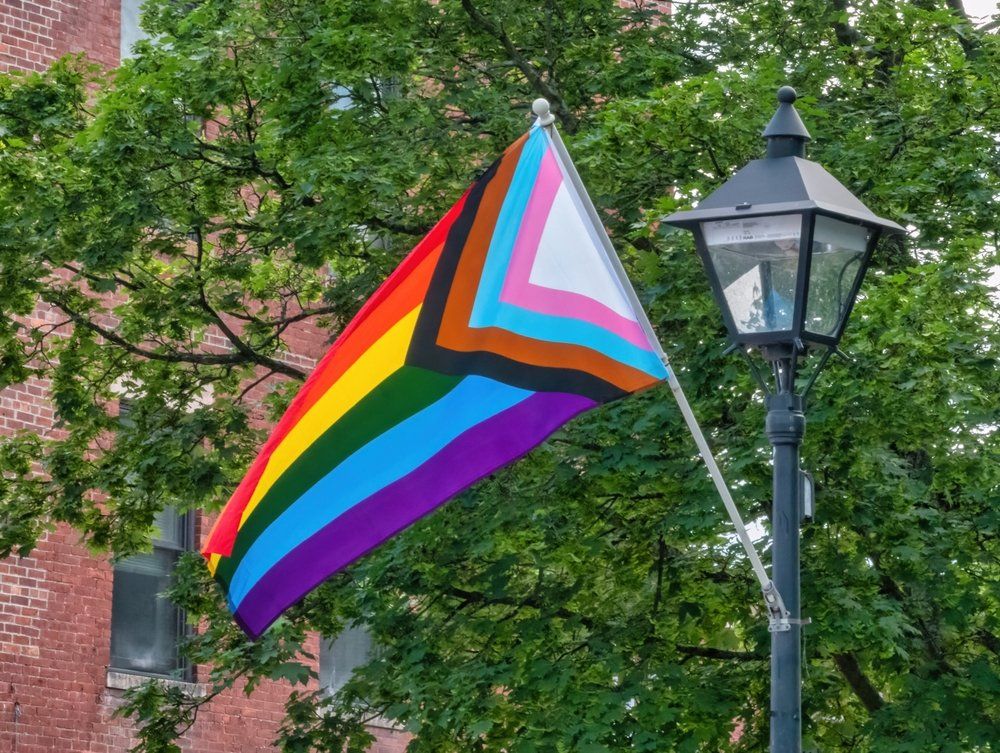
                              Pride flag on lamppost in Montpelier, Vermont

                              Charles Patrick Ewing / Shutterstock.com

                              LGBTQ+ Pride flag on lamppost in Montpelier, Vermont – June 11, 2022

                                Nondiscrimination laws: Vermont has nondiscrimination laws in employment, housing, health care, education, public accommodations, and credit/lending.

                                Marriage equality and parental rights: Vermont has adoption and foster care nondiscrimination protections for LGBTQ+ parents, second-parent adoption for unmarried couples, and recognition for parents using assisted reproductive technologies. It also has family leave laws, which include LGBTQ-inclusive definitions. It does not have confirmatory adoption.

                                Education and youth policies: Vermont does not restrict discussion of LGBTQ+ identities in classrooms, but it does not have LGBTQ-inclusive curriculum. It does not prevent transgender students from participating in sports or using school facilities based on their identities, and it does not require staff to forcibly out LGBTQ+ students to their guardians.

                                Healthcare access and rights: Vermont has “shield” laws protecting access to gender-affirming care for youth, as well as abortion. The state has also banned so-called conversion therapy for youth. Health insurance companies, including Medicaid, are not allowed to deny coverage related to gender transition. However, state employees who are transgender do not have inclusive health benefits. Insurance companies are also not required to cover fertility treatments.

                                Criminal justice: Vermont’s hate crime laws encompass sexual orientation and gender identity, and it has banned the so-called “LGBTQ+ panic” defense. It does not have nondiscrimination laws for LGBTQ+ people in jury selection.

                                Washington
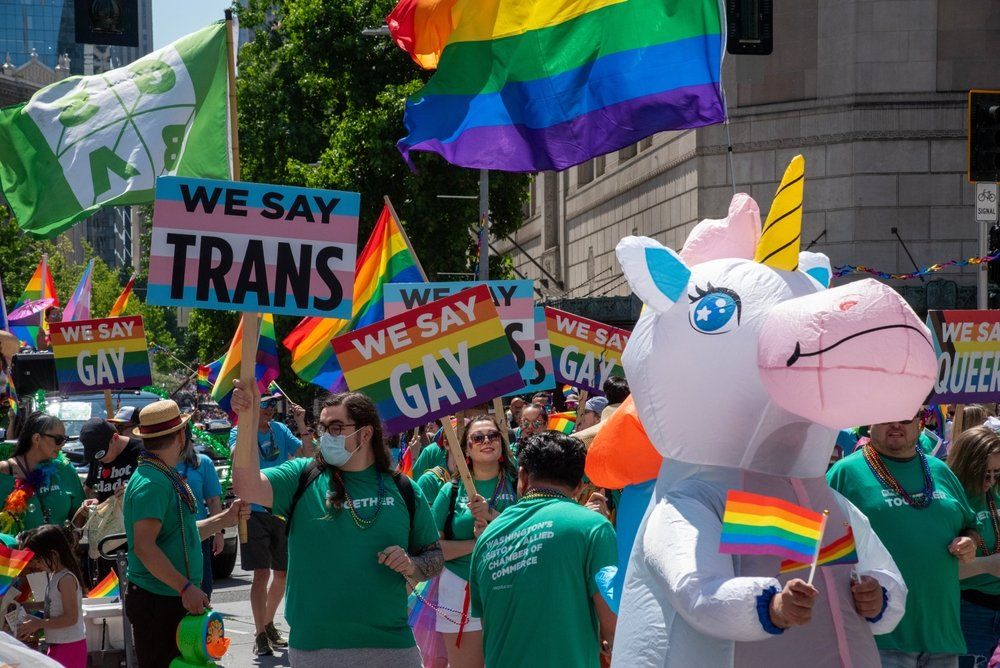
                                People carrying "We say trans" and "We say gay" signs at Seattle Pride

                                SeaRick1 / Shutterstock.com

                                People carrying rainbow signs reading “We say trans” and “We say gay” at LGBTQ+ Pride in Seattle, Washington – June 25, 2023

                                  Nondiscrimination laws: Washington has nondiscrimination laws in employment, housing, health care, education, public accommodations, and credit/lending.

                                  Marriage equality and parental rights: Washington has adoption and foster care nondiscrimination protections for LGBTQ+ parents and recognition for parents using assisted reproductive technologies.. It does have family leave laws, which include LGBTQ-inclusive definitions. It does not have second-parent adoption for unmarried couples, nor confirmatory adoption.

                                  Education and youth policies: Washington does not restrict discussion of LGBTQ+ identities in classrooms, and instead requires curriculum to be LGBTQ-inclusive, which parents are not required to be notified of. It does not prevent transgender students from participating in sports or using school facilities based on their identities, and it does not require staff to forcibly out LGBTQ+ students to their guardians.

                                  Healthcare access and rights: Washington has “shield” laws protecting access to gender-affirming care for youth, as well as abortion. The state has also banned so-called conversion therapy for youth. Health insurance companies, including Medicaid, are not allowed to deny coverage related to gender transition. However, they are not required to cover fertility treatments.

                                  Criminal justice: Washington’s hate crime laws encompass sexual orientation and gender identity, and it has banned the so-called “LGBTQ+ panic” defense. It does have a law criminalizing the transmission of HIV.

                                  Honorable mentions
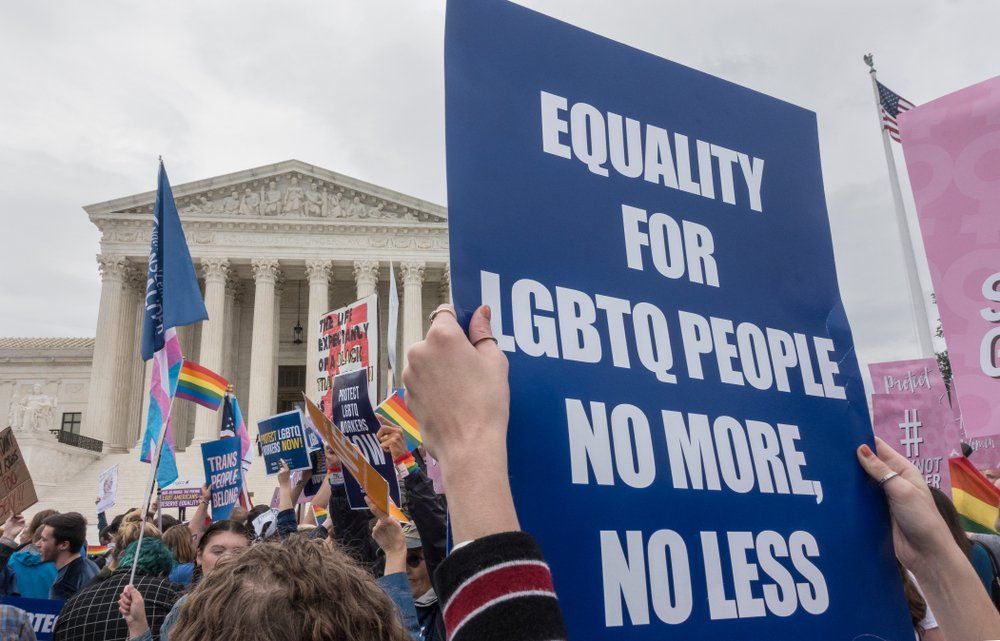
                                  Sign outside SCOTUS reading "Equality for LGBTQ people no more, no less"

                                  Bob Korn / Shutterstock.com

                                  Rally for LGBTQ rights outside Supreme Court in Washington, D.C. – OCT. 8, 2019

                                    Washington, D.C. also ranked high on MAP’s assessment, though it does not currently have statehood.

                                    Other states that ranked above average include: Delaware, Hawaii, Michigan, New Hampshire, New Mexico, and Virginia.

                                    Blog at WordPress.com.

                                    Up ↑