Proposed California law could force social media companies to censor LGBTQ+ content

This blog originally appeared at LGBTQ Nation.

A new California social media law could harm LGBTQ+ youth, according to an internet civil liberties group. The group, the Electronic Frontier Foundation (EFF), has advised California Attorney General Rob Bonta (D) not to approve the proposed law for an upcoming voter referendum.

Two advocates have called it “a misguided and unconstitutional proposal.”

The law, entitled “The Common Sense Initiative to Protect California Kids Online,” seeks to protect minors from specific online “injuries” by allowing people to sue social media companies for $5,000 per violation, up to $1 million per child, according to The Sacramento Bee.

“It would be up to the courts to decide the merits of a parent’s claim,” explains James Steyer, the CEO and founder of Common Sense Media, a nonprofit that provides information on the suitability of tech platforms for children. “Tech companies have avoided any accountability for their profit-driven actions and it is time to change that, either through the Legislature or through the ballot.”

But the proposal currently doesn’t specifically list which “injuries” are covered or how social media companies could avoid inflicting them. That non-specificity concerns the EFF because they worry that the law could be used to censor LGBTQ+ content as “harmful.”


In a letter to Bonta, the EFF policy analyst Joe Mullin and senior staff attorney Aaron Mackey wrote that the proposed law violates social media companies’ constitutionally protected free speech rights and would result in the censoring of LGBTQ+ content.

“For example, elected officials in both California and other states have said that access to LGBTQ+ content harms children,” Mullin and Mackey wrote. “Lawsuits would likely push online services to restrict access to medical, health, and sexual information that many LGBTQ+ children need.”

Mullin and Mackey’s concern isn’t unprecedented. In fact, groups like the American Civil Liberties Union ACLU and the parents of transgender youth worry that a similar proposed federal law, the Kids Online Safety Act (KOSA), could compel social media companies to censor LGBTQ+ content to avoid possible lawsuits.

Specifically, the ACLU and parents of trans youth worry that state attorneys general who consider queerness a social fad or a form of mental illness that causes kids to harm themselves, participate in risky sexual behavior, and increase their risks for depression, suicide, or drug use would use KOSA to sue social media platforms companies.

“[The proposed state law] is a misguided and unconstitutional proposal that will restrict all Californians’ access to online information,” Mullin and Mackey added.

Pharmacies are allegedly disclosing private data to law enforcement without a warrant, according to lawmakers.

Democrats argue that it could aid prosecutors in states with strict abortion restrictions or bans.

Pharmacies disclose prescription records to law enforcement.

Lawmakers reveal that Americans’ prescription drug records are being shared with law enforcement without customer consent or a judge’s warrant in certain instances.


Democrats express concern over the disclosure, fearing that the policies of prominent retail pharmacy chains, permitted under federal regulations, might aid prosecutors in states with abortion restrictions to pursue individuals assisting women traveling for abortion procedures.


Lawmakers are urging Health and Human Services Secretary Xavier Becerra to enhance regulations, proposing that pharmacies should only disclose medical records to investigators upon judicial approval, seeking tighter control over the release of such sensitive information.


HHS has announced its efforts to finalize a rule that would reinforce current privacy regulations, especially safeguarding records linked to reproductive health.


“In our discussions with major pharmacies, it became evident that law enforcement agencies annually acquire the prescription records of numerous Americans in a clandestine manner, lacking a warrant,” they stated. “In numerous instances, pharmacies are disclosing confidential medical records without scrutiny by legal authorities. Despite the legal permission for pharmacies to notify customers about government requests for their data, most opt not to do so.”

Containers of abortion medications mifepristone (left) and misoprostol (right) at a clinic in Des Moines, Iowa, on September 22, 2010.


A letter, initially reported by The Washington Post, comes after an extensive congressional inquiry by Democrats into medical privacy following the U.S. Supreme Court’s decision to overturn Roe vs. Wade. It was endorsed by Senate Commerce Committee Chairman Ron Wyden, D-Oregon, and Democratic Representatives Pramila Jayapal of Washington and Sara Jacobs of California.


Pharmacies cited in the letter assert compliance with privacy laws and federal health regulations, which presently don’t necessitate a warrant signed by a judge. Frequently, law enforcement provides subpoenas endorsed by a government agency but not subjected to judicial review.

The CVS Pharmacy logo is visible on the building in Los Angeles, dated November 13, 2023.

CVS Health, one of the mentioned pharmacies, has proposed that regulators consider requiring a warrant or judge-issued subpoena. The company emphasizes that it depends on a legal team to ensure that all requests comply with the law.


“By law, we are obligated to keep most investigative requests from regulatory agencies and law enforcement confidential,” CVS stated in a response to ABC News. “For requests without a confidentiality directive, we assess on a case-by-case basis whether it is appropriate to inform the individual who is the subject of the request.”


According to the letter addressed to Becerra, pharmacies are contending with tens of thousands of requests annually, predominantly linked to civil litigation rather than criminal cases.


The matter is expected to gain heightened importance for Democrats as states continue to grapple with differing perspectives on abortion access, with some jurisdictions enacting laws targeting what they term “abortion trafficking,” or aiding a woman in traveling out of state for an abortion.

A generic image representing a medical prescription.


Federal regulations permit the prescription of mifepristone for patients up to 10 weeks of gestation, allowing them to pick it up at a local pharmacy under specific guidelines. Although the patient must be in a state where abortion is legal to obtain the drug, pharmacy access has helped abortion providers in states like California, Colorado, and Illinois serve more patients through virtual clinics.


Anti-abortion rights groups have filed lawsuits in an attempt to remove mifepristone from the market. The Supreme Court recently agreed to hear the case, with a likely ruling expected by next summer.


Lawmakers and privacy experts are concerned that large pharmacy chains, with access to a person’s medical records across multiple states, could be exploited by prosecutors seeking to target individuals assisting women in traveling for abortions.


Lawmakers are urging the Biden administration to mandate, under the Health Insurance Portability and Accountability Act (HIPAA), that pharmacies require a warrant before sharing sensitive information. They also advocate for notifying customers, unless a judge deems it would impede an investigation.


Forty-four out of 50 US states exacerbate inequality with ‘upside-down’ taxes.

Recent studies reveal that the poorest fifth of households pay, on average, a tax rate 60% higher than the top 1% of households.

An analysis has determined that 44 out of the 50 US states contribute to inequality by imposing a lower share of income taxes on the wealthy compared to lower-income individuals.

The latest research reveals that state and local tax systems are ‘upside-down,’ with inadequate or absent personal income taxes in several states enabling wealthier Americans to evade taxes. This imbalance is exacerbated by a dependence on regressive sales and excise taxes, which disproportionately affect lower-income individuals.

When surveying public opinion on a fair tax code, the consensus is overwhelmingly against the idea that the wealthiest should pay the least,” remarked Carl Davis, Research Director of the Institute on Taxation and Economic Policy (ITEP), the organization behind the analysis.


“But despite this public sentiment, a significant disparity exists between what citizens desire and the tax systems currently in place in most states. It’s a concerning mismatch between public preferences and the actions taken by state legislators,” highlighted Carl Davis, Research Director of the Institute on Taxation and Economic Policy (ITEP).


“Out of the 50 states, along with the District of Columbia, merely six states boast tax systems designed to alleviate rather than exacerbate inequality. On average, the poorest fifth of individuals face a tax rate 60% higher than the top 1% of households in the majority of states,” emphasized the report.


“The ultra-wealthy receive notably favorable treatment from the tax system, with the top 1% contributing less than any other income group in 42 states. Additionally, in 36 states, the most impoverished residents are subjected to a higher tax rate than any other demographic,” highlighted the analysis.

Ranked in order of regressive taxation, the states with the most inequitable tax systems are Florida, Washington, Tennessee, Pennsylvania, and Nevada. Conversely, the least regressive jurisdictions are the District of Columbia, Minnesota, Vermont, New York, and California.

State-level policies, including tax cuts benefiting the affluent under the guise of stimulating economic activity, have exacerbated this issue, according to the report. In recent decades, inequality in the US has surpassed that of comparable countries. While certain pandemic-era measures, like a child tax credit, temporarily alleviated the burden on the poorest, many of these interventions have expired.


“But we know this doesn’t have to be the case,” stated Aidan Davis, ITEP’s state policy director.


“There’s a clear path to reverse regressive tax systems, and we’ve seen several states come close to achieving it. The regressive state tax laws we witness today are a deliberate policy choice, and it’s evident that lawmakers have better options available,” expressed Aidan Davis, ITEP’s state policy director.

This article was updated on January 11, 2024. Due to inaccurate information provided to us, an earlier version incorrectly listed New Jersey as the fifth least regressive tax jurisdiction according to the ITEP report, when it should be California.

About 300 individuals participated in a “guerrilla drag show” as a form of protest against an anti-transgender event.

This blog originally appeared at LGBTQ Nation.

“I dislike the necessity of being present to demonstrate our existence…yet, I also appreciate witnessing so many individuals standing up for this community,” expressed one of the performers.


Approximately 300 individuals attended a “guerrilla drag show” held this week outside an event featuring anti-transgender speakers. The anti-trans event, organized by the conservative student group Turning Point USA, occurred on Cal Poly’s campus in San Luis Obispo, California. It included speeches by de-transition advocate Chloe Cole and Canadian anti-LGBTQ+ activist Chris Elston.

Cole and Elston are currently part of a speaking tour titled “A Dad & A Detransitioner’s Take on the Transgender Movement.” Promoted by Turning Point on Instagram, the event claimed that the speakers would “explain what the transgender movement really is, the truth about it, and the myths that surround it!”

Chloe Cole, a detransitioner with right-wing views, has emerged as a strong advocate for anti-trans laws and policies. Chris Elston, known for wearing sandwich-board signs with anti-trans slogans, gained attention in 2020 and 2021 by displaying a billboard and wearing a sign that declared “I (heart) J.K. Rowling.” He also engaged in confrontations with women whom he perceived as overly supportive of trans rights.

To counter the anti-trans event hosted by Turning Point USA, the Cal Poly Drag Club organized a drag show outside the venue.

“The Drag Club stands as a beacon for the queer community and our allies. We’re appalled by Turning Point USA’s anti-trans agenda on our campus. In protest, we’re hosting a guerrilla drag show to embrace the love and queer joy present here…”

“Unlike the 300 attendees at the drag show, only 100 were present inside to hear the anti-trans speakers, as reported by San Luis Obispo’s The Tribune.”

“Video footage of the drag show captures hundreds of students cheering and dancing joyfully as they witness the performances.”


“I dislike having to be present to affirm our existence and demonstrate our pride, success, and resilience as trans individuals. However, I appreciate the overwhelming support shown by so many people for our community,” expressed Vinny Torres, drag club vice president and performer known as Skinny Mocha. “It’s a mix of emotions, but the solidarity is heartening.”


A university spokesperson responded to upset students who accused the school of insufficient action against Turning Point’s event, asserting the institution’s position.

“We acknowledge the concerns about specific guest speakers at Cal Poly,” stated spokesperson Matt Lazier. “However, it is not the university’s responsibility to determine who can or cannot share their perspectives on campus.”

California governor signs bills to enhance the state’s protections for LGBTQ people

This blog originally appeared at NBC News.

The governor of California has approved legislation aimed at strengthening the state’s safeguards for LGBTQ individuals.

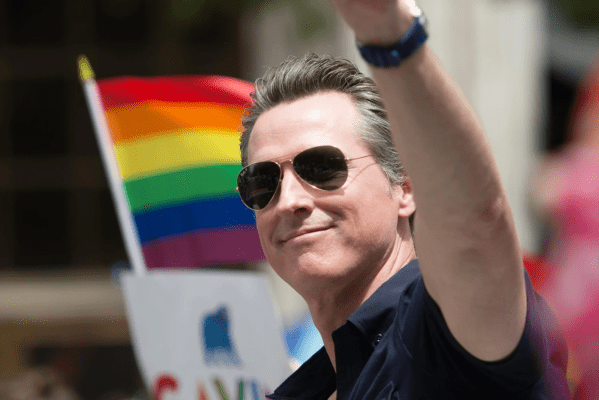
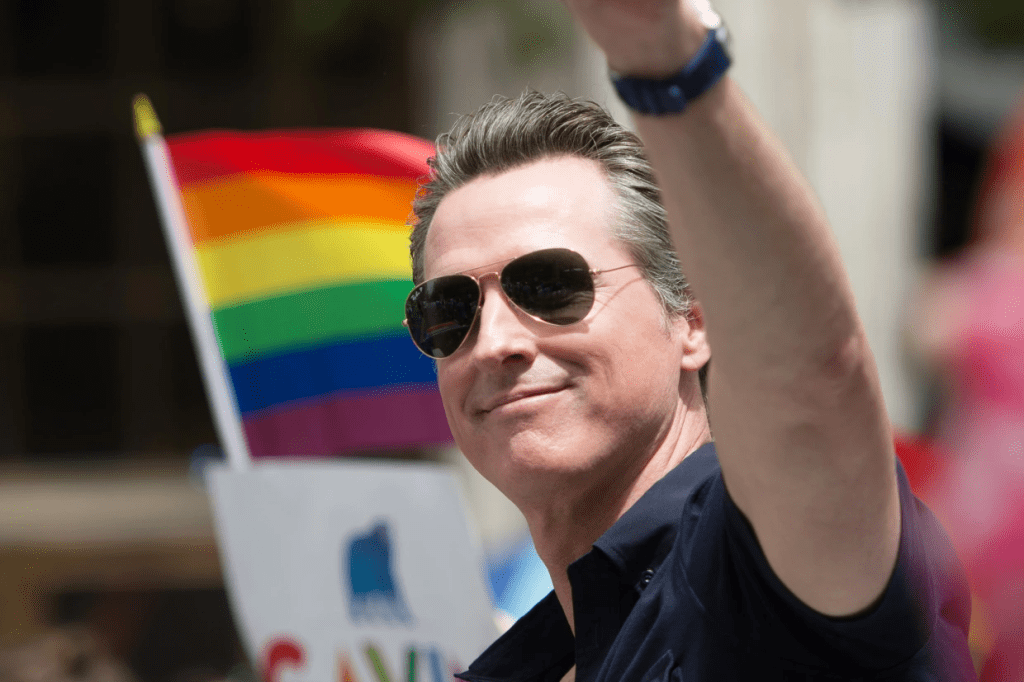
Gavin Newsom during the San Francisco Pride parade in 2017.

California Governor Gavin Newsom signed a series of bills on Saturday, with the intention of enhancing the state’s protections for LGBTQ individuals. This action followed a contentious veto issued by the governor the previous day, which drew criticism from advocates.

The recently enacted laws encompass measures aimed at supporting LGBTQ youth. Among these, one law establishes timelines for mandatory cultural competency training for public school teachers and staff. Another law establishes an advisory task force dedicated to identifying the needs of LGBTQ students and promoting supportive initiatives. Additionally, a third law mandates that families demonstrate the ability and willingness to address the needs of a child in foster care, irrespective of their sexual orientation or gender identity.

In a statement, Governor Newsom emphasized California’s commitment to maintaining comprehensive laws for the protection and support of the LGBTQ+ community. He expressed that the newly enacted measures aim to safeguard vulnerable youth, foster acceptance, and cultivate more supportive environments within schools and communities.

Governor Newsom also approved a bill mandating that schools catering to students in the first through twelfth grades must provide at least one gender-neutral bathroom by the year 2026.

The legislation was prompted by a Southern California school district that implemented a policy mandating schools to inform parents when their children alter their pronouns or use a restroom associated with a gender different from the one documented in official records. The policy was temporarily halted by a judge following a lawsuit by California Attorney General Rob Bonta against the Chino Valley Unified School District, with the legal proceedings still underway.


The governor vetoed a bill on Friday that proposed judges should take into account a parent’s affirmation of their child’s gender identity when determining custody and visitation arrangements.

Assembly member Lori Wilson, a Democrat who authored the bill and has an adult son who came out as transgender during adolescence, was among the LGBTQ advocates expressing criticism for the governor’s decision.

“I’ve been disheartened over the last few years as I watched the rising hate and heard the vitriol toward the trans community. My intent with this bill was to give them a voice, particularly in the family court system where a non-affirming parent could have a detrimental impact on the mental health and well-being of a child,” Wilson said in a statement.

Newsom said existing laws already require courts to consider health, safety, and welfare when determining the best interests of a child in custody cases, including the parent’s affirmation of the child’s gender identity.

The veto comes amid intense political battles across the country over transgender rights, including efforts to impose bans on gender-affirming care, bar trans athletes from girls and women’s sports, and require schools to notify parents if their children ask to use different pronouns or change their gender identity.

Leaving Texas: Why People Are Exiting the Lone Star State

While some homebuyers seek the American dream in Texas, many are leaving the state to find it elsewhere.

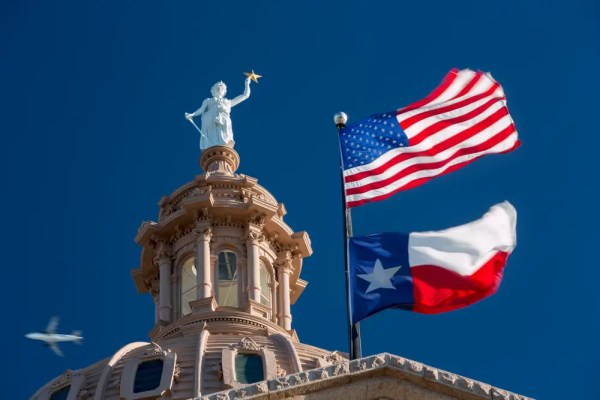
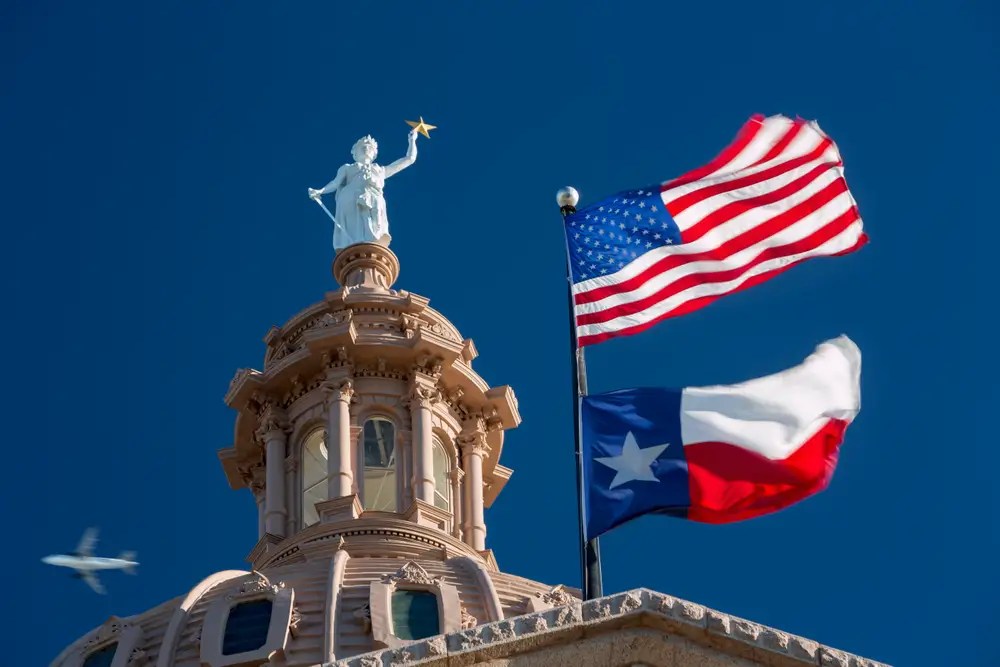
The Texas state capitol in Austin.
  • Texas experienced a surge in popularity during the pandemic that drove home prices up 30%, data suggests.
  • The political freedom some sought in the state has encouraged others to leave.
  • Have you left or do you plan to leave Texas? Business Insider wants to hear from you.

“Lifelong Texan here. I am definitely preparing an exit strategy,” one anonymous user posted on a Reddit thread about leaving Texas. “From the heat to the stripping away of human rights, I’m just done.”

Another poster struck a similar chord. “I’ve been in Texas most of my life, and my husband and I were always planning on retiring here (in about 5 years from now),” they wrote. “But between this intense heat, crazy politics, and cost of living, we’ve decided to leave for good and head to Knoxville.”

While individuals have been relocating to the Lone Star state to leverage its comparatively affordable real estate, political environment, and employment prospects, these very characteristics are prompting others to depart. Between 2021 and 2022, over 494,000 people exited Texas (although the state experienced a net population gain of 174,261). This trend might escalate as housing expenses soar and the political scene in the state becomes increasingly polarized.

Housing costs have some looking for affordability elsewhere

Texas witnessed a spike in popularity during the pandemic, leading to a 30% increase in home prices from 2019, as per data from Realtor.com. Simultaneously, residents are contending with property taxes that rank among the highest in the country.

The relocation path from California to Texas became the most popular in the United States from 2021 to 2022, with nearly 108,000 individuals opting for this move in search of more affordable housing. However, there is one significant drawback.

“The property-tax percentage rate is higher,” Marie Bailey, a Realtor who moved from El Segundo, California, to Prosper, Texas, in 2017, previously told Business Insider. “Every time a prospective client calls me, it’s one of the first things I talk about.”

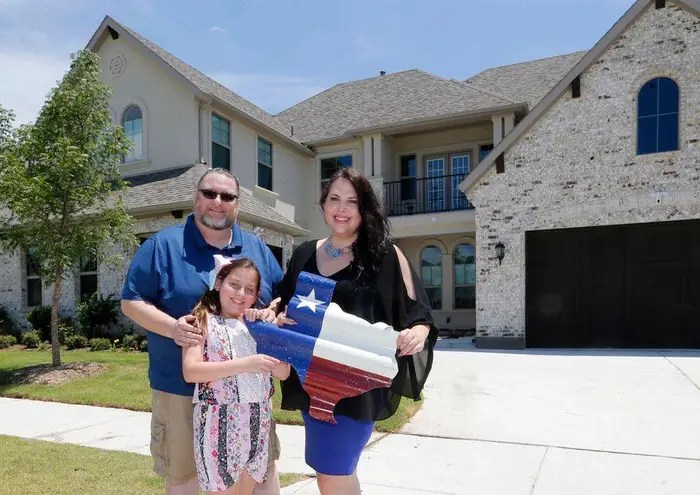
Marie Bailey and her family moved to Prosper, Texas in 2017, where she is now a realtor helping other Californians make the move to The Lone Star State. 

As Texas begins to lose its status as a budget-friendly and affordable housing option, a growing number of residents are redirecting their attention to the Midwest.

Texans are increasingly turning to the Midwest, which has gained popularity due to being the most budget-friendly region, according to Hannah Jones, an economic research analyst at Realtor.com. The trend of buyers seeking affordability is on the rise, marking a notable shift in preferences.

The political freedom many moved to the state for is driving others away

When selecting a place to reside, politics hold equal importance to housing affordability for numerous Americans.

A survey conducted in 2022 by the mortgage marketplace LendingTree, which included 1,545 participants, revealed that 39% of respondents have either moved or would contemplate relocating to another state if their political beliefs did not align with the majority.

Jackie Burse, a self-identified Conservative, is one of the many Californians who have sought out Texas for its political environment. Burse told BI in September that it played a crucial role in her decision to relocate to Texas in 2021.

Jackie Burse grabbing a drink.

According to Burse, Texas provides a space where individuals can hold diverse beliefs without facing condemnation, a contrast to her experience in California.

In contrast to Burse’s perspective, Bob McCranie, a real estate broker based in Dallas, expressed to KXAN News in July that the lack of inclusivity in Texas has led to an unwelcoming environment.

“What we all want as human beings is to feel a level of safety, and if your state is making you feel unsafe, there’s no reason to stay,” McCranie said. “I can’t believe somebody could look at, let’s say, California or New York versus Texas and Florida and say that LGBTQ people feel more welcome in Florida and Texas.”

Click here to see full blog: https://www.businessinsider.com/leaving-texas-political-freedom-property-taxes-housing-costs-2023-11

ABC News: California store owner shot dead in dispute over displaying Pride flag: Police

This blog originally appeared at ABC News.

The suspect was killed in a confrontation with sheriff deputies.

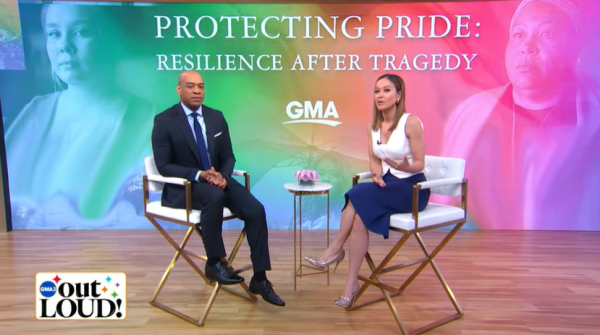
Club Q shooting survivor remembers partner

GMA Digital shares the story of drag performer Wyatt Kent who lost his boyfriend during the devastating shooting at Club Q in Colorado Springs.

A California clothing store owner and designer was killed allegedly by a gunman who confronted her about a rainbow Pride flag outside her business and shot her after making disparaging remarks about the display, according to police.

Laura Ann Carleton, a married mother of nine children, was killed Friday outside her clothing store in Cedar Glen, an unincorporated San Bernardino County community on the shores of Lake Arrowhead, according to a statement from the San Bernardino County Sheriff’s Office.

The suspected killer, who has not been publicly identified, fled the crime scene on foot, but was found by sheriff’s deputies near Carleton’s store, where he was fatally shot in a confrontation, authorities said. The sheriff’s office said the assailant was armed with a handgun and refused orders to drop the weapon.

“When deputies attempted to contact the suspect, a lethal force encounter occurred and the suspect was pronounced deceased,” according to a statement from the sheriff’s office.

No deputies were injured during the incident.

Click here to see full blog: https://abcnews.go.com/US/california-store-owner-shot-dead-dispute-displaying-pride/story?id=102408818

Protesters brawl as Southern California school district decides whether to recognize Pride Month

This blog originally appeared at AP News.

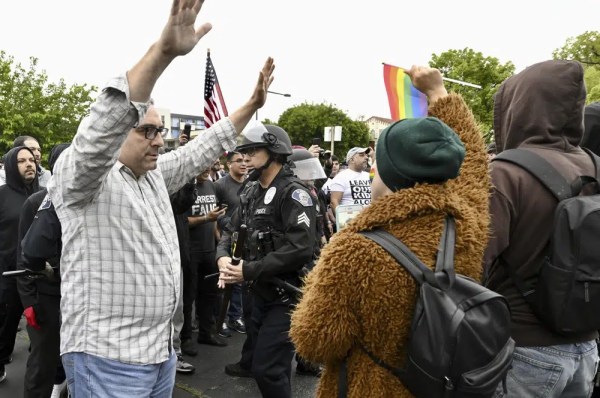
GLENDALE, Calif. (AP) — Protesters briefly scuffled and punches flew Tuesday as a Southern California school district decided whether to recognize June as Pride month.

Conservative groups and LGBTQ+ rights supporters protest as police try to maintain order outside the Glendale Unified School District offices in Glendale, Calif., Tuesday, June 6, 2023. Several hundred people gathered in the parking lot of the district headquarters, split between those who support or oppose teaching about exposing youngsters to LGBTQ+ issues in schools. (Keith Birmingham/The Orange County Register via AP)

Several hundred people gathered in the parking lot of the Glendale Unified School District headquarters, split between those who support or oppose exposing youngsters to LGBTQ+ issues in schools.

Some opponents wore T-shirts emblazoned with: “Leave our kids alone.”

It was the same slogan used by some demonstrators last Friday outside Saticoy Elementary School in Los Angeles to protest a planned Pride assembly.

As in Glendale, police officers had to separate groups of protesters and counterprotesters who came to blows.

Across the nation, Pride month celebrations are kicking off amid rising backlash in some places against LGBTQ+ rights. Community parade organizers, school districts and even professional sports terms have faced protests for flying rainbow flags and honoring drag performers. While some Republican-led states are limiting classroom conversations about gender and sexuality and banning gender-affirming care, some Democratic cities and states are seeking to expand LGBTQ+ rights and to honor the community’s contributions.

click here to see full blog: https://apnews.com/article/glendale-school-district-pride-month-protests-fighting-adcb1e4f9051256a4f35fb3174137229

The Best US States for LGBTQ Couples: Where to Live and Thrive – queer voices

This blog originally appeared at Queer Voices.

In terms of LGBTQ rights and acceptance, the United States has made significant progress, but the level of LGBTQ-friendliness can vary across states. In this article, we will discuss five states that are considered the best for LGBTQ couples, taking into account factors such as anti-discrimination laws, marriage equality, and LGBTQ community resources.

California:

California is known for its welcoming environment for LGBTQ individuals and couples. The state legalized same-sex marriage early on and has strict anti-discrimination laws. Cities like San Francisco have vibrant LGBTQ communities and host large-scale pride events.

New York:

New York has a rich history of LGBTQ activism and a sizable LGBTQ population. The state legalized same-sex marriage in 2011 and has strong anti-discrimination laws. New York City, particularly neighborhoods like Chelsea and Greenwich Village, is known for its LGBTQ-friendly atmosphere and iconic landmarks.

Virginia:

Although not typically mentioned among LGBTQ-friendly states, Virginia has made significant progress recently. The Virginia Values Act protects LGBTQ individuals from discrimination, and the state has a growing LGBTQ community with events like Hampton Roads Pride and Virginia PrideFest.

Massachusetts:

Massachusetts holds the distinction of being the first state to legalize same-sex marriage in 2004. It has a robust network of LGBTQ community centers, progressive anti-discrimination laws, and a vibrant LGBTQ tourism industry. Boston, in particular, has a thriving LGBTQ population.

Washington:

Washington state legalized same-sex marriage in 2012 and has enacted progressive legislation to protect LGBTQ rights. Seattle, in particular, has a strong LGBTQ community with ample resources and support services. The state is also known for its progressive politics and environmental activism.

It is important for LGBTQ couples to carefully consider their options and prioritize their needs when choosing a place to live or visit in the United States. The states mentioned above offer a welcoming environment, legal protections, vibrant LGBTQ communities, and an abundance of resources and support services.

CLICK HERE TO READ MORE FROM THE ORIGINAL BLOG

The 10 Best—and Cheapest—Cities for LGBTQ Homebuyers, 2022 – REALTOR.com

This blog originally appeared at Realtor.com

Pride Month means it’s time to celebrate all things that encourage the dignity, equality, and increased recognition of the LGBTQ community. So go ahead and wave that big, beautiful rainbow flag—and, just maybe, zero in on a place to buy a great new home.

It’s also the perfect time to pause and recognize that while the United States has come a long way from the 1969 Stonewall riots, which sparked the modern gay rights movement, 2022 is on track to break the record for the number of anti-LGBTQ bills introduced in states across the country, with at least 320 highly restrictive bills pending in state legislatures, according to the rights group Freedom for All Americans.

So, as we do each year, Realtor.com® searched for the most LGBTQ-friendly and affordable cities for homebuyers. We looked well past the big coastal cities famous for their thriving gay scenes—and wildly exorbitant home prices—like New York and San Francisco. Instead, we set our sights on smaller cities that are gay-friendly and budget-friendly, where housing is still modestly priced and the overall community and laws are more welcoming and favorable to lesbian, gay, bisexual, transgender, and queer individuals. All of these places have tons of fun things to do—and prices that are still (relatively) within reach.

Read Full Article – https://www.realtor.com/news/trends/the-most-affordable-lgbtq-friendly-places-to-live/


If you’re ready to look for a better state or county for you and your family (or family of choice), reach out to us at www.FleeRedStates.com

Blog at WordPress.com.

Up ↑