Canada ends sperm donor restrictions for gay & bisexual men in “precedent-setting” move

Read more at LGBTQ Nation.

The government agency Health Canada announced last week it has ended its restrictions on gay and bisexual sperm donors.

Aziz M. told CBC he has “had a wonderful experience” as a sperm donor, with one child conceived with his sperm remaining an active part of his life. But when he encouraged other queer friends to donate, he realized it wasn’t an option for many.

Health Canada’s policy until 2024 banned men from donating sperm if they had sex with other men within three months due to an alleged higher risk of HIV and other STIs. Aziz challenged the policy in 2023.

“It kind of reminded me of all the prejudice that we gay and bisexual men get in life and all the negative opinions that society often holds against us,” he explained. “It felt like it was a group judgment. Like, anybody from that group is having, you know, risky sexual behavior and they’re diseased.”

He decided to continue the suit even after Health Canada changed the language from banning men who have sex with men to anyone engaging in anal sex. Aziz felt that was merely transferring “an explicit discrimination to an implicit one” since “the same group of people are more likely to be disqualified.”

Affidavits submitted by three medical experts explained that the process in place to screen sperm for infectious disease was sufficient without needing to ban anyone for sexual behavior, CBC reported.

Dr. Mona Loutfy, who specializes in infectious diseases, reportedly wrote that HIV testing methods today “are highly sensitive and accurate, such that there is effectively no residual risk associated with current testing methods.”

And now, before Aziz presented the case in court, Health Canada announced it will completely eliminate the sexual behavior questions targeting gay and bisexual men from the donor screening process. In a statement, it said, “The Government of Canada is committed to making sure that sperm and ova donation policies are safe, non-discriminatory and based on scientific evidence.”

Bennett Jensen, legal director for the LGBTQ+ advocacy group Egale Canada, called the case “an important opportunity to examine long-standing assumptions about sexual orientation in relation to HIV.”

Jensen also told CTV News he is “filled with so much gratitude towards Aziz for tirelessly fighting this issue and not being willing to give up. It’s incredibly burdensome to be handling litigation, especially with respect to something that’s so personal. And I think that he’s done just an incredible public service for Canadians.”

Gregory Ko, a lawyer on the case, called the move “an important and precedent-setting step in ending decades-long discrimination against gay and bisexual men.”

Another lawyer, Frank Nasca, said the change “really took a massive push from Aziz and from others to get the government to really look closely.”

Canada does not allow payment for sperm donation and so suffers from a lack of supply. Emily McIntosh, executive director of the Canadian Fertility and Andrology Society, told CBC eliminating the unnecessary rules could help.

Aziz is excited about the update and hopes more queer men will donate as a result. “For a lot of queer people, it’s very hard to have to build our own family and to have our own kids,” he told CBC. “It takes a lot of money and a lot of effort. This is a way to contribute and enrich our lives at the same time.”

10 Overlooked Affordable LGBTQ Friendly Cities

As seen originally on Facebook Reels of Queer Money Podcast.

Can’t retire fabulously in the US? Try these👇

You don’t need a Silicon Valley paycheck or a Fire Island inheritance to retire fabulously.

Some of the gayest, prettiest, most “wait, I can live THERE?” cities are more affordable than you think.

And no, affordable does not mean cheap.

For this list, affordable means meaningfully less expensive than Chicago, using Numbeo’s cost of living including rent, while still offering LGBTQ+ safety, healthcare access, livability, and real retirement potential.

We also factored in Equaldex, ILGA-Europe where applicable, Williams Institute Global Acceptance Index, and our Queer Money Retirement Rating.

The updated winners?

10. Montpellier, France ~30% cheaper than Chicago Equaldex: 74 | ILGA: 60% | Williams GAI: 7.73 QMRR: 7/10

9. Leipzig, Germany ~25–35% cheaper Equaldex: 80 | ILGA: 70% | Williams GAI: 7.73 QMRR: 8/10

8. Ljubljana, Slovenia ~34% cheaper Equaldex: 65 | ILGA: 54% | Williams GAI: 6.21 QMRR: 8/10

7. Valletta/Sliema, Malta ~20–25% cheaper Equaldex: 80 | ILGA: 88% | Williams GAI: 8.01 QMRR: 8/10

6. Ghent, Belgium ~20–25% cheaper Equaldex: 78 | ILGA: 85% | Williams GAI: 7.95 QMRR: 8.5/10

5. Santiago, Chile ~50–55% cheaper Equaldex: 80 | Williams GAI: 6.83 QMRR: 8.5/10

4. Montréal, Canada ~32% cheaper Equaldex: 92 | Williams GAI: 9.02 QMRR: 8.5/10

3. Mérida, Mexico ~55% cheaper Equaldex: 48 | Williams GAI: 6.50 QMRR: 9/10

2. Valencia, Spain ~37% cheaper Equaldex: 100 | ILGA: 89% | Williams GAI: 8.77 QMRR: 9/10

1. Cascais, Portugal ~20–30% cheaper Equaldex: 77 | ILGA: 67% | Williams GAI: 6.87 QMRR: 10/10

Canadian doctors denied patients gender-affirming care, citing Trump’s executive order

Read more at LGBTQ Nation.

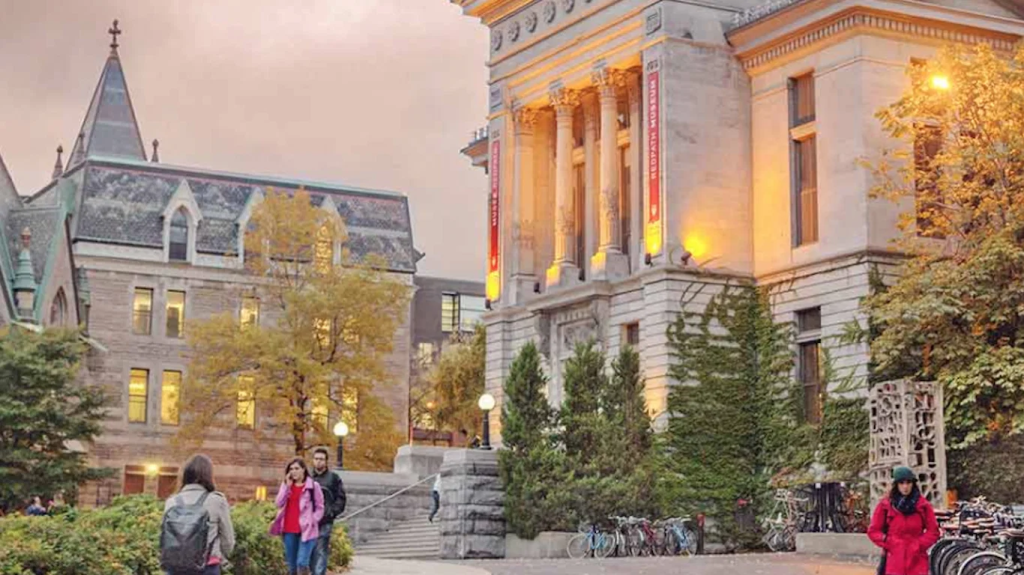
McGill University in Quebec has denied gender-affirming care to at least two trans American students since March, when the school adopted a preemptive policy denying hormone replacement therapy over fears the Trump administration would retaliate, two sources say.

The new policy is an embarrassment, said an American staffer for The Montreal Trans Patient Union (TPU), who spoke to CBC on the condition of anonymity.

“These are American laws. American laws don’t apply in Canada,” they said.

The staffer and another member of TPU, Emma Gimbert, were at a meeting at McGill’s Student Wellness Hub in March when doctors brought up the change in policy.

“They said they wouldn’t be prescribing HRT to American citizens who were under 19 because of the executive order that Donald Trump issued,” Gimbert said.

The student was referring to Trump’s executive order, Protecting Children from Chemical and Surgical Mutilation, issued a year ago in January, which directs federal agencies to carry out the American president’s crusade against transgender identity across the U.S. government.

“If you told me a month ago that a U.S. executive order would be influencing how doctors do their job across the border, I would have been like, no, that can’t be the case,” Gimbert said.

Canadians have been overwhelmingly critical of Trump and his trolling threats to their sovereignty since the start of his second term. McGill’s decision, from fiercely independent Quebec, no less, would seem antithetical to the rest of Canada’s posture facing Trump.

About 1000 Americans are currently enrolled at McGill, a public research university in Montreal known as “the Harvard of Canada.” Among nearly 40,000 students, a high proportion are from abroad.

Adding to the absurdity of a Canadian university bowing down to an American president, the decision may have been based in part on a clerical error.

The TPU staffer explained.

“The doctors said the reason for this was specifically the fact that the form the U.S. released had provisions for targeting Canadian doctors and taking down their information.”

The document in question was a snitch form issued by the U.S. Department of Health and Human Services to report health professionals administering gender-affirming care to minors in the U.S.

The drop-down menu, like many forms online, included the word “province” along with “state.”

Panicked administrators at McGill apparently thought that word put a target on Canadian medical professionals’ backs. HHS had even removed it by the time McGill denied the HRT to their American students.

McGill would neither confirm nor deny the existence of a policy barring Americans from gender-affirming care for fear of retaliation by Trump.

“Access to gender-affirming care is available to McGill students, including international students,” the university said in a statement.

“The medical aspects of this care are provided by licensed physicians. These decisions are not made by the university,” the school added, in a probably doomed effort to evade accountability from Canadians incensed at McGill’s failure to defend their independence.

“I think it’s definitely important for them to acknowledge what’s been going on because the way they’re currently treating this, it’s kind of covert,” Gimbert said. 

“We know this is something that they’re aware of. It’s just not something that they’re publicly talking about.”

Added the American TPU staffer: “I mean, we don’t say that 18-year-old Americans can’t buy alcohol here because the drinking age in the U.S. is 21.”

Top LGBTQ+ friendly countries in 2026

Read more at QNotes Carolinas.

For LGBTQ+ people, safety has never been an abstract idea. Concerns for our community show up in legislation, healthcare and how the government treats its citizens. In the United States, where LGBTQ+ rights are being rolled back at both the state and federal level following President Donald Trump’s reelection, many people are quietly asking the same question: where, if anywhere, does stability still exist, and what does real safety actually look like?

That question shapes real decisions. Not just about travel, but about long-term plans, family, work, medical care  and whether it is possible to build a future without constant political uncertainty. International data from organizations including ILGA-Europe and Equaldex, alongside migration analysis and residency reporting from Get Golden Visa, points to a widening global divide. Some countries are strengthening legal protections and expanding access to care. Others are narrowing definitions of who is protected under the law, often by targeting transgender people first and testing how much rollback the public will tolerate.

The countries highlighted here represent a snapshot of places that currently offer strong legal protections and relative social stability for LGBTQ+ people. This is by no means an exhaustive list, and conditions can change quickly as governments shift and political climates evolve. Still, these examples help illustrate what safety looks like when it is embedded into legal systems, healthcare infrastructure, and public accountability, rather than left to cultural goodwill or temporary leadership.

One country that consistently ranks at the top is Malta. It has held the number one position on ILGA-Europe’s Rainbow Index for multiple consecutive years, a reflection of both legal protections and enforcement. Same-sex marriage has been legal since 2017, conversion therapy is banned nationwide, and gender identity is explicitly protected under the constitution. Legal gender recognition is based on self-determination, without medical or psychiatric requirements, and those protections extend into healthcare, employment, education, and family law, creating long-term security rather than symbolic inclusion.

Iceland also continues to stand out for both legal protections and social acceptance. Same-sex marriage has been legal since 2010, non-binary gender markers are recognized, and gender-affirming care is available through the public healthcare system. Comprehensive anti-discrimination laws are paired with high levels of public trust in institutions, which means LGBTQ+ protections are not constantly relitigated or politicized, but treated as settled rights reflected in daily life.

.Finland has taken meaningful steps in recent years, particularly for transgender people. A 2023 update to its law allows transgender adults to change their gender through self-determination, removing medical gatekeeping that had long been criticized by advocacy groups. While non-binary recognition remains limited, Finland’s strong social safety net and political consensus around equality have kept LGBTQ+ rights largely outside culture war framing, offering stability rather than constant legal vulnerability.

Spain has long been viewed as one of Europe’s most LGBTQ+-affirming countries, and recent legislation has reinforced that reputation. Same-sex marriage has been legal since 2005, and a 2023 gender self-identification law allows people to change legal gender without medical or psychological evaluations. Conversion therapy is banned, and public opinion surveys consistently show strong support for LGBTQ+ equality, particularly in major cities where protections are paired with visible community infrastructure.

In North America, Canada has become a focal point for LGBTQ+ Americans seeking stability. Same-sex marriage has been legal since 2005, non-binary gender markers are available on federal identification, and conversion therapy was banned nationwide in 2022. Advocacy organizations and international reporting have documented a rise in inquiries from U.S. LGBTQ+ residents since the 2024 election, especially among transgender people weighing whether legal protections at home will continue to erode.

The Netherlands remains one of the most legally secure environments for LGBTQ+ people. As the first country to legalize same-sex marriage, it continues to offer robust anti-discrimination protections and publicly funded gender-affirming healthcare. For some U.S. citizens, the Dutch-American Friendship Treaty has made relocation more feasible, a trend that has accelerated since the 2024 US presidential election.

None of these countries are immune to political change, and none represent a perfect solution. But in 2026, they show what becomes possible when LGBTQ+ safety is treated as a structural commitment rather than a cultural preference. As rights erode in some places, the countries that choose to protect them are defining where dignity, stability, and the possibility of a future still exist.

How to Flee the U.S. Safely: Golden Visas, Healthcare & LGBTQ Rights | Dan Brotman Flee Red States

Are you thinking about leaving the United States for safety, stability, or a better quality of life? In this powerful conversation, we sit down with Dan Brotman, an American expat based in Montreal who specializes in investment migration—including Golden Visas, Digital Nomad Visas, and residency-by-investment options tailored to the LGBTQ+ community.

With an academic background in immigration policy, multiple citizenships, and years of frontline experience helping people relocate, Dan brings unmatched insight into how Americans can legally, safely, and strategically build a future outside the U.S.
Follow Dan on Instagram: @danbrotman
linktr.ee/danbrotman

🏡 IN THIS VIDEO, WE COVER:

🌍 Why Americans—Especially LGBTQ+ People—Are Exploring Life Abroad

We discuss political extremism, threats to civil rights, financial instability, and what it means to live somewhere your rights are not up for debate.

💶 Golden Visas & Migration Pathways

Dan explains the residency-by-investment programs opening doors across Europe, Latin America, and beyond—and why securing a visa before your “red line” is crossed is essential.

❤️‍🩹 Healthcare Without Fear

Real stories from Spain, Uruguay, and Canada:

€80/month private healthcare in Spain

A 5-day ICU stay for $19

An emergency room visit in Canada that cost $0

A U.S. insurance premium high enough to rent an apartment in Valencia

🧠 Financial Relief & Peace of Mind

We explore how predictable, low-cost healthcare abroad reduces anxiety for families who worry about a single medical emergency derailing their finances.

🎓 Education & Opportunity

Why families are sending their children to Europe—especially the Netherlands—for nearly free, world-class university education.

🏳️‍🌈 Rights, Safety & Community

Dan discusses LGBTQ+ rights, abortion access, universal healthcare, and gun laws in Canada—issues considered settled and not weaponized politically.

🚨 Red Lines & Safety Planning

We explore how LGBTQ+ people can assess danger, decide their personal boundaries, and obtain the documentation needed to leave quickly if the situation in the U.S. deteriorates.

This is an essential conversation for anyone considering relocation for safety, rights, opportunity, or long-term stability.

🔔 Subscribe for more guides on LGBTQ+ migration, Golden Visa pathways, and global relocation options.

Canada Updates U.S. Travel Warning for LGBTQ+ Individuals

Read more at Travel Market Report.

Canada has updated its travel advisory for the U.S. to warn LGBTQ+ travelers of increased scrutiny while crossing the border.

On Sept. 29, 2025, the Government of Canada revised its travel advisory for Canadians entering the United States. The updates include new details for entry and exit requirements regarding passports, visas, and U.S. permanent residents, as well as changes to law and culture that could impact 2SLGBTQI+ persons.

The new advisory cautions that U.S. immigration authorities may reevaluate visa status or residency eligibility in some cases, particularly for those with prior violations or irregularities. It also highlights potential challenges for travelers whose passport gender markers — such as Canada’s “X” designation — may not be recognized in U.S. federal systems, which are reportedly transitioning to require sex assigned at birth in some documentation.

“While the Government of Canada issues passports with a “X” gender identifier, it cannot guarantee your entry or transit through other countries,” the advisory warns. “You might face entry restrictions in countries that do not recognize the “X” gender identifier. Before you leave, verify this information with the closest foreign representative for your destination.” 

According to the updated advisory: “Federal systems in the U.S. are changing to no longer accept markers of gender identity. Sex assigned at birth may now be requested by federal forms and processes, including:

  • visa applications
  • NEXUS applications
  • passenger manifests
  • passport applications
  • Social Security applications

“Laws also vary by state and municipality. Some states have enacted laws affecting 2SLGBTQI+ persons. Check relevant state and local laws.”

Americans seeking refugee status in Canada have spiked since Donald Trump’s return to office

Read more at KRLD.

Referral claims for refugee protection in Canada from people in the U.S. have already surpassed last year’s total, based on data from Immigration and Refugee Board of Canada (IRB). These referrals also spiked the last time President Donald Trump was in office.

While there were 204 U.S. claim referrals to the board’s Refugee Protection Division total last year, 245 claims were referred to the RPD from January through June of this year. Trump was inaugurated in January.

For some perspective, there were 216 referrals listed from Afghanistan during that same time period this year, 62 listed from El Salvador, 2,784 listed from Mexico, 265 listed from Palestine, 260 listed from Syria, 403 listed from Venezuela and 131 listed from Yemen.

At the start of former President Joe Biden’s term in 2021, there were 118 claim referrals from the U.S., with the same number the following year – both a drop from 154 in 2020. In 2023, the number of referrals increased to 157.

However, back in 2013 – the first year that the IRB has data for – there were just 69 referrals. That was during the second term of former President Barack Obama, and while he was in office during 2014 and 2015 referrals were at 88 and 69 respectively. They increased to 129 in 2016, when Trump was campaigning against Democratic candidate and former Secretary of State Hillary Clinton.

During Trump’s first year in office in 2017, the referrals skyrocketed to 869. In 2018, they were still higher at 642, followed by 423 in 2019.

When asked by Newsweek about the referral increase this year, White House Deputy Press Secretary Anna Kelly said: “Why does Newsweek care about this .00007 percent of the population who want higher taxes, worse health care, and anti-American trade policies?”

Since the start of his second term, Trump has pushed hard for strict new immigration policy, with Immigration and Customs Enforcement (ICE) raids in major cities, the establishment of “Alligator Alcatraz” and more. He has also engaged in tariff wars with countries across the world, including Canada, Mexico and China. Those are particularly notable since they are some of the country’s major trading partners, and these tariffs are expected to raise prices here in the U.S. Republicans have also blamed Canada for bad air quality in the U.S.

Bloomberg reported this week that officials from the U.S. and Canada are expected to discuss tariffs soon. That outlet has also reported on an influx of people from the U.S. attempting to cross the border into Canada. It said that “during the first six days of July, Canadian officials at the Saint-Bernard-de-Lacolle border crossing – the busiest land port between New York and Quebec – received 761 asylum claims, a more than 400% increase from the same period a year ago.”

In Canada, refugee advocates, federal government departments and immigration lawyers were already bracing for asylum claimants from the U.S. in January, according to the CBC.

“With Trump, crystal balls are hard to keep clear,” said Gabriela Ramo, past chair of the Canadian Bar Association’s immigration section, per the outlet.

In addition to the crackdown on illegal immigration, reasons why people might be seeking to leave the U.S. cited by Newsweek include U.S. policy shifts and court rulings have restricted access to gender-affirming care, limited who can serve in the military, and imposed rules on participation in sports and the use of certain facilities. This month, Audacy reported that the president’s approval rating even among his own party was slipping. This Tuesday, Gallup reported that Trump’s polling was “tepid” this month at 40%. Economist approval tracking updated Tuesday showed that his rating was up slightly compared to the previous week at 41%.

Blog at WordPress.com.

Up ↑