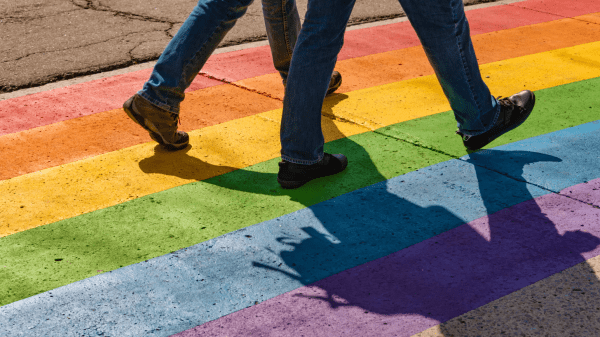
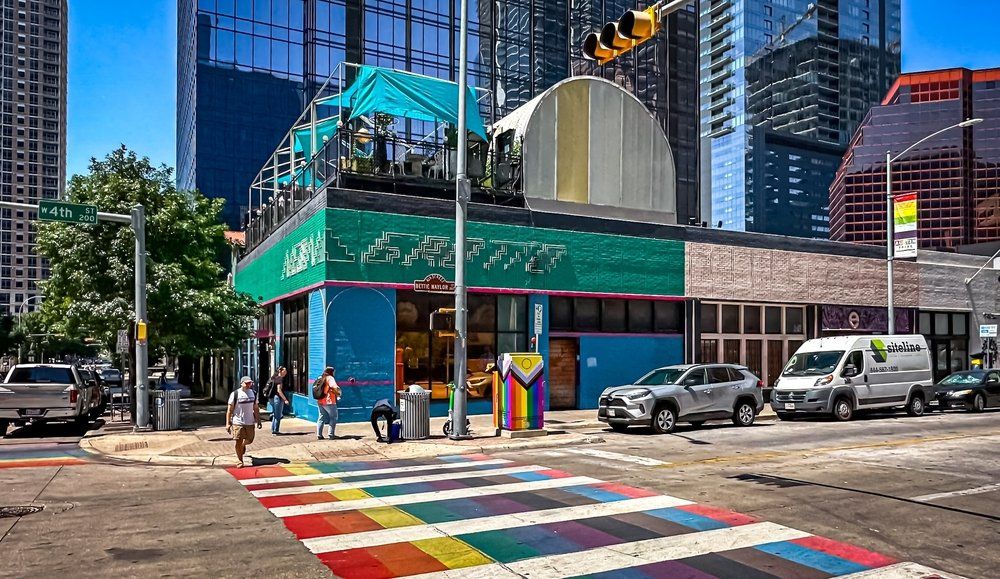
About 100 people in Orlando, Florida, protested the recent painting over of a rainbow crosswalk created in memory of the 49 victims of the 2016 Pulse nightclub tragedy. State crews from the Florida Department of Transportation (FDOT) painted over the crosswalk without notifying city officials, at the behest of Florida Gov. Ron DeSantis (R) and orders from the current presidential administration.
Local resident Dallas Perdue used chalk to recreate the crosswalk’s colored rectangles, but rain washed the chalk off by Thursday evening. “I was just fixing what shouldn’t have been, y’know, painted over in the first place,” Perdue told WFTV.
In July, Transportation Secretary Sean Duffy urged governors to remove any political messages, artwork, and markings on intersections not directly related to pedestrian or driver safety. He wrote on social media, “Taxpayers expect their dollars to fund safe streets, not rainbow crosswalks.”
A local activist told WFTV that the commemorative crosswalk followed all FDOT regulations and rules when it was first installed.
Florida Rep. Randy Fine (R) told the news station, “I think there are appropriate places to memorialize people. I don’t think a public street is the place to promote a woke agenda.” He has previously referred to LGBTQ+ people as “perverts who wish to groom our children” and supported numerous anti-LGBTQ+ bills, according to GLAAD.
Activists told the news station that they would continue to fight for the crosswalk’s restoration to its former rainbow colors.
Gov. DeSantis wrote via X, “We will not allow our state roads to be commandeered for political purposes.” He has told cities that if they don’t paint over any municipal rainbow crosswalks, FDOT will do it for them. FDOT painted over the Pulse crosswalk during Thursday’s early morning hours.
Pulse survivor Brandon Wolf told the new station, “The cowards threatened by our lives should feel lucky they didn’t have to bury the ones they love — then watch the state come & bury their memory.”
In a literal erasure of LGBTQ+ identity in South Florida, the city of Boynton Beach has complied with recent orders from Gov. Ron DeSantis (R) and the Trump administration to eliminate a rainbow crosswalk in the beachside city.
Video reveals a road crew painting over the once-colorful intersection at East Ocean Avenue and Southeast First Street on Wednesday morning. It’s now painted black.
Boynton Beach has “removed the inclusionary-painted intersection on the 100 block of East Ocean Avenue to ensure full compliance with state and federal transportation mandates and address safety concerns,” a statement from the city read. “The decision follows recent guidance from the U.S. Transportation Secretary and the Florida Department of Transportation.”
The Pride commemoration was first unveiled in June 2021.
The rainbow intersection has been vandalized before. During Pride month in 2023, surveillance video captured a motorcyclist burning out over the mural, leaving black tread marks across it. He then stopped to record the damage he caused.
The Pride erasure comes just days after a coordinated campaign by the Florida governor and the federal Transportation Department to remove rainbow intersections across the state.
On July 1, former Road Rules reality star and current Secretary of Transportation Sean Duffy issued a social media edict to all U.S. governors to remove the crosswalk art.
“Taxpayers expect their dollars to fund safe streets, not rainbow crosswalks,” Duffy declared. “Political banners have no place on public roads. I’m reminding recipients of @USDOT roadway funding that it’s limited to features advancing safety, and nothing else. It’s that simple.”
In the order and subsequent interviews, Duffy implies the Pride crosswalks are causing chaos on the roads and have led to traffic fatalities.
“Far too many Americans die each year to traffic fatalities to take our eye off the ball,” Duffy told the far-right Daily Signal.
“Roads are for safety,” he said somewhat incongruously, “not political messages or artwork.”
Duffy didn’t specify what percentage of the 39,345 traffic deaths in the U.S. in 2024 were caused by rainbow crosswalks.
Other cities in South Florida with rainbow intersections, including Delray Beach, Fort Lauderdale, and West Palm Beach, face the same state and federal mandates. It wasn’t immediately clear whether or how they would comply.
Other Pride crosswalks in the state have also been subject to vandalism, some repeatedly.
Florida Transportation Secretary Jared Perdue enthusiastically endorsed the federal mandate the day after it was issued.
“Florida’s proactive efforts to ensure we keep our transportation facilities free & clear of political ideologies were cemented into law by @GovRonDeSantis,” Perdue posted to socials. “Great to now have our federal partners also aligned behind this same common-sense policy.”
Rand Hoch, president of the Palm Beach County Human Rights Council, called the orders “blackmail”.
“This is just another example of the president and the governor blackmailing local governments by telling them they’re going to withhold funding so they can try to publicly erase the LGBTQ+ community,” he told the Sun-Sentinel. “This seems to be a priority of these administrations.”
Despite the public erasure, Hoch, who was present at the 2021 unveiling of the Boynton Beach Pride intersection, said LGBTQ+ people “are not going to disappear.”
A lot of states are passing laws that target the LGBTQ+ community — but these 15 are the absolute worst.
Over 1,000 anti-LGBTQ+ laws have been proposed across every state legislature in the U.S. over the past two years, according to the American Civil Liberties Union, and 126 have passed into law. Less than two months into the 2025 legislative session, 390 laws targeting LGBTQ+ people have been proposed.
While marriage equality and anti-discrimination protections based on sexual orientation and gender identity are still guaranteed federally by U.S. Supreme Court rulings (for now), LGBTQ+ people are still concerned about their rights being taken away, especially when only 15 states have “shield laws” protecting access to gender-affirming care and abortion.
Based on laws surrounding marriage, family rights, health care, education, and youth collected by the Movement Advancement Project, here are the 15 worst states for LGBTQ+ people.
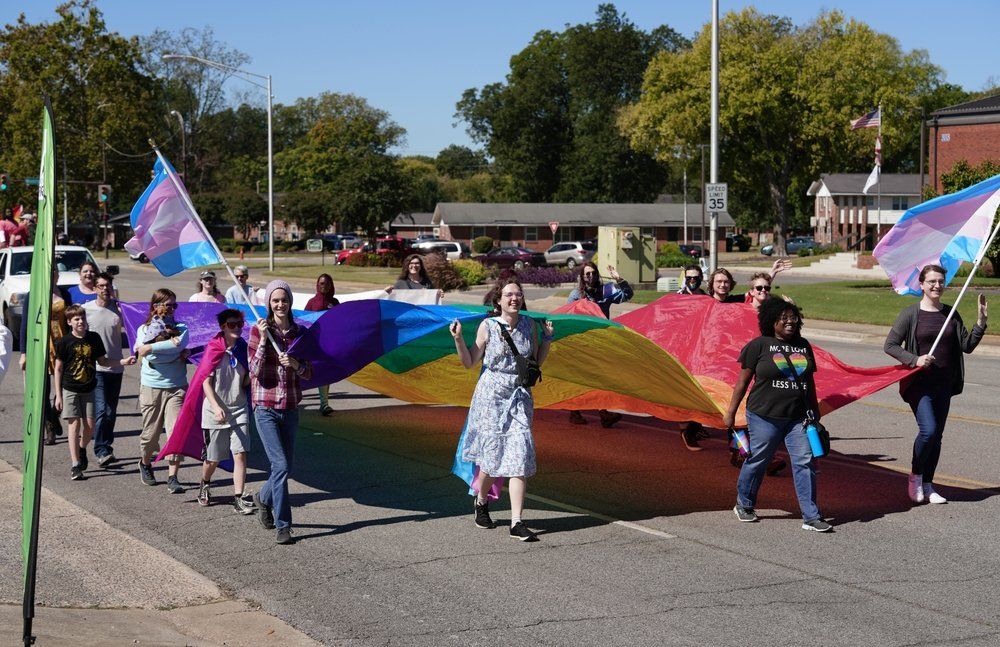
Pride Parade in Huntsville, Alabama (October 1, 2022)
Nondiscrimination laws: Alabama does not have nondiscrimination laws in employment, housing, health care, education, public accommodations, or credit/lending. Its state code incorrectly defines sex as exclusively male or female, and it prohibits transgender people from using public facilities that align with their identities.
Marriage equality and parental rights: Alabama does not have adoption or foster care nondiscrimination protections for LGBTQ+ parents. It does not have second-parent adoption for unmarried couples, confirmatory adoption, nor recognition for parents using assisted reproductive technologies. It also does not have family leave laws that encompass LGBTQ+ people.
Education and youth policies: Alabama has a “Don’t Say Gay” law restricting discussion of LGBTQ+ identities in classrooms. It has banned trans students from participating in sports or using school facilities based on their identities, and it requires staff to forcibly out LGBTQ+ students to their guardians. The state also has a “religious exemption” law for Child Welfare Services.
Healthcare access and rights: Alabama has banned life-saving gender-affirming care for youth, though it permits the discredited and harmful practice of so-called conversion therapy for youth. Health insurance companies, including Medicaid, are not required to provide coverage related to gender transition or fertility treatments. The state also has a “religious exemption” law for healthcare providers.
Criminal justice: Alabama’s hate crime laws do not encompass sexual orientation and gender identity, and it has not banned the so-called “LGBTQ+ panic” defense.
Arkansas
Danielsen_Photography / Shutterstock.com
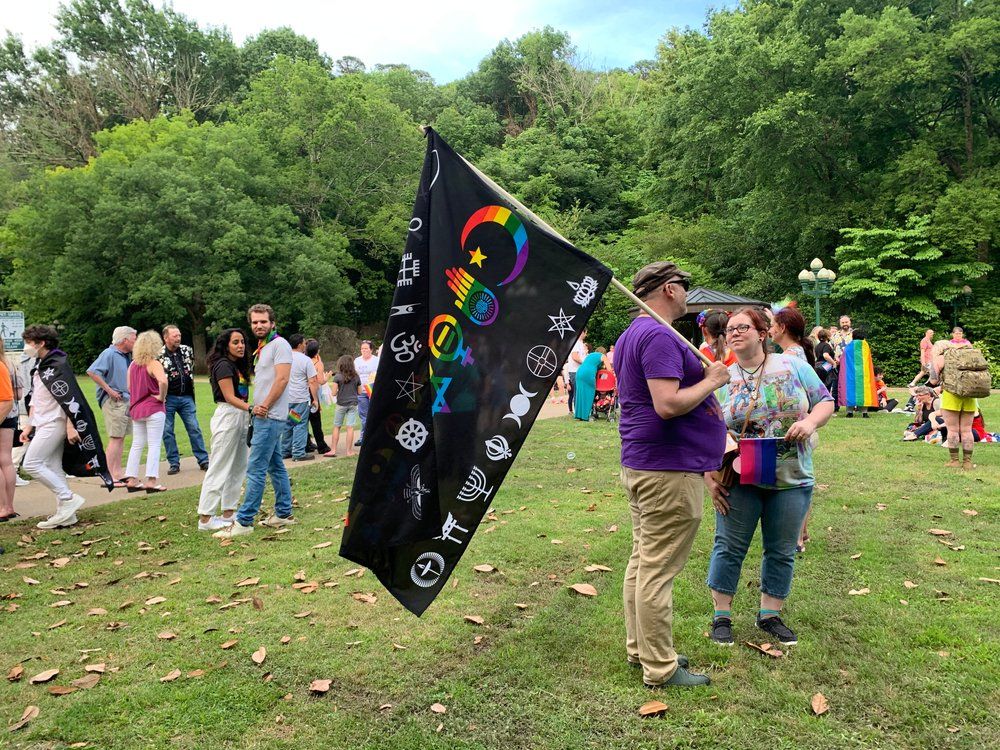
3rd annual Pride Walk at Hot Springs National Park, Arkansas (June, 4 2021)
Nondiscrimination laws: Arkansas does not have nondiscrimination laws in employment, housing, health care, education, public accommodations, or credit/lending. The state bans cities and local ordinances from passing nondiscrimination laws, and it has law about “adult” performances that could be used to target or restrict drag.
Marriage equality and parental rights: Arkansas does not have adoption or foster care nondiscrimination protections for LGBTQ+ parents. It does not have second-parent adoption for unmarried couples, confirmatory adoption, nor recognition for parents using assisted reproductive technologies. It also does not have family leave laws that encompass LGBTQ+ people.
Education and youth policies: Arkansas has a “Don’t Say Gay” law restricting discussion of LGBTQ+ identities in classrooms. It has banned trans students from participating in sports or using school facilities based on their identities, and it requires staff to forcibly out LGBTQ+ students to their guardians.
Healthcare access and rights: Arkansas has banned life-saving gender-affirming care for youth, though it permits the discredited and harmful practice of so-called conversion therapy for youth. Medicaid is forbidden from providing coverage related to gender transition to minors, and insurance companies are not required to cover fertility treatments. The state also has a “religious exemption” law for healthcare providers.
Criminal justice: Arkansas’ hate crime laws do not encompass sexual orientation and gender identity, and it has not banned the so-called “LGBTQ+ panic” defense. It has an HIV criminalization law that may require sex offender registration.
Florida
Chris_Harris / Shutterstock.com
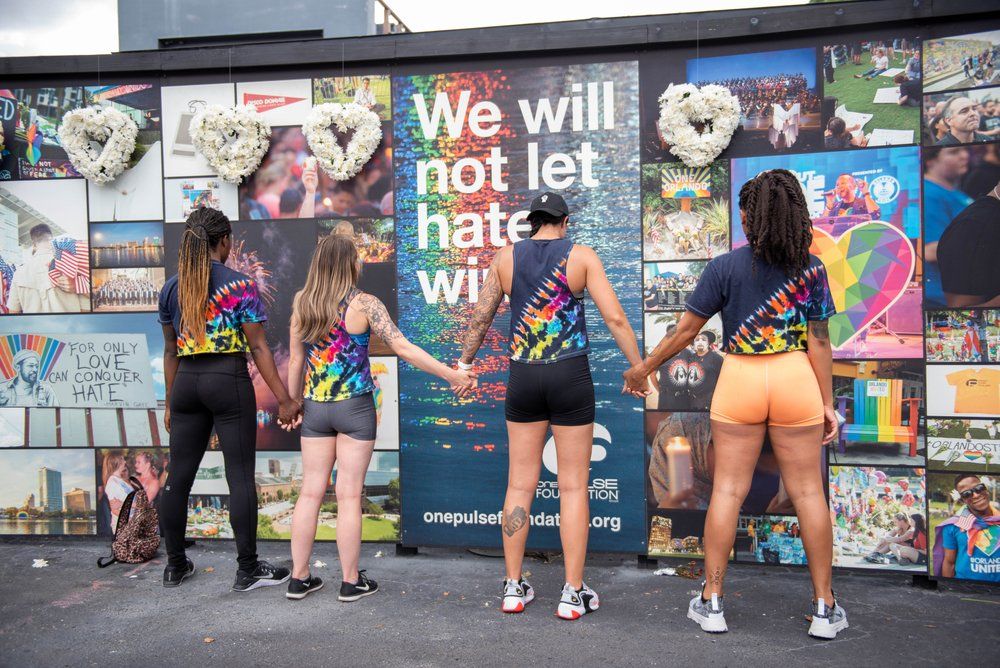
Mourners pay their respects to the fallen at the Pulse Nightclub memorial on the 5th anniversary of the Pulse mass shooting in Orlando, Florida (June 12, 2021)
Nondiscrimination laws: Florida has nondiscrimination laws in employment, housing, and public accommodations, but not in credit/lending, health care, nor education. The state prohibits transgender people from using public facilities that align with their identities, and it does not allow updating gender markers on driver’s licenses or birth certificates. It has law about “adult” performances that could be used to target or restrict drag
Marriage equality and parental rights: Florida does not have adoption or foster care nondiscrimination protections for LGBTQ+ parents. It does not have second-parent adoption for unmarried couples, confirmatory adoption, nor recognition for parents using assisted reproductive technologies. It also does not have family leave laws that encompass LGBTQ+ people.
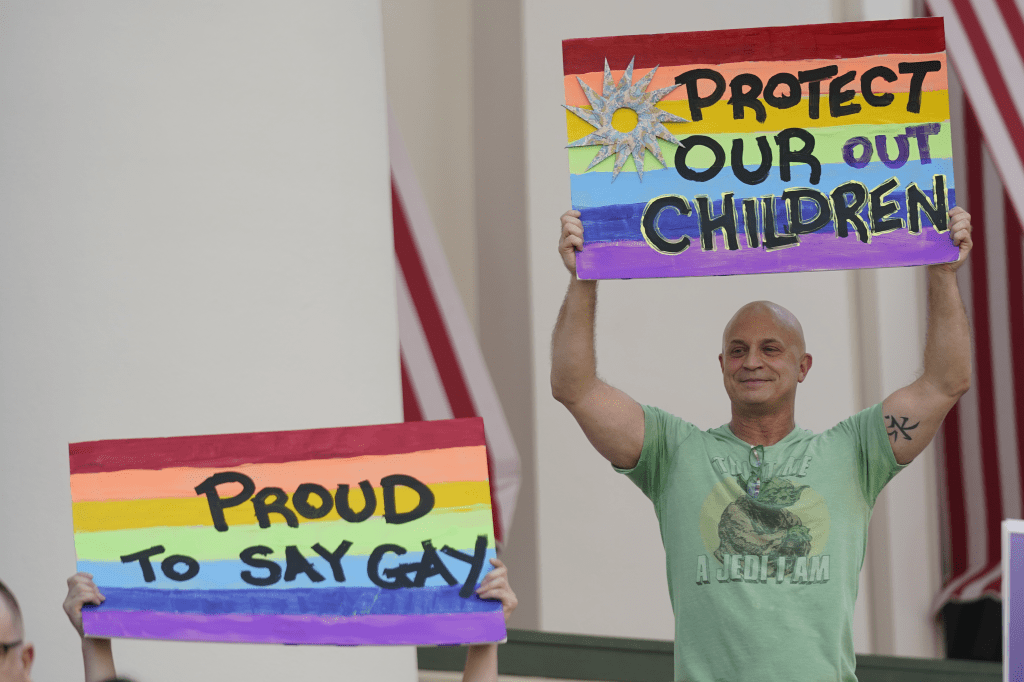
Education and youth policies: Florida originated the “Don’t Say Gay” laws restricting discussion of LGBTQ+ identities in classrooms. It has banned trans students from participating in sports or using school facilities based on their identities, and it requires staff to forcibly out LGBTQ+ students to their guardians.
Healthcare access and rights: Florida has banned life-saving gender-affirming care for youth, though it permits the discredited and harmful practice of so-called conversion therapy for youth. Medicaid is forbidden from providing coverage related to gender transition for all ages, and insurance companies are not required to cover fertility treatments. The state also has a “religious exemption” law for healthcare providers.
Criminal justice: Florida’s hate crime laws only encompass sexual orientation, not gender identity. It has not banned the so-called “LGBTQ+ panic” defense, and it has an HIV criminalization law.
Idaho
Venture Out Media / Shutterstock.com
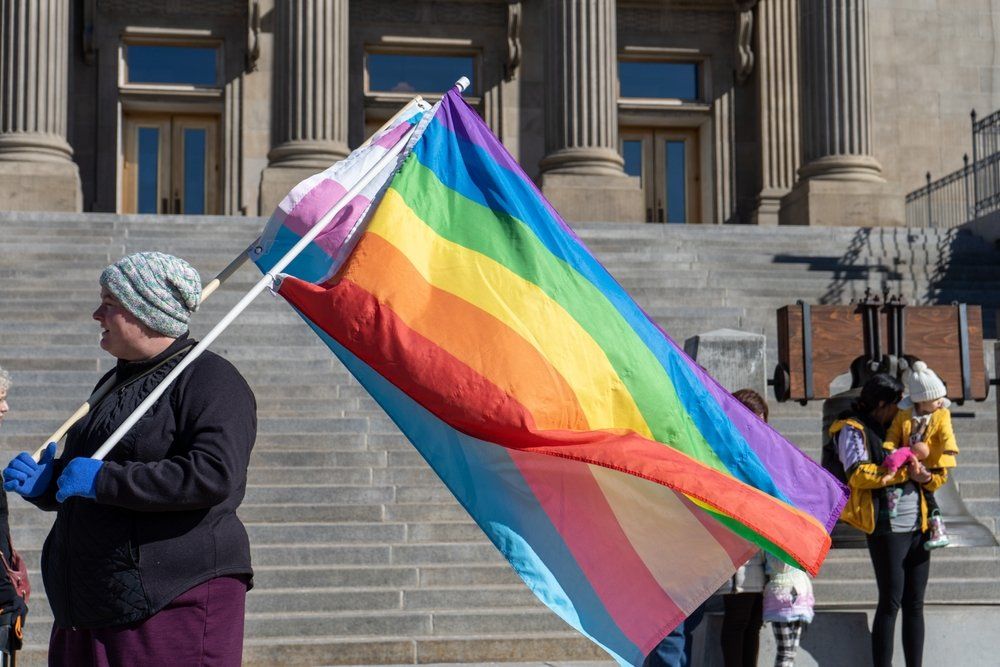
Rally in support of transgender youth and gender-affirming care in Boise, Idaho (February 24, 2023)
Nondiscrimination laws: Idaho has nondiscrimination laws in employment, housing, and public accommodations, but not in credit/lending, education, health care, nor for state employees. Its state code incorrectly defines sex as exclusively male or female.
Marriage equality and parental rights: Idaho does not have adoption or foster care nondiscrimination protections for LGBTQ+ parents. It has second-parent adoption for unmarried couples, but not confirmatory adoption nor recognition for parents using assisted reproductive technologies. It also does not have family leave laws that encompass LGBTQ+ people.
Education and youth policies: Idaho has banned trans students from participating in sports or using school facilities based on their identities, and it requires staff to forcibly out LGBTQ+ students to their guardians. The state also has a “religious exemption” law for Child Welfare Services, though it has protections for LGBTQ+ youth in the Child Welfare System.
Healthcare access and rights: Idaho has banned life-saving gender-affirming care for youth, though it permits the discredited and harmful practice of so-called conversion therapy for youth. Medicaid is forbidden from providing coverage related to gender transition for all ages, and insurance companies are not required to cover fertility treatments. The state also has a “religious exemption” law for healthcare providers.
Criminal justice: Idaho’s hate crime laws do not encompass sexual orientation and gender identity. It has not banned the so-called “LGBTQ+ panic” defense, and it has an HIV criminalization law.
Indiana
Umut Tolga Pehlivan / Shutterstock.com
Indiana University Bloomington Students walking at Indy Pride in Indianapolis, Indiana (June 4, 2008)
Nondiscrimination laws: Indiana has weaker nondiscrimination laws in employment, housing, and public accommodations, but not in credit/lending, education, nor health care. The state also has a broad “religious exemption” law.
Marriage equality and parental rights: Indiana has adoption or foster care nondiscrimination protections based on sexual orientation, but not gender identity. It has second-parent adoption for unmarried couples, but not confirmatory adoption nor recognition for parents using assisted reproductive technologies. It also does not have family leave laws that encompass LGBTQ+ people.
Education and youth policies: Indiana has a “Don’t Say Gay” law restricting discussion of LGBTQ+ identities in classrooms. It has banned trans students from participating in sports or using school facilities based on their identities, and it requires staff to forcibly out LGBTQ+ students to their guardians.
Healthcare access and rights: Indiana has banned life-saving gender-affirming care for youth, though it permits the discredited and harmful practice of so-called conversion therapy for youth. Medicaid and state health insurance plans are not required to provide coverage related to gender transition or fertility treatments, but it has trans-inclusive health benefits for state employees.
Criminal justice: Indiana’s hate crime laws do not encompass sexual orientation and gender identity, and it has not banned the so-called “LGBTQ+ panic” defense. It has an HIV criminalization law that may require sex offender registration.
Louisiana
Scott Colesby / Shutterstock.com
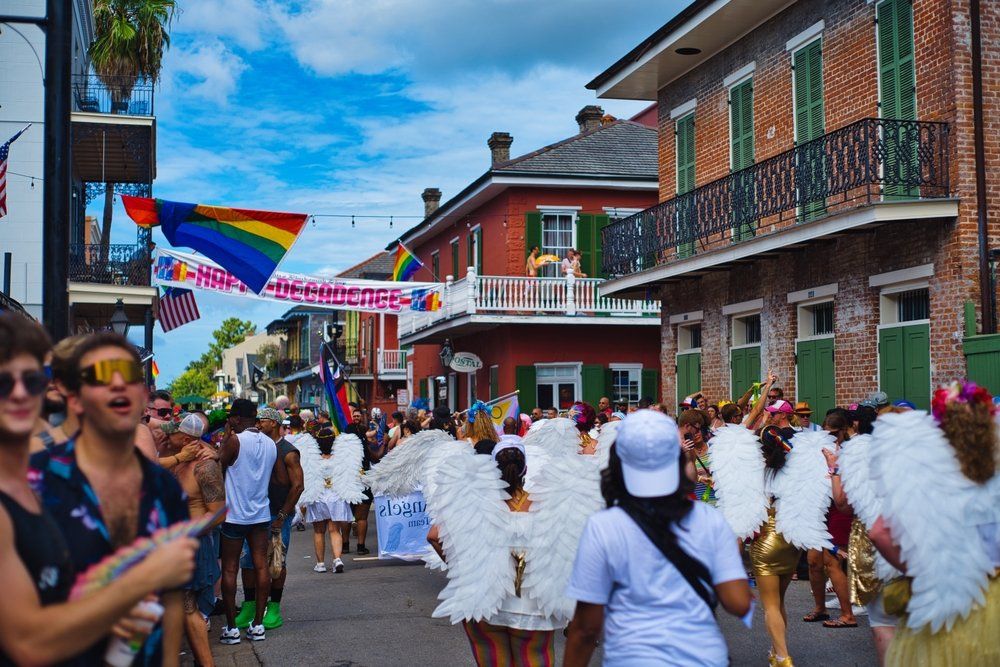
Southern Decadence Parade march through the French Quarter in New Orleans, Louisiana (September 1, 2024)
Nondiscrimination laws: Louisiana does not have nondiscrimination laws in employment, housing, health care, education, public accommodations, or credit/lending. Its state code incorrectly defines sex as exclusively male or female, and it prohibits transgender people from using public facilities that align with their identities. The state also has a broad “religious exemption” law.
Marriage equality and parental rights: Louisiana does not have adoption or foster care nondiscrimination protections for LGBTQ+ parents. It does not have second-parent adoption for unmarried couples, confirmatory adoption, nor recognition for parents using assisted reproductive technologies. It also does not have family leave laws that encompass LGBTQ+ people.
Education and youth policies: Louisiana has a “Don’t Say Gay” law restricting discussion of LGBTQ+ identities in classrooms. It has banned trans students from participating in sports or using school facilities based on their identities, and it requires staff to forcibly out LGBTQ+ students to their guardians.
Healthcare access and rights: Louisiana has banned life-saving gender-affirming care for youth, though it permits the discredited and harmful practice of so-called conversion therapy for youth. Health insurance companies, including Medicaid, are not required to provide coverage related to gender transition or fertility treatments, and state employees do not have trans-inclusive benefits.
Criminal justice: Louisiana’s hate crime laws only encompass sexual orientation, not gender identity. It has not banned the so-called “LGBTQ+ panic” defense, and it has an HIV criminalization law that may require sex offender registration.
Mississippi
Carmen K. Sisson / Shutterstock.com
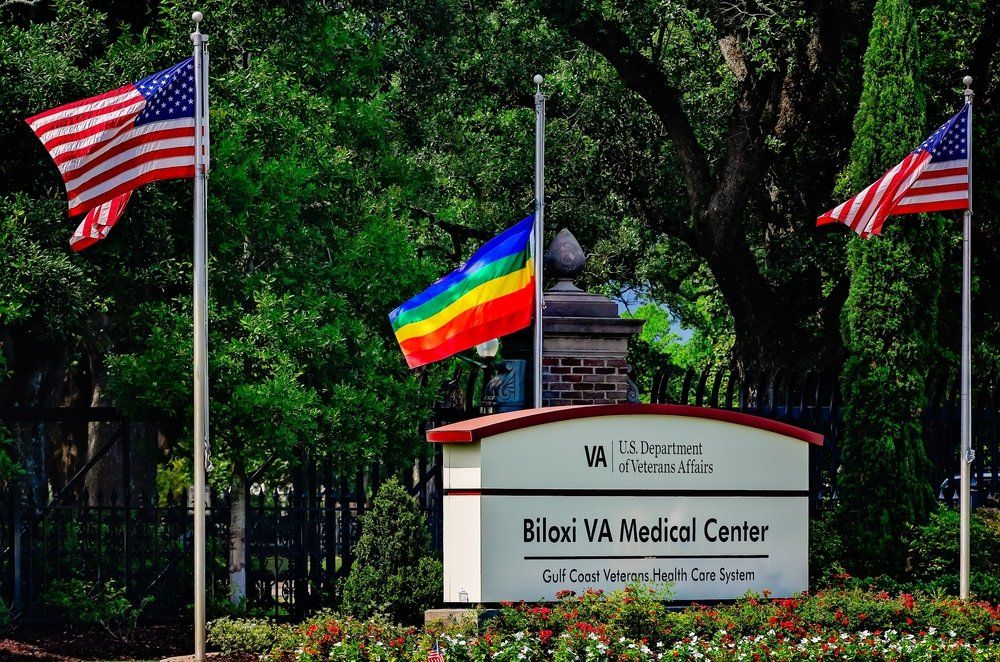
A rainbow flag supporting Pride month flies a the Biloxi VA Medical Center in Biloxi, Mississippi (June 5, 2023)
Nondiscrimination laws: Mississippi does not have nondiscrimination laws in employment, housing, health care, education, public accommodations, or credit/lending. Its state code incorrectly defines sex as exclusively male or female, and it prohibits transgender people from using public facilities that align with their identities. The state also has a broad “religious exemption” law.
Marriage equality and parental rights: Mississippi does not have adoption or foster care nondiscrimination protections for LGBTQ+ parents. It has second-parent adoption for unmarried couples, but not confirmatory adoption nor recognition for parents using assisted reproductive technologies. It also does not have family leave laws that encompass LGBTQ+ people.
Education and youth policies: Mississippi has a “Don’t Say Gay” law restricting discussion of LGBTQ+ identities in classrooms. It has banned trans students from participating in sports or using school facilities based on their identities, and it requires staff to forcibly out LGBTQ+ students to their guardians. The state also has a “religious exemption” law for Child Welfare Services.
Healthcare access and rights: Mississippi has banned life-saving gender-affirming care for youth, though it permits the discredited and harmful practice of so-called conversion therapy for youth. Medicaid is forbidden from providing coverage related to gender transition for youth, and insurance companies are not required to cover fertility treatments. The state also has a “religious exemption” law for healthcare providers.
Criminal justice: Mississippi’s hate crime laws do not encompass sexual orientation and gender identity. It has not banned the so-called “LGBTQ+ panic” defense, and it has an HIV criminalization law.
Missouri
Ryanzo W. Perez / Shutterstock.com
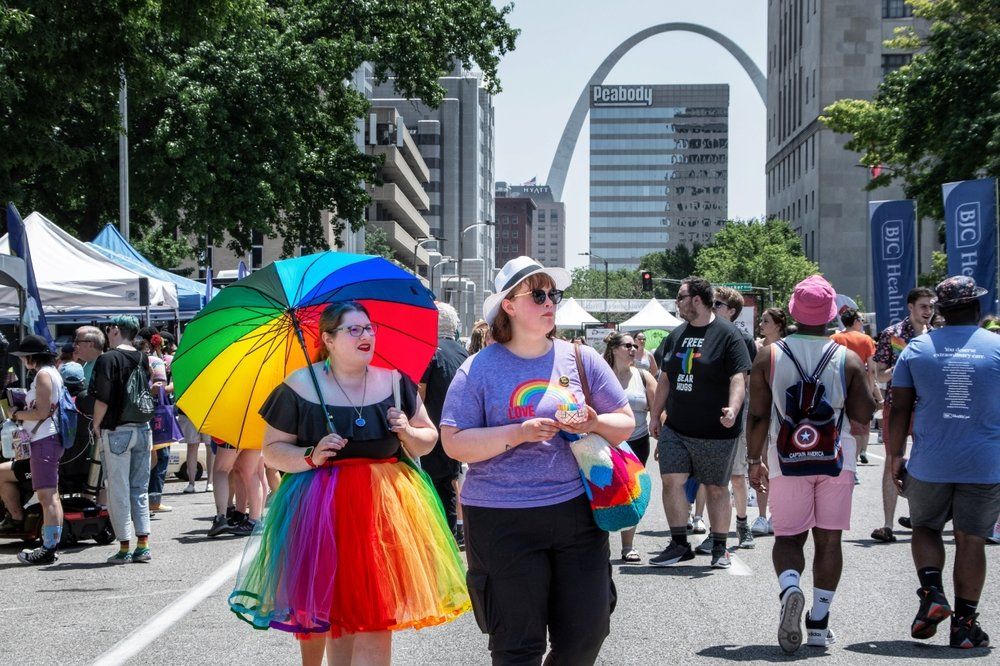
A view down one of the streets filled with celebrants during Saint Louis PrideFest in Missouri (June 24, 2023)
Nondiscrimination laws: Missouri has weaker nondiscrimination laws in housing, and public accommodations, but not in employment, credit/lending, education, nor health care. The state also has a broad “religious exemption” law.
Marriage equality and parental rights: Missouri’sadoption or foster care nondiscrimination protections only encompass sexual orientation, not gender identity. It does not have second-parent adoption for unmarried couples, confirmatory adoption, nor recognition for parents using assisted reproductive technologies. It also does not have family leave laws that encompass LGBTQ+ people.
Education and youth policies: Missouri has banned schools and districts from passing nondiscrimination or anti-bullying policies protecting LGBTQ+ students. It has banned trans students from participating in sports based on their identities, but not from using facilities that align with their identities.
Healthcare access and rights: Missouri has banned life-saving gender-affirming care for youth, though it permits the discredited and harmful practice of so-called conversion therapy for youth. Medicaid is forbidden from providing coverage related to gender transition for all ages, and insurance companies are not required to cover fertility treatments. The state also has a “religious exemption” law for healthcare providers.
Criminal justice: Missouri’s hate crime laws encompass sexual orientation and gender identity, though it has not banned the so-called “LGBTQ+ panic” defense, and it has an HIV criminalization law.
Montana
Cavan-Images / Shutterstock.com
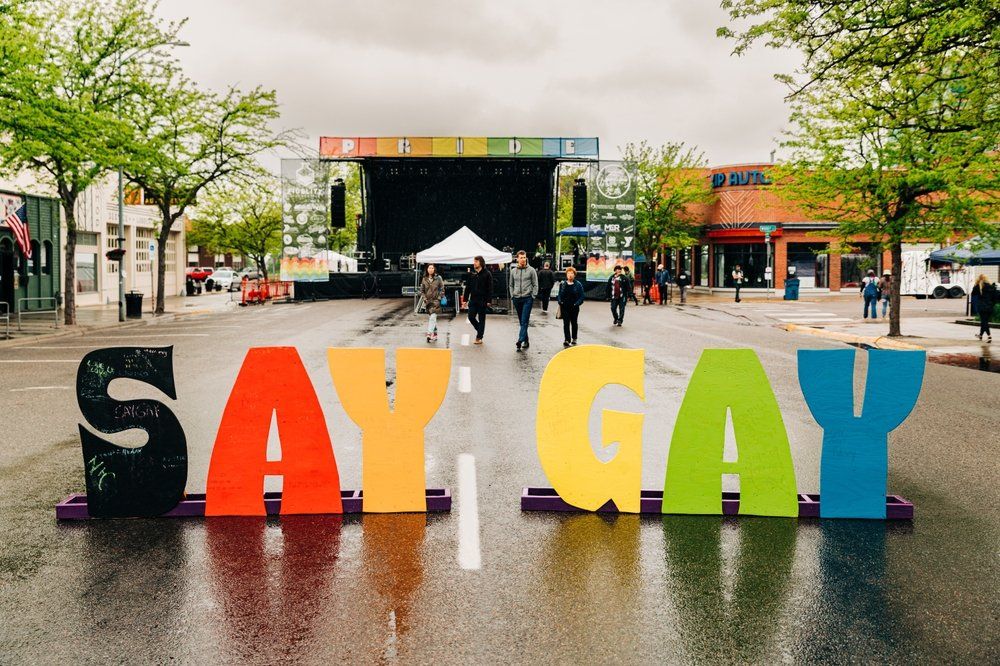
“Say Gay” sign at Missoula Pride in Montana (March 29, 2024)
Nondiscrimination laws: Montana does not have nondiscrimination laws in employment, housing, health care, education, public accommodations, or credit/lending.Its state code incorrectly defines sex as exclusively male or female, and it has a broad “religious exemption” law. The state has also explicitly restricted drag performances, and does not allow updating gender markers on birth certificates
Marriage equality and parental rights: Montana’sadoption or foster care nondiscrimination protections only encompass sexual orientation, not gender identity. It has second-parent adoption for unmarried couples, but not confirmatory adoption nor recognition for parents using assisted reproductive technologies. It also does not have family leave laws that encompass LGBTQ+ people.
Education and youth policies: Montana requires that parents be notified of LGBTQ+ curricula so they can opt out. It has banned trans students from participating in sports based on their identities, but not from using facilities that align with their identities. The state requires staff to forcibly out LGBTQ+ students to their guardians.
Healthcare access and rights: Montana has banned life-saving gender-affirming care for youth, though it permits the discredited and harmful practice of so-called conversion therapy for youth. Health insurance companies and Medicaid are required to cover care related to gender transition, and there is some coverage for fertility treatments. However, the state has a “religious exemption” law for healthcare providers.
Criminal justice: Montana’s hate crime laws do not encompass sexual orientation and gender identity. It has not banned the so-called “LGBTQ+ panic” defense, and it has an HIV criminalization law.
Oklahoma
Kit Leong / Shutterstock.com
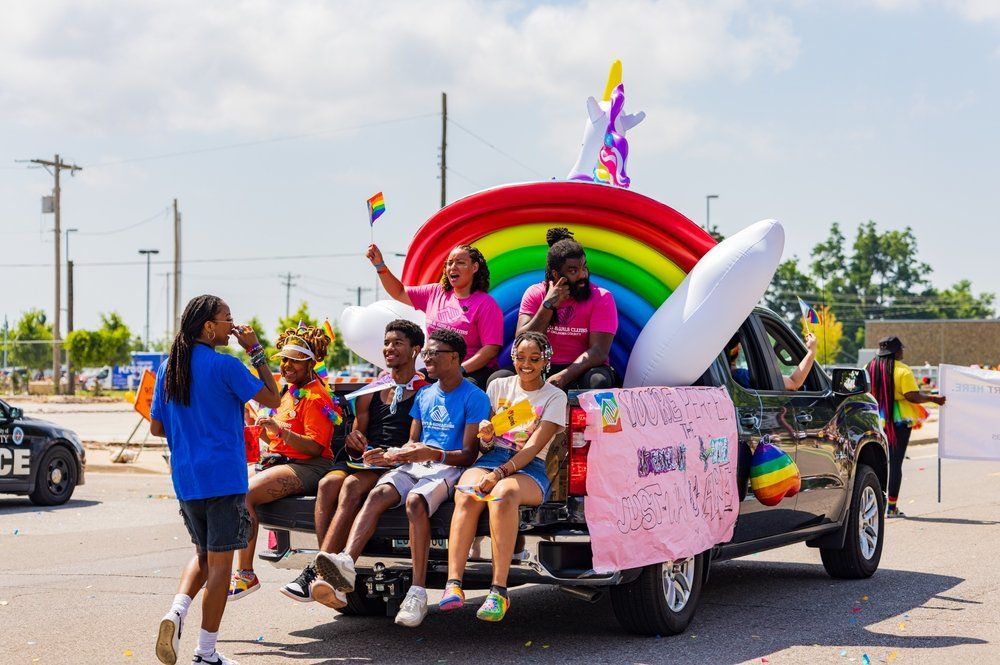
Pride Parade in Oklahoma (June 26, 2023)
Nondiscrimination laws: Oklahoma does not have nondiscrimination laws in employment, housing, health care, education, public accommodations, or credit/lending. Its state code incorrectly defines sex as exclusively male or female, and it prohibits updated gender markers on birth certificates. It also has a broad “religious exemption” law.
Marriage equality and parental rights: Oklahoma does not have adoption or foster care nondiscrimination protections for LGBTQ+ parents. It has second-parent adoption for unmarried couples, but not confirmatory adoption nor recognition for parents using assisted reproductive technologies. It also does not have family leave laws that encompass LGBTQ+ people.
Education and youth policies: Oklahoma has a weaker version of a “Don’t Say Gay” law that restricts the discussion of “homosexuality” in specific school subjects. It has banned trans students from participating in sports or using school facilities based on their identities. The state also has a “religious exemption” law for Child Welfare Services, though it has protections for LGBTQ+ youth in the Child Welfare System.
Healthcare access and rights: Oklahoma has banned life-saving gender-affirming care for youth, though it permits the discredited and harmful practice of so-called conversion therapy for youth. Health insurance companies, including Medicaid, are not required to provide coverage related to gender transition or fertility treatments, and state employees are not permitted trans-inclusive benefits.
Criminal justice: Oklahoma’s hate crime laws do not encompass sexual orientation and gender identity. It has not banned the so-called “LGBTQ+ panic” defense, and it has an HIV criminalization law.
South Carolina
Shuttershock creative
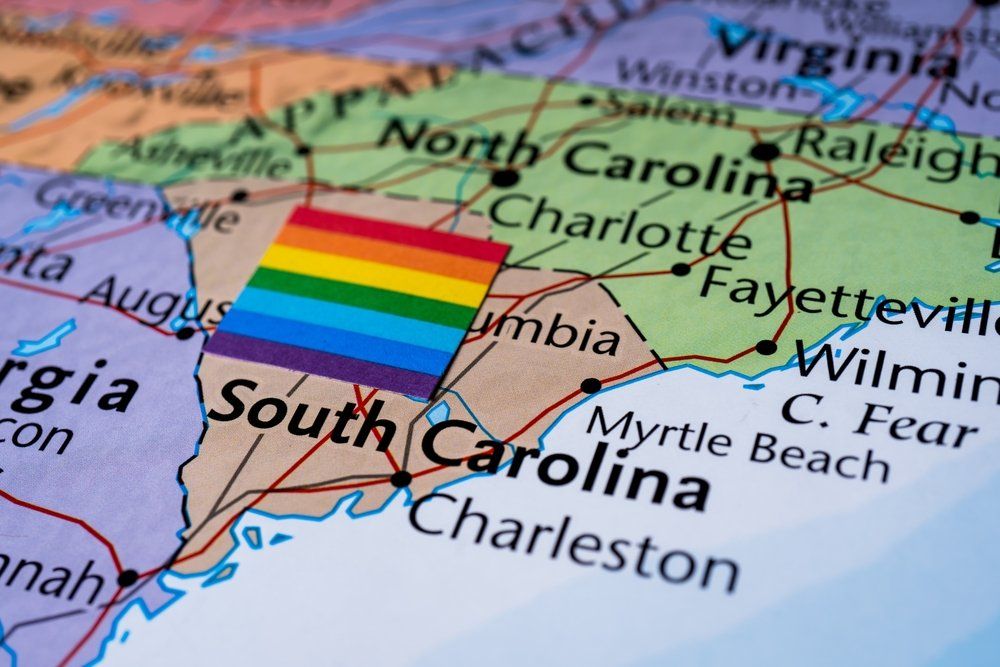
Rainbow flag on a map of South Carolina
Nondiscrimination laws: South Carolinadoes not have nondiscrimination laws in employment, housing, health care, education, public accommodations, or credit/lending. It has a broad “religious exemption” law.
Marriage equality and parental rights: South Carolina‘sadoption or foster care nondiscrimination protections only encompass sexual orientation, not gender identity. It does not have second-parent adoption for unmarried couples, confirmatory adoption, nor recognition for parents using assisted reproductive technologies. It also does not have family leave laws that encompass LGBTQ+ people.
Education and youth policies: South Carolinahas banned trans students from participating in sports based on their identities, but not from using facilities that align with their identities. The state requires staff to forcibly out LGBTQ+ students to their guardians. The state also has a “religious exemption” law for Child Welfare Services.
Healthcare access and rights: South Carolina has banned life-saving gender-affirming care for youth, though it permits the discredited and harmful practice of so-called conversion therapy for youth. Medicaid is forbidden from providing coverage related to gender transition for all ages, and insurance companies are not required to cover fertility treatments. The state also has a “religious exemption” law for healthcare providers.
Criminal justice: South Carolina‘s hate crime laws do not encompass sexual orientation and gender identity. It has not banned the so-called “LGBTQ+ panic” defense, and it has an HIV criminalization law.
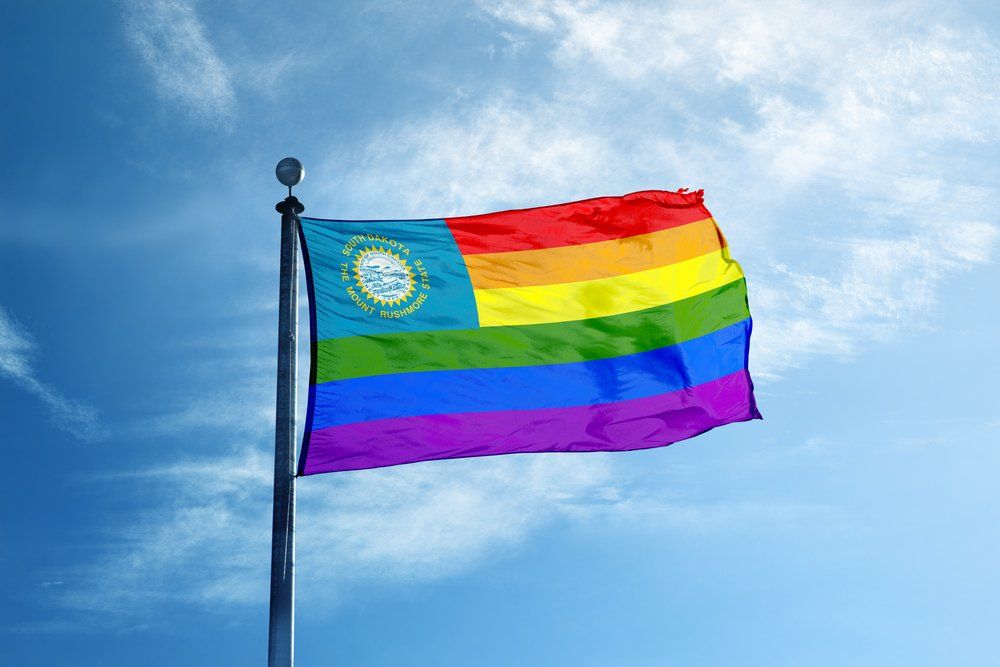
South Dakota
Shuttershock creative
South Dakota state flag with rainbow stripes
Nondiscrimination laws: South Dakota does not have nondiscrimination laws in employment, housing, health care, education, public accommodations, or credit/lending. It has a broad “religious exemption” law.
Marriage equality and parental rights: South Dakota’sadoption or foster care nondiscrimination protections encompass sexual orientation and gender identity. However, it does not have second-parent adoption for unmarried couples, confirmatory adoption, nor recognition for parents using assisted reproductive technologies. It also does not have family leave laws that encompass LGBTQ+ people.
Education and youth policies: South Dakotahas banned schools and districts from passing nondiscrimination or anti-bullying policies protecting LGBTQ+ students. It has banned trans students from participating in sports based on their identities, but not from using facilities that align with their identities. The state also has a “religious exemption” law for Child Welfare Services, though it has protections for LGBTQ+ youth in the Child Welfare System.
Healthcare access and rights: South Dakota has banned life-saving gender-affirming care for youth, though it permits the discredited and harmful practice of so-called conversion therapy for youth. Health insurance companies, including Medicaid, are not required to provide coverage related to gender transition or fertility treatments, and state employees are not permitted trans-inclusive benefits.
Criminal justice: South Dakota‘s hate crime laws do not encompass sexual orientation and gender identity, and it has not banned the so-called “LGBTQ+ panic” defense. It has an HIV criminalization law that may require sex offender registration.
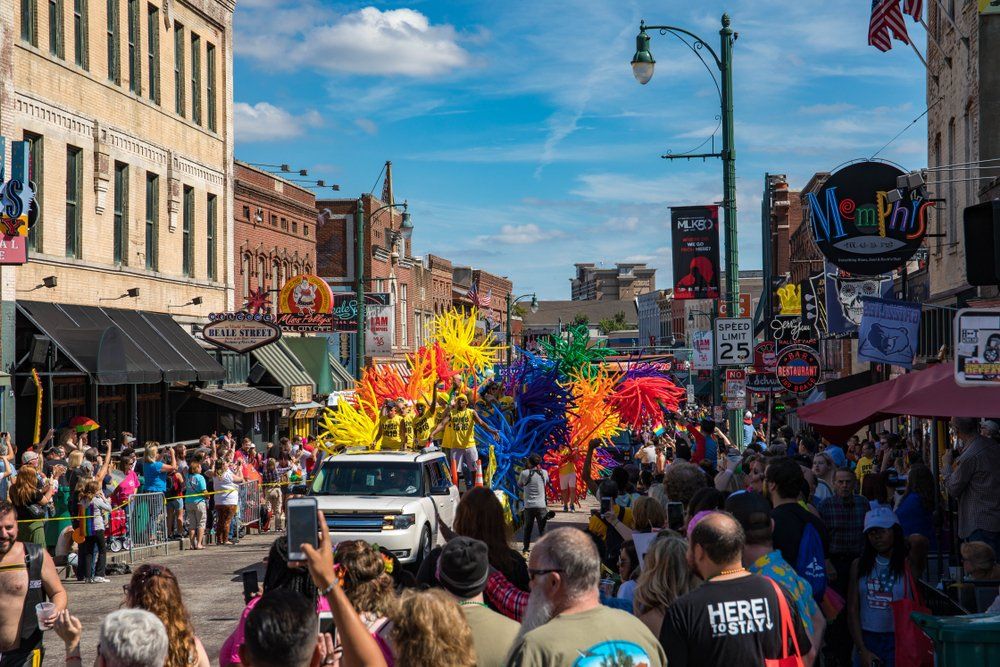
Tennessee
evenfh / Shutterstock.com
Pride Parade on Beale Street in Memphis, Tennessee (September 28, 2018)
Nondiscrimination laws: Tennessee does not have nondiscrimination laws in employment, housing, health care, education, public accommodations, or credit/lending. It instead bans cities and local ordinances from passing nondiscrimination laws. State code incorrectly defines sex as exclusively male or female, and it does not allow updating gender markers on driver’s licenses or birth certificates. The state has a broad “religious exemption” law that even allows officials to deny marriage licenses based on their personal beliefs. It has also explicitly restricted drag performances.
Marriage equality and parental rights: Tennessee’sadoption or foster care nondiscrimination protections encompass sexual orientation and gender identity. However, it does not have second-parent adoption for unmarried couples, confirmatory adoption, nor recognition for parents using assisted reproductive technologies. It also does not have family leave laws that encompass LGBTQ+ people.
Education and youth policies: Tennessee requires that parents be notified of LGBTQ+ curricula so they can opt out. It has banned trans students from participating in sports based on their identities and from using facilities that align with their identities. The state requires staff to forcibly out LGBTQ+ students to their guardians. The state also has a “religious exemption” law for Child Welfare Services, though it has protections for LGBTQ+ youth in the Child Welfare System.
Healthcare access and rights: Tennessee has banned life-saving gender-affirming care for youth, though it permits the discredited and harmful practice of so-called conversion therapy for youth. Medicaid is forbidden from providing coverage related to gender transition for all ages, and insurance companies are not required to cover fertility treatments. The state also has a “religious exemption” law for healthcare providers, and state employees are not permitted trans-inclusive benefits.
Criminal justice: Tennessee’s hate crime laws encompass sexual orientation and gender identity, though it has not banned the so-called “LGBTQ+ panic” defense, and it has an HIV criminalization law that may require sex offender registration.
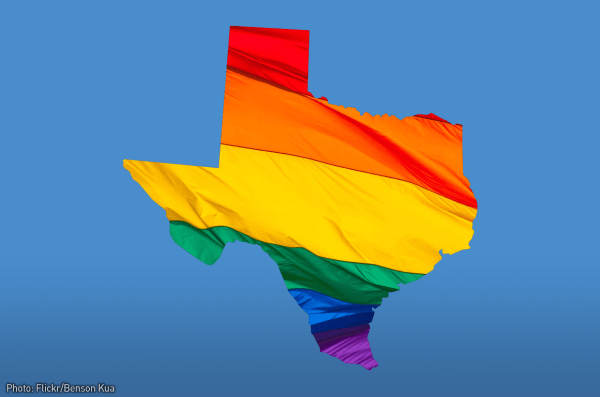
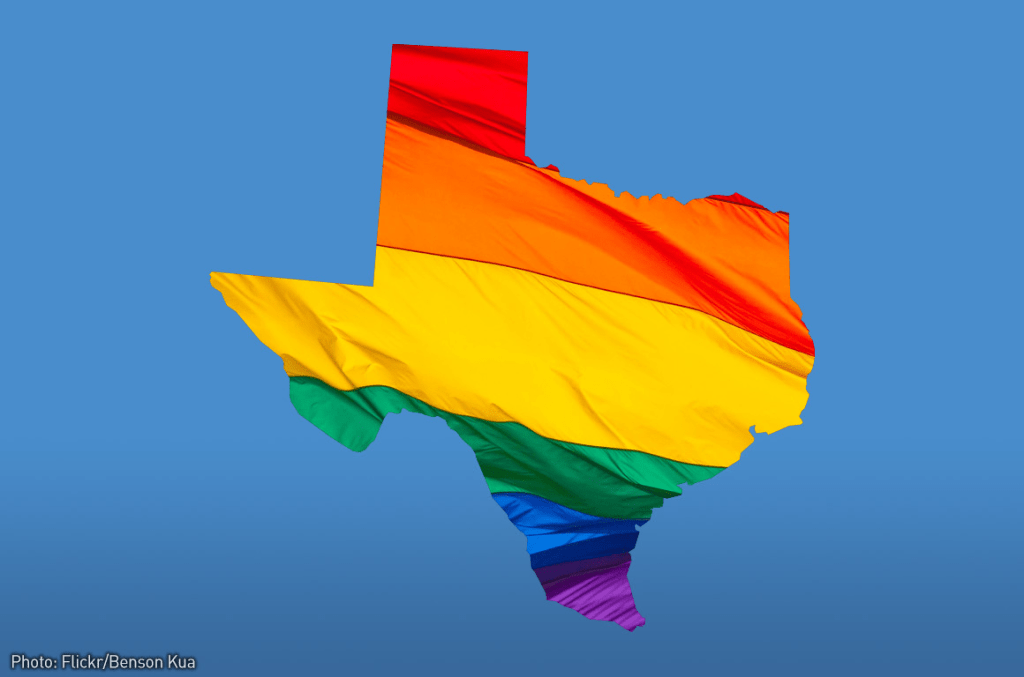
Nondiscrimination laws: Texas has nondiscrimination laws in employment and for state employees, but not in housing, public accommodations, credit/lending, education, nor health care. The state does not allow updating gender markers on driver’s licenses or birth certificates, and it has a broad “religious exemption” law.
Marriage equality and parental rights: Texas does not have adoption or foster care nondiscrimination protections for LGBTQ+ parents. It does not have second-parent adoption for unmarried couples, confirmatory adoption, nor recognition for parents using assisted reproductive technologies. It also does not have family leave laws that encompass LGBTQ+ people.
Education and youth policies: Texas has a weaker version of a “Don’t Say Gay” law that restricts the discussion of “homosexuality” in specific school subjects. It has banned trans students from participating in sports based on their identities, but not from using facilities that align with their identities. The state also has a “religious exemption” law for Child Welfare Services without protections for LGBTQ+ youth.
Healthcare access and rights: Texas has banned life-saving gender-affirming care for youth, though it permits the discredited and harmful practice of so-called conversion therapy for youth. Medicaid is forbidden from providing coverage related to gender transition for all ages, and insurance companies are not required to cover fertility treatments. State employees are not permitted trans-inclusive benefits.
Criminal justice: Texas’s hate crime laws only encompass sexual orientation, not gender identity. It has not banned the so-called “LGBTQ+ panic” defense.
Wyoming
Shuttershock creative
Double rainbow against a black sky in Wyoming
Nondiscrimination laws: Wyoming does not have nondiscrimination laws in employment, housing, health care, education, public accommodations, or credit/lending.
Marriage equality and parental rights: Wyoming does not have adoption or foster care nondiscrimination protections for LGBTQ+ parents. It does not have second-parent adoption for unmarried couples, nor confirmatory adoption. It also does not have family leave laws that encompass LGBTQ+ people. However, it does have recognition for parents using assisted reproductive technologies.
Education and youth policies: Wyoming has a weaker version of a “Don’t Say Gay” law that restricts the discussion of “homosexuality” in specific school subjects. It has banned trans students from participating in sports based on their identities, but not from using facilities that align with their identities.
Healthcare access and rights: Wyoming has banned life-saving gender-affirming care for youth, though it permits the discredited and harmful practice of so-called conversion therapy for youth. Health insurance companies, including Medicaid, are not required to provide coverage related to gender transition or fertility treatments.
Criminal justice: Wyoming’s hate crime laws do not encompass sexual orientation and gender identity, and it has not banned the so-called “LGBTQ+ panic” defense.
Dishonorable mentions
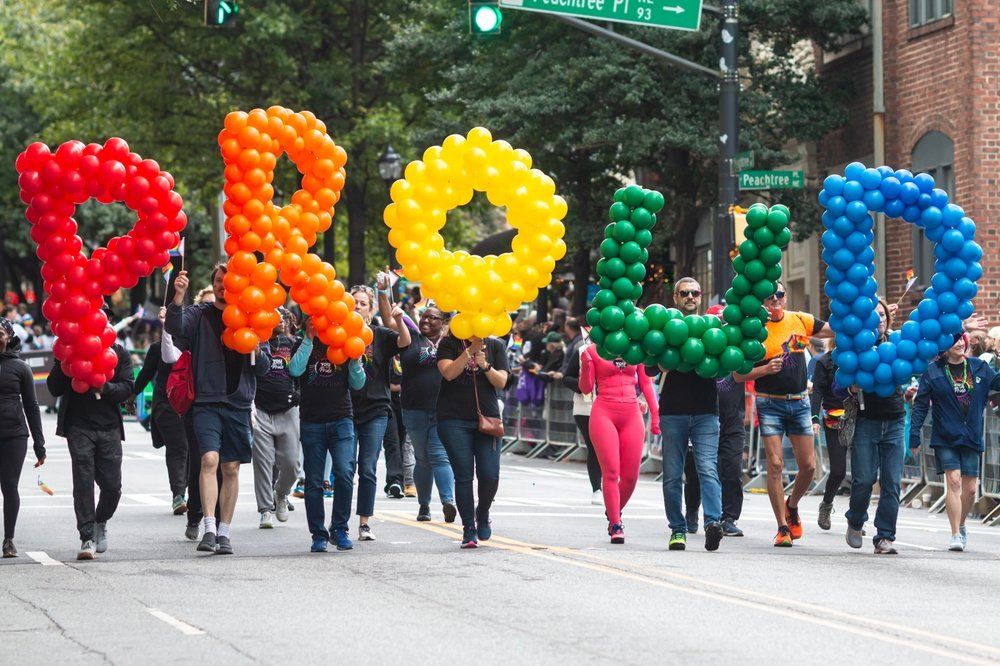
BluIz70 / Shutterstock.com
People carry large balloon letters that spell out “Proud” as they walk in the annual pride parade in Atlanta, Georgia (October 15, 2023)
Other states that ranked below average include: Alaska, Arizona, Georgia, Iowa, Kansas, Kentucky, Nebraska, North Carolina, North Dakota, Ohio, Utah, and West Virginia.
A Florida woman is suing the city council that suspended her after her history of obscene, racist and homophobic tweets was uncovered and published in a local paper.
The councilwoman, Judi Fike, was appointed to her seat in Groveland, Florida last year and is running for a full term.
Fike responded to the local paper’s story with an apology “to anyone who was hurt” by the posts, while maintaining that their publication was a timed “political attack” just weeks ahead of her August primary.
“I will not let that tactic work,” she said.
The collection of Fike’s offensive screeds extends back to at least 2015, and reveal deep-seated animus toward Black and LGBTQ+ people.
Just hours after the Pulse nightclub shooting in June 2016 in nearby Orlando, Fike posted to Facebook, “Duh….why would the shooter target a gay club? My answer…Easier than marching them up steps to push off the roof..some sarcasm, some truth…”
In 2015, Fike posted to her “Widow Fike” account on Twitter (now X), “Can we divert our attention back to real news? The #LGBT freak show has had its run.”
Fike owns and operates a catering company called The Black Napkin.
Last week, the city council confronted Fike with the posts in an open meeting, displaying screenshots as Fike watched, the Orlando Sentinel reports.
Groveland Vice Mayor Barbara Gaines, who is Black, said the posts included “racist” portrayals of then-President Barack Obama as a monkey.
“This is a picture of President Ronald Reagan babysitting Barack Obama, except it is an ape, a baboon, a monkey or whatever you call it,” Gaines said.
In several tweets shared at the meeting, Fike obsesses over the word “thug”.
“#thug the new n word,’ she posted in 2015. “Thug life = thug treatment = no pity from me,” she wrote in 2019. In 2022, Fike shared a meme that read, “What’s the magic word to get what you want? Racist!”
Groveland, Florida has a fraught history of racism against Black people. In 1949, false allegations of rape against four black teenagers known as “The Groveland Four” led to the extrajudicial killing of two of the teens and the wrongful imprisonment of two others. They were posthumously pardoned in 2019.
In her defense over the Pulse nightclub post, Fike claimed for council members that her message was about a presidential candidate in 2016 aligning with a community in the Middle East who were “pushing gay individuals off of buildings.”
“It was meant as a support of the community, not against the community,” she said. “It might have been written in poor taste, but I want to clarify that for you because that was going on at the time.”
Fike went further about other posts, denying responsibility altogether.
“Those are indeed manipulated, and so I’ll just let that rest,” she said at the meeting. “They are not my words. Some are, there are some copies, but what Barbara just showed were absolutely not products of mine.”
Council members were not swayed and voted her suspended until an investigation is complete.
Two days later, Fike responded with a lawsuit.
“The city does not have the legal authority to suspend or remove any of its members, period,” said Lake County Commissioner Anthony Sabatini, who is representing Fike. “It just simply does not have that authority. Most cities don’t.”
Groveland Mayor Kevin Keogh said he was more concerned with Fike’s response to the allegations than the resurfaced posts themselves.
“It has to do with the non-truthful nature of your response,” he told Fike, before voting with colleagues to suspend her.
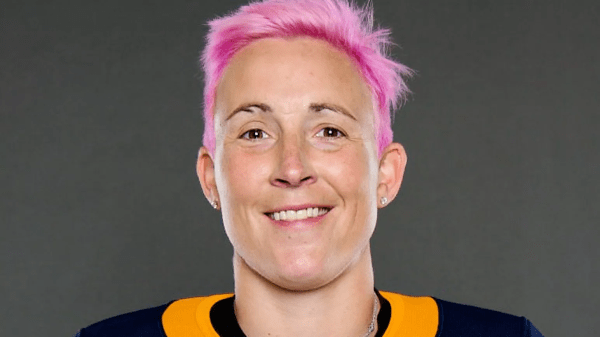
Hockey star Madison Packer played in five All-Star Games and is the second-highest goalscorer in the history of the Premier Hockey Federation, which was the forerunner to the National Women’s Hockey League.
Packer is widely recognized as an icon of women’s sports. Yet not for the first time, Packer recently found herself being misgendered as a result of gender policing she believes is escalating in line with heightened anti-trans rhetoric.
Two weeks ago, the 33-year-old posted an Instagram story to say that in late April she had been “forcibly removed” from a women’s bathroom stall in a Florida nightclub.
Packer, who spent eight seasons with the Metropolitan Riveters in the NWHL and PHF, wrote “sounds familiar” when sharing an article about the incident on social media.
She describes her own experience in Florida as “humiliating” and connects it directly to the ongoing discourse in society that suggests trans people pose a threat in women’s spaces.
“The entire bathroom situation is absurd,” Packer tells Outsports.
“The fear-mongering and outright propaganda we have perpetuated against the trans community in this country is pathetic.”
Packer says she had been with her wife and their friends at the club in Naples, Fla., when she left them to visit the restroom.
“Upon walking in, the female bathroom attendant several times said, ‘Sir sir,’ as to get my attention,” recalled Packer. “I am a cis female. I don’t respond to ‘sir.’”
During her playing days, the former power forward was a vocal leader on and off the ice, partnering with You Can Play on the organization’s LGBTQ advocacy initiatives.
She ignored the attendant and headed into a stall.
It was then that Packer felt the attendant pulling her backwards by the shoulder.
“Again, she addressed me as ‘sir’ and told me I was in the wrong bathroom. We proceeded to argue over the bathroom I was in until I showed her my driver’s license.”
In Florida, trans people are prohibited by law from using public bathrooms and gendered facilities that align with their gender identity in all government-owned buildings, including K-12 schools and colleges.
The law applies only to facilities run by the state, but there have been several reports of trans, nonbinary and gender nonconforming people being challenged when using restrooms inside private businesses.
The Movement Advancement Project lists five other states — Arkansas, Montana, South Dakota, Utah and Wyoming — as having passed bathroom bills similar to that of Florida.
For women like Packer, who in her own words is “masculine presenting,” the chances of being confronted in a restroom are by no means limited to certain states.
She says that a few years ago, she was also involved in a physical altercation with a male bouncer in the bathroom of a bar in Connecticut.
It’s natural for her to speak out about the damage done by gender policing. After announcing her retirement from hockey last November, Packer and her wife, Anya Battaglino, started a podcast called “These Packs Puck” in which they discuss queer parenthood and navigating life after pro sports.
On the latest episode, they talk about how being challenged in Florida left Packer “very upset” on what was, by coincidence, Lesbian Visibility Day. The couple had posted to Instagram to mark that awareness day, using an old photo taken in a Palm Springs restroom to make a point.
Anya wrote the caption: “Minding mine. (Wish the government would do the same).”
A little over a week later, Packer shared more details of her confrontation after reading online about what had happened in the Boston hotel.
In its reporting of that incident, CBS News quoted the executive director of PFLAG Greater Boston, Nina Selvaggio, who said: “For gender nonconforming lesbians, women in general, being harassed in public restrooms is a tale as old as time.
“I do think the surge in national anti-trans rhetoric is contributing to an increased policing of women’s bodies and their expression of gender.”
Packer told Outsports she agrees “wholeheartedly” with Selvaggio’s comments.
“I find it infuriating that we’re now going as far as to dictate or try to regulate what ‘female’ looks like.
“I’ve shared locker rooms and bathrooms with straight men, gay men, gay women, straight women, trans men, and trans women… I’ve never once had an altercation or inappropriate exchange with a trans person.
“I think we’re concerning ourselves with the wrong groups when it comes to restroom safety.”
The 60 days of Florida’s legislative session have concluded. While lawmakers will have to come back in the following weeks to finalize the budget, LGBTQ Floridians and allies across the state are celebrating a resounding and inspiring win: every anti-LGBTQ bill filed in the 2025 legislative session was defeated.
This is more than a policy victory; it’s a testament to the unstoppable force of people power, coalition-building, and a growing refusal to let hate go unchallenged.
“Once again, we’ve done what many thought was impossible: not one anti-LGBTQ bill passed this session,” said Nadine Smith, Executive Director of Equality Florida. “We improved on the tremendous defeat of 21 out of 22 anti-LGBTQ bills last session for a complete sweep this session, defeating every anti-LGBTQ bill. That’s not luck — that’s the strength of our grassroots movement. It’s students and seniors, faith leaders and frontline workers, parents and teachers, standing together and making sure lawmakers hear us loud and clear: we will not back down.”
In 2024, 21 of 22 anti-LGBTQ bills were defeated — many were expected to return this year with greater force, buoyed by the largest Republican supermajority in Florida history and a national climate increasingly hostile to LGBTQ issues — particularly transgender issues. But instead of escalation, lawmakers showed restraint, perhaps weary from years of pushing culture war bills that do nothing to address the real challenges Floridians face. Only four anti-LGBTQ bills were filed in 2025 — and every one of them failed:
Pride Flag Ban (HB 75/SB 100), a bill banning government agencies, including public schools and universities, from displaying any flag that represents a “political viewpoint,” including Pride Flags.
Don’t Say Gay or Trans at Work (HB 1495/SB 440), a bill aimed at censoring public workplace discussions of LGBTQ issues, and enabling harassment of transgender employees.
Anti-Diversity In Local Government (HB 1571/SB 420), a bill attempting to ban cities and counties from recognizing, supporting, and protecting the LGBTQ community and other minorities
Banning Diversity & Equity In State Agencies (HB 731/SB 1710), a bill that would defund a broad range of activities and positions under the guise of banning DEI in state agencies and would ban state contractors and grantees from using state funds for DEI.
This powerful blockade against anti-LGBTQ extremism was built by a broad coalition of everyday Floridians. They showed up to the Capitol every single day of session, testified in legislative hearings, sent messages to lawmakers, and organized from the Panhandle to the Keys. This session alone, over 400 grassroots lobbyists came to Tallahassee for our largest advocacy week ever. Over 16,000 Floridians sent emails to legislators, and our Pride At The Capitol participants met face-to-face with lawmakers more than 325 times over the course of session. These direct actions continue the momentum building that has grown Equality Florida’s base by more than 165,000 people in just two years, reaching nearly half a million strong in total.
“This win belongs to every person who stood up, spoke out, and locked arms with their neighbors to stop the attacks before they could advance,” Smith added. “And while we celebrate, we know the fight isn’t over. This session still delivered real harm to democracy and equity that impacts all Floridians — and we are just as committed to undoing that damage and building a Florida that truly belongs to all of us.”
A Florida teacher has lost her job for calling a student by their preferred name without obtaining parental consent. Melissa Calhoun has taught in Brevard County for 11 years and is thought to be the first to fall prey to a new state policy requiring parents to sign a consent form for a student to go by something other than their legal name at school.
Administrators at Brevard County’s Satellite High School decided not to renew Calhoun’s contract for the 2025-2026 school year after a parent complained she’d been calling their child something other than their legal name. The student’s gender identity has not been revealed, but Florida Today reported that “community members believe” the case is “related to the student’s gender identity.”
The parental consent rule—which was signed by Gov. Ron DeSantis (R) in 2023—does not specify the consequences for breaking it, but the school chose not to renew Calhoun’s contract since the state will now be reviewing her teaching contract due to the parent’s complaint, district spokeswoman Janet Murnaghan explained to the Washington Post. She has, however, been permitted to finish the school year.
“Teachers, like all employees, are expected to follow the law,” Murnaghan said.
But many in the Brevard County community are not on board with the school’s decision. Many people showed up to advocate for Calhoun at a recent school board meeting, even though her issue was not on the agenda.
“There was no harm, no threat to safety… Just a teacher trying to connect with a student. And for that her contract was not renewed, despite her strong dedication and years of service,” the school’s media specialist, Kristine Staniec, whose kids were taught by Calhoun, reportedly told the board.
Over 12,000 people have signed a Change.org petition to reinstate Calhoun, calling her “a cherished teacher” and “dedicated educator” who “is being punished merely for showing respect to a student’s choices.”
“Ms. Calhoun is an embodiment of what proper education should be: inclusive, understanding, and respectful of individuality,” the petition continued. “Losing her would be a significant loss to Brevard County’s education community.”
Brian Dittmeier, director of public policy for LGBTQ+ student advocacy organization GLSEN, told the Post that Calhoun’s firing “is an indicator of bureaucratic overreach of antitransgender policy,” in addition to the blatant anti-trans attacks it represents.
“A teacher could potentially be fired for calling a student Tim instead of Timothy,” he emphasized, pointing out how anti-trans laws hurt everyone in the end.
A transgender college student declared “I am here to break the law” before entering a women’s restroom at the Florida State Capitol and being led out in handcuffs by police. Civil rights attorneys say the arrest of Marcy Rheintgen last month is the first they know of for violating transgender bathroom restrictions passed by numerous state legislatures across the country.
Capitol police had been alerted and were waiting for Rheintgen, 20, when she entered the building in Tallahassee March 19. They told her she would receive a trespass warning once she entered the women’s restroom to wash her hands and pray the rosary, but she was later placed under arrest when she refused to leave, according to an arrest affidavit.
Rheintgen faces a misdemeanor trespassing charge punishable by up to 60 days in jail and is due to appear in court in May.
“I wanted people to see the absurdity of this law in practice,” Rheintgen told The Associated Press. “If I’m a criminal, it’s going to be so hard for me to live a normal life, all because I washed my hands. Like, that’s so insane.”
At least 14 states have adopted laws barring transgender women from entering women’s bathrooms at public schools and, in some cases, other government buildings. Only two — Florida and Utah — criminalize the act. A judge on Wednesday temporarily blocked Montana’s new bathroom law.
Rheintgen’s arrest in Florida is the first that American Civil Liberties Union attorneys are aware of in any state with a criminal ban, senior staff attorney Jon Davidson said.
Rheintgen was in town visiting her grandparents when she decided to pen a letter to each of Florida’s 160 state lawmakers informing them of her plan to enter a public restroom inconsistent with her sex assigned at birth. The Illinois resident said her act of civil disobedience was fueled by anger at seeing a place she loves and visits regularly grow hostile toward trans people.
An estimated 60,000 Canadian citizens flock to Florida each year, including many “snowbirds” who spend their winters in the Sunshine State.
In the wake of a new Trump administration policy requiring background checks and fingerprints if they plan to stay more than 30 days, as well as an ongoing trade war with our neighbors to the north, some Canadians say they’re leaving Florida for good.
“I live here six months. This is my home, but I’m leaving April 2nd,” a Canadian woman named Susan told NBC affiliate WBBH. She wasn’t comfortable giving her last name, fearing Canadians could become targets amid escalating tensions with U.S. leadership.
Susan was just one of several Canadians who said they’re selling their properties with no plans to return to Florida.
“We don’t want to be the 51st state, but we just want to be very good allies and wants things to go back to the way they were,” Canadian Janet Rockefeller said.
One family had plans to put down permanent roots in Florida, but have been eyeing other sunny locations like Mexico.
“The truth of the matter is, if I hadn’t prepaid everything and wasn’t here and your weather wasn’t so damn nice, I’d go home now,” Canadian Barry Presement told WBBH.
Presement’s wife, Ruth, wants to make clear that Canadian citizens still have plenty of love for Americans.
“We love the Americans,” Ruth Presement said. “No issue, but its very disturbing to have the president that he doesn’t need Canada for anything.”
Some Canadian homeowners are taking a wait-and-see approach, but some business owners said they’re worried this could affect their bottom line.
“It’s not only having a negative impact on the tourism market, but business as a whole,” Cole Peacock, who owns a business called Seed and Bean Market, told WBBH. “You need those extra visits to kick that profit margins to another level.”
Florida state Republican lawmakers have advanced a bill that would allow public employees and state contractors to openly discriminate against LGBTQ+ co-workers without fear of punishment.
The so-called “Freedom of Conscience in the Workplace Act” (S.B. 440) would forbid public employers from requiring workers to use transgender people’s personal pronouns and forbid employers from punishing any employee for expressing “a belief in traditional or Biblical views of sexuality and marriage, or … gender ideology.”
The legislation would also remove “nonbinary” gender options from employment forms and forbid any entities from requiring workers to undergo LGBTQ+ cultural competence training. The bill would not apply to private employers.
“The bill really does promote government employees and contractors to harass transgender individuals by allowing them to intentionally misgender them by using disrespectful pronouns and having no consequences,” Florida state Sen. Kristen Arrington (D) said, according to Advocate. “And this is a license to discriminate free from accountability.”
The Senate Government Oversight and Accountability Committee initially declined to vote on the bill last week after receiving hundreds of comment cards opposing it. However, the committee ultimately voted 5-2 along party lines to advance it. It now heads to the state’s Senate Judiciary Committee for consideration.
Florida resident Claudia Thomas, the first out gay commissioner of Sanford City, said the bill insults LGBTQ+ people like her and wastes government resources, Florida Politics reported.
“I would love to get back to trying to solve my city’s problems about water, clean water, housing, etc,” Thomas said. “And if I have to start wasting my time talking about pronouns and people not respecting my friends, it would make me sad.”
One bill would ban local governments from enacting diversity, equity, and inclusion (DEI) policies (including any recognition of Pride Month) by defunding these initiatives and removing local officials who promote them. Another would prohibit any taxpayer funds from supporting DEI initiatives in state agencies, among state contractors, or grantees.
Yet another bill would ban Pride flags on government property, and another would restrict the ability of people under the age of 18 to seek reproductive healthcare without parental consent.
However, Democratic lawmakers have also introduced legislation that would formally repeal the state’s ban on same-sex marriage, repeal the so-called “Don’t Say Gay” law, which forbids instruction on LGBTQ+ issues in K-12 schools, eliminate so-called “LGBTQ+ paníc defenses in queer-bashing criminal cases and restore parents’ rights to access gender-affirming care for trans kids.



















You must be logged in to post a comment.