Why some people are choosing to move to states that protect gender-affirming health care

This blog originally appeared at CNN Health.

(KFF Health News)- Hal Dempsey wanted to “escape Missouri.” Arlo Dennis is “fleeing Florida.” The Tillison family “can’t stay in Texas.”

They are part of a new migration of Americans who are uprooting their lives in response to a raft of legislation across the country restricting health care for transgender people.

Missouri, Florida, and Texas are among at least 20 states that have limited components of gender-affirming health care for trans youth. Those three states are also among the states that prevent Medicaid — the public health insurance for people with low incomes — from paying for key aspects of such care for patients of all ages.

trans hormone replacement therapy STOCK RESTRICTED

Immediate access to gender-affirming hormone therapy eases distress, depression, suicidal thoughts for transgender adults, research finds

More than a quarter of trans adults surveyed by KFF and The Washington Post late last year said they had moved to a different neighborhood, city, or state to find more acceptance. Now, new restrictions on health care and the possibility of more in the future provide additional motivation.

Many are heading to places that are passing laws to support care for trans people, making those states appealing sanctuaries. California, for example, passed a law last fall to protect those receiving or providing gender-affirming care from prosecution. And now, California providers are getting more calls from people seeking to relocate there to prevent disruptions to their care, said Scott Nass, a family physician and expert on transgender care based in the state.

But the influx of patients presents a challenge, Nass said, “because the system that exists, it can’t handle all the refugees that potentially are out there.”

In Florida, the legislative targeting of trans people and their health care has persuaded Arlo Dennis, 35, that it is time to uproot their family of five from the Orlando area, where they’ve lived for more than a decade. They plan to move to Maryland.

Dennis, who uses they/them pronouns, no longer has access to hormone replacement therapy after Florida’s Medicaid program stopped covering transition-related care in late August under the claim that the treatments are experimental and lack evidence of being effective. Dennis said they ran out of their medication in January.

“It’s definitely led to my mental health having struggles and my physical health having struggles,” Dennis said.

click here to see full blog: https://edition.cnn.com/2023/06/23/health/families-moving-for-transgender-health-care/index.html


Florida medical board approves emergency rule on trans care for children, adults – CBS Miami

This blog originally appeared at CBS News.

The Florida medical board has approved an emergency rule regarding transgender care for both children and adults. The rule is seen as a positive step towards ensuring access to necessary healthcare for transgender individuals in the state. It is aimed at preventing discrimination and ensuring that medical professionals provide appropriate and affirming care to transgender patients. This decision by the medical board reflects a growing recognition of the importance of transgender healthcare and the rights of transgender individuals to receive gender-affirming treatment. The rule marks a significant development in the ongoing efforts to improve healthcare access and inclusivity for the transgender community in Florida.

TALLAHASSEE – The Florida Board of Osteopathic Medicine on Tuesday approved an emergency rule that will allow transgender children and adults to continue obtaining gender-affirming treatments under certain conditions.

Physicians will be able to renew orders for puberty blockers and hormone therapy so long as no changes are made to the prescriptions.

The state Board of Medicine on June 8 also approved the rule, which will allow continuation of treatment while the medical boards draft other regulations to carry out a new law that makes it harder for trans adults and children to obtain gender-affirming care.

The law, championed by Gov. Ron DeSantis, prohibits doctors from ordering treatments such as puberty blockers and hormone therapy for children but includes an exception for children already using the treatments.

The law also imposes new restrictions on adults seeking gender-affirming care by requiring that such treatment be ordered by physicians, not nurse practitioners.

Medical experts providing gender-affirming care to trans adults estimate that at least 80 percent of prescriptions for treatment such as estrogen and testosterone are ordered by advanced practice registered nurses, not doctors.

The new law also mandates that the medical boards create “informed consent” forms that patients must sign to receive the care.

Under the rule approved by the medical boards, doctors can renew prescriptions for transgender patients if the prescriptions do not change doses or types of treatment.

The rule will allow some patients to continue receiving care while the new informed consent requirements are being developed. Board of Osteopathic Medicine Chairwoman Tiffany Di Pietro said during Tuesday’s meeting that a joint committee of the two medical boards is scheduled to consider the informed-consent forms on Friday.

The full boards are slated to vote on the proposed forms on June 30. The law, which went into effect when DeSantis signed it on May 17, sparked uncertainty about the rules.

Samantha Cahen, program director for trans and nonbinary care for Planned Parenthood of South, East and North Florida, said in an interview last week with The News Service of Florida that the boards’ decision to allow doctors to renew prescriptions while the informed-consent regulation is under development provides “more clarity” to health-care providers.

“Since we didn’t want to provide care without consent, because that would be against the law, at least it’s allowing us to continue the care for our patients. Although we may not be able to alter the prescriptions, it gives us some type of leeway. At least it puts our patients back on track to providing care for them,” Cahen said.

click here to watch live: https://www.cbsnews.com/miami/news/florida-medical-board-approves-rule-on-trans-care-for-children-adults/

Ron DeSantis’ Law Restricting Drag Performances In Florida Temporarily Halted By Judge

This blog originally appeared at Deadline.

A judge has temporarily halted a law proposed by Ron DeSantis, the governor of Florida, that aimed to restrict drag performances in the state. The law, which drew significant criticism from the LGBTQ+ community and civil rights advocates, would have imposed new regulations and requirements on drag performers, including fines and potential penalties for violations. The judge’s decision to halt the implementation of the law is seen as a victory for those advocating for freedom of expression and equal rights. The ruling acknowledges the importance of protecting artistic and creative performances and underscores the ongoing fight for LGBTQ+ rights and inclusivity.

Florida Gov. Ron DeSantis

Chris duMond/Getty Images

Florida Gov. Ron DeSantis suffered his third high-profile legal setback in the past month today as Judge Gregory A. Presnell of the Federal District Court in Orlando issued a preliminary injunction blocking a new DeSantis-backed law that prohibits businesses from allowing children to attend “adult performances.” DeSantis signed the bill into law just last month.

The Florida governor, who is running for the Republican nomination for president, has been an outspoken proponent of restricting LGBTQ+ rights. Of course, a big part of that has been the tug-of-war with Disney over his so-called “Don’t Say Gay” bill, which has cost the state about 2,000 relocated jobs and a $1 billion construction project that Disney had in the works.

click here to see full blog: https://deadline.com/2023/06/desantis-drag-law-temporarily-halted-by-judge-1235423709/

Historically Black fraternity drops Florida for convention because of DeSantis policies

This blog originally appeared at AP News.

ORLANDO, Fla. (AP) — The oldest historically Black collegiate fraternity in the U.S. says it is relocating a planned convention in two years from Florida because of what it described as Gov. Ron DeSantis’ administration’s “harmful, racist and insensitive” policies towards African Americans.

Alpha Phi Alpha Fraternity said this week that it would move its 2025 convention from Orlando to another location that is yet undecided. The convention draws between 4,000 and 6,000 people and has an economic impact of $4.6 million, the fraternity said.

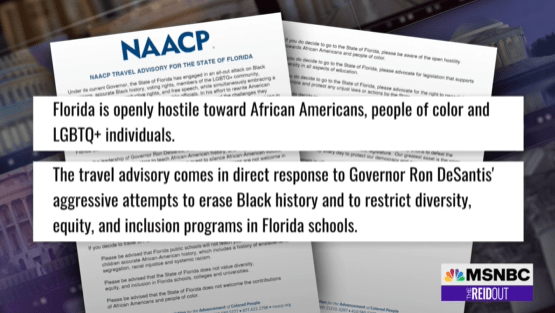
The decision comes after the NAACP and other civil rights organizations this spring issued a travel advisory for Florida, warning that recently passed laws and policies are openly hostile to African Americans, people of color and members of the LGBTQ+ community.

Willis Lonzer, the fraternity’s general president, said in statement on Wednesday that the decision was motivated in part by Florida’s new education standards that require teachers to instruct middle school students that slaves developed skills that “could be applied for their personal benefit.”

“Although we are moving our convention from Florida, Alpha Phi Alpha will continue to support the strong advocacy of Alpha Brothers and other advocates fighting against the continued assault on our communities in Florida by Governor Ron DeSantis,” Lonzer said.

An email seeking comment on Saturday about the fraternity’s decision was sent to Jeremy Redfern, the governor’s press secretary and the governor’s office.

DeSantis, who is running for the 2024 GOP presidential nomination, has come under fire this week over Florida’s new education standards. Among those criticizing the Florida governor on Friday was a rival for the Republican nomination, U.S. Sen. Tim Scott of South Carolina, the sole Black Republican in the Senate.

Responding to the criticism, DeSantis said Friday that he was “defending” Florida “against false accusations and against lies. And we’re going to continue to speak the truth.”

In May, the NAACP joined the League of United Latin American Citizens (LULAC), a Latino civil rights organization, and Equality Florida, a gay rights advocacy group, in issuing travel advisories for the Sunshine State, where tourism is one of the state’s largest job sectors. The groups cited recent laws that prohibited state colleges from having programs on diversity, equity and inclusion, as well as critical race theory, and the Stop WOKE Act that restricts certain race-based conversations and analysis in schools and businesses.

They also cited laws that they say made life more difficult for immigrants in Florida and limited discussions on LGBTQ topics in schools.

At least nine other organizations or associations have pulled the plug on hosting conventions in Orlando and Fort Lauderdale, two of the state’s most population convention cities, because of Florida’s political climate, according to local media reports.

Florida is one of the most popular states in the U.S. for tourists, and tourism is one of its biggest industries. More than 137.5 million tourists visited Florida last year, marking a return to pre-pandemic levels, according to Visit Florida, the state’s tourism promotion agency. Tourism supports 1.6 million full-time and part-time jobs, and visitors spent $98.8 billion in Florida in 2019, the last year figures are available.

click here to see full blog: https://apnews.com/article/florida-tourism-desantis-race-conventions-ff4dd10dba418c8fd9e7c80b3167f7cd

Pentagon officials say GOP’s bigoted bills are hurting the military

This blog originally appeared at MSNBC.

Multiple defense officials have recently voiced concerns about the negative impact of anti-LGBTQ+ laws on military recruitment and retention. These officials have emphasized that discriminatory policies can hinder the military’s ability to attract and retain talented individuals from diverse backgrounds, including LGBTQ+ individuals. Such laws can create a hostile and unwelcoming environment, leading potential recruits to choose other career paths or discouraging current service members from reenlisting. The statements from these defense officials highlight the importance of fostering inclusivity and equality within the military to ensure its strength and effectiveness.


It is true that there are differing views within the conservative movement regarding the United States military’s diversity and inclusion efforts. While some conservatives have criticized these efforts, claiming they contribute to perceived weakness, others recognize the importance of inclusivity in the military for recruitment and retention purposes.

Senator Tommy Tuberville’s remarks, suggesting a lenient attitude towards white nationalists in the military, received criticism for downplaying concerns about extremism within the ranks. It is important to note that military leaders have consistently emphasized the value of diversity and inclusion initiatives as they contribute to a stronger and more effective force. These efforts are seen as crucial for attracting and retaining talented individuals from various backgrounds who can contribute to the mission and success of the military.

The stance taken by Senator Tuberville is not representative of all conservatives or their views on diversity and inclusion in the military. It is a complex and nuanced topic with varying opinions within the conservative movement.

If service members are thinking and concerned about the experience their kids are having, they’re not going to be focused on their jobs.

ALEX WAGNER, ASST. AIR FORCE SECRETARY

Civilian lawmakers in the Republican Party, many of whom have never served and show no discernible credibility on how to run a modern-day military operation, are some of the loudest critics claiming such measures are a waste of time or injurious to morale. 

(Check out my MSNBC colleague Steve Benen’s excellent post on the GOP’s anti-diversity crusade against the military from January.)

Fortunately, people better equipped to make these judgments are speaking up. Pentagon officials have been setting the record straight this week.

At the Center for a New American Security’s annual National Security Conference on Tuesday, a high-ranking Air Force official explained that the nationwide wave of anti-LGBTQ laws passed by conservative lawmakers could hurt the military’s readiness. 

“When I’m forced to move families from installations because their school will do nothing when their LGBT kid is being bullied — that worries me, because that’s distracting from the mission, that’s detracting from our readiness,” said Alex Wagner, assistant Air Force secretary for manpower and reserve affairs. Defense One, a news site focused on national security, was the first outlet to report the comments

“If service members are thinking and concerned about the experience their kids are having, they’re not going to be focused on their jobs,” Wagner said. “They’re not gonna be focused on their mission.”

Seems logical, right? If military folks are worried about weirdo lawmakers obsessively finding ways to target their kids, they’re not going to be able to do the important stuff we expect them to do … like, y’know, protecting the nation.

The hits kept coming.

At a Department of Defense Pride Month event on Wednesday, Space Force Chief Operating Officer Lt. Gen. DeAnna Burt pointed out that “more than 400 anti-LGBTQ+ laws have been introduced at the state level” since January.

“That number is rising and demonstrates a trend that could be dangerous for our service members, their families and the readiness of the force as a whole,” she said.

click here to see full blog: https://www.msnbc.com/the-reidout/reidout-blog/pentagon-officials-say-gops-bigoted-bills-are-hurting-military-rcna88445?fbclid=IwAR0WF91gKs28BvpuMzWrqQ77Xmn8O1W2OQQUy_vZocDzmASUzDsJ5tD47oM

U.S. Judge Blocks Florida Ban On Trans Minor Care In Narrow Ruling: ‘Gender Identity Is Real’

This blog originally appeared at Huff Post.

Judge Robert Hinkle issued a preliminary injunction, saying three transgender children can continue receiving treatment.

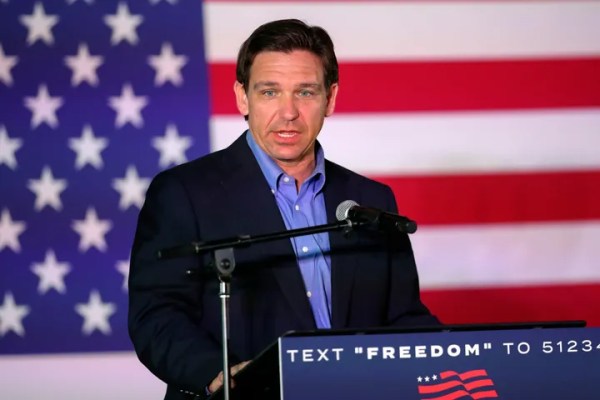
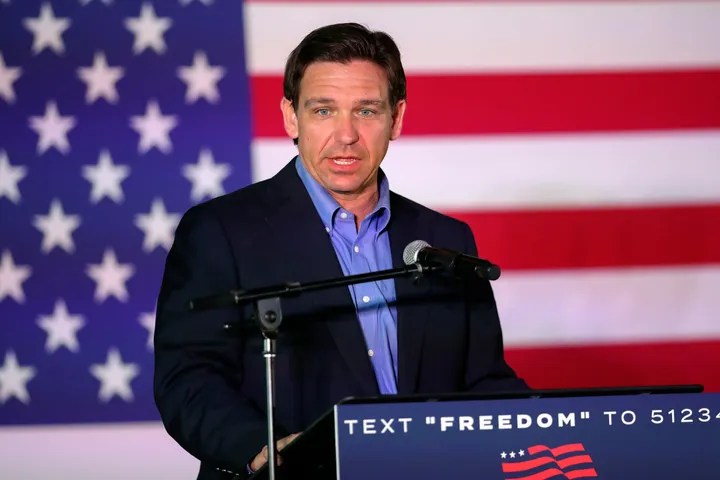
Republican presidential candidate, Florida Gov. Ron DeSantis, speaks during a campaign event, June 2, 2023, in Lexington, S.C. A federal judge temporarily blocked portions of a new Florida law that bans transgender minors from receiving puberty blockers, ruling Tuesday, June 6, that the state has no rational basis for denying patients treatment.

In Tallahassee, Florida, a federal judge, Robert Hinkle, has issued a preliminary injunction temporarily blocking portions of a new state law that prohibits transgender minors from receiving puberty blockers. The judge ruled on Tuesday that the state lacks a rational basis for denying this form of treatment to transgender patients. As a result, three transgender children involved in the lawsuit can continue receiving the treatment they need.

The lawsuit challenges the law that was signed by Republican Governor Ron DeSantis. The law, which bans the use of puberty blockers for transgender minors, was enacted shortly before Governor DeSantis announced his run for president. The injunction means that the law’s enforcement is halted for now, pending further legal proceedings and a final decision on its constitutionality.

This ruling highlights the ongoing legal debates surrounding the rights and healthcare access for transgender individuals, particularly minors. It reflects the court’s recognition of the importance of gender identity and the need for medical treatments that are considered essential by healthcare professionals in supporting transgender youth.

The case will continue to be litigated, and the final outcome will determine the future of the Florida law regarding the use of puberty blockers for transgender minors.

click here to see full blog: https://www.huffpost.com/entry/transgender-health-florida-judge-blocks-ban-minor-care_n_647f6b38e4b091b09c3554a7

Transgender adults in Florida are blindsided that a new law also limits their access to health care

This blog originally appeared at AP News.

TALLAHASSEE, Fla. (AP) — Debate surrounding Florida’s new restrictions on gender-affirming care focused largely on transgender children. But a new law that Republican presidential candidate and Gov. Ron DeSantis signed last month also made it difficult – even impossible – for many transgender adults to get treatment.

Eli cuddles his dog on the couch at his home in Casselberry, Fla., May 29, 2023. Eli and his fiancé Lucas, both transgender men, plan to move to Minnesota with their dog and two cats later this year. The Associated Press is not using Eli’s and Lucas’ last names because they fear reprisal.


The discussions in the Legislature surrounding the ban on gender-affirming care for minors in Florida have had a significant impact on transgender individuals like Eli and Lucas, who are a couple. As trans men, they have been closely following the debates, with Democrats warning about the increased risk of suicide among trans children if the ban is implemented, and Republicans sharing misguided stories of mutilated kids. However, what caught Eli and Lucas off guard was the realization that the bill’s language would also disrupt their own lives.

Feeling blindsided by the lack of communication and discussions in their circles, Eli, aged 29, expressed the challenges they now face. The couple, like many other transgender adults in Florida, is confronted with difficult choices. They must decide whether to uproot their lives and seek access to gender-confirming care elsewhere, as the restrictive regulations in Florida make it a test case for limitations on care for adults. This situation has left individuals like Eli and Lucas, as well as clinics providing gender-affirming services, grappling with uncertainty and trying to navigate a challenging landscape.

CLICK HERE TO READ THE ORIGINAL BLOG

Texas bans ‘Marxist’ diversity offices at state universities, following Florida

This blog originally appeared at The Hill.

The Texas Legislature has passed a law banning diversity, equity and inclusion programs at state universities.

The bill now heads to the the desk of Gov. Greg Abbott (R).

Texas has become the second state, following Florida, to pass a bill that critics argue could have significant implications for state institutions like the University of Texas and Texas A&M University. The measure, which some fear may adversely impact minority students and smaller schools, mandates that state universities eliminate diversity, equity, and inclusion (DEI) offices and prohibits the consideration of diversity when making hiring decisions.

The bill, championed by State Rep. Tony Tinderholt (R-Arlington), is seen by its supporters as a necessary safeguard against what they perceive as radicalism infiltrating Texas. However, opponents express concerns about the potential consequences of such legislation, warning that it could hinder flagship state universities, discourage minority enrollment, and have detrimental effects on smaller educational institutions.

Critics argue that eliminating DEI offices and disregarding diversity as a hiring factor could undermine efforts to create inclusive and equitable environments on campus. These initiatives play a vital role in promoting diversity, understanding, and tolerance among students and faculty, fostering a sense of belonging for individuals from various backgrounds.

Moreover, opponents of the bill contend that it sends a message that Texas is unwelcoming to minority students and faculty, potentially discouraging them from seeking education or employment opportunities within the state’s higher education system. This could have long-term consequences for the state’s academic reputation and its ability to attract and retain diverse talent.

The impact of the legislation extends beyond larger institutions, as smaller schools, which often rely on DEI initiatives to cultivate inclusive environments, may face substantial challenges. The bill’s proponents argue that it promotes a singular ideology and protects Texas from what they perceive as ideological radicalism, but critics fear it will stifle intellectual diversity, impede critical thinking, and limit exposure to a variety of perspectives.

As the bill becomes law, the Texas higher education system will navigate a new landscape where DEI efforts are curtailed, diversity is disregarded in hiring decisions, and the consequences for educational institutions, students, and faculty remain uncertain.

CLICK HERE TO READ MORE

DeSantis signs bill to defund DEI programs at Florida public colleges – CNNPolitics

This blog originally appeared at CNN Politics.

(CNN)Florida Gov. Ron DeSantis on Monday signed legislation to defund diversity, equity and inclusion programs at all state universities, which he called a “distraction from the core mission.”

“This is better viewed as standing for discrimination, exclusion and indoctrination, and that has no place in our public institutions,” DeSantis said at a news conference in Sarasota.

“If you want to do things like gender ideology, go to (the University of California) Berkeley,” DeSantis added. “There’s nothing wrong with that, per se, but for us with our tax dollars, we want to focus on the classical mission of what a university is supposed to be.”

Florida Gov. Ron DeSantis on Monday signed legislation to defund diversity, equity and inclusion programs at all state universities, which he called a “distraction from the core mission.”

Under the law, Florida state universities are barred from spending state or federal funds to promote, support or maintain any programs that “advocate for diversity, equity, and inclusion, or promote or engage in political or social activism.”

“What this does is reorient our universities back to their traditional mission and part of that traditional mission is to treat people as individuals, not to try to divvy them up based on any type of superficial characteristics,” DeSantis said.

CLICK HERE TO READ MORE

Tampa Pride Event Canceled Over Gov. Ron DeSantis’ Anti-LGBTQ+ Laws

This blog originally appeared at Huff Post.

Florida just enacted a slew of new restrictions on LGBTQ+ rights.

Due to the recent enactment of several anti-LGBTQ+ bills by Governor Ron DeSantis, an LGBTQ+ pride event known as Tampa Pride on the River has been canceled. The event, which includes drag performances, will not take place in September as planned due to a new law in Florida that specifically targets drag shows visible to minors at public venues. This cancellation highlights the impact of the legislation on the LGBTQ+ community and their ability to express their identities freely.

“In the end, we didn’t want to take any chances,” West told the Tampa Bay Times on Thursday.

“Really, I’m sorry,” West told WFLA, an NBC affiliate.

The event usually draws around 20,000 people to downtown Tampa for food, drinks and entertainment in an area without any fencing, according to a St. Petersburg CBS affiliate.

CLICK HERE TO READ THE ORIGINAL BLOG

Blog at WordPress.com.

Up ↑