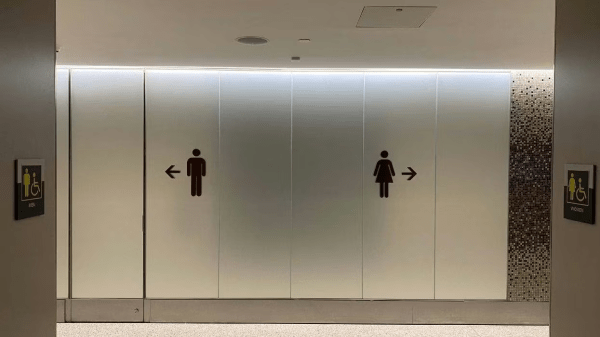
The parents of a young trans woman in Idaho say that they’re leaving their state after it passed a law to criminalize trans people who use the restroom.
“Obviously, this law is a disaster for families like ours,” Michael Devitt, the father of 20-year-old Eve, wrote in a letter notifying his patients that his physical therapy practice would be shutting down. “We can no longer take a road trip across our beloved state, or even enjoy a family night out at a restaurant, or a movie, without running the risk of Eve being charged and sent to a prison merely for using the facilities.”
The law he’s referring to is H.B. 752, which Gov. Brad Little (R) signed into law on March 31, the Trans Day of Visibility. The hostile law makes it a criminal offense for trans people to use the restroom that aligns with their gender identity, even in private businesses. Multiple offenses could get a trans person life in prison.
While several states have passed bathroom bills, Idaho is one of only four states – along with Florida, Kansas, and Utah – to introduce criminal penalties for using the restroom.
Eve Devitt, who is attending college in New York, testified against a different transphobic bill several years ago.
“Since I started estrogen almost three whole years ago, my mental health has gotten significantly better,” she told the Idaho House Judiciary, Rules, and Administration committee in 2023. “I’ve been able to get myself off of a cliff that I wasn’t sure if I would ever find myself off of. I feel so much better and more complete with myself.”
But today the Devitts say they’ve had enough, comparing their state to an abusive partner.
“We say ‘We’re in an abusive relationship with the state of Idaho’ — all people with transgender relatives, or all transgender people. And you always think, ‘Oh, they’ll stop hitting me.’ But they’re not gonna,” Michael Devitt told the Idaho Capital-Sun. He said that H.B. 752’s penalties for multiple offenses are more than the prison sentence someone in the state could get for manslaughter.
“I mean, there are all kinds of things you can do in Idaho that will get you prison time that are less than the second offense for using the bathroom that aligns with your gender identity.”
He said that even though his daughter is in New York at the moment, he worries about how she’ll be treated when she comes home to Boise. For example, he’s worried she’ll be forced to undergo a physical exam in public.
“Every single day when I’m out in public, I have to decide: Do I feel like going to jail today, or do I feel like being attacked?” said Nikson Mathews, a trans man and the chair of the Idaho Democratic Queer Caucus, about the new law.
Eve’s mother, Dr. Angie Devitt, said that she would continue to see patients in Idaho even after the family moves to another state.
H.B. 752 is one of three anti-LGBTQ+ laws passed in Idaho this year. H.B. 561, which was also signed on the Trans Day of Visibility, bans local governments from flying Pride flags. The state passed a similar ban last year that had an exemption for official city flags, so the city of Boise made the Pride flag one of its official flags. The GOP-controlled legislature responded this year by passing another flag ban that said flags had to be officially adopted before 2023 to count, just to keep Boise from flying the Pride flag.
And last Friday, Gov. Little signed the “Pediatric Secretive Transitions Parental Rights Act,” which requires doctors and teachers to report gender non-conforming kids to their parents without investigating whether those children will face abuse if outed.
The Idaho Capital-Sun reports that a fourth anti-LGBTQ+ bill could still be passed by the legislature. House Bill 557, which would ban local governments from enacting LGBTQ+ anti-discrimination protections, passed the Idaho House of Representatives but has stalled in the state Senate. Twelve local governments have passed ordinances that would be repealed by this bill if it passes.
Idaho Gov. Brad Little (R) signed a severe anti-trans bill into law last Friday that will require child care providers, health care providers, and educational institutions to out trans kids to their parents if they express any desire to act in a way perceived as discordant with their sex assigned at birth.
The Pediatric Secretive Transitions Parental Rights Act, which will take effect in July, bans folks who care for minors “from facilitating a pediatric sex transition or social transition without informing and obtaining informed consent from a minor child’s parents or guardians.”
The bill aims to close a “loophole” in the state’s anti-trans laws, as cosponsor state Sen. Ben Toews (R) reportedly put it during the state Senate’s debate on the legislation. That loophole, Toews said, is the fact that the state’s gender-affirming care ban does not cover social transitions, which he referred to as “the process by which vulnerable children are led into the pipeline.”
The legislation defines social transition as “the process by which an individual goes from identifying with and living as a gender that corresponds to the individual’s sex to identifying with and living as a gender different from the individual’s sex and may involve social, legal, or physical changes, including adopting a name, pronouns, appearance, or dress that does not correspond to the individual’s sex.”
The covered entities, then, must notify a student’s parents within 72 hours if they request to be referred to using new pronouns or a different name than their legal name; if they ask to use facilities like bathrooms and locker rooms that don’t correspond with their sex assigned at birth; or if they ask to join a sports team that does not align with their birth sex.
Not doing so, the bill says, means “aiding and abetting” a child’s transition before parental consent is obtained. Parents will also be allowed to sue entities for violating the bill, and the attorney general will be authorized to seek civil penalties of up to $100,000.
Democrats argued against the bill for its vague language and the possibility that it would put children with unaccepting families in unsafe situations.
“When we write these bills, we write these statutes, we’re writing them for all families,” argued state Sen. James Ruchti (D), according to the Idaho Statesman. “And so when nurses, when doctors, when educators, tell us we need a little room to be able to handle these situations carefully… and being required to report this within 72 hours takes that out of our hands, and it means that we have to possibly go to a family… and tell them something that that family may not be in a great place to hear.”
State Sen. Melissa Wintrow (D) called the bill “one more that’s just overcontrolling overreach and just goes far beyond what’s necessary.”
“Life isn’t that black and white,” she said.
A lone Republican, state Sen. Jim Guthrie, spoke out against the bill, saying it will “force our teachers to be tattletales” and “put additional stress on teachers that are already stressed… already overworked, and more and more they have to deal with laws like this that are going to force them within 72 hours to make a judgment.”
After the legislature passed the bill, ACLU of Idaho spokesperson Rebecca De León called it an “example of unconstitutional, big government overreach into our private lives.”
“HB 822 threatens to undermine bedrock free speech protections for students, teachers, and health care professionals and is clearly unconstitutional,” she said. “Politicians who stand for small government and personal liberties should not regulate how people dress or express themselves.”
Jane Migliara Brigham, a writer for trans news publication The Needle, slammed the bill for turning doctors, teachers, and the like into “a kind of gender secret police.”
“The language is written such that there is no clear limit on what does not constitute social transition,” Brigham explained. “As a result, whether or not some behavior which is not listed here actually constitutes social transition will be in the eye of the beholder, or more accurately, in the eye of whoever is reporting the behavior to the child’s parents. This ambiguity leaves room for personal judgment, especially where that judgment is informed by anti-trans bigotry.”
Brigham questioned whether a boy wearing pink could count as evidence of a social transition and whether the legislation does not make clear where such an act would fall.
“Most casual observers cannot reliably tell the difference between a child who is trans, gay, gender non-conforming, or one who is simply socially awkward. As a result, what does and does not get reported to parents will, in all likelihood, be determined by bigotry and stereotypes, rather than any clear guidelines.”
At the end of March, Little also signed the nation’s most extreme bathroom ban. The law is the fourth in the U.S. to criminalize trans people’s use of bathrooms and other sex segregated spaces that don’t match the sex they were assigned at birth — similar laws have been enacted in Florida, Kansas, and Utah.
Guthrie was again the lone Republican against the bill. “If [a trans woman goes] in the bathroom of their biological sex, they’re going to upset a lot of people and freak people out,” he told the Associated Press. “If they go in the bathroom that is consistent with their looks — they are knowingly and willingly going into the bathroom — that is breaking the law.”
“They’re human beings,” he said, “just like us, and what are they supposed to do?”
An increasing number of U.S. states have passed laws that allow health care providers – including doctors, nurses and pharmacists – to refuse to treat patients based on their personal or religious beliefs. While these conscientious objection laws have long existed for issues such as abortion, their effects on LGBTQ+ people have not been well studied.
Specifically looking at sexual minorities, our research found that lesbian, gay, bisexual and queer adults living in states that passed conscientious objection laws were 28% less likely to report receiving a first-time HIV test, compared to peers in states without conscientious objection laws. These laws did not affect HIV testing rates for heterosexual adults.
We analyzed data from the Centers for Disease Control and Prevention on the health outcomes of more than 109,000 lesbian, gay, bisexual, queer and heterosexual adults from 2016 to 2018. We focused on eight states, comparing two that enacted conscientious objection laws during that period (Illinois and Mississippi) and six that did not (Louisiana, Minnesota, Ohio, Texas, Wisconsin and Virginia).
To isolate the effect of the laws themselves, we compared changes in health outcomes among LGBQ+ and heterosexual adults living in states with or without religious exemptions to health care, both before and after the laws passed. Making all these comparisons at once allowed us to identify differences in health outcomes due to the laws rather than preexisting differences between states.
Our findings highlight how laws permitting clinicians to refuse to provide health care to LGBQ+ patients deepen existing health disparities. Notably, conscientious objection laws are just one type of policy restricting LGBTQ+ people’s access to health care.
HIV preexposure prophylaxis, or PrEP, can lower the risk of contracting HIV from sex by 99%. However, patients are required to receive an HIV test before PrEP can be prescribed. If providers are unwilling or unable to engage with LGBQ+ patients on their sexual health, people who could benefit most from HIV prevention tools, such as PrEP, may never receive them.
Moreover, since the risk of contracting HIV is closely linked to the social determinants of health, such as having safe and stable housing and employment, barriers to HIV testing could further widen health gaps.
Acknowledging the health consequences of conscientious objection laws could help policymakers and the public better understand their impact.
A 2026 national study found that Americans were more motivated to support policies that address LGBTQ+ inequality when these laws were framed as improving health inequality rather than economic inequality or sense of belonging. This finding suggests that people perceive health inequality as unjust and are less likely to blame LGBTQ+ individuals for those circumstances.
The city of Boise won’t take “no” for an answer. Republicans said no Pride flags, so the mayor responded with Pride “wraps.”
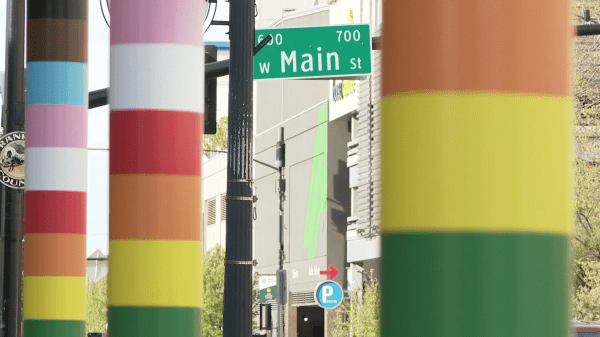
Just days after Idaho Gov. Brad Little (R) signed an updated law that finally banished the Pride standard from flying at City Hall, Boise unveiled vinyl wraps featuring the Progress Pride flag colors on the building’s three flagpoles, reaching nearly all the way up to the flags themselves.
The flags on those poles don’t include a Pride flag.
Last Tuesday, following Little’s signature — not so coincidentally, on the Trans Day of Visibility — Boise Mayor Lauren McLean (D) ordered the city’s Pride flag lowered after more than a decade.
After an earlier law first banned all flags that aren’t official government flags, the City Council made the Pride flag an official city flag. Republicans responded with an update to that law, adding language and fines that the city couldn’t circumvent.
On the day Gov. Little signed the new bill, Mayor McLean stood with council members and about 60 supporters at a special City Council meeting, where they proclaimed March 31 as Transgender Day of Visibility in the state capital.
“Many people in this state and around this country are seeking to divide us. They’re seeking to divide us by targeting the most vulnerable among us,” McLean said as she choked back tears, according to the Idaho Statesman. “I want the people in this room to know that I see you. We see you. You are wanted, important, and unique members of our community.”
That night, McLean lit City Hall in the colors of the transgender flag: pink, white, and baby blue.
Now Boise has added the wraps, and a massive sign hung in the building’s glass facade that declares, “Creating a city for everyone,” alongside a Progress Pride rainbow.
“Well, the law pertained to flags, and we are in full compliance with the law,” Mayor McLean told Boise State Public Radio on Tuesday.
“We have a rich history of an arts and culture scene here,” she added. “So because it’s allowed, we have installed art that demonstrates our values of being a safe and welcoming city for everyone.”
State Rep. Ted Hill (R), who brought the two bills to address Republicans’ displeasure with the Pride flag, told the Statesman he was expecting some kind of response, though he’d guessed it would be a mural.
It was too early to tell whether lawmakers would bring a bill to address the mayor’s workaround, Hill said.
“She’s insulting everyone else,” he complained. “Is that City Hall or some activist Pride Hall?”
The Idaho House passed legislation that could make it a felony for transgender people to step foot in a bathroom matching their gender identity.
The legislation takes aim directly at trans individuals using the restroom or locker rooms, threatening those who “knowingly” and “willfully” enter facilities designated for the “opposite biological sex” with prison time. A first offense would count as a misdemeanor punishable by up to a year in jail. Those caught using the bathroom in repeated offenses, however, could be convicted as felons and face up to five years in prison.
Idaho Rep. Cornel Rasor, the bill’s Republican sponsor, used transphobic rhetoric as he claimed the change in law was necessary to prevent individuals from criminal actions. “It prevents discomfort and voyeurism escalation and assaults, while preserving single-user options and narrow exceptions so no one is denied access for emergency aid,” Rasor said, according to theIdaho Capital Sun.
But Democratic Idaho Rep. Chris Mathias predicted the opposite would occur. “Forcing people who don’t look like the sex that they were born with, or transgender folks, forcing them to use other people’s bathrooms is going to put a lot of people in danger,” he said.
Ahead of the vote, a transgender Idaho resident, Nikson Matthews, urged lawmakers to consider the real-world consequences of the proposal, walking them through what enforcement could look like in practice. Matthews described a scenario in which someone sees him, a bearded man, enter a men’s restroom, recognizes or suspects he is transgender, and calls the police. Officers, he said, would arrive to find “a bearded man using the men’s bathroom,” yet investigate him solely because of his identity. Under the bill, Matthews warned, he could face up to a year in jail for “peeing, washing my hands, or even being in the bathroom to grab a tissue.”
He said the alternative, forcing him to use women’s facilities, could be even more dangerous, describing how his appearance could provoke confrontation or violence from others who perceive him as a man entering a women’s space. “Every single day when I’m out in public, I have to decide,” Matthews told lawmakers. “Do I feel like going to jail today, or do I feel like being attacked?”
Ultimately, every Democrat in the Idaho House voted against the bill, but the party represents just nine of the chamber’s 70 members. Six Republicans joined with Democrats in voting no, but the bill passed by a 54-15 margin. It now heads to the Idaho Senate, where Republicans hold 29 of 35 seats.
Idaho lawmakers last year voted to restrict transgender people’s access to state-run facilities, including universities, prisons, and domestic violence shelters. The new bill criminalizes bathroom use in both publicly owned government buildings and private businesses that provide public accommodations.
Critics of the legislation cast it as a misguided attack on broader LGBTQ+ rights.
“Idaho politicians have positioned themselves as leaders in this calculated strategy to chip away at the rights of trans people. Each year, a more restrictive anti-trans bathroom law is passed that expands on the previous one,” the state’s chapter of the American Civil Liberties Union said.
The Idaho House of Representatives passed a measure this week asking the Supreme Court to overturn its landmark 2015 decision legalizing same-sex marriage across the U.S. But the legislation lost three Republican votes compared to a similar measure that passed in the state House last year.
As the Idaho Statesmanreports, House Joint Memorial 17 passed in a 44–26 vote Tuesday. The measure, introduced by State Rep. Tony Wisniewski (R), is a formal legislative request for the Supreme Court to overturn its 2015 decision in Overgefell v. Hodges. The measure argues that the decision establishing the constitutional right of same-sex couple to legally marry is “at odds with the Constitution of the United States and the principles upon which the United States is established.” In its Obergefell ruling, the measure argues, the Court applied a definition of liberty that would not have been recognized by the country’s founders. The decision, it says, “relies on the dangerous fiction of treating the Due Process Clause of the Fourteenth Amendment to the Constitution as a font of substantive rights” which “strays from the full meaning of the Constitution.”
House Joint Memorial 17 is identical to House Joint Memorial 1, which the Idaho House passed last year.
This time around, however, 17 Republican lawmakers joined House Democrats to vote against the measure, with three more Republican no votes than in 2025.
According to the Statesman, Republican Reps. Dori Healey and Mike Pohanka, who both voted for House Joint Memorial 1 last year, both voted against the 2026 measure. Grayson Stone, who is serving as a long-term substitute for Rep. Don Hall (R) and recently announced that he is running for Hall’s seat, also voted against the measure. Late last year, Hall replaced former Republican Rep. Lance Clow, who voted for House Joint Memorial 1. Hall resigned due to health issues earlier this year.
Stone reportedly acknowledged that his no vote might amount to “political suicide,” but cited the Bible as the reason for his vote.
“This entire argument is rooted in the Bible,” Stone said, according to the Statesman, noting that the Bible includes instructions on how to shave. “I just don’t understand why we have to apply the Bible to specific aspects of our life, but not all of it. So, I will be voting against this bill.”
Pohanka, meanwhile, noted that his own religious beliefs on same-sex marriage have not changed since he voted for the 2025 measure. However, he told the Statesman that he represents all his constituents and wants to get back to actually legislating.
“I thought we advanced [House Joint Memorial 1] last year,” he said. “This year, to me, it’s just going to cause hurt and pain and I don’t want to do that.”
Healey declined to comment on his vote, according to the Statesman.
House Joint Memorial 17 now advances to the Idaho Senate, which declined to vote on the 2025 measure. Even if the state senate approves House Joint Memorial 17, it would not compel the Supreme Court to act.
Under a new bill introduced Wednesday, the Idaho Legislature would ban local policies in more than a dozen cities that prohibit discrimination on the basis of sexual orientation and gender identity.
The bill, written by the Idaho Family Policy Center, a conservative Christian group, and sponsored by Nampa Republican state Rep. Bruce Skaug, would block local governments in Idaho from having more strict antidiscrimination policies than established in state law.
Skaug argued that the varying local rules hinder economic growth.
“In addition to threatening our religious freedoms, all of these conflicting local antidiscrimination ordinances create a tangled web of red tape that varies from city to city, county to county,” Skaug told lawmakers. “In the business sector, it burdens the entrepreneurs and the employers.”
Since 2011, 13 Idaho cities and towns have passed nondiscrimination ordinances including Sandpoint, Boise, Idaho Falls, Moscow, Lewiston, Meridian, Ketchum, Hailey, Bellevue, Driggs, Victor, Pocatello and Coeur d’Alene. In 2020, Ada County, home to Boise, passed its own, KTVB reported.
Chelsea Gaona-Lincoln, executive director of Add the Words Idaho, a group that has pushed for LGBTQ+ antidiscrimination protections, called the bill embarrassing.
“There are real issues Idaho needs addressed,” she said in a statement. “Lawmakers should move on and find something meaningful and responsible to do with the time and taxpayers’ money. Let queer and trans people live in peace.”
Idaho Family Policy Center, which wrote the bill, echoed Skaug’s arguments
The Idaho House Local Government Committee voted to introduce Skaug’s bill Wednesday, teeing it up for a full committee hearing with public testimony. All 14 Republicans on the committee supported introducing it, and the committee’s two Democrats opposed it.
Rep. Steve Berch, a Boise Democrat, called the bill “an overreach of legislative power or state power over the cities and communities.”
Skaug told the committee that the bill would ban more than just local antidiscrimination policies for LGBTQ+ protections, saying it would also prevent housing-related measures that deal with income and familial status. In an interview after the committee hearing, Skaug couldn’t immediately share which localities have those other nondiscrimination measures.
In preparing the bill, Skaug told the Idaho Capital Sun that he worked with the Idaho Family Policy Center and the Alliance Defending Freedom, a conservative Christian legal group.
In a statement, Idaho Family Policy Center President Blaine Conzatti said local antidiscrimination ordinances “are frequently weaponized against small business owners — especially wedding vendors or those offering creative design services.”
“No small business owner should ever be forced to choose between violating their sincerely held religious beliefs or leaving the marketplace altogether,” he said. “… Government officials have forced bakers, photographers, florists, graphic designers, and wedding venue operators to participate in same-sex wedding ceremonies and pride festivals.”
Planned Parenthood critiques bill as stripping local control
Rep. Marco Erickson, an Idaho Falls Republican, made the motion to introduce the bill in committee.
In 2013, the Idaho Falls City Council first passed an ordinance barring LGBTQ+ discrimination in housing and employment, becoming the seventh Idaho town with such protections at the time, Boise State Public Radio reported. In 2020, the Idaho Falls City Council expanded the discrimination protections to public accommodations, the Post Register reported.
In a statement, Planned Parenthood Alliance Advocates’ Idaho State Director Mistie DelliCarpini-Tolman critiqued the bill as stripping local control.
“In places across Idaho, locally elected officials are ready and willing to stop discrimination, and this bill blocks them from doing exactly that, what voters elected them to do,” Tolman said. “That isn’t small government. It’s a uniform denial of basic protections that tells LGBTQ+ Idahoans and other marginalized residents that their safety and dignity don’t matter.”
A lot of states are passing laws that target the LGBTQ+ community — but these 15 are the absolute worst.
Over 1,000 anti-LGBTQ+ laws have been proposed across every state legislature in the U.S. over the past two years, according to the American Civil Liberties Union, and 126 have passed into law. Less than two months into the 2025 legislative session, 390 laws targeting LGBTQ+ people have been proposed.
While marriage equality and anti-discrimination protections based on sexual orientation and gender identity are still guaranteed federally by U.S. Supreme Court rulings (for now), LGBTQ+ people are still concerned about their rights being taken away, especially when only 15 states have “shield laws” protecting access to gender-affirming care and abortion.
Based on laws surrounding marriage, family rights, health care, education, and youth collected by the Movement Advancement Project, here are the 15 worst states for LGBTQ+ people.
Pride Parade in Huntsville, Alabama (October 1, 2022)
Nondiscrimination laws: Alabama does not have nondiscrimination laws in employment, housing, health care, education, public accommodations, or credit/lending. Its state code incorrectly defines sex as exclusively male or female, and it prohibits transgender people from using public facilities that align with their identities.
Marriage equality and parental rights: Alabama does not have adoption or foster care nondiscrimination protections for LGBTQ+ parents. It does not have second-parent adoption for unmarried couples, confirmatory adoption, nor recognition for parents using assisted reproductive technologies. It also does not have family leave laws that encompass LGBTQ+ people.
Education and youth policies: Alabama has a “Don’t Say Gay” law restricting discussion of LGBTQ+ identities in classrooms. It has banned trans students from participating in sports or using school facilities based on their identities, and it requires staff to forcibly out LGBTQ+ students to their guardians. The state also has a “religious exemption” law for Child Welfare Services.
Healthcare access and rights: Alabama has banned life-saving gender-affirming care for youth, though it permits the discredited and harmful practice of so-called conversion therapy for youth. Health insurance companies, including Medicaid, are not required to provide coverage related to gender transition or fertility treatments. The state also has a “religious exemption” law for healthcare providers.
Criminal justice: Alabama’s hate crime laws do not encompass sexual orientation and gender identity, and it has not banned the so-called “LGBTQ+ panic” defense.
Arkansas
Danielsen_Photography / Shutterstock.com
3rd annual Pride Walk at Hot Springs National Park, Arkansas (June, 4 2021)
Nondiscrimination laws: Arkansas does not have nondiscrimination laws in employment, housing, health care, education, public accommodations, or credit/lending. The state bans cities and local ordinances from passing nondiscrimination laws, and it has law about “adult” performances that could be used to target or restrict drag.
Marriage equality and parental rights: Arkansas does not have adoption or foster care nondiscrimination protections for LGBTQ+ parents. It does not have second-parent adoption for unmarried couples, confirmatory adoption, nor recognition for parents using assisted reproductive technologies. It also does not have family leave laws that encompass LGBTQ+ people.
Education and youth policies: Arkansas has a “Don’t Say Gay” law restricting discussion of LGBTQ+ identities in classrooms. It has banned trans students from participating in sports or using school facilities based on their identities, and it requires staff to forcibly out LGBTQ+ students to their guardians.
Healthcare access and rights: Arkansas has banned life-saving gender-affirming care for youth, though it permits the discredited and harmful practice of so-called conversion therapy for youth. Medicaid is forbidden from providing coverage related to gender transition to minors, and insurance companies are not required to cover fertility treatments. The state also has a “religious exemption” law for healthcare providers.
Criminal justice: Arkansas’ hate crime laws do not encompass sexual orientation and gender identity, and it has not banned the so-called “LGBTQ+ panic” defense. It has an HIV criminalization law that may require sex offender registration.
Florida
Chris_Harris / Shutterstock.com
Mourners pay their respects to the fallen at the Pulse Nightclub memorial on the 5th anniversary of the Pulse mass shooting in Orlando, Florida (June 12, 2021)
Nondiscrimination laws: Florida has nondiscrimination laws in employment, housing, and public accommodations, but not in credit/lending, health care, nor education. The state prohibits transgender people from using public facilities that align with their identities, and it does not allow updating gender markers on driver’s licenses or birth certificates. It has law about “adult” performances that could be used to target or restrict drag
Marriage equality and parental rights: Florida does not have adoption or foster care nondiscrimination protections for LGBTQ+ parents. It does not have second-parent adoption for unmarried couples, confirmatory adoption, nor recognition for parents using assisted reproductive technologies. It also does not have family leave laws that encompass LGBTQ+ people.
Education and youth policies: Florida originated the “Don’t Say Gay” laws restricting discussion of LGBTQ+ identities in classrooms. It has banned trans students from participating in sports or using school facilities based on their identities, and it requires staff to forcibly out LGBTQ+ students to their guardians.
Healthcare access and rights: Florida has banned life-saving gender-affirming care for youth, though it permits the discredited and harmful practice of so-called conversion therapy for youth. Medicaid is forbidden from providing coverage related to gender transition for all ages, and insurance companies are not required to cover fertility treatments. The state also has a “religious exemption” law for healthcare providers.
Criminal justice: Florida’s hate crime laws only encompass sexual orientation, not gender identity. It has not banned the so-called “LGBTQ+ panic” defense, and it has an HIV criminalization law.
Idaho
Venture Out Media / Shutterstock.com
Rally in support of transgender youth and gender-affirming care in Boise, Idaho (February 24, 2023)
Nondiscrimination laws: Idaho has nondiscrimination laws in employment, housing, and public accommodations, but not in credit/lending, education, health care, nor for state employees. Its state code incorrectly defines sex as exclusively male or female.
Marriage equality and parental rights: Idaho does not have adoption or foster care nondiscrimination protections for LGBTQ+ parents. It has second-parent adoption for unmarried couples, but not confirmatory adoption nor recognition for parents using assisted reproductive technologies. It also does not have family leave laws that encompass LGBTQ+ people.
Education and youth policies: Idaho has banned trans students from participating in sports or using school facilities based on their identities, and it requires staff to forcibly out LGBTQ+ students to their guardians. The state also has a “religious exemption” law for Child Welfare Services, though it has protections for LGBTQ+ youth in the Child Welfare System.
Healthcare access and rights: Idaho has banned life-saving gender-affirming care for youth, though it permits the discredited and harmful practice of so-called conversion therapy for youth. Medicaid is forbidden from providing coverage related to gender transition for all ages, and insurance companies are not required to cover fertility treatments. The state also has a “religious exemption” law for healthcare providers.
Criminal justice: Idaho’s hate crime laws do not encompass sexual orientation and gender identity. It has not banned the so-called “LGBTQ+ panic” defense, and it has an HIV criminalization law.
Indiana
Umut Tolga Pehlivan / Shutterstock.com
Indiana University Bloomington Students walking at Indy Pride in Indianapolis, Indiana (June 4, 2008)
Nondiscrimination laws: Indiana has weaker nondiscrimination laws in employment, housing, and public accommodations, but not in credit/lending, education, nor health care. The state also has a broad “religious exemption” law.
Marriage equality and parental rights: Indiana has adoption or foster care nondiscrimination protections based on sexual orientation, but not gender identity. It has second-parent adoption for unmarried couples, but not confirmatory adoption nor recognition for parents using assisted reproductive technologies. It also does not have family leave laws that encompass LGBTQ+ people.
Education and youth policies: Indiana has a “Don’t Say Gay” law restricting discussion of LGBTQ+ identities in classrooms. It has banned trans students from participating in sports or using school facilities based on their identities, and it requires staff to forcibly out LGBTQ+ students to their guardians.
Healthcare access and rights: Indiana has banned life-saving gender-affirming care for youth, though it permits the discredited and harmful practice of so-called conversion therapy for youth. Medicaid and state health insurance plans are not required to provide coverage related to gender transition or fertility treatments, but it has trans-inclusive health benefits for state employees.
Criminal justice: Indiana’s hate crime laws do not encompass sexual orientation and gender identity, and it has not banned the so-called “LGBTQ+ panic” defense. It has an HIV criminalization law that may require sex offender registration.
Louisiana
Scott Colesby / Shutterstock.com
Southern Decadence Parade march through the French Quarter in New Orleans, Louisiana (September 1, 2024)
Nondiscrimination laws: Louisiana does not have nondiscrimination laws in employment, housing, health care, education, public accommodations, or credit/lending. Its state code incorrectly defines sex as exclusively male or female, and it prohibits transgender people from using public facilities that align with their identities. The state also has a broad “religious exemption” law.
Marriage equality and parental rights: Louisiana does not have adoption or foster care nondiscrimination protections for LGBTQ+ parents. It does not have second-parent adoption for unmarried couples, confirmatory adoption, nor recognition for parents using assisted reproductive technologies. It also does not have family leave laws that encompass LGBTQ+ people.
Education and youth policies: Louisiana has a “Don’t Say Gay” law restricting discussion of LGBTQ+ identities in classrooms. It has banned trans students from participating in sports or using school facilities based on their identities, and it requires staff to forcibly out LGBTQ+ students to their guardians.
Healthcare access and rights: Louisiana has banned life-saving gender-affirming care for youth, though it permits the discredited and harmful practice of so-called conversion therapy for youth. Health insurance companies, including Medicaid, are not required to provide coverage related to gender transition or fertility treatments, and state employees do not have trans-inclusive benefits.
Criminal justice: Louisiana’s hate crime laws only encompass sexual orientation, not gender identity. It has not banned the so-called “LGBTQ+ panic” defense, and it has an HIV criminalization law that may require sex offender registration.
Mississippi
Carmen K. Sisson / Shutterstock.com
A rainbow flag supporting Pride month flies a the Biloxi VA Medical Center in Biloxi, Mississippi (June 5, 2023)
Nondiscrimination laws: Mississippi does not have nondiscrimination laws in employment, housing, health care, education, public accommodations, or credit/lending. Its state code incorrectly defines sex as exclusively male or female, and it prohibits transgender people from using public facilities that align with their identities. The state also has a broad “religious exemption” law.
Marriage equality and parental rights: Mississippi does not have adoption or foster care nondiscrimination protections for LGBTQ+ parents. It has second-parent adoption for unmarried couples, but not confirmatory adoption nor recognition for parents using assisted reproductive technologies. It also does not have family leave laws that encompass LGBTQ+ people.
Education and youth policies: Mississippi has a “Don’t Say Gay” law restricting discussion of LGBTQ+ identities in classrooms. It has banned trans students from participating in sports or using school facilities based on their identities, and it requires staff to forcibly out LGBTQ+ students to their guardians. The state also has a “religious exemption” law for Child Welfare Services.
Healthcare access and rights: Mississippi has banned life-saving gender-affirming care for youth, though it permits the discredited and harmful practice of so-called conversion therapy for youth. Medicaid is forbidden from providing coverage related to gender transition for youth, and insurance companies are not required to cover fertility treatments. The state also has a “religious exemption” law for healthcare providers.
Criminal justice: Mississippi’s hate crime laws do not encompass sexual orientation and gender identity. It has not banned the so-called “LGBTQ+ panic” defense, and it has an HIV criminalization law.
Missouri
Ryanzo W. Perez / Shutterstock.com
A view down one of the streets filled with celebrants during Saint Louis PrideFest in Missouri (June 24, 2023)
Nondiscrimination laws: Missouri has weaker nondiscrimination laws in housing, and public accommodations, but not in employment, credit/lending, education, nor health care. The state also has a broad “religious exemption” law.
Marriage equality and parental rights: Missouri’sadoption or foster care nondiscrimination protections only encompass sexual orientation, not gender identity. It does not have second-parent adoption for unmarried couples, confirmatory adoption, nor recognition for parents using assisted reproductive technologies. It also does not have family leave laws that encompass LGBTQ+ people.
Education and youth policies: Missouri has banned schools and districts from passing nondiscrimination or anti-bullying policies protecting LGBTQ+ students. It has banned trans students from participating in sports based on their identities, but not from using facilities that align with their identities.
Healthcare access and rights: Missouri has banned life-saving gender-affirming care for youth, though it permits the discredited and harmful practice of so-called conversion therapy for youth. Medicaid is forbidden from providing coverage related to gender transition for all ages, and insurance companies are not required to cover fertility treatments. The state also has a “religious exemption” law for healthcare providers.
Criminal justice: Missouri’s hate crime laws encompass sexual orientation and gender identity, though it has not banned the so-called “LGBTQ+ panic” defense, and it has an HIV criminalization law.
Montana
Cavan-Images / Shutterstock.com
“Say Gay” sign at Missoula Pride in Montana (March 29, 2024)
Nondiscrimination laws: Montana does not have nondiscrimination laws in employment, housing, health care, education, public accommodations, or credit/lending.Its state code incorrectly defines sex as exclusively male or female, and it has a broad “religious exemption” law. The state has also explicitly restricted drag performances, and does not allow updating gender markers on birth certificates
Marriage equality and parental rights: Montana’sadoption or foster care nondiscrimination protections only encompass sexual orientation, not gender identity. It has second-parent adoption for unmarried couples, but not confirmatory adoption nor recognition for parents using assisted reproductive technologies. It also does not have family leave laws that encompass LGBTQ+ people.
Education and youth policies: Montana requires that parents be notified of LGBTQ+ curricula so they can opt out. It has banned trans students from participating in sports based on their identities, but not from using facilities that align with their identities. The state requires staff to forcibly out LGBTQ+ students to their guardians.
Healthcare access and rights: Montana has banned life-saving gender-affirming care for youth, though it permits the discredited and harmful practice of so-called conversion therapy for youth. Health insurance companies and Medicaid are required to cover care related to gender transition, and there is some coverage for fertility treatments. However, the state has a “religious exemption” law for healthcare providers.
Criminal justice: Montana’s hate crime laws do not encompass sexual orientation and gender identity. It has not banned the so-called “LGBTQ+ panic” defense, and it has an HIV criminalization law.
Oklahoma
Kit Leong / Shutterstock.com
Pride Parade in Oklahoma (June 26, 2023)
Nondiscrimination laws: Oklahoma does not have nondiscrimination laws in employment, housing, health care, education, public accommodations, or credit/lending. Its state code incorrectly defines sex as exclusively male or female, and it prohibits updated gender markers on birth certificates. It also has a broad “religious exemption” law.
Marriage equality and parental rights: Oklahoma does not have adoption or foster care nondiscrimination protections for LGBTQ+ parents. It has second-parent adoption for unmarried couples, but not confirmatory adoption nor recognition for parents using assisted reproductive technologies. It also does not have family leave laws that encompass LGBTQ+ people.
Education and youth policies: Oklahoma has a weaker version of a “Don’t Say Gay” law that restricts the discussion of “homosexuality” in specific school subjects. It has banned trans students from participating in sports or using school facilities based on their identities. The state also has a “religious exemption” law for Child Welfare Services, though it has protections for LGBTQ+ youth in the Child Welfare System.
Healthcare access and rights: Oklahoma has banned life-saving gender-affirming care for youth, though it permits the discredited and harmful practice of so-called conversion therapy for youth. Health insurance companies, including Medicaid, are not required to provide coverage related to gender transition or fertility treatments, and state employees are not permitted trans-inclusive benefits.
Criminal justice: Oklahoma’s hate crime laws do not encompass sexual orientation and gender identity. It has not banned the so-called “LGBTQ+ panic” defense, and it has an HIV criminalization law.
South Carolina
Shuttershock creative
Rainbow flag on a map of South Carolina
Nondiscrimination laws: South Carolinadoes not have nondiscrimination laws in employment, housing, health care, education, public accommodations, or credit/lending. It has a broad “religious exemption” law.
Marriage equality and parental rights: South Carolina‘sadoption or foster care nondiscrimination protections only encompass sexual orientation, not gender identity. It does not have second-parent adoption for unmarried couples, confirmatory adoption, nor recognition for parents using assisted reproductive technologies. It also does not have family leave laws that encompass LGBTQ+ people.
Education and youth policies: South Carolinahas banned trans students from participating in sports based on their identities, but not from using facilities that align with their identities. The state requires staff to forcibly out LGBTQ+ students to their guardians. The state also has a “religious exemption” law for Child Welfare Services.
Healthcare access and rights: South Carolina has banned life-saving gender-affirming care for youth, though it permits the discredited and harmful practice of so-called conversion therapy for youth. Medicaid is forbidden from providing coverage related to gender transition for all ages, and insurance companies are not required to cover fertility treatments. The state also has a “religious exemption” law for healthcare providers.
Criminal justice: South Carolina‘s hate crime laws do not encompass sexual orientation and gender identity. It has not banned the so-called “LGBTQ+ panic” defense, and it has an HIV criminalization law.
South Dakota
Shuttershock creative
South Dakota state flag with rainbow stripes
Nondiscrimination laws: South Dakota does not have nondiscrimination laws in employment, housing, health care, education, public accommodations, or credit/lending. It has a broad “religious exemption” law.
Marriage equality and parental rights: South Dakota’sadoption or foster care nondiscrimination protections encompass sexual orientation and gender identity. However, it does not have second-parent adoption for unmarried couples, confirmatory adoption, nor recognition for parents using assisted reproductive technologies. It also does not have family leave laws that encompass LGBTQ+ people.
Education and youth policies: South Dakotahas banned schools and districts from passing nondiscrimination or anti-bullying policies protecting LGBTQ+ students. It has banned trans students from participating in sports based on their identities, but not from using facilities that align with their identities. The state also has a “religious exemption” law for Child Welfare Services, though it has protections for LGBTQ+ youth in the Child Welfare System.
Healthcare access and rights: South Dakota has banned life-saving gender-affirming care for youth, though it permits the discredited and harmful practice of so-called conversion therapy for youth. Health insurance companies, including Medicaid, are not required to provide coverage related to gender transition or fertility treatments, and state employees are not permitted trans-inclusive benefits.
Criminal justice: South Dakota‘s hate crime laws do not encompass sexual orientation and gender identity, and it has not banned the so-called “LGBTQ+ panic” defense. It has an HIV criminalization law that may require sex offender registration.
Tennessee
evenfh / Shutterstock.com
Pride Parade on Beale Street in Memphis, Tennessee (September 28, 2018)
Nondiscrimination laws: Tennessee does not have nondiscrimination laws in employment, housing, health care, education, public accommodations, or credit/lending. It instead bans cities and local ordinances from passing nondiscrimination laws. State code incorrectly defines sex as exclusively male or female, and it does not allow updating gender markers on driver’s licenses or birth certificates. The state has a broad “religious exemption” law that even allows officials to deny marriage licenses based on their personal beliefs. It has also explicitly restricted drag performances.
Marriage equality and parental rights: Tennessee’sadoption or foster care nondiscrimination protections encompass sexual orientation and gender identity. However, it does not have second-parent adoption for unmarried couples, confirmatory adoption, nor recognition for parents using assisted reproductive technologies. It also does not have family leave laws that encompass LGBTQ+ people.
Education and youth policies: Tennessee requires that parents be notified of LGBTQ+ curricula so they can opt out. It has banned trans students from participating in sports based on their identities and from using facilities that align with their identities. The state requires staff to forcibly out LGBTQ+ students to their guardians. The state also has a “religious exemption” law for Child Welfare Services, though it has protections for LGBTQ+ youth in the Child Welfare System.
Healthcare access and rights: Tennessee has banned life-saving gender-affirming care for youth, though it permits the discredited and harmful practice of so-called conversion therapy for youth. Medicaid is forbidden from providing coverage related to gender transition for all ages, and insurance companies are not required to cover fertility treatments. The state also has a “religious exemption” law for healthcare providers, and state employees are not permitted trans-inclusive benefits.
Criminal justice: Tennessee’s hate crime laws encompass sexual orientation and gender identity, though it has not banned the so-called “LGBTQ+ panic” defense, and it has an HIV criminalization law that may require sex offender registration.
Nondiscrimination laws: Texas has nondiscrimination laws in employment and for state employees, but not in housing, public accommodations, credit/lending, education, nor health care. The state does not allow updating gender markers on driver’s licenses or birth certificates, and it has a broad “religious exemption” law.
Marriage equality and parental rights: Texas does not have adoption or foster care nondiscrimination protections for LGBTQ+ parents. It does not have second-parent adoption for unmarried couples, confirmatory adoption, nor recognition for parents using assisted reproductive technologies. It also does not have family leave laws that encompass LGBTQ+ people.
Education and youth policies: Texas has a weaker version of a “Don’t Say Gay” law that restricts the discussion of “homosexuality” in specific school subjects. It has banned trans students from participating in sports based on their identities, but not from using facilities that align with their identities. The state also has a “religious exemption” law for Child Welfare Services without protections for LGBTQ+ youth.
Healthcare access and rights: Texas has banned life-saving gender-affirming care for youth, though it permits the discredited and harmful practice of so-called conversion therapy for youth. Medicaid is forbidden from providing coverage related to gender transition for all ages, and insurance companies are not required to cover fertility treatments. State employees are not permitted trans-inclusive benefits.
Criminal justice: Texas’s hate crime laws only encompass sexual orientation, not gender identity. It has not banned the so-called “LGBTQ+ panic” defense.
Wyoming
Shuttershock creative
Double rainbow against a black sky in Wyoming
Nondiscrimination laws: Wyoming does not have nondiscrimination laws in employment, housing, health care, education, public accommodations, or credit/lending.
Marriage equality and parental rights: Wyoming does not have adoption or foster care nondiscrimination protections for LGBTQ+ parents. It does not have second-parent adoption for unmarried couples, nor confirmatory adoption. It also does not have family leave laws that encompass LGBTQ+ people. However, it does have recognition for parents using assisted reproductive technologies.
Education and youth policies: Wyoming has a weaker version of a “Don’t Say Gay” law that restricts the discussion of “homosexuality” in specific school subjects. It has banned trans students from participating in sports based on their identities, but not from using facilities that align with their identities.
Healthcare access and rights: Wyoming has banned life-saving gender-affirming care for youth, though it permits the discredited and harmful practice of so-called conversion therapy for youth. Health insurance companies, including Medicaid, are not required to provide coverage related to gender transition or fertility treatments.
Criminal justice: Wyoming’s hate crime laws do not encompass sexual orientation and gender identity, and it has not banned the so-called “LGBTQ+ panic” defense.
Dishonorable mentions
BluIz70 / Shutterstock.com
People carry large balloon letters that spell out “Proud” as they walk in the annual pride parade in Atlanta, Georgia (October 15, 2023)
Other states that ranked below average include: Alaska, Arizona, Georgia, Iowa, Kansas, Kentucky, Nebraska, North Carolina, North Dakota, Ohio, Utah, and West Virginia.
The attorney general of Idaho issued an opinion telling schools not to allow teachers to post signs that say “Everyone is Welcome Here,” claiming that the message that public education is for everyone regardless of race, gender, sexual orientation, or other categories is Democratic in nature and therefore illegally partisan.
“These signs are part of an ideological/social movement which started in Twin Cities, Minnesota, following the 2016 election,” Idaho Attorney General Raúl Labrador (R) said in guidance issued to a school. “Since that time, the signs have been used by the Democratic party as a political statement.”
.Labrador also noted that the state Democratic Party is selling signs that say “Everyone is Welcome Here,” but state Democrats say that they only started selling those signs at cost in order to draw attention to conservatives’ early attempts to ban them.
The conflict centers on Idaho’s H.B. 41, which took effect last week and bans school employees from displaying flags or banners that show “opinions, emotions, beliefs or thoughts about politics, economics, society, faith or religion.”
Earlier this year, the state’s West Ada School District banned Sarah Inama, a teacher at Lewis and Clark Middle School, from displaying a sign that says, “Everyone is Welcome Here.” It showed a drawing of people’s hands with different skin tones, each with a heart on it.
The district also ordered her to take down another sign that read, “In this room everyone is welcome, important, accepted, respected, encouraged, valued, equal” on top of a background of rainbow colors. The rainbow colors included seven stripes, which differs from the six-striped rainbow Pride flag.
The controversy over the signs garnered national headlines in March, and the state attorney general’s office looked into how the law would apply in such cases, issuing an opinion last week.
The attorney general determined that these specific signs would violate H.B. 41 and claimed that the statements in the signs are part of a political movement and not, as defenders of the signs argued, generally agreed-upon beliefs about the nature of public education.
Labrador’s guidance hyperlinked a 2017 news story about a group of women who protested racist graffiti that appeared at a local high school the day after the president was elected to his first term, according to the Idaho Capital-Sun, which posted the attorney general’s opinion. The women carried signs that read, “All are Welcome Here.”
The guidance then claimed that Inama started posting the “Everyone is Welcome Here” sign in 2017, “during the height of the above-referenced social movement.”
In March, Inama disagreed that the message is political or partisan.
“I don’t agree. I don’t agree that this is a personal opinion,” she told KTVB at the time. “I feel like this is the basis of public education.”
June 26, 2015 was a milestone day in the United States when the SCOTUS decision was announced in the case of Obergefell v Hodges. A narrow 5-4 ruling brought nationwide marriage equality for LGBTQ people much sooner than many expected it. I certainly did not even think it would occur in my lifetime. The nation was split down the middle on the topic. A piecemeal approach was commonplace, with some states making it legal before the ruling, and others staunchly opposed to it in their state constitutions. Yet, a conservative justice saw fit to challenge the status quo and actually base a ruling on the US Constitution for a change, rather than political ideology.
We had already been married for almost 4 years at that point. We were living in Texas in July 2011 and my boyfriend at the time decided to ask me to marry him (now her, but that is another story for another day). We had been living together nearly 10 years. Going to Canada was floated as an idea. I had family in New Jersey and Andrew Cuomo in New York had just its own marriage equality law June 24 that year to take effect in July. So, New York it was! I had become an internet wedding planner of my own wedding by then to be wed on October 09, 2011, one day difference from our “10th anniversary”. It was tedious. It was stressful. It was fun. It was one of the best days of my life. I will never do it again. Sorry boys and girls.
While our own wedding anniversary of 14 years is coming this fall, I sit here writing this and worried that we will have to go through even more bullshit to not only keep our marriage legally intact, but to ensure future generations maintain their right to due process and equality under the law. We have a Supreme Court who has already shown it has the balls to revisit and repeal established forward thinking case law precedent. See, Roe v Wade’s death as a result of Dobbs v. Jackson Women’s Health Organization. Chief Justice Roberts and Justices Thomas, and Alito, who each wrote a dissenting opinion in Obergefell v Hodges are still proudly part of the conservative super majority on the bench. Yes, there is a Respect for Marriage Act that was finally passed in 2022 to help reaffirm O v H.
But we also have a President and House who are willing to turn back time. We have state legislators, who are now firing the opening salvo towards repeal of marriage equality. House reps in 9 states in 2025 proposed resolutions urging SCOTUS to repeal O v H. Those resolutions were passed in North Dakota and Idaho. 4 other states introduced bills, which failed, to introduce covenant marriage to their books, which would have created an exclusive category for opposite sex couples.
I hope everyone enjoys their anniversary, whether you were married today or at another point in time. But please remain vigilant and pay fucking attention to what is going on around you. Your rights can always be removed with the stroke of a pen. And sometimes that pen needs to be shoved into an uncomfortable place.
This is us. Climate change was on full display.
John Turner-McClelland is the editor of several blogs including FleeRedStates. He is a licensed real estate agent in Texas and North Carolina. He was on a Vice News panel once and was allowed to speak for 5 seconds on air. He has been a proud liberal LGBTQ activist and former elected official for a few decades or so. Yes, he is still married.
You must be logged in to post a comment.