Under a new bill introduced Wednesday, the Idaho Legislature would ban local policies in more than a dozen cities that prohibit discrimination on the basis of sexual orientation and gender identity.
The bill, written by the Idaho Family Policy Center, a conservative Christian group, and sponsored by Nampa Republican state Rep. Bruce Skaug, would block local governments in Idaho from having more strict antidiscrimination policies than established in state law.
Skaug argued that the varying local rules hinder economic growth.
“In addition to threatening our religious freedoms, all of these conflicting local antidiscrimination ordinances create a tangled web of red tape that varies from city to city, county to county,” Skaug told lawmakers. “In the business sector, it burdens the entrepreneurs and the employers.”
Since 2011, 13 Idaho cities and towns have passed nondiscrimination ordinances including Sandpoint, Boise, Idaho Falls, Moscow, Lewiston, Meridian, Ketchum, Hailey, Bellevue, Driggs, Victor, Pocatello and Coeur d’Alene. In 2020, Ada County, home to Boise, passed its own, KTVB reported.
Chelsea Gaona-Lincoln, executive director of Add the Words Idaho, a group that has pushed for LGBTQ+ antidiscrimination protections, called the bill embarrassing.
“There are real issues Idaho needs addressed,” she said in a statement. “Lawmakers should move on and find something meaningful and responsible to do with the time and taxpayers’ money. Let queer and trans people live in peace.”
Idaho Family Policy Center, which wrote the bill, echoed Skaug’s arguments
The Idaho House Local Government Committee voted to introduce Skaug’s bill Wednesday, teeing it up for a full committee hearing with public testimony. All 14 Republicans on the committee supported introducing it, and the committee’s two Democrats opposed it.
Rep. Steve Berch, a Boise Democrat, called the bill “an overreach of legislative power or state power over the cities and communities.”
Skaug told the committee that the bill would ban more than just local antidiscrimination policies for LGBTQ+ protections, saying it would also prevent housing-related measures that deal with income and familial status. In an interview after the committee hearing, Skaug couldn’t immediately share which localities have those other nondiscrimination measures.
In preparing the bill, Skaug told the Idaho Capital Sun that he worked with the Idaho Family Policy Center and the Alliance Defending Freedom, a conservative Christian legal group.
In a statement, Idaho Family Policy Center President Blaine Conzatti said local antidiscrimination ordinances “are frequently weaponized against small business owners — especially wedding vendors or those offering creative design services.”
“No small business owner should ever be forced to choose between violating their sincerely held religious beliefs or leaving the marketplace altogether,” he said. “… Government officials have forced bakers, photographers, florists, graphic designers, and wedding venue operators to participate in same-sex wedding ceremonies and pride festivals.”
Planned Parenthood critiques bill as stripping local control
Rep. Marco Erickson, an Idaho Falls Republican, made the motion to introduce the bill in committee.
In 2013, the Idaho Falls City Council first passed an ordinance barring LGBTQ+ discrimination in housing and employment, becoming the seventh Idaho town with such protections at the time, Boise State Public Radio reported. In 2020, the Idaho Falls City Council expanded the discrimination protections to public accommodations, the Post Register reported.
In a statement, Planned Parenthood Alliance Advocates’ Idaho State Director Mistie DelliCarpini-Tolman critiqued the bill as stripping local control.
“In places across Idaho, locally elected officials are ready and willing to stop discrimination, and this bill blocks them from doing exactly that, what voters elected them to do,” Tolman said. “That isn’t small government. It’s a uniform denial of basic protections that tells LGBTQ+ Idahoans and other marginalized residents that their safety and dignity don’t matter.”
A lot of states are passing laws that target the LGBTQ+ community — but these 15 are the absolute worst.
Over 1,000 anti-LGBTQ+ laws have been proposed across every state legislature in the U.S. over the past two years, according to the American Civil Liberties Union, and 126 have passed into law. Less than two months into the 2025 legislative session, 390 laws targeting LGBTQ+ people have been proposed.
While marriage equality and anti-discrimination protections based on sexual orientation and gender identity are still guaranteed federally by U.S. Supreme Court rulings (for now), LGBTQ+ people are still concerned about their rights being taken away, especially when only 15 states have “shield laws” protecting access to gender-affirming care and abortion.
Based on laws surrounding marriage, family rights, health care, education, and youth collected by the Movement Advancement Project, here are the 15 worst states for LGBTQ+ people.
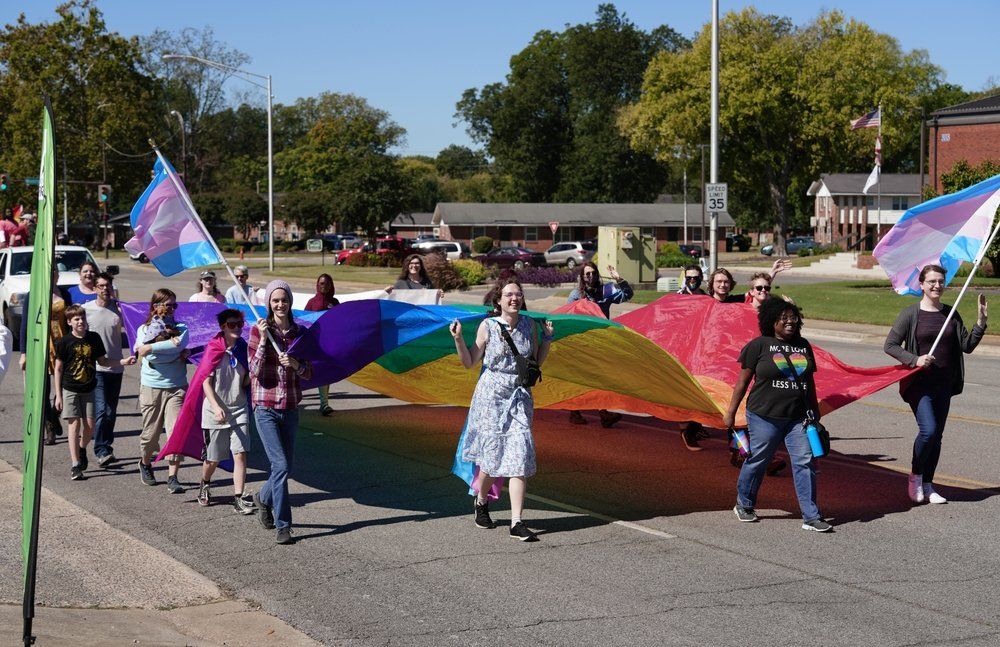
Pride Parade in Huntsville, Alabama (October 1, 2022)
Nondiscrimination laws: Alabama does not have nondiscrimination laws in employment, housing, health care, education, public accommodations, or credit/lending. Its state code incorrectly defines sex as exclusively male or female, and it prohibits transgender people from using public facilities that align with their identities.
Marriage equality and parental rights: Alabama does not have adoption or foster care nondiscrimination protections for LGBTQ+ parents. It does not have second-parent adoption for unmarried couples, confirmatory adoption, nor recognition for parents using assisted reproductive technologies. It also does not have family leave laws that encompass LGBTQ+ people.
Education and youth policies: Alabama has a “Don’t Say Gay” law restricting discussion of LGBTQ+ identities in classrooms. It has banned trans students from participating in sports or using school facilities based on their identities, and it requires staff to forcibly out LGBTQ+ students to their guardians. The state also has a “religious exemption” law for Child Welfare Services.
Healthcare access and rights: Alabama has banned life-saving gender-affirming care for youth, though it permits the discredited and harmful practice of so-called conversion therapy for youth. Health insurance companies, including Medicaid, are not required to provide coverage related to gender transition or fertility treatments. The state also has a “religious exemption” law for healthcare providers.
Criminal justice: Alabama’s hate crime laws do not encompass sexual orientation and gender identity, and it has not banned the so-called “LGBTQ+ panic” defense.
Arkansas
Danielsen_Photography / Shutterstock.com
3rd annual Pride Walk at Hot Springs National Park, Arkansas (June, 4 2021)
Nondiscrimination laws: Arkansas does not have nondiscrimination laws in employment, housing, health care, education, public accommodations, or credit/lending. The state bans cities and local ordinances from passing nondiscrimination laws, and it has law about “adult” performances that could be used to target or restrict drag.
Marriage equality and parental rights: Arkansas does not have adoption or foster care nondiscrimination protections for LGBTQ+ parents. It does not have second-parent adoption for unmarried couples, confirmatory adoption, nor recognition for parents using assisted reproductive technologies. It also does not have family leave laws that encompass LGBTQ+ people.
Education and youth policies: Arkansas has a “Don’t Say Gay” law restricting discussion of LGBTQ+ identities in classrooms. It has banned trans students from participating in sports or using school facilities based on their identities, and it requires staff to forcibly out LGBTQ+ students to their guardians.
Healthcare access and rights: Arkansas has banned life-saving gender-affirming care for youth, though it permits the discredited and harmful practice of so-called conversion therapy for youth. Medicaid is forbidden from providing coverage related to gender transition to minors, and insurance companies are not required to cover fertility treatments. The state also has a “religious exemption” law for healthcare providers.
Criminal justice: Arkansas’ hate crime laws do not encompass sexual orientation and gender identity, and it has not banned the so-called “LGBTQ+ panic” defense. It has an HIV criminalization law that may require sex offender registration.
Florida
Chris_Harris / Shutterstock.com
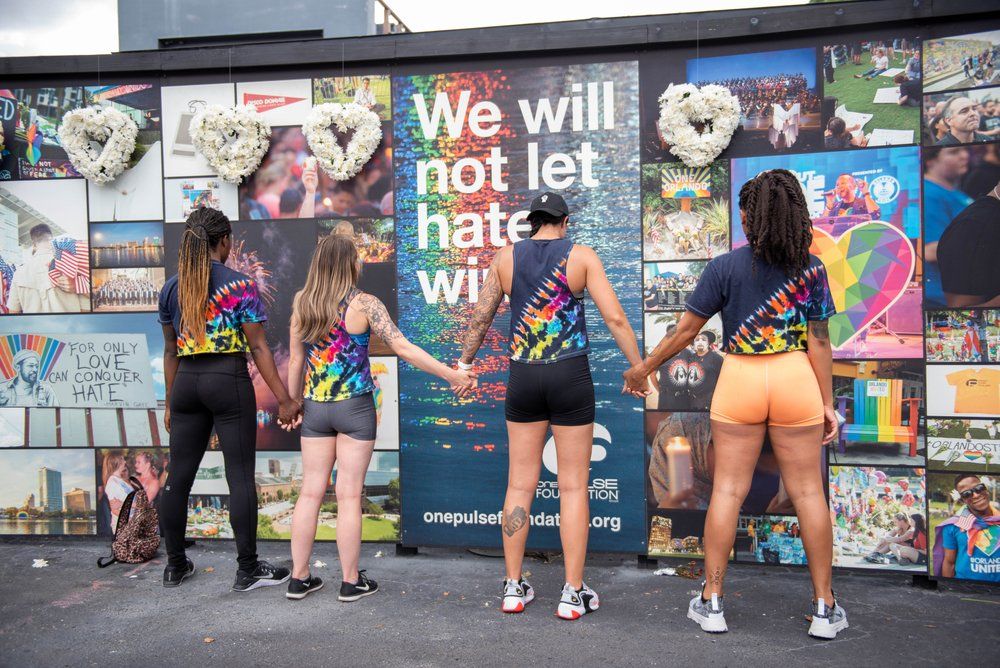
Mourners pay their respects to the fallen at the Pulse Nightclub memorial on the 5th anniversary of the Pulse mass shooting in Orlando, Florida (June 12, 2021)
Nondiscrimination laws: Florida has nondiscrimination laws in employment, housing, and public accommodations, but not in credit/lending, health care, nor education. The state prohibits transgender people from using public facilities that align with their identities, and it does not allow updating gender markers on driver’s licenses or birth certificates. It has law about “adult” performances that could be used to target or restrict drag
Marriage equality and parental rights: Florida does not have adoption or foster care nondiscrimination protections for LGBTQ+ parents. It does not have second-parent adoption for unmarried couples, confirmatory adoption, nor recognition for parents using assisted reproductive technologies. It also does not have family leave laws that encompass LGBTQ+ people.
Education and youth policies: Florida originated the “Don’t Say Gay” laws restricting discussion of LGBTQ+ identities in classrooms. It has banned trans students from participating in sports or using school facilities based on their identities, and it requires staff to forcibly out LGBTQ+ students to their guardians.
Healthcare access and rights: Florida has banned life-saving gender-affirming care for youth, though it permits the discredited and harmful practice of so-called conversion therapy for youth. Medicaid is forbidden from providing coverage related to gender transition for all ages, and insurance companies are not required to cover fertility treatments. The state also has a “religious exemption” law for healthcare providers.
Criminal justice: Florida’s hate crime laws only encompass sexual orientation, not gender identity. It has not banned the so-called “LGBTQ+ panic” defense, and it has an HIV criminalization law.
Idaho
Venture Out Media / Shutterstock.com
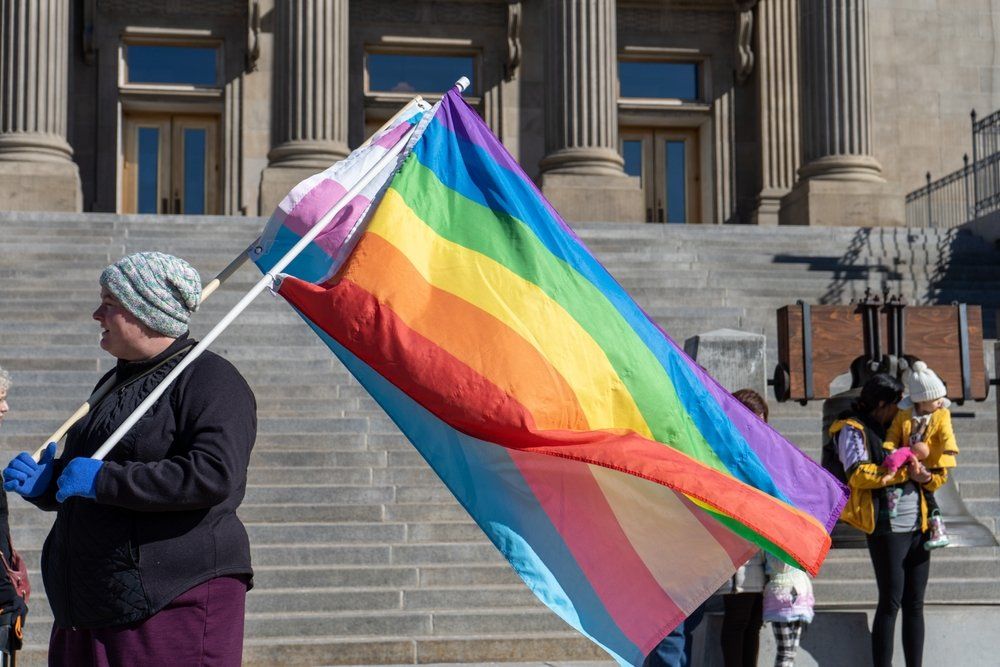
Rally in support of transgender youth and gender-affirming care in Boise, Idaho (February 24, 2023)
Nondiscrimination laws: Idaho has nondiscrimination laws in employment, housing, and public accommodations, but not in credit/lending, education, health care, nor for state employees. Its state code incorrectly defines sex as exclusively male or female.
Marriage equality and parental rights: Idaho does not have adoption or foster care nondiscrimination protections for LGBTQ+ parents. It has second-parent adoption for unmarried couples, but not confirmatory adoption nor recognition for parents using assisted reproductive technologies. It also does not have family leave laws that encompass LGBTQ+ people.
Education and youth policies: Idaho has banned trans students from participating in sports or using school facilities based on their identities, and it requires staff to forcibly out LGBTQ+ students to their guardians. The state also has a “religious exemption” law for Child Welfare Services, though it has protections for LGBTQ+ youth in the Child Welfare System.
Healthcare access and rights: Idaho has banned life-saving gender-affirming care for youth, though it permits the discredited and harmful practice of so-called conversion therapy for youth. Medicaid is forbidden from providing coverage related to gender transition for all ages, and insurance companies are not required to cover fertility treatments. The state also has a “religious exemption” law for healthcare providers.
Criminal justice: Idaho’s hate crime laws do not encompass sexual orientation and gender identity. It has not banned the so-called “LGBTQ+ panic” defense, and it has an HIV criminalization law.
Indiana
Umut Tolga Pehlivan / Shutterstock.com
Indiana University Bloomington Students walking at Indy Pride in Indianapolis, Indiana (June 4, 2008)
Nondiscrimination laws: Indiana has weaker nondiscrimination laws in employment, housing, and public accommodations, but not in credit/lending, education, nor health care. The state also has a broad “religious exemption” law.
Marriage equality and parental rights: Indiana has adoption or foster care nondiscrimination protections based on sexual orientation, but not gender identity. It has second-parent adoption for unmarried couples, but not confirmatory adoption nor recognition for parents using assisted reproductive technologies. It also does not have family leave laws that encompass LGBTQ+ people.
Education and youth policies: Indiana has a “Don’t Say Gay” law restricting discussion of LGBTQ+ identities in classrooms. It has banned trans students from participating in sports or using school facilities based on their identities, and it requires staff to forcibly out LGBTQ+ students to their guardians.
Healthcare access and rights: Indiana has banned life-saving gender-affirming care for youth, though it permits the discredited and harmful practice of so-called conversion therapy for youth. Medicaid and state health insurance plans are not required to provide coverage related to gender transition or fertility treatments, but it has trans-inclusive health benefits for state employees.
Criminal justice: Indiana’s hate crime laws do not encompass sexual orientation and gender identity, and it has not banned the so-called “LGBTQ+ panic” defense. It has an HIV criminalization law that may require sex offender registration.
Louisiana
Scott Colesby / Shutterstock.com
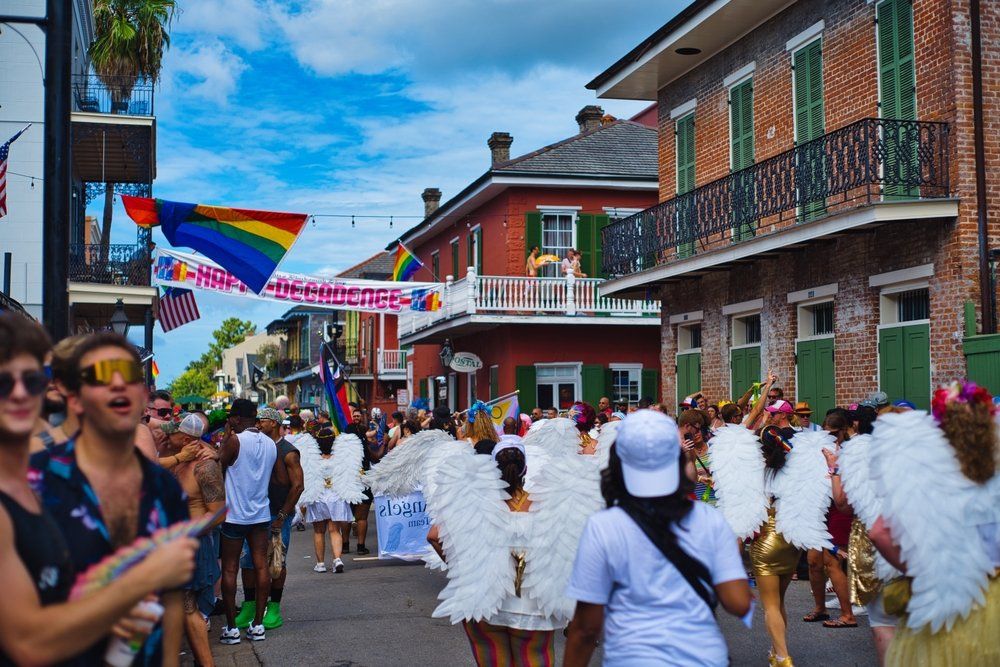
Southern Decadence Parade march through the French Quarter in New Orleans, Louisiana (September 1, 2024)
Nondiscrimination laws: Louisiana does not have nondiscrimination laws in employment, housing, health care, education, public accommodations, or credit/lending. Its state code incorrectly defines sex as exclusively male or female, and it prohibits transgender people from using public facilities that align with their identities. The state also has a broad “religious exemption” law.
Marriage equality and parental rights: Louisiana does not have adoption or foster care nondiscrimination protections for LGBTQ+ parents. It does not have second-parent adoption for unmarried couples, confirmatory adoption, nor recognition for parents using assisted reproductive technologies. It also does not have family leave laws that encompass LGBTQ+ people.
Education and youth policies: Louisiana has a “Don’t Say Gay” law restricting discussion of LGBTQ+ identities in classrooms. It has banned trans students from participating in sports or using school facilities based on their identities, and it requires staff to forcibly out LGBTQ+ students to their guardians.
Healthcare access and rights: Louisiana has banned life-saving gender-affirming care for youth, though it permits the discredited and harmful practice of so-called conversion therapy for youth. Health insurance companies, including Medicaid, are not required to provide coverage related to gender transition or fertility treatments, and state employees do not have trans-inclusive benefits.
Criminal justice: Louisiana’s hate crime laws only encompass sexual orientation, not gender identity. It has not banned the so-called “LGBTQ+ panic” defense, and it has an HIV criminalization law that may require sex offender registration.
Mississippi
Carmen K. Sisson / Shutterstock.com
A rainbow flag supporting Pride month flies a the Biloxi VA Medical Center in Biloxi, Mississippi (June 5, 2023)
Nondiscrimination laws: Mississippi does not have nondiscrimination laws in employment, housing, health care, education, public accommodations, or credit/lending. Its state code incorrectly defines sex as exclusively male or female, and it prohibits transgender people from using public facilities that align with their identities. The state also has a broad “religious exemption” law.
Marriage equality and parental rights: Mississippi does not have adoption or foster care nondiscrimination protections for LGBTQ+ parents. It has second-parent adoption for unmarried couples, but not confirmatory adoption nor recognition for parents using assisted reproductive technologies. It also does not have family leave laws that encompass LGBTQ+ people.
Education and youth policies: Mississippi has a “Don’t Say Gay” law restricting discussion of LGBTQ+ identities in classrooms. It has banned trans students from participating in sports or using school facilities based on their identities, and it requires staff to forcibly out LGBTQ+ students to their guardians. The state also has a “religious exemption” law for Child Welfare Services.
Healthcare access and rights: Mississippi has banned life-saving gender-affirming care for youth, though it permits the discredited and harmful practice of so-called conversion therapy for youth. Medicaid is forbidden from providing coverage related to gender transition for youth, and insurance companies are not required to cover fertility treatments. The state also has a “religious exemption” law for healthcare providers.
Criminal justice: Mississippi’s hate crime laws do not encompass sexual orientation and gender identity. It has not banned the so-called “LGBTQ+ panic” defense, and it has an HIV criminalization law.
Missouri
Ryanzo W. Perez / Shutterstock.com
A view down one of the streets filled with celebrants during Saint Louis PrideFest in Missouri (June 24, 2023)
Nondiscrimination laws: Missouri has weaker nondiscrimination laws in housing, and public accommodations, but not in employment, credit/lending, education, nor health care. The state also has a broad “religious exemption” law.
Marriage equality and parental rights: Missouri’sadoption or foster care nondiscrimination protections only encompass sexual orientation, not gender identity. It does not have second-parent adoption for unmarried couples, confirmatory adoption, nor recognition for parents using assisted reproductive technologies. It also does not have family leave laws that encompass LGBTQ+ people.
Education and youth policies: Missouri has banned schools and districts from passing nondiscrimination or anti-bullying policies protecting LGBTQ+ students. It has banned trans students from participating in sports based on their identities, but not from using facilities that align with their identities.
Healthcare access and rights: Missouri has banned life-saving gender-affirming care for youth, though it permits the discredited and harmful practice of so-called conversion therapy for youth. Medicaid is forbidden from providing coverage related to gender transition for all ages, and insurance companies are not required to cover fertility treatments. The state also has a “religious exemption” law for healthcare providers.
Criminal justice: Missouri’s hate crime laws encompass sexual orientation and gender identity, though it has not banned the so-called “LGBTQ+ panic” defense, and it has an HIV criminalization law.
Montana
Cavan-Images / Shutterstock.com
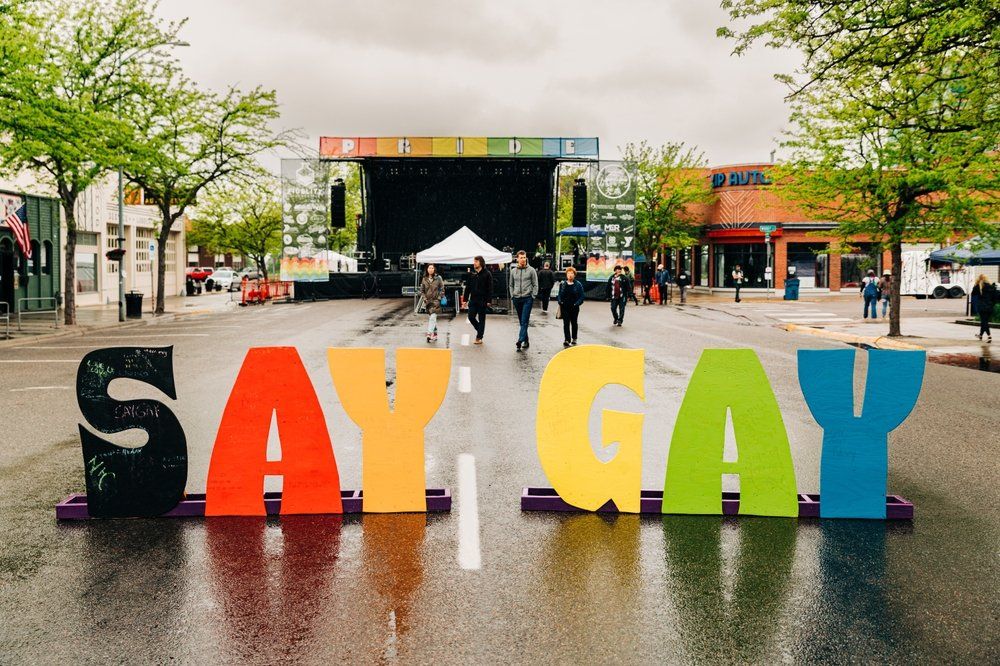
“Say Gay” sign at Missoula Pride in Montana (March 29, 2024)
Nondiscrimination laws: Montana does not have nondiscrimination laws in employment, housing, health care, education, public accommodations, or credit/lending.Its state code incorrectly defines sex as exclusively male or female, and it has a broad “religious exemption” law. The state has also explicitly restricted drag performances, and does not allow updating gender markers on birth certificates
Marriage equality and parental rights: Montana’sadoption or foster care nondiscrimination protections only encompass sexual orientation, not gender identity. It has second-parent adoption for unmarried couples, but not confirmatory adoption nor recognition for parents using assisted reproductive technologies. It also does not have family leave laws that encompass LGBTQ+ people.
Education and youth policies: Montana requires that parents be notified of LGBTQ+ curricula so they can opt out. It has banned trans students from participating in sports based on their identities, but not from using facilities that align with their identities. The state requires staff to forcibly out LGBTQ+ students to their guardians.
Healthcare access and rights: Montana has banned life-saving gender-affirming care for youth, though it permits the discredited and harmful practice of so-called conversion therapy for youth. Health insurance companies and Medicaid are required to cover care related to gender transition, and there is some coverage for fertility treatments. However, the state has a “religious exemption” law for healthcare providers.
Criminal justice: Montana’s hate crime laws do not encompass sexual orientation and gender identity. It has not banned the so-called “LGBTQ+ panic” defense, and it has an HIV criminalization law.
Oklahoma
Kit Leong / Shutterstock.com
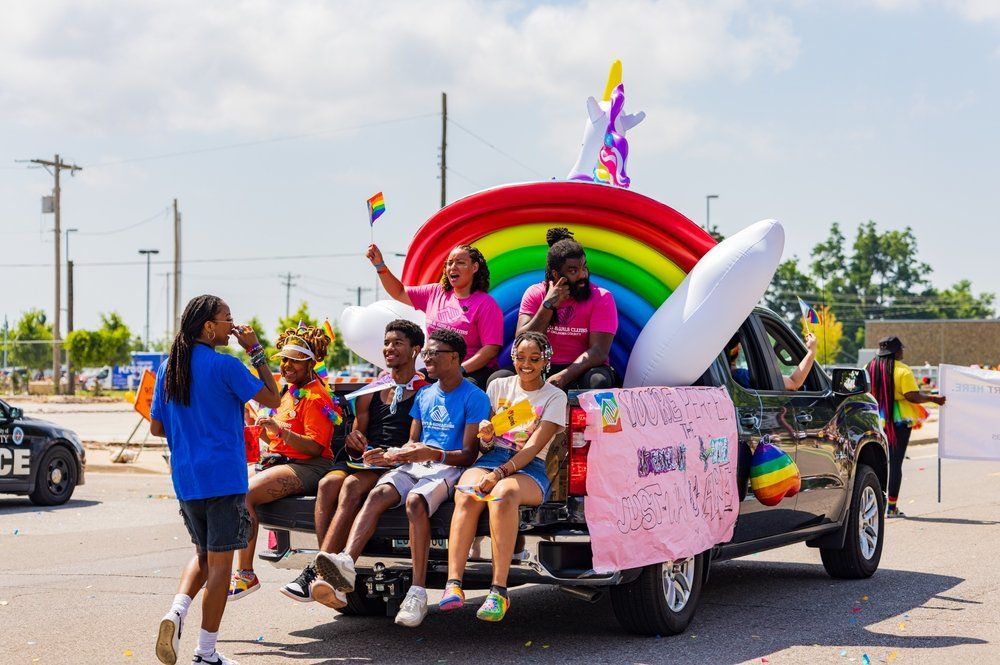
Pride Parade in Oklahoma (June 26, 2023)
Nondiscrimination laws: Oklahoma does not have nondiscrimination laws in employment, housing, health care, education, public accommodations, or credit/lending. Its state code incorrectly defines sex as exclusively male or female, and it prohibits updated gender markers on birth certificates. It also has a broad “religious exemption” law.
Marriage equality and parental rights: Oklahoma does not have adoption or foster care nondiscrimination protections for LGBTQ+ parents. It has second-parent adoption for unmarried couples, but not confirmatory adoption nor recognition for parents using assisted reproductive technologies. It also does not have family leave laws that encompass LGBTQ+ people.
Education and youth policies: Oklahoma has a weaker version of a “Don’t Say Gay” law that restricts the discussion of “homosexuality” in specific school subjects. It has banned trans students from participating in sports or using school facilities based on their identities. The state also has a “religious exemption” law for Child Welfare Services, though it has protections for LGBTQ+ youth in the Child Welfare System.
Healthcare access and rights: Oklahoma has banned life-saving gender-affirming care for youth, though it permits the discredited and harmful practice of so-called conversion therapy for youth. Health insurance companies, including Medicaid, are not required to provide coverage related to gender transition or fertility treatments, and state employees are not permitted trans-inclusive benefits.
Criminal justice: Oklahoma’s hate crime laws do not encompass sexual orientation and gender identity. It has not banned the so-called “LGBTQ+ panic” defense, and it has an HIV criminalization law.
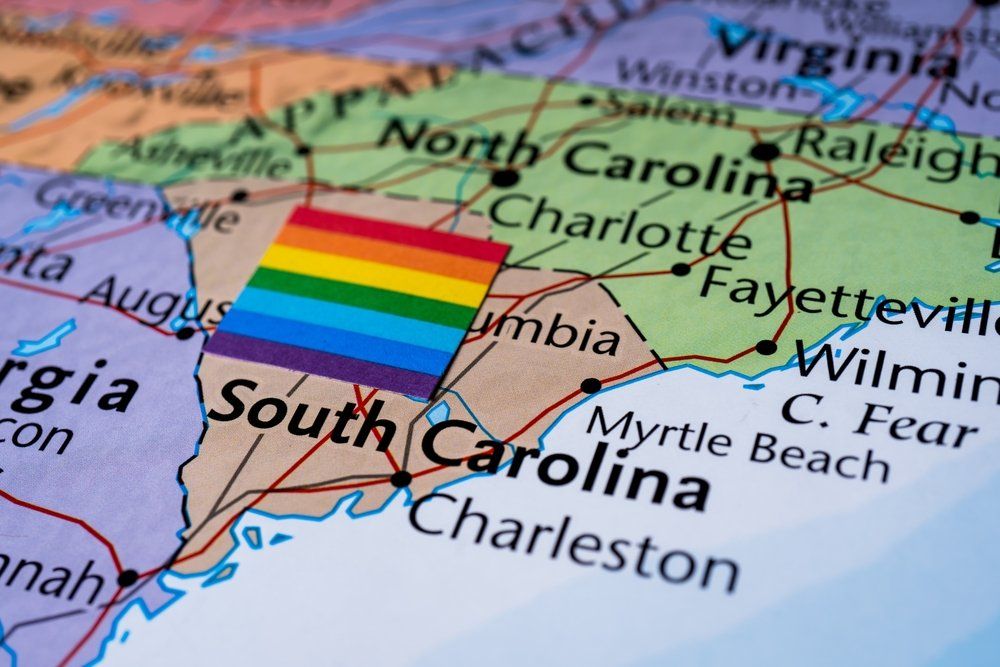
South Carolina
Shuttershock creative
Rainbow flag on a map of South Carolina
Nondiscrimination laws: South Carolinadoes not have nondiscrimination laws in employment, housing, health care, education, public accommodations, or credit/lending. It has a broad “religious exemption” law.
Marriage equality and parental rights: South Carolina‘sadoption or foster care nondiscrimination protections only encompass sexual orientation, not gender identity. It does not have second-parent adoption for unmarried couples, confirmatory adoption, nor recognition for parents using assisted reproductive technologies. It also does not have family leave laws that encompass LGBTQ+ people.
Education and youth policies: South Carolinahas banned trans students from participating in sports based on their identities, but not from using facilities that align with their identities. The state requires staff to forcibly out LGBTQ+ students to their guardians. The state also has a “religious exemption” law for Child Welfare Services.
Healthcare access and rights: South Carolina has banned life-saving gender-affirming care for youth, though it permits the discredited and harmful practice of so-called conversion therapy for youth. Medicaid is forbidden from providing coverage related to gender transition for all ages, and insurance companies are not required to cover fertility treatments. The state also has a “religious exemption” law for healthcare providers.
Criminal justice: South Carolina‘s hate crime laws do not encompass sexual orientation and gender identity. It has not banned the so-called “LGBTQ+ panic” defense, and it has an HIV criminalization law.
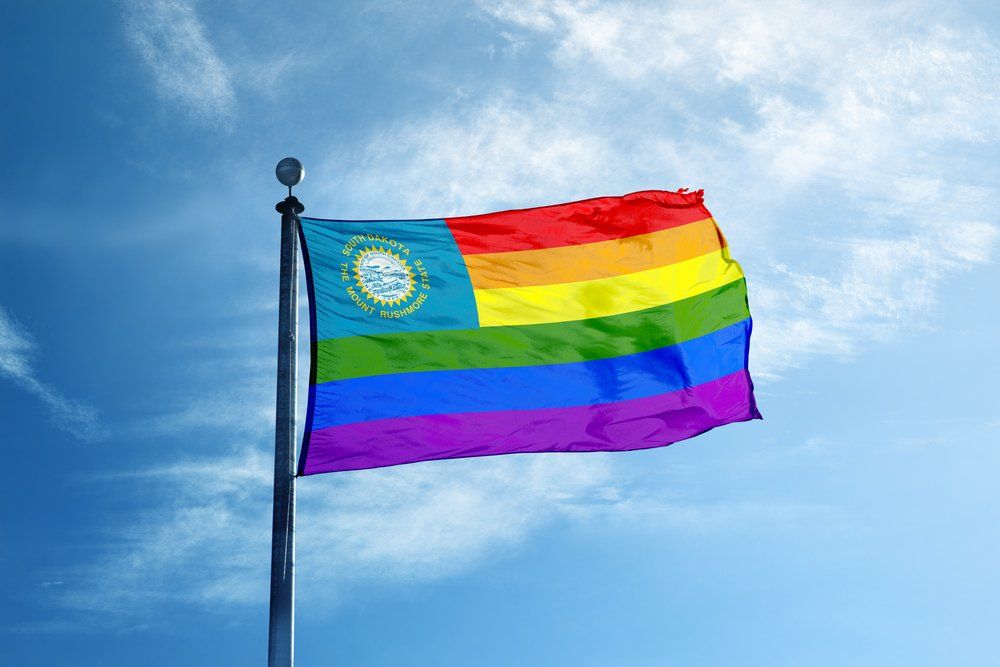
South Dakota
Shuttershock creative
South Dakota state flag with rainbow stripes
Nondiscrimination laws: South Dakota does not have nondiscrimination laws in employment, housing, health care, education, public accommodations, or credit/lending. It has a broad “religious exemption” law.
Marriage equality and parental rights: South Dakota’sadoption or foster care nondiscrimination protections encompass sexual orientation and gender identity. However, it does not have second-parent adoption for unmarried couples, confirmatory adoption, nor recognition for parents using assisted reproductive technologies. It also does not have family leave laws that encompass LGBTQ+ people.
Education and youth policies: South Dakotahas banned schools and districts from passing nondiscrimination or anti-bullying policies protecting LGBTQ+ students. It has banned trans students from participating in sports based on their identities, but not from using facilities that align with their identities. The state also has a “religious exemption” law for Child Welfare Services, though it has protections for LGBTQ+ youth in the Child Welfare System.
Healthcare access and rights: South Dakota has banned life-saving gender-affirming care for youth, though it permits the discredited and harmful practice of so-called conversion therapy for youth. Health insurance companies, including Medicaid, are not required to provide coverage related to gender transition or fertility treatments, and state employees are not permitted trans-inclusive benefits.
Criminal justice: South Dakota‘s hate crime laws do not encompass sexual orientation and gender identity, and it has not banned the so-called “LGBTQ+ panic” defense. It has an HIV criminalization law that may require sex offender registration.
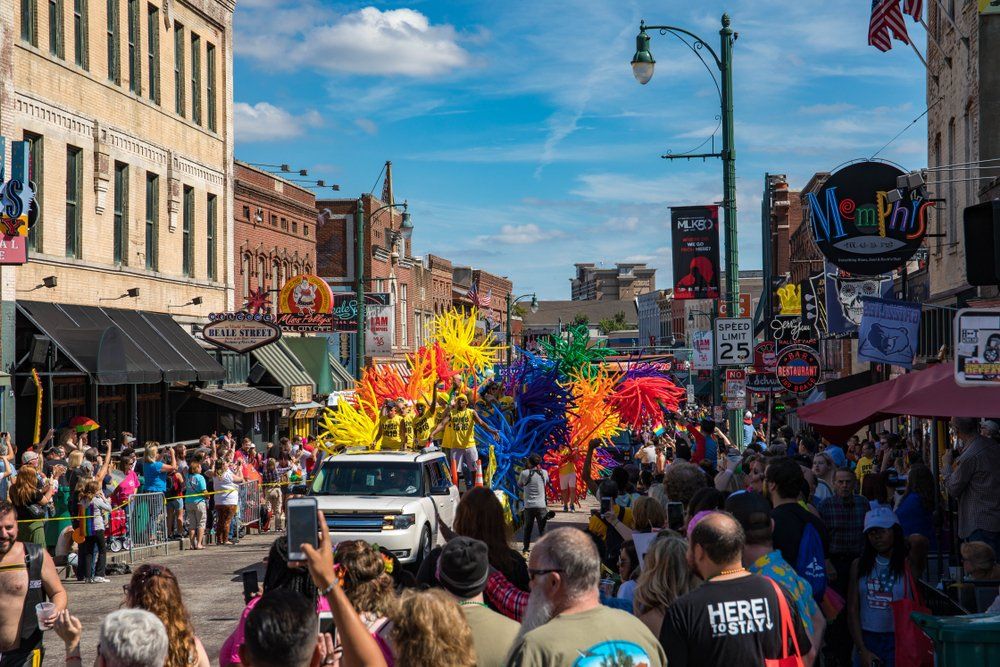
Tennessee
evenfh / Shutterstock.com
Pride Parade on Beale Street in Memphis, Tennessee (September 28, 2018)
Nondiscrimination laws: Tennessee does not have nondiscrimination laws in employment, housing, health care, education, public accommodations, or credit/lending. It instead bans cities and local ordinances from passing nondiscrimination laws. State code incorrectly defines sex as exclusively male or female, and it does not allow updating gender markers on driver’s licenses or birth certificates. The state has a broad “religious exemption” law that even allows officials to deny marriage licenses based on their personal beliefs. It has also explicitly restricted drag performances.
Marriage equality and parental rights: Tennessee’sadoption or foster care nondiscrimination protections encompass sexual orientation and gender identity. However, it does not have second-parent adoption for unmarried couples, confirmatory adoption, nor recognition for parents using assisted reproductive technologies. It also does not have family leave laws that encompass LGBTQ+ people.
Education and youth policies: Tennessee requires that parents be notified of LGBTQ+ curricula so they can opt out. It has banned trans students from participating in sports based on their identities and from using facilities that align with their identities. The state requires staff to forcibly out LGBTQ+ students to their guardians. The state also has a “religious exemption” law for Child Welfare Services, though it has protections for LGBTQ+ youth in the Child Welfare System.
Healthcare access and rights: Tennessee has banned life-saving gender-affirming care for youth, though it permits the discredited and harmful practice of so-called conversion therapy for youth. Medicaid is forbidden from providing coverage related to gender transition for all ages, and insurance companies are not required to cover fertility treatments. The state also has a “religious exemption” law for healthcare providers, and state employees are not permitted trans-inclusive benefits.
Criminal justice: Tennessee’s hate crime laws encompass sexual orientation and gender identity, though it has not banned the so-called “LGBTQ+ panic” defense, and it has an HIV criminalization law that may require sex offender registration.
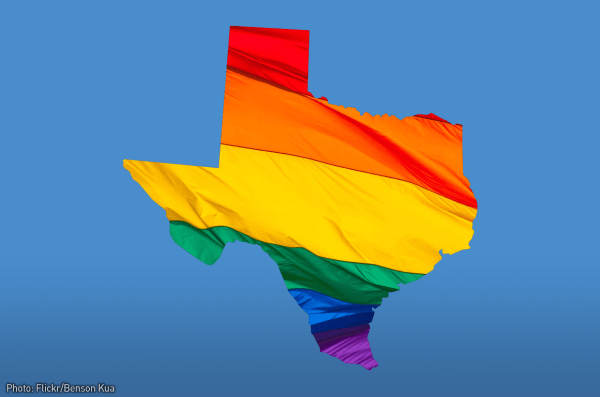
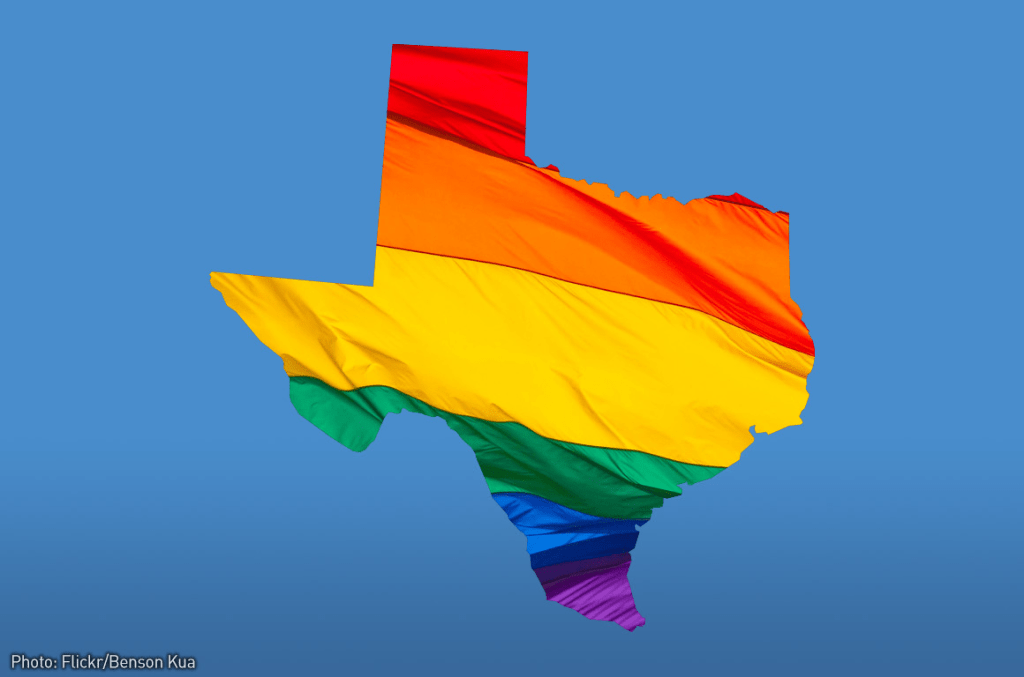
Nondiscrimination laws: Texas has nondiscrimination laws in employment and for state employees, but not in housing, public accommodations, credit/lending, education, nor health care. The state does not allow updating gender markers on driver’s licenses or birth certificates, and it has a broad “religious exemption” law.
Marriage equality and parental rights: Texas does not have adoption or foster care nondiscrimination protections for LGBTQ+ parents. It does not have second-parent adoption for unmarried couples, confirmatory adoption, nor recognition for parents using assisted reproductive technologies. It also does not have family leave laws that encompass LGBTQ+ people.
Education and youth policies: Texas has a weaker version of a “Don’t Say Gay” law that restricts the discussion of “homosexuality” in specific school subjects. It has banned trans students from participating in sports based on their identities, but not from using facilities that align with their identities. The state also has a “religious exemption” law for Child Welfare Services without protections for LGBTQ+ youth.
Healthcare access and rights: Texas has banned life-saving gender-affirming care for youth, though it permits the discredited and harmful practice of so-called conversion therapy for youth. Medicaid is forbidden from providing coverage related to gender transition for all ages, and insurance companies are not required to cover fertility treatments. State employees are not permitted trans-inclusive benefits.
Criminal justice: Texas’s hate crime laws only encompass sexual orientation, not gender identity. It has not banned the so-called “LGBTQ+ panic” defense.
Wyoming
Shuttershock creative
Double rainbow against a black sky in Wyoming
Nondiscrimination laws: Wyoming does not have nondiscrimination laws in employment, housing, health care, education, public accommodations, or credit/lending.
Marriage equality and parental rights: Wyoming does not have adoption or foster care nondiscrimination protections for LGBTQ+ parents. It does not have second-parent adoption for unmarried couples, nor confirmatory adoption. It also does not have family leave laws that encompass LGBTQ+ people. However, it does have recognition for parents using assisted reproductive technologies.
Education and youth policies: Wyoming has a weaker version of a “Don’t Say Gay” law that restricts the discussion of “homosexuality” in specific school subjects. It has banned trans students from participating in sports based on their identities, but not from using facilities that align with their identities.
Healthcare access and rights: Wyoming has banned life-saving gender-affirming care for youth, though it permits the discredited and harmful practice of so-called conversion therapy for youth. Health insurance companies, including Medicaid, are not required to provide coverage related to gender transition or fertility treatments.
Criminal justice: Wyoming’s hate crime laws do not encompass sexual orientation and gender identity, and it has not banned the so-called “LGBTQ+ panic” defense.
Dishonorable mentions
BluIz70 / Shutterstock.com
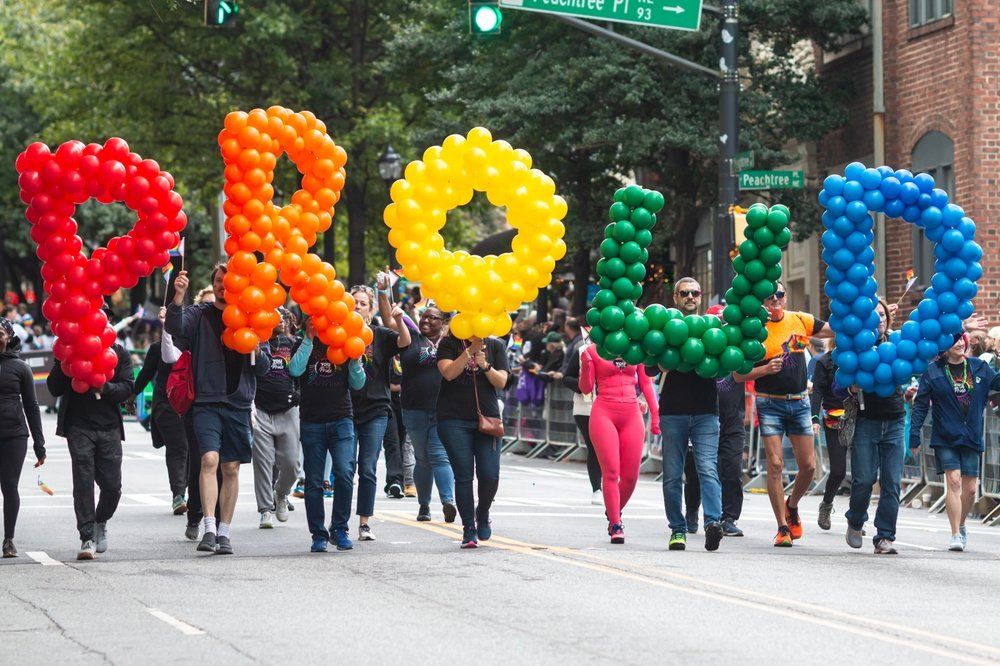
People carry large balloon letters that spell out “Proud” as they walk in the annual pride parade in Atlanta, Georgia (October 15, 2023)
Other states that ranked below average include: Alaska, Arizona, Georgia, Iowa, Kansas, Kentucky, Nebraska, North Carolina, North Dakota, Ohio, Utah, and West Virginia.
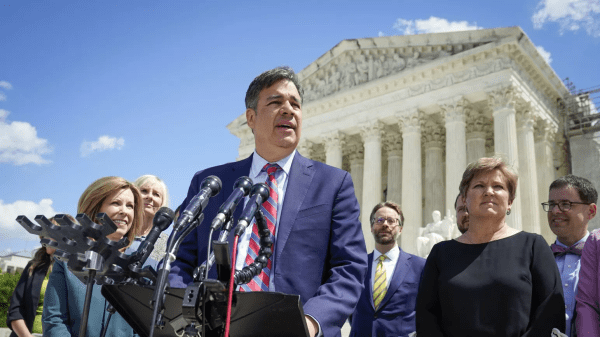
The attorney general of Idaho issued an opinion telling schools not to allow teachers to post signs that say “Everyone is Welcome Here,” claiming that the message that public education is for everyone regardless of race, gender, sexual orientation, or other categories is Democratic in nature and therefore illegally partisan.
“These signs are part of an ideological/social movement which started in Twin Cities, Minnesota, following the 2016 election,” Idaho Attorney General Raúl Labrador (R) said in guidance issued to a school. “Since that time, the signs have been used by the Democratic party as a political statement.”
.Labrador also noted that the state Democratic Party is selling signs that say “Everyone is Welcome Here,” but state Democrats say that they only started selling those signs at cost in order to draw attention to conservatives’ early attempts to ban them.
The conflict centers on Idaho’s H.B. 41, which took effect last week and bans school employees from displaying flags or banners that show “opinions, emotions, beliefs or thoughts about politics, economics, society, faith or religion.”
Earlier this year, the state’s West Ada School District banned Sarah Inama, a teacher at Lewis and Clark Middle School, from displaying a sign that says, “Everyone is Welcome Here.” It showed a drawing of people’s hands with different skin tones, each with a heart on it.
The district also ordered her to take down another sign that read, “In this room everyone is welcome, important, accepted, respected, encouraged, valued, equal” on top of a background of rainbow colors. The rainbow colors included seven stripes, which differs from the six-striped rainbow Pride flag.
The controversy over the signs garnered national headlines in March, and the state attorney general’s office looked into how the law would apply in such cases, issuing an opinion last week.
The attorney general determined that these specific signs would violate H.B. 41 and claimed that the statements in the signs are part of a political movement and not, as defenders of the signs argued, generally agreed-upon beliefs about the nature of public education.
Labrador’s guidance hyperlinked a 2017 news story about a group of women who protested racist graffiti that appeared at a local high school the day after the president was elected to his first term, according to the Idaho Capital-Sun, which posted the attorney general’s opinion. The women carried signs that read, “All are Welcome Here.”
The guidance then claimed that Inama started posting the “Everyone is Welcome Here” sign in 2017, “during the height of the above-referenced social movement.”
In March, Inama disagreed that the message is political or partisan.
“I don’t agree. I don’t agree that this is a personal opinion,” she told KTVB at the time. “I feel like this is the basis of public education.”
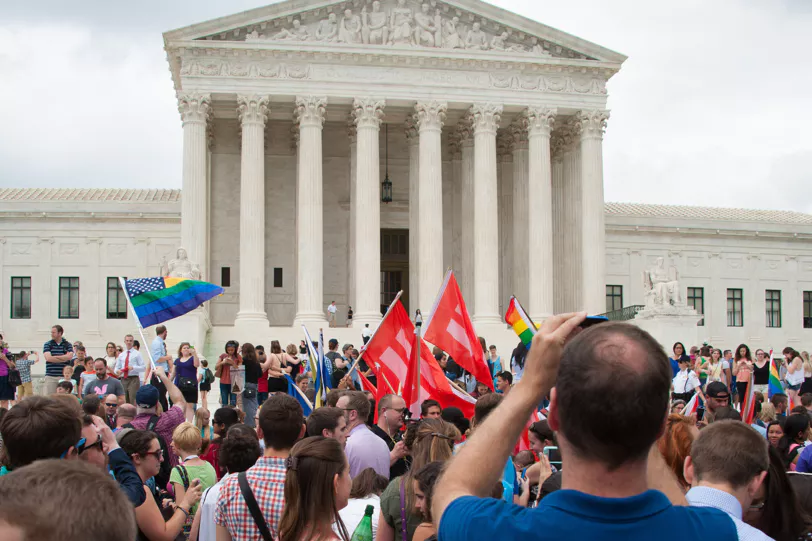
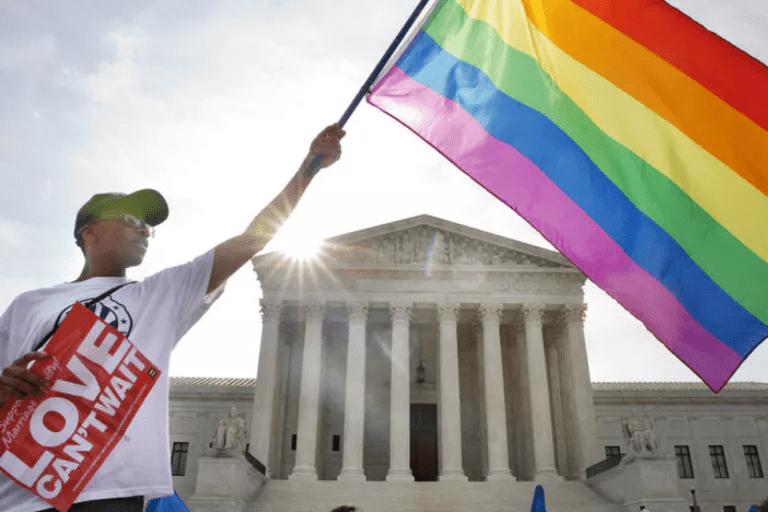
June 26, 2015 was a milestone day in the United States when the SCOTUS decision was announced in the case of Obergefell v Hodges. A narrow 5-4 ruling brought nationwide marriage equality for LGBTQ people much sooner than many expected it. I certainly did not even think it would occur in my lifetime. The nation was split down the middle on the topic. A piecemeal approach was commonplace, with some states making it legal before the ruling, and others staunchly opposed to it in their state constitutions. Yet, a conservative justice saw fit to challenge the status quo and actually base a ruling on the US Constitution for a change, rather than political ideology.
We had already been married for almost 4 years at that point. We were living in Texas in July 2011 and my boyfriend at the time decided to ask me to marry him (now her, but that is another story for another day). We had been living together nearly 10 years. Going to Canada was floated as an idea. I had family in New Jersey and Andrew Cuomo in New York had just its own marriage equality law June 24 that year to take effect in July. So, New York it was! I had become an internet wedding planner of my own wedding by then to be wed on October 09, 2011, one day difference from our “10th anniversary”. It was tedious. It was stressful. It was fun. It was one of the best days of my life. I will never do it again. Sorry boys and girls.
While our own wedding anniversary of 14 years is coming this fall, I sit here writing this and worried that we will have to go through even more bullshit to not only keep our marriage legally intact, but to ensure future generations maintain their right to due process and equality under the law. We have a Supreme Court who has already shown it has the balls to revisit and repeal established forward thinking case law precedent. See, Roe v Wade’s death as a result of Dobbs v. Jackson Women’s Health Organization. Chief Justice Roberts and Justices Thomas, and Alito, who each wrote a dissenting opinion in Obergefell v Hodges are still proudly part of the conservative super majority on the bench. Yes, there is a Respect for Marriage Act that was finally passed in 2022 to help reaffirm O v H.
But we also have a President and House who are willing to turn back time. We have state legislators, who are now firing the opening salvo towards repeal of marriage equality. House reps in 9 states in 2025 proposed resolutions urging SCOTUS to repeal O v H. Those resolutions were passed in North Dakota and Idaho. 4 other states introduced bills, which failed, to introduce covenant marriage to their books, which would have created an exclusive category for opposite sex couples.
I hope everyone enjoys their anniversary, whether you were married today or at another point in time. But please remain vigilant and pay fucking attention to what is going on around you. Your rights can always be removed with the stroke of a pen. And sometimes that pen needs to be shoved into an uncomfortable place.
This is us. Climate change was on full display.
John Turner-McClelland is the editor of several blogs including FleeRedStates. He is a licensed real estate agent in Texas and North Carolina. He was on a Vice News panel once and was allowed to speak for 5 seconds on air. He has been a proud liberal LGBTQ activist and former elected official for a few decades or so. Yes, he is still married.
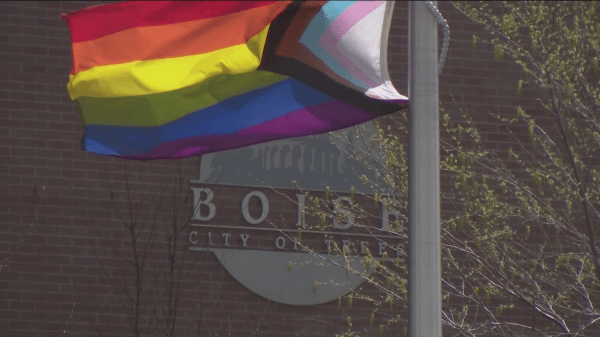
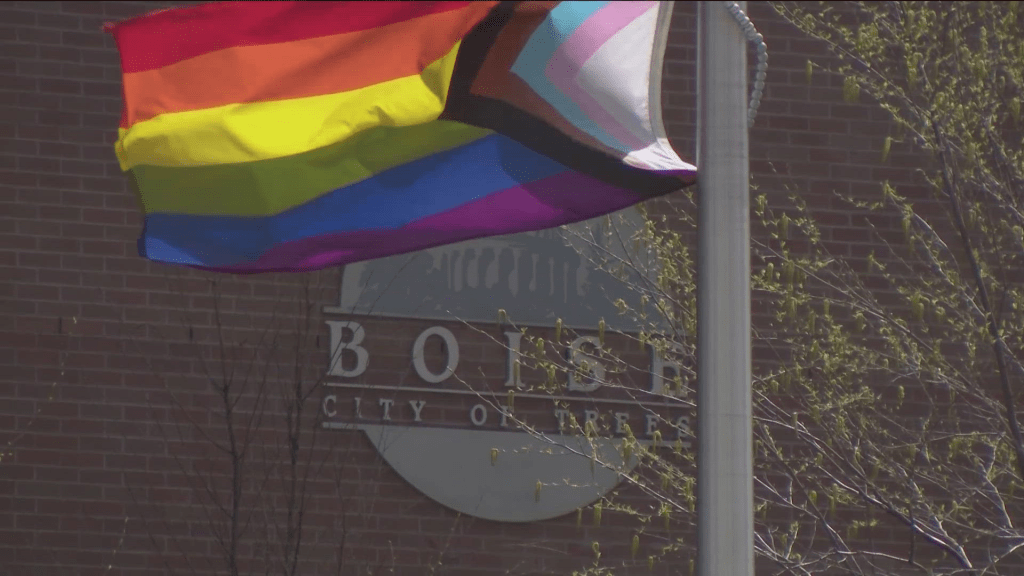
On Tuesday, Boise City Council members approved a resolution designating three flags, including the Pride flag, as official flags of the City of Trees.
The vote comes amid ongoing tensions between Boise Mayor Lauren McLean and the Idaho Attorney General over a new state law, House Bill 96, which regulates which flags local governments can display.
“A city should be able to put up flags at various times for whatever reason the community might want,” community member Patti Raino said, “and this is a community that supports, certainly pride. Has always supported pride.”
Hundreds of people showed up to rally in support of the city before the meeting started. About a dozen of those were protestors against the resolution — including Robert Coggins.
“I’m just a native Idahoan,” he said. “I feel like I do not have a voice, and this mayor does not let me have a voice. I think [the flag is] exclusionary. It doesn’t represent me.”
Council President Colin Nash, who sponsored the resolution, said it would help “memorialize” flags the city flies and ensure compliance with state law.
“It’s important for us, not only to communicate to any law enforcement that might be interested, but also to the public that we’re doing this out of a sense of duty, rather than defiance of the state legislature,” Nash said before the vote.
Nash added the flags represent the city’s values and responsibilities.
“This is our lawful expression of our dedication to ensuring all members of our community feel seen, respected, and welcome,” he said. “I think there is an expectation among the opponents of it, that the government should remain neutral in issues like this. I’m not neutral on defending marginalized neighbors.”
The resolution includes not only the Pride flag but also designates the blue City of Boise flag and the white organ donor flag honoring National Donate Life Month as official city flags.
City officials say the resolution acknowledges and formally ratifies that flags flown at Boise City Hall comply with Idaho state law.
The council meeting did not include public testimony on the resolution. During the council discussion, McLean reminded the public in attendance they could not speak after several members of the audience made comments towards the council.
The city announced last week, attorneys from Holland & Hart have volunteered to represent Boise pro bono if any legal action is taken against the city regarding this matter. The volunteer legal team includes Erik Stidham, Jennifer Jensen, Alex Grande and Anne Haws.
LGBTQ+ Pride flags in Boise’s North End remain in limbo after Idaho lawmakers passed a bill that bans the flags in some public spaces.
House lawmakers Friday approved amendments to House Bill 96, which allows government entities to display only certain flags, such as the official Idaho, U.S. and state flags. The bill still needs Gov. Brad Little’s signature to become law.
“The ultimate goal is for us to fly flags that unite and don’t divide,” said Sen. Ben Toews, R-Coeur d’Alene, during a floor debate.
Earlier this year, photographs given to legislators on the House floor included the Pride flags along Harrison Boulevard, where flags are flown during Pride Month in June, and at Boise City Hall. Boise spokesperson Maria Weeg said the bill would likely impact the city’s Pride flags, but in a later message told the Idaho Statesman that the city hasn’t officially engaged on the bill and “we don’t usually comment on bills that have not been signed into law.”
As written, the bill would ban the Harrison Pride flags, because the Ada County Highway District controls the medians, ACHD spokesperson Rachel Bjornestad previously told the Statesman. Those flags have been stolen or vandalized four years in a row. Proponents said the legislation is important to preserve neutrality, and even conservative flags would be banned. But critics said the bills target marginalized communities because it’s a direct response to the Pride flags flown in Boise.
“Now, when we want to celebrate and unite under this rainbow flag and support our community, that is going to be taken from us by the state,” said Senate Minority Leader Melissa Wintrow, D-Boise. “We welcome everyone in my district.”
The bill’s passage comes days after Little signed House Bill 41, which bans schools from displaying flags and banners that “promote political, religious or ideological viewpoints.” A week before, a Meridian teacher’s posters drew local and national headlines, according to previous Statesman reporting. West Ada School District officials had told Sarah Inama, a world civilization teacher, to take down two signs, including one with “Everyone is welcome here,” above hands of different skin tones.
Community members have responded by marking welcoming messages outside West Ada schools, according to previous Statesman reporting, as well as making and wearing shirts with the sign’s message. Utah this week became the first state to prohibit Pride flags in both schools and all government buildings.
Nine states are now seeing Republican efforts to overturn Obergefell v. Hodges, the 2015 Supreme Court decision that legalized marriage equality in all 50 states. This is a new trend; state Republican lawmakers have been focused on rolling back trans rights since 2020.
In five of the states — Idaho, Michigan, Montana, North Dakota, and South Dakota — Republican lawmakers have introduced resolutions calling for the Supreme Court to overturn Obergefell. Those measures have been passed by at least one chamber of the state legislature in Idaho and North Dakota.
In the four other states – Missouri, Oklahoma, Tennessee, and Texas – Republican legislators have introduced bills to privilege heterosexual marriages, with some of the states referring to a new institution called “covenant marriage,” which would be limited to heterosexual couples. The point there, according to the sponsor of one such bill in Oklahoma, is to create inequality in marriage rights between opposite- and same-sex couples and invite a legal challenge that could be taken to the Supreme Court to overturn Obergefell.
Two justices on the Supreme Court have openly stated that they want to overturn Obergefell, and the Court has moved to the right since 2015. Justices Ruth Bader Ginsburg, Anthony Kennedy, and Stephen Breyer were all in the Obergefell majority but have either retired or passed away in the last ten years. Only one was replaced by a Democratic president. It is not clear if there are the five votes needed to protect marriage equality on the Court if it were to take up a test case.
Thirty-five states have amendments or statutes banning same-sex marriage, and most would likely go into effect if the Supreme Court were to overturn Obergefell. Because of the 2022 federal Respect for Marriage Act, though, state and federal governments would have to recognize same-sex marriages performed in other states.
“It’s good to anticipate things that could happen in order that we do our best job preparing ourselves,” Jenny Pizer, chief legal officer of Lambda Legal, told LGBTQ Nation last month. “The bottom line for people is that, if there are things that you can do to secure your relationships, your family status and to take other protective measures, please do those things. Don’t be lulled into complacency by our informed and reasonably expert speculation about what may happen.”
BOISE, Idaho (AP) — A Republican-hosted legislative town hall meeting in northern Idaho descended into chaos after three plainclothes security workers forcibly removed a woman who was heckling the speakers.
In the video player above, watch recent examples of Americans voicing their objections at town hall meetings, including Teresa Borrenpohl, who is shown being forcibly removed from an event in Kootenai County, Idaho, after interrupting a speaker.
The incident Saturday at Coeur d’Alene High School, first reported by the Coeur d’Alene Press, drew widespread attention after videos of the turbulence were posted online. Now more than $120,000 has been raised for Teresa Borrenpohl’s legal costs, and the police chief has asked to have the security firm’s business license revoked.
The city attorney’s office also dismissed a misdemeanor battery citation against Borrenpohl “in the interest of justice,” Coeur d’Alene Police Chief Lee White said Monday, and detectives are reviewing video to determine whether the security officers violated any laws.
Roughly 450 people attended the legislative town hall hosted by the Kootenai County Republican Central Committee, said the organization’s chairman Brent Regan. All of them were told that security officers were present, and that “anyone who refused to respect the rights of others would be removed from the event.”
Still, videos show cheers and jeers were erupting throughout the crowd at times — including when one lawmaker mentioned legislation that he said protected doctors from “being forced to do abortions.”
“Women are dying,” one person in the audience shouted. “And doctors are leaving our state!” another yelled. A moderator tried to quiet the crowd, scolding people for “popping off with stupid remarks.”
That’s when Borrenpohl, a Democratic legislative candidate who has run unsuccessfully in the deeply Republican region, began to shout as well.
“Is this a town hall, or a lecture?” she asked, others in the audience echoing the question.
By that point, Borrenpohl had been warned at least three times to stop interrupting the speakers, said Regan.
“We’re trying to respect the rights of the 450 people that were there to listen. One person can’t stand up to bring a halt to the whole event,” Regan said.
Kootenai County Sheriff Bob Norris, who was in plain clothes but wearing his badge on his belt, approached Borrenpohl. He introduced himself and told her to leave or she would be escorted out. Then the sheriff stepped back and began recording on his cellphone as three unidentified men approached and began grabbing Borrenpohl.
Tonya Coppedge, who was sitting behind Borrenpohl and shot video of the disruption on her cellphone, said the men refused her repeated requests to identify themselves. One of the men bent Borrenpohl’s wrist into a flexed position, and later Borrenpohl bit one of the men on the hand as he continued to grab her, Coppedge said.
“They were not very kind to her — it was pretty violent and traumatic,” Coppedge said.
Alicia Abbott, a friend of Borrenpohl’s who organized a GoFundMe on her behalf, said Borrenpohl has bruises from the incident. She suggested Borrenpohl was wrongly detained.
“Who were these people to detain Teresa in the first place?” Abbott asked. “This is not the first time we’ve seen this kind of security presence in public meetings or town halls. If they’re going to be detaining people, do they even have knowledge of the law? Are they trained to safely remove people?”
The men worked for the private security company LEAR Asset Management, based in Hayden, Idaho. Messages left for CEO Paul Trouette were not immediately returned. The men appeared to have violated Coeur d’Alene City ordinances, which require security personnel to wear uniforms with the word “Security” clearly marked “in letters no less than 1-inch tall on the front of the uniform.”
White, the police chief, told The Associated Press, said he had requested the revocation of company’s business licenses and the security agent licenses from the individuals who were involved.
Organizers arranged for extra security at the event after one of the lawmakers told them he had been facing death threats, Regan said. Rep. Jordan Redman, a Republican, had recently been threatened with bombings by an individual on social media, and so KCRCC notified the sheriff and arranged for security, Regan said. The Coeur d’Alene Police Department also had officers stationed in the parking lot outside.
On Monday, Kootenai County Undersheriff Brett Nelson released a statement saying the agency will have a “complete and independent investigation of the incident conducted by an outside agency.”
Democrats labeled it “yet another example” of GOP extremists “stirring up divisive social issues to create problems where none exist.”
Republicans in Idaho’s House of Representatives are contemplating a formal statement urging the U.S. Supreme Court to reverse its landmark 2015 ruling that legalized same-sex marriage.
The resolution, proposed by Republican state Rep. Heather Scott, characterizes the court’s decision as an “illegitimate overreach.” Scott’s proposal calls for the restoration of the “natural definition of marriage,” despite the fact that various forms of marriage, including same-sex unions, have existed throughout history.
Rep. Heather Scott stated that the purpose of her resolution is to “affirm our state authority to regulate marriage” during a Tuesday hearing.
The 2015 Supreme Court ruling in Obergefell v. Hodges legalized same-sex marriage nationwide, following decades of LGBTQ+ activism. At the time of the ruling, many states still had bans on gay marriage, despite growing public support for such unions.
The decision, made by a 5-4 vote, preceded the appointments of three conservative justices during the presidency of Donald Trump—Neil Gorsuch, Brett Kavanaugh, and Amy Coney Barrett. Justices Clarence Thomas and Samuel Alito have since called for a reconsideration of the Obergefell decision.
While Scott’s resolution holds no legal authority, it will be forwarded to the Supreme Court for consideration. The state committee advanced it on Tuesday, and a public hearing will be scheduled at a later date.
State House Minority Leader Ilana Rubel (D) and Senate Minority Leader Melissa Wintrow (D) dismissed Scott’s resolution as a “sad distraction,” criticizing it as another attempt by the far-right of the Republican Party to “gin up divisive social issues to create problems where none exist.” They emphasized that “big government has no business telling consenting adults who they should love.”
They added, “This resolution may be a helpful gimmick for winning in closed GOP primaries, but it should be offensive to all Idahoans who value their individual rights and freedoms and just want to live their lives without egregious government interference.”
In 2021, Rep. Scott compared Idaho’s mask mandate to Nazi Germany’s policies. Despite a federal judge ruling that Idaho’s ban on same-sex marriage violates the U.S. Constitution, the ban remains on the books. Recent polling shows that more Idahoans support same-sex marriage than oppose it.
A judge has overturned a state law that prohibited gender-affirming care in prisons and other settings.
On Tuesday, a federal judge issued a preliminary injunction halting an Idaho bill that banned gender-affirming care in state prisons. This decision allows incarcerated transgender individuals in Idaho to access hormone therapy once again.
In the ruling for Robinson v. Labrador, Judge David Nye of the U.S. District Court for the District of Idaho wrote, “Plaintiffs’ Motion for Temporary Restraining Order, Provisional Class Certification, and Preliminary Injunction is hereby GRANTED. The court certifies the protected class of all incarcerated persons in custody of the [Idaho Department of Corrections] who are, or will be diagnosed with Gender Dysphoria, and are receiving, or would receive hormone therapy. The Court enjoins enforcement of [H.B. 668]’s prohibition on the use of state funds for purposes of providing hormone therapy as against the class while this lawsuit is pending.”
H.B. 668, the bill in question, prohibited the use of public funds for any gender-affirming procedures, including hormone therapy and surgeries. Sponsored by Republican lawmakers in the House State Affairs Committee, the bill was signed into law in March of this year by Governor Brad Little (R).
The injunction applies only to the use of public funds for gender-affirming care in prisons and does not extend to non-incarcerated transgender individuals or gender-affirming surgeries.
In his ruling, Judge Nye supported the injunction by highlighting the plaintiffs’ strong arguments regarding the importance of gender-affirming care, the societal impact of such restrictions, and the consequences for transgender people across the state. Although he acknowledged areas where the plaintiffs’ case was lacking, he ultimately determined that the evidence justified the injunction.
Initially, Nye had denied the request to make the lawsuit a class action. However, after receiving data showing that 54 incarcerated individuals were receiving gender-affirming care and 70 had been diagnosed with gender dysphoria, he changed his stance.
The lawsuit involves two transgender women in prison, Katie Heredia and Rose Mills, both diagnosed with gender dysphoria and undergoing hormone replacement therapy. Their care was put at risk due to H.B. 668. The case was expanded into a class action lawsuit representing all known transgender prisoners in Idaho, with the ACLU of Idaho arguing that the ban constituted an Eighth Amendment violation.
The defendants in the case include Attorney General Raul Labrador, Governor Brad Little, Idaho Department of Corrections (IDOC) director Josh Tewalt, IDOC Chief of Staff Bree Derrick, and Centurion Health of Idaho.
Paul Carlos Southwick, legal director for the ACLU of Idaho, stated, “We are grateful that this class action lawsuit will protect the rights of both our plaintiffs and all incarcerated people diagnosed with gender dysphoria. People who are serving time have a right to access health care, adequate food, and housing conditions while in the state’s care, and we are grateful those rights were upheld today.”
LGBTQ Nation reached out to both the ACLU of Idaho and the Attorney General’s office for comment but had not received a response by the time of publication. This article will be updated as necessary.




















You must be logged in to post a comment.