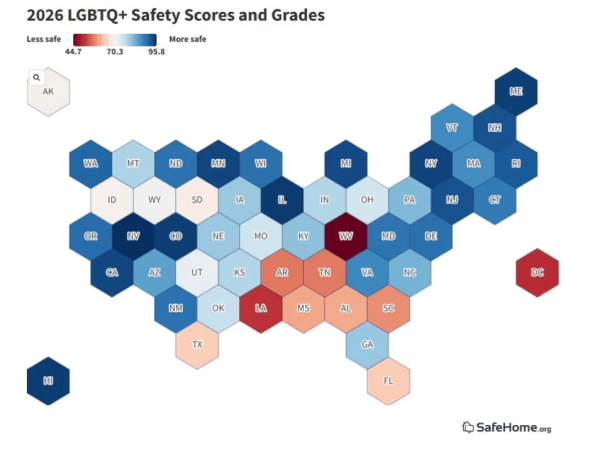
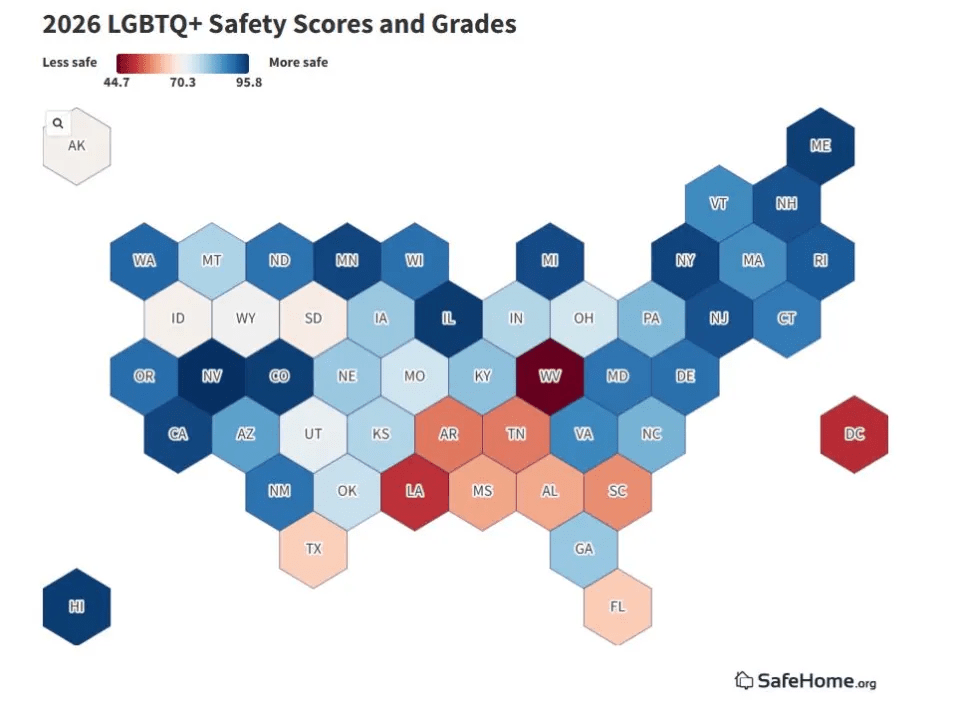
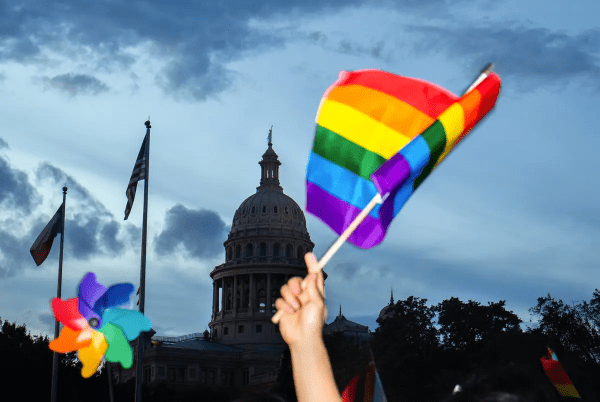
What states are the best for LGBTQ+ people? These are the top 15

Read more at the Advocate.

Legislative attacks on the LGBTQ+ community have been pushed everywhere from city councils to the White House — but there are still some areas that are safe.

Over 1,000 anti-LGBTQ+ laws have been proposed across every state legislature in the U.S. over the past two years, according to the American Civil Liberties Union, and 126 have passed into law. Less than two months into the 2025 legislative session, 390 laws targeting LGBTQ+ people have been proposed.

Still, marriage equality and anti-discrimination protections based on sexual orientation and gender identity are still guaranteed federally by U.S. Supreme Court rulings (for now). On top of that, at least 15 states have “shield laws” protecting access to gender-affirming care and abortion.

Based on laws surrounding marriage, family rights, health care, education, and youth collected by the Movement Advancement Project, here are the 15 best states for LGBTQ+ people.

The states include California, Colorado, Connecticut, Illinois, Maine, Maryland, Massachusetts, Minnesota, Nevada, New Jersey, New York, Oregon, Rhode Island, Vermont, and Washington. Honorable mentions go to Washington DC, Delaware, Hawaii, Michigan, New Mexico, and Virginia.

You can read about each state in more detail in the Advocate’s article.

Doctors can refuse to treat LGBTQ+ patients in several states – these religious exemption laws lead to drops in HIV testing

Read more at The Conversation.

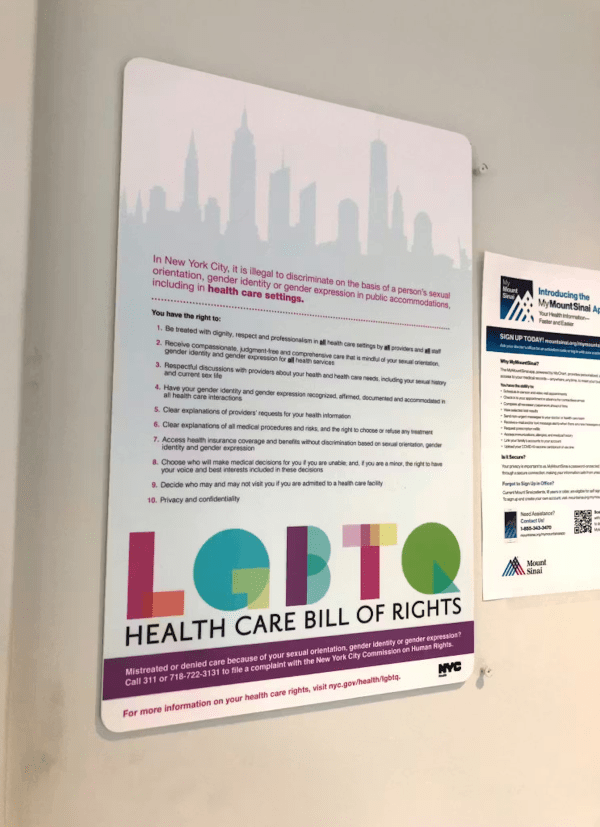
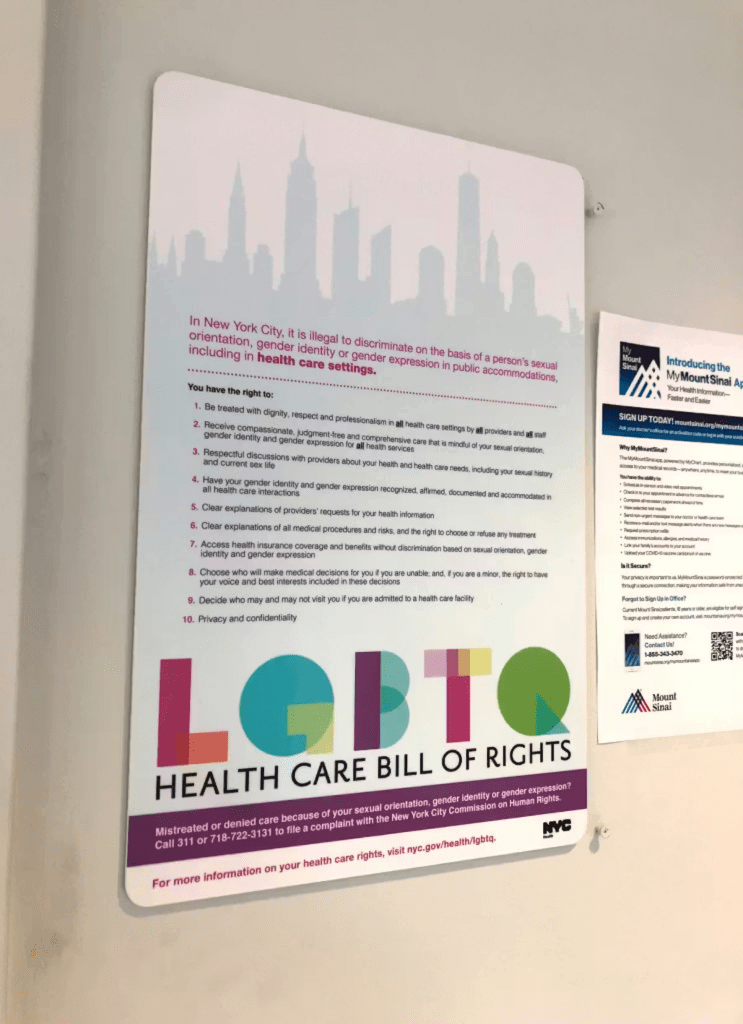
An increasing number of U.S. states have passed laws that allow health care providers – including doctors, nurses and pharmacists – to refuse to treat patients based on their personal or religious beliefs. While these conscientious objection laws have long existed for issues such as abortion, their effects on LGBTQ+ people have not been well studied.

As of April 2026, 11 U.S. states have enacted conscientious objection laws specifically targeting LGBTQ+ people. As public health researchers who study the effects of public policies on the health of LGBTQ+ people, we wanted to examine how these laws have affected the roughly 1 in 5 LGBTQ+ Americans living in a state where a provider can legally refuse them care.

Specifically looking at sexual minorities, our research found that lesbian, gay, bisexual and queer adults living in states that passed conscientious objection laws were 28% less likely to report receiving a first-time HIV test, compared to peers in states without conscientious objection laws. These laws did not affect HIV testing rates for heterosexual adults.

Similarly, LGBQ+ adults in affected states were 71% more likely to report being in fair or poor health after the laws passed, compared to those in states without the laws.

Measuring the harm

We analyzed data from the Centers for Disease Control and Prevention on the health outcomes of more than 109,000 lesbian, gay, bisexual, queer and heterosexual adults from 2016 to 2018. We focused on eight states, comparing two that enacted conscientious objection laws during that period (Illinois and Mississippi) and six that did not (Louisiana, Minnesota, Ohio, Texas, Wisconsin and Virginia).

To isolate the effect of the laws themselves, we compared changes in health outcomes among LGBQ+ and heterosexual adults living in states with or without religious exemptions to health care, both before and after the laws passed. Making all these comparisons at once allowed us to identify differences in health outcomes due to the laws rather than preexisting differences between states.

We found that conscientious objection laws were associated with significant harms to LGBQ+ adults, including a decline in HIV testing and a worsening of self-rated health.

Our findings highlight how laws permitting clinicians to refuse to provide health care to LGBQ+ patients deepen existing health disparities. Notably, conscientious objection laws are just one type of policy restricting LGBTQ+ people’s access to health care.

The Trump administration has slashed budgets for the federal Ryan White HIV/AIDS program and state-level AIDS drugs assistance programs, reducing the availability of HIV prevention and treatment services. States have also moved to restrict access to gender-affirming care for both minors and adults, despite its additional benefit of helping to reduce new HIV infections. Employers have successfully declined to provide insurance coverage of highly effective HIV prevention medications under religious freedom laws.

Worsening disparities

LGBTQ+ people already face greater health challenges than their heterosexual peers, including higher rates of unmet health care needs and discrimination in medical settings.

HIV preexposure prophylaxis, or PrEP, can lower the risk of contracting HIV from sex by 99%. However, patients are required to receive an HIV test before PrEP can be prescribed. If providers are unwilling or unable to engage with LGBQ+ patients on their sexual health, people who could benefit most from HIV prevention tools, such as PrEP, may never receive them.

Moreover, since the risk of contracting HIV is closely linked to the social determinants of health, such as having safe and stable housing and employment, barriers to HIV testing could further widen health gaps.

Similarly, the worsening in self-rated health among LGBQ+ adults suggests that the cumulative effect of these laws on well-being is real and immediate. A person’s perception of their own health status is one of the strongest predictors of earlier death.

What can be done

Acknowledging the health consequences of conscientious objection laws could help policymakers and the public better understand their impact.

A 2026 national study found that Americans were more motivated to support policies that address LGBTQ+ inequality when these laws were framed as improving health inequality rather than economic inequality or sense of belonging. This finding suggests that people perceive health inequality as unjust and are less likely to blame LGBTQ+ individuals for those circumstances.

Health care systems can build more affirming environments that actively reassure LGBTQ+ patients will receive fair and equitable care. This can encourage more timely access to preventive services, such as vaccinations and cancer screenings.

For LGBTQ+ people, knowing your rights as a patient and seeking out LGBTQ+-affirming providers and community health centers can help mitigate some of the harms of restrictive laws.

Trans man kicked out of women’s bathroom at arcade: It was “dehumanizing”

Read more at LGBTQ Nation.

An incident at a gaming arcade and bar in the Chicago area recently had a transgender man and staff at odds over their definitions of safety and discrimination.

Lucien Bates, who is transgender and presents as alt-masculine with facial hair and piercings, was visiting Round1 Bowling & Arcade at the North Riverside Park Mall outside Chicago in September with his fiancé, when the pair decided to use the restroom before gaming.

Bates told the Windy City Times that he opted to use the women’s bathroom, where he said he feels more comfortable and less likely to be harassed.

“I typically feel safer in the women’s restroom, which I guess kind of bit me in the butt this time,” he said.

Before entering, Bates says he checked in with his fiancé and a friend to make sure they were okay accompanying him. 

“It’s something that we have to think about often — making that decision about which one to go in, which one’s going to be safer,” Bates said of his bathroom choice.

Within minutes, a female security guard entered the restroom and told Bates, “You know you can’t be in here, right?”

The security guard refused to clarify what she meant, Bates said, and only kept repeating that Bates was “not supposed to be in there.”

“Eventually it got to the point where she was like, ‘You need to be in the bathroom that matches your ID,’” Bates said.

Bates refused to share his ID with the guard, he said, explaining that his fiancé had shown his own, which matched the restroom they were in.

After the group declined to leave, the guard then called for backup, Bates said, and three more security guards entered.

That’s when things started getting ugly.

“They just kept saying, ‘You should know what you’re doing is wrong,’ but they wouldn’t say it outright,” Bates recounted. “Eventually, they said it was dangerous for us to be in the restroom because children visit the facility.”

When Bates and his escorts did leave the restroom, they were confronted with another group of guards now stationed outside the door.

One of the guards “started just screaming in my face,” Bates said. “He just kept saying, ‘You’re going to get arrested,’ but wouldn’t tell me why. I was already on my way out, and now they’re threatening to arrest me — for what exactly?”

Bates and his fiancé decided to leave the arcade but returned to ask for a manager’s contact information to file a complaint.

They were immediately confronted by another staff member, who yelled, “What do you guys want? You have to be out of here,” Bates recalled.

When Bates started recording a video as they were escorted back outside, the manager showed up and told Bates the issue was “loitering.” 

“That’s interesting, because I have not heard the word ‘loitering’ from anyone on your staff until right now,” he recalled telling her.

Bates told her the confrontation was “dehumanizing.” The manager responded, “Sorry this happened.” 

By all appearances, the security team didn’t share that sentiment.

“Every security guard was smiling and waving cheerfully as we were leaving,” Bates said, providing a pic of the group doing just that.

The guards continued to watch them while Bates and his fiancé sat in his car outside the venue. Guards in cars drove by them several times. 

Bates said he later filed complaints with both Round1 and the North Riverside Park Mall, and that a manager offered to add money to his arcade card.

In an emailed statement, a rep for Round1 said the company is “taking this matter very seriously, and that appropriate corrective measures have been taken.”

“Round1 does not tolerate discrimination of any kind — whether by or toward employees, guests, or third parties (such as security, vendors, or contractors),” the statement read. “This includes, but is not limited to, discrimination based on race, color, nationality, gender, sexual orientation, identity, religion, age, or disability.”

Despite those “corrective measures,” Bates is reluctant to return.

“They ruined my whole day,” the Dance Dance Revolution fan said.

“They ruined a place that I liked, and they had enough people who wouldn’t say anything to get away with what they did.”

First-of-its-kind LGBTQIA+ hotline in Illinois offers support amid sweeping attacks

Read more at Prism.

Since the Trump administration took office in January, it has launched a sweeping attack on LGBTQIA+ people, and particularly on trans rights. In January, President Donald Trump signed an executive order designed to ban trans service members from the military. He has also attempted to prevent trans, nonbinary, and intersex people from obtaining passports with accurate gender markers and tried to withhold funds from hospitals that provide gender-affirming care to trans youth. 

These and other attacks have drawn lawsuits and been the subject of conflicting and ongoing court rulings. The result is that trans people and queer people face a bewildering, frightening, and chaotic legal landscape when they try to negotiate health care, travel, veterans’ benefits, education, employment, or just existence. Accessing resources, or even determining whether they can exist, can be difficult and disheartening.

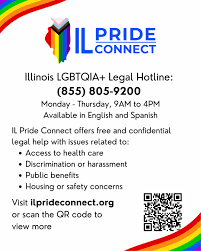
Illinois, in partnership with numerous state LGBTQIA+ organizations, is attempting to help. In August, the state launched Illinois Pride Connect, a legal resource hotline for queer people. The initiative was launched with $250,000 from the state and another $100,000 in private donations; it includes a website and a legal hotline—(855) 805-9200—which is available Monday through Thursday, 9 a.m. to 4 p.m. CT. 

According to Gov. J.B. Pritzker, Illinois Pride Connect makes Illinois “the only state in the nation to provide free legal advice and advocacy tools to protect the LGBTQ community.”

Illinois Pride Connect is led by the state’s Department of Human Services and the Legal Council for Health Justice (LCHJ), which runs and staffs the hotline. LCHJ Executive Director Julie Justicz said her organization began discussing the need for a resource hub last spring. 

“We were getting an increased number of calls from community members who were concerned about the number of executive orders that were coming down, impacting LGBTQ families in Illinois,” she told Prism. The organization was fielding more and more calls about gender-affirming care, education, and passports. “We talked with these other partner groups and decided that it would be good to establish an up-to-date, well-vetted hub of information.”

The state and other LGBTQIA+ organizations got on board quickly, and the resource hub launched in the summer. Justicz said LCHJ has five or six of its 30 staff members working extensively on the hotline. The website has had around 8,800 hits, and the staff receives two or three calls a day. She noted that the hotline also gets some calls from out of state, as LGBTQIA+ people and families consider moving into Illinois.

LCHJ is aware that people using the Illinois Pride Connect hub may be in a vulnerable position. The website offers a quick escape option in case someone does not want others to know they are seeking information on LGBTQ issues. Callers are also anonymous to protect them, though Justicz was able to provide Prism with descriptions of some conversations.

One caller to Illinois Pride Connect, according to the caller description, was “a parent of a trans adolescent seeking information on the risks and benefits of applying for a passport to reflect her child’s gender identity.” The family had updated birth certificates and state ID but had not changed their passport or Social Security record, and was worried about trying to get through customs with inconsistent gender information. Pride Connect was able to provide “detailed information on the current federal policies on gender marker changes to vital records, and on the Orr v. Trump court case concerning the State Department’s gender marker policy,” a staff attorney with LCHJ’s trans health law program said in an email.

Another caller was “a veteran living in rural IL who could no longer access transition-related medical care through [Veteran Affairs] and Tricare,” said the attorney, who requested to remain unnamed due to safety concerns about harassment and doxxing. The veteran was trying to determine if she could access Medicaid or other health insurance. Illinois Pride Connect provided information about Medicaid coverage in the state and referred her to local providers. This was especially helpful since the veteran had not been aware that local services were available.

Mike Ziri, the director of public policy at Equality Illinois, an organization on the Pride Connect Steering Committee, told Prism, “We get frequent requests for legal support, and those requests have accelerated in the last few years, particularly this year.” 

Equality Illinois is a lobbying and civil rights organization; it doesn’t provide individual legal advice. So, Ziri said, “having a resource like Illinois Pride Connect—it’s great, it’s important, it’s critical.” 

In the past, he said, Equality Illinois might have scrambled to connect people with someone at the Department of Human Rights or to another partner who might provide legal services. But, he said, “having a dedicated hotline … fills that gap.”

Kaitian Healey, gender diverse navigation specialist at Central Illinois Friends in Peoria, told Prism that he had found out about Pride Connect after it launched. 

“Our organization was not listed as a health care provider that offered gender-affirming care and LGBT, plus care. So I was a little offended.” He reached out to Pride Connect, and Central Illinois Friends was quickly added to the steering committee. 

“I work a caseload of about 100 folks that are accessing gender-affirming care,” Healey said. “And we do know of at least two clients” who reached out to Pride Connect for advice on navigating legal resources. Central Illinois Friends is an organization that focuses on health care, including sexual health testing, gender-affirming care, and mental health counseling. Illinois Pride Connect allows the group to easily direct the populations they serve in the central part of the state—including Peoria, Bloomington-Normal, and Galesburg—to resources that Central Illinois Friends does not provide directly.

Justiecz said that LCHJ is exploring an afterhours option so that people can leave legal questions when the hotline is not in operation and receive callbacks. As for the future, she said, they are looking to secure funding to sustain the initiative through the next two or three years at least under the current administration. After that, she said, the group will try to assess “are things getting worse for the community where they need this more?” 

Right now, there’s no question that the resource is needed. 

“We have challenges,” Ziri of Equality Illinois told Prism. “But the values of our state are equality, inclusion, and justice. And this project is just one way those values are manifested.”

Illinois debuts legal hotline for LGBTQ+ support

Read more at Axios.

Illinois continues to buck the federal trend of stripping rights from LGBTQ+ people.

Why it matters: President Trump’s slew of executive orders and policies attacking LGBTQ+ people, including halting funding for HIV research and denying passports that adhere to a person’s gender, have forced LGBTQ+ people to seek legal help.

Driving the news: Launching Monday, IL Pride Connect is a hotline for LGBTQ+ people seeking help with questions about health care, including gender-affirming care, discrimination, identity documents, housing and other legal issues.

  • It was developed by Illinois Legal Council for Health Justice, with support from the Illinois Department of Human Services and private funding.

Context: Gov. Pritzker announced the hotline Thursday after declaring Illinois “one of the most comprehensive systems of legal protection and health equity in the entire nation.”

  • He continues to frame Illinois as a refuge for people under attack by Trump, a regular Pritzker foe.

How it works: Attorneys and legal advocates at the Council will field calls to the 855-805-9200 hotline from 9am–4pm Monday–Thursday. Services are available in English and Spanish.

  • Callers from out of state will be directed to pro-bono legal aid in their own states.

Case in point: Orr v. Trump involves the ACLU suing the Trump administration on behalf of a class of plaintiffs who were denied passports that did not adhere to the person’s sex designation assigned at birth.

  • A judge in April temporarily barred enforcement of the passport policy and this summer expanded who can be included in that lawsuit.
  • IL Pride Connect can tell callers whether they can be included in that class and direct them to the ACLU.

What they’re saying: “We’ve seen all these anti-trans laws percolating in the state houses, and as more of the problems have come to fruition under the new administration, I think the time is just essential,” Council executive director Julie Justicz tells Axios.

  • “We’ve been getting calls from folks saying, ‘What do I do? I’m scared,’ and the time was right, and the political will was there,” referring to Pritzker’s support.

What states are the best for LGBTQ+ people? These are the top 15

Read more at The Advocate.
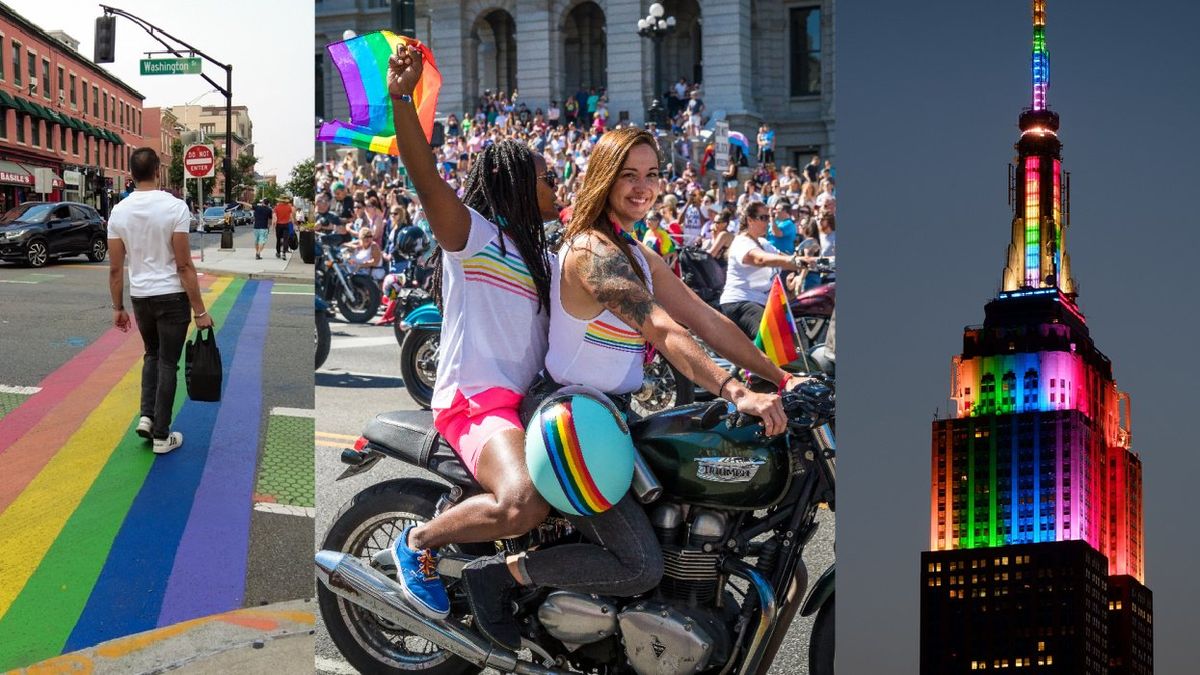
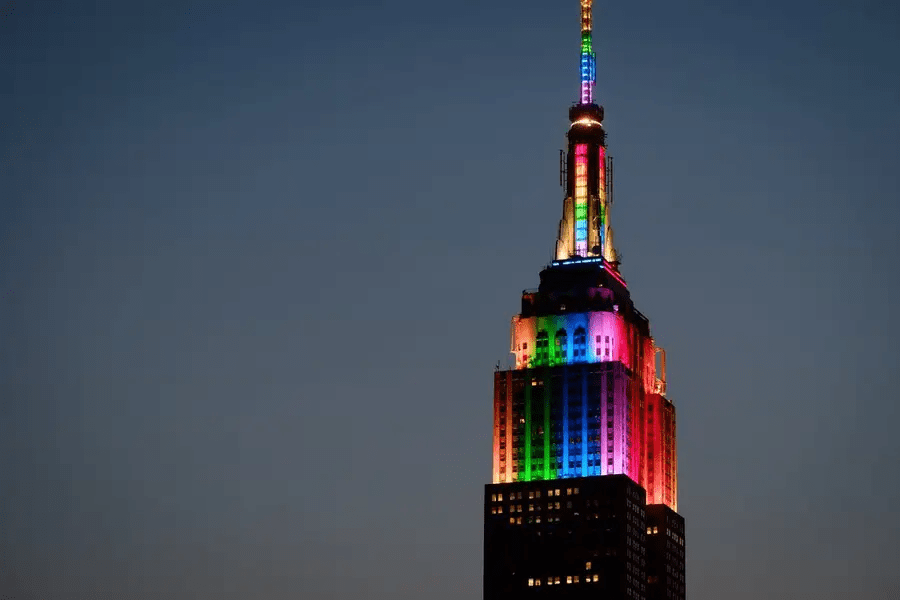
\u200bRainbow crosswalk in Hoboken (L); Women on motorcycles at Denver Pride (M); Empire State Building in rainbow colors (R)

Kirkam / Shutterstock.com; Philipp Salveter / Shutterstock.com; anaglic / Shutterstock.com

Rainbow LGBTQ+ Pride crosswalk in Hoboken, New Jersey (L); Women on motorcycles at Pride celebration in Denver, Colorado (M); Empire State Building in NYC lit up in rainbow colors (R)

    Legislative attacks on the LGBTQ+ community have been pushed everywhere from city councils to the White House — but there are still some areas that are safe.

    Over 1,000 anti-LGBTQ+ laws have been proposed across every state legislature in the U.S. over the past two years, according to the American Civil Liberties Union, and 126 have passed into law. Less than two months into the 2025 legislative session, 390 laws targeting LGBTQ+ people have been proposed.

    Still, marriage equality and anti-discrimination protections based on sexual orientation and gender identity are still guaranteed federally by U.S. Supreme Court rulings (for now). On top of that, at least 15 states have “shield laws” protecting access to gender-affirming care and abortion.

    Based on laws surrounding marriage, family rights, health care, education, and youth collected by the Movement Advancement Project, here are the 15 best states for LGBTQ+ people.

    Related: What states are the most dangerous for LGBTQ+ people? Here are the worst 15

    California
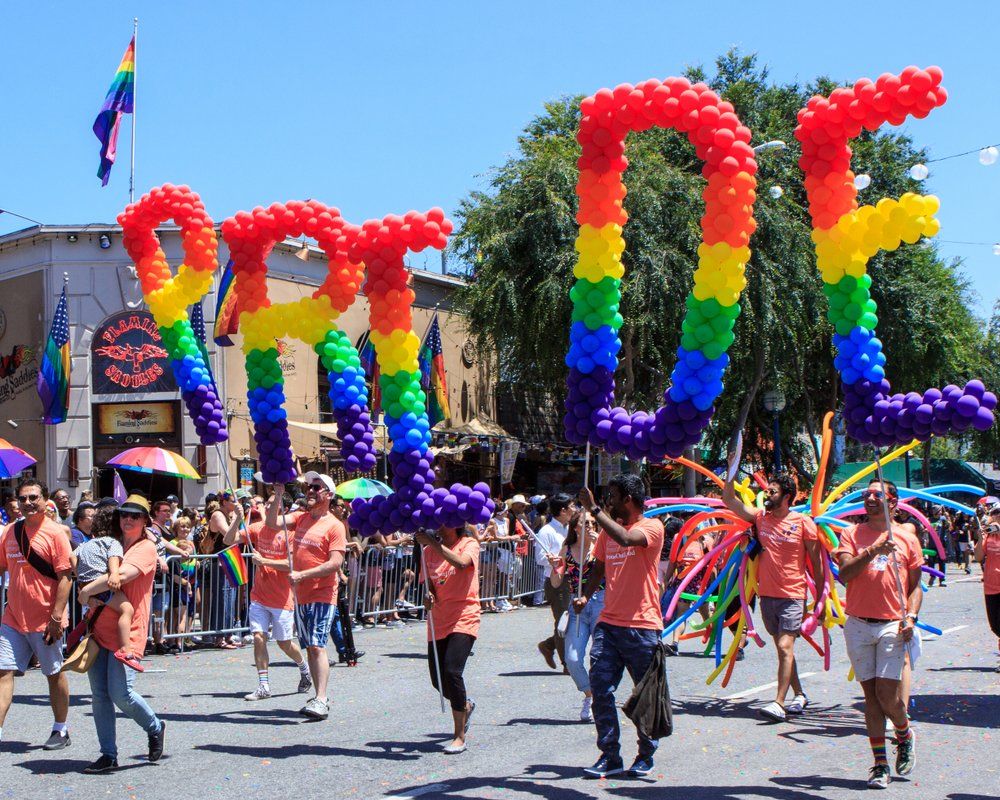
    West Hollywood Pride balloons

    GrandAve / Shutterstock.com

    Pride celebration in West Hollywood, California – June 9, 2019

      Nondiscrimination laws: California has nondiscrimination laws in employment, housing, health care, education, public accommodations, and credit/lending.

      Marriage equality and parental rights: California has adoption and foster care nondiscrimination protections for LGBTQ+ parents, second-parent adoption for unmarried couples and confirmatory adoption, and recognition for parents using assisted reproductive technologies. It also has family leave laws, which include LGBTQ-inclusive definitions.

      Education and youth policies: California does not restrict discussion of LGBTQ+ identities in classrooms, and instead requires curriculum to be LGBTQ-inclusive, which parents are not required to be notified of. It does not prevent transgender students from participating in sports or using school facilities based on their identities, and it does not require staff to forcibly out LGBTQ+ students to their guardians.

      Healthcare access and rights: California has “shield” laws protecting access to gender-affirming care for youth, as well as abortion. The state has also banned so-called conversion therapy for youth. Health insurance companies, including Medicaid, are not allowed to deny coverage related to gender transition. However, they are not required to cover fertility treatments.

      Criminal justice: California’s hate crime laws encompass sexual orientation and gender identity, and it has banned the so-called “LGBTQ+ panic” defense. While the state does not criminalize HIV, it does have sentencing enhancements for sex-related convictions for those with HIV.

      Colorado

      Women on motorcycles at Denver Pride celebration

      Philipp Salveter / Shutterstock.com

      Women on motorcycles at Pride celebration in Denver, Colorado, USA – June 16th 2019

        Nondiscrimination laws: Colorado has nondiscrimination laws in employment, housing, education, health care, public accommodations, and credit/lending.

        Marriage equality and parental rights: Colorado has adoption and foster care nondiscrimination protections for LGBTQ+ parents, second-parent adoption for unmarried couples and confirmatory adoption, and recognition for parents using assisted reproductive technologies. It also has family leave laws, which include LGBTQ-inclusive definitions.

        Education and youth policies: Colorado does not prevent transgender students from participating in sports or using school facilities based on their identities, and it does not require staff to forcibly out LGBTQ+ students to their guardians. It does not restrict discussion of LGBTQ+ identities in classrooms, and instead requires curriculum to be LGBTQ-inclusive, which parents are not required to be notified of.

        Healthcare access and rights: Colorado has “shield” laws protecting access to gender-affirming care for youth, as well as abortion. The state has also banned so-called conversion therapy for youth. Health insurance companies, including Medicaid, are not allowed to deny coverage related to gender transition. However, state employees who are transgender do not have inclusive health benefits. Insurance companies are also not required to cover fertility treatments.

        Criminal justice: The state’s hate crime laws encompass sexual orientation and gender identity, and it has banned the so-called “LGBTQ+ panic” defense. Like California, Colorado does not criminalize HIV, but it does have sentencing enhancements for sex-related convictions for those with HIV.

        Connecticut
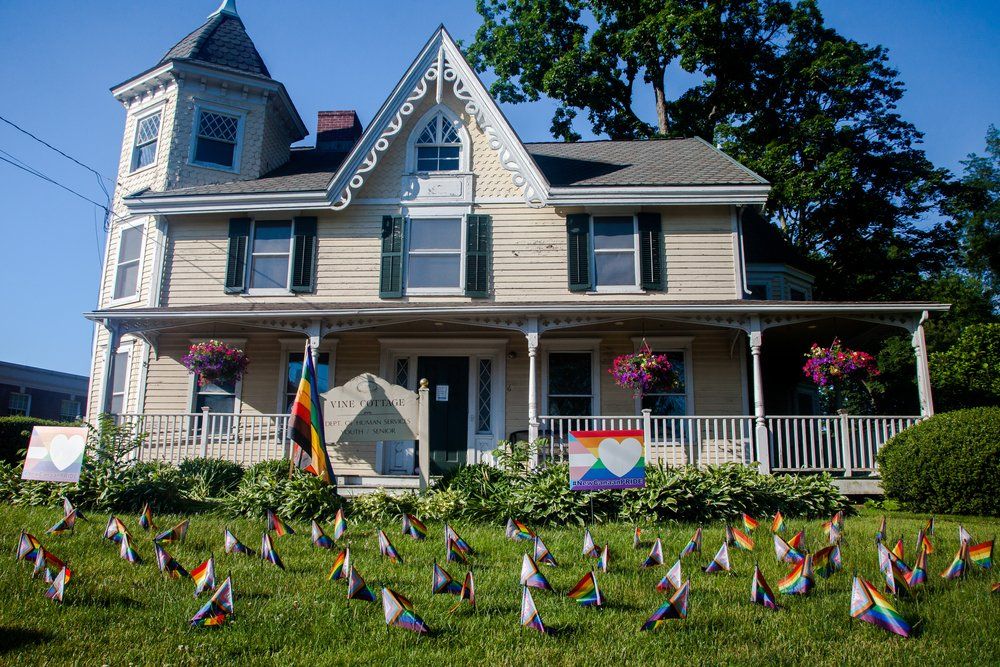
        Pride flags outside Vine Cottage CT

        Miro Vrlik Photography / Shutterstock.com

        LGBTQ+ Pride flags outside Vine Cottage in New Canaan, Connecticut – June 13, 2021

          Nondiscrimination laws: Connecticut has nondiscrimination laws in employment, housing, education, public accommodations, and credit/lending. It does not have nondiscrimination laws for private healthcare, and it does have a broad “Religious Exemption” law.

          Marriage equality and parental rights: Connecticut has adoption and foster care nondiscrimination protections for LGBTQ+ parents, second-parent adoption for unmarried couples and confirmatory adoption, and recognition for parents using assisted reproductive technologies. It also has family leave laws, but their LGBTQ-inclusive definitions are not as robust as those of California or Colorado.

          Education and youth policies: Connecticut does not restrict discussion of LGBTQ+ identities in classrooms, but it does not have LGBTQ-inclusive curriculum. It does not prevent transgender students from participating in sports or using school facilities based on their identities, and it does not require staff to forcibly out LGBTQ+ students to their guardians.

          Healthcare access and rights: Connecticut has “shield” laws protecting access to gender-affirming care for youth, as well as abortion. The state has also banned so-called conversion therapy for youth. Health insurance companies, including Medicaid, are not allowed to deny coverage related to gender transition. Private insurance is required to cover some fertility treatments, but Medicaid is not.Criminal justice:Connecticut’s hate crime law encompasses sexual orientation but not gender identity. It also does not have nondiscrimination laws for LGBTQ+ people in jury selection.

          Illinois
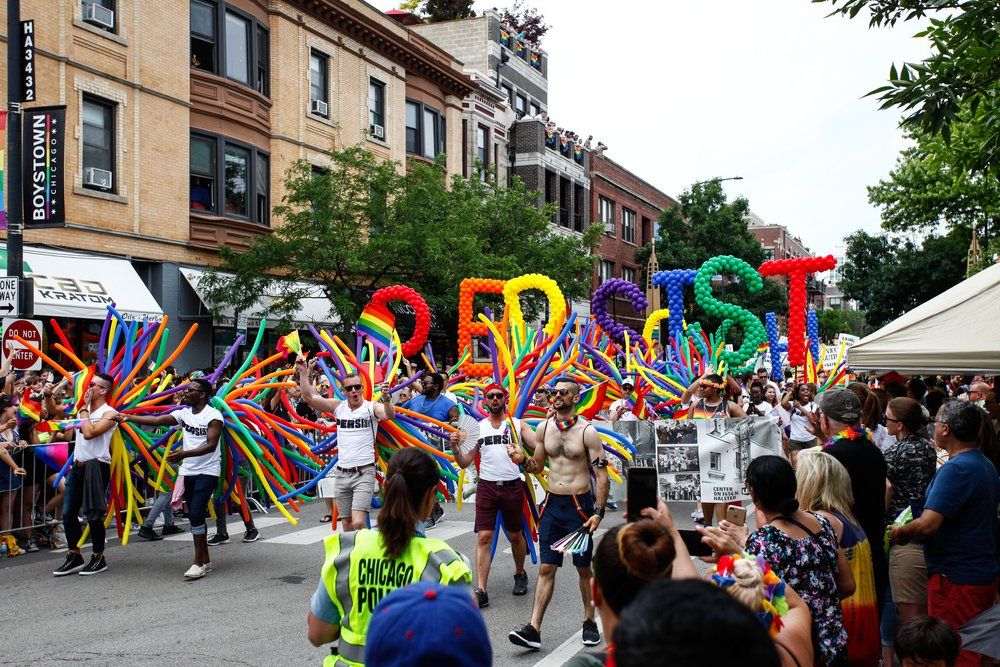
          "Persist" balloons at Chicago

          Dominique Robinson / Shutterstock.com

          LGBTQ+ Pride in Chicago, Illinois – June 30th 2019

            Nondiscrimination laws: Illinois has nondiscrimination laws in employment, housing, health care, education, public accommodations, and credit/lending. However, it does have a broad “Religious Exemption” law.

            Marriage equality and parental rights: Illinois has adoption and foster care nondiscrimination protections for LGBTQ+ parents, second-parent adoption for unmarried couples, and recognition for parents using assisted reproductive technologies. It also has family leave laws, which include LGBTQ-inclusive definitions. It does not have confirmatory adoption.

            Education and youth policies: Illinois does not restrict discussion of LGBTQ+ identities in classrooms, and instead requires curriculum to be LGBTQ-inclusive, which parents are not required to be notified of. It does not prevent transgender students from participating in sports or using school facilities based on their identities, and it does not require staff to forcibly out LGBTQ+ students to their guardians.

            Healthcare access and rights: Illinois has “shield” laws protecting access to gender-affirming care for youth, as well as abortion. The state has also banned so-called conversion therapy for youth. Health insurance companies, including Medicaid, are not allowed to deny coverage related to gender transition or fertility treatments.

            Criminal justice: Illinois’ hate crime laws encompass sexual orientation and gender identity, and it has banned the so-called “LGBTQ+ panic” defense.

            Maine
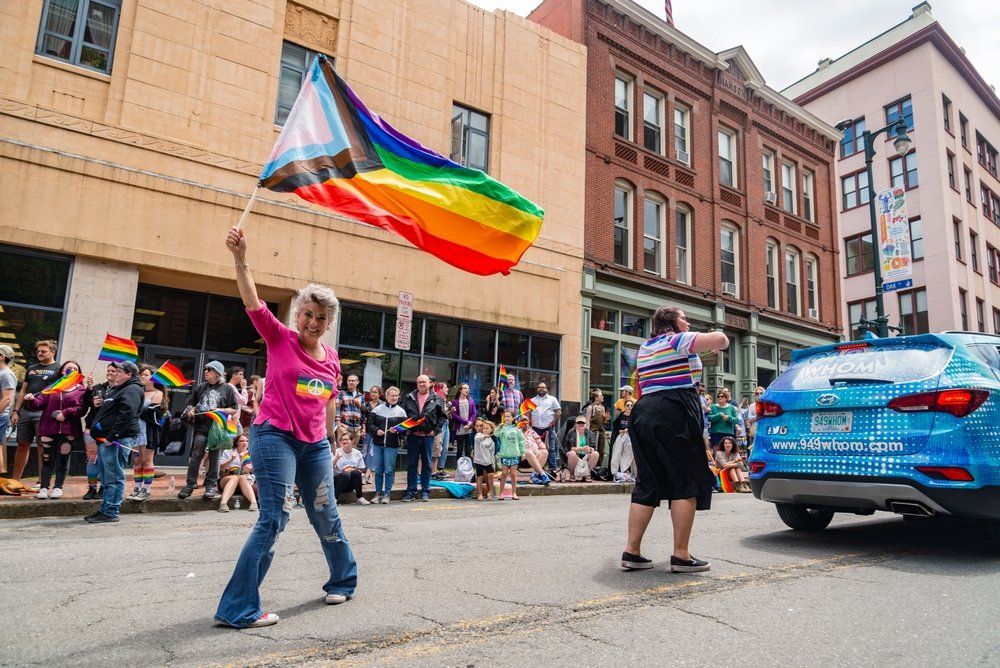
            Woman waving flag at Pride in Portland, Maine

            Enrico Della Pietra / Shutterstock.com

            LGBTQ+ Pride in Portland, Maine – June 18, 2022

              Nondiscrimination laws: Maine has nondiscrimination laws in employment, housing, health care, education, public accommodations, and credit/lending.

              Marriage equality and parental rights: Maine has adoption and foster care nondiscrimination protections for LGBTQ+ parents, second-parent adoption for unmarried couples and confirmatory adoption, and recognition for parents using assisted reproductive technologies. It also has family leave laws, which include LGBTQ-inclusive definitions.

              Education and youth policies: Maine does not restrict discussion of LGBTQ+ identities in classrooms, but it does not have LGBTQ-inclusive curriculum. It does not prevent transgender students from participating in sports or using school facilities based on their identities, and it does not require staff to forcibly out LGBTQ+ students to their guardians.

              Healthcare access and rights: Maine has “shield” laws protecting access to gender-affirming care for youth, as well as abortion. The state has also banned so-called conversion therapy for youth. Health insurance companies, including Medicaid, are not allowed to deny coverage related to gender transition. Private insurance is required to cover some fertility treatments, but Medicaid is not.Criminal justice:Maine’s hate crime laws encompass sexual orientation and gender identity, and it has banned the so-called “LGBTQ+ panic” defense.

              Maryland
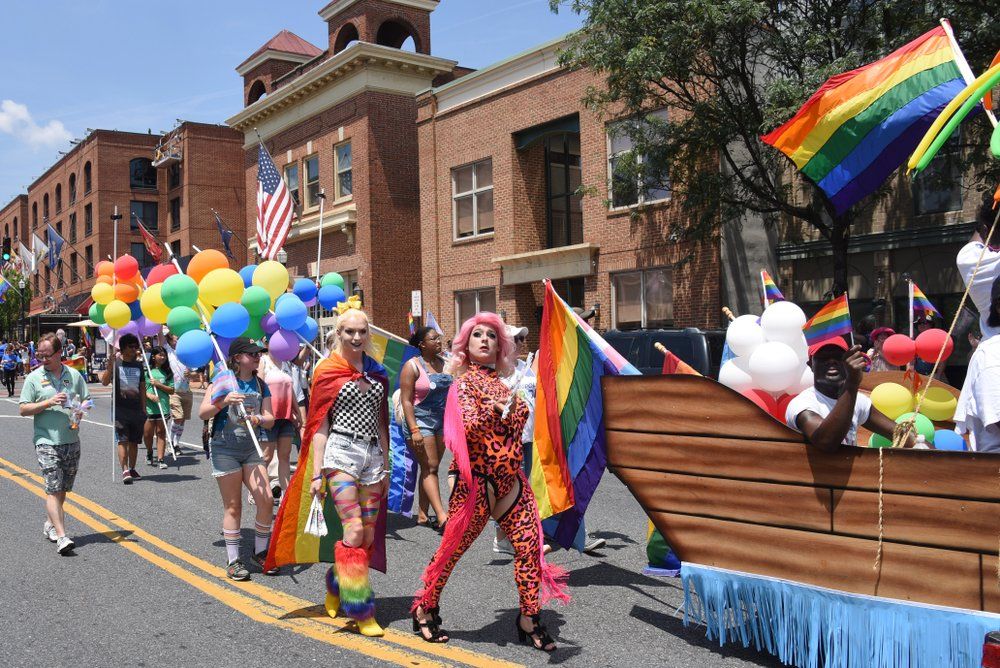
              Marchers and floats in the first Annapolis Pride parade

              Keri Delaney / Shutterstock.com

              The inaugural Pride Parade in Annapolis, Maryland – June 29, 2019

                Nondiscrimination laws: Maryland has nondiscrimination laws in employment, housing, health care, education, public accommodations, and credit/lending.

                Marriage equality and parental rights: Maryland has adoption and foster care nondiscrimination protections for LGBTQ+ parents, confirmatory adoption, and recognition for parents using assisted reproductive technologies. It does not second-parent adoption for unmarried couples. It also has family leave laws, but their LGBTQ-inclusive definitions are not as robust as others.

                Education and youth policies: Maryland does not restrict discussion of LGBTQ+ identities in classrooms, but it does not have LGBTQ-inclusive curriculum. It does not prevent transgender students from participating in sports or using school facilities based on their identities, and it does not require staff to forcibly out LGBTQ+ students to their guardians.

                Healthcare access and rights: Maryland has “shield” laws protecting access to gender-affirming care for youth, as well as abortion. The state has also banned so-called conversion therapy for youth. Health insurance companies, including Medicaid, are not allowed to deny coverage related to gender transition. Private insurance is required to cover some fertility treatments, but Medicaid is not.

                Criminal justice: Maryland’s hate crime laws encompass sexual orientation and gender identity, and it has banned the so-called “LGBTQ+ panic” defense. It does have a law criminalizing the transmission of HIV.

                Massachusetts

                Pride flag over Boston Seaport

                Michael Moloney / Shutterstock.com

                LGBTQ+ Pride flag waving in the wind over the Boston Seaport – JUNE 2, 2019

                  Nondiscrimination laws: Massachusetts has nondiscrimination laws in employment, housing, education, public accommodations, and credit/lending. It has nondiscrimination laws for gender identity in private healthcare, but not for sexual orientation.

                  Marriage equality and parental rights: Massachusetts has adoption and foster care nondiscrimination protections for LGBTQ+ parents, second-parent adoption for unmarried couples, and recognition for parents using assisted reproductive technologies. It also has family leave laws, which include LGBTQ-inclusive definitions. It does not have confirmatory adoption.

                  Education and youth policies: Massachusetts does not restrict discussion of LGBTQ+ identities in classrooms, but it does not have LGBTQ-inclusive curriculum. It does not prevent transgender students from participating in sports or using school facilities based on their identities, and it does not require staff to forcibly out LGBTQ+ students to their guardians.

                  Healthcare access and rights: Massachusetts has “shield” laws protecting access to gender-affirming care for youth, as well as abortion. The state has also banned so-called conversion therapy for youth. Health insurance companies, including Medicaid, are not allowed to deny coverage related to gender transition. Private insurance is required to cover some fertility treatments, but Medicaid is not.

                  Criminal justice: Maryland’s hate crime laws encompass sexual orientation and gender identity, but it has not banned the so-called “LGBTQ+ panic” defense. It does not have nondiscrimination protections based on gender identity for jury selection.

                  Minnesota

                  Lowry Avenue Bridge in Minneapolis lit in Rainbow Colors

                  Shuttershock Creative

                  Lowry Avenue Bridge in Minneapolis lit in Rainbow Colors in Honor of Orlando Victims

                    Nondiscrimination laws: Minnesota has nondiscrimination laws in employment, housing, health care, education, public accommodations, and credit/lending.

                    Marriage equality and parental rights: Minnesota has adoption and foster care nondiscrimination protections for LGBTQ+ parents. It does have family leave laws, which include LGBTQ-inclusive definitions. It does not have second-parent adoption for unmarried couples, confirmatory adoption, nor recognition for parents using assisted reproductive technologies.

                    Education and youth policies: Minnesota does not restrict discussion of LGBTQ+ identities in classrooms, but it does not have LGBTQ-inclusive curriculum. It does not prevent transgender students from participating in sports or using school facilities based on their identities, and it does not require staff to forcibly out LGBTQ+ students to their guardians.

                    Healthcare access and rights: Minnesota has “shield” laws protecting access to gender-affirming care for youth, as well as abortion. The state has also banned so-called conversion therapy for youth. Health insurance companies, including Medicaid, are not allowed to deny coverage related to gender transition. However, they are not required to cover fertility treatments.

                    Criminal justice: Minnesota’s hate crime laws encompass sexual orientation and gender identity, and it has banned the so-called “LGBTQ+ panic” defense.

                    Nevada
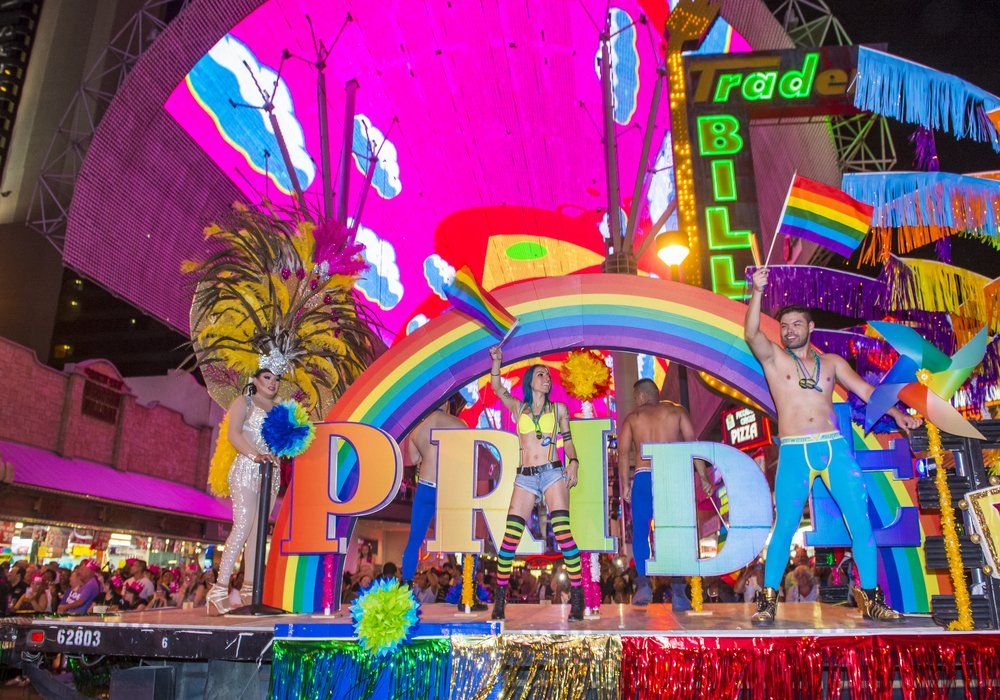
                    Las Vegas Pride parade float

                    Kobby Dagan / Shutterstock

                    LGBTQ+ Pride parade in Las Vegas, Nevada – October 21 , 2016

                      Nondiscrimination laws: Nevada has nondiscrimination laws in employment, housing, health care, education, public accommodations, and credit/lending.

                      Marriage equality and parental rights: Nevada has adoption and foster care nondiscrimination protections for LGBTQ+ parents, second-parent adoption for unmarried couples, and recognition for parents using assisted reproductive technologies. It also has family leave laws, which include LGBTQ-inclusive definitions. It does not have confirmatory adoption.

                      Education and youth policies: Nevada does not restrict discussion of LGBTQ+ identities in classrooms, and instead requires curriculum to be LGBTQ-inclusive, which parents are not required to be notified of. It does not prevent transgender students from participating in sports or using school facilities based on their identities, but it does not require staff to forcibly out students who change their gender identity to their guardians

                      Healthcare access and rights: Nevada does not have shield laws for gender-affirming care and abortion. The state has also banned so-called conversion therapy for youth. Health insurance companies, including Medicaid, are not allowed to deny coverage related to gender transition. However, they are not required to cover fertility treatments.

                      Criminal justice: Nevada’s hate crime laws encompass sexual orientation and gender identity, and it has banned the so-called “LGBTQ+ panic” defense. It does not have nondiscrimination protections based on gender identity for jury selection.

                      New Jersey
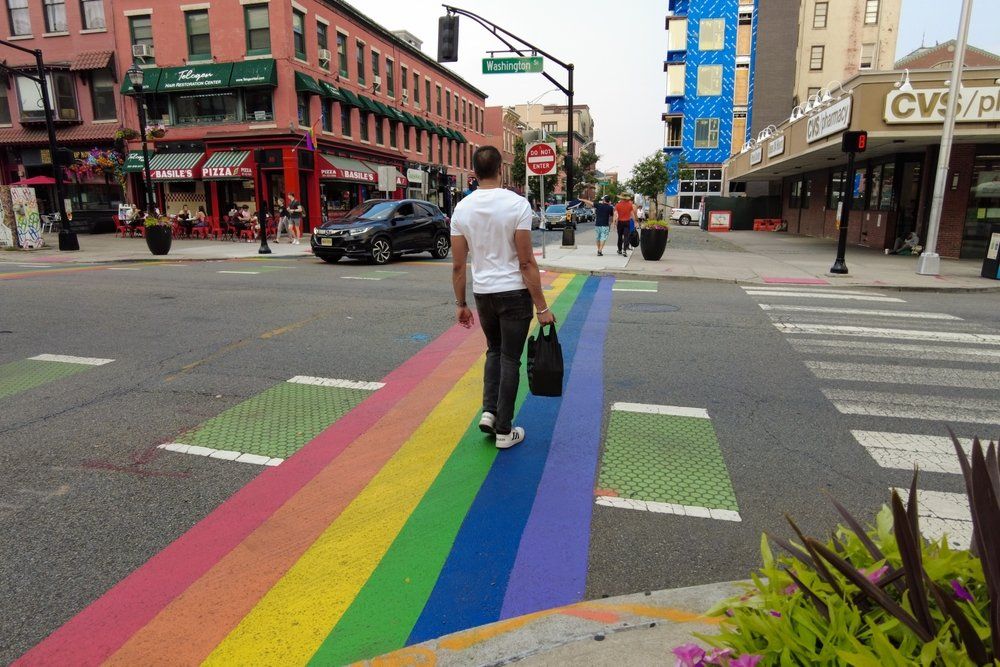
                      Rainbow crosswalk in Hoboken, New Jersey

                      Kirkam / Shutterstock.com

                      Rainbow LGBTQ+ Pride crosswalk in Hoboken, New Jersey, – June 25, 2023

                        Nondiscrimination laws: New Jersey has nondiscrimination laws in employment, housing, education, public accommodations, and credit/lending. It has nondiscrimination laws for gender identity in private healthcare, but not for sexual orientation.

                        Marriage equality and parental rights: New Jersey has adoption and foster care nondiscrimination protections for LGBTQ+ parents, and second-parent adoption for unmarried couples and confirmatory adoption. It also has family leave laws, which include LGBTQ-inclusive definitions. It does not have recognition for parents using assisted reproductive technologies.

                        Education and youth policies: New Jersey does not restrict discussion of LGBTQ+ identities in classrooms, and instead requires curriculum to be LGBTQ-inclusive, which parents are not required to be notified of. It does not prevent transgender students from participating in sports or using school facilities based on their identities, and it does not require staff to forcibly out LGBTQ+ students to their guardians.

                        Healthcare access and rights: New Jersey has “shield” laws protecting access to gender-affirming care for youth, as well as abortion. The state has also banned so-called conversion therapy for youth. Health insurance companies, including Medicaid, are not allowed to deny coverage related to gender transition. Private insurance is required to cover some fertility treatments, but Medicaid is not.

                        Criminal justice: New Jersey’s hate crime laws encompass sexual orientation and gender identity, and it has banned the so-called “LGBTQ+ panic” defense. It does not have nondiscrimination laws for LGBTQ+ people in jury selection.

                        New York
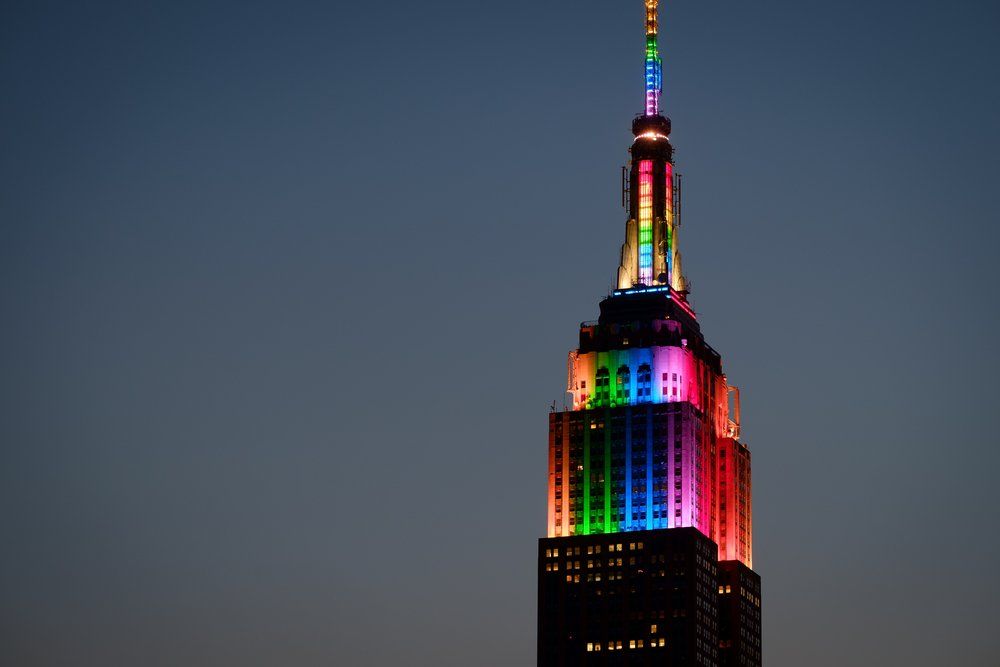
                        Empire State Building in rainbow colors

                        anaglic / Shutterstock.com

                        Empire State Building in rainbow colors in honor of the Orlando shooting victims, New York City – June 26, 2016

                          Nondiscrimination laws: New York has nondiscrimination laws in employment, housing, health care, education, public accommodations, and credit/lending.

                          Marriage equality and parental rights: New York has adoption and foster care nondiscrimination protections for LGBTQ+ parents, second-parent adoption for unmarried couples, and recognition for parents using assisted reproductive technologies. It also has family leave laws, which include LGBTQ-inclusive definitions. It does not have confirmatory adoption.

                          Education and youth policies: New York does not restrict discussion of LGBTQ+ identities in classrooms, but it does not have LGBTQ-inclusive curriculum. It does not prevent transgender students from participating in sports or using school facilities based on their identities, and it does not require staff to forcibly out LGBTQ+ students to their guardians.

                          Healthcare access and rights: New York has “shield” laws protecting access to gender-affirming care for youth, as well as abortion. The state has also banned so-called conversion therapy for youth. Health insurance companies, including Medicaid, are not allowed to deny coverage related to gender transition. Private insurance and Medicaid are also required to cover some fertility treatments.

                          Criminal justice: New York’s hate crime laws encompass sexual orientation and gender identity, and it has banned the so-called “LGBTQ+ panic” defense.

                          Oregon
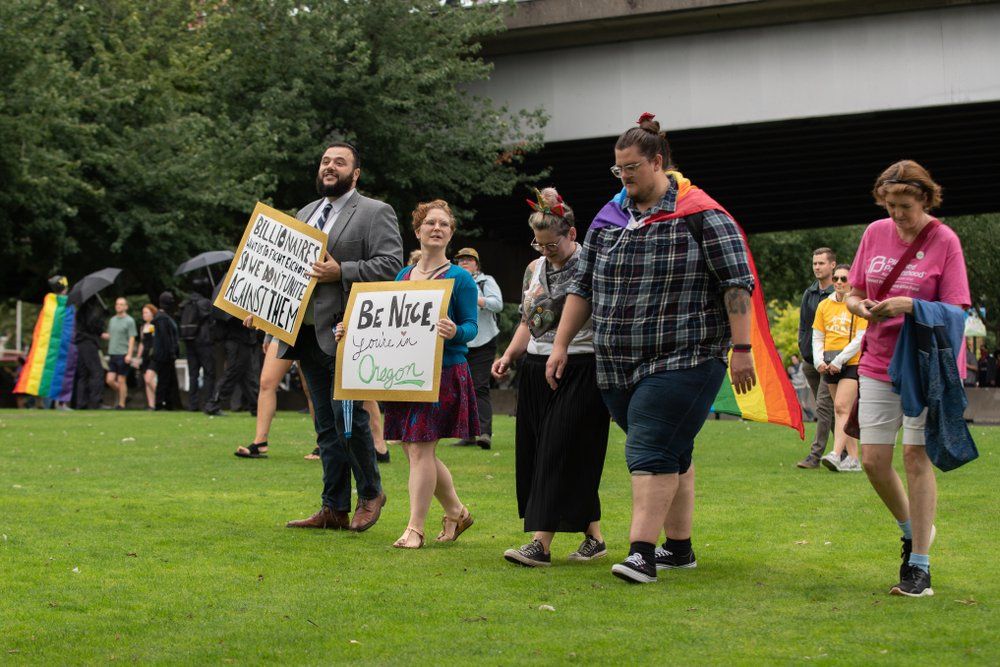
                          Protestors wear rainbow flag capes and carry a sign reading "Be nice, you're in Oregon"

                          Alexander Oganezov / Shutterstock.com

                          Protestors wear rainbow flag capes and carry a sign reading “Be nice, you’re in Oregon” at anti-fascism protest in Portland, Oregon – August 17, 2019

                            Nondiscrimination laws: Oregon has nondiscrimination laws in employment, housing, health care, education, and public accommodations. It does not have nondiscrimination laws in credit/lending.

                            Marriage equality and parental rights: Oregon has adoption and foster care nondiscrimination protections for LGBTQ+ parents and second-parent adoption for unmarried couples. It does have family leave laws, which include LGBTQ-inclusive definitions. It does not have confirmatory adoption, nor recognition for parents using assisted reproductive technologies.

                            Education and youth policies: Oregon does not prevent transgender students from participating in sports or using school facilities based on their identities, and it does not require staff to forcibly out LGBTQ+ students to their guardians. It does not restrict discussion of LGBTQ+ identities in classrooms, and instead requires curriculum to be LGBTQ-inclusive, which parents are not required to be notified of.

                            Healthcare access and rights: Oregon has “shield” laws protecting access to gender-affirming care for youth, as well as abortion. The state has also banned so-called conversion therapy for youth. Health insurance companies, including Medicaid, are not allowed to deny coverage related to gender transition. However, they are not required to cover fertility treatments.

                            Criminal justice: Oregon’s hate crime laws encompass sexual orientation and gender identity, and it has banned the so-called “LGBTQ+ panic” defense.

                            Rhode Island
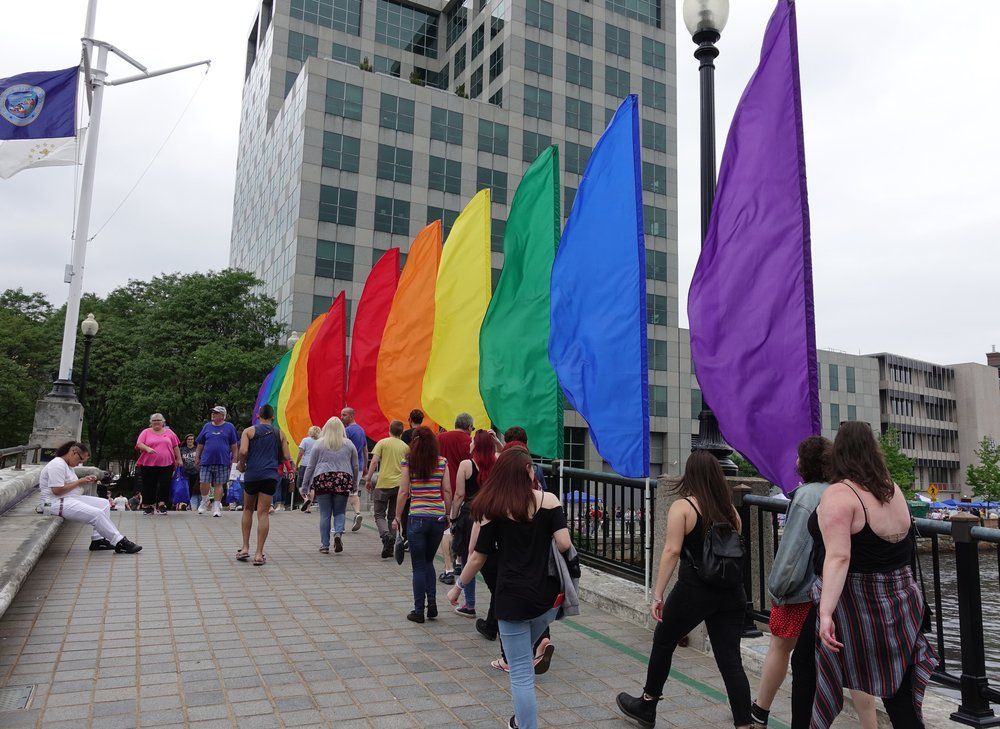
                            Rainbow flags on bridge over water in Providence, Rhode Island

                            Anthony Ricci / Shutterstock.com

                            Pride festival in downtown Providence, Rhode Island – June 17, 2017

                              Nondiscrimination laws: Rhode Island has nondiscrimination laws in employment, housing, education, public accommodations, and credit/lending. It has nondiscrimination laws for gender identity in private healthcare, but not for sexual orientation. It also has a broad “Religious Exemption” law.

                              Marriage equality and parental rights: Rhode Island has adoption and foster care nondiscrimination protections for LGBTQ+ parents, second-parent adoption for unmarried couples and confirmatory adoption, and recognition for parents using assisted reproductive technologies. It also has family leave laws, but their LGBTQ-inclusive definitions are not as robust as others.

                              Education and youth policies: Rhode Island does not restrict discussion of LGBTQ+ identities in classrooms, but it does not have LGBTQ-inclusive curriculum. It does not prevent transgender students from participating in sports or using school facilities based on their identities, and it does not require staff to forcibly out LGBTQ+ students to their guardians.

                              Healthcare access and rights: Rhode Island has “shield” laws protecting access to gender-affirming care for youth, as well as abortion. The state has also banned so-called conversion therapy for youth. Health insurance companies, including Medicaid, are not allowed to deny coverage related to gender transition. Private insurance is required to cover some fertility treatments, but Medicaid is not.

                              Criminal justice: Rhode Island’s hate crime laws encompass sexual orientation and gender identity, and it has banned the so-called “LGBTQ+ panic” defense. It does not have nondiscrimination laws for LGBTQ+ people in jury selection.

                              Vermont
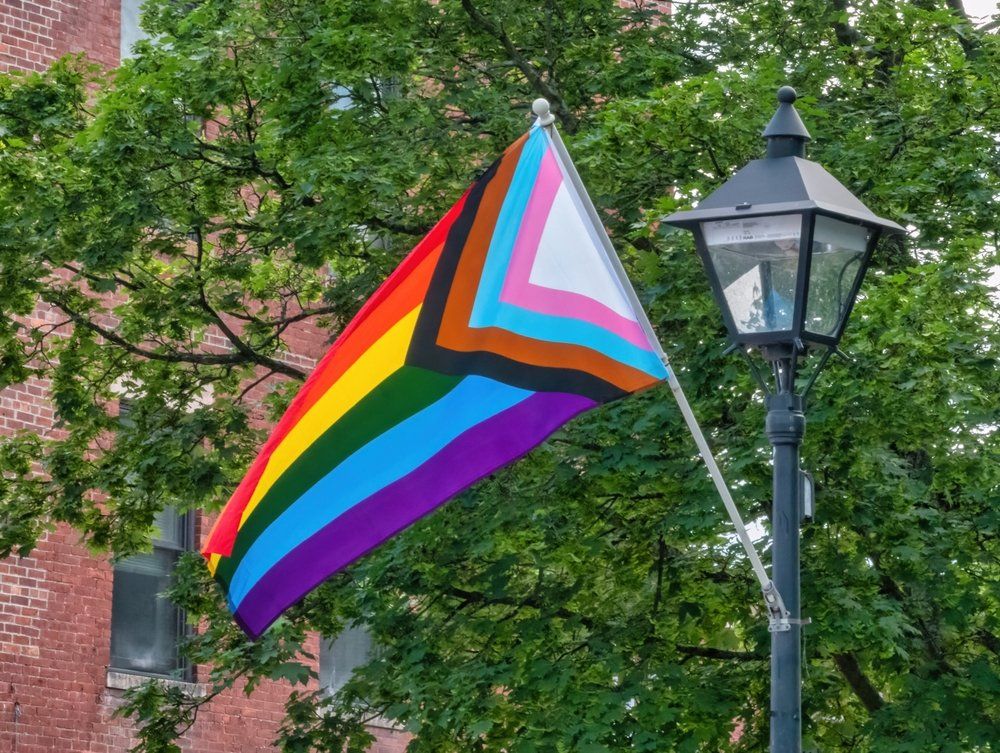
                              Pride flag on lamppost in Montpelier, Vermont

                              Charles Patrick Ewing / Shutterstock.com

                              LGBTQ+ Pride flag on lamppost in Montpelier, Vermont – June 11, 2022

                                Nondiscrimination laws: Vermont has nondiscrimination laws in employment, housing, health care, education, public accommodations, and credit/lending.

                                Marriage equality and parental rights: Vermont has adoption and foster care nondiscrimination protections for LGBTQ+ parents, second-parent adoption for unmarried couples, and recognition for parents using assisted reproductive technologies. It also has family leave laws, which include LGBTQ-inclusive definitions. It does not have confirmatory adoption.

                                Education and youth policies: Vermont does not restrict discussion of LGBTQ+ identities in classrooms, but it does not have LGBTQ-inclusive curriculum. It does not prevent transgender students from participating in sports or using school facilities based on their identities, and it does not require staff to forcibly out LGBTQ+ students to their guardians.

                                Healthcare access and rights: Vermont has “shield” laws protecting access to gender-affirming care for youth, as well as abortion. The state has also banned so-called conversion therapy for youth. Health insurance companies, including Medicaid, are not allowed to deny coverage related to gender transition. However, state employees who are transgender do not have inclusive health benefits. Insurance companies are also not required to cover fertility treatments.

                                Criminal justice: Vermont’s hate crime laws encompass sexual orientation and gender identity, and it has banned the so-called “LGBTQ+ panic” defense. It does not have nondiscrimination laws for LGBTQ+ people in jury selection.

                                Washington
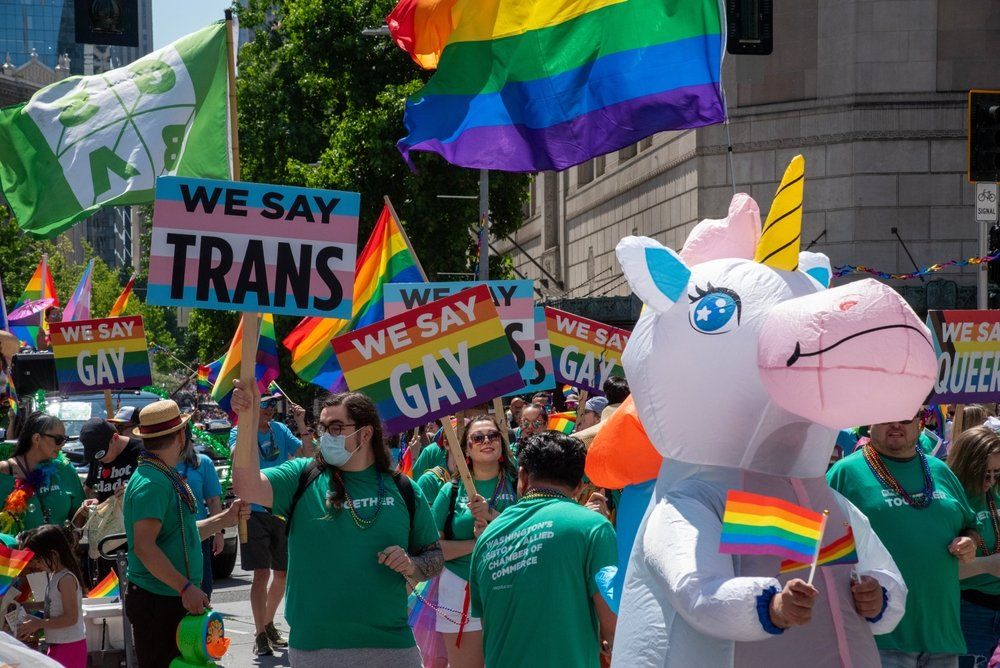
                                People carrying "We say trans" and "We say gay" signs at Seattle Pride

                                SeaRick1 / Shutterstock.com

                                People carrying rainbow signs reading “We say trans” and “We say gay” at LGBTQ+ Pride in Seattle, Washington – June 25, 2023

                                  Nondiscrimination laws: Washington has nondiscrimination laws in employment, housing, health care, education, public accommodations, and credit/lending.

                                  Marriage equality and parental rights: Washington has adoption and foster care nondiscrimination protections for LGBTQ+ parents and recognition for parents using assisted reproductive technologies.. It does have family leave laws, which include LGBTQ-inclusive definitions. It does not have second-parent adoption for unmarried couples, nor confirmatory adoption.

                                  Education and youth policies: Washington does not restrict discussion of LGBTQ+ identities in classrooms, and instead requires curriculum to be LGBTQ-inclusive, which parents are not required to be notified of. It does not prevent transgender students from participating in sports or using school facilities based on their identities, and it does not require staff to forcibly out LGBTQ+ students to their guardians.

                                  Healthcare access and rights: Washington has “shield” laws protecting access to gender-affirming care for youth, as well as abortion. The state has also banned so-called conversion therapy for youth. Health insurance companies, including Medicaid, are not allowed to deny coverage related to gender transition. However, they are not required to cover fertility treatments.

                                  Criminal justice: Washington’s hate crime laws encompass sexual orientation and gender identity, and it has banned the so-called “LGBTQ+ panic” defense. It does have a law criminalizing the transmission of HIV.

                                  Honorable mentions
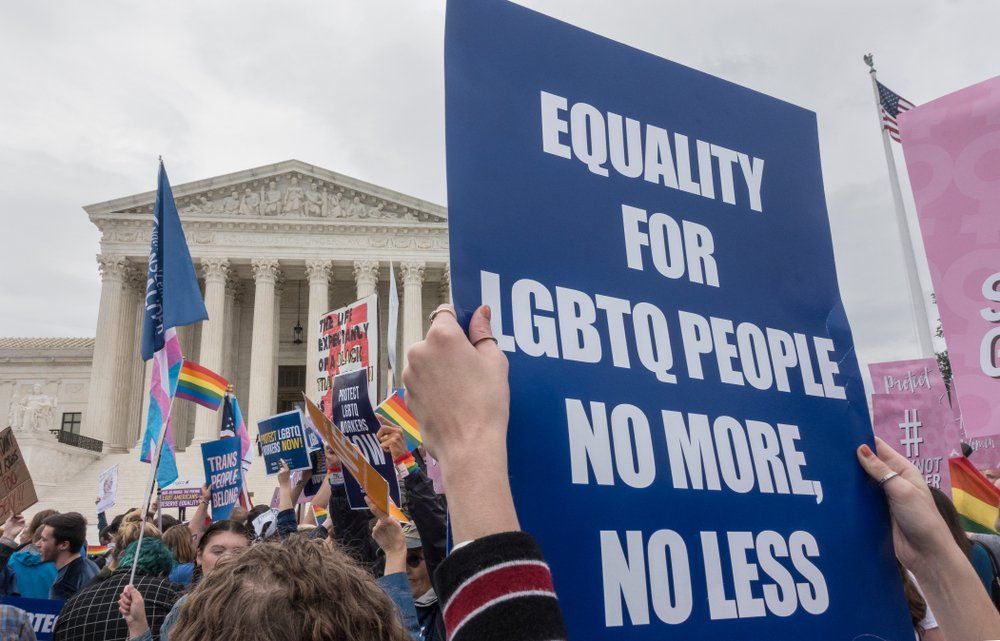
                                  Sign outside SCOTUS reading "Equality for LGBTQ people no more, no less"

                                  Bob Korn / Shutterstock.com

                                  Rally for LGBTQ rights outside Supreme Court in Washington, D.C. – OCT. 8, 2019

                                    Washington, D.C. also ranked high on MAP’s assessment, though it does not currently have statehood.

                                    Other states that ranked above average include: Delaware, Hawaii, Michigan, New Hampshire, New Mexico, and Virginia.

                                    Lesbian teen brutally beaten at Illinois McDonald’s

                                    *This is reported by NBC News

                                    Two teenagers, one a juvenile, brutally beat a 19-year-old woman inside a suburban McDonald’s after making derogatory comments about her sexual orientation, according to local police.

                                    The May 13 incident occurred at the fast food chain’s location in Carpentersville, Illinois, about 40 miles from Chicago, with officers responding to a report of a fight in progress, according to news release from the Carpentersville Police Department.

                                    The victim, who was later identified as Kady Grass, sustained severe injuries and was transported to a local hospital, where she was treated and has since been released.

                                    Following an investigation, the Kane County State’s Attorney’s Office approved multiple felony charges against the suspects, according to police. John Kammrad, 19, was charged with aggravated battery, great bodily harm, aggravated battery in a public place, mob action and more. Kammrad was taken into custody on Saturday, while the juvenile suspect turned himself in on Friday.

                                    Photos posted to a GoFundMe account for Grass show the extent of her injuries, which span her face and her legs. In an interview with NBC Chicago, Grass said the attack happened while she was in town to see her 13-year-old cousin’s choir concert.

                                    “One hit me in the jaw and one was hitting me in the front, and then I didn’t realize that I was getting hit behind until a little bit later, like it took me a while to realize,” Grass said. “I was unconscious when they were stomping on my head, so I don’t remember that part, but my 13-year-old cousin does.”

                                    Carpentersville Police Deputy Chief Kevin Stankowitz said the incident “underscores the importance of addressing violence and discrimination” within the community, according to the news release.

                                    In an email to NBC Chicago, Stankowitz said the department collaborated with the Kane County State’s Attorney’s Office on whether or not to file hate crime charges. After a review of the case, Stankowitz said, the office declined to file them.

                                    Governor stands with trans kids & won’t take ‘soul-sucking path’ of sacrificing their rights

                                    *This is reported by LGBTQNation.

                                    Illinois Gov. J.B. Pritzker (D) has never shied away from standing up to Donald Trump, and he has also made it clear he supports the LGBTQ+ community.

                                    At a recent Human Rights Campaign dinner in Los Angeles, Pritzker reaffirmed his commitment to supporting queer folks and resisting Trump.

                                    “The Trump administration and his Republican lackeys in Congress are looking to reverse every single victory this community has won over the last 50 years,” Pritzker said. “And right now it’s drag queens reading books and transgender people serving in the military. Tomorrow, it’s your marriage license and your job they want to take.”

                                    “Bending to the whims of a bully will not end his cruelty. It will only embolden him. The response to authoritarianism isn’t acquiescence. Bullies respond to one thing, and one thing only, a punch in the face.”

                                    He also spoke directly to transgender youth to tell them they are not alone.

                                    “And in the midst of this existential fight, this battle that seems to consume everything, well, let’s not take the soul-sucking path of sacrificing the most persecuted for that which we deem to be most popular.”

                                    “I know that there are transgender children right now looking out at this world and wondering if anyone is going to stand up for them and for their simple right to exist. Well, I am. We are. We will.”

                                    He also spoke about his mother’s activism for LGBTQ+ rights and reproductive rights and declared, “I have to laugh when I hear the right-wing carry on about the dangers of exposing kids to trans people or same-sex couples, because I’m living proof that introducing your kids to the gay agenda might result in them growing up to be governor.”

                                    Pritzker has long advocated for LGBTQ+ people as governor. In 2023, he signed a landmark bill making Illinois the first state to make it illegal for libraries to ban books.

                                    The Supreme Court is avoiding cases related to transgender rights.

                                    This blog originally appeared at VOX.


                                    For the third instance in the past year, the Supreme Court declined a chance to significantly worsen the situation for transgender youth.


                                    Protesters advocating for transgender rights outside the Supreme Court building in 2019.

                                    For the third occasion in the past year, the Supreme Court surprisingly declined a case seeking to curtail the rights of young transgender individuals in a significant portion of the country.


                                    On Tuesday, the Court declared its decision not to consider Metropolitan School District v. A.C., a case questioning whether public school districts can mandate transgender students to use bathrooms corresponding to their assigned birth sex rather than their gender identity.

                                    In the A.C. case, the United States Court of Appeals for the Seventh Circuit sided with three transgender students, allowing them to use bathrooms that align with their gender identity. With the Supreme Court opting not to review this case, the Seventh Circuit’s decision will remain in effect, at least for the time being. The Seventh Circuit holds authority over federal legal matters in Illinois, Indiana, and Wisconsin.


                                    Despite meeting the usual criteria the justices typically use to determine which cases to consider, the Court declined to take up this case. Notably, the issue of whether transgender students have the right to use bathrooms aligning with their gender identity has generated division among federal appeals courts, prompting the Supreme Court to often intervene and address such conflicts.


                                    The opposition to transgender rights was also advocated by Republican attorney Paul Clement, a highly influential figure with considerable sway over the conservative wing of the Court, who previously served as the US Solicitor General.


                                    A.C. marks the second occasion in slightly over a month where the Court has abstained from a significant LGBTQ rights dispute causing discord among lower court judges. In December, the Court similarly declared that it would not review Tingley v. Ferguson, a case challenging Washington state’s limitations on “conversion therapy” — a practice attempting to convert LGBTQ individuals into cisgender heterosexuals or hinder them from expressing their authentic sexual orientation or gender identity.


                                    The lower court, which affirmed Washington’s restrictions, emphasized in its opinion that “every significant medical, psychiatric, psychological, and professional mental health organization opposes the utilization of conversion therapy.


                                    Furthermore, in April of the previous year, in a case known as West Virginia v. B.P.J., the Court chose not to remove a transgender student from her middle school girl’s cross-country team. A lower court had halted a West Virginia state law preventing her from competing with other girls, and the Supreme Court declined a petition to temporarily reinstate that law during the ongoing litigation. (There remains a possibility that this case may return to the justices in the future.)


                                    These rulings are unexpected for three main reasons. First, Republican appointees hold six out of the nine seats on the Supreme Court, and this Court has typically been highly receptive to concerns raised by the religious right. As recently as last June, the Court decided that a conservative Christian website designer possesses a constitutional right to discriminate against LGBTQ customers.


                                    Moreover, both A.C. and Tingley met the standard criteria that justices typically employ to decide which cases to consider. In each instance, lower courts were in disagreement regarding the interpretation of federal law concerning LGBTQ rights.


                                    Furthermore, in all three cases, the anti-LGBTQ side presented a plausible argument asserting that current law aligns with their desired result. The Tingley case hinges on conflicting language in a 2018 Supreme Court decision, which could be interpreted to endorse either outcome in Tingley. Meanwhile, the A.C. and B.P.J. cases pose questions that the Court left unresolved in its pivotal LGBTQ rights decision in Bostock v. Clayton County (2020).


                                    In essence, it seems that, for the time being, the Court is avoiding cases related to transgender rights.


                                    Cases involving transgender rights related to bathrooms and sports pose particularly intricate questions under the existing legal framework.


                                    In the case of Bostock, the question revolved around whether a federal law prohibiting workplace discrimination based on “sex” also encompasses discrimination against LGBTQ individuals. Six justices determined that it does, and the Court affirmed that “it is impossible to discriminate against a person for being homosexual or transgender without discriminating against that individual based on sex.” For instance, if an employer dismisses a male employee for dating a man while allowing female employees to date men, it constitutes ordinary sex discrimination, as the employer permits women to engage in an activity not allowed for men.


                                    Likewise, Bostock established that if an employer punishes an “employee who was identified as female at birth” for presenting as a man or participating in stereotypically male behavior, while not penalizing “a person identified as male at birth” for the same actions, it constitutes sex discrimination prohibited by federal law.

                                    Although this marked a historic triumph for transgender rights, it also left unanswered one of the crucial questions in such cases: whether the legal concept of “gender” is distinct from the “status as either male or female [as] determined by reproductive biology.” Bostock, indeed, was decided under the assumption that the term “sex” exclusively pertains to “biological distinctions between male and female.”

                                    Nevertheless, even under the assumption that the law pertains solely to “biological” sex, Bostock still determined that most forms of discrimination against transgender individuals contravene that law. This is because such discrimination inherently involves treating men (or individuals assigned male at birth) differently from women (or individuals assigned female at birth).


                                    Federal law, nevertheless, allows for sex discrimination in specific restricted situations. For instance, the law prohibiting sex discrimination in most educational institutions permits these institutions to have “separate living facilities for the different

                                    Likewise, longstanding interpretations of federal prohibitions against sex discrimination acknowledge the allowance of sex-segregated sports teams, as otherwise, women-only teams would not be viable.


                                    Cases such as A.C. and B.P.J., in essence, pose a question that Bostock did not conclusively address. Bostock did not take a definitive stance on whether a transgender man is considered a man. In contrast, the Seventh Circuit had to determine, in deciding the A.C. case, “who counts as a ‘boy’ for the boys’ rooms, and who counts as a ‘girl’ for the girls’ rooms.”


                                    If you seek a more in-depth examination of the legal arguments supporting and opposing the obligation for schools to treat transgender girls and boys equivalently to their cisgender counterparts, I delved into those arguments in greater detail in this piece. Presently, it’s worth noting that the Supreme Court seems resolute in avoiding a definitive resolution to this question, despite the ongoing divergence of opinions in lower courts on how it should be addressed.

                                    Illinois becomes magnet for trans students seeking protections

                                    This blog originally appeared at Blade Southern California’s LGBTQ News Source.

                                    Opponents of gender-affirming care say children are too young to make transition decisions and claim medical interventions are not safe.

                                    Shigeru Nightengale, 15, recently moved from Iowa to Illinois for protections as a transgender teen and student. Shigeru loves collecting rocks and picked up a stone before sitting down at a swing set in the Nightengales’ new backyard.


                                    By Max Lubbers | CHICAGO, Ill. – In the spring, Kimberly Reynolds found herself gazing at a map of the United States, each state shaded with a gradient of colors. Red represented states with the strictest active anti-transgender laws, while bright blue indicated those with the most comprehensive protections for transgender individuals.

                                    The sight of Florida, her home state, bathed in a sea of red was disheartening. The nearest state painted in blue? Illinois.

                                    Reynolds took a deep breath, then allowed herself some time to grapple with the growing panic in her chest.

                                    She had embarked on this daunting journey of researching a new place to call home when lawmakers in Florida introduced a wave of anti-transgender bills, many of which directly targeted transgender youth — including her 11-year-old son.

                                    “Something inside me just broke,” she shared. “I’ve dealt with a lot of policies in Florida that are not okay. But now they’re coming after my child. So that’s why we’re done. We’re getting out, one way or another.”

                                    She approached her son with the weighty question: “How do you feel about moving?”

                                    Joseph Reynolds, her 11-year-old, didn’t hesitate. “I was like, ‘Yeah, let’s move. Let’s get out of this place. Let’s get out of this climate,'” he recalled thinking. “‘Let’s get out of this house. Get away from these people.'”

                                    In May, Florida’s Republican Governor, Ron DeSantis, signed several of the anti-trans bills into law. Reynolds revisited that map she’d stared at before, and this time, her state had a new, ominous designation — marked with black stripes: “Do Not Travel.”

                                    Three months later, as the new school year began, the Reynolds family still found themselves in Florida, but they were determined not to stay. The impact of the laws on her child was already profound, and she was eager to relocate her family to Illinois as swiftly as possible.

                                    Florida is far from the only state grappling with or enacting anti-transgender legislation. This year, according to an analysis by Chalkbeat using data from the American Civil Liberties Union (ACLU), at least 14 states passed laws that specifically regulated issues like bathroom access, sports participation, and pronoun and name changes in K-12 schools. Additionally, at least 18 states approved laws that restricted gender-affirming health care, primarily for minors but not exclusively.

                                    For many families striving to shield their transgender children in the school environment and retain control over their medical choices, moving appears to be the only recourse — and Illinois stands out as a safe haven.

                                    Restrictions Impacting K-12 Schools During This Year’s Legislative Sessions: Chalkbeat meticulously reviewed and categorized 494 bills from the ACLU’s tracker of LGBT-related state legislation. The focus was on identifying those that aimed to regulate K-12 schools and students, offering a comprehensive assessment of the landscape confronting trans and nonbinary students.

                                    Approximately 45% of the proposed bills sought to change policies or procedures within K-12 schools.


                                    Notes: The analysis excludes bills that utilize variations of “parental rights” language, which sometimes encompass broad restrictions across multiple categories. The ACLU’s 2023 legislative tracker also encompasses bills proposed in 2022 that extend into 2023.

                                    Source: This information is derived from a Chalkbeat analysis of ACLU data obtained from the tracker as of August 18, 2023.

                                    Credit: Kae Petrin & Thomas Wilburn / Chalkbeat

                                    Bills Impact School Policies and the Sense of Safety for Trans Students Illinois stands as a stark contrast to many states across the nation where anti-transgender policies are unfolding within the educational system. In Illinois, state laws safeguard students against discrimination based on their gender identities. State guidance mandates that students must be granted access to bathrooms, locker rooms, and sports teams that align with their gender identities.

                                    The Reynolds family’s desire to relocate is significantly influenced by changes in educational policy.

                                    For instance, Florida’s board of education has enacted policies that forbid public schools from educating students about sexual orientation or gender identity. State law also prohibits school staff from inquiring about students’ pronouns or requiring their usage. Furthermore, a law compels K-12 schools and postsecondary institutions to take disciplinary actions against students who use restrooms that do not correspond to their assigned sex at birth.

                                    In 2023, Anti-LGBTQ Legislation Frequently Targeted School Policy More than 4 in 10 bills categorized as anti-LGBTQ by the American Civil Liberties Union (ACLU) would directly impact policies and procedures in K-12 schools if they were to become law.

                                    Click here to see full blog: https://www.losangelesblade.com/2023/09/03/illinois-becomes-magnet-for-trans-students-seeking-protections/

                                    Blog at WordPress.com.

                                    Up ↑