Two teenagers, one a juvenile, brutally beat a 19-year-old woman inside a suburban McDonald’s after making derogatory comments about her sexual orientation, according to local police.
The May 13 incident occurred at the fast food chain’s location in Carpentersville, Illinois, about 40 miles from Chicago, with officers responding to a report of a fight in progress, according to news release from the Carpentersville Police Department.
The victim, who was later identified as Kady Grass, sustained severe injuries and was transported to a local hospital, where she was treated and has since been released.
Following an investigation, the Kane County State’s Attorney’s Office approved multiple felony charges against the suspects, according to police. John Kammrad, 19, was charged with aggravated battery, great bodily harm, aggravated battery in a public place, mob action and more. Kammrad was taken into custody on Saturday, while the juvenile suspect turned himself in on Friday.
Photos posted to a GoFundMe account for Grass show the extent of her injuries, which span her face and her legs. In an interview with NBC Chicago, Grass said the attack happened while she was in town to see her 13-year-old cousin’s choir concert.
“One hit me in the jaw and one was hitting me in the front, and then I didn’t realize that I was getting hit behind until a little bit later, like it took me a while to realize,” Grass said. “I was unconscious when they were stomping on my head, so I don’t remember that part, but my 13-year-old cousin does.”
Carpentersville Police Deputy Chief Kevin Stankowitz said the incident “underscores the importance of addressing violence and discrimination” within the community, according to the news release.
In an email to NBC Chicago, Stankowitz said the department collaborated with the Kane County State’s Attorney’s Office on whether or not to file hate crime charges. After a review of the case, Stankowitz said, the office declined to file them.
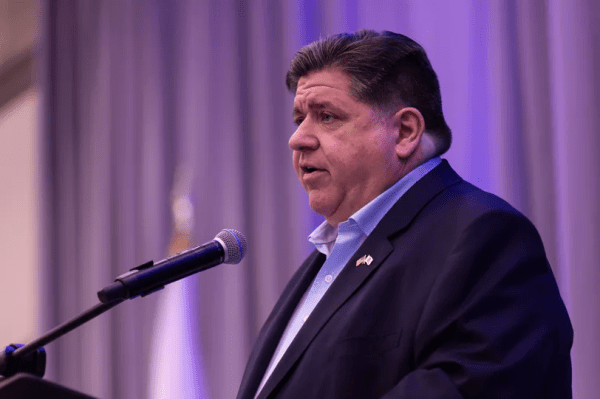
Illinois Gov. J.B. Pritzker (D) has never shied away from standing up to Donald Trump, and he has also made it clear he supports the LGBTQ+ community.
At a recent Human Rights Campaign dinner in Los Angeles, Pritzker reaffirmed his commitment to supporting queer folks and resisting Trump.
“The Trump administration and his Republican lackeys in Congress are looking to reverse every single victory this community has won over the last 50 years,” Pritzker said. “And right now it’s drag queens reading books and transgender people serving in the military. Tomorrow, it’s your marriage license and your job they want to take.”
“Bending to the whims of a bully will not end his cruelty. It will only embolden him. The response to authoritarianism isn’t acquiescence. Bullies respond to one thing, and one thing only, a punch in the face.”
He also spoke directly to transgender youth to tell them they are not alone.
“And in the midst of this existential fight, this battle that seems to consume everything, well, let’s not take the soul-sucking path of sacrificing the most persecuted for that which we deem to be most popular.”
“I know that there are transgender children right now looking out at this world and wondering if anyone is going to stand up for them and for their simple right to exist. Well, I am. We are. We will.”
He also spoke about his mother’s activism for LGBTQ+ rights and reproductive rights and declared, “I have to laugh when I hear the right-wing carry on about the dangers of exposing kids to trans people or same-sex couples, because I’m living proof that introducing your kids to the gay agenda might result in them growing up to be governor.”
Pritzker has long advocated for LGBTQ+ people as governor. In 2023, he signed a landmark bill making Illinois the first state to make it illegal for libraries to ban books.
For the third instance in the past year, the Supreme Court declined a chance to significantly worsen the situation for transgender youth.
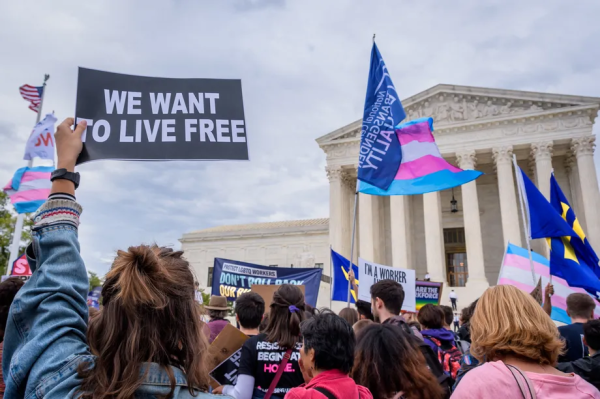
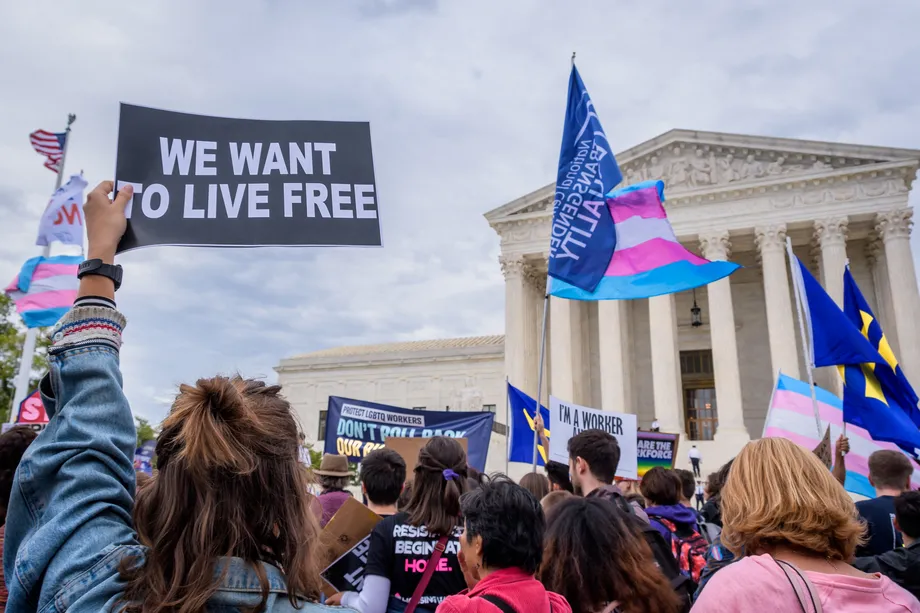
Protesters advocating for transgender rights outside the Supreme Court building in 2019.
For the third occasion in the past year, the Supreme Court surprisingly declined a case seeking to curtail the rights of young transgender individuals in a significant portion of the country.
On Tuesday, the Court declared its decision not to consider Metropolitan School District v. A.C., a case questioning whether public school districts can mandate transgender students to use bathrooms corresponding to their assigned birth sex rather than their gender identity.
In the A.C. case, the United States Court of Appeals for the Seventh Circuit sided with three transgender students, allowing them to use bathrooms that align with their gender identity. With the Supreme Court opting not to review this case, the Seventh Circuit’s decision will remain in effect, at least for the time being. The Seventh Circuit holds authority over federal legal matters in Illinois, Indiana, and Wisconsin.
Despite meeting the usual criteria the justices typically use to determine which cases to consider, the Court declined to take up this case. Notably, the issue of whether transgender students have the right to use bathrooms aligning with their gender identity has generated division among federal appeals courts, prompting the Supreme Court to often intervene and address such conflicts.
The opposition to transgender rights was also advocated by Republican attorney Paul Clement, a highly influential figure with considerable sway over the conservative wing of the Court, who previously served as the US Solicitor General.
A.C. marks the second occasion in slightly over a month where the Court has abstained from a significant LGBTQ rights dispute causing discord among lower court judges. In December, the Court similarly declared that it would not review Tingley v. Ferguson, a case challenging Washington state’s limitations on “conversion therapy” — a practice attempting to convert LGBTQ individuals into cisgender heterosexuals or hinder them from expressing their authentic sexual orientation or gender identity.
The lower court, which affirmed Washington’s restrictions, emphasized in its opinion that “every significant medical, psychiatric, psychological, and professional mental health organization opposes the utilization of conversion therapy.
Furthermore, in April of the previous year, in a case known as West Virginia v. B.P.J., the Court chose not to remove a transgender student from her middle school girl’s cross-country team. A lower court had halted a West Virginia state law preventing her from competing with other girls, and the Supreme Court declined a petition to temporarily reinstate that law during the ongoing litigation. (There remains a possibility that this case may return to the justices in the future.)
These rulings are unexpected for three main reasons. First, Republican appointees hold six out of the nine seats on the Supreme Court, and this Court has typically been highly receptive to concerns raised by the religious right. As recently as last June, the Court decided that a conservative Christian website designer possesses a constitutional right to discriminate against LGBTQ customers.
Moreover, both A.C. and Tingley met the standard criteria that justices typically employ to decide which cases to consider. In each instance, lower courts were in disagreement regarding the interpretation of federal law concerning LGBTQ rights.
Furthermore, in all three cases, the anti-LGBTQ side presented a plausible argument asserting that current law aligns with their desired result. The Tingley case hinges on conflicting language in a 2018 Supreme Court decision, which could be interpreted to endorse either outcome in Tingley. Meanwhile, the A.C. and B.P.J. cases pose questions that the Court left unresolved in its pivotal LGBTQ rights decision in Bostock v. Clayton County (2020).
In essence, it seems that, for the time being, the Court is avoiding cases related to transgender rights.
Cases involving transgender rights related to bathrooms and sports pose particularly intricate questions under the existing legal framework.
In the case of Bostock, the question revolved around whether a federal law prohibiting workplace discrimination based on “sex” also encompasses discrimination against LGBTQ individuals. Six justices determined that it does, and the Court affirmed that “it is impossible to discriminate against a person for being homosexual or transgender without discriminating against that individual based on sex.” For instance, if an employer dismisses a male employee for dating a man while allowing female employees to date men, it constitutes ordinary sex discrimination, as the employer permits women to engage in an activity not allowed for men.
Likewise, Bostock established that if an employer punishes an “employee who was identified as female at birth” for presenting as a man or participating in stereotypically male behavior, while not penalizing “a person identified as male at birth” for the same actions, it constitutes sex discrimination prohibited by federal law.
Although this marked a historic triumph for transgender rights, it also left unanswered one of the crucial questions in such cases: whether the legal concept of “gender” is distinct from the “status as either male or female [as] determined by reproductive biology.” Bostock, indeed, was decided under the assumption that the term “sex” exclusively pertains to “biological distinctions between male and female.”
Nevertheless, even under the assumption that the law pertains solely to “biological” sex, Bostock still determined that most forms of discrimination against transgender individuals contravene that law. This is because such discrimination inherently involves treating men (or individuals assigned male at birth) differently from women (or individuals assigned female at birth).
Federal law, nevertheless, allows for sex discrimination in specific restricted situations. For instance, the law prohibiting sex discrimination in most educational institutions permits these institutions to have “separate living facilities for the different
Likewise, longstanding interpretations of federal prohibitions against sex discrimination acknowledge the allowance of sex-segregated sports teams, as otherwise, women-only teams would not be viable.
Cases such as A.C. and B.P.J., in essence, pose a question that Bostock did not conclusively address. Bostock did not take a definitive stance on whether a transgender man is considered a man. In contrast, the Seventh Circuit had to determine, in deciding the A.C. case, “who counts as a ‘boy’ for the boys’ rooms, and who counts as a ‘girl’ for the girls’ rooms.”
If you seek a more in-depth examination of the legal arguments supporting and opposing the obligation for schools to treat transgender girls and boys equivalently to their cisgender counterparts, I delved into those arguments in greater detail in this piece. Presently, it’s worth noting that the Supreme Court seems resolute in avoiding a definitive resolution to this question, despite the ongoing divergence of opinions in lower courts on how it should be addressed.
Opponents of gender-affirming care say children are too young to make transition decisions and claim medical interventions are not safe.
Shigeru Nightengale, 15, recently moved from Iowa to Illinois for protections as a transgender teen and student. Shigeru loves collecting rocks and picked up a stone before sitting down at a swing set in the Nightengales’ new backyard.
By Max Lubbers | CHICAGO, Ill. – In the spring, Kimberly Reynolds found herself gazing at a map of the United States, each state shaded with a gradient of colors. Red represented states with the strictest active anti-transgender laws, while bright blue indicated those with the most comprehensive protections for transgender individuals.
The sight of Florida, her home state, bathed in a sea of red was disheartening. The nearest state painted in blue? Illinois.
Reynolds took a deep breath, then allowed herself some time to grapple with the growing panic in her chest.
She had embarked on this daunting journey of researching a new place to call home when lawmakers in Florida introduced a wave of anti-transgender bills, many of which directly targeted transgender youth — including her 11-year-old son.
“Something inside me just broke,” she shared. “I’ve dealt with a lot of policies in Florida that are not okay. But now they’re coming after my child. So that’s why we’re done. We’re getting out, one way or another.”
She approached her son with the weighty question: “How do you feel about moving?”
Joseph Reynolds, her 11-year-old, didn’t hesitate. “I was like, ‘Yeah, let’s move. Let’s get out of this place. Let’s get out of this climate,'” he recalled thinking. “‘Let’s get out of this house. Get away from these people.'”
In May, Florida’s Republican Governor, Ron DeSantis, signed several of the anti-trans bills into law. Reynolds revisited that map she’d stared at before, and this time, her state had a new, ominous designation — marked with black stripes: “Do Not Travel.”
Three months later, as the new school year began, the Reynolds family still found themselves in Florida, but they were determined not to stay. The impact of the laws on her child was already profound, and she was eager to relocate her family to Illinois as swiftly as possible.
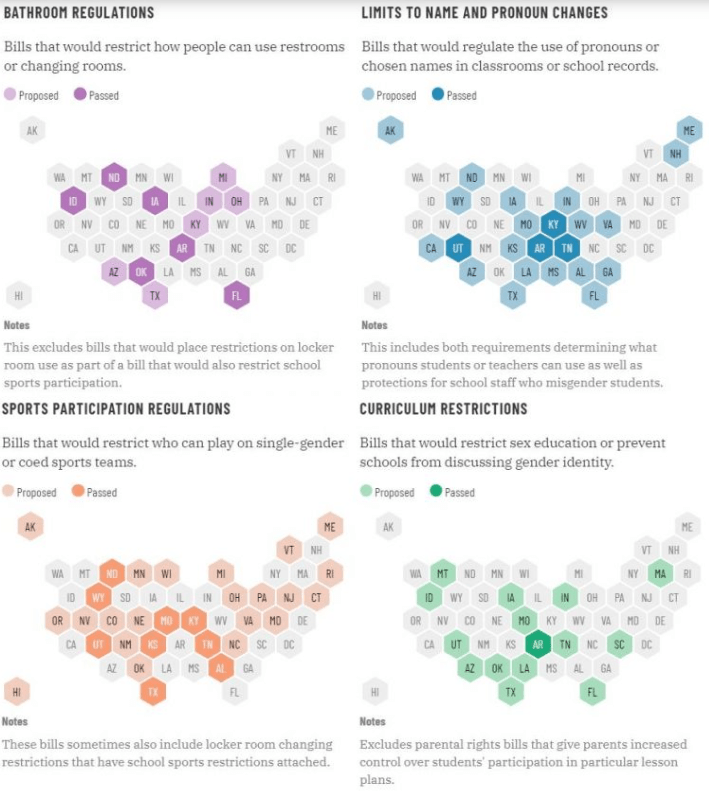
Florida is far from the only state grappling with or enacting anti-transgender legislation. This year, according to an analysis by Chalkbeat using data from the American Civil Liberties Union (ACLU), at least 14 states passed laws that specifically regulated issues like bathroom access, sports participation, and pronoun and name changes in K-12 schools. Additionally, at least 18 states approved laws that restricted gender-affirming health care, primarily for minors but not exclusively.
For many families striving to shield their transgender children in the school environment and retain control over their medical choices, moving appears to be the only recourse — and Illinois stands out as a safe haven.
Restrictions Impacting K-12 Schools During This Year’s Legislative Sessions: Chalkbeat meticulously reviewed and categorized 494 bills from the ACLU’s tracker of LGBT-related state legislation. The focus was on identifying those that aimed to regulate K-12 schools and students, offering a comprehensive assessment of the landscape confronting trans and nonbinary students.
Approximately 45% of the proposed bills sought to change policies or procedures within K-12 schools.
Notes: The analysis excludes bills that utilize variations of “parental rights” language, which sometimes encompass broad restrictions across multiple categories. The ACLU’s 2023 legislative tracker also encompasses bills proposed in 2022 that extend into 2023.
Source: This information is derived from a Chalkbeat analysis of ACLU data obtained from the tracker as of August 18, 2023.
Credit: Kae Petrin & Thomas Wilburn / Chalkbeat
Bills Impact School Policies and the Sense of Safety for Trans Students Illinois stands as a stark contrast to many states across the nation where anti-transgender policies are unfolding within the educational system. In Illinois, state laws safeguard students against discrimination based on their gender identities. State guidance mandates that students must be granted access to bathrooms, locker rooms, and sports teams that align with their gender identities.
The Reynolds family’s desire to relocate is significantly influenced by changes in educational policy.
For instance, Florida’s board of education has enacted policies that forbid public schools from educating students about sexual orientation or gender identity. State law also prohibits school staff from inquiring about students’ pronouns or requiring their usage. Furthermore, a law compels K-12 schools and postsecondary institutions to take disciplinary actions against students who use restrooms that do not correspond to their assigned sex at birth.
In 2023, Anti-LGBTQ Legislation Frequently Targeted School Policy More than 4 in 10 bills categorized as anti-LGBTQ by the American Civil Liberties Union (ACLU) would directly impact policies and procedures in K-12 schools if they were to become law.
In an increasingly divided America, where political ideologies often clash and social justice issues take center stage, a small Illinois town has emerged as a symbol of hope, compassion, and unity. Nestled amidst the heartland of the nation, this town has quietly opened its arms to those seeking refuge from the far-right tyranny that has gripped several Southern states. In this blog, we explore the remarkable story of how an unlikely hero, an Illinois community, is stepping up to provide sanctuary and support to gender migrants facing discrimination, oppression, and persecution in their homelands. Join us on a journey of resilience, humanity, and the enduring spirit of solidarity as we delve into the inspiring narrative of “Facing South.”
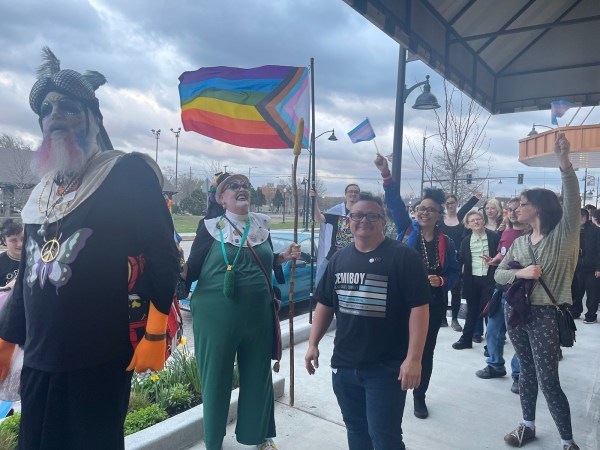
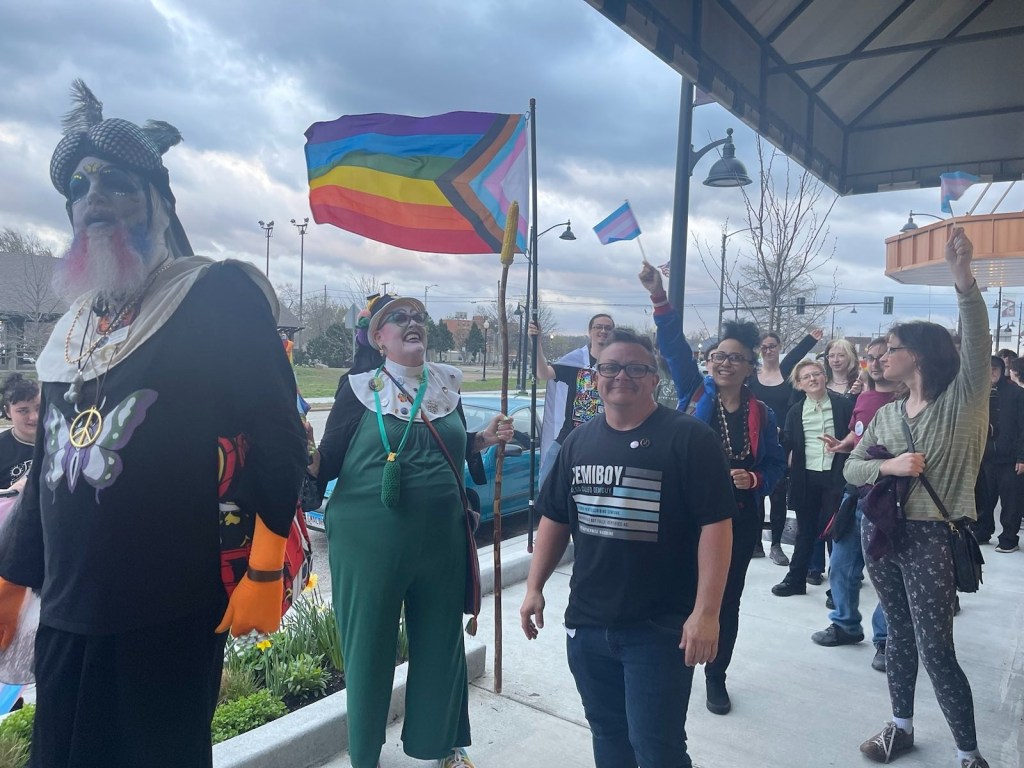
A group takes part in Transgender Day of Visibility and the Southern Illinois Trans Resource Fair in Carbondale on March 31, 2023. The Illinois town’s trans-welcoming reputation and resource groups like the Carbondale Assembly for Radical Equity have drawn transgender people from across the country, who are being forced to leave their home states due to anti-trans legislative policies and health care bans.
When the time came for Ellie Winter*, a 34-year-old transgender woman in a lesbian relationship, to leave Florida, she had to leave behind not just her bed but also a job she cherished, a close-knit circle of friends, and cherished memories.
Florida was where Ellie had met her fiancée, fallen in love, and become engaged. However, it was also where she experienced her worst fears of discrimination as a series of oppressive measures, collectively known as the “slate of hate,” were signed into law this spring. These included the infamous “Don’t Say Gay” bill, restrictions on healthcare and restroom access, attacks on gender and race education, and permission to discriminate in healthcare.
“I was especially concerned because I worked at a school, and with all the rhetoric and false accusations targeting queer individuals as pedophiles, I didn’t know whom I could trust,” Winter shared with Facing South. “Basically, I thought, ‘I’ve got to get out of here.'”
In June, Ellie and her partner left Florida with only their clothing, books, and guitars, and very little in their wallets or bank accounts. They embarked on a journey to Carbondale, Illinois, a place they had never visited before. While they were fleeing danger, they also felt they were moving toward a more welcoming and accepting environment. They had chosen the college town of Carbondale, with its 21,000 residents on the edge of the Shawnee National Forest, primarily because they knew that the Carbondale Assembly for Radical Equity (C.A.R.E.) would be there to welcome them with open arms.
For the founders of C.A.R.E., Cassandra Coffey, Carrie Vine, and Mattie Stearns, establishing the organization was a crucial response to the increasing persecution and injustice faced by LGBTQ+ individuals. “I’ve heard comrades in Texas and Florida say they’re digging in, they’re not leaving, it’s their home, and they’re going to fight,” Stearns told Facing South. “But if you’re someone who feels unsafe, get in touch with us. We focus on connecting people with communities to figure out where to go (or not go), where to rent or buy a house, or find jobs. And we can do that all day long.”
Currently, C.A.R.E. is assisting 16 “cases” through its subsidiary, Rainbow Refuge, primarily from Florida, with others coming from Texas, Oklahoma, and Tennessee, according to Carrie Vine, one of C.A.R.E.’s founders and volunteer case managers. Across the United States, states with bans on gender-affirming healthcare are disproportionately located in the South. Organizations like the Campaign for Southern Equality have established the “Southern Trans Youth Emergency Project,” a regional initiative in response to anti-trans healthcare bans in the South, which includes providing support to families with transgender children through emergency grants for travel expenses.
As the far-right intensifies its rhetoric around “parental rights,” organizers at C.A.R.E. anticipate a surge in demand for support. In preparation for further assaults on transgender rights, Carbondale City Council unanimously passed bodily autonomy and human rights ordinances during its July meeting. Clare Killman, a transgender city council member who initiated these ordinances, has described the city as “the last hope for a lot of people in any one direction.”
Self-help, mutual aid, and a spirit of resilience
Cassandra Coffey, a 40-year-old transgender woman who stands at an impressive 6 feet 6 inches, and whose voice remains deep despite years of transition and hormone replacement therapy, shared her experience with Facing South. She relocated to Carbondale from Indiana in 2015 and found it to be a haven.
“I used to live in a nice neighborhood in Evansville, and I could walk to the corner store and back wearing a dress without any issues. But if I ventured into the middle-class Christian, conservative neighborhood, my experience was different,” Coffey recounted. “In contrast, walking around presenting as femme in Carbondale feels safe.”
Carbondale’s reputation as a welcoming place for transgender individuals attracted Ellie Winter and her partner, who embarked on a 15-hour journey, fueled by energy drinks, to reach the town they had never visited before.
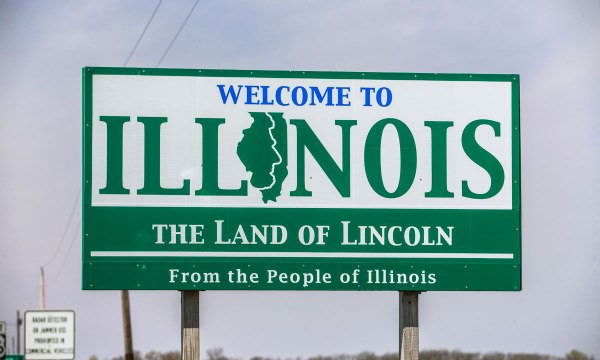
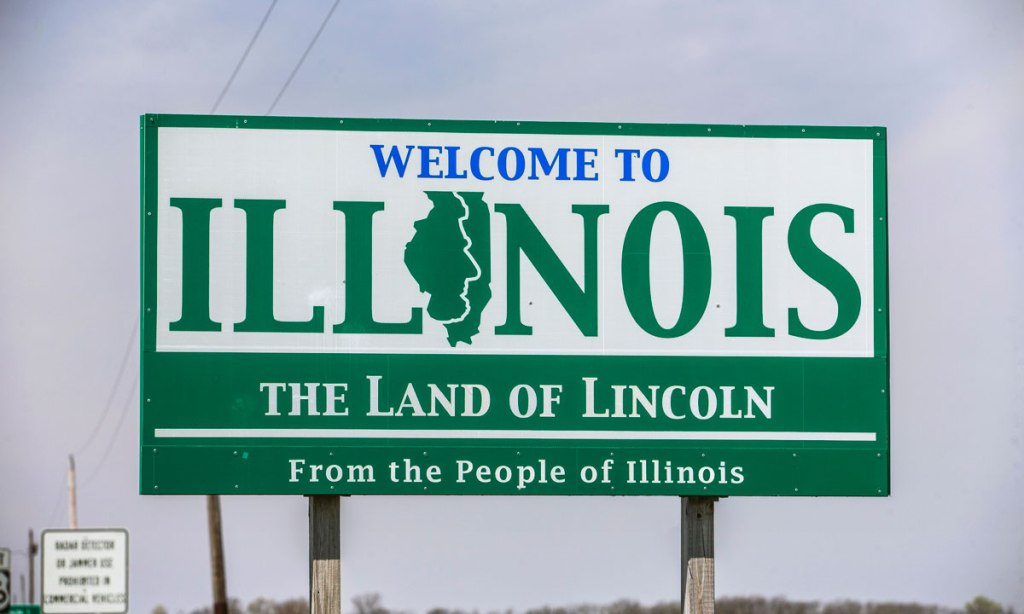
The first surge of emotion came when they crossed into Georgia. “I remember feeling so elated when we crossed the Florida border,” Winter said. The second surge of emotion occurred while driving through the Great Smoky Mountains, as her fiancée had never seen mountains before. The third surge came when they reached the “Welcome to Illinois” sign. “We screamed in relief, letting go of the anxiety, but also brimming with excitement about starting a new life here,” Winter explained.
Upon their arrival, they encountered what Winter described as “classic Midwestern hospitality” and, with the assistance of C.A.R.E., were able to secure housing, employment, and a sense of community. Once settled, Winter became actively involved, joining the welcoming committee at Rainbow Refuge. She expressed that she had never felt safer or more comfortable anywhere else.
Coffey, an experienced organizer in radical queer spaces, had foreseen a backlash against LGBTQ+ communities following the Supreme Court’s legalization of gay marriage in 2015. She described C.A.R.E.’s organizing as a collective effort. “We identified the need, pooled our resources, sought out individuals with relevant skills, and everyone worked together,” she explained during an interview on Locust Radio.
C.A.R.E.’s inaugural meeting in April 2023 was marked by a sense of urgency. Coffey had observed an acceleration of violent rhetoric in far-right online groups she had been monitoring for years. “They discussed seeing signs of genocide on a Holocaust Museum’s posts and would say, ‘Let’s escalate it further,'” she revealed.
Of the 30 people who attended C.A.R.E.’s first meeting, 26 remain “very active,” according to Coffey. They convene monthly at the Rainbow Cafe LGBTQ Center, with security being a top priority. Communication takes place over Signal’s encrypted platform, and only individuals personally met and vetted are allowed to join their Signal threads.
Since its inception, C.A.R.E. has hosted several successful events, including a music festival and art auction, a brunch and variety show, and several concerts, all aimed at raising funds for mutual aid. Now, they are looking to expand their efforts and hope to enlist the support of Chicago-based trans punk star Laura Jane Grace for Rainbow Refuge.
The group’s consistent but understated presence has led to unsolicited acts of generosity. For instance, Carbondale Starbucks Workers United organized a Drag Bingo event in June, donating the proceeds to C.A.R.E. A local grandmother of a trans teenager spontaneously wrote them a $500 check. On September 23, a touring troupe of performers named Fine and Bawdy Wenches plans to hold a pirate-themed pub crawl in honor of “Talk Like a Pirate Day,” with the proceeds benefiting Rainbow Refuge.
The time to help people is now
C.A.R.E. and Rainbow Refuge view their organizing efforts as a means of building community and keeping each other informed, while remaining responsive and avoiding organizational bureaucracy.
Coffey emphasized the importance of getting to know one another to form the foundation for community defense. “No invisible people. We have to establish lines of communication, do check-ins, educate the public about the issues, and the importance of taking action,” she said.
Mattie Stearns, who identifies as nonbinary, also adopts an inclusive approach in their work with C.A.R.E. and Rainbow Refuge. “Now is the time to help people,” Stearns told Facing South. “When you don’t know what to do, gather your friends and start figuring out what you can do. Then, someone else might say, ‘I can do something similar,’ and things start to grow and gain synergy.”
The group avoids rigid structures and prefers to act flexibly. According to Stearns, the essential question is: “If a transgender child approached you and said they felt unsafe, what would you do?”
For Kimberly Reynolds, a 39-year-old mother from Pensacola, Florida, with an 11-year-old transgender son named Joe, this question is not hypothetical.
“I know everyone obviously feels this way about their own child, but Joe is the light of our life,” Reynolds shared with Facing South.
“Unfortunately, Joe is an early bloomer, already developing a prominent chest at 11. My child is dealing with severe depression, which is heartbreaking,” Reynolds continued. “And now, they feel like their state is against them, their school is against them, that there’s no protection, and any of the teachers could use their deadname [previous name] at any time, which makes them even more self-conscious.”
When Reynolds discussed the option of staying or leaving with Joe, there was no hesitation. Joe immediately said, “Let’s get out of here.”
They hope to relocate to Carbondale by Christmas, although financial constraints have delayed their move. Reynolds gave birth seven months ago, and they also care for their 11-year-old nephew, who is likely to accompany them.
“We are living below the poverty level. Honestly, I’m not working because of the baby,” she explained. Childcare costs are prohibitive, and while her husband works in a bar and restaurant kitchen, he earns a modest salary. Nevertheless, they are determined, selling their possessions and starting a GoFundMe campaign to raise funds for their move to Illinois. An Associated Press report from June revealed that since the beginning of the year, individuals have contributed over $200,000 to GoFundMe campaigns started by transgender individuals seeking to leave Florida.
“Now that I’ve made this decision for the sake of my child, I’ve realized that Florida has been oppressive to me for a long time,” Reynolds reflected. “I hadn’t realized how much state policies can vary.”
In 2023, Illinois Governor J.B. Pritzker signed protections for gender-affirming care into law, alongside measures prohibiting library book bans and mandating the teaching of Native American history in public schools — all issues that hold significance for Reynolds.
However, Reynolds ultimately chose Carbondale because of a single factor: Carrie Vine, co-founder of C.A.R.E., and her deep love for the city. Vine has provided job leads to Reynolds’ husband, information about tuition at Southern.
Sanders: Some states have become hostile to teachers’ autonomy & rights and the very mission of education. Illinois protects them, and we’re hiring.
Teachers, has your state become hostile to your autonomy, your rights and the mission of education? If yes, I say: Come to Illinois. We’re hiring, and we’d love to have you.
Illinois leaders have taken deliberate action to ensure our schools respect the role of the teacher, our laws respect the rights of women and our curricula honor the contributions of Black, Indigenous and people of color and LGBTQ+ leaders to our nation’s collective history.
Illinois Gov. J.B. Pritzker recently signed legislation making Illinois the first state in the nation to outlaw book banning. Our state values your expertise as an educator and believes that engaging with challenging texts under your guidance ultimately prepares students for success navigating and understanding the world.
Here in Illinois, we do not shy away from our complex histories or identities. While Texas tries to ban discussions about race and Florida forbids teachers from “saying gay,” we have revised our social studies standards in the opposite direction. We encourage dialogue from multiple perspectives. We require schools to teach about the contributions of Asian Americans, Black Americans, Native Americans and LGBTQ+ Americans. We protect the freedom and professional judgment of educators to choose instructional materials that represent and affirm the diversity of Illinois’ students.
Illinois has charted a compassionate path to embrace children and educators of every background and identity and codified it into law, affording educators the professional freedom to do their best work.
According to the National Center for Education Statistics, women make up 77% of the teaching profession. While states across the nation have gone backward in the wake of Roe v. Wade, Illinois continues to trust women. Our lawmakers have codified reproductive rights, bodily autonomy, and access to contraception and abortion in state law.
Illinois requires insurers to cover gender-affirming health care medications at no cost to the consumer. We require schools to provide menstrual products in bathrooms. Illinois guarantees the availability of health care and a safe place to have a family.In Illinois, we are serious about our commitment to bolstering a diverse educator pipeline. We have state-supported affinity groups for teachers of color and statewide access to virtual mentoring and instructional coaching for all educators. We have full-tuition scholarships for students of color and bilingual students looking to join the profession. We have programs to help diverse educators gain access to administrative roles.
And thanks to strong collective bargaining rights, Illinois teachers receive commensurate pay for the increasingly critical role they play in our society. Illinois teachers are deservedly some of the highest-paid in the nation.
Last month, the governor signed a state budget committing $45 million a year for three years to support districts’ recruitment and retention initiatives, including incentives like signing bonuses or relocation support and reimbursement of fees for transferring teaching licenses to Illinois.
Illinois offers full license reciprocity to educators accredited in any other state, competitive pay and benefits, and career advancement.
Illinois’ commitment to the fundamental principles of public education — inclusion, equity and instructional rigor — pays off in student outcomes. U.S. News & World Report ranks Illinois sixth in the nation for pre-K-12 education, and we have 10 of the 50 best public high schools in America. Of the top 20 school districts in the nation, six are in Illinois, including the No. 1 and No. 2 spots. Thousands upon thousands of teachers have joined the profession in Illinois over the past five years.
We have made education our top priority as a state, increasing public school funding by billions over the past five years. We’re investing in a plan to offer universal access to preschool within the next four years. We rank first in the nation for growth in the percentage of high school graduates who scored a 3 or higher on Advanced Placement exams.
So, teachers, if you also want great schools for your children, come to Illinois. In Illinois, we welcome and embrace educators and families of all stars and stripes from across the country who are looking for a hospitable place to live and work. From towns nestled amid natural beauty, like Galena, Elsah and Marion, just outside Shawnee National Forest; to the college-town charm of cities like Bloomington and Champaign; to bustling and cosmopolitan Chicago; Illinois is proud to be a safe haven for your rights and your excellence as educators. Come to Illinois.
In recent years, an Illinois city has emerged as a haven for the LGBTQ community seeking affordable housing options. With its inclusive and supportive environment, the city has attracted individuals and families looking for a place where they can feel accepted and celebrated for who they are. The local community has worked to create safe spaces, organize events, and establish support networks, making it a welcoming destination for LGBTQ individuals seeking both a sense of community and affordable living. As this trend continues, the city’s reputation as an LGBTQ-friendly haven with affordable housing options is likely to grow, benefiting both its residents and the broader community.
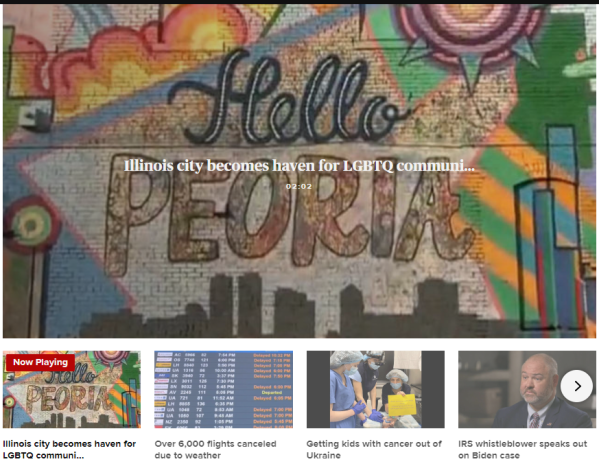
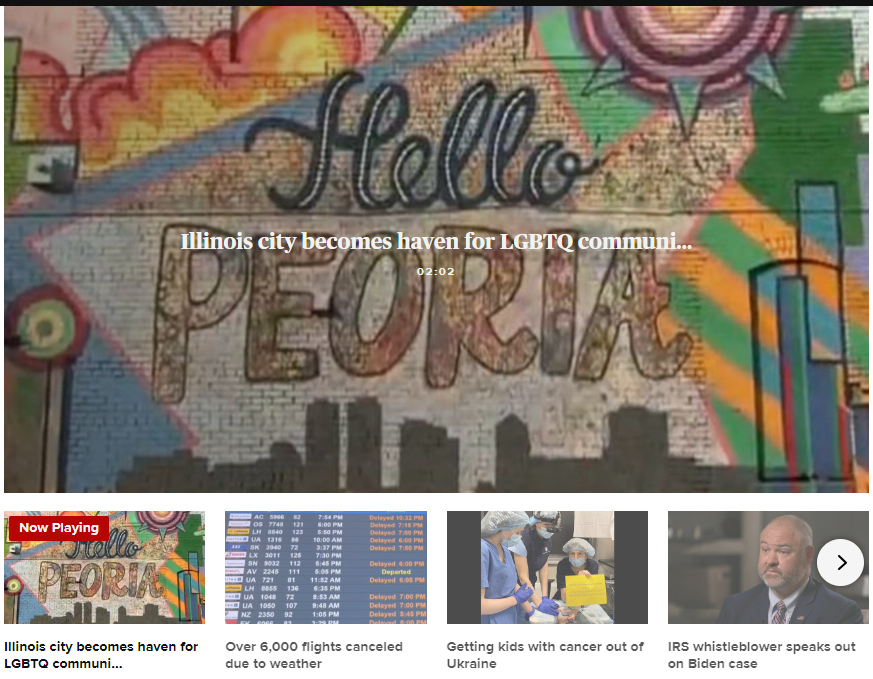
The dream of owning a home seems out of reach for millions of Americans, especially those in the LGBTQ+ community. But in Peoria, Illinois, Alex Martin owns a home at age 30 — something she never thought would be possible.
“I’m black. I’m trans, and I’m visibly so, and so having a space that, like, I made that I can just come in and recharge, I’m ready to face the world again,” she said.
And she’s not alone. In recent years, many LGBTQ+ people and people of color, who are statistically less likely to own homes because of discrimination and wealth gaps, are moving to the same city.
At first, they came from places like New York and Seattle, where home prices are sky-high. Now, many are coming from some of the 21 states that have passed anti-LGBTQ+ legislation.
Last year, realtor Mike Van Cleve sold almost 80 homes, and nearly one-third were sold to people moving from out of state.
Angie Ostaszewski says she has almost single-handedly grown Peoria’s population by about 360 in three years thanks to TikTok.
“When I first started making TikToks about Peoria, it was about ‘improve your quality of life,'” she said. “But in the last six months especially, people are relocating here more for survival, and that’s such a different conversation.”
Ostaszewski also said she would like for her posts to help spread the word even further.
“I love the idea of shaking up that big cities are the only places that LGBTQ+ people can thrive,” she said.
An Illinois city has emerged as a haven for the LGBTQ community seeking affordable housing options. With its welcoming atmosphere and relatively low cost of living, the city has become an attractive destination for LGBTQ individuals and families. By providing a safe and inclusive environment, the city is fostering a sense of belonging and promoting equality for all residents.
The dream of owning a home seems out of reach for millions of Americans, especially those in the LGBTQ+ community. But in Peoria, Illinois, Alex Martin owns a home at age 30 — something she never thought would be possible.
“I’m black. I’m trans, and I’m visibly so, and so having a space that, like, I made that I can just come in and recharge, I’m ready to face the world again,” she said.
And she’s not alone. In recent years, many LGBTQ+ people and people of color, who are statistically less likely to own homes because of discrimination and wealth gaps, are moving to the same city.
At first, they came from places like New York and Seattle, where home prices are sky-high. Now, many are coming from some of the 21 states that have passed anti-LGBTQ+ legislation.
Last year, realtor Mike Van Cleve sold almost 80 homes, and nearly one-third were sold to people moving from out of state.
Angie Ostaszewski says she has almost single-handedly grown Peoria’s population by about 360 in three years thanks to TikTok.
“When I first started making TikToks about Peoria, it was about ‘improve your quality of life,'” she said. “But in the last six months especially, people are relocating here more for survival, and that’s such a different conversation.”
Ostaszewski also said she would like for her posts to help spread the word even further.
“I love the idea of shaking up that big cities are the only places that LGBTQ+ people can thrive,” she said.
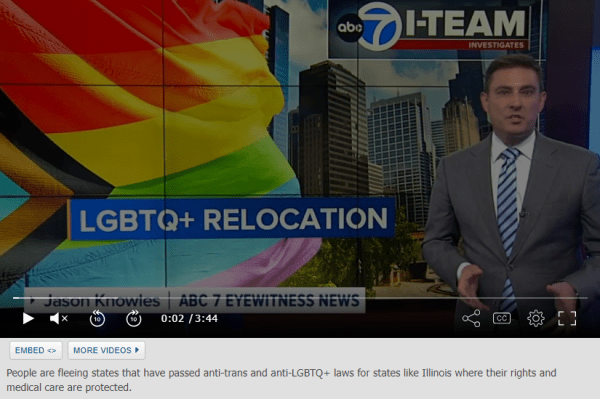
People are fleeing states that have passed anti-trans and anti-LGBTQ+ laws for states like Illinois where their rights and medical care are protected.
Illinois (WLS) — Some people are leaving states with anti-trans or anti-LGBTQ+ laws and relocating to LGBTQ+ friendly states like Illinois. They said it’s an issue of safety.
A realtor and some local organizations said they’ve seen an uptick in people looking to move to the Land of Lincoln to escape anti-LGBTQ+ legislation in other states. That includes one father who told the I-Team his family is moving to Illinois because he believes it will help ensure his son’s well-being and safety.
“As a parent, you have one job, love your kid. That’s your only job and your kids telling you something over and over and over again. If you love them. You believe them,” said Mark, who asked that his last name not be used.
His family is moving to Illinois for the sake of his 7-year-old son, who is transgender. To protect his son’s identity, Mark is using another name, Connor.
“Connor just wants to be a boy. And so, you know, we weren’t dismissive, but we were sort of quiet about it the first couple times Connor said this. And we would listen to him and say, you know, ‘We can deal with that later. You’re a little young.’ But it became sort of a common thing. Maybe once a month, that maybe once a week,” Mark said.
Illinois (WLS) — Some people are leaving states with anti-trans or anti-LGBTQ+ laws and relocating to LGBTQ+ friendly states like Illinois. They said it’s an issue of safety.
A realtor and some local organizations said they’ve seen an uptick in people looking to move to the Land of Lincoln to escape anti-LGBTQ+ legislation in other states. That includes one father who told the I-Team his family is moving to Illinois because he believes it will help ensure his son’s well-being and safety.
“As a parent, you have one job, love your kid. That’s your only job and your kids telling you something over and over and over again. If you love them. You believe them,” said Mark, who asked that his last name not be used.
His family is moving to Illinois for the sake of his 7-year-old son, who is transgender. To protect his son’s identity, Mark is using another name, Connor.
“Connor just wants to be a boy. And so, you know, we weren’t dismissive, but we were sort of quiet about it the first couple times Connor said this. And we would listen to him and say, you know, ‘We can deal with that later. You’re a little young.’ But it became sort of a common thing. Maybe once a month, that maybe once a week,” Mark said.
Mark and his wife and their son are leaving Kentucky and moving to the Chicago area due to anti-trans legislation recently passed there.
“The first concern is around teachers or other employees of the school being able to deadname my child or misgendering them,” he said. “Second concern is use of a bathroom. Either they’ll have to use the nurse’s bathroom or the bathroom that is not their gender, so that would out them. A third concern is around medication. So doctors in Kentucky will lose their license if they treat my son.”
Gender-affirming care for minors will also be banned in Kentucky by late June.
“So that means we have to travel across state lines to get medicine,” Mark said. “And my fourth concern is what law comes next. And what harsher penalties and loss of right will my son experience.”
Mark is working with realtor June Allen-Smith to find a home in the Chicago area.








 fleeredstates.blog
You must be logged in to post a comment.