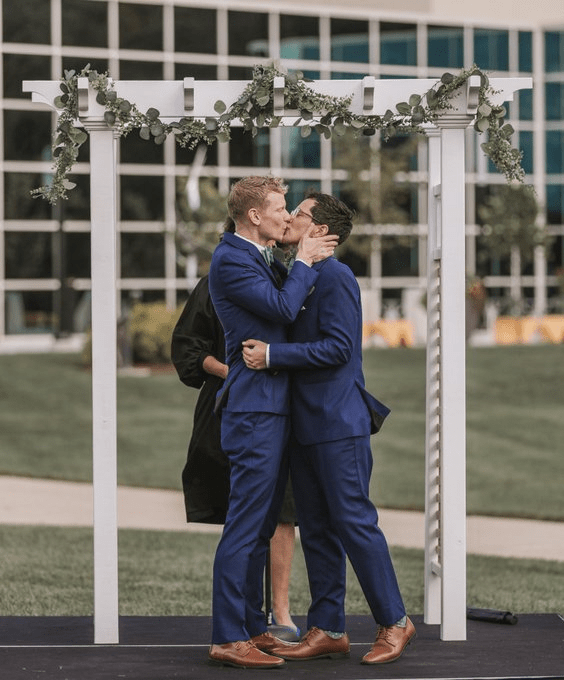
In a major win for LGBTQ+ rights, Thailand has become the first Southeast Asian country to legalize same-sex marriage.
The bill, passed by Parliament earlier this year, was signed into law by King Maha Vajiralongkorn on Tuesday through Royal Assent. The law will take effect in 120 days, with the first same-sex weddings anticipated in January.
Siritata Ninlapruek, an LGBTQ+ activist, expressed, “We are all delighted and excited. We’ve been fighting for our rights for over ten years, and now it’s finally happening.”
With this historic change, marriage laws in Thailand will no longer use gendered terms like “husband” and “wife,” replacing them with inclusive, gender-neutral terms like “partner.” Same-sex couples now enjoy the same legal rights as their heterosexual counterparts, including adoption and inheritance rights.
Waaddao Chumaporn, another LGBTQ+ rights advocate, told AFP, “The law is a monumental step towards equal rights in Thailand.”
Chumaporn is planning a mass wedding for over a thousand LGBTQ+ couples in Bangkok on January 22, the first day same-sex couples can legally marry.
Though Thailand is known for being more accepting of LGBTQ+ individuals compared to neighboring countries, the legalization of same-sex marriage comes after years of political challenges. LGBTQ+ advocates like Apiwat Apiwatsayree have been waiting for this moment for over a decade.
“We’ve been waiting for a long time,” said Apiwat, who plans to marry his partner of 17 years.
Human rights and LGBTQ+ organizations worldwide celebrated this achievement. Amnesty International’s Thailand Researcher, Chanatip Tatiyakaroonwong, remarked, “Thailand has taken a historic step towards becoming the first country in Southeast Asia to legalize marriage for LGBTI couples. This landmark moment is a reward for the tireless work of activists, civil society organizations, and lawmakers who have fought for this victory.”
Thai Prime Minister Srettha Thavisin made marriage equality a key issue during his tenure, driving the law forward.
Srettha shared on X, “Another important step for Thailand. The same-sex marriage law passes. Equality is concrete here in Thailand.”
For more updates on LGBTQ+ issues worldwide, subscribe to the LGBTQ Nation newsletter to stay informed about the latest headlines shaping LGBTQ+ communities globally.
A judge has overturned a state law that prohibited gender-affirming care in prisons and other settings.
On Tuesday, a federal judge issued a preliminary injunction halting an Idaho bill that banned gender-affirming care in state prisons. This decision allows incarcerated transgender individuals in Idaho to access hormone therapy once again.
In the ruling for Robinson v. Labrador, Judge David Nye of the U.S. District Court for the District of Idaho wrote, “Plaintiffs’ Motion for Temporary Restraining Order, Provisional Class Certification, and Preliminary Injunction is hereby GRANTED. The court certifies the protected class of all incarcerated persons in custody of the [Idaho Department of Corrections] who are, or will be diagnosed with Gender Dysphoria, and are receiving, or would receive hormone therapy. The Court enjoins enforcement of [H.B. 668]’s prohibition on the use of state funds for purposes of providing hormone therapy as against the class while this lawsuit is pending.”
H.B. 668, the bill in question, prohibited the use of public funds for any gender-affirming procedures, including hormone therapy and surgeries. Sponsored by Republican lawmakers in the House State Affairs Committee, the bill was signed into law in March of this year by Governor Brad Little (R).
The injunction applies only to the use of public funds for gender-affirming care in prisons and does not extend to non-incarcerated transgender individuals or gender-affirming surgeries.
In his ruling, Judge Nye supported the injunction by highlighting the plaintiffs’ strong arguments regarding the importance of gender-affirming care, the societal impact of such restrictions, and the consequences for transgender people across the state. Although he acknowledged areas where the plaintiffs’ case was lacking, he ultimately determined that the evidence justified the injunction.
Initially, Nye had denied the request to make the lawsuit a class action. However, after receiving data showing that 54 incarcerated individuals were receiving gender-affirming care and 70 had been diagnosed with gender dysphoria, he changed his stance.
The lawsuit involves two transgender women in prison, Katie Heredia and Rose Mills, both diagnosed with gender dysphoria and undergoing hormone replacement therapy. Their care was put at risk due to H.B. 668. The case was expanded into a class action lawsuit representing all known transgender prisoners in Idaho, with the ACLU of Idaho arguing that the ban constituted an Eighth Amendment violation.
The defendants in the case include Attorney General Raul Labrador, Governor Brad Little, Idaho Department of Corrections (IDOC) director Josh Tewalt, IDOC Chief of Staff Bree Derrick, and Centurion Health of Idaho.
Paul Carlos Southwick, legal director for the ACLU of Idaho, stated, “We are grateful that this class action lawsuit will protect the rights of both our plaintiffs and all incarcerated people diagnosed with gender dysphoria. People who are serving time have a right to access health care, adequate food, and housing conditions while in the state’s care, and we are grateful those rights were upheld today.”
LGBTQ Nation reached out to both the ACLU of Idaho and the Attorney General’s office for comment but had not received a response by the time of publication. This article will be updated as necessary.
The Detroit Regional LGBT Chamber of Commerce is leading the charge in what may be a decade-long initiative.
Detroit is working to establish an LGBTQ+ business district.
Back in the 1970s and ’80s, the city had around four dozen LGBTQ+ bars, but today, there are only eight queer spaces left, according to Kevin Heard, founder of the Detroit Regional LGBT Chamber of Commerce. As reported by Bridge Detroit, the city doesn’t have a distinct “gayborhood” like the ones in New York or Chicago.
Heard aims to change that. Earlier this year, the Detroit Regional LGBT Chamber of Commerce teamed up with the City of Detroit, LGBTQ+ research firm Community Marketing and Insights, and other organizations to create and distribute a survey. The goal is to identify which areas in the greater Detroit region are seen as the most LGBTQ+ friendly, where people want an LGBTQ+ business district, and what they envision it looking and feeling like.
“It’s a survey with multiple goals,” Heard explained. “The chamber will use it to prioritize resources in areas where many respondents live. Additionally, it will guide us toward phase two—focus groups—and phase three, which will involve selecting a site for the district.”
The survey, which launched in June, has already been completed by over 1,000 people, including 850 members of the Detroit metro LGBTQ+ community. It will close by Labor Day, after which the project will move into its next phase. Once focus groups are conducted, the chamber plans to hire a market analysis company to assist with site selection.
“They’ll assess open parcels or buildings and use survey data to guide the site choice,” Heard told Bridge Detroit. “When we narrow it down to the top three areas, we’ll launch a capital campaign to acquire property and lease it to new or existing LGBTQ-owned businesses or any business with a sustainable model that supports the LGBTQ+ community.”
Heard estimates the process of building the district could take up to a decade, but hopes the chamber can purchase its first piece of land by 2026.
He believes an LGBTQ+ business district would significantly boost Detroit’s economy. “A designated area where people know it’s safe for them, their families, and visitors will generate foot traffic and help sustain the neighborhood,” he said.
Beyond economic growth, Heard hopes the district will prevent people from leaving Detroit for more LGBTQ+ inclusive cities. “People want to be seen, heard, and valued, and they seek out those spaces. So why not create multiple spaces within Detroit?” he said. “We have one of the largest LGBTQ legislative caucuses in the country—it’s time we make this happen.”
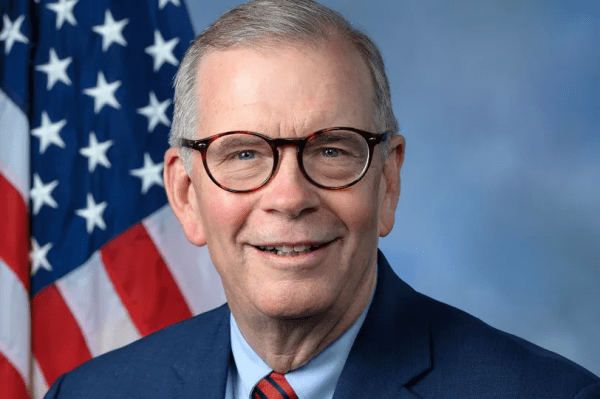
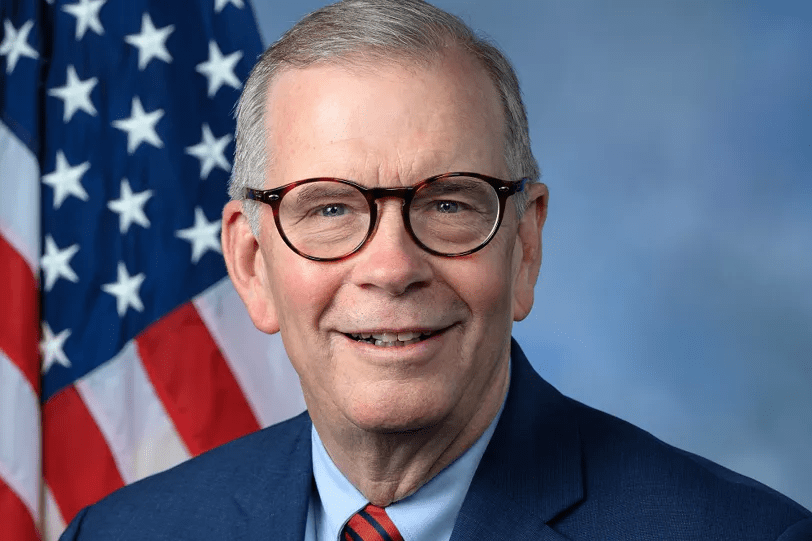
A House committee has advanced a controversial bill, H.R. 736, known as the “PROTECT Kids Act,” which would require schools to disclose transgender students’ identities to their parents if the students request to use different pronouns, a new name, or facilities aligned with their gender identity. The bill, introduced by Rep. Tim Walberg (R-MI) and Sen. Tim Scott (R-SC), would enforce this policy on all elementary and middle schools that receive federal funding, threatening to withhold funds from any school that does not comply.
Rep. Walberg, who has a history of supporting Uganda’s anti-LGBTQ+ laws, stated that parents should be informed of all decisions affecting their children. He argues that the bill would “safeguard parental rights by requiring parental consent and will help mitigate under-the-radar activism in our schools.” However, critics, including Rep. Mark Pocan (D-WI), chair of the Congressional Equality Caucus, have condemned the bill as an attack on transgender students, warning that it could put vulnerable kids at risk, particularly those without supportive families.
The bill passed the House Committee on Education and the Workforce with a 22-12 vote and will now proceed to the House floor for consideration. While it may pass the Republican-controlled House, it faces significant opposition in the Democratic Senate, and President Joe Biden is unlikely to sign it into law, as it contradicts his administration’s policies on LGBTQ+ rights.
Christopher Cole and his husband, longtime residents of the predominantly Republican and predominantly white town of Watertown, Connecticut, received a racist and homophobic letter last Friday afternoon. The letter, referencing their Democratic yard signs and the rainbow flag displayed in their front yard, was typed and anonymous. Later that same night, a group of men trespassed onto their property, stealing both the signs and the flag.
Although police say the perpetrators may never be caught, Cole—a vocal community activist—told LGBTQ Nation that he refuses to be intimidated. He and his husband have already replaced the stolen items and have been met with overwhelming support from the community, local news outlets, and even their congresswoman.
The letter, signed by someone identifying as “Americans that care,” specifically targeted the yard signs supporting the Democratic presidential ticket, Vice President Kamala Harris and Minnesota Gov. Tim Walz, as well as Black Congressional candidate Jahana Hayes. The entire hateful incident was caught on camera.
Related:
Vandals cowardly defaced a queer family’s Pride flag by urinating on it before fleeing the scene. The entire disturbing act was captured on camera.
The letter sent to Christopher Cole and his husband, signed by someone calling themselves “Americans that care,” specifically mentioned the Democratic yard signs they had displayed in support of Vice President Kamala Harris, Minnesota Gov. Tim Walz, and Black Congressional candidate Jahana Hayes.
“If you knew how goddamn foolish your rah-rah for Karmonkey and Tennessee Waltz look on your house, you’d take it down along with your Nobodywana Hayes sign and especially the Prideless flag on your front door you could use for toilet paper,” the letter said. “All I can think of you is you must be a Dumbocrat. So I feel sorry for you.”
Around 10:38 p.m., roughly seven hours after receiving a hateful letter, Christopher Cole’s security camera captured footage of a white individual wearing a dark hoodie and facemask vandalizing the rainbow flag that had flown from his home for the past 14 years. The person tore the flag down and fled, while the camera’s audio picked up the sound of him and other men shouting indistinctly.
Cole and his husband were awake in their home at the time but didn’t realize what had occurred until the following morning when Cole’s husband let their dog outside and discovered the missing flag and signs.
Cole shared images of the letter and video footage of the vandal on his Facebook page. By the next evening, he had replaced the stolen signs and flag, posting images of the new ones alongside a Bible verse from Matthew 5:39: “But I say to you: Do not resist an evildoer. But if anyone strikes you on the right cheek, turn the other also.”
“Even though we’re in Connecticut, this is a very red town, and there are Trump signs everywhere,” Cole told LGBTQ Nation. He noted that the flag had been flying for 14 years, though it had often attracted hostile reactions. People driving by would shout, “Are you f**king kidding me?” or “What the hell is wrong with you?” On one occasion, a truck driver revved its engine and spun its wheels near their yard, filling it with smoke, and during that incident, someone stole three of their signs.
Despite such incidents, Cole had dismissed these individuals as “immature, crazy people.” However, he found the racist, homophobic, and misogynistic language in the letter “really concerning.”
“It’s one thing to yell obscenities from the street, but to come onto someone’s property, rip down something that represents them, and steal their political signs is crossing a line. We felt violated, unsafe, and intimidated, so we called the police.”
Cole provided the authorities with the letter and security footage, but officers informed him that without further evidence, identifying the perpetrator would be difficult. Watertown Police Chief Joshua Bernegger told local news station WTNH that, “There’s no indication within the letter that it was motivated by hate or against any protected class of individual,” despite the clear threats.
In a statement, the Watertown Police Department emphasized, “We take this crime very seriously. No citizen should be subject to fear and intimidation tactics based on their political affiliation.”
Cole shared that, for the most part, the rainbow flag has inspired positive responses, including a crayon drawing from a six-year-old depicting Cole and his husband with the flag, and an eight-page letter from a 15-year-old high school student who wrote that seeing the flag every day gave her the courage to come out. Over the years, he has seen other rainbow flags appear in his neighborhood, inspired by his own.
In the wake of the vandalism, Cole and his husband were moved by the support from their community. Neighbors brought over replacement signs and banners, and their next-door neighbor even put up a larger Pride flag than the one that was torn down. Four news stations covered the incident, and Cole and his husband replaced the stolen signs with even bigger ones.
On Sunday morning, as news of the vandalism spread, Congresswoman Jahana Hayes, whose campaign sign had been in Cole’s yard, called him directly at 8:45 a.m. She expressed her support for Cole and his husband and apologized that their backing of her campaign had resulted in their home being targeted.
She joined Cole and his husband at their local church that morning, offering her admiration for their courage and refusal to be intimidated. Cole is active in the United Church of Christ, a progressive Christian church, where he has helped make the congregation more inclusive of LGBTQ+ people. The process was contentious, with some members leaving and others posting hateful comments on social media.
Cole also serves as the executive director of APNH (A Place to Nourish Your Health), an LGBTQ+-inclusive community health center in nearby New Haven that supports people affected by HIV, substance use, and mental health conditions. Having experienced severe bullying as a child, Cole refuses to back down now in the face of harassment.
“Especially in a very conservative town, I am committed to being an activist and speaking out. It makes a bigger impact here than in places like West Hollywood or the Upper West Side of Manhattan, where there are thousands of Pride flags. It’s a different story when you’re the only one flying a flag in a place like this, and the only church that does that.”
“I’m committed to not being silenced, to standing strong and shining light where there is darkness. In this political climate, where some think it’s okay to intimidate and spread hate, I won’t shrink back—and no one else should either.”
In 2022, before her indictment, she referred to Pete Buttigieg as a “weak little girl.”
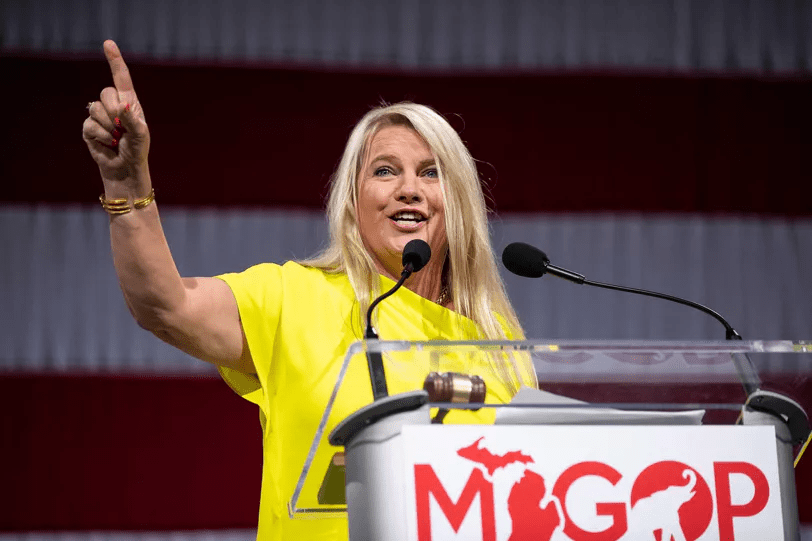
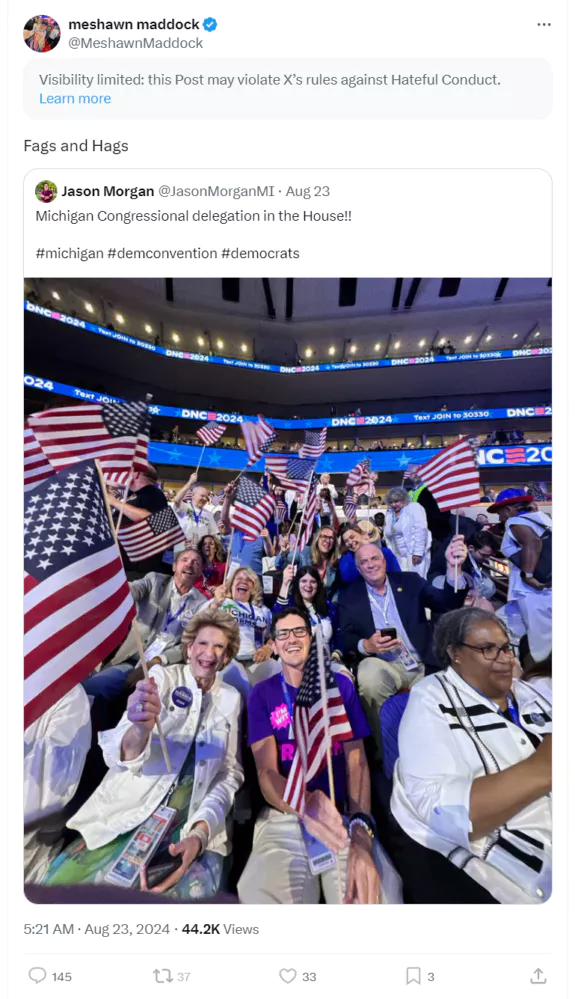
A former high-ranking state Republican official, indicted in an alleged conspiracy to overturn the 2020 election, used an anti-gay slur to insult a Democratic lawmaker. Meshawn Maddock, who led the Michigan Republican Party until her recent indictment for trying to shift Michigan’s electoral votes to Donald Trump instead of President Joe Biden, is now making offensive remarks on social media.
Maddock’s slur was in response to a post on X from Michigan state Rep. Jason Morgan (D), an openly gay lawmaker and vice chair of the state’s Democratic Party. Morgan had shared a picture of the Michigan congressional delegation at the DNC last Friday, where they were smiling and holding American flags.
Morgan responded by publicly calling her out in a thread.
“As a proud gay man who loves his husband, these hateful taunts don’t undermine my Pride, but to countless LGBTQ young people across the USA, hateful rhetoric can lead to depression and suicide,” he wrote. He followed up by sharing a photo from his wedding.
Maddock has a history of using homophobic slurs to attack LGBTQ+ politicians. In 2022, while still serving as chair of the Michigan Republican Party, she called Transportation Secretary Pete Buttigieg a “weak little girl” after learning that he and his husband, Chasten, were purchasing property in Michigan.
“If she wants to talk about little girls, Chasten and I are raising a little girl and a little boy. And we are raising them to have better values than the chairwoman,” Buttigieg responded when asked about her remarks. “The rest is politics.”
Maddock was indicted last year, alongside 15 other Trump supporters, for their role in a plot to help Trump secure the presidency. The plan involved falsifying a certificate claiming Trump had won Michigan and sending it to Congress in hopes of securing the state’s electoral votes for him.
The fake certificate falsely claimed that the 16 electoral voters had met in the Michigan Capitol on December 14, 2020, when in fact, the building was closed, and Biden’s electors had actually convened there.
Allegedly, phone records show Maddock communicating with coconspirators about the plot and how to keep it secret. She faced eight felony counts in the indictment. Maddock pled not guilty and opted not to seek another term as state party chair in February 2023.
Individuals attempting to change their gender will be entered into a database accessible by state Republicans.
According to KUT, transgender Texans can no longer update the gender marker on their state IDs, even if they have a court order or an amended birth certificate. The only exception is if the change is proven to be a clerical error. However, the Texas Department of Public Safety (DPS) stated that this rule is no longer in effect, and the relevant information was quietly removed from their website yesterday. A DPS spokesperson attributed the change to Texas Attorney General Ken Paxton (R).
“The Office of the Attorney General (OAG) has recently expressed concerns about the validity of court orders directing state agencies, including the DPS, to change the sex of individuals in government records like driver licenses and birth certificates,” the agency informed KUT.
“Neither DPS nor other government agencies are involved in the legal proceedings that result in these court orders, and the absence of legislative authority and evidentiary standards for courts to issue such orders has necessitated a thorough legal review by DPS and the OAG. Therefore, as of Aug. 20, 2024, DPS has stopped accepting these court orders as valid for changing sex identification in department records, including driver licenses,” the agency stated.
Ian Pittman, an attorney assisting trans Texans, told The Texas Tribune that this policy shift raises significant privacy concerns for transgender individuals, as they will now be forced to carry IDs that don’t reflect their gender. This mismatch can result in discrimination, harassment, violence, and barriers to accessing services that require identification.
The DPS now officially documents and scans any birth certificate changes or court orders related to gender markers but does not use them to process updates. “This policy effectively puts people on a list that could interfere with their health care,” Pittman said, urging trans Texans not to submit court orders to the DPS.
The change comes amid broader efforts in states like Florida and Kansas to block transgender individuals from altering ID markers, alongside numerous anti-LGBTQ actions by Texas Attorney General Ken Paxton and Governor Greg Abbott (R). Two years ago, Paxton directed DPS employees to create a list of individuals who had requested gender marker changes.
“Texans will now be subject to involuntary surveillance simply for trying to update a government document,” said Brad Pritchett, interim CEO of Equality Texas. “There is no clear rationale for why DPS would need this information, nor a valid reason to deny gender marker updates on driver’s licenses.”
Correction: This article has been updated to clarify that Audrey Louis’s district does not encompass Bexar County.
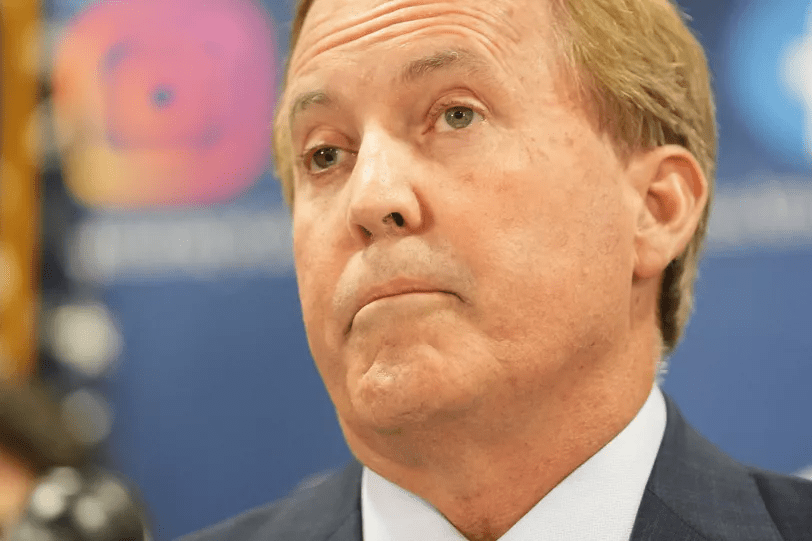
Texas Attorney General Ken Paxton’s (R) office carried out search warrants in one of the state’s largest urban counties, a major Democratic stronghold, alleging incidents of vote tampering.
On Tuesday, the Texas Attorney General’s office conducted searches in Bexar County, the fourth most populous county in the state and home to San Antonio.
The searches followed a two-year investigation, with the office stating that “secure elections are the cornerstone of our republic.”
This action is part of a broader effort by Paxton to pursue election fraud cases, an initiative that spent $2.3 million in 2023 to prosecute just four cases, according to the Houston Chronicle.
“We are completely committed to protecting the security of the ballot box and the integrity of every legal vote. This means ensuring accountability for anyone committing election crimes,” Paxton said in a statement.
The case was referred by state District Attorney Audrey Louis, a conservative Republican whose district borders Bexar County.
Louis made the referral in 2022, following a 2021 ruling by the Court of Criminal Appeals (CCA), which determined that Paxton could not independently investigate election crimes. The ruling required him to work with local district attorneys in such cases, a decision that led Paxton to encourage his supporters to inundate the court with calls.
“The CCA’s shameful decision means local DAs with radical liberal views have the sole power to prosecute election fraud in Texas — which they will never do,” Paxton wrote at the time.
Audrey Louis, a conservative Republican, unseated Democratic incumbent René Peña, her former boss, in 2016. Peña had fired her just hours after she announced her candidacy.
While Louis’s jurisdiction includes the less populous Frio and Atascosa counties, Bexar County is not part of her district.
The attorney general’s office has declined to provide further details on the ongoing investigation, which unfolds amid unexpectedly close national races for both president and Congress in Texas, following Paxton’s previous efforts to challenge the 2020 election results.
While polling shows former President Trump, a Paxton ally and the Republican presidential nominee, maintaining a lead in Texas, Democrats are closing the gap. A recent ActiVote poll showed Vice President Harris trailing by 6.6 points — a smaller margin compared to Trump’s 2020 victory over Joe Biden.
Similarly, in the Senate race between Rep. Colin Allred (D-Texas) and Sen. Ted Cruz (R), The Hill/Decision Desk HQ tracker shows a similar gap, though polling from two Texas universities in July found the race to be as close as 3 points.
In 2020, Biden won Bexar County, home to 2 million voters, by an 18-point margin, while Trump dominated rural Atascosa and Frio counties — the latter seeing a 21-point shift toward Republicans, reflecting a broader trend of some Texas Latino voters moving toward the GOP.
Paxton played a key role in Republican efforts to overturn Biden’s victory, spending years advancing false claims that the election was stolen. In December 2020, he filed a lawsuit against four battleground states that Biden had won, arguing that their “failure to abide by the rule of law casts a dark shadow of doubt over the outcome of the entire election.”
The conservative-majority Supreme Court dismissed Paxton’s lawsuit just three days after it was filed. Additionally, the Texas State Bar has moved to discipline Paxton, with a Bar disciplinary committee labeling the lawsuit “dishonest.”
Despite Paxton’s objections, a state appellate court ruled in April that the Texas Bar could discipline him for his lawsuit challenging the 2020 election results. In response, Paxton appealed the decision in June to the state Supreme Court, accusing the appellate court of engaging in “politically motivated lawfare” against him.
In his filing, Paxton urged the state’s high court “to intervene to prevent the State Bar’s continued abuse of the legal system.”
But was the diversity committee merely a façade from the start?
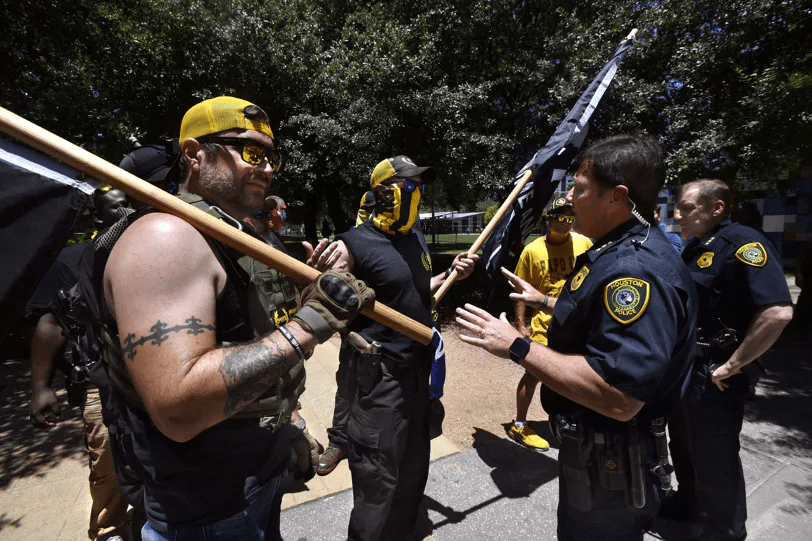
When the municipal government of Frisco, Texas, issued its first-ever Pride declaration in June 2022, the moment garnered attention for an unexpected reason: it attracted the Proud Boys.
The far-right extremist group, known for its violent opposition to LGBTQ+ expression—particularly drag shows and Pride events—targeted the occasion. In Frisco, members of the Proud Boys harassed a prominent organizer, following him and other supporters to a celebratory gathering at a local restaurant after the proclamation.
Justin Culpepper, 36, co-founder of the nonprofit Pride Frisco alongside his spouse, recounted that the Proud Boys had threatened to physically assault him. “I went into the restaurant, and the people who worked there protected me,” he recalled.
Jon Culpepper, 45, described the event as “traumatic,” but Justin Culpepper has been reluctant to discuss it with the media, fearing that it would give undue attention to the extremists. Instead, Justin reserved most of his criticism for the lack of response from the police and city government. He told LGBTQ Nation, “When you bring these concerns to the city council and the police chief, the reaction is to erase LGBTQ people or minimize our existence to avoid provoking the Proud Boys, rather than asking, ‘Why the f**k do we have Proud Boys in our city, and what are we doing about it?’”
He continued, “Why hasn’t the mayor or city council denounced these people or their actions? Even if they don’t, why not elevate positive things, like a Pride proclamation?”
In contrast to other communities that have responded to far-right group incursions with condemnation and displays of unity, Frisco has taken a different path. Since the incident, not only has the city government refused to officially acknowledge Pride again, but they have also dismantled much of their previous diversity initiative. According to the Culpeppers, the city only supported them when it was politically convenient. Now, under pressure from Texas Republicans and following a broader national trend, Frisco’s leaders appear to be sweeping the LGBTQ+ community under the rug.
“When it comes to LGBTQ people, Frisco politicians act like we have cooties,” Justin remarked. “They don’t want to be seen with us in public or be on record supporting our positions, out of fear it’ll be used against them.”
Part of the Dallas-Fort Worth metroplex, Frisco has grown to over 200,000 residents, often ranking as one of the fastest-growing cities in the U.S. Pride Frisco, which hosted its first annual Pride event in 2022, has garnered around 5,000 supporters from the region, reflecting the area’s increasing diversity. The Culpeppers moved to Frisco in 2018 and founded Pride Frisco three years later. In addition to their LGBTQ+ advocacy, the couple runs a real estate brokerage and property management business. Jon is a licensed real estate broker and co-owner of an IT software consulting firm.
The Culpeppers explained that Pride Frisco offers crucial support to LGBTQ+ individuals who may not have easy access to Dallas’s urban core. Since its inception, the organization has focused on providing regular events that go beyond the annual Pride celebration, including gender marker and name change clinics for transgender residents. Their long-term goal is to persuade Frisco to help establish a physical LGBTQ+ resource center.
“We look at the unmet needs of the community,” Justin said, emphasizing the importance of education for those new to LGBTQ+ life. “The fundamental thing you need is good information, because that empowers decision-makers.”
Despite Pride Frisco’s rapid growth, official recognition from Frisco’s government has been inconsistent, and at times, even misleading.
In 2020, Mayor Jeff Cheney launched the Mayor’s Inclusion Committee, eventually inviting Justin to join. Like many cities eager to show their commitment to diversity, equity, and inclusion (DEI) after nationwide civil rights protests, Frisco’s initial enthusiasm was short-lived. The Inclusion Committee was soon plagued by internal disputes, and when Justin suggested supporting DEI initiatives in Frisco’s public schools, he was told to “keep the chat focused on Frisco Inclusion work.”
According to Jon, the committee lacked real power and was merely a tool for the city to display its commitment to diversity when convenient. For instance, the Inclusion Committee was listed in the region’s successful 2022 bid to host FIFA Soccer for the 2026 World Cup.
“They used the committee to show they were working on diversity,” Jon said, “but now they’re quietly trying to get rid of it.”
By 2023, the city’s token support for diversity, including the Pride proclamation, was fading, especially as DEI initiatives faced mounting pressure from Texas Republicans. When Pride Frisco applied for another proclamation in 2023, the city cited a new rule preventing repeat proclamations within the same year. In 2024, procedural excuses were used again to deny the proclamation, even though the city continues to recognize events like Bicycle Month and Garden Week annually.
A public information request revealed the Inclusion Committee had no formal meeting minutes or complete list of members, leading many to believe the committee was never officially recognized by the Frisco City Council. It existed only as a façade, disappearing after the Proud Boys march in the city.
“We’ve seen this across the country,” said Callie Butcher, a Dallas-based attorney involved in LGBTQ+ rights cases. “There’s a political movement against diversity, equity, and inclusion, often targeting equity.”
This trend extends beyond Texas. Other cities, like Rowlett, have faced similar battles over DEI commissions, and the issue has become part of a larger national attack on DEI efforts, led by Republican lawmakers. Texas recently passed S.B. 17, banning DEI offices at state-run universities, echoing similar legislation in states like Florida and North Carolina.
Sarah Kate Ellis, CEO and President of GLAAD, highlighted the damaging impact of such efforts. “Instead of erasing our efforts, they should be uplifted,” she said. “Frisco is not only erasing DEI initiatives but ignoring the contributions of local LGBTQ organizers.”
While Texas’ new law doesn’t directly affect city-run DEI committees, it has created an environment where city governments feel pressured to distance themselves from anything resembling DEI.
In May 2023, Frisco City Council replaced the Inclusion Committee with a new Frisco Multicultural Committee, under the arts department. The proclamation for this new committee made no mention of the LGBTQ+ community, raising further concerns.
Despite this, Pride Frisco remains committed to advocating for an LGBTQ+ community center and is preparing for the next Pride festival at Frisco’s Toyota Stadium on October 6.
New Hampshire recently passed a series of anti-trans laws, and now the community is pushing back.
Last Friday, two New Hampshire teenagers, both soccer players who have identified as girls since childhood, filed a lawsuit against the state challenging its transgender sports ban. With support from the ACLU, the lawsuit argues that the ban violates the Equal Protection Clause of the Fourteenth Amendment and Title IX, a 1972 amendment ensuring equal opportunities in education based on sex.
The lawsuit further states that the plaintiffs are seeking a restraining order against the defendants, along with a request for a temporary injunction on the bill, to allow the girls to return to playing sports while the case is being decided.
Chris Erchull, senior staff attorney with GLBTQ Legal Advocates & Defenders (GLAD), emphasized in a statement, “Sports are a crucial part of education in New Hampshire public schools, offering numerous benefits such as physical and mental health, leadership development, and social growth. The state cannot justify excluding transgender girls and denying them these important educational opportunities available to other students.”
H.B. 1205, signed into law last month by Gov. Chris Sununu (R), prohibits transgender girls from participating on girls’ sports teams throughout high school. The bill was enacted alongside two other anti-trans laws, while a fourth bill aimed at overturning the state’s anti-discrimination protections for trans individuals was vetoed by the governor.
The lawsuit names the Commissioner of the New Hampshire Department of Education, members of the New Hampshire Board of Education, and the girls’ high school school board as defendants. The plaintiffs are represented by Chris Erchull and Ben Klein from GLAD, Henry Klementowicz and Gilles Bissonnette from the ACLU of New Hampshire, and Louis Lobel, Kevin DeJong, and Elaine Blais from Goodwin.
Henry Klementowicz, Deputy Legal Director of the ACLU of New Hampshire, stated, “H.B. 1205 discriminates against and stigmatizes transgender girls, sending the message that they are unworthy of the same educational opportunities as other girls. All students thrive when they have access to resources that support their mental, emotional, and physical well-being, and transgender girls deserve the same access.”











 fleeredstates.blog
You must be logged in to post a comment.