Wisconsin Governor Vetoes Legislation Affecting Medical Care for Transgender Youth, Reiterates Support for Transgender Youth

This blog originally appeared at Human Rights Campaign.

Gov. Evers Makes Good on Promise to Stand With LGBTQ+ Youth, Fight for Equality


MADISON, WI — Today, the Human Rights Campaign (HRC), the nation’s largest LGBTQ+ civil rights organization, commended Wisconsin Gov. Tony Evers for vetoing AB465, legislation perceived as anti-LGBTQ+ and designed to limit healthcare options for transgender youth. Governor Evers’ veto aligns with his public pledge to uphold equality in the state and shield LGBTQ+ young individuals from discriminatory far-right policies.

Wendy Strout, HRC’s Wisconsin State Director, issued the subsequent statement:

“We appreciate Governor Evers, a crucial ally in Wisconsin’s equality struggle, for vetoing this divisive bill. It’s not a politician’s role to dictate medical decisions for constituents. That choice is exclusively between providers and families—end of story.”


In October, Governor Evers reaffirmed his support for LGBTQ+ youth on social media:


“I want LGBTQ folks, including our trans kids, to know they are welcome, wanted, and belong here in Wisconsin, and I will keep fighting every day to continue our work to build a state where they feel safe, supported, and loved being exactly who they are.”

AB465 would have compelled state medical boards to revoke the medical licenses of healthcare professionals offering life-saving, medically necessary healthcare to transgender youth. Despite transgender youth constituting a small percentage of the youth population, the care they receive is rooted in decades of clinical research and is endorsed by every major medical association in the US, representing over 1.3 million doctors.


Governor Evers’ rejection of the anti-LGBTQ+ legislation is the most recent instance of pro-equality leaders acting to safeguard LGBTQ+ individuals. In neighboring Michigan, the pro-equality majority in the state legislature extended current civil rights laws to ensure nondiscrimination protections for the LGBTQ+ community, signed into law by Governor Gretchen Whitmer. Similarly, in Arizona, Governor Katie Hobbs vetoed several anti-LGBTQ+ bills, including one targeting transgender individuals, pledging to veto any legislation aiming to harm children.

Non-medical politicians are overstepping by intruding on the rights of parents of transgender youth. No parent should face a situation where their chosen course of action, backed by their doctor and supported by the majority of medical experts, is forbidden by the government. This interference occurs when politicians attempt to prohibit best-practice healthcare.

THE FACTS: Gender-Affirming Care


Every reputable medical organization, representing over 1.3 million doctors in the United States, advocates for age-appropriate gender-affirming care for transgender and non-binary individuals.“Transition-related” or “gender-affirming” care varies for each transgender and non-binary individual. Decisions are collaboratively made by parents, their children, and doctors. No medical interventions with permanent consequences occur until a transgender person is old enough to provide fully informed consent.

This is the reason why majorities of Americans are against criminalizing or prohibiting gender-affirming care.Recent national surveys reveal that majorities of Americans, totaling 54% in the NPR/Marist survey conducted on 3/20-23, 2023, and 53% in the Grinnell College National Survey conducted on 3/14-19, 2023, oppose “criminalizing” or “banning” gender transition-related medical care for minors. The opposition is primarily driven by Democrats and Independents, indicating that support for such bans could pose risks in a general election context.


Gender transition is a personal journey encompassing changes such as wardrobe, names, and hairstyles to align with an individual’s gender identity. Individuals have the autonomy to decide whether to use medications or undergo surgeries as part of their gender transition. The process is a personal choice made in consultation with family and healthcare professionals. Therapists, parents, and healthcare providers collaborate to determine the most appropriate changes for a child’s well-being. For many young children, gender-affirming care is primarily social in nature.

  • New name
  • New hairstyle
  • New clothing
  • None of this care is irreversible.

Transgender identity is not a recent phenomenon. While the media may portray transgender issues more prominently nowadays, being transgender is not a recent development. Transgender individuals have always existed, and their experiences persist irrespective of legislative measures. It’s important to note that the vast majority of transgender individuals remain consistent in their identity over time.

All forms of gender-affirming care are tailored to the individual’s age, deemed medically necessary, endorsed by major medical associations, and determined collaboratively with medical, mental health experts, and parents. In numerous instances, this care proves to be life-saving. Recent research from the Trevor Project offers compelling data — transgender youth with access to gender-affirming hormone therapy experience reduced rates of depression and a lower risk of suicide.

For additional information, kindly visit hrc.org/transgender, along with these additional resources:
Kate Cox: Texas Supreme Court Cancels Abortion Exception

This blog originally appeared at BBC News.

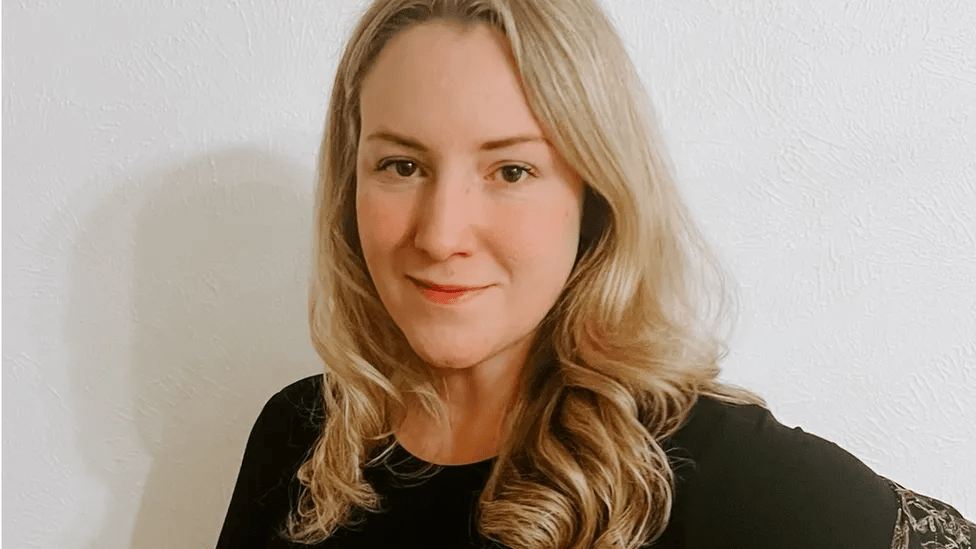
The Texas Supreme Court has denied a woman’s request for an abortion in the case of her high-risk pregnancy, following her attorneys’ announcement that she was leaving the state for the procedure.

Kate Cox, 31, had pursued an abortion due to a fatal fetal condition jeopardizing her fertility, as diagnosed by doctors.

A lower court had granted an exception, but this decision was overturned on Monday.

Texas enforces one of the most stringent abortion bans in the nation.

Texas’s comprehensive abortion bans restrict the procedure from the moment of conception, allowing exceptions only in limited circumstances where the life of the pregnant woman is in imminent danger. Critics of the law contend that the exception is overly ambiguous and jeopardizes women’s health.

In a concise seven-page ruling, the Texas Supreme Court determined that the doctor attending to Ms. Cox had not sufficiently demonstrated that her safety was imperiled by a “life-threatening physical condition,” a prerequisite mandated by the law.

“The justices emphasized that these laws reflect the policy choices made by the Legislature, and it is incumbent upon the courts to respect and uphold those choices,” they stated.

“This case marked the first instance of a woman seeking court permission for an abortion since the US Supreme Court overturned Roe v. Wade last year, granting individual states the authority to regulate abortion access,” legal experts noted.

Ms. Cox, a mother of two residing in the Dallas area, pursued an abortion due to her fetus being diagnosed with Trisomy 18, a chromosomal disorder often resulting in miscarriage, stillbirth, or infant mortality within the first year. Her physicians warned that proceeding with the pregnancy could pose a threat to her future fertility.

As per Ms. Cox’s legal documents, healthcare providers declined to conduct an abortion, citing restrictions tied to the presence of a fetal heartbeat.

She received a special dispensation from a Texas judge on Thursday. However, Texas Attorney General Ken Paxton promptly warned of potential criminal charges against any medical professionals who assisted her in obtaining the abortion.

He also petitioned the state’s Supreme Court, comprised entirely of Republicans, to step in. The court granted the request, temporarily preventing Ms. Cox from undergoing an abortion while it examined the case.

On Monday, attorneys representing Ms. Cox disclosed that she had departed Texas to seek an abortion beyond the state’s borders. No statewide law in Texas prohibits travel outside the state for an abortion.

“This week of legal uncertainty has been incredibly difficult for Kate,” stated Nancy Northup, president of the Center for Reproductive Rights, the pro-choice organization representing Ms. Cox. “Her health is in jeopardy, and after being in and out of the emergency room, she could not afford to wait any longer.”

Only a few hours after Ms. Cox’s legal team’s announcement, the state Supreme Court declared a verdict against her.

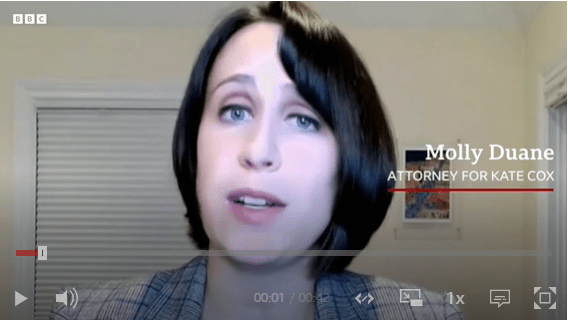
Watch: Lawyer for Kate Cox speaks on Texas abortion ruling

President Joe Biden remarked on Ms. Cox’s case on Tuesday, stating, “This should never happen in America.”

“Legal and medical chaos, as we are witnessing in states like Texas, Kentucky, and Arizona, is a direct result of Roe v. Wade being overturned, and as we predicted would happen, women’s health and lives now hang in the balance,” he added.

Speaking to the BBC on Monday, Molly Duane, a lawyer for the Center, called the Supreme Court’s ruling “stunning.”

“Politicians like to tout medical exceptions as being reasonable and available, as Kate’s experience shows they simply don’t exist in practice,” she said.

The Texas Supreme Court is currently considering another abortion case related to the state’s health exception, also led by Ms Duane and the Center for Reproductive Rights. Twenty-two plaintiffs, including doctors and women denied abortions in the state, have sued to clarify the existing state bans, stating that the medical exception is dangerously unclear.

The near-total bans have left physicians “terrified” to use their medical judgment over fear of harsh penalties, Ms Duane told the court last month. Doctors who perform abortions in Texas could risk life in prison, loss of their medical license, and hundreds of thousands of dollars in fines.

A lawyer representing the attorney general, Beth Klusmann, argued that existing standards permitted physicians to exercise “reasonable” medical judgment.

Trump’s Contemplation of the Insurrection Act

This blog originally appeared at Brennan Center For Justice.

Reform is Imperative to Counter Potential for Second Trump Term


In a potential second term, Donald Trump signals a departure from conventional governance, alluding to actions such as suspending the Constitution, constructing extensive deportation facilities, politicizing the Department of Justice, and widespread termination of career civil servants.

An overlooked aspect: reports suggest that on his inaugural day, he intends to employ the Insurrection Act, granting the president the authority to deploy the military for domestic law enforcement purposes.


In 2020, Trump orchestrated a chaotic insurrection. The concern now is that if faced with protests, he might use the law as a means to suppress dissent and consolidate power. It brings to mind the “Reichstag moment” reportedly feared by General Mark Milley three years ago.


Similar to the Electoral Count Act, another outdated and poorly drafted law that Trump sought to manipulate, the Insurrection Act was crafted for a different era and is in dire need of reform, as highlighted by my colleague Joseph Nunn.

There’s a rich historical backdrop to consider. In the 19th century, the military played diverse domestic roles: from oppressing Native American tribes on the frontier and apprehending escaped slaves to securing the voting rights of Black men and suppressing the Ku Klux Klan. Its role was intricate in a complex century.

In 1878, Congress intervened by forbidding the president from deploying federal troops to enforce civilian law in most situations. The Insurrection Act, dating back to 1792, was preserved as an exception to this restriction.

The legislation serves as a prime example of how not to draft significant laws. Essential terms such as “insurrection” and “rebellion” remain undefined. The language is archaic, leaving modern Americans uncertain about its precise meaning. When the law underwent revisions, they tended to enhance presidential power rather than limit it. Courts have interpreted it to bestow upon the president exclusive and unreviewable authority in determining whether the conditions for deploying the military have been satisfied.


A notable absence of checks and balances characterizes the situation. Consequently, we depend on the discernment and good intentions of a solitary individual to maintain the crucial barrier between military operations and domestic law enforcement.


Twice during his presidency, Trump purportedly contemplated invoking the Insurrection Act — initially to suppress Black Lives Matter protests and subsequently to cling to power following his electoral defeat.

The Brennan Center has suggested crucial reforms to the Insurrection Act. Congress should provide clear definitions for the law’s essential terms. Increased oversight by legislators and judges is necessary for the president’s implementation of the law. These reforms are sensible and non-partisan, and Congress has the capability to implement them promptly.

The scheduled board meeting of the Central Florida Tourism Oversight District for December 13th has been called off.

This blog originally appeared at WDW Magic.

The Central Florida Tourism Oversight District (CFTOD) has not provided a reason for the cancellation of the December 13th meeting. This decision coincides with a tumultuous period for the board of supervisors, appointed by Ron DeSantis.

Supervisor Bridget Ziegler’s standing on the board is uncertain due to abuse allegations against her husband, Christian Ziegler. Bridget Ziegler, known for her association with Florida Governor Ron DeSantis’ “Don’t Say Gay” bill, has faced criticism for her anti-LGBTQ+ stance despite alleged personal involvement with a woman alongside her husband. Calls for the Zieglers to exit Florida politics are increasing, raising questions about Bridget Ziegler’s status at CFTOD. As of now, the CFTOD website indicates her position on the board is in place until 2/26/25.

This week initiates court hearings in Disney’s legal action against Florida Governor Ron DeSantis and the Central Florida Tourism Oversight District board.

Disney contends in its federal lawsuit that there is a “deliberate government-backed campaign of retaliation, orchestrated at every level by Governor DeSantis as reprisal for Disney’s protected speech. This campaign poses a threat to Disney’s business operations, imperils its economic prospects in the area, and infringes upon its constitutional rights.”

Ron DeSantis and the CFTOD submitted a motion to dismiss the case, scheduled for a hearing on December 12, a day before the recently canceled December 13 board meeting.

A Florida mother expresses concern that her family may face severe consequences as the trial on the ban on trans health care commences.

This blog originally appeared at AP News.


The mother of a transgender girl broke into tears in federal court on Wednesday, fearing she might have to relocate away from her Navy officer husband to access healthcare for her 12-year-old if Florida’s ban on gender dysphoria treatments for minors is implemented.

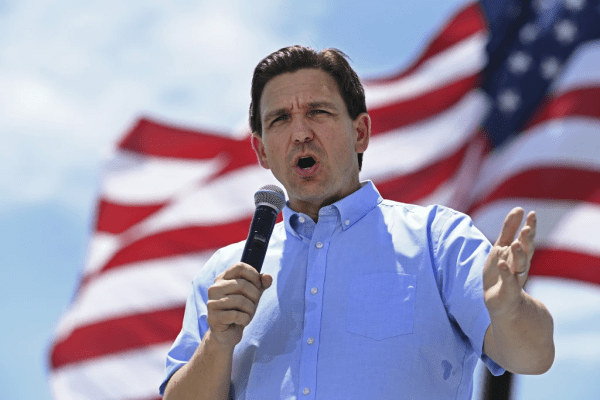
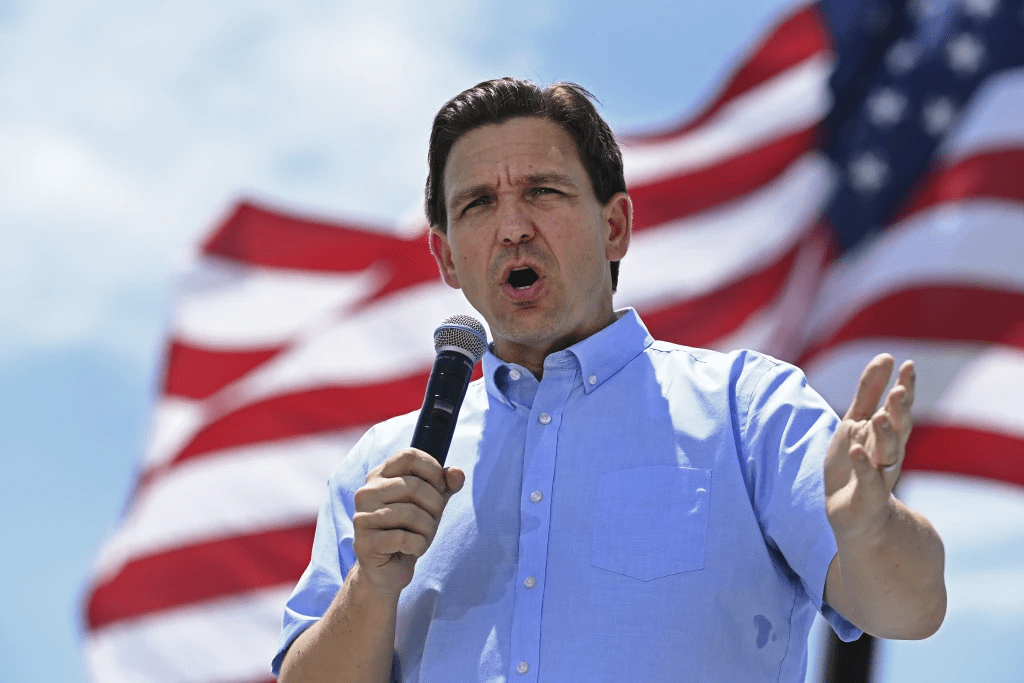
Republican presidential candidate and Florida Gov. Ron DeSantis speaks at an annual Basque Fry at the Corley Ranch in Gardnerville, Nev., Saturday, June 17, 2023. The mother of a transgender girl sobbed in federal court Wednesday, Dec. 13, 2023, as she contemplated having to move away from her Navy officer husband to get health care for her 12-year-old if Florida’s ban on gender dysphoria treatments for minors is allowed to take affect.

The woman, identified as Jane Doe to safeguard her child’s identity, shared in court that her daughter’s life transformed from anxiety and distress to that of a thriving, happy straight-A student about eight years ago. This transformation occurred after making the decision, along with her husband, to allow their child to live as a girl—a choice influenced by numerous consultations with their family doctor.

As the girl approaches puberty, the mother expressed concern that her daughter may undergo unwanted changes without treatment, potentially causing devastation for her and the entire family.

“I am willing to go to the ends of the Earth to get the help my daughter needs,” the woman testified tearfully, contemplating the possibility of her family being torn apart and having to live somewhere else away from her husband.

The testimony unfolded as a trial commenced to challenge Florida’s prohibition on medical interventions for transgender minors, including hormone therapy or puberty blockers. This law, advocated by Republican Governor Ron DeSantis as part of his presidential campaign, also imposes limitations on transgender care for adults.


“This originated with the governor,” stated Thomas Redburn, an attorney representing transgender adults and families with transgender children.


He highlighted additional laws advocated by DeSantis, demonstrating that the governor and Republican legislators have targeted transgender rights. This includes regulations limiting the use of pronouns in schools to those that align with individuals’ sex at birth.

However, Mohammad Jazil, the state’s attorney, argued that the law is about protecting individuals. He cited instances where individuals were prescribed hormones after a brief 30-minute telehealth session. He also mentioned cases where people decided to detransition, experiencing permanent damage from their treatments.

“This case isn’t about overregulation, it’s about under-regulation,” Jazil stated.

Judge Robert Hinkle has temporarily halted the enforcement of the law until the trial concludes. The lawsuit also contests restrictions on adult transgender care, which are currently permitted to be enforced during the trial.

As of now, 22 states have implemented laws limiting or prohibiting gender-affirming medical procedures for transgender minors. Legal challenges have been raised in numerous states with varying outcomes. In Arkansas, the first such law was invalidated by a federal judge who ruled that the ban on care violated the due process rights of transgender youth and their families.


Enforcement of similar laws is currently blocked in two states apart from Florida, while in seven other states, enforcement is either currently allowed or set to go into effect soon.


Redburn argued in the opening statements that the Florida law is unconstitutional as it singles out an entire group of people. He highlighted that non-transgender adults can receive the same treatments, such as estrogen and testosterone, without facing similar restrictions.

“The state of Florida has determined that individuals should not be transgender,” Redburn asserted. “The fewer transgender people, the better.”

The mother of the girl testified that their family’s pediatrician diagnosed her daughter with gender dysphoria when she started showing a preference for girls’ toys and clothes at the age of 3. She recounted instances of her daughter screaming and removing her clothes in the car seat during trips to preschool. To access specialized care, the family has undertaken four-hour round trips to the University of Florida.

Regarding risks such as infertility mentioned by Jazil in the opening statements, the woman emphasized, “The benefits for my daughter far outweigh the potential risks. Her greatest fear is what she refers to as turning into a boy. I’ve reassured her that won’t happen.”

Jazil briefly questioned the girl’s mother, highlighting that the University of Florida health records did not include a height and weight for Jane Doe’s daughter.


Redburn emphasized that gender dysphoria is a genuine condition, not a choice influenced by social media or the internet, contrary to policymakers’ arguments. He highlighted how Republican lawmakers, advocates of the law, portrayed transgender individuals as evil and part of a cult. Additionally, he pointed out that the bill’s sponsor argued that God doesn’t make mistakes.

On a different note, three educators filed a lawsuit challenging the law restricting pronoun use in schools. They argue that the legislation prohibits transgender and nonbinary teachers from expressing their authentic selves.

Ironically, Jazil consistently used “her” and “she” when referring to Jane Doe’s daughter, despite the state’s mandate for others to use pronouns based on birth sex in schools.

The trial concerning transgender health care is anticipated to span five days.

Donald Trump openly expresses a desire for dictatorial power, and it appears to be met with indifference from the public.

Trump and his associates are not concealing their intentions to undermine democracy if he secures victory in 2024, but is there any awareness or concern among the public?


With the election looming less than a year away, it’s evident that Donald Trump’s ambition extends beyond the presidency; he aspires to be a dictator.


Trump, having discarded any pretense of adhering to democratic norms, and his ardent supporters are openly pledging that his second term would mirror the authoritarian figures that Trump admired during his presidency.

If this seems like an exaggeration, it’s not. Trump openly acknowledges it.

In a recent interview with Fox News host Sean Hannity, who posed mostly friendly questions, Trump was asked to assure that, if reelected, he had no intentions to misuse power, violate the law, or use government authority against individuals.

Trump responded, “You mean, like they’re using right now?” He proceeded to express dissatisfaction with his legal troubles and lauded Al Capone as “one of the greatest of all time, if you like criminals.”

Hannity made a second attempt: “Under no circumstances — you are promising America tonight — you would never abuse power as retribution against anybody?”


“Except for Day One,” Trump answered, and someone in the audience yelled, “Yeah!” He went on to express his desire to close the borders and emphasize the need to “drill, drill, drill.”

Trump has never exhibited any form of self-restraint when it comes to power, leaving no reason to believe that he would limit his actions to just one day. In fact, he and his allies are actively strategizing for a sustained dismantling of democracy.


In a recent interview, Kash Patel, a former member of Trump’s National Security Council, pledged to pursue legal action against individuals in the media whom he accuses of lying about American citizens and assisting in what he claims is Joe Biden’s manipulation of presidential elections. Patel clarified that they would explore both criminal and civil avenues for recourse.

Trump has expressed a strong desire to employ the Justice Department as a tool to target his political adversaries. This includes prosecuting former aides who have become critics and appointing a special prosecutor to investigate President Joe Biden and his family. However, such actions would require Trump to depart from established norms, potentially involving the Justice Department reporting directly to him, disrupting its customary impartial role.

Supporters of Trump are enthusiastically sharing details with the media about their initiative to vet potential political appointees using a questionnaire. The aim, according to one Trump supporter, is to ensure that appointees align with Trump’s viewpoints, particularly favoring sources like Tucker Carlson and avoiding references to past Republican figures such as Ronald Reagan or George W. Bush. These appointees are crucial as part of Trump’s strategy to dismiss thousands of civil servants and replace them with individuals loyal to him.

If any dissent arises, Trump has a plan to address it. He intends to invoke the Insurrection Act, deploying the military to suppress any public protests, even if it requires the use of weapons.

For LGBTQ+ rights, this could involve Trump reinstating the ban on transgender military personnel from his initial term. Although legal challenges may arise, Trump appears unconcerned about legal constraints. He might not wait for court resolutions, especially given his influence on the Supreme Court.


This is just one among several anti-trans policies that Trump intends to implement. In regular circumstances, some might never come to fruition as they necessitate Congressional approval, such as restricting care for transgender youth. However, Trump could potentially issue directives unilaterally to enact such measures.

In recent weeks, mainstream media has consistently highlighted the potential disastrous impact of Trump’s second term on democracy. The Atlantic dedicated a special issue featuring 24 articles outlining the detrimental effects of Trump’s re-election on various fronts, including the military and science. Even The New York Times, in its authoritative tone, portrayed a second Trump administration as designed to facilitate Trump’s “authoritarian tendencies.”

However, for many Americans, this doesn’t feel tangible. They perceive it as just another election cycle, with Trump making his usual controversial statements. The fact that he couldn’t fulfill a fraction of his promises during his first term has led people to view him more as a figure of rhetoric than one of action.

Yet, this time, Trump has purged the moderating voices that restrained him in his initial term. He seeks individuals who will unquestioningly endorse his every desire, ensuring that those desires are executed by those who share his views. In typical Trump fashion, the primary focus is on elevating himself, allowing his unchecked inclinations to take the forefront.

This is the individual who, at one point, remarked, “Well, Hitler did a lot of good things.” What could one anticipate from him if he had unrestricted power?

The US Supreme Court declines to hear a challenge to the ban on gay ‘conversion therapy’ in Washington state.

This blog originally appeared at Reuters.

The US Supreme Court rejects a challenge to the ban on gay ‘conversion therapy’ in Washington state.

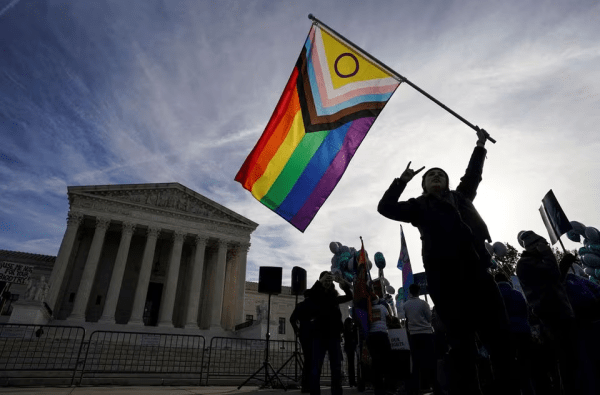
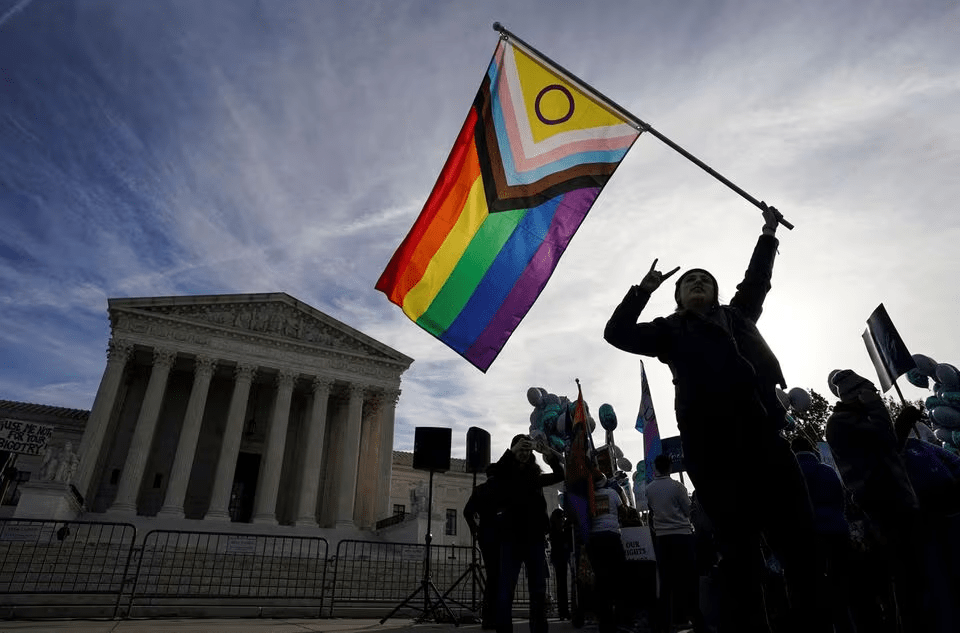
A demonstrator waves an LGBT rights ‘pride flag’ during a gathering outside the U.S. Supreme Court in Washington, D.C., on December 5, 2022.

On December 11, Reuters reported that the U.S. Supreme Court rejected a petition to review a case challenging Washington state’s law prohibiting “conversion therapy” for minors. This law, enacted in 2018, aims to prevent attempts to change a minor’s sexual orientation or gender identity. The case was brought by a Christian therapist who argued that the law violated free speech rights.

The Supreme Court declined to hear Brian Tingley’s appeal challenging the Washington state law on “conversion therapy.” Tingley argued that the law violated his freedom of speech under the First Amendment by restricting how he communicates with therapy clients. The court’s decision upheld the lower court’s dismissal of the case, with the state contending that it regulates professional conduct rather than speech.

Justices Clarence Thomas, Samuel Alito, and Brett Kavanaugh dissented from the decision to reject the case. This marked another clash between LGBT protections and the religious rights of individuals.


In June, the court’s 6-3 conservative majority ruled that certain businesses had a free speech right to decline providing services for same-sex weddings. The liberal justices who dissented characterized the decision as a “license to discriminate.”

Tingley, a licensed marriage and family therapist in Tacoma, Washington, contends that sexual relationships outside of a marriage between one man and one woman are “inconsistent with God’s design.” He also asserts that “the sex each person receives at conception” is “a gift from God.”

The Democratic-backed law bars licensed healthcare professionals from administering therapies to minors intended to “alter an individual’s sexual orientation or gender identity.” Violations may result in sanctions such as censure, fines, or the revocation of the professional’s license.

The law allows licensed therapists to engage in discussions or advocacy for conversion therapy, provide such therapy to adults, or recommend it to be carried out by others, including religious counselors. However, the law does not extend to non-licensed counselors operating under the umbrella of a church, religious denomination, or organization.


In a written opinion on Monday, Justice Thomas emphasized the importance of addressing the issue of gender identity and argued that the court should have considered the case. According to Thomas, Washington state’s law has effectively silenced one side of a “fierce public debate” by prohibiting counselors from assisting clients in “accepting their biological sex.”

He added, “That is pure viewpoint-based and content-based discrimination.”


He argued that there’s no evidence licensed therapists have ever employed abusive practices on children.

He argued that the law impermissibly provides the state with a free pass to censor professionals and targets individuals based on their religion.

The state argues that it has the authority to regulate the conduct of professionals, even if such regulation may impact speech. It points out that 26 states and the District of Columbia restrict or prohibit conversion therapy for minors.

Tingley filed a lawsuit against the state in 2021. U.S. District Judge Robert Bryan dismissed the case, stating that the law does not violate Tingley’s First Amendment rights because it is “rationally related” to the state’s interest in protecting the well-being of minors.

The judge’s ruling was affirmed by the San Francisco-based 9th U.S. Circuit Court of Appeals in 2022.

Tingley is being represented by the Alliance Defending Freedom, a conservative legal group that has contested various LGBT protections. The same group also represented the business owner in the Colorado same-sex weddings case.

Former Speaker Ryan: “Trump isn’t a conservative; he’s an authoritarian narcissist.”

Former Speaker Ryan asserts, “Trump is not a conservative; he’s an authoritarian narcissist.”

Former Speaker Paul Ryan (R-Wis.), who led the Republican House majority during the initial two years of former President Trump’s term, contends that Trump is not a conservative but rather an authoritarian narcissist, driven by a guiding principle to aggrandize himself.

Ryan supported former Republican Representatives Liz Cheney (R-Wyo.) and Adam Kinzinger (R-Ill.) for resisting Trump and expressed that many GOP lawmakers likely regret not supporting impeachment charges, which could have provided an opportunity to remove Trump from the political stage.

“Trump isn’t a conservative; he’s an authoritarian narcissist. So, I think they essentially called him out for that,” stated Ryan during a video conference interview with Teneo Political Risk Advisory Co-President Kevin Kajiwara, referring to Cheney and Kinzinger.

Ryan described Trump as “a populist authoritarian narcissist.”

 “He doesn’t think in classical liberal conservative terms. He thinks in an authoritarian way and he’s been able to get a big chunk of the Republican base to follow him because he’s the culture warrior,” Ryan explained.

Ryan noted that Cheney and Kinzinger “stepped out of the flow” that saw many Republicans aligning with Trump, and instead, they called out his approach.


He acknowledged that they “paid for it with [their] careers” but emphasized that they made the right move.


He expressed the view that there should be a line or principle that one is unwilling to cross, ensuring that when individuals look at themselves in the mirror, they like what they see. He commended Adam and Liz for adhering to this standard.

He mentioned that a considerable number of Republicans in Congress are likely feeling regretful for not resisting Trump’s attempt to overturn the 2020 election and for abstaining from voting for impeachment or conviction charges, missing an opportunity to terminate his political career.

He expressed the belief that many members of Congress, even some of his close friends, might reconsider their votes, particularly on the second impeachment, as they initially believed Trump’s political influence was finished after the events of January 6.

“So they figured, ‘I’m not going to take this heat, I’m going to vote against this impeachment because he’s gone anyway.’ But what’s happened is he’s been resurrected,” Ryan added. “So I think there are a lot of people who already regret not getting him out of the way when they could have.”


He said that “history will be kind” to Trump critics such as Cheney and Kinzinger.

Ryan announced he would retire from Congress in April 2018, less than two years into Trump’s first term in office. He said at the time that he wanted to spend more time with his family and not be a “weekend dad.”

At the time of his announced retirement, he cited Trump’s 2017 Tax Cuts and Jobs Act as a highlight of his time as Speaker.

TAGS ADAM KINZINGER ADAM KINZINGER DONALD TRUMP DONALD TRUMP LIZ CHENEY LIZ CHENEY PAUL RYAN PAUL RYAN

3 suspects apprehended in the killing of a Phoenix man, his family alleges he was singled out due to his sexual orientation

This blog originally appeared at NBC News.


Family and acquaintances of 30-year-old Bernardo Pantaleon assert that they suspect he was targeted in a hate crime.

Three individuals have been apprehended in relation to the homicide of a Phoenix man from last month, a case where his loved ones claim he was singled out due to his sexual orientation, as per authorities.

The individuals are facing charges of first-degree murder in the demise of 30-year-old Bernardo Pantaleon on November 25.

Court records indicate that the victim, Bernardo Pantaleon, was discovered deceased and unclothed in a municipal park, having suffered fatal gunshot wounds. His body was subsequently mutilated with a knife.

Law enforcement reported that the individuals in question transmitted images of Bernardo Pantaleon’s deceased body to his relatives. Subsequently, these men were apprehended on Saturday and currently remain in custody, with bond amounts ranging from $500,000 to $2 million.

Supporters and family members of Bernardo Pantaleon contend that his murder was a hate crime due to his sexual orientation and flamboyant attire. According to police investigators, the accused individuals, all in their early 20s, allegedly conspired to both rob and fatally harm Pantaleon.

Detectives reviewed social media messages exchanged between the three suspects in the days following Pantaleon’s death, uncovering discussions related to the murder.

“Some of the messages contained derogatory remarks about the victim’s sexuality and expressed discriminatory views, including a statement asserting that homosexuals are not allowed in Phoenix’s northside,” stated the probable cause statement

Police reported that all three suspects were interviewed, and each confessed to the murder. It remains unclear as of Tuesday whether any of the individuals have obtained legal representation.

California governor signs bills to enhance the state’s protections for LGBTQ people

This blog originally appeared at NBC News.

The governor of California has approved legislation aimed at strengthening the state’s safeguards for LGBTQ individuals.

Gavin Newsom during the San Francisco Pride parade in 2017.

California Governor Gavin Newsom signed a series of bills on Saturday, with the intention of enhancing the state’s protections for LGBTQ individuals. This action followed a contentious veto issued by the governor the previous day, which drew criticism from advocates.

The recently enacted laws encompass measures aimed at supporting LGBTQ youth. Among these, one law establishes timelines for mandatory cultural competency training for public school teachers and staff. Another law establishes an advisory task force dedicated to identifying the needs of LGBTQ students and promoting supportive initiatives. Additionally, a third law mandates that families demonstrate the ability and willingness to address the needs of a child in foster care, irrespective of their sexual orientation or gender identity.

In a statement, Governor Newsom emphasized California’s commitment to maintaining comprehensive laws for the protection and support of the LGBTQ+ community. He expressed that the newly enacted measures aim to safeguard vulnerable youth, foster acceptance, and cultivate more supportive environments within schools and communities.

Governor Newsom also approved a bill mandating that schools catering to students in the first through twelfth grades must provide at least one gender-neutral bathroom by the year 2026.

The legislation was prompted by a Southern California school district that implemented a policy mandating schools to inform parents when their children alter their pronouns or use a restroom associated with a gender different from the one documented in official records. The policy was temporarily halted by a judge following a lawsuit by California Attorney General Rob Bonta against the Chino Valley Unified School District, with the legal proceedings still underway.


The governor vetoed a bill on Friday that proposed judges should take into account a parent’s affirmation of their child’s gender identity when determining custody and visitation arrangements.

Assembly member Lori Wilson, a Democrat who authored the bill and has an adult son who came out as transgender during adolescence, was among the LGBTQ advocates expressing criticism for the governor’s decision.

“I’ve been disheartened over the last few years as I watched the rising hate and heard the vitriol toward the trans community. My intent with this bill was to give them a voice, particularly in the family court system where a non-affirming parent could have a detrimental impact on the mental health and well-being of a child,” Wilson said in a statement.

Newsom said existing laws already require courts to consider health, safety, and welfare when determining the best interests of a child in custody cases, including the parent’s affirmation of the child’s gender identity.

The veto comes amid intense political battles across the country over transgender rights, including efforts to impose bans on gender-affirming care, bar trans athletes from girls and women’s sports, and require schools to notify parents if their children ask to use different pronouns or change their gender identity.

Blog at WordPress.com.

Up ↑