Ready to call Spain your new home? Join the thousands of Expats who have successfully relocated to Spain with our expert advice, resources, insider knowledge and handpicked network of service providers.
We ran into Alastair & Alison Johnson through the Expatsi organization. Find out everything you need to know about moving to Spain in this informative talk from people who know! Check them out at https://movingtospain.com/
Thinking about moving to Spain to escape political extremism in the U.S.? As part of the Flee Red States project, we sit down with Alastair Johnson of MovingToSpain.com , who has lived in Spain for many years with his wife and adult son.
In this interview, Alastair shares his first-hand experiences about:
🏳️🌈 The acceptance and visibility of the LGBTQ community in Spain
🏥 Easy access to Spain’s public healthcare system
🏡 Lifestyle, culture, and why Spain is a welcoming choice for American expats
🌞 The benefits of living abroad in a progressive, inclusive country
If you’re considering moving to Spain from the USA, becoming an American expat in Europe, or simply curious about LGBTQ rights in Spain, this video gives you practical insights and inspiration.
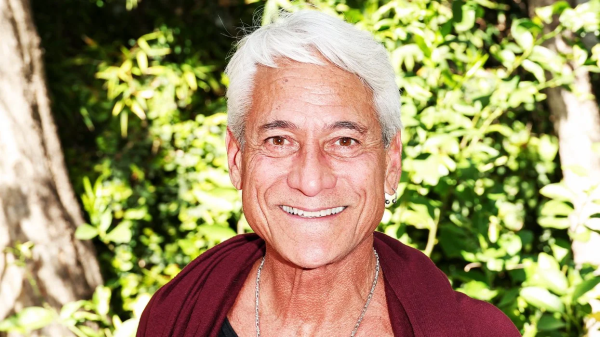
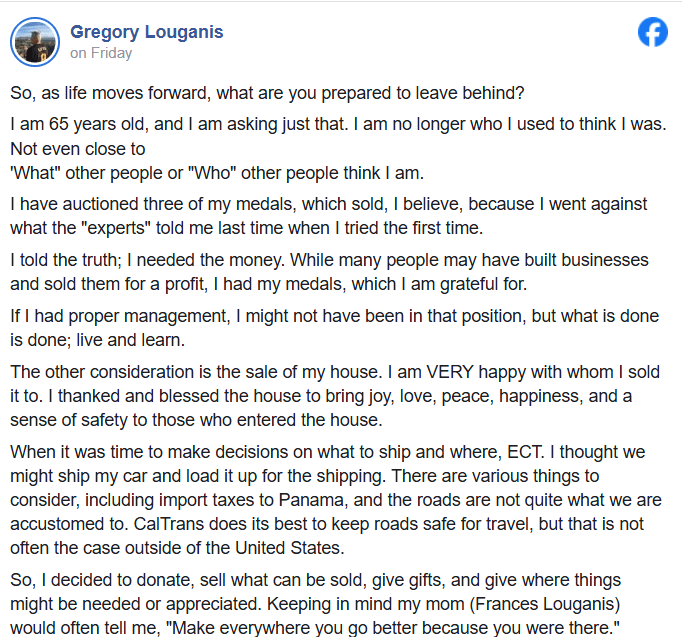
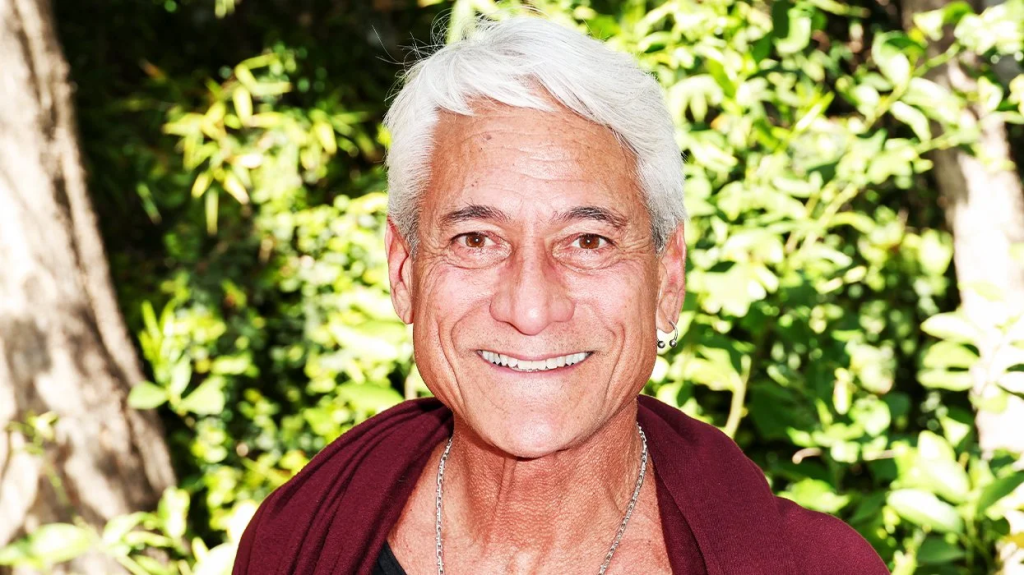
Out Olympic gold medalist, Greg Louganis, shared the details of his move to Panama in a statement uploaded to his Facebook page on Friday. In the post, Louganis, who came out as gay in 1994 and shared that he was HIV-positive in 1995, auctioned and sold three of his five Olympic medals. According to Cllct.com, he sold two gold and one silver medal for $430,865—his first silver medal from the 1976 Olympics, a gold from the 1984 games in Los Angeles, and another gold from the 1988 Seoul Olympic games.
Better Abroad? explores the lives of expatriates around the world who have uprooted their lives to move across physical and emotional boundaries in search of a better life. Through an artful lens, historical and cultural context, and engaging and authentic interviews, viewers will get to know each expat intimately—deeply feeling the experience of each character through their own narrative. Episodes will explore the critical moments or events that motivated their decisions as well as the peaks and valleys of their life-changing journeys. In this raw but beautiful look at the complexities of expat life, this series will provide viewers with a new thought provoking experience in each episode. Different expats on different paths. Different countries. One question. Is life Better Abroad?
We sit down and discuss this topic with Liz and Sarah.
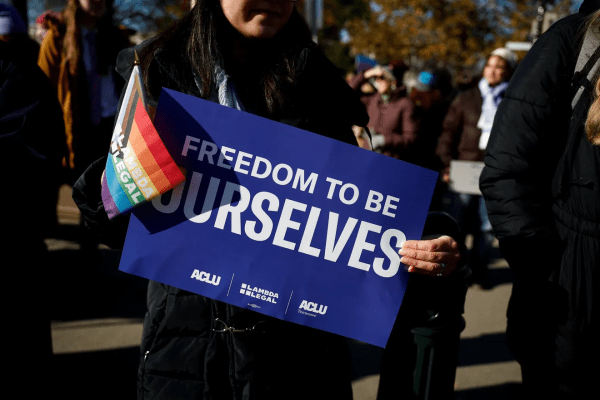
As Oklahoman legislators push to restrict trans rights and overturn the 2015 Supreme Court decision legalizing gay marriage, Zane Eaves says his identity as a transgender man has put a target on his back in his home state.
One of 18,900 trans adults in Oklahoma, Eaves has received death threats as has his wife of 10 years and their two children.
“All the hatred and political stuff going on” are driving this Oklahoma lifer from the place he was born and raised, Eaves, 35, said. He has only crossed the state line three times in his life, but in recent weeks, he made the difficult decision to move his family to North Carolina to be closer to friends and allies.
“I am just trying to stay alive and keep my marriage,” Eaves said.
Oklahoma ranks 44th in the nation on a list released Monday of the most and least welcoming states for lesbian, gay, bisexual, transgender and queer Americans.
LGBTQ+ equality fell across the board for the third straight year, according to Out Leadership’s State LGBTQ+ Business Climate Index shared exclusively with USA TODAY. But the sharpest declines came in Republican-led states.
While progressive strongholds championed supportive policies and protections, conservative states elected a slate of leaders who openly oppose gay and trans rights and sponsored an unprecedented wave of anti-LGBTQ+ legislation, Out Leadership CEO and founder Todd Sears said.
So-called “Don’t Say Gay” bills, religious exemptions and other legislation tanked the rankings of 19 red states in the Out Leadership index, according to Sears.
Today, the divide between states that roll out the welcome mat and less hospitable parts of the country is wider than ever, he said.
The least and most welcoming LGBTQ+ states
Each year for the last seven, Out Leadership has released the State LGBTQ+ Business Climate Index to gauge the overall climate for gay and transgender people state by state, mapping out where they will face the most and the least discrimination and hardship.
Out Leadership’s index measures the impact of state government policies and prevalent attitudes about the LGBTQ+ community, weighing factors such as support for young people and families, health access and safety, political and religious attitudes, work environment and employment and nondiscrimination protections.
The Northeast had six of the 10 highest-ranked states, while the Southeast had six of the lowest-ranked.
Massachusetts, led by the nation’s first openly lesbian governor, Democrat Maura Healey and New York, which guaranteed gender-affirming care and LGBTQ+ refugee protections, tied for first place in this year’s index, with Connecticut and New Jersey close behind.
The least LGBTQ+ friendly state was Arkansas, which ranked last for the third straight year. South Carolina, Louisiana, South Dakota and Alabama also received low scores.
The states that had the largest gains in the index were Kentucky and Michigan, which Out Leadership attributed to “pro-equality” leadership from governors Andy Beshear and Gretchen Whitmer, both Democrats. The steepest declines were in Ohio, Florida and Utah, all led by Republican governors.
Where are the safest places to live?
The Out Leadership index was created as a LGBTQ+ inclusion reference guide for business leaders. But gay and trans people soon began using it to figure out where they should – and should not – live and work, never more so than now as rights rollbacks from the Trump administration and red statehouses hit close to home.
Opposition to transgender rights was a central plank in Trump’s presidential campaign and since taking office he has signed a series of executive orders recognizing only male and female genders, keeping trans athletes out of women’s sports, banning trans people from serving in the military and restricting federal funding for gender-affirming care for trans people under age 19.
Even states seen as safer for LGBTQ+ people have been navigating these edicts around trans athletes. Trump threatened to cut federal funding to California if a trans girl competed in a state track and field event held Saturday.
AB Hernandez, a junior from Jurupa Valley High School in Riverside County, shared first place in the high jump and triple jump and second in the long jump. She shared the awards podium with her cisgender competitors under a new rule drafted by state athletics officials days before the event to mollify critics.
Republican-led states have been in the vanguard of anti-trans legislation, causing greater geographic polarization and prompting fears among LGBTQ+ residents, even those who live in liberal cities.
Jordan McGuire, a 27-year-old gay man in North Dakota, said the years he spent living in the Deep South taught him about the repressive discrimination routinely faced by gay and genderqueer people.
At the same time, socially progressive cities in conservative states like Fargo and Grand Forks are no longer the safe havens they once were, he said.
Now that his fiancee is transitioning to female, the couple is exploring a move to a “sanctuary” state that will be safer for them.
“It feels like five or 10 years ago, trans people were not under the same microscope they are now and that has definitely influenced our move,” McGuire said. “Yeah, people were prejudiced but it wasn’t a witch hunt. They weren’t looking for people in bathrooms and schools. But now things are so polarized.”
That rising anxiety was captured in a post-election survey from UCLA’s Williams Institute which found that nearly half of transgender people had already fled unsupportive communities and nearly 1 in 4 were considering uprooting their lives.
The most frequently cited reasons for wanting to move were concerns about LGBTQ+ rights – 76% – the sociopolitical climate – 71% – anti-trans rhetoric and climate – 60% – and anti-trans laws and policies – 47%.
LGBTQ+ Americans on the move
Interest in relocating to friendlier states is even higher today than it was after Trump’s reelection, say nonprofit workers who aid trans and gender-diverse people relocate to more liberal states with broader protections.
So far in 2025, Rainbow Railroad in Canada has received more than 3,000 requests from LGBTQ+ people living in the United States, up more than 1,000% from the same time last year, according to communications director Timothy Chan.
Nearly all requested international relocation support. For now, Rainbow Railroad can’t aid Americans with resettlement services because of immigration restrictions, Chan said.
TRACTION has heard from a record number of people from states as far away as Texas, Oklahoma and Arkansas with many of them reporting being threatened or feeling unsafe in their homes and neighborhoods, said Michael Woodward, the executive director of the trans-led organization in Washington state.
Trans and gender-diverse people historically face financial hardship due to systemic oppression and discrimination, and need assistance finding jobs and housing as well as with interstate moving expenses that can run tens of thousands, Woodward said.
TRACTION used to get a few applications a week until Trump won a second term. In the two weeks following the election, “we received as many requests for assistance as we’d received in the entire life of the project thus far,” he said.
After the inauguration, TRACTION started getting three to five applications every day. With one employee and a handful of volunteers, his organization is struggling to keep up with demand, Woodward said.
A couple of social media postings over the weekend struck a chord with many people. They both addressed good places for gay guys to live in the US — especially if hotspots such as New York City are out of their budget.
On Threads, user @justintycarey asked, “Where are you all moving to gay/queer Americans? I live in Philadelphia after nearly 7 years in New York. It’s fine for now and it’s more affordable (I live alone) but I don’t think it’s my vibe at all. I used to live in Portland, ME which was progressive and beautiful. Walkable too! But I realized it wasn’t my thing culturally.
“Now I’m stuck! I don’t know what’s good. I want a quiet life but I also want access to New York and other metro areas.” He also wanted a good arts scene.
Fans of Philadelphia told him not to give up on the city – especially if, as indicated later, he arrived during the chilly winter months.
“I moved to Philly from New York and spent the first year or two planning my escape, but it grew on me,” said one. “It’s a place that takes some time to find your people and neighborhood. I’ve been here for 10 years now and can’t picture myself anywhere else.”
Others praised parts of New Jersey.
“Have you considered the suburbs? I’m in south jersey and while I miss the city ‘vibe’, my community feels much tighter and, as a whole, more progressive. I can get to NYC in an hour or Philly in 20 mins. It’s not for everyone but walkable and quiet with access to city.”
Another pointed to the Jersey coast.
“Asbury Park, NJ! Yes, it’s a shore town, but most people are residential there. Very queer-friendly with a quiet town vibe. Access to the train is right in Long branch — it’s under 1.5 hours to NYC by NJ transit. Art scene is pretty good too with lots of potential for growth.”
Other suggestions within commuting distance of New York City came flocking in.
“Northampton, Massachusetts, springs to mind, depending on how far from NYC you want. If you want closer to NYC, then Warwick, NY or New Paltz, or if closer, then Montclair, NJ. All are walkable, gay friendly, progressive, pretty, stuff to do, not huge cities.”
Others wanted to know why the poster wasn’t keen on Portland. He said he highly rated the place but was used to cities that are more ethnically diverse, even if the Maine location was slowly increasing in diversity.
Boston
Over on X, user @fruitsnacks42 was also pondering locations to live… in a more snappy fashion. He said he was “Too poor to be an NYC gay, too dumb to be a DC gay, too ugly to be an LA gay, too fat to be a SF gay, too lib to be a Miami gay … just damaged enough to be a Boston gay.”
The tweet received over 44k likes.
In the replies, commentators urged him to consider cities such as Atlanta, Seattle, Chicago or Austin. Bostonites also defended their city.
Others pointed to San Francisco’s thriving bear scene, suggesting the “too fat for SF” was out of line. A few also suggested it was wrong to assume all the gay men in DC are smart.
Best gay-friendly cities
Obviously, on social media, people are likely to praise their home cities… but where are the best places to live if you’re queer?
In 2023, real estate data company Clever composed a ranking of the 15 top LGBTQ-friendly cities. It looked at whether cities scored well on the Human Rights Campaigns equality tally, and such factors as the size of the queer population, the number of gay bars and the numer of local Pride events. The top 15 were as follows:
15. Milwaukee, Wisconsin
14. Baltimore, Maryland
13. Pittsburgh, Pennsylvania
12. Richmond, Virginia
11. San Jose, California
10. New Orleans, Louisiana
9. Chicago, Illinois
8. Sacramento, California
7. San Diego, California
6. Los Angeles, California
5. Denver, Colorado
4. Portland, Oregon
3. Las Vegas, Nevada
2. Hartford, Connecticut
1. San Francisco, California
It should be noted that this ranking was from 2023 and some factors may have changed, particularly regarding anti-trans laws.
If you’re older and thinking about your later years, Life Care Retirement recently merged date on LGBTQ-friendly cities with retirement hotspots. It came up with the following top ten locations for seniors.
Karma Yoakum had been part of a community of political activists in Texas for years. However, as the relentless tide of anti-trans legislation kept rising, it became clear that it was time for them to relocate, recover their energies, and take on a different role in the larger fight.
Finding a new home in the Pacific Northwest, Karma was able to do just that. But the road wasn’t without its challenges, and finding their new community required intention and perseverance once they had recovered a little bit of who they were by living in a state that wasn’t trying to persecute them for their existence.
As anti-trans sentiment and legislation have been on the rise across the United States in recent years, many trans and nonbinary people have made the difficult decision to flee red states. In moving to a bluer state, trans people are making a choice based on safety, but that doesn’t make it an easy choice. It means leaving behind a home and community you have built over years or your whole life because of the machinations of people who hate you. While a new state can fix a lot of problems, building a new community doesn’t happen overnight. The president’s re-election and the introduction of federal anti-trans bills have created a flashpoint for even more trans people to seek safer pastures in states that might protect them.
I wanted to understand the challenges and opportunities that trans people face when starting over and building a new community in a blue state. I spoke with four trans and nonbinary people who have relocated in the last six to twelve months. They shared the challenges, the successes, and advice for others who are considering relocating to a sanctuary state.
Why trans people are leaving their red state communities
Major relocations often happen around an institution, such as going to college or starting a new job. But moves like those come with some built-in community-building support.
Relocating as a refugee from a red state can be a more lonely affair. Most of the people I spoke with found that building a new community felt like work exacerbated by not having the same connections and support systems they had in the communities they left behind.
Clark Roman had been well-established in St. Louis. Both Clark and his boyfriend had owned their own houses and had a strong community of friends and chosen family in the city. But he says he saw the writing on the wall in 2023 when the Missouri attorney general enacted a de facto ban on trans hormones and trans healthcare that included adults. While his emergency rule was blocked by a judge and then withdrawn, the legislature went on to pass a gender-affirming care ban for trans youth. It was clear where things were headed, and Clark moved to Minneapolis a few months later.
Leaving behind a large community, both queer-centric and otherwise, Clark has found it hard to make more connections in his new city. At the center of it is the challenge of the modern age: balancing work and social life. “The honest truth is I have a very, very stressful job and I have not had the space in my life to build community the way I want.” He noted that it felt like he had to “treat building a new community as a second job.”
Karma also struggled to make connections when they first relocated from Texas to Washington state. After living in Texas for years, they reached a point where they found themselves saying, “I’m feeling scared and trapped and there’s absolutely nothing keeping me in Texas anymore.”
Karma moved 2,000 miles to Seattle but found a problem when they arrived. While their new home was more welcoming to the gender diverse, there was still culture shock to get over. “Where is everybody? I heard it was this wonderful panacea, a place where I would be welcomed. So, I looked around and I learned what the Seattle chill was. And it’s not a horrible thing, it’s just a difference in culture, because I’m used to southern culture.”
Chris (his name has been changed to protect his privacy) echoed Karma’s frustrations over Washington state’s laid-back attitude to building community. Like Clark, Chris was living in St. Louis, saw the anti-trans legislation in Missouri in 2023, and concluded that “living in Missouri as a trans human, [he] was at risk.” He made the move to Washington state in 2024 while watching the coming election without much hope.
While St. Louis had its flaws, Chris was leaving behind a lot of queer community and resources. He had worked with the St. Louis Metro Trans Umbrella Group for nearly 20 years, enjoyed events and meetups, and collected queer friends through meets at clubs, bars, and drag shows. But the same culture shock that Karma experienced has made it hard to build new connections: “It’s been honestly a huge struggle, much more than I anticipated.”
While it’s important to know that people are struggling with finding new communities in their new states, it’s not all doom and gloom. Clark and Chris have both been able to stay in touch with parts of their communities from before their moves through travel and online communication. While that’s not always the same, it’s a nice option to have. I also spoke with Mira Lazine – an LGBTQ Nation contributor – who relocated from Cincinnati to Minneapolis and had a different sort of experience.
While the Ohio governor vetoed HB 68, which banned gender-affirming care for minors, he then introduced care guidelines for the state. “These rules were basically going to amount to a total care ban for all adults in Ohio,” explained Mira. “And it even would include some aspects of conversion therapy and mental health treatment.”
It was time to relocate, and someone recommended Minneapolis. For Mira, finding a new community in this queer-friendly space came a lot easier.
“Within the first week of moving here, I went to a few coffee shops, and everyone, like the baristas, were trans, and they were recommending me support groups to join, discord servers I can join, like the whole nine yards. And it’s just been way easier to meet people and meet other queer people and form connections here.”
While Karma and Chris suffered from culture shock, Mira found herself among other transplants to the state who had their relocation in common: “Probably like 80% of the queer people I’ve met aren’t originally from Minnesota, so we’re all like, yeah, we need community, let’s build one.”
Finding new communities in blue states
All of the people that I spoke with had been in their new homes for less than a year. While there have been struggles, they have been able to find resources and spaces to start that community-building process and are in different places in their journeys.
Clark noted that his struggle to find community in Minneapolis is probably the biggest dissatisfaction in his life right now. But he can see a light at the end of the tunnel through some of the community spaces that he is attending. “The synagogue I go to is very open and trans-friendly. So that was helpful.” Clark is also looking at getting more involved with Transplants, a group for LGBTQ+ people who have relocated to Minneapolis and St. Paul.
Chris has found that his work at a university in Washington provides some space for community building. “Their DEI office held a holiday event for, I guess, everyone, but the folks who showed up to that event were primarily queer folks and persons of color. And that was fantastic.”
Chris still faces challenges, even at the events. He told me that he has been going to meet-up groups, Portland Pride, the Ingersoll Gender Center, and more, but he wasn’t satisfied with the results. Chris suggested that part of that problem might be visibility: “I am stealth, so at my workplace, I’m not fully out [as trans]. Where I landed is sort of a purple city in a blue state. I’m typically able to pass as male and not be questioned at all, which is, is nice, but at the same time, it’s hard because I think visibility might help me connect with more queer people.”
For Karma, their initial struggles with community-building in Seattle began to bear fruit around the one-year mark. “I did the things that I’ve tried before, and I figured, if they’ve worked everywhere else, they ought to work here. Maybe it just takes a little longer. And yeah, that was it. It takes a little longer.”
Karma found that organizations were the key. They found like-minded people when they returned to playing music with the local band that is part of the LGBTQ+ band organization, Pride Bands Alliance, an international group that Karma has worked with since the 1990s. Similarly, local chapters of a national support network have provided success in community building: “PFLAG, all you have to do is show up to a meeting. There are people there that if you need a hug, they are instant family. And people that aren’t instant family are there because they want support.”
Karma also reached into her past in political activism and found that, post-move, they had the energy to continue in their new home. “The third place that I decided to get involved was the Gender Justice League. Dealing with legislation, dealing with victims of violence here in the Seattle area. So, supporting our community, advocating like crazy.” After months of struggling to find their people, Karma now finds that barely a day on their calendar doesn’t include a community event, a catch-up, or a coffee meet.
No regrets
Everyone’s experience with relocating to a bluer state will be unique. However, there was one ringing agreement amongst all the people that I spoke with: no regrets. When asked what advice they had for someone considering a move, Clark, Chris, Mira, and Karma all urged people to relocate if they felt it might help.
Clark grieves what he left behind but recognizes that it was the right call for him, and he’s going to keep trying to find his new community. “I think it’s dissatisfying at first. But it’s important to [show] up repeatedly because I think that repeated showing up [is] how I made my community originally in St. Louis.”
Chris echoed those sentiments, noting that he has no regrets and that it has been “completely worth it.” Watching recent election results come in wouldn’t have been fun anywhere, but he was glad to be in a safe space for it all “despite challenges and some loneliness.”
Karma isn’t even considering going back. “I would say do it. The relief that I felt by at least being in a community where I know that I’d no longer have to deal with local politics.”
“In Texas, the local politics were against me,” they said. “At least here, I know locally and statewide, my representatives really do represent everybody, and they have my back. And that has made so much a difference in my life.”
*This is being reported by CNBC. We are also unsure if it applied to legally married same sex couples, since Croatia has a different law with similar rights for same sex couples under the Life Partnership Act, which is not marriage equality.
Forget a penny for your thoughts; what about 13 cents for a house in Croatia?
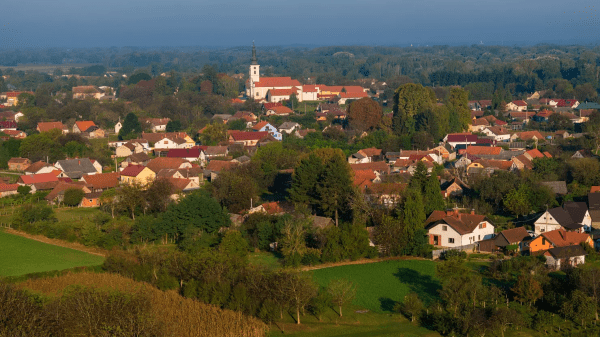
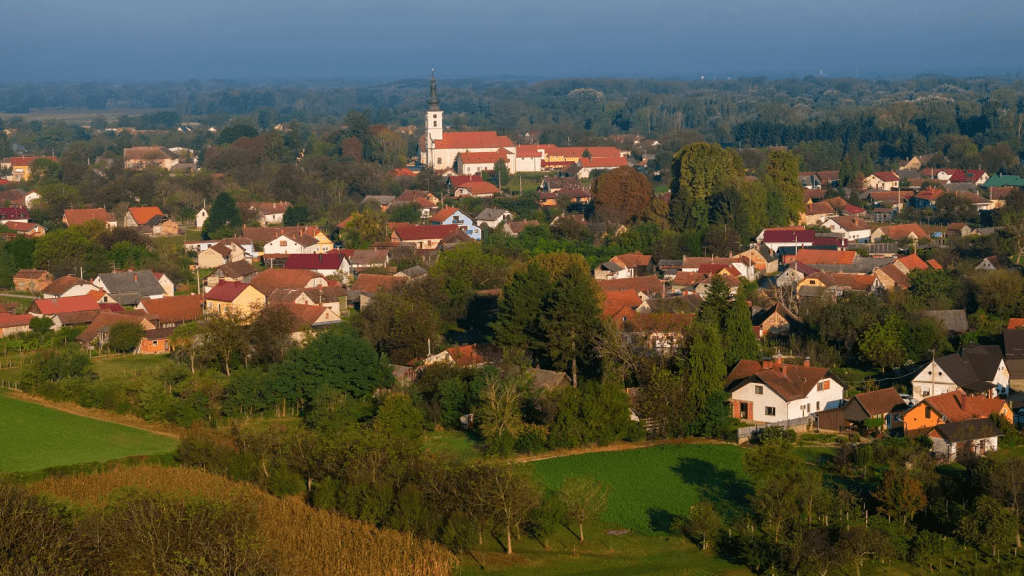
Legrad, a town in northern Croatia, has been trying to get more people to settle in the area by offering houses for pennies. It’s an initiative they started in 2018.
The small town, with around 2,000 people, borders Hungary and has seen its population dwindle since the collapse of the Austro-Hungarian empire in 1918.
In January, government officials announced another batch of houses is ready for sale at just 13 cents.
To be eligible to buy one of the houses, applicants must be under 45 years old, in a marital or extramarital partnership, and have no criminal record.
Most notably, if you want to snag one of these low-cost homes, applicants can’t already own property — though officials don’t specify if that means in Croatia or anywhere else in the world.
Local Croatian media outlet HRT reported that since the program started in 2018, there are more children today than there were five years ago, and as a result, they’re even building a new daycare center.
“A total of five houses ready for occupancy have been sold. Three families have already moved in, and what delights us is that all three families welcomed a new member during their move-in. This has increased the number of children in the daycare center,” Ivan Sabolić, the mayor of Legrad, told HRT.
In 2021, Legrad put up 19 empty houses and abandoned construction sites for sale at the price of 1 kuna, Croatia’s currency at the time. Seventeen were sold, according to Reuters. The houses were in various states of disrepair, so to help out, the municipality said it would pay $25,000 kuna (about $3,558) for any necessary renovations.
For new residents who wanted to buy a privately owned home, the town offered to cover 20% of the price or up to 35,000 kuna (about $5,056). It’s unclear if the town will offer the same incentives this time around.
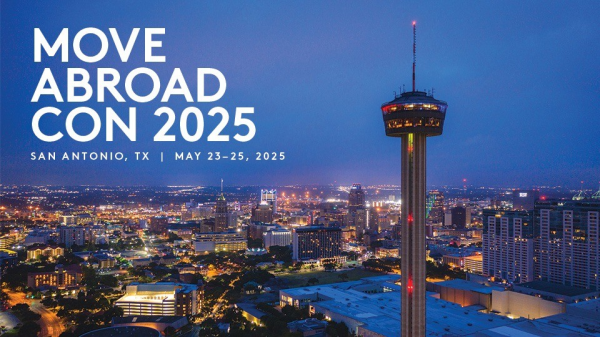
A few blogs ago we broke news about Expatsi’s Move Abroad Conference. Now we have a podcast to share with you between FleeRedStates’s Bob and Expatsi’s Jen. Don’t forget to get that conference info and discounts by clicking here.
Check out the podcast with Bob McCranie of Texas Pride Realty Group HomeSmart Stars hosting Lyle Ellerbach about his move to Spain.
Is Spain becoming the new LGBTQ+ safe haven? More and more LGBTQ+ Americans are choosing to relocate to Spain, seeking a better quality of life, greater acceptance, and stronger legal protections. In this video, we explore the reasons behind this growing migration trend. We delve into: LGBTQ+ Rights in Spain: Examining the progressive laws and social attitudes that make Spain a welcoming destination. Cost of Living & Lifestyle: Comparing the financial and lifestyle differences between the US and Spain for LGBTQ+ individuals. LGBTQ+ Community in Spain: Discovering the vibrant queer scenes in cities like Madrid, Barcelona, and beyond. Healthcare & Safety: Understanding the accessibility of healthcare and the feeling of security reported by LGBTQ+ expats. Personal Stories: Hearing firsthand accounts from LGBTQ+ Americans who have made the move. Whether you’re considering a move yourself or simply curious about this trend, this video offers valuable insights into the LGBTQ+ migration from the US to Spain.
With increasing attacks on LGBTQ+ rights over the past few years, it is no surprise that LGBTQ+ adults are struggling with their mental health. A new study from the Human Rights Campaign (HRC) Foundation details how these struggles can adversely affect state economies and serves to remind lawmakers that when LGBTQ+ people suffer, the country follows.
In the HRC Foundation’s 2024 LGBTQ+ Climate Survey, 71.5% of adults reported that anti-LGBTQ+ legislation has negatively impacted their health or well-being in the past year.
44.3% of LGBTQ+ adults and 63.5% of trans adults also said anti-LGBTQ+ legislation has harmed their mental health or the mental health of their loved ones, and 66.1% of LGBTQ+ adults, along with 83.4% of trans adults, said anti-LGBTQ+ legislation has made them feel less safe.
The report found that as a result of these fears, one in five LGBTQ+ adults are considering moving to a new state and one in 20 are trying to change jobs. Half of LGBTQ+ adults said anti-LGBTQ+ legislation has already impacted their choices of where to live and work in the last year, and one in five said they’ve refused a job or home in states with anti-LGBTQ+ legislation. 4% say they have already left their state or have taken steps to leave, and one in 20 are trying to change jobs due to anti-LGBTQ+ legislation.
“It is mentally exhausting to live in a state where the legislature and governor bully communities of color and LGBTQ+ communities,” said one cisgender lesbian woman who participated in the study. “It takes a toll. We will be moving from this state.”
A gender-questioning person from New York added, “I purposely turned down a dream job in a state where these laws were passed. Also, the laws affect my work, as I am a physician and cannot practice the full spectrum medicine I would like to.”
One cis queer woman stated that the laws “have radically impacted my queer & trans household” and that they are “actively shopping to relocate to MI or ME, leaving behind a business, a gorgeous home & property, a high-income career, and a non-profit we run in the queer community.”
Shoshana Goldberg, public education and research program director at the HRC Foundation, told The Advocate that this will no doubt hurt the economics of the states and businesses being abandoned.
“I think states stand to lose economically by continuing to support these laws. They risk losing the tourism and business travel dollars, such as those from the 30 percent of LGBTQ+ adults, in the last year alone, who have avoided, canceled, and/or refused to travel to states with anti-LGBTQ+ legislation,” she says. “They risk losing the taxable income from LGBTQ+ adults, and families of LGBTQ+ youth, who are looking to move to a new state where they and their children can live openly and freely … and companies headquartered in these states risk losing customers.”
She added, “The LGBTQ+ Community holds $1.4 trillion in purchasing power, and unsupportive companies stand to lose us as customers — as well as lose allies, particularly Millennials and Gen Z, who data shows are looking to spend their money on those companies that support their values of equality.”
She also warned that companies who halt DEI practices risk not only losing customers but also top talent.








 fleeredstates.blog
You must be logged in to post a comment.