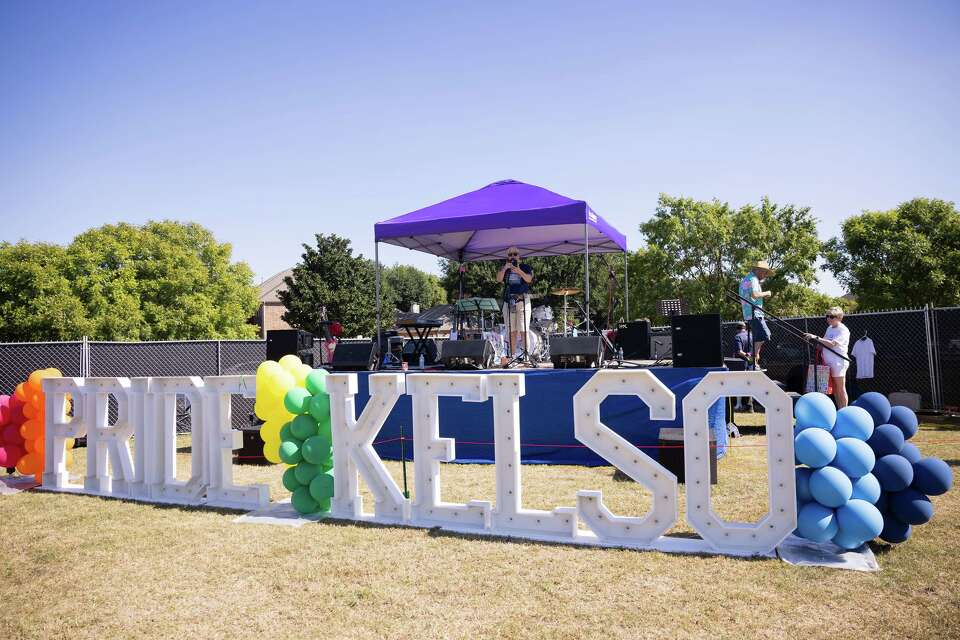
The city council of Southlake, Texas — one of the wealthiest cities in the US — voted unanimously on Tuesday night to deny a permit to Pride So-Kel, a community Pride festival planned for October 3 on the 10-acre property of St. Martin-in-the-Field, an Episcopal church.
While one person at the council meeting reportedly opposed the festival, council members didn’t discuss the event or ask any questions of city staff or organizers before voting to deny the event permit, The Dallas Morning News reported. Neither Southlake Mayor Shawn McCaskill nor city council members responded to the publication’s request for an explanation; a city spokesperson said they didn’t know why the council denied the permit.
The Pride event was held on the church’s property last year. It featured food trucks, vendors, performances by Dallas’ Oak Lawn Band, a B-52s cover band called “Bikini Whales,” and a drag queen singing songs about the difficulties of growing up trans in Texas’ rural city of Odessa.
Around the time of last year’s event, the then-mayor of the neighboring city of Keller, Armin Mizani, said his municipality didn’t condone the festival. The 2025 event itself was protested by a street preacher with a bullhorn asking “graphic questions about gay sex,” the aforementioned publication noted, as well as activists with the Texas Coalition for Kids, an anti-LGBTQ+ organization that purports to defend children from “the woke left.”
Last year’s event, however, didn’t require a city permit because its attendance was estimated at fewer than 1,000 people. Public events in Southlake with more than 1,000 people legally require a permit.
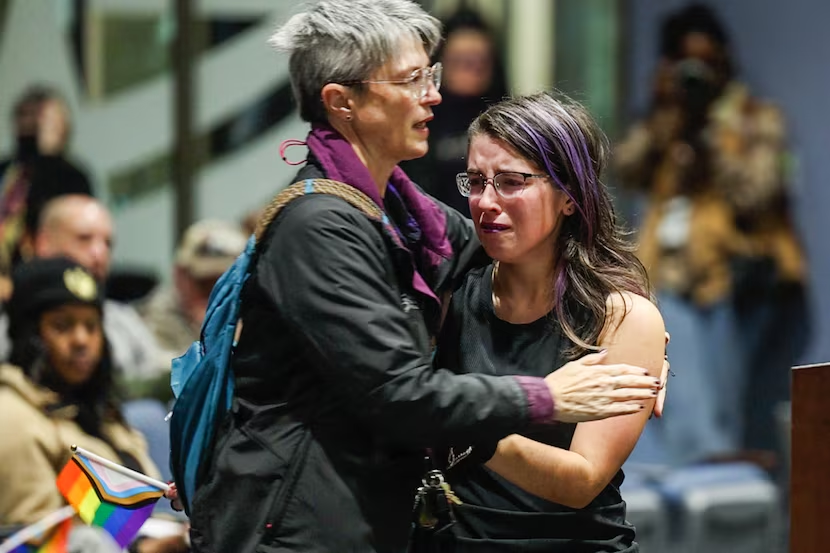
April Dreyson, who founded the Pride event, said she began the event with her wife to show gay and transgender people living in suburban Tarrant County that they are not alone. “We wanted to create a space where everyone could feel safe and loved. LGBTQ people have become a point of political fodder. Our existence is not political,” she said.
Rev. Alan Bentrup, who leads the church, offered to host the event since Dreyson doubted whether she could get a local city to permit the event.
Dreyson said she’s still exploring other options in hopes of hosting the event. “It’s not going to be that easy to make us go away,” she said.
Southlake’s school board recently approved policies banning trans-inclusive policies regarding pronouns and restroom use in local schools.
The December after last year’s event, the city of Keller rescinded its invitation for Bentrup to lead an opening prayer before its city council meeting. The city’s mayor said leading the prayer “is a privilege, not a right” and added that his city wouldn’t “elevate an individual who offended a large majority of our residents.”
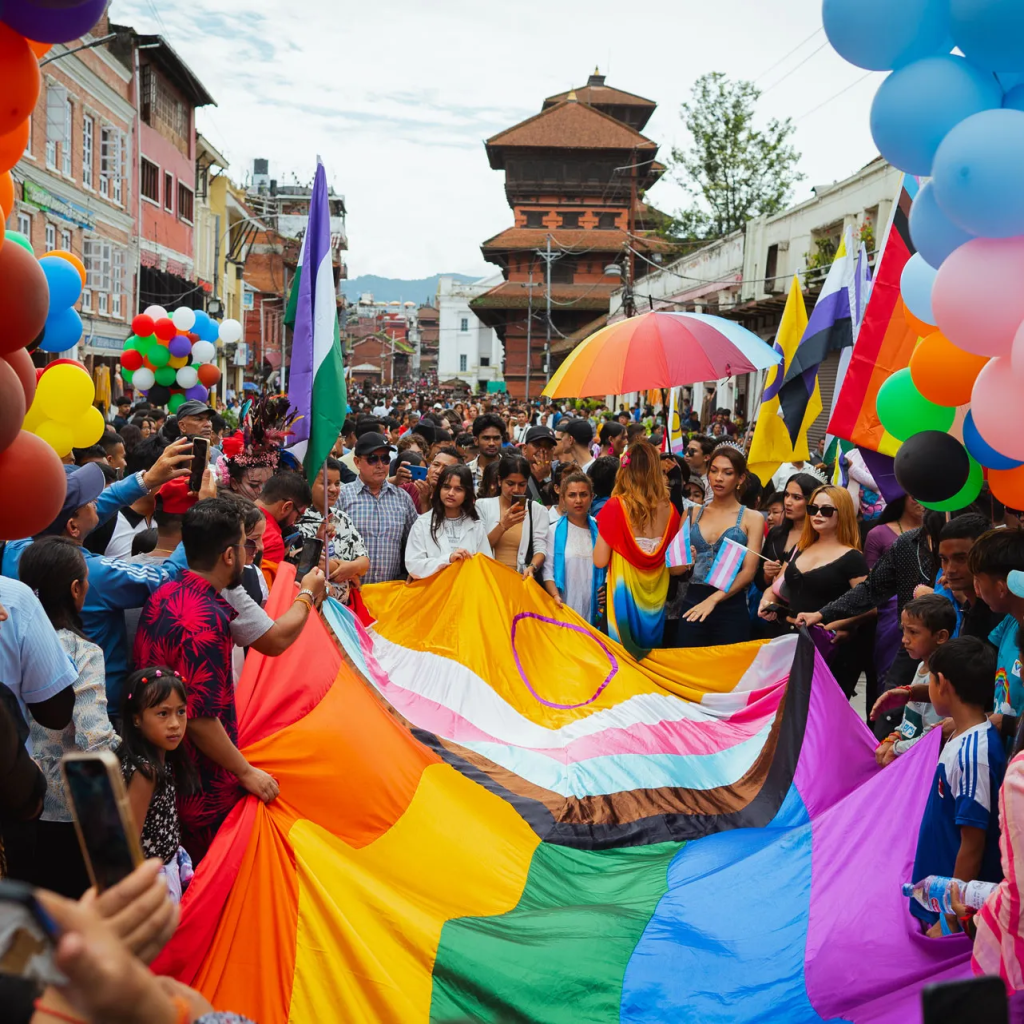
Hundreds of members of Nepal’s LGBTQ+ community and their supporters took to the streets of Kathmandu on Saturday to celebrate Pride Month.
Nepal has a growing LTGTQ+ community and has made significant gains for the rights of sexual minorities in the past few years.
The government elected in March under Prime Minister Balendra Shah has formed the Ministry of Women, Children, Gender and Sexual Minorities and Social Security, the first time a department has been dedicated to deal with the issues of women and sexual minorities.
Nepal became one of the first in Asia to allow same-sex marriage. The 2015 constitution explicitly states there can be no discrimination on the basis of sexual orientation.
A 2007 court decision required the government to make changes in favor of LGBTQ+ people. People who do not identify as female or male are now able to choose “third gender” on their passports and other government documents.
June is widely marked as gay Pride month – when LGBTQ+ communities march to protest discrimination and celebrate their identities in the month that the modern US gay liberation movement was born out of the 1969 uprising at New York’s Stonewall Inn – although not so much in certain Republican-led states this year.
Some Republican governors have suddenly come up with alternative labels for the month, which both supporters and opponents view as counterprogramming.
The governors of Indiana and Tennessee have rebranded June as “nuclear family month”, explicitly to celebrate units made up of “one husband, one wife and any biological, adopted or fostered children”.
In Alabama, it is now titled “strong families month”, apparently to promote Father’s Day, which falls in June in the US. However, despite the fact that millions of LGBTQ+ people are from and go on to create strong families, including households with two fathers, the Republican governor, Kay Ivey, was nothing if not explicit, declaring: “Homes led by a father and mother provide children with the structure and discipline necessary to succeed throughout life.” She also proclaimed that the father was the head of such households.
The governors have not specified that these labels are meant to replace Pride month for LGBTQ+ communities, but the sociopolitical message is loud and clear to most.
Josh Coleman, president of Central Alabama Pride, which has 42 events planned over two weeks, said the month’s celebrations, which culminate with a parade on 13 June and festival 14 June, won’t be affected by the proclamation.
“It’s not lost upon LGBTQ people when elected leaders don’t recognize or value the visibility of the community,” he said. “That’s why Pride started in the first place – to make sure the community had a community.”
The governors of Utah and Arkansas have deemed it “fidelity month”, which emphasizes fidelity to faith, country and family, however, without comment on how those families might be composed.
But last week, the X account of Arkansas’s governor, Sarah Huckabee Sanders, posted a link to an article about her proclamation that declared: “Another Red State is Counter-Programming Pride Month.”
She and the other governors have not answered questions from the Associated Press about why their proclamations are all set in June.
The second Trump administration has seen an escalation in conservative state and federal attacks on transgender rights, in particular, especially access to gender-affirming medical care, efforts to undermine the legality of same-sex marriage and bans on LGBTQ+ Pride flags.
Republican lawmakers in at least four other GOP-controlled states have introduced legislation this year calling for June to be “fidelity month”.
An organization pushing that concept was founded by Robert P George, a Princeton University professor of jurisprudence who has long been a leader on conservative thought. His group did not respond to interview requests.
He told the National Catholic Register about the idea in 2023, saying “nobody gets a monopoly on a particular day or a particular month”.
June Pride celebrations, which often include parades, festivals and performances, began in 1970 to mark the first anniversary of the violent police raid on the Stonewall Inn, a New York City LGBTQ+ bar, and have since expanded to cities worldwide.
“You can call it whatever you want, but one thing you’re not going to do is take away our pride or take away our joy,” said Jordan Braxton, co-president of USA Prides, an association of Pride celebration organizations.
Every Democratic president since Bill Clinton in 1999 has signed a Pride proclamation each year, while no Republican president has.
Last year, Donald Trump’s education department began declaring June to be “Title IX month” – and using it to open investigations into schools that allow transgender students to use the bathrooms or locker rooms that align with their gender identities.
One of the few GOP governors who has proclaimed LGBTQ+ Pride in June is Utah’s Spencer Cox, who did so in 2021, 2022 and 2023. In 2024, he deemed June a “month of bridge building” before switching to ”fidelity month” this year.
A poll released this week found that a two decade-long increase in acceptance of same-sex marriages and relationships has flattened, largely because more Republicans oppose them.
Last year, the Illinois Republican congresswoman Mary Miller introduced a resolution to make June “family month” – and to derecognize Pride month, saying: “Americans are inundated with perverse Pride Month displays and events throughout the month of June that denigrate the nuclear family.” It never got a vote.
Kevin Roberts, president of the conservative Heritage Foundation, said in an interview that it was good to have the conservative recognitions because Pride celebrations “were going so far as to make it difficult to celebrate traditional marriage”.
The resolution approved by Tennessee’s legislature and governor does not mention Pride month specifically, while saying the “nuclear family is under attack in our beloved State and nation”.
But Lakie Derrick, a conservative activist who wrote the measure with a friend, said she did indeed target it to June to counter Pride month, which she said “goes against” American values.
“We’re just reclaiming the culture, and there’s no better month to do that than in a month where the culture says we’re gonna celebrate something so opposite to what we know to be right,” Derrick said.
Marina Lowe, who leads legal and legislative affairs for the LGBTQ+ advocacy group Equality Utah, rejected the zero-sum game, saying that Pride month is not the antithesis of other values-based recognitions. Many LGBTQ+ people also value faith and family, she said, so “I don’t think that these positions need to be in conflict with one another.”
Meanwhile, thousands of events celebrating LGBTQ+ pride and campaigning for equality are already going on as usual across the US in a drench of rainbow colors.
In New York City last Saturday, an “eve of Pride” event saw the cathedral of St John the Divine illuminated in the colors of the rainbow and the transgender Pride flag as the pews were packed.
Florida has already largely derailed the promotion of diversity by the state, and a new law now threatens Pride events across the state.
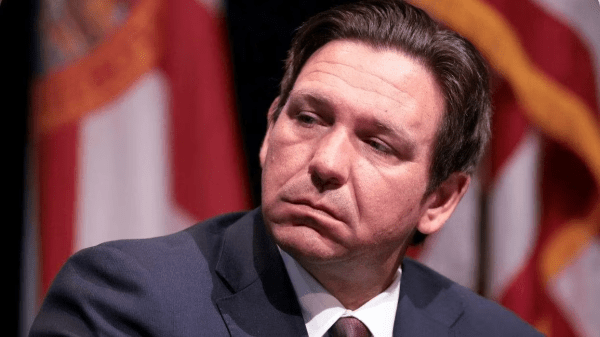
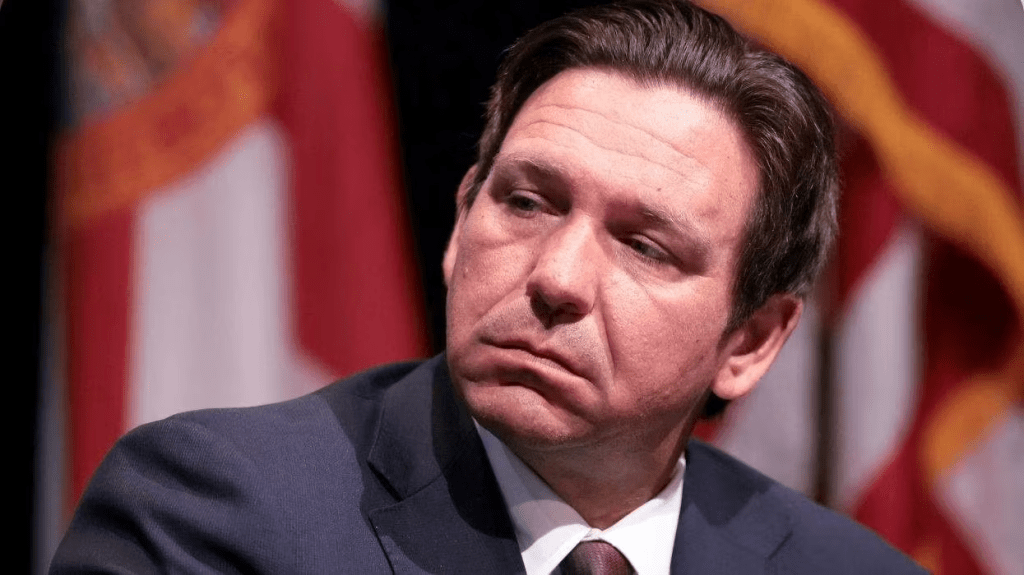
Florida Gov. Ron DeSantis signed legislation that prohibits any local government in Florida from making diversity, equity, and inclusion efforts. That’s part of a long battle against so-called DEI in the state, which has already banned the values in higher education. He deployed significant white grievance language as he signed legislation at a ceremony in Central Florida.
“I would think with DEI the disfavored groups, number one obviously, would be white males and I think they’ve been discriminated against,” DeSantis said.
The bill allows individuals to sue local governments that implement DEI programs.
The legislation, according to Florida Politics, defines DEI as efforts to “manipulate or otherwise influence the composition of employees with reference to race, color, sex, ethnicity, gender identity, or sexual orientation other than to ensure that hiring is conducted in accordance with state and federal anti-discrimination laws.”
But LGBTQ+ advocates have specifically voiced concern that this could shut down Pride events.
“It threatens nondiscrimination ordinances, specialized community health programs, recognizing culturally significant events like Pride Month or Black History Month, and more,” reads an opposition statement from Equality Florida.
Florida Rep. Fabian Basabe, a Republican representing Miami Beach, has suggested otherwise.
“Pride is not under threat, and it definitely isn’t going anywhere,” he said. “If anything, this moment presents an opportunity to both strengthen and expand the event and ensure it continues to thrive for decades to come as a cultural festival that celebrates community, supports local businesses, and contributes to the vitality of Miami Beach.”
Critics say the new law still allows equal opportunity programs and for cultural events to take place in Florida cities. But it doesn’t allow cities to run programs promoting diversity.
“The bill is necessary because cities and counties have been funding and promoting divisive activities under the guise of DEI,” said Florida Sen. Clay Yarborough.
The law goes into effect on January 1.
Equality Florida did convince lawmakers to make carve-outs in the law to allow preservation of the Pulse memorial in Orlando and for states to issue permits, but not promote Pride. But the law remains an existential threat, the group’s leadership said.
“This law is deeply concerning and deliberately vague, sending a clear message that celebrating diversity and supporting LGBTQ Floridians can carry legal and political risk. It targets not only local governments but every community that works to create inclusive, welcoming spaces. Our communities have faced unjust laws before, and responded with resilience, strength, and solidarity,” said Jon Harris Maurer, Equality Florida’s Public Policy Director.
“Equality Florida will continue to stand with local leaders, community organizations, and residents to ensure that LGBTQ people remain visible, celebrated, and supported. Pride will continue, programs that support inclusion will continue, and our communities will remain strong despite attempts to intimidate or silence them.”
Organizers of Arlington Pride announced Friday they will cancel next year’s event after the City Council rejected a plan to ban discrimination against gay and transgender residents.
The head of the HELP Center for LGBT Health and Wellness said in a statement the organization would not invite visitors to a city that does not offer “the most basic protections.”
“Pride is about safety, celebration, and community,” said DeeJay Johannessen, CEO of the HELP Center, which has offices in Arlington and Fort Worth. “Without local anti-discrimination safeguards, we cannot guarantee those values for our attendees, performers, or partners.”
Arlington Pride began in 2021 and quickly grew to one of the largest celebrations of its kind in North Texas, drawing more than 15,000 people to downtown in June this year. The all-day festival featured performances by RuPaul’s Drag Race queens, live music, an art show and local food vendors.The decision to suspend the event comes only three days after City Council members scrapped a plan to enshrine protections for LGBTQ residents into a city ordinance. The 5-4 vote followed months of debate, delayed votes and impassioned pleas from the LGBTQ community and allies to restore protections.
Initially passed unanimously in 2021, the ordinance prohibited discrimination based on sexual orientation and gender identity for housing, employment and public services. Discrimination against race, religion, national origin, sex and disability was also banned.
In September, the City Council temporarily suspended the ordinance over fears that Arlington risked losing more than $60 million in federal funding after President Donald Trump pledged to withhold money from cities with diversity, equity and inclusion, or DEI, programs. The president’s order has sown widespread confusion among cities that are unsure what qualifies as DEI.
For now, this means Arlington is no longer investigating complaints from people who say they faced discrimination by a landlord, business owner or employer. The vote makes Arlington one of the first cities in the country, if not the first, to repeal a nondiscrimination ordinance over fears of clashing with the Trump administration.
Some Arlington council members said they did not think the city could enforce its anti-discrimination ordinance. Council member Rebecca Boxall, who voted against restoring the ordinance, called it “bad policy.”
“From the very beginning, it was unenforceable at the city level,” said Boxall, who represents downtown Arlington. “The way I looked at it, and a lot of you mentioned protections, it does not offer protection. So in that respect, it’s just misleading. It’s just plain misleading.”
Federal law protects Americans from being discriminated against in public places based on disability, race, color, religion or national origin, but does not explicitly provide protections based on sexual orientation or gender identity.
More than 20 states and nearly 400 cities across the country have policies banning discrimination based on sexual orientation and gender identity, according to the Movement Advancement Project, a nonprofit research organization that tracks legislation related to LGBTQ issues. Texas has no such policy. Dallas, Fort Worth and Plano include LGBTQ residents in their anti-discrimination ordinances.
Mayor Jim Ross, who voted to restore protections, pledged to continue working on the issue and said the council will revisit the ordinance in coming weeks.
“Arlington is one of the most welcoming places,” Ross said. “We want everyone to know they can feel safe and comfortable here.”
On social media, responses to the cancellation of the 2026 Pride festival were mixed. Some said they did not want to spend time or money in a community that did not protect them, but others said this should drive an even larger event. Pride began in 1970 in a handful of U.S. cities to commemorate the one-year anniversary of the police raids on the Stonewall Inn in New York.
“Don’t you think now more than ever,” one person asked on Instagram, “we should host a louder, more exuberant pride?”
When the full schedule was confirmed the next day, Vancouver was selected for New Zealand’s clash with Belgium, leaving Seattle with the awkward situation of its “Pride Match” featuring Egypt and Iran — two nations with atrocious LGBTQ human rights records.
Both Egypt and Iran criminalize gay relationships. In Iran, capital punishment is still the maximum penalty under the law.
According to the Human Dignity Trust, there is evidence in recent years of the enforcement of their respective laws in each of the two nations.
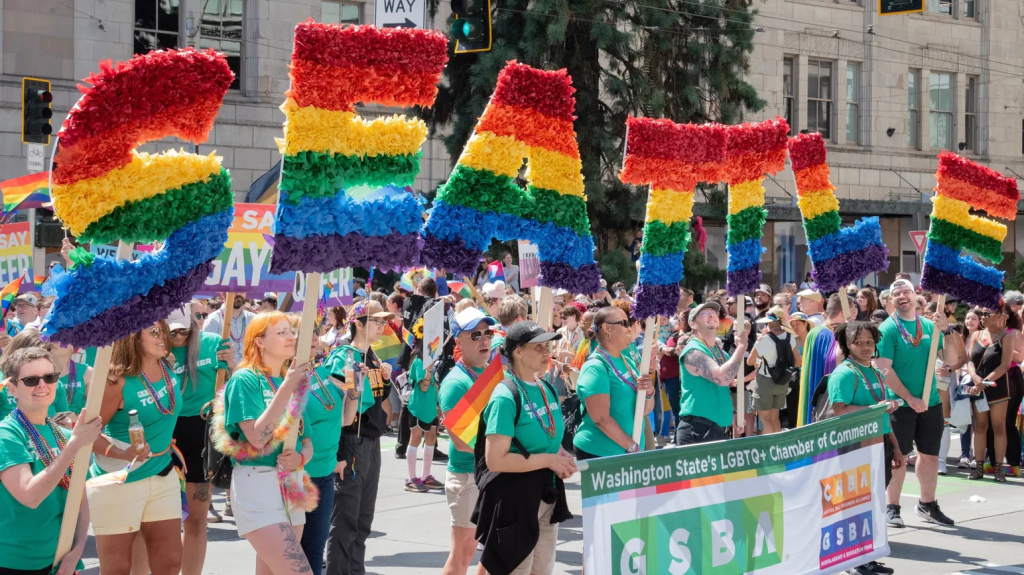
A match between countries that vociferously oppose Pride presents a complex scenario for Seattle organizers, who have set up a Pride Match Advisory Committee (PMAC) to “shape the communications, community activations, and cultural programming” for the festivities.
With Lumen Field hosting six World Cup fixtures in total, there might have been scope to alter the Pride Month plans.
However, the USMNT’s match with Australia on June 19 has already been designated to mark Juneteenth, while the other group matches in Seattle on June 15 and June 24 feature either Egypt or Qatar, which is another country that imprisons gay people.
There will also be a round-of-32 game featuring the winner of Group G at Lumen Field on July 1, and a last-16 match on July 6.
World Cup Pride Match with Egypt and Iran could be ‘good thing’
Despite the obvious challenges, Seattle FWC26 have indicated they will proceed with their plans for the Pride Match on June 26.
In a statement provided to Outsports, a spokesperson for the PMAC said: “The Pride Match has been scheduled to celebrate and elevate Pride events in Seattle and across the country, and it was planned well in advance.
“It is a Host City–led expression of Seattle and Washington State’s commitment to creating a welcoming and inclusive environment where everyone belongs: players, fans, residents, and visitors alike.
“Soccer has a unique power to unite people across borders, cultures, and beliefs. We are honored to host a Pride Match and to celebrate Pride as part of a global football community. This match reflects our ongoing commitment to respect, dignity, and unity for all.”
Eric Wahl, the brother of the late soccer journalist Grant Wahl, is a member of the Seattle PMAC. He is an advocate for public health and human rights, an out gay man, and a public speaker.
Following the fixture announcement, Wahl said on social media that the match-up of two countries where it is illegal to be gay is actually a “good thing” for the Pride Match.
City organizers do not want to pass up the opportunity to send out a strong message of welcome to LGBTQ people everywhere, having stated that with “hundreds of thousands of visitors and billions of viewers worldwide, this is a once-in-a-lifetime moment.”
Hedda McLendon is Seattle FWC26’s Senior Vice President of Legacy. She told Outsports that organizers are “working with small businesses so the region’s LGBTQ+-owned enterprises are ready to benefit from the tournament’s unprecedented visitor surge.”
Katie Wilson, the Democratic mayor-elect of Seattle who will assume office on Jan. 1, expressed similar hopes on social media after Saturday’s fixture confirmation. She referred to the Juneteenth and Pride themed matches, saying: “We get to show the world that in Seattle, everyone is welcome. What an incredible honor for our city!”
Created by local artists from Washington State, the designs capture “Seattle’s identity as a diverse, inclusive community and a leader in LGBTQ+ rights,” according to organizers.
It is understood that the PMAC’s preparations are not being made in conjunction with FIFA. On a webpage carrying information about the Pride Match Design Contest, a disclaimer stated that the creation “is not affiliated with or endorsed by FIFA.”
Seattle’s local organizing committee for World Cup 2026 has been preparing to stage a historic “Pride Match” at Lumen Field on June 26, the Friday of Pride Weekend. The themed fixture would be the first of its kind at a FIFA World Cup. The anniversary of the Stonewall riots is on June 28.
A few were even temporarily detained and harassed while being questioned about the items, including Grant Wahl. The journalist was told by guards to remove his T-shirt at a stadium and later reported on his distressing experience.
In recent days, a coalition of groups and organizations including the Sport and Rights Alliance has raised serious concerns about FIFA’s approach to human rights at World Cup 2026, including on the issue of LGBTQ safety.
As part of this, Athlete Ally ambassador Matt Pacifici, a former pro goalkeeper with Columbus Crew who came out publicly as gay in 2019, has criticized FIFA’s lack of anti-discrimination messaging at last summer’s Club World Cup tournament in the U.S. and also called for “enforceable protections” for LGBTQ players and fans.
Outsports has approached FIFA for comment, but by the time of publication, no response had been received.
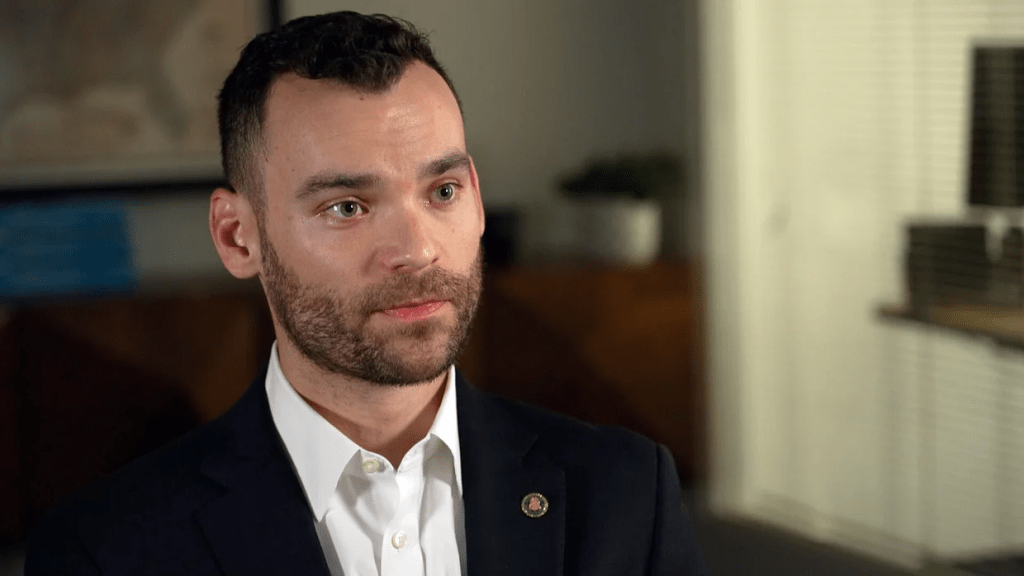
A 16-year FBI employee has filed a lawsuit alleging he was fired last month because he had a Pride flag draped near his desk.
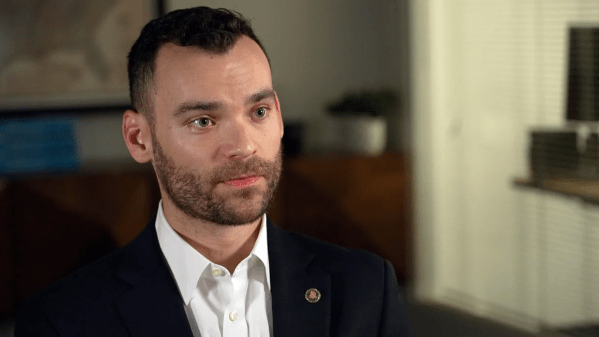
David Maltinsky, who was weeks away from being elevated to the position of agent, claims the firing was unlawful and sent a ripple of fear through the LGBT employees at the FBI.
“We’re not the enemy and we’re not some political mob. We’re proud members of the FBI, and we have a mission to do. We go to work every day to do it,” Maltinsky told CBS News in his first interview.
In a civil complaint filed Wednesday in the U.S. District Court for the District of Columbia, Maltinsky seeks a court order to restore his job.
The suit makes several allegations, including an argument that the FBI has violated Maltinsky’s First Amendment rights and retaliated against him for protected expression.
According to the lawsuit, the First Amendment “forbids government officials from firing government employees, or otherwise retaliating against them, simply for engaging in expressive conduct concerning a matter of public concern.”
The lawsuit states that Maltinsky was fired in a letter signed by FBI Director Kash Patel in October. A copy of the letter was provided by Maltinsky to CBS News. In it, Patel writes: “I have determined that you exercised poor judgment with an inappropriate display of political signage in your work area during your previous assignment at the Los Angeles Field Office. Pursuant to Article II of the United States Constitution and the laws of the United States, your employment with the Federal Bureau of Investigation is hereby terminated.”
The FBI had no comment regarding Maltinsky’s lawsuit.
Maltinsky, who began working at the FBI in 2008, was in the midst of a training program for future agents at the FBI’s facility in Quantico, Virginia, when he was fired, according to the lawsuit.
The rainbow flag that Maltinsky displayed at his workspace in the FBI’s Los Angeles Field Office was presented to him after it had previously been displayed outside the Bureau’s federal office complex there, according to the lawsuit.
Maltinsky said the federal government approved the display of Pride flags at federal office complexes in June 2021. His lawsuit alleges that a colleague filed a complaint with a supervisor about Maltinsky’s flag on Jan. 20, 2025, the day of President Trump’s second Inaugural.
In an hourlong interview with CBS News, Maltinsky said his firing has had a chilling impact inside the Bureau.
“The ripple effect of fear has been felt. Many gay colleagues have removed Pride flags from their desks, allies have removed Pride flags from their desk,” he said.
“David’s dream was to serve our country as an FBI Special Agent,” said Christopher M. Mattei, counsel for Maltinsky and a partner at Koskoff, Koskoff & Bieder, PC. “When that dream was cruelly taken from him, he stayed true to his oath and is now fighting to protect the rights of all Americans.”
“This case is about far more than one man’s career—it’s about whether the government can punish Americans simply for saying who they are,” Mattei said.
Under questioning at a congressional hearing in September, Patel told senators he was not taking action against any “enemies list,” including among FBI employees.
“The only actions we take, generally speaking, for personnel at the FBI, are ones based on merit and qualification and your ability to uphold your constitutional duty,” Patel said.
“You fall short, you don’t work there anymore.”
Maltinsky’s firing is part of a large and growing wave of terminations, resignations and retirements inside the Justice Department since Jan. 20. Justice Connection, an organization that supports the ex-employees, told CBS News more than 5,000 employees have left or been fired from the agency this year.
The purge includes agents and prosecutors who handled the U.S. Capitol riot prosecutions and the special counsel criminal probes of President Trump, which were dropped after Mr. Trump won the election in November 2024.
“It’s very sad that it’s happening,” Maltinsky told CBS News. “But part of this filing is that: I’m not intimidated. We’re not intimidated.”
“Diversity means so much to so many different people,” he added. “There is no one definition that everyone will agree on. What I believe is diversity brings strength.”
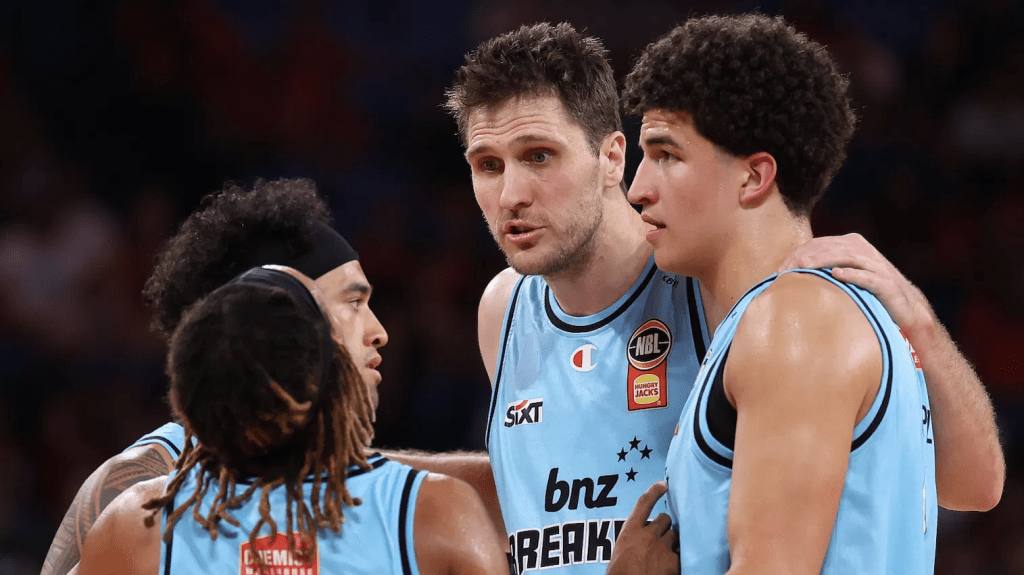
If you are an LGBTQ fan of the New Zealand Breakers of Australia’s National Basketball League, your favorite team won’t be wearing a Pride rainbow in 2026.
The NBL holds a Pride Round annually to celebrate the diversity of LGBTQ basketball fans worldwide, but the Breakers decided as a team to forgo wearing any Pride symbols, rainbows or colors this season that could be construed as supporting the gay community.
“In line with the league’s voluntary participation policy to wear the patch, the players discussed the matter as a team,” a team source said. “Some players raised religious and cultural concerns about wearing the insignia.”
The NBL’s Pride Round is from January 21 to February 1, 2026. The Breakers appear to be the only team that decided to skip honoring LGBTQ fans; the resulting uproar has spilled over to social media platforms like Instagram.
Many people have shared their disappointment with the players on the team in the comments section of any post involving the Breakers.
“Long-term member, won’t be anymore. Disgusted at the team, not supporting inclusion. Should all be ashamed,” someone wrote.
Another fan resounded the sentiment: “Been with the Breakers through thick and thin, but you’ve lost me on this one.”
It’s refreshing to see people stand with LGBTQ fans during a Pride controversy, as a handful of homophobes are often quick to complain anytime a pro sports franchise celebrates Pride.
Statistical analysis suggests that Australia is very supportive of gay people, with a study in 2023 reporting that seven percent more people in Australia support gay couples having children than an average of the rest of the world.
What makes the Breakers’ boycott of Pride even more disappointing is the fact that the team will be playing against the only openly gay player in the NBL during the Pride Round.
Isaac Humphries plays for the Adelaide 36ers, and he will face the Breakers in January during what could have been their Pride Night. Humphries went viral in 2022 when he came out in front of his teammates and talked about the difficulties of his journey.
Keeping the gay away from the Breakers certainly hasn’t given the team any sort of ability to win games this season. They are currently ninth in the NBL standings as of this writing. May their lack of support continue to deliver bad mojo for the rest of the year and beyond!
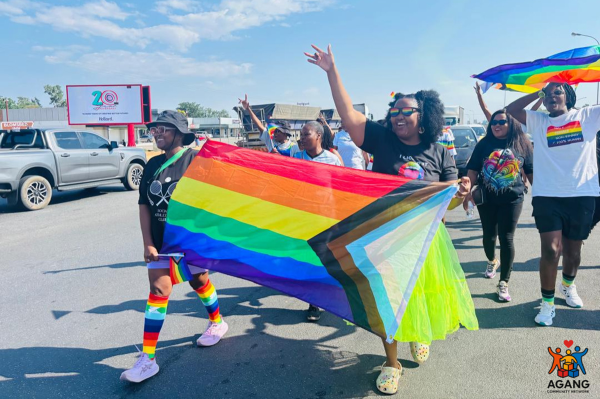
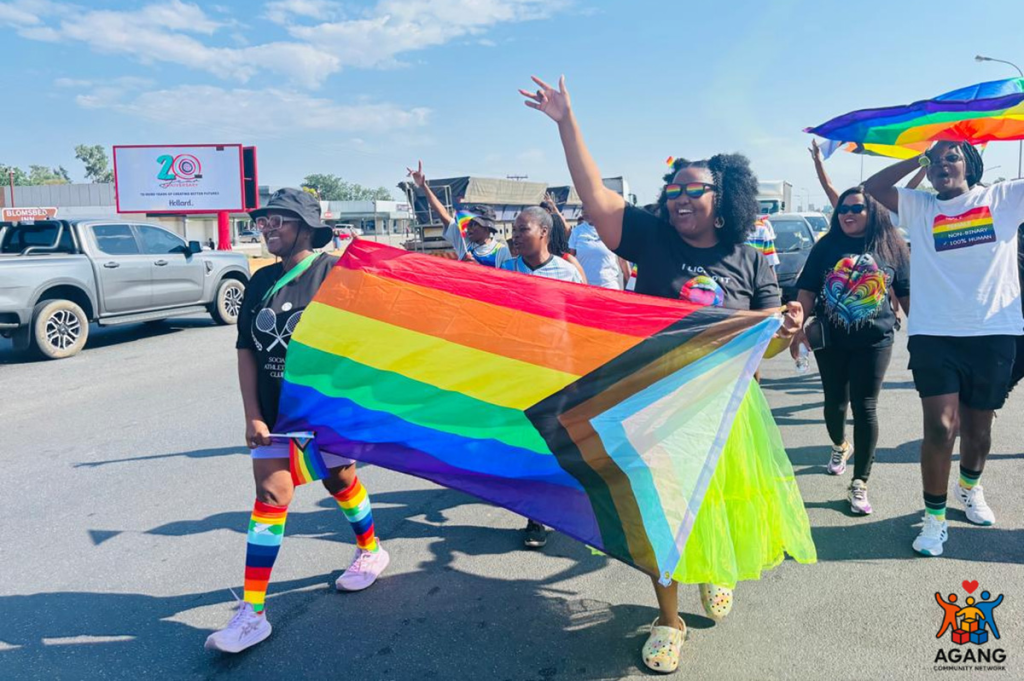
“When the sun rose on 1 Nov., 2025, Pride morning in Palapye, the open space where the march was scheduled to begin was empty. I stood there trying to look calm, but inside, my chest felt tight. I was worried that no one would come. It was the first-ever Pride in Palapye, a semi-urban village where cultural norms, religious beliefs, and tradition are deeply woven into everyday life.
I kept asking myself if we were being naive. Maybe people weren’t ready. Perhaps fear was going to win. For the first 30 minutes, it was me, a couple of religious leaders and a handful of parents. That was it. The silence was loud, and every second felt like it stretched into hours. I expected to see the queer community showing up in numbers, draped in color and excitement. Instead, only the wind was moving.
But slowly, gently, just like courage often arrives, people started to show up with a rainbow flag appearing from behind a tree and a hesitant wave from someone standing at a distance.
That’s when I understood that people weren’t late, just that they were afraid. And their fear made sense. Showing up openly in a small community like Palapye is a radical act. It disrupts silence. It challenges norms. It forces visibility. Visibility is powerful, but it is never easy. We marched with courage, pulling from the deepest parts of ourselves. We marched with laughter that cracked through the tension. We marched not because it was easy, but because it was necessary,” narrates activist Seipone Boitshwarelo from AGANG Community Network, which focuses on families and friends of LGBTIQ+ people in Botswana. She is also a BW PRIDE Awards nominee for the Healing and Justice Award, a category which acknowledges contributions to wellness, mental health, and healing for the LGBTIQ+ community across Botswana.
Queer Pride is Botswana Pride!
Pride is both a celebration and a political statement. It came about as a response to systemic oppression, particularly the criminalization and marginalization of LGBTIQ+ people globally, including in Botswana at some point. It is part of the recognition, equality, and assertion of human rights. It also reminds us that liberation and equality are not automatically universal, and continued activism is necessary. A reminder of the famous saying by Fannie Lou Hamer, “Nobody is free until everybody’s free.”
The 2023 Constitutional Review process made one thing evident, which is that Botswana still struggles to acknowledge the existence of LGBTIQ+ people as full citizens. Instead of creating a democratic space for every voice, the process sidelined and erased an entire community. In Bradley Fortuin’s analysis of the Constitutional review and its final report, he highlighted how this erasure directly contradicts past court decisions that explicitly affirmed the right of LGBTIQ+ people to participate fully and openly in civic life. When the state chooses to ignore court orders and ignore communities, it becomes clear that visibility must be reclaimed through alternative means. This is why AGANG Community Network embarked on Palapye Pride. It is a radical insistence on belonging, rooted in community and strengthened through intersectionality with families, friends, and allies who refuse to let our stories be erased.
Motho ke motho ka batho!
One of the most strategic decisions made by the AGANG Community Network was to engage parents, religious leaders, and local community members, recognizing their value in inclusion and support. Thus, their presence in the march was not symbolic, but it was intentional.
Funding for human rights and LGBTIQ+ advocacy has been negatively impacted since January 2025, and current funding is highly competitive, uneven and scarce, especially for grassroots organizations in Botswana. The Palapye Pride event was not funded, but community members still showed up and donated water, a sound system, and someone even printed materials. This event happened because individuals believed in its value and essence. It was a reminder that activism is not always measured in budgets but in willingness and that “motho ke motho ka batho!” (“A person is a person because of other people!”).
Freedom of association for all
In March 2016, in the the Attorney General of Botswana v. Rammoge and 19 Others case, also known as the LEGABIBO registration case, the Botswana Court of Appeal stated that “members of the gay, lesbian, and transgender community, although no doubt a small minority, and unacceptable to some on religious or other grounds, form part of the rich diversity of any nation and are fully entitled in Botswana, as in any other progressive state, to the constitutional protection of their dignity.” Freedom of association, assembly, and expression is a foundation for civic and democratic participation, as it allows all citizens to organize around shared interests, raise their collective voice, and influence societal and cultural change, as well as legislative reform.
The Botswana courts, shortly after in 2021, declared that criminalizing same-sex sexual relations is unconstitutional because they violated rights to privacy, liberty, dignity, equality, and nondiscrimination. Despite these legal wins, social stigma, cultural, and religious opposition continue to affect the daily lived experience of LGBTIQ+ people in Botswana.
The continuation of a declaration
AGANG Community Network is committed to continuing this work and creating safe and supportive spaces for LGBTIQ+ people, their families, friend, and allies. Pride is not just a day of fun. It is a movement, a declaration of queer existence and recognition of allyship. It is healing and reconciliation while amplifying queer joy.
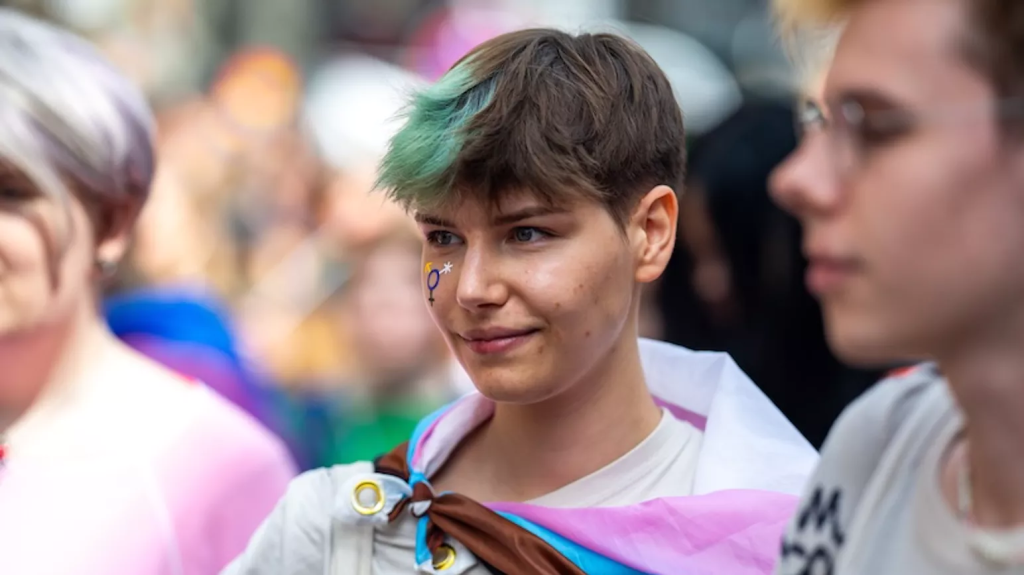
Over 100,000 people marched in London’s Trans+ Pride event on Saturday, making it the biggest trans Pride march in the world, according to The Guardian. The event’s theme, “Existence and Resistance,” was developed in response to the recent U.K. Supreme Court ruling that the legal definition of a woman in non-discrimination law is based on biological sex rather than gender identity.
“It was an emotional and powerful day,” the event’s co-founder Lewis G. Burton told the aforementioned publication. “At a time when the Supreme Court is making sweeping decisions about trans people without consulting a single trans person or organisation, and when a small, well-funded lobby of anti-trans campaigners continues to dominate headlines and waste public resources, our community came together to show what real strength, solidarity and care looks like.”
The march began at 1 p.m. local time on Saturday and proceeded for just under two miles, from near the BBC Broadcasting House to the Parliament Square Gardens. The event’s speakers included Heartstopper actress Yasmin Finney and activist Caroline Litman, whose trans daughter took her life in 2022 after waiting nearly three years for gender-affirming healthcare, the BBC reported.
London Trans+ Pride began in 2019 as an alternative to the city’s more commercial Pride march. This year’s event gained over 40,000 additional participants, compared to last year’s crowd of 60,000, the BBC noted.
“The message was clear: We will not be erased,” Burton said. “Our existence is natural, historic and enduring. You can try to take away our rights, but you will never remove us from society. We are a part of humanity – and the public will not stand by while harm is done to our community.”
The event occurred in the aftermath of a recent Supreme Court case in which For Women Scotland (FWS), an anti-trans organization, mounted a legal challenge over the definition of a woman under the country’s 2010 Equality Act. After the court ruled that the law’s definition of a woman is based on “biological sex,” the U.K.’s Equality and Human Rights Commission (EHRC) said trans women and men “should not be permitted to use” the public restroom facilities that align with their gender.
Alex Parmar-Yee, from Trans+ Solidarity Alliance — one of the groups that marched in the weekend event — said the EHRC’s guidance “has not provided any additional clarity, and actually is going to devastate the lives of trans people [who] will lose access to essential services and spaces.”
“The main concern really here is that it feels like there’s not been a consideration of trans members of the community, and that this guidance will pass behind closed doors, without the scrutiny, and without visibility, and without democracy,” Parmar-Yee added, saying that she and other trans organizations are pushing for the government to provide greater transparency around trans-related policies and guidances.
Speaking with Attitude magazine, activist Litman expressed concern over The Online Safety Act, a newly enacted U.K. law that requires websites with explicit adult material to conduct user age checks. Critics of the law worry it’ll be used to block age-appropriate LGBTQ+ resources for minors.
“It’s really scary,” Litman said. “[My late daughter] Alice got a lot of help and support online, whilst feeling very isolated in her own lived experience world that didn’t really have anything for her. Her online world really protected her – and so both these legislations are really concerning and need to be seriously looked at for reversal.”
When asked what she would tell her daughter now, Litman said, “Find your community. That’s what I’d say – find your community. Because they’ll save you, they’ll look after you, they’ll nurture you and support you and get you through this. To do this together. That’s what I’d say to her. And I love her. Love. I love, I love, love, love, I love.”




You must be logged in to post a comment.