Paris Lee was shot six times and killed by Samuel Ward Jr.; this is an indisputable fact. Ward was convicted of voluntary manslaughter in May 2025. He claimed it was self-defense, but the jury didn’t buy it.
This week, however, the Tennessee Court of Criminal Appeals reversed his conviction. A three-judge panel declared that the jury was under the impression Lee was cisgender; that in not disclosing the victim’s status as a trans woman, the trial judge “misled” the jury; and that Ward was entitled to a new trial where he could use this fact to bolster his claim of self-defense.
This story was first reported by independent journalist Jamie Satterfield. Other outlets and LGBTQ organizations also reported on Lee’s death at the time, with some referring to her as Kitty Monroe, which was her name on social media.
“After a short deliberation, a Shelby County jury found Samuel Ward guilty of voluntary manslaughter in the shooting death of Paris Lee, concluding a case that revealed inconsistencies between the defendant’s claims and the physical evidence presented in court,” a May 2025 press release from the Shelby County District Attorney reads. “Ward claimed self-defense throughout the trial, but the jury rejected his narrative and found him guilty.”
The appellate judges did not contest any of the evidence. Rather, they took issue with one facet of the trial in particular: The original court had disallowed the defense from disclosing Lee’s sex assigned at birth to the jury, finding that it would cause an undue prejudice against the victim.
Ward’s defense appealed, and a panel of judges was tasked with answering several procedural questions: Did Ward have a right to use his victim’s sex assigned at birth as part of his defense? Moreover, did the trial judge dilute Ward’s right to defend himself by striking references to Lee’s assigned sex from the record?
“A deadly weapon is a deadly weapon is a deadly weapon,” the judge explained at trial. “Whether that person has a vagina or a penis has no bearing on the deadliness of a firearm.”
But the panel disagreed. They found that prohibiting the disclosure of Lee’s transgender status was prohibiting potentially exculpatory evidence for Ward.
“The State conceded that if the proof showed the victim’s assigned sex was the reason for the altercation between Defendant and the victim, it would be relevant to the adequate provocation element of voluntary manslaughter,” court documents read. “However, the State argued, the proof at trial would establish that the victim ‘was a large woman’ who was armed with a [firearm] and, therefore, the victim’s assigned sex was not relevant to the issue of self-defense.”
Conversely, Ward’s lawyers argued that Lee’s status as a trans woman impacted “how much fear” Ward felt, and therefore, how justifiable his actions were in the moment that he killed her.
What’s more: During trial, Ward waived his right to testify. He refused to take the stand unless he was allowed to call Lee’s gender into question, explicitly stating that he thought he would be judged more harshly by jurors for killing a presumed-cisgender woman than a transgender one.
The defense also argued that, while a jury may hold prejudice against Lee as a trans woman, Ward would face equal amounts of discrimination on the basis of his decision to sleep with transgender women.
According to the press release from the DA, the killing occurred after Ward went to Lee’s home, and a verbal altercation ensued. Lee asked Ward to leave, and he reportedly refused. Ward then claims that Lee pointed a gun at him.
In Ward’s telling, this caused him to fall backward down a staircase, with Lee still standing at the top. At the bottom of the stairs, he said he drew his gun and fired upward at Lee.
Ward shot Lee six times. Police found only one bullet casing from Lee’s gun; if she fired her weapon at all, she only did so once. Ward was wholly uninjured.
Physical evidence and expert testimony from the medical examiner “contradicted Ward’s version of events,” the press release continues. “The trajectories of the gunshot wounds did not align with the defendant’s statement. Additionally, Ward had no visible injuries, undermining his claim of self-defense.”
After killing Lee, Ward “left the scene and drove approximately 30 minutes to his home before calling 911—leaving Lee to die at the foot of her staircase,” the DA’s office concluded.
Even before killing Lee, Ward was a known entity to trans women in the area, according to Kayla Gore, who is the executive director of My Sistah’s House — a Memphis-based organization that supports Black and Brown trans people fleeing violence. Gore said Ward largely pursued relationships with transgender women.
After Lee’s death, Gore said she received countless calls about the case and spoke extensively to Lee’s loved ones. The crime left everyone terrified in its wake.
“What concerns me as a community organizer is what happens when a courtroom treats a Black trans woman’s identity as a material explanation like for someone’s fears,” Gore told Erin in the Morning. “They want that as evidence presented to the jury or the judge as a deciding factor on whether or not this was self-defense. It sends a message far beyond the courtroom.”
That message, she said, is that trans women can be harmed and killed with impunity — especially Black trans women, who are more likely than almost any other demographic to be the victims of hate crimes and domestic violence, while being the least likely to have resources available to them in the aftermath.
“I understand what the appellate court was addressing with the defendant’s right to present a defense,” Gore continued, “but there is a profound difference between saying evidence may be relevant to a legal defense, and saying that a transgender woman’s identity somehow makes her inherently more threatening.”
The case is a bitter reminder of the ways LGBTQ people have had their identities weaponized by the courts in the past, most notoriously through a legal defense tactic known as gay or trans “panic.”
According to the LGBTQ+ Bar Association, the trans “panic” defense is a legal strategy wherein someone charged with violent crimes uses their victim’s real or perceived gender identity to reduce or evade criminal liability, in tandem with other legal lines of defense — such as claiming provocation or an insanity plea.
“The LGBTQ+ ‘panic’ defense is usually employed to bolster a self-defense claim when the victim’s behavior does not meet the threat of serious bodily harm standard or when the defendant used greater force than reasonably necessary to avoid danger,” the LGBTQ+ Bar’s primer on the topic says. “This strategy requires the defendant to argue that their victim’s LGBTQ+ identity made them a greater threat than a heterosexual and/or cisgender person.”
This argument can be hugely consequential during a trial because self-defense claims rely on evaluating a defendant’s perceived risk of harm. This determines how justifiable deadly force might be.
So in Lee’s case, the argument stands to be that she was more dangerous than a cisgender woman, or that Ward otherwise had more reason to fear her because she was trans.
“We live in a society where Black trans women are stereotyped as dangerous, deceptive, threatening,” Gore said. She called the case’s remand “a slap in the face of all survivors.”
An index that measures state-level LGBTQ+ inclusion for business leaders has measured a national decline in support for the LGBTQ+ community for the fourth consecutive year.
Released this month, the eighth annual State LGBTQ+ Business Climate Index examines states across five main categories: legal protections, family support, political and religious attitudes, health care and employment. The index is published by OutLeadership, an LGBTQ+ business network.
This year’s report found that states that rank low in the index are performing worse year over year, and that fewer states are placing toward the middle of the 100-point index scale. The states with the lowest rankings were Arkansas, Tennessee, Idaho, South Carolina and Florida in that order.
LGBTQ+ rights are under attack across the United States, especially in Republican-led states, and polling suggests that support for LGBTQ+ rights is declining nationally. The American Civil Liberties Union is tracking more than 530 anti-LGBTQ+ bills introduced in state legislatures in 2026 alone. The worsening support index this year was driven by states adopting anti-trans bans around bathrooms, sports, pronoun usage and gender-affirming care, plus efforts to restrict diversity, equity, and inclusion programming on the federal and state levels, according to the report.
“The gap between inclusive and hostile states is wider than it has ever been, and it is still widening,” wrote Out Leadership CEO Todd Sears in an introduction to this year’s report. “For businesses, this means the cost of operating across a fractured regulatory landscape has never been higher, and the return on choosing to lead has never been greater.”
The purpose of the report is to help business leaders make decisions and reflect on economic development as it relates to the LGBTQ+ community.
“Multinational companies face operational and reputational risks when they do business in places where the legal and social atmosphere makes it difficult for LGBTQ+ people to live openly,” the report states.
This year, Out Leadership expanded evaluation criteria for its report to assess issues like bathroom bans, book access, drag performance legality, and LGBTQ+-inclusive government data collection. “If we had kept the Index frozen in its original form, we would be measuring a country that no longer exists,” the report says.
Despite an overall performance decline, the report also found that top-performing states regarding LGBTQ+ rights are only strengthening their protections for LGBTQ+ residents. The 10 best-performing states in this year’s index include Massachusetts, New York, Connecticut, New Jersey, and Illinois, rounding out the top five, respectively, which have all “been fixtures in the top tier for the entire history of the index,” according to this year’s report.
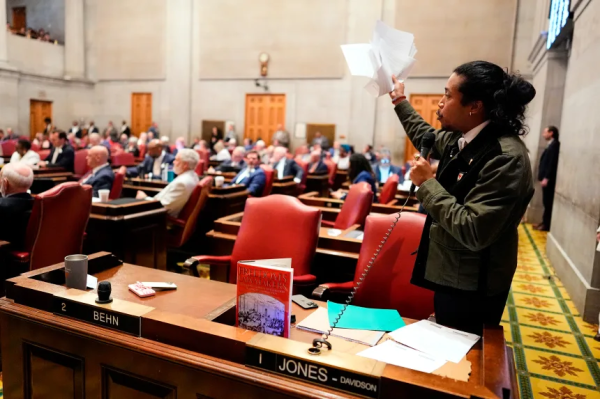
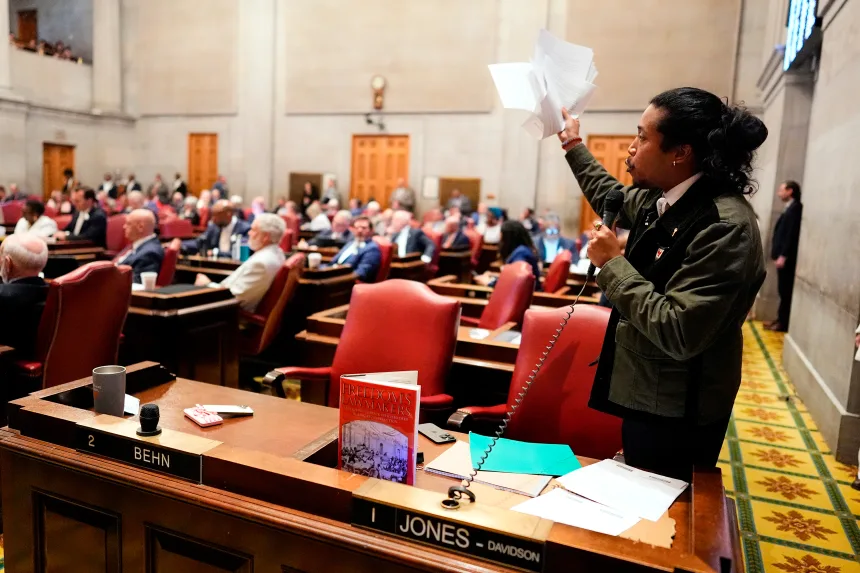
The Republican speaker of Tennessee’s House of Representatives on Tuesday stripped Democratic lawmakers of all committee assignments as punishment for their role in boisterous protests during last week’s special session on redistricting.
The move came five days after the Republican-controlled Tennessee House approved a new congressional map dismantling a Black-majority district in the US House of Representatives built around the predominantly African American city of Memphis.
Last Thursday’s vote, likely to result in flipping the Democratic-held seat to the Republicans in November’s midterm elections, came as several Southern states moved to leverage the recent Supreme Court vote that severely weakened the landmark Voting Rights Act.
The House floor vote in Nashville was met with raucous protests by activists yelling from the balcony of the visitors’ gallery and from Black lawmakers who stood at the front of the chamber linking arms in prayer as protesters sounded air horns and chanted slogans against the new map.
Opponents of the redrawn congressional district compared the undoing of the majority-Black district as a throwback to the Jim Crow era of racial discrimination in the Deep South.
In a letter to Tennessee’s House Democratic leader Karen Camper, the speaker, Cameron Sexton, said House Democrats were being removed from all standing committees and subcommittees as discipline for “instigating and encouraging” disruptions and “disorder on the House floor” during last Thursday’s vote.
As examples, he cited lawmakers for “interlocking arms in the well of the House,” for “blocking aisles on the House floor” and for using “prohibited props and noisemakers.”
Of the 99 seats in the Tennessee House, Republicans hold 75 and Democrats 24.
At least one House Democrat, Representative Justin Jones, posted online a copy of the individual letter he received serving notice of his committee and subcommittee removals, referring any questions to Camper.
“This is the same pattern of racial discrimination and authoritarian abuse we have come to expect,” Jones, who is Black and represents Nashville, said on social media.
Democratic leader Camper, who is Black and represents Memphis, later posted an open letter to her Facebook page decrying the redrawing of the Memphis-area congressional district as “one of the most troubling abuses of power this legislature has seen in recent memory.”
“When Democrats stand up, speak out, and expose what is happening in this chamber, the response from this supermajority is retaliation,” she wrote. “We are hurt. We are disappointed. But we are not intimidated.”
In February 2026, Tennessee State Representative Bo Mitchell (D-Nashville) strongly opposed legislation proposed by Republican Representative Gino Bulso that aimed to ban the display of Pride flags and other LGBTQ+ symbols in school buildings and other government properties.
The Debate and Arguments
Bo Mitchell’s Position: Mitchell criticized the proposal as “hateful” and part of a series of “anti-LGBTQ bills” targeting specific groups, rather than addressing broader issues like education or infrastructure. He expressed frustration at what he viewed as a focus on “culture wars and discrimination” rather than helping people.
Gino Bulso’s Position: Bulso defended the bill, arguing that pride flags represent political ideologies and that their display in schools contributes to the “indoctrination” of children. He aimed to limit the display of such items in public institutions.
Legislative Status: The bill, referred to as the “No Pride Flag or Month Act,” was intensely debated but stalled in a Senate committee in March 2026 after a 3-3 vote, though it was noted it could be brought back in future sessions.
Context and Reaction
“Poke in the Eye” Commentary: Mitchell gained attention for his passionate statement, saying, “I chose to run for office to help people. I didn’t come here to say who can I poke in the eye today”.
Community Response: The debate highlighted intense political divisions in Tennessee, with many supporting Mitchell’s stand against what they described as bullying and hateful legislation.
The proposed ban was part of a larger push by some Tennessee lawmakers to modify policies around LGBTQ+ protections and governmental neutrality in public spaces.
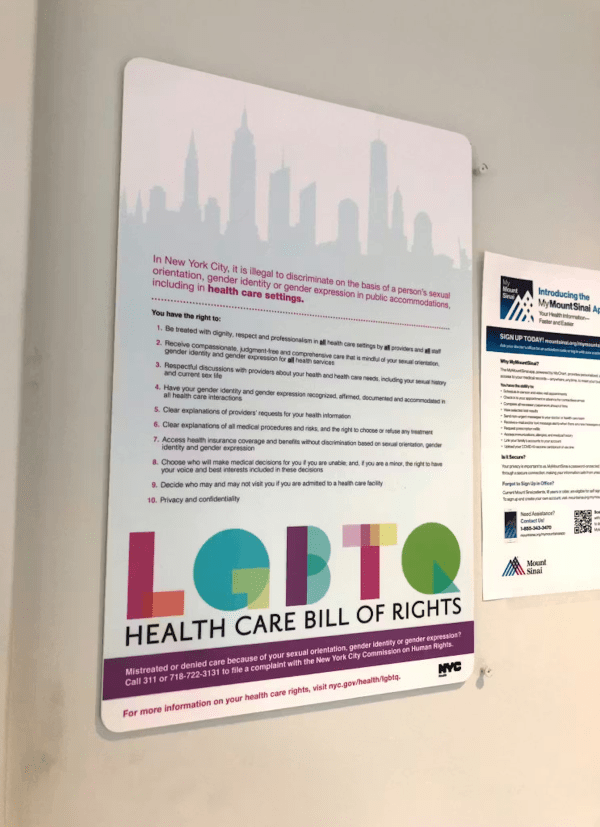
An increasing number of U.S. states have passed laws that allow health care providers – including doctors, nurses and pharmacists – to refuse to treat patients based on their personal or religious beliefs. While these conscientious objection laws have long existed for issues such as abortion, their effects on LGBTQ+ people have not been well studied.
Specifically looking at sexual minorities, our research found that lesbian, gay, bisexual and queer adults living in states that passed conscientious objection laws were 28% less likely to report receiving a first-time HIV test, compared to peers in states without conscientious objection laws. These laws did not affect HIV testing rates for heterosexual adults.
We analyzed data from the Centers for Disease Control and Prevention on the health outcomes of more than 109,000 lesbian, gay, bisexual, queer and heterosexual adults from 2016 to 2018. We focused on eight states, comparing two that enacted conscientious objection laws during that period (Illinois and Mississippi) and six that did not (Louisiana, Minnesota, Ohio, Texas, Wisconsin and Virginia).
To isolate the effect of the laws themselves, we compared changes in health outcomes among LGBQ+ and heterosexual adults living in states with or without religious exemptions to health care, both before and after the laws passed. Making all these comparisons at once allowed us to identify differences in health outcomes due to the laws rather than preexisting differences between states.
Our findings highlight how laws permitting clinicians to refuse to provide health care to LGBQ+ patients deepen existing health disparities. Notably, conscientious objection laws are just one type of policy restricting LGBTQ+ people’s access to health care.
HIV preexposure prophylaxis, or PrEP, can lower the risk of contracting HIV from sex by 99%. However, patients are required to receive an HIV test before PrEP can be prescribed. If providers are unwilling or unable to engage with LGBQ+ patients on their sexual health, people who could benefit most from HIV prevention tools, such as PrEP, may never receive them.
Moreover, since the risk of contracting HIV is closely linked to the social determinants of health, such as having safe and stable housing and employment, barriers to HIV testing could further widen health gaps.
Acknowledging the health consequences of conscientious objection laws could help policymakers and the public better understand their impact.
A 2026 national study found that Americans were more motivated to support policies that address LGBTQ+ inequality when these laws were framed as improving health inequality rather than economic inequality or sense of belonging. This finding suggests that people perceive health inequality as unjust and are less likely to blame LGBTQ+ individuals for those circumstances.
Tennessee lawmakers have advanced a host of anti-LGBTQ bills that would run counter to U.S. Supreme Court precedent.
Two measures, both proposed by Rep. Gino Bulso, R-Franklin, would challenge landmark cases that legalized same-sex marriage and established protections for discrimination based on sexual orientation or gender identity.
Rep. Gloria Johnson, D-Knoxville, questioned the legality to going against Bostock v. Clayton County, which established that LGBTQ people are protected from discrimination under the Civil Rights Act of 1964.
“We’re talking about federal law that supersedes state law,” Johnson said. “You can’t just ignore the federal law. So, therein is the problem for those of us who believe in our U.S. Constitution.”
Bulso answered, arguing that, “The Civil Rights Act of 1964 does not govern all employers. It only governs employers with more than 15 employees.”
The legislation, Bulso said, would only apply to small businesses — but could jeopardize federal funding by putting the state at odds with federal law.
There’s a similar fiscal note on another of Bulso’s bills that would challenge Obergefell v. Hodges. Bulso argued that the opinion only dictates that public actors must recognize same-sex marriages, not private citizens.
Tom Lee, member of the Board of Directors of the Tennessee Pride Chamber, spoke against the bill, arguing that it could allow discrimination against LGBTQ couples.
“Imagine if under this bill a private employer said, ‘Well, you can’t take family leave because I, as a private citizen, don’t recognize — using the language of the bill — your purported marriage,’” Lee said. “Or a bank says, ‘You’ll pay the higher rate (for unmarried couples). We’re not bound by the 14th Amendment. You’re not married in our eyes.’”
Both measures advanced Wednesday along party lines.
Other measures proposed this year would expand previous bills aimed at LGBTQ Tennesseans. State law that allows teachers to ignore a student’s preferred pronouns would expand to include honorifics like “Mr.” or “Mrs,” and the state’s drag ban would expand the type of businesses that could be penalized under the law.
Marcus Ellsworth with the Tennessee Equality Project said that the legislature wants to consider queer people obscene at a time when all people, regardless of gender or sexuality, are struggling.
“What is actually obscene is that every year we have to watch our state prioritize wasting time, money, and resources, fabricating ways to hurt us,” Ellsworth said.
A lot of states are passing laws that target the LGBTQ+ community — but these 15 are the absolute worst.
Over 1,000 anti-LGBTQ+ laws have been proposed across every state legislature in the U.S. over the past two years, according to the American Civil Liberties Union, and 126 have passed into law. Less than two months into the 2025 legislative session, 390 laws targeting LGBTQ+ people have been proposed.
While marriage equality and anti-discrimination protections based on sexual orientation and gender identity are still guaranteed federally by U.S. Supreme Court rulings (for now), LGBTQ+ people are still concerned about their rights being taken away, especially when only 15 states have “shield laws” protecting access to gender-affirming care and abortion.
Based on laws surrounding marriage, family rights, health care, education, and youth collected by the Movement Advancement Project, here are the 15 worst states for LGBTQ+ people.
Pride Parade in Huntsville, Alabama (October 1, 2022)
Nondiscrimination laws: Alabama does not have nondiscrimination laws in employment, housing, health care, education, public accommodations, or credit/lending. Its state code incorrectly defines sex as exclusively male or female, and it prohibits transgender people from using public facilities that align with their identities.
Marriage equality and parental rights: Alabama does not have adoption or foster care nondiscrimination protections for LGBTQ+ parents. It does not have second-parent adoption for unmarried couples, confirmatory adoption, nor recognition for parents using assisted reproductive technologies. It also does not have family leave laws that encompass LGBTQ+ people.
Education and youth policies: Alabama has a “Don’t Say Gay” law restricting discussion of LGBTQ+ identities in classrooms. It has banned trans students from participating in sports or using school facilities based on their identities, and it requires staff to forcibly out LGBTQ+ students to their guardians. The state also has a “religious exemption” law for Child Welfare Services.
Healthcare access and rights: Alabama has banned life-saving gender-affirming care for youth, though it permits the discredited and harmful practice of so-called conversion therapy for youth. Health insurance companies, including Medicaid, are not required to provide coverage related to gender transition or fertility treatments. The state also has a “religious exemption” law for healthcare providers.
Criminal justice: Alabama’s hate crime laws do not encompass sexual orientation and gender identity, and it has not banned the so-called “LGBTQ+ panic” defense.
Arkansas
Danielsen_Photography / Shutterstock.com
3rd annual Pride Walk at Hot Springs National Park, Arkansas (June, 4 2021)
Nondiscrimination laws: Arkansas does not have nondiscrimination laws in employment, housing, health care, education, public accommodations, or credit/lending. The state bans cities and local ordinances from passing nondiscrimination laws, and it has law about “adult” performances that could be used to target or restrict drag.
Marriage equality and parental rights: Arkansas does not have adoption or foster care nondiscrimination protections for LGBTQ+ parents. It does not have second-parent adoption for unmarried couples, confirmatory adoption, nor recognition for parents using assisted reproductive technologies. It also does not have family leave laws that encompass LGBTQ+ people.
Education and youth policies: Arkansas has a “Don’t Say Gay” law restricting discussion of LGBTQ+ identities in classrooms. It has banned trans students from participating in sports or using school facilities based on their identities, and it requires staff to forcibly out LGBTQ+ students to their guardians.
Healthcare access and rights: Arkansas has banned life-saving gender-affirming care for youth, though it permits the discredited and harmful practice of so-called conversion therapy for youth. Medicaid is forbidden from providing coverage related to gender transition to minors, and insurance companies are not required to cover fertility treatments. The state also has a “religious exemption” law for healthcare providers.
Criminal justice: Arkansas’ hate crime laws do not encompass sexual orientation and gender identity, and it has not banned the so-called “LGBTQ+ panic” defense. It has an HIV criminalization law that may require sex offender registration.
Florida
Chris_Harris / Shutterstock.com
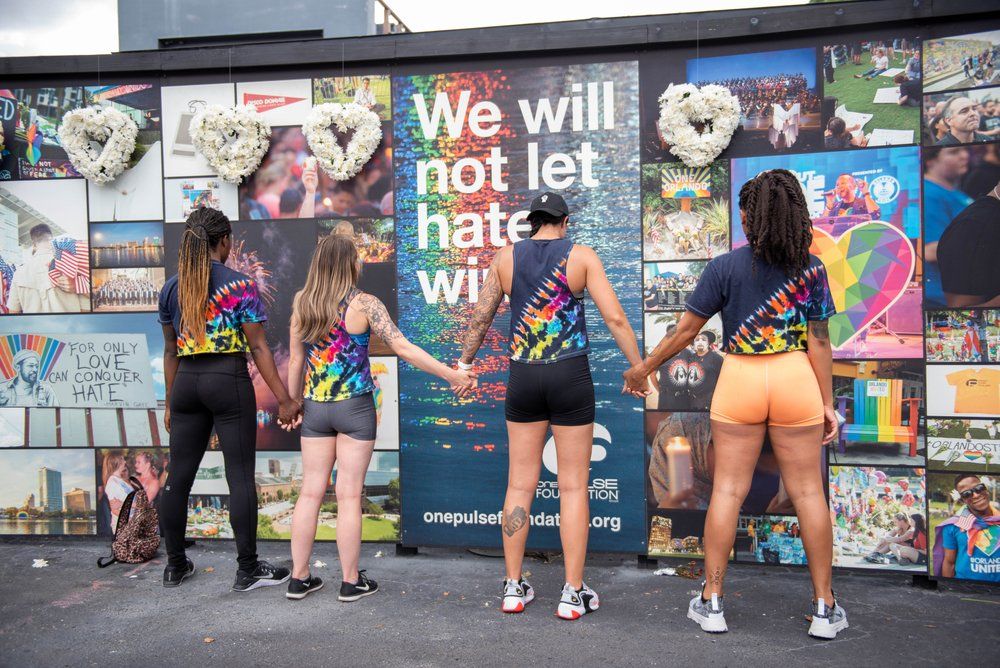
Mourners pay their respects to the fallen at the Pulse Nightclub memorial on the 5th anniversary of the Pulse mass shooting in Orlando, Florida (June 12, 2021)
Nondiscrimination laws: Florida has nondiscrimination laws in employment, housing, and public accommodations, but not in credit/lending, health care, nor education. The state prohibits transgender people from using public facilities that align with their identities, and it does not allow updating gender markers on driver’s licenses or birth certificates. It has law about “adult” performances that could be used to target or restrict drag
Marriage equality and parental rights: Florida does not have adoption or foster care nondiscrimination protections for LGBTQ+ parents. It does not have second-parent adoption for unmarried couples, confirmatory adoption, nor recognition for parents using assisted reproductive technologies. It also does not have family leave laws that encompass LGBTQ+ people.
Education and youth policies: Florida originated the “Don’t Say Gay” laws restricting discussion of LGBTQ+ identities in classrooms. It has banned trans students from participating in sports or using school facilities based on their identities, and it requires staff to forcibly out LGBTQ+ students to their guardians.
Healthcare access and rights: Florida has banned life-saving gender-affirming care for youth, though it permits the discredited and harmful practice of so-called conversion therapy for youth. Medicaid is forbidden from providing coverage related to gender transition for all ages, and insurance companies are not required to cover fertility treatments. The state also has a “religious exemption” law for healthcare providers.
Criminal justice: Florida’s hate crime laws only encompass sexual orientation, not gender identity. It has not banned the so-called “LGBTQ+ panic” defense, and it has an HIV criminalization law.
Idaho
Venture Out Media / Shutterstock.com
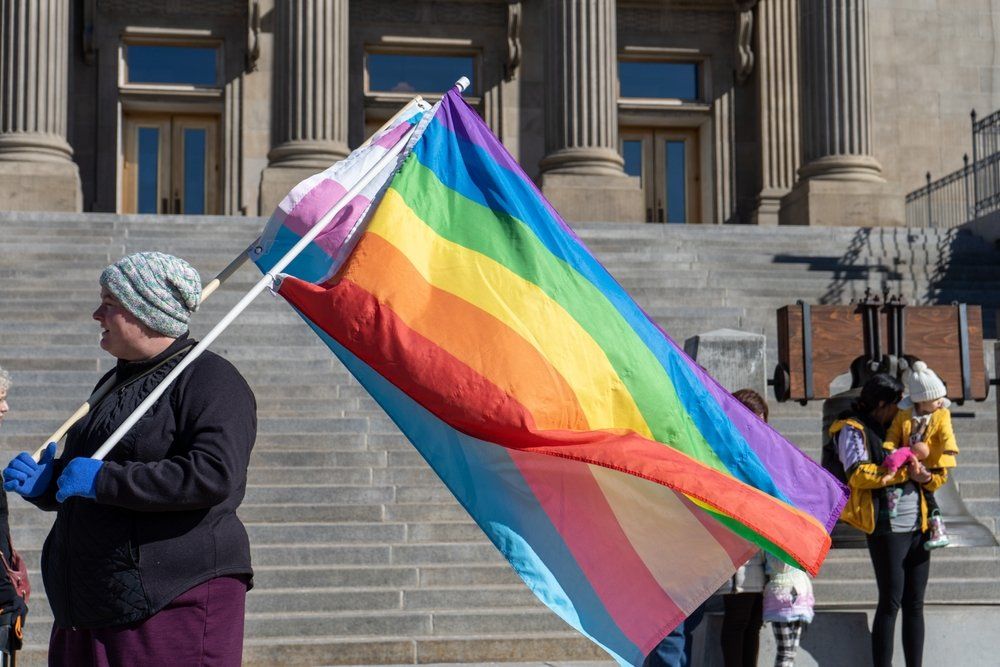
Rally in support of transgender youth and gender-affirming care in Boise, Idaho (February 24, 2023)
Nondiscrimination laws: Idaho has nondiscrimination laws in employment, housing, and public accommodations, but not in credit/lending, education, health care, nor for state employees. Its state code incorrectly defines sex as exclusively male or female.
Marriage equality and parental rights: Idaho does not have adoption or foster care nondiscrimination protections for LGBTQ+ parents. It has second-parent adoption for unmarried couples, but not confirmatory adoption nor recognition for parents using assisted reproductive technologies. It also does not have family leave laws that encompass LGBTQ+ people.
Education and youth policies: Idaho has banned trans students from participating in sports or using school facilities based on their identities, and it requires staff to forcibly out LGBTQ+ students to their guardians. The state also has a “religious exemption” law for Child Welfare Services, though it has protections for LGBTQ+ youth in the Child Welfare System.
Healthcare access and rights: Idaho has banned life-saving gender-affirming care for youth, though it permits the discredited and harmful practice of so-called conversion therapy for youth. Medicaid is forbidden from providing coverage related to gender transition for all ages, and insurance companies are not required to cover fertility treatments. The state also has a “religious exemption” law for healthcare providers.
Criminal justice: Idaho’s hate crime laws do not encompass sexual orientation and gender identity. It has not banned the so-called “LGBTQ+ panic” defense, and it has an HIV criminalization law.
Indiana
Umut Tolga Pehlivan / Shutterstock.com
Indiana University Bloomington Students walking at Indy Pride in Indianapolis, Indiana (June 4, 2008)
Nondiscrimination laws: Indiana has weaker nondiscrimination laws in employment, housing, and public accommodations, but not in credit/lending, education, nor health care. The state also has a broad “religious exemption” law.
Marriage equality and parental rights: Indiana has adoption or foster care nondiscrimination protections based on sexual orientation, but not gender identity. It has second-parent adoption for unmarried couples, but not confirmatory adoption nor recognition for parents using assisted reproductive technologies. It also does not have family leave laws that encompass LGBTQ+ people.
Education and youth policies: Indiana has a “Don’t Say Gay” law restricting discussion of LGBTQ+ identities in classrooms. It has banned trans students from participating in sports or using school facilities based on their identities, and it requires staff to forcibly out LGBTQ+ students to their guardians.
Healthcare access and rights: Indiana has banned life-saving gender-affirming care for youth, though it permits the discredited and harmful practice of so-called conversion therapy for youth. Medicaid and state health insurance plans are not required to provide coverage related to gender transition or fertility treatments, but it has trans-inclusive health benefits for state employees.
Criminal justice: Indiana’s hate crime laws do not encompass sexual orientation and gender identity, and it has not banned the so-called “LGBTQ+ panic” defense. It has an HIV criminalization law that may require sex offender registration.
Louisiana
Scott Colesby / Shutterstock.com
Southern Decadence Parade march through the French Quarter in New Orleans, Louisiana (September 1, 2024)
Nondiscrimination laws: Louisiana does not have nondiscrimination laws in employment, housing, health care, education, public accommodations, or credit/lending. Its state code incorrectly defines sex as exclusively male or female, and it prohibits transgender people from using public facilities that align with their identities. The state also has a broad “religious exemption” law.
Marriage equality and parental rights: Louisiana does not have adoption or foster care nondiscrimination protections for LGBTQ+ parents. It does not have second-parent adoption for unmarried couples, confirmatory adoption, nor recognition for parents using assisted reproductive technologies. It also does not have family leave laws that encompass LGBTQ+ people.
Education and youth policies: Louisiana has a “Don’t Say Gay” law restricting discussion of LGBTQ+ identities in classrooms. It has banned trans students from participating in sports or using school facilities based on their identities, and it requires staff to forcibly out LGBTQ+ students to their guardians.
Healthcare access and rights: Louisiana has banned life-saving gender-affirming care for youth, though it permits the discredited and harmful practice of so-called conversion therapy for youth. Health insurance companies, including Medicaid, are not required to provide coverage related to gender transition or fertility treatments, and state employees do not have trans-inclusive benefits.
Criminal justice: Louisiana’s hate crime laws only encompass sexual orientation, not gender identity. It has not banned the so-called “LGBTQ+ panic” defense, and it has an HIV criminalization law that may require sex offender registration.
Mississippi
Carmen K. Sisson / Shutterstock.com
A rainbow flag supporting Pride month flies a the Biloxi VA Medical Center in Biloxi, Mississippi (June 5, 2023)
Nondiscrimination laws: Mississippi does not have nondiscrimination laws in employment, housing, health care, education, public accommodations, or credit/lending. Its state code incorrectly defines sex as exclusively male or female, and it prohibits transgender people from using public facilities that align with their identities. The state also has a broad “religious exemption” law.
Marriage equality and parental rights: Mississippi does not have adoption or foster care nondiscrimination protections for LGBTQ+ parents. It has second-parent adoption for unmarried couples, but not confirmatory adoption nor recognition for parents using assisted reproductive technologies. It also does not have family leave laws that encompass LGBTQ+ people.
Education and youth policies: Mississippi has a “Don’t Say Gay” law restricting discussion of LGBTQ+ identities in classrooms. It has banned trans students from participating in sports or using school facilities based on their identities, and it requires staff to forcibly out LGBTQ+ students to their guardians. The state also has a “religious exemption” law for Child Welfare Services.
Healthcare access and rights: Mississippi has banned life-saving gender-affirming care for youth, though it permits the discredited and harmful practice of so-called conversion therapy for youth. Medicaid is forbidden from providing coverage related to gender transition for youth, and insurance companies are not required to cover fertility treatments. The state also has a “religious exemption” law for healthcare providers.
Criminal justice: Mississippi’s hate crime laws do not encompass sexual orientation and gender identity. It has not banned the so-called “LGBTQ+ panic” defense, and it has an HIV criminalization law.
Missouri
Ryanzo W. Perez / Shutterstock.com
A view down one of the streets filled with celebrants during Saint Louis PrideFest in Missouri (June 24, 2023)
Nondiscrimination laws: Missouri has weaker nondiscrimination laws in housing, and public accommodations, but not in employment, credit/lending, education, nor health care. The state also has a broad “religious exemption” law.
Marriage equality and parental rights: Missouri’sadoption or foster care nondiscrimination protections only encompass sexual orientation, not gender identity. It does not have second-parent adoption for unmarried couples, confirmatory adoption, nor recognition for parents using assisted reproductive technologies. It also does not have family leave laws that encompass LGBTQ+ people.
Education and youth policies: Missouri has banned schools and districts from passing nondiscrimination or anti-bullying policies protecting LGBTQ+ students. It has banned trans students from participating in sports based on their identities, but not from using facilities that align with their identities.
Healthcare access and rights: Missouri has banned life-saving gender-affirming care for youth, though it permits the discredited and harmful practice of so-called conversion therapy for youth. Medicaid is forbidden from providing coverage related to gender transition for all ages, and insurance companies are not required to cover fertility treatments. The state also has a “religious exemption” law for healthcare providers.
Criminal justice: Missouri’s hate crime laws encompass sexual orientation and gender identity, though it has not banned the so-called “LGBTQ+ panic” defense, and it has an HIV criminalization law.
Montana
Cavan-Images / Shutterstock.com
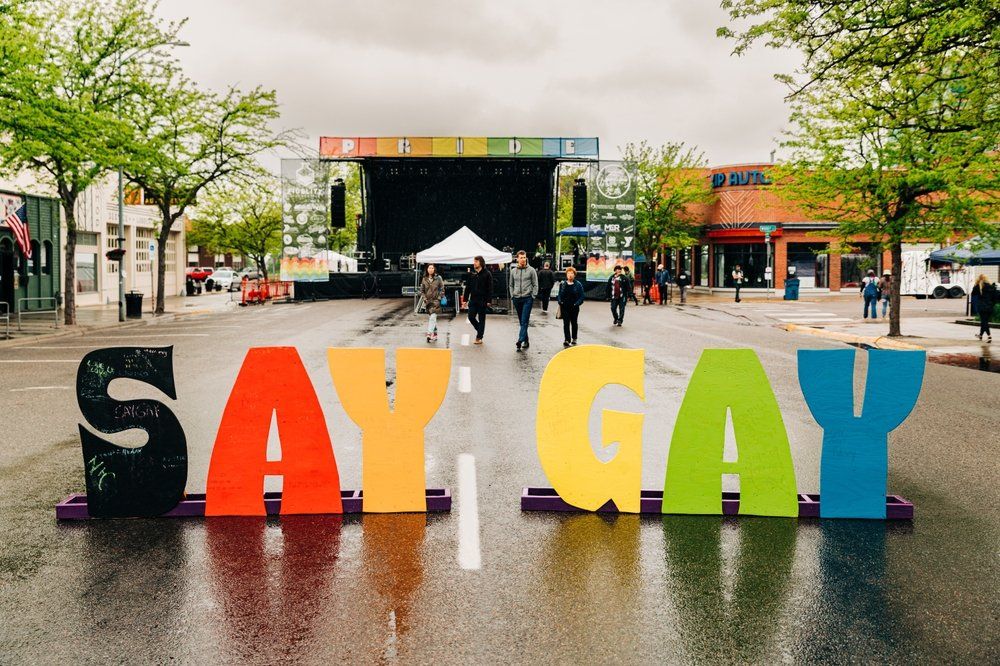
“Say Gay” sign at Missoula Pride in Montana (March 29, 2024)
Nondiscrimination laws: Montana does not have nondiscrimination laws in employment, housing, health care, education, public accommodations, or credit/lending.Its state code incorrectly defines sex as exclusively male or female, and it has a broad “religious exemption” law. The state has also explicitly restricted drag performances, and does not allow updating gender markers on birth certificates
Marriage equality and parental rights: Montana’sadoption or foster care nondiscrimination protections only encompass sexual orientation, not gender identity. It has second-parent adoption for unmarried couples, but not confirmatory adoption nor recognition for parents using assisted reproductive technologies. It also does not have family leave laws that encompass LGBTQ+ people.
Education and youth policies: Montana requires that parents be notified of LGBTQ+ curricula so they can opt out. It has banned trans students from participating in sports based on their identities, but not from using facilities that align with their identities. The state requires staff to forcibly out LGBTQ+ students to their guardians.
Healthcare access and rights: Montana has banned life-saving gender-affirming care for youth, though it permits the discredited and harmful practice of so-called conversion therapy for youth. Health insurance companies and Medicaid are required to cover care related to gender transition, and there is some coverage for fertility treatments. However, the state has a “religious exemption” law for healthcare providers.
Criminal justice: Montana’s hate crime laws do not encompass sexual orientation and gender identity. It has not banned the so-called “LGBTQ+ panic” defense, and it has an HIV criminalization law.
Oklahoma
Kit Leong / Shutterstock.com
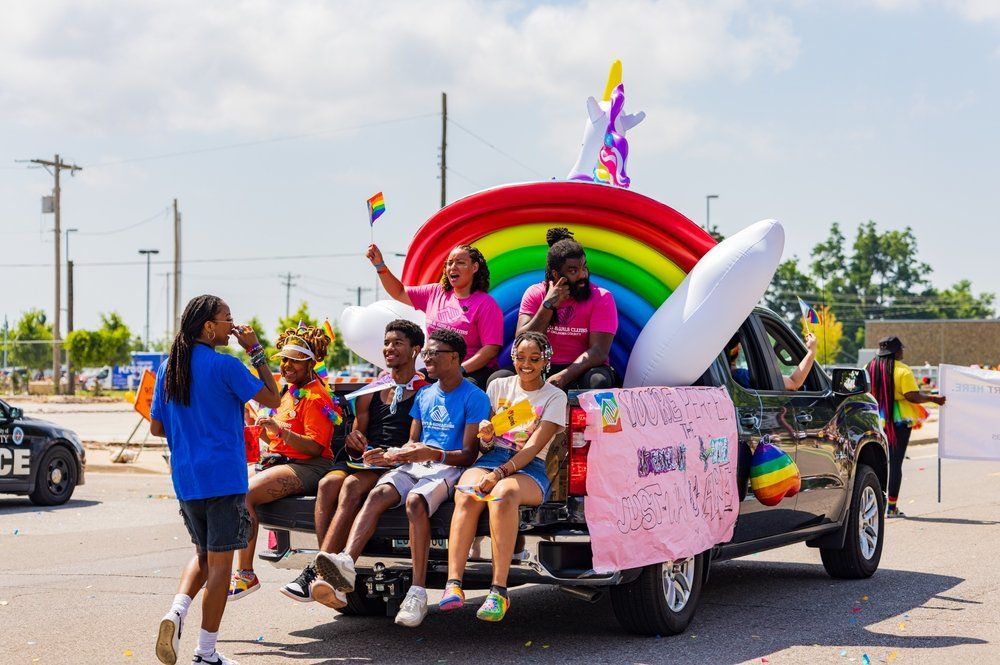
Pride Parade in Oklahoma (June 26, 2023)
Nondiscrimination laws: Oklahoma does not have nondiscrimination laws in employment, housing, health care, education, public accommodations, or credit/lending. Its state code incorrectly defines sex as exclusively male or female, and it prohibits updated gender markers on birth certificates. It also has a broad “religious exemption” law.
Marriage equality and parental rights: Oklahoma does not have adoption or foster care nondiscrimination protections for LGBTQ+ parents. It has second-parent adoption for unmarried couples, but not confirmatory adoption nor recognition for parents using assisted reproductive technologies. It also does not have family leave laws that encompass LGBTQ+ people.
Education and youth policies: Oklahoma has a weaker version of a “Don’t Say Gay” law that restricts the discussion of “homosexuality” in specific school subjects. It has banned trans students from participating in sports or using school facilities based on their identities. The state also has a “religious exemption” law for Child Welfare Services, though it has protections for LGBTQ+ youth in the Child Welfare System.
Healthcare access and rights: Oklahoma has banned life-saving gender-affirming care for youth, though it permits the discredited and harmful practice of so-called conversion therapy for youth. Health insurance companies, including Medicaid, are not required to provide coverage related to gender transition or fertility treatments, and state employees are not permitted trans-inclusive benefits.
Criminal justice: Oklahoma’s hate crime laws do not encompass sexual orientation and gender identity. It has not banned the so-called “LGBTQ+ panic” defense, and it has an HIV criminalization law.
South Carolina
Shuttershock creative
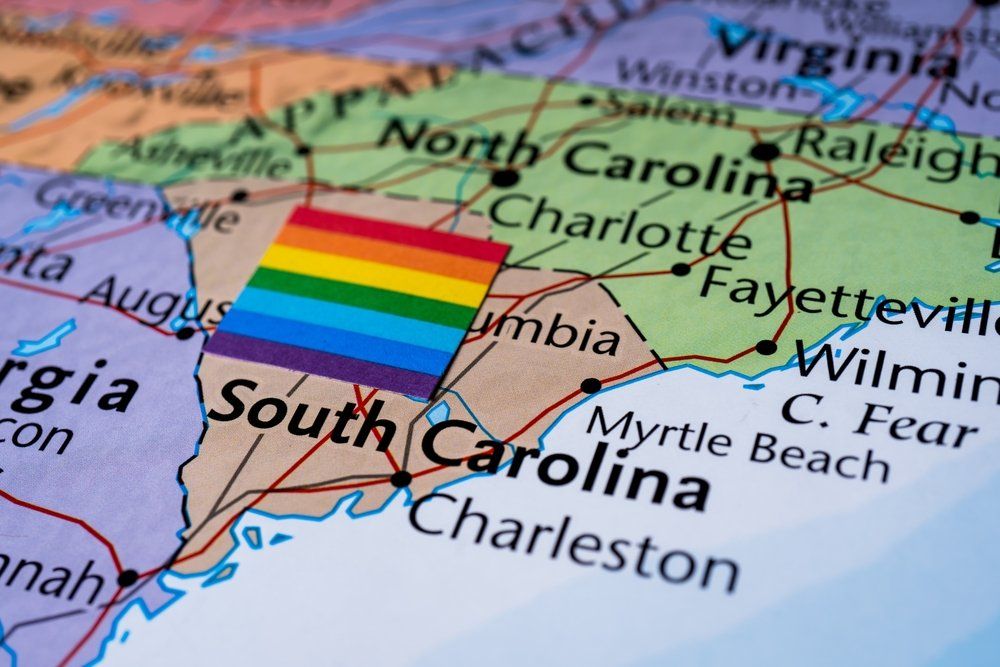
Rainbow flag on a map of South Carolina
Nondiscrimination laws: South Carolinadoes not have nondiscrimination laws in employment, housing, health care, education, public accommodations, or credit/lending. It has a broad “religious exemption” law.
Marriage equality and parental rights: South Carolina‘sadoption or foster care nondiscrimination protections only encompass sexual orientation, not gender identity. It does not have second-parent adoption for unmarried couples, confirmatory adoption, nor recognition for parents using assisted reproductive technologies. It also does not have family leave laws that encompass LGBTQ+ people.
Education and youth policies: South Carolinahas banned trans students from participating in sports based on their identities, but not from using facilities that align with their identities. The state requires staff to forcibly out LGBTQ+ students to their guardians. The state also has a “religious exemption” law for Child Welfare Services.
Healthcare access and rights: South Carolina has banned life-saving gender-affirming care for youth, though it permits the discredited and harmful practice of so-called conversion therapy for youth. Medicaid is forbidden from providing coverage related to gender transition for all ages, and insurance companies are not required to cover fertility treatments. The state also has a “religious exemption” law for healthcare providers.
Criminal justice: South Carolina‘s hate crime laws do not encompass sexual orientation and gender identity. It has not banned the so-called “LGBTQ+ panic” defense, and it has an HIV criminalization law.
South Dakota
Shuttershock creative
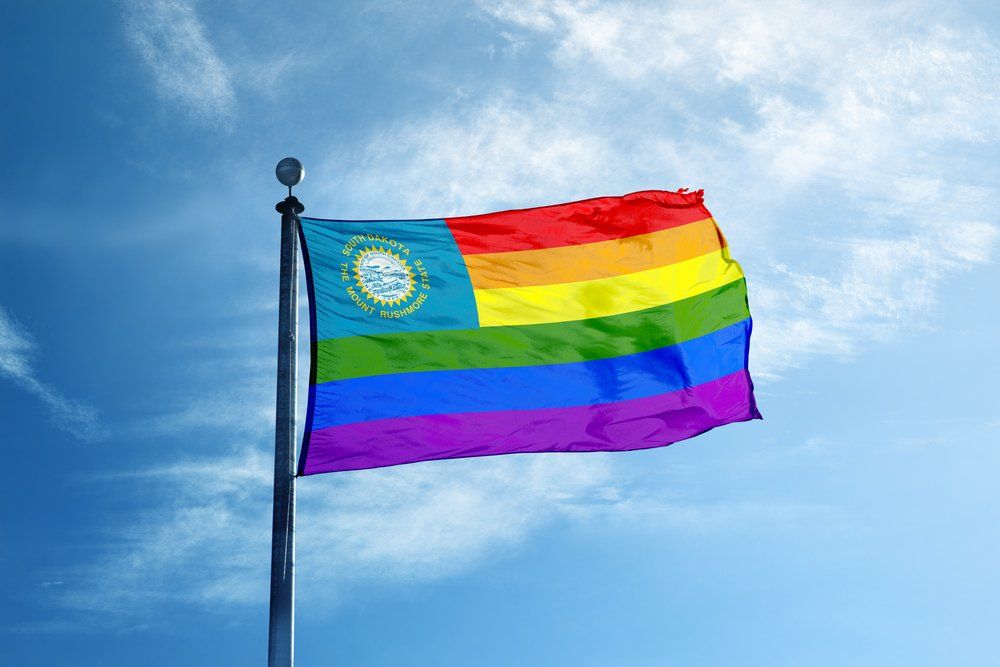
South Dakota state flag with rainbow stripes
Nondiscrimination laws: South Dakota does not have nondiscrimination laws in employment, housing, health care, education, public accommodations, or credit/lending. It has a broad “religious exemption” law.
Marriage equality and parental rights: South Dakota’sadoption or foster care nondiscrimination protections encompass sexual orientation and gender identity. However, it does not have second-parent adoption for unmarried couples, confirmatory adoption, nor recognition for parents using assisted reproductive technologies. It also does not have family leave laws that encompass LGBTQ+ people.
Education and youth policies: South Dakotahas banned schools and districts from passing nondiscrimination or anti-bullying policies protecting LGBTQ+ students. It has banned trans students from participating in sports based on their identities, but not from using facilities that align with their identities. The state also has a “religious exemption” law for Child Welfare Services, though it has protections for LGBTQ+ youth in the Child Welfare System.
Healthcare access and rights: South Dakota has banned life-saving gender-affirming care for youth, though it permits the discredited and harmful practice of so-called conversion therapy for youth. Health insurance companies, including Medicaid, are not required to provide coverage related to gender transition or fertility treatments, and state employees are not permitted trans-inclusive benefits.
Criminal justice: South Dakota‘s hate crime laws do not encompass sexual orientation and gender identity, and it has not banned the so-called “LGBTQ+ panic” defense. It has an HIV criminalization law that may require sex offender registration.
Tennessee
evenfh / Shutterstock.com
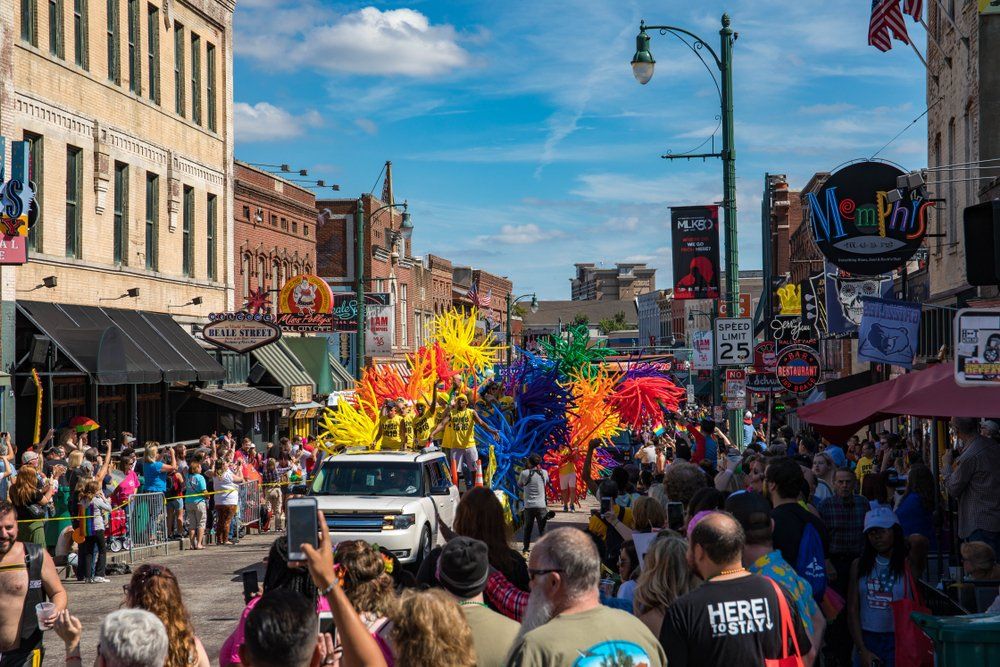
Pride Parade on Beale Street in Memphis, Tennessee (September 28, 2018)
Nondiscrimination laws: Tennessee does not have nondiscrimination laws in employment, housing, health care, education, public accommodations, or credit/lending. It instead bans cities and local ordinances from passing nondiscrimination laws. State code incorrectly defines sex as exclusively male or female, and it does not allow updating gender markers on driver’s licenses or birth certificates. The state has a broad “religious exemption” law that even allows officials to deny marriage licenses based on their personal beliefs. It has also explicitly restricted drag performances.
Marriage equality and parental rights: Tennessee’sadoption or foster care nondiscrimination protections encompass sexual orientation and gender identity. However, it does not have second-parent adoption for unmarried couples, confirmatory adoption, nor recognition for parents using assisted reproductive technologies. It also does not have family leave laws that encompass LGBTQ+ people.
Education and youth policies: Tennessee requires that parents be notified of LGBTQ+ curricula so they can opt out. It has banned trans students from participating in sports based on their identities and from using facilities that align with their identities. The state requires staff to forcibly out LGBTQ+ students to their guardians. The state also has a “religious exemption” law for Child Welfare Services, though it has protections for LGBTQ+ youth in the Child Welfare System.
Healthcare access and rights: Tennessee has banned life-saving gender-affirming care for youth, though it permits the discredited and harmful practice of so-called conversion therapy for youth. Medicaid is forbidden from providing coverage related to gender transition for all ages, and insurance companies are not required to cover fertility treatments. The state also has a “religious exemption” law for healthcare providers, and state employees are not permitted trans-inclusive benefits.
Criminal justice: Tennessee’s hate crime laws encompass sexual orientation and gender identity, though it has not banned the so-called “LGBTQ+ panic” defense, and it has an HIV criminalization law that may require sex offender registration.
Nondiscrimination laws: Texas has nondiscrimination laws in employment and for state employees, but not in housing, public accommodations, credit/lending, education, nor health care. The state does not allow updating gender markers on driver’s licenses or birth certificates, and it has a broad “religious exemption” law.
Marriage equality and parental rights: Texas does not have adoption or foster care nondiscrimination protections for LGBTQ+ parents. It does not have second-parent adoption for unmarried couples, confirmatory adoption, nor recognition for parents using assisted reproductive technologies. It also does not have family leave laws that encompass LGBTQ+ people.
Education and youth policies: Texas has a weaker version of a “Don’t Say Gay” law that restricts the discussion of “homosexuality” in specific school subjects. It has banned trans students from participating in sports based on their identities, but not from using facilities that align with their identities. The state also has a “religious exemption” law for Child Welfare Services without protections for LGBTQ+ youth.
Healthcare access and rights: Texas has banned life-saving gender-affirming care for youth, though it permits the discredited and harmful practice of so-called conversion therapy for youth. Medicaid is forbidden from providing coverage related to gender transition for all ages, and insurance companies are not required to cover fertility treatments. State employees are not permitted trans-inclusive benefits.
Criminal justice: Texas’s hate crime laws only encompass sexual orientation, not gender identity. It has not banned the so-called “LGBTQ+ panic” defense.
Wyoming
Shuttershock creative
Double rainbow against a black sky in Wyoming
Nondiscrimination laws: Wyoming does not have nondiscrimination laws in employment, housing, health care, education, public accommodations, or credit/lending.
Marriage equality and parental rights: Wyoming does not have adoption or foster care nondiscrimination protections for LGBTQ+ parents. It does not have second-parent adoption for unmarried couples, nor confirmatory adoption. It also does not have family leave laws that encompass LGBTQ+ people. However, it does have recognition for parents using assisted reproductive technologies.
Education and youth policies: Wyoming has a weaker version of a “Don’t Say Gay” law that restricts the discussion of “homosexuality” in specific school subjects. It has banned trans students from participating in sports based on their identities, but not from using facilities that align with their identities.
Healthcare access and rights: Wyoming has banned life-saving gender-affirming care for youth, though it permits the discredited and harmful practice of so-called conversion therapy for youth. Health insurance companies, including Medicaid, are not required to provide coverage related to gender transition or fertility treatments.
Criminal justice: Wyoming’s hate crime laws do not encompass sexual orientation and gender identity, and it has not banned the so-called “LGBTQ+ panic” defense.
Dishonorable mentions
BluIz70 / Shutterstock.com
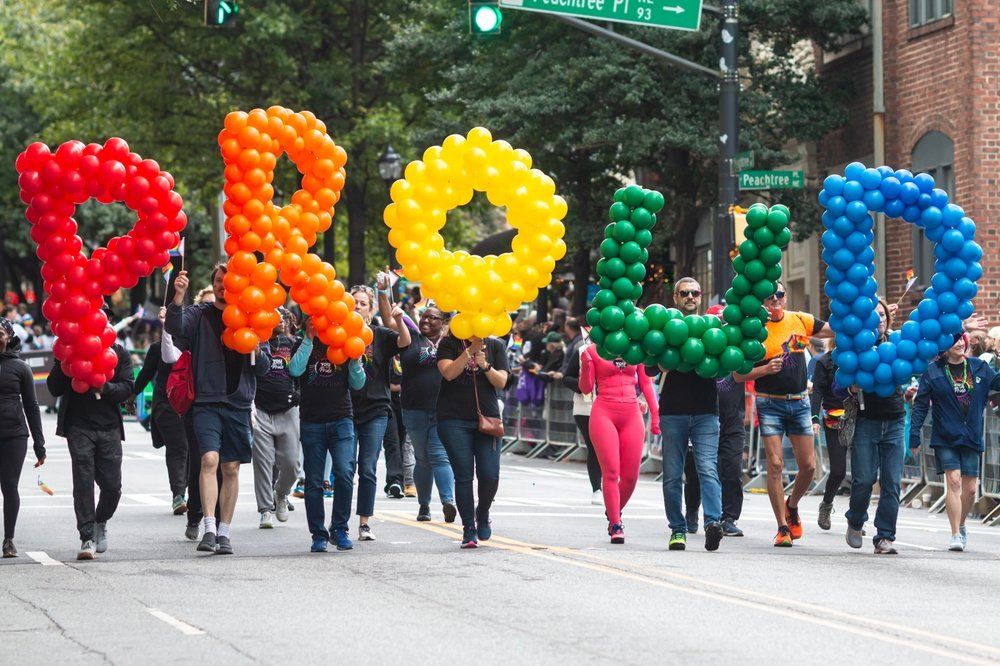
People carry large balloon letters that spell out “Proud” as they walk in the annual pride parade in Atlanta, Georgia (October 15, 2023)
Other states that ranked below average include: Alaska, Arizona, Georgia, Iowa, Kansas, Kentucky, Nebraska, North Carolina, North Dakota, Ohio, Utah, and West Virginia.
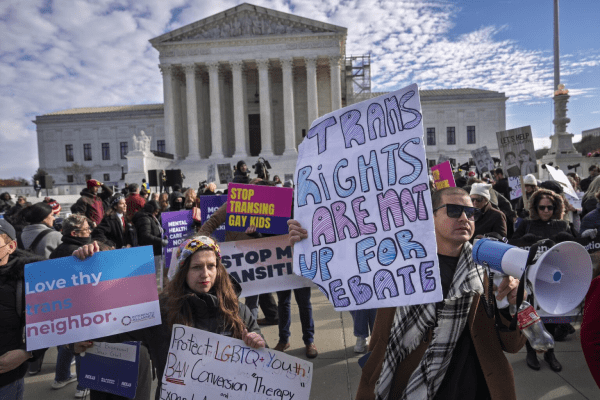
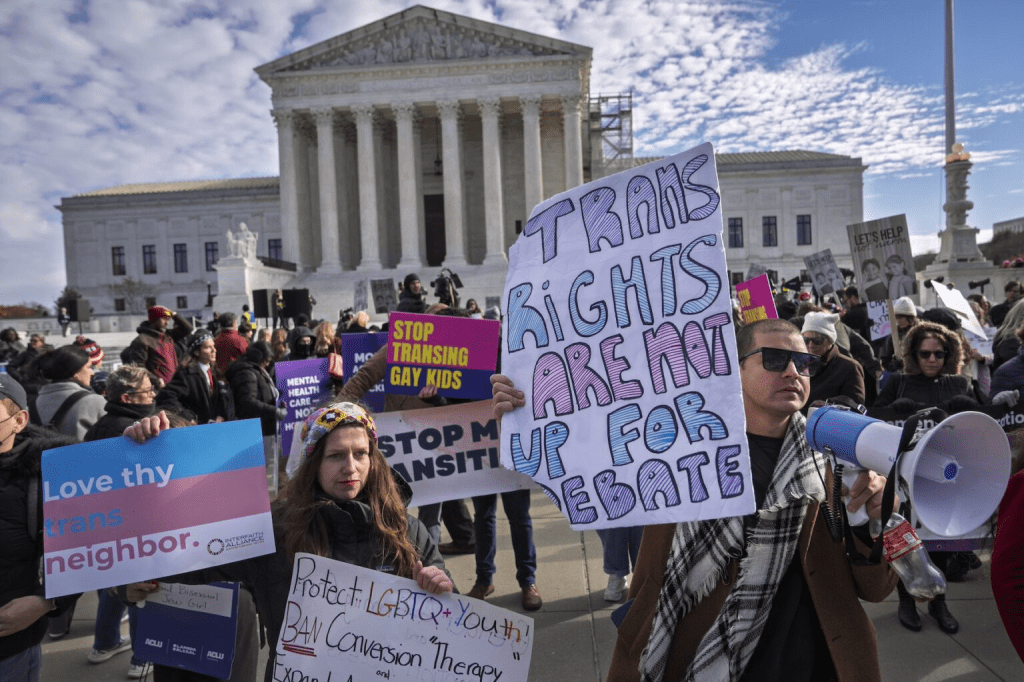
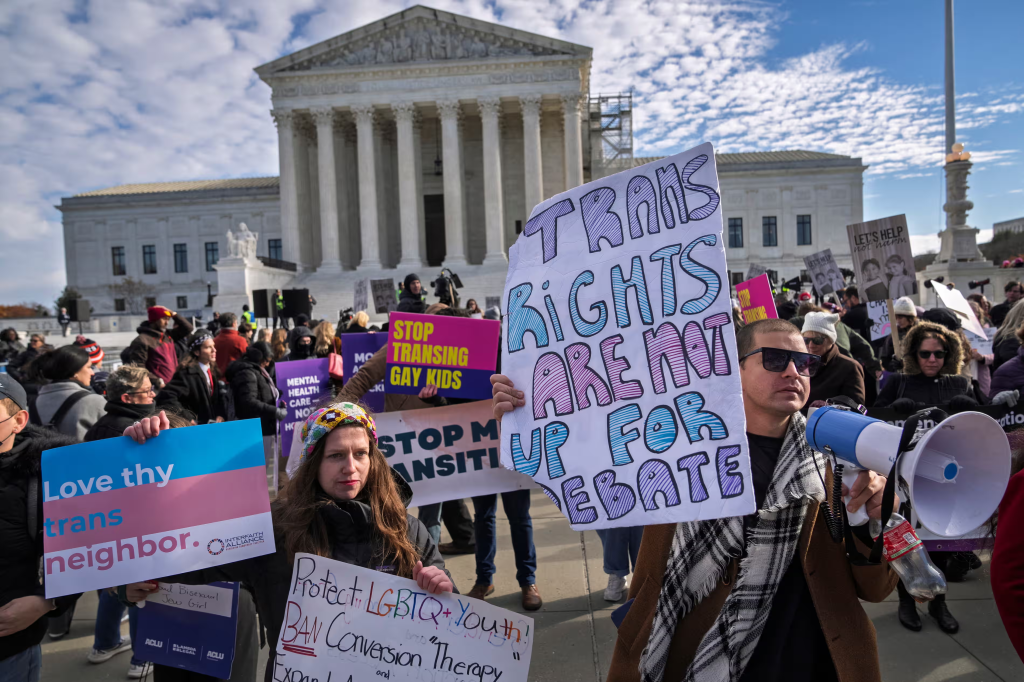
A Tennessee state law banning gender-affirming care for minors can stand, the US supreme court has ruled, a devastating loss for trans rights supporters in a case that could set a precedent for dozens of other lawsuits involving the rights of transgender children.
The case, United States v Skrmetti, was filed last year by three families of trans children and a provider of gender-affirming care. In oral arguments, the plaintiffs – as well as the US government, then helmed by Joe Biden – argued that Tennessee’s law constituted sex-based discrimination and thus violated the equal protection clause of the 14th amendment. Under Tennessee’s law, someone assigned female at birth could not be prescribed testosterone, but someone assigned male at birth could receive those drugs.
Tennessee, meanwhile, has argued that the ban is necessary to protect children from what it termed “experimental” medical treatment. During arguments, the conservative justices seemed sympathetic to that concern, although every major medical and mental health organization in the US has found that gender-affirming care can be evidence-based and medically necessary. These groups also oppose political bans on such care.
All six of the supreme court’s conservative justices joined in at least part of the decision to uphold the law, although several also wrote their own concurring opinions. In his majority decision, Chief Justice John Roberts emphasized that the ruling primarily rested on the justices’ finding that the law did not violate the equal protection clause, rather than on an ideological opposition to trans rights.
“This case carries with it the weight of fierce scientific and policy debates about the safety, efficacy and propriety of medical treatments in an evolving field. The voices in these debates raise sincere concerns; the implications for all are profound,” Roberts wrote. He added: “We leave questions regarding its policy to the people, their elected representatives, and the democratic process.”
In recent years, the question of transgender children and their rights has consumed an outsized amount of rightwing political discourse. Since 2021,26 states have passed bans on gender-affirming care for minors, affecting nearly 40% of trans youth in the US. Twenty-six states have also outlawed trans kids from playing on sports teams that correspond with their gender identity.
Many of these restrictions have been paused by court challenges, but the supreme court’s decision could have vast implications for those lawsuits’ futures. A study by the Trevor Project, a mental health non-profit that aims to help LGBTQ+ kids, found that anti-trans laws are linked to a 72% increase of suicide attempts among trans and nonbinary youth.
Justice Sonia Sotomayor dissented from the majority opinion, alongside Justices Ketanji Brown Jackson and Elena Kagan. Because the law discriminates on the basis of sex, Sotomayor argued in her dissent, it should face higher legal scrutiny than the majority decided to give it.
“Male (but not female) adolescents can receive medicines that help them look like boys, and female (but not male) adolescents can receive medicines that help them look like girls,” Sotomayor wrote. “By retreating from meaningful judicial review exactly where it matters most, the Court abandons transgender children and their families to political whims. In sadness, I dissent.”
*This is reported by WSMV 4. We have removed the repeated misuse of the word “allegedly” from the story.
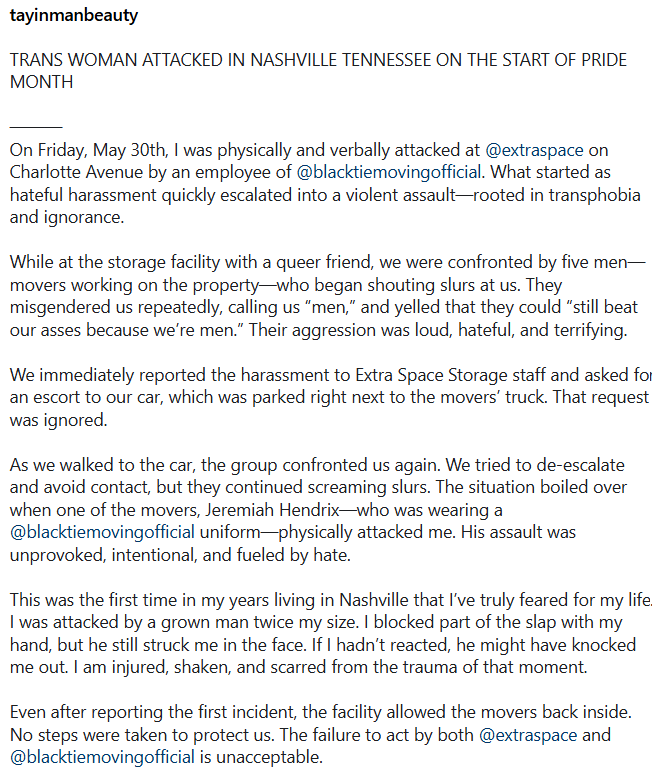
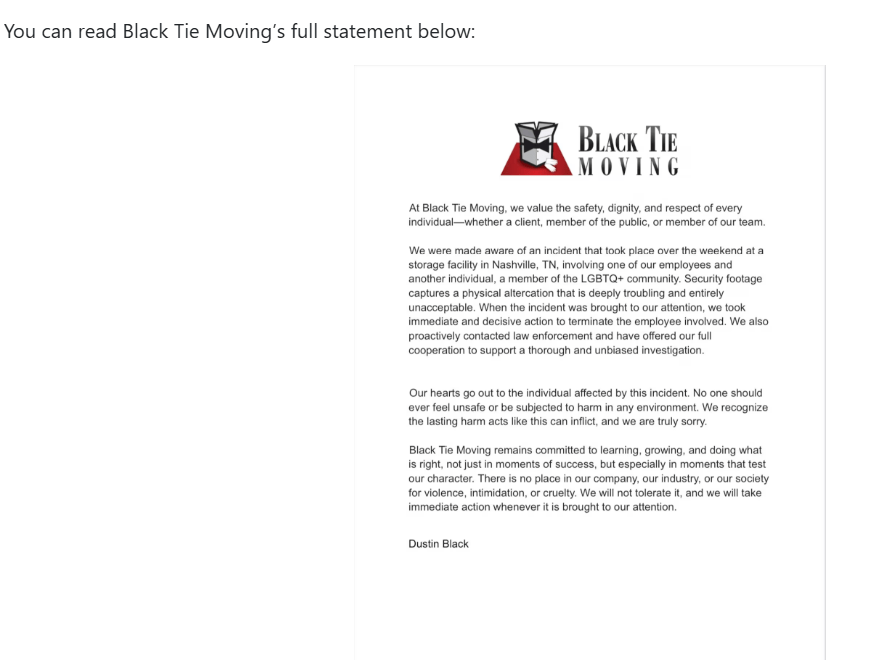
A Nashville moving company has confirmed to WSMV4 that it has terminated one of its employees after a recent attack against a transgender woman.
Black Tie Moving released a statement on Monday confirming the employee’s termination and condemning the assault.
“We were made aware of an incident that took place over the weekend at a storage facility in Nashville, TN, involving one of our employees and another individual, a member of the LGBTQ+ community,” Black Tie Moving said. “Security footage captures a physical altercation that is deeply troubling and entirely unacceptable.”
Black Tie Moving added that the employee was immediately terminated and the company is fully cooperating with the Metro Nashville Police Department’s investigation into the incident.
Following the incident, MNPD confirmed that its Specialized Division is investigating the attack at the Extra Space Storage facility on Charlotte Avenue on Friday.
Extra Space Storage confirmed to WSMV4 that it’s turned over the security camera footage of the incident to police for the Specialized Division’s investigation.
“While the property has security features like video surveillance, cylinder locks, and coded doors and gates, we do not have on-site security. At the time, the store was staffed by a single employee,” the facility told WSMV4.
The victim also made the following post about the assault:
The U.S. Supreme Court has refused to hear a lawsuit challenging Tennessee‘s drag ban, leaving in place an appeals court ruling upholding the law.
The state’s controversial Adult Entertainment Act, passed in 2023, prohibits “adult cabaret entertainment” on public property or in any location where minors could view it. Thelaw defines such entertainment as performances that are “adult-oriented” and “harmful to minors,” including acts by topless dancers, go-go dancers, exotic dancers, strippers, and “male or female impersonators.”
Friends of George’s Inc., a Memphis-based theater group known for its drag performances, filed a lawsuit against the AEA, arguing that the ban is overly broad and vague, and effectively criminalizes their performances.The Sixth Circuit Court of Appeals dismissed the legal challenge in Julyy, claiming that the plaintiffs did not have standing to sue. The decision reversed a lower court’s ruling that had declared the law unconstitutional.
A separate lawsuit against the ban is still ongoing, brought by the American Civil Liberties Union on behalf of Blount County Pride. Organizers filed the suit after District Attorney General Ryan Desmond threatened to prosecute anyone violating the law during a 2023 Pride festival.
Friends of George’s denounced the Supreme Court’s ruling in a statement, maintaining that “this ruling does not define us — we do. And we refuse to be silenced.”
“Friends of George’s Theatre Company will continue exercising our First Amendment right — bringing inclusive, joyful art to our community while raising thousands for charities that uphold dignity and respect for all,” the group said. “Oppression is nothing new to the LGBTQ+ community. Every attempt to silence us has only made us louder, stronger, and more relentless. This moment is no different.”
“To our trans siblings who have led this fight from the start — you are not alone. Your courage fuels us. Your struggle is our struggle. We stand with you,” they continued. “To every performer, artist, and activist — keep using your voice, your craft, your presence. Every soapbox is sacred, and we will not step off it. To our supporters, friends, and allies — this fight is bigger than us. It’s about life, liberty, and the pursuit of happiness — for everyone. We will resist with joy, art, and the unshakable belief that laughter is defiance.”














You must be logged in to post a comment.