Nine states are now seeing Republican efforts to overturn Obergefell v. Hodges, the 2015 Supreme Court decision that legalized marriage equality in all 50 states. This is a new trend; state Republican lawmakers have been focused on rolling back trans rights since 2020.
In five of the states — Idaho, Michigan, Montana, North Dakota, and South Dakota — Republican lawmakers have introduced resolutions calling for the Supreme Court to overturn Obergefell. Those measures have been passed by at least one chamber of the state legislature in Idaho and North Dakota.
In the four other states – Missouri, Oklahoma, Tennessee, and Texas – Republican legislators have introduced bills to privilege heterosexual marriages, with some of the states referring to a new institution called “covenant marriage,” which would be limited to heterosexual couples. The point there, according to the sponsor of one such bill in Oklahoma, is to create inequality in marriage rights between opposite- and same-sex couples and invite a legal challenge that could be taken to the Supreme Court to overturn Obergefell.
Two justices on the Supreme Court have openly stated that they want to overturn Obergefell, and the Court has moved to the right since 2015. Justices Ruth Bader Ginsburg, Anthony Kennedy, and Stephen Breyer were all in the Obergefell majority but have either retired or passed away in the last ten years. Only one was replaced by a Democratic president. It is not clear if there are the five votes needed to protect marriage equality on the Court if it were to take up a test case.
Thirty-five states have amendments or statutes banning same-sex marriage, and most would likely go into effect if the Supreme Court were to overturn Obergefell. Because of the 2022 federal Respect for Marriage Act, though, state and federal governments would have to recognize same-sex marriages performed in other states.
“It’s good to anticipate things that could happen in order that we do our best job preparing ourselves,” Jenny Pizer, chief legal officer of Lambda Legal, told LGBTQ Nation last month. “The bottom line for people is that, if there are things that you can do to secure your relationships, your family status and to take other protective measures, please do those things. Don’t be lulled into complacency by our informed and reasonably expert speculation about what may happen.”
The Supreme Court has adjourned early, bringing an end to the oral argument session. A ruling in the case of US v. Skrmetti is expected to be issued by June 2025.
Tennessee Attorney Compares Trans Care to Lobotomies
Tennessee’s Solicitor General, Matthew Rice, in response to a question from Justice Brett Kavanaugh about why laws regulating gender-affirming care shouldn’t be left to the states, compared gender-affirming care to the discredited medical practice of lobotomies—removing part of the brain to treat mental illnesses.
He falsely claimed that lobotomies were widely supported by the medical community in the early 1900s, suggesting that gender-affirming care should be regulated in a similar manner. However, as Alejandra Caraballo, an attorney and instructor at Harvard Law CyberLaw Clinic, points out on BlueSky, leading medical organizations at the time opposed lobotomies, making Rice’s comparison highly inaccurate.
Sotomayor Asks How Banning Gender-Affirming Care Protects the Public
Justice Sonia Sotomayor questions how Tennessee Solicitor General Matthew Rice’s claims about banning gender-affirming care protect the public, emphasizing that “when you’re 1% of the population, it’s very hard to see how the democratic process will protect you.”
The Court’s decision could have broader implications, potentially affecting gender-affirming care for adults as well. If the Court accepts Tennessee’s argument about the possible medical risks, this reasoning could be used in future cases to restrict all forms of care.
Justice Amy Coney Barrett asks how Rice’s policies would apply to issues like bathrooms or sports. Rice attempts to distinguish transgender-based challenges from sex-based challenges, arguing that this case is about the medical risks of transgender healthcare, while bathroom and sports cases focus on gender rights and equity. However, he provides minimal rationale for how this distinction would work.
Justice Ketanji Brown Jackson raises concerns about how the gender-affirming care ban mirrors past racist laws, noting that both seek to deny access to public services based on personal characteristics.
Rice tries to differentiate gender-affirming treatments like hormone replacement therapy and puberty blockers, arguing that the medical justification differs when these treatments are administered to transgender children versus cisgender ones. Jackson counters, pointing out that the treatments affect the body similarly, and suggests that Rice is contradicting his own argument about the dangers of these treatments by claiming they have different effects based on gender identity.
Tennessee’s Lawyer Begins Arguments Against Gender-Affirming Care and Immediately Confuses Everyone
Tennessee Solicitor General Matthew Rice takes the floor, arguing in favor of restricting gender-affirming care and allowing Tennessee’s ban to take effect. He asserts that gender-affirming care for minors offers no benefits, a position that contradicts the views of leading medical organizations such as the Endocrine Society, the American Academy of Pediatrics, and the American Psychological Association.
Justice Sonia Sotomayor challenges this, noting that “every medical treatment has risks, even Aspirin,” and emphasizing that there is no valid reason to restrict gender-affirming care on those grounds. She also points out that halting the development of sex-based characteristics is inherently sex-based and therefore discriminatory. Justice Ketanji Brown Jackson echoes this argument, pushing back against Rice’s claims that the issue is not sex-based, highlighting that attempting to restrict breast growth, for example, is inherently sex-based.
The Court’s confusion deepens when Rice argues that boys with gynecomastia—a condition causing enlarged breast tissue—who take puberty blockers lack a “medical purpose” for doing so, further muddling his argument and drawing continued pushback from the Justices.
“6th Circuit Got It Wrong,” Strangio Says, Citing Flawed Reasoning for Upholding Health Care Ban
ACLU attorney Chase Strangio argues that the 6th Circuit Court of Appeals “got it wrong” in reinstating Tennessee’s S.B. 1 ban on gender-affirming care, asserting that the court incorrectly applied rational basis review to the case. He argues that intermediate scrutiny should have been applied instead.
Rational basis review is a type of judicial review used to assess whether governments are acting in accordance with regulations. In contrast, intermediate scrutiny involves a more rigorous constitutional review to determine if a legal action aligns with the U.S. Constitution, specifically the Equal Protection Clause of the 14th Amendment, which prohibits sex-based discrimination.
In response to Justice Amy Coney Barrett, Strangio also emphasizes that these issues are deeply intertwined with advocacy for gay rights, referencing historical bans on cross-dressing and transgender people entering the military—issues that have also impacted gay individuals.
Strangio further addressed Justice Brett Kavanaugh’s attempt to shift the discussion to transgender people in sports, briefly arguing that anti-discrimination measures could be used to support the inclusion of trans women athletes, while clarifying that this is not the central focus of the current case.
Justice Samuel Alito questioned ACLU lawyer Chase Strangio, asking whether gender identity is immutable, citing detransitioners and gender fluidity as reasons to suggest it might not be. Strangio responded by emphasizing that there is strong evidence supporting the idea that the underlying basis of gender is immutable. He explained that while individuals may experience changes in their conception of their gender identity, their gender itself is not something that can be willingly altered. What remains constant, he said, is that their gender is different from the sex assigned at birth.
Alito then compared trans people to individuals with schizophrenia, suggesting that both could have different treatments. Strangio rejected this comparison, arguing that these are fundamentally different issues. He clarified that, regardless of any variations in how trans people experience their identities, being trans is an immutable status that does not shift in the same way mental illnesses do.
Chase Strangio Draws from Court’s Role in Pandemic Regulations & Says Transition Regret is Rare
ACLU lawyer Chase Strangio drew parallels between the Court’s involvement in pandemic regulations and its role in evaluating gender-affirming care, emphasizing that the Court should respect expert medical opinions in both contexts. He also addressed concerns about transition regret, pointing out that it is rare and that the overwhelming majority of individuals who pursue gender-affirming care report positive outcomes. Strangio argued that this underscores the importance of allowing access to such care, as it is supported by medical evidence and expertise. ACLU lawyer Chase Strangio, the first openly trans person to argue before the Supreme Court, drew from the Court’s role in regulating public health during the COVID-19 pandemic to argue against Tennessee’s S.B. 1, asserting that SCOTUS should rule against the ban in the interest of the common good. He used the same rationale the Court applied in reviewing public health policies during the pandemic to advocate for the preservation of gender-affirming care.
Strangio also addressed claims about high regret and detransition rates, arguing that such figures are often misrepresented to serve a particular agenda. He referenced the ACLU’s reply brief submitted to SCOTUS, which details the organization’s response to these mischaracterizations.
In response to questioning from Justice Alito, Strangio maintained that gender-affirming care for minors is life-saving, noting that it significantly reduces the risk of suicide. He also pointed out that, contrary to claims in the Cass Review, numerous studies show improved mental health outcomes for transgender individuals following gender-affirming care.
Justice Ketanji Brown Jackson argued that the ban on gender-affirming care is discriminatory, highlighting how it targets a specific group based on their gender identity. She pointed out that such policies are a direct violation of equal protection principles.
ACLU lawyer Chase Strangio then spoke, making history as one of the leading voices in the case. Strangio reiterated the importance of respecting expert medical opinions and legal protections for transgender individuals, advocating for the right to gender-affirming care. His powerful arguments further cemented his role in the ongoing fight for transgender rights.
In response to a line of questioning from Justices Elena Kagan and Amy Coney Barrett, Justice Ketanji Brown Jackson illustrates how denying transgender people medical care is discriminatory, highlighting that such care is often granted to cisgender individuals. Jackson compares these discriminatory policies to those implemented in the 1950s and 1960s on the basis of race, referencing Loving v. Virginia, which overturned bans on interracial marriage.
U.S. Solicitor General Elizabeth Prelogar echoes this argument, drawing parallels between the logic used in Loving and the current case.
Shortly thereafter, Chase Strangio, the first openly trans lawyer to speak before the Supreme Court, argues in favor of overturning S.B. 1. Strangio, representing the American Civil Liberties Union and the plaintiffs, responds to Justice Clarence Thomas’s question about his proposed solution, stating that he would want to ensure gender-affirming care for minors is authorized, particularly for his plaintiffs.
Kavanaugh Presses Lawyer on Constitutionality & Veers into Asking About Sports
Justice Brett Kavanaugh presses ACLU lawyer Chase Strangio on the constitutionality of gender-affirming care bans, questioning whether such regulations are in line with constitutional protections. Kavanaugh’s line of questioning shifts when he asks about the implications for transgender athletes in sports, seeking to understand how anti-discrimination measures in this case could apply to sports-related issues. Strangio responds, emphasizing that while the inclusion of trans athletes is an important issue, it is distinct from the core question at hand, which focuses on the legality and necessity of gender-affirming care.
Supreme Court Justice Brett Kavanaugh asks U.S. Solicitor General Elizabeth Prelogar why SCOTUS should apply intermediate scrutiny (a type of judicial review to assess constitutionality) to Tennessee’s S.B. 1. Prelogar argues that by imposing restrictions based on assigned sex at birth, the law violates the Equal Protection Clause of the Constitution, which inherently calls for additional scrutiny.
Kavanaugh then shifts to a separate line of questioning, bringing up the issue of trans women in women’s sports. This leads Prelogar to admit that she believes there should be restrictions on trans women in sports. However, she tries to pivot back to arguing that such restrictions on gender-affirming care should not be in place.
Research indicates that trans women do not have an inherent advantage in sports after transitioning for the prescribed amount of time. Studies have shown their performance to be on par with cisgender women, and there is no evidence of trans women disproportionately dominating women’s sports.
Fertility Issues Don’t Just Affect Trans People, But Intersex People Too, Lawyer Argues at SCOTUS
During arguments at the Supreme Court, a lawyer emphasized that fertility issues are not exclusive to transgender individuals but also affect intersex people. The lawyer argued that restrictions on gender-affirming care could have broader implications, including for intersex individuals who may face similar challenges in accessing reproductive healthcare. This point was raised to highlight the intersection of medical and legal issues affecting both trans and intersex communities.
In response to a line of questioning from Supreme Court Justice Brett Kavanaugh about how gender-affirming care could impact fertility—one of the arguments for banning such care being that trans kids might face fertility issues later in life—U.S. Solicitor General Elizabeth Prelogar argues that while fertility issues are indeed a concern in transgender care, they are not unique to trans individuals. Prelogar points out that there are solutions available for these issues, which are also found in treatments allowed under S.B. 1, such as invasive surgeries on intersex infants.
Intersex individuals, whose genitalia do not align with typical male or female expectations, are often subjected to invasive surgeries in infancy, which can permanently restrict their ability to have children due to forced conformity to societal norms. Despite these concerns, many anti-transgender policies, including S.B. 1, allow for gender-affirming care for intersex minors, even though advocates call for restrictions on mandatory conforming surgeries and treatments.
Additionally, many intersex individuals identify as transgender, linking these issues inextricably in discussions about gender-affirming care and reproductive rights.
Sam Alito Brings Up Restrictions on Women’s Rights to Oppose Trans Care
Justice Samuel Alito raised concerns about restrictions on women’s rights while arguing against the case for gender-affirming care. He suggested that limiting certain aspects of gender-affirming care could be justified by broader discussions around women’s rights. In his questioning, Alito implied that policies restricting transgender care could be seen as part of a larger debate about the rights of women, sparking further discussions about the intersection of gender, rights, and healthcare.
Supreme Court Justice Samuel Alito argued that previous SCOTUS rulings, particularly Dobbs v. Jackson Women’s Health Organization (which overturned Roe v. Wade) and Geduldig v. Aiello (which allowed the denial of insurance benefits for work loss due to pregnancy), do not support the claim that Tennessee’s S.B. 1 constitutes sex-based discrimination. He pointed out that both rulings suggested that restrictions on pregnancy-related insurance coverage and abortion do not qualify as sex-based discrimination.
U.S. Solicitor General Elizabeth Prelogar countered, asserting that neither of these rulings applies to the current case. She argued that the previous decisions refer to more individualized healthcare concerns, which are unrelated to the broader, sex-based characteristics addressed by hormone replacement therapy and puberty blockers. These treatments, Prelogar emphasized, are inherently sex-based and therefore should not be governed by the same arguments made in those earlier rulings.
Justice Sonia Sotomayor joined the conversation, echoing Prelogar’s points that the issue at hand is fundamentally about sex classification. She also reiterated her criticisms of the Cass Review and responded to Alito’s claims about European countries restricting care, pointing out the inaccuracies in those statements. Sotomayor pressed for further clarity, helping to illuminate key aspects of Prelogar’s arguments.
U.S. Solicitor General States Her Case as Conservative Justices Bring Up Cass Review
U.S. Solicitor General Elizabeth Prelogar presented her case before the Supreme Court, defending the constitutionality of gender-affirming care and challenging the restrictions posed by Tennessee’s S.B. 1. As she argued, conservative justices, including Justices Samuel Alito and Brett Kavanaugh, raised concerns about the findings in the Cass Review, which suggests that gender-affirming care for minors may lead to negative psychological and medical outcomes.
Prelogar countered these claims by stressing that the Cass Review’s conclusions are not representative of the broader medical consensus. She pointed out that numerous studies and expert medical organizations, including the American Medical Association and the American Academy of Pediatrics, strongly support gender-affirming care as effective and essential for the well-being of transgender minors.
Her responses focused on the scientific evidence and medical expertise backing gender-affirming care, challenging the use of the Cass Review as a central argument for limiting such care.
U.S. Solicitor General Elizabeth Prelogar began outlining her case that Tennessee’s S.B. 1 constitutes discrimination based on biological sex. She argued that because testosterone and estrogen affect individuals differently depending on whether they were assigned male or female at birth, and because these medications vary based on assigned sex, the restriction of gender-affirming care amounts to sex-based discrimination.
Supreme Court Justices Clarence Thomas, Samuel Alito, and Chief Justice John Roberts then began their questioning. Alito referenced the controversial Cass Review, a report from the United Kingdom that has been used to justify restricting puberty blockers. The report has faced criticism from the World Professional Association for Transgender Health and Yale researchers for its unscientific approach.
Justice Thomas sought clarification on the specific effects of hormone treatments on youth, while Chief Justice Roberts asked about the Court’s role in regulating individualized care and whether such decisions should be left to the states.
Prelogar maintained that, regardless of the specific details or arguments presented, S.B. 1 is fundamentally discriminatory, emphasizing that no other medications are subject to such broad restrictions in other countries.
All three justices who questioned Prelogar were appointed by Republican presidents.
Supreme Court Hearing on Oral Arguments Begins; Protesters on Both Sides Outside Court
The Supreme Court hearing on the challenge to Tennessee’s S.B. 1 began, with oral arguments being presented inside the Court. Outside the building, protesters gathered on both sides of the issue, with supporters of transgender rights advocating for the protection of gender-affirming care, while opponents of the policy voiced their support for the restrictions. The atmosphere outside was charged with emotion as both sides made their voices heard in what is expected to be a pivotal case for transgender rights and healthcare access.
Live coverage of the oral arguments presented to SCOTUS is beginning on C-SPAN, with the session set to last until approximately 2 p.m. Eastern, when the oral arguments will conclude.
As the courthouse prepares for cameras inside, reporters outside the building are focusing on protests from both sides of the debate. While advocates for transgender care are present, they are scarcely featured in media coverage. In contrast, disproportionate attention is given to opponents of transgender care, including pseudoscience activist groups like Do No Harm and Gays Against Groomers, as well as anti-trans politicians such as Rep. Gary Palmer (R-AL).
People’s Lives Have Been Turned Upside-Down by Gender-Affirming Care Bans
The ongoing gender-affirming care bans have had a profound impact on many individuals, turning their lives upside-down. For transgender youth and their families, these bans have created uncertainty and fear, as they are now faced with limited access to essential healthcare. Many are grappling with the emotional and physical toll of losing access to treatments that are crucial for their well-being, while others are forced to relocate or seek care in more supportive states. The broader consequences of these bans are reshaping lives, highlighting the personal struggles tied to the political and legal battles surrounding transgender rights.
One family from Texas shared their experience of living out of their van in a truck stop in Connecticut, driven by the increased cost of living after relocating to escape Texas’ anti-trans laws. Another parent who made a similar move from Texas to Connecticut remarked that while Connecticut launched a campaign inviting families from anti-trans states to relocate, the state did little to address the issue of affordability. These families are facing significant financial and emotional challenges as they seek safety and access to gender-affirming care in a more supportive environment.
The Trans Rights Supreme Court Case Is Also About Whether Sexism Is Now Legally Allowed in America
The ongoing Supreme Court case challenging gender-affirming care is not just about healthcare access for transgender individuals—it also raises broader questions about whether sexism is now legally permissible in the United States. At the heart of the case is the argument that restricting gender-affirming care based on assigned sex at birth constitutes sex-based discrimination, which may set a dangerous legal precedent. If the Court rules in favor of such bans, it could embolden future policies that discriminate on the basis of sex, further entrenching harmful gender stereotypes and limiting the rights of transgender individuals and other marginalized groups.
Slate’s legal writer Mark Joseph Stern explained in an article the critical stakes in U.S. v. Skrmetti, the challenge to Tennessee’s gender-affirming care ban currently being heard by the Supreme Court. Stern outlines how this case goes beyond the rights of transgender individuals, addressing broader questions about gender equality and the legal protections against sexism.
Stern notes that the pro-trans side argues that banning a trans boy from receiving testosterone therapy while allowing a cisgender boy to receive the same treatment is blatantly sexist. The only difference between the two is their assigned sex at birth, which makes the restriction inherently discriminatory. However, the appeals court disagreed, creating a new “biological difference” exception and arguing that the ban hurts both trans boys and trans girls equally, thereby making it not a violation of sex-based discrimination.
According to Stern, Skrmetti isn’t just about transgender rights—it’s a case that questions the future of gender equality under the law. The key legal issue is whether laws that deny medical care based on sex should trigger heightened scrutiny by the courts. Stern emphasizes that, according to long-established legal precedent, the answer should be yes. If the Court rules otherwise, it could undermine constitutional protections against sex discrimination and pave the way for laws enforcing harmful gender stereotypes. While transgender Americans would be most immediately affected, Stern argues that the case has broader implications for everyone’s ability to reject rigid gender roles without facing state-enforced oppression.
LIVE UPDATES: Supreme Court Hears Arguments in Challenge to Gender-Affirming Care Ban By Mira Lazine
Today, the United States Supreme Court is hearing oral arguments in the case United States v. Skrmetti, which centers on Tennessee’s 2023 bill, S.B. 1, that bans gender-affirming care for minors. While no decision will be made today, the arguments presented are expected to have far-reaching implications for transgender rights across the nation, particularly concerning access to gender-affirming care for minors.
The case involves three families of transgender youth in Tennessee who are challenging the state’s ban on providing their children with life-saving healthcare. The ban also impacts several doctors who seek to provide care to consenting patients. The U.S. District Court for the Middle District of Tennessee initially ruled to overturn the ban, but the 6th Circuit Court of Appeals allowed it to go back into effect, prompting the case to be brought before the Supreme Court for a final ruling.
The plaintiffs in this case are supported by the Biden-Harris administration and the Department of Justice, which challenge the legality of such a broad ban on gender-affirming care. They are represented by the American Civil Liberties Union (ACLU) and attorney Chase Strangio, along with Lambda Legal and Akin Gump Strauss Hauer & Feld LLP. On the opposing side, Tennessee Attorney General Jonathan Skrmetti, along with Tennessee Solicitor General Matthew Rice, represents the state of Tennessee. The United States government is also involved as a third party and is represented by U.S. Solicitor General Elizabeth Prelogar.
“This law fails to protect children and forces schools to put them in danger,” an LGBTQ advocate stated.
Tennessee Gov. Bill Lee joined fellow governors at a press conference along the Rio Grande at the U.S.-Mexico border to discuss Operation Lone Star and border concerns on February 4, 2024, in Eagle Pass, Texas.
Honest, paywall-free news is hard to find. Support our fearless and independent journalism by making a donation of any size.
Due to a recently enacted law by Tennessee Gov. Bill Lee (R), educators in the state must now disclose transgender students to their parents. Senate Bill 1810 mandates that schools inform parents if their child wishes to be addressed by a name or pronouns different from those on school records.
“Forcing teachers to out trans kids to their parents not only breaches the trust students have with their teachers but also puts them in potentially dangerous and harmful situations,” LGBTQ legislative researcher Allison Chapman told Truthout.
Under this law, parents who believe they or their child has been affected by a violation can sue the school for damages and injunctive relief.
“We have a responsibility and an obligation to make sure schools are safe for children to learn in, and that includes ensuring their identities are welcomed and supported,” said Rep. Justin J. Pearson (D), adding that the bill is dangerous.
Chapman emphasized, “This law fails to protect children, and schools should not be compelled to jeopardize their safety.”
The ACLU has cautioned that outing transgender students can expose them to potential harm. “Forced outing bills aren’t about parents’ rights; they’re designed to harm trans students,” explained Harper Seldin, a staff attorney at the ACLU’s LGBTQ & HIV Project, in 2023.
Seldin highlighted that numerous transgender youths encounter parental rejection upon revealing their gender identity. A 2022 survey by the Trevor Project revealed that only 32 percent of transgender and nonbinary youths felt their home provided a supportive and gender-affirming environment.
The data further indicates that transgender individuals face an increased risk of abuse from their immediate family members because of their gender identity. As a result, trans youth are overrepresented in foster care facilities, juvenile detention centers, and homeless shelters. These higher rates of familial rejection and abuse significantly increase the likelihood of experiencing suicidal thoughts, substance misuse, and depression.
The data further indicates that transgender individuals face an increased risk of abuse from their immediate family members because of their gender identity. As a result, trans youth are overrepresented in foster care facilities, juvenile detention centers, and homeless shelters. These higher rates of familial rejection and abuse significantly increase the likelihood of experiencing suicidal thoughts, substance misuse, and depression.
Seldin emphasized that bills mandating the outing of transgender students are intended to inflict harm upon them and, consequently, affect everyone negatively. “Such laws do not strengthen families; instead, they inflict harm on children, particularly transgender youth,” Seldin stated.
Senate Bill 1810 is among 40 anti-LGBTQ bills brought forward in Tennessee during this legislative session, with seven of them already enacted into law. Nationwide, over 500 anti-LGBTQ bills have been introduced during this session.
Parents are now entitled to be informed if their child is utilizing alternative pronouns at school, yet they lack the right to be informed if their child’s teachers are armed.
Two bills signed into law in Tennessee this past week are significantly altering the responsibilities of teachers in schools.
Today, Tennessee Governor Bill Lee (R) signed into law a bill mandating schools to disclose information about transgender students to their parents. Despite concerns raised by LGBTQ+ advocates regarding the potential harm of outing, as transgender individuals face a heightened risk of abuse, rejection, and homelessness, the bill passed.
State Representative Mary Littleton (R) asserted that parents maintain the right to subject their transgender children to mistreatment, such as enrolling them in conversion therapy.
“In addition, I believe they could seek therapy for the child to assist them in addressing their issues and navigating their educational journey,” she expressed in her speech on the House floor.
Democrats emphasized the paramount importance of ensuring school safety for children. According to a 2022 survey by the Trevor Project, just 32% of transgender and nonbinary youths reported feeling that their home provided a supportive and gender-affirming environment.
State Representative Justin Pearson (D) stressed the obligation to create safe learning environments in schools. He emphasized the importance of welcoming and supporting children’s identities as part of fulfilling this responsibility.
In Tennessee, Republicans have different priorities regarding school safety. Governor Lee recently signed a bill permitting public school teachers to carry concealed weapons, citing it as a measure to enhance child safety.
During the last vote for the bill in the Tennessee General Assembly, protestors could be heard chanting “Blood on your hands.” Opponents contended that increasing the presence of guns in schools would actually decrease student safety.
Tennessee House Democratic Caucus Chair John Ray Clemmons warned, “This is nothing short of a disastrous tragedy waiting to unfold if we fail to prioritize personal responsibility. The lives of our children hang in the balance.”
Republicans argued that armed teachers could deter school shooters. State Rep. Ryan Williams, the bill’s sponsor, went further, suggesting that shootings occur because assailants are aware that educators are unarmed. He contended that gun-free zones become targets “where individuals know they can exploit others.”
The law, effective immediately, stipulates that the school district, principal, and law enforcement must collectively consent to teachers carrying concealed firearms on school premises. However, parents, students, and fellow educators are not entitled to information regarding which teachers are armed.
During this legislative session, Tennessee enacted several other laws targeting the LGBTQ+ community. These include a measure permitting anti-LGBTQ+ foster parents to oversee LGBTQ+ children under the guise of religious beliefs justifying their homophobia or transphobia. Additionally, another law was passed prohibiting non-parental adults from transporting transgender youth out of state for gender-affirming care, grounded in the unfounded notion that educators and other adults are influencing children to identify as transgender.
The law, in place for decades, is in violation of the Americans with Disabilities Act.
Tennessee is contemplating changes to the criminal code that currently discriminates against sex workers who are HIV-positive.
Currently, the law treats prostitution as a misdemeanor unless the sex worker is HIV+. Then the offense becomes “aggravated prostitution,” and if convicted, workers are required to register as a “violent sex offender.”
LGBTQ+ and civil rights organizations are challenging the law in federal court. Following an investigation in December, the Justice Department concluded that the law infringes upon the Americans with Disabilities Act.
However, the law, which disproportionately affects Black and Latino women, is not being completely repealed.
Initially enacted during the peak of AIDS-related concerns in 1991, the law underwent revisions two decades later, incorporating mandatory lifetime registration as a sex offender.
State Senator Page Walley (R) has proposed a bill aiming to eliminate the mandatory registration requirement while retaining the heightened criminal charge.
Despite the repeal of HIV criminalization laws in multiple states in recent years, Tennessee continues to uphold such legislation. Additionally, in states retaining these laws, individuals of color are disproportionately prosecuted. Notably, a significant majority of those prosecuted under Maryland’s HIV criminal law were Black men.
The term “HIV criminal laws” refers to hastily enacted legislation in the late 1980s and ’90s during the widespread panic over the AIDS epidemic. These laws target individuals who intentionally transmit the virus causing AIDS. Currently, nearly two-thirds of U.S. states and territories have laws that criminalize individuals living with HIV.
This statute exclusively singles out individuals based on their HIV status, trapping them in cycles of poverty without providing any tangible benefit to public health and safety,” stated Molly Quinn, Executive Director of OUTMemphis. “As HIV stigma fades away, it’s high time for state law to align with this progress.
The organization is among the plaintiffs involved in the ongoing legal proceedings.
An estimated 83 Tennesseeans are currently on the registry because of the law.
The law, enacted this year over the veto of Democratic Gov. Andy Beshear, prevents transgender minors from accessing puberty blockers and hormone therapy.
Protesters of Kentucky Senate Bill SB150 rally at the Kentucky Capitol in Frankfort, Ky., on March 29.
By The Associated Press
A federal appeals court is allowing Kentucky to enforce a recently enacted ban on gender-affirming care for young transgender people while the issue is being litigated.
The 2-1 decision Monday from the Sixth U.S. Circuit Court of Appeals in Cincinnati is not unexpected. The same three-judge panel ruled the same way earlier this month on a similar case in Tennessee.
The Kentucky law, enacted this year over the veto of Democratic Gov. Andy Beshear, prevents transgender minors from accessing puberty blockers and hormone therapy.
At least 20 states have now enacted laws restricting or banning gender-affirming medical care for transgender minors. Most of those states face lawsuits. A federal judge struck down Arkansas’ ban as unconstitutional. In other states, judges have issued disparate rulings on whether the laws can be enforced while the cases are being litigated.
In Kentucky, U.S. District Judge David Hale had initially blocked Kentucky from enforcing the ban. But he lifted that injunction July 14, after the Sixth Circuit issued its ruling in the Tennessee case.
Seven transgender children and their parents have sued to block the Kentucky law. They argue that it violates their constitutional rights and interferes with parental rights to seek established medical treatment for their children.
In Monday’s ruling, judges Jeffrey Sutton, an appointee of former President George W. Bush, and Amul Thapar, an appointee of former President Donald Trump, said that the issues in the Kentucky case are essentially identical to those in Tennessee.
In the Tennessee case, the judges wrote that decisions on emerging policy issues like transgender care are generally better left to legislatures rather than judges. They offered a similar rationale Monday in the Kentucky case.
“The people of Kentucky enacted the ban through their legislature,” the judges wrote. “That body — not the officials who disagree with the ban — sets the Commonwealth’s policies.”
The dissenting judge, Helene White, noted that Kentucky’s ban does not include a grace period for patients who are already receiving care to continue treatment, as Tennessee’s law did.
As a result, White said the need for an injunction blocking the ban in Kentucky is even greater than it was in Tennessee.
“It seems obvious that there is a tremendous difference between a statute like Tennessee’s that allows flexibility regarding treatment decisions and time to explore alternatives and one like Kentucky’s that forces doctors to either discontinue treatment immediately or risk losing their license,” wrote White, who was first nominated by former President Bill Clinton and later nominated by Bush.
A federal appeals court has temporarily reversed a lower court’s ruling that had prohibited Tennessee from enacting a ban on gender-affirming care for transgender youth
Advocates gather for a rally at the state Capitol complex in Nashville, Tenn., to oppose a series of bills that target the LGBTQ community, Tuesday, Feb. 14, 2023. A federal appeals court has temporarily reversed a lower court’s ruling, Saturday, July 8, that had prohibited Tennessee from enacting a ban on gender-affirming care for transgender youth.
FALLS CHURCH, Va. — Tennessee’s ban on gender-affirming care for transgender youth can go into effect — at least for now — after a federal appeals court on Saturday temporarily reversed a lower court ruling.
Last month, a district court judge in Tennessee found that the state’s new law banning transgender therapies like hormone blockers and surgeries for transgender youth was unconstitutional because it discriminated on the basis of sex. The judge blocked large swaths of the law from taking effect.
On Saturday, however, the Sixth U.S. Circuit Court of Appeals in Cincinnati granted an emergency appeal from Tennessee. In a 2-1 ruling, the majority wrote that decisions on emerging policy issues like transgender care are generally better left to legislatures rather than judges.
“Given the high stakes of these nascent policy deliberations — the long-term health of children facing gender dysphoria — sound government usually benefits from more rather than less debate,” wrote Chief Judge Jeffrey Sutton, an appointee of former President George W. Bush.
Tennessee’s attorney general, Jonathan Skrmetti, praised the ruling, saying the ban can now be fully enforced. “The case is far from over, but this is a big win,” he said in a statement.
In a recent ruling, a judge in Tennessee has rejected the request of transgender plaintiffs to change their birth certificates. This decision has sparked controversy and raised concerns about the rights and recognition of transgender individuals. The plaintiffs had sought to update their birth certificates to reflect their gender identity, a step that is crucial for their personal identity and everyday life. The judge’s ruling underscores the ongoing challenges faced by the transgender community in obtaining legal recognition and highlights the need for continued advocacy for transgender rights.
The plaintiffs had sought to overturn a 1977 law that generally prohibits such changes. They said it unconstitutionally discriminates against transgender people and the sex designation on their certificates is inaccurate because it does not reflect their gender identities.
The lawsuit also argued that the policy is harmful, saying that when transgender people show their birth certificates for identification, the mismatch between the documents and their gender identities exposes them to possible harassment and even violence.
U.S. District Judge Eli Richardson wrote in his decision to dismiss that while there are varying definitions of “sex,” the term “has a very narrow and specific meaning” for the purpose of birth certificates: “external genitalia at the time of birth.”
Based on that limited definition, the designation does not later become inaccurate “when it is eventually understood to diverge from the transgender person’s gender identity,” Richardson said.
The plaintiffs had argued that “sex” should be defined by gender identity.
Lambda Legal, which brought the lawsuit on their behalf, criticized the ruling in a statement and said it was evaluating possible next steps. It said the decision comes as Tennessee’s Republican supermajority is targeting transgender rights.
Such efforts include banning gender-affirming care for minors; protecting teachers who don’t use transgender students’ pronouns from lawsuits; definining “male” and “female” in a way that prevents driver’s licenses and birth certificate changes; and banning private schools from letting transgender girls compete on female sports teams.
Richardson sought to sidestep politics in his decision, writing that the case “is not grist for a broad-based discussion” about transgender rights but rather “a discrete legal dispute over the constitutionality of a specific alleged policy” of the state.
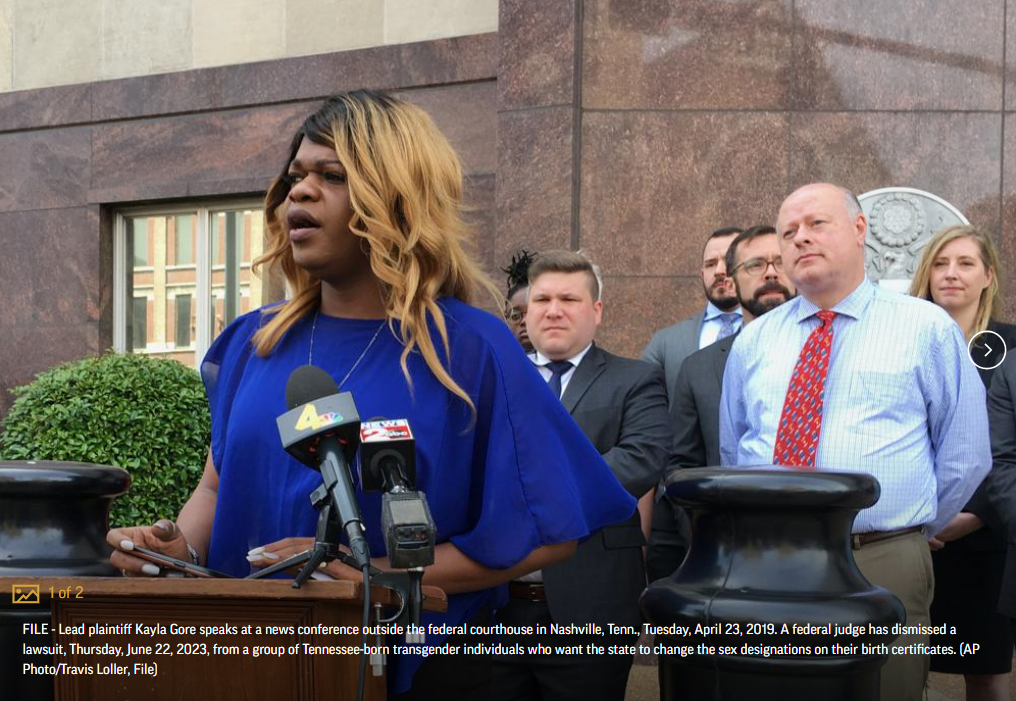
Lead plaintiff Kayla Gore said she was devastated by the ruling denying her and her fellow complainants an opportunity to even plead their case.
“Tennessee’s discriminatory birth certificate policy has not only gravely impacted my life, but also presents a roadblock for all transgender Tennesseans,” she said in a statement.
When the suit was filed in 2019, Tennessee was one of three states that did not let transgender people change the sex designation on their birth certificates. Since then, federal courts in the other two, Kansas and Ohio, have found those policies unconstitutional.
Meanwhile states including Montana, North Dakota and Oklahoma have adopted policies like Tennessee’s, according to Lambda Legal.
A new study identifies a rugged group of states — Wyoming, Utah, Montana and Idaho — as the most affordable destinations for American retirees.
Clouds rise above the mountains of the Teton Range as seen from Grand Teton National Park in Jackson Hole, Wyoming on August 15, 2022.
If those places sound cold, consider some warmer states that rank nearly as high in cost of living and other affordability measures: Virginia (5th on the list), New Mexico (7th), Tennessee (10th), Georgia (12th) and South Carolina (15th).
According to a study conducted by Seniorly, a senior-living site, states were ranked based on eight financial factors important to seniors who are planning to retire on a budget. It is worth noting that the study did not consider lifestyle or climate factors typically associated with retirees moving to warmer states in the South. Instead, it focused on housing costs and living expenses, taking into account recent inflation and retirement account volatility.
Census figures indicate that over 200,000 Americans relocated to new states for retirement in 2022. The most popular destinations were Florida, North Carolina, Michigan, Arizona, and Georgia. While Florida and Arizona have long been favored retirement destinations, it’s worth noting that they have become more crowded and less affordable in recent years.
Despite the desire for warmer climates, a significant majority of older Americans, approximately three-quarters, express a preference to stay in their current homes and communities, as revealed by an AARP survey. This sentiment is often driven by a sense of attachment to the places where they grew up and raised their families, as well as the difficulty associated with changing healthcare providers.
As retirees evaluate their options, they are increasingly considering housing costs and living expenses, recognizing the impact of inflation and market volatility on their retirement savings. While Florida and Arizona continue to be popular choices, retirees are also exploring alternatives that offer a balance of affordability and quality of life.
In recent times, Republican lawmakers have been at the forefront of a significant surge in legislation aimed at undermining the rights of LGBTQ individuals across the nation. Among the states leading this movement is Tennessee, which has consistently passed similar legislation and emerged as one of the most restrictive states in terms of LGBTQ rights.
Notably, Tennessee was on the verge of implementing extensive restrictions on drag performances, making it the first state to do so. Several other states were also considering similar bills, indicating a broader trend. However, the enforcement of the law was temporarily blocked by a federal judge.
Over the past few years, Tennessee has enacted no fewer than 13 laws that curtail LGBTQ rights, surpassing all other states in terms of such legislation during this period, as revealed by data analysis from two organizations monitoring such developments. Georgia and Arkansas followed closely behind with at least nine similar laws enacted, while Alabama implemented six.
This year, there has been a significant acceleration in the efforts of Republican-controlled legislatures across the country to pass bills specifically targeting transgender rights. In fact, the number of introduced bills since January alone has exceeded the combined total of those introduced from 2018 to 2022, according to data analyzed by the Washington Post and the ACLU.
Advocates gather for a rally in February at the Tennessee Capitol complex in Nashville to oppose bills that target the LGBTQ community. (Jonathan Mattise/AP)
These trends highlight the ongoing challenges faced by the LGBTQ community and the urgent need for continued advocacy and support to protect their rights and ensure equal treatment under the law.
Amidst the current wave of legislation targeting LGBTQ rights, Tennessee has emerged as a state distinguished by both the frequency and severity of its laws. In recent years, the state has passed three distinct transgender bathroom bills. Of particular note is a unique measure enacted in 2021, which mandated businesses to display warning signs outside restrooms if they allowed transgender individuals to use facilities that aligned with their gender identity rather than their assigned sex at birth.
The Republican majority in the Tennessee legislature has consistently demonstrated its power and willingness to suppress opposition from liberal voices. This was evident in their recent decision to expel a Democratic lawmaker following his protests advocating for gun control in the aftermath of a tragic mass shooting at a Nashville school.
When defending the laws that restrict LGBTQ rights, GOP legislators in Tennessee have often cited the aim of protecting children. This same argument was echoed when the restrictions on drag shows were passed and signed into law last month.
The justification of safeguarding children has become a recurring theme for proponents of these laws, even as critics argue that they disproportionately harm and marginalize LGBTQ individuals. The clash between those seeking to limit rights and those advocating for equality and inclusion underscores the ongoing ideological divisions surrounding LGBTQ issues in Tennessee and across the nation.
“I’ve seen videos of sexually graphic performances where children are present, and it is absolutely despicable,” state Senate Majority Leader Jack Johnson said in a statement after the drag bill was signed. “This is a common-sense protection that provides clarity regarding what performances are not appropriate for children.”
Critics say Republicans are trying to push boundaries on an issue that they believe resonates with their base. The bills have also gained prominence and political traction as conservative activist groups and media figures have relocated to the state in recent years, keeping gay and trans rights as a top priority for lawmakers.
“It has become a social issues arms race for the GOP in Tennessee,” said Kent Syler, a political science professor at Middle Tennessee State University. “It’s a winning formula that has helped Republicans win primaries. So, they keep returning to it, which means they have to top what they did last session with something more extreme.”
Critics, including Democrats and activists, contend that the emphasis on curtailing LGBTQ rights in Tennessee has diverted attention away from more urgent matters. They accuse prominent Republicans of displaying hypocrisy in their actions. For instance, Governor Bill Lee faced backlash for signing the anti-drag bill into law, particularly when a high school yearbook photo resurfaced, depicting him dressed in a cheerleader uniform and wig. Governor Lee, however, dismissed any equivalence between his incident and the drag shows targeted by the bill.
In a similar vein, Lieutenant Governor Randy McNally issued an apology after he was discovered to have made flirtatious comments on provocative photos of men through his Instagram account. This behavior further fueled accusations of hypocrisy among Republican lawmakers who support legislation restricting LGBTQ rights.
Such incidents serve as ammunition for critics who argue that those in power are not upholding the principles they claim to champion. Democrats and activists maintain that these actions undermine the credibility of lawmakers and draw attention away from pressing issues that require attention and action.
The controversies surrounding Governor Lee and Lieutenant Governor McNally highlight the ongoing tension between those advocating for LGBTQ rights and lawmakers who promote restrictive measures. These incidents contribute to the broader debate surrounding the treatment of LGBTQ individuals and the commitment of political leaders to principles of equality and fairness.
“The only wins with these bills are the political wins for a very small handful of people,” said state Rep. John Ray Clemmons (D). “It’s depressing and devastating. It weighs on you heavily when you can’t beat this stuff back.”
Opponents of the Republican-led legislation in Tennessee have faced an uphill battle in their attempts to resist a movement that appears relentless and unyielding. With Republicans in control of both the legislature and the governor’s mansion, the opposition has encountered significant obstacles and achieved limited success in challenging the prevailing agenda.
The dominance of the Republican party in Tennessee has resulted in a political landscape where dissenting voices struggle to make significant headway against the momentum of the conservative agenda. Despite efforts to push back against the legislation, opponents find themselves facing an uphill battle with little indication that the movement will lose steam.
This reality underscores the significant challenges faced by those seeking to protect and advance LGBTQ rights in a state where the political power dynamics heavily favor the Republican party. The opposition’s ability to influence policy and bring about substantial change remains constrained in a landscape where the prevailing movement appears unrelenting and impervious to resistance.
































You must be logged in to post a comment.