The law, enacted this year over the veto of Democratic Gov. Andy Beshear, prevents transgender minors from accessing puberty blockers and hormone therapy.
Protesters of Kentucky Senate Bill SB150 rally at the Kentucky Capitol in Frankfort, Ky., on March 29.
By The Associated Press
A federal appeals court is allowing Kentucky to enforce a recently enacted ban on gender-affirming care for young transgender people while the issue is being litigated.
The 2-1 decision Monday from the Sixth U.S. Circuit Court of Appeals in Cincinnati is not unexpected. The same three-judge panel ruled the same way earlier this month on a similar case in Tennessee.
The Kentucky law, enacted this year over the veto of Democratic Gov. Andy Beshear, prevents transgender minors from accessing puberty blockers and hormone therapy.
At least 20 states have now enacted laws restricting or banning gender-affirming medical care for transgender minors. Most of those states face lawsuits. A federal judge struck down Arkansas’ ban as unconstitutional. In other states, judges have issued disparate rulings on whether the laws can be enforced while the cases are being litigated.
In Kentucky, U.S. District Judge David Hale had initially blocked Kentucky from enforcing the ban. But he lifted that injunction July 14, after the Sixth Circuit issued its ruling in the Tennessee case.
Seven transgender children and their parents have sued to block the Kentucky law. They argue that it violates their constitutional rights and interferes with parental rights to seek established medical treatment for their children.
In Monday’s ruling, judges Jeffrey Sutton, an appointee of former President George W. Bush, and Amul Thapar, an appointee of former President Donald Trump, said that the issues in the Kentucky case are essentially identical to those in Tennessee.
In the Tennessee case, the judges wrote that decisions on emerging policy issues like transgender care are generally better left to legislatures rather than judges. They offered a similar rationale Monday in the Kentucky case.
“The people of Kentucky enacted the ban through their legislature,” the judges wrote. “That body — not the officials who disagree with the ban — sets the Commonwealth’s policies.”
The dissenting judge, Helene White, noted that Kentucky’s ban does not include a grace period for patients who are already receiving care to continue treatment, as Tennessee’s law did.
As a result, White said the need for an injunction blocking the ban in Kentucky is even greater than it was in Tennessee.
“It seems obvious that there is a tremendous difference between a statute like Tennessee’s that allows flexibility regarding treatment decisions and time to explore alternatives and one like Kentucky’s that forces doctors to either discontinue treatment immediately or risk losing their license,” wrote White, who was first nominated by former President Bill Clinton and later nominated by Bush.
A federal appeals court has temporarily reversed a lower court’s ruling that had prohibited Tennessee from enacting a ban on gender-affirming care for transgender youth
Advocates gather for a rally at the state Capitol complex in Nashville, Tenn., to oppose a series of bills that target the LGBTQ community, Tuesday, Feb. 14, 2023. A federal appeals court has temporarily reversed a lower court’s ruling, Saturday, July 8, that had prohibited Tennessee from enacting a ban on gender-affirming care for transgender youth.
FALLS CHURCH, Va. — Tennessee’s ban on gender-affirming care for transgender youth can go into effect — at least for now — after a federal appeals court on Saturday temporarily reversed a lower court ruling.
Last month, a district court judge in Tennessee found that the state’s new law banning transgender therapies like hormone blockers and surgeries for transgender youth was unconstitutional because it discriminated on the basis of sex. The judge blocked large swaths of the law from taking effect.
On Saturday, however, the Sixth U.S. Circuit Court of Appeals in Cincinnati granted an emergency appeal from Tennessee. In a 2-1 ruling, the majority wrote that decisions on emerging policy issues like transgender care are generally better left to legislatures rather than judges.
“Given the high stakes of these nascent policy deliberations — the long-term health of children facing gender dysphoria — sound government usually benefits from more rather than less debate,” wrote Chief Judge Jeffrey Sutton, an appointee of former President George W. Bush.
Tennessee’s attorney general, Jonathan Skrmetti, praised the ruling, saying the ban can now be fully enforced. “The case is far from over, but this is a big win,” he said in a statement.
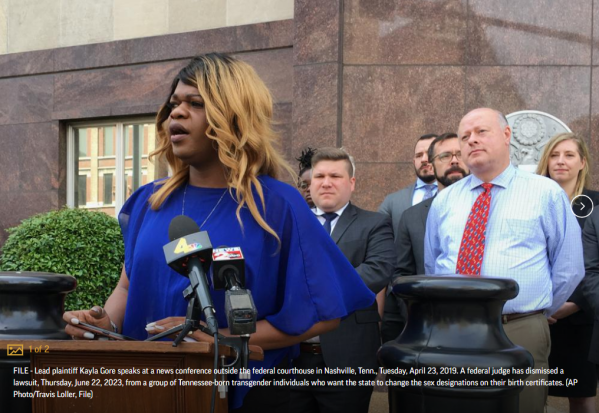
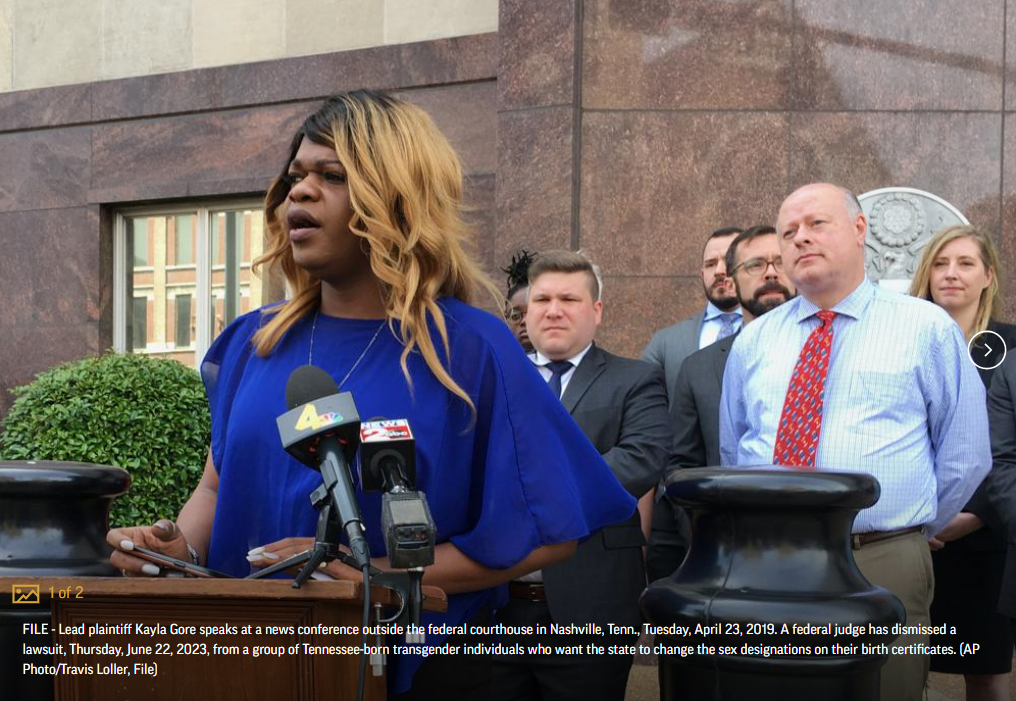
In a recent ruling, a judge in Tennessee has rejected the request of transgender plaintiffs to change their birth certificates. This decision has sparked controversy and raised concerns about the rights and recognition of transgender individuals. The plaintiffs had sought to update their birth certificates to reflect their gender identity, a step that is crucial for their personal identity and everyday life. The judge’s ruling underscores the ongoing challenges faced by the transgender community in obtaining legal recognition and highlights the need for continued advocacy for transgender rights.
The plaintiffs had sought to overturn a 1977 law that generally prohibits such changes. They said it unconstitutionally discriminates against transgender people and the sex designation on their certificates is inaccurate because it does not reflect their gender identities.
The lawsuit also argued that the policy is harmful, saying that when transgender people show their birth certificates for identification, the mismatch between the documents and their gender identities exposes them to possible harassment and even violence.
U.S. District Judge Eli Richardson wrote in his decision to dismiss that while there are varying definitions of “sex,” the term “has a very narrow and specific meaning” for the purpose of birth certificates: “external genitalia at the time of birth.”
Based on that limited definition, the designation does not later become inaccurate “when it is eventually understood to diverge from the transgender person’s gender identity,” Richardson said.
The plaintiffs had argued that “sex” should be defined by gender identity.
Lambda Legal, which brought the lawsuit on their behalf, criticized the ruling in a statement and said it was evaluating possible next steps. It said the decision comes as Tennessee’s Republican supermajority is targeting transgender rights.
Such efforts include banning gender-affirming care for minors; protecting teachers who don’t use transgender students’ pronouns from lawsuits; definining “male” and “female” in a way that prevents driver’s licenses and birth certificate changes; and banning private schools from letting transgender girls compete on female sports teams.
Richardson sought to sidestep politics in his decision, writing that the case “is not grist for a broad-based discussion” about transgender rights but rather “a discrete legal dispute over the constitutionality of a specific alleged policy” of the state.
Lead plaintiff Kayla Gore said she was devastated by the ruling denying her and her fellow complainants an opportunity to even plead their case.
“Tennessee’s discriminatory birth certificate policy has not only gravely impacted my life, but also presents a roadblock for all transgender Tennesseans,” she said in a statement.
When the suit was filed in 2019, Tennessee was one of three states that did not let transgender people change the sex designation on their birth certificates. Since then, federal courts in the other two, Kansas and Ohio, have found those policies unconstitutional.
Meanwhile states including Montana, North Dakota and Oklahoma have adopted policies like Tennessee’s, according to Lambda Legal.
A new study identifies a rugged group of states — Wyoming, Utah, Montana and Idaho — as the most affordable destinations for American retirees.
Clouds rise above the mountains of the Teton Range as seen from Grand Teton National Park in Jackson Hole, Wyoming on August 15, 2022.
If those places sound cold, consider some warmer states that rank nearly as high in cost of living and other affordability measures: Virginia (5th on the list), New Mexico (7th), Tennessee (10th), Georgia (12th) and South Carolina (15th).
According to a study conducted by Seniorly, a senior-living site, states were ranked based on eight financial factors important to seniors who are planning to retire on a budget. It is worth noting that the study did not consider lifestyle or climate factors typically associated with retirees moving to warmer states in the South. Instead, it focused on housing costs and living expenses, taking into account recent inflation and retirement account volatility.
Census figures indicate that over 200,000 Americans relocated to new states for retirement in 2022. The most popular destinations were Florida, North Carolina, Michigan, Arizona, and Georgia. While Florida and Arizona have long been favored retirement destinations, it’s worth noting that they have become more crowded and less affordable in recent years.
Despite the desire for warmer climates, a significant majority of older Americans, approximately three-quarters, express a preference to stay in their current homes and communities, as revealed by an AARP survey. This sentiment is often driven by a sense of attachment to the places where they grew up and raised their families, as well as the difficulty associated with changing healthcare providers.
As retirees evaluate their options, they are increasingly considering housing costs and living expenses, recognizing the impact of inflation and market volatility on their retirement savings. While Florida and Arizona continue to be popular choices, retirees are also exploring alternatives that offer a balance of affordability and quality of life.
In recent times, Republican lawmakers have been at the forefront of a significant surge in legislation aimed at undermining the rights of LGBTQ individuals across the nation. Among the states leading this movement is Tennessee, which has consistently passed similar legislation and emerged as one of the most restrictive states in terms of LGBTQ rights.
Notably, Tennessee was on the verge of implementing extensive restrictions on drag performances, making it the first state to do so. Several other states were also considering similar bills, indicating a broader trend. However, the enforcement of the law was temporarily blocked by a federal judge.
Over the past few years, Tennessee has enacted no fewer than 13 laws that curtail LGBTQ rights, surpassing all other states in terms of such legislation during this period, as revealed by data analysis from two organizations monitoring such developments. Georgia and Arkansas followed closely behind with at least nine similar laws enacted, while Alabama implemented six.
This year, there has been a significant acceleration in the efforts of Republican-controlled legislatures across the country to pass bills specifically targeting transgender rights. In fact, the number of introduced bills since January alone has exceeded the combined total of those introduced from 2018 to 2022, according to data analyzed by the Washington Post and the ACLU.
Advocates gather for a rally in February at the Tennessee Capitol complex in Nashville to oppose bills that target the LGBTQ community. (Jonathan Mattise/AP)
These trends highlight the ongoing challenges faced by the LGBTQ community and the urgent need for continued advocacy and support to protect their rights and ensure equal treatment under the law.
Amidst the current wave of legislation targeting LGBTQ rights, Tennessee has emerged as a state distinguished by both the frequency and severity of its laws. In recent years, the state has passed three distinct transgender bathroom bills. Of particular note is a unique measure enacted in 2021, which mandated businesses to display warning signs outside restrooms if they allowed transgender individuals to use facilities that aligned with their gender identity rather than their assigned sex at birth.
The Republican majority in the Tennessee legislature has consistently demonstrated its power and willingness to suppress opposition from liberal voices. This was evident in their recent decision to expel a Democratic lawmaker following his protests advocating for gun control in the aftermath of a tragic mass shooting at a Nashville school.
When defending the laws that restrict LGBTQ rights, GOP legislators in Tennessee have often cited the aim of protecting children. This same argument was echoed when the restrictions on drag shows were passed and signed into law last month.
The justification of safeguarding children has become a recurring theme for proponents of these laws, even as critics argue that they disproportionately harm and marginalize LGBTQ individuals. The clash between those seeking to limit rights and those advocating for equality and inclusion underscores the ongoing ideological divisions surrounding LGBTQ issues in Tennessee and across the nation.
“I’ve seen videos of sexually graphic performances where children are present, and it is absolutely despicable,” state Senate Majority Leader Jack Johnson said in a statement after the drag bill was signed. “This is a common-sense protection that provides clarity regarding what performances are not appropriate for children.”
Critics say Republicans are trying to push boundaries on an issue that they believe resonates with their base. The bills have also gained prominence and political traction as conservative activist groups and media figures have relocated to the state in recent years, keeping gay and trans rights as a top priority for lawmakers.
“It has become a social issues arms race for the GOP in Tennessee,” said Kent Syler, a political science professor at Middle Tennessee State University. “It’s a winning formula that has helped Republicans win primaries. So, they keep returning to it, which means they have to top what they did last session with something more extreme.”
Critics, including Democrats and activists, contend that the emphasis on curtailing LGBTQ rights in Tennessee has diverted attention away from more urgent matters. They accuse prominent Republicans of displaying hypocrisy in their actions. For instance, Governor Bill Lee faced backlash for signing the anti-drag bill into law, particularly when a high school yearbook photo resurfaced, depicting him dressed in a cheerleader uniform and wig. Governor Lee, however, dismissed any equivalence between his incident and the drag shows targeted by the bill.
In a similar vein, Lieutenant Governor Randy McNally issued an apology after he was discovered to have made flirtatious comments on provocative photos of men through his Instagram account. This behavior further fueled accusations of hypocrisy among Republican lawmakers who support legislation restricting LGBTQ rights.
Such incidents serve as ammunition for critics who argue that those in power are not upholding the principles they claim to champion. Democrats and activists maintain that these actions undermine the credibility of lawmakers and draw attention away from pressing issues that require attention and action.
The controversies surrounding Governor Lee and Lieutenant Governor McNally highlight the ongoing tension between those advocating for LGBTQ rights and lawmakers who promote restrictive measures. These incidents contribute to the broader debate surrounding the treatment of LGBTQ individuals and the commitment of political leaders to principles of equality and fairness.
“The only wins with these bills are the political wins for a very small handful of people,” said state Rep. John Ray Clemmons (D). “It’s depressing and devastating. It weighs on you heavily when you can’t beat this stuff back.”
Opponents of the Republican-led legislation in Tennessee have faced an uphill battle in their attempts to resist a movement that appears relentless and unyielding. With Republicans in control of both the legislature and the governor’s mansion, the opposition has encountered significant obstacles and achieved limited success in challenging the prevailing agenda.
The dominance of the Republican party in Tennessee has resulted in a political landscape where dissenting voices struggle to make significant headway against the momentum of the conservative agenda. Despite efforts to push back against the legislation, opponents find themselves facing an uphill battle with little indication that the movement will lose steam.
This reality underscores the significant challenges faced by those seeking to protect and advance LGBTQ rights in a state where the political power dynamics heavily favor the Republican party. The opposition’s ability to influence policy and bring about substantial change remains constrained in a landscape where the prevailing movement appears unrelenting and impervious to resistance.
Florida first. Alabama follows. Legislators in Louisiana and Ohio are currently debating legislation that is similar to the Florida statute. A similar bill will be his top priority during the following session, according to Texas Governor Greg Abbott.
At least a dozen states across the country are proposing new legislation that, in some ways, will resemble Florida’s recent contentious bill, which some opponents have dubbed “Don’t Say Gay.”










 fleeredstates.blog
You must be logged in to post a comment.